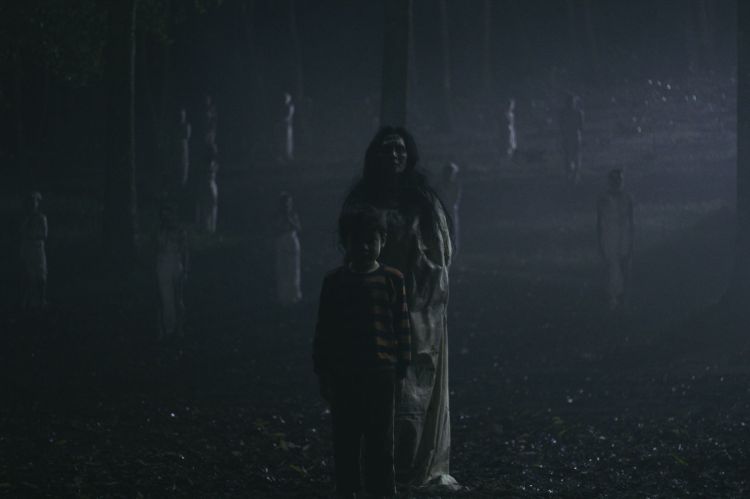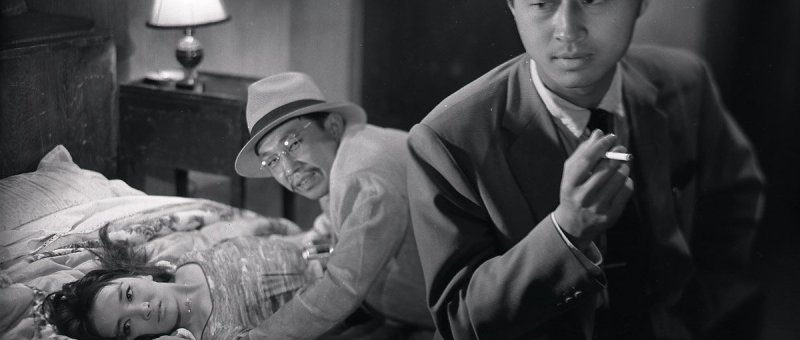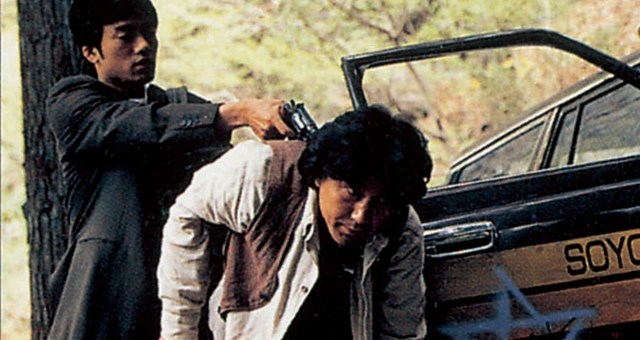
Kamikaze Taxi (Masato Harada, 1995)

Kamikaze Taxi DVD coverAlmost 25 years later, Masato Harada’s post-bubble critique of a society failing to deal with its traumatic past feels oddly relevant. Xenophobia, misogyny, class oppression, and political corruption are far from unique problems but find fertile ground in a society in flux in which recent economic trauma has forced tensions to the fore. 1994 was a period of marked political chaos in which a corruption scandal had brought down a Prime Minister while the country debated electoral reform and attempted to deal with the ongoing recession, finding itself caught between the problems of past and future as the Showa era legacy continued to gnaw at the promise of Heisei.

Lowly goon Tatsuo (Kazuya Takahashi) has been charged with finding girls for corrupt politician Domon (Taketoshi Naito), but his world is turned inside out when Domon badly beats a prostitute leading his girlfriend Renko, a madam, to kick up a fuss which eventually gets her killed by sadistic mob boss Animaru (Mickey Curtis). Insensitively ordered to dispose of Renko’s body, Tatsuo’s resentment intensifies until he is shouldered with caring for the injured prostitute, Tama (Reiko Kataoka), who tells him that Domon keeps a large amount of cash hidden in his house. Seeing a chance to escape from the yakuza world whilst getting revenge on everyone involved in the death of Renko, Tatsuo enlists a few of his trusted guys and stages a heist. It goes badly wrong, leaving everyone except Tatsuo dead.

Meanwhile, on the run, Tatsuo gets a lift from Peruvian returnee Kantake (Koji Yakusho) now working as a taxi driver after being unable to find any other kind of work in the middle of a recession in a society not always welcoming of overseas workers. Although he was born in Japan and spent most of his childhood in the country, Kantake’s grasp of the language has become corrupted and he finds himself unable to communicate in his “homeland” despite being “Japanese”. Even without verbal communication, the two men bond and Kantake returns to collect Tatsuo despite becoming aware of his gangster past, forging a kind of brotherhood in their shared outsider status.

When Tatsuo is first introduced to Domon, the first thing he asks him is if he is “fully Japanese”. Domon “hopes” he is, but has his doubts because his name “sounds a bit Korean”. Harada opens the film with some on screen testimony from migrant workers in Japan, some of whom are, like Kantake, of Japanese birth if raised overseas but nevertheless find themselves regarded as foreigners – turned down for housing and employment, cast out from regular mainstream society. In the bubble era when it was all hands to the wheel, the migrant workers were an essential part of a well functioning economy, but now the bubble’s burst and they are no longer “needed” as construction dwindles and the demand for casual labour decreases, men like Domon begin to suggest simply sending them all “home”. 

A fierce nationalist, Domon is also a misogynist whose sexual proclivities run to extreme violence. Sadly, his views are not so far from the mainstream as might be hoped – the heartless yakuza think nothing of silencing Renko and then disappearing her body, while Tama’s assault is something bought and paid for. On TV, Domon appears on a panel discussing the comfort woman issue and unsurprisingly refuses to acknowledge it while the increasingly exasperated female contributor points out that the use of comfort women was not only a state sponsored crime but a crime against women which speaks volumes about current social attitudes. Domon insists that the Japanese women who “served” as prostitutes overseas were soldiers, while the “foreign” women were soulless money hungry mercenaries who deserved everything they got. In his view, all of today’s problems are down to “selfish” career women who should get back in their boxes as quickly as possible so everything can go back to “normal”.

The wartime legacy hangs uncomfortably over modern Japan as ultra nationalists like Domon harp on about their time in service, exploiting their fallen comrades for personal and political gains. Kantake too, it seems, has fought in a war and is the son of a former kamikaze pilot of the kind despised by men like Domon who themselves have continued to live even in defeat. Drugs and foreign wars link two eras and two continents, not to mention two men, as Kantake reflects on the true “kamikaze” spirit as seen in the beautiful flight of the Condor coasting on the winds above the Andes. It is indeed a gust of wind which saves him as he decides to fulfil Tatsuo’s quest for vengeance, remaining true to their brotherly bond and attempting to wipe the slate clean by eliminating the corrupting forces which deny each of them the right to live as full members of their society. Asked for his life story by a dying man, Kantake begins to speak but all too quickly is urged to “forget about Showa” – a partial plea for making peace with the past, getting rid of nationalism, the yakuza, the hierarchical and patriarchal society in favour of something kinder and more honest built out of its ashes.


Kamikaze Taxi screens at New York Asian Film Festival 2018 on 1st July at 6pm plus Q&A with director Masato Harada.

HD re-release trailer (no subtitles)
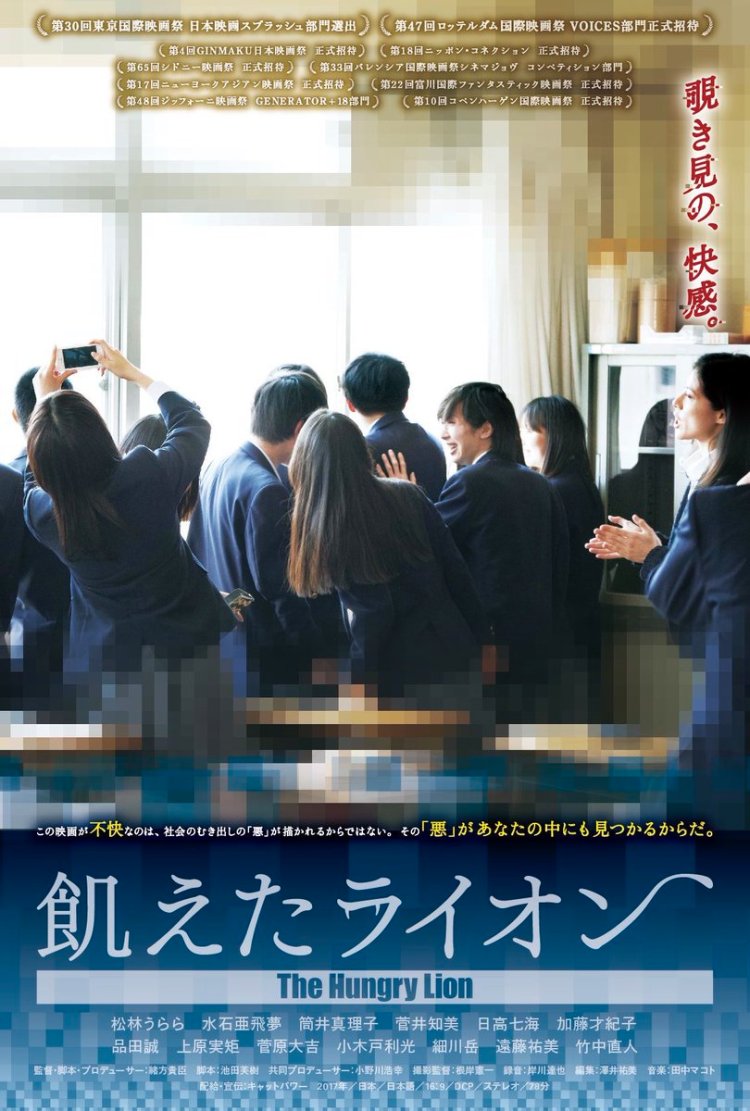
The Hungry Lion (飢えたライオン, Takaomi Ogata, 2017)

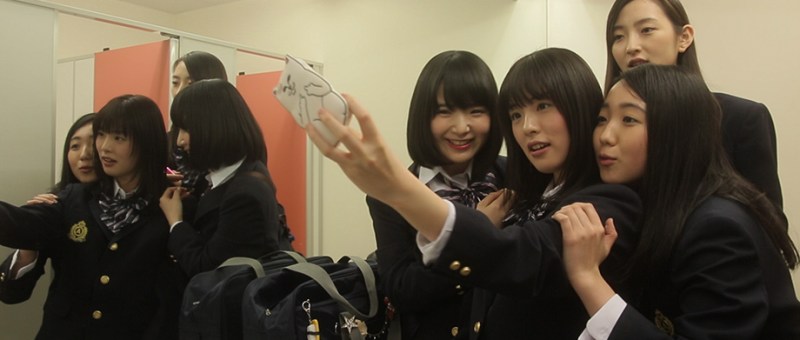
Hungry lion posterRumour has a strange power. A baseless lie, no matter how innocuous, can quickly derail a life but the power of lie with a tiny grain of, if not truth exactly but circumstantial evidence, can prove ruinous when there are vested interests at play which make belief an attractive prospect. The heroine of Takaomi Ogata’s The Hungry Lion (飢えたライオン, Ueta Lion) finds herself at the centre of such a storm through no fault of her own, becoming a victim not only of her country’s restrictive social codes, tendency towards victim blaming, and reluctance to deal openly with “unpleasant” topics, but also more directly of the latent jealousy lurking in her closest friends which finds a convenient home in someone else’s scandal. Nobody will come to her rescue, her “disgrace” has exiled her from the group and she finds herself abandoned as a lonely a sacrifice to the hungry lion that feeds on social shame.

High school teacher Mr. Hosono is not exactly popular with his students. He is strict with the boys but less so with the girls, as he proves greeting one tardy student who blames a train accident for his late arrival by berating him about his regulation busting necklace while allowing a female student, Hitomi (Urara Matsubayashi), who arrives a couple of minutes later to take her seat unharrassed. Midway through the register, Mr. Hosono is called away and eventually arrested in connection with the viral video all the kids were looking at before he arrived which appears to show him in a compromising position with a student. For one reason or another, a rumour spreads that Hitomi is the girl in the video. She isn’t, but few believe her strenuous denials and her life becomes one of constant strife not only because of the bullying itself, or the injustice of being falsely accused and then disbelieved by those closest to her, but by the way she is made to feel embarrassed and shamed for causing trouble to others even though she herself has done nothing wrong.

A “relationship” between a teacher and a student is never appropriate, and Mr. Hosono has at least been removed from his position at the school, but no one seems very interested in identifying the girl in the video in order to help her, only to spread ruin and rumour. Hitomi is not the girl in the video, but even if she had been there is no support on offer to her as a person who has been abused by someone in a position of power she should have been able to trust, nor are there any measures in place to ensure her academic life will not be unduly damaged by becoming involved in such a traumatic incident. Aware of the rumours, the school accepts Hitomi’s assertion that she is not the girl but still suspends her to avoid “awkwardness” and protect their own reputation. Likewise, her own mother and sister are far from supportive, berating her for bringing shame on the family and creating problems for them in making the family a target rather than standing by her in her ordeal whether she had been the girl or not.

The rumour itself seems to spring from persistent shaming and stigmatisation of atypical families. Hitomi is 18 and she has a boyfriend who is a little older. He has some shady friends and likes to push buttons as he does by causing mild embarrassment to Hitomi by taking her into the curtained off “adult” section of the local video store in an attempt to shock her. Nevertheless the pair eventually make their way to a love hotel (where they are not age checked) and he films her in a compromising position. Girls talk and Hitomi’s friends all know about her relationship which is also plastered all over her social media on which she is something of a star. Some of her friends are jealous but also harbour a degree of disapproval and the mere fact that she is already sexually active ties her to the girl in the video and casts her in an “impure” light in the cute and innocent world of high school girls. Similarly, her boyfriend’s estimation of her drops after she consents to sleep with him while his leering friends make lewd comments and regard her as an “easy” girl who has lost the right to refuse their advances.

Ostracised for essentially becoming a “fallen woman”, Hitomi is left entirely alone with no one to turn to for support. Later, authorities are keen to stress that it’s important to speak out if you’re suffering because adults will always help children but like everything else they are just empty words. The school give out a pamphlet on the importance of prudence when using social media, but refuse to accept their responsibility in failing to protect their students. The news meanwhile becomes obsessed with tearing apart Hitomi’s family, laying the blame at their feet, insisting that Hitomi’s downfall is in someway a result of her parents’ divorce even blaming her mother for having the audacity to find a “boyfriend” before her children were fully grown. The image we had of Hitomi is suddenly reversed. No longer is she a “slutty schoolgirl” involved in an illicit relationship with her teacher, but a neglected child damaged beyond repair by “liberal modern society”.

Reputation is what matters, but reputation is easily manipulated and rewritten, muddy even when objective truth is revealed. Ogata shoots in brief vignettes, each severed from the next by a stark black screen which forces us to examine the objectivity of each scene as distinct from the others, assembling our own versions of “objective” truth which are in fact guided by Ogata’s carefully crafted editing. Fake news has an agenda, truth does not, but it’s often much easier to believe the lie especially if the lie benefits us much more than the truth or enables us to feel superior to someone we secretly think needs taking down a peg or two. Society is a hungry lion which feeds on shame, externalised and internalised, as those who find themselves on the wrong sides of a series of social taboos become unwilling sacrifices to its unkind, unforgiving, and unrelenting hunger for suffering.


Screening at New York Asian Film Festival 2018 on 30th June, 2.45pm.

Original trailer (English subtitles)

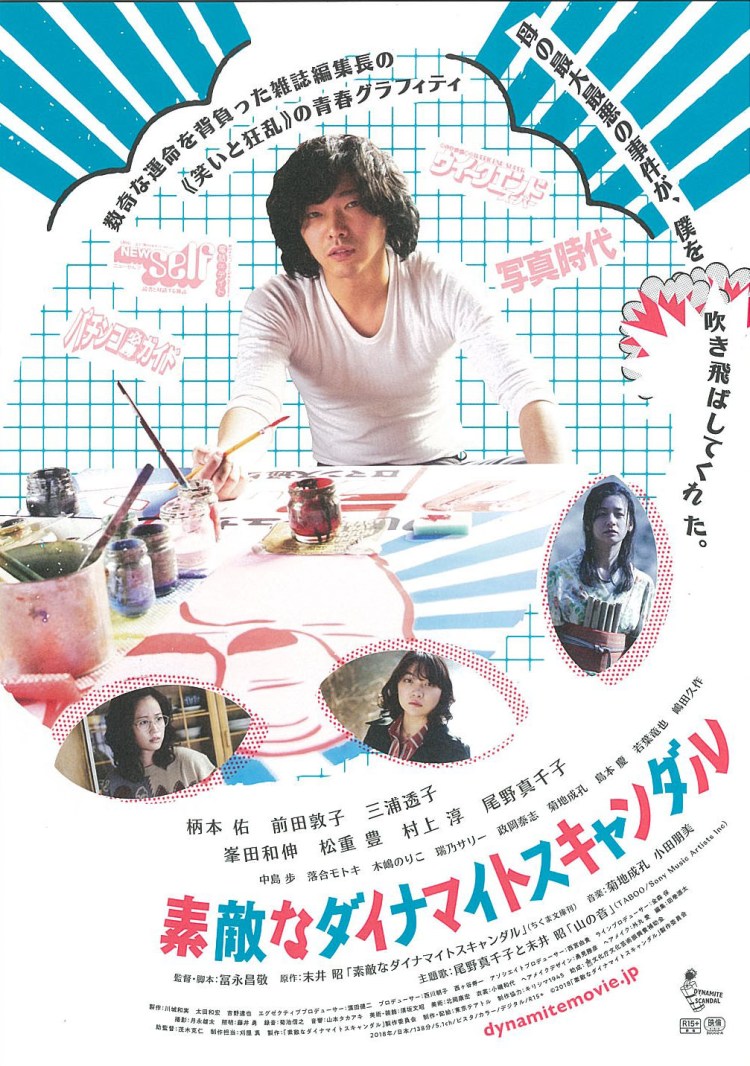
Dynamite Graffiti (素敵なダイナマイトスキャンダル, Masanori Tominaga, 2018)

Dynamite Graffiti posterThe division between “art” and “porn” is as fuzzy as the modesty fog which still occasionally finds itself masking “obscene” images in Japanese cinema, but for accidental king of the skin rag trade Akira Suei it’s question he finds himself increasingly unwilling to answer even while he employs it to his own benefit. Back in the heady pre-internet days of the 1980s, Suei was the public face behind a series of magazines along differing themes but which all included “artistic” images of underdressed women in provocative poses alongside more “serious” content provided by such esteemed figures as Daido Moriyama and Nobuyoshi Araki in addition to stories and essays penned by “legitimate” authors and the more scurrilous fare written by Suei himself. Inspired by one of Suei’s essays “Dynamite Graffiti” (素敵なダイナマイトスキャンダル, Sutekina Dynamite Scandal), Masanori Tominaga’s ramshackle biopic has the informal feel of a man telling his sad life story to a less than attentive bar girl as he takes us on a long, strange walk through the back alleys of ‘70s Japan.

The entirety of Suei’s (Tasuku Emoto) life is lived in the wake of a bizarre childhood incident in which his mother (Machiko Ono), suffering with TB and trapped in an unhappy marriage to a violent drunk, chose to commit double suicide with the young man from next door. Perhaps there’s nothing so strange about that in the straightened Japan of 1955, but Suei’s mother chose to end her life in the most explosive of ways – with dynamite stolen from the local mine. Carrying the legacy of abandonment as well as mild embarrassment as to the means of his mother’s dramatic exit, Suei finds himself a perpetual outsider drifting along without the need to feel bound by conventional social moralities as symbolised by the “ideal” family.

What he longs for, by contrast is freedom and independence. Bored by country life he dreamt of moving to the city to work in a factory, but the problem with factories is that they’re mechanical and turn their employees into mere tools with no possibility of personal expression or fulfilment. Spotting an advert for courses in “graphic design”, Suei’s world begins to open up as he embraces the bold new possibilities of art even as it wilfully intersects with commerce.

Taken with the new philosophy of design as the message, a means of “exposing” oneself and ultimately enabling true human connection, Suei remains frustrated by the limitations of his role as a draughtsman for local advertisers and, inspired by a friend’s beautiful poster, finds himself entering the relatively freer creative world of the “cabaret” scene as a crafter of signboards and flyers. The cabaret bars are little better than the factories, exploiting the labour of women who themselves are the product, but Suei’s distaste is soon worn down by constant exposure. From the clubs and cabarets it’s only a natural step towards erotic artwork, nudie photographs, and finally a vast magazine empire of “literary” pornography.

Suei’s accounts of his youth are filled with a lot of high talk about the possibilities of art, of his desire to remove the masks which keep us divided so that we might all know “true” human love. Whether his adventures in adult magazines can be said to do that is very much up for debate. They are, as he freely admits, expressions of male fantasy – exposing a perhaps unwelcome truth about the relationships between men and women even as they continue to exploit them. Yet Suei’s own desire to find something more than a potential for titillation in his work continues to dwindle as he finds himself engaged in increasingly complicated schemes to avoid censure from the police while simultaneously insisting that his magazines are both “artistic” and not.

His insistence that the photographs are “artistic” becomes his primary weapon in getting sometimes vulnerable young women to agree to take their clothes off. Abandoning his loftier aspirations, Suei sinks still further into the smutty morass whilst still maintaining the pretension that his magazines are not like the others. He neglects his wife (Atsuko Maeda) to chase fleeting affections with unsuitable or unstable women, one of whom eventually descends into a mental breakdown which provokes in him only the realisation that his desire for her was a romantic fantasy which her illness has now dissipated. Art is an explosion, Suei claims, but his mother was the explosive force in his life, blowing him off course and leaving him too wounded to embrace the reality he so desperately claims to crave but continues to reject in favour of the same kind of male fantasies his magazines peddle.

Everyone around Suei seems to be damaged. Nary a face in the red light district is without a bandage or bruise of some sort. These are people who’ve found themselves at the bottom of the ladder and are desperately trying to scrap their way up. Times change and Suei’s empire implodes. Porn is swapped for pachinko as the exploitable pleasure of choice paving the way for yet another reinvention which sees him throw on a kimono to rebrand himself as his own mother and self-styled pachinko expert. You couldn’t make it up. Still, perhaps there is something more honest in Suei’s pachinko persona than it might first appear even if his present “art” is unlikely to enlighten us to the true nature of love.


Dynamite Graffiti is screening as the opening night movie of this year’s New York Asian Film Festival.

Original trailer (no subtitles)
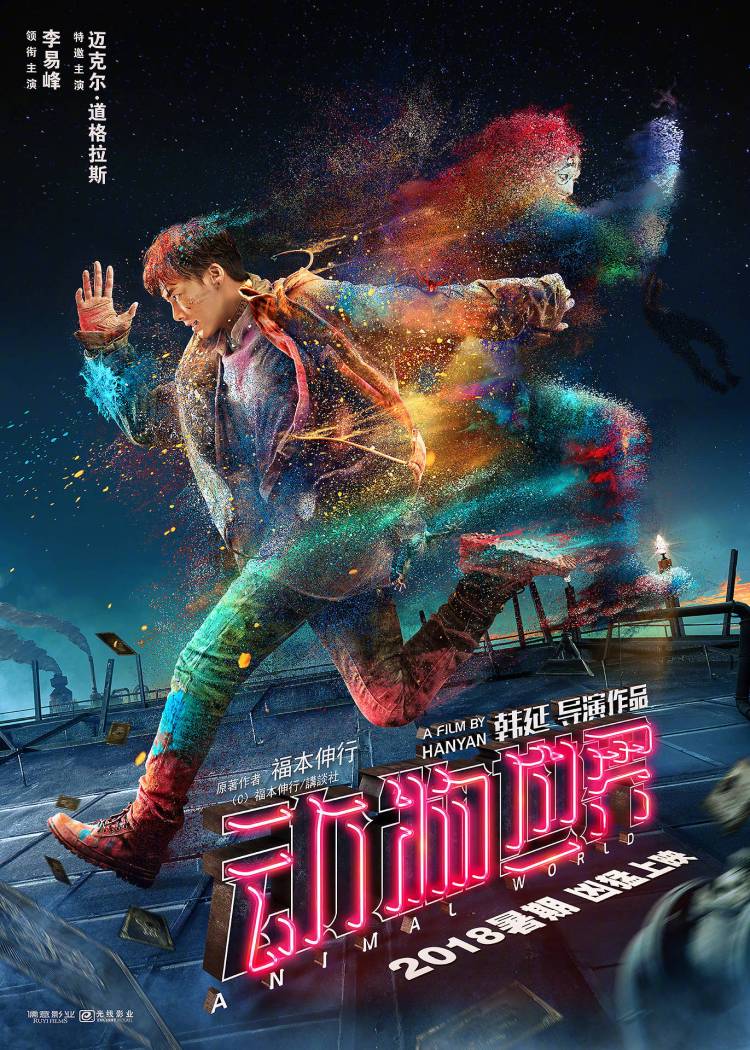
Animal World (动物世界, Han Yan, 2018)

Animal World Poster 1Greed is good. So Michael Douglas once told us many years ago and if Animal World (动物世界, Dòngwù Shìjiè) is anything to go by, the Gordon Gekkos of the world have not changed their tune. Inspired by Nobuyuki Fukumoto’s manga Kaiji: The Ultimate Survivor, Han Yan’s anarchic gambling drama is the latest in a long line of films to ask serious questions about a perceived moral decline accompanying the rapid economic development of the Chinese state occurring largely during the lifetime of the pure hearted hero Zheng Kaisi (Li Yi Feng) who has been dealt a bum deal and is doing very little to resist it. Describing himself as “crazy” (not unfairly, as it turns out), Kaisi is perhaps the last good man but his resolve is severely tested when he finds himself trapped aboard the good ship Destiny and forced to bet his life on a game of rock, paper, scissors.

Kaisi was one of the smartest kids in town but his father’s early death when Kaisi was eight and his mother’s long term illness have left him all alone in the world. Defeated and without hope, Kaisi’s only job is playing a sad clown at a local arcade and, in a failing he continues to find humiliating, he has to rely on childhood friend and putative sweetheart Qin (Zhong Dongyu), who is also his mother’s nurse, for the money to pay the medical fees that keep his mum in an actual room and not out in the corridor with all the other paupers. Another childhood friend of Kaisi’s, Li Jun (Cao Bingkun), claims to be in a similarly sticky situation and offers Kaisi a sweet deal if only he’ll consent to mortgaging the family apartment. Reluctant but backed into a corner, Kaisi agrees only to realise that not for the first or last time Li Jun has thrown him under the bus and he’s now on the hock for all his friend’s debts which seem to belong to a shady underworld kingpin by the name of Anderson (Michael Douglas). Anderson offers him a way out – he can win it all back and more if he agrees to submit himself to a high stakes game of chance way out in international waters aboard a disused warship called “Destiny”.

Describing himself as “crazy”, Kaisi has a strange fascination with clowns which extends past his occupation and directly into his psyche. Imprinted with a violent kids’ cartoon in which a vigilante clown metes out justice with a smile during a traumatic childhood incident, Kaisi feels as if there is a clown trapped inside him which wants to come out at moments of intense emotionality. Floating away in flights of fancy, he reimagines his enemies as weird space creatures and sees himself cut them down with twin samurai swords in the cramped environment of an otherwise empty subway car. Reality and imagination become blurred as we watch Kaisi run through a scenario in his head only to cut back to the “real” world where he more often than not decides to let things go. Despite his internal crazy clown, Kaisi is a defeated and passive figure who has been drifting aimlessly without hope or purpose, too afraid even accept the affection of his childhood sweetheart Qin due to his internalised insecurity regarding his lack of financial stability.

Dealt a bum deal by life, Kaisi has been relegated to an oppressed underclass with little chance of escape. He is, however, honest and pure hearted unlike his dodgy real estate broker friend, Li Jun. “Destiny” becomes a microcosm for exploring the evils of capitalism as the players quickly realise that they are only involved in a sub game – while they risk their lives at the gaming tables, the fabulously wealthy are busy betting on them from behind two way mirrors. Shady impresario Anderson gives a rousing introduction to proceedings, but pointedly omits to add anything about cheating. Cheating is not just allowed, it is encouraged, to a point at least, and playing the angles strongly advised. Games of chance are never quite just that and Kaisi’s finely tuned mathematical brain finally gets an excuse to kick back into action after a long period of wilful indolence.

Repeatedly, Kaisi is told that “loyalty” means nothing in this “animal world” where the only thing that counts is “profit”. While he is good hearted and originally taken in by the schemes of others, he is not naive and is able to see the “animal world” for what it is even if he refuses to become a full part of it. Maintaining his faith in the power of friendship proves to be a mistake, but still Kaisi realises that he’d much rather be a “clown” ridiculed for his principles than a soulless mercenary who’d sell out a friend for money. His attitude perhaps stands in stark contrast to those around him who’ve each found themselves at the Destiny for different reasons, some more eager than others to give in to their desperation. A mild critique of the heartlessness of a fiercely competitive society and its inbuilt societal inequalities, Animal World is a beautifully designed, surreal and anarchic tribute to fighting the good fight even if everyone else thinks you’re a “crazy clown”.


Animal World is released in UK cinemas from 29th June courtesy of Cine Asia. Check out the official website to find out where it’s playing near you including screenings across Europe and the rest of the world!

Original trailer (Mandarin, no subtitles)

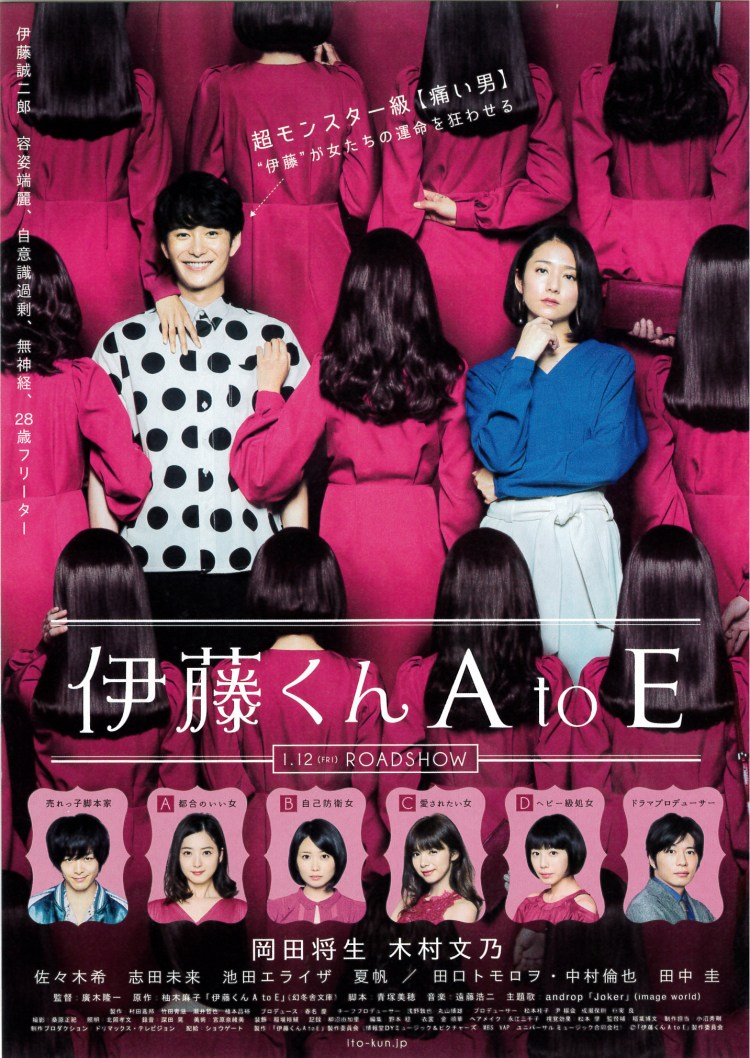
The Many Faces of Ito (伊藤くん A to E, Ryuichi Hiroki, 2018)

Many Faces of Ito posterRyuichi Hiroki’s career has been oddly varied, but he’s never been one to avoid straying into uncomfortable areas. Adapted from the novel by Asako Yuzuki, The Many Faces of Ito (伊藤くん A to E, Ito-kun A to E) explores the risks and rewards of modern existence through the prismatic viewpoint of five women messed around by the same terrible man as he seems to breeze through life buoyed up by the sense of superiority he gains through their unwavering appreciation. Then again perhaps his air of ultra confidence is yet another mask for his insecurity as he paints every failure as a conscious rejection, sneering superciliously at the desires of others while wilfully negating his own. Our guide, a blocked TV drama scriptwriter, may have imagined this entire scenario as she attempts to break through her own sense of painful inertia but it remains true that the world she inhabits is far from kind to women seeking the key to their own destinies.

32-year-old Rio (Fumino Kimura) won a scriptwriting competition which developed into a top TV hit some years previously but has struggled to replicate her success and now makes her living teaching screenwriting and acting as an expert on love for women captivated by the idealised romance of her debut “Tokyo Doll House”. Her longterm editor/producer (and former lover but that’s a problem we’ll get to later) encourages her to mine her romance sessions for possible material through interviewing women with unusual romantic dilemmas on the pretext of helping them find a way out. Rio, now jaded and cynical, is of a mind to make money from other people’s misery and the advice she gives is less in service of her clients and more in that of the story as she tries to engineer “naturalistic” drama but as in all things, her writing becomes increasingly personal and she is in effect in dialogue with herself.

Unbeknownst to Rio, each of the four women she decides to interview is involved with the same man – Ito (Masaki Okada), who is, because coincidence is real, a student in her screenwriting class. With his patterned black and white shirts and handsome yet somehow anonymous appearance, Ito is earnest but superior, shifting from over eager puppy to dangerously possessive stalker. 28-year-old Tomomi (Nozomi Sasaki) has been carrying a torch for him for five years longing for an intimacy that will never develop while Ito insensitively tells her about his crush on a workplace colleague, Shuko (Mirai Shida). Shuko is in no way interested in his advances but Ito refuses to take no for an answer, eventually forcing her to leave the company because of his constant harassment. Wounded, he retreats to university “friend” Miki (Kaho) who he knows has been nursing a long time crush and is shy and naive enough for him to push around without much resistance. Luckily (in one sense) Miki has a devoted roommate, Satoko (Elaiza Ikeda), who is keen to look out for her friend but there is perhaps more to this relationship than meets the eye and Satoko’s jealously eventually pulls her too into Ito’s web of romantic destruction.

The question Rio finds herself asking if each of these women, and she herself in her failure to get over the betrayal of her producer Tamura (Kei Tanaka) who eventually broke up with her to marry someone else, is in a sense complicit in their own inability to move forward. It’s almost as if their collective sense of low self-esteem and fear of rejection has conjured up its own mythical monster in the figure of Ito who displays just about every male failing on offer. He uses and abuses and when rejected proudly states that he never wanted that anyway because he’s simply far too good for whatever it is that you might prize. Yet through battling his cruelty and emotional violence, each of the women is able to cut straight through to the origin of all their problems, correctly identifying what it is that ails them and committing to moving forward in spite of it even if the part of themselves they most feared was the one the saw mirrored in Ito’s insecurities.

The “battle” between Ito and Rio comes out as a draw which sees them both lose but only provokes a final confrontation which is as much with Rio herself as it is with the Itos of the world. Ito rejects his failure, sneers at the TV industry and claims to have loftier goals but Rio has figured him out by now and correctly assesses that his life philosophy is to back away from the fight to avoid the humiliation of losing. Pushed by the unexpectedly profound interventions of fellow writer KazuKen (Tomoya Nakamura) who reminds her that she was once a writer unafraid to bare her soul, Rio realises that a life without risk is mere emptiness and the soulless (non)existence of a man like Ito is no way to live. To be alive to is open yourself up to pain, but if you refuse to engage in fear of getting hurt you might as well be dead and if what you want is to make art you’ll have to lift the lid on all that personal suffering or you’ll never be able to connect. Each of our timid ladies finds themselves ready to stand tall, no longer willing to afford the likes of Ito the esteem which allows him to sail on through papering over his lack of self-confidence by sapping all of theirs. The masks are off, and the game is on.


Currently streaming on Netflix in most territories along with the companion TV drama.

Original trailer (no subtitles)
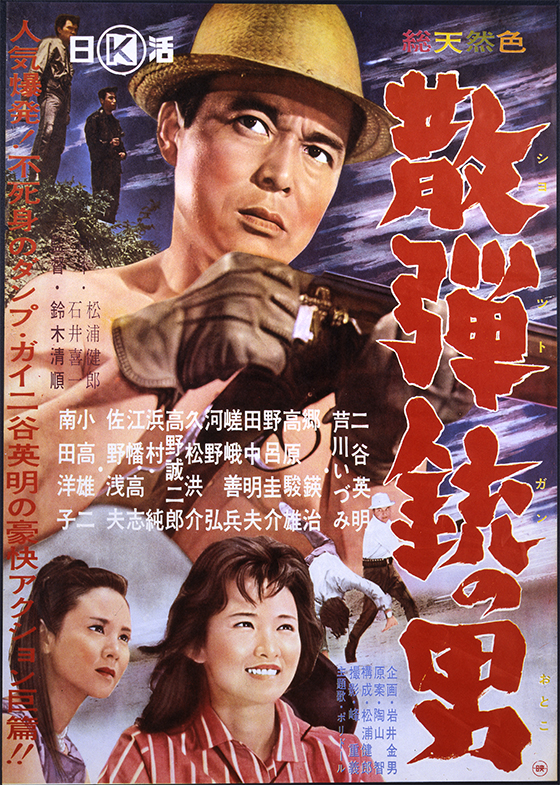
Man with a Shotgun (散弾銃の男, Seijun Suzuki, 1961)

Man with a Shotgun 1961Nikkatsu’s “Borderless Action” seemingly opened a portal to a world entire to be found within Japan itself. Man with a Shotgun (散弾銃の男, Shotgun no Otoko) is, as the title suggests, another tale of a wandering, gun toting hero though this time one less of aimless flight from failure, responsibility, or rejection than of revenge. Hideaki Nitani gets a (relatively) rare chance to strut his stuff as the lead in a full colour picture, perhaps incongruously starring as one of Nikkatsu’s singing cowboys but he does certainly lend his characteristic sense of gravitas and authority to an otherwise underwritten role.

Ryoji (Hideaki Nitani) rocks up at at rickety bridge looking for a nearby shrine only to be warned off by a grumpy old man in a van. You don’t want to go up there, he tells him, there’ll be trouble if you do. Ryoji is, he claims, a hunter and so he’s not afraid. After all, he’s still in Japan – it’s not as if the entire place is infested with lions and tigers. Then again it’s not exactly game he’s come to hunt.

When he reaches the shrine, Ryoji finds himself in a strange mini kingdom presided over by mill owner Nishioka (Akio Tanaka). The few locals who still live in the village mingle uncomfortably with the migrant work force who people the mill while Nishioka dominates the local economy by owning the only bar in town which is also the only place his largely male workforce have to blow off steam. After getting roughed up by three of Nishioka’s henchmen on the way into town, Ryoji makes the first of many enemies when he stands up to fellow drifter Masa (Yuji Kodaka) when he threatens to throw a man’s daughter to the sex starved labour force unless he pays his debts. The sheriff, an ineffectual local, gets himself seriously wounded meaning the position becomes temporarily open. Nishioka, originally a “benevolent” dictator, is in danger of becoming less so when it is suggested he also form a police force given that the state authorities can’t be bothered with such a remote little village. Ryoji doesn’t quite want to stand for that and volunteers only for Masa to do the same, but the argument is eventually settled to one side of their continued male posturing.

As far as westerns go, Man with a Shotgun leans heavily towards colonial romance and adventure rather than your typically arid, dusty world of saloons and ranches. Lush and green, the small mountain town smacks more of the jungle as does Nitani’s idiosyncratic costume which arrives somewhere between chic safari and fashionable cowboy. Claiming to be a “hunter” Ryoji wanders around with self satisfied smugness, certain that he’s bringing justice to this lawless town all while he makes investigations into the matter which sent him wandering in the first place. Of course, while he’s here, there are other damsels in distress including Setsuko (Izumi Ashikawa) – the younger sister of the sheriff’s late wife, apparently raped and killed by “drifter” bandits.

“Drifters” turn out to be the scapegoated big bad as the migrant workforce quickly take over this little town, making trouble in the bar and hassling the locals, only the locals don’t seem to mind as much as they say they do. There’s trouble at the mill, but not quite the kind that might be imagined. Nishioka has his sticky fingers in some nasty business which also involves not just migrants but actual foreigners and illegal activity on a grand scale. As it turns out, some people are in on the action and some aren’t, and Nishioka is currently making a few calculations as to how to “eliminate” a few inconveniences – something to which he thinks Ryoji and his sparring partner Masa might turn out to be the perfect solution.

Like many a Nikkatsu hero Ryoji is a noble sort, something which engineers for him a happier ending than many get even if it has to be bittersweet to hint at possible followup instalments where Ryoji takes names and fights crime in other small towns. Nevertheless, given the choice he opts for the cool guy conclusion of firing into the air and casting his burdens away rather than damning himself forever in becoming what he hates. Shooting in colour even if not quite with Nikkatsu’s A-list, Suzuki doesn’t get much scope to flex his muscles but does make pointed use of painted backdrops coupled with location shooting, as well as doing everything he can to bring out Nitani’s cowboy cool and adding in a number of B-movie western cliches from letters delivered by a knife thrown into a door to the constant refrains of the title song. Still even if it largely lacks Suzuki’s anarchic touch save for the stylishly composed and absurdly humorous bar room brawls, there’s plenty of fun to be to had with Ryoji and his shotgun as they protect the innocent and seek justice in an often unjust world.


Available as part of Arrow’s Seijun Suzuki: The Early Years Vol. 2 Border Crossings box set.

Original trailer (English subtitles)

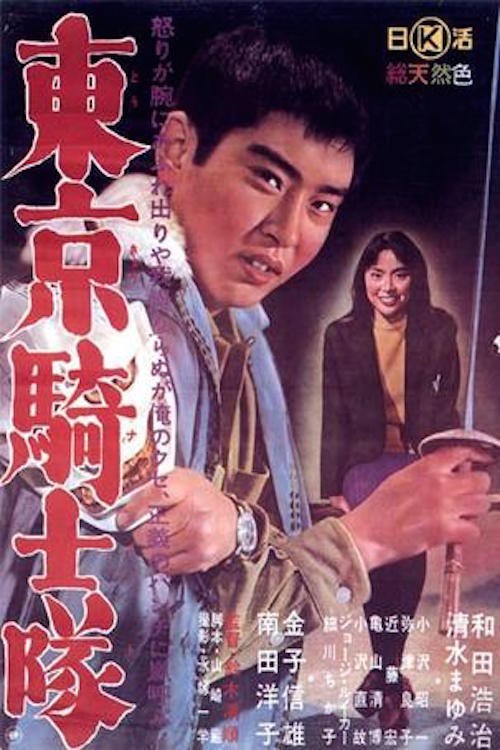
Tokyo Knights (東京騎士隊, Seijun Suzuki, 1961)

Tokyo Knights posterUnlike those from elsewhere, Japanese teen movies can often exist inside their very own bubbles in which the central characters refuse their coming of age stories and either die senselessly or simply carry on from their zany adventures as if nothing had really happened. Tokyo Knights (東京騎士隊, Tokyo Knight) definitely falls into the comedy category as its teen heartthrob hero, played by the then up and coming matinee idol Koji Wada, pulls a Hamlet in being called back from overseas studies to become CEO in waiting to his late father’s company only to suspect there’s something rotten in the state of Matsubara Construction. Quirky high school antics quickly give way to conspiracy thriller, but Koji (Koji Wada) remains steadfast and unwavering in the face of adversity as he faces off against the forces of darkness with little more than Nikkatsu spirit.

The film opens with a rather strange ceremony in which high school student Koji is instated as the new CEO of his father’s company. Koji’s dad apparently died suddenly in a freak accident meaning Koji has had to come home early from studying abroad in the US. Despite apparently being an amazing student who is good at absolutely everything and has joined all the after school clubs on offer, Koji has chosen the Catholic Elizabeth Academy because it’s well known as a coasting school where you can graduate with average grades. Fairly low attainment goals might be just as well because Koji is about to have his hands full with another mission. He’s convinced his dad’s death wasn’t an “accident” and he suspects his deputy, Mishima (Nobuo Kaneko), who is also getting close to his mum, might know more about it than he’s letting on.

In the grand tradition of heroes in Japanese teen drama, Koji has just found himself at the centre of a huge and dark conspiracy involving dodgy yakuza construction deals, blackmail, and murder. He does not lose heart or look to the grown ups for help but decides to handle the problem himself, settling back into the Hamlet-esque role he’s been assigned in neatly setting traps for the treacherous Mishima only doing it with a little more cosmopolitan flair carried back from abroad. Swapping roles like one of his much loved Noh costumes, he then becomes a kind of Romeo to the high school darling Yuriko (Mayumi Shimizu) whose dad, unbeknownst to her, turns out to be a horrible gangster who might be involved in the nefarious plan to take over the family firm. Enjoying a minor romance with the melancholy Yuriko, Koji considers the best way to get revenge and expose evil while protecting his mother, surrogate little sister figure, and his newfound love (?) Yuriko who will undoubtedly suffer now that she knows what kind of man her father really is.

Suzuki apparently incited the wrath of studio bosses when he took a serious crime script and turned it into an anarchic teen comedy but then you have to wonder what they thought it was he would do with it. The impossibly cool Koji is certainly an unrealistic hero, presented unironically he’d be sure to irritate – guys like Koji are, after all, more usually the antagonist set up to make our imperfect everyman feel inferior while he progresses towards some kind of self actualisation as a result of the standard narrative. Koji is, however, heroic and easily likeable as he assumes complete control, handling every situation with practiced ease and remembering to remain kind and just while he does so. He even stops to listen to his mother’s problems, sympathising with her when she reveals her unhappiness with his father, and urging her to grasp happiness wherever she sees it without worrying whatever he or anyone else might think.

Perhaps because of the relative simplicity of the plot, and the opportunity to shoot in colour, Suzuki flexes his muscles a little more than usual in adding in a fair few post-modern techniques including on screen graphics such as a series of large question marks zooming out of the major players Koji suspects may be involved in his father’s death and making a joke out of the need to include the songs of the day with frequent cuts to a teen cabaret club. For all of the tale’s darkness and almost Shakespearean overtones, Suzuki keeps his tongue firmly in cheek with a cartoonish sense of fun and lightness, allowing our heroes to emerge from their ordeal fairly unscathed while honour and justice are preserved. Who knew Catholic school could be so much fun?


Available as part of Arrow’s Seijun Suzuki: The Early Years Vol. 2 Border Crossings box set.

Original trailer (English subtitles)

Neuchâtel International Fantastic Film Festival (NIFFF) Confirms 2018 Lineup

Inuyashiki Banner

The Neuchâtel International Fantastic Film Festival (NIFFF) has long been a champion of East Asian cinema and returns for 2018 with another exciting selection of recent hits from China, Indonesia, Japan, Korea, and Thailand.

China

Operation Red Sea

  • Operation Red Sea – a team of elite special forces soldiers handles the extraction of Chinese diplomatic staff caught up in a Middle Eastern coup in Lam’s Operation Mekong followup. Review.
  • Monster Hunt 2 – Wuba returns! When the Monster village is raided, the little radish guy finds himself on the run and is taken in by a cynical gambler and his Monster partner while he looks for his human mum and dad. Review.

Indonesia

Satan's slaves still 1

  • Satan’s Slaves – Joko Anwar revisits an Indonesian classic in which a family is torn apart by vengeful spirits. Review.

Japan

One Cut of the Dead still 1

  • Kasane – adaptation of the manga in which a young woman with a facial scar dreams of becoming an actress and inherits a magical lipstick that allows her to take on the appearance of anyone she kisses.
  • Woman of the Dunes – Hiroshi Teshigahara’s classic adaptation of the Kobo Abe novel in which a bug enthusiast finds himself trapped in a hole in the beach with a mysterious woman.
  • Hanagatami – Nobuhiko Obayashi realises a longtime ambition of filming Kazuo Dan’s 1937 tale of youth on the brink of war. Review.
  • Inuyashiki – Shinsuke Sato adapts the popular manga in which a mildmannered middle-aged salaryman unexpectedly gets superpowers. Review.
  • Laplace’s Witch – Takashi Miike adapts Keigo Higashino’s “scientific mystery” in which a series of mysterious deaths occur at a hot springs resort.
  • Mutafukaz – French/Japanese anime co-production in which a pizza delivery boy becomes embroiled in a conspiracy.
  • Liverleaf – a bullied student gets her revenge!
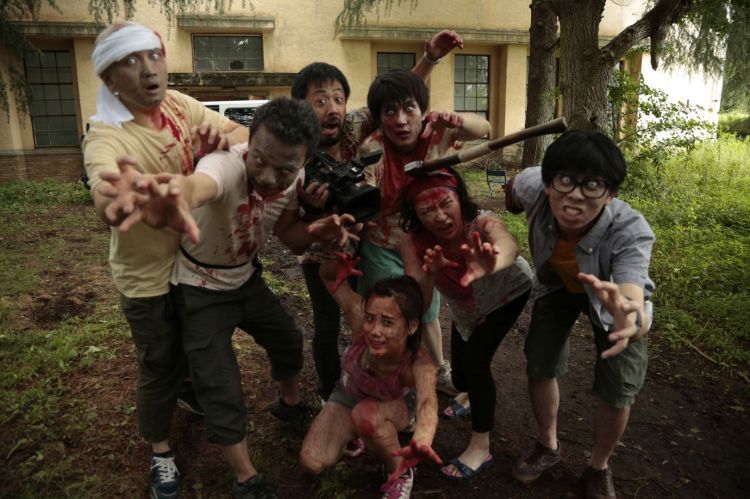
  • One Cut of the Dead – hilarious zombie action from Shinichiro Ueda.  Review.

Korea

Gonjian horizontal

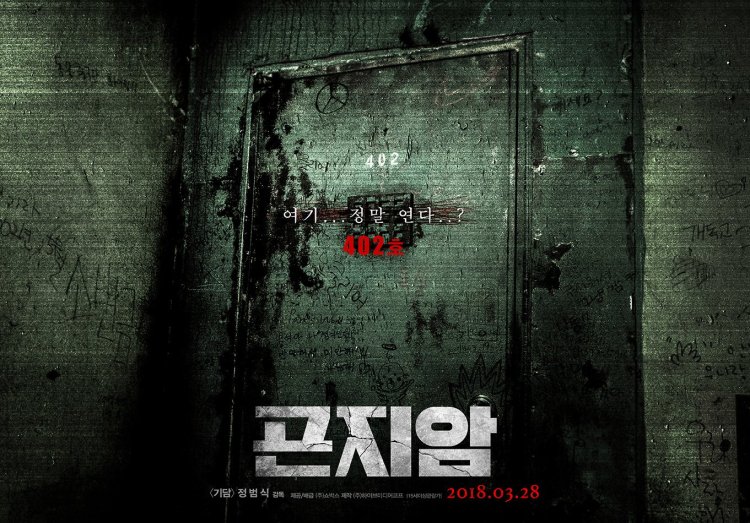
  • Gonjiam: Haunted Asylum – a team of social media stars venture into a haunted asylum in search of additional views and find more than they bargained for…

Thailand

bad genius still

  • Bad Genius – brainy teens plan a heist to scam the exams system. Review.
  • Premika – a vengeful karaoke obsessed ghost terrorises a group of guests at hotel!

The Neuchâtel International Fantastic Film Festival runs from 6th – 14th July 2018 in Neuchâtel, Switzerland. You can find the complete programme as well as screening times and ticketing information on the official website, and you can also keep up with all the latest news via the official Facebook page, Twitter account, Instagram, and YouTube channels.


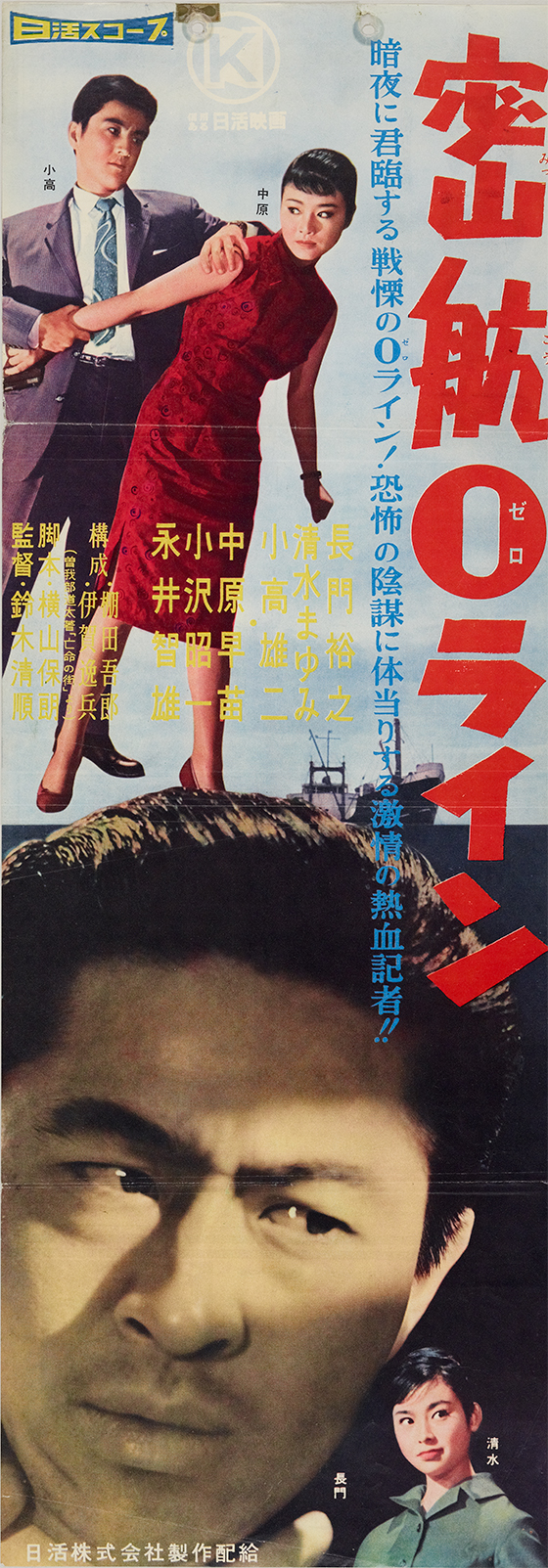
Smashing the 0-Line (密航0ライン, Seijun Suzuki, 1960)

(C) Nikkatsu 1960

(C) Nikkatsu 1960Looking from the outside in, the Tokyo of 1960 seems to have been one of rising economic prosperity in which post-war anxiety was beginning to transition into a relentless surge towards modernity, but there also seems to have been a mild preoccupation with the various dangers that same modernity might present. Like The Sleeping Beast Within released just two months previously, Smashing the 0-Line (密航0ライン, Mikko Zero Line) centres on a mystery which leads straight back to Hong Kong and a dangerous, international smuggling ring – this time involving both drugs and people. Our heroes are both reporters, but at odds with each other despite being old friends in having diametrically opposed notions of professional ethics.
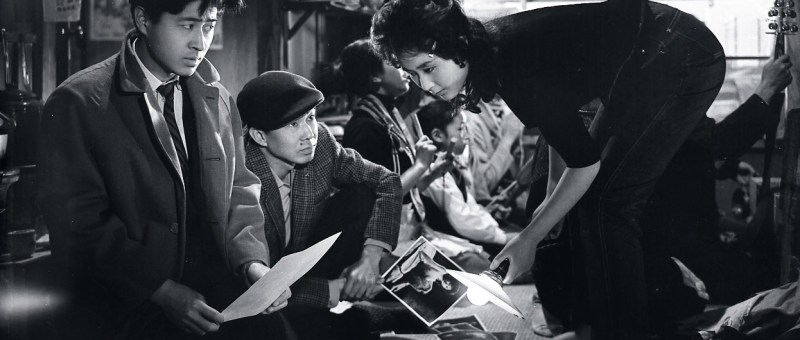
Katori (Hiroyuki Nagato), our anti-hero, is a man so desperate to get a scoop that he thinks little of engineering one. Thus we witness him making passionate love to a woman one minute before turning her into the police the next. The woman, Reiko (Sanae Nakahara), is also the little sister of one of his oldest friends, Saiko (Ryohei Uchida), whom he also decides to turn into the police in service of his story. Another old friend, Nishina (Yuji Kodaka), has also become a reporter but for a more respectable paper and is dating Katori’s little sister, Sumiko (Mayumi Shimizu), who is now the announcer at the local baseball stadium. Katori’s decision to turn on Reiko will have profoundly negative consequences for her former lover who is prepared to sacrifice all in pursuit of his goal.

Three men, once college friends, have chosen three radically different paths in the post-war world. Saiko has become a gangster while Katori has become an unscrupulous yet apparently publicly minded newshound and Nishina a pure hearted journalist who insists on doing everything by the book and abiding by conventional journalistic ethics. Yet despite himself, or possibly because of his love for Sumiko, Nishina tries to help Katori see the dangers of his extremely dangerous pattern of behaviour in which he has been content to use people like things to get what he wants.

Katori claims to be on the same side as Nishina – he thinks something is going sour in the city and that only he can stop it by exposing the various conspiracies in play. Katori’s chief fear is that Tokyo will become “another Hong Kong” – a crime ridden state of drug addled lawlessness (an extremely biased and seemingly inaccurate view of ‘60s Hong Kong but one that speaks of a certain fear of Japan’s new spot on the global scene). This particular conspiracy does indeed ping back to Hong Kong and the illegal traffic of drugs but also people heading in both directions. In the Japan of 1960, it was near impossible to get a passport and so smuggling yourself out might be the only way if you really need to get to Hong Kong which means you’ll need to pay a people trafficker to do it.

Katori, broadly, seems to think people trafficking is a bad thing he doesn’t want in Japan but is entirely blind to the same ways he himself uses people in pursuit of his goals. Not only does he bed Reiko (his friend’s little sister) only to make a speedy exit minutes before the police arrive, but he also palms off another mark on his informant only to turn them both in in hope of greater gain. He even manages to find time to seduce a doctor at the centre of the scandal who tries to pull a gun on him but later surrenders completely, only to fall victim to some proactive tidying up from the bad guys. Not content with sacrificing former lovers, Katori will not give in even for his sister, refusing to give up on his lead even when Sumiko is threatened with gang rape. When Nishina turns up and saves the day, Katori doesn’t even stop to ask how Sumiko is but walks off in the direction of the story with nary a second glance to his unconscious sister.

Yet Katori’s particular brand of nihilistic heroism consistently fails. His scoops are uninteresting and he only gets them by inserting himself into the story. Nishina, steadfast and honest – he even goes to the trouble of getting a proper passport to hide on his person in case he’s caught pretending to be a stowaway, is the one who gets there in the end, breaking the smuggling ring, rescuing Katori after he gets himself in trouble, and generally always being around to save the day. Mildly ironic themes of xenophobia aside, Smashing the 0-Line is a typically frenetic piece from Suzuki which offers only a few instances of unusual experimentation in his use of freeze frames and onscreen text but packs in plenty of punch in its amoral anti-hero and the dogged investigative reporter trailing along behind.


Available as part of Arrow’s Seijun Suzuki: The Early Years Vol. 2 Border Crossings box set (also features incisive audio commentary from Jasper Sharp providing a wealth of background information not just about Suzuki’s career but the state of the Japanese film industry at the time)

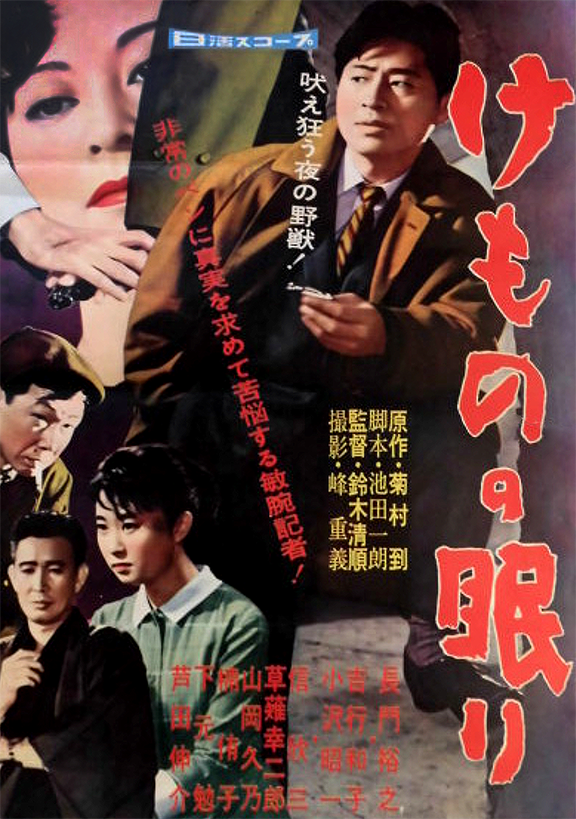
The Sleeping Beast Within (けものの眠り, Seijun Suzuki, 1960)

Sleeping Beast Within posterTo those of a “traditional” mindset, a woman’s career is her home and she never gets to retire. Men, by this same logic, are killed off at 60 and reborn into a second childhood where they get to indulge their love of fly fishing or suddenly discover an untapped talent for haiku. Seeing as a man often lives at the office, being excommunicated from his corporate family can seem like a heavy penalty for those who’ve devoted their entire existence to the salaryman ideal. So it is for the old timer at the centre of Seijun Suzuki’s 1960 mystery thriller, The Sleeping Beast Within (けものの眠り, Kemono no Nemuri) in which the sudden disappearance of a model employee sparks his daughter and her dogged reporter boyfriend to investigate, unwittingly discovering a vast drug smuggling conspiracy headed by a dodgy cult leader.

Veteran salaryman Junpei Ueki (Shinsuke Ashida) has been working in Hong Kong for two years and is finally coming home, to retire. His family have come to meet him but, as his daughter’s reporter boyfriend Kasai (Hiroyuki Nagato) points out, no one much else has turned up – so it is for those who don’t play office politics, claims one of the few colleagues who has arrived to greet the recently returned businessman. Ueki isn’t very happy about his retirement and believes he’ll be getting a part-time job at the same company only to be informed position has been “withdrawn”. When he doesn’t come home after his retirement party, something surely out of character for such a straight shooting family man, his wife and daughter become worried. Keiko (Kazuko Yoshiyuki) enlists Kasai to help figure out what’s happened to her dad only for him to suddenly turn up with a bad excuse and an almost total personality transplant. Kasai keeps digging, and the reporter in him loves what he finds even if the nice boyfriend wishes he didn’t.

Suzuki sets up what a good guy Ueki is when he brings back a modest ring for Keiko only for her to mockingly ask if her dad couldn’t have brought something a bit flashier. Ueki points out that the customs people might not have liked that so she jokes that he should have just smuggled it in like everyone else. Kasai reminds her that her dad’s not that kind of man, but two years in Hong Kong have apparently changed him. Having spent two years away from his family and 30 years slaving away at a boring desk job, Ueki feels he’s owed something more than an unceremonious kiss off and a little more time for gardening. The reason he ended up entering the world of crime wasn’t the money, or that he was blackmailed – it started because of his sense of integrity. He felt he owed someone and he did them a favour. It went wrong and he ended up here. His decision to join the gang came after he tried to “pay back” the money for some missing drugs only to realise that his entire retirement plan was worth only a tiny fraction of his new debt. Ueki felt small and stupid, like a man who’d wasted his life playing the mugs game. He wanted some payback, but his life as criminal mastermind turned out not to be much of a success either.

Trying to explain her father’s actions to the wounded Keiko, Kasai explains that everyone has a sleeping beast in their heart which is capable doing terrible things when it awakens. Ueki’s sleeping beast was woken by his resentment and sense of betrayal in being so cruelly cast aside by the system to which he’d devoted his life while the guys who broke all the rules – drug dealers, gangsters, and corrupt businessmen, lived the high life. One could almost argue that a sleeping beast is stirring in Kasai’s heart as he pushes his investigation to the limit, occasionally forgetting about the harm it will do to Keiko even whilst acknowledging the greater good of breaking the smuggling ring once and for all. Keiko too finds herself torn, confused and heartbroken by the change in her father’s personality though her mother feels quite differently.  Claiming that “a woman has no say in her husband’s work”, Keiko’s mum tells her daughter that a wife’s duty is to do as her husband says and avoid asking questions. Keiko has asked a lot of questions already and shows no signs of stopping now, even once she realises she won’t like the answers.

Despite the grimness of the underlying tenet that it doesn’t take much for honest men to abandon their sense of morality, Suzuki maintains his trademark wryness as Kasai and Keiko go about their investigation like a pair of pesky kids chasing a cartoon villain. Though the tale is straightforward enough, he does throw in a decent amount of experimentation with two innovative flashback sequences in which the flashback itself is presented as a superimposition with the person narrating it hovering at edges as if referring to a slide. The beast is quelled with a shot to the heart, but not before it wreaks havoc on the lives of ordinary people – not least Ueki himself who is forced to confront what it is he’s become and who he was prepared to sacrifice to feed the hungry demon inside him.


Available as part of Arrow’s Seijun Suzuki: The Early Years Vol. 2 Border Crossings box set.