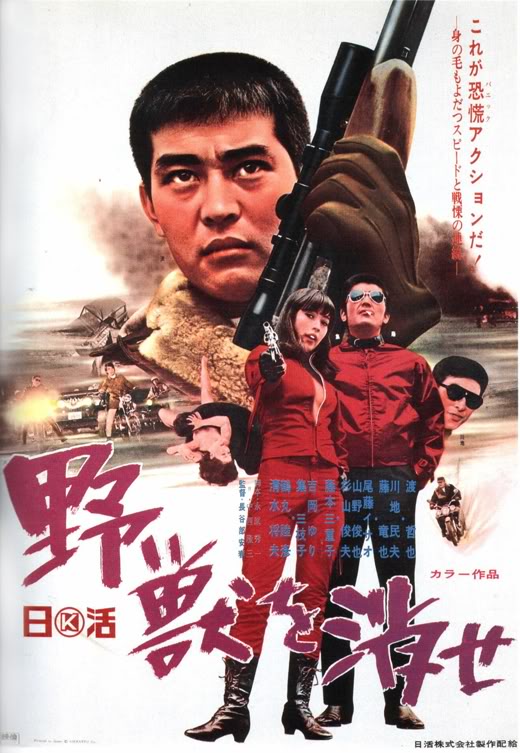
Savage Wolf Pack (野獣を消せ, Yasuharu Hasebe, 1969)

savage wolf pack posterYasuharu Hasebe was a key player in Nikkatsu’s pre-Roman porno stab at groovy youth gone wild responsible as he was for 3/5ths of the Stray Cat Rock series. Yet even before launching the seminal cycle, he was busy sowing the seeds of Pinky Violence in Nikkatsu’s regular action output. Savage Wolf Pack (野獣を消せ, Yaju wo Kese), released in 1969, features many of the same motifs as his later work in its beatniky setting, mildly anti-American sentiment, and general counter cultural milieu along with a propensity for shockingly nasty sex and violence. Hasebe manages to include all of this within the confines of a Nikkatsu Action movie which would normally hold back from such extreme fare, painting a nightmarish vision of lawless youth and out of control cruelty.

A vicious biker gang chases a young girl down into an abandoned field where the lackeys gang rape her while the chieftain (Tatsuya Fuji) and his lady (Mieko Tsudoi) look on from their custom jeep with a strange bat symbol attached to the front. Once they’ve finished what they came for the gang simply leaves and the young woman, battered, bruised and broken picks up a discarded Coke bottle and smashes it to slash her wrists.

Meanwhile, big game hunter Tetsuya (Tetsuya Watari) has returned from Alaska to find his hometown much changed. The violated woman, Satoko (Mari Yoshioka), is Tetsuya’s younger sister though the identity of her attackers is not yet known. Ironically enough, Tetsuya himself encounters the gang by chance while they’re in the business of running another girl, Kyoko (Meiko Fujimoto), off the road. He turns back, confronts them, and rescues the woman but continues to encounter the gang until Kyoko is eventually captured, as is he when his valiant rescue attempt fails.

The gang at the centre of Savage Wolf Pack is genuinely nasty. There’s nothing noble or aspirational in their drop out, delinquent lifestyle. They make their living by fencing stolen booze to a local nightclub and threatening violence to anyone who gets in their way. The entire town is frightened of them, even the old man who owns the garage where Tetsuya lives urges him not to get mixed up in their business as they have the surrounding area under complete control.

As later becomes apparent the gang’s casual attack on Satoko is not an isolated incident, but a symptom of their way of life. Just as Tetsuya hunts down big game in the frozen expanses of Alaska, the gang stalk, chase, run down and devour their prey for nothing more than the thrill of subjugating another human being. The attack is as brutal as it is mundane, once done it hardly matters to them.

Tetsuya starts out as the unshakeable hunter, a solitary figure unwilling to get involved with a local girl who might take him away from the beautiful simplicity of his life as sniper in the shadows. Kyoko apparently falls for him straightaway thanks to his knight in shining armour act though ironically enough it’s she who’s been struggling to assert her own independence after running away from her wealthy politician father’s home in protest at an arranged marriage. Tetsuya proves a poor protector, allowing her to be captured through his own indifference and then failing to save her from the gang’s bestial appetite for cruelty. Though Hasebe hangs back from excessive depictions of sexual violence and its fetishisation as seen in other films of the era, Kyoko’s sudden desire to give herself to Tetsuya mere hours after being kidnapped, humiliated, and gang raped seems unlikely and an odd resolution to their already bizarre romance.

What starts out not so far from Gangster V.I.P eventually runs into horror territory as Tetsuya takes his all-powerful gun to the beatnik drop out biker gang preying on all the women in his life. The final battle is bloody and visceral in the extreme as bits of brain stain the walls and intestines tumble from open stomachs. Tetsuya hunts the gang with bear traps and picks them off from afar with his sniper rifle, reducing them to the rampant beasts they really are.

Yet the world itself is a dark one. One theory behind Satoko’s death is that she was perhaps attacked by GIs from the nearby base and it’s no coincidence that she slashes her wrists with a broken Coke bottle or that a Coca Cola billboard is later used for target practice. Another of the gang’s would be victims is the wife of a high-ranking GI who is not currently around leaving her to enjoy the company of various men while he is away – something the biker gang choose to exploit. The biker gang is, perhaps, a symptom of the ongoing corruption of traditional culture by imported Western values as they indulge their delinquent, drug fuelled, individualist lifestyle to its horrifying, destructive limit.

Tetsuya is later forced to surrender to the Americans and presumably submit himself to whatever punishment is appropriate for clearing up town. Kyoko seems to have rediscovered an ability of self-assertion as she vows to stand up to the father she’s repeatedly blamed for her current situation rather than running away, inspired by Tetsuya’s heroic defiance against the offensive hubris of the biker gang. Unlike the majority of Nikkatsu Action movies, Tetsuya does not emerge as a hero but merely as a survivor, caged and robbed of his own autonomy even if ultimately victorious in ridding his nostalgic childhood home of corrosive, drug addled crazed youth.

Sweating the Small Stuff (枝葉のこと, Ryutaro Ninomiya, 2017)

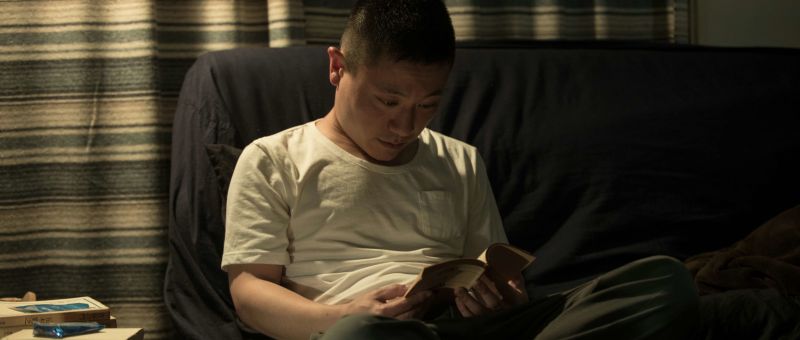
Sweating the Small StuffAs portraits of stagnation go, Japanese indie is no stranger though few have found a protagonist as passive as the hero of Ryutaro Ninomiya’s Sweating the Small Stuff (枝葉のこと, Edaha no Koto). Played by the director himself and sharing his name, Ryutaro is a man who barely speaks and has long since given up the illusion that anything that might be said could be of real consequence. Like most of the men in his run down town he has no dreams or ambitions, barely tolerates those who might regard him as a friend, and finds his only refuge in the pages of a book. A chance phone call produces a brief change in his routine but perhaps not enough to shake him from his committed course of listlessness.

At 27, Ryutaro lives alone in a modest, messy apartment filled with empty beer cans, cigarette butts, and piles of books. He has a dead end job at a moribund garage and spends his breaks avoiding his co-workers whom he seems to find annoying. Receiving a phone call from a childhood friend, Ryutaro informs his drunken boss that he needs to leave early before going home to eat noodles, read, and wait to be picked up. His friend, Yusuke, takes him to see his mother, Ryuko, who has been ill with hepatitis C for some years during which time Ryutaro has avoided seeing her despite having been close to her following the death of his own mother when he was just a child.

Ryutaro is a sullen sort of man, almost vibrating with an internalised rage which is only calmed at home with his books. Conversations with his friend Yusuke and later with Ryuko reveal that Ryutaro once had literary aspirations himself, even placing well in competitions, but has more or less given up writing. Yusuke also wanted to be an artist but has abandoned his dreams for a regular salaryman life, as has Yusuke’s brother Satoshi who used to bleach his hair and play in a band. Ryutaro’s boss seems to be among the few who has yet to definitively give up, planning to leave the garage to take over an interiors company owned by a friend of his mother’s who has no heirs to inherit it. Ryutaro’s boss has mentioned similar schemes before and they’ve always fallen through, but he thinks this time will be different. Ryutaro, in contrast, seems to have abandoned any idea of forward motion, refusing to pursue his literary goals, a more stable career, or relationships with friends and lovers in favour of whiling the time away inconsequentially.

Having lost his mother at a young age and then watched his step-mother battle a serious illness which she seems to have recovered from, Ryutaro perhaps has reasons to be wary of forming deep attachments. Only once does his stony facade crack, during a private conversation with Ryuko in which he tells her that sometimes he cheers himself up by remembering that there must be people in a much worse place than he is. Yet Ryutaro is not an unkind man, much of the little he does say is offered quietly in kindness such as his defence of Ryuko’s sometimes absent minded husband, but what he can’t stand is babble and insincerity. Pushed into an unwanted, vacuous conversation with a potential girlfriend he quips that he likes his cheap hairdressers because they get it done without talking before becoming overwhelmed and cruelly laying into the chatty woman with a lengthy rant about the utter pointlessness of her one-sided loquacity. Failing to realise the depth to which he’s hurt her, Ryutaro goes back to the bar where she works to try and see her again only to be rebuffed.

A similar event occurs in another bar when his boss makes a joke about his seeming blankness. Twice Ryutaro gets himself into fights and twice he refuses to defend himself, remaining passive as blows rain down on him. Trying to shut everything out, Ryutaro drinks heavily, declines invitations, and stays at home alone but Ryuko’s illness has forced him to re-emerge, to a degree at least, into the world. Caught in a state of permanent anxiety, Ryutaro finds himself paying repeated visits to Ryuko before finally attempting to talk with his equally detached father who appears to suffer from many of the same problems as Ryutaro himself.

Inspired by true events, Sweating the Small Stuff is both a picture and mild rebuke of aimless youth and of a generation which has collectively decided that everything is meaningless and devoid of purpose. In an odd way, Ryutaro, in his inertia, may be the last man standing, still resentfully clinging on to an idea of real meaning which is defined by its own absence. Ryutaro’s tragedy is that he wants more out of life than there perhaps is to be found and remains frustrated among all those content to waste their time in idle pursuits or surrender themselves to a life of respectable drudgery and ordinary happiness but there are perhaps brief flickers of connection to found even within his ever more disconnected world.


Currently available to stream via Festival Scope as part of their Locarno Film Festival selection.

Original trailer (dialogue free, no subtitles for captions)

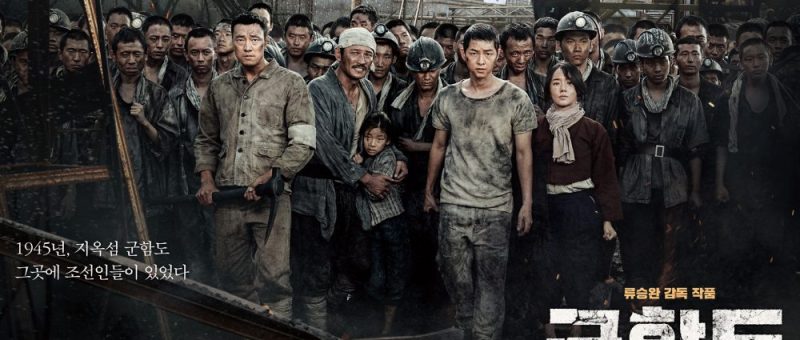
The Battleship Island (군함도, Ryoo Seung-Wan, 2017)

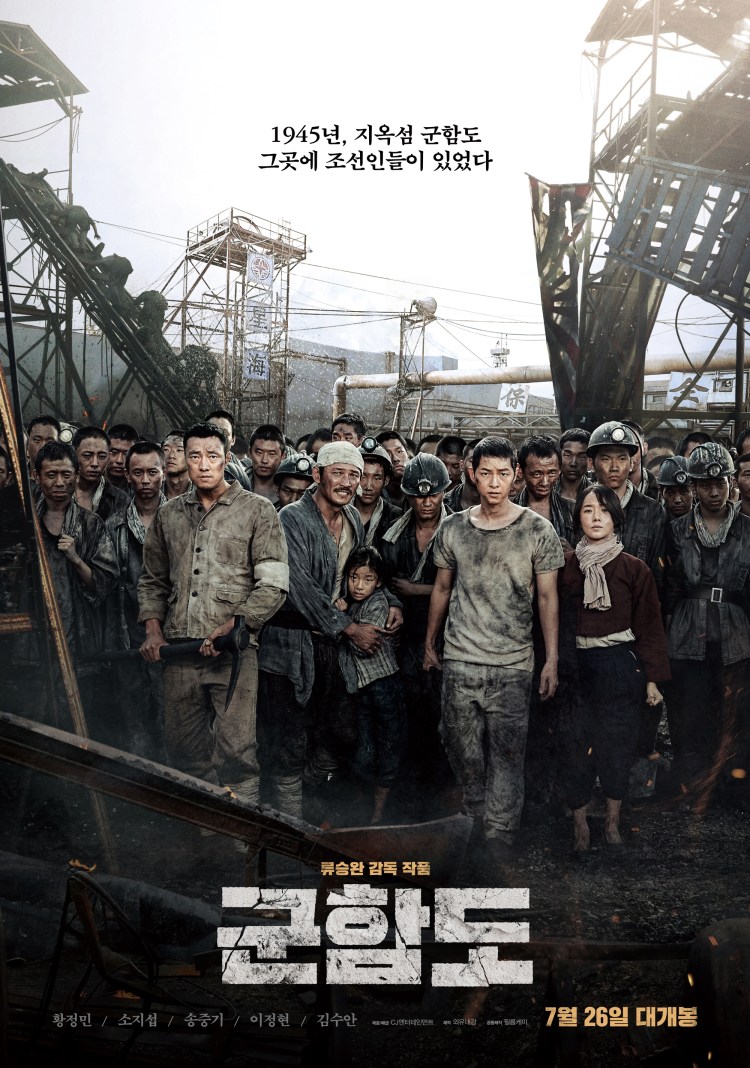
battleship island posterKorean cinema has been in a reflective mood of late. The ongoing series of colonial era dramas have sometimes leaned towards uncomfortable and uncompromising nationalism but among the more recent, there has also been an attempt to ask more serious questions about collaboration and capitulation of ordinary people living under a brutal and often cruel regime. While Age of Shadows dramatised this particular problem through the conflicted figure of a former resistance fighter turned Japanese military police offer, The Battleship Island (군함도, Goonhamdo) goes further in its depiction of those who dedicated themselves entirely to the Japanese Empire and were willing to oppress their fellow Koreans to do so. That is not to ignore the hellish conditions which define the very idea of Hashima as an off shore labour camp where depravity rules, exploitation is hidden, and the camp commander is free to run his ship however he sees fit.

In early 1945 Korea is still under Japanese colonial rule and ordinary Koreans are liable for conscription into the Imperial Japanese army whether they like it or not. Gang-ok (Hwang Jung-min) and his daughter Sohee (Kim Soo-ahn) are members of a popular jazz band but Gang-ok has a habit of getting himself into trouble and so they are tricked into getting on a boat to Japan hoping for a safer, more lucrative life. Where they end up is Hashima – otherwise known as “Battleship Island”. Gang-ok and Sohee are separated with Gang-ok stripped of his musical instruments and Sohee, who is only a child, carted off with the other women destined for the “comfort station”.

Ryoo wastes little time demonstrating the immense evil buried in places like Hashima. A deep seam coal mine in the middle of the sea, the island is a fortress prison from which escape is impossible. Early on, three small boys decide to flee after their friend is killed in a cave-in only for one to be shot and the other two drowned by the lazy soldiers of a Japanese patrol boat who couldn’t be bothered to fish them out of the water. The miners are beaten, starved, tortured and manipulated into submission knowing that capitulation is their best route to survival. Not only are these men the subjects of forced labour, they are also made liable for the “costs” involved in their own enslavement with the bill for their transportation, food, clothes, and tools deducted from their “wages” which are supposed to be paid into their bank accounts for access on release. Those killed whilst working are supposed to receive compensation for their families but as will later be revealed, systematic corruption means their families may not even know their loved ones are dead let alone that they are being denied the money rightfully owed to them.

Things get even worse for little Sohee who is forced into a kimono and smothered with makeup to “entertain” some of the Japanese officers on the island. She manages to buy herself some time when she realises the Korean record the camp commander puts on to “comfort” the “comfort women” is one she is actually singing on. This new discovery earns her and her father a slightly improved status in the camp though she may not be safe for long. Gang-ok has already reverted to his tried and tested methods for getting out of sticky situations, making himself a kind of camp fixer aided by his ability to speak Japanese.

The Korean prisoners are represented by a former resistance leader, Yoon Hak-chul (Lee Kyoung-young), who offers rousing speeches in public but privately is not quite all he seems. Gang-ok gets himself mixed up in a Resistance operation run by an OSS (Song Joong-ki) plant on site to rescue Yoon who eventually uncovers several inconvenient truths which make his mission something of a non-starter. Yoon’s empty rhetoric and self serving grandeur represent the worst of the spiritual crimes discovered on Hashima but there is equal ire for the turncoat Koreans who act as enforcers for the Japanese, issuing beatings and siding with their oppressors in the desperation to escape their oppression. Tragically believing themselves to have switched sides, the turncoats never realise that the Japanese hold them in even lower regard than those they have betrayed.

It is hard to avoid the obvious nationalistic overtones as the Japanese remain a one dimensional evil, smirking away as they run roughshod over human rights, prepare to barter little girls and send boys into dangerous potholes all in the name of industry. At one point Gang-ok cuts an Imperial Japanese flag in half to make the all important ramp which will help the captive Koreans escape the island before being summarily murdered to destroy evidence of Japanese war crimes which is a neat kind of visual symbolism, but also very on the nose. Once again, the message is that Koreans can do impossible things when they work together, as the impressively staged, horrifically bloody finale demonstrates, but as Ryoo also reminds us there no “heroes”, only ordinary people doing the best they can in trying times. 


Currently on limited UK cinema release!

Original trailer (English subtitles)

Assassin (암살자, Lee Man-hee, 1969)

Lee Man-hee Assassin vertical

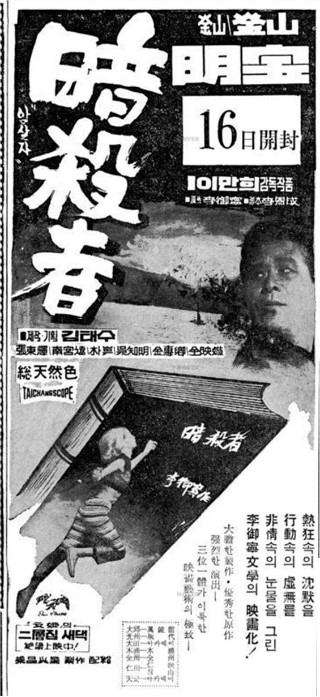
Lee Man-hee thought he’d made an “anti-communist” film in 1965, but apparently he was wrong. The Seven Female POWs was severely edited and retitled Returned Female Soldiers when eventually released, meanwhile Lee did some jail time for supposedly breaking the law in his sympathetic depiction of leftist soldiers. In 1969’s Assassin (암살자, Amsalija) he takes no chances. Set directly after the liberation, Assassin makes no attempt to deny that this was a cruel and chaotic time in which loyalties were to be questioned and honour mourned.

The hardline communists have a problem. One of their top generals, Nam (Park Am), is about to defect and ally with the ruling regime. They need to get rid of him in a hurry. Their plan is to hire an assassin and frame “the Right” before Nam can defect. The Assassin (Jang Dong-hui) they call on is the number one pro but some worry he’s too softhearted for what they have planned. Despite his cold hearted profession, the Assassin has been raising the daughter of a man he killed nine years ago as his own and will not take being dragged away from her at short notice kindly,

Though the communist agents turn up somewhat ominously – one hiding out and lending an umbrella to the Assassin’s little girl and the other inviting himself into the house, they do not directly threaten the Assassin or even offer him money when he tries to turn them down. He eventually decides to take the assignment only on hearing the target’s name and realising he would make a perfect addition to his hit list firstly because they have an old score to settle and secondly because the Assassin has long wanted to see the face of a man meeting his death bravely as he pulls the trigger.

Shooting in colour and with a more experimental mindset, Lee’s use of time is strange and bewildering. The entire enterprise takes place over one night yet much of the outdoor scenes are in daylight. He stages two monologues as a conversation by cutting between two different couples on boats – the Assassin recounting his childhood to a communist foot soldier, and Nam having a heart to heart with his lady love. Meanwhile, Lee also cuts back to the Assassin’s home where the innocent little girl is chatting playfully with another of the communist goons who has been sent to keep an eye on (and then perhaps eliminate) her while her father is out on the job.

Lee begins with a voice over stating that the film will expose the truth about communist violence, instantly locating its own political intentions. The communists are a bad bunch who have no honour, no loyalty, no compassion, and no interest in anything other than their own cause. The cause itself is thereby rendered irrelevant through their own hypocrisy. In order to get the job done, the communists have recruited a local boy to drive the boat and carry messages. They’ve promised him a place in a good school in Seoul. Needless to say they will not be honouring that promise. No one can know of this job – it’s supposed to be a rightest plot, and so all loose ends must be eliminated, including those currently members of the communist faction. 

The Assassin does not approve of this. His ideas are old fashioned and he believes in a kind of code even within the darkness of his own profession. The Assassin’s only joy is in his little girl – really the daughter of a man he murdered. This is both proof of his adherence to his code of honour and to his generally compassionate nature. Nam is much the same. He has his code too, though it has recently been ruptured by the intrusion of love. Before, he could have said anything but now he’s found love he’s happy to go and will bear his sentence with dignity. Strangely, neither Nam nor the Assassin pause to consider what will happen to the women in their lives when they are gone, even if it is these women and their relations with them that have humanised their otherwise calculating hearts.

The Assassin’s little girl remains completely unaware of her adopted father’s profession or of the danger posed by a man she doesn’t know sitting at her bedside fondling a gun. Her one request of her father is that he bring her back an apple with the leaves still on it – a symbol of her own innocence and naivety, but the apples he picks for her are later smashed to smithereens under a communist’s boot. The communist gets his own comeuppance (these communists do seem to be quite a dim bunch, gleefully felling their fellow officers yet never guessing they may be next), but Lee’s rather unsubtle message is clear as “the left” stomps all over any and all signs of love, compassion, innocence or beauty.

Unlike Lee’s other films this one ends with a heavy handed voice over but no “The End” – presumably the story of the struggle against communism is not yet finished. The story is an old one, men who live by the sword die by the sword – they know this and accept it almost as a religious rite. Both Nam and the Assassin know their place within this cycle and so they submit to it with bravery and stoicism whereas the strangely manic villain attempts to run from his fate but fails miserably. Lee experiments with time and form, perhaps attempting to move past the obvious propaganda element of the project but never manages to escape it. Still, The Assassin is oddly moving in its final moments even if tinged with cynicism and a sense of the world’s cruelty untempered by Lee’s generally forgiving melancholy.


Assassin is the fourth and final film in The Korean Film Archive’s Lee Man-hee box set which comes with English subtitles on all four films as well as a bilingual booklet. Also available to stream online via the Korean Film Archive’s YouTube Channel.

A Day Off (휴일, Lee Man-hee, 1968)

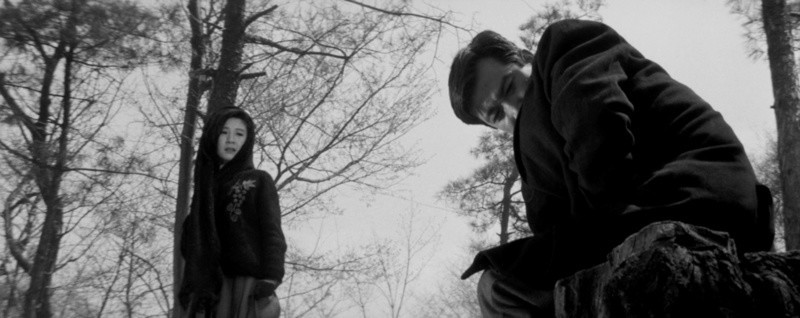
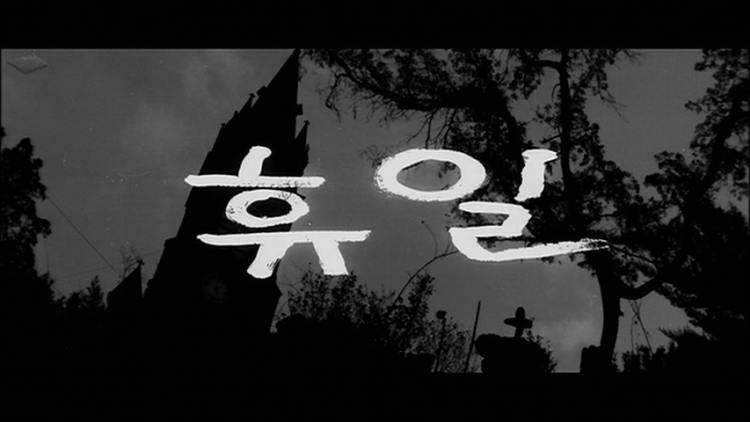
vlcsnap-2017-08-09-23h50m27s782Prolific as he was, Lee Man-hee had his fair share of troubles with the censors throughout Korea’s turbulent 1960s, most famously with his arrest for breaking anti-communism laws with The Seven Female POWs which was later heavily edited and released as Returned Female Soldiers (perhaps a neat nod back to Lee’s mega hit, The Marines who Never Returned). Before that, however, Lee’s poetic meditation of the difficulties of being young in the increasingly heartless capital, A Day Off (휴일, Hyuil), was banned altogether for painting an all too gloomy picture of modern life and love. Though modern Korean cinema has gained itself a reputation for gloominess, that of the gloomy years was still expected to be, in some way, “inspirational”. Refusing to end on a happier note, Lee shelved the film leaving it unseen until rediscovered for a retrospective in 2005.

The elliptical narrative begins with Huh Wook (Shin Seong-il), trapped by another listless Sunday and remembering a girl he used to spend them with, Ji-youn (Jeon Ji-youn). Huh Wook and Ji-youn can only meet on Sundays. They count down the hours until they can be together again but then when the day closes they almost wish they’d never met at all. Neither of them have any money – Huh Wook can’t even afford a cup of coffee, let alone a wife. The relationship reaches a crisis point when Ji-youn, whose constitution is weak, becomes pregnant.

Huh Wook and Ji-youn’s conversation is raw and painful, filled with half spoken thoughts and an unwillingness to confront the depth of their despair. The couple half discuss their predicament with the assumption that they are talking about a child they cannot afford to have and an abortion they cannot pay for but it turns out the operation that Ji-youn means may be for an unrelated illness. When they finally see a doctor he advises that Ji-youn have an abortion because her health is so poor that she would likely not survive a pregnancy.

This is a city which is rapidly expanding, living conditions and opportunities should be improving but for the left behind like Huh Wook and ji-youn Sunday is all they have to live for, and so they can hardly stand it. Their situation is so hopeless, so filled with despair that there is nothing at all waiting for them but a perpetual cycle of work and release. While Ji-youn is in hospital, Huh Wook wastes time at a bar where he gets chatting to another woman. They talk, they drink, they spend the night together in a derelict building before Huh Wook is woken by church bells and remembers poor Ji-youn lying in hospital, fighting for her life.

Huh Wook is the more romantic but also the least willing to confront the situation. He criticises Ji-youn for her silence but she fires back at him with a description of an idealised life she knows they can’t have – a nice house, flowers in the garden, and yes, children. An ordinary dream but one she knows will never be a reality. Huh Wook leaves her alone to try and borrow money, wasting one of their precious Sundays. His friends have all found different kinds of release – the first is a womaniser but flat refuses Huh Wook money he assumes is for an abortion, the second is a drunk who advises him to have the baby and spend the money on drink, and the third is a wealthy man with a live-in maid. Huh Wook never gets round to asking him for the money but steals it from his jacket while he’s in the bath. 

Completed in 1968, A Day Off has echoes of Antonioni in its beautifully empty cinematography and bleak view of human relationships in an increasingly modern world. Huh Wook and Ji-youn appear to have a deep and genuine connection but their existence is so fraught with financial and social difficulties that the future is always an impossibility and, in a sense, already the past. Huh Wook wanders alone. Beaten up by the friend he stole the money from, he’s tired, bloody, and worn out. Yet all he feels is relief. All his hope is gone and now he’s free of its burden, left with nothing other than the false promise of a new dawn on the unforgiving streets of Seoul.


A Day Off is the third in The Korean Film Archive’s Lee Man-hee box set which comes with English subtitles on all four films as well as a bilingual booklet. Also available to stream online via the Korean Film Archive’s YouTube Channel.

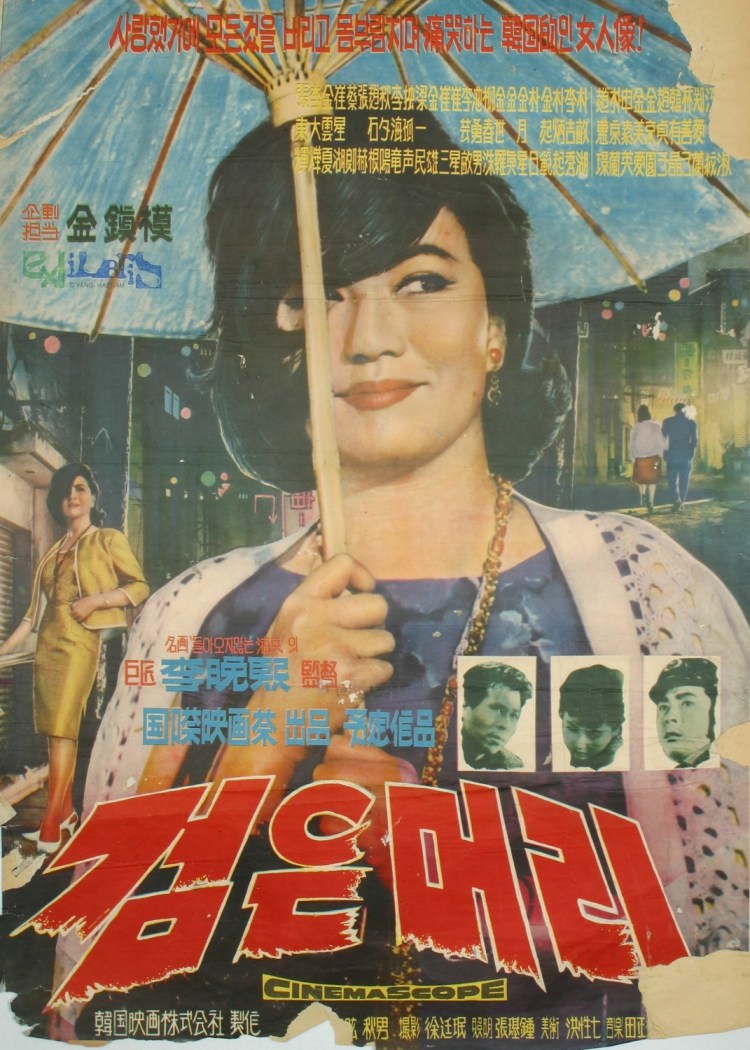
Black Hair (검은 머리, Lee Man-hee, 1964)

Black Hair 1964 posterFilm noir can be the most contradictory of genres. A moralistic world filled with immortality, fatalism mixed with existential angst, and a rage against society which is always tinged with a resignation to living on its margins. Genre in Korean cinema has always been a little more fluid than elsewhere and Lee Man-hee’s seminal crime thriller Black Hair (검은 머리, Geomeun Meori) is also a melodrama – the story of a self loathing man committed to his own arbitrary codes, and a woman he expects to pay the price for them.

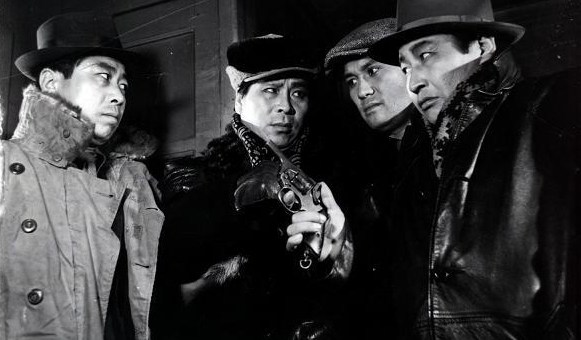
In a brief prologue that has little to do with the ongoing narrative, ruthless gangster Dong-il (Jang Dong-hui) extorts a corrupt CEO by blackmailing him over some illicit smuggling. Meanwhile, across town, the gangster’s wife, Yeon-sil (Moon Jeong-suk), meets with a man, Man-ho (Chae Rang), in a hotel room. She’s come to pay him off, hoping it will be for the last time but Manh-ho, an opium addict, knows he’s onto an endless cash cow and refuses to put an end to their “arrangement”. Sometime ago, Man-ho raped Yeon-sil and has been blackmailing her for money and sexual favours ever since. Yeon-sil threatens to tell her husband and the police and suffer the consequences, but Man-ho knows she won’t. Dong-il’s gang have a strict rule about adultery and if Yeon-sil trusted him enough to believe he would believe her about the rape, she would have told him already.

Another goon hides behind a screen, snapping photos of Yeon-sil and Man-ho which he later passes on to Dong-il. The boss is shocked and shaken. He knows he has to enforce the rules he himself set down for the gang, but he never expected them to cost him his wife. Eventually Dong-il orders an underling to slash Yeon-sil’s face with a broken bottle, after which she is exiled from the gang. Anyone who tries to repair her scars or help her in any other way will be treated as an enemy.

At this point the narrative splits as Yeon-sil is cast down into a sleazy underworld, living with her blackmailer who pimps her out as a common streetwalker and then steals all her money to spend on drugs and booze. She pines for her husband whom she has been prevented from seeing, longing to at least explain why she did what she did and ensure he knows that her heart has always been with him. Dong-il, by contrast, is going to pieces – his gang no longer respect him, he feels guilty about the way he treated his wife, and he has no idea where to go from here.

Unlike other films of the era or film noir in general, Lee’s world view is non-judgemental in its treatment of the respective paths of Yeon-sil and Dong-il. Yeon-sil is left with no choice than to enter into a life of casual prostitution and the film forgives her for this – the fault is that of Dong-il and Man-ho rather than her own. Having been horribly scarred, she wears her hair longer on one side to hide her disfigurement but is constantly reminded of her emotional damage through its physical manifestation and the reactions it often elicits. Picking up a client in the street, she’s threatened with violence and cruel words for having “deceived” him when he catches sight of her disfigured face. A passing taxi driver witnesses the attack and challenges the man so Yeon-sil can escape. The cabbie then hires her and they spend the night together in a nearby brothel. He surprises Yeon-sil by being entirely unfazed about her facial scarring, offering to help her get it treated if that’s what she wants, and making it clear he would like to spend more time with her off the clock.

Yeon-sil’s life is completely controlled by her triangular relationship to the three men – her unforgiving husband Dong-il, the cruel and venal Man-ho, and the good and decent cab driver. After meeting the cabbie, Yeon-sil tries to see Dong-il again but his boys stop her. They say they’ll take her to see him, but really they’re planning quite another destination. Luckily, in a staggering coincidence, they’re spotted by the taxi driver who once again saves Yeon-sil, taking her home to stay with him and proposing they embark on a more formal relationship.

This is more of a problem than it seems for Dong-il’s guys who now fear their boss will find out they tried to kill his wife in an effort to wake him up from his ongoing existential malaise. The rules of the gang are tough and clear – adultery is not permissible, no woman is allowed to leave, no exceptions are to be made. Dong-il, however, is beginning to rethink the code he himself designed. A conversation with his childhood nanny throws up a number of interesting questions. She blames herself for giving Dong-il “evil” milk which has led to his spiritual corruption, though Dong-il later tells Yeon-sil that he did not choose evil so much evil chose him. He created these “evil” gang rules, but failed to live up to them in continuing to feel attached to Yeon-sil – he feels he must punish himself for the “sin” of being unable to forget her and abide by his own honour system which he now feels to be pointless and arbitrary. Effectively issuing himself a death sentence, Dong-il changes tack confirming that he has, in a sense, chosen evil even if it was a “choice” of refusing to resist the path set down for him. Suddenly realising the emotion he felt for Yeon-sil was love, he is struck by a terrible feeling of loneliness. 

As in much of Lee’s work, Yeon-sil and Dong-il are trapped by their own society and belief systems and finally perhaps by feeling. Yeong-sil is frequently captured behind bars or caught in a window, imprisoned within the frame as she tries to reconcile herself to her precarious position, daring to hope for a new, decent life with the good hearted taxi driver while also mourning her love for Dong-il and living with the humiliation caused to her by Man-ho. Lee’s structure is sometimes unclear as he introduces a fairly pointless subplot about the taxi driver’s modern woman little sister who has moved out to be independent but works in a hostess bar, inhabiting the same sleazy world as Yeon-sil and Dong-il, only more innocently, but never does much with it beyond contrasting the lives of the two women who occupy slightly different generations and have very different options open to them. There’s a fatalism and inevitability in the way Yeong-sil and Dong-il live their lives to which the taxi driver and his sister do not quite subscribe but Lee breaks with the genre’s trademark pessimism to offer the glimmer of a bittersweet ending and the chance of a new beginning for the much abused Yeon-sil now freed of her dark associations.


Black Hair is the second in The Korean Film Archive’s Lee Man-hee box set which comes with English subtitles on all four films as well as a bilingual booklet. (Not currently available to stream online)

The Marines Who Never Returned (돌아오지 않는 해병, Lee Man-hee, 1963)

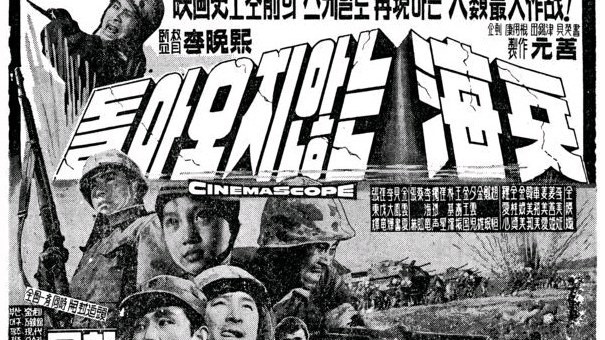
Marines Who Never ReturnedLee Man-hee was among the most prolific of Korean directors until his untimely death at the age of just 43 in 1975, but even among so many well regarded works The Marines Who Never Returned (돌아오지 않는 해병, 돌아오지 않는 해병, Doraoji Anneun Haebyong) has taken on an especial place in Korean film culture. Lee had himself served in the Korean War and brought his own ambivalent attitudes to the piece, expressing both an abject rejection of the senseless loss of life but also a warmth and nostalgia for the camaraderie born only out of such immediate danger. The film’s title, as melancholy as it is, points to this same ambivalence by signalling the eventually unhappy fates of these ordinary men but also according them a ghostly, unresolved future.

In the midst of the Korean War, a squad of South Korean soldiers is on patrol and taking fire from the Chinese in an urban environment. While they bide their time in a trench, a young girl and her pregnant mother run out of a nearby building. The girl runs clear but the mother is shot and killed in the crossfire. One of the soldiers is deeply struck by the scene and insists they at least make sure the little girl is safe. Pushing deeper into the building, the soldiers come upon a truly horrifying, hellish scene of men trussed up and hanging from the ceilings while bodies of the townspeople lie piled along the floor. The same soldier who wanted to save the little girl finds his own sister among the dead, just one face among so many.

From this point on the tale is narrated by the little girl, Young-hui (Jeon Young-sun), who is adopted by the troop of marines and smuggled around inside an old army kit bag so that the superiors do not find out about her presence. Young-hui proves a resilient little girl who obviously misses her parents but begins to care deeply for the soldiers who have taken her in. Giving each of her new uncles nicknames, Young-hui becomes the squad’s mascot and a symbol of everything it is they’re fighting for. Yet this makeshift family also has its share of difficulties. A problem arises when Young-hui recognises a new recruit, Choi (Choi Moo-ryong), as a man from her village. Choi is the brother of the man who joined the other side, took Young-hui’s father away and killed the sister of Private Goo, discovered so casually among the many dead in Young-hui’s village alone.

The conflict between Choi and Goo is emblematic of many ordinary families throughout Korea as fathers and sons, brothers and sisters, decided on different paths and found themselves on opposing sides of a war. Choi, as is pointed out, is not responsible for his brother’s actions – he clearly does not condone or agree with them, but still he feels responsible enough to understand Goo’s anger and resentment. Goo in turn realises his anger is pointless and misdirected but is powerless to change the way he feels. This situation is no one’s fault, but they’ll all pay the price anyway.

Lee spares no expense in recreating the hellish battles scenes more akin to the first war than the second with its outdated tanks, dugouts, and trenches. The easy, familial life of the camp soon gives way to action and danger as the squad meet their ends one by one. Away from the battlefield the men feel displaced within their own country – caught in the midst of a civil war yet also subjugated by foreign forces, barred from UN only bars and referred to as “tuppenny Koreans” by the “hostesses” in comparison to their big spending compatriots. Making his goodbye speech, the commanding officer instructs his comrade to return home and ask if anybody really needs to go to war, but rising from the trenches their thoughts are all for their fallen friends who will never see home again. These men remain “lost” on the battlefield, a lingering memory of loss and sacrifice which is impossible to resolve even so many years later.


The Marines Who Never Returned is the first in The Korean Film Archive’s Lee Man-hee box set which comes with English subtitles on all four films as well as a bilingual booklet but the film is also currently available to stream via the Korean Film Archive’s YouTube channel.


The Execution Game (処刑遊戯, Toru Murakawa, 1979)

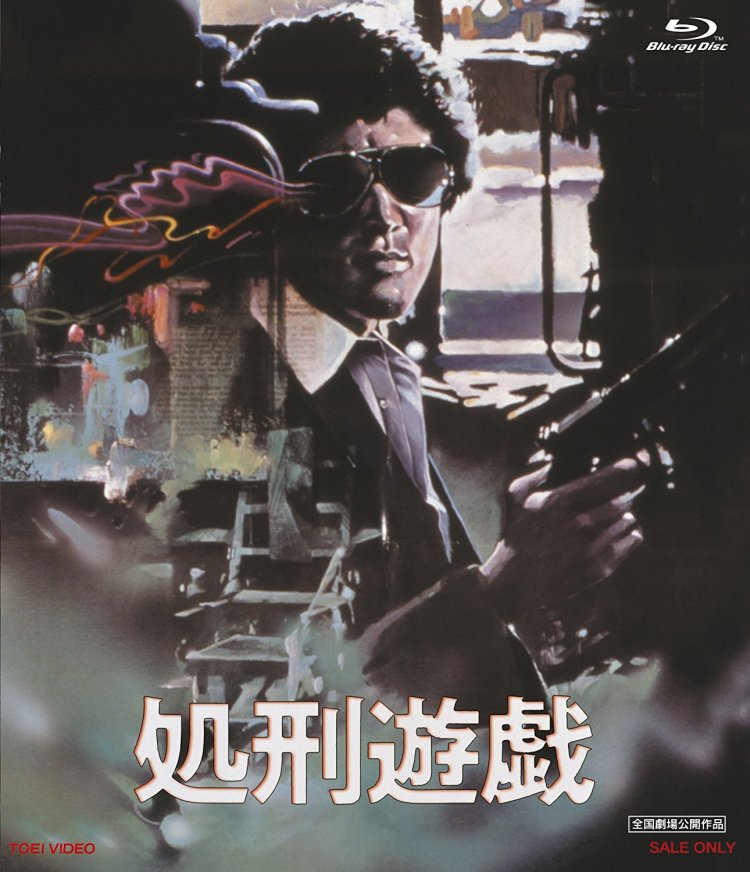
Execution Game BDA year on from The Killing Game, Narumi (Yusaku Matsuda) has returned to his old profession, now branded The Execution Game (処刑遊戯, Shokei yugi). Like Killing, Execution is a variation on the themes of The Most Dangerous Game – conspiracy, betrayal, double cross, and corruption, but all in all Narumi’s world hasn’t changed very much even as he seems to become ever more dead to himself as he walks the dark city streets, trench coat, sunshades, and cigarettes blocking out its remaining light and warmth.

Unlike Dangerous or Killing, Execution opens indoors as Narumi lies half awake in an empty, dark and dirty room. Coming to, he remembers a girl and a car followed by a bump on the head but not much else. His attempt to escape lands him suspended from the ceiling in another room that’s shifted from green to red, but as he will shortly find out this is all part of a weird job interview. The shady guys who kidnapped him simply wanted to test his skills and, finding them adequate, now intend to force him to take their assignment to knock off their old hitman because he’s become too “weird” and they don’t need him around anymore. Narumi’s not too happy about any of this but then he does quite like getting paid. As usual, his first job leads to a second which has some wider implications involving international espionage.

Following his previous experiences, Narumi’s personal life seems to be less of a disaster but then that might be precisely because he has no personal life. In contrast to his increasingly detached persona, Execution marks the first time in the series in which he appears to enter into an entirely consensual relationship with a woman whom he genuinely seems to care about. Unfortunately she is not all she seems and, in a sense, betrays him. Nevertheless, even if the relationship is “fake” or at least part of an ongoing operation to trap Narumi into working for people he might otherwise avoid, it does provoke a kind of opening up as far as Narumi’s past is concerned. His seaside boyhood (perhaps why he chose the riverside town for his “retirement” in Killing) and longing for the ocean provide a clue to his restless heart as the sound of waves becomes a repeated cue signalling Narumi’s hidden emotional ebb and flow.

Yet externally he’s even more silent and closed off than before. Narumi’s hitman credentials have never been stronger and he pulls of his hits with steely precision. He is fearless in the face of danger, wading into the bloody finale with barely repressed fury, making sure none of these mass manipulators will survive their attempt to turn him into a disposable tool to be destroyed after use. Once again his second job provides him with a motive to get back in shape, making space for yet another training montage, but this time the mirrors are about more than vanity. Narumi’s world has always been dark, born of night and chaos, yet he remains the only point of order despite the illicit, dangerous, and immoral nature of his occupation. 

Narumi’s interaction with the young woman who runs the watch repair shop where he tries to get his pocket watched fixed is perhaps the best indicator of his progress over the series. The girl is first very taken with his watch which is rare and expensive, but is also later captivated by his cool exterior. She flirts with him, subtly, but Narumi deflects it. His demeanour towards her becomes paternal, finally he warns her against chasing every shady guy she meets – she doesn’t see the danger. This Narumi, in contrast to his rather pathetic existence in the first two films, is of the world but not in it. He sees himself as occupying a very different space than this young girl, and is resigned to walking a lonely road. The Execution Game is an apt way to describe his life story, yet even as something of him dies something else rises in his self imposed exile and desire for both self preservation and old fashioned nobility even within the bounds of his world weary cynicism.


Original trailer (no subtitles)

Japan Foundation London’s Celebration of Culinary Cinema Returns for Second Helpings!

A-Tale-of-Samurai-Cooking-teaserFollowing their recent series of foodie films, The Japan Foundation London is back with a few more tasty morsels this August.

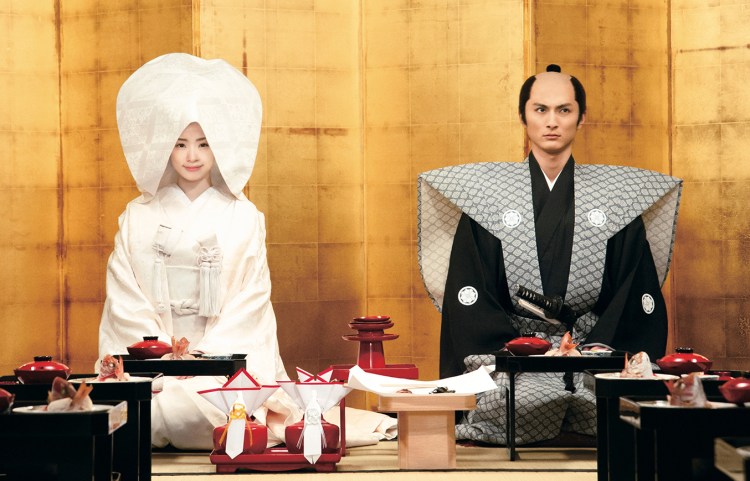
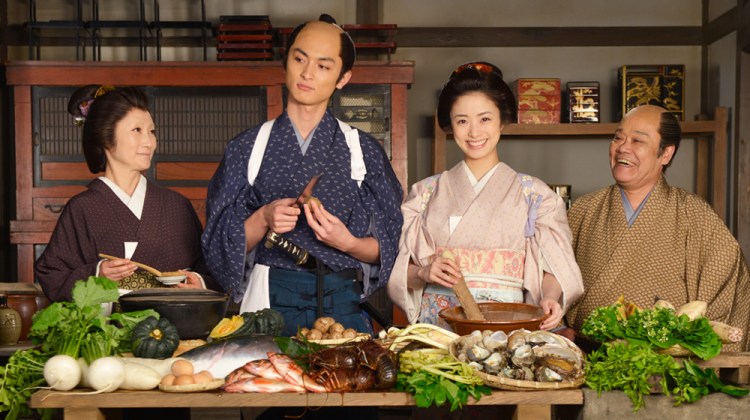
tale of samurai cooking still 2First up, A Tale of Samurai Cooking: A True Love Story proves that the way to a man’s heart is through his stomach (rather than through his chest with a sword). Headstrong Haru (Aya Ueto) gets “sent back” from her first marriage and then receives an interesting proposal from the Emperor’s own samurai cooks thanks to her awesome skills in the kitchen. Her husband to be, Yasunobu (Kengo Kora), is very unhappy about this seeing as he still wants to be a “real” samurai and is nursing a broken heart. Review.

A Tale of Samurai Cooking screens at Courthouse Cinema, 23rd August, 6.30pm.


chef of south polar stillBased on the writings of the real Jun Nishimura, Shuichi Okita’s The Chef of South Polar follows a put upon chef as he’s forced to leave his family and become the sole cook for seven research scientists marooned at the South Pole for a whole year. Despite the hazardous conditions Nishimura keeps churning out beautifully presented dishes while the guys all go slowly mad together. Review.

Chef of the South Polar screens at Courthouse Cinema on 24th August, 6.30pm


An stillNaomi Kawase’s An (Sweet Bean) is a less comedic tale of inter-generational friendship, social injustice and continuing stigma towards those suffering illness, and a celebration of tradition passed from one era to the next. Masatoshi Nagase plays a struggling doriaki chef who gets a few tips from a strange old lady (Kirin Kiki). He originally turns her down for a job at his stand because of her age and gnarled hands, but tasting her bean paste, there is no way he can refuse.
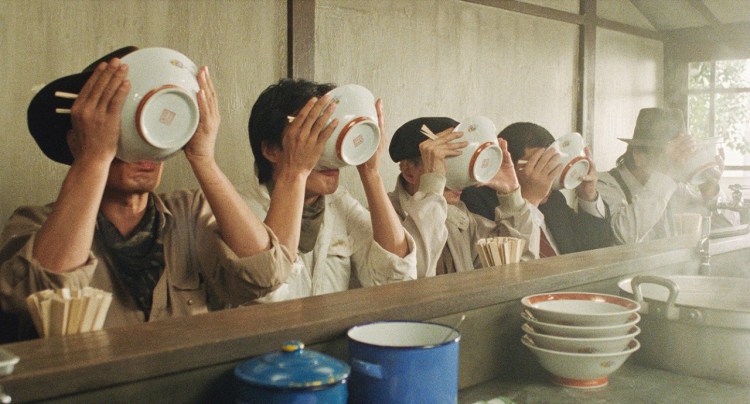
An (Sweet Bean) screens at Rich Mix on Saturday 26th August, 12.45pm.


tampopo stillAnd finally the greatest food movie of them all – Juzo Itami’s Tampopo! This iconic comedy follows the titular widow as she tries to make a success of her ramen stand with the help of lonely truck drivers Goro and Gun. While Tampopo is busy with her noodles, Itami ventures off on a cultural odyssey to explore the various ways food is used and misused in Japanese society. Review.
Tampopo screens at Rich Mix on Saturday 26th August, 3.15pm.


You can find further details for all the films on the Japan Foundation London website. Tickets are free but must be reserved in advance and you can only register to attend two of the four screenings (if you apply for more than two you will be placed on the waiting list for the extra ones). A Tale of Samurai Cooking and Chef of the South Polar are currently fully booked but you can still apply to join the waiting list and be notified should spaces become available.

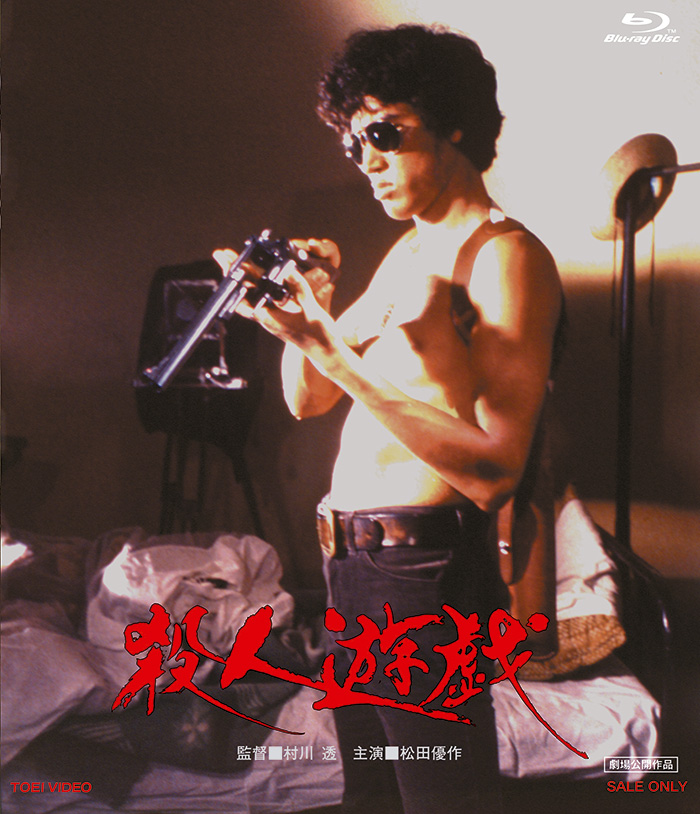
The Killing Game (殺人遊戯, Toru Murakawa, 1978)

the killing gameFollowing the success of The Most Dangerous Game, the second in what was to become a trilogy arrived within the year and once again stars Matsuda as the ice cold hitman Narumi. Sunnier in outlook, The Killing Game (殺人遊戯, Satsujin Jiken) unfolds along the same pattern as the first instalment as Narumi is dragged out of the shadows to intercede in a gang war only to find himself surplus to requirements.

Narumi (Yusaku Matsuda) has been retired from the killing game for the last five years and now lives a life of poverty and dissipation. Gone are his swanky apartment and stylish suits, now he lives in a bare hovel which is covered in dust and cobwebs, and he dresses like a farm boy in a white vest and jeans with a straw hat hanging on his back. He’s trying to lie low, but gets pulled into the kind of hostess bar he can’t really afford where he meets the first of two familiar faces which threaten to send him back into the middle of chaos. Akiko (Kaori Takeda), now a hostess at Bar Tako, is the daughter of the chairman Narumi bumped off in his last job before retiring but far from bearing a grudge against him, Akiko is grateful to have been set free. The second familiar face belongs to the same chairman’s former secretary/mistress, Misako (Yutaka Nakajima), who is now a mama-san at a bar popular with the local goons. All those years ago Narumi let Misako go in a moment of weakness and now regrets it but attempting to “reconnect” is going to land him right back in the thick of things.

Murakawa begins with a prologue which takes place in the noirish urban darkness of The Most Dangerous Game, but shoots in dreamy soft focus to emphasise that this is all memory before jumping forward five years. Exactly why Narumi has decided to give up a career in assassination is not revealed, nor is what he’s been doing the last five years, but he has apparently got himself an annoying sidekick who, in contrast to Narumi’s intense reserve, does not shut up. The first half of the movie is Narumi and his buddy trying to get by as outlaws including one humorous skit where they get themselves a van with a nudie pinup on the front plus a loudspeaker to humiliate debtors into paying up.

Things take a darker turn when Narumi runs into Misako – a chance meeting that seems almost like fate. Gradually the old Narumi begins to reappear. Deciding to pay Misako a visit he runs into her new man, gang boss Katsuda (Kei Sato), who figures out who he is and wants him to bump off another old gang boss. Narumi needs to get back in shape which he does via the tried and tested method of a training montage, lifting weights and running through the town with his trademark perm returning to its stylish buoyancy. This time around Narumi has buddy to help out, even if he only ends up being a liability, but the same strange dichotomy occurs – he may be an ace hitman, but Narumi is a mess without a gun in his hand.

Perhaps weathered by his experiences, Narumi is also much less cocky and much more unwilling to take a chance on trust. Once again he is betrayed by clients who’d rather not pay up and forced to play a “dangerous game” to bring the whole saga to a close in such a way as to keep both his life and the money. Rather than the surprising and largely inexplicable devotion of Dangerous’ Kyoko, Narumi finds himself torn between two women – the youthful Akiko who is grateful to Narumi for releasing her from an overbearing father, and the jaded Misako whose feelings for Narumi are complex, mingling fear, gratitude, attraction, and resentment into an irresistible storm of ambivalence. Again Narumi’s cool, animalistic aggression seems to be the key to his mysterious sex appeal but this time around there are no flickers of response as there were for the devoted Kyoko, these “relationships” are opportunistic and transactional.

Ironically titled, The Killing Game makes plain that Narumi will never be able to escape his chosen profession even if he wanted to. Without a gun in his hand Narumi is a pathetic wastrel, playing around at tuppenny schemes with his rather dim but talkative friend, and trying to play the big shot by buying out a hostess bar he is entirely unable to afford despite his recent windfall. The setting may be brighter, but Narumi’s word is still a nihilistic one in which he’s conditioned to expect betrayal and the only remaining vestiges of his humanity are his strange friendship with his bumbling sidekick and his ongoing fecklessness at coping with everyday life. Matsuda is as cool as ever in his effortless ability to cope with any given situation and kill with ruthless efficiency, but as Narumi edges ever closer to machine it is clear there is only one way to beat The Killing Game.


Original trailer (no subtitles)