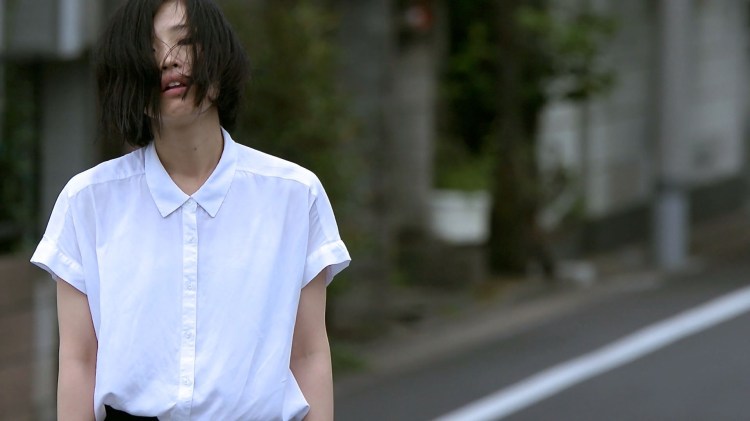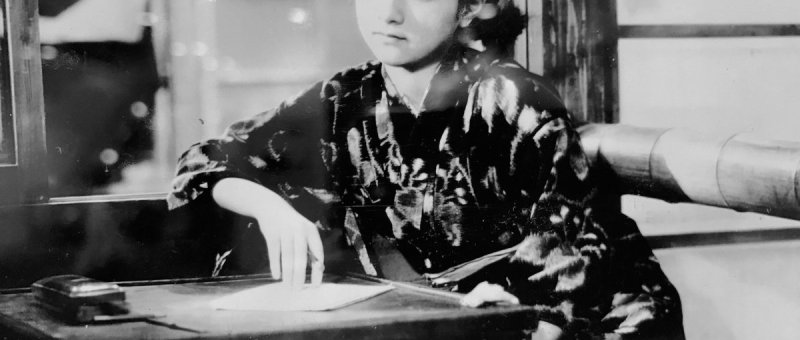
Composition Class (綴方教室, Kajiro Yamamoto, 1938)

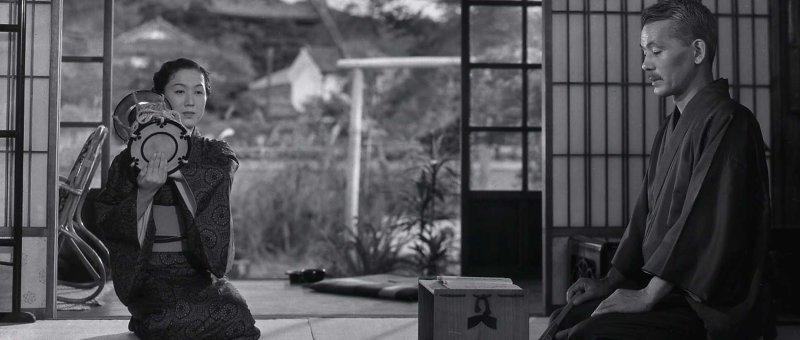
composition class posterChildren’s essay classes can yield unexpected revelations but sometimes it’s the tragedy behind the humour which catches the attention rather than a unique way of describing a situation not fully understood. Composition Class (綴方教室, Tsuzurikata Kyoshitsu) has something in common with the later Korean classic Sorrow Even Up in Heaven or even the more temporally proximate Tuition in drawing inspiration from the diaries of school age children but predictably it’s far less bleak in outlook. Though young Masako (nicknamed Maako) has her share of problems, her troubles are met with characteristic cheerfulness and a determination to carry on no matter what.

In a small town in North East Tokyo, 1938, Masako Toyoda (Hideko Takamine) lives with her parents and her two brothers in a humble home her family can barely afford. Disaster strikes when dad gets a letter from the court which he can’t read – Masako usually reads for him but letters from the court are still too difficult for a preteen schoolgirl. The family are behind on their rent and have heard that someone is trying to buy up the area with other families also facing possible eviction. Bright though she is, Masako might have to give up school and find a job as a maid while the family moves to stay with relatives who own a shoe shop. Luckily, none of that happens because the note was only about a rent increase (on the rent that haven’t paid for months).

The second crisis occurs when Masako’s teacher is taken with the essays she’s writing in class which are so real and honest that they espouse all the values he wants to teach the children. Around this time, the lady from next door, Reiko’s mother Kimiko, is leaving town (and her husband) and so gives away some her breeding rabbits as pets believing that a nice girl like Masako will be sure to take care of them and that they could use the extra money from selling the babies. Kimiko, thinking Masako is out of earshot, remarks that she was going to give some of the rabbits to the local bigwigs, the Umemotos, but even if they’re wealthy, they aren’t very nice and she wouldn’t like to think of her rabbits not being looked after. Masako naively records this minor detail in one of her essays which the teacher then sells to a local magazine. The Umemotos find out and aren’t happy which is a problem because dad gets most of his work through Mr. Umemoto who has a stranglehold on the local economy.

Through Masako’s diary and child’s eye view of the world, Kaijiro Yamamoto paints an oddly relaxed picture of depression era privation as the Toyodas endure their penury with stoicism and a belief the bad times will sometime end. Masako and her family have it a little better than some, but when bad weather puts an end to dad’s tinsmithing business and he’s forced into the precarious life of a day labourer things go from bad to worse. Now out of work more than in, the family are reliant on rice coupons to get by and spend one miserable New Year’s with no money for the first week of January when the biting cold makes it impossible to go out and forage for food. Masako writes of her embarrassment the first time her mother sent her to the shop with coupons and that she eventually got used to it, save for one occasion she ran into friends and had to quickly cover by saying she’d bought rice bran rather than collecting the rice dole. Like Masako, dad is a good natured soul though he’s also fond of drinking and is often let down or tricked out of his money, even being cheated out of his bicycle which he needs to keep working.

Sadness is all around from the man next door who’s so poor he doesn’t even have money for sake to the dejected Kimiko who eventually returns pale, drawn, and barely recognisable only to find her husband remarried to a much younger woman. Though Masako is a bright girl with a talent for writing her future is already limited. At one low point, her mother seems excited about the idea of selling Masako off to a geisha house where she will at least be fed, have pretty clothes, and maybe make a good match with the sort of man who marries former geishas. Needless to say, Masako is not very enthusiastic, and neither is her teacher who pledges to save her from such an unpleasant fate but luckily it never comes to that. Other girls will be going on to high school and university, but Masako counts herself lucky to have got a job in the local factory which will provide a steady income for her family. Though it’s a shame Masako is denied the same opportunities as the other girls because of her family’s poverty, she does at least pledge to keep writing even as she marches happily towards work and a (possibly) brighter future.
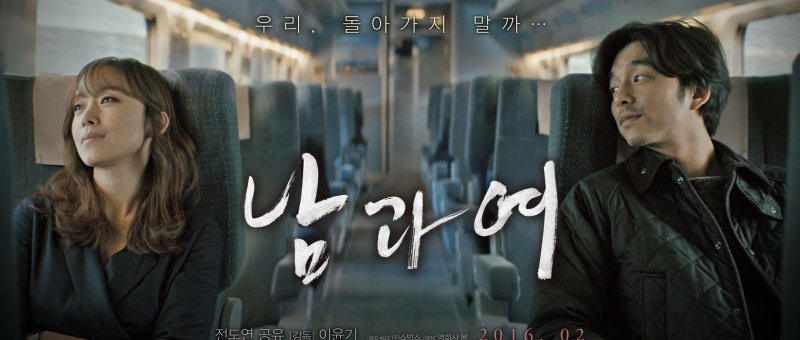

A Man and a Woman (남과 여, Lee Yoon-ki, 2016)

A man and a woman postetSome memories are better when forgotten, according to the heroine of A Man and a Woman (남과 여, Namgwa Yeo) – the latest romantic melodrama from Lee Yoon-ki. The title, deceptively simple as it is, makes plain Lee’s intention to reduce this melancholy love story to a universal level in which two people who share a deep and genuine connection choose to sever it rather than break with social convention and/or incur the additional risks of ongoing entanglement. An elongated Brief Encounter, the ballad of Sang-min and Ki-hong is a strangely old fashioned one in which unhappiness appears to be the ideal choice and a satisfied life an indulgent luxury.

Sang-min (Jeon Do-yeon) has brought her almost teenage son to Finland for treatment at a special needs school. Dropping him off for a school trip, Sang-min gets cold feet and tries to insist on accompanying the boy, only to be roundly refused by the carers. In the car park she runs into another Korean – Ki-hong (Gong Yoo) has been living in Finland for a couple of years and his young daughter attends the school to help with depression. Sang-min presses Ki-hong for information about where the camp is and eventually he offers to drive her. Predictably, they get caught in a snowstorm and have to stay overnight. A visit to a woodland sauna the next day leads to an intimate encounter but as soon as they arrive back in the city, the pair part ways without even exchanging names.

So begins the sad ballad of Sang-min and Ki-hong which eventually takes them back to Seoul where they resume their affair, putting each of their families at risk. Both parties are married already but each desperately lonely in very ordinary ways. Sang-min is a highflying CEO of a small fashion line but also shoulders most of the responsibility of looking after her son who needs a lot of extra help to cope with his autism. Her husband is rational and distant; the marriage is not unhappy but perhaps emotionally unfulfilling. Ki-hong’s marriage is also under strain as his wife has ongoing mental health issues leaving him to look after their equally distressed daughter whilst also pursing a career as an architect. 

The snowbound, silent forests of Finland are an appropriate point for the start of the affair, echoing the couple’s frozen, interior blankness. Sang-min has a pre-occupation with time in Helsinki which she abandons in Seoul, less because of a literal return to the alternation of light and darkness than a inner feeling of it passing at a more predictable rate. In Finland she wanted to know everything, in Seoul she decides perhaps it’s better not to know. Ki-hong, by contrast, is a vague sort of person in both places. Yet their instant connection is real and deep. They echo each other, repeating their shared phrases and sharing something to which they cannot give a name.

Though living in more permissive times, the love of Sang-min and Ki-hong remains impossible despite the ongoing unhappiness of their married lives. Sang-min looks on enviously at her younger sister who is dallying in marrying her American boyfriend. Her sister tells her she wants what Sang-min has – to be “happily” married, entirely unaware of Sang-min’s loneliness and dissatisfaction. Ki-hong’s moribund marriage is difficult enough but the spark has already gone – his wife tells him she feels like a patient, the subject of Ki-hong’s dutiful devotion rather than a woman who is loved by the man with whom she shares her life. Despite all of this the idea of leaving their unhappy situations to find happiness in each other is never a real possibility for either Sang-min or Ki-hong who each remain trapped both by adherence to social conventions and a lingering reluctance to fully commit.

The forces which keep them apart are less societal than personal, an unwillingness to embrace the possibility of happiness or perhaps a sense that it is not something which is permitted to them. Times have moved on since Alec and Laura said goodbye to each other in a station cafe, unspoken emotion filling the room as a busybody inserts herself into a private world about to end. There is no particular reason why Sang-min and Ki-hong cannot be happy, yet they each eventually choose not to be. Frosty indeed, this is a love which is apparently best relegated to memory, untainted by time and eternally pure. Beautifully photographed and heartbreakingly bleak, A Man and a Woman is a sad story of refused connection in which love is a risk too great for two lonely souls.


Original trailer (English subtitles)

The Pinkie (さまよう小指, Lisa Takeba, 2014)

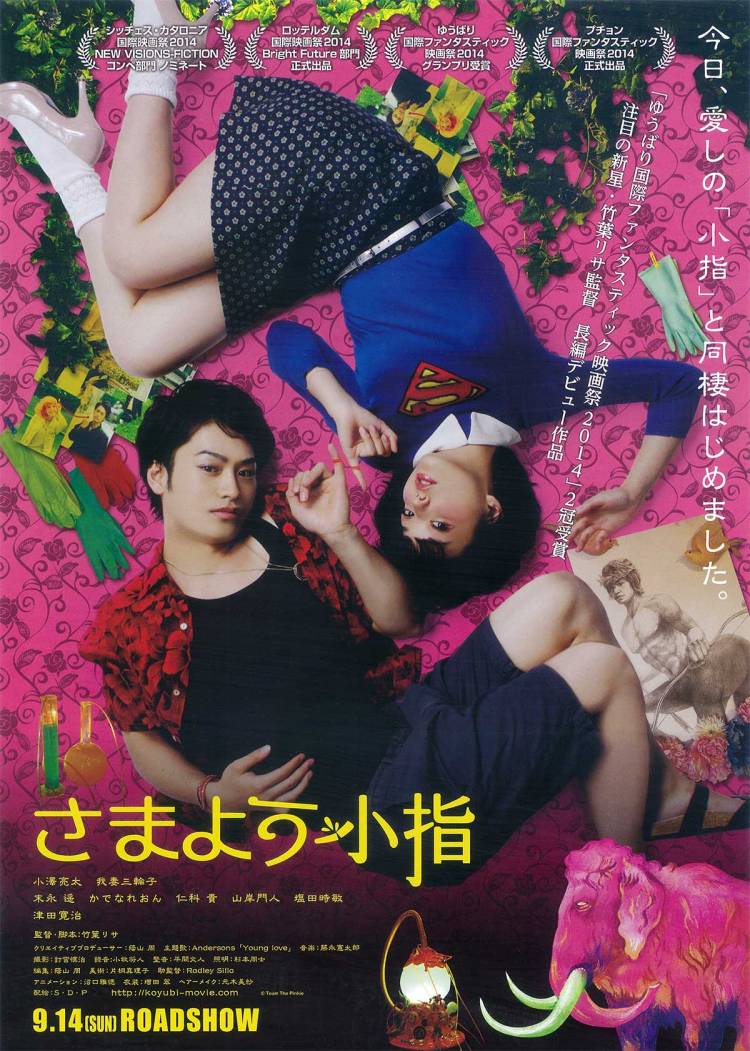
the pinkie posterWhat if someone cloned you and then they liked the other you better? The “hero” of Lisa Takeba’s debut feature The Pinkie (さまよう小指, Samayou Koyubi) is about to find out when his rather depressing life takes a turn for the surreal. Winner of the Grand Prize at the Yubari International Fantastic Film Festival, The Pinkie is an exercise in madcap fun which packs a considerable amount into its barely feature length runtime of 65 minutes. Ever cineliterate, Takeba leaps from sci-fi to romance to yakuza movie and revenge flick but then her ambitions are more grounded in the real as she explores the fallacy of infatuation, the nature of true, selfless love and the necessity of waking up from a romantic dream.

Ryosuke (Ryota Ozawa) has a lifelong problem. Ever since they were five, a girl has been stalking him. Momoko (Miwako Wagatsuma), in Ryosuke’s words, is the ugliest woman in the village. So infatuated is she, that Momoko has even undergone cosmetic surgery to adjust her face to Ryosuke’s tastes but that’s only made him dislike her more. Truth be told, Ryosuke is no great catch. He has no job and exists on the fringes of the underworld. He has, however, found love, of a kind, but unfortunately the lady in question is the paramour of a local gangster kingpin. Discovered in his illicit romance, Ryosuke is tormented by the gangsters until they eventually exact some of their trademark justice by cutting off his pinkie finger which then flies halfway across town and into the path of Momoko who uses it to create her very own Ryosuke clone.

Shifting focus somewhat, Takeba then tells the story of Momoko and the clone whom she christens “Pinkie Red String” in reference both to his origins and to the red strings which bind true lovers together. Momoko begins taking care of Pinkie, buying him clothes and teaching him to survive in the modern world, and before long the two have become a couple.

Ryosuke doesn’t quite like having a doppleganger – especially one who’s almost his polar opposite in terms of outlook and general personality. Under the gentle guidance of Momoko, Pinkie is good person who works hard, is kind to those around him, and is almost entirely selfless. Stolen away by Ryosuke, Pinkie becomes something between maid and prisoner as he takes on a purely domestic role, cooking and cleaning for his new master who later sends him out to work dressed as a woman wearing a long black wig and red dress, just to ram the point home.

Takeba’s aim is madcap fun but she also offers up a commentary on emotional repression as both Momoko and Ryosuke pursue their respective romances. Momoko has only ever wanted to express her love but her methods backfire, eventually getting her sent to a reform school which leads to the breakup of her family. Ryosuke, by contrast seems to be a fairly romantic, if sometimes cynical soul, originally asking if anyone would really sacrifice themselves for love only to attempt to do exactly that later on (though far too late). Neither Ryosuke nor Momoko is able to show their love in a straightforward way, opting for grand gestures over simple words. “Love needs a victim”, as someone later puts it, but there’s no need to run so eagerly to the gallows.

The world of The Pinkie is one of intense genre fusion as Takeba mixes references from classic cinema with the anarchic pace of anime and manga. Mad scientist sci-fi shifts to classic kung fu before cycling back to jitsuroku yakuza movie complete with on screen captions and brief sting of the iconic Battles Without Honour theme, but even if Takeba can’t always control her rate of progression her leaps are always inventive and unexpected, humorous and melancholy in equal measure. Pinkie, fulfilling his stranger in town role, begins to change his progenitor’s cynical psyche. Ryosuke is no longer the selfish loser but has learned to befriend the wounded Momoko who has also realised she can do better, abandoning her youthful fantasies for something more “real”. Then again, perhaps there is a second chance for lost love even if it is, in a sense, a synthetic solution for a very human problem.


Currently available to stream via FilmDoo in most of the world!

Original trailer (English subtitles)

Espy (エスパイ, Jun Fukuda, 1974)

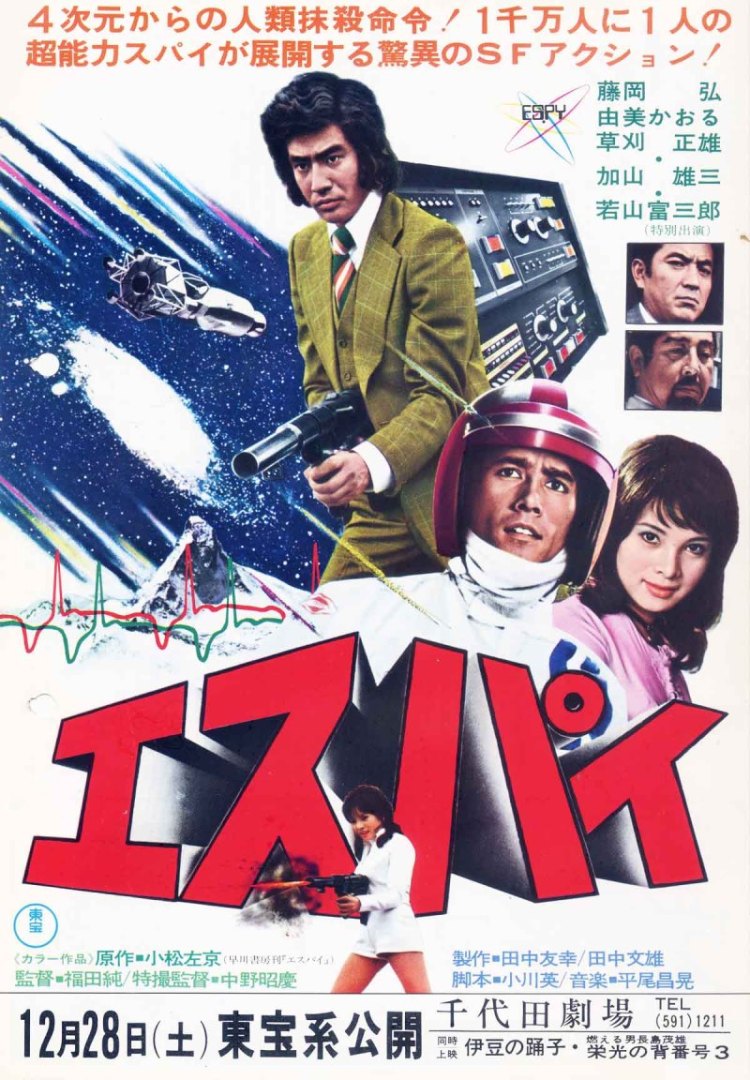
espy posterBy 1974 the Toho SFX movie was perhaps long past its heyday though Jun Fukuda’s Espy (エスパイ) was far from the last. Clearly influenced by popular spy franchises such as James Bond as well as more serious cold war spy dramas, Espy is a jet setting tale of superpowered assassins, international conspiracy, and love as an unexpected source of salvation, but as much as it embraces its hippyish message of total communication it also moves further into the realms of exploitation, skewing closer to Nikkatsu’s ’70s output than the more child friendly supernatural adventures of ages past.

The world is at breaking point. A small conflict in a tiny East European nation known as Baltonia threatens to spark a third world war. A UN delegation is currently en route to a conference in which they hope to settle the conflict in a peaceful way but all hope is lost when a sniper equipped with X-ray vision takes them all out with maximum precision.

Meanwhile, back in Japan, test driver Miki (Masao Kusakari) gets into trouble on the course when he swerves to avoid some pigeons. The car spins out of control but just at the last minute, Miki turns it around through his dormant psychic powers which brings him to the attention of the IPPG – the International Psychic Power Group. Following the assassination of the UN delegation, all eyes are on Japan where the prime minister of Baltonia is due to meet the US president in what is hoped will be a bold new development in international relations but the IPPG have reason to believe an attempt will be made on the prime minister’s life and only their ESP equipped team can stop it.

Espy takes the essential components of both the spy thriller in its international conspiracy set up, and the B-movie science fiction adventure in its presentation of the good and evil possibilities of advanced technologies or in this case innate superpowers. The Espy team are pitted against the Anti-Espy who have similar powers but are committed to using them to harm mankind. The leader of the Anti-Espy, Ulrov (Tomisaburo Wakayama), sees himself as a superior being to regular Earthlings and, believing that humans have overpopulated the planet which they continue to damage, is convinced the best solution is a mass cull. He plans to do this by helping the “lesser” humans destroy themselves by provoking a third world war or a hundred mini conflicts in which thousands will die.

Ulrov’s arguments tie in nicely with Toho’s trademark environmentalism and ambivalent attitude towards scientific development, but they go against the prevailing sense of humanism which is to be found in the studio’s genre output. In Ulrov’s fascistic view of the world, he and the other ESPers are a superior race whose existence is threatened by weaker humans and their reckless disregard for the planet as a whole. Due to a traumatic childhood incident, he believes that humans are cruel beasts who lust for blood and talk of peace with hearts filled with hate. He may have a point, but his message conflicts with the positive movement for peace which is advanced by the Baltonian PM who doesn’t want a world in which peace is brokered and balanced but one of true unity.

Espy is, however, of its time and fails to fully live out its peace and love ideals. Team member Maria (Kaoru Yumi) is kidnapped by Anti-Espy and taken to Ulrov’s lair where she is forced to dance lasciviously in front of fellow team member Tamura (Hiroshi Fujioka) with whom she shares an especially strong connection. Tamura’s arms and legs are cuffed as he communicates telepathically with Ulrov, semi-hypnotised by Maria’s strange dance. Maria is then approached by a large dark-skinned man wearing only a loincloth who proceeds to tear open her shirt at which point she snaps out of her trance, frees Tamura, and rips out the attacker’s tongue.

Meanwhile, new recruit Miki has failed in his mission and killed a man for the first time sending him into a kind of depression. Though Miki was introduced as the protagonist, he is in fact absent for most of the film though his journey is among the strangest as he reminisces about a foreign girl he was friends with as a child and enjoys an unusually strong bond with his intrepid dog, Caesar, who teaches the gang a few lessons about unconditional love. Maria is severely traumatised by her attack while Tamura reconsiders his sense of self worth having temporarily lost his powers, but eventually the team realise that their psychic abilities are nothing more than a manifestation of a great love. Ulrov later has the same epiphany but the team’s decision to consider him possessed by something “inhuman” is a worrying one. They don’t want to accept that it was humans who made him that way because it would be too sad, but not to do so is a failure to recognise humanity’s darkness as well as its light.

Espy bites off a little more than it can chew in failing to deal with some of the more interesting ideas it raises though it makes the most of its meagre budget to present an exciting spy thriller voyaging from Japan to Turkey and Switzerland. Skewing more towards Nikkatsu’s brand of exploitation action, Espy is definitely among the more adult orientated of Toho’s SFX adventures but its messages are broadly the same in its insistence on human interconnectedness as the ultimate superpower. 


Port of Call (踏血尋梅, Philip Yung, 2015)

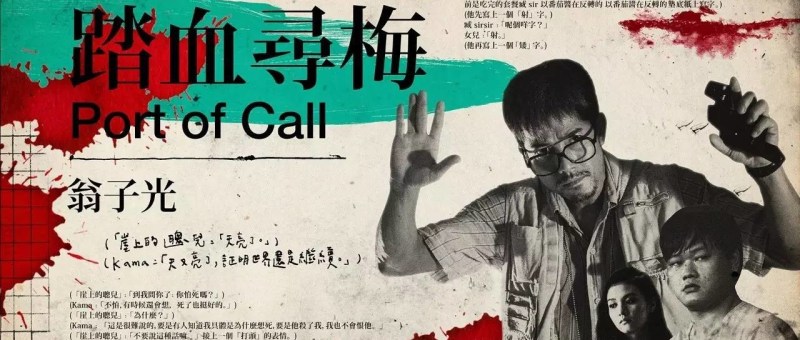
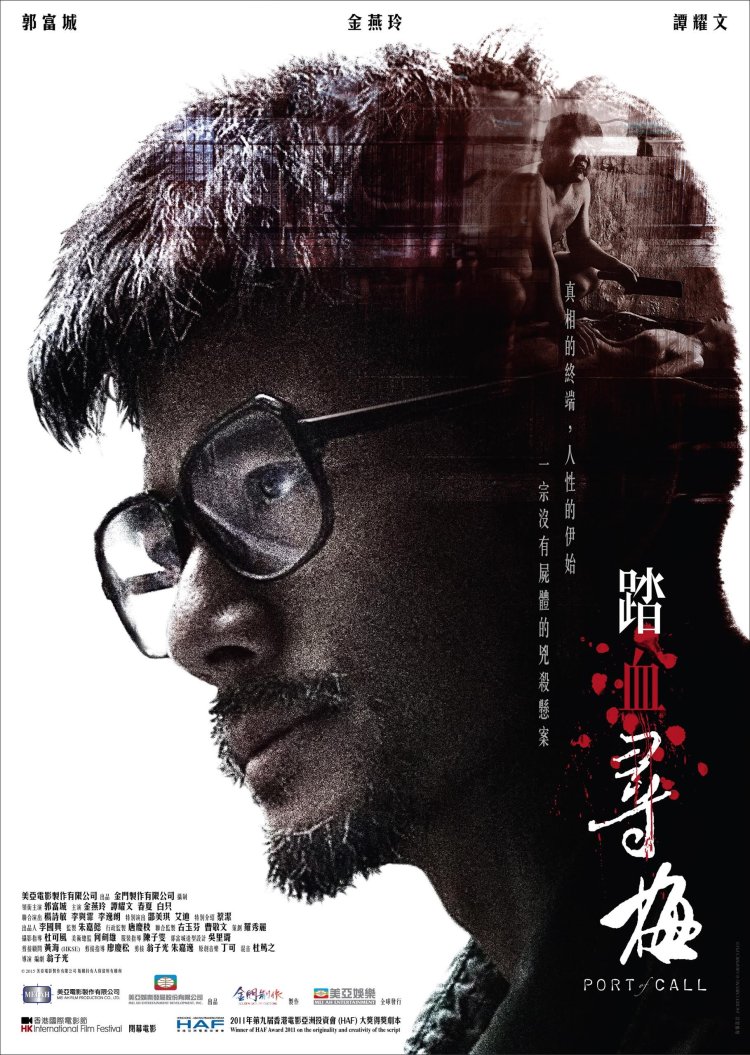
port of call posterBoy meets girl. Girl says she wants to die. Boy says OK. Philip Yung’s third feature, Port of Call (踏血尋梅), attempts to find out how such a thing could happen and does so by means of a state of the nation address. Shot by Christopher Doyle, Yung’s early 21st century Hong Kong is a place of broken dreams and empty promises in which past traumas become inescapable phantoms, hungry for blood and pain. More than the sum of its parts, Port of Call is a murder mystery and noirish crime thriller which rejects its procedural roots for a deeper investigation of how a young man and a young woman might have been brought to such a desperate and tragic end.

Eccentric detective Chong (Aaron Kwok) finds himself investigating the disappearance of a 16 year old prostitute believed murdered due to evidence of extensive bloodstains at the presumed scene of crime. The culprit soon turns himself in and confesses to both murder and dismemberment, avowing that he killed the girl because she asked him to. It seems like an open and shut case, at least to Chong’s superiors, but Chong cannot quite let it go. How could someone meet another person for the first time and take something as banal as “I wish I were dead” so literally as to decide to help them achieve their wish?

Chong, a divorced father to a young daughter, wants to know the why but what he discovers shakes his own already weary heart. The murdered girl, Jia-mei (Jessie Li), came to Hong Kong a little while after her mother (Elaine Jin) and sister, following the divorce of her parents. Her mother, a nightclub singer, has little money and is rarely present. Lonely, Jia-mei dreams only of becoming a model but this is a city which eats dreams and so she finds herself working admin jobs at a modelling studio as well as working at McDonalds in the hope of escaping her unsatisfying home environment. Eventually she is pulled into the world of escorts and compensated dating before winding up as a casual prostitute who forms an unwise romantic attachment to a client.

Neither Chong, Jia-mei, or the damaged killer Chi-sung (Michael Ning) is able to escape the weight of the pain and suffering they have seen or experienced. A long term employee of the Regional Crimes Bureau, Chong has seen the most gruesome, heinous, and incomprehensible crimes culminating in an unforgettable 1998 murder and kidnap case in which he discovered a small child tied up next to decomposing body covered in fattened maggots and swarming flies. Chong no longer sleeps because of the bloody nightmares which see him take the place of both victim and observer, laid low by an escaping Chi-sung whose crime is recreated in glorious technicolor.

Jia-mei’s world is bloodier still even at such a young age. A disturbing Facebook post recounts the loss of her virginity as a young teenager as a gory battlefield in which she and her boyfriend roll around in bloody sheets. Apparently not the only depressed young girl, Jia-mei’s classmate grabs her scissors and slashes her wrists all while Jia-mei does nothing. As she later tells an online friend, it’s sad when no one sees you. Separated from her home and father, Jia-mei’s model dreams are less a vacuous search for fame as they are a desperate attempt for connection. Looking for love in all the wrong places, Jia-mei’s world gradually shrinks away from her as the emptiness of her transactional relationships produces the opposite of what she wanted, eventually sending her straight into the arms of the equally lonely Chi-sung.

Chi-shung’s problems also stem back to childhood trauma and feelings of abandonment, but have taken on an additional layer of resentment following the failure of his first love affair. A melancholy, damaged man, Chi-sung almost sees his crime as a kind of salvation, rescuing Jia-mei from becoming what he hated and what she longed not to be. His icy practicality is chilling as he recounts how he dismembered and disposed of the body as if he were simply describing how to cook spaghetti but even as he seems to regard his crime as a kindness, there is something else lurking at the bottom of his coolness.

Yung’s Hong Kong is cold and unforgiving. The policeman, the victim, and the killer are all, in a sense, displaced – from their families, from the normal world, and from their homes. Jia-mei’s search for affection and an end to loneliness took her to the loneliest of places, while Chi-sung kills the things he loves to save them the pain of being alive, and Chong solves crimes but is powerless to stop them. Told in four acts and with a non-linear structure, Port of Call is a meandering voyage through life’s unpleasantness in which trauma stains, pain grows, and loneliness kills the spirit. Yung’s unflinching look at the dark underpinning of modern society is a sad and hopeless one yet there are brief flashes of hope, if only in stray cats finding unexpected safe harbours.   


Original trailer (Cantonese with English/Traditional Chinese subtitles)

The Moon Has Risen (月は上りぬ, Kinuyo Tanaka, 1955)

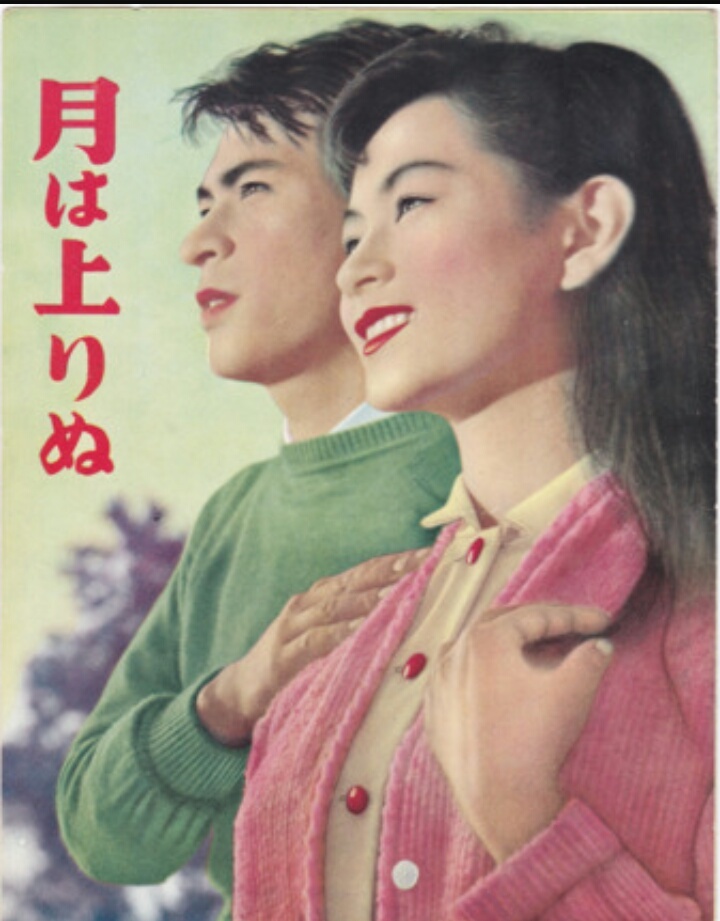
the moon has risen bookletOne of the most celebrated actresses of the 1930s, Kinuyo Tanaka’s post-war career took a couple of unexpected turns. In 1949, she was one of a small number of performers sent to tour America as a cultural ambassador but the reception upon her return was anything but welcoming as her old fans openly criticised her “Americanised” ways. In the same year, she ended her long standing contract with Shochiku to go freelance which meant she could pick and choose her projects from across a wider field of directors and actors she wanted to work with. What she wanted, however, was somewhat unheard of – she wanted to direct. The second woman to ever helm a feature film in Japan, Kinuyo Tanaka made her behind the camera debut in 1953 with the extremely impressive melodrama Love Letter which was penned by the ever supportive Keisuke Kinoshita. Tanaka’s directing career was almost derailed by her good friend and long time collaborator Kenji Mizoguchi who, for reasons which remain unclear, attempted to block her acceptance into the directors guild of Japan (ending their working relationship in the process), but after eventually joining Nikkatsu as a director she was able to begin work on her second film – The Moon Has Risen (月は上りぬ, Tsuki wa Noborinu), ironically enough scripted buy Shochiku stalwart Yasujiro Ozu.

In the classic Ozu mould, The Moon Has Risen is a family drama but Tanaka pulls the focus a little to home in on the central three sisters. Cared for by widowed patriarch Mokichi (Chishu Ryu), the Asai family consists of widowed oldest sister Chizuru (Hisako Yamane), reserved middle sister Ayako (Yoko Sugi), and the exuberant youngest sister Setsuko (Mie Kitahara) who is in a kind of relationship with the currently out of work intellectual, Shoji (Shoji Yasui). When an old school friend of Shoji’s, Amamiya (Ko Mishima), pays a surprise visit whilst he’s in the area to take a look at a broadcast tower, Setsuko sees it as an opportunity to set him up with her shy sister Ayako once Amamiya makes a few wistful remarks about remembering her from their school days.

The first part of the film stays firmly in the realms of comedy as Setsuko sets her plan in motion. She and Shoji do everything they can to find out whether there is any romantic possibility between the pair – baiting Amamiya to come to a non-existent clandestine meeting and then timing him to see how long he’ll wait before giving up, and convincing each of them that the other has something very important to say which can only be said under the romantic light of a full moon. Youthful as she is Setsuko’s plans largely backfire but then the moonlight gets inside them and something shifts.

The courtship of Ayako and Amamiya is quiet and restrained. They keep their romance a secret, communicating with each other through secret codes leading to poignant passages from the Manyoshu – the oldest existing collection of Japanese poetry, which everyone in the family is desperate to figure out but can’t quite get to grips with. Chizuru can’t decide if this painfully innocent path to romantic connection is very old fashioned or very modern but it certainly captures something of the cultural shift of post-war society – the marriage is “arranged” in a sense with Setsuko as a matchmaker but it’s also self determined as Ayako and Amamiya come to recognise their mutual feelings for each other, embrace their love match, and make their own independent decisions to marry.

Modern girl Setsuko has also made a proactive decision in her attachment to Shoji but their shared matchmaking quest eventually drives a wedge between them. As she later puts it, they spent so long worrying about Ayako that they forgot all about worrying about themselves. Shoji’s problem is a common one in being both out of work and soft hearted as he proves when he finds a job but decides to recommend a needier friend for it instead. A blazing row nearly threatens to end things but, again, the pair rely on gentle, well meaning advice from their elders and eventually realise they’re about to make themselves miserable in a fit of pigheadedness.

Though Tanaka mimics the veteran director with iconic Ozu-inspired compositions and frequent use of pillow shots, her emotional canvas is more direct than her mentor’s stoical resignation. Steering clear of Ozu’s trademark tatami mat view and preference for direct to camera speech, Tanaka’s lensing is shier and avoids faces altogether to focus on the physical. She lingers on clasped hands, or on uncertain feet, as they hug the ground unwilling to stay or go. Having ignored her for most of the film, Tanaka turns back to Chizuru whose lonely widowhood seems like a forgone conclusion, as her eyes brim with tears on hearing her perceptive father’s acknowledgement of a possible new suitor.

Mokichi’s inevitable loneliness is background rather than foreground as his daughters take centerstage, leaving him to wonder why young people prefer the “dusty, dirty Tokyo”, to his peaceful Nara but in any case he remains perfectly content for each of them to find their own path to wherever it is they’re supposed to be. In her attempt to film Ozu’s script with Ozu’s camera, The Moon has Risen may seem like a step backwards for Tanaka following the more inventive Love Letter but even while working within such constraints she manages outdo the master in her essential emotional immediacy and well observed depiction of lives and loves post-war women.


Napping Princess (ひるね姫 ~知らないワタシの物語, Kenji Kamiyama, 2017)

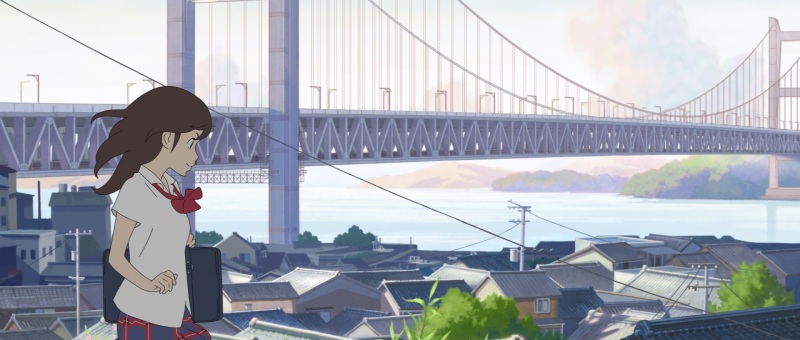
napping princess posterKenji Kamiyama has long been feted as one of Japan’s most promising animation directors, largely for his work with Production I.G. including the Ghost in the Shell TV anime spin-off, Stand Alone Complex, and conspiracy thriller Eden of the East. Aside from the elegantly shaded quality of his animation, Kamiyama’s work has generally been marked by thoughtful social and political commentary mixed with well executed action scenes and science fiction themes. Napping Princess (ひるね姫 〜知らないワタシの物語〜, Hirune Hime: Shiranai Watashi no Monogatari, also known by the slightly more intriguing title Ancien and the Magic Tablet) swaps science fiction for steampunk fantasy and, in a career first, is aimed at younger children and family audiences.

With the 2020 Tokyo Olympics fast approaching, Kokone (Mitsuki Takahata) is a regular high school girl about to enjoy her very last summer holiday before graduation. With no clear ideas of what it is she wants to do with her life, Kokone idly whiles away her time looking after her monosyllabic single dad, Momotaro (Yosuke Eguchi), who only seems to be able to communicate with her via text. Momotaro is a mechanic with a difference – he knows how to retrofit cars with a hi-tech, experimental self driving software that’s a real boon to the ageing population in the tiny rural town where the pair live.

A dreamy sort of girl, Kokone is always tired and frequently drifts off into a fantasy land where the car industry is all important and all are at the mercy of an iron fisted king whose sorceress daughter continues to cause problems for the population at large thanks to her strange powers. Whilst in her dream world, Kokone (or Ancien as she is known in “Heartland”) is accompanied by a her stuffed toy come to life and interacts with slightly younger versions of the people from her town including a dashingly heroic incarnation of her father as a young man.

The main action kicks off when Momotaro is arrested by an evil looking guy who wants a mysterious tablet he says Momotaro has stolen from their company. The fairytale inspired dreamworld might indicate a different kind of tablet, but this really is just a regular iPad with some information on it that certain people would very much like to get their hands on and other people would very much prefer that they didn’t. The tablet itself is a kind of macguffin which allows Kokone to process some long held questions about her past and that of her late mother who passed away when she was just an infant.

Kokone’s frequent flights of fancy start to merge with the real world, firstly when she shares a lucid dream with companion Morio (Shinnosuke Mitsushima) who helps her on her quest, and then later when magic seems to come to the pair’s aid through the tablet (though this turns out to have a more prosaic explanation). At 17 or so, you’d think perhaps Kokone is a little old for these kinds of fantasies, or at least for carting around a stuffed toy which is in remarkably good nick for something which apparently belonged to her mother when she was a child. Nevertheless, her dreamland is a long buried message which helps her piece together her mother’s story and how it might relate to her own all while she’s busy saving the Opening Ceremony of the 2020 Olympics from becoming a possibly lethal international embarrassment which would destroy the Japanese car industry for evermore.

Despite his prowess with harder science fiction subjects, Kamiyama can’t quite corral all of this into a coherent whole. Valiantly trying to merge the twin stories of Kokone’s coming of age and the problems of the Japanese auto industry which is good at hardware but struggles with soft, Napping Princess narrowly misses its target neither quite charming enough in its fantasy universe or moving enough in the “real” one. This may perhaps rest on a single line intended to be a small revelation which melts the icy CEO’s heart but essentially comes down to the use of a kanji in a name being different from one on a sign, losing much of its impact in translation as it accidentally explains the whole of Kokone’s existence in one easy beat which easily missed. Failing to marry its two universes into one perfect whole, Napping Princess is a pleasant enough though perhaps inconsequential coming of age story in which a young girl discovers her own hidden powers whilst unlocking the secrets of her past.


Currently on limited UK release from Anime Limited.

Trailer featuring a (very nice) Japanese cover of Daydream Believer


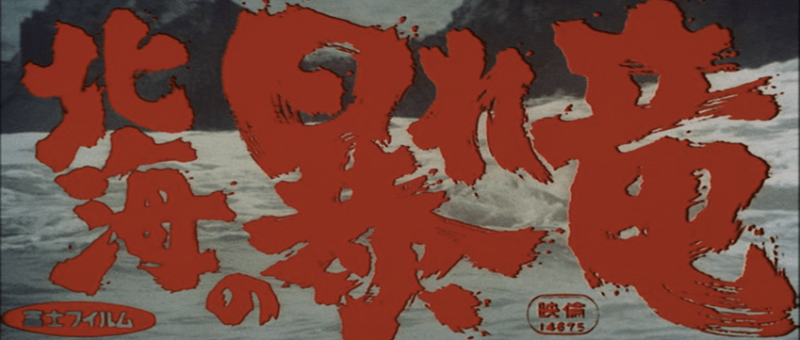
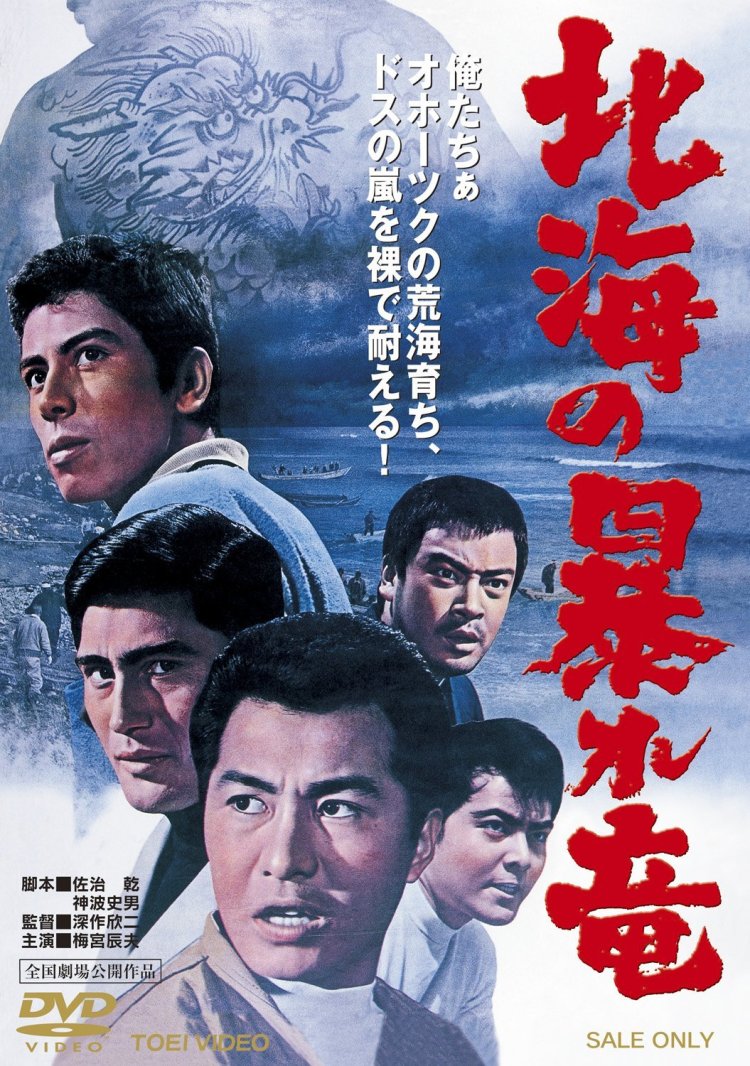
North Sea Dragon (北海の暴れ竜, Kinji Fukasaku, 1966)

north sea dragon dvd cover.jpgAt the beginning of the 1970s, Kinji Fukasaku’s Battles Without Honour and Humanity would put the ninkyo eiga firmly to bed, but in the mid-1960s, they were still his bread and butter. Fukasaku’s earlier career at Toei leant towards the studio’s preference for youthful rebellion but with a stronger trend towards standardised gangster tropes than the countercultural thrills to be found in similar offerings from Nikkatsu. For Fukasaku the rebellion is less cool affectation than it is a necessary revolt against increasing post-war inequality and a constraining society though, as the heroes of If You Were Young, Rage or Blackmail is My Life find out, escape can rarely be found by illicit means. Jiro, the prodigal son of North Sea Dragon (北海の暴れ竜, Hokkai no Abare-Ryu), finds something similar even whilst conforming almost entirely to Toei’s standard “young upstart saves the village” narrative.

Jiro (Tatsuo Umemiya), dressed in white with jet black sunshades, nonchalantly walks into his childhood fishing village filled with a sense of nostalgia and the expectation of a warm welcome. The village, however, is much changed. There are fewer boats around now, and the fishermen are all ashore. Arriving at his family home he discovers they now live in the boat shed and his mother doesn’t even want to let him in. Jiro, as his outfit implies, has spent his time away as a yakuza, and his family want little to do with him, especially as his father has been murdered by the soulless gangsters who are currently strangling the local fishing industry.

The local fishermen are all proudly tattooed but they aren’t yakuza, unlike the tyrannical son of the local boss, Gen Ashida (Hideo Murota), who carries around a double barrelled shotgun and fearsome sense of authority. The Ashidas have placed a stranglehold around the local harbour, dictating who may fish when and extracting a good deal of the profits. An attempt to bypass them does not go well for Jiro’s mother who is the only one brave enough to speak out against their cruel treatment even if it does her no good.

When Jiro arrives home for unexplained reasons he does so happily, fully expecting to be reunited with his estranged family. Not knowing that his father had died during his absence, Jiro also carries the guilt of never having had the opportunity to explain himself and apologise for the argument that led to him running away. An early, hot headed attempt to take his complaint directly to the Ashidas ends in disaster when he is defeated, bound, and whipped with thick fisherman’s rope but it does perhaps teach him a lesson.

The other boys from the village – Jiro’s younger brother Shinkichi (Hayato Tani) and the brother of his childhood friend Reiko (Eiko Azusa), Toshi (Jiro Okazaki), are just as eager as he is both to avenge the death of Jiro’s father and rid the village of the evil Ashida tyranny. Jiro tries to put them off by the means of a good old fashioned fist fight which shows them how ill equipped they are in comparison with the older, stronger, and more experienced Jiro but their youth makes them bold and impatient. The plot of Toshi and Shinkichi will have disastrous consequences, but also acts as a galvanising force convincing the villagers that the Ashidas have to go.

Jiro takes his natural place as the hero of a Toei gangster film by formulating a plan to undermine the Ashidas’ authority. His major strategic decision is to bide his time but he also disrupts the local economy by attempting to evade the Ashida net through sending the fisherman to other local ports and undercutting the Ashida profit margin. As predicted the Ashidas don’t like it, but cost themselves a crucial ally by ignoring the intense bond between their best fighter and his adorable pet dog. Things do not quite go to plan but just as it looks as if Jiro is about to seal his victory, he stays his sword. The Ashidas’ power is broken and they have lost enough already.

Fukasaku’s approach tallies with the classic narrative as the oppressive forces are ousted by a patient people pushed too far finally deciding to fight back and doing so with strategic intelligence. It is, in one sense, a happy ending but not one without costs as Jiro looks at the restored village with the colourful flags of fishing boats enlivening the harbour and everyone going busily about their work. He knows a sacrifice must be made to solidify his mini revolution and he knows who must make it. Like many a Toei hero before him, he prepares to walk away, no longer welcome in the world his violence has saved but can no longer support.


Original trailer (no subtitles)

Oh Lucy! To Open Raindance 2017

Oh Lucy still oneLondon’s Raindance International Film Festival returns from 20th September to 1st October 2017 with the best of recent independent cinema from across the world. East Asian titles have been thin on the ground for the past few years, but this time around Japan in particular is back with a vengeance.

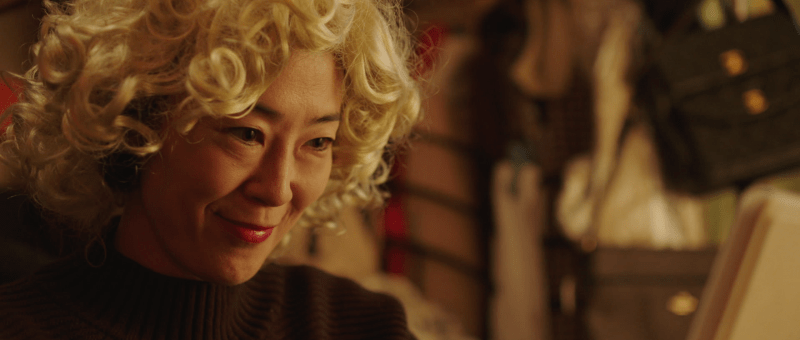
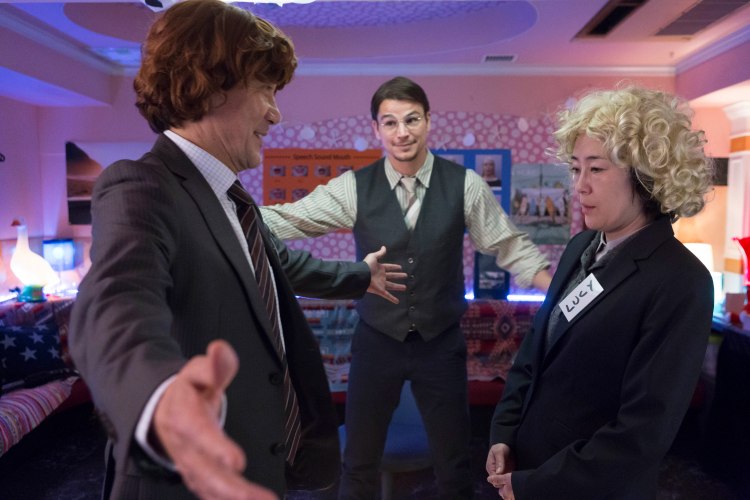
oh lucy still 3The festival will open with Atsuko Hirayanagi’s Cannes sleeper hit Oh Lucy! which stars Shinobu Terajima as a 55 year old woman trapped in a boring office job who discovers a whole new side to herself after being given a blonde wig and the alternate identity of Lucy by an unorthodox English teacher (played by Josh Hartnett) whom she later becomes obsessed with.


boys for saleThe only feature documentary on the list, Boys for Sale takes a look at the young men who have sex with men for money in Tokyo’s red light district. Produced by frequent Raindance guest Ian Thomas Ash (A2-B-C, -1278), this innovative documentary mixes animation and straight to camera interviews to explore the various reasons why these young men have made a decision to work as “boys” and the nature of their lives in this hidden part of Tokyo nightlife.
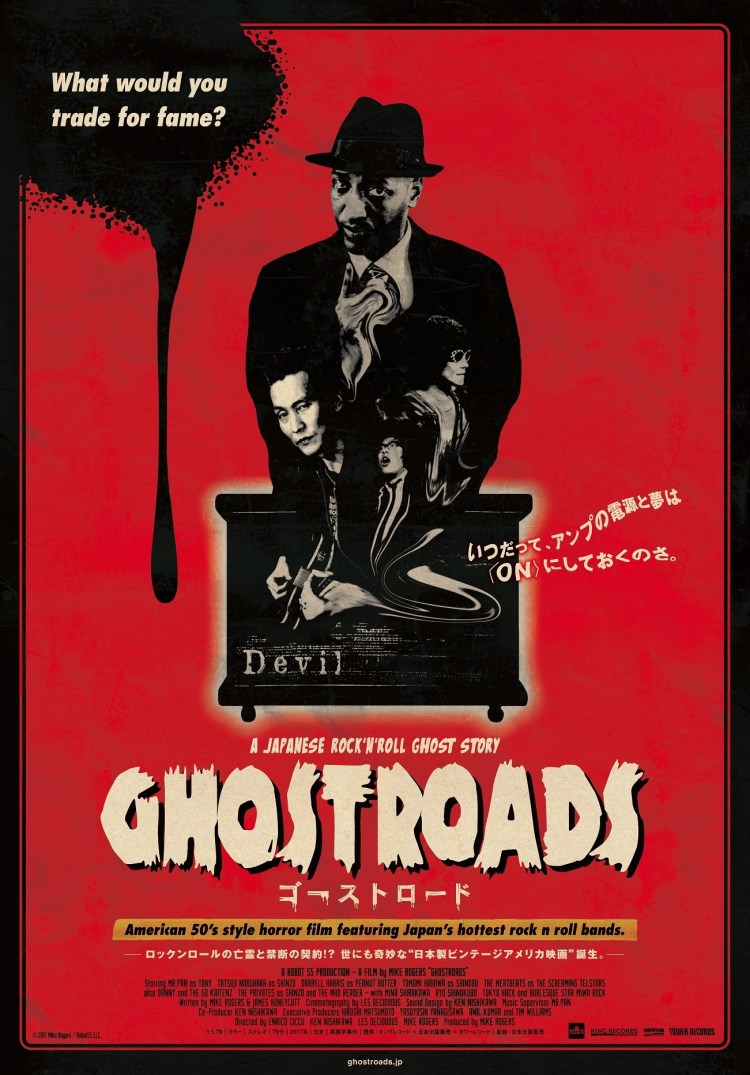

ghost roads poster.jpgA haunted guitar amp promises a struggling musician everything he’s ever dreamed of in Ghostroads: A Japanese Rock ‘n’ Roll Ghost Story!
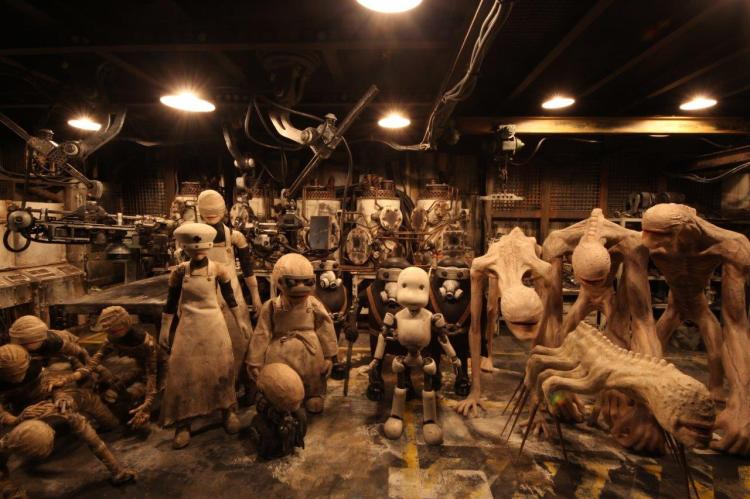

junkhead still 1It has been centuries since humanity’s clones rebelled and went to live underground. Now an intrepid band of humans must venture into their world to investigate the the fate of the self exiled creatures in Takahide Hori’s impressive stop motion animation, Junk Head.
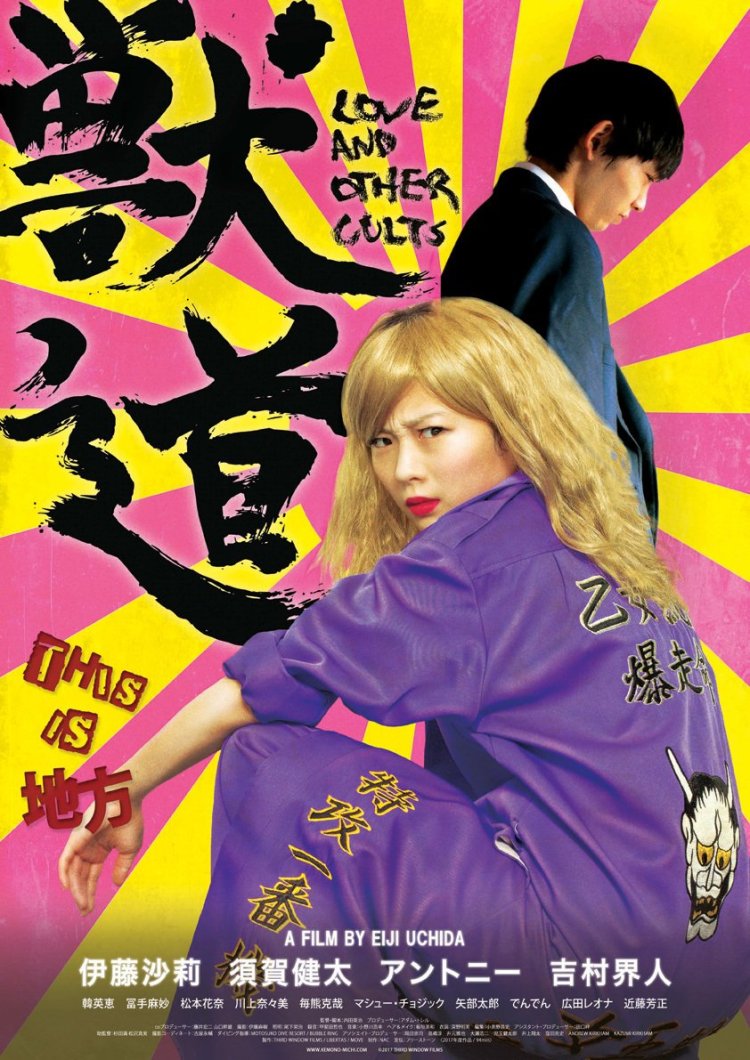

love and other cultsEiji Uchida’s Love and Other Cults receives its UK premiere at Raindance. The story of a young girl’s journey through cult devotee to mixed up kid and a life in the adult entertainment industry, Love and Other Cults is the latest Uchida/Third Window Films production. Review.


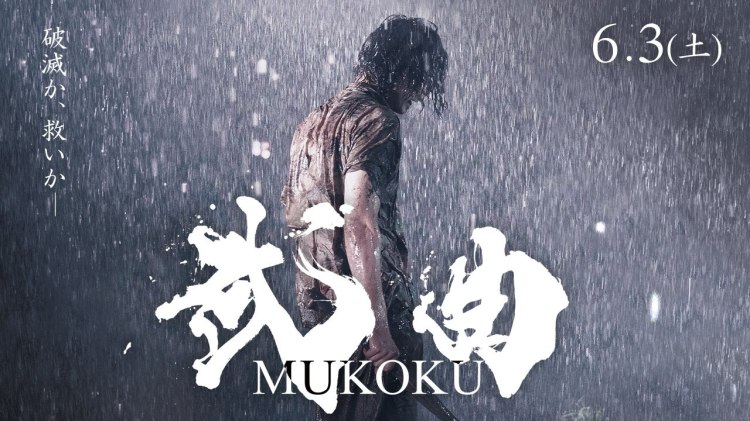
mukoku horizontal.jpgKazuyoshi Kumakiri (My Man, Sketches of Kaitan City, Antenna) returns with a tale of familial love and kendo in Mukoku as Go Ayano puts down his sword following a traumatic incident and proceeds to waste his life drinking and working as a security guard until a chance meeting with a talented high schooler shakes him out of his malaise.


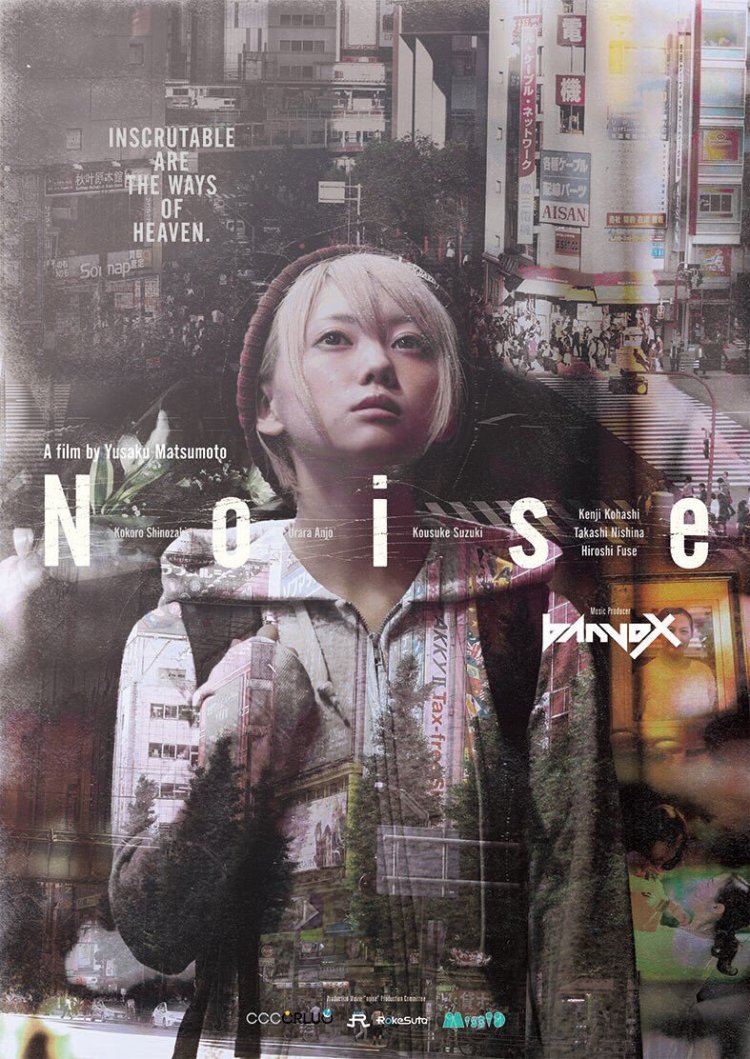
noise posterYusaku Matsumoto’s Noise takes place eight years after a killing spree as three residents of Akihabara including the daughter of a murdered woman, an underground idol, and a delivery driver attempt to find meaning in their lives.


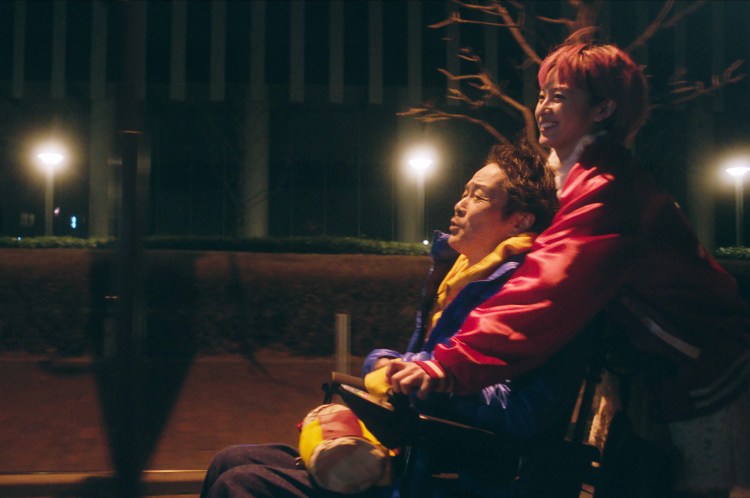
Perfect Revolution still one.jpgIn Junpei Matsumoto’s Perfect Revolution, Lily Franky plays a man with cerebral palsy who is an activist for the sexual rights of disabled people and falls in love with a sex worker who suffers from a personality disorder.


swaying mariko still 1Ordinary housewife Mariko is married to a younger man with whom she has a son, but Tomoharu is often away from home and she is beginning to believe he is having an affair. Meanwhile, her manager harasses her at work and the customers are constantly rude. Under such strains, Mariko’s perception of reality starts to disintegrate in Koji Segawa’s indie drama Swaying Mariko.


The foolish bird still 1.jpgThe only non-Japanese East Asian film on offer is Huang Ji & Ryuji Otsuka’s The Foolish Bird – a story of a “left behind child” forced to bring herself up in an unforgiving Chinese village.


The Raindance International Film Festival takes place at Vue West End from 20th September to 1st October and tickets are already on sale via the official website.

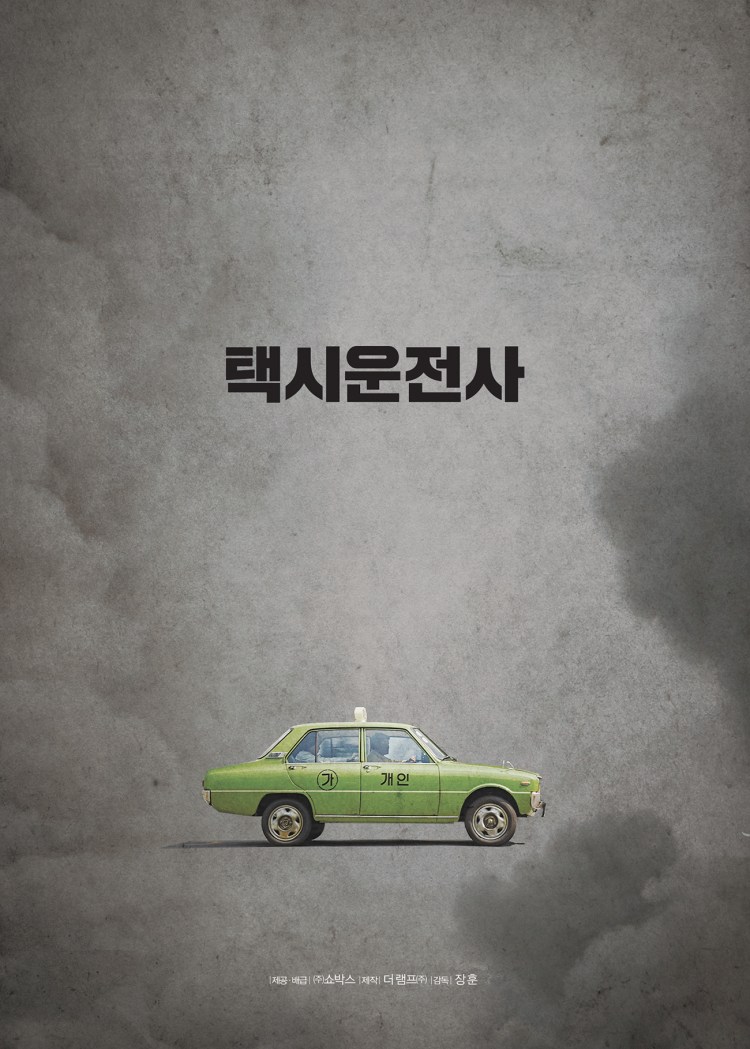
A Taxi Driver (택시 운전사, Jang Hoon, 2017)

A Taxi Driver PosterIn these (generally) well connected days of mass communication when every major event is live broadcast to the world at large, it’s difficult to remember a time when dreadful things might be happening the next town over yet no one knows (or perhaps dares to ask). Until 1979, Korea had been under the control of an oppressive dictatorship which was brought to a sudden and bloody end by the murder of the president, Park Chung-hee, at the hands of one of his aides. Though the democracy movement had been growing, hopes of installing a modern governmental system were dashed with the accession of the de facto president, General Chun Doo-hwan, who reinstated martial law, placing troops on the streets on the pretext of a possible North Korean invasion. In an event known as the Gwanjgu Uprising, a long term peaceful protest led by the area’s large student population was brutally suppressed with large numbers dead or wounded by government soldiers.

Meanwhile, in Seoul, regular Joe taxi driver Kim Man-seob (Song Kang-ho) is trying to go about his everyday business and is finding all of this protesting very irritating, especially when he is forced to swerve to avoid a young man running from riot police and breaks the wing mirror on his otherwise pristine vehicle. Man-seob thinks these kids don’t know they’re born, if they’d spent time abroad like he did in Saudi Arabia, they’d know that few places are quite as nice as Korea. A single father raising his young daughter alone, Man-seob’s major worry is money. He’s four months behind on his rent and his daughter keeps getting into fights with the landlord’s son. Actually, the rent might not be such a pressing problem seeing as Man-seob’s landlord is a close friend and colleague – close enough for him to cheekily ask to borrow the money to “pay” him so his friend’s wife will stop being so mean. When he overhears another driver boasting that he’s picked up an improbably large fare that’s exactly the same amount as the money Man-seob owes, Man-seob bluffs his way into stealing it out from under him. Man-seob, however, has not stopped to consider why a foreigner wants to pay him an insane amount of money to drive from Seoul to provincial Gwangju.

Like many in the Korea of 1980, Man-seob is a man just trying to get by. He has his private sorrows, but largely avoids thinking about the big picture. To him, the Seoul protest movement has become such a normal inconvenience that he keeps cream in his car to help cope with the smell of the smoke bombs. He thinks all of this rancour is just kids out of control and will eventually blow over when order is restored.

Others feel differently. A BBC journalist relocated from Korea to Tokyo describes the situation as “tense” and avows that this time something may be about to break. Tokyo in 1980 is a nice place to live, but extremely boring if you’re an international journalist and so German reporter Peter (Thomas Kretschmann) catches the next flight out with the intention of investigating the rumours of state sponsored violence coming out Gwangju.

Though Man-seob’s original motivation is the money, the events he witnesses in Gwangju have a profound effect on the way he sees his country. Bypassing roadblocks and sneaking into a city under lockdown, Man-seob and Peter witness acts of extreme violence as the army deploys smoke grenades, beatings, and bullets on a peaceful assembly of ordinary people. Prior to the military’s intervention, the atmosphere is joyful and welcoming. The people of Gwangju dance and sing, share meals with each other, and all are excited about the idea of real social change. This juxtaposition of joy and kindness with such brutal and uncompromising cruelty eventually awakens Man-seob’s wider consciousness, forcing him to rethink some early advice he gave to his daughter concerning her difficult relationship with the little boy next-door to the effect that non-reaction is often the best reaction.

Rather than focus on the Uprising itself, Jang presents it at ground level through the eyes of the previously blind Man-seob and the jaded Peter. Inspired by real events though heavily fictionalised (despite a search which continued until his death, Peter was never able to discover the true identity of the taxi driver who had helped him), A Taxi Driver (택시 운전사, Taxi Woonjunsa) is a testament to the everyman’s historical importance which, even if occasionally contrived, speaks with a quiet power in the gradual reawakening of a self-centred man’s sense of honour and personal responsibility.


A Taxi Driver was screened as the sixth teaser for the upcoming London Korean Film Festival 2017. Tickets for the next and final film, The Villainess which screens along with the official programme launch at Regent Street Cinema on 11th September, are on sale now.

Original trailer (English subtitles)