 Kim Jong-kwan’s award winning unexpected indie box office hit has been given the rather odd English title of Worst Woman (최악의 하루, Choeakui Haru) in contrast with the original Korean which simply means “The Worst Day”. In fact, the film is about two people – an aspiring Korean actress with problems in her personal life, and a Japanese writer visiting for the launch of the Korean translation of his novel, each of whom is indeed having an exceptionally unlucky day. Part walking and talking, part split focus romantic comedy, Worst Woman is a polished piece of indie filmmaking anchored by quality performances and an interesting approach to its material.
Eun-hee (Han Ye-ri) is supposed to be rehearsing for a play but somehow she’s not really into it, much to the consternation of her coach. Heading off to meet up with her vacuous soap star boyfriend, Hyun-Oh (Kwon Yool ), Eun-hee runs into a hopelessly lost Japanese man who asks her for directions but mangles the pronunciation of the address leaving her with little idea of the destination. Nevertheless, Eun-hee eventually helps the mysterious traveller, Ryohei (Ryo Iwase), find the place he’s looking for only to realise he’s been given the completely the wrong time and there’s no one there to meet him. The pair then decide to have coffee together in a nearby cafe before Eun-hee leaves to track down Hyun-oh.
At this point their paths diverge but each is in for a disastrous day. Eun-hee argues with Hyun-oh about a previous (married) boyfriend before teasing him about his decision to wear a face mask and sunglasses “in case someone recognises him” (hilariously, he still gets snapped when a passing woman realises only a celebrity would be wearing such an attention seeking disguise). The playful argument suddenly turns ugly when Hyun-oh calls Eun-hee by another girl’s name leading her to dump him on the spot and leave as quickly as possible. Moping around, she posts a picture of the view from the park on Twitter which “concerns” the aforementioned married ex-boyfriend, Woon-Chul (Lee Hee-joon), who also wants to take Eun-hee for coffee in an attempt to rehash the past.
Meanwhile, Ryohei has finally met up with his publisher but quickly discovers his book launch is not all that it seemed to be. Not only has the venue changed, but only two people have turned up (and even that was an accident). Making the best of things, Ryohei takes the “guests” to a nearby coffee shop and attempts to talk to them about literature with mixed results. The apologetic publisher is Ryohei’s biggest supporter, translating the book himself and determined to share it with his fellow countrymen, but has problems of his own which mean that the Korean edition of Ryohei’s novel is set to remain on the shelf a little longer.
Chatting awkwardly in English in the cafe, Eun-hee asks Ryohei what he does for a living to which he jokingly replies that he “lies”. His job is, in essence, to make things up – he’s a novelist, albeit one with only a single book to his name. Eun-hee laughs and says she’s same, only she’s an actress, and like Ryohei she is not yet famous or even particularly successful. In fact, Eun-hee has been giving the performance of her life off stage where lying has become something of a bad habit. Though she had told Hyun-oh about her relationship with Woon-chul, even explaining that he was a married man, it appears that perhaps she hadn’t been sharing the whole truth with either man. Needless to say, her taste in men has not served her well and the choice between the petty and self obsessed Hyun-oh and the possessive, persistent and obsessive Woon-chul may not be worth making.
If Eun-hee’s romantic difficulties undermine her sense of self confidence, Ryohei gets a professional dressing down from a bilingual journalist (Choi Yu-hwa) who claims to be a fan of his work but has serious questions about his approach to character. Why, she asks him, does he create such violent and sadistic scenarios and then allow his characters to suffer within them. If the writer is god, does he not owe it to his creations to show a little benevolence? Ryohei is a put out to receive such an underhanded criticism during an interview, especially as he doesn’t consider himself to be a cruel person, but now realises that perhaps his world view is a little bleaker than he’d previously thought.
Both having experienced one of those days which throw everything else into stark relief, the pair run into each other again at twilight in the picturesque Namsan Park. Eun-hee revisits the opening monologue from her play, now managing to breathe life into the lines informed by her recent experiences, before reuniting with Ryohei and making another surprising suggestion – that they set off on a long walk along the park trail which she has never managed to complete. The opening narration from Ryohei told us that he’d been dreaming a lot of his home town and had, unusually, come up with a story idea whilst travelling. Smarting from the criticisms of the journalist and realising many of the characters he’s denied a happy ending to are slightly lost, essentially nice women just like Eun-hee, Ryohei decides that it’s time to make an exception. He imagines the same place he is right now, only it’s snowing and a woman is looking nervously back along the path. This time there is no need to worry, he doesn’t know all the details yet, but this woman is definitely going to be happy, at least someday.
Featuring a light jazz score and indie-style straightforward direction, Worst Woman recalls both the distant irony of Hong Sang-soo and other recent cross-cultural romances such as A Midsummer’s Fantasia (which also starred leading man Ryo Iwase) and Hong’s own Hill of Freedom. A tale of city serendipity, the film makes use of constant reoccurring motifs from coffee shops and national parks to professional insecurity and confused relationships but even if Eun-hee has been playing the role of herself with both of the men in her life, her connection with Ryohei seems to have a more authentic quality. Light yet poignant and filled with sophisticated comic touches, Worst Woman is a delightful late summer romance which ends on a refreshingly upbeat, open ended, note careful to leave the door open for these two frustrated artists to make the best of their worst day.
Reviewed at the 2016 London East Asia Film Festival.
Original trailer (English subtitles)

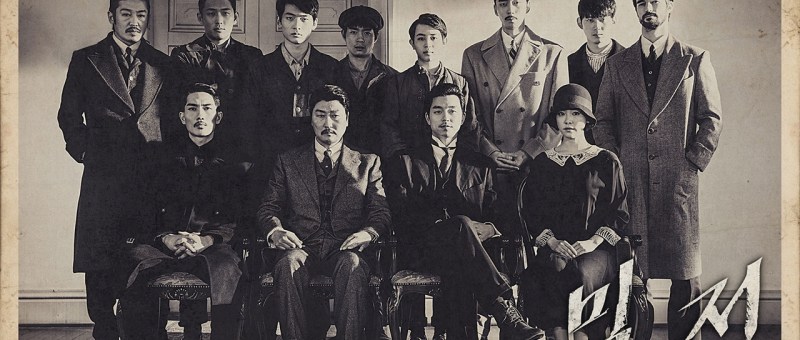
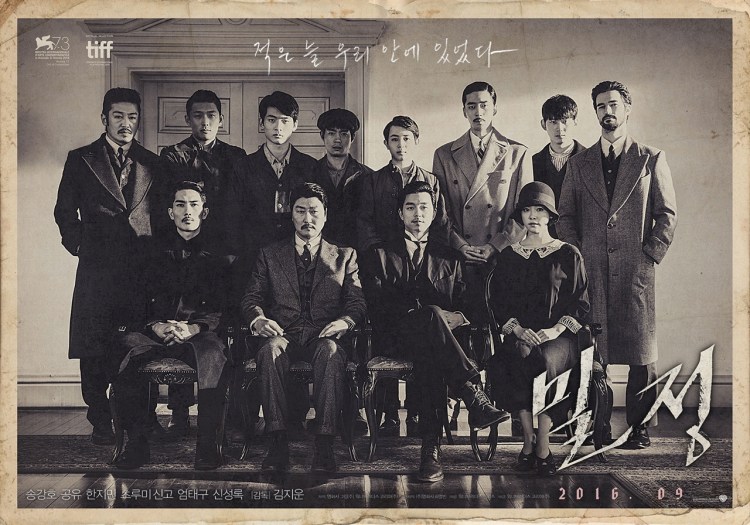 When the country of your birth has been occupied by another nation, what do you do? Do you fight back, insist on your independence and expel the tyrants, or quickly bow to your new overlords and resign yourself to no longer being what you once were? Kim Jee-woon becomes the latest director to take a look at Korea’s colonial past with the Resistance based thriller Age of Shadows (밀정, Miljung) which owes more than a little to Melville’s similarly titled Army of Shadows, as well as classic cold war spy dramas The Third Man and The Spy Who Came in From the Cold.
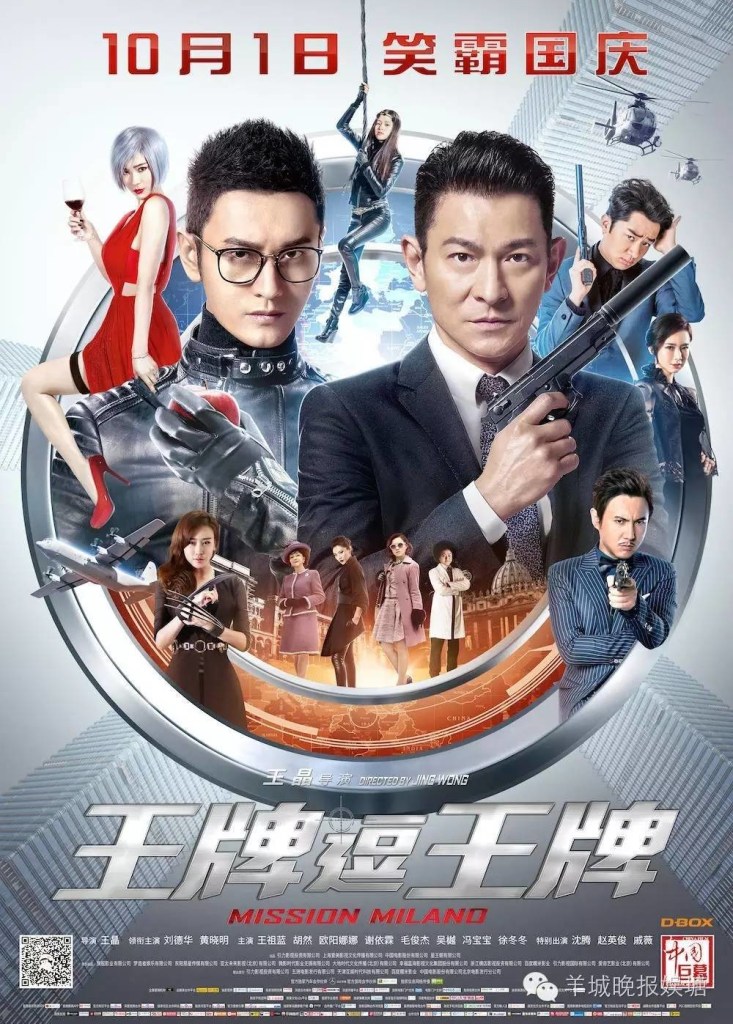 Despite its title, Mission Milano (王牌逗王牌, Wángpái Dòu Wángpái) spends relatively little time in the Northern Italian city and otherwise bounces back and forth over several worldwide locations as bumbling Interpol agent Sampan Hung (Andy Lau) chases down a gang of international crooks trying to harness a new, potentially world changing technology. Inspired by the classic spy parodies of old, Wong Jing’s latest effort proves another tiresome attempt at the comedy caper as its nonsensical plot and overplayed broad humour resolutely fail to capture attention.
 Every story is a ghost story in a sense. In every photograph there’s a presence which cannot be seen but is always felt. The filmmaker is a phantom and an enigma, but can we understand the spirit from what we see? Whose viewpoint are seeing, and can we ever separate that subjective vision from the one we create for ourselves within our own minds? The Man Who Left his Will on Film (東京戰争戦後秘話, Tokyo Senso Sengo Hiwa) is an oblique examination of identity but more specifically how that identity is repurposed through cinema as cinema is repurposed as a political weapon.
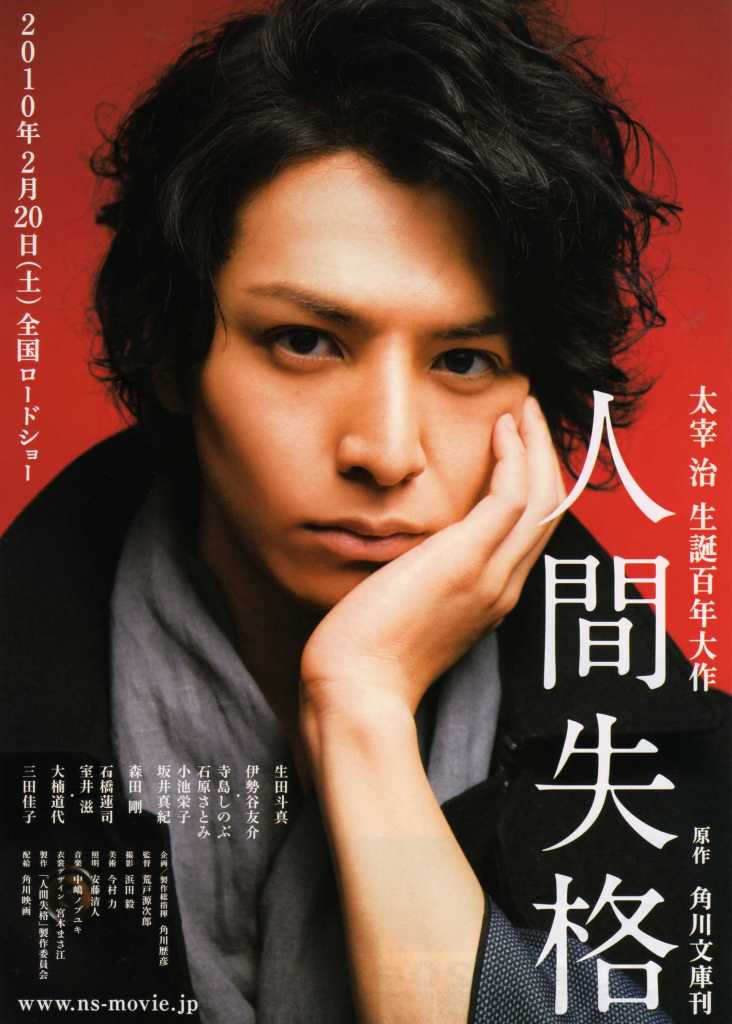 The Fallen Angel (人間失格, Ningen Shikkaku), based on one of the best known works of Japanese literary giant Osamu Dazai – No Longer Human, was the last in a series of commemorative film projects marking the 100th anniversary of the author’s birth in 2009. Like much of Dazai’s work, No Longer Human is semi-autobiographical, fixated on the idea of suicide, and charts the course of its protagonist as he becomes hopelessly lost in a life of dissipation, alcohol, drugs, and overwhelming depression.
 First time writer/director Wang Yichun draws on her own experiences for What’s in the Darkness (黑处有什么, Hei chu you shenme), a beautifully shot coming of age piece with serial killer intrigue running in the background. Seen through the eyes of its protagonist, What’s in the Darkness neatly matches the heroine’s journey into adolescence with the changing nature of Chinese society.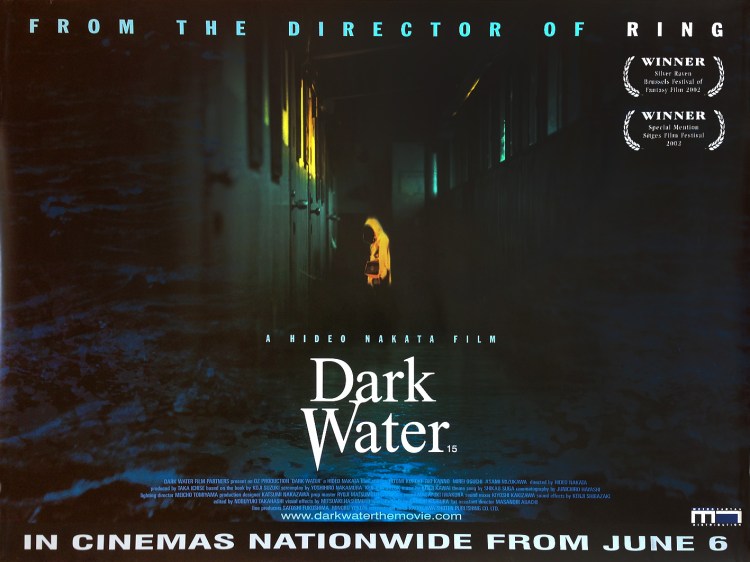
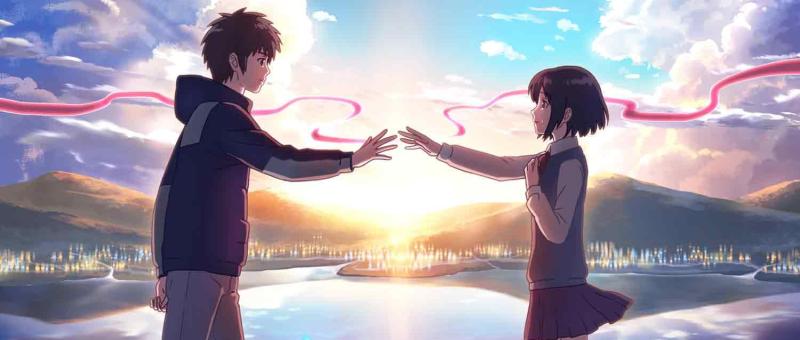
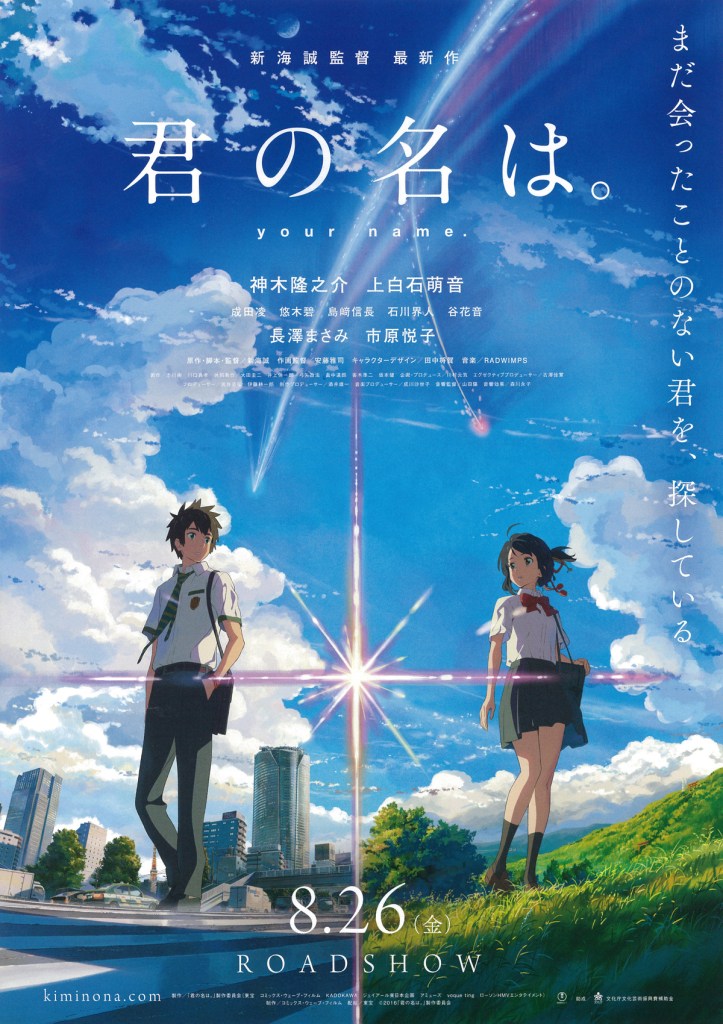 Indie animation talent Makoto Shinkai has been making an impact with his beautifully drawn tales of heartbreaking, unresolvable romance for well over a decade and now with Your Name (君の名は, Kimi no Na wa) he’s finally hit the mainstream with an increased budget and distribution from major Japanese studio Toho. Noticeably more upbeat than his previous work, Your Name takes on the star-crossed lovers motif as two teenagers from different worlds come to know each other intimately without ever meeting only to find their youthful romance frustrated by the vagaries of time and fate.
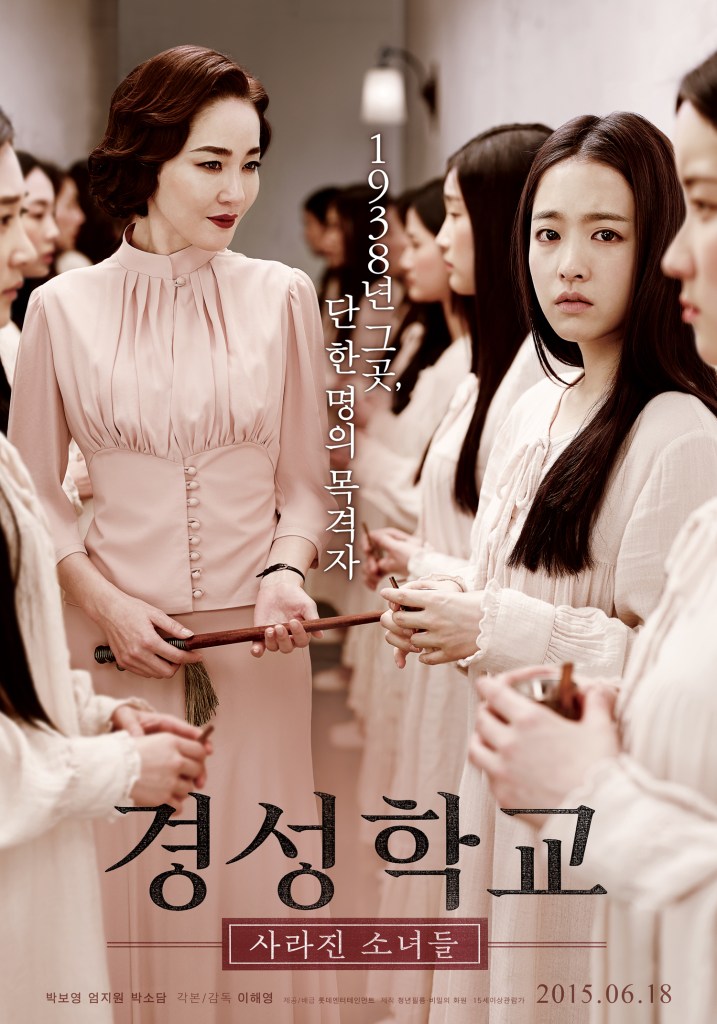 The Silenced (경성학교: 사라진 소녀들, Gyeongseonghakyoo: Sarajin Sonyeodeul) has all the classic genre aspects of the boarding school horror story familiar to fans of gothic literature everywhere, but this is no Victorian tale of repressed sexuality and hallucinatory psychosis. What The Silence does is take all of these essential elements and remix them as a metaphor for the horror of colonialism. Surrounded by quislings and forced into submission in order to survive, how does the essential soul of an oppressed people survive? The Silence would seem to argue that perhaps it can’t, but can evolve and learn to resist its colonisers even if it has to bend to do so.
 Windows on Worlds