New York’s Museum of the Moving Image has announced the complete programme for this year’s First Look which takes place March 12 – 16. As usual there are a number of East Asian films on offer including an experimental documentary from mixed media artist Zhou Tao, docufiction in which two Indonesian men spend an evening in a park in Taiwan, and a quietly enraged character study from Yoko Yamanaka.
Enchanting improvised docufiction in which two Indonesian men meet in a park in Taiwan to talk about their lives along with poetry and the awkward transactionality that exists between the two nations.
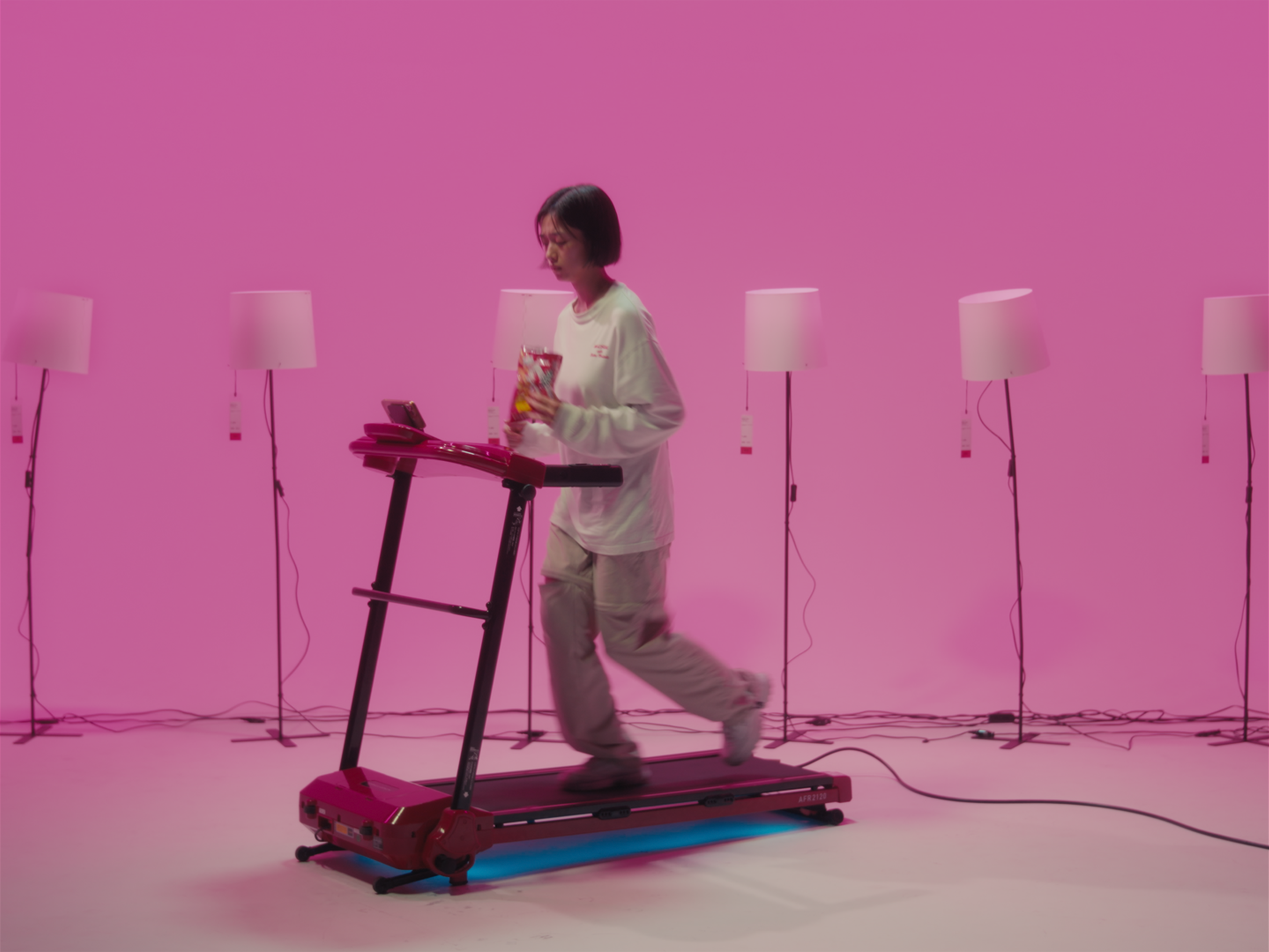
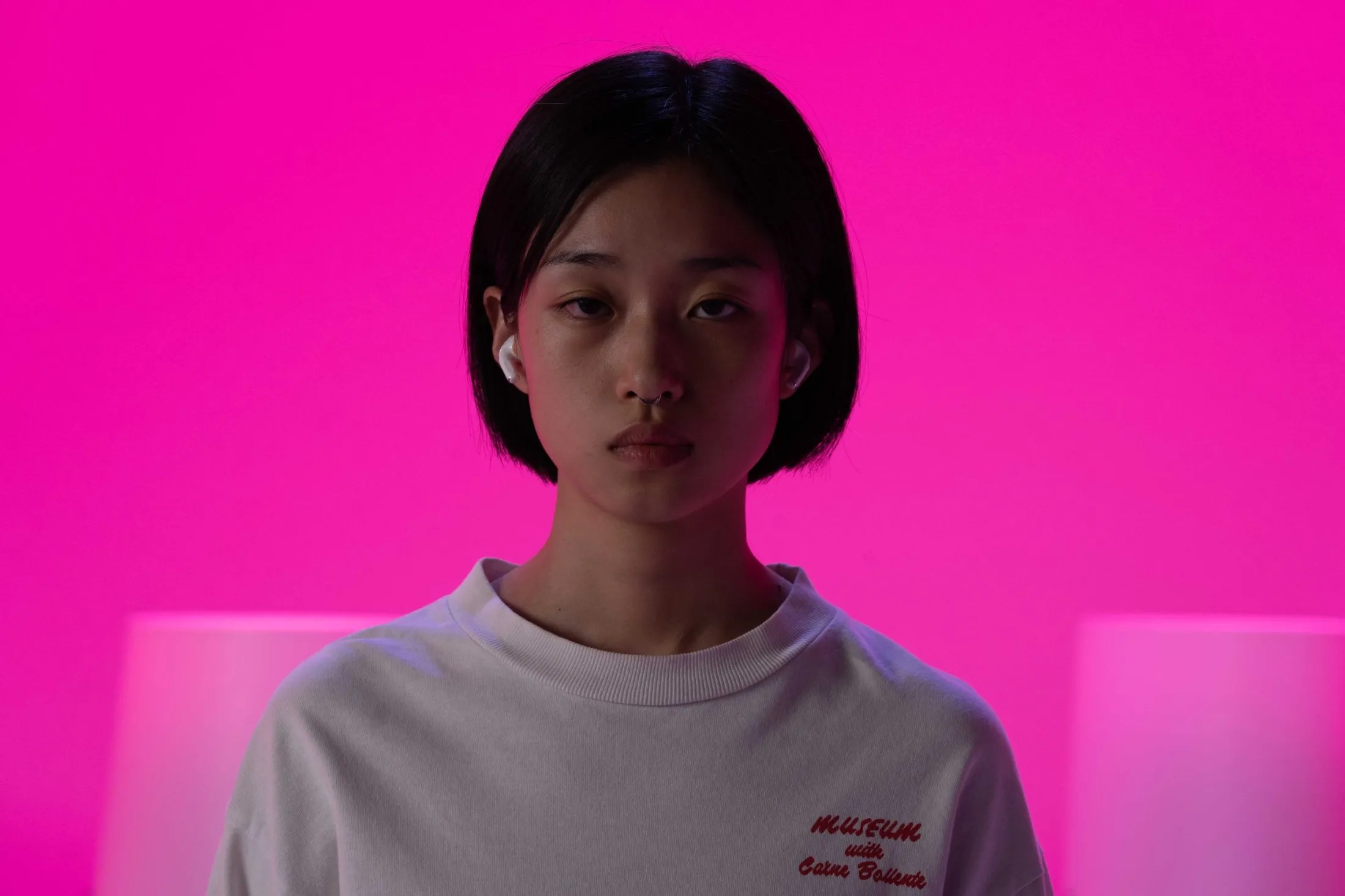
An aimless young woman struggles to understand herself or the world around her while finding release only in watching videos of the Namibian desert in Yoko Yamanaka’s quietly enraged drama. Review.
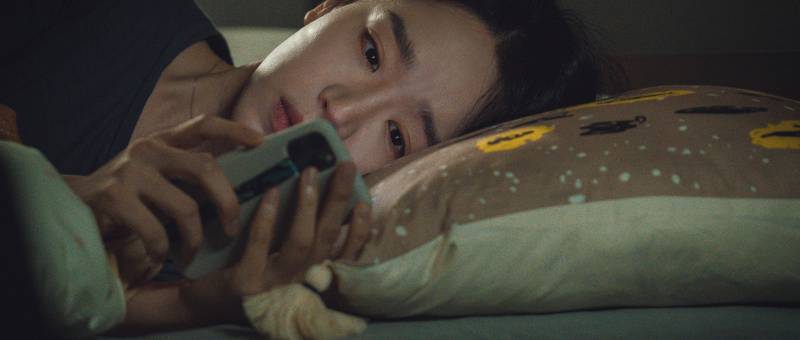
“Why do you always overreact?” a petulant craftsman eventually asks Soo-hyun, though Soo-hyun hasn’t overreacted so much as dared to assert herself in a world that often doesn’t listen to women. The irony at the centre of Park Hee-kon’s cybercrime thriller Don’t Buy the Seller (타겟, Target) is that it seemingly all unfolds because of a faulty washing machine, but like similarly themed films such as Door Lock, it soon becomes clear that Soo-hyun (Shin Hye-sun) isn’t really safe anywhere and there’s nothing this world objects to more than a woman who answers back.
In any case, it’s clear that Soo-hyun is not safe at work as her relentlessly creepy boss (Im Chul-soo) continues to sexually harass her while telling her off for taking things too personally when she finally complains. All he ever seems to do is yell at her for failing to enact his ludicrous demands while the guys at the construction site obviously don’t pay attention to her even though she’s the one managing this project. “Think he wants to work after being yelled at by a young lady?” one of the guys asks when one of the others doesn’t show up for his shift though Soo-hyun hadn’t actually yelled at him so much as asked him to please do his job and follow her instructions rather than ignore her in favour of his own judgement.
She encounters a similar dismissiveness at the police station where she’s initially fobbed off as just another silly woman despite the younger policeman’s more sympathetic attempts to address her complaints even as his colleague leans over and explains there’s a four month backlog of fraud cases and they won’t even start to look for the guy who scammed her until then. Maybe he has a point, there are lots of victims of crime, but that only means they have lost the ability to enforce the law because the scammers know the police won’t catch them until they’re among the small number of unlucky criminals they do manage to get a lock on. Realising the police won’t help her, Soo-hyun vents her anger by tracking down the scammer on the reselling platform she tried to buy a washing machine from and leaving warnings not to buy on all his listings. Of course, this earns the stalker’s wrath because he too is another man who doesn’t like it when a woman answers back.
But Soo-hyun has bitten off more than she can chew. This guy is seriously dangerous and into way more than just scamming people online by selling them broken appliances. We can see he has some kind of cyber lair and offers similar services to other men in which he agrees to provide a woman’s phone number, passwords, social media accounts and social security details to any man that wants them, for the right price. If he wants porn or videos posted, that’s extra. But it’s clear that a man with money can ruin a woman who says no with relative ease. Deep into his campaign, the stalker offers Soo-hyun the opportunity to end all this by paying him a large amount of money though as Soo-hyun knows there’s no guarantee he’ll keep his promise. Still after months of terror and constant harassment, she’s on the brink of giving in.
In this way, the stalker becomes an avatar of patriarchal male violence that slaps Soo-hyun right down in her place. She begins to feel insecure in the domestic environment as the stalker sends her nuisance deliveries of fast food at all hours of the day and night along with strange men who’ve been told to visit her for a good time and have evidently been given the code for the door lock. She’d only moved in here a week ago and moving out will incur a financial penalty she’s not well equipped to pay having been scammed in the first place. But the police seemingly can’t do anything while Soo-hyun is plagued by a sense of threat and unease that this person has so much control over her life and could turn up to cause her harm at any moment. Suddenly, she’s not a woman who answers back anymore but a timid and nervous zombie who can barely speak at all.
Of course, this is exactly what the stalker wanted and what many of the men around Soo-hyun want too. They tell her to stop overreacting or that she brought this on herself by goading the scammer. They imply that she’s made herself an easy target by living alone and that buying goods second hand through apps which involve any kind of personal handover is inherently dangerous, but really they mean that like her friend Dal-ja (Lee Joo-young) she should have got married, chalked up getting scammed to experience, and above all kept quiet about it. Which is to say let her sleazy boss get away with making her feel uncomfortable as a kind of appeasement rather than challenge his behaviour or remind him that he does not have the right to make her feel this way, to abuse his position to interfere with her career, or otherwise oppress her. The message is, you don’t have to buy what they’re selling, faulty goods are after all not worth all this hassle.
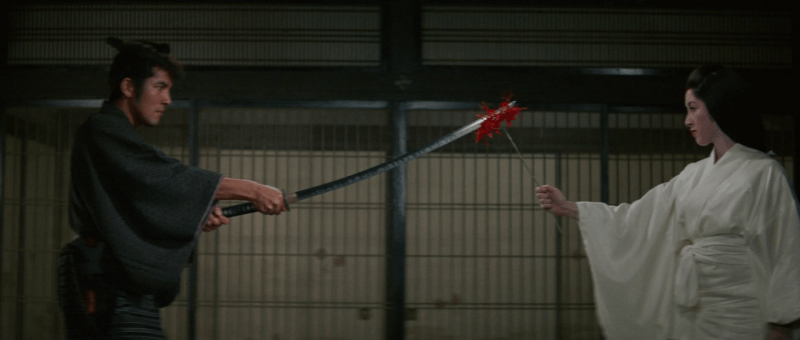
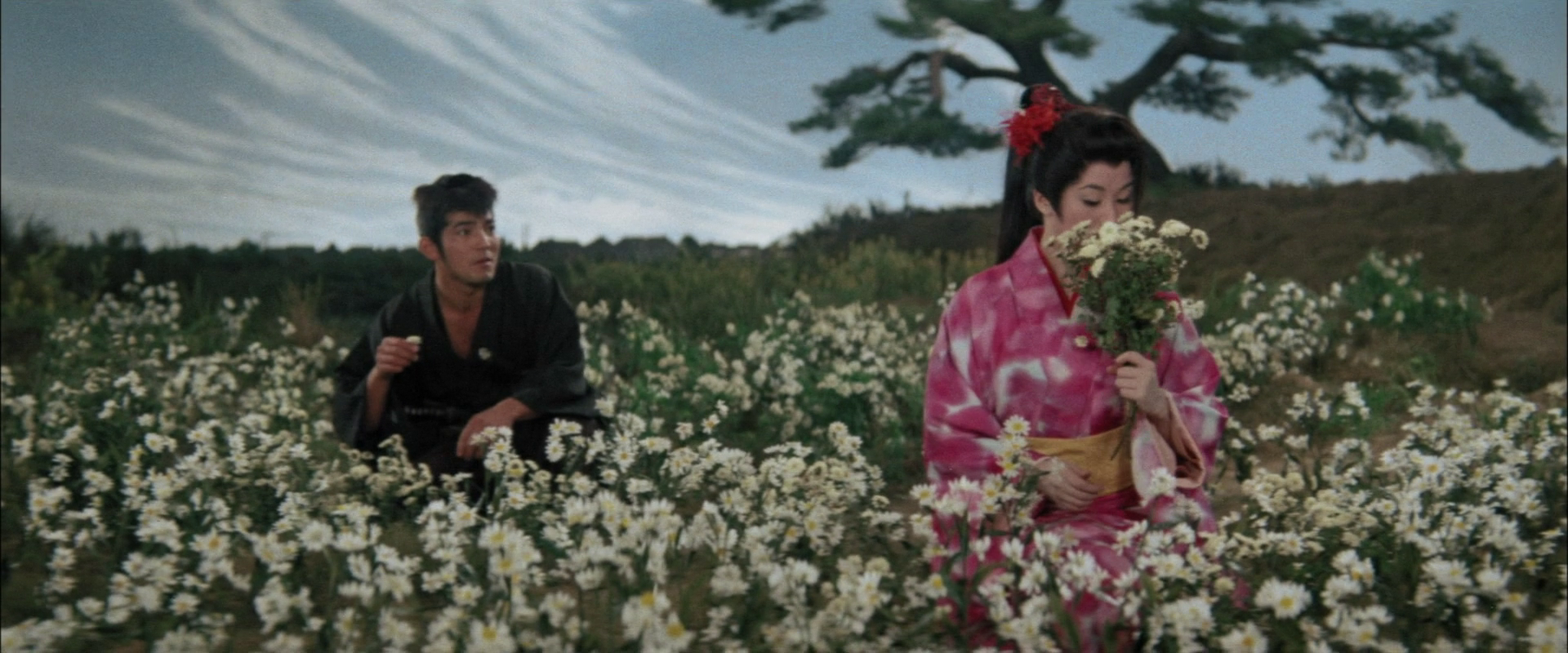
Many have tried to end the Tokugawa line. Few have done so by covering a courtesan’s legs in fish scales to put the Shogun off his stride. Based on a book by Futaro Yamada, Norifumi Suzuki’s Ninja’s Mark (忍びの卍, Shinobi no Manji) is at heart a romantic tale in which love is “part of the game” but also apparently the one trick a ninja can’t escape. Perhaps that’s why Shogun Iemitsu at the comparatively late age of 30 has failed to produce an heir with any of the beautiful yet emotionally distant courtesans of the inner palace many of whom also seem to be ninjas, therefore provoking a constitutional crisis.
Aside from that, it seems the ninja plot is a kind of revenge against the Tokugawa carried out by the last remnants of a house that was dissolved by the Toyotomi. There are in fact three ninja clans all clustering around the palace, Iga, Koga, and Negoro, each of whom have different kinds of skills. Technically, some of them are in the employ of the Shogun’s disinherited younger brother Tadanaga (Shingo Yamashiro), but others of them are working strictly for themselves and their revenge. In any case, their plan is to prevent Iemitsu from fathering an heir by putting him off sex essentially by making it freaky (in a bad way). Thus one of the ninjas uses his ability to transform objects so that the courtesan’s legs are covered in fish scales. Another plan sees a ninja body swap with one of the women so that Iemitsu’s sperm ends up inside him where it obviously has nowhere to go. Meanwhile others hatch a plan to steal some of Tadanaga’s seed to use on the women in the inner palace to cover up Iemitsu’s potential infertility seeing as it is after just as good being of the Tokugawa line.
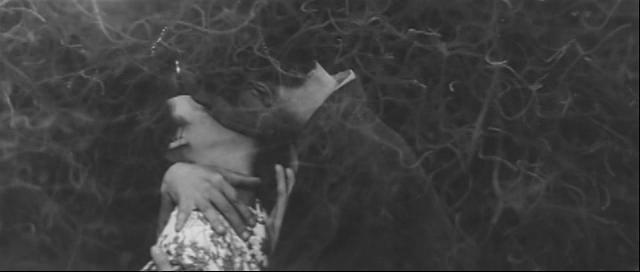
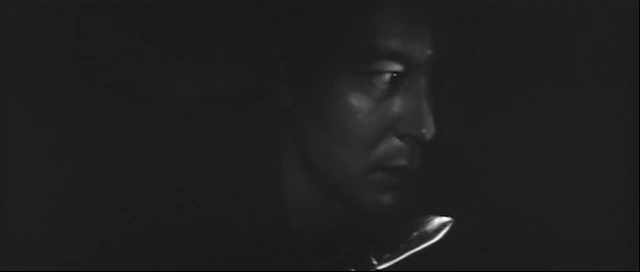
This particular ruse is suggested by Toma (Isao Natsuyagi), the disenfranchised former member of the Yagyu school turned ninja ronin they bring in to solve the problem. He quickly homes in on Kageroi (Hiroko Sakuramachi), a female ninja, as the villainess whose special power is poisoning men with love and desire by means of the spider lily plant. But as Toma points out to her, she is also a prisoner of her skill in that if she were to fall in love she would inevitably kill her lover. Of course, he survives her first attempt to kill him, leading her to fall in love with Toma and become conflicted in her mission while he plays on her emotions to escape but eventually realises they may be more genuine than he first realised.
In this, Suzuki brings some of his trademark romanticism particularly in the colourful art nouveau aesthetics and frequent use of rose imagery. Though the film is clearly designed to lean into the erotic with frequent use of nudity and salacious scenes including a brief moment of lesbian seduction, it eventually heads towards romantic tragedy in which the debauched and nihilistic Toma and the wronged Kageroi discover a love made impossible by their ninja code and the times in which they live. Having been ordered to kill her, Toma declares that he will marry Kageroi in the next life and returns to her the Buddhist Manji that is the “ninja mark” of the title.
Nevertheless, the dialogue is often suggestive as in Kageroi’s curse that Toma’s “sword” will rot, while it’s also Toma’s “sword” that alerts him to the danger she presents. Toma too claims to derive his ninja powers from his “sword” having apparently concentrated them by repressing his sexual desire and swearing off women. He says that he seals all his “distracting” thoughts into a virgin, closing off all her senses and placing her into a coma until he breaks the spell. Even so, he admits that without his “sword” he is just a man, and as a man claims to love Kageroi, but as long as he has his “sword”, and she her “lily”, their love is impossible.
But this repressed love seems to pose less threat to the social order than the lack of it in Iemitsu who is bored with his courtesans and cannot conceive an heir. Constitutional crisis is averted only through a little ninja trickery and a convenient ruse to overcome Iemitsu’s infertility so that in time he produces five sons and a daughter, which honestly seems like it might just present another set of problems in about 30 years’ time. Like similarly themed ninja pictures, Suzuki makes good use of surrealist imagery and colour play alongside the kind of onscreen text later used in jitsuroku yakuza films to name each of the ninja’s key skills and which clan they belong to. What he always returns to, however, is the sense of romantic tragedy in a world seemingly poisoned by ambition in which love itself is rendered an impossibility.
*Norifumi Suzuki’s name is actually “Noribumi” but he has become known as “Norifumi” to English-speaking audiences.
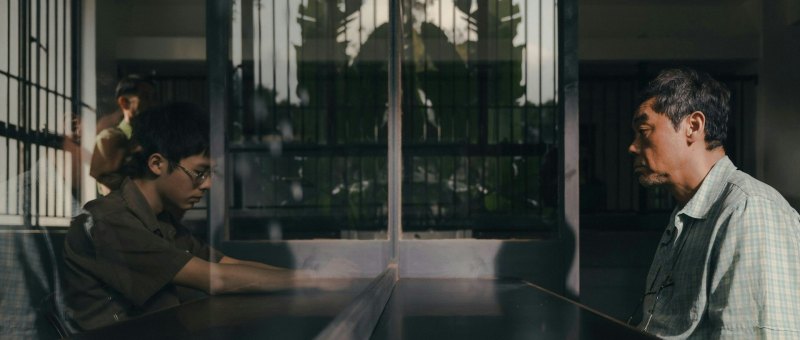
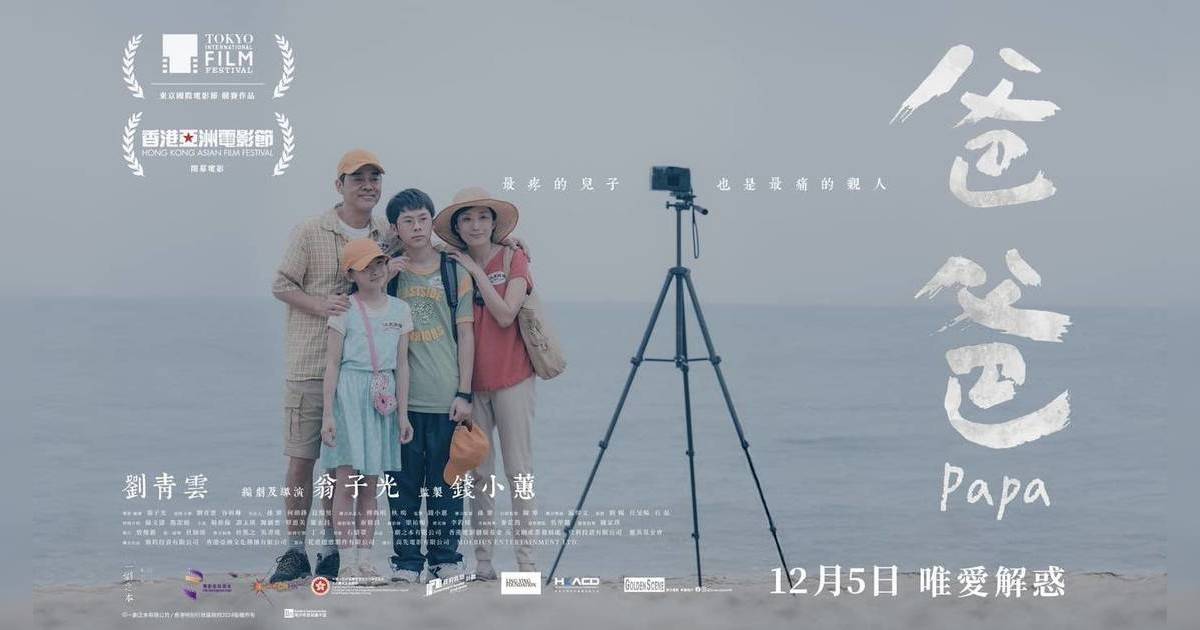
A man struggles with conflicted emotions after learning that his teenage son has killed his mother and sister in a bloody attack in Philip Yung Chi-kwong’s empathic character drama, Papa (爸爸). As much as he’s responsible for the deaths of those dearest to him, Ming (Dylan So) is still Nin’s (Sean Lau Ching-wan) son and he has a real desire to love and care for him while at the same time wondering why and continuing to blame himself as if this tragedy were really provoked by his failures as a father.
Weaving back and forth through the last 30 years, Yung meditates on a theme of loss while linking Nin’s life with key moments in history. In 1997, the year of Hong Kong’s handover to China and also the beginning of the Asian financial crisis, Nin buys a newfangled digital camera hoping to record the birth of his daughter, Grace. Nin isn’t convinced by this technological advance and wonders if it will just lead to people wasting their time taking endless photos now they don’t have to worry about running out of film, but it’s also the means by which he is eventually able to preserve his family by making use of the temporary pause provided by its timer function so that they can all occupy the same space for a moment but also for eternity.
Otherwise, he worries that the family’s business concerns put too much strain on their relationships. He and his wife Yin (Jo Koo Cho-lam) worked opposing shifts at a 24hr eatery meaning they rarely got to spend time together and the children grew up with each of their parents never fully there. Though Nin had wanted to stop opening overnight so they could have a more conventional family life, Yin, from Guangdong on the Mainland, was against it and wanted to keep going until the children were a bit older. There’s an implication that this 24hr culture is also something of an older Hong Kong that’s gradually being erased in the post-Handover society and that Nin and his family are living in an age of decline.
Though Ming won’t give a reason for what he did, in his court testimony he claims to have heard voices telling him that there were too many people and it was making everyone angry so he needed to kill a few and bring the population down. Nin again blames himself, reflecting that the family live in a typically cramped flat where the children have to share a room and everyone is piled on top of each other even if he and his wife are rarely there at the same time. In flashbacks to happier times when Ming was small, there’s a suggestion that Ming resented his sister and that he always had to share not only his possessions, his mother suggesting that they buy a smaller bike for his birthday so Grace can use it too, but his parents’ attention. In a particularly cruel moment, Ming tells Grace that none of her favourite characters from Doraemon are actually “real” but merely imaginary friends Nobita made up in his head because he is autistic.
But along with his aloofness, poor social skills and lack of empathy, Nin remembers Ming caring for the stray kitten Grace adopted but then grew tired of though he had not originally been in favour of taking it in. He seems to have been living with undiagnosed schizophrenia, something else Nin blames himself for wondering if there was something he could have done. “If I’d been there it wouldn’t have happened,” he tells the press in the incident’s aftermath, but even if he was ill it’s hard to believe the little boy he taught to ride a bike and took on trips to the beach could have done something so violent and hateful and then show such little remorse. Even so, he’s still his son and the only thing he can still rescue from the wreckage of his life while meditating on all he’s lost. As such, it’s another recent film from Hong Kong about how to live on in a ruined world. Yung’s camera has an elegiac quality aided by a retro synth score and the neon lighting of an older Hong Kong drenched in melancholy, but also weary resignation and a determination to keep going if only in memory of a long absent past that were it not for a photograph “to prove that we were here” would go unremembered.
Produced by Daiei Kyoto under the guidance of the Osaka Police, Bullet Hole Underground (地下街の弾痕, Chikagai no Dankon) is keen on selling a vision of order in a new Japan in which the police force employs all the latest technology to solve crimes calmly and methodically. We see them approach the crime scene forensically and conduct a series of scientific tests with microscopes and gadgets such as lie detector machines and code breaking equipment as they proceed towards the truth while earnest policeman Minagawa (Hiroshi Nihonyanagi) battles the ghosts of his past on realising that the dead man’s wife is his own lost love.
In any case, the film opens with a noirish scene at Umeda Station, Osaka, which then turns strangely comic. A man stumbles toward the exit and we assume that he is probably drunk but another man soon comes up behind him and pushes a pistol into his back. The second man pulls the trigger, then again to make sure, before calmly walking up the steps and leaving the station. A little while later, another drunk man arrives and has a little banter with the body before covering it with a signboard which is one reason it isn’t spotted until the shoeshine boys turn up in the morning.
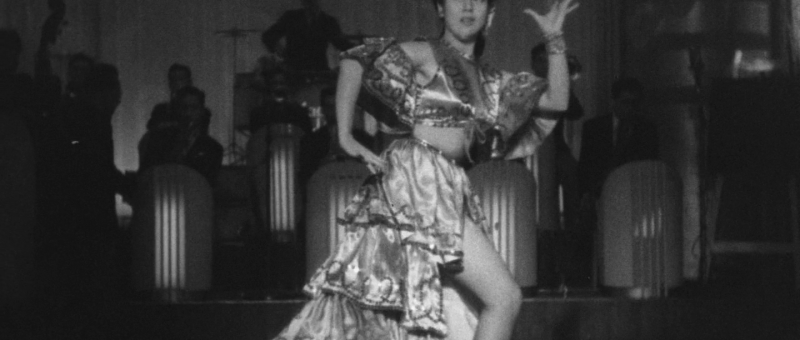
This sudden influx of children at rush hour is another symbol of the destabilisation of the post-war society in which the war orphans try to support themselves amid the still difficult economic environment. The lack of economic opportunities is also posited as a reason that the deceased, later identified as Kaneko, may have turned to crime by getting involved with a criminal gang smuggling drugs and money to destabilise the society even further. Yet the rot may have set in a little earlier than that. Before the war, Minagawa had wanted to marry Michiko (Machiko Kyo), the sister of his friend Sekiguchi (Toshiaki Konoe), but she later threw him over to marry the wealthy son of a family running a pharmacy. She admits she married him for the money, but after the war he lost everything. Unable to find work, Kaneko became a wastrel while Michiko gained employment at a cabaret bar as a dancer. He told her that he’d found a job at a company, but this turned out to be a lie and chief investigator Fujimoto (Takashi Shimura) assumes he must have been working for the gang.
Still, to begin with it seems like it may have been a case of mistaken identity. Kaneko’s clothes turned out to belong to other people, a fact easily explained by Michiko that they were second hand, but also suggesting that someone may have set him up to take their fall. The gang needed the skills he learned in the navy but maybe they didn’t need him anymore. The root of the evil is located, ironically enough, in a jewellery store presenting a front of affluence and elegance but in reality founded on crime and misery when so many are still struggling to rebuild their lives. Michiko too seems to have turned cynical. She snarls and pushes Minagawa away, but privately cries and appears to regret her youthful decision to reject love for material comfort.
Perhaps because of its genesis as a film designed to promote the local police force, it has a much more upbeat conclusion and particularly for Michiko who is, unusually, allowed to redeem herself and gain a second chance to make a better decision by reuniting with Minagawa who does not and never has held her past against her. The pair of them look out over the fracturing city and remark at how it just carries on as if nothing had happened which feels like advice intended for the post-war society that it should do the same and try to leave the past behind to start a new life in this new era. Meanwhile, huge numbers of policemen swarm the harbour to crack down on the smuggling gang sending the not altogether comforting message that this city is well protected against all kinds of crime and the police force is a well-trained, modern institution that has the latest technology at its disposal along with astute and compassionate officers. There may be sleazy clubs, duplicitous men and heartless gangsters, black markets and smuggled dangers, but there are, the closing scenes with their wide-open vistas in which scorched trees stand behind the burgeoning city imply, better days to come.
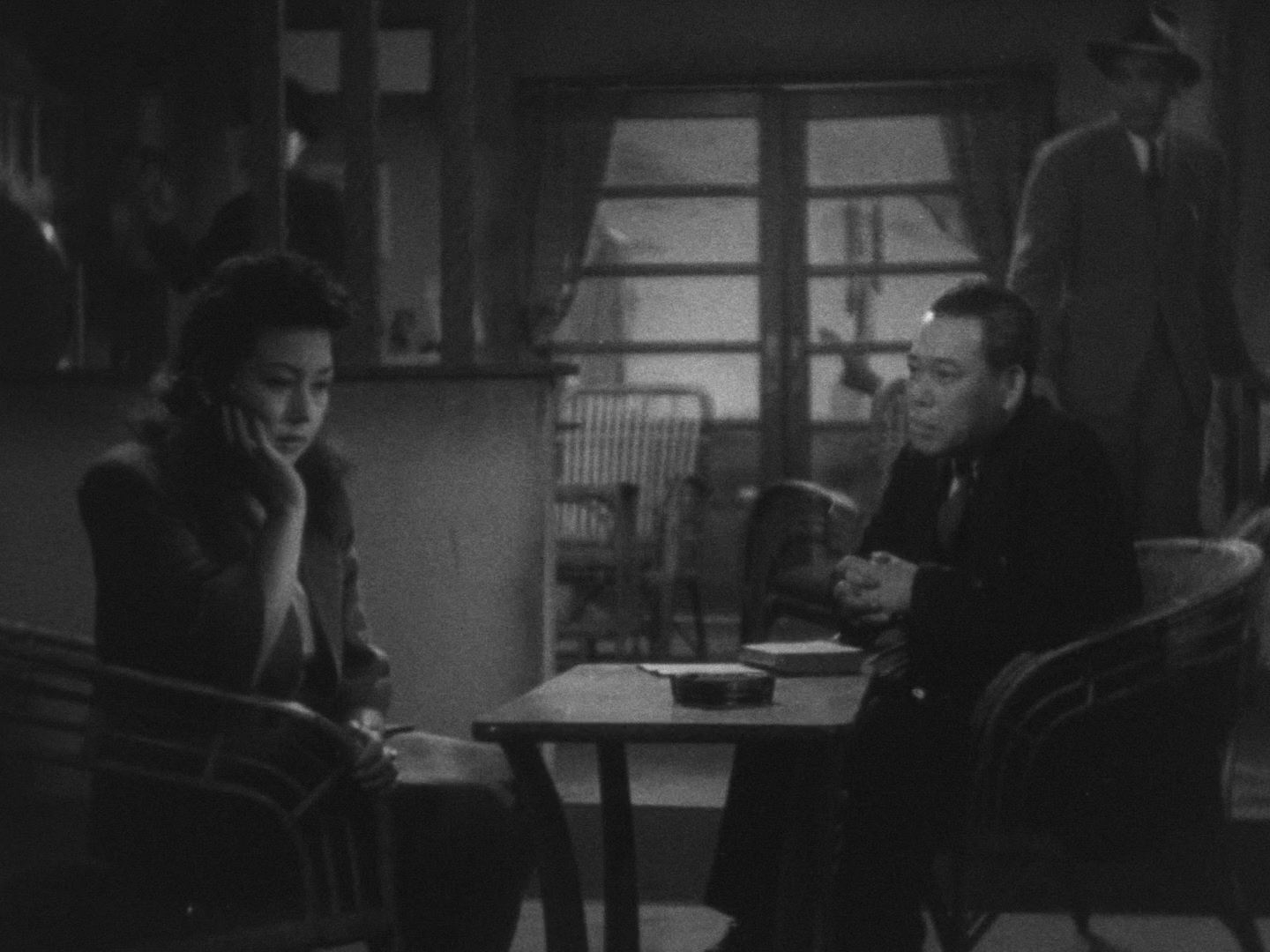
A intellectual professor and his wounded wife find themselves trapped in a toxic marriage after returning from Manchuria in Ko Nakahira’s fatalistic drama, Whirlpool of Flesh (おんなの渦と淵と流れ, Onna no Uzu to Fuchi to Nagare). Set in the late ‘40s, the film does indeed position Manchuria as a point of corruption while otherwise suggesting that Japan itself has been emasculated by the Occupation, but otherwise demonstrates how the couple drag each other into a cycling whirlpool of jealousy and obsession that it seems neither of them are really equipped to understand let alone escape.
Claiming to have been struck by her bright and smiling face in her omiai photo, Keikichi (Noboru Nakaya) married Sugako (Kazuko Ineno) in Manchuria without actually meeting her before the wedding. Apparently uninterested in sex, Keikichi was a virgin on their wedding night but harbours doubts Sugako may not have been. In any case, he seems put out that Sugako is not in his opinion his intellectual equal. He chances on her diary in which she details how bored she is by his constant lectures about English literature and that she feels him to be more schoolteacher than husband, but he merely scoffs that it’s not particularly well written. He begins to suspect that she’s sleeping with customers who come into the speakeasy she opens in their home during the days between the Russian invasion and repatriation and succumbs to a generalised sense of impotence hiding out in his room upstairs reading while she takes care of business below.
In the present day, convinced that she’s having an ongoing affair with a merchant, Otani (Kazuo Kitamura), Keikichi pretends to go to a hot springs resort and then sneaks back to spy on her from an adjacent room. Though he feels no desire for her as his wife, through the eyes of these other men he rediscovers a sense of Sugako as the woman from the photograph for whom he does feel some attraction and satisfies his latent sexual desires through watching her sleep with Otani. As an escape from the war, he’d been working on a translation of Shakespeare’s Troilus and Cressida the heroine of which he seems to superimpose on Sugako in wondering if she is a faithless woman or true, angel or devil.
Yet from Sugako’s point of view, she begs him for physical intimacy which he refuses to grant despite his jealousy over her relations with other men. Traumatised by her sexual abuse at the hands of her uncle, Sugako believes that she has a body designed to satisfy men’s desires and is drawn into meaningless, and often transactional, sexual relationships. When Keikichi later questions her, it seems she doesn’t remember any of them in detail for to her they were simply “men” and nothing more. The situation is somewhat complicated by the fact that her uncle was a scholar of Chinese literature, which in part aligns him with Keikichi, but also points back to Manchuria as a source of corruption though coming uncomfortably from the opposite direction.
Sugako equates this corrupted sexuality with the great emptiness inside her that frequently leads to thoughts of suicide. Nakahira constantly shows us shots of Keikichi’s knife as if implying some kind of violence is inevitably going to take place, though in the end it signals nothing so much as Keikichi’s impotence. Then again, the emptiness is also linked to a sense of despair in Japan’s defeat that is manifested most obviously in the house next-door where the widowed mother may have been having an affair with Sugako’s uncle and unsubtly tries to blackmail her by threatening to expose the secret of her sexual abuse about which she had tried to tell Keikichi but he had refused to listen. The daughter has become a sex worker catering to American servicemen to support the family while her brother, Kenichi (Tamio Kawachi), allows her to sacrifice herself for him justifying himself that it’s for the greater good as he’ll eventually become a doctor and save countless other lives. He’s also masquerading as a Christian to get a scholarship to an American university through the church which is all very contradictory not to mention selfish and cynical. The sister, meanwhile, appears to have lost her mind and frequently rants and raves, blaming her mother by claiming that walking in on her with Sugako’s uncle permanently corrupted her sense of self and sexuality. Like Sugako, she exorcises her trauma through abusing her body, in her case through sex work with “nasty GIs who don’t always pay.”
Keikichi refers to this as “post-war nihilism” like the frequent strikes and workers parades that take place around him, but partially repairs his sense of masculinity after moving to Tokyo and getting a job. At work he meets another young woman who is a mirror of the young lady from next-door in that she was also repatriated from Manchuria where her father was a member of the government. With her mother dead and father unable to work, Shimura (Kaori Taniguchi) also supports her family with her secretarial job and often goes without lunch herself to make ends meet. Keikichi notices this and offers her his bento claiming to be feeling unwell, but fails to notice how his pity wounds her dignity even if he meant in kindness while acknowledging that he’s never known hunger. Unlike the mismatched Sugako, Keikichi and Shimura are an ideal match. She also wanted to study English literature and can meet him on his level discussing politics and culture though he does not seem to be aware that he is attracted to her and acts almost paternally in offering to pay her university fees to help her escape her life of poverty, echoing Sugako’s claims that he had become her “little boy” rather than her husband.
The irony is that Sugako insists Keikichi, who does little but look down on her and alternately complain that she’s either impure or unattractive, is the only man she’s ever loved and blames his lack of sexual interest in her on the unresolved trauma of her childhood abuse. Having asked Kenichi to help her get her hands on some cyanide, she is shocked and disgusted when despite his need he rejects her money and asks for her body instead. He insists that it’s “only the friction of mucus membranes” and that she might as well sleep with him first if she’s going to die, though her refusal is in part a desire to die “pure” and finally overcome the emptiness and despair inside her. This inability to reconcile herself is also aligned with Keikichi’s vision of “post-war nihilism” and suggests that in the end this trauma can’t be healed and must necessarily lead to destruction. Meanwhile, Keikichi seems to have discovered a path towards his rebirth in his friendship with Shimura only to potentially have the rug pulled from under him. His new future too, may end up poisoned by Sugako’s unilateral decision to facilitate it. Dark and twisted in true Nakahira fashion, the film paints the post-war society itself as a deepening whirlpool from which there is no escape or at least not for those like Keikichi and Sugako forever locked in a deathly embrace and drawn ever deeper into the waves.
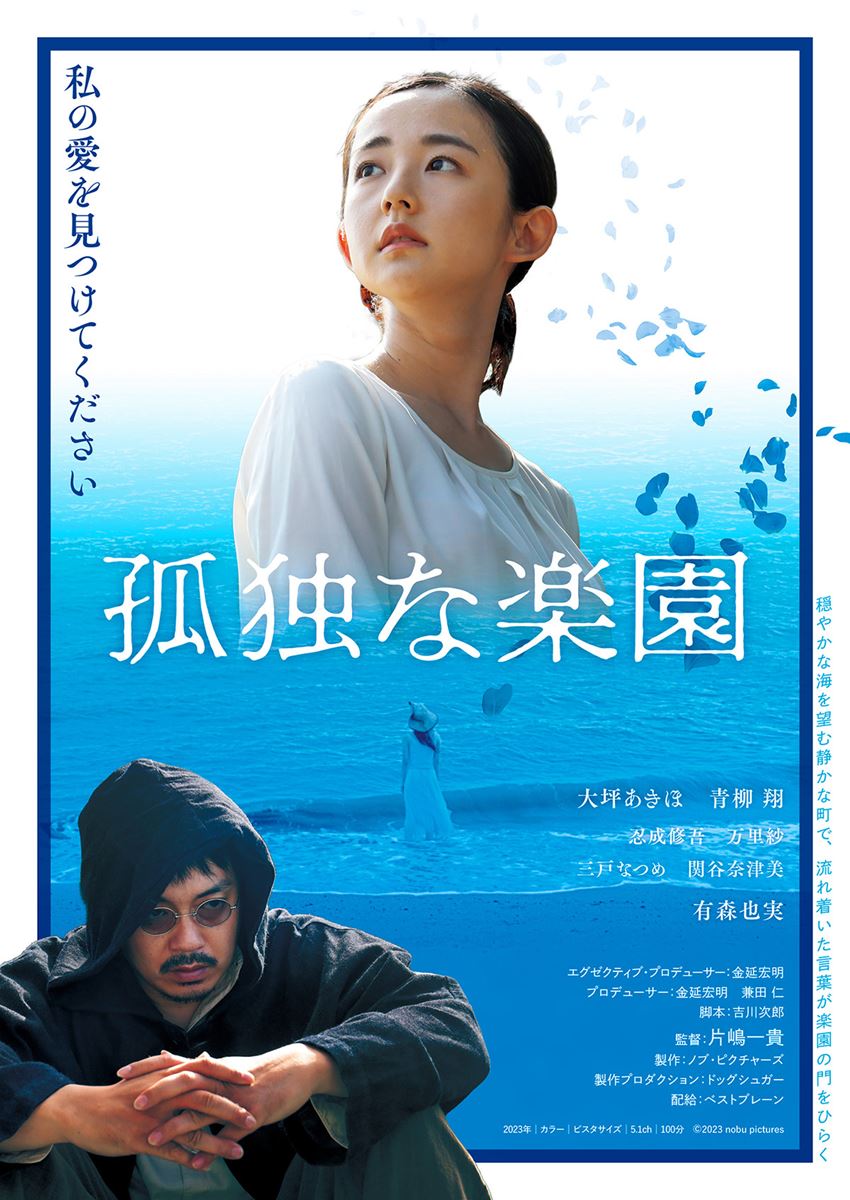
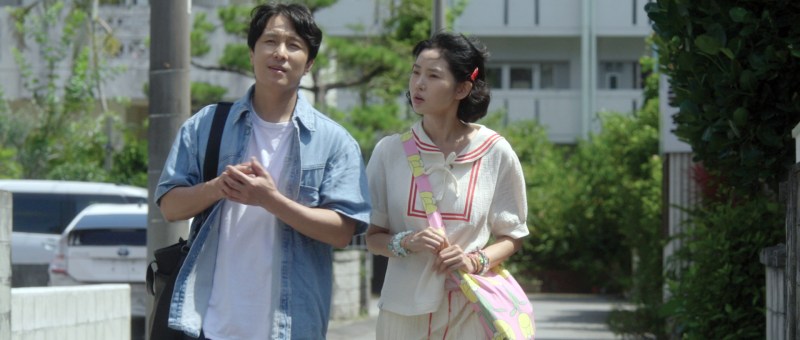
A blocked writer and a introverted young woman discover unexpected connection through accidental epistolary communication in Ikki Katashima’s poetic drama, Paradise of Solitude (孤独な楽園, Kodokuna Rakuen). Each wondering what exactly “paradise” means, the pair of them eventually find new ways to face the past and move on with their lives all while undergoing a vicarious romance with yearning at its centre that may or may not develop into something more “real” or else achieve its power solely through its lack of resolution.
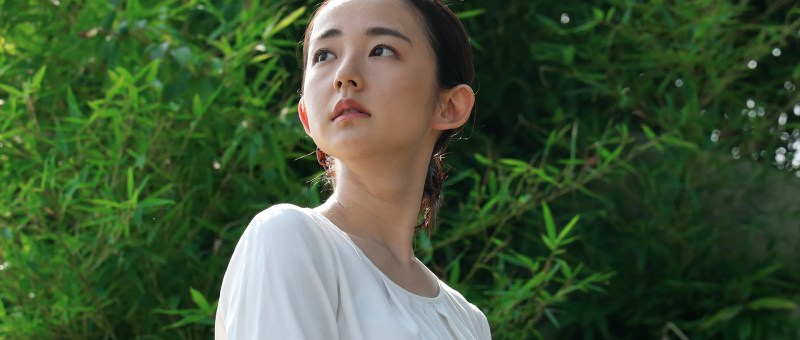
Yu Tsushima (Sho Aoyagi) is a writer struggling to meet his deadlines on a new serialised novel. Suffering with an illness, he’s retreated to his hometown and is now unable to leave because he experiences seizures on boats which understandably leaves him preferring not to get on them. One day, he receives an incredibly poetic love letter from an anonymous address only to notice a link to a porn site at the end of the email like a cruel punch line. Meanwhile, Ayame (Akiho Otsubo) is a nervous and introverted young woman working at a factory on the next island over. To begin with, it seems like she has suffered under the authoritarian rule of her aunt Tsukiko (Narimi Arimori), though as we later discover she may have meant well.
Showing a talent for writing which sees her exploited by the factory boss, Ayame is tasked with writing a love letter on behalf of her friend Elena to a man she’s apparently only seen once yet has fallen hopelessly in love with. There’s something a little strange about this proposition, and not least because it seems like Elena may actually want this letter for herself and has unspoken (in Japanese, at least) feelings for Ayame. Elena is not the only non-Japanese person working at the factory at which it seems there may be some racist attitudes and behaviour among the employees, though there may be other reasons she feels isolated and otherwise drawn to Ayame.
But somehow, the letters find their way to Yu who is then “inspired” to write a new serial basically ripping off the anonymous correspondence but rewriting it in his own way while Ayame, having read his stories in a literary magazine, is not exactly angry yet confused and continues writing in order to complete this literary back and fore in crafting a new story together. Though the letters spin a tale of a lovelorn soul, it’s really the past that Ayame longs to revisit in the resultant trauma of her mother’s unexplained abandonment.
On top of the weird island drama, Katashima builds on the sense of uncanniness with a subplot about a cult-like local church and its own desire to reclaim Ayame thereby preventing her from fully confronting her past. Just as Yu is suffering from a medical condition, Ayame too experiences panic attacks when in contact with the church. Though it’s not always clear what is objectively true and what part of the story Yu is constructing from Ayame’s prose, parallel stories develop in which Ayame’s father hoped to liberate her mother’s soul though she eventually decided to chase paradise somewhere else.
Because of her experiences, Ayame comes to believe that love within her has died, but perhaps begins to regain something of it thanks to her correspondence with Yu who becomes remorseful in learning that his actions may have been additionally unethical in encouraging Ayame to engage with her past trauma and risk dragging it all up again. He, meanwhile, begins to discover his creativity and overcomes the psychological dimensions of his condition by leaving his island and breaking out of his self-imposed isolation. The correspondence is like the message in a bottle discovered by Ayame’s mother which claimed to be from “paradise”, a hand across the ocean promising a better world over the horizon. Whether or not they find each other eventually in a more direct sense may not really matter, for simply having this invisible presence has enabled each of them to move past their internalised inertia and restart their lives. They may be trapped in a paradise of solitude, but on the other hand not quite alone and now a little more open to life’s possibilities rather than bound by its hurts and disappointments too frightened to leave the safety of their isolation in search of a more perfect paradise.
If you run into someone who has the same name, same birthday, and was on the same flight as you to a random destination wouldn’t you call that fate? The protagonists of Cho Sung-kyu’s Okinawa Blue Note (오키나와 블루노트) prefer to think of it as mere coincidence, at least to begin with. They each have different reasons for coming to Okinawa, but then again perhaps fate sent them here to get a new lease on their lives if not to fall in love.
Love does however seem a little unlikely for the mismatched pair each named Kim Jungmin who are about as different from each other as it’s possible to be. Yet the male Jungmin’s (Kim Dong-wan) animosity is somewhat understandable given that his arrival in Okinawa has become chaotic thanks to the female Jungmin’s (Hwang Seung-eon) presence given that she mistakenly ended up with both his pre-booked car and room reservation because the staff members only checked the name and not the booking number. Jungmin isn’t the sort of person who copes well with complications, nor does he cope well with noisy, more extroverted people like the female Jungmin who is also annoyed by the whole thing but on the other hand doesn’t think it’s really her problem having merely assumed she’d been lucky enough to receive a free upgrade rather than actively nabbing someone’s more expensive package. Nevertheless, he’s forced to get along with her because he needs to borrow her rental car to get around which also means accompanying her on her touristic adventures and getting swept up in her enthusiastic exploration of the island.
The female Jungmin has a tendency to drink too much, say things she shouldn’t, and forget about them by the next morning. The male Jungmin, by contrast doesn’t drink because he is living with rheumatoid arthritis though he says he intends to drink again if his condition improves. He writes romance novels and doesn’t use the internet all that much. She writes webtoons and posts stories to instagram. They really have very little in common aside with a sense of dissatisfaction about their lives, their names, birthdays, and travel itinerary but you can’t deny that their meeting is like one of the male Jungmin’s novels as even he finds himself musing on a new story about someone who comes to Okinawa to patch things up with an old lover only to fall in love with a whale shark they met along the way.
Gradually it becomes apparent that the female Jung-min is here to confess her feelings to a boy from Korea who, it turns out, may have come to Okinawa in search of greater freedom rather than needing to be liberated from his tank which ironically may be more the case for the male Jungmin. Though it’s obvious from their second meeting with Taemin’s colleague Hiro that the two men are a couple, the female Jungmin can’t seem to see or accept it nor does he actually tell her outright that he’s gay only that all he wants from her is friendship as he’s explained several times before only she was too drunk at the time to remember she’s already declared her feelings and been rejected. What the female Jungmin saw as “fate” really was just coincidence and personal myth making as Taemin too had his own fate to follow that led him to Okinawa where he was freer to pursue his romantic desires, if only slightly, than in the still conservative Korea. When the male Jungmin floats an idea for a book inspired by his time in Okinawa the two men give their consent to be included but also ask their relationship remain a same sex one rather than the heterosexual casting Jungmin had given it possibly out of an attempt to disguise their identity but also an underlying squeamishness towards the inclusion of LGBTQ+ issues.
Nevertheless, the male Jungmin is able to re-envision the situation by turning his life into fiction and exploring a relationship between himself and the female Jungmin with the roles somewhat reversed in which he is a stereotypically hard drinking, chain-smoking writer and the female Jungmin a put upon woman with rheumatoid arthritis helping someone else achieve their romantic desires. Is this life imitating art, or art imitating life? Whatever it is, it seems the trip to Okinawa with its tranquil streets, picturesque environment, friendly and laid-back people has offered each of them opportunities both romantic and creative in a moment of unexpected serendipity, or perhaps this time it really was fate after all.
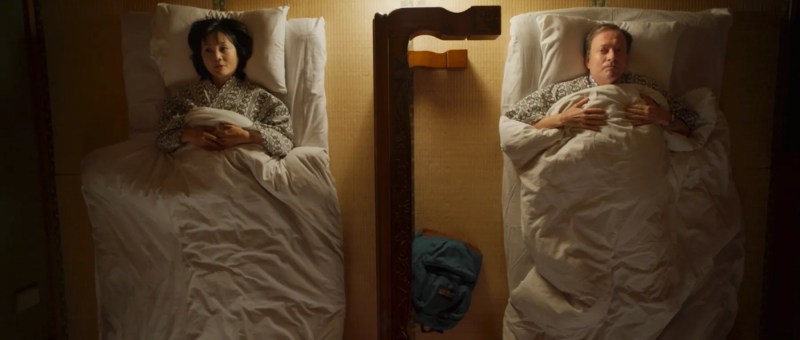
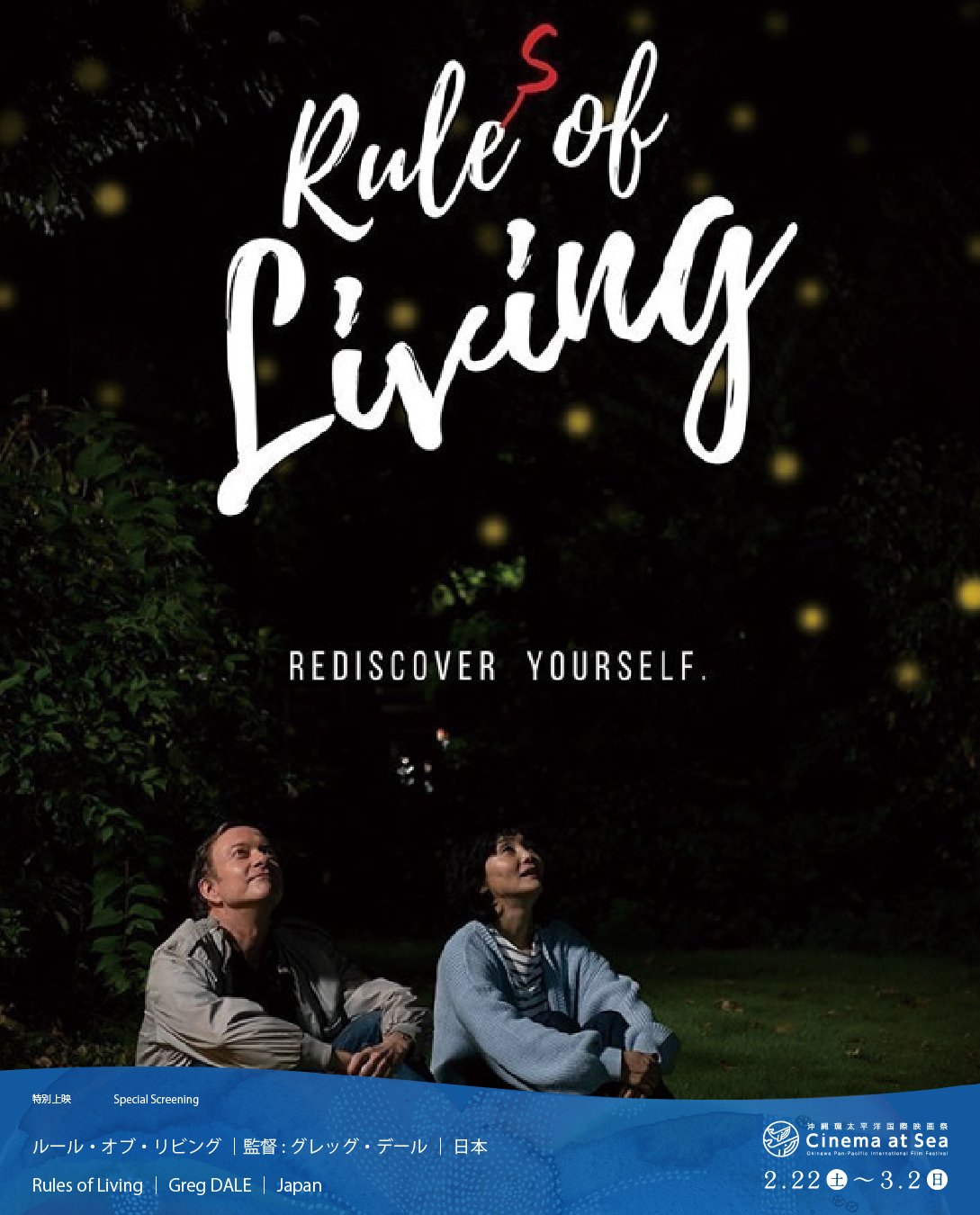
A lost tourist finds a begrudging sanctuary in the home of a reluctant middle-aged woman in Greg Dale’s cross-cultural comedy, Rules of Living (ルール・オブ・リビング). Well intentioned as it may be, the film has some outdated humour and suffers from an unbalanced perspective that prioritises that of the American hero and at times uncomfortably pushes a message of Western individualism as he somehow “liberates” there heroine, Mikako (Kaho Minami), from her sense of obligation to her family and wider community.
In a case in point, Mikako doesn’t want a roommate because her well-appointed home is a private sanctuary from the outside world and its constant judgement but is more or less forced to let Vincent (Greg Dale) in out of guilt and politeness. For his part fleeing a messy divorce and his own dissatisfaction with life under capitalism, Vincent arrives in Japan only to be somehow surprised that everything’s in Japanese and he can’t communicate with anyone because they are all too embarrassed about their English ability to respond to his questions. This results in a little well-worn humour in which his asking a portly middle-aged lady about a cheap place to stay is misunderstood and leads to an awkward situation as the apparently sexually insatiable older woman drags the naive and wholesome Vincent to a love hotel. Yet Vincent, an aficionado of Lafcadio Hearn, continues to wander round with wide-eyed wonder before rocking up Mikako’s office for more language-barrier banter and subsequently at her house despite not having made any attempt to contact her to make arrangements having befriended her daughter Chieko in Bali.
The film seems to directly contrast Mikako with her daughter who has given up a prestigious job and corporate career to go travelling leaving Mikako overstretched trying to care for her own mother alone as her health declines. Chieko’s decision is to a degree selfish in that she doesn’t answer her mother’s calls and does not even return home for her grandmother’s funeral while ironically looking down on Mikako for being a doormat who always puts the needs of others above her own as, the films argues, is expected by Japanese society. That’s not entirely wrong, though there must be a middle ground between total abandonment and selfless sacrifice in which not everything would simply be left for Mikako alone to deal with and she would have more freedom to fulfil herself outside of the expectations of others including those of Vincent. It’s notable that Mikako also seems to be dissatisfied in her career because of persistent sexism and office mores in which, at 49, she’s been more or less demoted to the ranks of office ladies after spending the rest of her working life in accounts and likely won’t be offered any further promotions, therefore justifying Chieko’s decision to quit. At the office, Mikako is treated as a maternal figure unfairly over relied upon by the boss because of her advanced skills while the younger women make too many mistakes and are slapdash in their work because they aren’t planning to stay in these jobs long term.
Meanwhile, Mikako is also under pressure to remarry especially as many seem to remark on the fact her family home is too large for her as a single woman. She’s been in a semi-serious relationship with a divorced childhood friend for some time but neither of them seem keen to give marriage another go until he too is pressured by his father to find another wife in order to take over the family business. Koichi (Kippei Shiina) is apparently the perfect man, nice, polite, well turned out and professionally successful yet there’s no real spark and Mikako feels guilty that she can’t learn to love Koichi in the way everyone else seems to love him for her. If she marries him, it will be for convenience and companionship along with the expectations of others much more than for herself.
Her romance with Vincent is not all that convincing but born of frustration with these same social expectations and desire to put herself and her feelings first as manifested in her sudden desire to learn English. Vincent teaches English around the neighbourhood and spreads these individualist ideas around while enlivening the community through the simple act of communication as if no one had ever thought to speak to anyone else before. Yet he meets a more cynical force in the head of the language school he eventually gets a job at who is from India and offers yoga classes on the side despite never having practiced it before coming to Japan in another example of the pernicious qualities of these “expectations”. Vincent partially falls victim to them too in assuming a young woman in the staffroom is a lost student rather than a teacher simply because she looks Japanese. Nana complains no one takes her seriously because of her appearance despite her native level English and American accent. Before arriving at Mikako’s Vincent had tried to rent an apartment only to be told they don’t rent to foreigners and those that do either offer inappropriate accommodation or ask for a series of spurious additional fees. A man in the street also yells at him to go out with his own kind when seeing him with Mikako.
Essentially, Mikako’s choice is between two men, Vincent who apparently represents “freedom”, and Koichi who represents conventionality. This rather undermines the central thesis of Mikako rediscovering herself and taking agency over her life rather than as her daughter had said devoting herself entirely to the service of others. The film’s title is taken from a series of rules Mikako pastes up as condition for Vincent staying with her which included not using the bathroom or disturbing her while she’s in the living room, symbolising her desire for privacy and reluctance to let the relentlessly friendly Vincent into her life (even though being reluctant to let a total stranger and especially a man you’ve never met before stay in your house with you is completely understandable), but also hints at the “rules” that govern her own life in a conformist and patriarchal society. Some of these at least she may escape in deciding to follow her heart even if the place it leads her to has rules of its own that may not in the end be all that better.
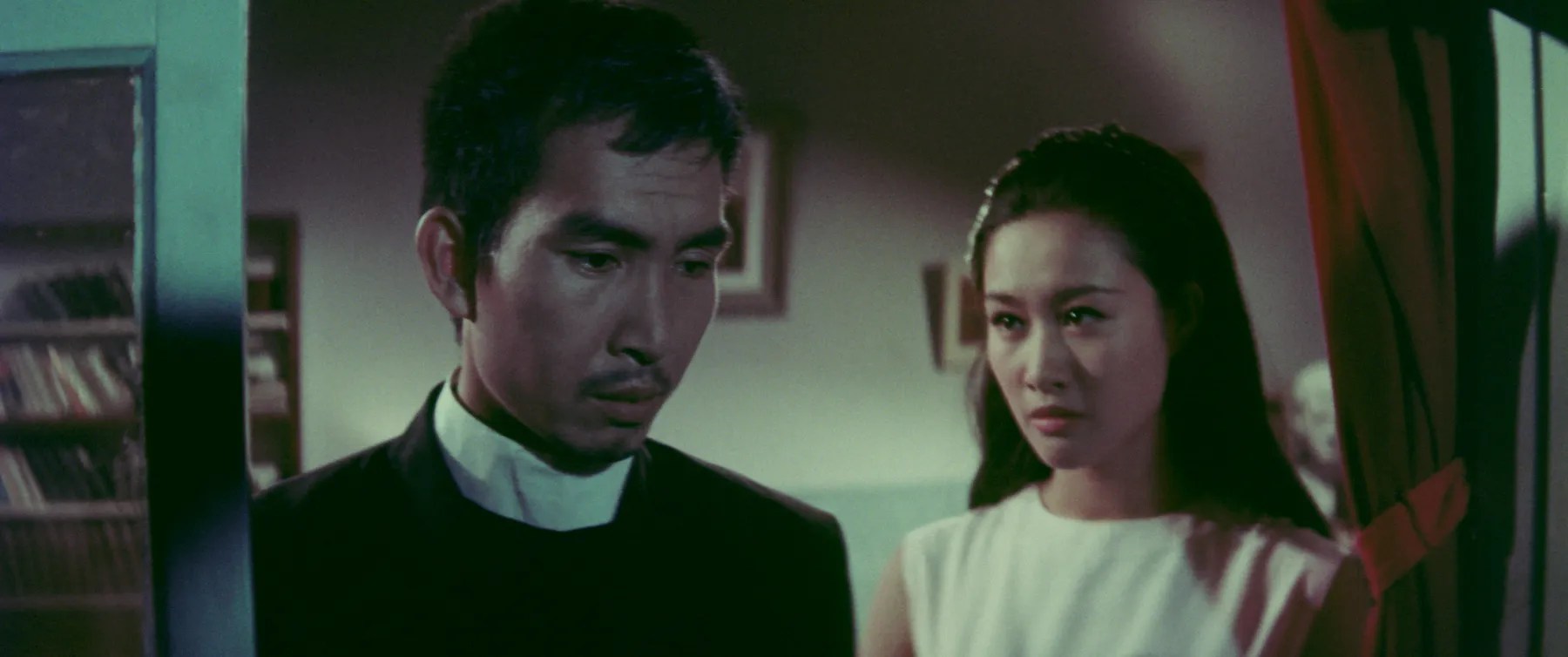
Shot at the same time as The Love in Okinawa, Sunset Over the Horizon (夕陽西下) is another Okinawan and Taiwanese co-production directed by Lin Fu-ti assumed lost until its discovery in San Francisco’s Chinatown in a Mandarin-dubbed print. Unsurprisingly, it features many of the same cast members and locations and even has a similar theme of impossible love but is more ambitious in scope incorporating both dream sequences and flashbacks to explore the changing relationship between Japan and Taiwan.
Lin opens the film with its conclusion as Shizuko watches a boat silently depart carrying away her love, the much older pastor/penniless painter Ching-wen who has made the decision to return to Taiwan having finally faced, if not quite come to terms with, his traumatic past at the end of the war and Taiwan’s “liberation” from Japanese colonisation. Japan had conquered Taiwan by force in 1895, but otherwise ruled with much less of an iron fist than it did in other areas of its empire. Lin seems to be making a minor point in dramatising the moment of “liberation” as one of conflicting emotions as the Japanese flag is slowly lowered and that of the KMT, another colonising force, rises in its place meaning that the island is not really “liberated” at all, merely changing hands and to a regime that became more oppressive than that which preceded it had been.
The irony is that it’s this “liberation” that disrupted his romantic future as a young Taiwanese student in love with the daughter of a Japanese general. With the end of the war, the Japanese must leave Taiwan and so his love must go with them and return to the mainland. She asks Ching-wen to come with her, but he refuses. He is unwilling to leave his nation and his family, though we can see he did so years later and traveled to her hometown of Okinawa though she ultimately chose to take her own life out of a sense of despair and futility. She could not return to Japan with Ching-wen nor stay with him in Taiwan either and so to her the only answer, the only real “liberation,” lay in death.
Shizuko later posits something similar even if her dilemma is different. Her businessman father wants her to marry the son of a local factory owner so that he will support his business but Shizuko refuses because she wants to fall in love and does not seem to like her father’s chosen suitor. The situation is somewhat complicated by the fact that Shizuko is a child of her father’s first marriage and is therefore resented by her stepmother who wants her to leave the family as quickly as possible. In some ways this dynastic union represents a decision to embrace the more consumerist future that Japan in the later 1960s represents. Ching-wen on the other hand despite his ruination represents something purer and more spiritual that is less materialistic and rooted in sincere emotion. Shizuko insists that the businessman may buy her body but never her heart, but that seems perfectly fine to him because it seems he’s not all that bothered about her heart and just wants to possess her like a trophy. Frustrated by her objections, he continues to offer greater sums of money and later tells his underling, who looks horrified, that he plans to keep her locked up at home.
But there are other forces which stand in the couple’s way such as the inappropriate 18-year age gap considering that Shizuko is only 19 years old meaning she was born around the time Ching-wen’s first love died (probably at around the same age). It appears that Ching-wen is protestant preacher and so there’s no religious reason why he should not be married, but it’s clear that he has a serious alcohol problem and is a broken, ruined shell of a man unable to bear the romantic heartbreak he endured as a student and has presumably been atoning for ever since. Given all of this, there is no real explanation for the love that exists between them in the first place save for physical attraction (which is less likely given Ching-wen’s unkempt appearance) or a meeting of souls. In the end the theme seems to be moving on from the past and we realise that the lovers cannot be together because Japan and Taiwan must in effect go their separate ways. Though Shizuko too says she longs to return to Taiwan (when she lived there is not explained), she must fulfil her duty to her father by marrying the Japanese businessman. Over the horizon, there is only ever a sunset with no real indication of a happier future in the distance only futility and endurance if also a new beginning in moving on from the traumatic past.






 Windows on Worlds