Girl (女孩, Shu Qi, 2025)

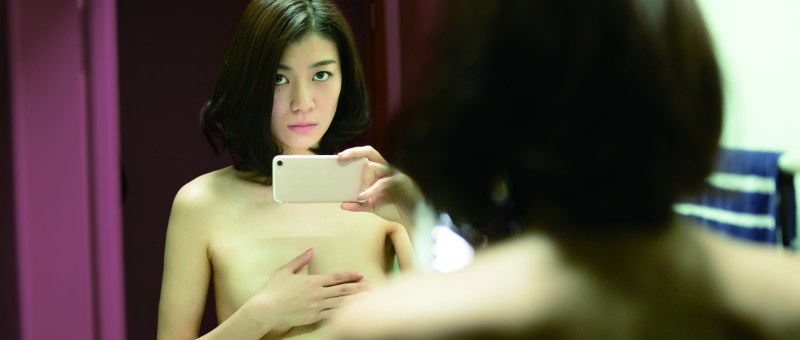
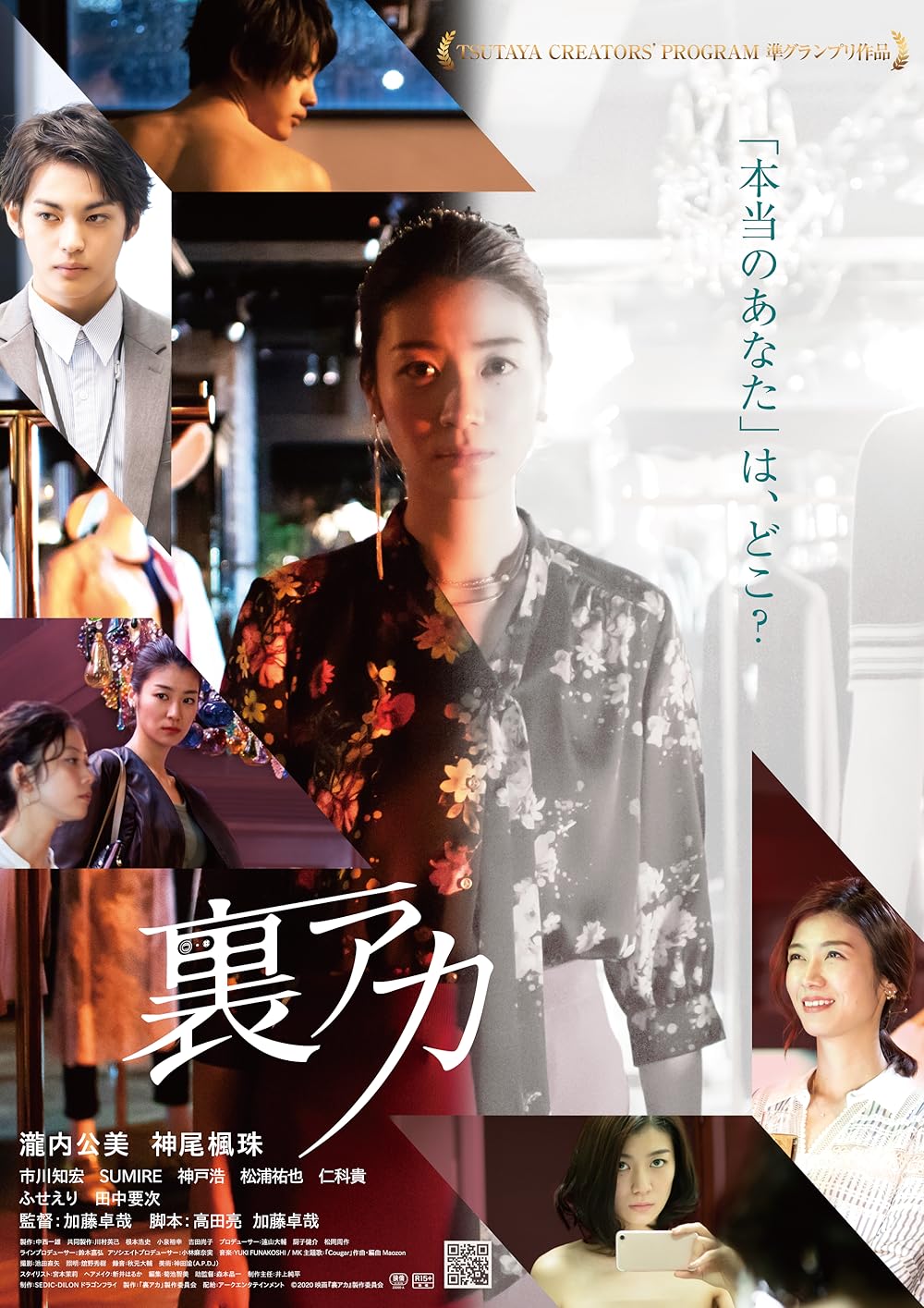
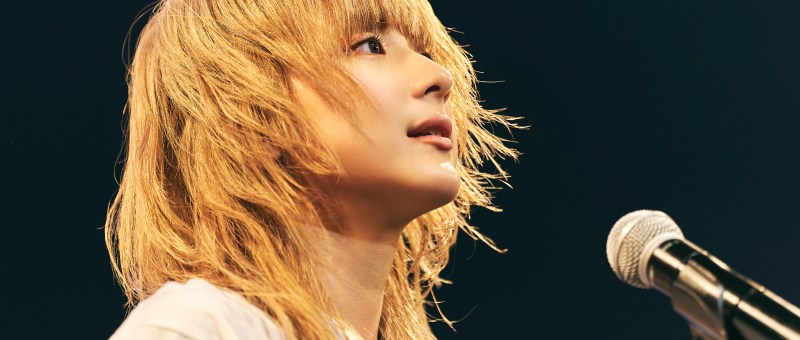
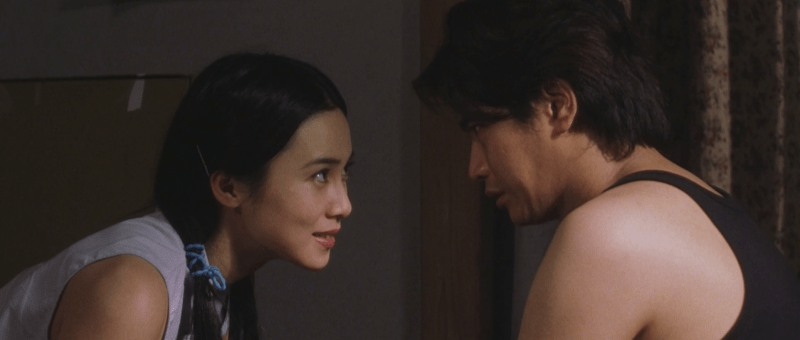
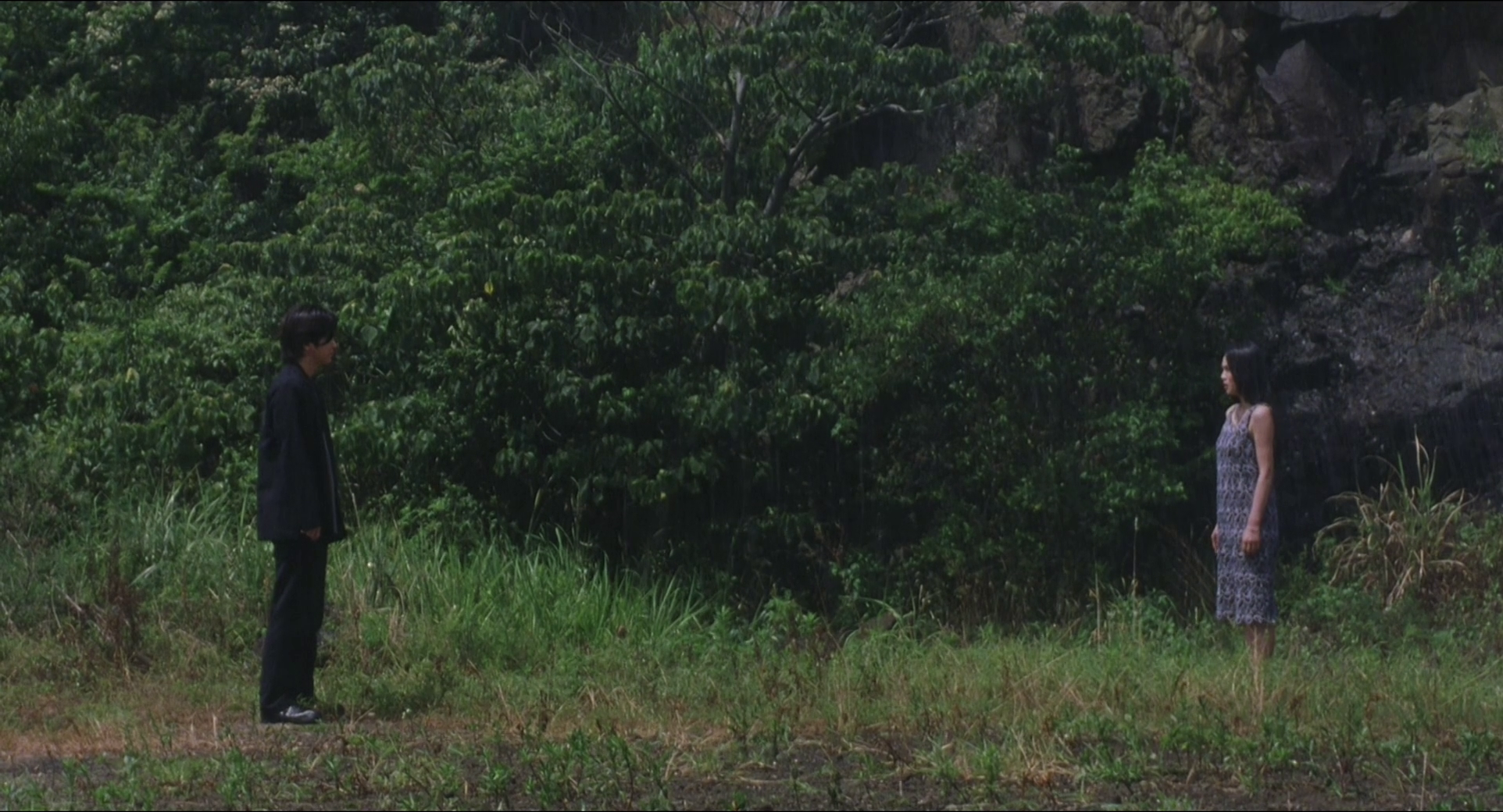
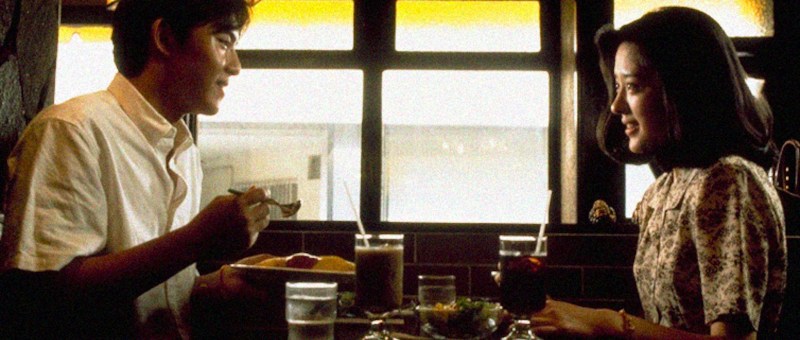
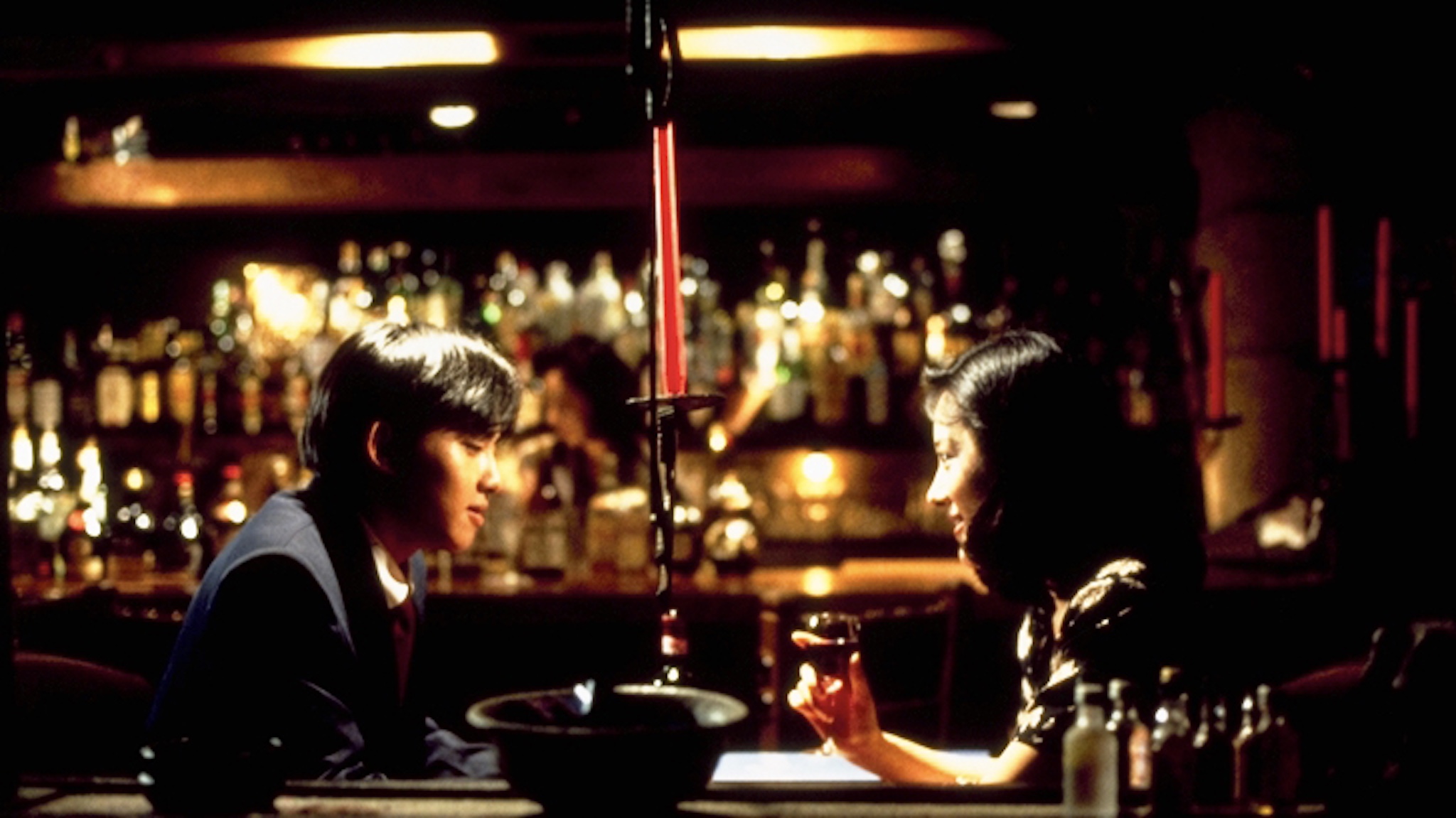
Taiwan may be emerging from martial law, but the cycles of patriarchal violence and oppression prove much harder to escape in Shu Qi’s touching directorial debut and portrait of a disrupted childhood, Girl (女孩, Nǚhái). Inspired by her own memories and set in the late ’80s, the film is unflinching in its depiction of mundane, domestic horror, but equally even-handed in extending understanding even to the most flawed of its protagonists who are themselves locked into a cycle of violence and self-loathing.

Hsiao-lee (Bai Xiao-Ying) doesn’t quite understand how her sister can be so cheerful even the other children at school make fun of her. Hsiao-lee is often criticised for looking “sullen,” and even her new friend Li-li (Lin Pin-Tung) jokes that on the rare occasion she smiles, she still looks “bitter”. But Hsiao-lee has plenty of reasons to be sorrowful and has perhaps already internalised the idea that there is no escape from her dismal circumstances. Finding a hole in the wall behind the school quite literally shows her another world, one that she later passes into in the company of Li-li who convinces her to ditch her classes and hang out with her at a sleazy video booth that is not really an age-appropriate environment for the two young girls. 

Li-li is Taiwanese-American and has recently moved to the island following her parents’ divorce. The fact that Li-li’s parents’ marriage has ended, even if she wistfully wonders if her father will suddenly jet in to repair the family, shows Hsiao-lee that the prison that is her family home has a door that could be unlocked. It’s clear that Hsaio-lee is terrified of her father (Roy Chiu) who is a violent drunk and may also be sexually abusing her. She zips herself up in a tent at night and cowers in terror as his hand presses down on the canvas, though he doesn’t like closed doors and flies into rages when he encounters them, which explains the large dent next to the handle to the door of her room. Hsiao-lee’s mother, Chuan (9m88), seems to take most of her frustrations out on her even if she tries to intervene and distract her father from further harming her.

Hsiao-lee doesn’t understand why her mother seems to resent her while doting on her sister, though we soon come to wonder if she blames her for condemning her to this kind of life. Shots of Chuan’s adolescence in rural Taiwan hint at a still more patriarchal world in which her father told her there was no need to study and if she had free time to hang out with friends she should spend it helping her grandmother instead. It’s implied that Chuan may have been assaulted while finally embracing the simple freedom of spending time with other people her age, while her father disowned her on her pregnancy declaring himself ashamed and telling her to leave and never return. Even now, she earns a meagre living as a hairdresser’s assistant and is groped by the male customers which the salon otherwise has little option other than to court. Her boss fusses over the air conditioning whenever they come in, and though Chuan may have taken a liking to Mr Chen, he is already married and only ever a symbol of the life that has eluded her. 

Chuan’s boss also tells her of a woman in Taipei who left an abusive husband and is now living happily with someone who treats her better, but Chuan continues to stick with Chiang possibly as an act of self-harm in her deep-seated self-loathing. Chiang doesn’t always seem to have been that way, but he’s otherwise someone who can’t fit into the contemporary society and is only employed thanks to a very understanding friend of his late father. Having gone too far and realised that Chuan may leave him if he continues to beat and rape her, he tries to reform, but it doesn’t last long and he’s soon back to drunkenly riding his scooter through town in the middle of the night. He too may feel hard done by, but it can’t excuse his behaviour nor the authoritarian terror of his home in which he takes out the frustrations of his fractured manhood on Chuan and Hsiao-lee. 

Chuan is imprisoned within the house and can find no escape from it, even when Hsiao-lee directly asks her to divorce him. Hsaio-lee might, however, be able to get out but only be accepting exile from her family and leaving her mother and sister behind at her father’s mercy. Given the omnipresence of male failure, there’s something quite heartening about the female solidarity that arises between Hsiao-lee and Li-li even if their circumstances are quite different from each other. Li-li is mired in the collapse of her family and longs for its repair with her father’s return while resentful of the unfairness of being exiled to an unfamiliar country where she’s looked after by her grandmother whom she can’t understand, presumably because she speaks Taiwanese rather than the Mandarin her mother made her keep up in America, while Hsiao-lee is trapped and looking for a way to free herself from her father. On a trip to the local shop, she ominously eyes up the rat poison while Li-li buys some sweets.

But even as Taiwan emerges from the authoritarian superstructure of the martial law era, patriarchal violence refuses to die and it’s only through an act of maternal sacrifice, framed as rejection and a continuation of that same cycle of violence now enacted by her mother, that Hsaio-lee finds a more literal kind of escape. Only once her father is gone does light return to the house and the possibility of healing the disrupted relationship with her mother become a reality. Beautifully written and elegantly directed, the film has a very genuine sense of place with its busy alleyways and bustling streets. The kids at school might cheerfully sing that there’s no place like home, but for Hsiao-lee home might be the scariest place of all and the one it’s the most difficult to escape.


Girl screened as part of this year’s LEAFF.

Someday or One Day (想見你, Huang Tien-jen, 2022)

A young woman finds herself quite literally in someone else’s shoes while trying to reclaim lost love in Tien Jen Huang’s sci-fi-inflected drama, Someday or One Day (想見你, Xiǎng Jiàn Nǐ). Inspired by the hugely popular television drama of the same name and starring the same cast, this big-screen edition drops the 20-year time slip device for a comparatively compressed tale largely taking place between 2014 and 2017 while the romantically troubled heroes effectively span a kind of multiverse of heartbreak, each looking for the good timeline where both they and their love can survive together. 

It has to be said, however, that the meet cute between destined lovers Yu-hsuan (Ko Chia-yen) and Zi-wei (Greg Hsu) is not without its problematic elements given that Yu-Hsuan is still in high school when the tale begins while Zi-wei is in his mid-20s, not to mention he’s largely interested in her because she looks exactly like old high school friend Yun-ru (Also Ko Chia-yen). Their meeting was brokered by a shared dream featuring the song Last Dance by Wu Bai which was released in 1996 which might explain why Yu-Hsuan didn’t know it prior to hearing it in the dream world where she lived with a man she didn’t know but turns out to be Zi-wei. The pair hit it off and eventually move in together. They are blissfully happy until Zi-wei is killed protecting Yu-Hsuan when they both randomly fall from a building which is still under construction. 

What they were doing there in the first place isn’t really explained, but it doesn’t become the nexus of Yu-hsuan’s trauma as she struggles to move on with her life continuing to communicate with Zi-wei through text message and imagined conversation even after moving to Shanghai for work. After being sent a walkman and cassette tape of The Last Dance, she wakes up in the body of Yun-ru the day before the accident and realises she can save Zi-wei if only she can convince him, and herself, that the danger is real. 

Moving the action to 2014 does rather undermine the nostalgic power of the song along with that of the walkman itself as a kind symbol of a late ‘90s youth only hinted at in brief flashes of Zi-wei’s high school days that were most likely better fleshed out in the TV series. Then again the theme of nostalgia is itself destructive given that the opening lines remark on how “silly” it is to try to hold on to “something that is vanishing” which is what each of the lovers is trying to do in the time slip drama by attempting to prevent the accident at the building site (though it doesn’t seem to occur to any of them that they could just not go there). 

As the rather trite closing quotation suggests it’s better to have lost and lost than not loved at all, each of the lovers realising that they cannot in fact change the past however much they might wish to and should try to do their best to enjoy the time they’ve been given with those they love for no one knows how long that will be. Nevertheless, there’s no denying that all the body swapping, multiverse shenanigans become incredibly convoluted, especially towards he film’s conclusion, making it largely impossible to keep track of who is who at the current time and what their relations to each other are. Viewers of the TV drama will be better placed to decipher whom some late introductions actually are given that their presence goes largely unexplained save for vague references to their names. 

Then again, we can’t be sure if the heroine eventually wakes up from a dream or is unable to do so becoming trapped in a fantasy of lost love defined by dream logic and wilful nostalgia rather than the anxieties of her nightmare in which she feared that though Zi-wei held her tight he would one day disappear. Undoubtedly confusing, the film nevertheless manages to deliver its time slipping messages of the importance of holding every moment close and then treasuring the memories of lost love rather than continuing to pine for something that can never be regained.


Trailer (English subtitles)

Full Ship (滿船 / 만선, Kim Soo-yong, 1967)

Released two years earlier, Kim Soo-Yong’s The Seashore Village had focused on the lives of women left behind while their husbands went to sea. Full Ship (滿船 / 만선, Manseon), meanwhile, more closely examines the lives of the men themselves along with the increasing pull towards modernity as this very traditional way of life becomes ever more precarious. Based on a play and another of Kim’s literary films, it nevertheless flies close to the wind in subtly challenging the effect that feudalistic capitalism has on each of these men’s lives as they find themselves dependent on the whims of the shipowner.

As Gom-chi (Kim Seung-ho) says, he’s fifty years old and he’s spent his life captaining someone else’s boat. Yet, he’s spent a lot of it toadying for the shipowner and justifying his reluctance to pay the fisherman by citing the shipowner’s expenses which include fuel for the boat, paying the union, and mending nets. The shipowner claims that he lives off debts and the fishermen actually owe him because he’s been lending them money and expects them to pay him back. Some of the other men suggest holding a gut ritual in his honour, but it’s unclear whether the shipowner is really as strapped as he says or merely hoarding all the money for himself. He dresses in fancy hanbok and looks more like a feudal lord than a contemporary business owner. When the fishermen do indeed come in with full boats and expect they’ll finally be getting what they’re owned, they receive only sacks of rotten hulled barely rather than rice. Still, most of them feel they have no choice than to suck up to the shipowner with even Gom-chi agreeing there are expenses to pay while drunkenly letting slip that he has savings and plans to buy his own boat only for the shipowner to find out and ban him from going to sea until he pays up what he owes.

Which is all to say, they’re between a rock and a hard place though “sea-crazy” Gom-chi holds tight to this way of life and has become estranged from his oldest surviving son Do-sam (Namkoong Won) who refuses to become a fisherman while Gom-chi’s wife, who has just given birth to a late baby though already in middle age, is opposed to letting their newborn grow up to go sea. They’ve already lost two sons to the waves, while Gom-chi’s father and grandfather were taken by the waters. To his mind, a fisherman dying at sea is merely going home and Do-sam is a failure and a coward for not following the tradition. 

He blames this on the fact that Do-sam left the island to do his military service and has become corrupted after seeing a different way of life on land. Another man who escaped the island, Beom-soe (Park Noh-sik), has returned wearing a suit and looking like a successful businessman, though as we later discover he’s on the run for a crime committed in the city, symbolising what the end results of this urban corruption may be. Seul-seul (Nam Jeong-im), Gom-chi’s daughter, is also tempted by the city while travelling there to sell goods though almost run over by a bicyclist on her arrival demonstrating its many dangers. People stare and laugh at them, as if the island women with their old-fashioned hanbok had emerged from another world. They laugh at Seul-seul too when she gives in to temptation and gets her hair set and styled into a beehive paid for by her boyfriend Yeon-cheol (Shin Young-kyun) who has also resisted the sea in favour of starting an innovative pearl farming business which is starting to pay off, though Gom-chi still seems resistant to their marriage. Beom-soe is taken with Seul-seul’s island innocence and tries to convince her to come with him with fancy presents from the city of soaps, perfumes, and silk, but she continues to resist him as if sensing that his urban success is not to be trusted. 

But, on the other hand, some seem to think it would be better to take their chances on land than continue with this harsh way of life. The film opens with a funeral in which a half-crazed old woman asks why they’re burying her son when he told her in a dream that he was alive just lost at sea. After a storm, Gom-chi comes back shouting of full boats, but they’re full of dead men drowned by the shipowner’s greed though he only complains about the damage to his vessel. Even the shamaness is a little bit corrupt, telling Do-sam’s mother that it would be inauspicious for him to marry because she’s having an affair with him herself, though prayers and rituals to the Dragon King are all they really have to protect them. Trapped between the sea and encroaching modernity that promises only more exploitation and misery, they have, as the poetic bookending narration suggests, only the life-giving, life-taking waters to turn to.


Yakushima’s Illusion (たしかにあった幻, Naomi Kawase, 2025)

When is it that you can say someone is really dead? Grief-stricken paediatric organ transplant co-ordinator Corry (Vicky Krieps) finds herself pondering just this question while in Japan exploring differing attitudes to transplant surgery in Naomi Kawase’s latest, Yakushima’s Illusion (たしかにあった幻, Tashika ni Atta Maboroshi). Returning to her roots, Kawase includes several documentary-style sequences in which Japanese medical staff discuss traditional notions of life and death along with those relating to organ transplantation which remains taboo even in an otherwise advanced medical society.

One doctor relates that his own child had a transplant and they were plagued with harassment for “stealing” people’s organs. There’s a kind of ghoulishness in play, as if this practice were unholy in some way or were taking on a debt that can never be repaid. But from the perspective of the parents of children waiting for matches, there is indeed an undeniable sense of guilt involved given the knowledge that for their child to survive, another must have died and another parent just like them has suffered a loss. When a match finally comes up for one little boy, his mother feels conflicted knowing that a little girl that was ahead of them in the queue didn’t make it  and now it’s like they’ve taken her slot. Meanwhile the parents of the child that died battle their grief and confusion but decide to allow his organs to be made made available so that he will in some sense at least on. 

In this case, it was a heart transplant which presents the most complicated of existential questions given that traditionally death is marked by the cessation of the heart beating. Even when brain death has occurred, the body is considered to be living which obviously makes something like organ harvesting difficult if the patient is still considered to be “alive”. But on the other hand, it also means that death is infinitely postponed when the cessation of the heartbeat cannot be confirmed. Corry is haunted by the memory of an lover who disappeared without a trace and later discovers his family are trying to have him declared dead to smooth over an inheritance issue, though she objects because to her Jin is still alive even he’s not around.

It’s on Yakushima that Corry first meets Jin (Kanichiro), and one could say that he’s the illusion of the title. Indeed the Japanese title hints at his ethereal quality in translating as something like “the apparition that was really there”. He has an otherworldly quality and seems to exist outside of time with his old-fashioned camera and impish personality. Part of the film is set around Tanabata which is rooted in the tale of the Cowherd and the Weaver, Orihime and Hikiboshi, who were separated by a river and permitted to meet only on one day a year. This mythical quality adds to the sense that perhaps Jin was more ghost than man, a figment of Corry’s memory or a manifestation of her desires who was nevertheless himself consumed by loneliness. In a phenomenon known as “johatsu” in which people suddenly disappear without warning, Jin leaves her life as abruptly as he entered it leaving her with a series of regrets and lingering questions. 

It’s this shifting sense of dislocation with which the film plays in moving, as Jin describes it, through the shifting moments of the heart exchanging linear time for emotional chronology. Having lost her mother in childbirth, Corry is consumed by a fear of abandonment and incurable loneliness that is compounded by the fact that people really do disappear from her life with alarming frequency which is perhaps why she is so invested in saving the lives of these young children. Bonding with a couple who lost their son to illness and now operate a bento stand supporting other parents, she searches for a way to let go without letting go which she perhaps finds in the serenity of nature now captured with sweeping drone shots such as that which takes us inside a tree in search of the self. Frequent cameos from former Kawase collaborators such as Machiko Ono and Masatoshi Nagase in small roles add to the elegiac feeling even if the final message seems to be that life goes on in the image of a still beating heart giving new life and new hope even in the midst of death and loss.


Yakushima’s Illusion screened as part of this year’s LEAFF.

Hero (英雄, Zhang Yimou, 2002)

In the closing moments of Zhang Yimou’s Hero (英雄, Yīngxióng), what we see is an empty space. The outline of a person surrounded by arrows, or perhaps the doorway they protected with their body that nevertheless remains closed. On its initial release, Zhang’s film received criticism for what some saw as an overt defence of authoritarianism. After all, what we may come to understand is that the hero of the title is the Qin emperor (Chen Daoming), the founder of the modern China, but also in historical record a brutal tyrant whose tyranny is therefore justified in the name of peace, just as contemporary authoritarianism is justified in the name or safety and order.

This reading is only reinforced by the demeanour of Qin himself who condemns the nameless “hero” to death because he has chosen authority and this is what authority demands. No forgiveness, no compassion, only brutality and an iron first. Yet he cries because he is a compassionate man and understands the sacrifice he is asking his remorseful assassin to make. He does not do it because he is cruel or out of vengeance or anger, but because he believes it necessary to ensure peace for “all under heaven”. Now we may find ourselves asking again if the assassin is the hero after all because he willingly submits himself to and sacrifices himself for a tyrannous authority because he believes it to be the best and only choice that he can make for the wider society.

Nevertheless, there is something chilling in the vision of a thousand arrows flying toward one man who does not flinch while the man who ordered them sent appears to shake with his own power. The soldiers retreat, and the king is left alone, dwarfed by the immense architecture of the palace and the blood-red calligraphy of the character for sword reimagined by another potential hero whose name echoes his final conviction that in the end the apotheosis of the swordsman lies in the realisation that there is no sword. It’s this that leads him to abandon is own desire to assassinate the king and submit himself to a greater authority in the name of peace. In the end what he rejects is the tyranny of the sword itself, yet the king is also an embodiment of that tyranny because his authority is only possible through terrifying violence. 

In this way, the assassin, ironically named “Nameless” (Jet Li), may stand in for the everyman refusing to bow to the authority of a corrupt king who cares only for power. In one of the many tales he tells, Nameless remarks that he fought with the first of Qin’s three assassins in his mind and it’s true enough that what passes between the two men is a duel of words which is eventually won by the king. Qin tells Nameless of his desire to increase his influence beyond the other six kingdoms of Warring States China and create an empire that encompasses “all under heaven”, but Nameless later cautions him to remember those who gave their lives for the highest ideal, peace, and refrain from further killing. The closing title card is displayed over the Great Wall, making plain that Qin did in fact stop after conquering the six other kingdoms to unite all of China while building the wall to protect his citizens from “northern tribes,” or perhaps competing imperialists.

But walls keep people in as well as out and are in fact another facet of the king’s tyranny and a symbol of enduring authoritarianism. The problem is that it isn’t tyranny or authoritarianism that any of the assassins oppose for they are driven only by hate and vengeance and have no greater ideology or vision for the future. The argument is that peace under the iron fist of Qin is better than the chaotic freedom of the Warring States society, yet what we’re left with is nihilism. The love between assassins Flying Snow (Maggie Cheung Man-yuk) and Broken Sword (Tony Leung Chiu-wai ) is disrupted in each of the tales Nameless relates of them, firstly by romantic jealously and then secondly ideological divide. The conclusion that Broken Sword comes to is that they must not resist, but Flying Snow cannot live without recrimination with the past and the sealing of its tragic legacy. Her revolution fails, and as such “all under heaven” there is only death and only in death is freedom to be found.

The sense that these assassins are already dead is echoed in the choice of white for the final sequence of the film. Zhang frames each of his sequences in vibrant colour, the red of the first tale in which the lovers are destroyed by a supposed love triangle, the blue of the second in which tragedy and sacrifice do not so much destroy as deify it, the green of the penultimate in which jade curtains billow and fall inside the imperial palace, and finally the cold white of death in which the lovers eventually find their home leaving their surrogate child alone in a windy desert of futility. Yet each of these sequences is filled with an intense beauty and the romanticism found in classic wuxia. What remains in the mind is the balletic fight between the tragic heroine Flying Snow and the orphaned pupil Fading Moon (Zhang Ziyi) in an autumnal forest that’s suddenly drenched in red, or feet dancing across the water, an image of an idealised past and lost love among wandering ghosts with no home to go to. Here there are no heroes, only lonely souls and frustrated ideals. 


96 Minutes (96分鐘, Hung Tzu-Hsuan, 2025)

The needs of the many outweigh the needs of the few, as the famous goes. Prioritising saving lives where you can rather than risk spreading yourself too thin and not helping anyone as a result may be a sensible decision. But what if you or a loved are among those who’ve been deprioritised? Like many things, now it’s not just theory but here right in front of you and victims are real people not just anonymous numbers, it looks quite different.

At least, that’s how it is for A-Ren (Austin Lin), a brash bomb disposal expert. Though he disarmed a bomb in a cinema, another one went off across the road in a department store. The bomber had warned them that might happen, but A-Ren’s commanding officer Liu (Wang Bo-Chieh) convinced him they were probably bluffing. They were told there were two more bombs, one located in their command centre, and the other in the department store, and given a choice. Save the people in the department store by heroically blowing themselves up, or choose to save themselves even though this time they’re in the minority. 

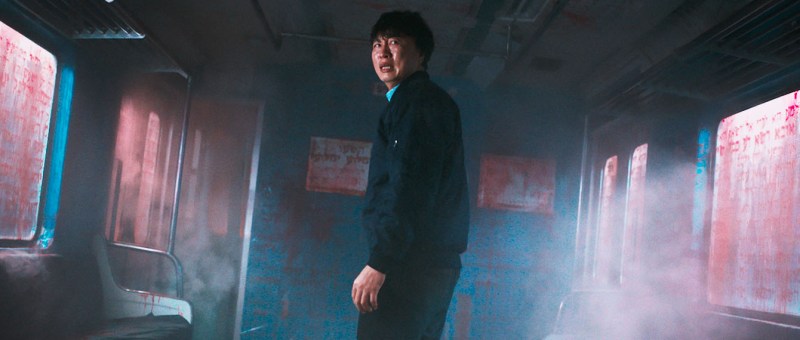
Three years later, A-Ren has never forgiven himself, or Liu, for the bomb going off. He’s quit the police and though he’s married fellow officer Huang Xin (Vivian Sung), they never had a wedding and still haven’t been on honeymoon. His guilt is compounded by the fact that he’s been feted as a hero even though he knows he’s directly responsible for everyone who died in the department store. He gets a shot at redemption when the train he’s travelling on returning home after a memorial service for victims of the bombing receives a bomb threat, but at the same time he fears the eventual exposure of what really happened three years ago and is too ashamed to get his mind fully on the job.

On the other hand, it’s true that, ironically, no one on the train has been able to move on from the incident. All of them are mired in their grief and confusion, while looking for someone to blame. Needing to solve the case quickly, the police named a random victim with a criminal past as the bomber rather than admit they didn’t know who did it, making the police themselves a legitimate target for the resentment of the victims’ families given their cavalier attitude to life and death. Liu reminded A-Ren that the policemen in the command centre had families too, as if the people in the department store didn’t or that having a family made their lives weigh more, while Huang Xin was there too further influencing their decision and feeding into A-Ren’s guilt wondering if he was just selfish and made a choice to save her at the expense of the lives of a large number of people he didn’t know.

The bomber essentially gives him the same choice again, putting two bombs on two trains and leaving A-Ren with a binary choice of choosing to sacrifice one or the other to see if he will make the same hypocritical decision again in opting to save the minority because he is among them. Of course, they try a number of other high-risk strategies to disarm both bombs and/or evacuate passengers, but the bomber leaves them with little choice other than to accept the fact that one of the bombs has to go off. A-Ren and Liu can either blow themselves up figuratively by admitting that they chose to sacrifice the lives of the department store victims, or they can save themselves by blowing up the other train.

During a train derailment incident, Liu had cited his greater good philosophy in prioritising passengers who remained outside the tunnel rather than those trapped in the carriages inside, but he perhaps he was wrong to do so and should either have made more of an effort to help everyone or refrained from announcing his decision to let some of the victims die live on television. But then again, the victims’ families are also torn now they are directly involved with some leaning towards saving themselves rather the passengers on the other train whom they don’t after all even know. A-Ren, meanwhile, is in a race against time to restore his sense of integrity by disarming the bombs inside his mind to cure the lingering trauma of the department store bombing as the train rockets forward with only him between it and certain destruction.


96 Minutes screened as part of this year’s LEAFF.

Trailer (Traditional Chinese / English subtitles)

The Ugly (얼굴, Yeon Sang-ho, 2025)

Poets and philosophers have long debated the true nature of “beauty”. “Living miracle of Korea” Yeong-gyu (Kwon Hae-hyo) has spent most of his life pondering it, not least because he is blind and is often told that the figures he carves on name stamps are “beautiful”. For his customers, “beauty” is rooted in the visual, and for those reasons it seems to them impossible for Yeong-gyu to experience it. It doesn’t occur to them that he may experience “beauty” in other ways or that beauty is not necessarily as connected with vision as they assume it to be. 

But then again, in Yeon Sang-ho’s dark fairytale The Ugly (얼굴, Eolgul), the concept of “beauty” is itself inverted to become something eerie and uncomfortable in symbolising the forced harmony of an authoritarian society. In the present day, a TV documentary crew is interviewing blind stamp carver Yeon-gyu, though it’s obvious the producer is becoming frustrated with Yeong-gyu’s evasiveness while simultaneously hoping to tell an inspirational story about how he overcame adversity that is in itself a little exploitative. She gets an ironic lucky break when, midway through filming, the remains of Yeong-gyu’s wife and the mother of his only son Dong-hwan (Park Jeong-min) are discovered following her disappearance 40 years previously.

Yeong-gyu had told Dong-hwan, who was a baby at the time, that Young-hee had simply run away and does not seem to have made much attempt to look for her. Though this might seem odd, it was after all a time when people just disappeared without warning and asking questions would only put those left behind in danger, so perhaps it’s understandable that Yeong-gyu, a man marginalised by his disability, simply accepted the fact of her absence and chose to believe that she had left him even if it conflicts with his description of her as “kind”. Everyone describes Young-hee of having been a “kind” person even while they otherwise scorn her as “ugly”, describing her as a monstrous creature with an appearance they find gruesome though almost comical rather than frightening. 

When Young-hee’s estranged family turn up at the funeral, they too are embarrassed by her ugliness and crassly make a point of clarifying to Dong-hwan that they don’t want to share their inheritance with him. According to them, Young-hee left home as a young child after telling their mother she’d seen their father with another woman. Their mother beat and her and refused to believe it, while the other family members resented Young-hee for raising an inconvenient truth and fracturing the harmony of this “perfect” family. Young-hee encounters something similar while working at clothing factory where she challenges the boss after finding out that he has raped an employee, but is again ignored and then silenced. Years later in the present day, the former workers claim that it’s thanks to the boss that they survived, echoing the defenders of dictator Park Chung-hee who credit him with curing the intense poverty of the post-Korean War society and turning the nation into the economic powerhouse it is today no matter how many died in his pet construction projects such as the Gyeongbu Expressway. 

Young-hee too works under these exploitative conditions similar to those seen in A Single Spark. When her boss refuses her a bathroom break, she is too frightened to defy him and ends up soiling herself earning herself the unpleasant nickname “Dung Ogre”. Yet when she sees injustice she tries to combat it and refuses to back down even when others shun her. Gradually we begin to realise that the reason Young-hee is called “ugly” is because she speaks the truth and reflects the “ugliness” of those around her. Years later, the colleague who told her she’d been raped by the boss blames herself for her death, knowing that Young-hee was only trying to help her and probably didn’t realise that exposing the boss would kill her only resultiing in a quest to identify the victim. “My shame became his forgiveness,” she reflects, regretting that she too scorned Young-hee and that her failure to speak enabled him to go on abusing other women with impunity. Afraid of the factory boss’ violent thugs and desperate to keep their jobs, no one challenges him least of all Yeong-gyu who tells his wife to shut up and keep the peace.

But for Yeong-gyu, Young-hee’s “ugliness” has other implications in that it reflects his own insecurities and marginalisation. Along with using various derogatory terms to describe Young-hee’s ugliness, the interviews throw in a series of ableist slurs and it’s clear that they also consider Yeong-gyu to be “ugly” because of his otherness. Yeong-gyu resents that they look down him, and learning that Yeong-hee is considered to be “ugly” is consumed with a deep sense of humiliation as if he were being mocked and laughed at for having such an “ugly” wife while, paradocxically, she must only have been interested in him as a means of bringing about his degredation. 

But then, this visual notion of “beauty” is meangingless to Yeong-gyu who has been blind since birth so it ought not to matter to him whether Young-hee is objectively beautiful to the sighted. Notions of visual beauty are socially and culturally defined and shift over time, but at this time and in this society being “beautiful” is it seems important, not least because it implies conformity. Young-hee’s “ugliness” is then transgressive and empowering in its defiance of the code of silence that defines authoritarianism, but within it Yeong-gyu finds only the undermining of his masculinity and humiliation in being found unworthy. That he’s now called a “living miracle of Korea” for overcoming those hard times is a cruel irony and a comment on the state of the contemporary nation forged in dictatorship and tempered by a hyper-capitalistic disregard for human rights in the quest for prosperity. Confronted by these truths, Dong-hwan finds himself with a choice, but in the end may take after his father after all in his own desire to tidy away unpleasantness and avoid having to accept the “ugly” reality. 


The Ugly screened as part of this year’s LEAFF.

Trailer (English subtitles)

Project Y (프로젝트 Y, Lee Hwan, 2025)

The opening sequence of Lee Hwan’s Project Y (프로젝트 Y) seems to echo the iconic intro of Millennium Mambo as two women look back over their shoulders as they traverse a seemingly endless tunnel. Later we realise that the tunnel is their passage out of the underworld of the red light district towards escape and liberation, not only from patriarchal control and their impossible lives, but from a generational legacy of abuse and entrapment.

Indeed, Ga-young (Kim Shin-rok) the adoptive mother of Mi-sun (Han So-hee) and birth mother of Do-kyung (Jeon Jong-seo), is fond of asking who is saving who when we’re all the same, and insisting that your life is yours to save. It’s a message the girls have taken to heart, yet they remain devoted to each other in a relationship that also appears to be romantic or perhaps has already transcended romance in the depth of their connection. Mi-sun has been working as a karaoke bar hostess for a number of years while Do-kyung works as her driver and occasional courier for various shady types. They plan to leave the red light district now Mi-sun has saved enough money to buy a florist’s from its retiring owner along with a downpayment on a apartment, but it turns out half the girls in the red light district have been scammed by a dodgy estate agent at the behest of local kingpin Blackjack (Kim Sung-cheol).

It seems that Blackjack may have done this deliberately in a nefarious plot to increase the girls’ debts and prevent them from leaving. Blackjack’s callousness is signalled early on when he tells the girls’ manager to get rid of a drooping plant if she can’t manage it and space the others out to disguise the gap. But on the flip side, Blackjack has a young and very silly wife who has got into host clubs and has been spending all his money on a young man who is openly exploiting her. Though the men are ostensibly in the same position as the women, they still have a greater power in preying on female loneliness while the women, by contrast, may be indulging in this behaviour precisely because it gives them an illusion of control they ordinarily don’t have a patriarchal society. Blackjack’s wife throws expensive gifts at her favourite host in an attempt to persuade him to enter a deeper relationship while blabbing her husband’s secrets. The host doesn’t seem to have realised it might be a bad idea to be messing around with Blackjack’s wife, while stealing his secret stash is going to annoy him even more and Blackjack’s not the sort of man you want to be annoyed with you.

Blackjack watches a video of a dog drowning in a tarpit while he works out, and this particular tarpit acts as a kind of vortex drawing all the greed in the red-light district towards it. Hearing about the plot to rob Blackjack, the girls decide to rob him first and blame it on a local hoodlum. But after retrieving a bag with the exact amount they lost, discover a stash of gold bars. It’s taking them too that damages the integrity of their quest and sets them on a course towards a direct confrontation with Blackjack as they try their hardest to escape the red light district for good.

The implication seems to be that if they take the money, they’ll never really be free because it stemmed from the source of their exploitation. This might in a way be what Ga-young is trying to teach the girls in her otherwise hard to read behaviour, sacrificing herself to save them from their poor decision to cross Blackjack while trying to catapult them free of the red-light district though she knows she herself can never leave. Slick and stylish, Lee’s noir stays just on the right side of realism despite its recurrent grimness and larger than life characters such as the Blackjack’s icy female enforcer Bull and captures both girls’ desire for a “normal life” of working in the day and sleeping at night, along with the cheerful solidarity of the hostesses as they band together to take revenge on Blackjack and finally free themselves from this world of constant betrayal and exploitation.


Project Y screened as part of this year’s LEAFF.

International trailer (English subtitles)

The People Upstairs (윗집 사람들, Ha Jung-woo, 2025)

A moribund marriage finds itself haunted in the reflective image of the couple upstairs in Ha Jung-woo’s take on the Spanish film, Sentimental. A very ’70s sex farce, the film is, in other ways, a refreshingly modern examination of contemporary relationships that ultimately comes down on the side of sexual freedom and personal fulfilment rather than encouraging its unhappily married protagonists back into a socially conformist cage of merely settling for an unsatisfying existence.

You can tell Jeong-ah (Gong Hyo-jin) is unsatisfied by the way she accidentally embarrasses the life model at the art class where she teaches part-time to the point he feels he has to cover himself up even though it defeats the purpose of him being there. Her work as a temporary art teacher is also a symbol of her defeated hopes having given up on her creative practice to focus on more practical concerns while her husband, Hyun-soo (Kim Dong-wook), is a struggling film director who is currently on the 48th draft of a project to turn an unsuccessful film pitch into a TV drama that he’s been working on for the last four years. 

Neither of them are getting much sleep because the rambunctious nightly lovemaking of the couple upstairs keeps them up at night, but these days Hyun-soo sleeps on a fold up mattress in his office which is full of empty boxes of instant ramen like some student bachelor pad. Though they’re only in adjacent rooms, they communicate through Kakao talk and are otherwise leading separate lives. That might be why Jeong-a is drawn to the self-help YouTube channel run by Soo-kyung (Lee Hanee), her upstairs neighbour, which assures that no one can cure the loneliness inside you and the fastest way to better relationships is to stop expecting too much from other people. 

But it’s clear that Jeong-a, at least, is looking for something more which is likely why she decides to invite the upstairs neighbours over for dinner. Hyun-soo isn’t keen on the plan and tries to force her to cancel, then only agreeing to stay an hour while making passive-aggressive comments and veering close to telling the Kims that they can hear everything that’s going on upstairs and they don’t like it. Soo-kyung and her husband Mr Kim (Ha Jung-woo) are, however, the inverse of Jeong-a and Hyun-soo in their hyper-sexualised relationship and apparently solid marriage. They’ve come with something to say too, but while Jeong-a is increasingly receptive to their entreaties and open about her dissatisfaction, Hyun-soo is rude and indignant, resentful of what he sees as a perverse intrusion into his otherwise very “normal” life.

Indeed, part of this is that Mr Kim keeps making subtle digs at his masculinity in needling him about his lack of career success and inability to get this TV drama off the ground after apparently working on it for four years. This is also the root of Hyun-soo’s own insecurities and withdrawal from Jeong-a, unable to see himself as a man in the wake of his dissatisfying career. But Mr Kim is also a contradictory picture of masculinity. A teacher of Chinese characters who really wanted to be a calligrapher, he cuts a fairly authoritarian figure, but is otherwise a modern new man who is domesticated and open with his feelings. The Kims bring a dish to the dinner that Mr Kim has made while he orgiastically tears into pomegranate and suggestively squeezes lemons. He fixes drinks, makes tea, and gets out of the way while his wife does her work. 

But at the same time, the film seems to dial back on the inherent queerness of the Kims’ sexual practice by eliding the homoeroticism between Hyun-soo and Mr Kim who is keen to recruit him because his apparently explosive essence. This internalised homophobia is also a manifestation of Hyun-soo’s conventionality and desire for middle-class properness to bring order to his life, if only superficially, by continuing to live in a simulacrum of a marriage that leaves husband and wife unhappy. The recently remodelled flat is full of the signs of aspiration from the posh china to elegant modern decor. But it’s a row about the curtains that most obviously signals the cracks in their relationship. Jeong-a doesn’t want any because she wants a more open and transparent marriage, while Hyun-soo can’t live without them because he craves repression and can’t understand a life without it.

In any case, during their incredibly weird evening with the Kims, the couple hit rock bottom that is also a kind of epiphany liberating them from their misconceptions and the inertia of their married life. Hyun-soo, finally, begins to realise that Jeong-a is right when she says he uses sarcasm to run away from his problems and if he wants to save his marriage, he’ll have to be a little more emotionally honest and open to compromise. Despite his squeamishness, the film seems to come down on the side of the Kims who are living happy and fulfilling lives in embracing their sexuality, while it is Hyun-soo, by contrast, who must learn to open up even if he’s not quite ready to get in the lift.


The People Upstairs screened as part of this year’s LEAFF.

Trailer (no subtitles)

Creation of the Gods II: Demon Force (封神第二部:战火西岐, Wuershan, 2025)

Picking up where the previous film left off, Yin Jiao (Chen Muchi) has been taken to the immortal realm of Kunlun where they first assume it’s too late to save him what with his head and his body having become separated. But on a closer look, the Immortals realise that the sheer force of Yin Jiao’s resentment has sustained him. They can save him after all, but when they try, he usurps all their power and becomes something that not even they can control. The future of the Shang, in fact of China itself, now rests with him. Will he be able to contain his rage and fight for a better world, or will it get the better of him and he’ll burn it all to hell in revenge?

To that extent, the second part in the Creation of the Gods trilogy inspired by the classic foundation myth The Investiture of the Gods, presents a similar problem to the first. Given the opportunity to save the world or enrich oneself, what will most people choose? Yin Shou chose the latter and is still in thrall to his fox demon lover who is now herself in mortal peril having transferred Yin Shou’s wounds to herself to heal him to the extent that her own body, that of rebellious lord Su Hu’s daughter Daj (Narana Erdyneeva), has begun to decay. 

There is something quite tragic and poignant about the almost romance that arises between Ji Fa and Deng Chanyu who bond over the realisation that they are really fighting for the same thing, family, even he fights for the living and she the dead. During her time in Xiqi, Deng Chenyu gains a glimpse of another life in which she might find the home she’s been searching for only to realise that she must sacrifice herself for its survival though in doing so she might also achieve her dream of dying on the battlefield with her family. As the people of Xiqi hold a celebration for Yin Jiao’s return, two old ladies grab Jiang Ziya (Huang Bo) and try to pull him into a reel. He protests he has more important matters to deal with, but as the old ladies remind him happiness is the most important matter. In effect, that’s what each of them is fighting for in opposing the by now quite literally lifeless tyranny that Yin Shou represents. His romance with the fox demon has its poignancy too in her apparent willingness to sacrifice herself for him and resultant powerlessness to save herself while he can only rely on the might of giants and demonic magic in order to cement his rule.

Accelerating the pace, Wuershan moves from set piece to set piece beginning with an epic horse chase along a narrow mountain road as Ji Fa and Den Chanyu (Nashi) face off against each other while building progressively towards the assault in Xiqi and confrontation with end boss Wen Zhong (Wu Hsing-kuo). The influence of the supernatural only grows in strangeness as Wen Zhong uses his third eye to create deadly beams of light that paralyse all caught in their beams to make his soldiers’ jobs that much easier as they wipe out Xiqi. Demonic magician Shen Gongbao (Xia Yu) lurks in the background preparing a huge zombie army with his “Deathworms” spell and continuing to disconcertingly float about as a severed head. This time around, altruism squarely defeated selfishness, but who knows if the world will be as lucky next time?


Trailer (English / Simplified Chinese subtitles)