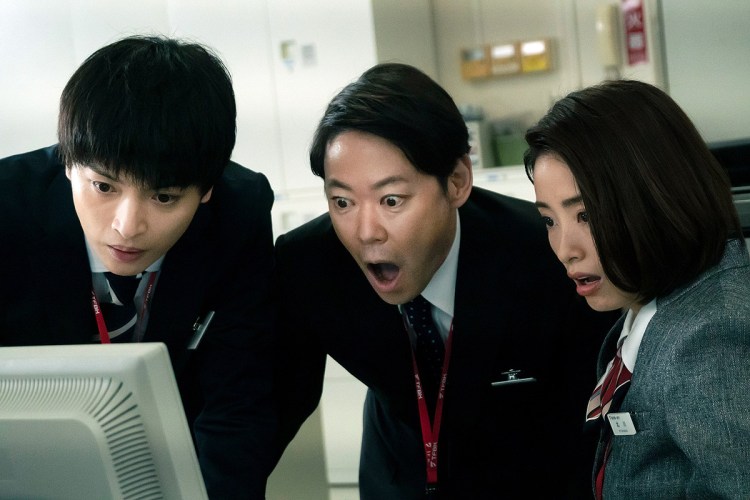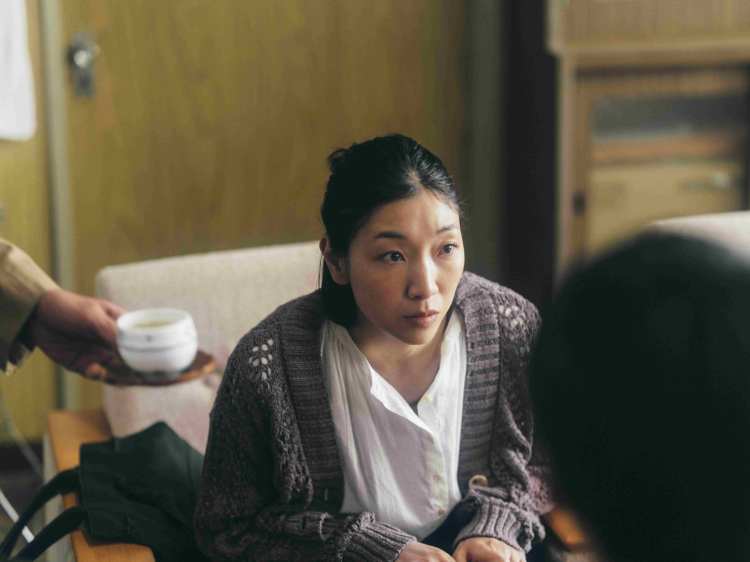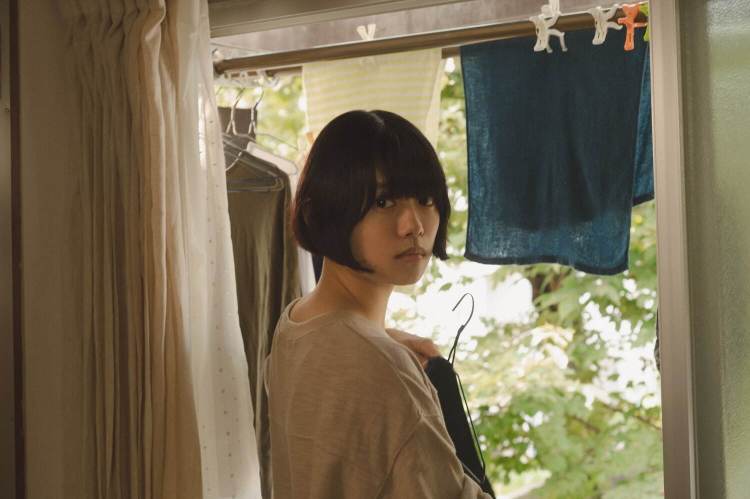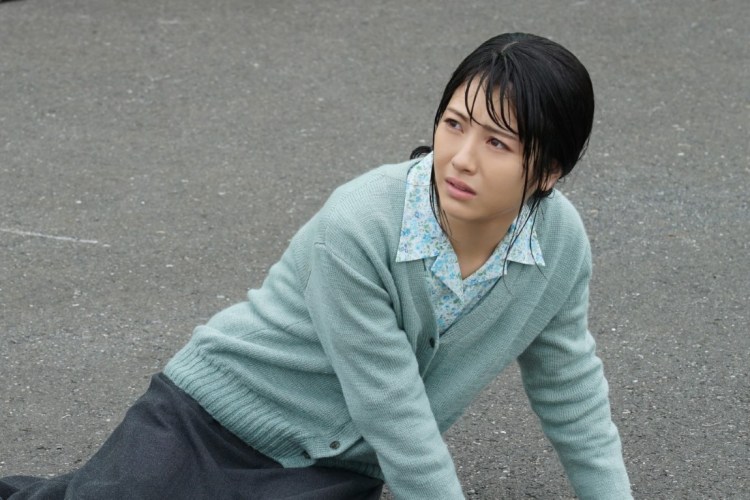
Eye for an Eye: The Blind Swordsman (目中无人, Yang Bingjia, 2022)

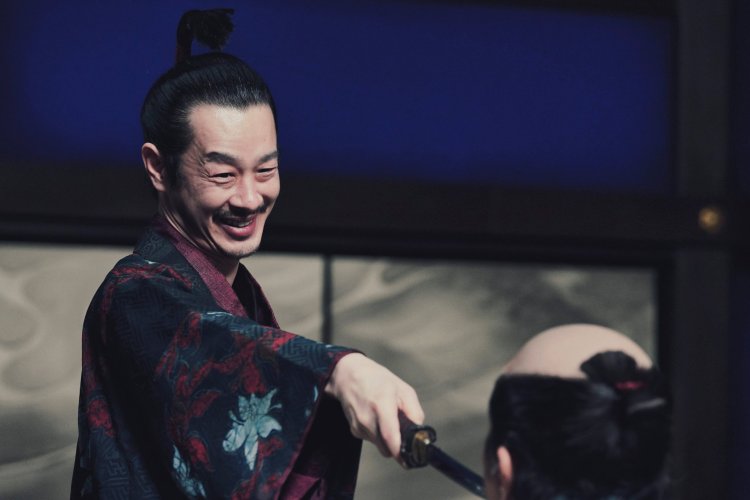
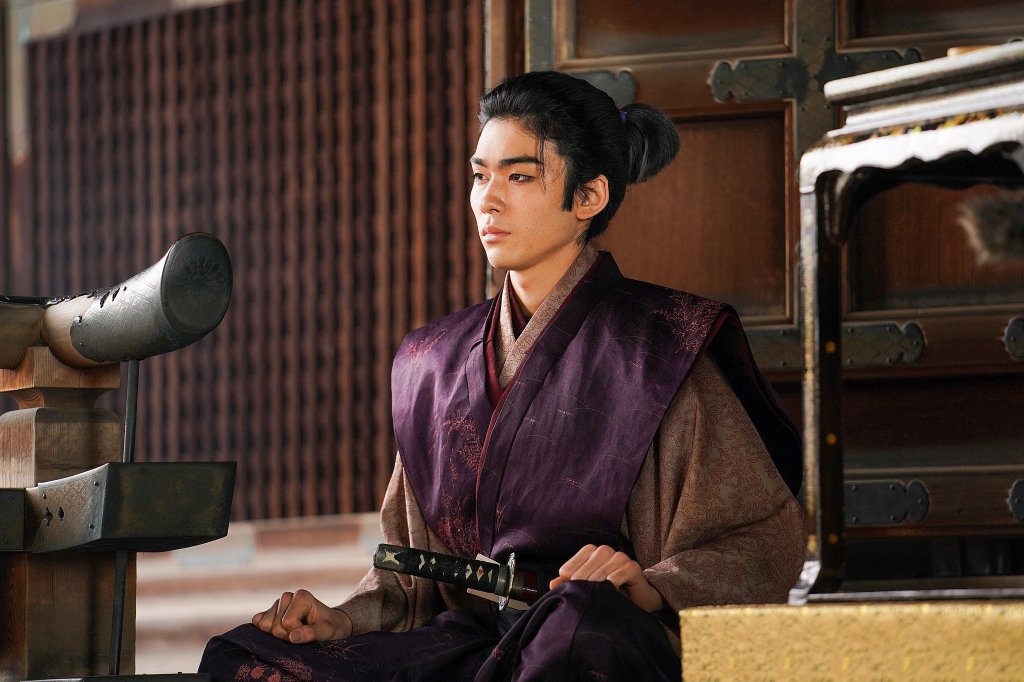
A blind swordsman takes revenge against the evils of feudal society in Yang Bingjia’s impressively helmed action drama, Eye For An Eye: The Blind Swordsman (目中无人, mùzhōngwúrén). Set in the “lawless” society of the Tang era following the Tianbao rebellion, the film has a western sensibility with its twanging guitar score and dusty roads not to mention jumped up gangsters trying to get a foothold in the legitimate order simply because they have become too powerful and no one is willing to resist them. 

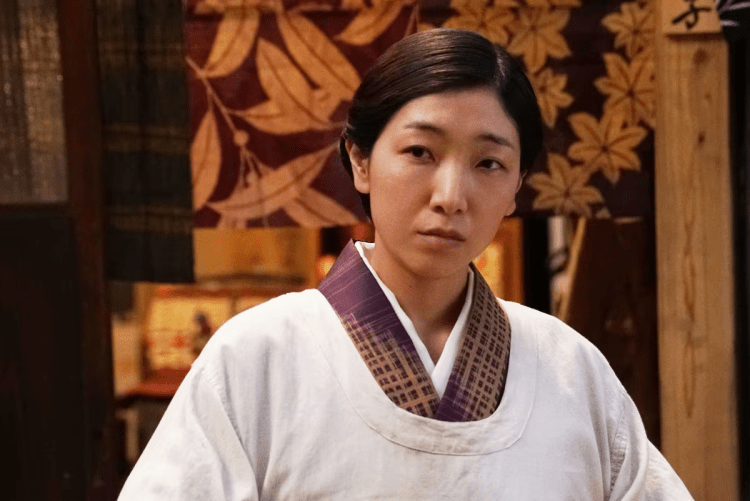
Ni Yan (Gao Weiman), a young tavern woman who lost her brother and husband when her wedding was attacked by the Yuwen clan asks for nothing more than “justice” but that’s something no one can give her. Wandering swordsman Cheng Yi (Mo Tse) who’d taken a liking to her because she offered him some of her wine and even gave some to his horse reports the crime to the local magistrate after claiming the bounty on a fugitive, only he tells her directly that he will do nothing because the Yuwen clan have already moved beyond justice and not even he will touch them. 

In a way, Cheng is depicted as a failed revolutionary and his blindness a symbol his despair in a world he no longer cares to see. A bounty hunter by trade, his work is facilitated by old comrade Lady Qin (Zhang Qin) who, in contrast to him, seems to live a cheerful life repairing musical instruments while much loved in the town around her. Though they pretend to be saving money for an operation to restore Cheng’s sight, their line of work is perhaps cynical in taking advantage of the times while accidentally outsourcing a justice the authorities can no longer provide in the weakened Tang society. The Yuwen have infiltrated most institutions and cultivated relationships with important people that allow them to ride roughshod over ordinary citizens who are now completely at their mercy.

There might be something quietly subversive in these references to a corrupt and authoritarian institution which tries to brand Ni Yani the criminal in her pleas for justice, insisting that she admit to killing her brother herself in resentment of his criminal past while he is also hunted by the Yuwen because he knows to much about their dodgy dealings including raiding tombs to get precious gems to use as bargaining chips in a dynastic marriage negotiation. Cheng Yi did not originally want to get involved, himself too cynical and having given up hope of “justice” in this “lawless” society, but finds himself sympathetic towards Ni Yan because of the kindness she showed him and the obvious suffering her ordeal has inflicted on her. 

In a sense, his eyes are opened to the injustice of the society around him to which he had been wilfully blind if ironically accepting that he will never see again. He alone is willing to stand up to the Yuwen while even within their ranks petty resentments are growing as a princeling grows ambitious to escape his own oppression at the hands of an authoritarian brother who berates him for his weakness. 

Despite the budgetary issues which often plague straight to streaming cinema, Yang’s elegantly lensed drama brings a real sense of place to the dusty provincial towns where Cheng plies his trade along with the ornate elegance of the realm of Lady Qin whose flowing robes belie her military past. Drawing inspiration from the western as well as Japanese genre classics such as Yojimbo the film presents a world in decay in which the wandering swordsman becomes a moral authority, delivering justice if for a price. The irony is that it isn’t money which opens his eyes, but the reclaimed ability to see with his heart in deciding to help Ni Yan in her quest to avenge the deaths of those close to her. A series of excellently choreographed and well-shot action scenes along with Yang’s post-modern take on the material lend this tale of wandering swordsmen and feudal abuses a sense of the legendary that hints at further adventures for wandering sword for hire Cheng Yi bringing his own brand of justice to a lawless place. 


Eye for an Eye: The Blind Swordsman is out in the US on Digital, blu-ray, and DVD on 28th November courtesy of Well Go USA.

US trailer (English subtitles)
Tinker Ticker (들개, Kim Jung-hoon, 2013)

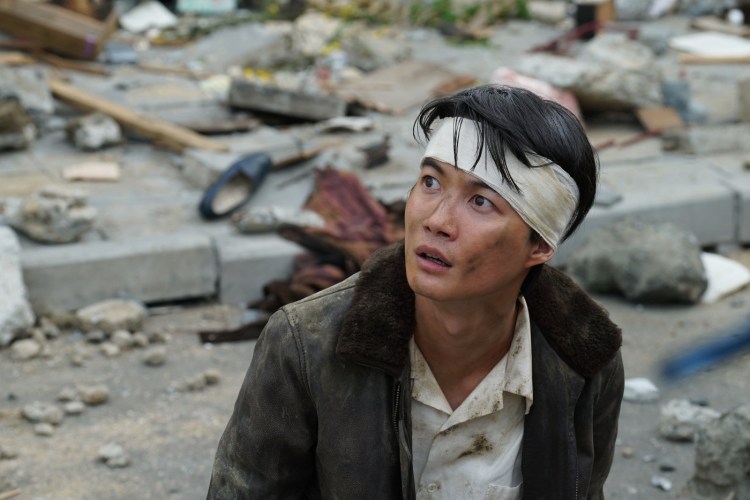
A jaded young man finds himself torn between continuing to fight the system and a total capitulation to it in Kim Jung-hoon’s explosive debut feature Tinker Ticker (들개, Deul-gae). Fit to explode, Jung-gu (Byun Yo-han) takes his revenge on a bullying culture by literally blowing it to hell but after a spell in juvenile detention emerges meek and mild, lacking in resistance and apparently willing to undergo whatever degradations are asked of him in order to achieve conventional success. 

Having placed a bomb in the car of a teacher who was abusive towards him, Jung-gu was caught and sent to prison with the unfortunate consequence that he can no longer study chemistry as he’s been banned from using dangerous substances. He repeatedly attends job interviews where he is asked bizarre and invasive questions, but can only find work as a post-graduate teaching assistant to a marketing professor who, like his teacher, largely abuses his position to humiliate him. To ease his frustrations, Jung-gu makes bombs at home but offers to send them out on the internet for free on the condition that the recipient actually use them.

His life changes when he runs into rebellious drop out Hyo-min (Park Jung-min) who is done with capitulation and fully committed to bucking the system. Seemingly from a wealthy family, he’s cut ties with his parents and lives a squalid life in a bedsit while continuing to attend university lectures despite having been expelled. Jun-gu sends one of the bombs to him to see what would happen and though Hyo-min seemed like he was going to simply throw it away he ends up blowing up a van which ironically has the CJ Films logo on the side.

Hyo-min in a sense represents Jung-gu’s rage and resentment towards the system that oppresses him along with a desire for anarchic autonomy while he conversely leans closer to a conventional corporate existence by willingly debasing himself before his sleazy boss Professor Baek (Kim Hee-chang) who asks him to act unethically by “revising” the results of his research so they can secure funding and do a back door deal with his long-standing contact Mr. Kim. Baek also forces him to drink beer that’s been drained through his sock as part of a bizarre hazing ritual while otherwise running him down or insulting him at the office. 

Hyo-min tries to goad Jun-gu into blowing up his attempts at conventionality by taking out Baek, but he continues to vacillate apparently still interested in becoming a corporate drone whatever the personal cost. “I don’t want you to become dull,” a slightly spruced up Hyo-min later insists in trying to push Jung-gu into killing Baek, while Jung-gu isn’t sure which life he wants torpedo. In any case, he seems incredibly ashamed of his criminal past and wary of others finding out about it not just because of its practical consequences for his employment but on a personal level. If he wants to transition fully to the life of a soulless salaryman he’ll need to kill the Hyo-min within him and remove all traces of resistance and individuality.

Despite having promised to do so, none of the other men who request the bombs actually use them perhaps like Jung-gu lacking the ability to follow through but enjoying the power of having the ability to burn the world even if they’ll never use it. Jung-gu’s bombing fixation is indeed in its way passive, a vicarious thrill in the ability to cause havoc for no real purpose but not really doing anything with it all while his resentment grows in parallel with his desire to be accepted by mainstream society. Hyo-min eventually comes to the conclusion that nothing really changes, and it both and doesn’t for Jung-gu who finds himself succumbing to the consumerist desires of a capitalistic society willing to debase himself, and later humiliate others, to claim his rightful place on the corporate ladder. Kim takes aim at the pressure cooker society, implying that these young men are in themselves almost ready to explode in their twin resentments and jealousies while ultimately complicit in their own oppression in wilfully stepping in to a corporate straitjacket even at the cost of their freedom and individuality. 


Tinker Ticker screened as part of this year’s London Korean Film Festival.

International trailer (English subtitles)

Into the Shaolin (在少林, Sun Hongyun, 2023)

Like many of the monks at the centre of Sun Hongyun’s documentary Into the Shaolin (在少林
zài Shàolín), our associations with the name are almost exclusively tied up with martial arts movies. Yet as they discovered on entering the temple, it’s not all about kung fu which to some at least came as a disappointment when they were still novices tasked with performing ordinary chores. Then again, many of them do not necessarily anticipate being monks all their lives and so long spent in contemplation leaves them with few other ways to support themselves in the secular world other than through leveraging their martial arts training.

As we can see, many monks come to the temple in childhood often to escape poverty or because they were thought to be troublemakers at home. Sun follows the little monks with empathy, capturing both their mastery over the craft at such a young age and the pain and difficulty it often causes them raising series ethical issues over whether it is right and fair to expect so much from small children who often cry in pain or frustration. Others also remark that they miss their parents having essentially been sent away though one boy explains that his mother managed to get a job nearby so that she can still spend time with him and observe his training.

It’s these familial ties that present the strongest contradictions to the monks and bind them more fully to the secular world. One young man who came to the temple for lack of other options contemplates remaining there for the rest of his life and is a little resentful that even at 18 he still has to get the permission of the grandparents who raised him to go on a mountain retreat. The grandparents, who lost their son, his father, in a workplace accident they believe caused by overwork, want nothing more than for him to get married and start a business and so they flatly refuse to allow him to go on being a monk forever instructing him not to bother contacting them again if that’s what he plans to do. 

But then as others have said, being a shaolin monk doesn’t teach you how to live in the secular world and gives you few transferable skills that would allow you to support yourself. An older monk explains that most of the monks who came to the temple at the same time as him have left but almost all still work with martial arts in some capacity as there’s nothing else for them to do. Even so, the little monks talk of doing other things with their lives once they grow up one hoping to become a soldier defending China and another a movie star. Many came to the temple specifically because of their love of kung fu films starring Jet Li, Donnie Yen, or Wang Baoqiang who himself trained in Shaolin martial arts. 

Others meanwhile have found serenity in the rhythms of the temple and may no longer be suited to living outside of it. The show the boys are preparing utilises a series of boxes of the kind they usually sleep in which as one monk admits to the untrained eye closely resemble coffins but as he puts it no one really needs much more space than their body naturally occupies and it doesn’t really matter where they sleep. Of course, to those in the secular world those things mean a great deal and there’s probably a big difference between a box at the temple and one on the street. Another monk reflects on the shaolin name which means “few trees” though at the temple few is a lot and less is more. He thinks that it’s a fallacy to consider a “return” to the secular world because the true “return” is to your true self which you only discover by leaving home. 

That might be a sentiment shared by a Serbian doctoral student staying at the temple while researching her thesis and in particular the concept of “Chan”. Offering her own insights as a foreigner living at the temple she reflects on the differing attitudes to nature found in China while she seems to be the only woman currently in training. She remarks that it might be odd to call a temple home but that’s what it’s been to here even as she prepares to leave it. Sun’s documentary has an ambivalence to it, at once admiring of the monks in their asceticism, but also somewhat sad not only for their inability to escape their suffering, merely exchange one kind for another, but also for the predicament they my find themselves in should the time come to leave the temple whether by their own will or otherwise.


Into the Shaolin screened as part of this year’s DOC NYC and is available to stream in the US until Nov. 26.

Trailer (English subtitles)
Village of Eight Gravestones (八つ墓村, Yoshitaro Nomura, 1977)

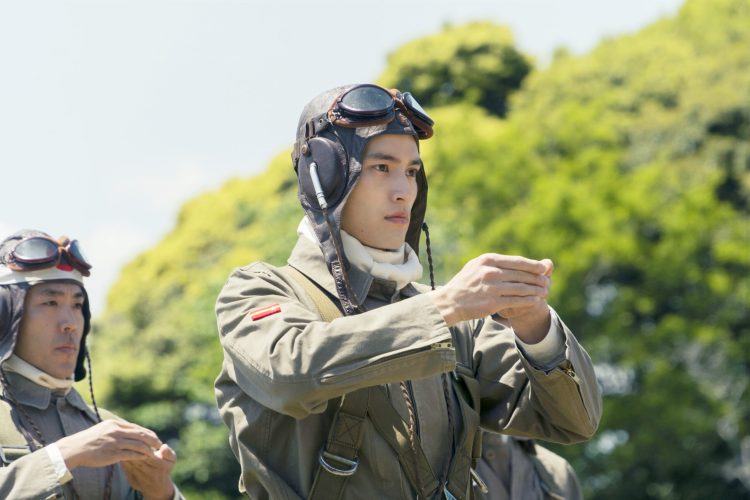
Can a curse end up being “real” just because people believe in it? Unlike many of his other crime films which were adapted from the novels of Seicho Matsumoto, Yoshitaro Nomura’s The Village of the Eight Gravestones (八つ墓村, Yatsuhaka-mura) edges towards the idea that the curse at its centre is real in a more literal sense with grimly grinning samurai standing on their hilltop and rejoicing in the fulfilment of the 400-year campaign of vengeance, but also hints at a toxic legacy of enmity and warfare along with a karmic sensibility found in many of Seishi Yokomizo’s other mysteries in which a noble family must account for the way it gained its riches. 

In this case, the Tajimi family which now owns most of the village became prosperous after betraying a band of eight displaced samurai during the Sengoku era. Fleeing the battlefield in defeat, the samurai had originally frightened the villagers when they came down off the mountain but were in actuality non-threatening, simply settling down to a life of farming and peaceful co-existence. But some members of the community became greedy and accepted the promises of riches from a rival clan for the service of eliminating the eight samurai. Cruelly inviting them to the local festival in what seemed like a moment of acceptance as members of the village, they betrayed them killing some by poison and others by the sword. 

Now, hundreds of years later, the Tajimi family is on the verge of extinction with the eldest daughter unable to bear children and the oldest son bedridden and soon to die which explains why they’re keen to track down long lost grandson Tatsuya Terada (Kenichi Hagiwara) who was presumably adopted by his stepfather and bears his name after his now deceased mother Teruko left the family to escape her abusive relationship with half-mad husband Yozo (Tsutomu Yamazaki). Surprisingly, it’s his maternal grandfather Ushimatsu Igawa (Yoshi Kato), who comes looking for him only to drop dead as soon as they meet of apparently strychnine poisoning in the first of several murders that all echo the ancestral curse placed upon the Tajimi family by samurai leader Yoshitaka Amako (Isao Natsuyagi) as he died. 

Like many of Nomura’s films this too features a journey only this one is in a sense into the past as Tatsuya ventures to the rural heart of Japan hoping to see his mother’s birthplace and satiate his curiosity about his birth father. What he discovers there is obviously a lot of what seems like unfounded local superstition along with a degree of unpleasant stigmatisation as he’s immediately accosted by a shamaness who calls him a murderer to his face for his connections with the Tajimis to whom he feels himself a stranger, and then is later blamed for all the weird goings on which only began after he arrived. The film uproots itself from the original 1948 setting to the present day which perhaps lessens the impact of its central theme about the legacy of violence and betrayal that is stoked by war and enmity along with the destructive capacity of human greed that encourages some to betray others for their own advancement only to discover that success founded on human sacrifice will never get you very far. 

Ironically in a more real world sense, it turns out to be greed that motivates these present crimes with the villain hoping to usurp the Tajimi family fortune and utilising the curse as a means to do so. Much of the action takes place in a network of underground caves filled with glowing green lakes where the villain eventually takes on demonic proportions, face ghostly white with yellowish eyes and a crazed expression that echoes those of the samurai as they died. Nomura hints at the sense of ancient dread in this very old place while also surprisingly bloody in his flashbacks which feature scenes of shocking violence including severed heads one of which seems to lick its lips and stare intently even while on display. This being a Kindaichi (Kiyoshi Atsumi) mystery, the famous detective does indeed appear though remains a background presence quietly solving the crime behind the scenes while Tatsuya searches for the key to his own history and an escape from this legacy of violence and destruction in reclaiming his own identity.


Original trailer (no subtitles)

Crocodile Island (巨鳄岛, Simon Zhao & Xu Shixing, 2020)

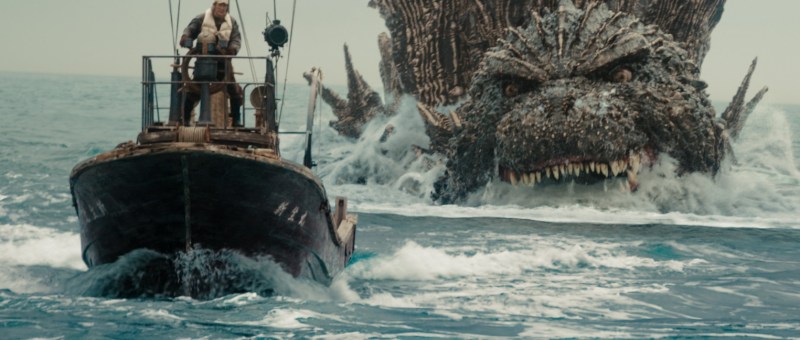
Monster movie streamer Crocodile Island (巨鳄岛, jù è dǎo) became a surprise hit in the early days of the pandemic as people increasingly preferred to entertain themselves at home, though of course in a way it may be somehow comforting to see people battle more obvious threats that they can actually see and physically resist. In any case, the film never promises much more than its nature as fodder for online streaming would suggest while admittedly pinching plot elements from other similarly themed movies such Train to Busan and positioning the central conflict as effective paternity rather than the monster itself.

A brief prologue finds American pilots flying through the Dragon Triangle during the Second World War while ominously carrying cargo labeled as containing dangerous radiation though the reason they later crash on an uncharted island is that they are suddenly attacked by what appear to be pterodactyls. Nevertheless, the radiation is later given as an explanation as to why all the creatures on the island have evolved into huge and terrifying monsters including the titular crocodile.

Flash forward to the present day and grumpy middle-aged man Lin Hao (Gallen Lo Ka-leung) is escorting his estranged 19-year-old daughter Yiyi (Liao Yinyue) home to China following the sudden death of her mother in Australia where the pair had been living. Yiyi has secretly been accompanied by her university student boyfriend Cheng Jie (Wang Bingxiang) of whom Lin clearly does not approve, not yet able to shift his perspective on the daughter he hadn’t seen in five years to realise she is no longer a little girl. Family bonding will however have to wait as the plane they’re travelling on alongside a pregnant lady and her husband, an influencer, and an obnoxious man travelling home for a heart transplant, is pulled into Dragon’s Triangle by magnetic interference and crash lands on the island where several of the survivors are quickly swallowed by the crocodile. 

Those who remain are therefore faced with a series of dilemmas as to whether to help each other or prioritise their own survival with Cao Fang (He Qiwei), the heart transplant candidate, actively pushing several of his fellow passengers towards the crocodile so that he can get away. Lin meanwhile quickly takes charge and is more or less unchallenged as they try to explore the island in search of clues hoping that the radio equipment in the ‘40s plane they read about in a diary one of the pilots left behind will allow them to make contact through the outdated tech of radio waves. 

This is might be something of a plot hole seeing as it obviously didn’t work for the American pilot though perhaps there just weren’t any ships in range given the circumstances, and it seems he too might have come to a sticky end. But thanks to his sudden promotion to father of the group, Lin begins to reassess his role as a father to Yiyi in beginning to cede ground and actually listen to some of her ideas along with accepting support from Cheng Jie to help him protect her not lease because he realises he may not survive. There are also a few other giant and very hungry monsters on the island who in this case turn out to be more of a threat than other people who with the exception of Cao Fang are more community minded than individualistic. 

A mild social message is conveyed through Yiyi’s eventual discarding of the cigarettes she secretly smoked, symbolising the end of her rebellion and the re-acceptance of her father along with his patriarchal authority as if shifting back onto the right path thanks to the experience of fighting a giant crocodile together and realising that he really did stay to protect her instead of just going off on his own. Some undeniably ropey special effects and a general lack of coherence in the film’s internal logic frustrate its ability to maintain momentum though English-speakers aside, the performances are strong even if the plot developments at times feel unoriginal. Even so the film sells its message of family reunion and perhaps less palatably patriarchal social conventions as Lin Hao steps up to protect his daughter and community from the threats that surround them be they giant crocodiles or otherwise.


Crocodile Island is out now in the US on Digital & DVD courtesy of Well Go USA.

US release trailer (English trailer)

Heaven Rain Flows Sweetly (Li Shasha, 2023)

In her personal essay film Heaven Rain Flows Sweetly, Li Shasha finds herself meditating on her rootless life and traditional attitudes to the natural world when confronted firstly by ecological disaster and then by global pandemic. In the traditional culture of the Nakhi People among whom Li grew up in the remote landscape of the Himalayas, they say there was once a war between humanity and the spirits because humanity took too much from the Earth and gave nothing in return. As wildfires rip through Oregon where she handled settled and begun a garden, she wonders if we haven’t reneged on our bargain and are paying for our lack of regard for nature.

On a return to the US, it suddenly seems odd to her that grasshoppers and frogs appear only as motifs on shop window displays amid the grey concrete of the cities. As child, she had taken part in rituals honouring fire but now sees its terrifying potential as the world around her is reduced to ashes. In the wake of disaster, she pays a visit home to see the grandmother who raised her while her her own mother studied abroad but encounters a different kind of destruction as the village she once new has become a living museum. Now designated a UNESCO World Cultural Heritage Site, most of the original residents have moved away and rent their traditional-style homes out to the throngs of tourists which now descend on the region. Wandering around the town she sees a bustling night life scene in which the traditional dance of Nakhi People has been repurposed as entertainment for outsiders drinking in the many bars.

In order to rediscover Nakhi culture she must head further into the mountains, but also observes that this way of life has also been disrupted by encroaching modernity. She finds a little girl who, as she once was, is being cared for by grandparents while her brother and mother work in the city. Her cousin has returned from university for the summer and remarks how much more difficult it is to readjust to rural life than it is become used to urban living. It seems much hotter here than he remembered, he’d never have thought to bring a hat, and given the ongoing drought they now farm corn rather than rice. The young man asks if America is more ecologically friendly than China, which seems like an ironic question but prompts Li into a reconsideration of her own relationship with the natural world along with the uncomfortable reminder that as she walks through America she treads on the land of another displaced indigenous people. 

Li celebrates Lunar New Year with the villagers and only hears of an imminent lockdown and a mysterious new disease that seems again like a kind of rebuke for the way mankind has treated the Earth. Presented with a choice, she can’t decide whether to stay or go and reflects that far from uniting us the pandemic has presented only more division. But then even on her return to the US she finds new ways of being and echoes of a more traditional culture in a local community garden that reminds of the way the villagers live tending to the earth with togetherness and replacing what one takes in a gentle symbiosis with nature. 

Using mainly English when talking about her life in America and Mandarin for that in China, Li laments she knows no Nakhi and has lost touch with her culture which seems to be retreating even further in the face of encroaching modernity. Even so, she begins to reevaluate the balance of her life while asking if it’s already too late or if we, like her ancestors, can find new ways to repair our relationship with nature and learn to live in harmony with it once again. Li’s poetic voiceover lends a touch of melancholy to her exploration of all we’ve all lost in a bid for modernity but also perhaps a note of hope that scorched earth can still be replanted though it may take many hands to do so. 


Heaven Rain Flows Sweetly screened as part of this year’s DOC NYC and is available to stream in the US until Nov. 26.

Flowers of Mold (너를 줍다, Shim Hye-jung, 2023)

The heroine of Shim Hye-jung’s Flowers of Mold (너를 줍다, Neoleul Jubda) isn’t wrong when she says that you can learn a lot about a person from the things they throw away, though it also helps to explain her nature as an emotional hoarder like the pet fish she only starts keeping as a way of feeling close to a handsome neighbour unwilling to come out of her cave. Based on a story by Ha Seong-nan, the film is in essence an unexpectedly sweet romance but also a mild critique of the disconnected nature of urban living in which everything has already been broken down to its essential components in an overly ordered, judgemental society. 

The disposal of rubbish, for example, is ridden with rules the breaking of which invites censure from a self-policing society as Ji-su (Kim Jae-kyung) discovers when she’s hauled in front of a trio of middle-aged women who put her on trial for inadvertently including inappropriate items in her regular rubbish, acting as if what she’s done is worse than murder and an indication of a deep ill will towards the community. In an odd way, this might be what sparks Ji-su’s strange hobby of rooting through her neighbour’s bins and keeping detailed records of them in a frustrated attempt at one-sided connection. She’s similarly conscientious at work, accepting belligerent calls from a customer who always complains that his meal kit deliveries have spoiled under the justification that he seems to work late and they should have just added an evening delivery tag even if he neglected to ask for one. She makes a similar suggestion that another customer with a young baby sometimes forgets to add not to ring the bell, so she goes ahead and adds that to her delivery note just in case.

“This is the age of big data” she jokes, but few us really like to be seen in this way and often we throw things away because we no longer like the self that owned them. Ji-su’s overbearing mother is forever telling her to get to rid of old things and buy new in a consumerist fantasy that novelty equals happiness, which might help to explain Ji-su’s reluctance to give anything away possibly afraid of the judgements others may make of her. An unfortunate encounter with a duplicitous man has left her feeling naive and mistrustful, needing further information in order to navigate the world and fill the void where real connection should be.

That’s one reason that she unwittingly begins to take on the characteristics of an attractive man who’s recently moved in next door and undergone an very loud breakup with a woman who seems otherwise totally unsuited to him and indeed understands him far less than Ji-su who has begun to build a profile after trawling through his trash. Perhaps wanting to know more only a natural consequence of falling in love, but it’s also an undeniable invasion of privacy that threatens to destroy a relationship even before it’s begun.

Even so, Ji-su begins to poke her head outside of her cave even deciding to take a leaf out of Woo-jae’s (Hyun Woo) book and take a leap of faith so out of keeping with her characteristic risk aversion. Cripplingly shy, she admits that she’s still afraid of people and in the end unable to trust them, remaining somewhat closed off and unknown perhaps even to herself. Then again, a teenage girl who’d originally reacted angrily to her well meaning advice later thinks better of it and wants to thank her “for her attention” being one of a few people who seems to have really seen her and taken an interest in her wellbeing in the midst of an indifferent city. 

Shim often cuts back to the anonymous apartment blocks, presenting an ersatz world of uniformity echoed in the meal kits Ji-su sells at work which reduce a complex dish to its component parts removing all sense of creativity or spontaneity. Woo-jae’s improbably possessive ex Sera describes him as “boring”, but perhaps he’s simply a man who knows how he likes to live much as the fish do and as he suggests it doesn’t always work out when you put two different kinds in the same tank. If Ji-su wants to break free of her self-imposed isolation, what she needs to figure out is how to give more of herself away and gain by doing so, accepting but also looking past someone’s trash to whatever it was they decided to keep.


Flowers of Mold screened as part of this year’s London Korean Film Festival.

Original trailer (English subtitles)

Total Trust (Zhang Jialing, 2023)

“The government strives to provide a stable society, fair legal system, and quality services to ensure the fulfilment, happiness, and security of its people,” according to a news reader at the beginning of Zhang Jialing’s documentary exploring the contemporary surveillance state of the modern China, Total Trust. In recent mainstream narrative cinema, there has a been a clear message that the Chinese citizen is safe nowhere other than at home, but here other voices tell us that threat comes not only from abroad but from within and the co-operation of all citizens is necessary to ensure the nation’s security. 

Early scenes see what others may regard as busybodies enforcing public order by picking up rubbish or monitoring minor parking infractions, but it’s precisely this sense of oppressive community pressure that “social management” systems are designed to create. Utilising cutting edge technology, the authorities harvest big data to assess the “trustworthiness” of the ordinary citizen and accord them a rank which then affects all aspects of their lives from their ability to gain or maintain employment to the right to use public transport. Social responsibility is rewarded with points for the above mentioned activities but also for keeping an eye on your neighbours and ensuring they aren’t planning to do anything “subversive” while your neighbours also watch you. 

But this trustworthiness is not so much towards the society as it is towards the Party. Many of Zhang’s protagonists are lawyers and their families who were targeted during a recent crackdown and charged with subverting state power because they defended those who claimed they’d been falsely convicted of crimes which is problematic because the Party cannot be wrong and it doesn’t make mistakes. Chang Weiping was arrested in 2020 and sent back to his hometown for house arrest leaving him separated from his wife and son. He recounts frequent torture which caused him permanent physical damage while his wife has also found herself targeted by the surveillance state after protesting his imprisonment. 

Other families report similar harassment. Wenzu Li’s husband Quanzhang Wang was imprisoned because of his championing of human rights and though he’s since been released the couple have effectively been banned from social media with any photos featuring their faces automatically removed by AI technology and the accounts that posted them limited. They are constantly watched while the police have also motivated their neighbours to monitor and shun them. After being invited to speak at an international conference, their door is blocked by mysterious mask-wearing neighbours who physically prevent them from leaving (they later appear at the conference via Zoom). Their son has also had to change schools almost every term because of the persistent harassment and their own low social credit ranking.

As another persecuted journalist, Sophia, points out after generations of censorship, a degree of censure has become internalised and in general people tend to self-censor without necessarily regarding it as an infringement on their freedom. Many people welcome this kind of oppressive “security” because it makes them feel safe while others are too afraid of the potential consequences to resist. Weiping’s wife takes his father to task for giving up on the campaign against his imprisonment as he remains reluctant to challenge the Party of which he has been a lifelong member, while he agrees that he is simply old and frightened and doesn’t want to be subjected to state harassment himself. 

Weiping’s wife eventually decides to emigrate to the US believing there is no future for her son in China while Weiping himself remains imprisoned. The journalist makes plans to study abroad in the UK, which might in itself be ironic given the increasing authoritarianism of the British government. The UK is already one of the most surveilled places in the world and similar kinds of AI-based facial recognition technology are already being employed in law enforcement. In any case, she is arrested at the airport and prevented from the leaving the country before being detained and charged with the same “subverting government power” line as the lawyers. According to the closing titles, she remains in prison. Emergency powers introduced during the pandemic have only enabled a wider authoritarian power grab with authorities now able to manipulate “health ratings” to silent protest or otherwise make lives unliveable by simply switching the reading to red meaning that the target can be arrested simply for leaving their home. Citizens may need to reevaluate the “trustworthiness” of the government but are of course prevented from doing so in a society in which their every movement is already closely controlled.


Total Trust screened as part of this year’s DOC NYC.

Trailer (English subtitles)
The Threat (脅迫, Kinji Fukasaku, 1966)

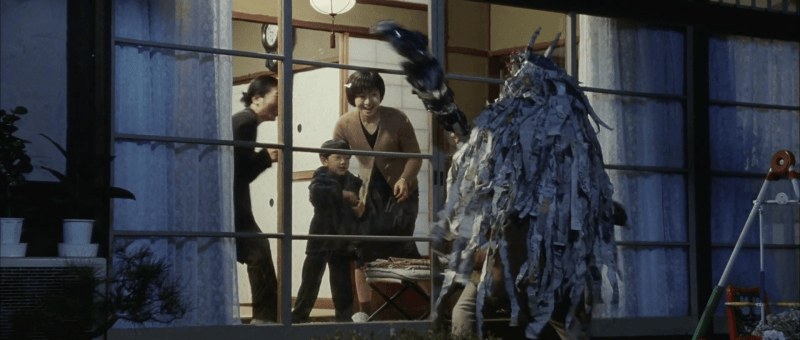
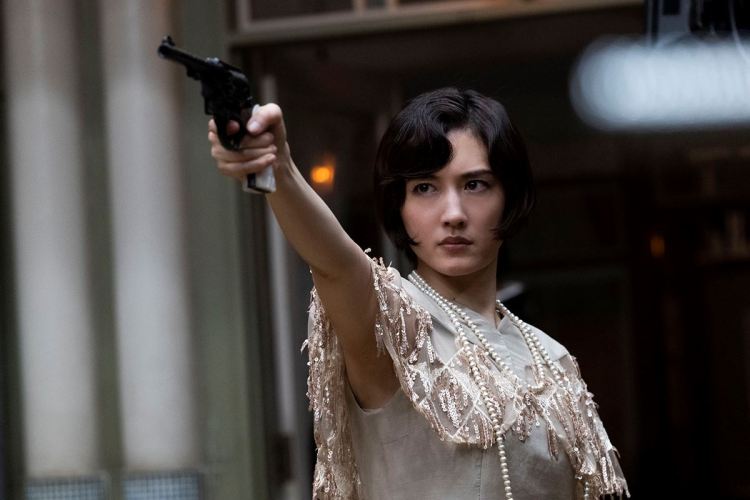
An ambitious executive is confronted with the emasculating nature of the salaryman dream when escaped convicts invade his home in an early thriller from Kinji Fukasaku, The Threat (脅迫, Odoshi). The threat in this case is to his family and implicitly his manhood in his ability or otherwise to protect them while accepting that his aspirational life has come at the expense of his integrity and left him, ironically, hostage to the whims of his superiors.

This much is obvious from the opening sequence which takes place at a wedding where Misawa (Rentaro Mikuni) is giving a speech congratulating two employees on their marriage. Misawa’s speech is long and boring, as such speeches tend to be, and according to some of the other guests disingenuous in giving glowing reports of two ordinary office workers while skirting around the elephant in the room which is that Misawa has played matchmaker to convince an ambitious junior to marry his boss’ mistress for appearance’s sake. As Misawa himself has done, the employee has sacrificed a vision of masculinity for professional gain in accepting that his wife’s body will “belong” to another man and it is the boss who will continue sleeping with her. 

The only person not aware what’s going on is Misawa’s naive wife, Hiroko (Masumi Harukawa), who enjoyed the wedding and remarked that the couple seemed very well suited giving rise to an ironic laugh from Misawa who of course knows that not to be the case. They return by car to a nice-looking home but one that stands alone at the end of a street preceded by a series of vacant lots presumably available to other similarly aspirant salarymen yet to make a purchase. Shortly after they arrive, two men force their way in and insist on staying explaining that they are the pair of escaped death row convicts that have been in the papers and are in fact in the middle of a kidnapping having taken the grandson of a prominent doctor with the intention of using the ransom money to illicitly board a ship and leave the country. 

Naked and covered in soap suds having been caught in the bath, Misawa is fairly powerless to resist and can only hope to appease the men hoping they will leave when their business is done. His acquiescence lowers his estimation in the eyes of his young son, Masao (Pepe Hozumi), who later calls him a coward and is forever doing things to annoy the kidnappers such as attempting to raise the alarm with visitors by smashing a glass or speaking out against them while Misawa vacillates between going along with the kidnapper’s demands or defying them to contact the police. After failing to retrieve the money when ordered to act as the bag man, Misawa stays out trying to find another way to get the cash and Masao wonders if he’ll come back or will in fact abandon them and seek safety on his own. Misawa really is tempted, darting onto a train out of the city his eyes flitting between the sorry scene of a small boy with a tearstained face tugging the sleeves of his father who seems to have fallen down drunk on the station steps, and a woman across from him breastfeeding an infant. He gets off the train only at the last minute as it begins to leave the station as if suddenly remembering his role as a father and a husband and deciding to make a stand to reclaim his patriarchal masculinity. 

The brainier of the kidnappers, Kawanishi (Ko Nishimura), had described Misawa as a like robot, idly playing with Masao’s scalextrics insisting that he could only follow the path they were laying down for him much as he’d already been railroaded by the salaryman dream. During a car ride Kawanishi had asked Misawa what he’d done in the war. Misawa replied that he was in the army, but had not killed anyone. Kawanishi jokes that he’d probably never raped a woman either, but to that Misawa gives no answer. Realising that the other kidnapper, Sabu (Hideo Murota), had tried to rape Hiroko he turns his anger towards her rather than the kidnappers striking her across the face and later raping her himself avenging his wounded masculinity on the body his of wife while unable to stand up to either of the other men. 

Kawanishi giggles and describes him as exactly the kind of man he assumed him to be but he’s both wrong and right. Misawa had been spineless, insecure in the masculinity he largely defined through corporate success though as Kawanishi points out most of what’s in the house is likely being paid for in instalments meaning that technically none of it’s actually his. He defined his position as a father as that of a provider, ensuring a comfortable life his wife and son rather than placing importance on his ability to protect them physically from the more rarefied threats of the contemporary society such as crime and violence. On leaving the train, another symbol of the path laid down for him both by the salaryman existence and by Kawanishi, he is able to reclaim a more primal side of his manhood in formulating a plan of resistance to lure the kidnappers away from his wife and son. 

But then in another sense, it’s Hiroko who is the most defiant often telling the kidnappers exactly what she thinks of them while taking care of the kidnapped baby and doing what she can to mitigate this awful and impossible situation in light of her husband’s ineffectuality and possible disregard. She is the one who finally tells Kawanishi that she no longer cares if he kills her but she refuses bow to his authority and he no longer has any control over her. Even so, the film’s conclusion is founded on Misawa’s reacceptance of his paternity in a literal embrace of his son, redefining his vision of masculinity as seen through the prism of that he wishes to convey to Masao as an image of proper manhood. Fukasaku sets Misawa adrift in a confusing city lit by corporatising neon in which the spectre of the Mitsubishi building seems to haunt him amid the urgent montage and tilting angles of the director’s signature style still in the process of refinement as Misawa contemplates how to negotiate the return of his own kidnapped family from the clutches of a consumerist society. 


The Summer (그 여름, Han Ji-won, 2023)

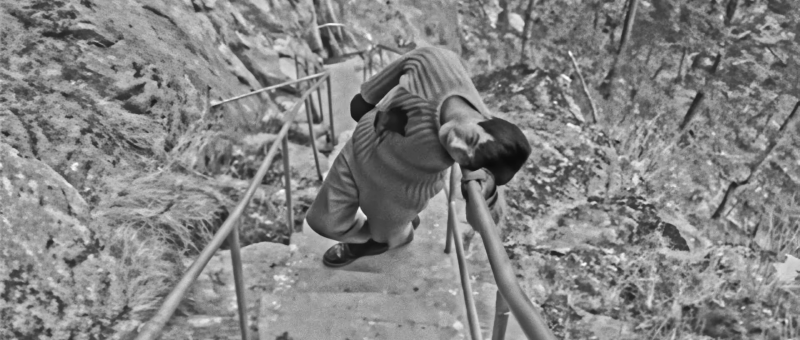
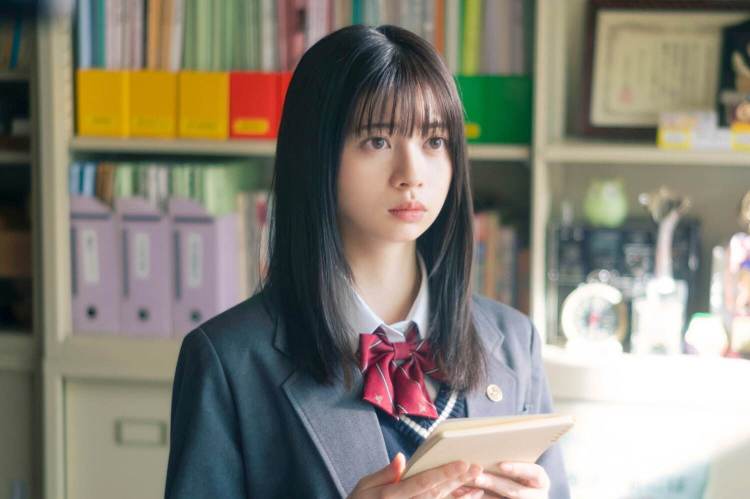
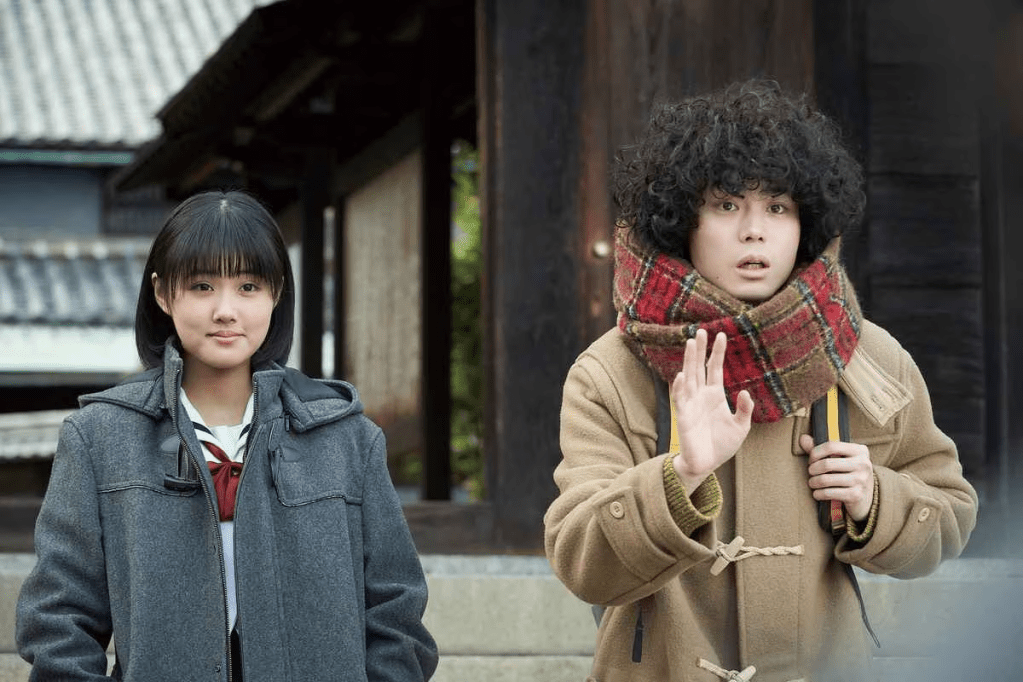
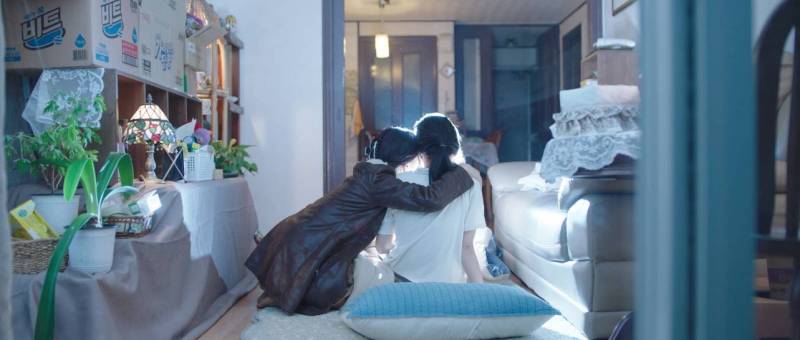
A rueful young woman meditates on first love while losing direction in the city in Han Ji-won’s nostalgic adaptation of the story by Choi Sun-young, The Summer (그 여름, Geu Yeoleum). Set in the late ‘90s and early 2000s, the film finds an unexpected optimism for better future even in a society perhaps (even) less tolerant than that of today, but equally positions opposing reactions to their queerness as a force which erodes the innocent romance between two girls who met in high school and fell in love along with the more obvious stressors of city life such as social class and aspiration.

As Yi-gyeong later admits, “everything changed when we moved to Seoul”. Han depicts the tranquil rural town where the girls grew up as place of light and warmth, a kind of eternal summer of memory. Yet perhaps there’s something in the fact that when they first meet, footballer Su-yi accidentally breaks Yi-gyeong’s glasses rendering her at least temporarily unable to see clearly. A connection develops that first leads to an awkward friendship and finally to love, but where as a naive Yi-gyeong plans to come out and live openly as a lesbian, Su-yi is terrified and withdrawn. A few mocking sneers from her classmates show Yi-gyeong that Su-yi may have had a point and there are reasons they may have to keep their relationship secret.

Yi-gyeong’s inner conflict is reflected in a conundrum over her hair which is naturally lighter than than that of the uniform black of the girls around her. A teacher often stops to tell her to stop messing with it, leading her to wonder if she shouldn’t dye it the “correct” colour to be the same as everyone else thereby erasing her otherness and symbolically rejecting her homosexuality. She is also teased for having hazel eyes which are to some the eyes of a dog, and it’s Su-yi’s straightforward gaze into them that eventually brings the pair closer, Yi-gyeong feeling seen and accepted while Su-yi calmly tells her not to pay so much attention to what others think.

Yet for Su-yi the words are a double edged sword. Her way of not caring what other people think is to retreat into a bubble in which only she and Yi-gyeong matter, as if the rest of the world simply did not exist. Yi-gyeong, however, wants more. These divisions between them become even more palpable in the city when Yi-gyeong begins frequenting and then working at a lesbian bar which Su-yi still afraid to step into preferring to keep her relationship with Yi-gyeong an entirely private matter.

Han shrouds the city in shades of cold, blue and grey while the summer of their hometown gives way to a harsh winter. Where an orange cat had basked in the sun on Yi-gyeong’s desk, in the city a starving kitten shivers in an alleyway as if symbolising the love between the two women which is no longer being cared for or sheltered. While Yi-gyeong lives in a university dorm studying economics, an embittered Su-yi has given up her football dreams to become a mechanic while living in a dank room with mold on the ceiling that causes her to feel as if she’s compromising Yi-gyeong’s health simply by inviting her over. 

Conversely, as Yi-gyeong integrated more closely with the community through working at the bar she begins to grow apart from Su-yi, beginning to look down her as a working woman visibly irritated when she finally shows up at the bar but in her work clothes with grease on her face. Her new friends immediately put their foot in it by asking what Su-yi is studying at uni only to cause her embarrassment as she admits she didn’t get in and is doing a manual job instead. Yi-gyeong has to admit that what she feels is shame, now harbouring desires for city sophistication and nice middle class life as symbolised in her nascent crush on a slightly older nurse seemingly much more at home with who she is. 

But even so, an older Yi-gyeong can’t help asking herself why she swapped her dull but idyllic hometown for the emptiness of urbanity while meditating on the failure of her first love, wondering if she was wise to give it up or in the end betrayed both herself and Su-yi in her desire for something that was “more” than this without appreciating its innocent fragility. Poignant in its sense of melancholy regret, Han’s hazy drama lends a touch of warmth to Yi-gyeong’s infinite nostalgia for the endless summer of first love that in its way for her will never really end. 


The Summer screened as part of this year’s London Korean Film Festival.

Original trailer (Korean subtitles only)