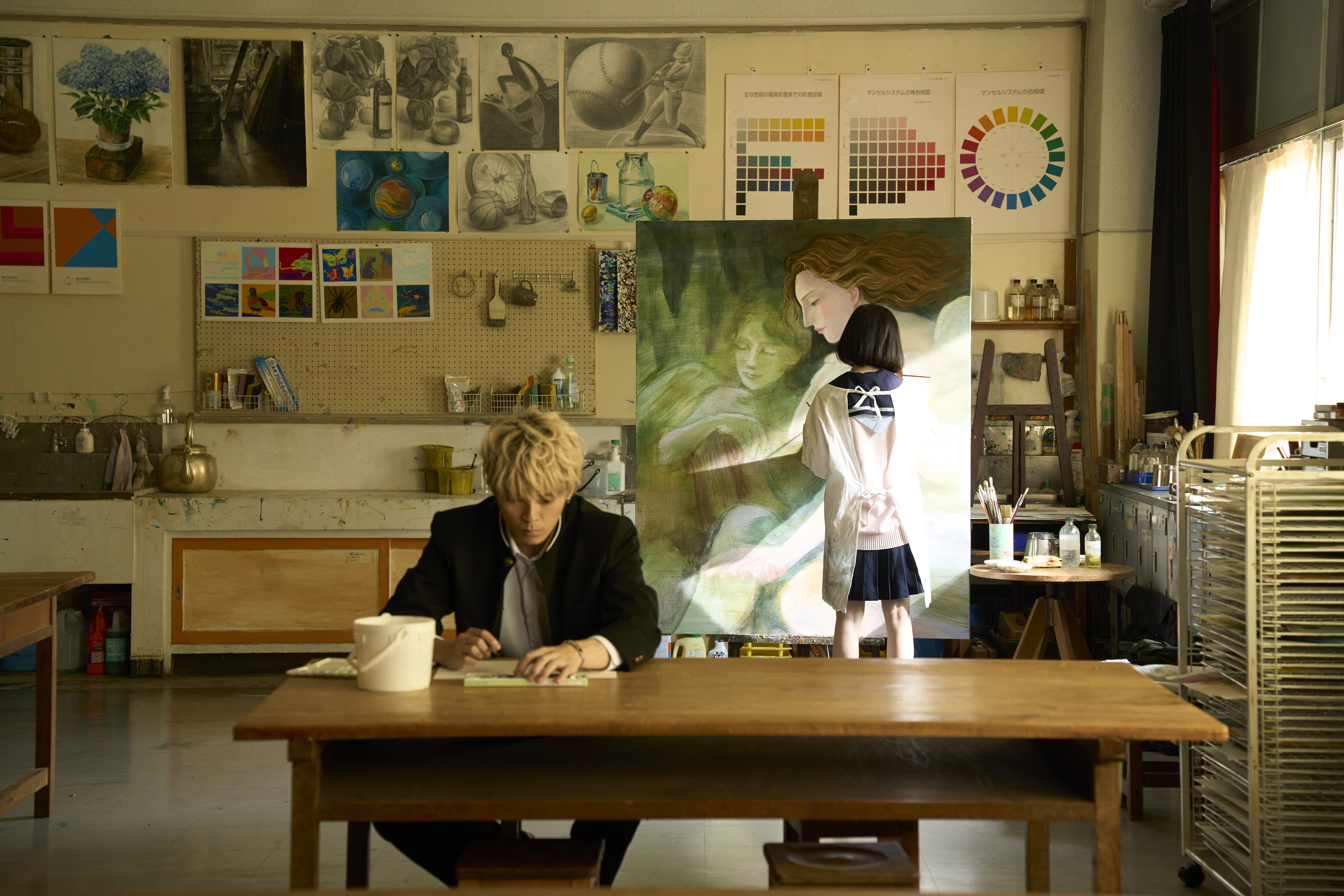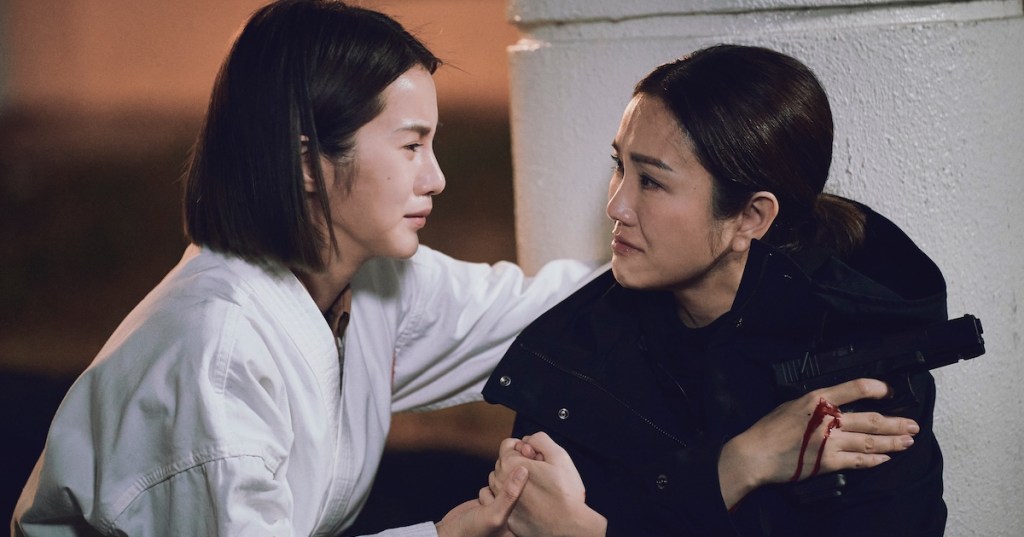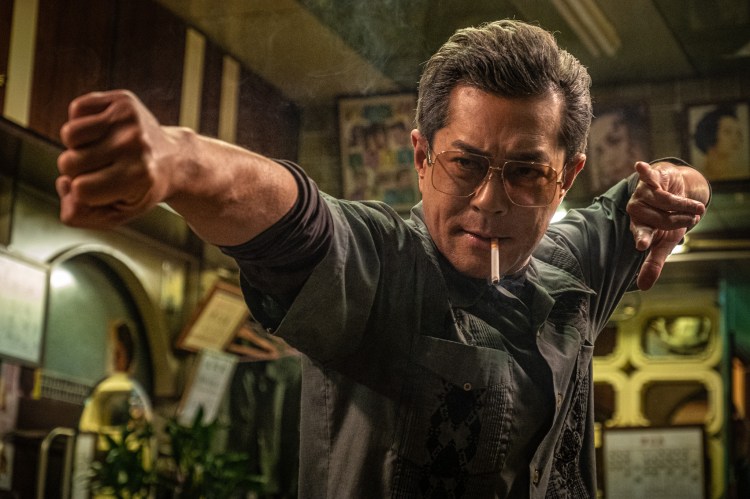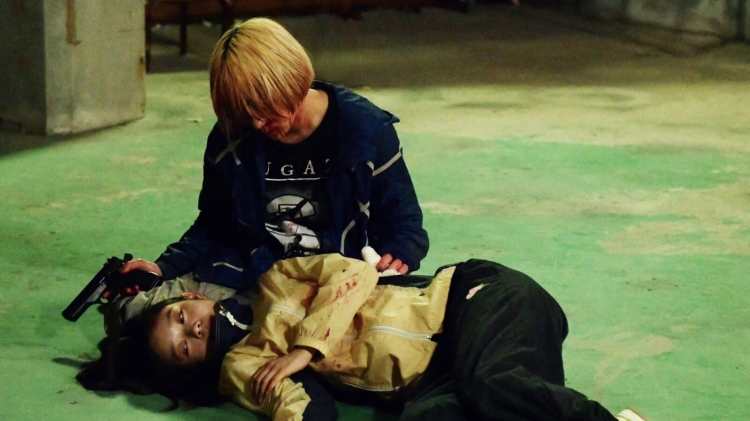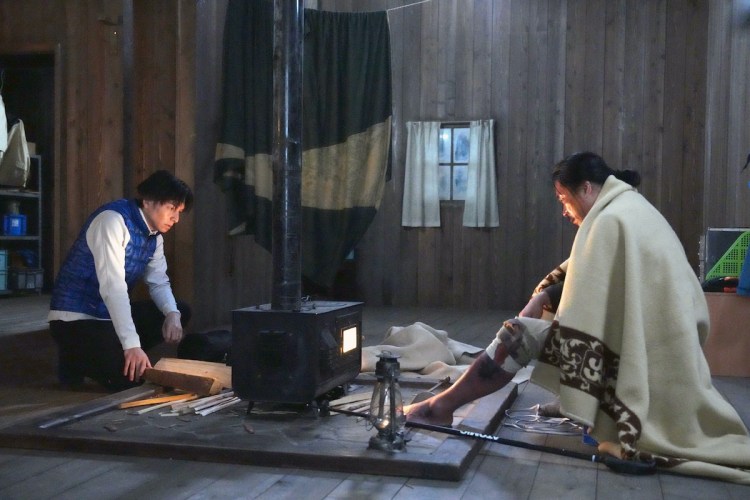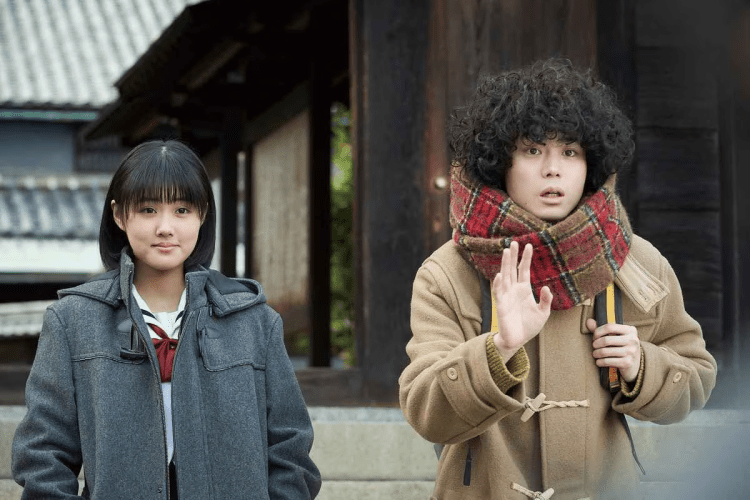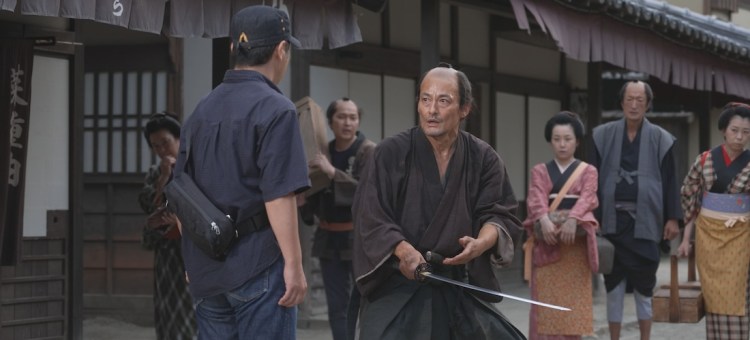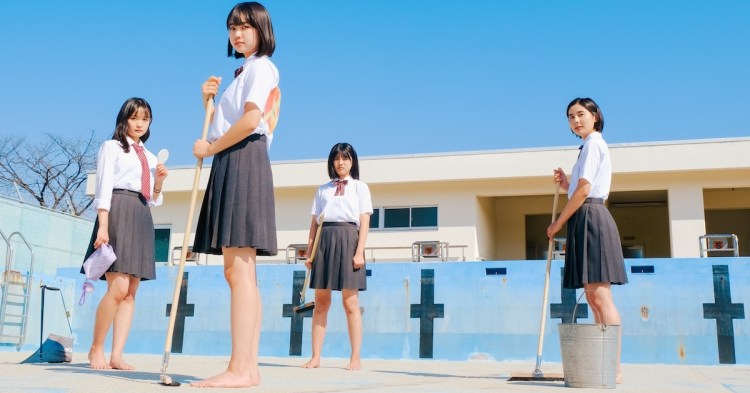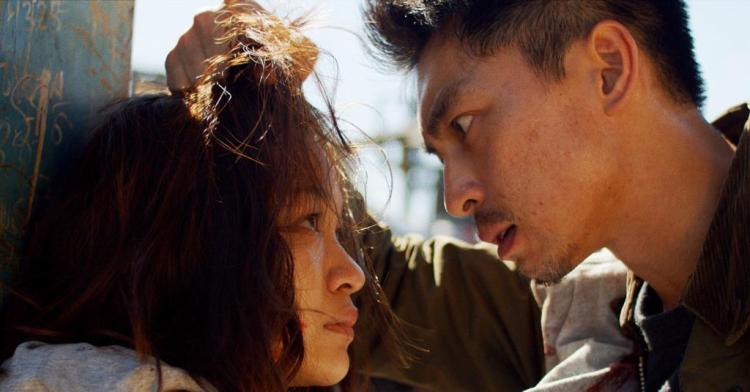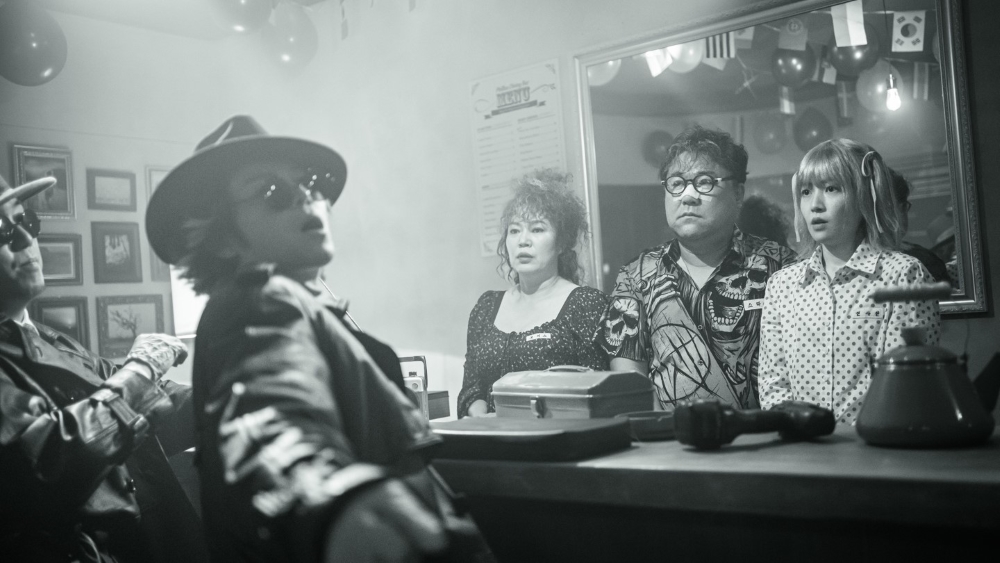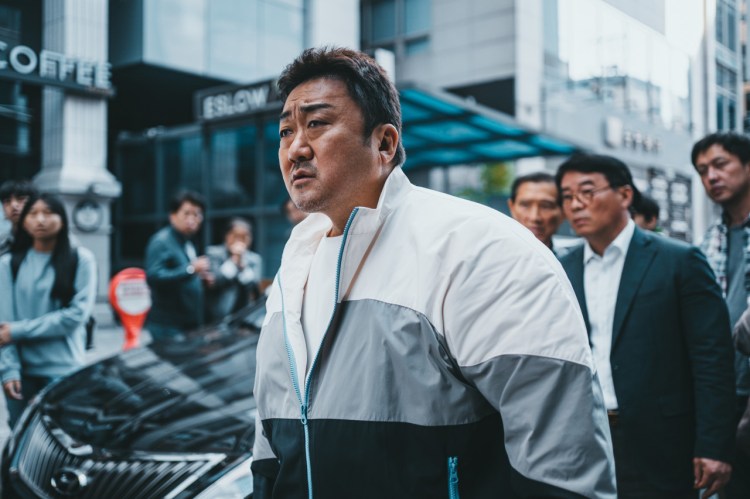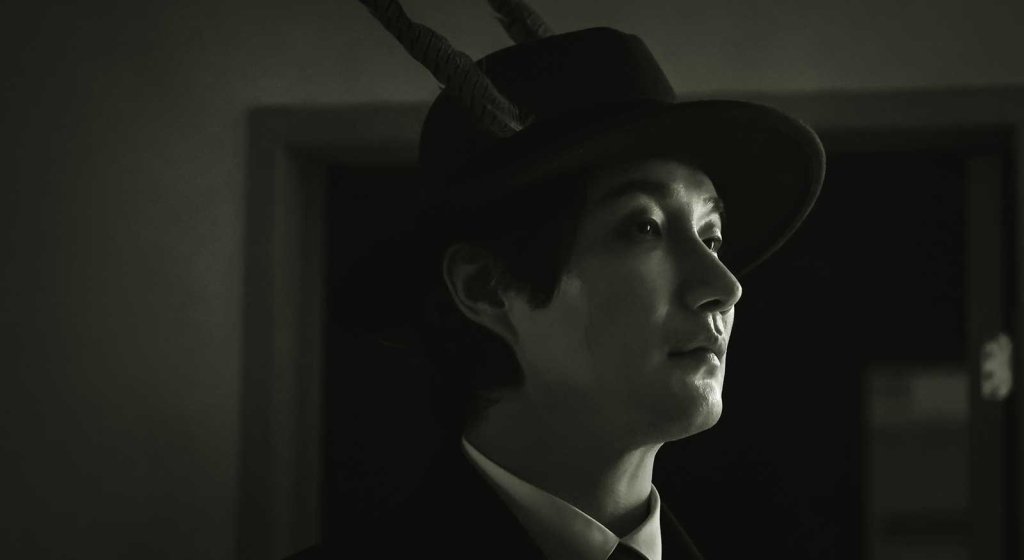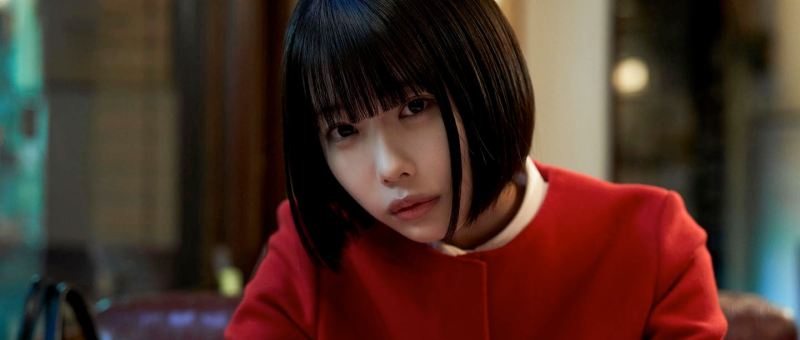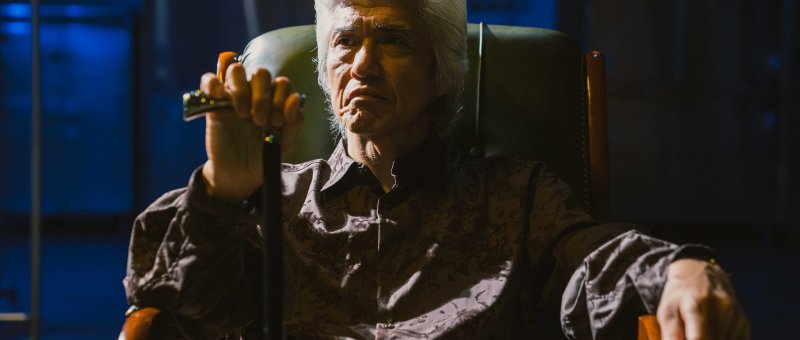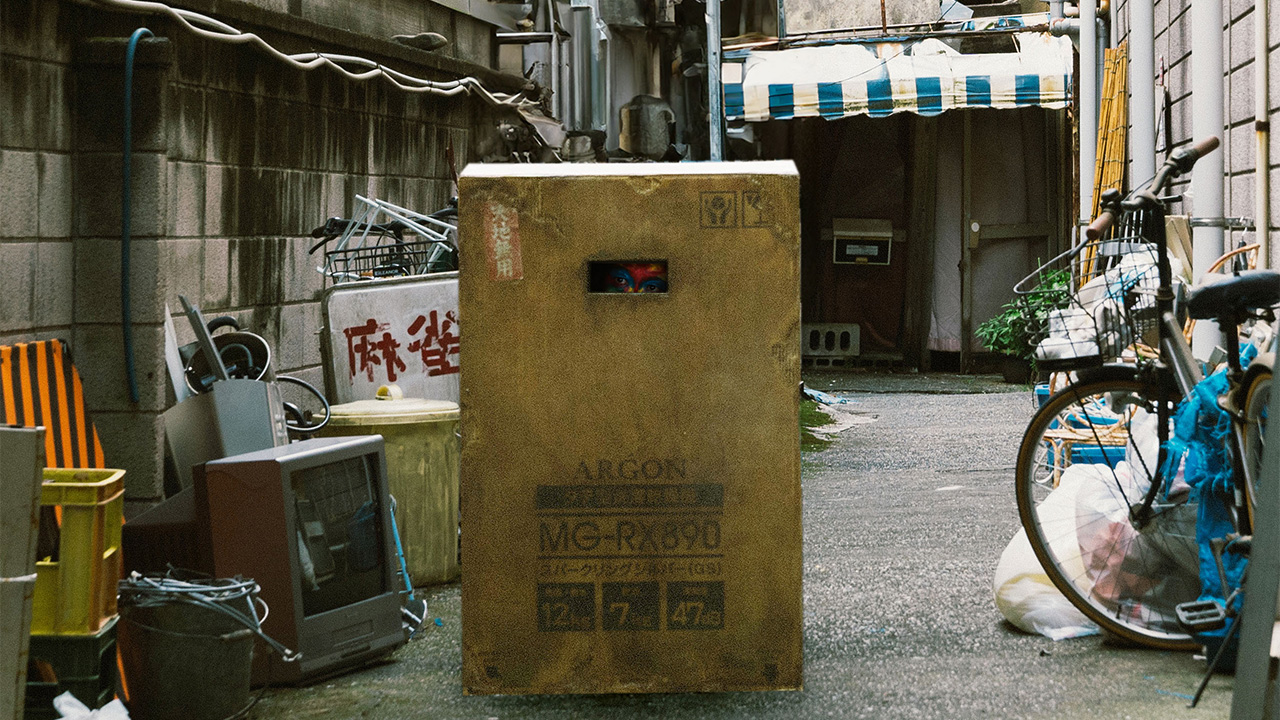
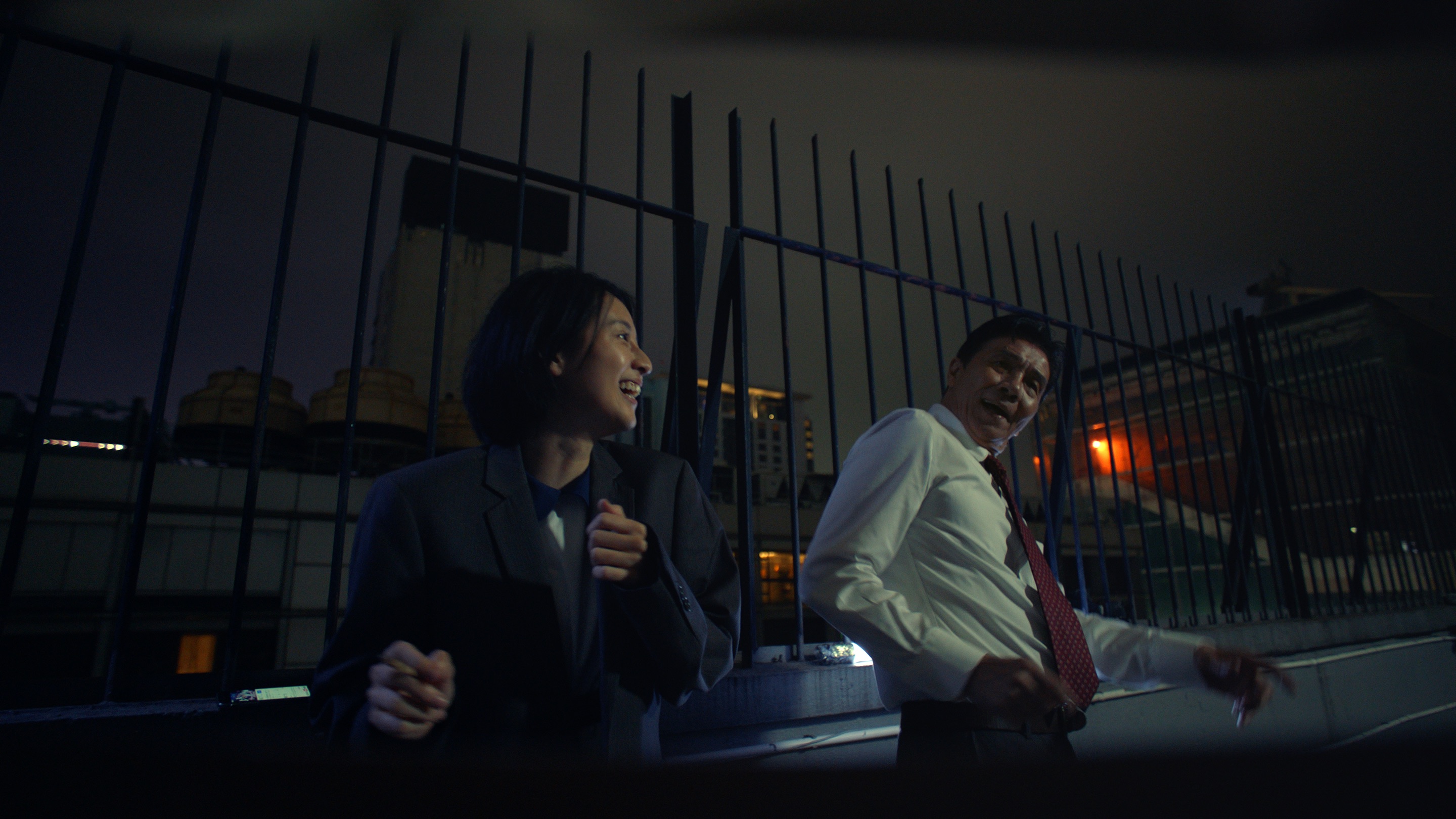
Swimming in a Sand Pool (水深ゼロメートルから, Nobuhiro Yamashita, 2024)

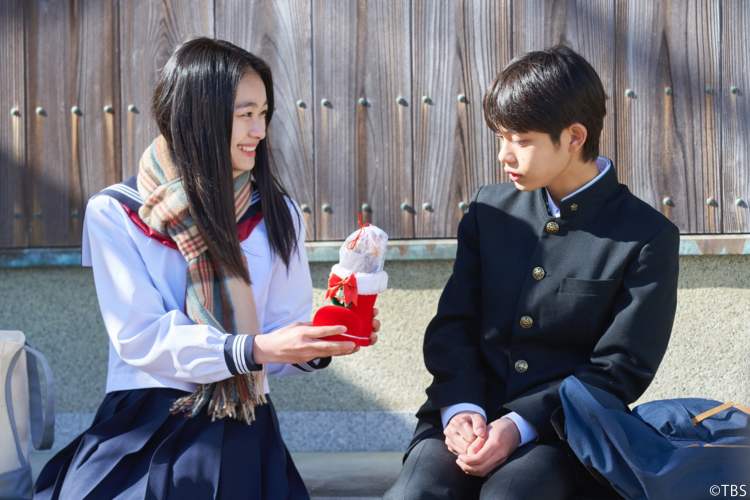
As the film’s title implies, the teenage girls at the centre of Swimming in a Sand Pool (水深ゼロメートルから, Suishin Zero Meter Kara) each find themselves pushing forward but meeting with resistance in Nobuhiro Yamashita’s deadpan teen comedy. Inspired by a high school play, the drama has a timely quality as each of the girls reconsiders what it means to be a woman while simultaneously insisting that gender doesn’t matter. In this case, however, it seems to matter a great deal as they’re forced into the “meaningless” and Sisyphean task of sweeping their swimming pool free of the sand that drifts over from the boys’ baseball game.  

As one of the girls, Chizuru (Mikuri Kiyota), suggests, the boys probably don’t realise (or care) how their actions are inconveniencing them. It’s the middle of summer and the pool is supposed to be undergoing maintenance in August which makes this pointless task seem even more absurd yet after trying to complain to their equally frustrated teacher Yamamoto they’re told they’ve got an attitude problem and it’s only “meaningless” because they’ve decided so in heir heads. As an adult woman, you’d think Yamamoto would have more sympathy or at least some kind of advice for the girls but only seems to want to drum mindless obedience into them, insistent that if she’s told them to do something then it must in fact have meaning. At the end of her tether she snaps that perhaps she doesn’t really like having to conform to the idea of what a teacher should be either, but seems clear that one must do it anyway. Still when a friend from home expresses surprise she’s staying in town over the summer to supervise students, Yamamoto bristles when she remarks that she now seems very like a teacher and is later seen having a covert smoke round the back of the school. 

Obsessed with rules and conformity, one of the chief reasons she’s disliked by the girls is a sense of treachery in having made one, Kokoro (Saki Hamao), humiliate herself by forcing her to participate in a swimming lesson while menstruating. Yamamoto complains that she didn’t ask for an exemption via the appropriate protocols, adding that some girls use it as an “excuse” for getting out of things. Repeatedly the girls accuse each other of using their gender to make excuses for themselves in backing down in front of the boys or allowing themselves to be constrained by social ideas of femininity. Gender is indeed something they seem to think about and dwell on, Kokoro constantly insecure in her appearance while insisting that a girl must be cute in order to count and this is the way she strives for equality with men while simultaneously insisting that gender equality is a myth.

For Miku (Reina Nakayoshi), meanwhile, the opposite maybe true in that she dances the male version of the local folk dance and has done since she was little though now wears a chest binder while she does. Miku seems hurt by Kokoro’s picking at her, eventually walking off and bumping into another girls, Rika, whom it appears she may have a crush on and is a sort of rival of Kokoro’s having beaten her to become manager of the boys’ baseball team. Another girl, Yui, seems to have a similar admiration for swimmer Chizuru but is frustrated by her having experienced a moment of existential crisis being beaten in a race by baseball team star Kusonoki with whom most of the other girls are in love.

What’s true, however, is that none of the girls can do much of anything while desperately trying to sweep up all the dust the boys chucked at them so they can get their pool back and finally swim again. “Don’t take high school girls lightly,” one insists, while another decides to make a “declaration of war” but only seems to elicit snickers from the boys. Nevertheless, through their time shovelling the sand, the girls seem to have come to their own conclusions about the role of gender in their lives and generally discovered a new kind of liberation both from their own self-imposed ideas and the sometimes repressive nature of education that reinforces them. A charming teenage summer comedy, Yamashita nevertheless captures an inspiring sense of rebellion from the students who will no longer be bound by outdated notions of what everyone else tells them they should be.


Swimming in a Sand Pool screened as part of this year’s Osaka Asian Film Festival.
Original trailer (no subtitles)

Wash Away (うぉっしゅ, Ikunosuke Okazaki, 2024)

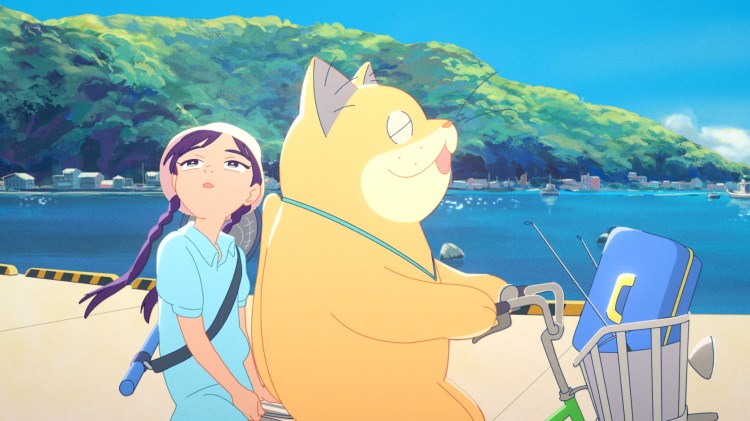
A disconnected young woman begins to rediscover herself while caring for her ageing grandmother who is largely bedridden and has advanced dementia in Ikunosuke Okazaki’s lighthearted indie drama, Wash Away (うぉっしゅ, Wash). In a sense, the heroine is attempting to wash away loneliness but is ironically unable to scrub away her own while filled with a sense of shame and aimlessness in the city working at a soapland and dreaming of a career in real estate.

Soaplands are are legalised form of sex work in which generally male customers can pay pretty young women to give them a wash. Kana has been working at one for some time under the shop name Koyuki and has made a nice life for herself with a swanky apartment but has avoided returning to visit her family and has led them to believe she’s an estate agent. Despite having a maid visit three times a week, her flat is strewn with rubbish and empty fast food containers which hint at her inability to look after herself along with a sense of internalised shame. She looks to her housekeeper, Mrs Natori, as a kind of surrogate mother and is forever giving her expensive gifts and inviting her to stay for dinner in an attempt to circumvent the loneliness she feels in the false connections of her work in which the customers either become over invested in her Koyuki persona or completely forget her once the appointment is over.

As Mrs Natori later points out, it was Kana herself who had largely forgotten about her grandmother Kie whom she had not seen in at least eight years. When her mother, Sanae, has to be hospitalised for a hip operation she asks Kana to watch Kie during the day to which she reluctantly agrees. Despite not having had any recent contact with her, Kana is still disappointed when Kie cheerfully introduces herself on her arrival as if they were complete strangers meeting for the first time, something she continues to do each day that Kana arrives at the house. The irony is that part of Kana’s job is to wash her grandmother in the same way as she washes customers at the soapload though she encounters the same kind of frustrated connection unable to get through to Kie who is lost in time and often incredibly anxious that she’s late for some kind of event where everyone is waiting for her. 

Though she approaches the responsibility seriously, the truth is that Kana is fed up after the first few setbacks and decides to subcontract her care responsibilities by outsourcing to a professional carer telling herself that her grandmother would probably prefer that anyway. Her friend Sumire seems disappointed in her, remarking that perhaps Kie is in a way lucky to get to experience so many things for the first time again and meet the world with a sense of childish wonder such as in her fascination with colourful plastic balls. In an odd way, caring for her grandmother encourages to Kana to start caring for herself, gaining the confidence to speak honestly with someone she assumes won’t remember anything she says but reassured by Kie’s surprising outburst that work is work and she’s no need to feel ashamed of herself if she approaches it with pride whatever her occupation might be. 

This simple act of interest begins to reawaken something in both of them, Kie’s memory and energy seeming to improve in the light of Kana’s determination that she won’t be forgotten much as she hopes she won’t be either in a constant search for connection. Though she may have thought her grandmother had forgotten her, that she was in a sense invisible and faceless to the customers who bought her services, Kana washes away her misconceptions and learns to see herself again in repurposing her work as an act of care. Okazaki lends the world around her an off kilter quirkiness that is at odds with the despair Kana feels and while never shying away from the difficulties of caring for someone with advanced dementia allows the two women to recover both something of themselves and each other through the simple act of reconnection.


Wash Away screened as part of this year’s Osaka Asian Film Festival.
Original trailer (no subtitles)

13 Bombs (13 Bom di Jakarta, Angga Dwimas Sasongko, 2023)

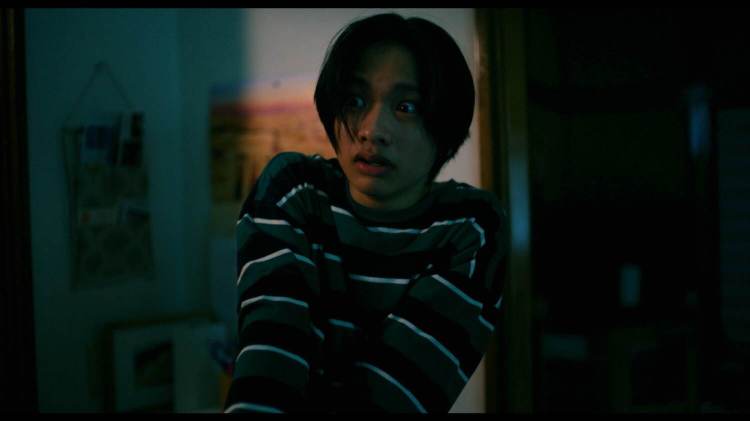
There’s an interesting juxtaposition in opening scenes of Angga Dwimas Sasongko’s action thriller 13 Bombs (13 Bom di Jakarta). A security guard in a cash van listens with exasperation to a radio broadcast voicing the nation’s economic decline before remarking that his mortgage keeps going up but his pay stays the same. Meanwhile, across town, two youngsters celebrate after receiving a huge payout from the cryptocurrency exchange app startup they’ve been running, drinking and partying oblivious to the poverty that surrounds them. Yet it’s the two youngsters that have unwittingly spurred a desperate man towards revolution, giving him the false idea of a utopia uncorrupted by money.

The interesting thing about the terrorists is that after attacking the cash van they blow the doors open and then leave without the money, allowing the people to pick it up instead. The explosion was apparently one of several more to come as the gang have placed 13 bombs around the city which they are holding to ransom, demanding to be paid in bitcoin solely through the boys’ exchange. The level of the crypto kids’ complicity is hard to discern, but it soon becomes clear they weren’t up for loss of life even if there’s a large payout at the end of it though they don’t really trust the police either. 

The police, or more precisely, the Counter Terrorism team, don’t come out of this very well. They’re originally quite reluctant to view the incidents as “terrorism” because that will make everything very “complicated” and also worsen the already precarious financial situation. They also seem to be fairly blindsided, arguing amongst themselves about the proper course of action with the sensible and reliable Karin (Putri Ayudya) often shouted down for relying too much on gut instinct as in her decision to trust bitcoin boys William (Ardhito Pramono) and Oscar (Chicco Kurniawan) only for them to immediately run away hoping to find the gang’s hideout for themselves after being disturbed by a strange message from the gang branding them as their allies.

Bitcoin seems like a strange thing for the revolutionaries to pin their hopes on, though it later seems they hope to do away “money” in its entirety, though it’s true enough that all of them have suffered because of the evils of contemporary capitalism. Many were victims of the same pyramid scheme, one man losing everything after his mother invested the family fortune and died soon after, and another scarred by the suicide of his wife and later death of his child. You can’t say that they don’t have a point when the press the authorities on their failure to protect the poor along with their uncomfortable cosiness with wealth and power. As their leader says, people starve to death every day because of poverty or die earlier than they would have because of a lack of access to healthcare yet the authorities don’t seem to be doing much at all to combat those sorts of “crimes”.

Nevertheless, there’s tension in the group with some opposing leader Arok’s (Rio Dewanto) increasingly cavalier attitude to human life and worrying tendency to suddenly change their well designed plans. The battle is essentially on two fronts, the police stalking them with traditional firepower and Arok fighting back with technology, harnessing the power of the internet to disguise his location while hacking police systems and public broadcasting alike to propagate his message of resistance against corrupt capitalism and oppressive poverty. Counter Terrorism does not appear to be very well equipped to deal with his new threat, but can seemingly call on vast reserves of armed troops even if in the end it’s mostly down to maverick officer Karin to raid the villains’ base largely on her own trying to rescue the boys after realising they are trying to help her after all.

These action sequences are dynamic and extremely well choreographed even if some of the narrative progressions lean towards the predictable and the final gambit somewhat far fetched in its implications. Then again, it’s also surprising that Counter Terrorism doesn’t seem to have much security and should perhaps have considered paying a little more for bulletproof glass in the control room. The subversive irony of the seeing the words “New Hope” and “deactivated” on the final screens cannot be overstated even as a kind of order is eventually restored in an otherwise unjust city.


13 Bombs screened as part of this year’s Osaka Asian Film Festival.
Original trailer (English subtitles)

Japan Academy Film Prize Announces Winners for 47th Edition

The Japan Academy Film Prize, Japan’s equivalent of the Oscars awarded by the Nippon Academy-Sho Association of industry professionals, has announced the winners for its 47th edition which honours films released Jan. 1 – Dec. 31, 2023 that played in a Tokyo cinema at least three times a day for more than two weeks. Godzilla Minus One takes Best Picture and cleans up in technical categories while actress Sakura Ando scores both supporting and leading awards and Koji Yakusho takes home Best Actor for Perfect Days.

Picture of the Year

Animation of the Year

Director of the Year

  • Wim Wenders (Perfect Days)
  • Hirokazu Koreeda (Monster)
  • Yoichi Narita (Till We Meet Again on the Lily Hill)
  • Tatsuya Mori (September 1923)
  • Takashi Yamazaki (Godzilla Minus One)

Screenplay of the Year

  • Toshimichi Saeki, Junichi Inoue, Haruhiko Arai (September 1923)
  • Michio Tsubaki (Shylock’s Children)
  • Masahiro Yamaura, Yoichi Narita (Till We Meet Again on the Lily Hill)
  • Takashi Yamazaki (Godzilla Minus One)
  • Yoji Yamada, Yuzo Asahara (Mom, Is That You?!)

Outstanding Performance by an Actor in a Leading Role

Outstanding Performance by an Actress in a Leading Role

  • Haruka Ayase (Revolver Lily)
  • Sakura Ando (Monster)
  • Hana Sugisaki (Ichiko)
  • Minami Hamabe (Godzilla Minus One)
  • Sayuri Yoshinaga (Mom, Is That You?!)

Outstanding Performance by an Actor in a Supporting Role

  • Hayato Isomura (The Moon)
  • Kentaro Ito (Till We Meet Again on the Lily Hill)
  • Yo Oizumi (Mom, Is That You?!)
  • Ryo Kase (Kubi)
  • Masaki Suda (Father of the Milky Way Railroad)

Outstanding Performance by an Actress in a Supporting Role

  • Sakura Ando (Godzilla Minus One)
  • Aya Ueto (Shylock’s Children)
  • Mei Nagano (Mom, Is That You?!)
  • Minami Hamabe (Shin Kamen Rider)
  • Keiko Matsuzaka (Till We Meet Again on the Lily Hill)

Outstanding Achievement in Cinematography

  • Ryuto Kondo (Monster)
  • Akira Sako (Kingdom III: Flame of Destiny)
  • Kozo Shibasaki (Godzilla Minus One)
  • Masashi Chikamori (Mom, Is That You?!)
  • Takeshi Hamada (Kubi)

Outstanding Achievement in Lighting Direction

  • Eiji Oshita (Monster)
  • Hiroyuki Kase (Kingdom III: Flame of Destiny)
  • Nariyuki Ueda (Godzilla Minus One)
  • Masato Tsuchiyama (Mom, Is That You?!)
  • Hitoshi Takaya (Kubi)

Outstanding Achievement in Music

  • Hiromi (Blue Giant)
  • Takeshi Kobayashi (Kyrie)
  • Ryuichi Sakamoto (Monster)
  • Naoki Sato (Godzilla Minus One)
  • Akira Senju (Mom, Is That You?!)

Outstanding Achievement in Art Direction

  • Anri Johjo (Godzilla Minus One)
  • Yukiharu Seshimo (Kubi)
  • Takashi Nishimura (Mom, Is That You?!)
  • So Hashimoto (Legend & Butterfly)
  • Keiko Mitsumatsu, Seo Hyeon-seon (Monster)

Outstanding Achievement in Sound Recording

  • Kentaro Suzuki (Till We Meet Again on the Lily Hill)
  • Yasuo Takano (Kubi)
  • Hisafumi Takeuchi (Godzilla Minus One)
  • Kazuhiko Tomita (Monster)
  • Shota Nagamura (Mom, Is That You?!)

Outstanding Achievement in Film Editing

  • Norihiro Iwama (Till We Meet Again on the Lily Hill)
  • Takeshi Kitano, Yoshinori Ota (Kubi)
  • Hirokazu Koreeda (Monster)
  • Hiroshi Sugimoto (Mom, Is That You?!)
  • Ryuji Miyajima (Godzilla Minus One)

Outstanding Foreign Language Film

  • Killers of the Flower Moon
  • Barbie
  • Driving Madeleine
  • Mission: Impossible – Dead Reckoning Part One
  • Tar

Newcomer of the Year 

  • Aina The End (Kyrie)
  • Hiyori Sakurada (Our Secret Diary)
  • Nanoka Hara (Don’t Call it Mystery)
  • Haruka Fukuhara (Till We Meet Again on the Lily Hill)
  • Ichikawa Somegoro VIII (The Legend & Butterly)
  • Soya Kurokawa (Monster)
  • Fumiya Takahashi (Our Secret Diary)
  • Hinata Hiiragi (Monster)

Special Award from the Association

  • Koji Omura (hair and makeup)
  • Yumiko Kuga (casting)
  • Teruyuki Hyakusoku (Steenbeck editing table sales, maintenance, inspection, and repair)
  • Keizo Murase (special effects model sculptor)

Award for Distinguished Service from the Chairman

  • Norimichi Ikawa (art director)
  • Masaharu Ueda (cinematographer)
  • Akira Kobayashi (actor)
  • Tadashi Sakai (art director)
  • Yoichi Higashi (director)
  • Kazuo Yabe (lighting)

Special Award from the Chairman

  • Ryuichi Sakamoto (composer)
  • Shuji Abe (producer)

Special Award

  • Cine Bazar 
  • Tokyo Laboratory

Popularity Awards

(Decided via public vote)

Movie: kyrie

Actor: Yuki Yamada (Kingdom III: Flame of Destiny, Godzilla Minus One,  Tokyo Revengers 2 : Bloody Halloween : Destiny / Decisive Battle, Blue Giant)

Sumiko 22 (スミコ22, Sawako Fukuoka, 2024)

22-year-old Sumiko is beginning to fear that she’s losing her sense of self. Even when she hangs out with her friends, she can’t think of anything interesting to say nor does anything they say spark much of an interest. Sawako Fukuoka’s breezy, New Wave-inspired dramedy captures the sense of malaise among young people today who are quickly disillusioned with the conventionality of a stereotypical adulthood while becoming aware that all that awaits them is the constant exploitation of eternal overtime and compulsory afterwork socialising.

That might be one reason why Sumiko (Haruna Hori) quit the job she got after graduating university after only a few months. But then by contrast, her friend describes her 9 to 5 office job as “wonderful,” though adding that she works for a more benign company who have a minimum overtime policy and seem to care about her work/life balance. Her other friend is not so lucky, explaining that he’s expected to work from 7am to 11pm, though can take half the month off. He breaks down in a karaoke booth, in tears screaming that he wants to quit his job. It’s all a bit too much for Sumiko who makes a quiet exit to grab some fresh air. 

Though Sumiko puts a cheerful face on it, we often see her seemingly caught motionless in moments of complete and total despair. She doesn’t seem to know what she’s doing with her life and has no real sense of direction. Nevertheless, we can see that through her sometimes strange enoucounters she begins to regain an interest in the world along with a desire for forward motion, taking an active role in her life by offering a slice of pizza from the restaurant where she works to a man who plays the recorder in the underpass she’s sometimes fantasised about dating.

We see her gleefully draw a little cat in the sauce on top of her salisbury steak only to be middle rebuked by a radio host who can’t abide such childishness, but in a sense this is exactly what Sumiko is striving for the freedom to be cheerful and creative rather than a soulless drone valued only for her productivity. Another of her roommates also has his quirks, displaying a toy dinosaur called Tom on his bike that so impresses the proprietor of a restaurant that she makes him a little bow tie.

Sumiko lives a relaxed life, working at the pizza restaurant and otherwise spending her days wandering the neighbourhood, playing frisbee with her roommate Hana, or hanging out with friends. A female convenience store worker flirts with her awkwardly, first bonding over a shared love of cats and then admiring the line of her arms and the way they bend at the elbow. She watches a couple fight at a vending machine and then worries that she’s been rude in informing a woman wearing white jeans that her underwear line was visible when she bent down to tie her laces. The woman later seemingly becomes a friend, appearing in a short film Sumiko makes capturing the quirky surreality of her life.

Drawing inspiration from the French New Wave, Fukuoka adds a deadpan voiceover to narrate Sumiko’s aimless days each broken into sections from her diary complete with an adorable crayon doodle. Sumiko might be hit by small moments of despair but otherwise remains cheerful, embracing the simplicity of her life along with the company of her friends even if it is sometimes a little hard to bear. She thinks she was born to eat cake and is obsessed with salmon, finding the moments of small joy in her life and along with them a new sense of purpose and direction that might in its own way be simply to stay still, living as she pleases and embracing her aimlessness as freedom rather than anxiety. Cute and quirky in its surreality the film captures something of life’s absurdity, but also displays a boundless empathy for those like Sumiko who aren’t so much lost as aimlessly on their way to the place they were they were always supposed to be.


Sumiko 22 screened as part of this year’s Osaka Asian Film Festival.

Original trailer (no subtitles)

Amalock (あまろっく, Kazuhiro Nakamura, 2024)

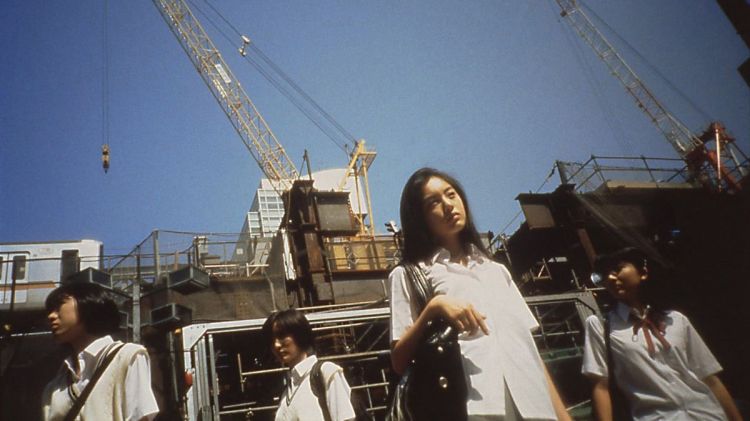
The purpose of a lock, at least far as those on water are concerned, is to keep everything on an even keel and protect the surrounding area from flooding. From the lock’s point of view it might be a thankless task, people never notice you’re there unless you’ve somehow failed at your job but the lock is ever present and always about its duty even if it might be difficult to understand. For all of these reasons, the heroine of Kazuhiro Nakamura’s gentle indie drama had come to think of her father as the titular Amalock (あまろっく) but often resented him for it, seeing him only as lazy and irresponsible.

For Ryutaro (Tsurube Shofukutei), meanwhile, laughter was the only way to make life bearable. His motto was to always enjoy the things that happen in life be they good or bad which is why he puts out a congratulations sign when his grown up daughter Yuko (Noriko Eguchi) returns home after being made redundant. Despite being good at her job and in receipt of several commendations for her work, Yuko is simply not pleasant to be around and creates tension in the office with her grumpy aloofness and tendency to make younger male members of staff cry in front of her. 

The implication is that Yuko became the exact opposite of the father she thought was feckless and of no use to anyone, yet mainly finds herself lying in front of the TV in a tracksuit mainlining snacks exactly as he had done when she was a child. Seemingly trapped in an intense depression, she makes no attempt to find new work for eight years, instead being supported by her father’s moribund ironmongers. The surprise news that he plans to remarry 20 years after her mother’s death to a woman barely 20 who works at the townhall sends shockwaves through her life and turns her into a petulant, resentful teenager who can’t accept her new stepmother.

The situation is of course ridiculous. Yuko is almost 40 and Saki (Ayami Nakajo), Ryutaro’s new wife, makes no attempt to wield authority over her beyond the well-meaning attempts to introduce potential husbands more because she thinks it would be nice for her to have someone than she wants her out of the house. Even so, Yuko’s problem is that she can’t understand the way her father works and that his cheerful attitude to life has value to those around him who are buoyed up by his friendliness and easy going nature even when times are hard. Like the Amalock, he’s always been there quietly supporting her despite her scorn and resentment, preventing her from becoming overwhelmed by the floodwaters of life tragedies.

In his way, he’s done something similar for Saki who ironically only ever wanted what Yuko could have had in a happy “harmonious” family having experienced a series of troubles of her own. Saki honours Yuko’s mother’s memory and includes it in her vision of the “family,” but struggles to get through to Yuko who remains difficult and resentful unable to see the value in the kind of life that Saki wants or in herself as human who might benefit more from interacting with others. The twin stressors of unexpected tragedy and a tentative marriage proposal from a man who turned out to know her little better than she thought begin to shift her perspective allowing her to see what it really was her father brought to the world and what she might bring to it too if only she were less serious about things that don’t really matter.

That is after all how you find your way to a harmonious life, becoming an Amalock for others who can also be an Amalock for you and might be willing to make a few compromises to make that happen. Set in the tranquil town of Amagasaki, Nakamura’s gentle tale captures a little of life’s absurdities along with the simple power of good humour to make life easier to bear. Rooted in tragedy as it may be, Ryutaro’s philosophy of making life a celebration has its merits and ones which are not lost on a newly enlightened Yuko becoming more and more like her father but also like herself at the heart of a harmonious family.


Amalock screened as part of this year’s Osaka Asian Film Festival.
Original trailer (no subtitles)

Snowdrop (スノードロップ, Kota Yoshida, 2024)

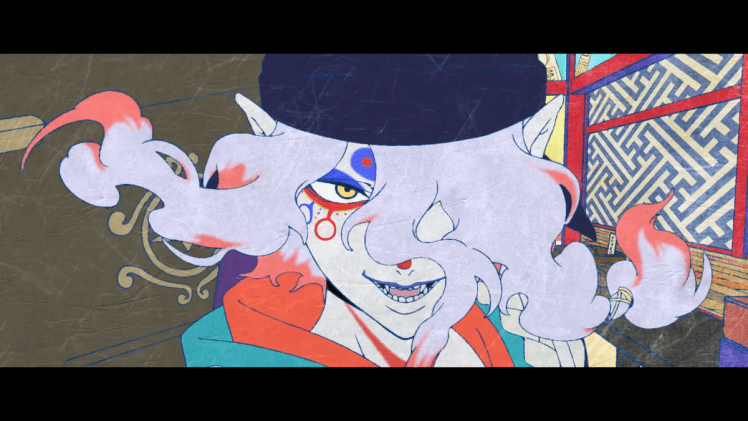
As the heroine of Kota Yoshida’s Snowdrop (スノードロップ) says close to the end of the film, you can become used to living in miserable circumstances and bear it because it is your normal but being suddenly confronted by them does nothing other than compound your misery. At least that’s how it seemed to her while attempting to register for social security payments after her father suffers a workplace accident and needs surgery they can’t afford in order to be well enough to be employed and earn money. 

Then again, her family circumstances are a little unusual in that her father, Eiji, left when she was little only to return 25 years later and ask to be taken in again swearing he’d work hard. Nearly 20 years after that, Naoko (Aki Nishihara) has had to give up working to care for her mother who has advanced dementia and requires round the clock care leaving Eiji as the only breadwinner though he is also elderly and working only as a newspaper delivery man which already makes it very difficult for them to make ends meet. It’s Eiji’s boss who suggests they apply for government help so that Eiji can get treatment for the gout that’s affecting his legs and get well enough to work again, though it’s clear that the family feel a degree of shame about the idea of accepting assistance even though as social worker Munemura points out it’s something that’s available to everyone should they ever need it.

The problem is however that you have to prove that you’re struggling which can be a long and difficult process. Naoko later describes it as a kind of humiliation, that she was forced to parade her penury and by doing so was confronted by the misery of her circumstances. Munemura describes her as a very earnest woman and is impressed by the way she meticulously fills in all the correct forms while the house, when they come to inspect it, is tidy and well kept (something which might actually go against you in other countries) even if they’re eying up her car and wondering if she really needs it. Munemura also sympathises with her on a personal level, realising from the forms that Eiji must have been absent from the family for an extended period and that they suffered because of it while it must also have been hard for Naoko caring for her severely ill mother alone for over 10 years.

Naoko herself has a largely beaten down, defeated aura in which she’s given up on the idea of a future for herself. She later describes caring for her mother as its own kind of escape in that she always found it difficult to get along with other people and never felt confident at work so being a carer became a kind of identity for her that she also feared losing if they were successful in their application and were able to secure nursing assistance for her mother. As well-meaning as Munemura is, she is not perhaps in the position of being able to see or deal with all sides of the issues someone like Naoko faces and is therefore shocked by the dark place her despair eventually takes her. Munemura faces a similar issue with a woman in her 70s whose claims that the cleaning job they insisted she take was simply too difficult for her at her age is treated with less than total sympathy by her slightly more cynical colleague.

A largely unexplored subplot in which it’s implied there was another sister who was given up because of the father’s abandonment and the family’s poverty hints at a deep-seated childhood trauma but also fissure within the family itself as Naoko explains her actions solely with the justification “we were a family” as if she too feared being left behind or abandoned even while her older sister has evidently been able have a family of her own though is also very sympathetic towards Naoko and in no way holds her responsible anything that happened. All she really wanted was an escape from her misery, which she may in a way get with the fresh shoots of a new life already visible to her if only she can embrace them. Shot with a detached naturalism, Yoshida’s drama is often bleak though does not lack for empathy and especially for those like Naoko who are largely left to deal with their misery all alone.


Snowdrop screened as part of this year’s Osaka Asian Film Festival.
Original trailer (English subtitles)

The Lyricist Wannabe (填詞L, Norris Wong, 2023)

Sometimes a dream might have come true only we never really noticed. In Norris Wong’s autobiographically inspired drama The Wannabe Lyricist (填詞L), a young woman battles her way towards becoming a Cantopop songwriter yet perhaps she already is one by virtue of her constant act of lyric writing. What she craves is the validation of having a song published, yet experiences setbacks at every step of the way that encourage her to doubt her talent or the right to continue chasing her dreams.

At a particularly low point after being taken on by a music producer to work with a spoilt influencer who’s getting studio time as some kind of favour, Sze (Chung Suet Ying) is told that her lyrics are no good and that after struggling so hard for six years perhaps she ought to take the hint and accept she isn’t suited to this line of work. It’s an act of intense cruelty, though one in part motivated by a well-meaning faux pas. In her excitement, she told the influencer she’d write lyrics for her album for free just to be published, but the palpable sense of desperation seems to have put the influencer off unable to have confidence in the work that Sze herself has devalued.

She encounters something similar during a partnership with an aspiring pop star who says he likes her lyrics but then drops the bombshell that he plans to sing in Mandarin because it’s a bigger audience. Ironically, on a trip to Taipei to sell his album she’s told that his accent is no good for the local market and while they like the song she worked on she later realises that they hired another lyricist for “real” release without even telling her. What’s more, tones don’t matter while singing in Mandarin whereas lyric writing in Cantonese is a painstaking process of trying to ensure that the tone of the word fits the melody. Aside from its political implications, not only does the pop star’s arbitrary decision to just sing it Mandarin ruin the lyrical flow she spent so long perfecting but entirely disrespects her work.

After deciding to take a break from trying to make it in music, Sze gets a job working at a ridesharing app startup where she’s roped in to create a jingle but once again her hopes are dashed when the business strays into a legal grey area and several of the drivers are arrested. While the app’s creator silently cries in his office, his female colleague ponders going somewhere else, “anywhere that doesn’t punish dreamers” which seems like a nod not only towards an oppressive capitalism that values only marketability but equally the increasingly oppressive atmosphere of the nation’s political realities. In a way this is what Sze ends up doing too, putting geographical distance between herself and the failure of her dreams by returning to the land which as the farmer says never lies to you, you reap what sow.

Yet for all her drive and perseverance there are others who view Sze’s obsession with her dreams as selfish and self-involved complaining that she rarely considers the feelings of others and neither notices nor cares if she may have hurt or inconvenienced them. She’s told that her lyrics are hollow because she lacks life experience but also is incapable of empathising and cannot see anything outside of her quest to become a lyricist. She watches other people move on, her brother getting married, friends enjoying career success etc while she’s still stuck looking for her big break only for something to go wrong just as everything was about to go right.

Wong signals the playful qualities of her fantasies though use of onscreen illustrations and even a karaoke-style video along with the nostalgic quality of the early 2000s setting of Sze’s schooldays with its MSN messenger and ICQ. Sze may be “dragged along by the melody” in more ways than one as she tries to make peace with her dreams and her future and find some way of living in harmony with the rhythms of the world around her but eventually comes to realise that she was a lyricist all along no matter what anyone else might have tried to convince her she was.


The Lyricist Wannabe screened as part of this year’s Osaka Asian Film Festival and opens in UK cinemas 15th March courtesy of Cine Asia.

Original trailer (Traditional Chinese / English subtitles)

Blue Imagine (ブルーイマジン, Urara Matsubayashi, 2024)

Over the past few years, there have been a series of scandals exposing a culture rampant sexual harassment and abuse which has long been an inextricable part of the Japanese film industry. Just recently, a director very like the one in Urara Matsubayashi’s indie drama Blue Imagine (ブルーイマジン) was arrested following several accusations of sexual assault though like his film counterpart insists that he has done nothing wrong and all his relationships were consensual. 

This is the battle that the women face. When Noeru (Mayu Yamaguchi), an aspiring actress, tries to take her case to the press she’s first met by a scruffy reporter who puts it to her that she willingly participated in a game and her problem is she didn’t get her half of the bargain rather than having been victimised by a predatory man. The reporter claims that they have women like that in the office who are keen to accompany older men for drinks or dinner in the hopes of getting ahead. In retrospect, one could see Tagawa’s treatment of her as a kind of grooming. He love bombs her with praise for her talent and then half promises her a leading role in his upcoming film before attempting to take advantage her. He insists he’s done nothing wrong, and perhaps on some level believes he simply seduced the women he assaulted unable to see how the power he wields over them prevents them from refusing or resisting him. Then again, he and his producer routinely engage in misogynistic banter and wilfully give false hope to the actors who take part in his workshops hoping to bolster their chances of landing professional gigs. 

Eventually it’s this wilful crushing of dreams that begins to get to Noeru along with the knowledge that Tagawa is still out there probably doing the same thing to other women aided and abetted by a misogyinistc culture that prevents the women from speaking out through shame and social stigma. When Noeru tells her brother, a lawyer, what happened to her he snaps back that this is why he didn’t want her to become an actress as if she’s somehow brought it on herself. A female reporter who treats their case with sympathy encounters something similar when her editor is relcutant to publish because to him it’s just how things work in the entertainment industry so there’s not really a story in it. 

Yet the waters are muddied a little by a sub plot revolving around the concept of compensated dating or as it’s now called “sugar dating” in which young women “date” wealthy older men who provide them with material goods rather than money. One of Noeru’s friends encounters the dangerous side of the arrangement when her Daddy becomes violent and possessive, threatening to leak nude photos of her if she chooses to break up with him. Her friend Yurina (Yui Kitamura) disapproves of what she’s doing which is in effect what the actresses were accused of in engaging in, a solely transactional relationship. A young man Noeru meets who lives in the floors above the refuge she later begins helping out at sees some of their fliers but immediately says they aren’t really for him, which seems like an ironic comment though it’s also of course true that men also suffer sexual harassment from both men and women while facing a similar but different level of social stigma to the women who are just beginning to find the strength to speak out thanks to their newfound solidarity.

Much of this is due to the efforts of Michiyo who runs Blue Imagine to support women who’ve suffered sexual assault or violence. Her Filipina barmaid Jessica also suffered domestic abuse at the hands of her Japanese husband which was compounded by her vulnerability as foreign national knowing her husband could use her immigration status as a further tool to control her while she had little access to help or support.Yet it’s she who tells Noeru that silence is also complicity and she should speak out to the extent that she is able in order to improve the situation for women in the film industry or at least put a stop to Tagawa’s abuse of power.

Confronted at a press conference for his film that is still shockingly going ahead, Tagawa denies everything while the leading actress is forced to say that he was a perfect gentleman only later asking why he and the producer bullied her into a nude scene that wasn’t in her contract or why it was so important for her to take off all her clothes. Pressed by the women for a explantation for his assaults he offers only that his sexual desire was too powerful. The female reporter and her colleague bemoan the lack of progress over lunch, but also refer to another scandal about a minister and his secretary though it turns out not even to be the one the female reporter thought they were talking about. 

In the end, however, it’s less about changing the film industry or in indeed society at large as it is about solidarity between women as symbolised by the closing scenes in which everyone at Blue Imagine sits down to dinner together to enjoy traditional Filipino food prepared by Jessica and another woman who arrives at the refuge after suffering domestic violence. Through bonding with other women in similar positions and making the decision to fight back, Noeru comes to make peace with herself and begins moving past her trauma determined to support other women in the hope that something will finally change. Shot with a down to earth naturalism, the film may at times feel bleak and filled with a sense of despair yet displays its own resilience and eventual serenity born of female solidarity and long-awaited self acceptance,


Blue Imagine screened as part of this year’s Osaka Asian Film Festival.
Original trailer (English subtitles)

July Rhapsody Coming to Cinemas in the US & Canada May – July 2024

Cheng Cheng Films will be bringing the 4K restoration of Ann Hui’s classic July Rhapsody to cinemas in the US and Canada this May to July ahead of a VOD release later in the year.

Featuring both the final performance of screen icon Anita Mui and the debut of Karena Lam, the film centres on the figure of a dejected teacher on the brink of 40 who finds himself drawn transgressively towards one of his students while evidently disappointed by the way his life has turned out. Directed by Ann Hui and scripted by Ivy Ho (Comrades Almost a Love Story) the literary drama is a poignant and poetic exploration of yearning and thwarted desire. Our review.

Exact screening dates will be announced in due course. Follow Cheng Cheng Films on Facebook, Instagram, and X (formerly Twitter) for all the latest news.