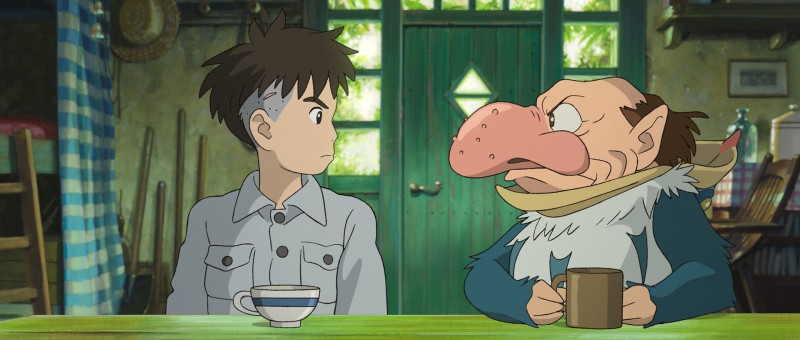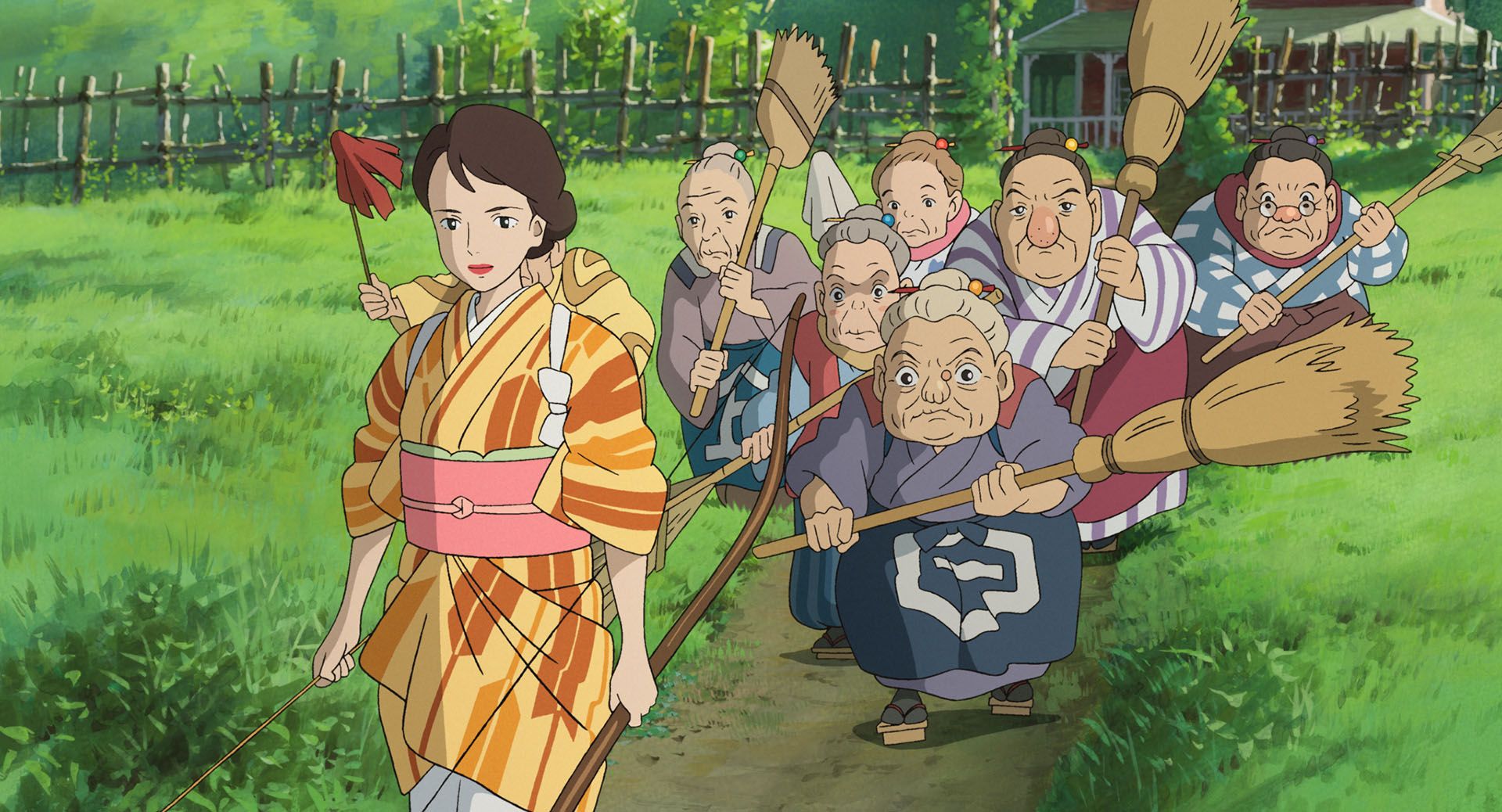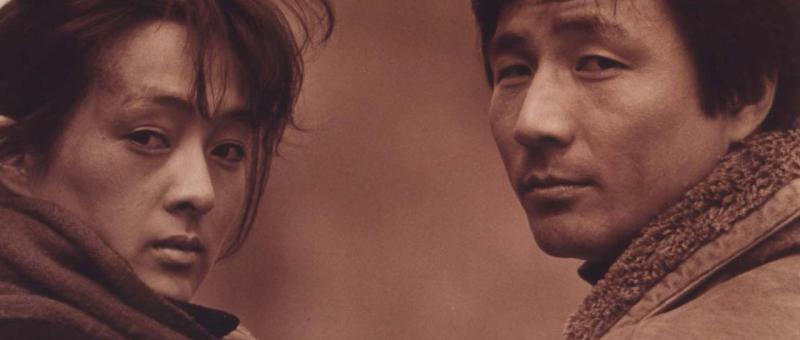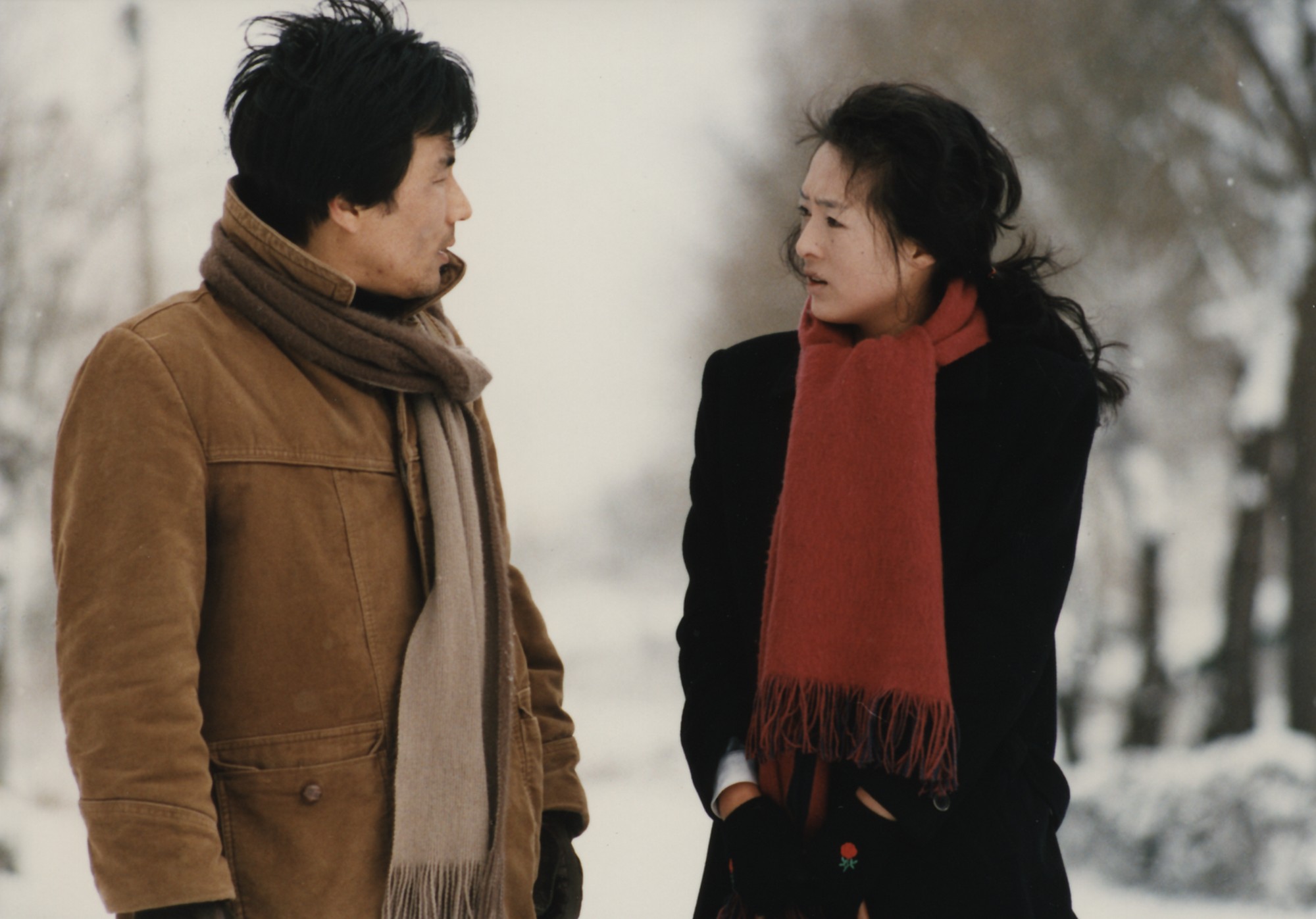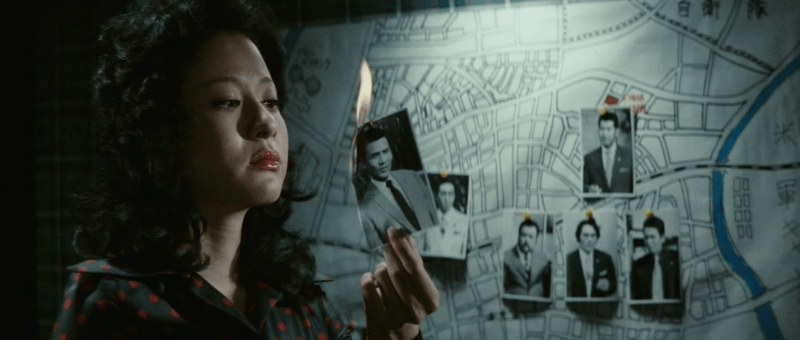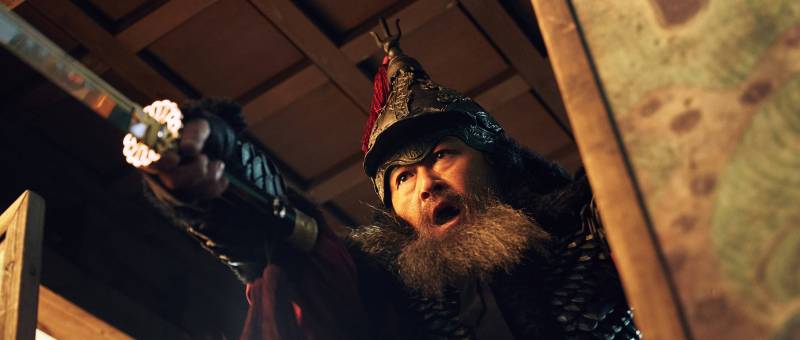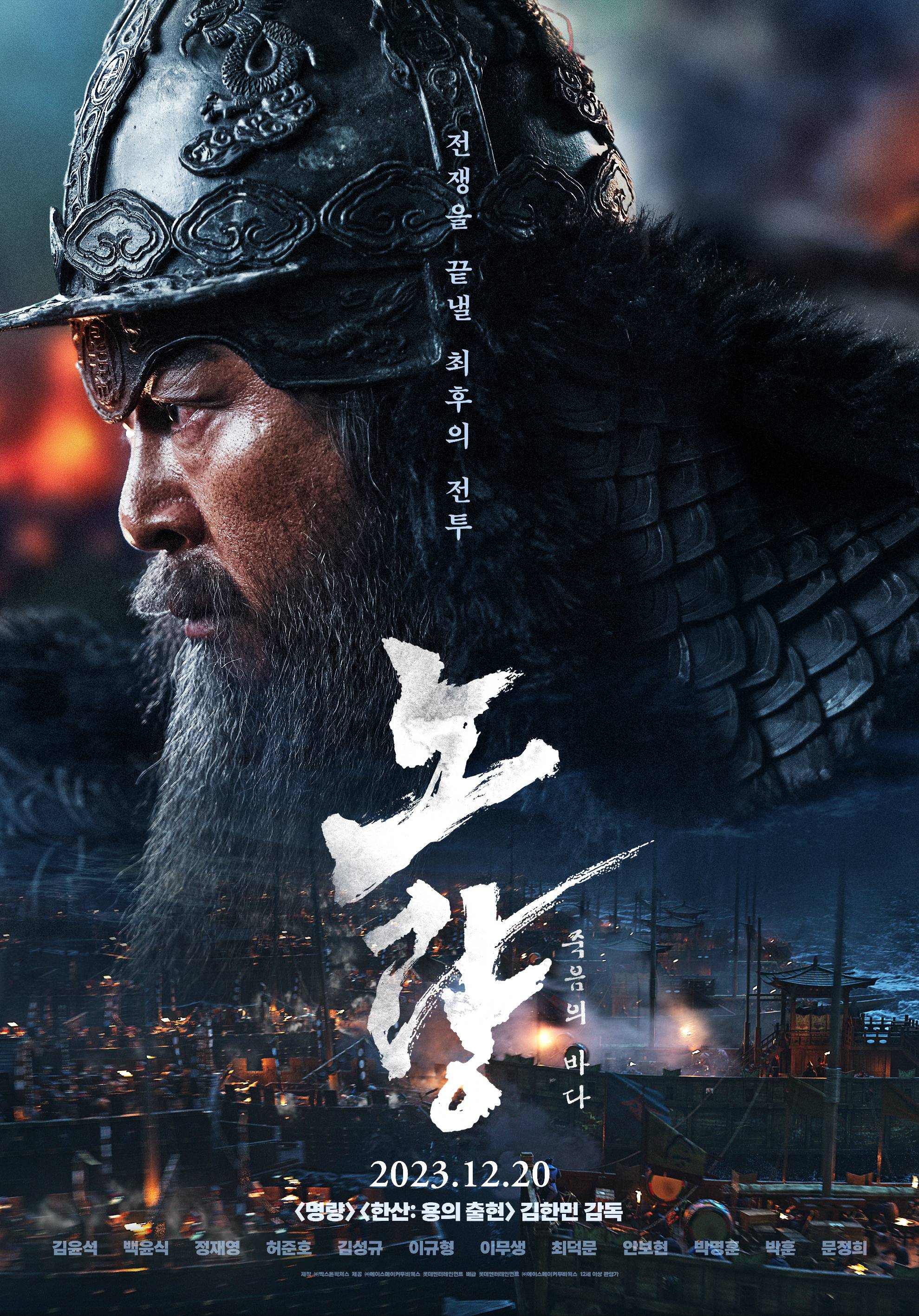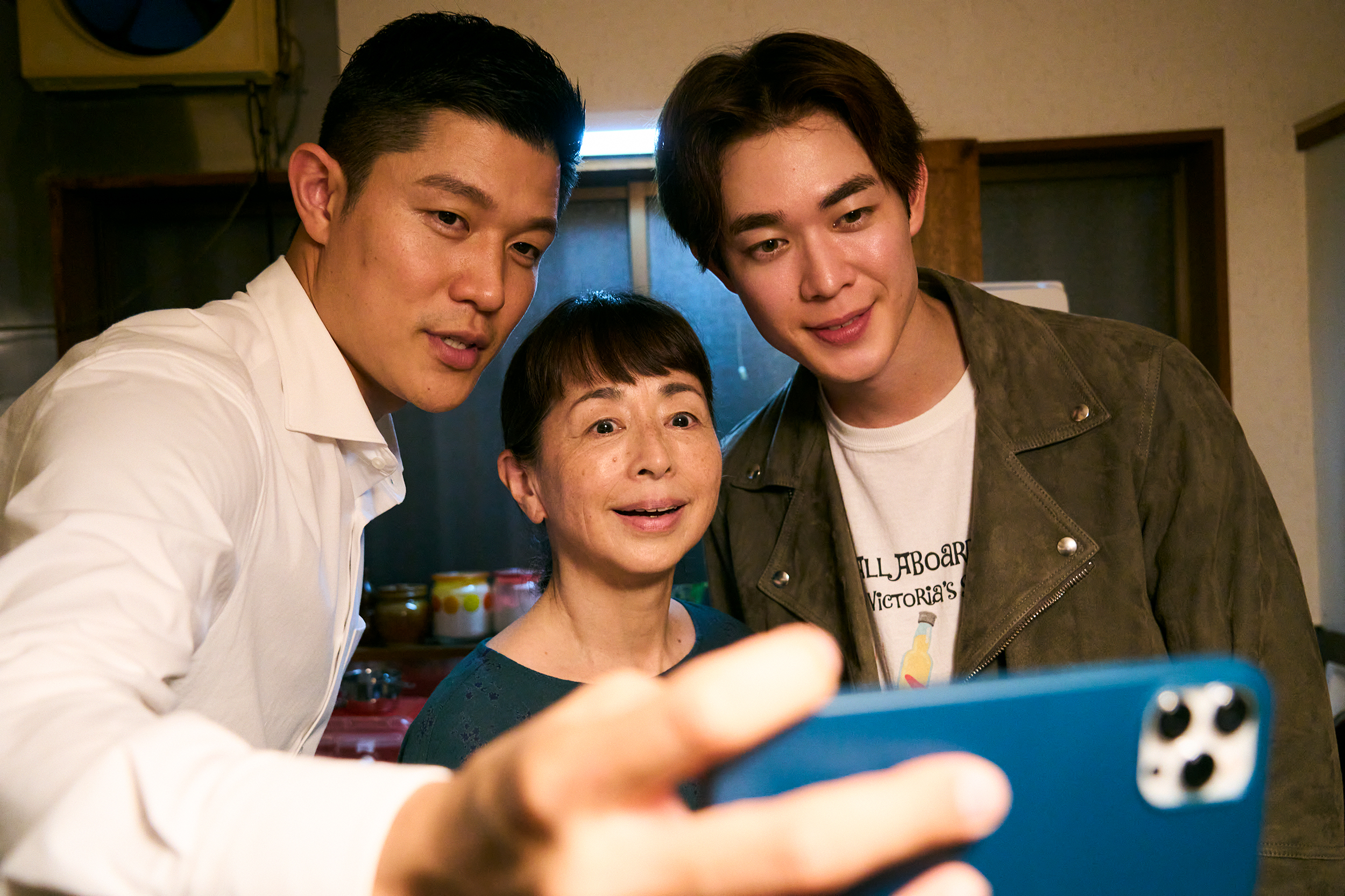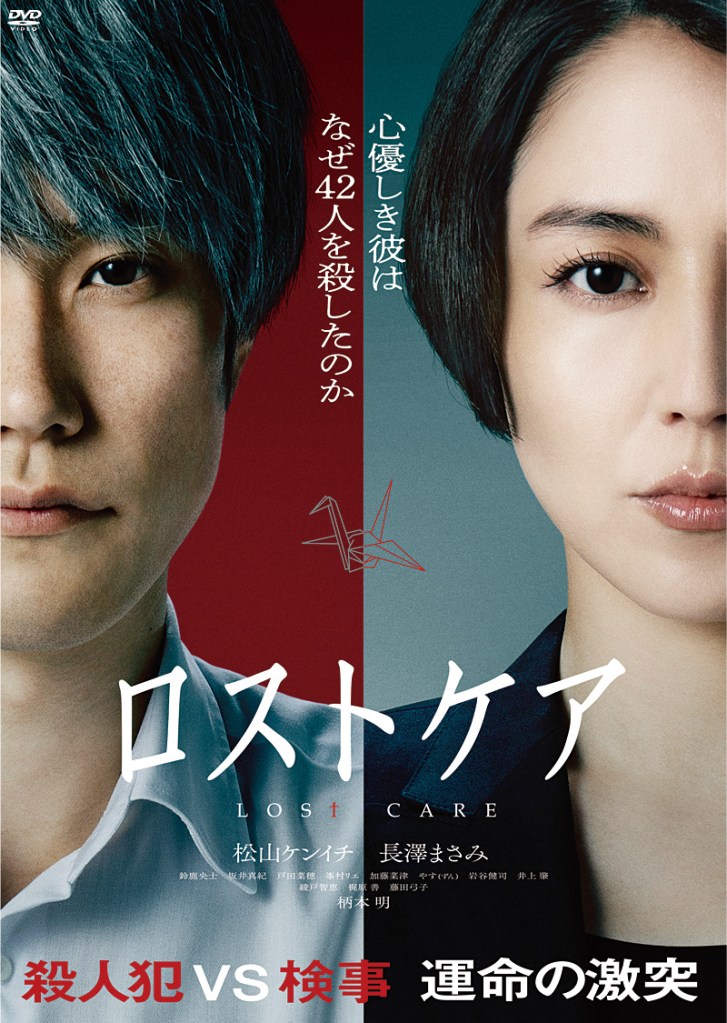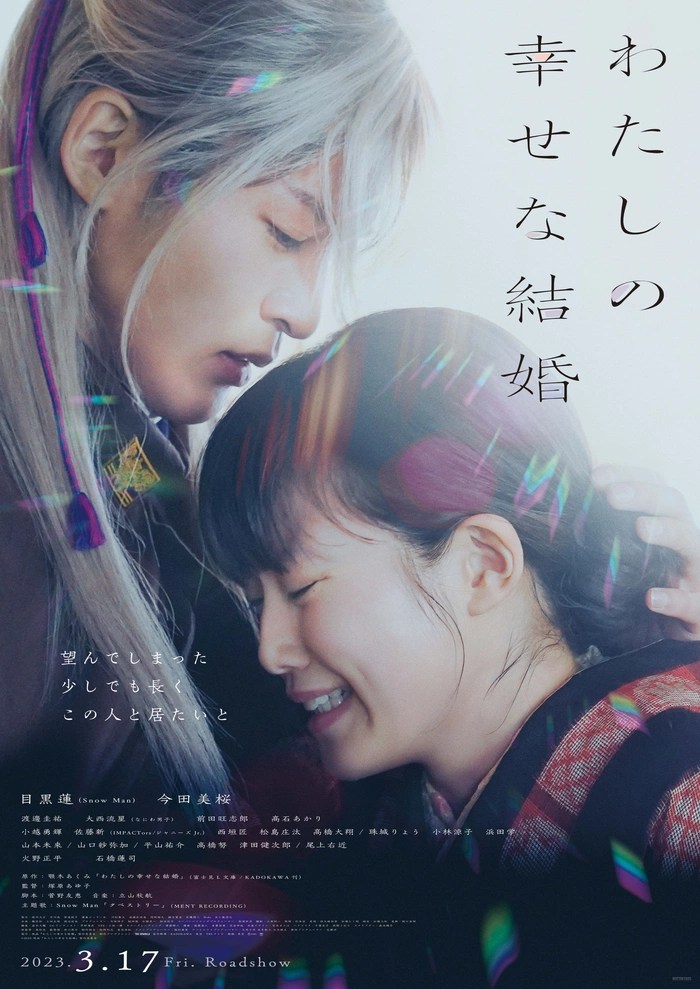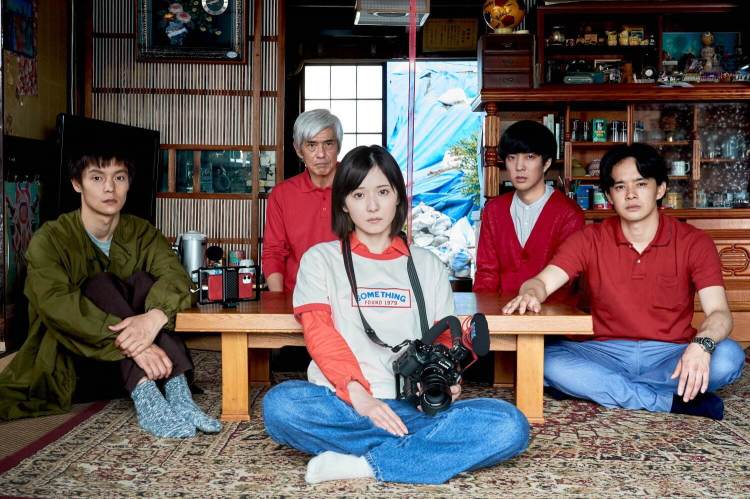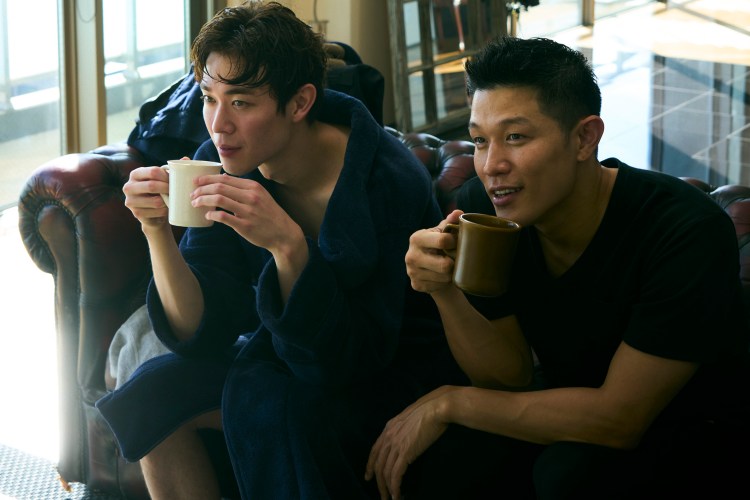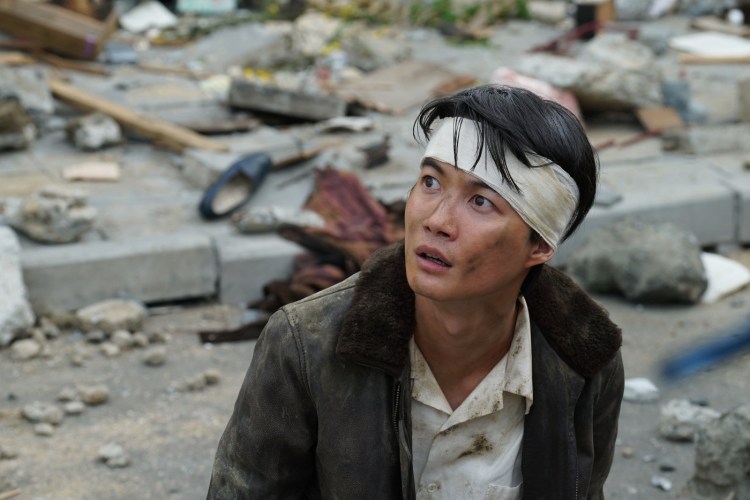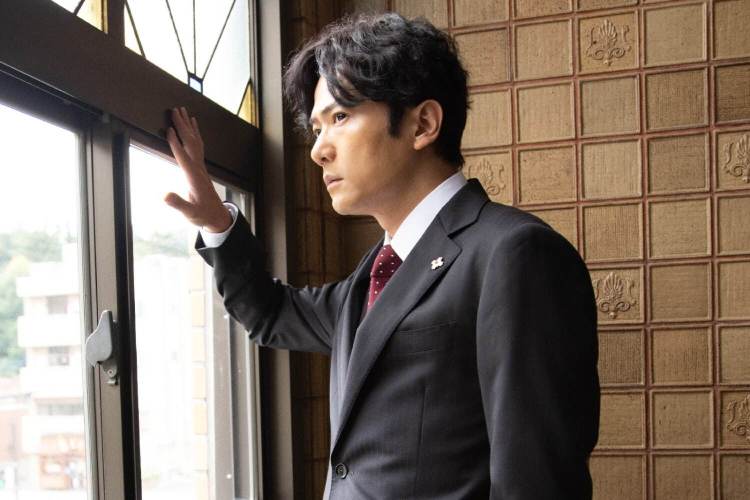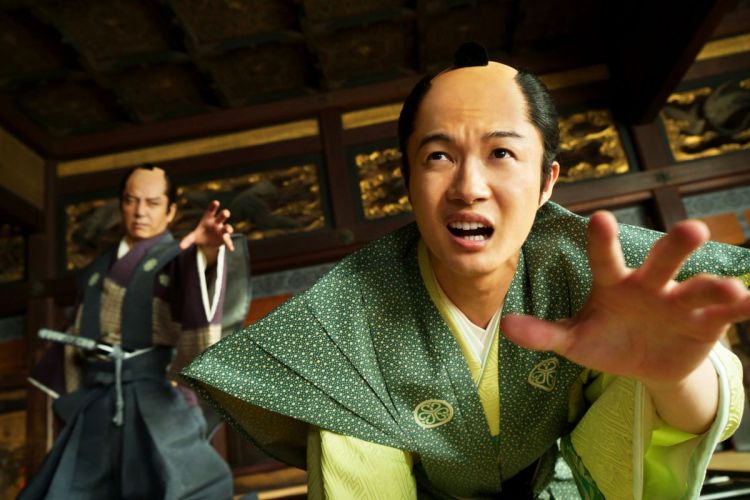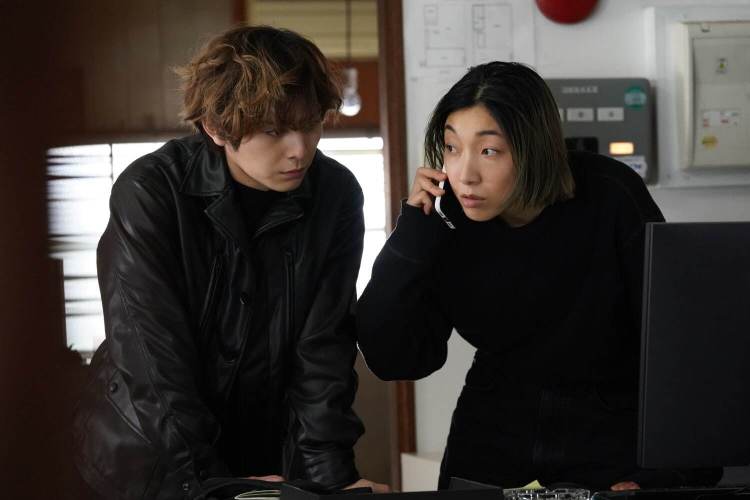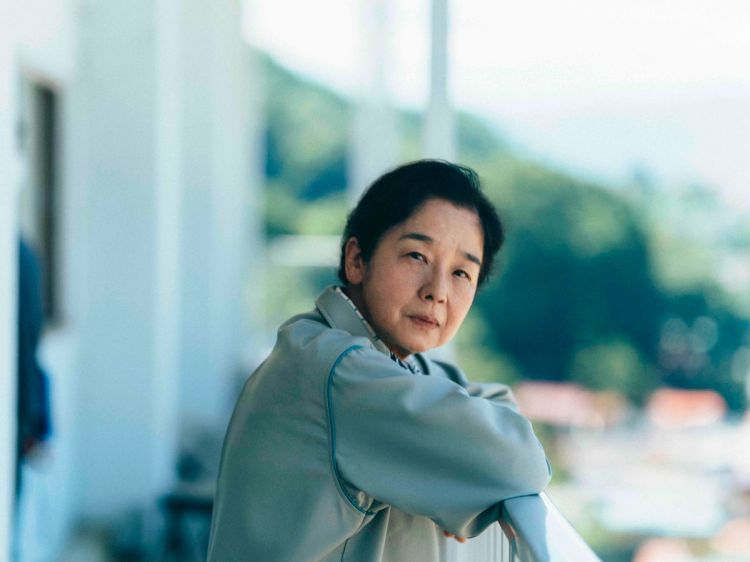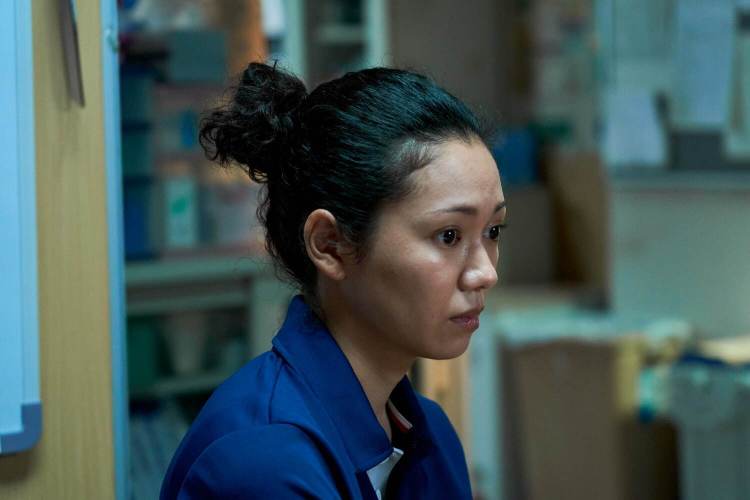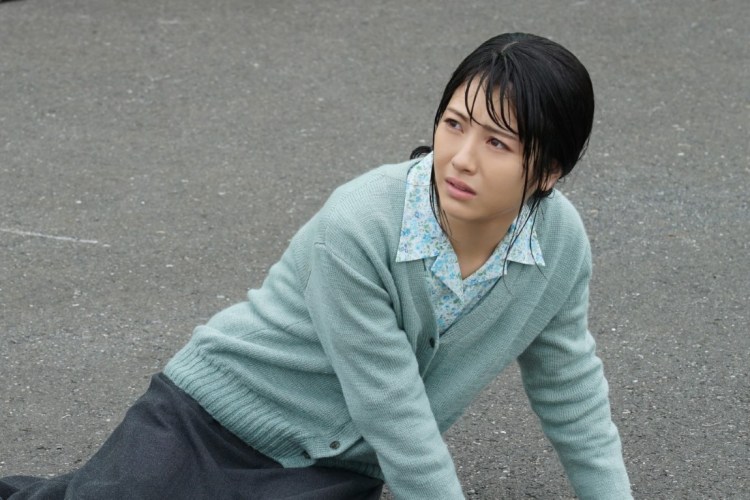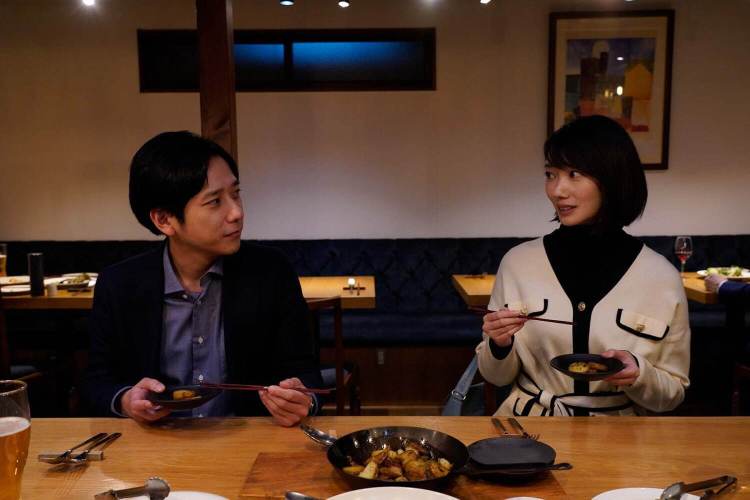
Door (Banmei Takahashi, 1988)

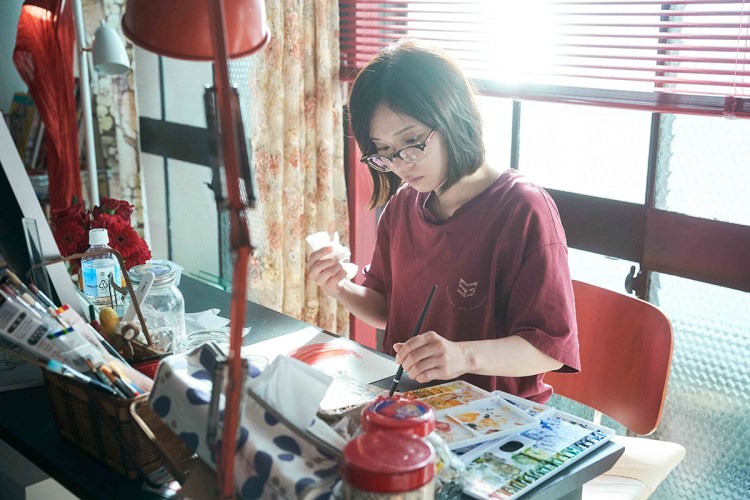
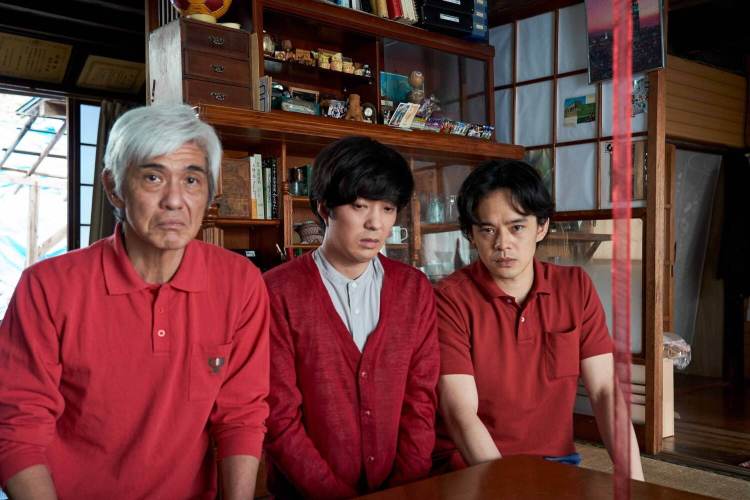
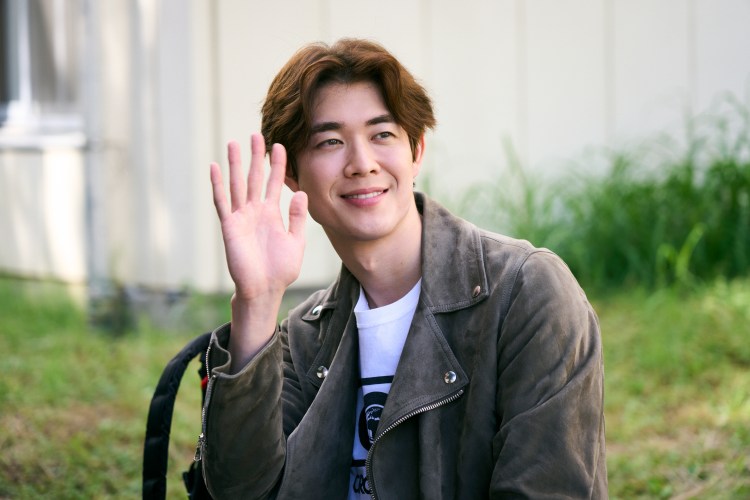
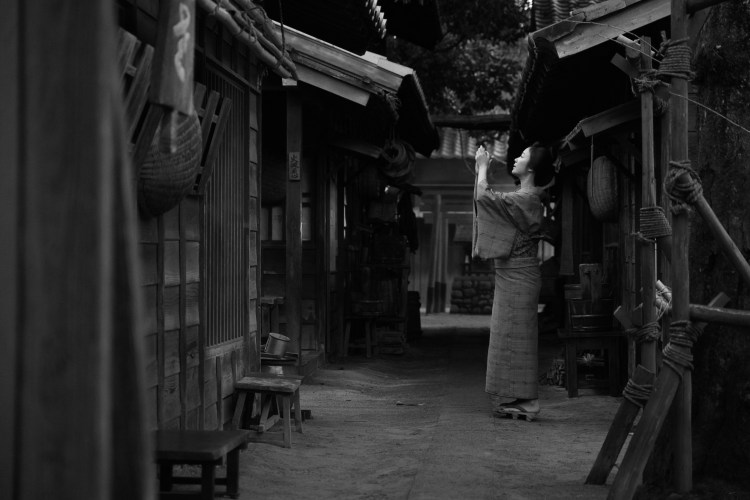
You like to think you’re safe behind closed doors, that nothing that happens behind them is anybody’s business and you’re free to be yourself. But a door is as much about keeping things in as it is about keeping them out and perhaps you’re not as in control of it as you thought. Arriving at the tail end of the Bubble era, Banmei Takahashi’s giallo-esque home invasion thriller is at heart about insecurity, a feeling of anxiety and ever impending doom under the watchful eyes of a judgemental society. 

At least, Yasuko (Keiko Takahashi) feels the eyes of her neighbours keenly on her, nervously attempting to live up to the role that’s been assigned to her as a moderately affluent housewife in a nice middle-class area that is nevertheless full of hazards even if many of them are social and psychological rather than directly physical. We can feel her discomfort when an anonymous neighbour passive aggressively returns her rubbish to her front door when she attempts to throw it out on the incorrect day, her husband’s (Shiro Shimomoto) advice simply to make sure she follows the bin day timetable correctly in the future. Another neighbour whose face is also not seen later stares at her when she drops a tissue that has been placed in her letterbox by a salesman (Daijiro Tsutsumi) who is harassing her, forcing Yasuko to pick it back up and take to her own apartment to dispose of lest she be judged for failing to obey this simple rule of urban living despite realising that the tissue likely contains unpleasant bodily fluids. 

The great mystery is why Yasuko, who clearly finds the salesman’s attentions threatening, does not immediately hang up when he calls her but continues to listen to his ominous conversation which heavily implies he is close by and watching her. Previously he’d daubed an obscene message on her front door branding her as “sexually frustrated” which as it turns out may not be far off the mark. Her husband is largely absent and often works away. When he returns she tries to wake him up after putting their son to bed, but he’s dead to the world and leaves the next morning having explained that he’ll be away the next three nights due to a colleague falling ill. Among the junk mail delivered to their flat were a series of business cards for cabaret bars that he jokingly suggested keeping, though as it turns out he really is at work and not spinning a yarn for a three-day jaunt with a mistress even if you could make a case that he’s in an extra-marital affair with his career. Yasuko almost says as much when she calls and tells him she’s scared but he refuses to come home, crying out that he obviously has no regard for his wife and child. 

It’s clear that the economic demands of the late Bubble era have endangered the traditional family even as they’ve provided a level of financial comfort that enables Yasuko to live in this “nice” apartment even if it’s perhaps only ordinarily nice for a middling middle-class couple living a stereotypically middle-class suburban life. Yasuko’s sense of anxiety partly stems from being constantly observed by those around her in an alienating urban environment but also suggests an insecurity in her social status which is after all dependent on a financial security which may be about to disappear as the Bubble bursts. The home is also a burden, and the space behind the door one of isolation rather than safety that leaves her feeling vulnerable and alone in the continual absence of her husband. 

Tellingly all of the voices she hears other than his (and their son’s) are filtered as if they were speaking to her via telephone. She has two handsets in her home, one belonging to the phone itself, black with an answering machine, and the other to the intercom, white and wall-mounted, which is intended to give her control over her door but which in the end offers little comfort just like the near pointless chain-lock intended to keep strangers at arm’s length but in reality easily breakable. In this society of ultra-politeness simply not answering an urgent knocking may not be an option, but behind the door Yasuko is also lonely so perhaps those nuisance cold calls telling her she’s won a cruise, encouraging her to take up English conversation classes, or maybe join a cult, are not really so much of a nuisance at all simultaneously interrupting her loneliness while also penetrating the protective sanctuary of the private space of the home much as the salesman will eventually do in physically breaking a protective barrier. 

When Yasuko fights back, she does so with a housewife’s weapons such as carving forks and chopping boards even picking up her son’s rollerblades to enlist him in the resistance. Takahashi films the final confrontation from above in a complex aerial shot that suggests a literal cat and mouse game as if Yasuko were intent on ejecting a stubborn rodent from her home, the rounded, doorless entranceways between rooms almost like oversized mouse holes in a scene from a cartoon. The question is whether Yasuko can in fact protect this space, a space which represents her family, in overcoming her own anxieties and the latent dark desire which draws her towards her stalker in her loneliness and lack of fulfilment. Yet the answer doesn’t quite lie in perfecting the persona of the perfect housewife even if it could on one level be argued that she’s saved by another kind of male protector but in taking care of business and reasserting her control over the space by means of resetting its boundaries very much on her own terms.


Door is released in the UK on blu-ray 30th October courtesy of Third Window Films.

Restoration trailer (English subtitles)

Coo-Coo 043 (一家子兒咕咕叫, Chan Ching-lin, 2022)

Why would a pigeon, or a child, return to you if you failed to make them a home? The enigmatic title of Chan Ching-lin’s gritty familial drama Coo-Coo 043 (一家子兒咕咕叫, yījiāzi ér gū jiào) refers to a homing pigeon that unexpectedly arrives seven years late but bringing with it less joy than an unwelcome confrontation with the unresolved past. A tale largely of male, patriarchal failure the film revolves around the taciturn figure of a middle-aged man obsessed with pigeon racing who attempts to build a coop an in abandoned field for the birds he no longer has means to care for even as his own home crumbles.

Old Ching (Yu An-shun) appears to be a broken man who’s never quite recovered from the massive success of having won a lot of money on a pigeon race several years previously though most of his birds since have never returned at all. Gambling is technically illegal in Taiwan, and the sport of pigeon racing is itself a little taboo though popular enough at least in the small town where Ching lives. It appears the family is mostly supported financially by his second wife Ming’s (Yang Li-yin) banana farm, while ironically enough his daughter Lulu (Rimong Ihwar) dreams only of flying the coop for a less depressing life somewhere else. Part of the reason for the difficult atmosphere in the family home is the sense of absence left by Shih, Ching’s son from his first marriage who disappeared on his way to school aged 12 more than a decade earlier.

Ching continually blames Ming for Shih’s disappearance because on that day she did not drive him to school as usual, ignoring the fact that she stayed to clean up the house after he trashed it in a violent fit after losing at gambling and told the boy to walk. Ching’s irony is that he is always waiting for something to come back to him, but never gives any reason why it should. Though he is often seen tenderly caring for his pigeons, he treats his family members with coldness and contempt and is on occasion violent towards Ming who has a sideline working as part of a troupe conducting death rituals and is considering leaving him. She takes pigeon 043’s miraculous return after seven years as a sign that they should look into having Shih declared legally dead to help them accept he won’t come back but Ching refuses to do so and continues to wallow in his own violent and angry grief unable to see that it may be him that drove his son, and later his daughter, away.
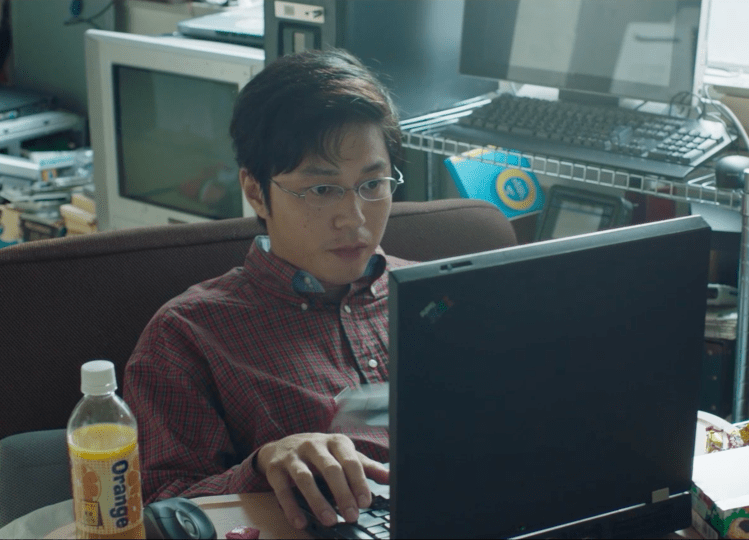
His limp also hints at a violent past as do his ties to a group of local gangsters who seem to be well into the pigeon racing scene, while gang young toughs make a living kidnapping birds and ransoming them back to their owners or else killing them for fun if they don’t pay. Ching finds a surrogate son in the orphaned Tig (Hu Jhih-ciang), Lulu’s sometime pigeon-catcher boyfriend, but fails to see him as such until it’s too late. Unlike Lulu, Tig is a man looking for a coop. He slides into the vacant space in the family longing to be accepted, but finds only coldness and abandonment left behind while everyone else flies away in search of a better life. 

Often captured behind bars, the two men are just as caged as the pigeons though the kind that don’t fly away when the doors are opened. Some of those who leave do so for the after life, no longer seeing any point in continuing this miserable existence which shows no sign of improvement and unable to envisage any other kind of escape. Even Lulu’s flight to the city to become a nightclub dancer seems as if it may just be another kind of cage from which she cannot fly. Ching’s pigeon coop is eventually ruined by a more literal kind of storm, but mainly because he failed to protect it unable to look past his personal despair and indifferent to the vulnerabilities of his home. Bleak in the extreme, Chan paints a grim picture of life on the margins in rural Taiwan in which the wings of all have long been clipped and those who return do so only because they have nowhere else to go.


Coo-Coo 043 screened as part of this year’s London East Asia Film Festival.

Original trailer (English subtitles)

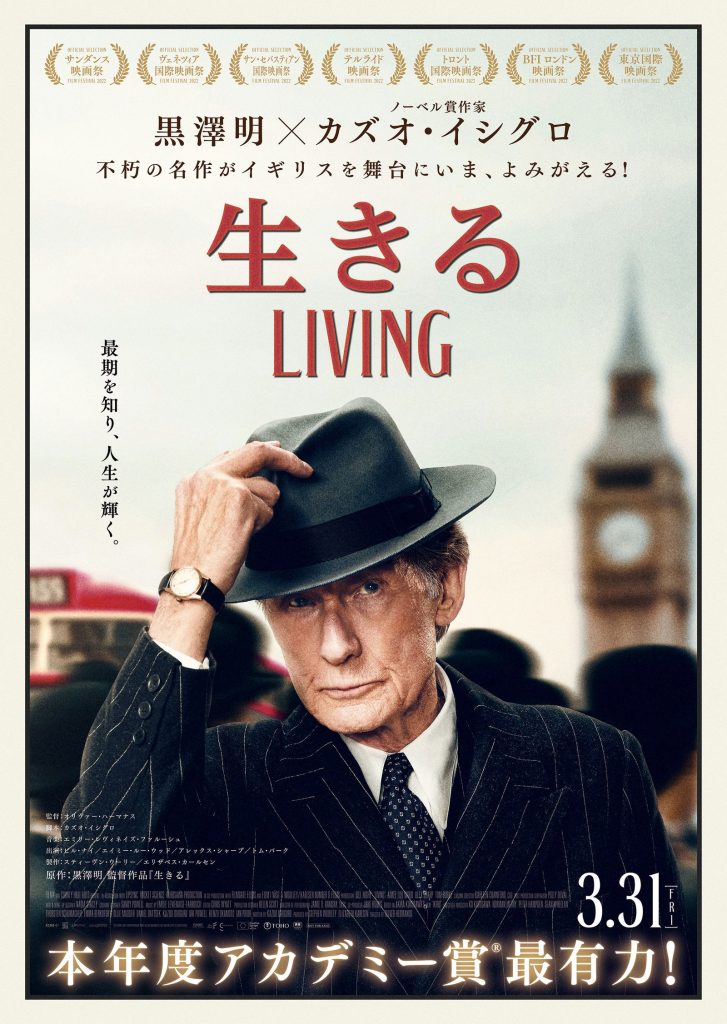
Perfect Days (Wim Wenders, 2023)

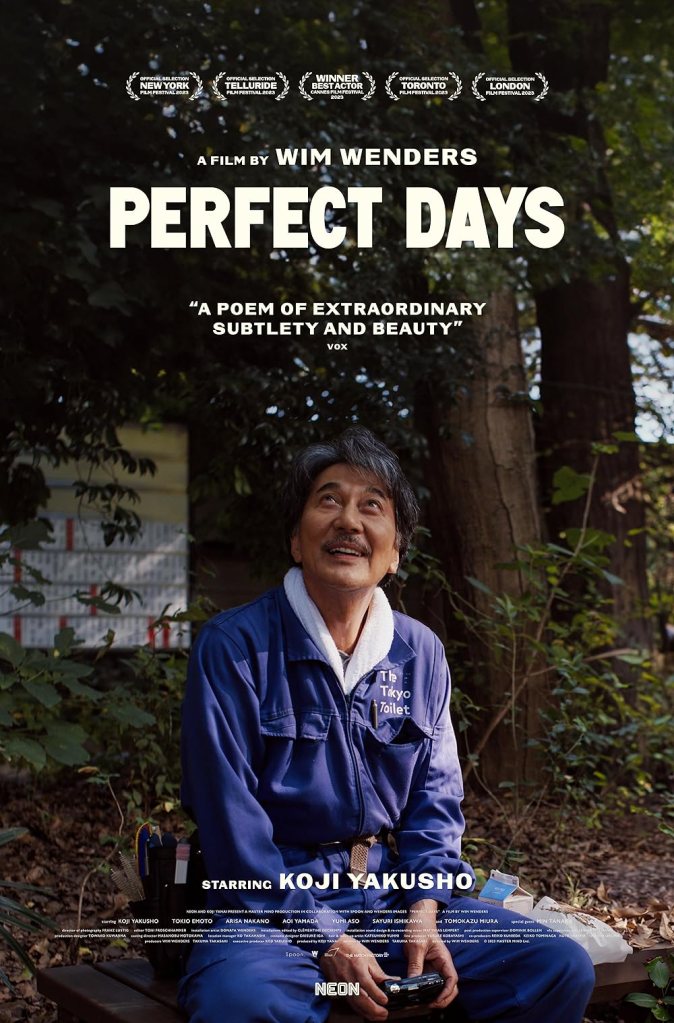
A man in late middle-aged quite obviously living in the past begins to wake up to the possibilities of change in Wim Wenders’ Tokyo-set drama, Perfect Days. Even so, Hirayama’s (Koji Yakusho) days may be pretty much the same but that doesn’t necessarily mean that his life is dull or even predictable while it’s clear that he manages to find joy in small moments of serenity even if he may also seem to be harbouring a great sadness. 

The irony is that Hirayama lives in a rundown postwar tenement that happens to be almost directly under the Tokyo Skytree which Wenders often cuts back to as if to signal the disparity between the rich and glitzy skyline of the contemporary city and the lives of those on its margins. Hirayama’s home has an almost eerie quality owing to the glowing purple light shining out of the window of his spare room where he nurtures tiny saplings back to health. The traditional-style two-floor flat has two tatami-mat rooms on the upper level, the other filled with books and cassette tapes amid an otherwise spartan interior. Before leaving for work each morning he brushes his teeth over the kitchen sink, the place has no bathroom, and meticulously takes up his belongings neatly placed in order on a shelf by the front door. 

Perhaps it’s this kind of order that Hirayama craves, clinging to the security of the usual and dedicating himself to his work with unusual rigour. A municipal toilet cleaner, he painstakingly scrubs each and every bowl and urinal, checking the nozzles on the bidet function and shining a mirror underneath to make sure everything is as clean and tidy as it could possibly be only for drunken salarymen to push past him and quite literally piss all over his hard work. Like many such workers, he attains a kind of invisibility and should anyone need to use the facilities while he’s cleaning them he’s obliged to step outside and wait before starting all over again. When he finds a little boy crying alone in a park toilet he takes him by the hand and tries to help him find his mum, only when he finds her she completely ignores Hirayama and even goes so far as to wipe the boy’s hand with a wet wipe. The boy’s little wave of thank you as they leave is the only ray of comfort and recognition. 

Yet for all that, it’s as if this the life Hirayama has chosen. He barely interacts with his chatty colleague Takashi (Tokio Emoto) who has a habit of rating everything out of ten and sees no value in his work, hardly bothering to do much cleaning at all while complaining that he has no money to romance the bar hostess he’s hoping to make his girlfriend. Takashi and Aya are fascinated by Hirayama’s collection of cassette tapes which he plays in his van, though Takashi more so for the commercial value that may be attached to them in a world in which everything old is new again and specialised stores in the trendy neighbourhood of Shimokitazawa trade exclusively in secondhand LPs and Sony Walkmans. Even so, Aya too appears to have her private sadnesses drawn to the voice of Patty Smith but pressing stop when the tape mentions suicide. The melancholy office lady in the park and an elderly homeless man who lives there too must have their own stories as unknown to Hirayama as his is to them. 

A surprise visit from a teenage niece suggests that he may have come from a relatively wealthy family with a tyrannical patriarch and that this ascetic life of his is a kind of rebellion or else or a refuge, but there’s a look of pain on his face when the landlady at his favourite bar (played by enka legend Sayuri Ishikawa) laments that she wishes everything could stay the same. Perhaps he’s tired of this very analogue life and its otherwise pleasant monotony as he further confirms for himself realising that it’s not right for things not to change as he engages in a game of shadow tag with another middle-aged man who’s evaluating his life after a terminal cancer diagnosis. In truth, the film risks straying into orientalism in its advocation of Japanese serenity in simplicity (something not helped by the final title card explaining the term komorebi) while the musical choices appear a little on the nose and the celebration of mundanity in Hirayama’s labour might otherwise seem flippant. Even so, Yakusho’s typically astute performance keeps the film on an even keel as Hirayama finds himself on a turbulent journey towards a “new world” of fulfilment and possibility. 


Perfect Days screened as part of this year’s BFI London Film Festival.

Original trailer (English subtitles)

Road to Boston (1947 보스톤, Kang Je-kyu, 2023)

The right to participate in a foreign marathon becomes a victory for the Korean in people in Kang Je-kyu’s sporting period drama, The Road to Boston (1947 보스톤, 1947 Boston). Skewing towards the nationalistic, the film finds two brands of exceptionalism colliding while hinting at the sense of destabilisation in a nation which has not only been divided but rather than the promised liberation only re-colonised by an entirely different military regime who insist that Korea is not a real country merely a protectorate. 

In 1936, Sohn Kee-chung (Ha Jung-woo) won a gold medal for marathon running in the Berlin Olympics but when he stood on the podium they played the Japanese anthem and flew the Japanese flag. They announced his name pronounced the Japanese way, and when Kee-chung covered the Japanese emblem on his uniform he was banned from sports and put under police surveillance. Japan had annexed Korea in 1910, and the victories were accredited to the Japanese Empire. The country had been liberated from Japanese rule at the end of the war, but the nation was divided in two with the Americans occupying the South and the Soviets the North. 

Part of Kee-chung’s bitterness is that his family are trapped over the border and he’s been unable to bring them South, but it’s also that he was not able to run “freely” under the flag of his nation or in his true name. Yet now that they’ve been liberated, it’s as if only the names have changed. Loutish American GIs make trouble in the streets bullying the locals much as the Japanese had while the nation in general remains poor. There’s a chance that Korea could compete in the 1948 Olympics in London, but they’ve been told they don’t qualify because Korea doesn’t really exist and even in the way it does it’s only for a couple of years so they have no track record of international competition, all their previous successes are still attributed to Japan. To qualify, they decide to enter the Boston Marathon, but are told there are additional hurdles because Korea is a “refugee country” and the authorities are worried they might just stay there. 

When they do actually arrive in the US, they get a similar attitude told that winning the Boston Marathon might help them gain US citizenship as if that were some ultimate prize they must be secretly longing for when all they want is to be recognised as Koreans. Because the Military government signed off on their participation, the shirts prepared for them carry American flags, but Kee-chung does not want his protege Yun-bok (Im Si-wan) to suffer the same fate as him and compete under a flag that is not his own as he outlines in a powerful speech to the person in charge of the marathon while cheered on by outraged Asian Americans who also suffer racism and discrimination in the so-called land of the free.

At the press conference, reporters ask offensive and embarrassing questions such as whether Korea has universities, newspapers, or even electricity. The US guarantor Nam-hyeon (Kim Sang-ho) also states that even when he says he’s Korean, people ask him if he’s from China or Japan while Yun-bok receives racial slurs from a runner representing America. America is also presented as the land of immoral capitalism in which the only thing that matters is money in direct contrast to Kee-chung’s claims that runners aren’t in it for the cash. He originally rejects Yun-bok for his “arrogance” and lack of interest in anything that isn’t about money but later changes his mind on realising his crushing poverty and desire to help his ailing mother. 

On the other hand, the runners are constantly reminded how different the US (and elsewhere) is from Korea, asked if they know how to sleep on a Western-style bed or use a shower while reminded that everything in the mini bar you’ll be charged for. Yun-bok comically washes his face in the toilet seeing only a basin of water little knowing what taps are or how to use them. On his first taste of Coca Cola, a symbol of American capitalism, he is captivated and wonders if they should just accept the American flag for the right to run and a quiet life while Kee-chung will not be put through that humiliation again. The right to participate in the marathon under the Korean flag becomes a victory for the Korean people as a whole who had chipped in to crowdfund it in the face of resistance from the US military government. A big wig who made his money in dubious ways might have a point when he asks if it’s right to spend so much on a marathon when people are starving in the streets, but then what Kee-chung is trying to reclaim is national pride which to some at least is worth the price. In any case, the historical victory becomes a crowning moment of Korean independence, no longer a refugee state but (symbolically at least) a sovereign nation and finally free to run just as far as it can go.


Road to Boston screened as part of this year’s London East Asia Film Festival.

International trailer (English subtitles)

The Angry Street (怒りの街, Mikio Naruse, 1950)

As its opening text explains, Mikio Naruse’s The Angry Street (怒りの街, Ikari no Machi) takes place in a world in which a love of justice and faith in others has been crushed under foot. That might equally apply to any other of Naruse’s films and well enough reflects his generalised philosophy that the world in which we live betrays us, but in this case it’s more than usually true as he adopts the trappings of film noir to consider the series of reversals that have taken place amid post-war chaos chief among them class and gender. 

Sociopathic student Shigetaka’s (Yasumi Hara) primary motivation is to earn money for his family, once upper middle-class but now fallen on hard times, but he’s also engaged in an act of class warfare taking revenge on the “nouveau riche” who he feels have usurped his class privilege. His chief weapon is his good looks along with his seductive charm which he puts to full use on the dance floor flirting with naive young women to whom he sells sob stories of his poverty to extort money out of them. He and his friend Mori (Jukichi Uno) have an “agreement” that what they’re doing’s alright as long as they only take advantage of the women financially rather than sexually though at this point Shigetaka seems to have little interest in that anyway insisting that women are just business to him so he little cares for their feelings. 

Their sense of class resentment is rammed home by their mocking of their classmates who have to do “humiliating” jobs to support themselves such as selling lottery tickets in the streets. Trying to get them to attend a meeting about student employment, their classmates describe them as “privileged” suggesting they may feel it’s not their problem because they don’t need to work little knowing that each of them is impoverished and dependent on exploiting women for their income.

There is however also a gender reversal in play as Shigetaka misogynistically takes on a feminised role, playing the gold digger in attempting to manipulate women, who are now in a position of power, into supporting him financially. He even tells some of them that he’s being forced into a financial marriage by his “old-fashioned” family, playing the damsel in distress and hoping that his target will swoop in to rescue him. When one of the women writes to his home after he abandons her, his grandmother is scandalised by the idea that he might have formed an attachment to a woman to whom he had not been formally introduced but equally that he might have been frequenting “effeminate” places such as dance halls. Unmanliness is something he’s accused of several times but also the tool which he uses to seduce women who are taken in by his feminine features and graceful dancing. Closely echoing Alfred Hitchcock’s Rope, it’s near impossible not to read both Shigetaka and Mori as queer coded and the relationship between them filled with homoerotic tension as Mori looks on in jealously while Shigetaka goes about his business seducing naive young women they’ll swindle together. 

A point of crisis arrives when the pair bite off more than they can chew in getting involved with a woman who is slightly older and sophisticated in her dealings with men. An independent woman, Tagami (Yuriko Hamada) claims to be a dentist but actually makes her money through smuggling and the black market if drawing her line at drugs. Shigetaka thinks he’s using her, but Mori warns him she’s really the one in charge and playing him at his own game planning to drop him once she’s got what she wanted which in this case is his youthful flesh (realistically the only thing he could possibly offer her). Tagami draws him into a wider and more dangerous world of crime than he’s equipped to deal with just as Mori receives twin blows that break the spell and encourage him to want out of Shigetaka’s schemes firstly in discovering that one of their targets, Kimiko (Mayuri Mokusho), is the sweetheart of an old war buddy, and then into running into Shigetaka’s earnest sister Masako (Setsuko Wakayama) who is the film’s de facto moral authority pulling him away from Shigetaka’s dark machinations back towards a more conventional morality. 

In a series of flashbacks, he remembers more innocent times before the war when he too sold tickets on the street and worked in a shop washing windows while going on innocent dates with Masako. The implication is that it’s his wartime service along with the world he came back to that have filled him with nihilistic cynicism while he later says that he indulges in Shigetaka’s schemes as a means of staying close to him and earning his favour. But Shigetaka is already far too corrupt, filled with class resentment over his lost privilege along with a deep-seated misogyny as a reflection of his sense of emasculation in this new world in which young women wield significant economic power. Kimiko in particular is brash and insensitive even aside from her naivety remarking on the piles of money that turn up at her home every day before virtually throwing cash at Shigetaka with seemingly no thought as to how that might make him feel even if he weren’t conning her in offending his pride and masculinity. 

Mori wonders how he can save himself if Shigetaka remains so irredeemable and is instructed by Masako that they must work together and live honestly though even she hangs on to her ideas of social class scandalised by the revelation that her mother too has begun selling things in the street, in her case knitted socks which is a fairly labour intensive activity for an incredibly small profit margin. Echoing film noir, Naruse opens and closes with scenes of the present day city teeming with life yet in a way that seems more ominous than exuberant even in the myriad dance halls where youngsters come to look for love but soon find themselves lost amid the contradictions and confusions of a rapidly changing city.


Polan (ポラン, Kota Nakamura, 2022)

The closure of a second-hand bookshop leaves a gaping hole at the centre of a community in Kota Nakamura’s warmhearted documentary, Polan (ポラン). Driven to close their physical shop because of the ongoing economic effects of the pandemic, an elderly couple contemplate changing times but still hope to save something of paper culture and the organic pleasures of offline browsing from unexpected discoveries to serendipitous friendship and the comfort to be found in having a familiar place you can be certain of returning to. 

As he explains, Kyosuke Ishida found himself disillusioned when most of his fellow student protestors ended up getting regular salaryman jobs. He wanted to prove he was different, so he dropped out and started working as a tutor at cram schools before eventually deciding to open a small second-hand bookshop. The shop was so successful that they later moved to larger premises, but footfall began to fall during the pandemic while online sales remained constant. With his wife Chiseko who runs the bookshop with him already feeling the physical strain of their work and the landlord upping the cost of their lease, the pair eventually decide to close up though Kyosuke has mixed feelings and would have liked to continue a little longer. 

More than the books, what the shop offers is a sense of community. Some customers tearfully remark that they’ve grown up with the store and feel themselves bereft while others share happy memories of browsing the shelves. The store itself is like a place out of time, decorated in a whimsical, antique style from the fretted front window to the antique clock on the wall and old-fashioned dolls sitting on the cases. As they’re fond of pointing out, everyone is welcome at the store and they pride themselves on providing a diverse selection of books rather than just the things they particularly like or know will sell well. Kyosuke devotes whole shelves to each genre and keeps them all well stocked rather than prioritise sure sellers ensuring that rare books are always available. 

As he says, part of what he’s trying to save is paper culture. If you know what you’re looking for, then of course you can find it online right away and have it delivered quickly and cheaply. But perhaps something’s been lost in the drive towards convenience. Kyosuke remembers taking a lengthy train journey as a child during which they had to temporarily disembark in an unfamiliar place but that doesn’t happen with the Shinkansen where you can’t even open a widow or see much of the world around you as you rocket through it. As he sees it, you might have a happier life taking a more difficult path, much as he has opening a bookshop, discovering small things along the way rather than opting for easy convenience. He wants people to experience the thrill of the inconvenience of turning a page, along with “the joy of searching and pleasure of encountering” that can only be found with a physical experience in a real world bookshop. 

Nevertheless as he admits times have changed and we’re entering a new and unknown post-pandemic world. He regrets that the bookshop can’t go too but consoles himself with the knowledge it’ll exist online. There is however continuity as their employee, Minami, decides to open a bookshop of her own taking some of the same sentiments with her in providing another community hub open to a diverse collection of book lovers in pleasant surroundings. Revisiting the location a year later, Nakamura discovers the shop space still vacant. Its bare industrial walls are somehow devoid of life. It’s difficult to believe the bookshop with its whimsical old world charm once existed there. It takes just 20 days to demolish it with the shelving and other furnishings taken by other store owners such as Minami and a distant relative in another town suggesting that the shop itself lives on, moving in a cycle much the books though some of those are unfortunately pulped as last resort. A gentle tribute to a disappeared local institution, the film ponders on what we’re losing in the post-pandemic world along with what our love of convenience may be costing us in a warmth and sensation otherwise unavailable in our rapidly digitising world.


Polan screened as part of this year’s Camera Japan.

Original trailer (no subtitles)

The Boys (소년들, Chung Ji-young, 2022)

A “mad dog” policeman uncovers a miscarriage of justice but finds that his faith in his institution may have been misplaced in Chung Ji-young’s pressing judicial drama, The Boys (소년들, Sonyeondeul). Like much of Chung’s previous work critiquing the power imbalances of the contemporary society, the film is one of several recent dramas taking aim at the justice system and the utter contempt of those in power for those without most notably for the titular boys exploited by a failure of the system.

In 1999, a trio of teenagers is picked up and arrested for the robbery of a convenience store in which an old woman died. Newly transferred to the district, “mad dog” policeman Joon-cheol (Sol Kyung-gu) receives a tip off that actually someone else did it. The informant says he’d previously told the investigating officer, Choi (Yoo Jun-sang), but was ignored. Joon-cheol might assume that’s because he didn’t think there was anything in it and didn’t find the informant credible, but something nags at him and he begins to look at the case only to realise too much of it doesn’t make sense. He soon discovers that Choi and his underlings beat the suspects, who were terrified and naive due to their youth, into a false confession in order to get a promotion by solving a prominent case.
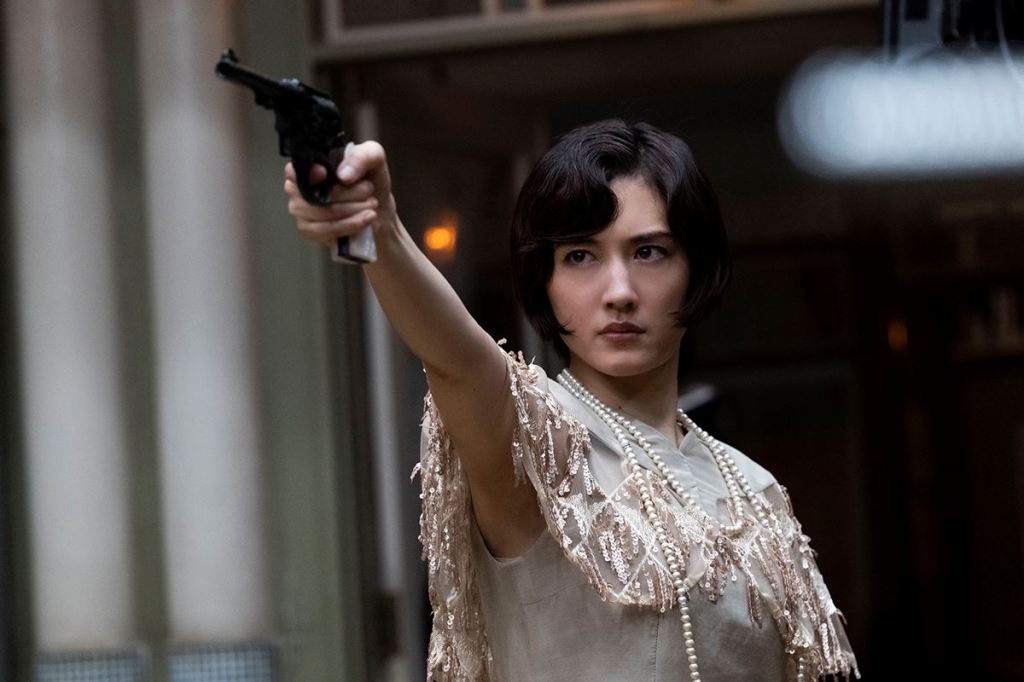
Chung switches back and fore between 1999 and 2016 when the boys’ retrial finally takes place and discovers Joon-cheol a somewhat broken, defeated man who has served out the past few years on a peaceful rural island never receiving any further promotions. With his retirement looming, he’s been offered a return to the mainland, but apparently only thanks to Choi which leaves a sour taste in Joon-cheol’s mouth. Like pretty much everyone else, he is haunted by a sense of guilt that in the end despite his promises he was powerless to help these innocent young men escape their false imprisonment. 

Then again, Joon-cheol is also a product of the system. The “mad dog” beat suspects too, and there’s something chilling in his justification that he only beat the “guilty” and never the “innocent”. He got his promotion after being stabbed on the job, a strange sacrifice that seems the inversion of Choi’s greedy venality. Choi really thought nothing of these boys, one whom had learning difficulties and was illiterate so could not have written his statement on his own, because they were poor and defenceless and is unrepentant even when confronted with the truth. He himself could have caught the real culprits but simply chose not to because it was easier and more convenient to him to destroy the lives of three innocent boys instead. 

Choi’s reach seems to be eerily extensive though the police force’s reluctance to correct a miscarriage of justice because it would make them look bad is obviously an institutional flaw along with the use of violence to elicit confessions. The older version of Choi with slick backed hair and an arrogant manner behaves as if he’s untouchable, giving an answer for everything and leaving no room to be challenged while others are only too keen to support his version of events with equally smug manipulations of the law. 

The boys find themselves powerless. They cannot challenge Choi and though they’ve served their sentences and paid a debt to society that was never theirs to begin with cannot move on with their lives because they are still branded murderers meaning no one will hire them. Meanwhile, at least one of the real killers has had to opportunity to start again and is reluctant to help because they do not want their new family to find out about their past. Everyone is harbouring some kind of guilt or desire to bury the truth for a quiet life, Joon-cheol too not wanting to get involved and cautioning the boys against applying for a retrial because it will only cause them further pain. 

Though the truth is eventually revealed and the boys’ names cleared, the overwhelming implication is that you cannot really win against men like Choi. The sentiment is rammed home by a final title card explaining that nothing happened to any of the policemen involved in framing the boys while Joon-cheol only has the satisfaction of having helped to free them neither vindicated as a police officer or successful in undercutting the corruption inherent in the police force and embedded in the society itself. Nevertheless, Joon-cheol’s righteousness and the the unexpected support he receives from those around him for doing the right thing add an inspirational quality that simultaneously suggests justice is a distant dream but also that it can be achieved if enough people can be persuaded to chase it even while against their own interests.


The Boys screened as part of this year’s London East Asia Film Festival.

Original trailer (no subtitles)

White Badge (하얀 전쟁, Chung Ji-young, 1992)

Change was in the air in the Korea of 1979. Park Chung-hee, who had seized power in 1962 by means of military coup and thereafter ruled as a repressive dictator, was assassinated by the head of the KCIA for reasons which remain unclear. A brief window of possible democratic reform presented itself but was quickly shutdown by a second military coup by general Chun Doo-hwan who doubled down on Park’s repression until finally forced out of office in the late ‘80s. It’s into brief moment that Chung Ji-young’s White Badge (하얀 전쟁, Hayan Jeonjaeng) drops us as a traumatised reporter finds he is being given permission revisit the painful past now that they are finally “free” to speak their minds, but remains personally reluctant to open old wounds. 

Han Gi-ju (Ahn Sung-ki) is a functioning alcoholic whose wife has left him and remarried though he still spends time with his small son who appears to adore his dad. In the wake of Park’s assassination, his boss wants him to write the true story of his experiences as a soldier in Vietnam, but Gi-ju is not convinced. He’s still haunted by nightmares of his time in the army and has no desire to go delving into his own painful memories even if it is perhaps the right time to let the people know how it really was. A little while later, however, he starts getting nuisance phone calls which turn out to be from an old war buddy, Byeon Jin-su (Lee Geung-young), who remains too shy to get in touch but later sends him a collection of photos and, somewhat worryingly, a pistol taken as a war trophy from the Viet Cong. 

We only come to realise the significance of the pistol’s passing at the film’s conclusion, but the fact remains that both men have been permanently changed, perhaps damaged, by their experiences in Vietnam only in different ways. Displaying obvious symptoms of PTSD, Jin-su has reverted to a childlike state, somewhat unsteady in his mind, and quickly flying into a panic on hearing loud noises such as helicopters or fireworks which return him to the battlefields and the terrible things he saw there. Gi-ju, meanwhile, is brooding and introverted. He drinks himself to sleep but is woken by nightmares. His marriage has failed and his only friendship seems to be with his editor who drags him to a karaoke box to schmooze a wealthy friend from school who, somewhat ironically, made most of his money manufacturing weapons used in Vietnam while never having to serve himself. “What’s wrong with that?” he asks, “We made money thanks to President Park. When President Park died, my dad cried.” unwittingly outlining the entire problem and in fact embodying it as he continues throwing his money about with the excuse that the only thing to do with dirty money is spend it dirtily. 

Prior to that, he’d criticised Gi-ju’s manhood by betting that he’d never actually killed a Viet Cong soldier. Gi-ju laments that all anyone ever wanted to know about Vietnam was how much money he made and whether he bedded any Viet Cong women. They never wanted to know the reality of it, that he found himself increasingly disillusioned not just with his country and the war but with “human values and history”. While in Vietnam he witnesses street children chasing soldiers for candy and flashes back to his own days as a street orphan after the Korean War tugging on the sleeves on American GIs who crudely threw him only empty packets of cigarettes. The colonised is now a coloniser and it’s an uncomfortable feeling. On a long march, Gi-ju and another soldier pass an old man along the wayside who keeps shouting “pointless” and explains to them that in his 70 years he’s seen many people walk along this road. First it was the Chinese, and then the French, the Japanese, the Americans, and now the Koreans. If you truly want to help, he says, go home and leave us in peace. “We don’t care who wins, we just want to farm and nothing else. So please leave us alone”. 

The utter senselessness of their presence is further brought home to Gi-ju when his unit panics and fires on what it thinks is a huge unit of Viet Cong soldiers, but actually turns out to be a field full of cows. The locals are obviously upset, demanding compensation, but his Staff Sergeant is unrepentant, little caring that they’ve just destroyed the local economy and the ability of these ordinary people to feed themselves in their panic and incompetence. Yet in his first few pieces for the paper, Gi-jun recounts that the first six months were ones of ambivalent tedium in which they mostly dug ditches and bonded over beer. They were torn, hoping it might stay this way but also embarrassed by the thought of going home with no combat experience. 

As time goes on, however, they find themselves on ever more dangerous missions only to discover that they have been used as decoys, their heavy casualties dismissed as “small sacrifices of war”. Betrayed by their country, these men were also forced to betray themselves. After firing on civilians in panic, the Staff Sargeant orders his men to kill the survivors to cover up his mistake, threatening them at gun point. One is never quite the same again, and the other finally kills his superior to avenge his transgression. Gi-ju is not witness to these events, only to their effects, but is obviously aware of the cruelty that his service entails. 

Dissatisfied with his first manuscript recounting a humorous episode from the early days, Gi-ju’s boss tries to curate his memories, asking him for a cliched anti-war tract about how combat turns intellectuals into cowards while the ignorant are reborn as heroes. Something much the same happens with a documentary crew on the ground who actively ask the soldiers to re-stage the action for the camera. Everyone has their Vietnam narrative, and no one is quite interested in the full horror or the present pain of these wounded men. Reuniting with Jin-su whose mental state is rapidly declining, the pair are caught up in a democracy protest by students who actively resist the draft and the militarisation of education, ironically on the other side, targeted by men like they once were. Abandoned by a country which essentially sold them as mercenaries to curry favour with the Americans, Jin-su and Gi-ju struggle to gain a foothold in this strange moment of hope in which martial law, the force which dictated the course of their lives, may be about to fall. That was not to be, but for the two men at least, something has perhaps been put to rest if only with the terrible inevitability of a bullet finally hitting its target.


White Badge screens 22nd October as part of this year’s London East Asia Film Festival

If Only I Could Hibernate (Баавгай болохсон, Zoljargal Purevdash, 2023)

A teenage boy finds himself torn between his dreams for the future and the responsibility he bears towards his family in Zoljargal Purevdash’s gentle coming of age drama, If Only I could Hibernate (Баавгай болохсон). Spoken by the hero’s younger brother, the title lays bare the children’s sense of despair as they gaze up at the giant hole around the chimney in their yurt longing for an escape from the cold while Ulzii (Battsooj Uurtsaikh) longs for an escape from this life by winning himself a place to study overseas. 

After his father’s death two year’s previously, Ulzii and his family moved to the city but still live in a yurt on its outskirts. Ulzii’s mother is recovering from a period of alcohol abuse and struggles to hold down a job while Ulzii has become responsible for his younger siblings. A new teacher (Batzorig Sukhbaatar) at his school notices that he is bright and has an aptitude for science, advising him to take special classes and enter local competitions with the aim of winning the national one which comes with a scholarship to an elite private school.

The sense of possibility begins to bring new light and focus into Ulzii’s life, but his hopes are quickly shot down by his mother who has decided to move back to the country. He wins the right to stay behind with two of his siblings but soon finds himself alone and desperate, unable to buy coal or food while his mother fails to send money. Earlier his mother had berated him for buying an expensive pair of trainers only for him to counter that he saved up for ages and bought them with his money from a part time job the rest of which he’d given to her. Ulzii spends anything he gets on coal for the family, taking very little for himself while trying to protect his siblings.

Some might find his dream naive, that his conviction that he can study his way out of poverty is unrealistic while his resentment also has a degree of of pettiness in his refusal to become what he describes as a “weak beggar”. In the yurt district people are always keen to help each other, but Ulzii is proud and finds help difficult to accept while he also feels belittled by his wealthy, apartment-dwelling aunt who soon turns nasty when he refuses to surrender a keepsake from his father. He is also at times cruel to his mother, insensitively revealing her illiteracy to his younger brother in an attempt to get him to stay in the city and go to school so he doesn’t end up like her. 

Ulzii’s mother is not someone suited to city life, though as it turns out the country doesn’t suit her so well either. Ulzii finds himself having to skip classes and take part in illegal logging to help support the family while his friends ask him to join them in committing a burglary on the home of rich friend of their father’s. Driving into the city to help an old man sell the last of his lamb, Ulzii is surrounded by protestors complaining about the air quality and suggesting perhaps that this kind of urbanity is literally wounding the land in contrast with the symbiotic lifestyles of the nomads like Ulzii and his family. Ulzii’s younger brother eventually becomes ill because of their inability to heat the yurt along with the poor air quality in the village while Ulzii cannot afford the money for his medicine. 

The kids just want an end to the winter and for their mother to come back so everything can go back to normal, but instead find themselves embracing a new family while trying to find signs of positivity for the future. Ulzii ends up rediscovering aspects of his culture in opening himself to the community and learning that it isn’t “weak” to accept help when you need it or to give it in return. There are no easy answers, and learning to forgive his mother for what he sees as her fecklessness may take a little longer but the siblings have at least begun to discover new ways to survive the winter that are filled with laugher and warmth rather than the coldness of resentment and futility.


If Only I Could Hibernate screened as part of this year’s BFI London Film Festival.

Original trailer (English subtitles)

Cinema at Sea Announces Lineup for Inaugural Edition

Cinema at Sea – Okinawa Pan-Pacific International Film Festival has announced the programme for its very first edition which takes place at cinemas across the islands 23rd to 29th November. With nearly 40 films from all over the world, the festival will open with documentary From Okinawa with Love and close with We Are Still Here which features eight stories of indigenous communities in Australia, New Zealand and the South Pacific. The festival will also host a retrospective dedicated to Hawaiian filmmaker Christopher Makoto Yogi as well as screening three classic films from Go Takamine who will receive the Mabui Special Award.

Here are the East Asian features screening in this year’s programme:

Hong Kong

  • Lonely Eighteen – cinematic meta drama following two young women who enter the entertainment industry to try and escape their poverty in ’80s Hong Kong.

Indonesia

  • ORPA – drama in which a young woman has to battle her way through the jungle to escape her home village and pursue her dream of education.

Japan

  • From Okinawa with Love – documentary following photographer Mao Ishikawa who spent her youth working in bars catering to American GIs in Okinawa.
  • Intimate Space – indie drama in which a man is drawn to the seashore beneath the bridge between Shikoku and the mainland where he discovers a moribund hostess bar.
  • Okinawa Philadelphia – companion piece to From Okinawa with Love in which Mao Ishikawa travels to Philadelphia to document the life of a former Marine she met during his time in Okinawa.
  • One Second Ahead, One Second Behind – Japanese remake of My Missing Valentine directed by Nobuhiro Yamashita and scripted by Kankuro Kudo following a boy who is always too early for everything and a girl who is always late.
  • Your Lovely Smile – Hirobumi Watanabe stars as a version of himself but this time for Lim Kah-Wai as the pair come together in shared sensibly and frustration with the indie way of life. Review.

Malaysia

  • Abang Adik – displaced brothers find themselves trapped on the margins of a prosperous city in Jin Ong’s gritty drama. Review.

Taiwan

  • The Mimicry – adaptation of the short story by Kao Yi-feng directed by Chung Yu-Lin in which a green sea turtle is transformed into a human.

MABUI Special Award

  • Tsuru-Henry – surreal drama from Go Takamine in which an old woman collects singing and dancing DNA samples and embarks on staging a script abandoned by a writer who fled to Taiwan in search of a woman.
  • Paradise View – a listless young man finds himself spirited away in the liminal space of Okinawa on the brink of transition in Go Takamine’s lyrical drama. Review.
  • Dear Photograph – experimental short.

Cinema at Sea – Okinawa Pan-Pacific International Film Festival takes place at cinemas across the islands 23rd to 29th November, 2023. The full programme can be on the official website while you can also follow Cinema at Sea on Facebook, Instagram, and X (fomerly known as Twitter).