White Badge (하얀 전쟁, Chung Ji-young, 1992)

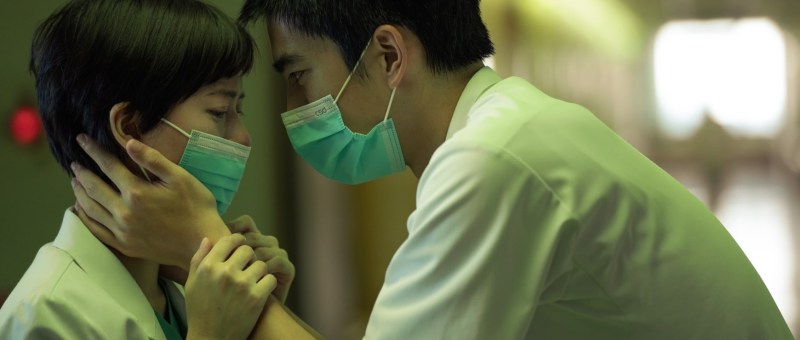
Change was in the air in the Korea of 1979. Park Chung-hee, who had seized power in 1962 by means of military coup and thereafter ruled as a repressive dictator, was assassinated by the head of the KCIA for reasons which remain unclear. A brief window of possible democratic reform presented itself but was quickly shutdown by a second military coup by general Chun Doo-hwan who doubled down on Park’s repression until finally forced out of office in the late ‘80s. It’s into brief moment that Chung Ji-young’s White Badge (하얀 전쟁, Hayan Jeonjaeng) drops us as a traumatised reporter finds he is being given permission revisit the painful past now that they are finally “free” to speak their minds, but remains personally reluctant to open old wounds. 

Han Gi-ju (Ahn Sung-ki) is a functioning alcoholic whose wife has left him and remarried though he still spends time with his small son who appears to adore his dad. In the wake of Park’s assassination, his boss wants him to write the true story of his experiences as a soldier in Vietnam, but Gi-ju is not convinced. He’s still haunted by nightmares of his time in the army and has no desire to go delving into his own painful memories even if it is perhaps the right time to let the people know how it really was. A little while later, however, he starts getting nuisance phone calls which turn out to be from an old war buddy, Byeon Jin-su (Lee Geung-young), who remains too shy to get in touch but later sends him a collection of photos and, somewhat worryingly, a pistol taken as a war trophy from the Viet Cong. 

We only come to realise the significance of the pistol’s passing at the film’s conclusion, but the fact remains that both men have been permanently changed, perhaps damaged, by their experiences in Vietnam only in different ways. Displaying obvious symptoms of PTSD, Jin-su has reverted to a childlike state, somewhat unsteady in his mind, and quickly flying into a panic on hearing loud noises such as helicopters or fireworks which return him to the battlefields and the terrible things he saw there. Gi-ju, meanwhile, is brooding and introverted. He drinks himself to sleep but is woken by nightmares. His marriage has failed and his only friendship seems to be with his editor who drags him to a karaoke box to schmooze a wealthy friend from school who, somewhat ironically, made most of his money manufacturing weapons used in Vietnam while never having to serve himself. “What’s wrong with that?” he asks, “We made money thanks to President Park. When President Park died, my dad cried.” unwittingly outlining the entire problem and in fact embodying it as he continues throwing his money about with the excuse that the only thing to do with dirty money is spend it dirtily. 

Prior to that, he’d criticised Gi-ju’s manhood by betting that he’d never actually killed a Viet Cong soldier. Gi-ju laments that all anyone ever wanted to know about Vietnam was how much money he made and whether he bedded any Viet Cong women. They never wanted to know the reality of it, that he found himself increasingly disillusioned not just with his country and the war but with “human values and history”. While in Vietnam he witnesses street children chasing soldiers for candy and flashes back to his own days as a street orphan after the Korean War tugging on the sleeves on American GIs who crudely threw him only empty packets of cigarettes. The colonised is now a coloniser and it’s an uncomfortable feeling. On a long march, Gi-ju and another soldier pass an old man along the wayside who keeps shouting “pointless” and explains to them that in his 70 years he’s seen many people walk along this road. First it was the Chinese, and then the French, the Japanese, the Americans, and now the Koreans. If you truly want to help, he says, go home and leave us in peace. “We don’t care who wins, we just want to farm and nothing else. So please leave us alone”. 

The utter senselessness of their presence is further brought home to Gi-ju when his unit panics and fires on what it thinks is a huge unit of Viet Cong soldiers, but actually turns out to be a field full of cows. The locals are obviously upset, demanding compensation, but his Staff Sergeant is unrepentant, little caring that they’ve just destroyed the local economy and the ability of these ordinary people to feed themselves in their panic and incompetence. Yet in his first few pieces for the paper, Gi-jun recounts that the first six months were ones of ambivalent tedium in which they mostly dug ditches and bonded over beer. They were torn, hoping it might stay this way but also embarrassed by the thought of going home with no combat experience. 

As time goes on, however, they find themselves on ever more dangerous missions only to discover that they have been used as decoys, their heavy casualties dismissed as “small sacrifices of war”. Betrayed by their country, these men were also forced to betray themselves. After firing on civilians in panic, the Staff Sargeant orders his men to kill the survivors to cover up his mistake, threatening them at gun point. One is never quite the same again, and the other finally kills his superior to avenge his transgression. Gi-ju is not witness to these events, only to their effects, but is obviously aware of the cruelty that his service entails. 

Dissatisfied with his first manuscript recounting a humorous episode from the early days, Gi-ju’s boss tries to curate his memories, asking him for a cliched anti-war tract about how combat turns intellectuals into cowards while the ignorant are reborn as heroes. Something much the same happens with a documentary crew on the ground who actively ask the soldiers to re-stage the action for the camera. Everyone has their Vietnam narrative, and no one is quite interested in the full horror or the present pain of these wounded men. Reuniting with Jin-su whose mental state is rapidly declining, the pair are caught up in a democracy protest by students who actively resist the draft and the militarisation of education, ironically on the other side, targeted by men like they once were. Abandoned by a country which essentially sold them as mercenaries to curry favour with the Americans, Jin-su and Gi-ju struggle to gain a foothold in this strange moment of hope in which martial law, the force which dictated the course of their lives, may be about to fall. That was not to be, but for the two men at least, something has perhaps been put to rest if only with the terrible inevitability of a bullet finally hitting its target.


White Badge screens 22nd October as part of this year’s London East Asia Film Festival

If Only I Could Hibernate (Баавгай болохсон, Zoljargal Purevdash, 2023)

A teenage boy finds himself torn between his dreams for the future and the responsibility he bears towards his family in Zoljargal Purevdash’s gentle coming of age drama, If Only I could Hibernate (Баавгай болохсон). Spoken by the hero’s younger brother, the title lays bare the children’s sense of despair as they gaze up at the giant hole around the chimney in their yurt longing for an escape from the cold while Ulzii (Battsooj Uurtsaikh) longs for an escape from this life by winning himself a place to study overseas. 

After his father’s death two year’s previously, Ulzii and his family moved to the city but still live in a yurt on its outskirts. Ulzii’s mother is recovering from a period of alcohol abuse and struggles to hold down a job while Ulzii has become responsible for his younger siblings. A new teacher (Batzorig Sukhbaatar) at his school notices that he is bright and has an aptitude for science, advising him to take special classes and enter local competitions with the aim of winning the national one which comes with a scholarship to an elite private school.

The sense of possibility begins to bring new light and focus into Ulzii’s life, but his hopes are quickly shot down by his mother who has decided to move back to the country. He wins the right to stay behind with two of his siblings but soon finds himself alone and desperate, unable to buy coal or food while his mother fails to send money. Earlier his mother had berated him for buying an expensive pair of trainers only for him to counter that he saved up for ages and bought them with his money from a part time job the rest of which he’d given to her. Ulzii spends anything he gets on coal for the family, taking very little for himself while trying to protect his siblings.

Some might find his dream naive, that his conviction that he can study his way out of poverty is unrealistic while his resentment also has a degree of of pettiness in his refusal to become what he describes as a “weak beggar”. In the yurt district people are always keen to help each other, but Ulzii is proud and finds help difficult to accept while he also feels belittled by his wealthy, apartment-dwelling aunt who soon turns nasty when he refuses to surrender a keepsake from his father. He is also at times cruel to his mother, insensitively revealing her illiteracy to his younger brother in an attempt to get him to stay in the city and go to school so he doesn’t end up like her. 

Ulzii’s mother is not someone suited to city life, though as it turns out the country doesn’t suit her so well either. Ulzii finds himself having to skip classes and take part in illegal logging to help support the family while his friends ask him to join them in committing a burglary on the home of rich friend of their father’s. Driving into the city to help an old man sell the last of his lamb, Ulzii is surrounded by protestors complaining about the air quality and suggesting perhaps that this kind of urbanity is literally wounding the land in contrast with the symbiotic lifestyles of the nomads like Ulzii and his family. Ulzii’s younger brother eventually becomes ill because of their inability to heat the yurt along with the poor air quality in the village while Ulzii cannot afford the money for his medicine. 

The kids just want an end to the winter and for their mother to come back so everything can go back to normal, but instead find themselves embracing a new family while trying to find signs of positivity for the future. Ulzii ends up rediscovering aspects of his culture in opening himself to the community and learning that it isn’t “weak” to accept help when you need it or to give it in return. There are no easy answers, and learning to forgive his mother for what he sees as her fecklessness may take a little longer but the siblings have at least begun to discover new ways to survive the winter that are filled with laugher and warmth rather than the coldness of resentment and futility.


If Only I Could Hibernate screened as part of this year’s BFI London Film Festival.

Original trailer (English subtitles)

Cinema at Sea Announces Lineup for Inaugural Edition

Cinema at Sea – Okinawa Pan-Pacific International Film Festival has announced the programme for its very first edition which takes place at cinemas across the islands 23rd to 29th November. With nearly 40 films from all over the world, the festival will open with documentary From Okinawa with Love and close with We Are Still Here which features eight stories of indigenous communities in Australia, New Zealand and the South Pacific. The festival will also host a retrospective dedicated to Hawaiian filmmaker Christopher Makoto Yogi as well as screening three classic films from Go Takamine who will receive the Mabui Special Award.

Here are the East Asian features screening in this year’s programme:

Hong Kong

  • Lonely Eighteen – cinematic meta drama following two young women who enter the entertainment industry to try and escape their poverty in ’80s Hong Kong.

Indonesia

  • ORPA – drama in which a young woman has to battle her way through the jungle to escape her home village and pursue her dream of education.

Japan

  • From Okinawa with Love – documentary following photographer Mao Ishikawa who spent her youth working in bars catering to American GIs in Okinawa.
  • Intimate Space – indie drama in which a man is drawn to the seashore beneath the bridge between Shikoku and the mainland where he discovers a moribund hostess bar.
  • Okinawa Philadelphia – companion piece to From Okinawa with Love in which Mao Ishikawa travels to Philadelphia to document the life of a former Marine she met during his time in Okinawa.
  • One Second Ahead, One Second Behind – Japanese remake of My Missing Valentine directed by Nobuhiro Yamashita and scripted by Kankuro Kudo following a boy who is always too early for everything and a girl who is always late.
  • Your Lovely Smile – Hirobumi Watanabe stars as a version of himself but this time for Lim Kah-Wai as the pair come together in shared sensibly and frustration with the indie way of life. Review.

Malaysia

  • Abang Adik – displaced brothers find themselves trapped on the margins of a prosperous city in Jin Ong’s gritty drama. Review.

Taiwan

  • The Mimicry – adaptation of the short story by Kao Yi-feng directed by Chung Yu-Lin in which a green sea turtle is transformed into a human.

MABUI Special Award

  • Tsuru-Henry – surreal drama from Go Takamine in which an old woman collects singing and dancing DNA samples and embarks on staging a script abandoned by a writer who fled to Taiwan in search of a woman.
  • Paradise View – a listless young man finds himself spirited away in the liminal space of Okinawa on the brink of transition in Go Takamine’s lyrical drama. Review.
  • Dear Photograph – experimental short.

Cinema at Sea – Okinawa Pan-Pacific International Film Festival takes place at cinemas across the islands 23rd to 29th November, 2023. The full programme can be on the official website while you can also follow Cinema at Sea on Facebook, Instagram, and X (fomerly known as Twitter).

Baian the Assassin, M.D. (Part 1) (仕掛人・藤枝梅安, Shunsaku Kawake, 2023)

A traumatised assassin takes it upon himself to get rid of a few villains on realising there’s something not quite right with his latest contract in Shunsaku Kawake’s classic jidaigeki homage, Baian the Assassin, MD: (Part 1) (仕掛人・藤枝梅安, Shikakenin Fujieda Baian). The titular hero is the protagonist of a series of novels by Shotaro Ikenami which have spawned several previous adaptations on the big and small screens. Produced in celebration of Ikenami’s centenary the film, one of two, harks back to the golden age of period drama if with a more contemporary sensibility. 

Baian (Etsushi Toyokawa) is ostensibly an acupuncturist though by night he uses his needles to kill rather than to heal. Hired to take out the second wife an inn owner, Omino (Yuki Amami), his suspicions are raised on realising that he had also been the assassin who killed the man’s first wife two years earlier. He blames himself in part for having agreed to assassinate a woman in the first place, and remains conflicted even after accepting the job wondering if Omino is next in the firing line or if she was actually the one who had the other woman killed in order to usurp her place. 

The film makes clear from the outset what a difficult place Edo could be for a woman as Baian carries out an assassination on a boatman who had raped a samurai’s wife and then blackmailed her into further sexual favours only for her to hire an assassin and then kill herself confessing all. Omino had apparently been the stepdaughter of a gang leader who sexually abused her and then died leaving her with no support and nowhere to turn except to sex work. Maybe no one could blame her for taking advantage of a besotted client to escape her terrible circumstances though getting rid of his wife would obviously be a different matter. Omon (Miho Kanno), a maid Baian takes a liking to while investigating, admits something similar that as a widow with a young son realistically speaking there is nowhere else that could she work to support him except on the fringes of the sex trade. Then again, as she says the previous mistress was strict but it was because she cared, whereas Omino is just mean and self-interested. She’s fired all the old staff and brought in pretty young women who are quite obviously being expected to entertain their male customers in more direct ways. 

In any case, Baian soon finds himself drawn into a wider series of plots when his friend Hiko (Ainosuke Kataoka), a skewer maker who assassinates people with poison darts, is tasked with taking out first a lascivious carpenter and then a rogue samurai who has supposedly raped and kidnapped the daughter of his lord which obviously turns out not quite to be the case. Rape and kidnap are depressingly common in Edo-era society where it is largely women who suffer under a patriarchal society with intensely oppressive social codes that demand female purity. In a post-credits sequence, we come to understand that Hiko too is seeking vengeance for the death of a woman who killed herself and her child after being raped by bandits. Meanwhile, Baian reveals that he had a mild hatred of women himself born of pain in having been abandoned by his mother who left with another man and took only his sister with her after his father’s death. He had to overcome that resentment in order to fulfil himself as a doctor treating women’s bodies but struggles when he realises that someone involved in the case is closely linked with his own traumatic past and death may be the only way to save them. 

Both he and Hiko end up breaking the assassin’s code but only in defence of justice, which might sound odd considering the nature of their work. Nevertheless, they each have their scruples and don’t like to think of themselves as having been used or inadvertently killed someone who didn’t really deserve it. As Baian puts it, the greatest villains may really be “well-meaning weak cowards” though perhaps corrupt lords can’t really complain about falling victim to their own tactics. With noticeably polished production values and atmospheric cinematography, Kawake pays tribute to classic jidaigeki and eventually sets his heroes back on the road awaiting the next battle for justice in the distinctly unjust feudal era. 


Baian the Assassin, M.D. (Part 1) screened as part of this year’s Camera Japan.

Original trailer (English subtitles)

Three Days of a Blind Girl (盲女72小時, Chan Wing-Chiu, 1993)

An oblivious housewife undergoes a kind of awakening while confronted with her husband’s transgressions by a vengeful intruder in Chan Wing-Chiu’s home invasion horror, Three Days of a Blind Girl (盲女72小時). Rendered temporarily sightless after an operation designed to save her sight, the implication is that the heroine, referred to only as Mrs Ng (Veronica Yip Yuk Hing), has been living in a fantasy of aspirational domestic success largely dependent on her heart surgeon husband Jack (Anthony Chan Yau) and devoid of her own identity while blind to the patriarchal forces which oppress her. 

Having returned from surgery in the US, Mrs Ng is assured her sight will gradually return in around 72 hours though until then she will be entirely blind. The doctors give her no special instructions, and she and her husband return to their country home where they are cared for by a maid, May (Chan Yuet-Yue). Somewhat insensitively, Jack has to leave for an important heart attack conference in Macao leaving Mrs Ng solely in the custody of May only May has other plans. Her policeman boyfriend has got them concert tickets while she also needs to go out to refill her asthma medication meaning that Ms Ng will be entirely alone at home while attempting to adjust to her sightless existence. 

Mrs Ng is rendered vulnerable in what should be a safe space. The sanctity of the domestic is disrupted firstly by Jack’s absence and then by an uncanny lack of familiarity introduced by her blindness. Though she has a stick, she soon finds herself bumping into things or encountering unexpected obstacles while the design of the home’s staircase appears dangerous even to the sighted and a definite health hazard to anyone else. In a moment of foreshadowing, Jack warns the maid that there’s a problem with the phone while the mobile he left is also low on battery meaning that Mrs Ng could not even call for help if she needed it. 

Unsolicited help is however something she’s offered by an unexpected visitor, Sam (Anthony Wong Chau-sang), who claims to be an old school friend of Jack’s who also treated his wife for her heart condition. Mrs Ng can’t see it, but Sam is dressed in a rather unique outfit of lederhosen and a check shirt appearing something like malicious garden gnome. In an odd moment of comedy, Sam, who soon begins stalking Mrs Ng around the house, pretends to chase off an intruder by running up and down the stairs swapping characters as he goes but otherwise skews increasingly sinister while discussing his relationship with his wife who he claims has rejected him on the grounds of the printer’s ink that stains his hands. 

Sam is Jack’s inversion, an overly solicitous husband now hellbent on avenging his masculinity by raping Mrs Ng to get back at Jack whom he blames for his wife’s death claiming he treated her heart condition with vitamins while abusing his position to take advantage of her sexually. At first, Mrs Ng doesn’t believe him and trusts her husband but her literal awakening occurs in line with the return of her sight. She begins to see the light and the reality of her life with Jack, ironically thanking him for this experience because it’s taught her how to fight back and protect herself in the face of his male failure. “Don’t think women are easily bullied” she claps back after finally taking charge of her life and knocking the forces of patriarchy firmly on the head.

Nevertheless, she begins to resist with regular household items such as using the serrated edge on a box of clingfilm to try and saw through the ropes binding her hands. Despite her blindness, she uses her knowledge of the domestic space against the intruder Sam and tries to frustrate his plans for her through strategy and forward thinking even while beginning to discern the danger which has always surrounded her as evidenced by the unexpected appearance of an entirely different assailant wandering in by chance in the temporary absence of Sam. “Never fight with women,” a much more confident, fully sighted, Mrs Ng later exclaims finally awakened to the realities of the world around her and unafraid to confront its ever present dangers now armed with the stylish briefcase of an independent woman. Surprisingly feminist in its overtones, Chan turns the home invasion thriller inside out as Mrs Ng mounts a successful jailbreak from the confines of a stereotypical housewife life.


Three Days of a Blind Girl screens at the Prince Charles Cinema, London on 19th October as part of Silk and Bullets: The Sisterhoods of Revenge where it will feature a video introduction by producer Alfred Cheung and pre-recorded Q&A with Director Chan Wing-Chiu.

Original trailer (no subtitles)

All Under the Moon (月はどっちに出ている, Yoichi Sai, 1993)

Throughout Yoichi Sai’s All Under the Moon (月はどっちに出ている, Tsuki wa Dotchi ni Dete iru), an earnest taxi driver, Anbo (Akio Kaneda), repeatedly calls in to despatch to inform them that he’s become lost and has no idea where he is despite rocking up next to such prominent landmarks as Tokyo Tower and Mount Fuji. His confusion reflects that of the changing post-Bubble society in which those like him struggle to reorient themselves and find new direction just as the nation appears slow to recognise itself and adjust to a new reality. 

It does seem that many of the drivers at Kaneda Taxi have themselves lost direction in their lives and are living very much on their margins while their rather deluded boss Sell is behaving like it’s still the Bubble dreaming of building a golf course and then a hotel to accommodate 2000 people. The Korean loan shark working with him alternately tells fellow Zainichi taxi driver Chun (Goro Kishitani) that he’s acquiring wealth to use for the reunification of Korea, and Sell that they are all children of capitalism, “Damn Reunification!”. At the wedding Chun attends, the guests take phone calls to deal with business and each remark on the precarious economic situation while one suggests that the North Korean association he represents is probably on the brink of failure joking that he fears they may sell their school and pocket the money. 

Yet despite the economic turbulence, the country has been slow to accept the presence of workers from outside Japan and many, including those at the taxi firm, still face discrimination as does Chun himself by virtue of his Korean heritage. One Japanese employee also seems to face a good deal of stigmatisation simply because he has a speech impediment, while an older mechanic with a limp insists on calling an Iranian colleague by a similar sounding Japanese name while baselessly accusing him of theft. Hoso (Yoshiki Arizono), a man with mental health issues provoked by his previous career as a professional boxer in which he accidentally killed an opponent during a bout, is fond of saying “I hate Koreans, but I like you” while otherwise fixating on Chun as a dependable big brother figure and resentful enough when he starts dating a Filipina hostess, Connie (Ruby Moreno), who works at his mother’s bar to pound down the door of her flat and demand to be let in. 

Chun himself is at least problematic and especially by the standards of today as he tries a series of crass pickup lines on Korean women at the wedding and then eventually forces a kiss on Connie not to mention physically striking her during a heated argument. He also insensitively tells her about his family’s tragic history in the war emphasising that citizens of Korea were abused for slave labour while seemingly unaware of the history of the Japanese occupation of the Philippines. Meanwhile, he also lies that his father was killed by the Japanese and that all his brothers died of malnutrition whereas they are (presumably) alive if possibly not so well in North Korea. His hard as nails mother (Moeko Ezawa) points out that she came to Japan at 10, while Connie counters that she came at 15, though their experiences have perhaps been very different leaving them somewhat at odds rather than sharing a kind of solidarity as otherwise echoed in the marginal status of each of the migrants who are similarly othered as merely not Japanese yet largely left to fend for themselves while facing possible exploitation and deportation. 

Divisions exist even within the Korean population with guests at the wedding complaining that there have been too many long and boring speeches along with North Korean propaganda songs, claiming that it is discriminatory against South Koreans and finally being allowed to sing a South Korean folksong instead which is at least a good deal more lively. The gangsters leverage the idea of reuinifaction to carry out their scams while later claiming that they have been scammed by their Japanese backer who turned out to be more racist than they had first assumed. Yet as Chun says during one of his cheesy pickup attempts, what really has reunification got to do with them, the younger post-war generation who know no other homeland than Japan? He too flounders, caught between a series of names from “Tadao Kanda” to “Chun”, to the name which appears on his taxi license “Kang” the Korean pronunciation of character read “ga” Japanese which is only otherwise used in the word for ginger as pointed out by a slightly racist fare who goes on to remark that he doesn’t see the point of the “comfort women issue”. Chun has to grin and bear it while technically powerless despite being in the driver’s seat. Predictably, the prejudiced passenger also attempted to make a run for it rather than actually pay Chun his money. “I was born after the war too” Chun reminds him, “but we say after the liberation.”

Sai introduces us to the world of Kanda Taxis through a roving long shot around the carpark travelling from one employee to another before drifting up to management on the second floor. He returns to a similar scene near the film’s conclusion as the remaining workers playfully hose each other with water while literally watching their world burn. Yet for some at least it may be liberating experience, Chun finally gaining the courage to choose his own destination and go after something that he wants, even if it he does it in a characteristically problematic way, seemingly no longer worrying about where it might be taking him but content to simply drive in the direction of the moon. 


Original trailer (no subtitles)

Hidden Blade (无名, Cheng Er, 2023)

In a moment of calm in Chang Er’s Hidden Blade (无名, Wúmíng), a man is served drunken shrimp and watches the poor creatures flail as they’re cooked alive in a bloody soup before placing them in his mouth still kicking, the red liquid dripping from his lips. The heroes are to some extent much the same, plunged into the dangerous waters of the Sino-Japanese war and drowning among its myriad confusions no longer even certain of their own identity let alone that of others. 

It’s at this that the Chinese title, Anonymous, hints for in this world of constant duplicity names are rarely exchanged or on occasion given only posthumously. That is aside from Mr. He (Tony Leung Chiu-wai) who introduces himself promptly after giving a secret knock to enter a hotel room marked with a Japanese character to meet a Mr. Liang who, it seems, intends to betray the Communist cause and instead serve the Wang Jingwei Regime which has sided with Japan in the puppet state of Manchuria, though we can in no way be sure if either of these men are telling the full truth or are who they claim to be. 

Chang replays this scene later with additional content as he will with several scenes throughout the film adding new context as he goes. Like Lou Ye’s Purple Buttlerfly, the fractured narrative hints at the chaos of an age in which nothing is quite as it seems and the truth is always obscured if at times irrelevant. Spanning the second Sino-Japanese war and its immediate aftermath, the film suggests that the motivations underpinning Japanese imperialism are anti-Communist and that Manchuria is a key asset for them as a bulwark against Soviet incursion. Collaborating with the Japanese, the Wang Jingwei Regime is the third point in a triangle lodged between Chiang Kai-shek’s Nationalists and the Communist Party with the implication that it essentially needs to drop out lowering the barriers for a confrontation between the two and the eventual victory of the Communists which occurs three years after the end of the film in 1949.

Technically the third part in the “China Victory Trilogy” which was conceived as “a gift to the Communist Party for its centenary” the film may make some bold claims as to the role of Communist spies in the 1930s but nevertheless neatly aligns the covert resistance movement with the Party’s eventual triumph if subversively ending on a note of loss and melancholy which leaves the survivors in lonely exile, ideologically victorious but emotionally ruined. Both Liang and the ambivalent Japanese soldier Watanabe (Hiroyuki Mori) talk of wanting a quiet life retiring to ancestral land as ordinary farmers freed from the murky world of politics but are each frustrated while He and Watanabe’s young goon Ye (Wang Yibo) wrestle with the romantic costs of their political choices. Yet the most dignified performance is reserved for an impossibly beautiful KMT assassin caught before she was able to take out a government minister while posing as his mistress “He used to write poems, now he writes execution orders,” Watanabe laments of the Minister (Da Peng) who later it seems pays a heavy price for his ruthless opportunism. At least his would-be-assassin remained true to her ideals and accepted her fate with dignity. Indeed, she may be the only one who is certain of herself and her identity even in her impeccable elegance which is a something of a mixed message given her political affiliation. 

In the end, it may be the self-denial that slowly erodes their souls while forced to conceal their true intentions even to those close to them. Then again, it’s impossible to know what’s for real and what’s for show. An intensely emotional exchange could in fact be intended for someone else’s ears or merely a cruel tragedy of misrepresentation. The real hidden blade is the self-repression living in an atmosphere of oppressive suspicion requires rather than the communist sleeper agents who in this version of the tale beat the Japanese into retreat. Featuring top notch production design and costuming, Chang’s oscillating venture through an abyss of cruelty and betrayal finds its heroes victorious but no so much anonymous as robbed of both name and country, lonely exiles of a war not quite won. 


Hidden Blade is available digitally in the US courtesy of Well Go USA.

US trailer (dialogue free)

Inside the Yellow Cocoon Shell (Bên trong vỏ kén vàng, Pham Thien An, 2023)

Late into Pham Thien An’s three hour spiritual epic Inside the Yellow Cocoon Shell (Bên trong vỏ kén vàng), a youngish man rides through endless fog as if echoing the miasma of his life. He finds himself displaced, admitting that he no longer has any reason to return to his hometown now that his parents have moved to the US and the girl he loved has become a Christian nun, yet he continues to yearn for a greater meaning in his life or something that would anchor him in an Earthly world that seems somehow fragile and intangible much like the soul itself. 

Tellingly, in the film’s opening scene Thien (Lê Phong Vũ) is situated across from a man who is giving up his life in the city for a more spiritual existence in the mountains. The third friend between them cannot understand his decision, remarking that he knows many who’ve tried the same thing but have all eventually returned if for no other reason than money. “The existence of faith is ambiguous,” Thien admits when pressed for his opinion but cannot fully choose either side neither able to accept the certainty of the man bound for the mountains nor the cynicism of his city-dwelling friend. He wants to believe, but he can’t. “My mind holds me back,” he explains, trapped in an existential limbo still searching for a truth he is unsure exists. 

While the men are talking, they are momentarily distractedly by a loud noise that turns out to be a nearby traffic accident in which two motorbikes have collided. The man died instantly while the woman is seriously injured but the child with her has apparently escaped more or less unscathed. No one really reacts very much to this seemingly horrific event, perhaps it is simply too common an occurrence to bother them. Thien too remains in his seat, barely looking up. At massage parlour he ignores his ringing phone, jokingly telling the masseuse that “God is calling,” apparently an ironic pet name for his client, only to receive a visit from a member of staff telling him to answer to because there has been a “family emergency”. It turns out that the woman in the crash was his sister-in-law, Hahn, who has since passed away and he must now take charge of his young nephew, Dao (Nguyễn Thịnh), who is now orphaned in the absence of his brother who disappeared without trace some years previously.

No one knows what happened to Tam, though some speculate that ran off with another woman or recalling that he once wanted to become a priest assume he encountered a spiritual calling that caused him to abandon his family. In the wake of tragedy Thien begins searching for him, but as an old lady insists it’s really a way of searching for himself in an attempt to make peace with the ineffiablities of life. Unable to understand what’s happened to his mother, Dao asks his uncle abour the nature of “faith” but Thien has few answers for him explaining that it’s what he too is looking for. Dao childishly asks what shape it is, only for Thien to admit that it is formless and in essence he does not know what he seeks. 

The old lady pushes him towards a more concrete religion, detailing an experience in which her soul detached from her body and she was able to discern the mortal world’s rottenness while even the most pious of souls continue to suffer for their sins. She urges prayer and attendance at Mass, while an old man who spent his youth in war tells him that money is merely dust and the way he’s made peace with his life is through helping others. In the city, Thien had been like a lost thing scooping up a lonely bird like him marooned in urban emptiness, but is also restless in the country. He tells his former girlfriend that he admires her decision, which only makes her laugh, but is unable to find such certainty himself and seems set on a path of endless wandering searching for a truth which may not even exist. Pham Thien An follows him with an etherial gaze, segueing into memory as the current Thien stands in for his former self literally reliving the past much as in the lyrics of the melancholy song he performs at karaoke which speak of a lover trapped in nostalgia still hoping their love will return to them. Thien is much the same, searching for himself while lost in the fog of an everlasting road. 


Inside the Yellow Cocoon Shell screened as part of this year’s BFI London Film Festival.

Trailer (English subtitles)

Love Will Tear Us Apart (ラヴ・ウィル・テア・アス・アパート, Kenichi Ugana, 2023)

“This film depicts a pure and genuine love between an awkward boy and a girl with a pure heart,” according to a pop idol starring in a film called “garbage love”, but it’s a true enough description of Kenichi Ugana’s genre-crossing slasher romance, Love Will Tear Us Apart (ラヴ・ウィル・テア・アス・アパート). Co-scripted by Hirobumi Watanabe, the film has a deadpan, surreal sensibility but has a lot to say about entrenched patriarchy and a bullying culture. 

As the film begins, Wakaba is a cheerful little girl who has an all encompassing obsession with a handsome pop idol, but is secretly enduring an oppressive atmosphere of domestic violence in her family home at the hands of her cruel and violent father. In this she might have found a kindred spirit in classmate Koki who is enduring physical abuse at the hands of his mother who openly tells him how much happier she’d be if only he’d never been born. Koki is also being bullied by a pair of mean kids at school and meekly takes it, unable to stand up for himself. When Wakaba steps up and tries to help him, the bullies turn on her too and their teacher (Atsuko Maeda) seemingly does nothing. After the pair bond through a screaming session at a local river, the bullies mysteriously fall out of a window which Koki is then seen ominously staring out of. 

The film jumps on seven years to a teenage Wakaba (Sayu Kubota) who discovers the world is not a safe place for women, repeatedly encountering a series of skeevy guys beginning with her favourite pop band who lure her to a cabin in the woods where they openly talk about getting her drunk to take advantage of her or spiking her drinks. One of the chief victimisers is another woman, Moeka, whose apparent “job” it is to recruit girls for the guys to have fun with. Wakaba’s friend Kanna (Riko) wants to leave, sensing that there’s something not quite right but Wakaba is naive and unable to see the danger. A similar thing happens when she visits Tokyo alone and has a meet cute with a guy who spills coffee on her shirt and offers to buy her a new one, then to show her around, takes her for sushi, declares his love and makes a proposal of marriage. 

As might be expected, many of these men end up dead at the hands of a vicious, chainsaw-wielding serial killer in a white hazmat suit, gas mask, and goggles. You can’t quite blame him for his crimes because everyone he kills is so irrediambly awful while it really does seem that he might be trying to protect Wakaba in some way from the hidden dangers she remains unable to see because of her pure heartedness. While her own father had been cruel and violent, she discovers that Moeka’s, police detective Kamiyama (Mitsuru Fukikoshi), is the opposite but worse in his unsettling obsession with his daughter, whom he believed to “pure and earnest” little knowing that she had been procuring young girls to serve up to the sleazy band members.

In a strange way, the serial killer turns out to be Wakaba’s healthiest relationship even if he’s basically stalking her not to mention murdering people with chainsaws because they threatened her happiness. The film runs through a series of genres from the cute childhood romance that soon turns ominous and the cabin in the woods slasher movie complete with creepy monkey and trainset, to martial arts epic as Wakaba abandons her life to train with a YouTube serial killer catching guru in a tropical resort town but retains its sense of anarchic innocence and internal integrity. As the pop star had implied, it really is a tale of genuine love between an awkward boy and a pure hearted girl in which they gradually realise that they each have a right to be happy and can be so together despite all violence and mayhem around them which includes killing a guy by shoving a grapefruit blender on his head. Strange and absurd the film nevertheless has a heartwarming romantic sensibility along with a desire for a less destructive world defined more by kindness and compassion than bullying and violence. 


Love Will Tear Us Apart screened as part of this year’s Camera Japan.

International trailer (English subtitles)
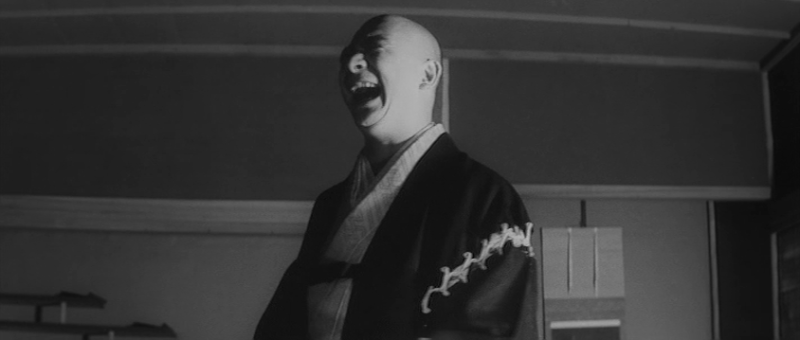
Cobweb (거미집, Kim Jee-woon, 2023)

An insecure filmmaker becomes entangled within the movie in his mind in Kim Jee-woon’s homage to golden age Korean cinema, Cobweb (거미집, Geomijip). The film has caused some controversy with the family of director Kim Ki-Young attempting to file an injunction to prevent its release complaining that it shows him in a bad light, which is one reason earlier prints of the film listed the protagonist’s name as “Kim Ki-yeol” while it has now been changed to simply “Kim Yeol”. Kim Jee-woon argues that the character is not intended to represent Kim Ki-Young but is an amalgam of various directors of that time, yet it is true that his filmmaking has more than a little in common with that of the late director of The Housemaid.

Another reason they may have been upset is that the film turns on a tragic studio fire that cost the life of a director while Kim Ki-Young himself really did die in a house fire though 20 years later at the age of 78. Meanwhile, the director who dies in the studio is clearly modelled on Shin Sang-ok. The actor who plays him (Jung Woo-sung) is styled to look exactly like Shin who often appeared wearing sunglasses. The film’s Shin Sang-ho (Song Kang-ho) is an example of an artist who gave all of himself for his art and then was quite literally consumed by it, stepping into the flames to get the perfect shot while burning with artistic passion. 

Kim Yeol (Song Kang-ho) by contrast can only watch. He’s hassled by some film critics in a diner who call him a “trash” director while suggesting that only his debut was any good and that was probably because it was Shin Sang-ho’s script though Kim Yeol is forever telling everyone that he really did write it himself. They ask him if he is still a servant in Shin’s house, a question that deeply wounds him not least because he has become the inheritor of Shin’s production company but struggles to emerge from his shadow. 

These themes of servitude and oppressive hierarchies are expressed through the film that Kim Yeol is making, itself titled Cobweb, which he has a sudden urge to reshoot in order to make it a “masterpiece” and prove that he is more than just a hack director of “trashy” genre films. The problem is that in the authoritarian 70s in which the film takes place, Korean cinema was constrained by an ever tightening censorship regime which prohibited any criticism of the government and required that films push conservative moral messages. Kim Yeol wants to take his conventional melodrama in which a young woman takes her own life in sacrifice for her family, and turn it into a story about a “modern woman” who refuses to do so. The wife, Mi-ja (Im Soo-jung), will now be a woman plotting a slow-burn revenge against the wealthy family who callously cast out her pregnant mother who had been their maid eventually teaming up with a Housemaid-esque factory girl who had given birth to her husband’s child, along with a former servant turned forest-dwelling hunter. 

Getting that past the censors might be difficult, even if they weren’t already on high alert after finding out about Kim Yeol’s unauthorised changes to the script which had already been passed. Kim Yeol is confident he can get it all shot within two days, but his cast aren’t very happy about being brought back or about the new direction of the film. “Why is it all so corny and overblown?” an exasperated veteran actress sighs unconvinced by Kim Yeol’s “vision”. Fiction and reality are increasingly blurred. The leading man really is having an affair with the woman who plays the factory girl who is secretly pregnant, a huge scandal in the waiting in the stringent 70s society where adultery is a criminal offence. A method acting policeman claims he has a prison cell in his home and spies on the illicit couple in noir fashion making little notes in his notebook. Kim Yeol meanwhile is so wrapped up in the film that he answers the phone on set rather than the one on the lot which is actually ringing. At a climatic real life moment, it’s the music cue from the melodrama which finally breaks in.

There’s a striking contrast between the full colour set design as we see it and the way it appears in the high contrast black and white of the film within the film which is full of gothic touches such as driving rain and thunderstorms not to mention film noir lighting and eerie composition. Kim Jee-woon includes a series of homages to golden age directors from the obvious nods to The Housemaid to echoes of The Devils Stairway while director Lee Man-Hee gets a name check as, perhaps ironically, a more established figure whom Kim Yeol fears his AD will leave him for.

Lee Man-Hee also had a fair amount of trouble with the censors and was actually arrested for breaking the National Security Law due to his overly sympathetic depiction of North Korean soldiers. In an attempt to get the censors off his back, Kim Yeol lies that the film is “anti-communist” while the head of the censor’s board relents because he’s just so excited about seeing North Korean spies get burned to death in Kim Yeol’s incendiary long shot. In a running gag, no one but Kim Yeol really understands the ending of the film though calling it anti-communist might be a stretch even if it might satisfy the censor’s moral concerns. In any case it remains uncertain if Kim Yeol, who has a hallucination of Shin Sang-ho giving him a fiery pep talk while hopped up on anxiety mediicine that might be destabilising his sense of reality, is really happy with his work and has finally managed to overcome his insecurity or is still entangled in Shin’s web and in the end slowly consumed by it.


Cobweb screens 13/14th October as part of this year’s BFI London Film Festival.

International trailer (English subtitles)