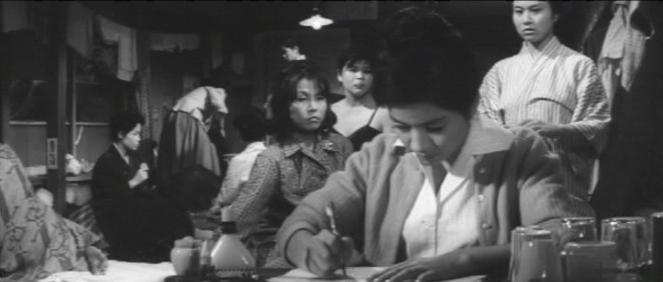
Girls of the Night (女ばかりの夜, Kinuyo Tanaka, 1961)

vlcsnap-2019-03-15-00h18m28s351

Working from a Keisuke Kinoshita script, Kinuyo Tanaka’s first film as a director, Love Letter, made a point of exploring the often hypocritical and contradictory attitudes towards women who had engaged in sex work or become the mistresses of American servicemen in the immediate aftermath of the defeat. For her fifth film, Tanaka returns to the same subject but this time adapting a novel by Masako Yana scripted by Sumie Tanaka (no relation) with whom she’d previously collaborated on The Eternal Breasts. Somewhat suggestively retitled Girls of the Night (女ばかりの夜, Onna Bakari no Yoru), Tanaka’s adaptation tones down the novel’s sensuality but dares to ask a series of subversive questions regarding female agency and sexuality in the rapidly changing post-war society.

Set in the contemporary era, the film opens with reportage-style voiceover and newspaper clippings highlighting the enforcement of the anti-prostitution laws of 1958. According to the voiceover, the red light districts of Japan may have all but disappeared but streetwalking and other forms of casual sex work are still very much a part of the post-war economy. In an attempt to bridge the gap between the old ways and new, those arrested by the police are divided into two camps – those deemed beyond “redemption” sent to prison, and the rest to reform centres such as the Shiragiku Protective Facility for Women which is where we find our heroines.

The reform centre itself is a fairly progressive place and much more forward looking that seen in the earlier Women of the Night though perhaps sometimes patronising even as it makes a strenuous attempt not look down on the women who enter its care. Our first entry into the facility is in the company of a similarly well meaning women’s association whose misplaced pity only reinforces their innately privileged position. They are as far from many of these women as it is possible to be and struggle to understand how it is possible that they found themselves engaging in a practice they find both shameful and degrading. Having got to know many of the women through trying to help them, the school’s headmistress Nogami (Chikage Awashima) and her assistant are better placed to understand even if they also apologise that many of the women in their care are of “low IQ” and fail to convey the kinds of pressures that many have been subject to from desperate poverty to bad family situations and abusive relationships.

Abuse and the trauma of abuse remains one of the barriers to the women moving on, as in the reason many of them found themselves in sex work was because of their relationship with an exploitative partner who either forced them to sell their bodies or left them with no other choice in order to support themselves through being unable or unwilling to work. Nogami, a compassionate and understanding woman, is at pains to insist that the reason many of these women see nothing wrong in sex work is that they have an insufficient level of self respect and value their bodily autonomy too cheaply in allowing others to buy and sell access to it without full consideration of everything that implies.

Then again, asked by one of her most promising cases, Kuniko (Hisako Hara), what is actually so “bad” about sex work, Nogami is forced to admit that she doesn’t know – only that it is now illegal and her job is to help these women live “honest” lives within law. It is difficult to evade the hypocrisy that Nogami is telling these women that they should exercise full agency over their bodies while simultaneously telling them what they shouldn’t be doing with them, but then for all the centre’s talk about “purity” Nogami herself is refreshingly frank and practical in her approach to helping these women towards reintegration into mainstream society in the assumption that that is something they would want rather than out of any quasi-religious ideas of moral goodness.

Shame and social stigma, however, become another barrier as Kuniko finds to her cost in her attempts to move on from the centre. At her first placement as a live-in assistant at a grocer’s, she is quickly outed by a nosy deliveryman already acquainted with the true nature of the Shiragiku centre. The exposure of Kuniko’s past provokes not only mild disgust and suspicion among “respectable” people but also unwanted male attention from those who assume her former life as a sex worker means that they are already entitled to her sexuality with or without her consent.

Thinking the direct approach might be better, Kuniko decides to share her past with the ladies in the dorm at her next job in a factory but they are not quite as supportive as she might have hoped. Despite the fact that many of these young women are sexually active and in fact involved in what might be thought of as acts of casual sex work, they collectively look down on Kuniko while also seeking to exploit her both for the practical knowledge they assume she must have and by attempting to pimp her out to other men they know. When the attempt fails (Kuniko humiliates the three men who try to pressure her into sex by frightening them off with nothing more than confidence and self-possession), the women turn on her and enact an extremely violent and sadistic revenge.

Despite what she observed at the centre, Kuniko learns to her cost that she cannot necessarily rely on female solidarity as a bulwark against male exploitation. Nevertheless, it is to female communities and friendships that she ultimately returns. The leader of the women’s group from the beginning turns out to be less of a dilettante than she first seems and eventually takes Kuniko in with a promising job in a rose a garden which seems to suit her perfectly. Roses, however, have thorns – this one’s being her tentative relationship with gardener Hayakawa (Yosuke Natsuki) who is aware of her past but falls in love with her anyway only for her romance to hit the barrier of entrenched social mores when she discovers that Hayakawa is in fact a member of a noble family. In another instance of women not helping women, Hayakawa’s mother puts the kibosh on her daughter-in-law being a former sex worker which both reinforces Kuniko’s sense of being irreparably damaged and makes her feel as if she has become a problem for a man with whom she has fallen in love. Vowing to live up to Hayakawa’s vision of her as a “pure” woman, Kuniko retreats once again to a supportive community of women – this time of pearl divers in what seems to be an act of spiritual cleansing.

In Kuniko’s final identification of the “disgracefulness” of her past and declaration that she does not hate the world but only herself, Girls of the Night shifts into a more conventional register than the broadly empathetic, subversively positive attitude it had hitherto adopted towards the idea of sex work and the women who engage in it, opting to blame the woman rather than engage with the various forces of social oppression which attempt to micromanage female sexuality. Nevertheless, Tanaka’s deft touch remains as sympathetic as it’s possible to be in affirming that there is a path forward for those who might feel trapped by past transgression even if it simultaneously insists that its heroine save herself only by rejecting her happy ending in atonement for her past “sins”.


A Fishwife’s Tale (魚河岸の女石松, Eiichi Kudo, 1961)

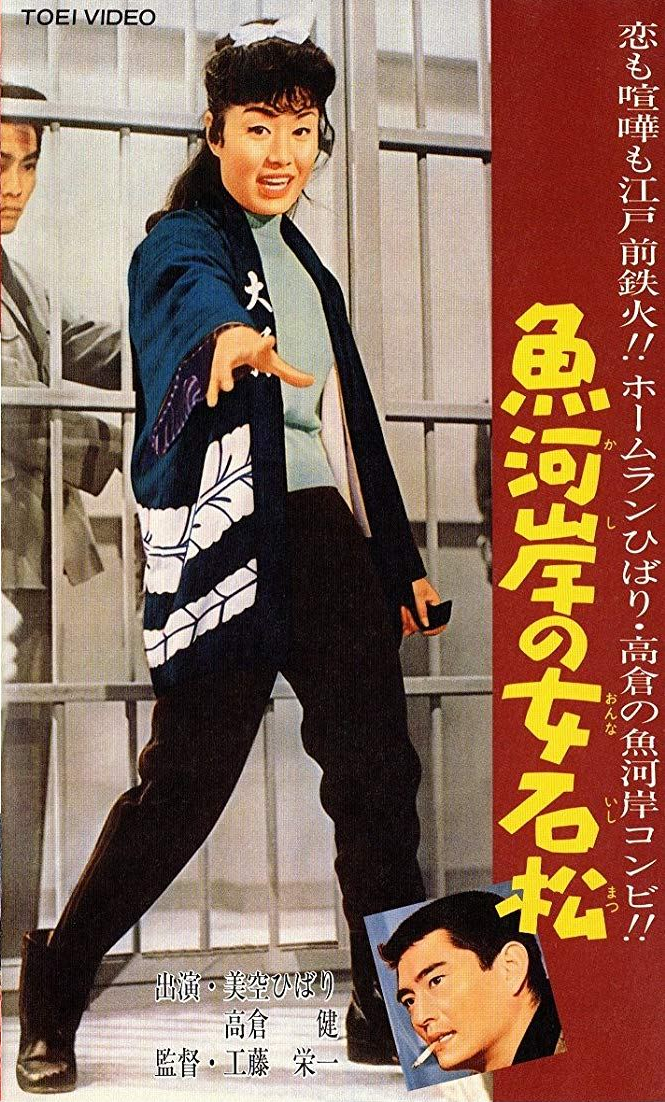
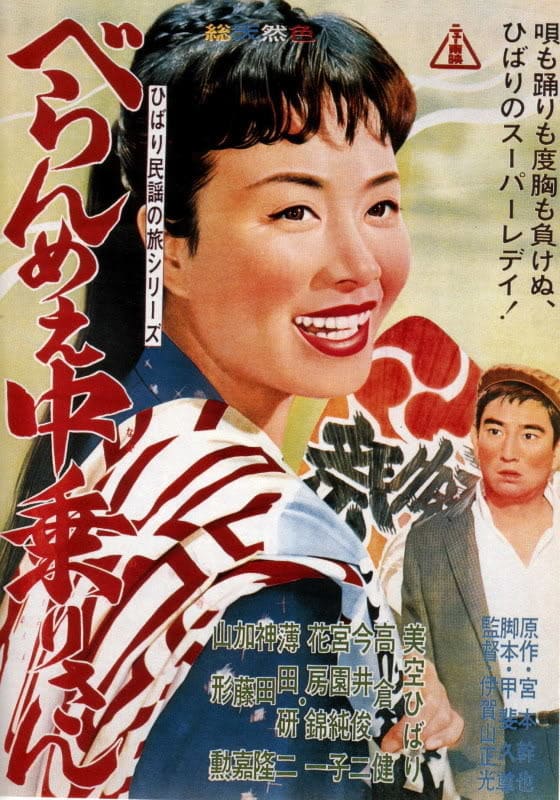
A Fishwife's Tale VHS coverWho better to take on post-war corruption and personal injustice than Hibari Misora? In another of her typically feisty roles, Hibari stands up for her friends, her community, and her family when they are threatened by the exploitative forces of the tabloid press, rubbish boyfriends, and evil corporations all while accidentally falling in love with Ken Takakura in an early role as cynical reporter with a heart of gold. Eiichi Kudo may be best remembered for a string of samurai movies in the ‘60s including 13 Assassins and The Great Killing, but like many of his generation he made a fair few programme pictures including several starring Hibari Misora of which A Fishwife’s Tale (魚河岸の女石松, Kashi no Onna Ishimatsu) is one.

Kudo opens with stock footage of a small fishing harbour which is all aflutter with the arrival of some unusual outsiders. A photographer from a “magazine” has arrived claiming that he wants to document the lives of ordinary working class people from the fishing industry. While some of the young women doll themselves up and plead with the photographer, “Lady Ishimatsu”, Keiko Kano (Hibari Misora), steals all the attention by defiantly rolling through in her truck ready for a day’s work. As predicted Keiko doesn’t want anything to do with this photography nonsense, and as it turns out she was right not to. The guys aren’t from the Sundays or National Geographic, they’re a scandal rag and they’ve bulked out their story with a lot of made up rubbish about the “sexy lives of fishwives” which paints them all as predatory nymphomaniacs. Matters come to a head when Keiko’s friend Yoko (Yukiko Nikaido) tries to kill herself in shame because of the paper’s implication that she’s a loose woman which causes her wealthy boyfriend to dump her (luckily, she’d mixed up tummy tablets with sleeping pills so thankfully survived even if feeling a little sick and silly).

The newspaper business has a second unforeseen consequence. When Keiko stands up to the achingly cool reporter, he realises she’s connected to another case he’s working on. Across town, a canned food magnate is facing ruin thanks to a standards scandal and is also earnestly searching for his long lost daughter, born to a geisha 20 years earlier and then adopted by another family. Dogged reporter Kitagawa (Ken Takakura), recognising the necklace around Keiko’s neck, wonders if she might be the girl Tachibana’s looking for. When it turns out that he’s right, Keiko’s world turns upside-down. Tachibana (Eijiro Yanagi), overjoyed to have found his daughter, goes about everything the wrong way and tries to take her back from her loving home with the promise of wealth and comfort, but Keiko loves her parents even if they aren’t hers by blood and resents the attempt to drag her away. 

Nevertheless, when the two cases turn out to be even more connected thanks to Yoko’s terrible boyfriend being the no good son of one of the conspirators, and Mr. Tachibana falling ill though the stress of his situation, the entire family reconsiders if they haven’t perhaps been selfish in resolutely rejecting a lonely old man trying to make up for a past mistake. Keiko becomes committed to standing up to the bullies. “We’re still young, as long we’re alive we’ll resist you” she tells her biological father’s arch enemy in what might as well be a rallying cry for post-war youth fed up with the corrupted older generation.

Then again perhaps things don’t change all that much. Rather than a salt scam or rice profiteering, this time it’s fiddling with the labels on tin cans but ordinary people are still having their food supply tampered with by those with enough money not to need to worry so much about food security – the amoral petty samurai of the Edo era have merely become amoral businessmen in the dog eat dog post-war world.

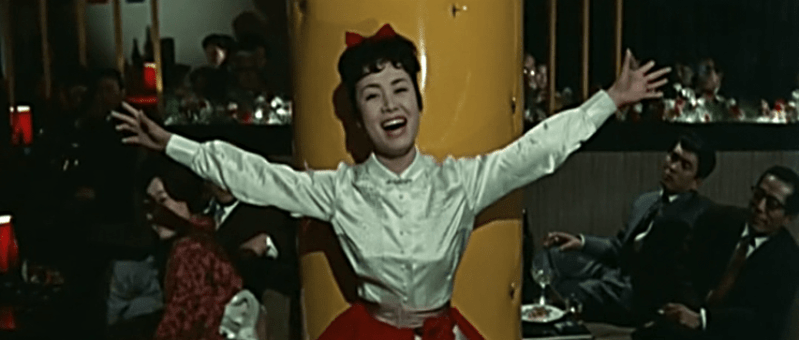
Comparatively light on song and dance – Hibari sings the title track as she drives in on her truck, hums a few tunes, and gets one dramatic musical number when she goes undercover as a nightclub singer to spy on the bad guys, Kudo ups the action quotient as Hibari makes herself the chief of the fishwives and takes on the photographers, sneaks around investigating, and then starts a full on brawl with goons in the final showdown. This time around the romance between frequent co-stars Hibari Misora and Ken Takakura is spiky and sparky, fuelled by Keiko’s strange positioning as a “tomboyish” bossy boots more at home in her truck and wellies than prancing around for the camera like the other girls. Oddly warm and filled with rebellious energy, A Fishwife’s Tale is, in its own quiet way, perhaps subversive in allowing a little political spirit of the age to creep in around the edges as Keiko steps forward to stay true to her roots, opposing injustice wherever she sees it and always acting on her own initiative.


Selection of scenes from the movie including Hibari’s big club number (no subtitles)

https://www.youtube.com/watch?v=o2C9SlTD278

Maintitles song – Hibari no Dodonpa

https://www.youtube.com/watch?v=LnATqXSHqbc

Bad Boys (不良少年, Susumu Hani, 1961)

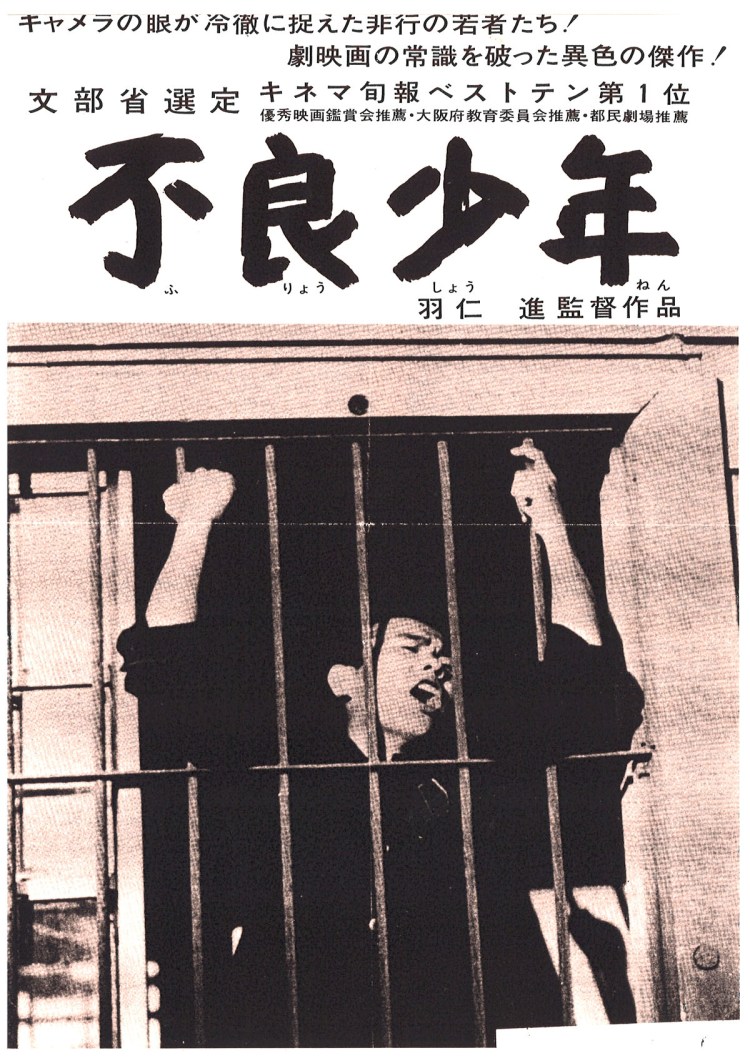
Bad Boys posterIn the mid-1950s, the “Sun Tribe” movies had evoked a series of conflicting reactions in their depictions of the new bright young things of the post-war era who, caught in a period of intense confusion, rejected the future their parents’ had been trying to build while revelling in nihilistic hedonism enabled by the new freedoms. Though the films proved popular with their target audience, they also produced a moral panic in the older generation which saw youth as dangerously out of control and desperately in need of correction. Meanwhile, reform school drama also became something of a recurring motif in the more progressive youth movies put out by Nikkatsu (including one starring Hani’s soon-to-be wife, Sachiko Hidari) which sought to humanise the figure of the “bad boy” by pointing out all the various circumstances which led to his fall from grace.

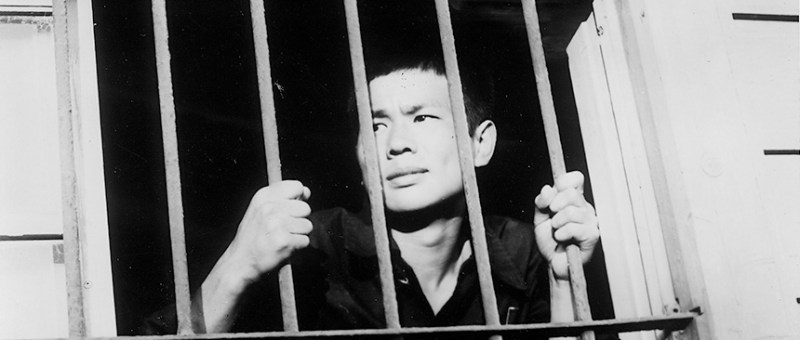
Susumu Hani’s Bad Boys (不良少年, Furyo Shonen) is often regarded as an important precursor to what might later be termed the “new wave” in its radical departure from the cinematic norm of the times. Loosely inspired by a book titled “Wings that Cannot Fly” which collected the stories of boys who’d been through the same reform school, Hani repurposes the tools of neorealism in his use of non-actors, improvised dialogue, natural light and location shooting, for a hybridised avant-garde “documentary style” which is, in a sense, realer than “real”.

We follow a disaffected young man, Asai (Yukio Yamada), who has been arrested for the aggravated robbery of an upscale Ginza jewellers. Asai, who sadly laments that he has only seen the famously posh neighbourhood from the back of a police van, did indeed commit the crime and could be thought of as the “ringleader” of the group of boys arrested which also includes young men from “good” families who’ve fallen in with a “bad” crowd. Some of the other boys are released when their parents plead for them, but Asai, as we discover, has no parents – his father died in the war when Asai was three and for reasons unexplained he is estranged from his mother. Undergoing a series of psychological tests which prove inconclusive, it’s decided that Asai might benefit from some time in reform school to reflect on his life and hopefully emerge with a better sense of civic responsibility.

Hani’s depiction of the reform school system paints it as an obvious remnant of the militarist or perhaps even feudal past in which discipline and physical strength are the primary virtues. The boys salute, march in file, and are taught to respect authority. Inside the school, natural factions arise with a strictly observed series of hierarchies enforced by violence and intimidation. Asai, a determinedly independent sort, refuses to obey and stands up to the bullies only to suffer defeat. Eventually he becomes the leader of his own faction of similarly oppressed youngsters, but when the time comes he discovers he is all alone once again and unable to break the chain which constrains them in a cycle of fear and violence.

Nevertheless, the failed battle against oppression has an unexpected positive outcome when Asai is moved to another cell. Up to this point, there’s been relatively little sign of positive “reform” on offer – no education, no counselling, no practical advice which might help these young men escape the circumstances which brought them here, but on being moved to the carpentry workshop Asai does at least begin to learn a useful skill as well as mixing with more “serious” boys who can have a laugh together while getting on with work. His attitude seems to relax, he “grows up”, and begins to see a different future only to be abruptly released back onto the same streets no better off than before with only the kind hearted platitudes of the softly spoken social worker to guide him into a “better” tomorrow.

The question remains what sort of men the reform school system was designed to engineer and to what end – a collection of deindividualised authoritarians who stand to attention and salute on demand may not be much of an asset to post-war humanism. Meanwhile, the emphasis on strength and discipline unwittingly reinforces the law of the street where violence rules all and morality is an unaffordable luxury, encouraging the perpetuation of a system of mutual oppressions while ignoring the many and various social issues which make it impossible to escape. Hani wanted to capture the lingering spirit of “totalitarianism” in which even those superficially rebelling against the system obey ancient social codes which restrict their own freedom and exist solely to keep them in their place. In doing so he lays bare the wider hypocrisies of the post-war democratic era which promises freedom but delivers only the same old compromises.


Bad Boys was screened as part of the Japanese Avant-garde and Experimental Film Festival 2018.

DVD release trailer (no subtitles)

The Sea Knows (玄海灘은 알고 있다 / 현해탄은 알고 있다, Kim Ki-young, 1961)

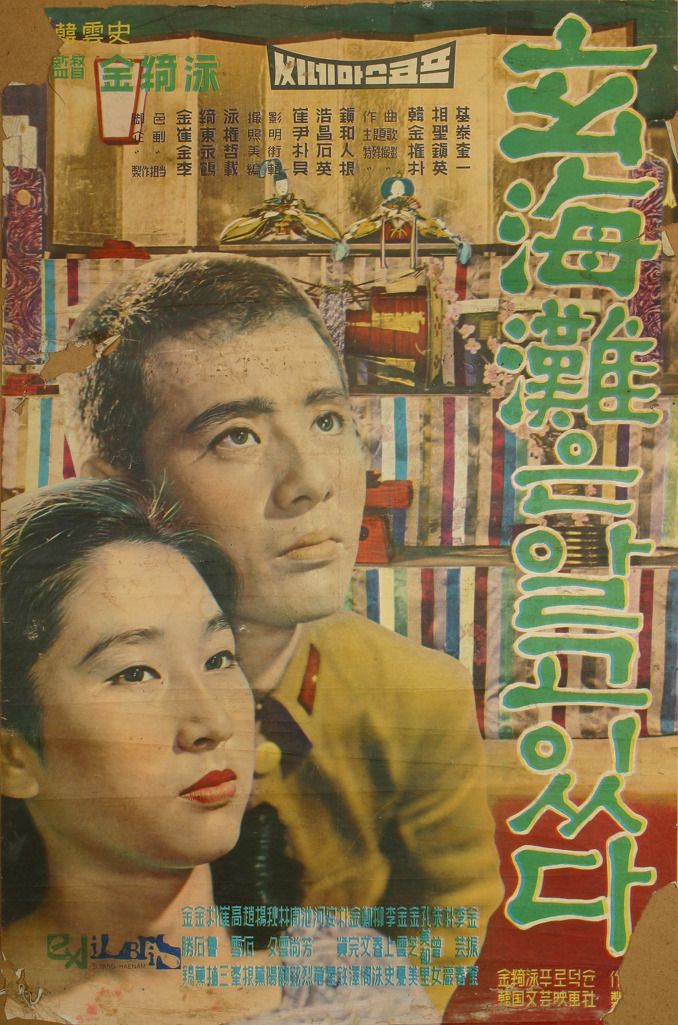
The Sea Knows posterThe Korea of 1961 was a land in flux. The corrupt regime of Rhee Syngman had been brought to its knees following mass protests regarding the rigged 1960 elections but hopes for a new democracy were cut short when military General Park Chung-hee staged a coup, later declaring himself president for life and continuing his authoritarian rule until he was assassinated by one of his own subordinates. Kim Ki-young’s The Sea Knows (玄海灘은 알고 있다 / 현해탄은 알고 있다, Hyeonhaetaneun Algoitta) arrived perhaps at just the right time, ducking under the radar before the Motion Picture Law of 1962 would forever change the industry and if not prevent at least frustrate any attempt to discuss the controversial themes at the heart of Kim’s drama. The Sea Knows is, like much of Kim’s work, a tale of power and desire only this time on a wider scale as he examines the complicated relationship between Korea and Japan as mediated through romantic melodrama.

We open in 1944. Korean student Aro-un (Kim Wun-ha) has been conscripted into the Japanese army following an incident in which he embarrassed a high-ranking official (something which has made him a local hero at home). Despite the fact that Korea has been inducted into the Japanese empire and Koreans are now sons of the emperor too, the regular Japanese troops are not exactly grateful for service of their brethren from across the sea. Koreans are a pain, they decry. They’re always going on about justice and fairness. They won’t just shut up and take their lumps like regular Japanese soldiers. The “50 year tradition” of the Japanese army is to break the will of new recruits through violence, strip them of their individuality, and reduce them to a finely tuned hive mind.

Needless to say, Aro-un is not eager to comply. There’s a strong strain of homoeroticism in the strangely camp banter between the higher-ups. At the first inspection the commanding officer takes a good look at Aro-un, decides he resembles a “cute puppy” and recommends he come to his room to get some “biscuits”. Meanwhile a particularly sadistic NCO, Mori (Lee Ye-chun), pinches the chest of Aro-run’s judo champion friend Inoue (Lee Sang-sa) and decides he’ll not be an easy target – unlike the short and wiry Aro-un who is too righteous to know what’s good for him. Mori, an insecure and under qualified NCO, makes use of men like Aro-un to entrench his own position through the “50 year tradition” of military discipline. The humiliations mount until Aro-un is forced to lick Mori’s excrement encrusted boots in punishment for having failed to polish them to his satisfaction.

Yet, unlike in the majority of Korean films dealing with war and occupation, the Japanese are not universally bad – there are many just like Aro-un who are uncomfortable with the militarist line and are doing what they can to resist, albeit often passively. Aro-un’s university friend, Nakamura (Kim Jin-kyu), is just such a man, turning down the possibilities of promotion to avoid endorsing the regime while acknowledging that there is little more he can do to free himself from it. It’s through Nakamura that Aro-un meets his own source of salvation in the unlikely figure of a young Japanese woman – Nakamura’s sister Hideko (Gong Midori). Hideko originally betrays the common prejudice against Koreans in claiming that the perpetrators of a nearby robbery were most likely Korean seeing as Koreans can’t get jobs and therefore have no other options than to steal, though in retrospect perhaps her assertions were a more logical comment on poverty and entrenched oppression than they were on racial stereotyping.

Hideko is, as Aro-un later points out, a very unusual Japanese woman. A free spirit, she finds herself drawn to Aro-un and is committed to pursuing a course of true feeling over that laid down by the codes of her society, choosing his sensitivity over the brutalisation of her militarist nation. War, Aro-un muses philosophically, is about the manipulation of the present. Love is about the foundation of a future. Yet there is also something dark and imbalanced even in their otherwise pure romance as each finds themselves becoming a symbol of suffering and violence. Aro-un is drawn to Hideko’s unexpected warmth as she sheds tears for his suffering on hearing of his various degradations, seeing no difference in the tears of a Japanese woman and those of his Korean mother who each felt his pain as their own, but Hideko’s insistence on hearing of his latest humiliations almost takes on a sadistic quality as the pair become bound by suffering as much as by innocent connection.

Kim’s central tenet is a bold one for the increasingly volatile world of 1961, making a case for borderless connection over nationalistic chest thumping and championing the resilience of the human spirit as well as the enduring power of love as a counter to the horrors of war. War is, in another of Aro-un’s philosophical musings, just something that happens to you and makes enemies of those who might have been friends. Making extensive use of stock footage and model shots, Kim plunges Aro-un into a fiery hell from which only love and will can save him. An unexpectedly nuanced but no less harrowing tale of wartime brutalisation and spiritual resistance, The Sea Knows is an impassioned plea for humanity in an inhumane age in which there are no heroes and no villains, only victims and resistors caught in a vast web of power and madness.


The Sea Knows was screened as part of the Korean Cultural Centre’s Korean Film Nights 2018: Rebels with a Cause series. You can also watch it online for free courtesy of the Korean Film Archive’s YouTube channel. The existing print is, however, incomplete and badly damaged – four sequences in which there is picture but no sound or sound but no picture are missing / unsubtitled in the online version but are present in the restoration.

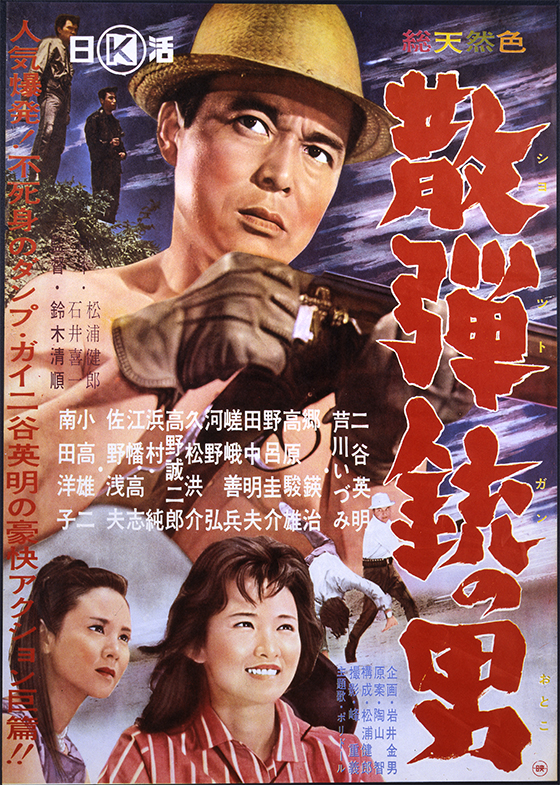
Man with a Shotgun (散弾銃の男, Seijun Suzuki, 1961)

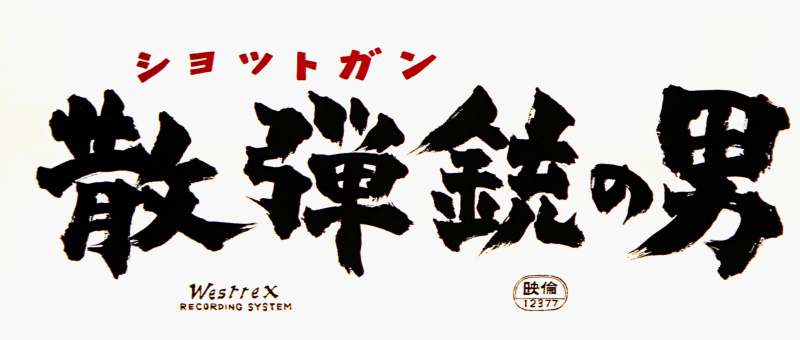
Man with a Shotgun 1961Nikkatsu’s “Borderless Action” seemingly opened a portal to a world entire to be found within Japan itself. Man with a Shotgun (散弾銃の男, Shotgun no Otoko) is, as the title suggests, another tale of a wandering, gun toting hero though this time one less of aimless flight from failure, responsibility, or rejection than of revenge. Hideaki Nitani gets a (relatively) rare chance to strut his stuff as the lead in a full colour picture, perhaps incongruously starring as one of Nikkatsu’s singing cowboys but he does certainly lend his characteristic sense of gravitas and authority to an otherwise underwritten role.

Ryoji (Hideaki Nitani) rocks up at at rickety bridge looking for a nearby shrine only to be warned off by a grumpy old man in a van. You don’t want to go up there, he tells him, there’ll be trouble if you do. Ryoji is, he claims, a hunter and so he’s not afraid. After all, he’s still in Japan – it’s not as if the entire place is infested with lions and tigers. Then again it’s not exactly game he’s come to hunt.

When he reaches the shrine, Ryoji finds himself in a strange mini kingdom presided over by mill owner Nishioka (Akio Tanaka). The few locals who still live in the village mingle uncomfortably with the migrant work force who people the mill while Nishioka dominates the local economy by owning the only bar in town which is also the only place his largely male workforce have to blow off steam. After getting roughed up by three of Nishioka’s henchmen on the way into town, Ryoji makes the first of many enemies when he stands up to fellow drifter Masa (Yuji Kodaka) when he threatens to throw a man’s daughter to the sex starved labour force unless he pays his debts. The sheriff, an ineffectual local, gets himself seriously wounded meaning the position becomes temporarily open. Nishioka, originally a “benevolent” dictator, is in danger of becoming less so when it is suggested he also form a police force given that the state authorities can’t be bothered with such a remote little village. Ryoji doesn’t quite want to stand for that and volunteers only for Masa to do the same, but the argument is eventually settled to one side of their continued male posturing.

As far as westerns go, Man with a Shotgun leans heavily towards colonial romance and adventure rather than your typically arid, dusty world of saloons and ranches. Lush and green, the small mountain town smacks more of the jungle as does Nitani’s idiosyncratic costume which arrives somewhere between chic safari and fashionable cowboy. Claiming to be a “hunter” Ryoji wanders around with self satisfied smugness, certain that he’s bringing justice to this lawless town all while he makes investigations into the matter which sent him wandering in the first place. Of course, while he’s here, there are other damsels in distress including Setsuko (Izumi Ashikawa) – the younger sister of the sheriff’s late wife, apparently raped and killed by “drifter” bandits.

“Drifters” turn out to be the scapegoated big bad as the migrant workforce quickly take over this little town, making trouble in the bar and hassling the locals, only the locals don’t seem to mind as much as they say they do. There’s trouble at the mill, but not quite the kind that might be imagined. Nishioka has his sticky fingers in some nasty business which also involves not just migrants but actual foreigners and illegal activity on a grand scale. As it turns out, some people are in on the action and some aren’t, and Nishioka is currently making a few calculations as to how to “eliminate” a few inconveniences – something to which he thinks Ryoji and his sparring partner Masa might turn out to be the perfect solution.

Like many a Nikkatsu hero Ryoji is a noble sort, something which engineers for him a happier ending than many get even if it has to be bittersweet to hint at possible followup instalments where Ryoji takes names and fights crime in other small towns. Nevertheless, given the choice he opts for the cool guy conclusion of firing into the air and casting his burdens away rather than damning himself forever in becoming what he hates. Shooting in colour even if not quite with Nikkatsu’s A-list, Suzuki doesn’t get much scope to flex his muscles but does make pointed use of painted backdrops coupled with location shooting, as well as doing everything he can to bring out Nitani’s cowboy cool and adding in a number of B-movie western cliches from letters delivered by a knife thrown into a door to the constant refrains of the title song. Still even if it largely lacks Suzuki’s anarchic touch save for the stylishly composed and absurdly humorous bar room brawls, there’s plenty of fun to be to had with Ryoji and his shotgun as they protect the innocent and seek justice in an often unjust world.


Available as part of Arrow’s Seijun Suzuki: The Early Years Vol. 2 Border Crossings box set.

Original trailer (English subtitles)

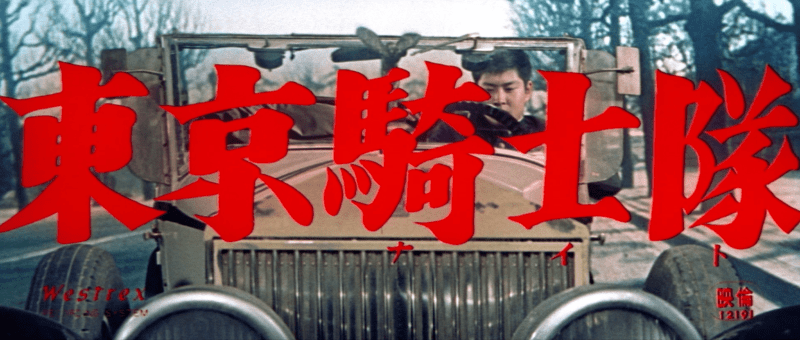
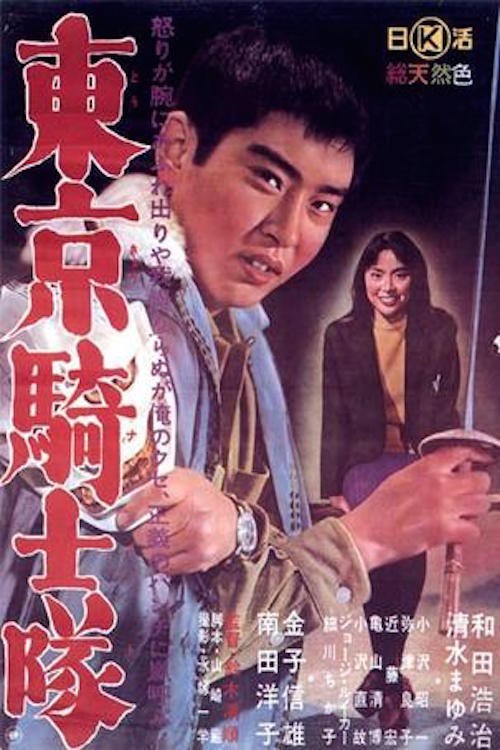
Tokyo Knights (東京騎士隊, Seijun Suzuki, 1961)

Tokyo Knights posterUnlike those from elsewhere, Japanese teen movies can often exist inside their very own bubbles in which the central characters refuse their coming of age stories and either die senselessly or simply carry on from their zany adventures as if nothing had really happened. Tokyo Knights (東京騎士隊, Tokyo Knight) definitely falls into the comedy category as its teen heartthrob hero, played by the then up and coming matinee idol Koji Wada, pulls a Hamlet in being called back from overseas studies to become CEO in waiting to his late father’s company only to suspect there’s something rotten in the state of Matsubara Construction. Quirky high school antics quickly give way to conspiracy thriller, but Koji (Koji Wada) remains steadfast and unwavering in the face of adversity as he faces off against the forces of darkness with little more than Nikkatsu spirit.

The film opens with a rather strange ceremony in which high school student Koji is instated as the new CEO of his father’s company. Koji’s dad apparently died suddenly in a freak accident meaning Koji has had to come home early from studying abroad in the US. Despite apparently being an amazing student who is good at absolutely everything and has joined all the after school clubs on offer, Koji has chosen the Catholic Elizabeth Academy because it’s well known as a coasting school where you can graduate with average grades. Fairly low attainment goals might be just as well because Koji is about to have his hands full with another mission. He’s convinced his dad’s death wasn’t an “accident” and he suspects his deputy, Mishima (Nobuo Kaneko), who is also getting close to his mum, might know more about it than he’s letting on.

In the grand tradition of heroes in Japanese teen drama, Koji has just found himself at the centre of a huge and dark conspiracy involving dodgy yakuza construction deals, blackmail, and murder. He does not lose heart or look to the grown ups for help but decides to handle the problem himself, settling back into the Hamlet-esque role he’s been assigned in neatly setting traps for the treacherous Mishima only doing it with a little more cosmopolitan flair carried back from abroad. Swapping roles like one of his much loved Noh costumes, he then becomes a kind of Romeo to the high school darling Yuriko (Mayumi Shimizu) whose dad, unbeknownst to her, turns out to be a horrible gangster who might be involved in the nefarious plan to take over the family firm. Enjoying a minor romance with the melancholy Yuriko, Koji considers the best way to get revenge and expose evil while protecting his mother, surrogate little sister figure, and his newfound love (?) Yuriko who will undoubtedly suffer now that she knows what kind of man her father really is.

Suzuki apparently incited the wrath of studio bosses when he took a serious crime script and turned it into an anarchic teen comedy but then you have to wonder what they thought it was he would do with it. The impossibly cool Koji is certainly an unrealistic hero, presented unironically he’d be sure to irritate – guys like Koji are, after all, more usually the antagonist set up to make our imperfect everyman feel inferior while he progresses towards some kind of self actualisation as a result of the standard narrative. Koji is, however, heroic and easily likeable as he assumes complete control, handling every situation with practiced ease and remembering to remain kind and just while he does so. He even stops to listen to his mother’s problems, sympathising with her when she reveals her unhappiness with his father, and urging her to grasp happiness wherever she sees it without worrying whatever he or anyone else might think.

Perhaps because of the relative simplicity of the plot, and the opportunity to shoot in colour, Suzuki flexes his muscles a little more than usual in adding in a fair few post-modern techniques including on screen graphics such as a series of large question marks zooming out of the major players Koji suspects may be involved in his father’s death and making a joke out of the need to include the songs of the day with frequent cuts to a teen cabaret club. For all of the tale’s darkness and almost Shakespearean overtones, Suzuki keeps his tongue firmly in cheek with a cartoonish sense of fun and lightness, allowing our heroes to emerge from their ordeal fairly unscathed while honour and justice are preserved. Who knew Catholic school could be so much fun?


Available as part of Arrow’s Seijun Suzuki: The Early Years Vol. 2 Border Crossings box set.

Original trailer (English subtitles)

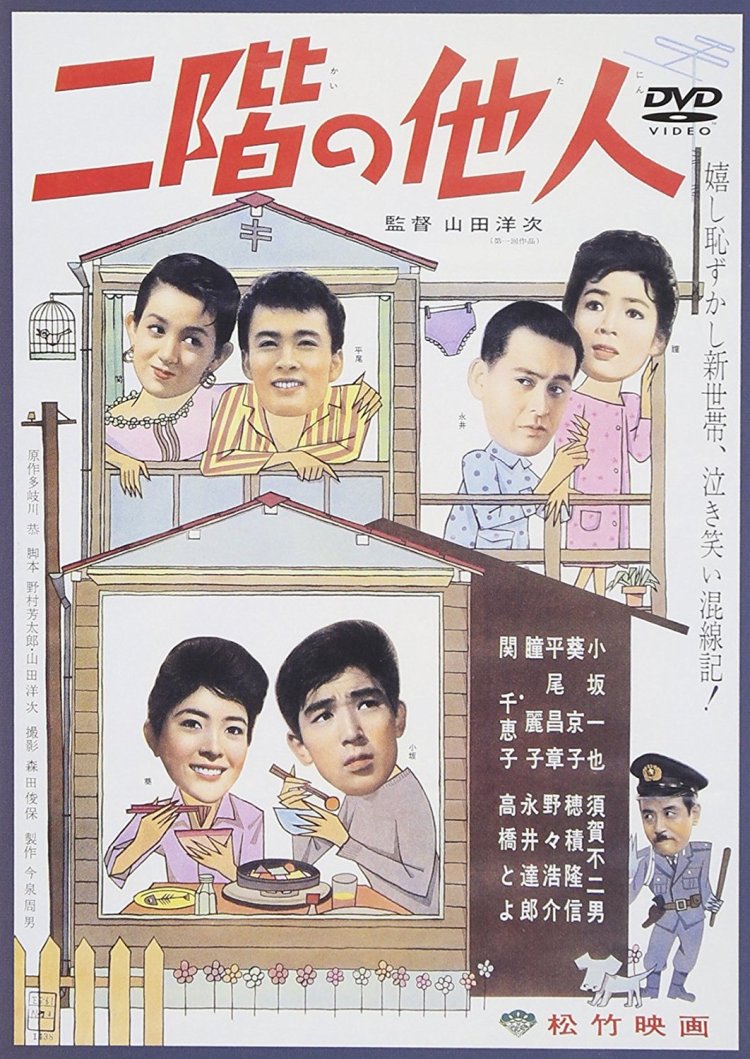
The Strangers Upstairs (二階の他人, Yoji Yamada, 1961)

strangers upstairsLate into his career, veteran Japanese director Yoji Yamada has become synonymous with a particular brand of maudlin comedies and tearjerking dramas often starring veteran actress and long standing collaborator Sayuri Yoshinaga. He is, however, most associated with the iconic long running Tora-san series which revolved around the heartwarming adventures of the titular travelling salesman. Tora-san does indeed epitomise Yamada’s general philosophy which leans towards realistic humanism, finding resolution in kindness and decency yet accepting that oftentimes the rules may need to be bent in order to accommodate them. In this respect his Shochiku debut, featuring a script written by his mentor Yoshitaro Nomura, is a good indicator of Yamada’s future career in its humorous tale of a newlywed couple filled with ambitions of social mobility in the rapidly modernising post-war economy.

Salaryman Masami (Kazuya Kosaka) has taken out a huge loan to build a new house for himself and his new wife, Akiko (Kyoko Aoi), but, to keep costs manageable, they’ve decided to do without a bathroom (there’s a bathhouse across the street) and added an extra floor with the intention of renting it out for a little extra money. So far, married life is going pretty well – Masami and Akiko are a nice, well matched young couple happy in each other’s company and committed towards forging a harmonious future.

The problem is their lodgers are a little, well, difficult. Not having anticipated any “difficulty”, Masami and Akiko are becoming worried that their upstairs neighbours are already a few months behind on the rent and seeing as their contract also includes food, they’ve been eating for free. Not really wanting to broach this difficult subject, Masami and Akiko try gentle prodding to remind their lodgers they need to pay their dues only for the couple to act embarrassed and claim they’d forgotten because they’d always lived with their parents in the past. Finding out that the central concern is that the husband, Hisao (Masaaki Hirao), is currently unemployed, Masami decides to help him find a job but quickly finds out that working is just not Hisao’s thing. Meanwhile, Hisao’s wife, Haruko (Chieko Seki), is picking up extra money working as a hostess in a bar, rolling in roaring drunk in the middle of the night and singing loudly as she does so.

With their patience wearing thin, Masami and Akiko ponder the best way to evict lodgers who refuse to leave but they have another problem on their hands in the form of Masami’s cantankerous mother, Tomi (Toyo Takahashi), who has arrived from the country without warning for an “indefinite” visit after falling out with another of her daughter-in-laws. An unsophisticated country bumpkin with a wicked tongue and serious hanafuda habit, Masami’s mum does not quite fit with the couple’s upwardly mobile aspirations and, annoyingly, immediately sides with Hisao and Haruko whose self-centred laziness is more in keeping with her backstreet ways.

If Masami and Akiko disliked Hisao and Haruko essentially for being too common, their second set of lodgers present the opposite problem. Taizo (Tatsuo Nagai) and Yoko (Reiko Hitomi) seemingly have money to burn, so why are they renting an upstairs room in an “up and coming” area of the city? Akiko is quickly taken with their small luxuries, in awe of her lodgers’ sophistication and upperclass elegance and obviously happy that they won’t be having the same kind of troubles that they had with Hisao and Haruko. When Taizo and Yoko offer to front the money to build a bathroom, Masami and Akiko are surprised but eventually grateful even if taking a “loan” from the people who are renting from you presents a definite shift in power dynamics.

The dynamic shifts even further with another crisis sparking the return of Masami’s mum who has once again been kicked out by a disgruntled relative. Masami’s older brother, who put up some of the money for the house, insists that he honour a vague promise he made that family members in need of refuge would be free to stay with him by kicking out his lodgers and letting his mother live in the upstairs room. Not really wanting to take responsibility for his troublesome mother, and feeling friendly with Taizo and Yoko, Masami refuses and promises to pay his brother back instead – ironically borrowing the money from Taizo.

As predicted Taizo and Yoko are not quite all they seem, but like Masami and Akiko, they are a fairly new couple trying to make a go of it in the often cruel post-war world. On finding out the scandalous secret about their lodgers, Masami and Akiko are torn – they like Taizo and Yoko, plus they’re massively indebted to them thanks to the loan and the money for the bathroom, but they also worry about becoming an accessory or being accused of aiding and abetting. Their first reaction is to feign politeness and carry on as normal pretending not to know whilst asking around to see if they can borrow more money from other friends to pay back Taizo and Yoko before asking them to leave quietly.

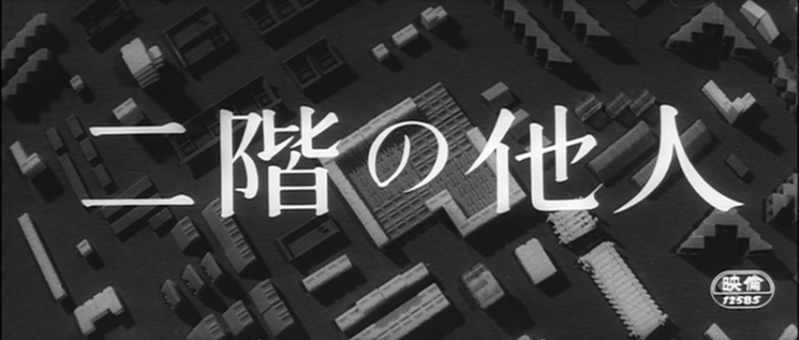
Masami and Akiko, like many of their peers, have aspirations beyond their current pay level and have put themselves at a huge disadvantage trying to live up to the salaryman dream. Yamada opens with an ironic title sequence featuring a series of “Lego” model houses – something which Masami later plays with while lamenting the seemingly small possibility of hanging on to his new home. Homeowning is unexpectedly complicated and becoming a landlord even more so. Masami and Akiko wanted their own mini castle – a status symbol (the policeman’s wife from behind is very jealous), but also a space to call their own which reflects their individual hopes, dreams, and aspirations. They’ve forgone the convenience of a bathroom for the impact of a second floor all while hoping it will pay for itself until they’re ready to use it to expand their family. Until then, they’re content to live in one room and share a kitchen, even providing communal meals if necessary.

The money, however, is a constant worry – the original debt which they accrued to build the house quickly brings its own share of troubles, shifting from one creditor to another as the couple try to invest their fortunes with “nicer” or “worthier” people. Not everyone is nice, as Akiko finds out when she asks Masami’s lecherous boss if he’d mind lending them the money only for him to hint at an extremely indecent proposal. Though Masami seems to be a decent and honest sort who wants to work hard and get on, he is still subject to the salaryman chain of command which means doing his boss’ bidding out side of work hours which turns out to entail further “alibi” duties when he discovers they’re virtually neighbours (though the boss’ house is obviously far more impressive).

Despite all their difficulties, the goodness of Masami and Akiko eventually pays off, their one and only row quickly resolving itself without rancour. Taizo and Yoko, neatly matched in kindness with their former landlords, are grateful for the brief time they spent in the upstairs room and resolved not to bring any trouble into the lives of the nice young couple from downstairs. Masami and Akiko, equally grateful for the consideration, commit themselves to moving forward with a little more temperance, saving the money to pay back Taizo and Yoko and help them in turn when they might need it. Hard work, honesty, and a kind heart, it seems, are what you need to be happy in the burgeoning post-war economy and Masami and Akiko are happy indeed.


Original promo roll (no subtitles)

https://www.youtube.com/watch?v=5NS8TwUdwr0

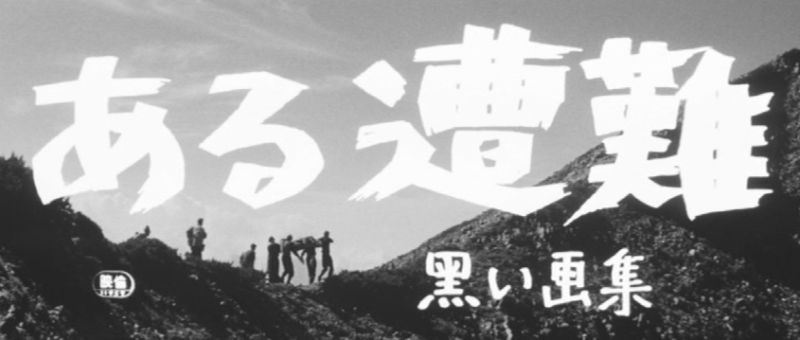
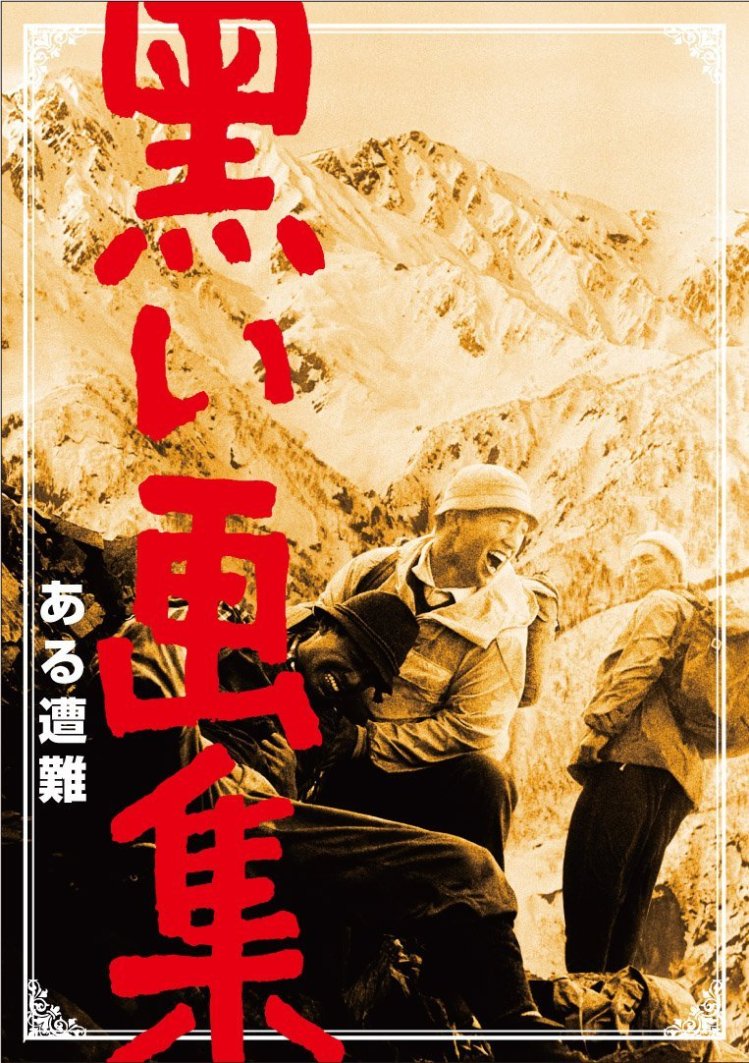
Death on the Mountain (黒い画集 ある遭難, Toshio Sugie, 1961)

Death on the Mountain DVD coverThere can be few films with as accurate a title as Death on the Mountain (黒い画集 ある遭難, Kuroi Gashu: Aru Sonan) , but Toshio Sugie’s 1961 psychological melodrama certainly makes good on its promise. The Japanese title of the film is prefaced by “The Black Album” which is a title given to a series of novellas penned by one of Japan’s most prominent mystery writers, Seicho Matsumoto, whose work was frequently adapted for the screen including eight collaborations with director Yoshitaro Nomura of such well known mysteries as Zero Focus and Castle of Sand. Death on the Mountain was, like the others in the Black Album series, serialised in Shukan Asahi, in this case between 5th October and 14th December 1958 under the title “Sonan”. “Sonan” literally means “distress” or “disaster”, but it has another telling association – “Sonanshi”, meaning “accidental death” such as might occur while mountain climbing, sailing, or engaged in some other dangerous yet normalised activity. The death at the centre of Death on the Mountain is accidental in once sense, but very much not in another.

The film begins with a body being winched from a lower platform back up to a snowy ridge. Iwase (Kiyoshi Kodama), an experienced mountain climber, has perished in a freak accident. Packed inside his backpack, Iwase’s body is burned at the foot of his beloved mountains while his mother looks on sadly, his sister Masako (Kyoko Kagawa) angrily wondering how her brother, a true mountain man, could have died in such a bizarre way while a much less experienced climber, Urahashi (Takashi Wada), survived. The secret may lie with the leader of the expedition, Eda (Hisaya Ito), who has been looking sheepish ever since the incident but otherwise comports himself in a cool, detached manner.

Like many of Matsumoto’s mysteries, Death on the Mountain turns on a secret but Sugie’s adaptation never seriously considers that Eda is not in someway at fault or questions that Urahashi’s recollection of events, published in a popular mountaineering journal, is anything other than accurate. The facts, as laid out firstly by Urahashi’s article, state that Iwase had not been himself on the day of the climb. Eda had treated them all to first class sleeper cabins but Iwase spent the night drinking, chain-smoking and brooding, meaning he was tired before they even arrived at the mountain. He didn’t sleep at the inn either because of someone whispering all night long and needed to take frequent rests during the early part of the climb. Resting is, however, dangerous – as is excessive thirst, and Iwase spent a lot of time guzzling water and sitting down all of which made him even more exhausted. Coupled with a turn in the weather which left him cold and wet, Iwase’s exhaustion got the better of him and he finally lost his mind. At least, that’s the way Urahashi described it, and Eda seems not to dispute his version of events even if the failures – not bringing a map for both mountains they intended to climb but only one, pressing on despite the weather, and mistaking the trail back to the standard path, all rest squarely with him.

Japanese mysteries by and large are much more concerned with the how rather than the why, though in Death on the Mountain the how is a much greyer area than one might assume. As Masako’s cousin, an experienced mountaineer himself, points out, Iwase’s death was caused by a series of unfortunate circumstances but that doesn’t necessarily preclude that there was ill will or that someone didn’t help the “unfortunate circumstances” along in the hope that they would lead to the “accidental death” of the title. There was, therefore, not quite a murder but definitely a lot of ill will and gentle coaxing towards an act of guilty self destruction. As for the why, well that turns out to be far less interesting and suitably petty. Morally speaking, the act of “murder” becomes moot, though the “murderer” finally meets justice head on, only for the tale to end on a note of ambiguity as Masako, whose investigations have resulted only in further deaths, blames herself for daring to disturb the peace. If she’d only have let the “murder” of her brother lie, no one else would have died. Is Masako now an accidental “murderess” or a frustrated seeker of justice? Whatever the answer, all her efforts have been in vein.

Death on the Mountain was previously adapted as a TV drama shortly after the novel’s release, broadcast between 31st August and 7th September 1959, though presumably with lesser production values than Sugie’s admittedly minimal yet authentically detailed exploration of modern mountaineering. Shooting on location and making much of crunching snow, swirling fog, and pelting rain, Sugie runs high on atmosphere but fails to capitalise on the noirish sense of malevolence that lies at the centre of Matsumoto’s mystery, that evil can come dressed as kindness and the line between murder and accident is much thinner than might otherwise be presumed. Matsumoto seems to want to ask a few questions about causality and personal responsibility, the degree to which a man’s death is his own failing, how much the fault of “unfortunate circumstance”, and how much ill intentions from the world around him. Sugie, however, is content to let the suspense peter out with the solution offered in true detective style through a suppositional monologue delivered in front of the presumed murderer but for the audience’s benefit. Nevertheless, even if the mystery falls flat the mountain air rings true and Sugie has, at least, captured something of nature’s awesome power and terrifying beauty.


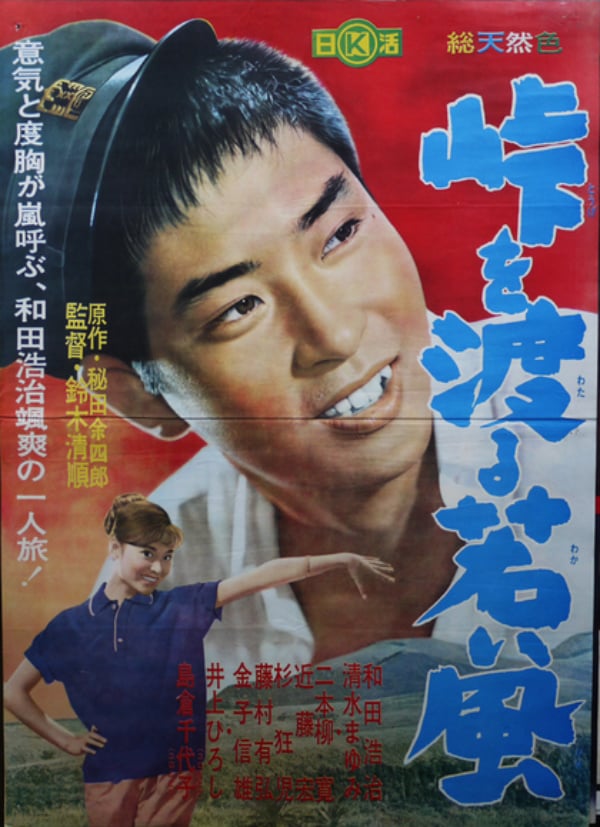
The Wind-of-Youth Group Crosses the Mountain Pass (峠を渡る若い風, Seijun Suzuki, 1961)

The Wind-of-Youth Group Crosses the Mountain Pass posterSeijun Suzuki made his first colour film in 1960 – Fighting Delinquents starred young matinee idol Koji Wada as a noble hearted construction worker with a temper who suddenly learns that he is the heir to an aristocratic fortune. Suzuki would make another two youth dramas starring Wada before getting to 1961’s The Wind-of-Youth Group Crosses the Mountain Pass (峠を渡る若い風, Toge wo Wataru Wakai Kaze, AKA Breeze on the Ridge) – this slice of colourful anarchy is a world away from Nikkatsu’s usual action fare though it does make space for the odd pop song or two.

Naive and cheerful university student Shintaro (Koji Wada) loves to travel and has taken off to wander around alone during the summer break. Getting thrown off a regular city bus for not having the cash for a ticket (his request to defer payment is not looked on kindly), Shintaro catches a lift with a group of travelling performers heading into the summer festival in the next town. Once there Shintaro showcases his lack of forethought once again when he happily sets down to start selling some of the “merchandise” he was given as a salary when the last place he worked at went bust. Not having realised that one generally needs a permit to sell goods in a market, Shintaro gets into an argument about the evils of monopolies and freedom verses regulation with the guy on the next stand all of which brings him to the attention of the yakuza. Luckily for Shintaro, he’s run into the nice kind of yakuza who just think he’s funny and invite him to travel on with them for a bit. Being so essentially good hearted and innocent, Shintaro agrees without thinking about all the reasons travelling around with a bunch of shady yakuza might not be a good idea.

Connecting with both the yakuza and the travelling players, Shintaro becomes involved in a number of interconnected crises – the biggest being the fate of the performers when a local gangster type swipes their headline act. The head of the troupe, Kinyo Imai (Shin Morikawa), is a traditional magician who performs in exaggerated Chinese dress complete with Fu Manchu moustache, but it doesn’t really matter how good he is, the rural audience is only here for the strip show. No stripper means no bookings which Kinyo knew already but it’s still a huge blow to his self esteem to realise that his magic doesn’t do the business anymore, especially as he’d always been conflicted about the strippers anyway.

Shintaro is one of Nikkatsu’s wandering heroes but unlike most he’s a cheerful soul who wanders out of a sense of curiosity and adventure rather than a need to escape something or someone at home. He likes meeting new people, even if the relationships are transitory and necessarily shallow, and treats everyone he meets with kindness and an open mind. In return he meets only kind and open people – even the yakuza are a generally decent sort who treat him like a new friend and can be relied upon to come to his aid if called. The only note of sourness arrives in the form of shady gangster Akita (Hiroshi Kondo) who pinches the troupe’s stripper, and their sometime patron who makes an indecent proposal to Kinyo as a kind of bet to decide whether he continues to fund their moribund performing career.

This being a regular program picture there’s not a lot of scope for experimentation but as it’s also a slightly odd entry to the Nikkatsu catalogue Suzuki does have the freedom to spice things up in his own particular way. Making the best use of colour film, Suzuki has a ball capturing Japan’s unique summer festival culture with its giant floats and cheerful market atmosphere. Wandering around the festival in a lengthy POV shot manages to exoticise something which would be quite ordinary to many viewers (at least those not born in large cities) but Suzuki’s other innovations are mostly relegated to one extremely interesting sequence in which Shintaro has a paint fight with yakuza he’s fallen out with (don’t worry, they both end up laughing like school boys). Every time Shintaro gets hit with paint, the entire screen tints to match neatly intensifying the effect and marking an early example of Suzuki’s love of colour play. Warm and goodnatured, The Wind-of-Youth Group Crosses the Mountain Pass is a gentle tale of youth finding its path but also one in which Suzuki takes advantage of the travelling motif to break from the regular programming and present an anarchic carnivale of music and song.


The Wind-of-Youth Group Crosses the Mountain Pass is the second of five films included in Arrow’s Seijun Suzuki: The Early Years. Vol. 1 Seijun Rising: The Youth Movies box set.

Original trailer (English subtitles)

Five Marines (五人의 海兵 / 5인의 해병, Kim Ki-duk, 1961)

Five Marines posterKorean War films have a very particular tone and flavour often absent from those from elsewhere. As sad and despairing as they can be across the world, war films are generally the realm of macho heroism, men bravely holding back tears and charging forth with unrestrained rage in a quest to avenge their fallen comrades. Korean War films, however, like the majority of the nation’s cinematic output, are tinged with melodrama. These men wail, talk about their mothers, and worry for the future while forging intense bonds of homosocial brotherhood and becoming a battlefield family. The debut feature from Kim Ki-duk, Five Marines (五人의 海兵 / 5인의 해병, O in-ui haebyeong) is a prime example of this approach, eschewing combat scenes for behind the lines ensemble drama as ordinary men attempt to come to terms with the extraordinary situation of war.

Stock footage of the battlefield eventually gives way to a small squadron of marines digging trenches and at constant risk of ambush by Chinese forces. The main drama revolves around lieutenant Deok-su (Shin Young-kyun) who is the son of the company commander but there has long been bad feeling between the two men as Deok-su has always felt that his father favoured his brother, Deok-han (Choe Bong), and never really loved him. Meanwhile we’re introduced to another four marines – intellectual Jeong-guk (Choi Moo-ryong), Ju-han (Flyboy / Gwak Gyu-seok) – a father of five from Seoul, farm boy Yeong-seon (Park Nou-sik), and mother’s boy with anger issues Hun-gu (Hwang Hae). Following the death of two comrades, the squad of five is sent on a daring missing into enemy territory to blow up an arms depot through which they aim to make the sacrifice their friends have made in some way meaningful.

Made just eight years after the end of the Korean War and apparently commissioned by the Marine Corps in the wake of the May 16 military coup which initiated the dictatorship of Park Chung-hee, Five Marines takes a very different approach to that seen in other contemporary war films such as Lee Man-hee’s The Marines Who Never Returned. Though in no way particularly jingoistic or warmongering, it would be difficult to describe Five Marines as an “anti-war” movie, not least because it avoids depicting scenes of combat until the final mission in which, as expected, some or all of the heroes will fall valiantly defending their fellow Koreans as well as their friends.

Jeong-guk, the college educated enlisted man, originally considers himself to be taking part in the pantomime of war, going along with the ridiculous sham of soldiering, but when a fellow soldier – a young boy who spends his time rewriting a poetic confession of love he doesn’t quite have the nerve to send to the girl he left behind, falls in front of him, Jeong-guk suddenly wants to join the fight for real. The idea of militaristic patriotism is then subtly reinforced if not quite sold with patriotic fervour. The necessity of the sacrifice is never questioned and the idea of doing one’s duty remains paramount even if it is also clear that the war has taken these men out of their familial environments leaving their women at home alone and, perhaps, defenceless.

Kim explores the peacetime lives of each of the men through flashback with the consequence that we get to know and care for them as people rather than as combatants. We rejoice with Jeong-guk when he hears he’s going to be a father, share Ju-han’s amused frustration when his wife includes all their bills in his mail, and worry with Hun-gu when his usual letters have not arrived. During their down time, the men discuss women but with more tenderness than expected – save for Yeong-seon’s rather lewd (and apparently fabricated) story of his wedding night for which he is rightly taken to task by his stern company Sergeant. Rather than focussing on the negatives of military service, Kim emphases the warmth and friendship among the men who forge deeper and stronger connections precisely because of the ever present threat of death.

When the final mission rolls around, Kim allows the action to take centre stage as the five man squad plots and executes a daring raid which does not quite go to plan and eventually erupts into a more conventional fire fight. Marrying the demands for macho battle scenes with the emotional quality of melodrama, Kim allows the men to sort out their emotional difficulties, shedding both blood and tears in equal measure. More emotional drama than action packed celebration of the glory of war, Five Marines may not quite be what the Marine Corps had in mind but perhaps serves their purpose anyway in reinforcing the positive ideas of camaraderie and patriotism whilst telling the stories of ordinary men and extraordinary heroism.


Available on DVD as part of the Korean Film Archive’s Kim Ki-duk box set. Also available to stream online for free via the Korean Film Archive’s YouTube Channel.