Outlaw: Black Dagger (無頼 黒ヒ首, Keiichi Ozawa, 1968)

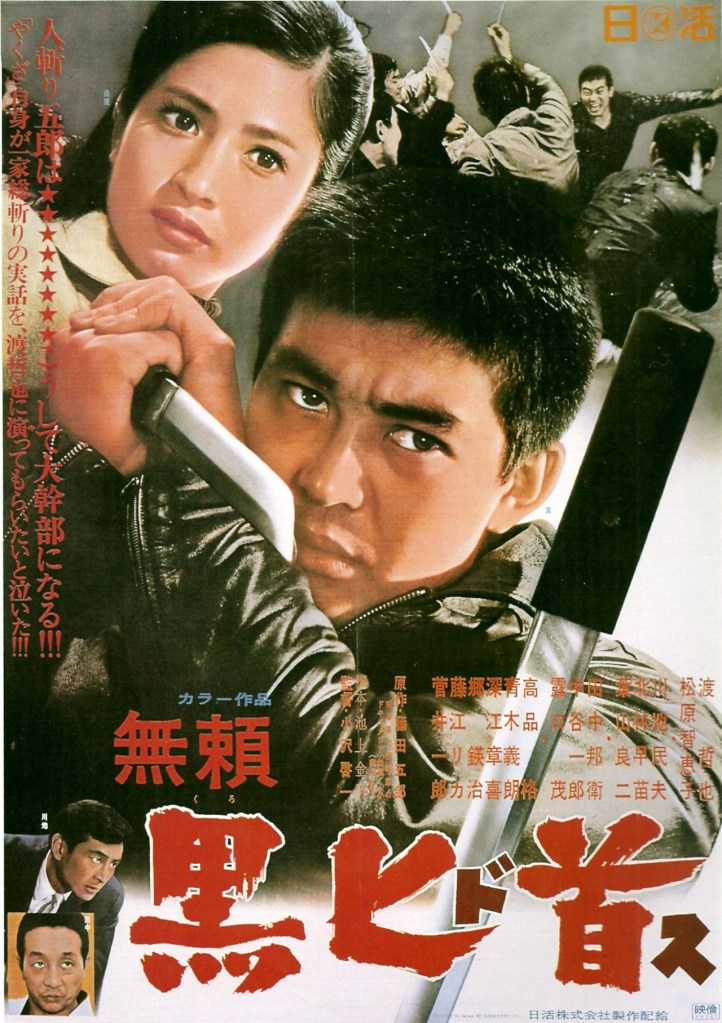
outlaw black daggerGoro (Tetsuya Watari) just can’t catch a break. He sends his one true love off on a train to safety only to see her dramatically return because she can’t bear to leave his side. Her devotion costs her her life as she places herself between Goro’s manly chest and an assassin’s knife. Heartbroken, Goro gets out of town only to run into another old flame who is now a mama-san and has apparently married another yakuza (despite the fact that Goro parted with her because of his chaotic yakuza lifestyle). As usual, the past won’t let him go – this time in a more literal sense as Goro encounters another woman who looks exactly like the girlfriend who died in his arms….

This time for the fifth instalment in the Outlaw series, Black Dagger (無頼 黒ヒ首, Burai Kurodosu), it’s not so much family as romance which takes centre stage as we witness just how dangerous it can be to fall in love with a yakuza. Yuri (Chieko Matsubara), the girlfriend Goro couldn’t save, died because she loved him too much.  Saeko loved him too – he succeeded in getting rid of her but she ended up rebound married to another guy who kind of looks like him but isn’t as good, and now there’s Shizuko (Chieko Matsubara again) – a warmhearted nurse who’s once again fallen for Goro’s noble tough guy act. Goro knows the price of love and he thinks he’s no good so he tries to avoid letting himself fall, both for his own safety and for his prospective love, but in the end the one fight he can never win is the one against his own heart.

Oddly Goro gets on quite well with Saeko’s husband, though he’s not keen to get involved with his troubles. He warns him that it might be better to let Saeko go as in the end yakuza only cause suffering for their women and soon enough Goro is proved right when the local gang become intent on pimping Saeko out leaving her husband pretty much powerless to resist.

Apparently this cuts both ways as a sad song from a band of street musicians recounts that a good wife can be a man’s weakness. Again it isn’t really clear how this instalment fits with the others but Yuri’s story is certainly very similar to Yukiko’s as seen in the first two movies and Goro’s guilt over not being able to protect her comes to colour the rest of his life. Once again Goro tries to say goodbye to love, advising Shizuko of the folly of falling for a man like him – she should just find someone nice and be happy. Full of nobleness and conviction, Goro strides out to clean up the town for good, knowing he may not return to see the fruits of his labours.

Black Dagger is once again directed by Keiichi Ozawa and is more or less in keeping with his other efforts in the series, mixing studio bound action with occasional forays into wider outdoor expanses. The film opens with an impressive montage title sequence and fight scene, but other than that the only set piece we get is the street singer sequence towards the end though the final fight is once again action packed and impressively filmed. Black Dagger perhaps doesn’t bring anything too new to the franchise, but it does improve on its already familiar narrative with another doomed love story and a series of shattered dreams for poor old Goro. Unlike the more hopeful ending of the last film, Black Dagger ends on exactly the same note as the other Outlaw movies as Goro staggers away from the crime scene, knife in hand and ready for the next crisis to come his way.


Outlaw: Black Dagger is the fifth of six films included in Arrow films’ Outlaw: Gangster VIP The Complete Collection box set (which is region free on DVD and blu-ray and available from both US and UK).

English subtitled original theatrical trailer:

https://www.youtube.com/watch?v=XlPk35AXV2I

Outlaw: Goro the Assassin (無頼 人斬り五郎, Keiichi Ozawa, 1968)

goro the assassinSo, once again Goro Goes Straight is sadly not the title of this fourth film in the tale of the noble hearted gangster “Goro the Assassin” (無頼 人斬り五郎, Burai Hitokiri Goro). After getting his friend out of a jam, the pair end up in prison. Goro is released three years later but his friend, Masa, is poor health and eventually dies a prisoner’s death with no one to collect his body meaning he’ll be buried in a lonely prison grave alongside the rest of society’s unwanted rubbish. On their final meeting, Masa asks Goro to find his sister for him and tell her that he’s doing alright. This message now well out of date, Goro decides to try finding Masa’s sister anyway if only to find out why she never came to see him even as he lay dying.
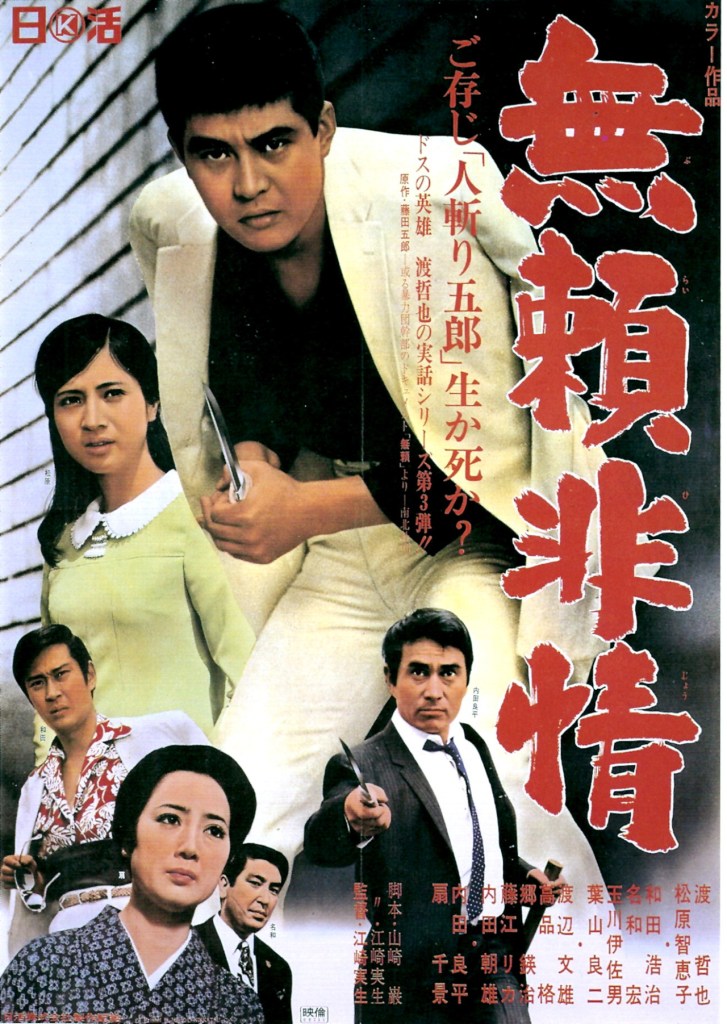
However, Goro once again runs up against another gang and some old enemies whilst trying to complete his quest and start an honest life at the same time. After taking a job working on the boiler at a hotel, he strikes up a friendship with the receptionist, Yuki (Chieko Matsubara again), whom he also bumped into a few times on his way there. She has some problems with the yakuza herself going back to the traffic “accident” which killed her father.

Family is once again the big key here. Goro is originally angry with Masa’s sister for abandoning her yakuza brother but the truth is more complicated. Having only each other in the world, Masa’s sister has been reduced to working in the red light district – in part to get some money together to help Masa. She never got the messages about his ill health because of moving around so much and was also ashamed to let him know where she’d been working. Now that Masa is dead, her sacrifice is meaningless.

It’s also family which gets Yuki into trouble, in an indirect way, after she accepts some money from the yakuza who killed her father. Perhaps intended to salve his conscience, the money brings Yuki to the attention of the other gangsters and their various extortion scams which eventually leads to her giving up her job at the hotel. Of course, by this point, she’s fallen in love with the noble and brooding Goro which also puts her in the line of fire as things heat up for him with the local tough guys.

Again it isn’t really clear how this film links in with the others in the series but this time around Goro is a much more playful character, bright and cheerful and only occasionally brooding. He’s cracking jokes all over the place and Yuki even refers to him as the “amusing guy from the bus” when he comes to ask about the boiler job. This only adds to his “cool” appeal as he appears somehow far above everything, looking down on the yakuza world with a sort of ironic eye that implies all of this is quite ridiculous but nevertheless inevitable.

Goro still dreams of going straight and leading a more normal life but once again it eludes him. Yuki again utters the phrase that he’s a yakuza in name only and doesn’t have a killer’s heart but Goro disagrees. Throwing down his short sword he declares he longs to live a life without it but it seems surgically attached to him now, he’ll never be free of it. Again, at the end of the movie he sends his chance of a way out of the gangster life off on a ferry to ensure her own safety at the cost of his personal happiness.

Directed again by Keiichi Ozawa who handled the second film in the series, Goro the Assassin has more outdoor scenes only sticking to the studio for the red light district sequences. It doesn’t quite have the visual style of the other instalments with fewer set pieces which tend to be centred around the fight scenes themselves rather than anything going on around the same time. By the time the ending rolls around there’s a kind of progress in standing still as, after taking care of the bad guys, Goro sees a vision of Yuki standing far off on the horizon. Rather than staggering off lonely and alone as in the other films, he stands and stares which, though not exactly a happy ending, is a little more hopeful than the doom laden conclusions the films have each featured so far.


Outlaw: Goro the Assassin is the fourth of six films included in Arrow films’ Outlaw: Gangster VIP The Complete Collection box set (which is region free on DVD and blu-ray and available from both US and UK).

English subtitled original theatrical trailer:

https://www.youtube.com/watch?v=McI68d_cj6U

Outlaw: Heartless (大幹部 無頼非情, Mio Ezaki, 1968)

heartlessThings take a slight detour in the third of the Outlaw series this time titled “Heartless” (大幹部 無頼非情, Daikanbu Burai Hijo). Rather than picking up where we left Goro – collapsed on a high school volleyball court, it’s now 1956 and we’re with a guy called “Goro the Assassin” but it’s not exactly clear is this is a side story or perhaps an entirely different continuity for the story of the noble hearted gangster we’ve been following so far. The only constant is actor Tetsuya Watari who once again plays Goro Fujikawa but in an even more confusing touch the supporting characters are played by many of the actors who featured in the first two films but are actually playing entirely different people….
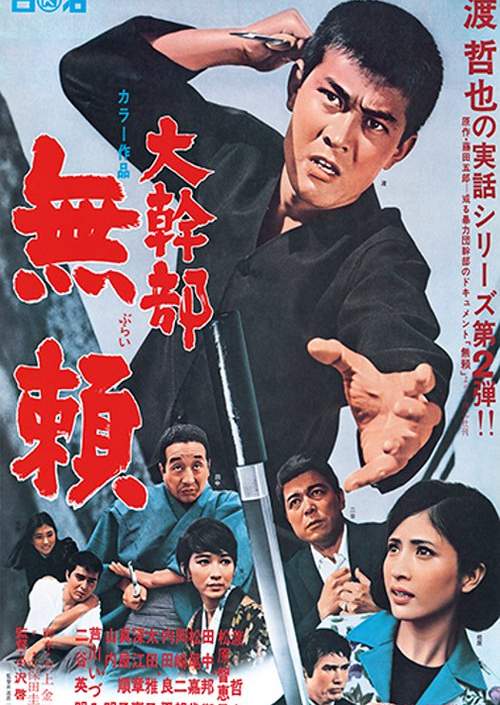
So, it’s 1956 and this time Goro is out on a job to take out a rival gangster only he has a change of heart when the man’s wife pleads with him. Goro tells the pair to leave through the back door but one of the other gangsters turns up before they can escape and takes care of the husband whilst casting a watchful eye on the now treacherous Goro. Right before his lights go out, the murdered man tells Goro that he’s been framed as part of the boss’ gambling scam and tasks Goro with taking his sickly wife to Nagoya for medical treatment. After cleaning out the bad guys at the gambling den, Goro takes off with wife in tow and even runs into an old friend along the way but as usual nothing’s quite a simple as it seems.

If the problem with Gangster VIP 2 was staying too close to the formula established in the previous film, then Heartless perhaps attempts to overcorrect this flaw by doing something completely different. It’s really not clear how this film links in with the other two and the presence of most of the same actors playing entirely different characters is more than a little confusing to say the least, though it is a problem which occurs quite frequently with these kinds of films and is largely due to the way they were produced at studio level.

Once again the roots of restless gangsters lie post-war turmoil as the fellow ex-mobster Goro runs into is another childhood friend from the streets – Goro actually saved his life when he became dangerously ill by sneaking onto a US military base to “acquire” some penicillin (quite a canny move for a young boy, it has to be said). There’s less harking back to the theme of homes and hometowns than in the first two movies – yakuza wives take on a bigger role instead, becoming the symbol of a more normal life that is somewhat denied to both gangsters (ex or otherwise) and also burdening their husbands with the need to ensure their safety.

As in the first two films, Goro is referred to as being “different” from the regular yakuza. His potential love interest (again played by Chieko Matsubara but not as Yukiko from the other two movies) argues with her father who was also a yakuza but gave up the gangster life for love of her mother – he warns her off men of Goro’s ilk as they rarely do anything from the kindness of their hearts, but she remonstrates with him that Goro isn’t that kind of gangster. This time he’s also carrying around a bracelet that belonged to an old flamed called “Natsuko” that we haven’t heard of before but gives his pleas not to take a man like him to heart a little more weight.

Heartless is the only film in the series to be directed by Mio Ezaki (the first being directed by Toshio Masuda and the others by Keiichi Ozawa) and has little of the visual style of the first two movies though the title sequence of Goro single handedly raiding the gambling den proves a stylish early highlight. In keeping with the other two films we still have a large scale fight sequence nearing the finale which is played against the song of a cabaret singer and there’s even a little strange slapstick as the final fight ends up in some kind of decorators’ warehouse with everyone sliding around and getting covered in paint. After taking care business Goro tries to exile himself again, staggering off in an uncertain direction whilst the song playing extols the lonely fate of a “wandering man” which is perhaps the only heart he carries – the ruined heart of a “heartless” man with no roots or anchor to tie him home, a wanderer with no clansmen and no hope of salvation.


Outlaw: Heartless is the third of six films included in Arrow films’ Outlaw: Gangster VIP The Complete Collection box set (which is region free on DVD and blu-ray and available from both US and UK).

English subtitled original trailer:

https://www.youtube.com/watch?v=lDu54sfiI78

Outlaw: Gangster VIP 2 (大幹部 無頼, Keiichi Ozawa, 1968)

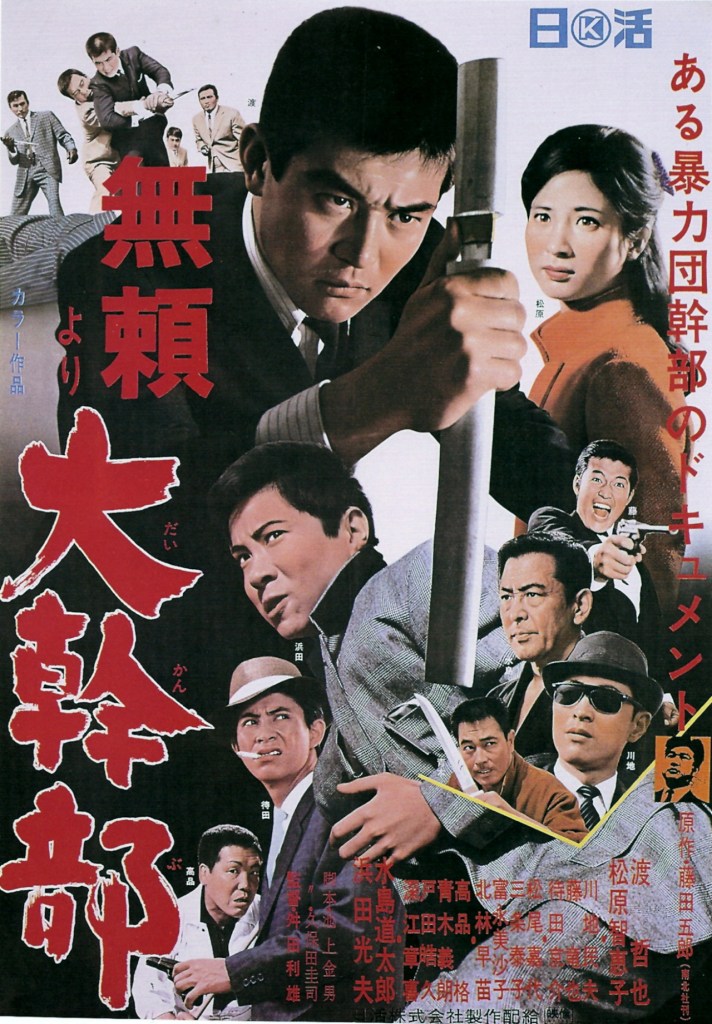
Outlaw Gangster VIP 2So, as it turns out the end of Outlaw: Gangster VIP was not quite as final as it might have seemed. Outlaw Gangster VIP 2 (大幹部 無頼, Daikanbu Burai) picks up not long after the end of the first film when Goro (Tetsuya Watari), having recovered from his injuries, takes a train to go and find Yukiko (Chieko Matsubara) with the intention of starting an honest life with her away from the temptations of the big city. However, as often happens, his past follows him.

Like the first film, Outlaw: Gangster VIP 2 also begins with a black and white flashback sequence reminding us of Goro’s childhood only this time with a voice over from Goro himself who goes on to include the first film’s events in his recap. Goro might have come to the country to get away from the gangster life but as soon as he steps off the train he gets himself into trouble with a local gang by interfering with a few tough guys who are trying to entrap a group of actresses and force them into their employ. One of the leading actresses is just as taken with Goro as Yukiko was in the first film and gives him her red scarf as a thank you. Goro is still very much with Yukiko though and trudges off through the snow to find her.

She and Yumeko, Sugimoto’s former girlfriend, are living in a small hut but Yumeko has fallen ill and is refusing to see a doctor out of fear of the expense. Goro gets a legitimate logging job but before long the company hits trouble and he’s let go. All the while Yumeko’s condition is weakening and the three are in desperate need of money. One of the local gangsters Goro runs into trouble with turns out to be an old friend who offers him a job. Goro was hoping to leave the Yakuza world behind forever but it seems it isn’t finished with him yet…

In many ways this second instalment in the Outlaw: Gangster VIP series is very much more of the same as noble outlaw Goro battles the ever more cruel and corrupt forces of the Yakuza underworld in defence of women folk and underdogs everywhere. Directed this time by Keiichi Ozawa the film is disappointing only where it begins to feel like a rehash by following the familiar story beats of the first film with its betrayed underlings and treacherous bosses yet still manages to feel fresh and exciting for most of the running time.

The action this time around takes place in the vast snowy expanses of Northern Japan and has a much more open feeling overall with greater use of location shooting rather than the studio bound atmosphere of the first film. Ozawa follows Masuda’s lead but angles for a few expressive sequences of his own such as attempting to cut a flamenco dance sequence (starring a young Meiko Kaji acting under her original name) with a potential stand off and less successfully by playing a high school girl volleyball game against the final fight to the death which is going on in the waterway below.

The concept of home and having a home town is once again emphasised as a recurring motif where the desire for a normal life and family can get a man killed – the recurrent message being that a yakuza is a man without ties to the normal world. Such relationships are now denied him by his bond to his gangster brothers and will not only place in danger those you most love, but will ultimately lead to your own downfall too. Once again Goro wrestles with his desire to build a more normal life with Yukiko and the self knowledge that his yakuza past will never let him rest and perhaps the best thing for her is to make her go.

Outlaw: Gangster VIP 2 can’t quite match the power of the first film’s finale and often feels as if it’s retreading the same ground yet it is quite interesting ground to retread. Even if there weren’t another four films in the series, one gets the feeling that fate hasn’t finished toying with Goro yet and even if the yakuza world continues turning in the same ancient cycles of violence and revenge, Goro at least will be standing on the side of right, perpetually and ironically fighting in an attempt to put an end to it all for good.


Outlaw: Gangster VIP 2 is the second of six films included in Arrow films’ Outlaw: Gangster VIP The Complete Collection box set (which is region free on DVD and blu-ray and available from both US and UK).

English subtitled original theatrical trailer:

https://www.youtube.com/watch?v=nmXRcvzyXCQ

Outlaw: Gangster VIP (「無頼」より大幹部, Toshio Masuda, 1968)

outlaw gangster VIP 1 posterBy 1968 the fate of the gangster movie was somewhat in flux as the old ninkyo style was on its way out yet the jitsuroku approach, later to find its zenith in the Battles Without Honour and Humanity series, hadn’t quite taken hold. Outlaw: Gangster VIP provides an essential bridge as it takes its inspiration from the writings of one time yakuza Goro Fujita but at the same time brings together many of the themes that were dominating Nikkatsu’s output at the time from their star led, youth appeal billboard cool to their noir inflicted, nihilistic crime thrillers as a kind of culmination of everything they had been producing up to that point.
The first film in the series, Outlaw: Gangster VIP (無頼」より大幹部, Burai yori Daikanbu) begins with a black and white prologue seemingly set around the end of the war in which a young boy endures firstly the death of his mother and then the younger sister who has been left in his care – presumably through hunger or at least ill heath exacerbated by malnutrition. Eventually he himself is arrested after being caught trying to steal food and is sent to a reform school from which he escapes alongside another boy, Sugiyama.

Flash forward to a grown up version of Goro (Tetsuya Watari) lounging around in a dingy apartment and the film expands into glorious, if garish color. Goro is summoned to a local drinking establishment where his yakuza boss is under attack. On getting to the bar and coming to his boss’ defence he finds that the aggressor is none other than Sugiyama. Saving his boss by stabbing his friend he nevertheless ensures Sugiyama’s survival with a carefully placed blow though both are sent back to prison. Goro gets out three years later to discover his girlfriend has married someone else and the yakuza world is just as dog eat dog as it was when he left it.

As in many other films of this burgeoning genre, the yakuza is more or less a surrogate family of grown up orphaned street kids who’ve bound together for increased odds of survival. There maybe strong bonds between brothers, but the old ways of samurai style honourable conduct are long gone (if they ever really existed at all). Suigyama’s gang have failed to protect his girlfriend who has been reduced to prostitution despite his sacrifices for them – an unthinkable act in traditional terms, but Sugiyama’s boss is the new kind of uncaring, ambitious yakuza who cares nothing for traditional ethics.

The yakuza as a home for waifs and strays is a theme which continues throughout the series with the constant references to “hometowns” and a desire to get out of the city for a simpler, more honest life. People keep telling Goro that he’s not a real yakuza, that deep down he doesn’t have a gangster’s heart. This is true, to an extent, as Goro is the kind of noble criminal seen in the ninkyo genre who clings fast to the old ways – loyal to his friends and his clan, seeking to protect those who need it over choosing to further exploit the already vulnerable. He’s a gangster because life left him with no other options. For a street kid and reform school escapee, what possible other place could there be for him to survive than in the arms of his yakuza brothers?

An exile from the world of conventional society, Goro cuts a lonely path which ties into the nihilistic noir themes of the genre as he wanders around in very cool looking leather jacket. Mostly still studio bound, Masuda opts for a fairly straightforward approach yet with some noir-esque canted angles and a few interesting set pieces. The unusual finale in which Goro faces the treacherous yakuza kingpins against the background of a cabaret act serves as impressive highlight of the film, perfectly contrasting its garish technicolor world with the darkness underneath as Goro staggers off along a street dark with something more night and towards an eventual salvation of one kind or another.


Outlaw: Gangster VIP is the first of six films available as part of Arrow’s amazing new blu-ray and DVD box set which is released in UK and USA and is completely region free (hurrah!).

I’ve also written a full writeup of the box set as a whole over at UK Anime Network which you can read right now if you’re the sort of person who likes to skip to the end. Otherwise, get ready for five more tales of broken hearted tough guys….

English subbed version of the original theatrical trailer:

https://www.youtube.com/watch?v=fQDtXkgzhaA

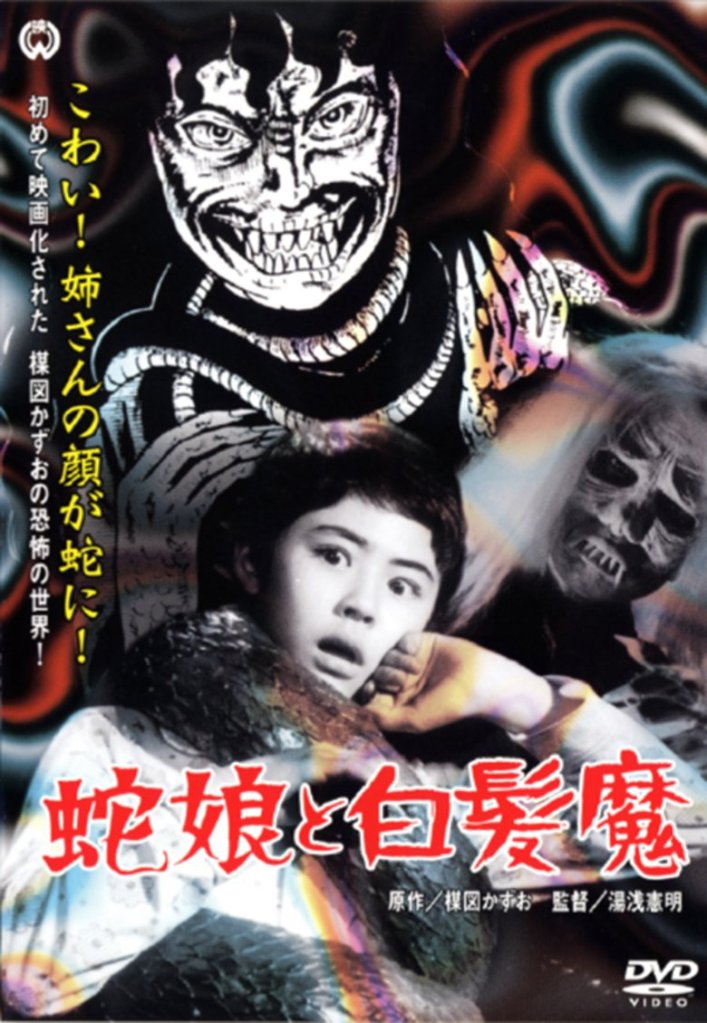
The Snake Girl and the Silver-Haired Witch (蛇娘と白髪魔, Noriaki Yuasa, 1968)

snake girl and the white haired witchLittle Sayuri has had it pretty tough up to now growing up in an orphanage run by Catholic nuns, but her long lost father has finally managed to track her down and she’s going to able to live with her birth family at last! However, on the car ride to her new home her father explains a few things to her to the effect that her mother was involved in some kind of accident and isn’t quite right in the head. Things get weirder when they arrive at the house only to be greated by the guys from the morgue who’ve just arrived to take charge of a maid who’s apparently dropped dead!
If that weren’t enough her “mother” calls her by the wrong name and then dad gets a sudden telegram about needing to go to Africa for “several weeks” to study a new kind of snake! On her tour of the house, Sayuri finds a room full of snakes, reptiles and insects (and also for some reason a large vat of acid?!) as well as a room with a buddhist altar where the food seems to disappear just as if Buddha himself were really eating it. Eventually, Sayuri is introduced to her secret sister, Tamami, who has slight facial disfigurement and a wicked disposition which has seen her locked away from view for quite some time…..

Based on the manga by Kazuo Umezu, Snake Girl and the Silver-Haired Witch (蛇娘と白髪魔, Hebi Musume to Hakuhatsuma) is, apparently, aimed at a younger audience which explains its child’s eye view of events but the film makes no concessions to the supposed softness of little minds. With a host of surreal imagery including dream sequences full of creepy, hypnotic spirals, and moments of shocking violence such as a large frog being suddenly ripped in half right in front of Sayuri’s eyes the film certainly doesn’t stint on blood, horror and general freakiness.

Sayuri herself seems largely unperturbed by these strange goings on outside of her nightmarish serpentine visions. She seems to have been well cared for at the orphanage and is happy to have found her family rather than just to be escaping the institution. On getting “home” she does her best to fit in right away, acting politely and trying to bond with her mother even in her confused state. She even tries to get on well with her mysterious sister despite the ominous warning to keep her very existence a secret from her father. Tamami, however, is a nightmare child with homicidal tendencies who isn’t interested in playing happy families with the girl who’s come to usurp her place in the household.

There’s a little more to the set up than just snake based horror (the clue being the Silver-Haired Witch of the title) but the secondary message seems to be one of remembering that the true beauty of a person lies not in their external appearance but in the goodness of their soul. The previously deformed Tamami is later said to be looking sweeter after having “redeemed” herself and Sayuri pledges to honour Tamami’s sisterly sacrifice by always remembering to hold fast and true to the beautiful things in her own soul without being swayed by worldly charms.

Snake Girl and the Silver-Haired Witch is more of a psychological horror tale than some of the effects laden efforts of the period. However, there are a fair few practical effects on show most notably during the dream sequences – one of which sees Sayuri actually fighting a giant snake with a sword, as well as the creepy spirals and the appearance of weird vampire-like snake women, dancing oni masks and the Silver-Haired Witch herself.

A children’s film that no one in their right mind would actually show to a child, Snake Girl and the Silver-Haired Witch is a freakishly psychological horror show seen through the eyes of a little girl. Part dreamscape and part terrifying reality, the film mixes the real and the imagined with a fiendish intensity and it just goes to show that sometimes you really do need to pay attention to the strange fancies of intrepid young ladies.


This trailer doesn’t have any subtitles but it is actually quite scary…..

https://www.youtube.com/watch?v=rLtwDVvTtA8

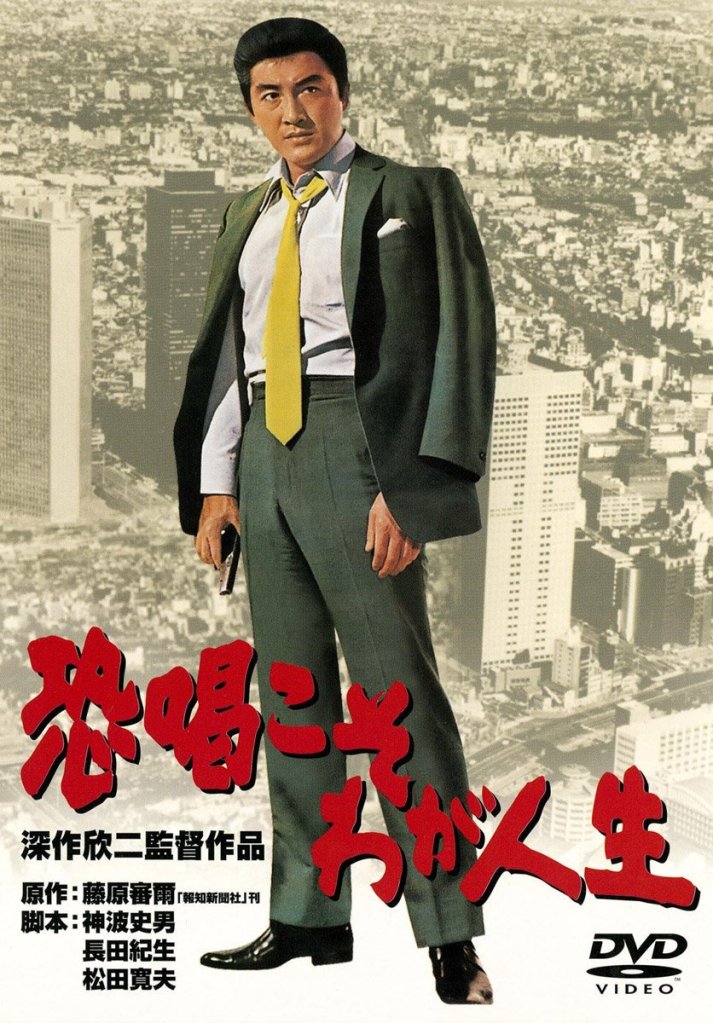
Blackmail is My Life (恐喝こそわが人生, Kinji Fukasaku, 1968)

81eOlRLzY4L._SL1200_Suffice to say, if someone innocently asks you about your hobbies and you exclaim in an excited manner “blackmail is my life!”, things might not be going well for you. Kinji Fukasaku is mostly closely associated with his hard hitting yakuza epics which aim for a more realistic look at the gangster life such as in the Battles Without Honour and Humanity series or his bloody tale of high school warfare, Battle Royale but he also made a few comedies too and often has his tongue firmly in his cheek. Blackmail is My Life (恐喝こそわが人生, Kyokatsu Koso Waga Jinsei) is nominally a crime film, it follows the adventures of a group of young people having a lot of fun doing crime and crime related activities, but the whole thing’s so flippant and ironic that it threatens to drown itself in late ‘60s cool. It doesn’t, of course, it swims around in it whilst looking cool at the same time.

Shun starts the film with a slightly melancholy voiceover (a technique much borrowed in the ‘90s). He was young, he was ambitious but the best thing was he had friends who were more like family. He breaks up with his girlfriend and mopes about his awful job cleaning toilets at a cabaret bar but one day he overhears something about a scam going on with the whiskey they’ve been selling. Shun spots a business opportunity to get his own back on the cabaret owners and get some dough in the process. So begins his life as a petty blackmailer and it’s not long before he’s got his three best mates trapping businessmen into compromising situations so they can film it and blackmail them. The gang carry out petty crime and everything would probably be OK for them if they had stuck to shallower waters, not tried to get revenge for a family member’s death and, crucially, known when they were in way over their heads. Could it really ever be any other way for a self confessed small time punk?

Shun is a bit of an odd duck really. As a girlfriend points out, he’s always thinking about the past like an old man rather than the future, like a young one. He has an irreverent attitude to everything and a vague sense of entitlement mixed with resentment at having missed out in Japan’s post-war boom town. The blackmailing not only allows him to feel smugly superior to everyone else as if he’s some kind of mastermind trickster, but of course also allows him to live the highlife on the proceeds with far less time spent working himself to the bone like the average salaryman.

However, he also has this unexplained sadness, almost as if he’s narrating the film from the point of view of its ending despite being smack in the middle of it. When thinking of happy things he always comes back to his gang of friends enjoying a joyful, innocent day on the beach but later he starts having flashes of rats drowned in the river. Somehow or other he fears he’ll end here, dead among the detritus of a world which found no place for him. He tries to convince himself he’s bucking the system, trying to start a revolution for all the other young punks out there but at the end of the day he’s just another hungry scrapper terrified he’s going to land up on the trash heap.

Like a lot of Fukasaku’s other work, Blackmail is My Life is bright and flashy and cool. Full of late ‘60s pop aesthetics, the film seems to have a deep affinity with the near contemporary work of Seijun Suzuki, in fact one of the characters is always whistling Tokyo Nageremono, the theme tune to Suzuki’s pop art masterpiece Tokyo Drifter. Having said that Fukasaku swaps nihilistic apathy for a sort of flippant glibness which proves a much lighter experience right through until the film’s fairly shocking (yet inevitable?) ending.

Not quite as strong as some of his later efforts, Blackmail is My Life nevertheless brings out Fukasaku’s gift for dynamic direction though the comparatively more mellow scenes at the sea are the film’s stand out. Pulling out all the stops for his crazed, POV style ending with whirling cameras and unbalanced vision Fukasaku rarely lets the tension drop for a second as Shun and co. get hooked on crime before realising its often heavy tarrifs. Another bleak and cynical (though darkly comic) look at the unfairness of the post-war world, Blackmail is My Life may not rank amongst Fukasaku’s greatest achievements but it wouldn’t have it any other way.


Blackmail is My Life is available with English subtitles on R1 US DVD from Homevision and was previously released as part of the Fukasaku Trilogy (alongside Black Rose Mansion and If You Were Young: Rage) by Tartan in the UK.

Human Bullet

Human Bullet (Nikudan) is a powerfully absurd antiwar satire. Set in the very last days of the second world war, when most can see the writing on the wall but don’t want to admit  that their situation is hopeless, the film attempts to capture the bewilderment and confusion as people start to comprehend the situation. An unnamed soldier of about twenty years old is training to be an officer and is repeatedly subjected to ridiculous tasks and ideas sent from high command.

Whilst in charge of the food store, it’s discovered that three packets of biscuits have gone missing. Whilst being question about this the soldier remarks that himself and the other men have become cows, that is they’ve learnt to ruminate – a skill which he then demonstrates to the non plussed superior officer. They stole the biscuits because their rations are pitiful and they lack the strength for their training. Pointing out the obvious that this warehouse is full of food whilst the men are collapsing from malnutrition,  the superior angrily tells him the food is for the final battle. Pointing out that there won’t be a final battle if they’ve all died of starvation further annoys the officer and our hero is reprimanded for his defeatist attitude by being forbidden to wear any clothing until further notice.

This further notice only comes when the squad is abruptly designated an anti-tank suicide squad, they will basically run into tanks whilst carrying explosives. Given one day of freedom before being expected to make the ultimate  sacrifice, the soldier finds love after a few wrong turns and a strange meeting with an armless bookseller (a noticeably odd late performance from Chisu Ryu). He also develops a strange friendship with some orphaned children and ‘saves’ a suicidal woman.

Alas his orders are abruptly changed again and having failed to meet up with his unit he ends up, in the most absurd image of the film, a man in a barrel strapped to a torpedo. When you hear about lost Japanese soldiers years later not knowing the war is over and you wonder how that can happen, well it’s because of things like this. Aimlessly drifting and bemoaning the ridiculousness of his situation, his feelings of helplessness and bewilderment perfectly sum up the events of the summer of 1945.

Okamoto’s trademark dark humour prevent this from being as bleak as the subject matter might suggest, although the finality of its ending is still incredibly powerful. Like Catch-22 or Dr Strangelove the film beautifully sends up the absurdity of war, and especially of an authoritarian win at all costs philosophy. It’s a shame this film isn’t currently available on DVD anywhere with English subtitles as it’s a very unusual film even by the standards of the Japanese Wave. Human Bullet is unforgettable and really deserves to be better known in the West.