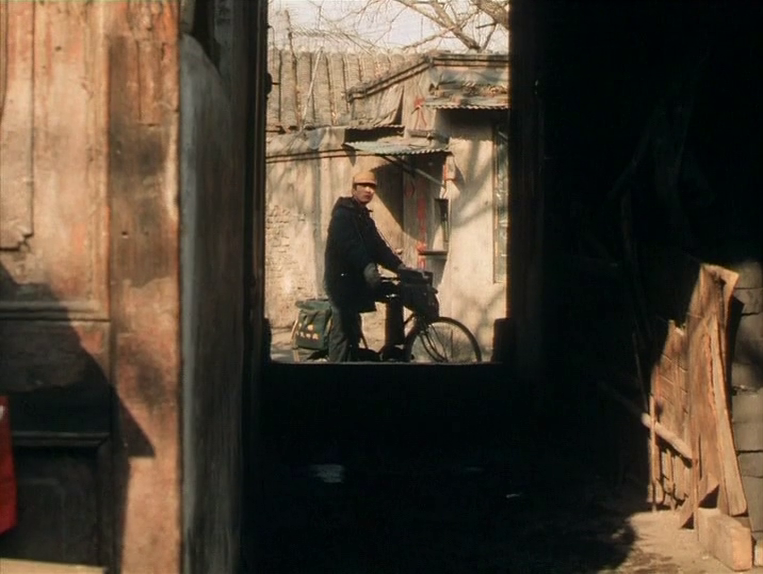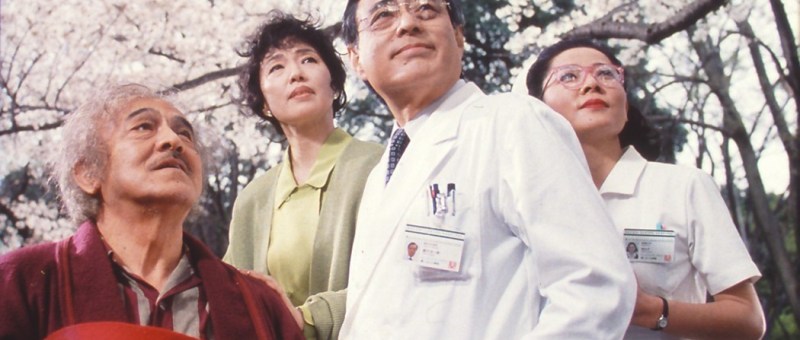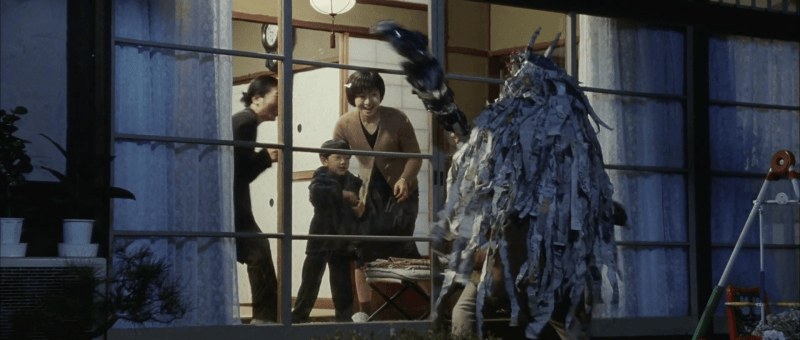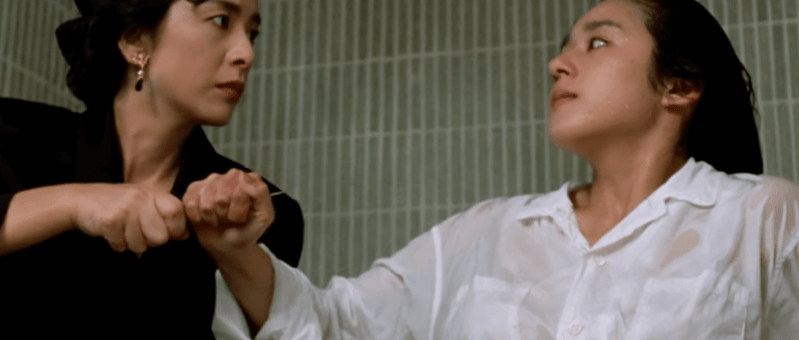
Wait and See (あ、春, Shinji Somai, 1998)

In the opening sequence of Shinji Somai’s Wait and See (あ、春,  Ah haru), a large grey cat growls as it creeps through a suburban home and out into the garden where it sits outside a henhouse and loudly miaows at the birds trapped inside. In many ways, this is exactly what’s about to happen to the Nirasakis when a prodigal father suddenly returns to disrupt the life of his incredibly dull and emotionally distant son. 

Hiroshi (Koichi Sato) is the epitome of the ideal salaryman and seems to be living a charmed life having married into his wife’s wealthy family but under the surface nothing is quite as it seems to be. His wife Mizuho (Yuki Saito) seems to be suffering with some kind of mental distress and Hiroshi often appears indifferent or even cold towards to her. At the memorial service for his late father-in-law, Mizuho’s mother (Shiho Fujimura) and aunt (Chisako Hara) reflect on the late patriarch in less than favourable terms remarking that “everything was half measures” with him. He didn’t commit himself fully to either his family or his career and consequently achieved success with neither. 

The implication is that Hiroshi is much the same, simply going through the motions whether at work or at home and largely closed off to his wife at one point even drawing a curtain and leaving her in the dark to escape a conversation. “He never tells you anything” Mizuho’s mother points out after reading in the paper that the company where Hiroshi works may be in financial trouble, while Mizuho too complains that he never discusses anything with her only announcing the results when it’s already finished. 

Hiroshi had always believed his own father to have died when he was five years old, so it’s quite a surprise when the gnomish Sasaichi (Tsutomu Yamazaki) accosts him in the street and claims to be his long lost dad. Like the cat outside the henhouse, he’s set to create a disturbance but not quite the one everyone assumes it will be. Hiroshi’s mother Kimiyo (Sumiko Fuji) warns him that his crass working class dad will only cause embarrassment in the refined elegance of the upper-middle-class family he has married into. Yet Mizuho and her mother actually find Sasaichi quite amusing for the first couple of days, the mother very impressed by Sasaichi’s unreconstructed manliness which she finds so in contrast to the comparatively meek Hiroshi. Sasaichi fixes the leaky bath and sticking door that Hiroshi never got round to symbolising his lack of regard and inability to care for his home, which is in a sense ironic because Sasaichi was never really able to take care of anything. 

Sasaichi later explains that he left because his business failed and he ended up with debts to loansharks so he divorced Kimiyo and moved away to prevent them coming after her money. A fatherless son, Hiroshi struggles to construct the image of himself as a father and cannot create intimate relationships with people, but has settled for fulfilling the role of a successful member of society who can support a family financially even though the sense of himself as a provider is an illusion as his wife’s generational wealth already guarantees them a comfortable existence. Even so, this being the difficult post-bubble economy Hiroshi lives with a sense of economic anxiety but buries his head in the sand refusing to listen to a more savvy friend who can see the writing on the wall and tries to convince him to take a job at another company where he’s just secured a position for himself. But Hiroshi is afraid of change and ironically clings fast to his corporate family even while fearing it will leave him. 

He desperately doesn’t want to think that he is like Sasaichi, that he may fail his family by failing in his career or that he too is an uncouth, unrefined country bumpkin incapable of taking care of himself let alone anyone else. The again perhaps they’re more alike that he’d like to think. Hiroshi and Mizuho object when they realise Sasaichi’s been teaching their son Mitsuru (Keita Okada) how to play craps, but as his friend points out stockbroking is also really just legitimised high stakes gambling. He too wanders around until late at night because he doesn’t want to go home and makes his wife worry so she has to take sleeping pills .

Yet there’s also a side of him that is still the gentle boy from the country as he painstakingly raises chicks in the back garden. In the end, it’s Sasaichi who shows them the maternal warmth they need to grow, gestating the eggs in a pouch inside his haramaki only for them to hatch at the most ironic moment. Hiroshi gives his son a brief life lesson in explaining that the chicks that hatch from these eggs will go on to lay their own in a circular process of renewal just as he is passing on knowledge from his childhood to the next generation. The film begins and ends with a ritual of mourning, though Somai takes us through the passing season moving from Setsubun to Hinamatsuri as Sasaichi continues to outstay his welcome while attempting to repair his corrupted paternity. “Don’t worry, life will go on,” Mizuho reassures a more open Hiroshi finally coming to terms with his anxieties and willing to share them with his family in full knowledge of who he is as a man and a father in a world that’s anything but certain.


Original trailer (no subtitles)

Door II: Tokyo Diary (Banmei Takahashi, 1991)

A sequel in name only, Banmei Takahashi’s Door II: Tokyo Diary has almost nothing to do with his previous film Door, the title was apparently tacked on at the behest of studio execs who noticed that it had sold well on home video. Nevertheless, the film has its own door motif as the aimless heroine searches for herself among the many available to her, temporarily trying on other personas while wilfully flirting with danger. 

A menacing voice message reminds Ai (Chikako Aoyama) that her work is dangerous, a woman telling her to back off but for unclear reasons either genuinely concerned for her safety or annoyed she’s infringing on her business. Ironically enough, Ai is a call girl who runs her own operation through the soon-to-be obsolete technology of a telephone answering service which unlike the phones in Door offer her a one way portal of communication that isolates her from her potential clients. She explains that she chooses the men for herself, watching idly having quadruple booked the same appointment until finally deciding which door to open though it seems unclear how far she is aware of her vulnerability given that working alone means there’s no one to call if something goes wrong as it eventually does. Even the first client we see her with changes the moment he steps over the threshold, becoming angry having realised that Ai doubled booked the appointment while playing rough with her and forcing her down onto the bed. 

Ai (whose name means love) seems to treat each of the doors as another world in which she must play her assigned role. As such, she submits herself to every degradation though it’s unclear if the act of submission is empowering or she is really just at the mercy of these wealthy mean who’ve paid to do what they like with her. Then again as Ai explains to sometime love interest Ichiro (Shingo Kazami), her real motive is sex and not money leading her to turn down an appointment with a sweet older gentleman who’s checking call girl experience off his bucket list but does not actually want to sleep with her only go on a date. Meanwhile, she finds herself bound and blindfolded while a man in heavy makeup and a nazi uniform dribbles wine down her face as part of a urination role-play. She later plays the piano for him while he curls up in a little ball at her side. 

Becoming involved with a mysteriously wealthy art dealer (Joe Yamanaka) who treats her with unusual tenderness seems to shift Ai’s world view, but equally does an incredibly dark encounter with a dangerous man who attacks Ai and her friend Tomoyo (Yukino Tobita) with a pair of scissors until Tomoyo bites one of his toes off so they can escape. This is the danger the middle-aged madam (Keiko Takahashi) tried to warn her about and causes her to reconsider her life as a call girl until she finally decides to try the same door again and bursts the fantasy bubble by telling the art dealer she loves him. 

A climatic and hugely inappropriate speech at a wedding which nevertheless earns the appreciation of the bride, allows Ai to begin to rediscover herself realising that it was the sense of anticipation that she craved not knowing what she’d discover beyond each and every door. She decides she’d like to swim in the great ocean of infinite possibility once again, ready to open more doors to find out what lies beyond possibly reassured by the art dealer’s assertion that though most of his paintings are fakes he’s discovered a handful of “originals” too restoring Ai’s sense of self as an individual rather than an anonymous call girl who comes when called and has no direction of her own. A melancholy tale of youthful anxiety in the fracturing economy of the Bubble on the eve of its implosion the film trades on Takahashi’s experience in pink film in its at times perverse eroticism but ultimately presents a tale of a young woman regaining control over her self and her life, willing to embrace new possibilities and their concurrent dangers so long as she chooses them for herself. 


Door II: Tokyo Diary is released in the UK on blu-ray 30th October courtesy of Third Window Films.

Restoration trailer (English subtitles)

White Badge (하얀 전쟁, Chung Ji-young, 1992)

Change was in the air in the Korea of 1979. Park Chung-hee, who had seized power in 1962 by means of military coup and thereafter ruled as a repressive dictator, was assassinated by the head of the KCIA for reasons which remain unclear. A brief window of possible democratic reform presented itself but was quickly shutdown by a second military coup by general Chun Doo-hwan who doubled down on Park’s repression until finally forced out of office in the late ‘80s. It’s into brief moment that Chung Ji-young’s White Badge (하얀 전쟁, Hayan Jeonjaeng) drops us as a traumatised reporter finds he is being given permission revisit the painful past now that they are finally “free” to speak their minds, but remains personally reluctant to open old wounds. 

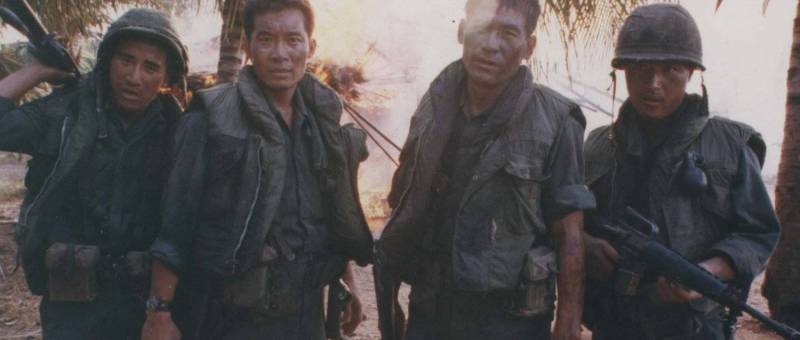
Han Gi-ju (Ahn Sung-ki) is a functioning alcoholic whose wife has left him and remarried though he still spends time with his small son who appears to adore his dad. In the wake of Park’s assassination, his boss wants him to write the true story of his experiences as a soldier in Vietnam, but Gi-ju is not convinced. He’s still haunted by nightmares of his time in the army and has no desire to go delving into his own painful memories even if it is perhaps the right time to let the people know how it really was. A little while later, however, he starts getting nuisance phone calls which turn out to be from an old war buddy, Byeon Jin-su (Lee Geung-young), who remains too shy to get in touch but later sends him a collection of photos and, somewhat worryingly, a pistol taken as a war trophy from the Viet Cong. 

We only come to realise the significance of the pistol’s passing at the film’s conclusion, but the fact remains that both men have been permanently changed, perhaps damaged, by their experiences in Vietnam only in different ways. Displaying obvious symptoms of PTSD, Jin-su has reverted to a childlike state, somewhat unsteady in his mind, and quickly flying into a panic on hearing loud noises such as helicopters or fireworks which return him to the battlefields and the terrible things he saw there. Gi-ju, meanwhile, is brooding and introverted. He drinks himself to sleep but is woken by nightmares. His marriage has failed and his only friendship seems to be with his editor who drags him to a karaoke box to schmooze a wealthy friend from school who, somewhat ironically, made most of his money manufacturing weapons used in Vietnam while never having to serve himself. “What’s wrong with that?” he asks, “We made money thanks to President Park. When President Park died, my dad cried.” unwittingly outlining the entire problem and in fact embodying it as he continues throwing his money about with the excuse that the only thing to do with dirty money is spend it dirtily. 

Prior to that, he’d criticised Gi-ju’s manhood by betting that he’d never actually killed a Viet Cong soldier. Gi-ju laments that all anyone ever wanted to know about Vietnam was how much money he made and whether he bedded any Viet Cong women. They never wanted to know the reality of it, that he found himself increasingly disillusioned not just with his country and the war but with “human values and history”. While in Vietnam he witnesses street children chasing soldiers for candy and flashes back to his own days as a street orphan after the Korean War tugging on the sleeves on American GIs who crudely threw him only empty packets of cigarettes. The colonised is now a coloniser and it’s an uncomfortable feeling. On a long march, Gi-ju and another soldier pass an old man along the wayside who keeps shouting “pointless” and explains to them that in his 70 years he’s seen many people walk along this road. First it was the Chinese, and then the French, the Japanese, the Americans, and now the Koreans. If you truly want to help, he says, go home and leave us in peace. “We don’t care who wins, we just want to farm and nothing else. So please leave us alone”. 

The utter senselessness of their presence is further brought home to Gi-ju when his unit panics and fires on what it thinks is a huge unit of Viet Cong soldiers, but actually turns out to be a field full of cows. The locals are obviously upset, demanding compensation, but his Staff Sergeant is unrepentant, little caring that they’ve just destroyed the local economy and the ability of these ordinary people to feed themselves in their panic and incompetence. Yet in his first few pieces for the paper, Gi-jun recounts that the first six months were ones of ambivalent tedium in which they mostly dug ditches and bonded over beer. They were torn, hoping it might stay this way but also embarrassed by the thought of going home with no combat experience. 

As time goes on, however, they find themselves on ever more dangerous missions only to discover that they have been used as decoys, their heavy casualties dismissed as “small sacrifices of war”. Betrayed by their country, these men were also forced to betray themselves. After firing on civilians in panic, the Staff Sargeant orders his men to kill the survivors to cover up his mistake, threatening them at gun point. One is never quite the same again, and the other finally kills his superior to avenge his transgression. Gi-ju is not witness to these events, only to their effects, but is obviously aware of the cruelty that his service entails. 

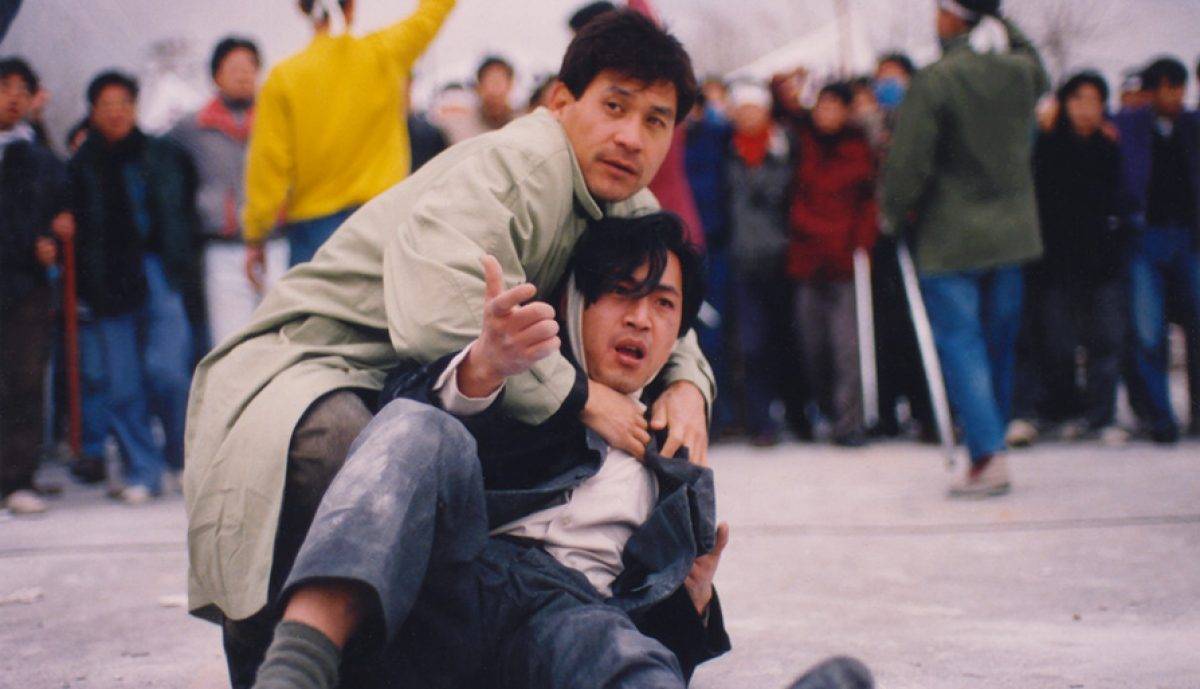
Dissatisfied with his first manuscript recounting a humorous episode from the early days, Gi-ju’s boss tries to curate his memories, asking him for a cliched anti-war tract about how combat turns intellectuals into cowards while the ignorant are reborn as heroes. Something much the same happens with a documentary crew on the ground who actively ask the soldiers to re-stage the action for the camera. Everyone has their Vietnam narrative, and no one is quite interested in the full horror or the present pain of these wounded men. Reuniting with Jin-su whose mental state is rapidly declining, the pair are caught up in a democracy protest by students who actively resist the draft and the militarisation of education, ironically on the other side, targeted by men like they once were. Abandoned by a country which essentially sold them as mercenaries to curry favour with the Americans, Jin-su and Gi-ju struggle to gain a foothold in this strange moment of hope in which martial law, the force which dictated the course of their lives, may be about to fall. That was not to be, but for the two men at least, something has perhaps been put to rest if only with the terrible inevitability of a bullet finally hitting its target.


White Badge screens 22nd October as part of this year’s London East Asia Film Festival

Three Days of a Blind Girl (盲女72小時, Chan Wing-Chiu, 1993)

An oblivious housewife undergoes a kind of awakening while confronted with her husband’s transgressions by a vengeful intruder in Chan Wing-Chiu’s home invasion horror, Three Days of a Blind Girl (盲女72小時). Rendered temporarily sightless after an operation designed to save her sight, the implication is that the heroine, referred to only as Mrs Ng (Veronica Yip Yuk Hing), has been living in a fantasy of aspirational domestic success largely dependent on her heart surgeon husband Jack (Anthony Chan Yau) and devoid of her own identity while blind to the patriarchal forces which oppress her. 

Having returned from surgery in the US, Mrs Ng is assured her sight will gradually return in around 72 hours though until then she will be entirely blind. The doctors give her no special instructions, and she and her husband return to their country home where they are cared for by a maid, May (Chan Yuet-Yue). Somewhat insensitively, Jack has to leave for an important heart attack conference in Macao leaving Mrs Ng solely in the custody of May only May has other plans. Her policeman boyfriend has got them concert tickets while she also needs to go out to refill her asthma medication meaning that Ms Ng will be entirely alone at home while attempting to adjust to her sightless existence. 

Mrs Ng is rendered vulnerable in what should be a safe space. The sanctity of the domestic is disrupted firstly by Jack’s absence and then by an uncanny lack of familiarity introduced by her blindness. Though she has a stick, she soon finds herself bumping into things or encountering unexpected obstacles while the design of the home’s staircase appears dangerous even to the sighted and a definite health hazard to anyone else. In a moment of foreshadowing, Jack warns the maid that there’s a problem with the phone while the mobile he left is also low on battery meaning that Mrs Ng could not even call for help if she needed it. 

Unsolicited help is however something she’s offered by an unexpected visitor, Sam (Anthony Wong Chau-sang), who claims to be an old school friend of Jack’s who also treated his wife for her heart condition. Mrs Ng can’t see it, but Sam is dressed in a rather unique outfit of lederhosen and a check shirt appearing something like malicious garden gnome. In an odd moment of comedy, Sam, who soon begins stalking Mrs Ng around the house, pretends to chase off an intruder by running up and down the stairs swapping characters as he goes but otherwise skews increasingly sinister while discussing his relationship with his wife who he claims has rejected him on the grounds of the printer’s ink that stains his hands. 

Sam is Jack’s inversion, an overly solicitous husband now hellbent on avenging his masculinity by raping Mrs Ng to get back at Jack whom he blames for his wife’s death claiming he treated her heart condition with vitamins while abusing his position to take advantage of her sexually. At first, Mrs Ng doesn’t believe him and trusts her husband but her literal awakening occurs in line with the return of her sight. She begins to see the light and the reality of her life with Jack, ironically thanking him for this experience because it’s taught her how to fight back and protect herself in the face of his male failure. “Don’t think women are easily bullied” she claps back after finally taking charge of her life and knocking the forces of patriarchy firmly on the head.

Nevertheless, she begins to resist with regular household items such as using the serrated edge on a box of clingfilm to try and saw through the ropes binding her hands. Despite her blindness, she uses her knowledge of the domestic space against the intruder Sam and tries to frustrate his plans for her through strategy and forward thinking even while beginning to discern the danger which has always surrounded her as evidenced by the unexpected appearance of an entirely different assailant wandering in by chance in the temporary absence of Sam. “Never fight with women,” a much more confident, fully sighted, Mrs Ng later exclaims finally awakened to the realities of the world around her and unafraid to confront its ever present dangers now armed with the stylish briefcase of an independent woman. Surprisingly feminist in its overtones, Chan turns the home invasion thriller inside out as Mrs Ng mounts a successful jailbreak from the confines of a stereotypical housewife life.


Three Days of a Blind Girl screens at the Prince Charles Cinema, London on 19th October as part of Silk and Bullets: The Sisterhoods of Revenge where it will feature a video introduction by producer Alfred Cheung and pre-recorded Q&A with Director Chan Wing-Chiu.

Original trailer (no subtitles)

All Under the Moon (月はどっちに出ている, Yoichi Sai, 1993)

Throughout Yoichi Sai’s All Under the Moon (月はどっちに出ている, Tsuki wa Dotchi ni Dete iru), an earnest taxi driver, Anbo (Akio Kaneda), repeatedly calls in to despatch to inform them that he’s become lost and has no idea where he is despite rocking up next to such prominent landmarks as Tokyo Tower and Mount Fuji. His confusion reflects that of the changing post-Bubble society in which those like him struggle to reorient themselves and find new direction just as the nation appears slow to recognise itself and adjust to a new reality. 

It does seem that many of the drivers at Kaneda Taxi have themselves lost direction in their lives and are living very much on their margins while their rather deluded boss Sell is behaving like it’s still the Bubble dreaming of building a golf course and then a hotel to accommodate 2000 people. The Korean loan shark working with him alternately tells fellow Zainichi taxi driver Chun (Goro Kishitani) that he’s acquiring wealth to use for the reunification of Korea, and Sell that they are all children of capitalism, “Damn Reunification!”. At the wedding Chun attends, the guests take phone calls to deal with business and each remark on the precarious economic situation while one suggests that the North Korean association he represents is probably on the brink of failure joking that he fears they may sell their school and pocket the money. 

Yet despite the economic turbulence, the country has been slow to accept the presence of workers from outside Japan and many, including those at the taxi firm, still face discrimination as does Chun himself by virtue of his Korean heritage. One Japanese employee also seems to face a good deal of stigmatisation simply because he has a speech impediment, while an older mechanic with a limp insists on calling an Iranian colleague by a similar sounding Japanese name while baselessly accusing him of theft. Hoso (Yoshiki Arizono), a man with mental health issues provoked by his previous career as a professional boxer in which he accidentally killed an opponent during a bout, is fond of saying “I hate Koreans, but I like you” while otherwise fixating on Chun as a dependable big brother figure and resentful enough when he starts dating a Filipina hostess, Connie (Ruby Moreno), who works at his mother’s bar to pound down the door of her flat and demand to be let in. 

Chun himself is at least problematic and especially by the standards of today as he tries a series of crass pickup lines on Korean women at the wedding and then eventually forces a kiss on Connie not to mention physically striking her during a heated argument. He also insensitively tells her about his family’s tragic history in the war emphasising that citizens of Korea were abused for slave labour while seemingly unaware of the history of the Japanese occupation of the Philippines. Meanwhile, he also lies that his father was killed by the Japanese and that all his brothers died of malnutrition whereas they are (presumably) alive if possibly not so well in North Korea. His hard as nails mother (Moeko Ezawa) points out that she came to Japan at 10, while Connie counters that she came at 15, though their experiences have perhaps been very different leaving them somewhat at odds rather than sharing a kind of solidarity as otherwise echoed in the marginal status of each of the migrants who are similarly othered as merely not Japanese yet largely left to fend for themselves while facing possible exploitation and deportation. 

Divisions exist even within the Korean population with guests at the wedding complaining that there have been too many long and boring speeches along with North Korean propaganda songs, claiming that it is discriminatory against South Koreans and finally being allowed to sing a South Korean folksong instead which is at least a good deal more lively. The gangsters leverage the idea of reuinifaction to carry out their scams while later claiming that they have been scammed by their Japanese backer who turned out to be more racist than they had first assumed. Yet as Chun says during one of his cheesy pickup attempts, what really has reunification got to do with them, the younger post-war generation who know no other homeland than Japan? He too flounders, caught between a series of names from “Tadao Kanda” to “Chun”, to the name which appears on his taxi license “Kang” the Korean pronunciation of character read “ga” Japanese which is only otherwise used in the word for ginger as pointed out by a slightly racist fare who goes on to remark that he doesn’t see the point of the “comfort women issue”. Chun has to grin and bear it while technically powerless despite being in the driver’s seat. Predictably, the prejudiced passenger also attempted to make a run for it rather than actually pay Chun his money. “I was born after the war too” Chun reminds him, “but we say after the liberation.”

Sai introduces us to the world of Kanda Taxis through a roving long shot around the carpark travelling from one employee to another before drifting up to management on the second floor. He returns to a similar scene near the film’s conclusion as the remaining workers playfully hose each other with water while literally watching their world burn. Yet for some at least it may be liberating experience, Chun finally gaining the courage to choose his own destination and go after something that he wants, even if it he does it in a characteristically problematic way, seemingly no longer worrying about where it might be taking him but content to simply drive in the direction of the moon. 


Original trailer (no subtitles)

The Guard From Underground (地獄の警備員, Kiyoshi Kurosawa, 1992)

Ever feel like your job is trying to kill you? Released at the tail end of the Bubble era, Kiyoshi Kurosawa’s The Guard from Underground (地獄の警備員, Jigoku no Keibin) positions an office building as an industrial hell complete with a demon living in the basement but grimly suggests it’s just one of many hazards to be aware of for a woman in the corporate environment. Then again, the hellish guard himself has a sorrowful look in his eyes that speaks of true loneliness and might evoke pity if only in the fatalistic inevitability of his office-bound killing spree. 

It has to be said, Akebono Trading should have another look at its hiring procedures through in any case there’s something odd about this building which feels more like an abandoned hospital than a place of business while we might also wonder why we’re seeing signs for cargo depots and engine rooms and staff getting locked in the filing room is apparently not an uncommon occurrence. The new security guard has the same name as a former sumo wrester acquitted of the murders of his stablemate and lover on the grounds of temporary insanity, Fujimaru (Yutaka Matsushige), and is himself a hulking presence, tall but of medium build so who knows if it’s really the same guy or just the office rumour mill going into overdrive.  

Meanwhile, the other new recruit is a refined young woman, Akiko (Makiko Kuno), who’s been brought on as an art expert to help a new division recently diverted into prospecting with art sales to assess what is and isn’t a fair market price for a priceless piece of art. As Akiko admits, she’s not well placed to give that information because her background is in curation so she’s not particularly well versed in the collector market but presumably the job pays a bit better than the museums sector so she’s trying to do her best. Her new boss, Kurume (Ren Osugi), is a bit of a weirdo (like all the other men in the building) and crassly remarks that paintings like women have no value if there’s no buyer while she struggles to understand what the point of her job is. Meanwhile we’re left to wonder if Section 12 is actually a real department at all or a shady enterprise set up to help the enigmatic boss, Hyodo (Hatsunori Hasegawa), improve his investment portfolio which will probably serve him well when the bubble finally bursts. 

It’s tempting to read Fujimaru as a personification of corporate culture slowly picking off the employees and largely doing so by means of the building itself, electrocuting them by forcing their hand on the circuit breaker, bashing one inside a locker, or otherwise using his security guard’s truncheon to bludgeon them to death. To begin with, it seems as if he’s developed a fondness for Akiko and while that may be true in the same way King Kong develops a fondness for Fay Wray, it soon becomes clear that he isn’t in fact trying to protect her by taking out all the skeevy guys but seemingly killing for no reason. He looks a painting of Goya’s Saturn Devouring His Son with fascination, again hinting at his nature as the personification of capitalistic corporatism devouring the employees who might one day overthrow him, yet also lends the guard an eerie, mystical quality suggesting he merely enjoys the act of carnage though he does not actually eat anyone (that we see). More than that he seems almost like Frankenstein’s Monster, somehow lonely in identifying his otherness as he eventually confesses to Akiko remarking that “desolate time” flows through him unlike her “kind”. As he leaves, he pleads not to be forgotten. 

Akiko defeats him by refusing to believe his story and declaring herself disinterested in his truth possibly stood in good stead by the constant necessity of evading the attentions of the men around her such as those of Kurume who starts off giving paternalistic advice about looking after her parents and the preferential savings rates on post office accounts before randomly taking off his trousers. Anticipating his later career, Kurosawa makes the office a place of lurking dread and anxious eeriness only deepened by its industrial aesthetics along with the tiny windows leaking apocalyptic lighting from the oblivious outside world now cut off except for the new/old teletype text and ironic benefits of international time zones. “Traffic’s hell this time of day” a taxi driver chirpily advises, ironically delivering his passenger straight into its fiery depths. 


The Guard From Underground is released in the UK on blu-ray on 25th September courtesy of Third Window Films.

Trailer (English subtitles)

The Cold-Blooded Trap (冷血の罠, Takahisa Zeze, 1998)

“This place is full of people like me” a violent criminal jeers, admitting that he’s killed “plenty” of women but not necessarily the one he’s being questioned about. There is indeed something eerie that seems to have taken over this small corner of Shibuya in Takahisa Zeze’s dark millennial thriller The Cold-Blooded Trap (冷血の罠, Reiketsu no Wana). “Strange things are happening here” another investigator notes, “someone’s malice has infected this whole place.” Yet the sense of haunting may be closer to home than it first seems as two men attempt to come to terms with a traumatic past by solving present mystery. 

Even the police seem to concede that the strange goings on are a “continuation” of something else. As we first meet him private detective Fujiwara (Sho Aikawa) appears to be following a young woman home from the station only as we later discover she hired him herself to watch over her because she had the feeling she was being watched. Fujiwara watches her enter her apartment building and then calls her to say everything looks clear on the ground, but a short time later a body wrapped in sheets is dropped from the roof onto the street below. The weird thing is that it’s the same building Fujiwara’s sister Noriko used to live in, only she took her own life and that of her child by jumping off the roof five years previously. 

Not only does Fujiwara feel as if he failed in his duty to protect his client, but he’s forced into a similar contemplation in his latent guilt surrounding his sister’s death. The most obvious reason for Noriko to have considered suicide was that her salaryman husband Hanazono (Hidetoshi Nishijima) had been having an affair with a work colleague, Yoko (Asuka Kurosawa), yet Hanazono refuses to accept responsibility and is convinced that Noriko was murdered by a mysterious serial killer stalking the streets of Shibuya. 

The irony is that we first think Hanazono is the faceless killer after watching him enter the woman’s apartment building, only to learn that he may have been investigating Noriko’s death. Later these assumptions are overturned again, but even he concedes that he seems suspicious. Wandering around the city at night, he runs into women alone who immediately see him as a threat and assume he may be a dangerous criminal who means them harm. The realisation first shocks him, but then gives way to a physical high in the adrenaline rush of fleeing the scene. He comes to the conclusion that he must get into the killer’s mindset in order to catch him and begins actively stalking people around the city, following them home and checking mailboxes to find out names. 

Fujiwara doesn’t trust Hanazono for obvious and understandable reasons, but even so he begins following him as Hanazono continues to follow the killer. Zeze opens the film with fuzzy 90s camcorder footage trained on the forecourt of a station from a balcony opposite. The camera follows a woman as she leaves, and Fujiwara behind her with eerie intent evoking the mild paranoia of millennial surveillance. Later Hanazono films his own POV walking through the midnight city, once again lending the streets a sense of lurking malevolence and dread-fuelled fatalism even before he arrives at his shocking destination. 

Yet we wonder if Hanazono is just a paranoid obsessive with his giant map of crime insisting that seemingly isolated incidents of violence are somehow linked. Before Fujiwara hears about the woman’s death on the news they were reporting on insolvent banks hinting at a financial anxiety in the contemporary society, and as the suspect Fujiwara later tracks down suggests there are lot of distressed or perhaps disturbed people around. The crimes may really be random, but they are also connected by virtue of being provoked by an anxious society even if as Hanazono admits there are several criminals behind them. Whether or not he gets the answer he seeks, Fujiwara will have to accept that he too bears some responsibility as Hanazono has perhaps already done even if desperate to deny it. “I’ve always been responsible” he admits while taking control over his life, only the elliptical structure of the film may imply otherwise. Dark and eerie, Zeze captures a sense of millennial dread in the streets of the capital filled as they are with “random” crimes and lurking killers in the haunting anxiety of constant threat.


Clip (English subtitles)

Memento Mori (여고괴담 두번째 이야기, Kim Tae-yong & Min Kyu-dong, 1999)

Internalised shame leads to tragic, unforeseen consequences in landmark South Korean horror Memento Mori (여고괴담 두번째 이야기, Yeogogoedam Dubeonchae Iyagi). The second in a thematic series of high school ghost stories, the film was radical for its time in its presentation of same sex romance in demonising not the love but the world that would not accept it while otherwise painting a fairly bleak picture of the educational landscape in which teachers are only ever symbols of a corrupt authority intent on enforcing oppressive patriarchal social codes.

The film’s heroine is in many ways an audience member, or at least a fairly passive observer of the ongoing drama who only later inserts herself into the narrative. Min-ah (Kim Min-sun) discovers a mysterious “diary” near the sports ground and is quickly hooked on its cryptic contents even before realising that it details a lesbian relationship between two of her classmates who were at one point “close” but have since “drifted apart”. The author, Hyo-shin (Park Ye-jin), is already considered “weird” by her classmates and does seem to have an otherworldly quality, most particularly in her tendency to speak in an uncanny manner. She is also accused of being a “lesbian” by an obnoxious fellow student laying bare the way these teens already enforce a social prejudice which oppresses them all. 

Min-ah’s friend Yeon-an (Kim Jae-in) has been fasting for the last few weeks to try and get her weight down before the school’s physical health check up, while Ji-won (Gong Hyo-jin) is similarly concerned with her chest measurement. This is an all girls school, and there is a clear preoccupation with the ability to conform to notions of conventional femininity while all of the teachers that we see aside from the school nurse are male and enforce discipline with quite shocking levels of violence. Yeon-an and Ji-won land up in trouble for playing around with a video camera they’d brought in to record choir practice when it’s discovered by a teacher who reacts as if he thinks the girls are on some kind of whistleblowing mission. He clearly feels that his authority has been questioned, which also implies that he knows his behaviour is “wrong”, and punishes the girls for their “rebellion” against him. 

After Hyo-shin dies in an apparent suicide, it is rumoured that she may have been pregnant which would certainly explain her desire to get out of the health check. In a flashback, she suggests that she may have drifted into an inappropriate sexual relationship with a dejected teacher, Mr. Goh (Baek Jong-hak), who claims that he doesn’t get on with his “materialistic” colleagues while fed up with the vacuous teenage girls he’s supposed to be teaching. Yet Mr. Goh appears to have suffered little after Hyo-shin’s death despite being the apparent father of her unborn child, leaving only Hyo-shin’s vengeful spirit to enact some kind of justice. 

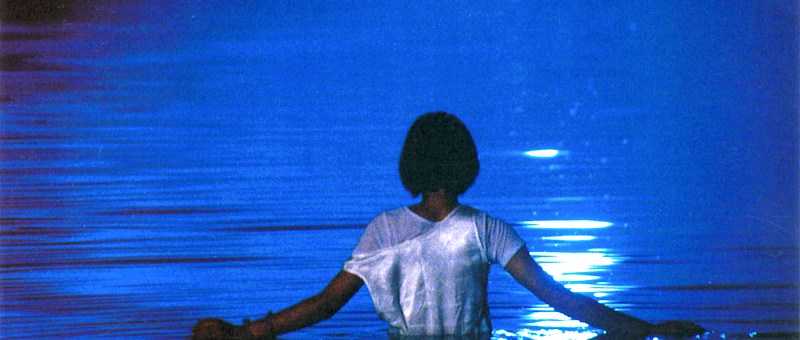
It’s Mr. Goh who did in some way disrupt the relationship between Hyo-shin and Shi-eun (Lee Young-jin) who seems to feel on some level betrayed while deepening her inner conflict as regards her sexuality. Unlike the other girls, Shi-eun presents in a slightly more masculine fashion, not least because of her athleticism, and is filled with an internalised shame about her relationship with Hyo-shin which she otherwise does not share. In the dreamlike scene which opens the film, Hyo-shin and Shi-eun are plunged into water tied at the ankle by the red string of fate which in popular mythology signifies a true romantic connection. But as they fall together, Shi-eun begins to panic and unties herself. She violently pushes Hyo-shin away who then continues to sink into the murky depths below. This act of physical rejection is repeated several times, most notably when Hyo-shin kisses Shi-eun in front of their classmates shortly after she has been struck in the face by their teacher. Shi-eun pushes her away, and thereafter ignores her before directly stating that she is “ashamed” and does not care what Hyo-shin decides to do with her life. 

It’s this rejection that the film posits as the cause of Hyo-shin’s suicide, though the romance itself is constantly overshadowed by death. Obsessed with the diary, Min-ah eats a “magic” sweet stuck inside which is described as some kind of love poison for which Hyo-shin has an antidote, only in the climax of the film it seems to be the reverse and a kind of prelude to a double suicide. In the dreamworld created by Hyo-shin’s spirit, the schoolgirls assemble for something that looks a lot like a wedding though ostensibly a birthday party in which the couple is accepted by the world around them only in reality it can never happen in part because Shi-eun herself does not permit it to. 

Directors Kim and Min hint at the feverish atmosphere with blown out whites and strange angles even before entering the menacing dreamscape of Hyo-shin’s revenge, lending a note of unsteadiness to Min-ah’s obsessive investigation of the diary that perhaps reveals something of herself even as it draws her towards a dark spiritual destiny. In any case, what it leaves behind is a deep sense of melancholy for the tragedy of the teenage lovers who in the end maybe the ones haunted by the world around them.


Memento Mori screened as part of this year’s Queer East .

Trailer (English subtitles)

Rebels of the Neon God (青少年哪吒, Tsai Ming-Liang, 1992)

Towards the end of Tsai Ming-liangs’s Rebels of the Neon God (青少年哪吒, Qīngshàonián Nézhā), a young man exasperatingly stuffs a series of rags into the busted drain in his kitchen which has been relentlessly leaking water all over the apartment. In many ways it’s a kind of metaphor for his life as he attempts to staunch the flow of “bad luck” he’s been experiencing over the last few days, but like so many things for him it does not quite go to plan. 

As to why, it’s not exactly clear except that A-tze (Chen Chao-jung) is a kind of outcast beneath the neon skies of a changing Taipei. He and his friend A-ping (Jen Chang-bin) earn their money breaking into telephone boxes and vending machines for loose change before at one point stealing the motherboards from arcade consoles and unsuccessfully trying to sell them back to the person they stole them from. All they get for their pain is a literal battering while A-tze’s frustrated romance with sometime girlfriend Mei-kuei (Wang Yu-wen) similarly flounders in the wake of his ennui. 

The karmic debt he bears is however mainly down to a random act of pointless violence in knocking the wing mirror off a taxi driver’s car for no real reason save momentary impulse. Even so, the taxi driver’s son Xiao-Kang (Lee Kang-sheng) had already been watching him and soon discovers a fascination with the rebellious young man that is ambiguous in quality. What becomes obvious is that Hsiao-kang is at odds with the world in which he lives. His mother (Lu Yi-ching) reveals that a fortune teller told her he is the reincarnation of “Neon God” Nezha, a chaotic child who later killed the authoritarian father with whom he could not get along. Hsiao-kang’s mother tells this to her husband (Miao Tien) as a kind of warning, advising that his authoritarian parenting style is doing his son no good, but Mr. Lee isn’t minded to listen. Finding out that Hsiao-kang has dropped out of cram school and kept the refunded tuition money for himself, Mr. Lee throws him out which of course leaves him free to follow A-tze all around Taipei day and night before childishly damaging his motorcycle. 

In disabling the bike, Hsiao-kang perhaps hoped to ruin A-tze’s freedom, symbolically taking from him independence and a sense of possibility. Then again, perhaps in another way he hoped to engineer a friendship. Riding around on his own scooter, he draws up behind A-tze pushing his to a garage and offers help but A-tze tells him to buzz off. In fact, A-tze never acknowledges Hsiao-kang. He never recognises him or realises that he’s being followed though he does later remember Mr. Lee and is struck by guilty futility not really knowing why he decided to arbitrarily ruin someone’s day while reflecting that all his days are ruined. The water in his apartment continues to rise all around him as if emphasising his mounting sense of despair. Mei-kuei tries to break up with A-tze before asking him to go away with her. They ask each other where they would go, but neither has any answer. 

A remorseful Mr. Lee later comes home and makes the point of leaving the front door ajar, symbolically open to his son’s return while Hsiao-kang remains lost. He visits a telephone dating service having heard Mei-kuei moonlight by answering one while working at the ice rink, but in the end cannot even pick up the phone. Staring at a picture of James Dean, he longs for the sense of rebellion he is drawn to in A-tze but is still the chaotic boy, dancing wildly like a wheelless Nezha and seemingly with no further sense of direction. In the end, it’s the city of Taipei which is the “neon god” of the title, arbitrarily ruling over each of the boy’s lives even as it ironically emerges from the authoritarian past into hypermodern urbanity. Hsiao-kang is little better off than the cockroach he ironically skewers on the point of his compass, and A-tze little than that which circles his overflowing drain carried inexorably on the current on a circular journey towards nowhere in particular. Many of Tsai’s key themes are already here, urban alienation, loneliness, futility, and the crushing sense of emptiness of life in the contemporary era even as he turns his gaze to the overcast skies of a city lit only by despair.


Rebels of the Neon God screened as part of this year’s Queer East .

Trailer (Traditional Chinese / English subtitles)

The Bride with White Hair (白髮魔女傳, Ronny Yu, 1993)

“This is the so-called underworld rule. You have no choice.” the hero of Ronny Yu’s gothic fairytale The Bride White Hair (白髮魔女傳) is told, only to reflect “Yes, I do.” though the world will eventually prove him wrong. Tinged with handover anxiety, the film finds its star-crossed lovers longing to exercise their choice of exile, to be allowed to live quietly outside of the political turbulence that surrounds them. But in the end their love is not strong enough to overcome their difference and doubt becomes the ultimate act of emotional betrayal. 

This is a tale that signals its tragedy from its inception. The Ching emperor is deathly ill and only a flower growing on a distant mountain that blossoms only once every 20 years can save him. “This flower is not for you” the emissaries are told by man who appears to be frozen in more ways than one, relating that he has waited 10 years for a woman who may have forgotten him. As a young man, Yi-hang (Leslie Cheung) was the roguish heir to the Wu Tang clan whose recklessness sometimes caused him to behave in unorthodox ways in the name of justice. The eight clans of Chung Yuan are beset on both sides, caught between the conflict of Ching and Ming while fearful of an “Evil Cult” that otherwise destabilises their icy grip over the local area. 

It’s becoming clear to Yi-hang that he may not be on the right side. The people are oppressed and starving but their attempt to procure a little sustenance for themselves leads to a bloody raid with clan soldiers cutting down peasants until a mysterious woman in white (Brigitte Lin) arrives wielding a whip that can cut people in half. Interrupted by a tragic scene while napping in the forest, Yi-hang is immediately smitten with the female assassin whom he later realises is the same girl he saw as a child who saved him from wolves with the song of her flute. 

The woman is an orphan taken in by the cult and trained up as an assassin. She has only a surname, Lien, and is then symbolically “reborn” when Yi-hang gives her her name, Ni-chang. Having fallen in love, the pair vow to leave the underworld together and live in the pastoral paradise of the watering hole where they first made love. “This underworld doesn’t belong to us, let them fight for it” Yi-hang insists, attempting to exercise his choice to escape a system he sees as corrupt before it strains his integrity but as he’ll discover he’s not as much choice as he thought. 

In the shadow of the Handover, it might be tempting to read Lien and Yi-hang as ordinary people who just want to live quietly and resent the intrusion of politics into their lives, though they remain caught between two opposing powers with no neutral space for them to occupy. The same could be said of the cult’s leaders, a pair of crazed conjoined twins, one male one female, who are fused at the back in a potent symbol of duality. The twins were once members of the Wu Tang clan but were betrayed and exiled, driven mad by their banishment. At the film’s conclusion, Yi-hang symbolically frees the twins by splitting them apart but their separation leads only to their deaths. In the end, Yi-hang betrays his love because the underworld does not permit it to exist. He doubts Lien’s word and his rejection of her sparks her metamorphosis into the title’s Bride with White Hair, a vengeful spirit of hurt and rage now condemned to eternal wandering just as Yi-hang is condemned to life a waiting only to watch a flower wither and die knowing that he has damned himself. 

Yu’s world of melancholy romanticism is typical of that of early ‘90s wuxia though carries a touch of the gothic not least in the Bride’s cobweb-like hair which eventually becomes her finest weapon. The pervading sense of longing seems to hint at a future act of imperfect union, tinged with volatile ambivalence but perhaps finally suggesting that this romance is doomed to failure because the corruption of the world into which Yi-hang, the authority, was born is simply too great to be conquered by the innocence of his love. 


The Bride with White Hair screens screens at UltraStar Cinemas Mission Valley April 23 as part of this year’s San Diego Asian Film Festival Spring Showcase.

Trailer (English subtitles)