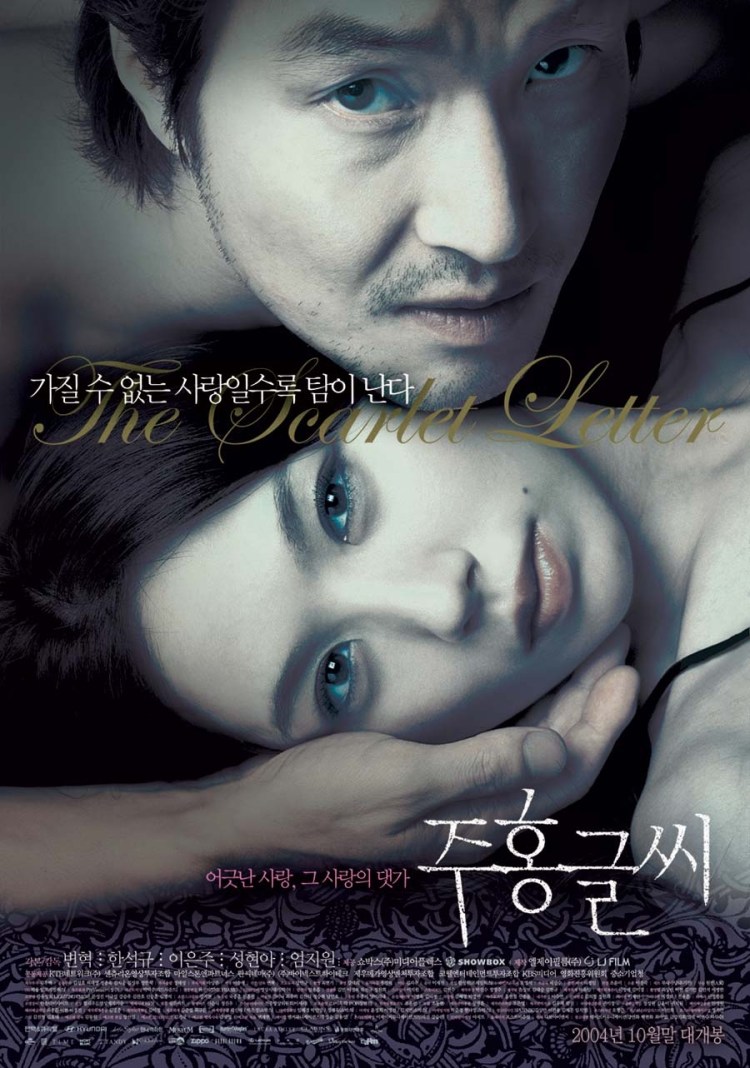
 South Korea has long had a reputation for being among the most conservative of East Asian nations, perhaps because of a strong Christianising influence, but even so the fact that adultery was only fully decriminalised in 2015 is something of a surprise. Ironically enough the legislation was enacted in the defence of women who enjoyed few legal rights and would be left destitute if their husbands left them, suffering not only the humiliation and social stigma of divorce but also having no independent income and very little possibility of gaining one. Nevertheless it quickly became another tool of social control, branding “harlots” rather than protecting “wives”. Byeon Hyeok’s The Scarlet Letter (주홍글씨, Juhong Geulshi) was released in 2004, which is a whole decade before adultery was removed from the statue books, and draws inspiration from the book of the same name by Nathaniel Hawthorne in which a young woman becomes a social outcast after giving birth to an illegitimate child.
Cocksure policeman Ki-hoon (Han Suk-kyu) lives in a world of his own dominion. Married to the elegant concert cellist Su-hyun (Uhm Ji-won), Ki-hoon is also carrying on an affair with the bohemian nightclub singer Ga-hee (Lee Eun-ju). One fateful day he is called to the scene of a bloody murder. The owner of a photographer’s studio has been found with half his head caved in and the prime suspect is his wife, Kyung-hee (Sung Hyun-ah), who found the body. Once she’s had some time to recover from the shock, Kyung-hee offers up some possible evidence regarding a local photographer who may have been semi-stalking her – something which had caused tension between herself and her husband. The photographer claims Kyung-hee asked him to take the photos, and others besides, but denies he was romantically interested in her or that the couple had been having an affair.
The murder case floats in the background as Ki-hoon’s personal life spirals ever more out of control. Both Su-hyun and Ga-hee are pregnant with his child and it seems inevitable the affair will be exposed. Ki-hoon fears this not out of guilt in causing emotional harm to one or both of his women, but out of a sense that it will be very annoying, inconvenient, and burdensome for him. When his wife does eventually confront him about the affair, Ki-hoon’s response is to ignore it and carry on as normal by acting excited about the baby as if to remind Su-hyun that she is already tied to him and it will be almost impossible for her to leave. Meanwhile, he refuses to give up Ga-hee whose mental state seems to be fracturing under the intense pressure of her need for Ki-hoon and his continuing disregard for the feelings of others.
Ki-hoon is a classic noir hero, wading into a morass of moral ambiguity and hurtling headlong towards an existential reckoning. A late, yet fantastically obvious, twist offers another perspective which the film has no time to expand on so caught up is it in the moral ruining of Ki-hoon in suggesting that oppressive social codes have in some way contributed to this intense situation, forcing three people into an uncomfortable love triangle where everyone has ended up with the wrong partner. Byeon does, however, choose to emphasise “morality” in lending a spiritual slant to Ki-hoon’s fall rather than choosing to attack the social oppression of Korea’s intensely conservative culture in which all the power was in Ki-hoon’s hands (even if he uses it to ruin himself, later left in a state of spiritual emptiness filled only with guilt and shame).
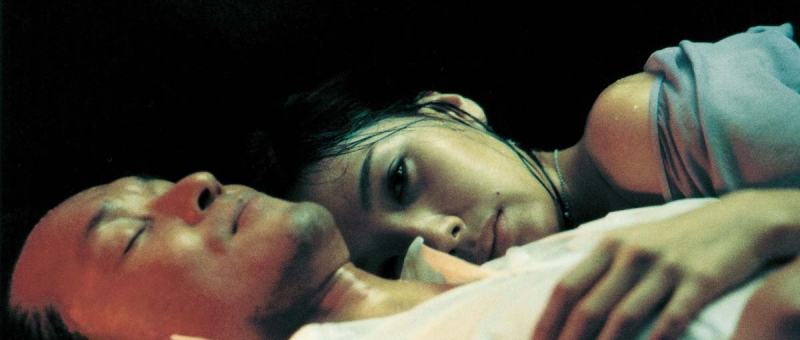
The reckoning comes in a literal evocation of Ki-hoon’s claustrophobic love life in which he finds himself trapped in an inescapable black hole, waiting to find out if he will be released or condemned to suffer an eternity of pain for his various transgressions. Byeon never quite manages to marry his higher purpose to the noir narrative, leaving his avant-garde final set piece out of place in an otherwise straightforward thriller while his final twist falls flat in retreading well worn genre cliches. Frank in terms of its depiction of sex and nudity, The Scarlet Letter takes on an anti-erotic quality, painting its various scenes of actualised sex as passionless acts of compulsion with only those of fantasy somehow imbued with colour and light though its melancholy conclusion suggests even these may carry a heavy price.
Original trailer (no subtitles)
 There are two kinds of people in the world, those who swing and those who…don’t – a metaphor which works just as well for baseball and, by implication, facing life’s challenges as it does for music. Shinobu Yaguchi returns after 2001’s
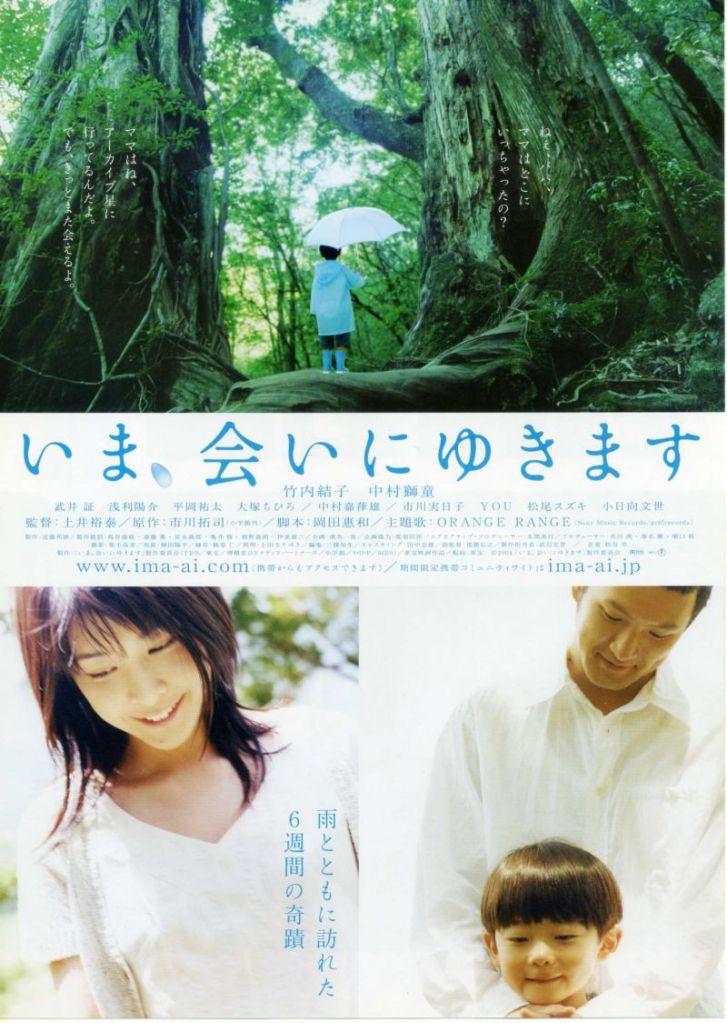 When it comes to tragic romances, no one does them better than Japan. Adapted from a best selling novel by Takuji Ichikawa, Be With You (いま、会いにゆきます, Ima, ai ni Yukimasu) is very much part of the “Jun-ai” or “pure love” boom kickstarted by
 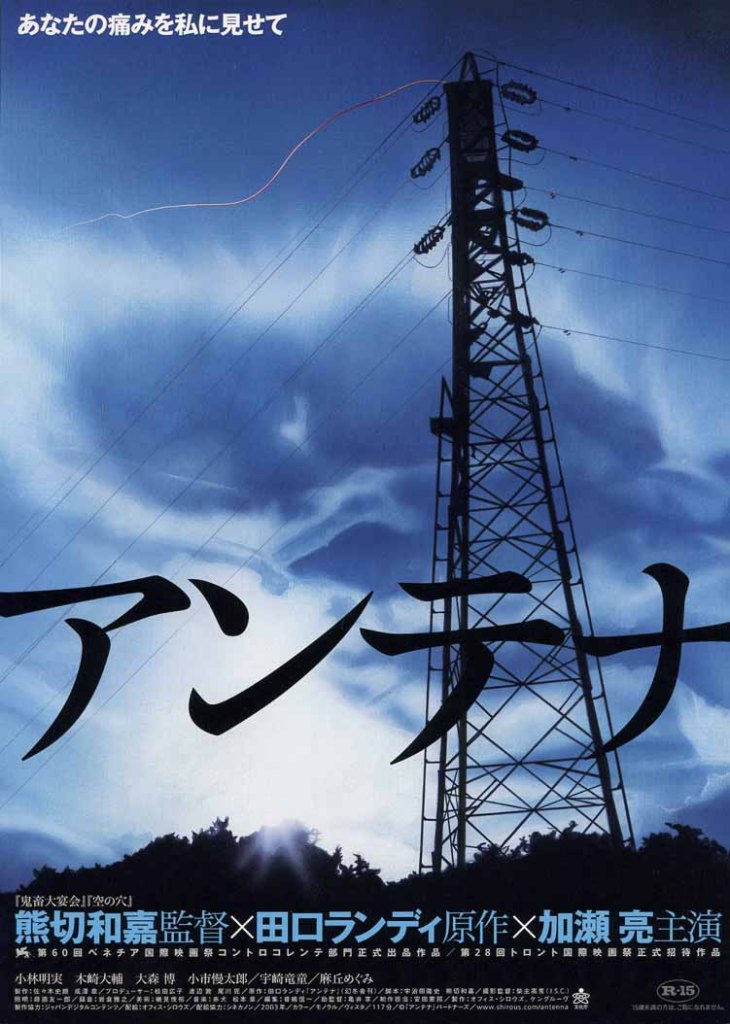 Scarring, both literal and mental, is at the heart of Kazuyoshi Kumakiri’s third feature, Antenna (アンテナ). Though it’s ironic that indentation should be the focus of a film whose title refers to a sensitive protuberance, Kumakiri’s adaptation of a novel by Randy Taguchi is indeed about feeling a way through. Anchored by a standout performance from Ryo Kase, Antenna is a surreal portrait of grief and repressed guilt as a family tragedy threatens to consume all of those left behind.
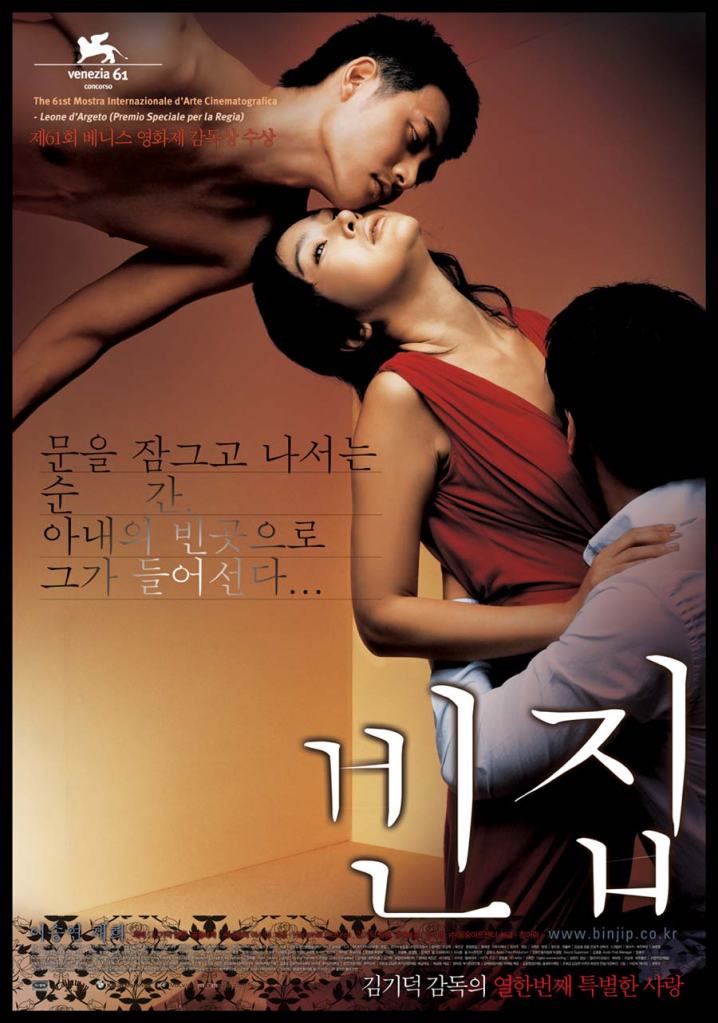 You wouldn’t think it wise but apparently some people are so trusting that they don’t think twice about recording a new answerphone message to let potential callers know that they’ll be away for a while. On the face of things, they’re lucky that the guy who’ll be making use of this valuable information is a young drifter without a place of his own who’s willing to pay his keep by doing some household chores or fixing that random thing that’s been broken for ages but you never get round to seeing to. So what if he likes to take a selfie with your family photos before he goes, he left the place nicer than he found it and you probably won’t even know he was there.
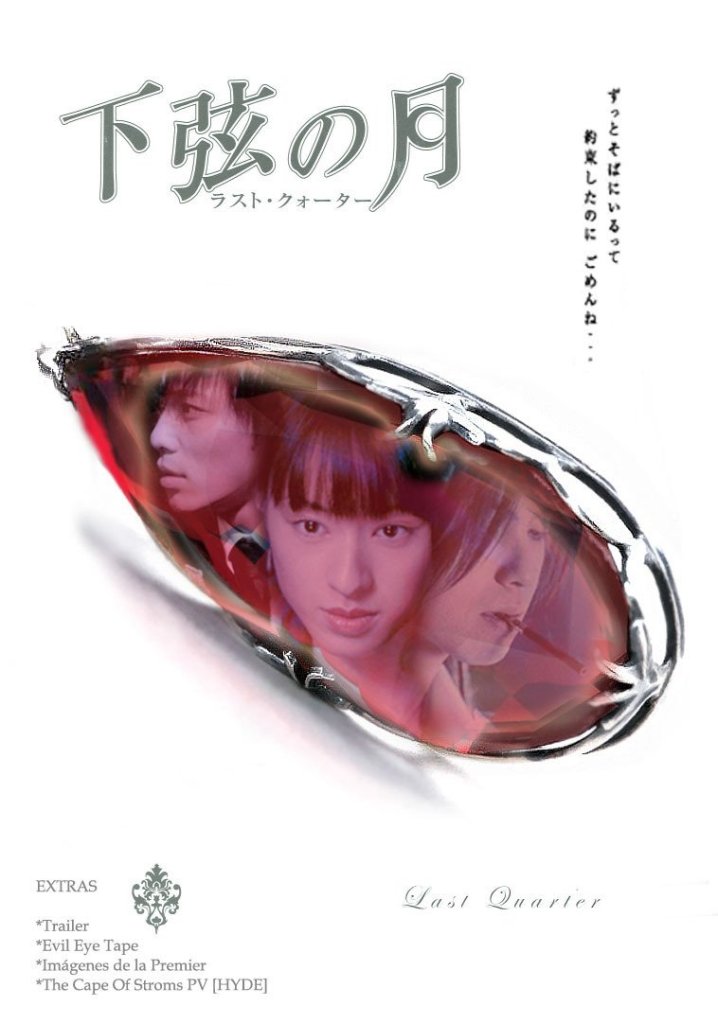 To begin on a cynical note, Last Quarter (下弦の月 ラスト・クォーター, Kagen no tsuki Last Quarter) is a film with a wide variety of marketing hooks. The first being that it’s an adaptation of a much loved short manga series by the well respected mangaka Ai Yazawa (Paradise Kiss) so it has its shoujo pedigree firmly in place. Secondly, pop star HYDE of L’Arc-en-Ciel is central to the production as he both stars in the movie as the ghostly love interest/deathly spirit and repeatedly sings his own songs throughout the film including over the end credits. Thirdly, it also stars actress Chiaki Kuriyama well known to overseas audiences thanks to Kill Bill and Battle Royale. You’d think with all these high quality ingredients first time director Ken Nikai would be able to cook up quite a feast though he does somewhat over egg the pudding.
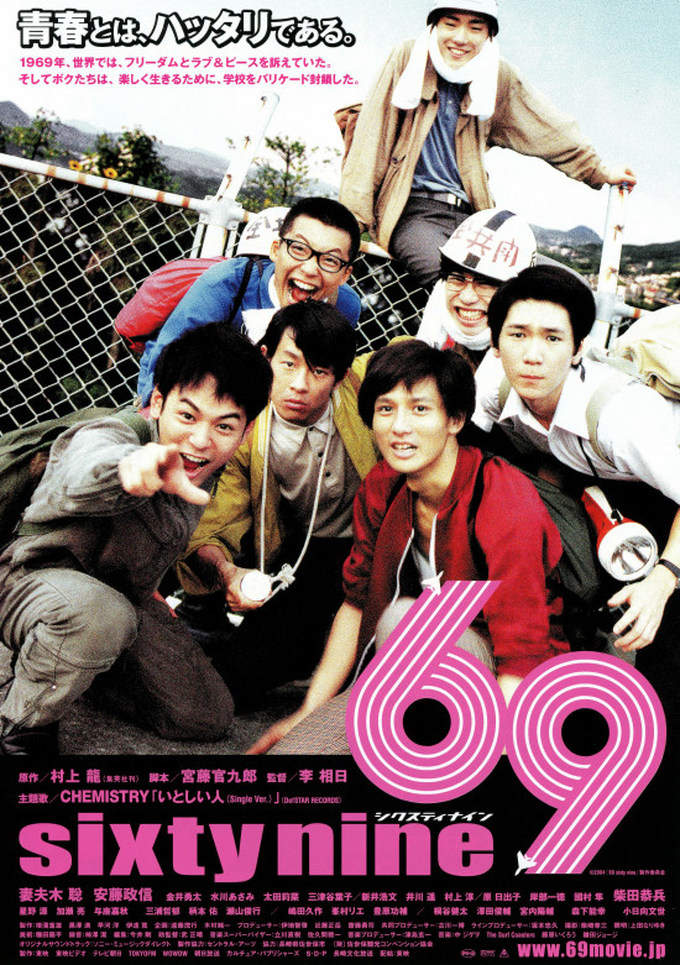 Ryu Murakami is often thought of as the foremost proponent of Japanese extreme literature with his bloody psychological thriller/horrifying love story
  Just look at at that title for a second, would you? Crying Out Love, in the Center of the World, you’d be hard pressed to find a more poetically titled film even given Japan’s fairly abstract titling system. All the pain and rage and sorrow of youth seem to be penned up inside it waiting to burst forth. As you might expect, the film is part of the “Jun ai” or pure love genre and focusses on the doomed love story between an ordinary teenage boy and a dying girl. Their tragic romance may actually only occupy a few weeks, from early summer to late autumn, but its intensity casts a shadow across the rest of the boy’s life.