
Infinite Foundation (無限ファンデーション, Akira Osaki, 2018)

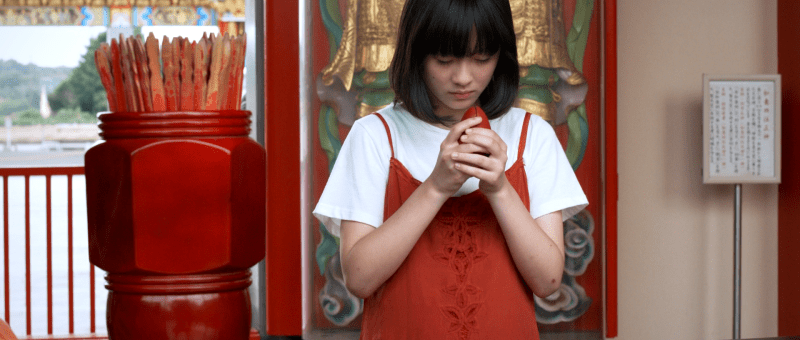
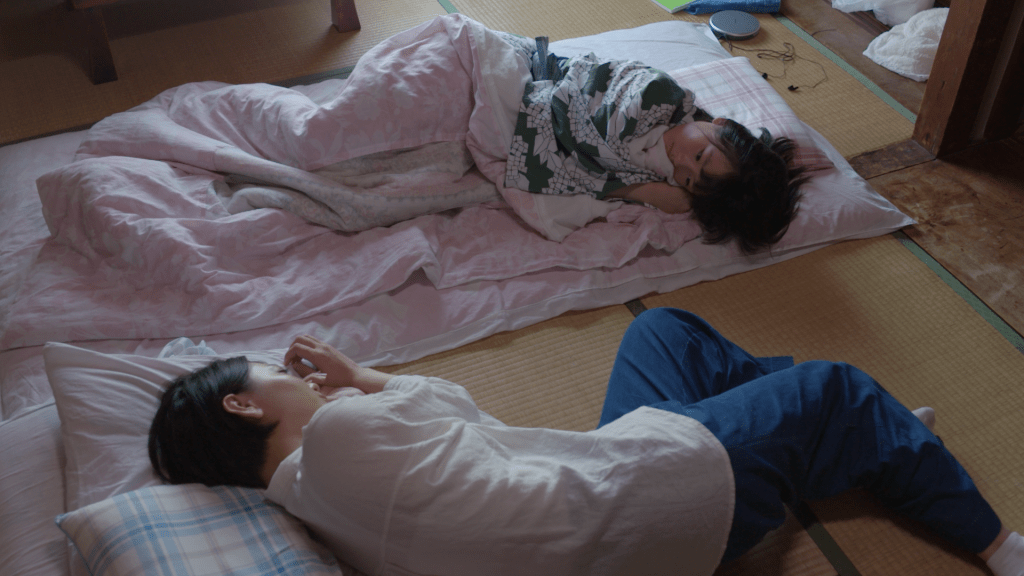
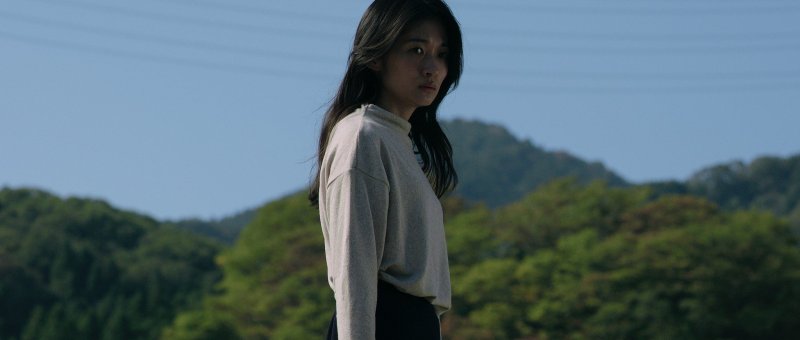
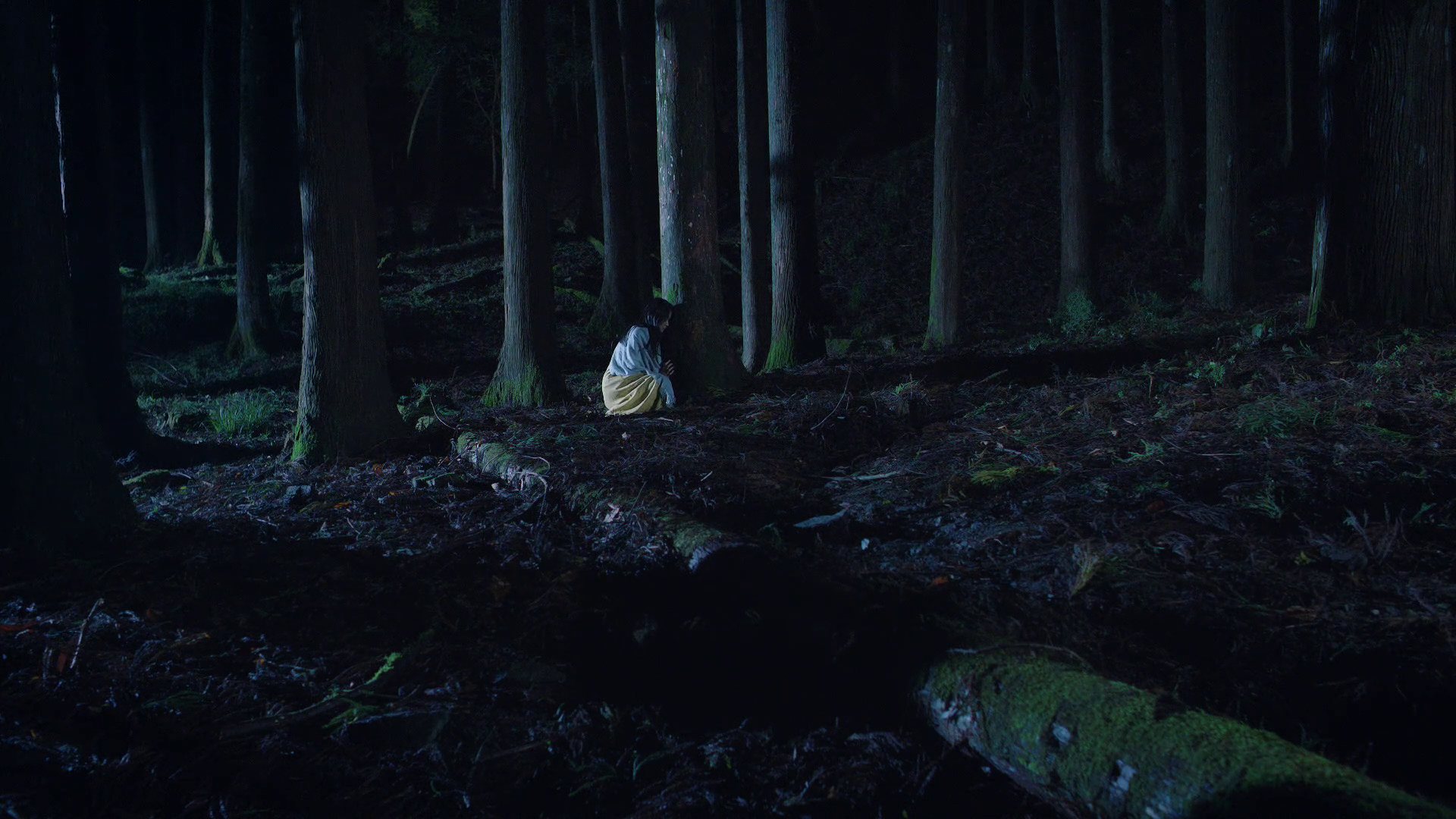
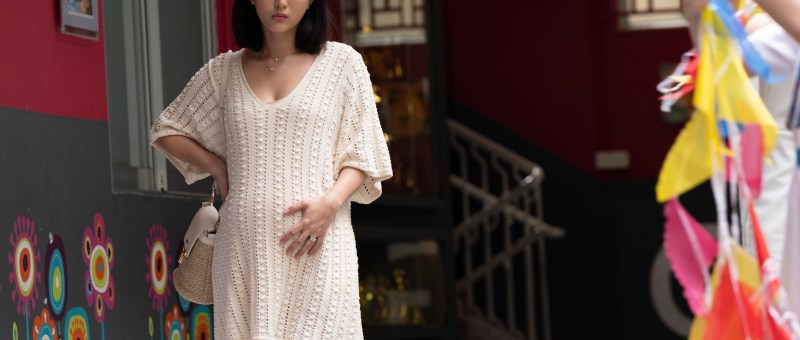
Sometimes the music finds you when you need it most. So it is for the heroine of Akira Osaki’s wistful coming-of-age drama Infinite Foundation (無限ファンデーション, Mugen Foundation). To better capture the teen experience with an immediate naturalism, Osaki’s cast was provided with no script only a vague outline inspired by the songs of singer-songwriter Cosame Nishiyama and asked to improvise each individual scene. What results is suitably intense tale of complicated teenage female friendships, frustrated ambitions, and fear for the future in which a shy, introverted young woman gradually finds the courage to chase her dreams with the help of an ethereal songstress and unexpected solidarity. 

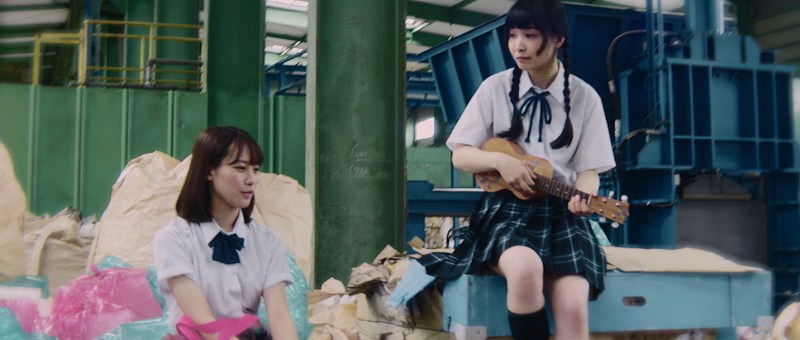
Mirai (Sara Minami), whose name literally means “future”, is a dreamy young girl who thinks she’s not much use for anything so usually idles away her time in school drawing dress designs in her sketchbook when the teacher’s not looking. In fact, she’s technically in summer school catch up, but every time the teacher returns to check on her he notices that she still hasn’t got round to filling in the answers on her maths test. Wandering home one day she hears the gentle strains of a ukulele coming from a nearby recycling plant and strikes up a friendship with a strange girl, Cosame (Cosame Nishiyama), with her hair in long plaits and dressed in a school uniform. Meanwhile, she’s also unexpectedly approached by the stylish Nanoko (Nanoka Hara) who, taken with her beautiful designs, insists that she join the drama club to help them come up with costumes for their imminent production of Cinderella. 

Perhaps Mirai will be going to the ball after all. Before that however she’s still contending with a sense of insecurity while her cheerful and supportive mother (Reiko Kataoka) tries to encourage her to pay more attention to her studies. Pushed towards conventional academic success, Mirai had been a little embarrassed about her love of drawing, particularly as it’s something as “frivoulous” as dress designs which she can’t believe anyone else would value. Rather than hanging out with friends, she spends most of her time sewing in her room, retreating into comfortable fantasy but also lonely and a little bit lost. So when Nanoko is so enthusiastic about her artwork it gives her a much needed confidence boost showing her that someone at least thinks her drawings have value and are not silly or embarrassing wastes of time. 

The drama club, however, is something of a baptism of fire for someone who feels themselves not good with people and at sea with interpersonal relationships. Mirai sticks fast to Nanoko, but Nanoko’s longterm bestfriend Yuri predictably doesn’t like it that she’s abruptly dragged this other person into their shared activity while the other members of the group struggle to relate to her, describing her as difficult to talk to and leaving her sitting in the corner doing her own thing while they get on with rehearsing. The main drama occurs when Nanoko makes a surprising announcement that puts the show in peril. She has a big audition lined up in Tokyo for a part in a film which makes it impossible for her to also star in the play. Nanoko asks for understanding, but does so with a degree of entitlement and superiority that cannot help but annoy her friends. She implies that she’s in this because she’s a real actress, while they’re only messing around in a school play. Mirai isn’t sure where to put herself, her new friend has just betrayed her and now she doesn’t know if they were ever friends at all or she was just using her to increase her hold over the drama club. 

The message that Mirai begins to get is that she may have real talent, but it’s up to her to achieve her dreams. She begins to feel that everything she’s been doing with her life has been superficial and incomplete because she never had the confidence to follow through, living in her own tiny bubble alone in her room for fear of getting hurt out in the big wide world. While the mysterious ukulele player sings her inspirational songs about living with loneliness, Mirai begins to build her infinite foundations towards a more confident future as a young woman determined to fight for her dreams.


Infinite Foundation streamed as part of this year’s online Nippon Connection Film Festival.

Original trailer (no subtitles)

Tamaran Hill (たまらん坂, Tadasuke Kotani, 2019)

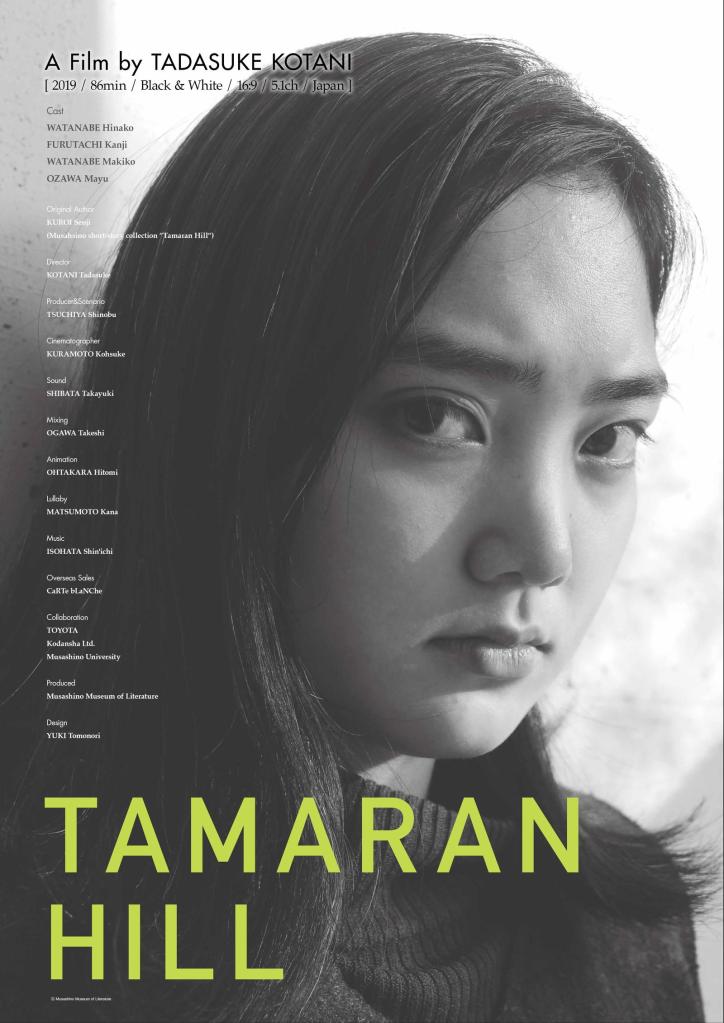
Does Japan have more uphills or downhills? You have to think about that one for a second, like one of those trick questions they put in books for children. Nevertheless, you can’t argue with the idea that so much of life is really about perspective and perhaps perspective itself can also be a subjective choice. Shot in crisp black and white with occasional animation and adapting the novel by Seiji Kuroi who actually appears at one particularly meta moment, Tadasuke Kotani’s Tamaran Hill (たまらん坂, Tamaranzaka) follows a young woman’s path towards forging, or perhaps rediscovering, her identity through a meditation on the word “unbearable”, its association with her father, and the long buried memories of a potential hometown. 

Hinako (Hinako Watanabe), a college student, lost her mother at four years old and is at something of a crossroads as she contemplates her future. Her teacher (Makiko Watanabe), who for some reason has an ever present robot assistant at her side, advises Hinako and her fellow students that if they want to get a good job what they need to get good at is the art of narrative lying. They need to assert their individuality in inoffensive ways, quantify their experiences in concrete numbers, but avoid embellishing facts in which hard evidence is available. Her advice to Hinako is that she needs to create a convincing “character” to pep up the self intro on her CV, perhaps paint herself as a survivor who lost her mother not to cancer of the vocal chords but in a natural disaster. 

Hoping to start at the beginning in rebuilding herself, Hinako begins researching the idea of “hometowns” only to be sidetracked by a book titled “Tamaran Hill”. The title catches her eye because “tamaran” which means “unbearable” is one of her father’s catchphrases, indeed we heard him say it numerous times after getting stuck at the airport by a typhoon meaning that he couldn’t get back for his late wife’s memorial service. In the book, the narrator details his friend’s increasing obsession with a slope near his home by the name of Tamaran Hill, something with which Hinako also becomes intrigued as she finds herself sliding into the narrative, the narrator detailing her own experiences as if she were reading them. 

It seems that for most, “tamaran” does indeed mean “unbearable”. The explanations for the name run from a deserting samurai decrying the folly of war as he ran from a nearby battlefield to Showa-era students resentful at having to climb uphill to gain their education but Hinako is disappointed to learn that the answer may be far more prosaic than she’d hoped. Reality and fiction begin to blur. She finds herself asking if an old man is merely a character from her imagination only to receive a philosophical answer that characters are composed of words but that words have vitality, warmth, and power. Meanwhile she begins to have visions of a mysterious past which mingle with those of the narrator’s friend leading her towards the “hometown” she has long been looking for. 

Hinako’s “unbearable” Buddhist priest father (Kanji Furutachi) apparently doesn’t like to talk about the past, which might be why she feels so lost, while he also berates her for not properly looking after her seemingly adopted younger brother. He actively hides from her the keys to her history, offhandedly remarking on the reappearance of a long absent relative in Hinako’s questions about a mysterious cosmos flower placed on her mother’s grave. Hinako wonders if it’s her mother’s fault that she can’t love anyone, retracing her steps inspired both by the novel and a letter hidden by her father in order to make sense of the brief and fragmentary memories which comprise her visions and thereby reconstruct an image of herself which is, essentially, narrative. 

Hinako’s process towards self identification hints at personal fictions and the strange alchemy of fantasy and reality that is memory, but she does at least seem to have straightened her story as per her teacher’s instruction, confidently stating that she has “decided” on her hometown. Perhaps the fiction is more reliable than truth in its manufactured certainties, and after all no one takes “just be yourself’ at face value. Does the slope go up or down, or is it actually on the level and it’s just that everything else is tilted? It’s all a matter of perspective, “unbearable” only in its inscrutability. 


Tamaran Hill streamed as part of this year’s online Nippon Connection Film Festival.

Original trailer (English subtitles)

Me & My Brother’s Mistress (おろかもの, Sho Suzuki & Takashi Haga, 2019)

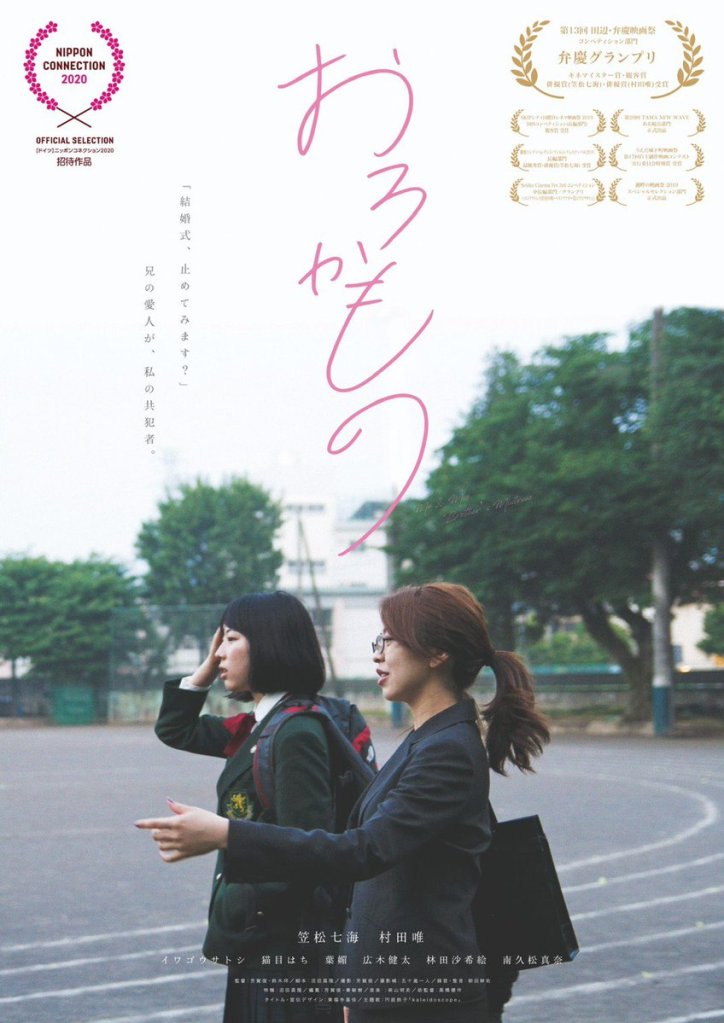
Why does everyone always blame “the other woman” and not the cheating boyfriend? That’s a question earnest high schooler Yoko begins to ask herself in Sho Suzuki & Takashi Haga’s Me & My Brother’s Mistress (おろかもの, Orokamono) after spotting a suspicious text on her brother’s phone and then spying on him as he leaves a love hotel with another woman a month before his wedding. But what is it that she finds so troubling, realising her only remaining family member is a two-bit louse, or the fact he’s going to get married and it won’t be just the two of them anymore?

In the last year of high school, Yoko (Nanami Kasamatsu) is filled with anxiety about the future. In fact, she’s the only one who hasn’t returned her careers survey and it seems she also turned the previous one in blank. Her parents passed away nine years previously, and ever since then it’s just been her and her older brother Kenji (Satoshi Iwago), now a permanently exhausted salaryman engaged to the homely Kaho (Hachi Nekome). Yoko doesn’t get on with Kaho, for the bizarre reason that she’s just too nice, but when she figures out that Kenji is having a torrid affair mostly conducted in love hotels on Sunday afternoons, she is quite rightly outraged that her brother could be so duplicitous. Rather than confront him, she decides to have a word with the “mistress”, following her around all day but conflicted on spotting her doing such unexpectedly decent things as giving up her seat on the train for a middle-aged woman laden with shopping. Tracking her to a restaurant, she planned to give her a dressing down but Misa (Yui Murata), as she discovers her name to be, is perfectly reasonable if also unrepentant.

Misa asks a number pertinent questions including why it is Yoko thinks this is any of her business in the first place and why she’s decided to have it out with her and not Kenji all of which Yoko has to concede is fair. Unlikely as it sounds, the two women end up becoming friends of a sort, Yoko beginning to sympathise in realising this is all her brother’s fault but still not really feeling all that sorry for Kaho which is one reason why she suddenly suggests they try to stop Kenji’s wedding. 

Tellingly, she later asks Kaho if she’s not afraid that another woman will steal Kenji away, but it’s a question she should perhaps have asked herself. She is quite obviously at difficult time. Everything is about to change for her. She’ll soon be leaving school and evidently doesn’t really want to think about what happens next, while her home life is also about to change when Kaho moves in with them permanently meaning it’ll no longer be just her and Kenji. Perhaps that’s what’s really bothering her, that Kaho is displacing her in her own home and stealing her big brother away to start a new family that might not include her in quite the same way. 

Indeed, her main objection to Kaho is in her genial domesticity, the various ways she and Kenji already operate as a couple, the perfectly cooked meals she prepares and the maternal care with which she overseas the house. Kaho isn’t really worried about another woman because she knows what Kenji is looking for is exactly what she gives him – a settled home. Misa, meanwhile, laments her status as a perpetual mistress, never really valued by the usually already attached men she ends up dating who think of her as a casual fling, a short-lived distraction from their domestic responsibilities. Still too young to fully understand, Yoko feels offended on Misa’s behalf that her brother could treat her or any woman this way. Yet their plan to stop the wedding ends up proving counterproductive in that it forces her to sympathise with Kaho and perhaps realise that Kaho herself was never the problem while also regretting having encouraged Misa’s self destructive descent towards an inevitable conclusion that is only going to cause her more pain. 

Yoko’s only future goals were apparently to become a decent and honest person, an ideal she perhaps is not quite serving in her “evil” plot to ruin her brother’s wedding. Misa brands her a “boring teen” already obsessed with dull stability, while it’s perhaps Misa’s boldness and unconventionality which attracts the otherwise straight-laced young woman. In any case, Yoko begins to discover a new equilibrium or at least a new accommodation with adulthood that lends her a little of Misa’s defiance as she makes an unexpectedly bold decision of her own in figuring out what it is she really wants and walking confidently towards the future even if with no real clue as to what comes next.


Me & My Brother’s Mistress streamed as part of this year’s online Nippon Connection Film Festival.

Original trailer (English subtitles)

The Shaman Sorceress (무녀도, Ahn Jae-hun, 2018)

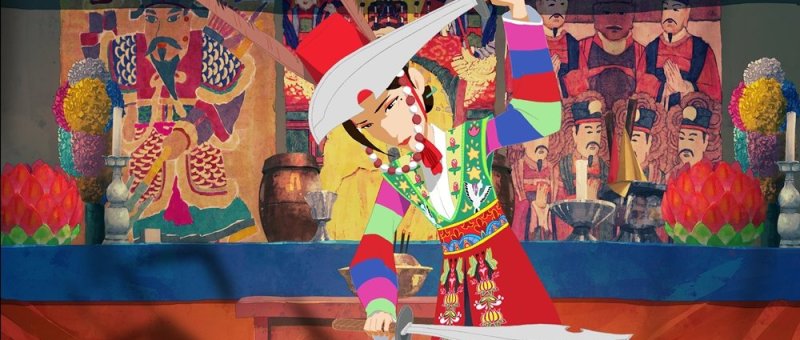
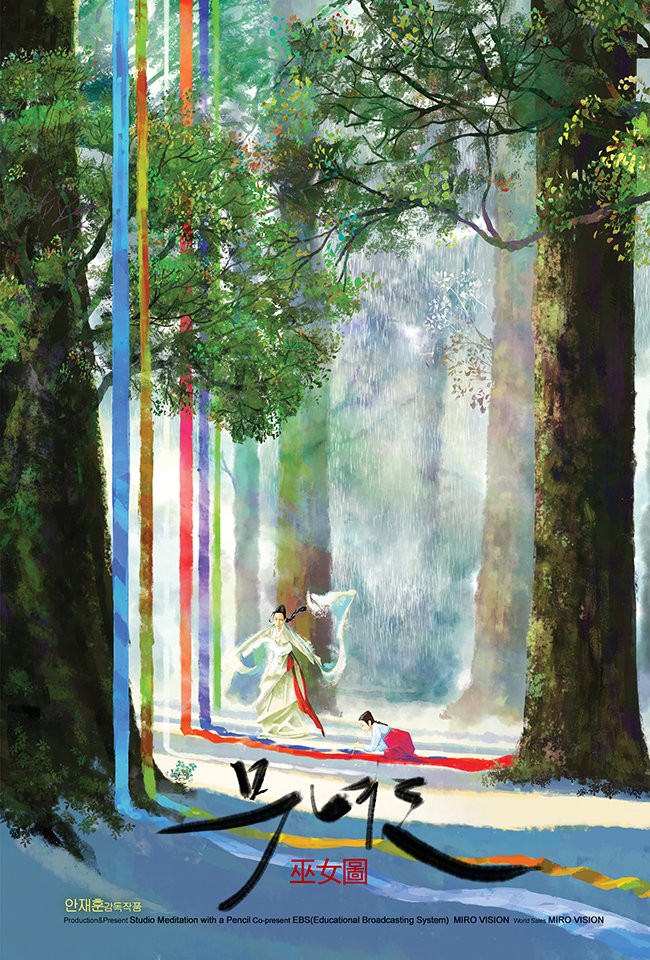
Inspired by a well known short story first published in 1936, Ahn Jae-hun’s painterly animation The Shaman Sorceress (무녀도, munyeodo) situates itself in a Korea at a moment of acute crisis, presented with images of “modernity” which are inevitably bound with those of Westernisation though the conflicts we are presented with are largely ideological and spiritual rather social or political. Nevertheless, there is an unavoidable lament for a lost Koreanness and infinite sadness for those undone by their own inability to find accommodation with changing times. 

Like many similar tales from Korea, Shaman Sorceress opens with a framing sequence which is never closed in which the narrator reflects on what is technically the film’s present from some point in the future. He reveals that he is from a noble family and that his grandfather was once known as a connoisseur of art and antiques, but the world is changing and the age of the aristocracy is coming to a close. Faced with declining fortunes, the family has sold off most of its collection and so they rarely receive so many visitors as they once did but are keen to receive those they do which is why his grandfather gives temporary lodging to a prodigious young painter, Nang-Yi, the 17-year-old orphaned daughter of a shamaness who lost her hearing in childhood illness. 

The narrator then goes on to relate Nang-Yi’s story which was related to him by his grandfather who heard it from the man with whom Nang-Yi was travelling. This is not actually about Nang-Yi, who becomes something like the protector of traditional Korean culture through her survival and her art, but her mother, an usual woman of the Joseon era who found herself surviving alone on the margins of society. Mohwa (So Nya) never marries but has two children by different men and resolves to raise both of them alone. Aware that her bright son Wook-Yi (Kim Da-hyun) lacks male influence, she decides to send him to the temple at 9 years old to further his education and increase his future prospects. His younger sister Nang-Yi, however, falls into such a depression in his absence that she becomes ill and loses her hearing further adding to Mohwa’s sense of maternal guilt. When she too falls ill and begins having visions, Mohwa awakens as a shamaness ministering to the townspeople who account her a powerful interceder with the supernatural able to cure the most serious of ills. 

The crisis occurs when 15-year-old Wook-Yi leaves the temple for the city where he is “corrupted” by modernity in the form of Western Christianity as preached by American missionaries. Disillusioned with Buddhism, he is converted by the idea of a single loving God and hopes to save the souls of those around him but is insensitive to his mother’s beliefs as a shamaness while she in turn is intolerant of his new faith, believing he has been possessed by “that Jesus ghost”. What transpires between them as perhaps any parent and child is a tussle over the future, but their tragedy is that their ideology is so mutually exclusive that they can find no way to co-exist while Nang-Yi is trapped between them as a representative of the chaotic present neither allied with past or future. 

The film, however, leans heavily towards a defence of Christianity even as it criticises both mother and son for their rigid dogmatism, neither able to accept that their way is not the only way. Mohwa faces existential threat as a shamaness who is no longer feared or respected, her noisy rituals seen as backward while the townspeople increasingly flock towards the subdued power of prayer while edging towards a moral austerity which condemns her for living outside of socially conservative patriarchal social codes as an unmarried mother of two allowed greater freedom in her spiritual authority. “Life’s supposed to be lonely” she explains to a departed soul she’s trying to convince to move on, but might as well be talking to herself as she tries to accommodate her grief and maternal guilt but finds herself prevented from moving on into a new modernity of which Christianity is only a part. 

The overriding sentiment is one of futility in an acceptance that progress will always win in the end, as reflected in the narrator’s wistful lament of his noble family’s gradual decline. Seemingly aimed at a wide audience not exclusively adult, Ahn tackles some difficult themes from alcoholism to incestuous desire not to mention the more complex meditation on the loss of the feudal past and the costs of modernity while continuing to express the conflict musically in his use of traditional singing styles in Mohwa’s rituals and a more conventional broadway register in Wook-Yi’s passionate defences of his faith. While the frequent flights into song may seem incongruous, they are perhaps more common in Korean animation of this kind than they might be in that from other cultures, particularly in films not expressly aimed at younger children who are unlikely to engage with the weighty themes despite the simplistic yet often beautiful aesthetics which present a less complicated view of the feudal past as one of idyllic pastoralism. 


Festival trailer (dialogue free)

Tora-san, Wish You Were Here (男はつらいよ50 – お帰り 寅さん, Yoji Yamada, 2019)

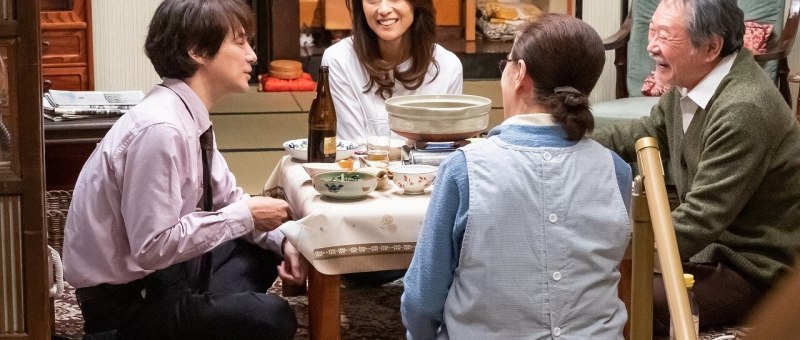
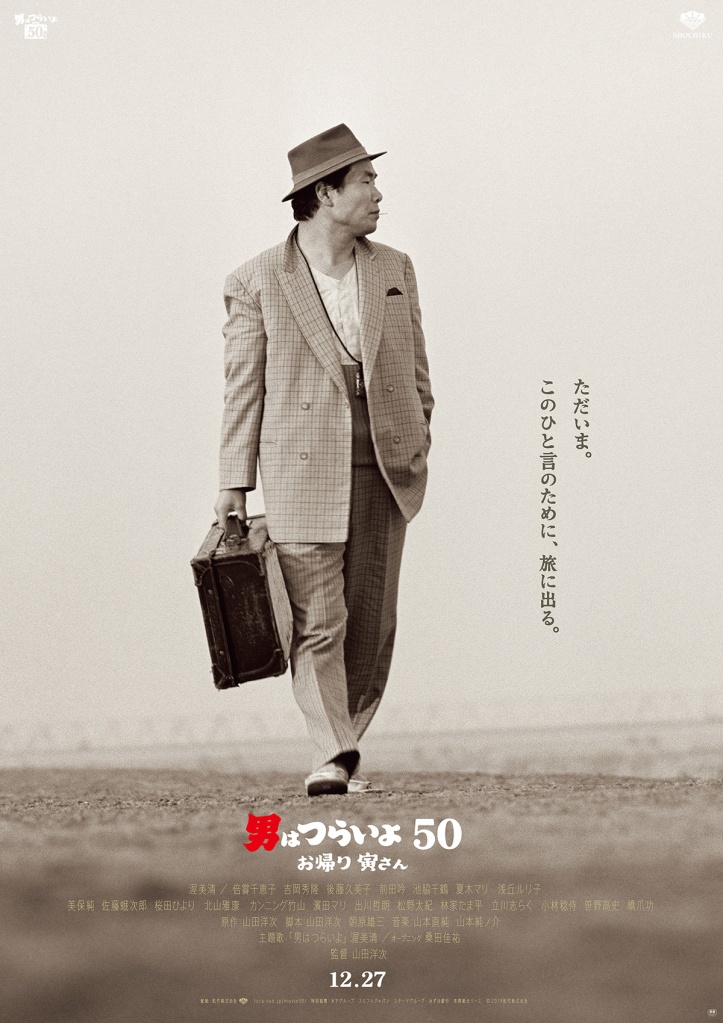
From 1969 to 1996, travelling salesman Tora-san appeared in 48 films, a 49th movie special appearing after star Kiyoshi Atsumi’s death brought an unavoidable end to the series. Tora-san, Wish You Were Here (男はつらいよ50 – お帰り 寅さん, Otoko wa Ysurai yo 50: Okaeri Tora-san) arrives to mark the 50th anniversary of the first film’s release, and as the series had done in its later stages, revolves around Tora’s neurotic nephew, Mitsuo (Hidetaka Yoshioka), who is now a middle-aged widower and father to a teenage daughter. Feeling somewhat wistful, Mitsuo’s thoughts turn to his now absent uncle, wishing he were still around to offer some of his trademark advice along with the gentle warmth and empathy which proved in such stark contrast with his otherwise anarchic and unpredictable personality.  

Yamada, who directed all but two of the series in its entirety, opens with another dream sequence this time of Mitsuo as he finds himself overcome with memories of his first love, Izumi (Kumiko Goto), who is now married with children and living abroad working for the UNCHR. Mitsuo’s wife passed away from an illness six years previously and he’s so far resisted prompts from his relatives to consider remarriage though it seems fairly obvious that his editor, Setsuko (Chizuru Ikewaki), has a bit of a crush on him. Having taken a gamble giving up the secure life of a salaryman to become a novelist, Mitsuo’s first book is about to be published and it’s at a signing that he serendipitously re-encounters Izumi who just happened to be in the store that day on a rare trip to Japan and spotted the poster. 

Like many Tora-san films, Wish You Were Here is about the bittersweet qualities of life, the roads not taken, the misdirections and misconnections, and the romanticisation of a past which can no longer be present. At a crossroads, Mitsuo ponders what might have been recalling the shattered dreams of his first love which seems to have ended without resolution because of the unfairness of life. He wishes that his crazy uncle was still around to make everything better, offering more of his often poetic advice but most of all a shoulder to cry on as he’d been for so many women throughout the series. But Mitsuo himself has always been more like Tora than he’d care to admit, if tempered by his father Hiroshi’s shyness. He too is a kind man whose bighearted gestures could sometimes cause unexpected trouble. What he’s learning is in a sense to find his inner Tora, embracing his free spirit through his art if not the road, but also coming to a poetic understanding that sometimes the moment passes and there’s nothing you can do to take it back, only treasure the memory as you continue moving forward. 

That’s a sentiment echoed by Lily (Ruriko Asaoka), one of Tora’s old flames, who now runs a stylish bar in Tokyo. The beauty of the Tora-san series was that it aged in real time. The actor playing Mitsuo played him as a child and we saw him grow up on screen just as we saw Shibamata change from post-war scrappiness to bubble-era prosperity and beyond. The family’s dango-shop has had an upscale refit and there is now a modern apartment complex behind it where the print shop once stood. Seamlessly splicing in clips from previous instalments as Mitsuo remembers another anecdote about his uncle, Yamada shows us how past and present co-exist in the way memory hangs over a landscape. Once or twice, the ghost of Tora even reappears hovering gently behind Mitsuo only to fade when he turns around to look while there’s an unavoidable sadness as we notice the Suwas’ living room is now much less full than it once was. 

Aside from his uncle, it’s the warm family atmosphere that Mitsuo recalls from his childhood, something which, like Tora, he might not have always fully appreciated. Driving Izumi to a potentially difficult reunion with her terminally ill estranged father (Isao Hashizume), he refers to his own parents as “annoying” in the “pushy” quality of their kindness, something which irritates Izumi who points out that she’d have loved to have such a warm and supportive family and if she had she might never have gone to Europe, implying perhaps that their fated romance would been fulfilled. The Shibamata house was Tora’s port, he could wander freely because he had somewhere to go back to where they’d always let him in no matter what kind of trouble he caused.

A fitting tribute to the Tora-san legacy, Wish You Were Here is also a joyful celebration of the Shitamachi spirit. Tora might be gone, but the anarchic kindness and empathy he embodied lives on, not least in the mild-mannered Mitsuo and his cheerful daughter who seems to be continuing the family tradition of meddling in her loved ones’ love lives as her lovelorn father prepares to move on in memory of Tora, the free spirited fool.


Tora-san, Wish You Were Here streamed as part of this year’s Japan Cuts.

International trailer (English subtitles)

My Identity (神様のいるところ, Sae Suzuki, 2019)

“You’re not the only one suffering because of language barriers” the heroine of Sae Suzuki’s My Identity calmly explains to her mother after spending a few days away perfecting her language skills. My Identity (神様のいるところ, Kamisama no Iru Tokoro) is perhaps less about identity in itself than the difficulty of communication but nevertheless finds a young woman displaced, quite literally pushed out both by her frustrated mother and by a society which continues to be fiercely intolerant of difference. What she realises however, is that she’s not the only one feeling lost, discovering an alternate maternal figure in an orphaned adult herself at the mercy of an unforgiving and judgemental patriarchal society. 

As we first meet her, high schooler Rei (Hinata Arakawa) is physically pushed out of her family home, the door closed behind her as her mother lays in to her father with accusations of fiscally irresponsible infidelity in her native language. As we later discover Rei is half-Taiwanese and in fact lived on the island until she was five but now feels under-confident in both a perhaps more familiar Mandarin and the Hokkien between which her mother switches freely. At school meanwhile she is taunted by two horrible boys who bully her for being “Chinese”, calling her “creepy” and “ugly” while questioning her ability to speak Japanese. When they tear up a thank you card she’d written in Chinese claiming not to understand it she finally loses her temper and fights back, hitting one of the boys on the head with her backpack. Ironically, she is the one that gets into trouble. Her mother takes a cane to her legs, angry most of all it seems that people will think that foreign mothers raise badly behaved children and will continue to look down on her. Rei just wants to connect with her mother, but her mother isn’t listening. 

That might be why she makes unwise decision to look into dodgy compensated dating after hearing about a forum where “gods” congregate looking to pick up teenage girls. She thinks better of it at the last minute only to be chased by a weird old man claiming to be worried about her which is how she bumps into Aoi (Kaho Seto) who cooperates by pretending to be her responsible adult. A youngish office worker, Aoi has problems of her own and has apparently been out on a night of heavy drinking with a colleague, something which becomes a source of gossip among the other women at work who seem to universally dislike her. She’s coming up for a transfer, but is aggressively harassed by her boss who tells her that he’s going to wait for her when she gets off, causing her to alter her schedule in order to avoid him. 

After a traumatic incident, the two women find themselves on the run, breaking into a disused inn which they end up operating in a temporary illusion of domesticity. Rei practices her Mandarin, looking to Aoi for guidance, but discovering that her worries are fairly universal. What if you can’t communicate your feelings she asks, but Aoi has no answer for her, and Rei can only lament that people start hurting each other when communication fails. Her Taiwanese heritage, however, becomes an unexpected, two-fold threat to her new familial connection when the pair visit a local Taiwanese temple which is also home to a Japanese researcher who speaks perfect Mandarin and has identified the two women as the fugitives from the news, but has also developed a quite obvious attraction to Aoi. 

Rei came here to face herself, but is consciously working towards a resolution, determined to make a connection while asserting her own agency. Aoi meanwhile worries she’s doing the opposite, “playing house”, “running away”, “refusing to face reality”. The researcher tells her, perhaps not altogether altruistically, that she’s being irresponsible, and that her indulgence of Rei may in the long run be harmful. She too feels lost and alone, confessing that she found herself subject to unwanted male attention she couldn’t directly deflect and feigned an ignorance that put her at odds with other women who came to resent her for it. Preoccupied, she too fails to understand Rei’s feelings, trying to be kind but nevertheless causing pain along the way. 

Through visiting the temple and reconnecting with her Taiwanese heritage, Rei finds the words she needs in order to communicate what it is she really feels and hopes that, finally, someone is going to listen. Contending with miscommunication, prejudice, ignorance, and a fundamental “language barrier” in the difficulty of translating feelings accurately and being fully understood, Rei does her best to become her most authentic self, integrating her identity and defiantly embracing it but doing so with openness as she strives for communication as a weapon against hate and violence.


My Identity streamed as part of this year’s Japan Cuts.

Original trailer (English subtitles)

Sacrifice (サクリファイス, Taku Tsuboi, 2019)

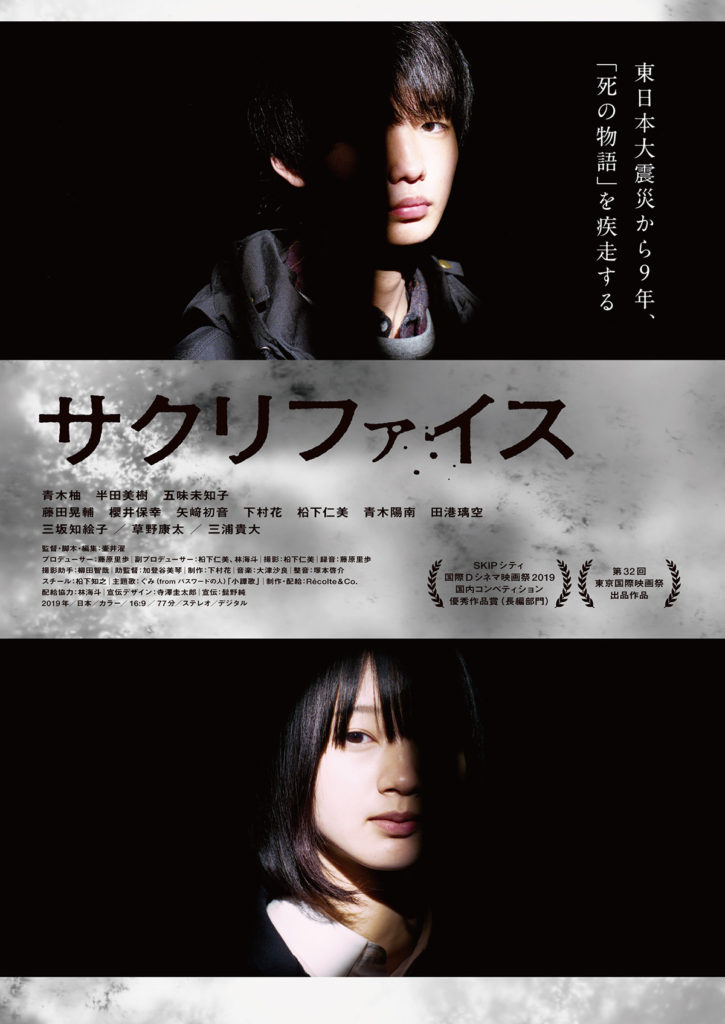
Taku Tsuboi meditates on coming disaster in his evocative debut feature, Sacrifice (サクリファイス). Post-earthquake anxiety meets its opposite number in doomsday cult as an Aum-esque sect rejects and then embraces a contrary prophecy of the end of the world ushered in by a giant worm already burrowing menacingly under our feet. Putative apocalypses however pale in comparison to the incurable threat of other people and it may not be an earthquake or a war or a terrorist attack that puts an end to us so much as our inability or perhaps refusal to overcome our fear. 

“Forgiveness transcends revenge” a young man claims during a debate about the death penalty, “the cycle of hate must be broken”, only he later confesses that he didn’t quite mean what he was saying. He opposed the death penalty but less for humanitarian reasons than curiosity. Okita (Yuzu Aoki) wants to know the why, what the killer was feeling when they did what they did. Fellow student Toko (Miki Handa) has been patiently watching Okita, suspicious of him because when he thinks no-one’s watching, he drops his mask. She’s convinced that he is responsible for a notorious series of ritualised cat killings, as well as the death of fellow student Sora (Hana Shimomura) who was apparently investigating them and had presumably gotten too close to the truth. Toko’s suspicions are confirmed when she raids Okita’s backpack and discovers an incriminating file, essentially blackmailing him to become her friend in the hope that, unlike her boyfriend the straight-laced job hunter Masaya (Kosuke Fujita), he can buy her a ticket out of her maddeningly “normal” life. Meanwhile, Okita also becomes an unexpected protector for another student, Midori (Michiko Gomi), who finds herself targeted by a young man in camouflage (Yasuyuki Sakurai), apparently a member of a cult, Shinwa, successor to the defunct Sacred Tide and the first private army in Japan. 

Midori was once a cult member herself, unwillingly inducted by her mother, and is plagued by strange visions after having foreseen the devastating March 2011 earthquake in a dream and subsequently targeted for elimination by those who feared her power. The cat murders are numbered and apparently counting down from 311 leading some to conclude they have something to do with the earthquake, some kind of “sacrifice” in the face of coming disaster. “The world needs sacrifices” a true believer later affirms, but has no reason why it should, only insisting that they are following the teachings of Mr. Sazanami, the mercenary turned cult leader. Some become soldiers, others kill cats in Japan without knowing why. 

“Seeking reason makes you weak” Sazanami conveniently claims, “view the world without the blindfold of humanity, then you can understand my vision”. Toko is drawn to Okita precisely because of his lack of human feeling, “You see people only as objects”, she tells him with admiration not caring if he killed or not only hoping that his difference will help her escape a life of crushing mundanity. She thought the earthquake would change something. Everyone was talking of new beginnings and great renewals but in the end nothing really happened and her adolescence has been one of disappointment coloured with anxiety. She resents being “the only normal one” trapped in “a world of normality” and longs to throw herself into this strange world of conspiracy and ritual in order to give her life the greater meaning she craves. 

Midori, however, craves that kind of normality. Her mother ironically lost faith in the idea of salvation after facing death in the wake of disaster, while she struggles to escape from an unfair sense of responsibility for the fate of the world seeing too much and not enough at the same time. Yet in a strange way it is faith that sustains her. “All I can do is run” she affirms, hoping that she will one day re-encounter the person who claims his life found meaning only when he found her. She refuses to discard her “blindfold of humanity”, living in the shadow of future catastrophe but living all the same. An accomplished feature debut, Tsuboi’s broody drama wrings all the dread out of its eerie settings from churches disused and not to abandoned buildings and the bleakness of a somehow comforting dreamscape while offering his beleaguered youngsters a tentative sense of hope if only in the ability to normalise a sense of existential anxiety.


Sacrifice streamed as part of this year’s Japan Cuts.

Original trailer (English subtitles)

Beyond the Night (夜のそと, Natsuki Nakagawa, 2019)

“I’m leaving this place” a traumatised woman declares, trying to free herself from an oppressive environment but discovering that escape is not necessarily synonymous with freedom. Completed at Tokyo University of the Arts’ Graduate School of Film and New Media, Department of Film Production, Natsuki Nakagawa’s Beyond the Night (夜のそと, Yoru no Soto) locates itself somewhere between Wuthering Heights and The Postman Always Rings Twice as its traumatised heroine struggles to assert herself, trapped in the black hole of incestuous small-town life while yearning for a return to a more wholesome existence.

When we first meet Sotoko (Saki Tanaka), she is trying to run away only to stumble in the forest and be dragged back by her husband, Atsuya (Yasuhiro Isobe), whom she was presumably trying to escape. At work the next day, she’s wearing a large bandage on her cheek, but her colleague, Yuki (Haruka Konishi), has little sympathy for her. It’s at that point that she encounters mysterious drifter Mikiro (Kenta Yamagishi) on a delivery job to the office. Taken by her melancholy, Mikiro begins watching over her, concerned that no one else in the town seems to care that Sotoko is a victim of domestic violence. He learns from an old man that Atsuya is from the village’s most powerful family and therefore can do whatever he likes, while Sotoko, according to Yuki, is a “worthless” woman, an orphan who lost her family in a mysterious car accident. In addition to beating her, Atsuya has been pimping Sotoko out for money and influence, forcing her to sleep with a dirty old man, Tokyo-based politician Ishikawa (Hiroaki Kono), who later turns up dead in extremely suspicious circumstances. 

Atsuya claims that he treats Sotoko the way he does because he’s responding to her desires, pointing out that she’s tried to leave many times but has never been able to move beyond the forest. She lives surrounded by memories of the family she has lost, pictures drawn by her little brother Shota tacked on the wall, hugging his fluffy teddy for emotional support. Atsuya however wants to be her only family, destroying his totemic rivals in order to dominate her more completely while also taking from her the hope of forming a more complete family of her own. We learn that Atsuya has been shielding her from the consequences of involvement with a previous crime which is one reason she can’t leave him, but another is her battered psyche as she tries and fails to convince herself that she has the right to a better life or to her freedom. 

Mikiro, meanwhile, seems like an unlikely saviour, carrying a dark secret of his own as he plays the benevolent stalker wandering around Sotoko’s home when no one’s around and leaving little calling cards to remind her of his presence. Where Sotoko wants freedom, Mikiro wants love and is willing to go to great lengths to get it. “If I kill him will you love me?” he asks, while Sotoko explains to Yuki that she cannot simply leave Atsuya because their souls are entwined and someone needs to cut her free. “You can’t go anywhere, I’m the only one who can protect you” Atsuya counters, “She’ll never love you” he adds to Mikiro, “You’ll end up like me, you’re my replacement”. 

“We can’t change anything” a friend of Mikiro’s insists deepening the sense of fatalism, “one rotten person dies and nothing changes” echoing his own assertion that “there are bad people everywhere”. Sotoko declares her love for Mikiro as a symbol of the freedom she now desires, but at the same time reveals that there is nowhere she wants to go. To her Mikiro seems like a visitor from another world come to take her away from all this, but her salvation is not another perhaps equally problematic man but an awakening to her own agency, finally choosing a clear destination in the fullness of her “freedom”.

Nakagawa shoots her noirish tale with deadpan realism and a healthy respect for the ancient borders of the natural world, amping up the Lynchian sense of dread with ominous musical cues as Sotoko attempts to navigate her life in this strange little town where misogyny rules that seems to stand in for the prison of her trauma. Literally named “child of beyond”, she looks for the new world somewhere on the outside but struggles to extricate herself from an internalised sense of shame and worthlessness in order to find it. “Wherever you go you won’t be satisfied” a threatening policeman (Tomoki Kimura) had told her, but if you never leave the village then how would you ever know?


Beyond the Night streamed as part of this year’s Japan Cuts.

Trailer (English subtitles)

Roar (轟音, Ryo Katayama, 2019)

Two powerful stories of agency denied run in parallel in Ryo Katayama’s gritty debut, Roar (轟音, Go-on). Does violence free or constrain, and if the world itself is defined by access to it what does that say about the nature of our society? Burdened by familial failure and persistent misogyny Katayama’s heroes seek escape from their sense of futility but find it finally only in fighting their way out as they struggle to liberate themselves from constraints both societal and self-imposed. 

Makoto (Ryo Anraku) has always looked up to his big brother Tadashi (whose name literally means “correct”) but for reasons which remain unclear, Tadashi’s life has veered off course. Resentful of his authoritarian father who he claims has done nothing for him, Tadashi quits his job and eventually commits an act of heinous and senseless violence, placing his family at the centre of a campaign of social shaming. “My future is ruined because of him, what should I do now?” Makoto asks of his mother, but she turns away and tells him only to figure it out for himself while his father too abnegates his responsibility leaving Makoto in sole charge of his brother’s affairs. Burdened by further tragedies, he runs away and finds himself taking shelter with a mysterious vagrant (Ryo Katayama) who appears to earn money as an enforcer beating up targets on behalf of a shady petty gangster. 

Across town, meanwhile, cheerful radio host Hiromi (Mie Ohta) is stuck in a dead end “romance” with her overbearing boss (Shoji Omiya) who, despite being married to someone else, is jealous and possessive, regularly following her around outside of work to make sure she’s not seeing other men and stowing away in the footwell under the back seat of her car to “surprise” her. Nomura pressures her into illicit make-out sessions in the office, but also into voyeuristic public sex acts. Hiromi does not seem to be invested in the relationship even if, on the surface at least, not unhappy about going along with it, but is nevertheless constrained by the fact he is her boss and therefore she likely cannot end the affair without damaging her career nor does Nomura seem the sort of man who will respect her decision if she decides not to continue allowing him access to her body. 

Both Hiromi and Makoto are, in one way or another struggling to escape from their respective positions in society or perhaps to assume those they feel they should have. As the little brother, Makoto is the one who is protected, by his big brother and by his family, but both have deserted him. Tadashi swore he was “invincible”, yet he’s stumbled and is now in need of protection himself but Makoto is not in a position to protect him. In Manabu, the silent thug, he sees an image of his brother which can still be redeemed. He sees that his violence is born of pain and is as much about self harm as it is about hurting others. Makoto begins to care for him, hoping to save him from a life of senseless violence but finally cannot escape the capacity for violence in himself, exacting rage on an innocent bystander but failing to find a sense of power or liberation only deepening his sense of hopelessness. 

Hiromi meanwhile wrestles with being a middle-aged career woman who struggles to accept that perhaps she deserves more than the skeevy boss and has the right to refuse him. Her mind starts to change when a friend, Mayuko (Mari Kishi), introduces her to a handsome young man who offers her the possibility of a happier romantic future, forcing her to reflect on her present and the toxicity of her relationship with the controlling, manipulative Nomura. Her options are however limited, and finally like Makoto her rage boils over into unavoidable violence that is also the catalyst for her liberation in directly defying pervasive societal misogyny in the shape of her lecherous boss. 

Mayuko, Hiromi’s friend, faces a similar problem in discovering that her brothers intend to leave her father’s care to her despite the fact that she has a life and career in the city both because they think such things are women’s work and because they find her status as an unmarried middle-aged woman embarrassing, invalidating her choices in insisting she return to her “proper” familial role as caregiver if not as a wife or mother then as a daughter. She too struggles with herself, but finally opts for compromise rejecting violence in favour of compassion. 

Nevertheless, Katayama opens with a lengthy POV shot which places us directly into the role of Tadashi, forcing us to reckon with our own latent violence in making us complicit with the harm his actions cause to others in his quest for power and agency. Where he leaves us, however, is on the run both towards and away as Makoto and Hiromi attempt to liberate themselves from the sense of futility which defines their lives but find scant release in the senseless act of mindless violence. 


Roar is available to stream in the US until July 30 as part of this year’s Japan Cuts.

Original trailer (English subtitles)

On-Gaku: Our Sound (音楽, Kenji Iwaisawa, 2019)

The high school band movie has a special place in Japanese cinema. From the anxious release of Linda Linda Linda to the laidback charms of K-On, music is that rare thing that both brings people together and enables individual expression. Adapted from the cult manga by Hiroyuki Ohashi, Kenji Iwaisawa’s highly stylised indie animation On-Gaku: Our Sound (音楽, Ongaku) is a psychedelic ode to the transportive qualities of musical performance from either side of the stage as its laconic, tongue-tied heroes rediscover themselves through the art of song. 

Kenji (Shintaro Sakamoto) is perhaps the archetypal hero of another kind of manga, a shaven-headed delinquent stepping straight out of the pages of Crows Zero or a hundred other tales of high school hierarchies mediated through male violence. Known for his “spaghetti fist”, the monosyllabic young man is feared all around town as a ruthless fighter, engaging in petty acts of aggression with boys from neighbouring high schools, such as the mohawked Oba (Naoto Takenaka) and his identically dressed gang of young toughs who seem to be his current nemesis.

Lost in his own little world, Kenji barely notices when he finds himself in the middle of a crime scene as a thief runs past him on the street pursued by a heroic young man who, temporarily liberating himself, thrusts the guitar he is carrying into Kenji’s arms. Bemused by the chaotic scene in front of him, Kenji becomes fascinated by the strange instrument and immediately announces to his two friends, Ota (Tomoya Maeno) and Asakura (Tateto Serizawa), that they’ll be forming a band, picking up everything they need from the school music room and cheerfully walking off with it. Of course, they have no idea what instruments even are let alone how to play them but then that hardly matters, or as Kenji puts it might just be the “whole point”. 

Asakura comes up with a name for their musical trio, “Kobujutsu”, without quite knowing what it means (classical martial arts), later realising they have a problem because there’s already a similarly named band at school, Kobijutsu (classical fine arts). Asakura has the idea to strong-arm the other guys into changing their monicker, but in place of the expected battle of the bands the two sets of unlikely allies find unexpected common ground in musical appreciation. Kobijutsu, led by introverted music geek Morita (Kami Hiraiwa), is an old school retro folk trio, while Kenji & co are unrefined, avant-garde punk rockers, but each discovers something in the other that speaks directly to them in mutual understanding as “musicians”. 

In fact, “musicians” is how Kenji demands to be identified, explaining to the gang’s female friend Aya (Ren Komai) who was used to referring to them as the “three musketeers”,  that they’re “now obsessed with music” which is why they “don’t have time” to go fight Oba. But Kenji later finds himself depressed, declaring himself “bored” with the band much to the alarm of his two friends who’ve fully embraced their artistic sides. The young men find themselves literally transported by music, Morita seeing himself in a surrealistic scene surrounded by artefacts of misremembered traditional culture pointing to unexpected angles in Kenji’s raw musical expression which later manifest themselves in an unexpected sight gag as he reveals a different side to himself in a musical register which is both refined and naive, while Morita too begins to embrace his inner rebel with psychedelic glee complete with a fresh new look. 

Iwaisawa spent seven years on the project drawing over 40,000 images by hand largely on his own. His designs perfectly mimic the quirky minimalism of Ohashi’s manga, complete with a lowkey deadpan sensibility that is perfectly in tune with the laidback charms of its slacker heroes. Kenji lives in a slightly different temporality, his extended pauses before offering up his idiosyncratically concise replies rendered as perfectly timed still frames while the musical sequences are filled with the raw anarchic energy of something being set free as the youngsters liberate themselves through the joy of music, climaxing in a rotoscoped final concert which unites all in a shared sense of transcendental transformation. Boasting an expertly crafted, nostalgic soundtrack, Iwaisawa’s joyful celebration of the power of making music is an off-beat gem.


On-Gaku: Our Sound is available to stream in the US until July 30 as part of this year’s Japan Cuts.

International trailer (English subtitles)