We Are Champions (下半場, Chang Jung-Chi, 2019)

What is the best way to “win”, team work and camaraderie or authoritarian austerity? Two brothers find themselves on different paths in Chang Jung-Chi’s high school basketball drama We Are Champions (下半場, Xiàbàn Cháng), but in true manly fashion eventually end up repairing their fracturing familial relationships through sporting competition as a healthier substitute for physical violence (though that too is not entirely absent). Who wins and who loses might not be as important as it first seems, but then again perhaps there is more than one way to “win”. 

Close in age, big brother Hsiu-yu (Fandy Fan Shao Hsun) and little brother Tung-hao (Berant Zhu Ting-Dian) live with an aunt and uncle in the backroom behind their seamstressing factory and spend most of their free time playing basketball out in the street with other youngsters. The boys’ mother passed away when they were small and times being what they are, their dad has had to travel to find work and is not able to check in on them very often. The reason the guys play basketball so much is that they hate living with their permanently angry uncle and want to move out, putting the money they make through street games and part time jobs into an escape fund. 

Things begin to change for them when they’re spotted by a basketball coach from a local high school who gives them a few tips and offers them a shot at joining the team. Tung-hao is keen, but Hsiu-yu has given up on his dreams of basketball glory because of a hearing injury that saw him mercilessly bullied on the middle school courts. Tung-hao ends up getting scouted by an elite school, Yuying, but the authoritarian coach flatly tells him that there’s no space for Hsiu-yu because he doesn’t allow disabled people on his team. Tung-hao is conflicted, but ends up joining after fighting with his uncle and storming out of the house. He’s sorry for his brother, but all he wants to do is play basketball so he’s taking his chance. Hsiu-yu is happy for him and wishes him well, eventually taking the sympathetic coach who spotted them at the outdoor court up on his offer to play for decidedly small but scrappy high school team Kuang Cheng. 

Kuang Cheng isn’t perfect, Hsiu-yu still gets bullied because of his hearing aid at least to begin with, but unlike Yuying they run on a principle of solidarity. The coach is a supportive, paternal presence that Hsiu-yu finds particularly useful in the continuing absence of his father and motivates his players through trying to give them the confidence to be all they can be. Over at Yuying, meanwhile, they all wear identical black uniforms, have buzz cuts, and spend all their time drilling with military discipline. The coach has no time for the personal lives of his players, abruptly kicking one guy off the team simply because he was late to practice. Yuying is, to put it bluntly, a bedrock of ruthless authoritarian elitism. They think they’re entitled to win because they’re the best, and they won’t hear any arguments to the contrary. 

These ideological differences continue to place a strain on the brothers’ relationship with Tung-hao remaining conflicted about his decision to leave his brother behind and doubling down on the manly militarism of his coach’s philosophy to make it seem worthwhile. Having not seen him in a long while, Hsiu-yu calls out to his brother across the basketball court but Tung-hao ignores him, eventually answering only after Hsiu-yu returns to let him know that he’s just had a call about a relative being seriously injured and taken to hospital. Tung-hao tells him he’s not interested in family drama because he’s here to practice with his new buddies before crossing the line back towards the other side. 

Despite all of that, however, good brother Hsiu-yu never gives up on family feeling and continues to support Tung-hao in his heart even while they’re rivals on the court. Tung-hao is increasingly conflicted by his coach’s determination to destroy his brother, even using his hearing problems against him, but is eventually healed by Hsiu-yu’s forgiveness even as he prepares to shatter all his dreams. Sometimes you can “win” by being the better man, or by accepting someone’s forgiveness, or just doing your best, and other times you can throw a ball through a hoop all on your own. Victories come in all shapes and sizes, but true champions are the ones who know how to lose with grace and win with magnanimity. 


Originally scheduled as the centrepiece of the suspended Season 10, We Are Champions streams for free in the US on June 12 as part of Asian Pop-Up Cinema’s Mini-Focus: Taiwan Cinema Online. Viewers in Italy will also be able to catch it streaming as part of this year’s online Udine Far East Film Festival.

Original trailer (English subtitles)

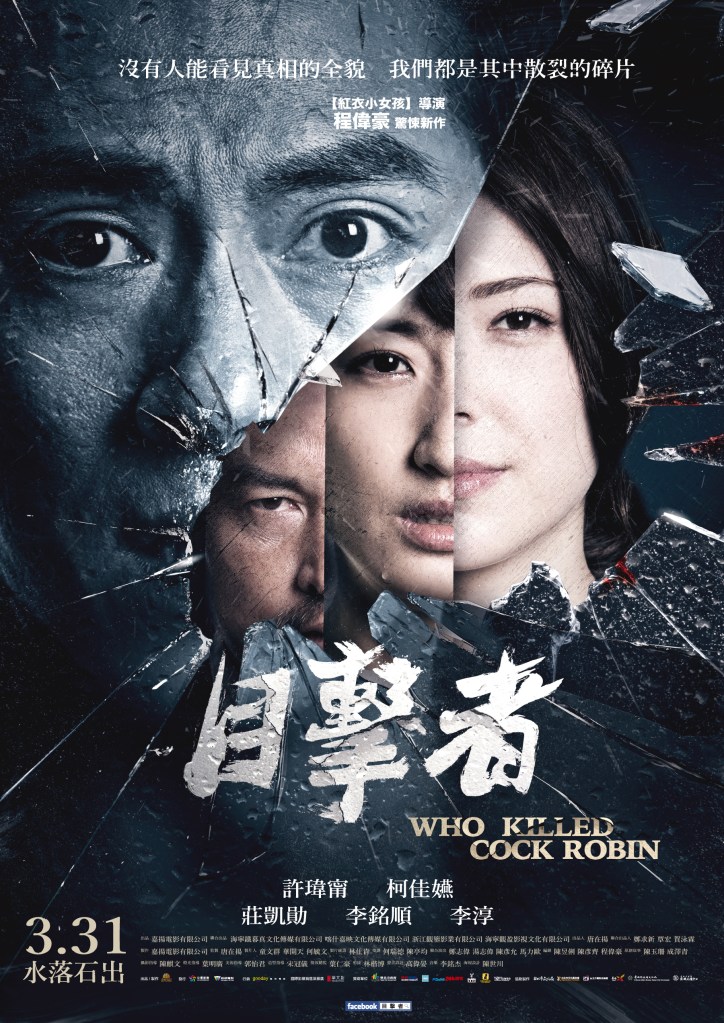
Who Killed Cock Robin (目擊者, Cheng Wei-Hao, 2017)

“Everything in this world has already been decided, no one is free” according to a jaded, psychopathic killer in Tag Along director’s Cheng Wei-Hao fatalistic neo-noir, Who Killed Cock Robin (目擊者, Mùjīzhě) . As the English title implies, each has their part to play when it comes to the orchestration of death, but the peculiar confluence of circumstances sees the central “witness” corrupted by his decision to alter his position, becoming part of the story in a way a journalist never should.

At 30-ish, Chi (Kaiser Chuang Kai-hsun) is a jaded paparazzo tuning in to the police scanners for the latest scoop on potentially scandalous crime. He thinks he’s hit the jackpot in pulling off the road and discovering a local politician in a car wreck with a beautiful young woman he later realises is a top glamour model, but his insistence on pushing the story without proper background checks comes back to haunt him when the politician comes out with documents proving he married the model in secret some months earlier and signals his intention to sue. All of a sudden, Chi’s bright future is slipping away from him. His mentor retires, and he’s abruptly made redundant, effectively fired for the problematic politician scoop. It’s at that point he starts looking back at photos he took of another car crash nine years earlier when he was still a rookie and realises his boss may have deleted some behind his back. 

As his mentor, Chiu (Christopher Lee Meng Soon), eventually tells him, Chi isn’t the sort of man who’d fight for justice for someone he didn’t even know. He’s in this for petty revenge in hoping to expose some kind of scandal involving the boss who got him fired. He’s also, however, meditating on the earnest young man he once was and the jaded hack he’s since become. As an intern he wanted to do hard journalism and make a difference, but after falling in with Chiu he became corrupted by urbanity, seduced by the fancy suits, celebrity contacts, and stylish parties. He does his business by forming “relationships” with useful people such as law enforcement officers though homosocial bonding, i.e. drinking and women. 

Chiu also, perhaps ironically, thanks his wife for helping him make the “relationships” which have enabled his successful life. These complex networks of interwoven corruption are what keeps the city running, but they’re also a web that can be unravelled to reveal the dirty secrets at its centre. Chi seems to know that fate is coming for him. “Things that happened to you come round in circles” he drunkenly laments on learning not only that the used car he was duped into buyng is an illegally remodelled vehicle but also that the chassis belongs to the one from the accident he witnessed all those years ago. Car accidents plague him, as if implying his life is one long car crash bracing for the impact. 

Yet, as Chiu cautions him, he only has a part of the truth. He is lied to and misled, left to reply on the reporter’s instinct he has long since allowed to become rusty. His investigation places others in danger, not least a young woman who was beginning to think she’d escaped the accident’s wake and built a nice life for herself free of past transgression. But Chi still has to make a choice, try to expose this world of infinite corruption for what it is while accepting his own complicity within it, or decide to unsee what he worked so hard to uncover and go back to being the hack reporter dependent on that same web of corruption whose entanglement he was so keen to escape. 

“I just want to know the truth” Chi claims, as a good reporter should, but his subjects ask him “what’s the point?”, “everyone wants to know the truth, but once you know then what?”.  It’s a good question, and one perhaps that Chi doesn’t know the answer to, reducing his dilemma to a sheepish grin and a cynical joke. “I prefer to remember happier things”, he admits. An infinitely compromised figure, Chi finds himself on dark and fatalistic path towards discovering, at least, his own truth. “I believe in myself” he later tells an equally corrupted colleague but something tells us we perhaps should not. 


Who Killed Cock Robin streams online for free in the US as part of Asian Pop-Up Cinema’s Mini-Focus: Taiwan Cinema Online on June 11.

International trailer (English subtitles)

The Gangster’s Daughter (林北小舞, Chen Mei-Juin, 2017)

Do little fish always get eaten by bigger ones, or can they manage to swim free into kinder waters? As the title perhaps suggests, The Gangster’s Daughter (林北小舞, lín běi xiǎowǔ) finds its young heroine battling parental mystery, stepping into her father’s world of crime and dubious morality while he grows ever more disillusioned with his duplicitous lifestyle and the price he has clearly been paying to survive it. Yet they are both in many ways victims of the corruptions of the society in which they live in which others play the system in less overt ways but to the same ends in order to manipulate individual privilege. 

Now a teenager, Shaowu’s (Ally Chiu) parents split up when she was little and she and her mother returned to live with her grandmother in Kinmen, an idyllic island village. Shaowu has no real memories of her father, Keigo (Jack Kao), a Taipei gangster and her grandmother is reluctant to enlighten her. The first time she sees him in many years is at her mother’s funeral at which he makes a notable appearance, an obvious “gangster” in dark sunglasses and sharp suit, backed by a dozen henchmen that, it later transpires, have been hired for the day by his overenthusiastic minions who thought he needed to look “good” while paying his respects to the mother of his child. 

For herself, Shaowu is a rebellious teen who hangs out in a makeshift den where she keeps the various souvenirs she finds of a more violent time in scouring the corn fields for landmines. A pair of horrible boys appear to be bullying her as an orphan with an atypical family background, but Shaowu is unfazed until a nasty prank backfires and harms her only friend. In revenge, she dumps a pail of cow dung over the ringleader while he’s eating his lunch right in the middle of the classroom which would be funny if it weren’t that his dad’s a bigwig with political clout. Reluctant as she is, grandma calls Keigo to help her negotiate with the school, but it ends with a “recommendation” that it might be better Shaowu continue her education in the capital. 

Which is all to say, that father and daughter have quite a lot in common. Shaowu becomes fascinated with the gangster life, acting out scenes from movies with an umbrella only to be stunned when she tries the same thing after finding one of Keigo’s guns and it turns out to be loaded. She finds herself sucked into his homosocial gangster world, dining with big boss Ting who remembers her from when she was a baby and has just returned from an extended stay in Thailand, and making friends with the daughter of another gangster, while Keigo ponders new routes forward as a responsible father trying to protect his daughter from the dangers of the circles in which he moves. 

Twin crises arrive when his underling Dreamer gets into a fight a powerful corrupt cop, Chang, while Boss Ting edges towards moving the gang into drugs which is something Keigo, a noble gangster, cannot condone especially after he finds some stuffed into a cigarette packet one of Shaowu’s new friends asked her to look after. He tries do his best as a modern dad, patiently reminding himself that his daughter’s not a little girl and refraining from laying down the law, but is frustrated by her fascination for everything he regards as a fall from grace in his life as a petty gangster. He wants to get out and dreams of opening a restaurant with his girlfriend but discovers that the gangster world may not be done with him yet. 

Father and daughter are, it seems, divided by an increasingly corrupted society where bent cops like Chang are no better than gangsters themselves while snotty kids know they can do as like they because they have powerful fathers and will never be expected to take responsibility for their actions. Little fish like Keigo don’t stand any kind of chance especially when they insist on swimming against the tide in adhering to the same kind of romanticised ideas of gangsterdom that Shaowu idolises from movies hopped up on jianghu idealism. Taipei or Kinmen, it doesn’t really matter. You’ll still find yourself squatting in the tall grass while others plot against you in the open. In her first narrative feature documentarian Chen Mei-Juin delights in capturing local character from the faded grandeur of traditional island life to the sleazy, neon-lit underbelly of the modern capital but never shies away from the ugliness which underpins it all and disrupts even the most essential of bonds.


The Gangster’s Daughter streams online for free in the US as part of Asian Pop-Up Cinema’s Mini-Focus: Taiwan Cinema Online on June 10.

Original trailer (English subtitles)

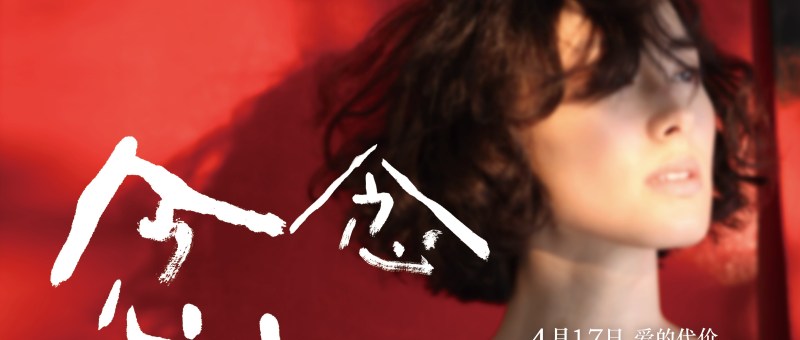
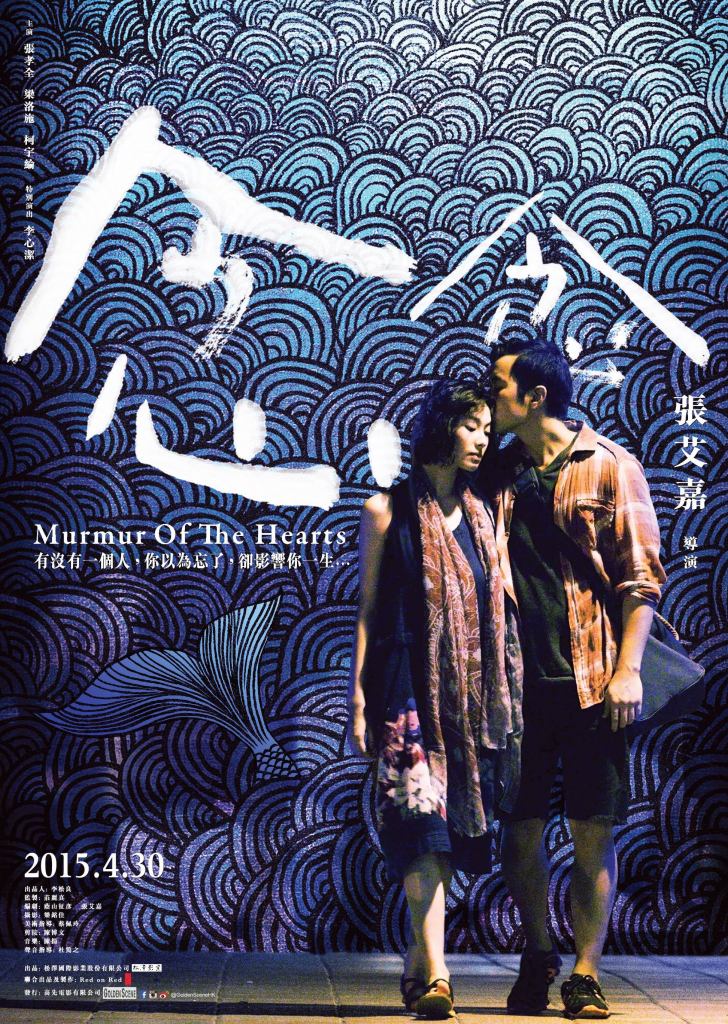
Murmur of the Hearts (念念, Sylvia Chang, 2015)

A legacy of abandonment frustrates the futures of three orphaned adults in Sylvia Chang’s moving drama, Murmur of the Hearts (念念, Niàn Niàn). Marooned in their own small pools, they yearn for the freedom of oceans but find themselves unable to let go of past hurt to move into a more settled adulthood, eventually discovering that there is no peace without understanding or forgiveness and no path to freedom without learning to let go of the shore. 

The heroine, Mei (Isabella Leong), is an artist living in Taipei and apparently still consumed with rage and resentment towards her late mother. She is in a troubled relationship with a down on his luck boxer, Hsiang (Joseph Chang Hsiao-chuan), who has abandonment issues of his own that are compounded by toxic masculinity which leaves him feeling inadequate in failing to live up to the expectations of his long absent father. Mei’s long lost brother, Nan (Lawrence Ko), meanwhile is now a melancholy bachelor in his 30s who, unlike all the other young men, never swam far from home, working for a tourist information company on Green Island which, though once notorious as a penal colony housing political prisoners during the White Terror has now become a tourist hotspot thanks to its picturesque scenery. 

Like one whole cleaved in two youthful separation weighs heavily on each of the siblings who cannot but help feel the absence of the other. Their mother, Jen (Angelica Lee Sinje), trapped in the oppressive island society, was fond of telling them stories about a mermaid who escaped her palace home by swimming towards the light and the freedom of the ocean. She tells the children to be the “angels” rescuing the little fish trapped in rock pools by sending them “home” to the sea, and, it seems, eventually escaped herself taking Mei with her but leaving Nan behind. Neither sibling has been ever been able to fully forgive her, not Mei who lost both her family and her home in the city, or Nan who stayed behind with his authoritarian father wondering if his mother didn’t take him him because she loved his sister more. 

Mei, meanwhile feels rejected by her father after overhearing him on the phone saying he wanted nothing to do with either of them ever again. Idyllic as it is, the island wears its penal history heavily as a permanent symbol of the authoritarian past which is perhaps both why Mei has never returned, and why Nan has remained afraid to leave. Unable to make peace with the past they cannot move forward. Mei’s life has reached a crisis point in the advent of maternity. She is pregnant with Hsiang’s child but conflicted about motherhood in her unresolved resentment towards her mother while insecure in her relationship with the emotionally stunted Hsiang who, likewise, is terrified of the idea of fatherhood because of his filial insecurity. 

Only by facing the past can they begin to let it go. Chang shifts into the register of magical realism as a mysterious barman arrives to offer advice to each of the siblings, Nan indulging in an uncharacteristic drinking session while sheltering from a typhoon on the evening his father that his father dies and somehow slipping inside a memory to converse with the mother who was forced to leave him behind, coming to see the love in her abandonment. Jen told him that she wanted him to see the world, but he is reluctant even to go Taipei and afraid to seek out his sister. 

Jen’s battle was, it seems, to save her children from the oppressions of Green Island, to be their angel returning them to the great ocean she herself felt she’d been denied. She wanted her children to be “creative”, resisting her abusive, authoritarian husband and his fiercely conservative, patriarchal ideals but eventually left with no option other than to leave. Yet the children flounder, left without guidance or harbour. “I don’t know where my home is”, Mei laments, revealing that she only feels real and alive when angry. For all that, however, it’s Jen’s story that finally sets them free, showing them path away from the prison of the past and finally returning them to each other united by a shared sense of loss but unburdened by fear or resentment in a newfound serenity.


Murmur of the Hearts streams online for free in the US as part of Asian Pop-Up Cinema’s Mini-Focus: Taiwan Cinema Online on June 9.

Original trailer (English subtitles)

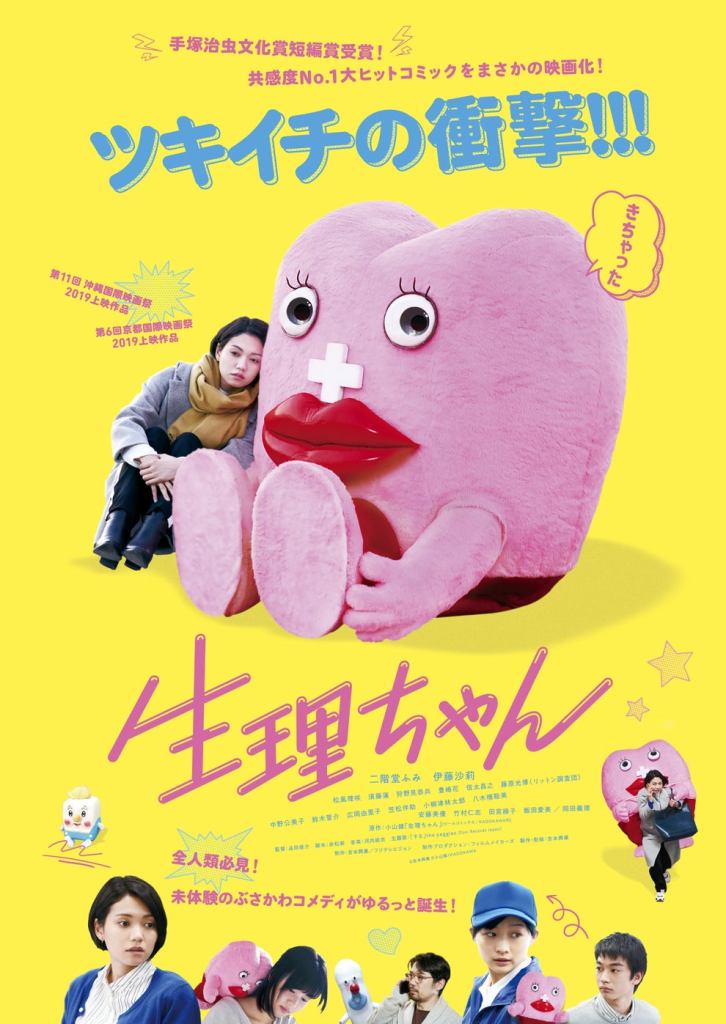
Little Miss Period (生理ちゃん, Shunsuke Shinada, 2019)

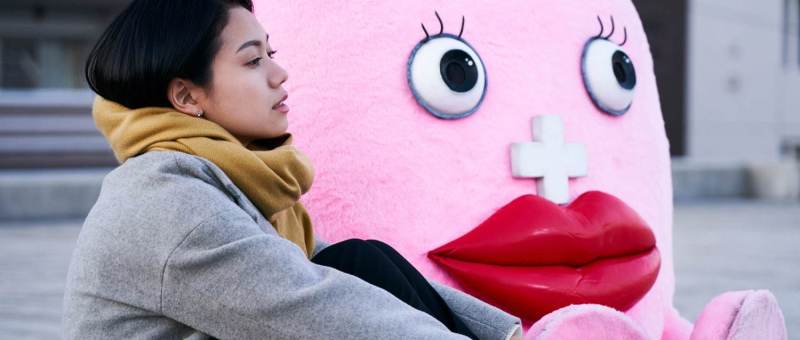
Perhaps surprisingly, Japanese cinema has never been afraid to tackle the sometimes taboo issue of menstruation but Little Miss Period (生理ちゃん, Seiri-chan) is certainly the first time it’s been turned into an accidental protagonist. Inspired by a popular web manga by Ken Koyama, who is male as is the director Shunsuke Shinada, the film revolves around the titular Little Miss P who arrives every month in the form of a giant pink fuzzy monster and generally causes havoc in women’s lives, but for all the trouble, pain, and inconvenience she causes Little Miss P also becomes a symbol of female solidarity and an accidental confidant whose presence can also be a comfort in regrettably patriarchal society. 

The first victim is Aoko (Fumi Nikaido), a young woman working in a busy publishing office who receives an inconvenient visit from Little Miss P while trying to sort out a problem with an uncommunicative writer which eventually leads to more trouble after the author begins bad mouthing them on social media and Aoko is given a public telling off by her sexist boss for failing to appreciate artistic temperament. Aoko’s boss is an unreconstructed chauvinist who makes deliberately inappropriate comments in the workplace and then jokes that he hopes he won’t be accused of harassment. He complains about Aoko looking tired and exclaims that these are the reasons he doesn’t like working with women, but running into a colleague in the ladies’ room, Aoko gets some practical though unhelpful advice coming from another woman to the effect that they can’t ever use Little Miss P as an “excuse” because it will just be seen as another reason to deny women the same rights and privileges as men. 

Aoko wishes that men could experience what it’s like to host Little Miss P if only once year and then perhaps they’d understand, though they also have problems of their own as manifested in the large white Mr. Sex Drive who appears out of nowhere to bother the boyfriend (Kyohei Kanomi) of Aoko’s younger sister Hikaru (Risaki Matsukaze). While Aoko laments the sexist atmosphere in the workplace that leaves her feeling as if she has to make a choice to be seen actively prioritising her career, being more present, more productive than the men just to be seen as equal, the office cleaner, Riho (Sairi Ito), resents her invisibility as a faceless service worker many regard as little more than a bot or real world NPC with no identity or interior life. She makes caustic comments about the vacuous lives of the office workers around her but has fully internalised this view of herself as worthless and undesireable. She resents Little Miss P in part because she doesn’t understand what the point of her visit is when it seems so unlikely that she would ever bear a child. 

Riho is so invested in her inferiority complex that she cannot comprehend that Aoko’s company want to hire her for writing gig after figuring out her secret blogger identity, believing it must be some kind of trick. In one sense, she might be right in that Aoko’s colleague Uchiyama (Ren Sudo) has an obvious crush on her, but still she finds it impossible to accept that she has a right to expect recognition as a human being and indeed as woman. Each of the women find themselves in dialogue with Little Miss P who often provides a quite literal shoulder to cry on as well a reassuring sense of “you got this” security. Aoko apologises to Little Miss P as she bids her goodbye for another month, admitting that it can’t be nice that in general no one is glad to see her (though there are of course cases in which they might be rather more than glad), but Little Miss P takes it all in her stride as part of the job and as much as she often causes trouble and inconvenience is also a warm and reassuring presence which unites women not so much in shared struggle but gentle camaraderie. 

It’s Little Miss P who helps Aoko bond with her prospective step-daughter Karin (Hana Toyoshima), while she perhaps remains ambivalent on the idea of marriage with its consequent loss of independence and the responsibility of suddenly becoming a mother for the first time to an adolescent girl. Female solidarity trumps family or romance, or at least so it seems as Aoko looks back on getting her own first visit from Little Miss P which threw her recently widowed single-father into an ambulance-calling panic but also resulted in a comforting dish of rice with red beans, traditionally eaten at moments of celebration. “Not everything about it is bad” Aoko tells a troubled Karin, “there’s nothing good about it. Not one thing” she replies, but Little Miss P has at least brought them together in female solidarity as they return to their respective, disappointingly patriarchal, worlds. 


Little Miss Period is available to stream online (Worldwide except Japan, Mainland China, Taiwan, Hong Kong, Macau, Thailand, Laos, Cambodia, & Myanmar) from 9th to 14th June as part of this year’s Nippon Connection Film Festival.

Original trailer (English subtitles)

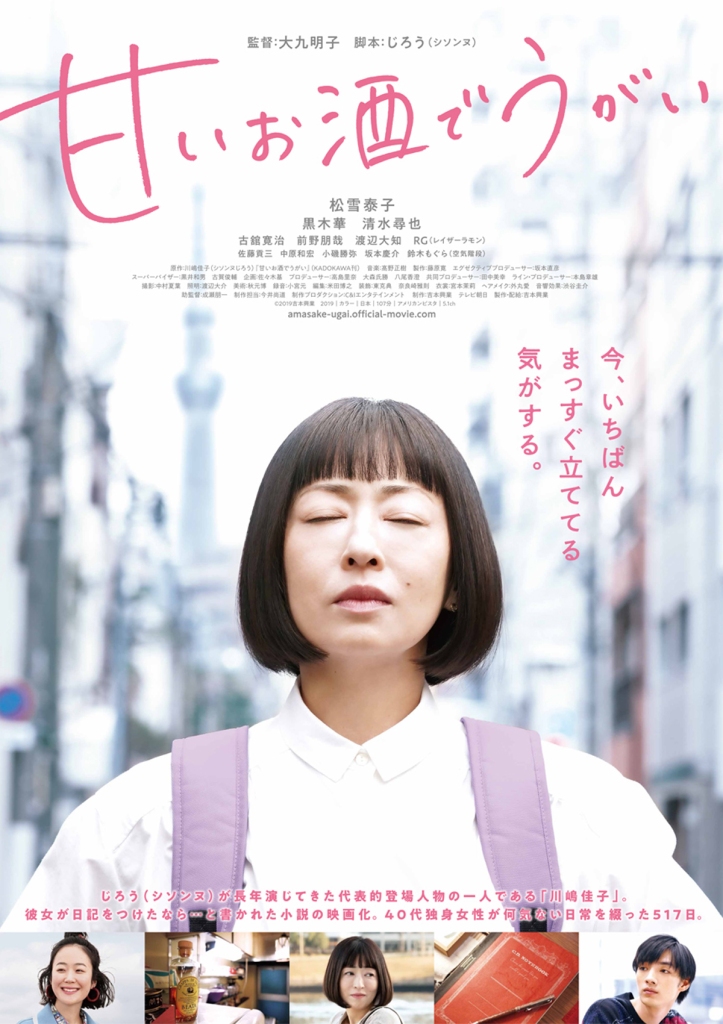
My Sweet Grappa Remedies (甘いお酒でうがい, Akiko Ohku, 2019)

In Tremble All You Want, Akiko Ohku showed us a painfully shy woman’s path towards seizing control of her romantic destiny while Marriage Hunting Beauty told us that there are no short cuts to love. My Sweet Grappa Remedies (甘いお酒でうがい, Amai Osake de Ugai) takes things one step further as a lonely middle-aged woman gradually finds the desire to make a change in her otherwise unchanging existence, coming to like herself as seen in the eyes of others and trusting in happiness however temporary it might turn out to be. 

40-something Yoshiko (Yasuko Matsuyuki) is an unmarried woman working at a publishing company. She tells us that she keeps a diary that she never expects any one to read, not even herself, and mostly spends her free time drinking alone at home or in elegant bars. From the sometimes lengthy gaps between entries, we can see that Yoshiko’s life is generally uneventful and essentially unchanging, that she has few friends, and though she gets by well enough on her own she often dwells on what might have been, disappointed that she was never able to become a mother. 

She is, however, a deeply caring person, sublimating her need for human attachment into anthropomorphising objects, gently patting her bicycle saddle as she parks it for the day and becoming alarmed that it has ended up “in prison” after being impounded. If she’d had children, she muses, she might never have let them leave the apartment. Yet when she discovers one of her favourite earrings is missing, she decides not to look for it because she accepts its decision, later welcoming it home when it makes an unexpected return. 

Overhearing the conversation of the women next to her at a bar, she wonders if their idle complaints that half the year is gone already are excessively negative but accepts that she too is living life in retrograde and needs to learn how to look forward with positivity, which might be why she starts making a series of small but active changes. She observes the world around her from a new angle in crossing a footbridge she has never crossed before, swaps her comfortable red loafers for grey high heels, and her futon for a bed. 

Some of these changes at least are down to an unexpected friendship with a young woman in her office, Wakabayashi (Haru Kuroki), who invites her out on paydays and brightens up the office atmosphere with her goofy antics. Yoshiko herself might be classically quirky, but she mainly keeps her quirks to herself, quietly getting on with her work, while Wakabayashi is the opposite, cheerfully outgoing yet perhaps just as lonely if in a less obvious way. It’s Wakabayashi who sets her on off another path by introducing her to a friend from university, Okamoto (Hiroya Shimizu), who has recently joined their company and to whom Yoshiko had already taken a liking in passing though he is more than 20 years her junior.  

Too shy to shout bingo, Yoshiko is a lifelong believer in love, observing a young couple at festival and hoping they enjoy a night of passion in the fullness of their youth. She still remembers old anniversaries with long gone exes and wonders if they still remember her, but resents the universe’s attempts to test her with texts from past lovers every time she becomes interested in another man. The fact that Okamoto is so much younger is never really an issue, though Yoshiko admits that she likes the fact he seems to favour older, lived in homes over sparkling new builds while she helps him look for a new apartment. 

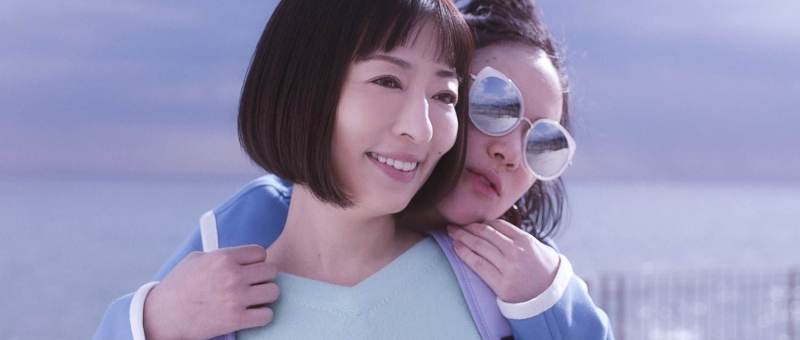
Yoshiko celebrates the fact that colour seems to be returning to her black and white days, her desire to see the dark sea where she feels closest to death in order to reaffirm her connection to life seemingly receding. From her childhood, Yoshiko had wondered if the woman she sees in the mirror is the same one everyone else sees, but later realises that the vision of herself reflected is “somewhat nice”, catching sight of herself in Wakabayashi’s mirrored sunshades and noticing that she is in fact smiling. Reinvigorated by her younger friends, Yoshiko steps into an acceptance of herself, looking forward rather than back and willing to take on new challenges rather than merely dropping into a defensive position of protecting the irreplaceable. No longer dark and foreboding, the sea is now sunny and calm, a scene of peace and positivity with nary a cloud on the horizon.


My Sweet Grappa Remedies is available to stream online (worldwide excl. Japan, Mainland China, Taiwan, USA, & Italy) from 9th to 14th June as part of this year’s Nippon Connection Film Festival.

Original trailer (no subtitles)

Lost and Love (失孤, Peng Sanyuan, 2015)

Because of a series of interconnected social factors, the trafficking of children has become a widespread problem in contemporary China. Many of these children are simply abducted from wherever they happen to be and handed over to brokers who are often working with organised crime. Some of the children are sold on to orphanages working with various organisations who facilitate international adoptions which fetch a high price, but the major demand comes from depopulated areas of rural China who, suffering under the One Child Policy, need more children to help them on the farm or perhaps because their birth children were female and they need a male heir. In any case, though child trafficking is an open secret, very few abducted children are ever traced and reunited with their parents. 

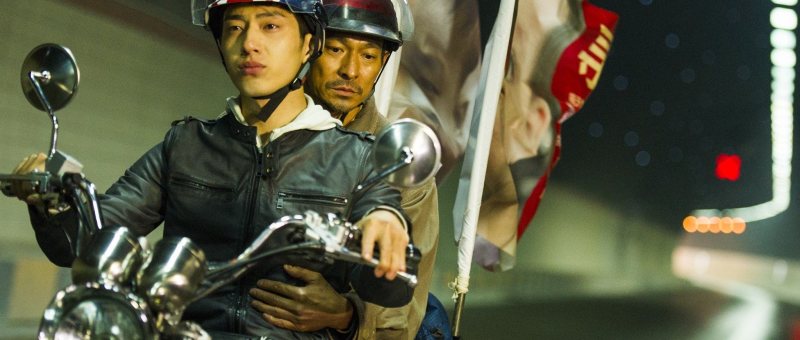
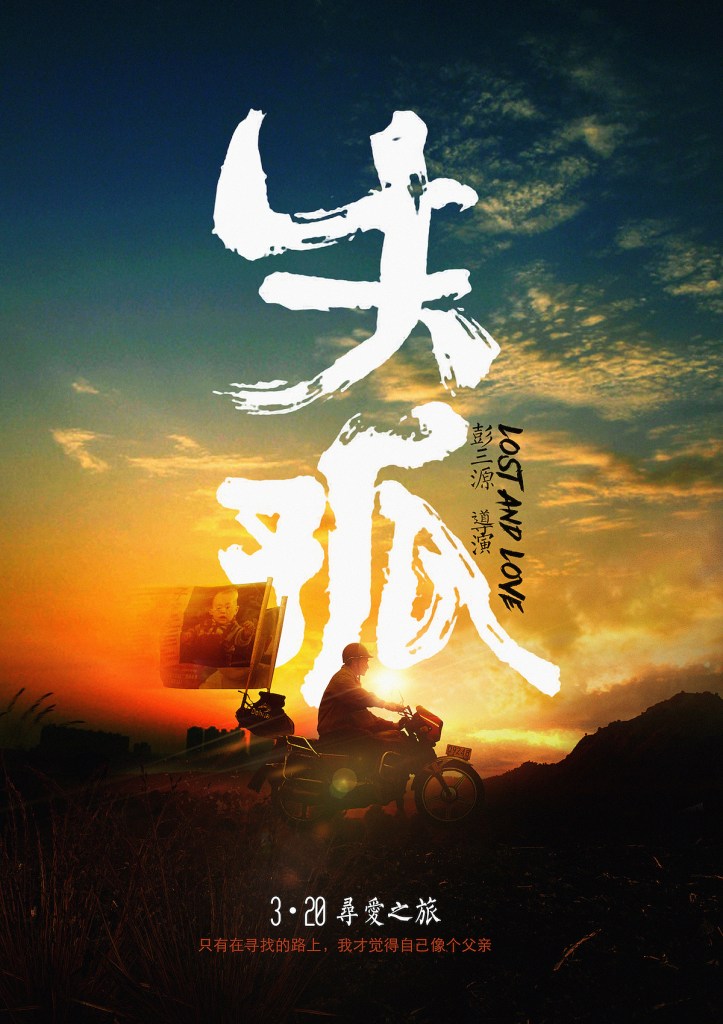
Peng Sanyuan’s debut film Lost and Love (失孤, Shī Gū) does not dwell on the causes of China’s child abduction problem but on the pain and suffering it inflicts on parent and child alike. Lei Zekuan’s (Andy Lau Tak-wah) son Da was taken from his home at two years old. Zekuan has spent the last 15 years travelling all over China chasing every lead desperately trying to find him but drawing a blank at every turn. Turning to modern technology, he’s hooked up with a group of concerned citizens who are always on the look out for missing kids and the gangs that maybe handling them. Though many people are sympathetic towards him and touched by his unrelenting search for his son, there are others that Zekuan meets who, meaning well, ask him if perhaps it’s not better just to let it go and move on. After all, it’s been 15 years. Da was only two, he probably won’t remember his home or family and may not even know he is adopted. Zekuan, however, cannot bring himself to give up, convincing himself that he will one day be reunited with his son while touched by the plight of other parents in the same position, adding the face of a child he sees on a missing poster abducted just recently to the flags on the back of his bike on the off chance that someone might have seen her too. 

Zekuan’s zeal is in part repaid when he’s run off the road and rescued by a young mechanic who sets about fixing his bike. Zeng Shuai (Jing Boran) is touched by Zekuan’s quest but also a little irritated by it. As he later confesses to him, he was an abducted child himself, though too old to have been Zekuan’s son. Taken at four, all he remembers is a suspension bridge, a bamboo grove, and his mother’s hair worn in a long plait. He wonders if his parents ever looked for him in the same way Zekuan looks for his son, but also harbours a degree of resentment towards them for being so careless as to “lose” him. Zekuan assures him that his parents surely miss him dearly and are praying for his return, prompting the young man to consider setting off on a journey to look for the place where he was born, accompanying Zekuan along his way. 

Shuai says that his adoptive parents cared for him well and clearly loved him, but he has also adversely suffered through being an “abandoned” child in ways other than the emotional. Because he was bought illegally, Shuai has no legal status and cannot apply for an ID card which means he had only limited access to education, is unable to apply for exams, cannot get married, cannot open a bank account, and is barred from advanced transportation like planes and trains. Part of the reason he desperately wants to find his parents is to reclaim his identity so he can lead a full life, no longer confined to an underclass of people who legally speaking do not exist and have no rights. 

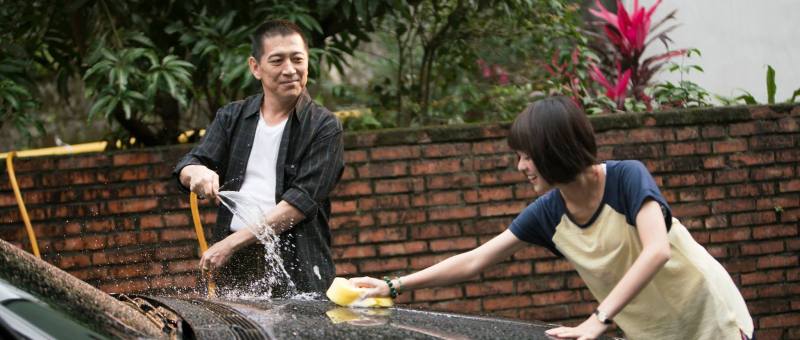
Yet what’s also obvious is the pain he feels in being disconnected from his roots. Taking the same journey but at cross purposes, the two men generate an easy paternal bond, becoming anxious when they lose each other in crowded markets and having fun messing around washing cars for the money to keep moving forward. But having talked to so many other grief-stricken parents, Zekuan is wary of making a mistake. In one village he’s guided to a boy who fits all the criteria and is said to be living a miserable existence with parents he doesn’t get on with. A kind of connection is made with the young man who perhaps has been hoping that someday someone will come to find him, but the scar which had given Zekuan so much hope turns out to be on the wrong foot, prompting him to doubt himself, wondering if perhaps he’s forgotten which foot it was after all these years and it really might still be him.

That dream is spoiled by the unexpected intervention of the adoptive mother who, unlike the distant father, fights furiously for the rights to her son. The boy seems just as crestfallen as Zekuan, and the sense of heartbreak is all consuming. Asked for advice, a Buddhist priest uses fancy language to tell Zekuan that if he doesn’t look for his son then he’ll never find him, but has no more idea than anyone else if he’ll ever be found. All Zekuan can do is console himself with the search so that when he finds his son he can tell him that he never gave up looking.


Hong Kong release trailer (English subtitles)

Snowpiercer (설국열차, Bong Joon-ho, 2013)

“Control the engine, control the world” insists the revolutionary mastermind at the centre of Bong Joon-ho’s first English language feature Snowpiercer (설국열차, Seolgungnyeolcha), quite literally meaning to seize the means of production. Adapted from the French graphic novel Le Transperceneige by Jacques Lob, Benjamin Legrand and Jean-Marc Rochette, Bong’s near future dystopia locates itself in a world both ruined and perhaps saved by human hubris, but salvation is a prize offered only to those who can pay, or at least make themselves “useful” to its mysterious and invisible creator, here an engineer both mechanical and social who controls the engine which moves the world yet insists on an order which is far from divine. 

In the near future, humanity’s attempts to repair the damage it has done through manmade climate change by releasing a manmade gas into the atmosphere have backfired to such a degree that the surface of the Earth has become a frozen wasteland no longer able to support life. The only remaining living creatures survive aboard a high tech, ironically eco-friendly train designed for luxurious cruising which cheerfully connects all the world’s railways as one, looping the globe in international solidarity. As such, the train is a self sustaining eco system, a world entire filled with orchards and aquariums where the rich can enjoy all the pleasures of the Earth, but far in the back, segregated from those whose place on the train is assured, is an underclass of stowaways who are denied such luxuries and are largely controlled through fear and starvation with gelatinous protein bars their only form of sustenance. 

“Know your place” the sinister Minister Mason (Tilda Swinton) insists, explaining that they owe their lives only to the “order” the train provides and that therefore they must each serve it by embracing the role they have been assigned. This last instruction is becoming increasingly hard to bear for those trapped in the back of the train with little to no prospect of improving their lot. There have been rebellions before but all have failed. Curtis (Chris Evans), a reluctant leader, his friend Edgar (Jamie Bell), and their mentor Gilliam (John Hurt) are planning another insurrection, certain that the power of the men who guard them is now illusionary because the weapons they carry have been rendered purely decorative. When a child is taken from the rear for unclear reasons, the plan is put into action with Curtis leading a charge towards the front, encouraged by mysterious messages from a secret collaborator somewhere further up the train, and assisted by a Korean tech expert (Song Kang-ho) responsible for designing the train’s security systems and his psychic daughter Yona (Go Ah-sung). 

Later we discover that failed revolution is another means of maintaining “balance” as synonymous with the order that the mysterious engineer Wilford (Ed Harris) provides. Rebellion keeps the population numbers in the back down and engenders the kind of despair that ensures docility at least for a time. There is something distinctly dust bowl in the train’s design from its art deco aesthetics to its wholesome brand of political indoctrination as neatly dressed children sit around the harmonium and are told of Wilford’s greatness by a prim schoolteacher while taught to fear and hate those from the rear. Curtis and his compatriots aren’t merely fighting for freedom and equality but to regain the humanity they fear the system has stolen from them. Recounting a grim tale of how Gilliam lost his limbs, Curtis laments that he too wanted to sacrifice an arm for his fellow man but he couldn’t do it. He never wanted to lead a revolution and is insecure in his vision. Tempted by Wilford, he is no longer sure if he came here to destroy “order” or merely to own it. 

Wilford’s ’30s-style ultracapitalist fascism justifies itself under the rationale that without “leadership” the people devour each other, which is disingenuous seeing as, as in Parasite, Snowpiercer’s true horror is the insidiousness of the system which forces one oppressed person to oppress another through enforced inequality. Wilford insists on “balance”, on everything having its place, but there can be no balance in a world in which a chosen few enjoy untold riches while the masses starve. The chosen few don’t even seem to be very happy, mindlessly swallowing sushi and burying themselves in hedonistic pleasures to escape the fear and emptiness of their lives. Curtis is presented with a choice, become a part of the system which, quite literally, eats its young, or make the sacrifice he couldn’t make before and become the spanner in the works. Yet the choice is only partly his, the means to reshape the world comes from an unexpected direction and is as dependent on faith as Wilford’s insistence on the divinity of industry, but when the great machine grinds to a halt those who walk free of it may find that faith repaid.


Snowpiercer is available on UK blu-ray courtesy of Lionsgate.

UK Release trailer

Farewell Song (さよならくちびる, Akihiko Shiota, 2019)

Repressed desire and toxic resentment conspire against a trio of melancholy musicians in Akihiko Shiota’s delicate indie drama, Farewell Song (さよならくちびる, Sayonara Kuchibiru). As the title implies, this is a tale of learning to let go, but then again perhaps not. As an over earnest interviewer suggests there are many ways to interpret the title song, but it also carries with it an unmistakable hint of defeatism as the singer songwriter heroine finds herself perpetually preparing to say goodbye, no longer believing in a positive future and unwittingly sabotaging its existence in an intense desire for protective distance. 

As the film opens in the summer of 2018, folk duo Haruleo is about to set off on a “farewell tour” though it’s not been advertised as such. The atmosphere is extremely awkward and emotionally volatile. Something has obviously gone very wrong in the previously close relationship between bandmates Haru (Mugi Kadowaki) and Leo (Nana Komatsu), while roadie Shima (Ryo Narita) seems to be doing his best to stay out of it and keep the peace if only until after they’ve played their final show in Hakodate way up in Hokkaido. 

That might be difficult however because Leo’s self-destructive streak is out in full force, wandering off with a rough-looking man from the petrol station where they stopped to use the facilities. “Aren’t you going to stop her?” Haru asks of Shima, entirely mistaken in the nature of their relationship, “What would be the point?” he replies, open mouthed in exasperation. Sure enough Leo turns up late to the gig and sporting a nasty bruise on her face after another encounter with a dark and violent man. “I don’t want to watch you fall apart”, Haru had told her on a previous occasion in an awkward attempt at comfort that finally backfired, Leo firing back that hearing that from her only made her feel even worse. Haru echoes those words herself when Shima tries something similar with her, only charged with a somewhat inappropriate fervour driven by misplaced desire. 

Desire is indeed circulating, but in an emotionally difficult and seemingly irresolvable love triangle between three people with extremely low self esteem. Struggling to accept love, they act on self-destructive impulse and only wound where they mean to console. Haru strikes up a conversation with Leo because she says that her “eyes wanted to sing”, seemingly captivated and taking the young woman in but still somehow maintaining a distance. Leo, who seems to have no family and is incapable of looking after herself, quickly bonds with Haru but is frustrated by her resistance to connection. When Haru interviews Shima for a position as their roadie, she’s quick to tell him that romance is prohibited, but later claims that she always expected he and Leo to run off together while silently pining for her in a mistaken belief that her love is hopeless. 

Filled with internalised shame, Haru takes Shima home as a beard to show off to her mother at her father’s memorial service, unable to disclose her sexuality and trying not to look hurt when her mother whips out a postcard from her first love who has since married abroad and had a child. Shima, strangely perhaps the most emotionally astute, is drawn to Haru even after learning that she is gay and realising that all of her songs are really about her unrealisable longing for Leo, who claims to be in love with him though it’s not exactly clear if that, like her tendency to disappear with dangerous men, isn’t a misdirected way of connecting with Haru.

Shima may have failed once and resolved to do better in avoiding making the same old mistakes, but is still an awkward third wheel in this increasingly difficult relationship despite his attempts to mitigate the effects of his presence while perhaps biased towards preserving Haru’s happiness in trying to “save” Leo. Learning that a close friend and former bandmate has passed away forces him, and perhaps the girls too, to reflect on what’s lost if you let important relationships fall by the wayside out of pettiness or pride. Shima’s friend apparently told his young son never to become a musician because it will rob you of the things that are most important. Still, Shima, echoing the words of Haruleo’s signature song, affirms that he regrets nothing. If it all ends in tears, Haru’s lyrics imply that she’s happy to live with the thorn in her side as a reminder of past love. The jury’s out on whether the Farewell Song leads to a new beginning or merely more of the same, perpetually trapped in an inescapable cycle of emotional frustration, but Haruleo seems resigned to weathering the storm whatever it is that might emerge on the other side. 


Original trailer (English subtitles)

Farewell Song music video

Happy Old Year (ฮาวทูทิ้ง..ทิ้งอย่างไรไม่ให้เหลือเธอ, Nawapol Thamrongrattanarit, 2019)

“Some things won’t go away just because you pretend to forget all about it” the heroine of Happy Old Year (ฮาวทูทิ้ง..ทิ้งอย่างไรไม่ให้เหลือเธอ) is reminded by an exasperated friend preparing to forgive her once again for another thoughtless hurt. According to Jean (Chutimon Chuengcharoensukying), “Minimalism is like…a Buddhist philosophy. It’s about letting go”, only her minimalism has been of an emotional kind and in essence the very opposite of letting go. Her approach to life’s many difficulties has been to throw them into a mental black bag, consign them to a black hole of memory, and then simply walk away, but there’s only so much space for delayed trauma and one day you’ll have to start opening some of those bags so that you can finally let go for real. 

20-something Jean has been living in Sweden for the past few years and has recently returned to Thailand, more or less against her will. For some reason, she seems to have asserted ownership over her family’s home which once housed her father’s musical instrument repair shop. Without bothering to ask her mother (Apasiri Nitibhon) or brother, Jean has decided to radically redesign the property’s ground floor into an office space, sending her remaining family members upstairs. Talking things over with her old friend Pink (Padcha Kitchaicharoen) who seems to be involved in construction, she wants to get the work started shortly after New Year not least because the new job she’s just been offered wants to make an office visit the following month. They’ve got a scant few weeks to clear 30 years’ worth of clutter so the builders can do their thing. 

Jean’s plan is basically to sweep everything into bin bags and dispose of them without giving it too much thought. Coming round to the idea, her brother Jay (Thirawat Ngosawang) starts watching Marie Kondo videos to get into the mood, but “complains” that everything he touches sparks joy. He can’t bring himself to part with the myriad “tacky” souvenirs he’s amassed over a lifetime because it’s the thought that counts and throwing them out is like throwing away kindness. According to Jean, “being emotional only brings trouble”, though she is perhaps a little troubled bagging up an oversize teddy gifted by a friend at graduation with a card that reads “take care of me”. She gets her comeuppance when Pink notices a CD she once gave her with a message inside lying on top of a to go pile and is understandably hurt. To Jean it’s just a meaningless object. No one listens to CDs anymore, but to Pink it doesn’t matter that it was gift from years ago, throwing out the CD is like erasing a moment in time, negating the importance of their teenage friendship. 

Pink’s reaction is Jean’s first clue that her wholesale bag and toss philosophy might be problematic. When she finds a scarf she’d knitted for Jay in his to go pile, she gets a taste of her own medicine. Reassessing her possessions, she realises she has more than a few items technically intended for other people that she has selfishly never passed on. Inspired by Pink and in a bid to find some kind of closure, she decides the best thing is to start returning the “borrowed” items to their rightful owners, but quickly discovers that not everyone is thrilled to have the past suddenly presented to them in the form of a random object. An attempt to return a double bass she was supposed to get her dad to repair goes very badly indeed, to the extent that Jean must simply have forgotten or just not realised how badly she had injured her friend. 

Emotionally immature, Jean has an almost childlike view of interpersonal relations, firmly believing that just saying sorry will make everything alright again (even you don’t really mean it). Her most difficult task is returning a camera and unused rolls of film to the high school boyfriend (Sunny Suwanmethanont) she dumped by ghosting after going to Sweden. Too cowardly to go in person, she tries mailing it, but when the parcel comes back return to sender she knows she has to try face to face. Aim listens to her heartfelt confession and seemingly forgives her, inviting her inside for tea with his new girlfriend Mi (Arisara Buaprang), but what Jean really wanted was a blazing row so she could expiate her guilt. 

Later, a slightly less magnanimous Aim points out that Jean’s quest to prove that she wasn’t selfish person is actually incredibly selfish. What she’s been doing, in essence, is dumping all of her emotional baggage on her friends and then walking away leaving them to deal with it on their own. The apology she made was for herself, not him. If she really cared, she’d have found a way to carry her guilt without burdening others. 

Nevertheless, some objects do have presence. “It seemed like an ordinary photo and now it’s priceless” Aim remarks on helping to find one of Jean’s errant objects, the first photo of a couple of high school sweethearts now about to get married. Another photo calls up memories of a supposedly happier time in Jean’s childhood but it’s a memory she can’t bear to keep or delete. While her mother doggedly clings to her father’s piano despite the fact that no one can play it, Jean wants to bulldoze everything, erase their history as a family by replacing their cluttered home with crisp white walls and shiny steel. Only too late may she realise what she’s losing, that with every discarded object a piece of her goes too and soon there may be nothing left at all. Turns out that trying to deal with your abandonment issues by abandoning things isn’t as sound a strategy as it might sound. “This is the era of cloud storage”, Jean points out, but in many ways it’s our orphaned files who make us who we are. Minimalism might be about letting go, but you need to remember to keep hold of yourself in the knowledge that memories don’t belong to you alone but connect you to the world through a thousand shared kindnesses and tiny hurts trapped inside the most banal of objects.


Currently available to stream on Netflix in the UK (and possibly other territories)

International trailer (English subtitles)