Looking for Lucky (寻狗启事, Jiang Jiachen, 2018)

Looking for lucky posterA literal shaggy dog story, Jiang Jiachen’s Looking for Lucky (寻狗启事, Xún Gǒu Qǐshì) is not just the tale of one hapless young man’s attempt to regain his mentor’s approval in the form of his prize pooch, but of that same man’s desperation for a “lucky” break that will set him on a path to middle-class success without the need to debase himself through bribery. A melancholy exploration of the perils and pitfalls of youth in Modern China Jiang’s indie dramedy finds little to be optimistic about, save the faith that nature will run its course and perhaps you will end up where you’re supposed to be even if you have to go on a wild dog chase to get there.

Zhang Guangsheng (Ding Xinhe) is an ambitious grad student from a humble background. With graduation looming, he’s preoccupied about turning his educational investment into a solid job opportunity. Luckily he’s spent the last three years playing errand boy for his professor, Niu, who has all but promised him a cushy faculty job as long as he continues to play his cards right. Everything starts to go wrong when Guangsheng is asked to dog-sit while Niu is away and unwisely delegates the responsibility to his drunken grumpy father (Yu Hai) who loses him after the dog supposedly bites a stuck up little boy who was teasing him. Guangshang does his best to find the dog before Niu gets home, even succumbing to buying a new dog just in case, but all to no avail.

The reason Guangshang needs to find the dog isn’t just guilt and embarrassment at having potentially caused emotional distress to someone he respects, but because he knows that the failure to cope with this minor level of responsibility may ruin his relationship with Niu. Again, the relationship itself is not what’s important so much as what it can do for his career prospects. Guangshang is from a humble background and lacks the resources to buy his way to success as other young people often do – an endorsement from someone like Niu is his only chance to catapult himself into a steady middle-class life. Thus he’s spent the last three years bowing and scraping, debasing himself to be Niu’s go to guy and now it’s all going to out of the window thanks to his dad’s mistake.

A neurotic intellectual, Guangshang’s relationship with his polar opposite of a father is already difficult even before the dog incident. Guangshang’s dad is one of China’s many “laid off workers”, unceremoniously made redundant from a job for life as part the nation’s longterm economic modernisation. An embittered, angry man Guangshang’s dad quarrels with everything and everyone, sees scams everywhere, and has a much more cynical, world weary belief system than his kindhearted, idealistic son. The pair do, however, have something in common in their striving to live “independently” on their own skills alone. Abhorring the corruption of their society in which nothing is done fairly and money rules all, they each stubbornly refuse to give in and do things the “normal” way, not wanting the kind of success than can be bought.

Guangshang might be prepared to humiliate himself by playing servant, but he has his pride and doesn’t like seeing his poverty deployed as a weapon against him – especially by a “wealthy” friend who has looked at all the files and “admires” Guangshang’s perseverance, nor by his mother and her immensely calm second husband who are only too happy to give him the money to “buy” a university position, but not to help his father when he gets himself into trouble (again). Yet what Guangshang eventually discovers is that he has not lived as far from the systems of corruption as he had assumed – a realisation that both bolsters and destroys his sense of self confidence as he begins to understand his father’s true feelings while his sense of security in his academic prowess threatens to implode.

Everybody wants something – usually money, sometimes advancement, but no one can be trusted and nothing is done for free out of the goodness of one’s heart. Guangshang, without money, pays in other ways and then is cruelly undercut by someone else forced to do the same only in a sadder, even more morally dubious fashion as Niu is exposed for the corrupt figure he really is despite his “scholarly” standing. “Let nature take its course” Guangshang is urged by a fortuneteller he turns to in desperation for an indication of the whereabouts of his missing dog, but Guangshang is a young man in a hurry and has no time to wait around for a less than enticing fate. Yet for all the suffering and petty disappointments, justice is eventually served, patience rewarded and the virtuous victorious. Maybe it does all come right in the end, so long as you’ve the patience to let the dog off the leash and enough faith to see him safely home.


Looking for Lucky was screened as part of the 2018 New York Asian Film Festival.

Original trailer (English subtitles)

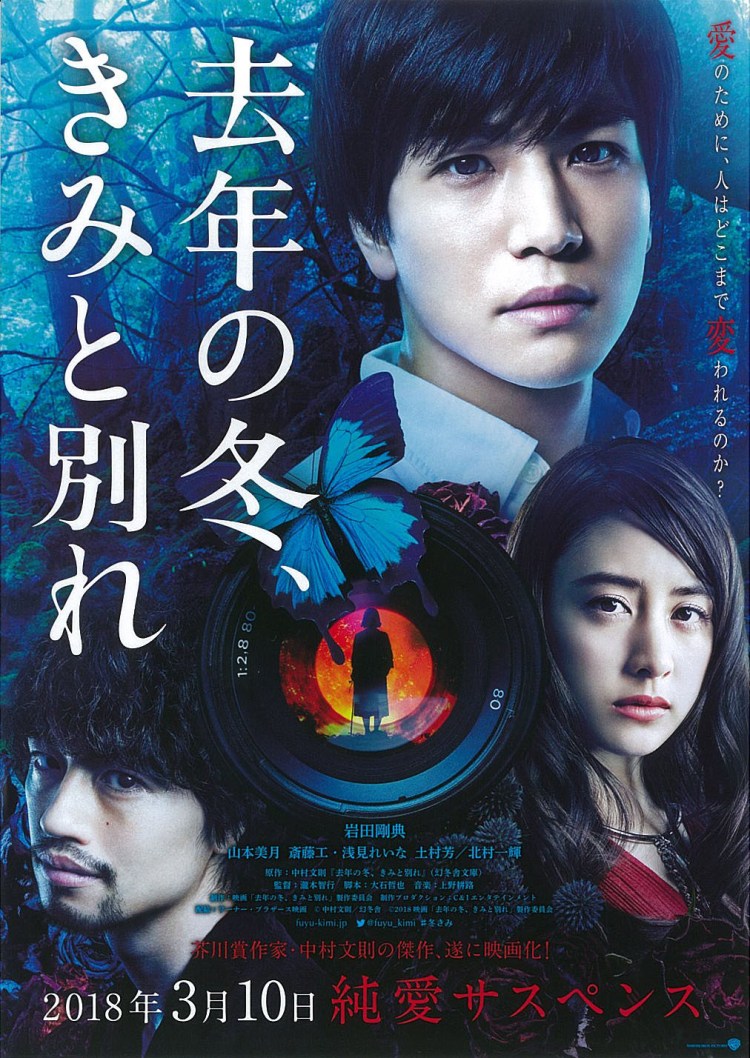
Last Winter, We Parted (去年の冬、きみと別れ, Tomoyuki Takimoto, 2018)

Last Winter we Parted posterAmong the most promising young writers of Japan, the work of Fuminori Nakamura is, it has to be said, extremely dark. Adapted by Grasshopper’s Tomoyuki Takimoto, Last Winter We, We Parted (去年の冬、きみと別れ, Kyonen no Fuyu, Kimi to Wakare) is as poetic an exploration of the dark side of desire as its title implies. Parting is, it turns out, not so much sweet sorrow as a wrenching act of existential dissonance that requires an absenting of the self and the creation of a new dark entity rising from the ashes of a once pure soul.

The tale begins in flames as a blind model, Akiko (Kaho Tsuchimura), burns to death in the studio of a respected photographer, Kiharazaka (Takumi Saito). Kiharazaka claims the fire was an accident and that he tried to save the victim but was not able to. Others claim that Kiharazaka had kidnapped Akiko and held her prisoner before deliberately setting fire to her in order to photograph a body burning alive. Released on a suspended sentence, Kiharazaka remains the focus of media attention which is where freelance writer Yakumo (Takanori Iwata) enters the picture. He is convinced Akiko’s death was not an accident and fascinated by an eerily oppressive photograph taken by Kiharazaka has approached a mainstream news organisation with a pitch for a book profiling the famously enigmatic figure with the ulterior motive of exposing the darkness of his soul.

The exposure of the authentic is the concern that binds Yakumo and Kiharazaka in a mutually destructive act of artistic inquiry. Kiharazaka’s most famous and only real success of a photograph features a whirl of butterflies that feels oddly like drowning as if pulled towards something dark and oppressive. Like the butterflies he observed, Kiharazaka instils fear while beguiling, a good looking man who seems to make a habit of luring vulnerable women into his web of destruction with a promise of intimate recognition, that he alone is able to truly see them and bring their true selves to the surface in act of artistic connection. Inspired by Akutagawa’s Hell Screen, he photographs only what he sees but craves darkness and violence, eventually, as Yakumo fears, allowing his need for fiery visions of hellish brutality to push him into heinous acts of human cruelty.

Meanwhile, Yakumo searches for an explanation behind Kiharazaka’s unsettling nature, trying to expose his own true face through (ostensibly) less violent means. He discovers that Kiharazaka and his sister Akari (Reina Asami) were orphaned after a violent attack in their home during which they were also injured. He hears that they may have endured years of abuse and cruelty at the hands of their father and that both are in some way warped, locked into an incestuous world of pain and suffering. A high school friend warns him that Kiharazaka has a magpie-like tendency to steal the things of others and that Akiko probably had a boyfriend which is what made her sparkle to Kiharazaka’s monstrous eyes. Still, Yakumo dangles his own fiancée, Yuriko (Mizuki Yamamoto), in front of the dangerous man as if daring him to take her while Kiharazaka declares himself captivated by her failure to know her “true self” which only he can expose.

Of course, not all is as it seems and there are several layers of “truth” in play as Yakumo continues his investigation and becomes further entangled in the spiderweb of Kiharazaka’s warped existence. Later, hearing from Akiko, she reminds us that there are other ways of “seeing” and that in the end she was not the one who was “blind” to the reality. Akiko’s boyfriend lost her precisely because he feared doing so, became over protective and patronising, and ruined their true connection through an over anxious preoccupation with unseen threat. Love can constrain as well as liberate, it makes people do dark things in its name and provokes chaos and confusion in place of happiness and harmony. Like the butterflies it can beguile while instilling fear.

Yet that same darkness also fuels art as in Kiharazaka’s distressing photographs and Yakumo’s all encompassing need to fulfil his “dream” of becoming an author. Vengeance takes many forms but all of them are destructive and in order to achieve it, one must enact a murder of the self leaving nothing behind other than a burnt out husk once the bloody business is done. A wretched tale of inescapable torments, the legacy of violence, frustrated loves, and the dark side of desire, Last Winter, We Parted is a suitably poetic exploration of the nihilistic despair in the hearts of its corrupted heroes living for love but only through a spiritual death.


Original trailer (no subtitles)

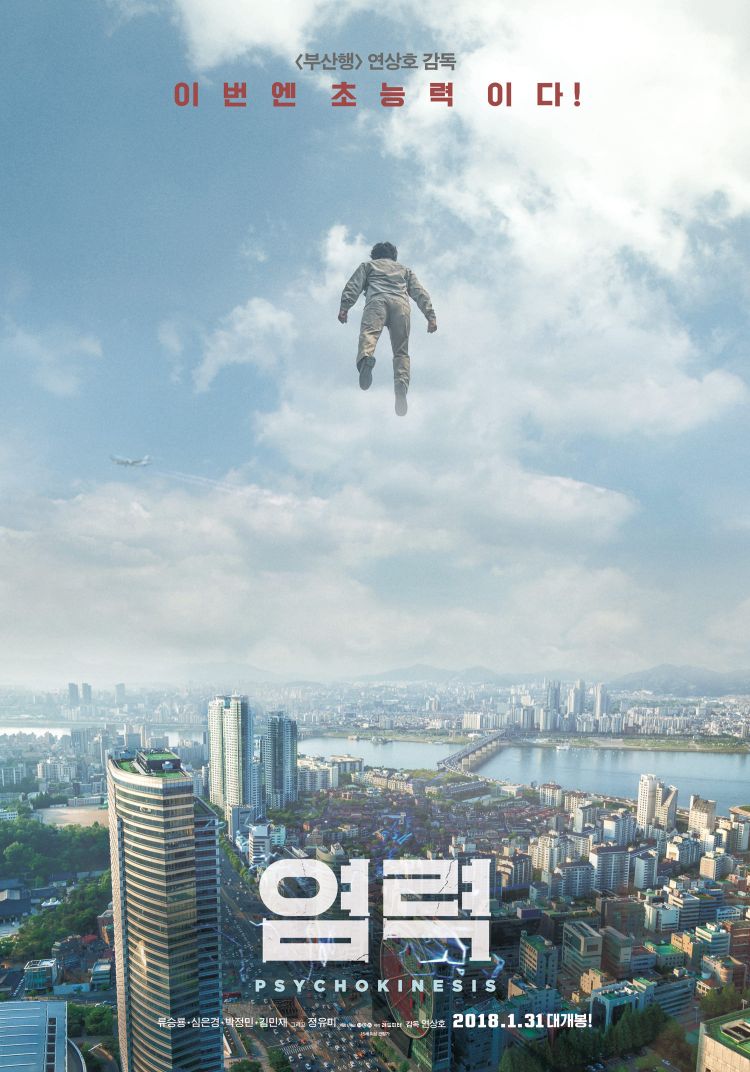
Psychokinesis (염력, Yeon Sang-ho, 2018)

Psychokenesis posterThe animated world of Yeon Sang-ho is dark and cynical, finding only fear and anger in the hopeless vision of contemporary Korea that his films continue to paint. His first live action feature, Train to Busan, began to see a little light as its jaded protagonist finally rediscovered his humanity while the innocent were eventually allowed to find a degree at least of rescue. Psychokinesis (염력, Yeomlyeok), in once sense, continues the theme in centring itself on another of Korean cinema’s bad dads, one so morally corrupted that he rejects all responsibility to others and lives only for the self-indulgent pleasure of the petty scam. Given superpowers, his thoughts turn to finance but eventually lead to an opportunity to right himself in societal eyes by reconnecting with his estranged daughter and accepting his responsibility as a family man.

Seok-heon (Ryoo Seung-Ryong) left his family when his daughter was only ten years old. These days he makes a living as a (lazy) security guard while supplementing his income by pilfering coffee and toilet paper from the company. After drinking spring water from a mountain shrine which, unbeknownst to him, has recently been struck by a mysterious meteoroid, Seok-heon realises he has developed the power of psychokinesis but is only really interested in how it might benefit him financially. That said, Seok-heon’s thoughts do not turn to crime, but to fame – he thinks it might make a good magic act and has heard there can be a lot of money to be made on the circuit.

Shortly after his magical revelation, Seok-heon gets a call from Ru-mi (Shim Eun-kyung) – his now grown up daughter who had been running her own very successful fried chicken restaurant until the shop was compulsory purchased to make way for a shopping mall intended to cater for Chinese tourists. Ru-mi and some of the other shopkeepers have been engaged in a resistance movement, refusing to let their property be taken until they have received fair compensation. During an altercation with the thugs sent in to evict them by force, Ru-mi’s mother was killed – which why is she called, to invite her long lost father to the funeral. Though Seok-heon is not exactly keen to get involved, he eventually realises that his new found abilities might prove useful and help him restore himself in his daughter’s judgemental eyes.

As in Train to Busan, Seok-heon is a cynical and jaded father but this time he’s one very much down on his luck, one of life’s losers whose decision to accept defeat has been lifelong and total. Faced with Ru-mi’s cohort of resistance members, he publicly refuses to help, pointing out that their battle is doomed to failure and it would be better to just give up now. Ru-mi, apparently still capable of additional disappointment, reminds her father that this is what he does – when things look grim he runs away. Ru-mi refuses to be like her dad, and therefore refuses to give up without a fight.

Yeon once again injects some background social criticism into an otherwise friendly tale of dead beat dads and the power of community. Echoing the Yongsan tragedy, Yeon makes the destruction of a neighbourhood to build a shopping mall for tourists his battleground as Ru-mi and her fellow resistance members hole up behind a barricade throwing Molotov cocktails at the police and trying to avoid a fight with the thugs who work for the corrupt construction company behind the whole affair. To make matters worse, Yeon takes us past the site of so much drama at the film’s conclusion, showing us an empty lot, a scar on the landscape memorialising the senselessness of corporate greed which eventually eats itself and stifles any kind of progress economic or social. Ru-mi and the others are powerless to resist their eviction but insist on the compensation they ought to be entitled to which would allow them to begin their businesses again elsewhere so they can continue to earn a living.

Seok-heon is the archetypal apathetic man who thinks it’s pointless to resist and is content to live in as corrupt a way as his society permits. He refuses his responsibility to others, walking past the cleaner being threatened for taking the “free” coffees from the lobby he convinced her were OK to take whilst lamenting her “stupidity” for inexpert pilfering. Battered and defeated, Seok-heon rejoices in pettiness, getting his kicks by shirking at work and getting one over on the bosses by stealing. His first thought on getting powers isn’t their capacity for good, but nor is it a lust for power or revenge, he merely wants to show off a little and earn big bucks – his crime is petulant self-indulgence, not active villainy. Reuniting with his daughter and witnessing her fighting for something she believes in, Seok-heon begins to rediscover his long buried heroism finally becoming a father worthy of his daughter’s respect.

It’s not all plain sailing however as the corporate stooges are not just thuggish but clever and devious. Figuring out that the twin issues to evicting the protestors are the unsolved murder of Ru-mi’s mother and Seok-heon’s superpowers, they set about undermining both – setting up a patsy for the crime and attempting to blackmail Seok-heon by leaking footage of his powers to the news in the hope that the country turns against him. Unable to explain his unusual abilities, TV news pundits do what they always do – blame North Korea, and insist he must be some kind of spy and/or infiltrator.

Working with a much lower budget, Psychokinesis is a lighter affair than might be expected, essentially mixing a hapless dad narrative with a superhero origin story but with a more cheerful tone than one usually associates with Yeon. As expected, you can’t fight city hall and Seok-heon’s assertion that the battle was always a losing one may prove to be correct but what he discovers is that is not necessarily a reason to just give up and walk away. Even if one plan fails, there may be other ways to “succeed” so long as there are enough people willing to stand up for what’s right whilst holding fast to each other, committed to building something better rather than just to tearing something down.


Psychokinesis is currently streaming worldwide via Netflix.

Original trailer (Korean subtitles only)

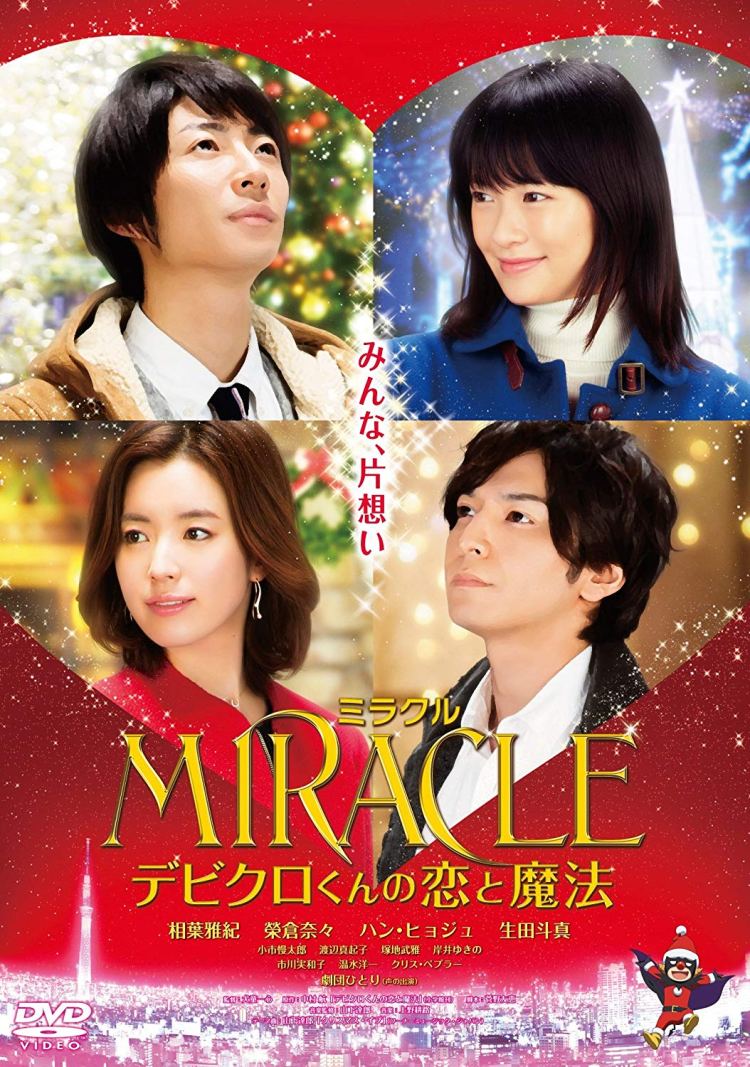
Miracle: Devil Claus’ Love and Magic (MIRACLE デビクロくんの恋と魔法, Isshin Inudo, 2014)

Miarcle devil claus posterChristmas is a time for romance, at least in Japan, but thanks to the magic of the season it can also be confusing. For one nerdy aspiring mangaka at the centre of Isshin Inudo’s Miracle: Devil Claus’ Love and Magic (MIRACLE デビクロくんの恋と魔法, Miracle Devil Claus-kun no Koi to Maho) it’s about to become very confusing indeed as he becomes convinced a prophecy he himself made up when he was a child is actually coming true. Cross-cultural love, lifelong longing, frustrated dreams, and misconstrued realities threaten to derail fated romance but never fear – it is Christmas after all, and even evil Santa has his heart in the right in place as long as anyone is prepared to really listen to him.

Hikaru (Masaki Aiba) and Anna (Nana Eikura) have lived across the street from one another all their lives and been friends as long as either of them can remember. These days, Hikaru is chasing dreams of manga success while working in a bookstore, and Anna is an aspiring artist specialising in large scale metal work. 20 years ago, Hikaru made up the figure of Devil Claus who is the embodiment of Santa’s emotional pain on being forgotten and abandoned for 364 days of the year. Seeing as no darkness can be permitted in the heart of Santa, Devil Claus evolved into his own pixie-like creature and now mostly stars in the cute, inspirational posters Hikaru illegally pastes all over town.

Devil Claus is also a big part of a prophecy Hikaru revealed to himself in which he believed Devil Claus would eventually lead him to the “Goddess of Destiny” who will appear dressed in red with the moon at her back, carrying knowledge of the future and accompanied by a leopard! It is quite a list and so when Hikaru bumps into an extraordinarily beautiful woman wearing a red coat, carrying a wooden leopard in one hand, and a collection of books about “the future” in the other, he comes to the obvious conclusion. In a coincidence worthy of the movies, it just so happens that the woman is Seo-yon (Han Hyo-Joo), a Korean artist in charge of organising a large scale Christmas display which is also the project Anna has been working on.

Predictably enough, Anna has long been in love with the completely clueless yet pure hearted Hikaru. Ironically, Hikaru thinks of Anna as a big sister who has always protected him when he is so obviously unable to stand up for himself, but though she berates him for his lack of backbone she is the one too embarrassed to confess her real feelings and has been patiently waiting for him to finally notice her all her life.

Nevertheless, this particular plot strand takes a strange turn when Anna figures out that Hikaru’s “Goddess of Destiny” is almost certainly Seo-yon. Despite her own feelings she does her best to fulfil Hikaru’s dreams but Inudo frames her behaviour strangely – Anna acts coldly towards Hikaru, while gazing somewhat longingly at Seo-yon who seems to literally sparkle as the sun shines ever behind her. It would be easy to come to the seemingly obvious conclusion that Anna has a different reason for being irritated with Hikaru and his current romantic pre-occupation (why exactly does she already have the book Seo-yon has been wanting before she decides to give it Hikaru to give her?), but the dilemma is later reframed as an inner conflict about her lack of traditional femininity. Yes, Anna’s “manly” dungarees and love of welding might easily play into a stereotype supporting the first conclusion but are actually offered as reasons for feeling underconfident in romance. Just as Hikaru thinks he isn’t good enough for someone so glamorous and accomplished, Anna thinks she isn’t good enough for Hikaru because she can’t measure up to a woman like Seo-yon.

All of that aside, the refreshing message behind Devil Claus is less one of conforming to a social ideal than of learning to regain your self confidence in order to open yourself up to the vulnerability of exposing your true feelings. Hikaru’s romantic and professional rival (not that Hikaru would ever really think of anyone else as an enemy), Kitayama (Toma Ikuta), was one a top rated city trader and now apparently successful mangaka but in a depressive slump over a conflict of artistic integrity. Only by remembering the importance of sincerity and emotional connection can he unlock his creative block by remembering what it is that’s really important. Frothy fun and proud of it, Devil Claus mixes infinitely cute if slightly subversive animation with innocent and pure hearted romance in which the main messages are embracing your authentic self and accepting other people’s. In other words, a perfect Christmas story.


Original trailer (no subtitles)

The Bros (부라더, Chang You-jeong, 2017)

The Bros posterTime passes differently in the country. Two brothers from rural Andong thought they’d escaped the relative restrictions of an oddly feudal upbringing, but something keeps pulling them back. Ghosts literal and figural force them to return home, confront each other and their remaining family, and then attempt to come to some kind of acceptance of their places in the grand scheme of things in light of their newly acquired knowledge. The Bros (부라더, Buladeo) stars unlikely siblings Ma Dong-seok and Lee Dong-hwi and is adapted from the stage musical “The Brothers Were Brave” which was also directed by Chang You-jeong. Set in rural Andong, the film is an affectionate, if not entirely sympathetic, portrayal of the fiercely traditional way of life in tiny country towns in which it really still matters who accedes to be the head of a family and women are expected to know their place.

“Estranged” brothers Seok-bong (Ma Dong-seok) and Joo-bong (Lee Dong-hwi) have each skipped out on their familial responsibilities for lives of modern “freedom” in Seoul. Seok-bong is a “treasure hunter” who gives eccentric lessons on archeological ethics to bored students while overspending on the latest tools to aid him in his (permanently unsuccessful) quests, while Joo-bong is an ambitious salaryman whose career runs into a problem after he is accused of “embezzlement” for ruling out the cheapest route for a new road because (unbeknownst to his bosses) it would cut right past his childhood home. Just as Seok-bong realises he’ll have to pay back the outrageous sum of money he “speculated” on new equipment when a civil war breaks out in his prospective dig site, and Jong-boo frets over his workplace blunder, both sons get an unexpected text informing them that their “estranged” father has died and they’re “welcome” to attend the funeral, if they should wish. As both brothers are in need of a getaway plan (and also an opportunity to ask for some financial assistance), they find themselves finally going “home” only to unexpectedly find each other on the road, start bickering in the car, and then accidentally run over a random young woman (Lee Honey) apparently out walking in this otherwise barren and deserted stretch of land.

On their arrival, the brothers are not exactly embraced by their loving family. Nobody really expected to see them and, as it turns out, their grandfather didn’t even realise they’d been invited. The boys’ rural country home is one of fierce traditionality, seemingly cut out of time and existing in the feudal past where people refer to each other via archaic titles and it really seems to matter who is declared “first son” of the family. Both Seok-bong and Joo-bong left the village because they had no interest in all this feudal nonsense and resented the old fashioned authoritarianism which defined their relationships with the apparently tyrannical patriarch they have both come home to bury, if not perhaps to mourn. Seok-bong, in particular, remains extremely resentful towards his late father for the way he treated their mother who, he assumes, must have been very unhappy all her married life.

Rural Andong, it turns out is not a great place for women. The brothers do have a “friend” in the family complex in the form of Mi-bong (Jo Woo-jin) – a policeman recently married to a very nice but often frustrated young lady who has taken to smoking (still considered scandalous in these parts) in secret in order to relieve the stress of being a married woman suddenly expected to undertake all these arcane social responsibilities, which include being “nice” to her overbearing mother-in-law who seems to delight in scolding her for doing everything wrong. In fact Mi-bong’s wife wants to move to Vietnam to get as far away from the family as possible, but  finds it difficult to abandon the feudal way of thinking in wondering what it would be like to be the wife of a “first son”. Women here are supposed to know their place – stay silent, serve the men. When Joo-bong’s “lady friend” from the city shows up unexpectedly, everyone reacts to her as a “potential daughter-in-law” and sets about giving her the third degree which includes a pop quiz on the three duties of an Andong woman which include obeying a father, then a husband, and then presumably a son. In a running joke, no one can even remember the given name of the boys’ mother because she was always just referred to as “first daughter-in-law”.

All in all, it’s no surprise that Seok-bong and Joo-bong wanted to leave but then again, it turns out there was a lot more going on with the family than they were ever privy to know and they have perhaps judged their father unfairly without knowing all the facts. This being a comedy, the central point is the repair of a broken family – firstly in the brothers repairing their bond as they face the crumbling of their individual quests and are forced to work together, unwittingly uncovering the truth about their family history. Meanwhile, they also have to cope with the strange woman they apparently ran over who seems to have lost her memory but has valuable information to impart to each of them. Haunted by the ghosts of home, neither of the boys finds what they originally came for but gets something (arguably) better in rediscovering their roots and experiencing the upsides of familial connection.

Filled with the strangeness of the village tradition with its mourning suits, wandering monks, shamanic rituals, and uncles who speak only in incomprehensible four character idioms The Bros is an absurd affair but one with its heart in the right place. Chang enlivens the otherwise unremarkable comedic narrative with interesting visual compositions as the mysterious woman seems to drag the brothers away into a pretty fairytale land filled with oversaturated picture book images in which the moon is just a little bit bigger than you’d expect and oddly ‘70s fashions of purple and yellow lend a cheerful and nostalgic air. A comedic tale of family, brotherhood, and the unexpected endurance of feudal tradition, The Bros is a warm and fuzzy tribute to rediscovering one’s roots but also one with unexpected bite in its subtle undercutting of the pervasive misogyny which underpins it.


The Bros is currently available to stream in the UK (and possibly elsewhere) via Netflix.

Original trailer (Korean subtitles only)

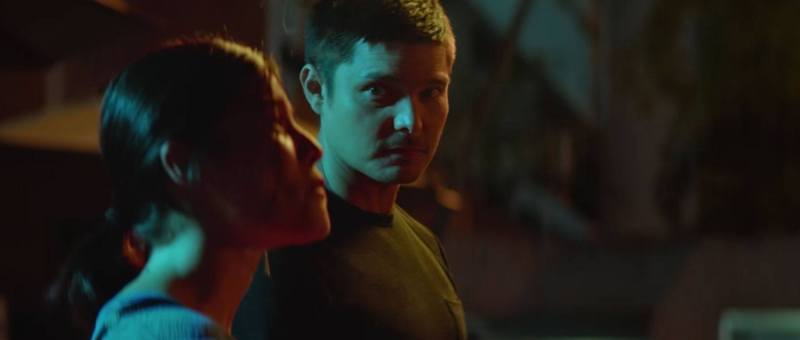
Sid & Aya (Not a Love Story) (Irene Villamor, 2018)

Sid & Aya posterIn an increasingly commodified society can there still be room for genuine connection? Sid and Aya attempt to find out in Irene Villamor’s deceptively titled Sid & Aya (Not a Love Story). Sharing much in common with Peter Chan’s Comrades: Almost a Love Story (save for the obvious political allegories), Villamor’s film is a refreshing antidote to the sometimes saccharine, soap opera influenced romantic comedies which often dominate the Philippine box office, swapping classic melodrama for low key indie feels. Yet as much as Sid & Aya is a “love story”, just not of the usual kind, it’s also a perfect encapsulation of a modern social relations as its cynical, amoral hero begins to rediscover his soul through getting to know the tough as nails, wounded but persevering heroine.

Workaholic stockbroker Sid (Dingdong Dantes) is a chronic insomniac. He doesn’t really know what keeps him up at night. He’s read that the causes of sleeplessness include regret, self blame, overthinking, anger, depression, and loneliness but those are things Sid doesn’t particularly want to engage with and so he just muddles through, wasting time in all night coffee shops. It’s in just such a shop that he first runs into Aya (Anne Curtis) – a waitress, and as we will later discover, dry cleaner and performer in a theme park. Aya’s life is very busy but she could always use more cash seeing as she is supporting most of her family including a sickly father and pregnant younger sister while her mum has been working in Japan for almost 20 years, and so she finds herself giving in to Sid’s unusual business proposition – that he pay her for her time while she chats to him to keep his mind off the fact he’s not sleeping so he doesn’t have to keep torturing himself over why that is.

There’s no getting around the fact that it’s an usual arrangement. Money can’t help but complicate everything, but it also makes it easier for the impossibly repressed Sid to begin opening up seeing as this is all transaction and not connection. The pair inevitably grow closer despite the unusual genesis of the relationship, falling in love despite themselves, but Sid is still too busy dealing with the ghosts of the past and his greedy, success hungry insecurity to be willing to take a “risk” on real love rather than take his soulless relationship with his equally soulless “girlfriend” to the next level.

Sid and Aya come from completely worlds. He has an extremely well paid job as a stock broker, she is working three (now four if you count spending time with Sid) jobs just to get by, barely sleeping and still having no money left over to spend on herself. Sid wastes no time letting Aya know that he “fucks people over” for a living, and though he professes to feel no guilt for his part in perpetuating the shadier aspects of capitalism, his world weary voice over betrays a conflict he doesn’t quite want to voice. He starts off thinking he can buy anything, that his money buys him infinite power over people and things. Sid tries to buy Aya, but Aya can’t be bought – she takes his money, but she remains free.

Attempting to escape familial legacy of failure and abandonment, Sid has closed his heart and committed himself to achieving conventional success while Aya has run in the opposite direction – trying to repair her broken family by making enough money to bring her long absent mother back from Japan. Aya’s family has been scattered by the same forces that Sid has chosen to uphold, forces which also threaten to destroy their nascent romance through a series of conflicting world views coupled with personal insecurities and social expectations. Yet the connection forged between them is real enough to have each of them running scared.

Sid claims he has no time for people he doesn’t “need”, while Aya claims she’s tired of loving the people she “needs” to love. Though they perhaps mean very different things with the word “need”, both remain nervous about addressing what it is they might “want” when acquiring it requires so much risk. Love is not something a cynical man like Sid would feel inclined to bet on, but there’s no prize without risk and no sense in taking the chance if you’re not going to bet it all. A messy, grown up romance Sid & Aya (Not a Love Story) is a refreshingly clear eyed look at modern love which finds that true connection is possible but only when you decide to change the game.


Sid & Aya (Not a Love Story) was screened as part of the 2018 New York Asian Film Festival.

Original trailer (English subtitles)
After the Rain (恋は雨上がりのように, Akira Nagai, 2018)

KoiAme_teaser_B5_F_outAdolescence is a difficult time for all, a period of waiting, in a sense, for the rain to end and everything to make the kind of sense you’ve been led to believe life is supposed to make only to finally see that the thing about life is there is no sense to be made of it. After the Rain (恋は雨上がりのように, Koi wa Ameagari no yo ni), adapted from the popular manga by Jun Mayuzuki, is touted as an admittedly creepy age gap romance between a confused teen and a melancholy middle-aged man but thankfully arrives at something more thoughtful and less problematic in its philosophical look at self-imposed inertia seen through the lenses of age and youth.

High school girl Akira (Nana Komatsu) loves nothing more than running but her record-breaking track career was brought to an abrupt halt by a ruptured achilles tendon. Having given up on her athletic dreams, she now spends her “free” time on a part-time job in a diner-style “family restaurant”. Unbeknownst to all, the reason Akira took the job was that the restaurant’s manager, 45-year-old divorced father Kondo (Yo Oizumi), was once nice to her after her accident and now she’s developed an almighty crush on his mild-mannered charms.

While Akira is processing the loss of her future as a top runner, Kondo is trying to get over not only the failure of his marriage but of his own dreams of literary success. Jealous of a college friend with a bestseller, Kondo has barely written anything in years and has all but resigned himself to a lifetime of managing a low-level chain restaurant in suburbia.

Kondo, for all his faults, is essentially a good guy whose major problem in life is being too nice. Needless to say, he’s not enthused by Akira’s surprise declaration of love and understands that it could cause him a lot of trouble but even so he wants to help her get over whatever it is that makes her think an affair with an older guy might be a good idea. Realising that her misplaced crush is most likely a displacement activity born of her grief for her racing career, Kondo sets about trying to coax Akira back towards something more positive than unwise romance through genial paternal attention even if she finds his attempts to make clear that he is only prepared to offer friendly support somewhat frustrating.

Akira’s problems are perhaps greater than they first seem. A strange girl with underdeveloped social skills and a relatively low need for interpersonal interaction, Akira has few friends and a habit of accidentally glaring at everyone she meets (which is not an ideal quality for a diner waitress). She is however very beautiful which also earns her a heap of unwanted attention precisely because of her angry aloofness. Neither of the boys her own age who declare an interest are very promising – both of them are unwilling to take a flat no for an answer and continue to chase Akira even though she consistently ignores them, though sous-chef Kase (Hayato Isomura) is at least a little more perceptive than he originally seems and finally able to offer some impartial advice to the confused young woman once he’s realised that his attentions really are unwanted.

Unwilling to engage with anything that reminds her of what she’s lost, Akira has been avoiding all her old friends. Haruka (Nana Seino), who has been chasing along behind desperate to catch up ever since they were kids, is as broken-hearted about their ruptured friendship as Akira is about running and longs to repair what was broken if only to prove that there’s more between them than just sports. Originally worried about Akira’s interest in Kondo she relaxes when she realises that he, like her, just wants to help Akira escape her moment of wounded inertia.

As Kondo puts, it’s boring waiting for the rain to stop. Like the heroes of Rashomon which becomes a repeated motif, Akira and Kondo are essentially just marking time waiting to be released from a self-imposed sense of frustrated impossibility. Kondo needed a dose of self-confidence which the decision to help a depressed high school girl who seems to be the only person who doesn’t find him pathetic just might offer, while Akira needs to realise that her life isn’t over and that she may have been too hasty in abandoning her dreams over what could be nothing more than a minor setback. Through their awkward non-romance the pair each rediscover something about themselves that they’d forgotten along with the courage to face their painful failures head on rather than attempting hide and living on in melancholy resentment.

Thankfully not the creepy age gap romance the synopsis teases, Nagai’s adaptation perhaps fails to mine the unexpectedly rich philosophical seam of Mayuzuki’s manga to its fullest extent in its powerful confrontation of age and youth sheltering from the storm of disappointment, but nevertheless presents an oddly warm tale of serendipitous friendships and mutual support as two frustrated people at different points of life each find the courage to move forward through helping someone else do the same.


Original trailer (no subtitles)

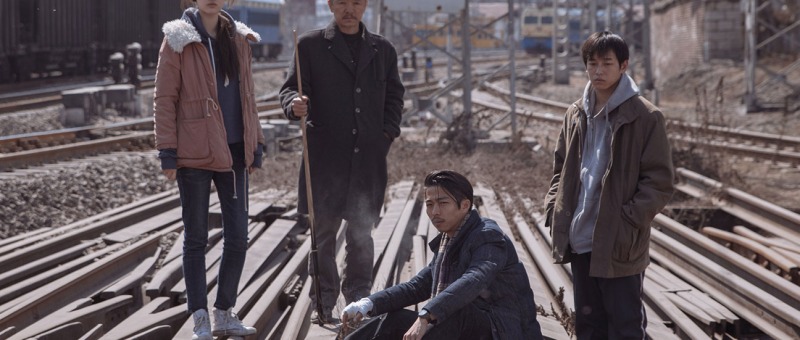
An Elephant Sitting Still (大象席地而坐, Hu Bo, 2018)

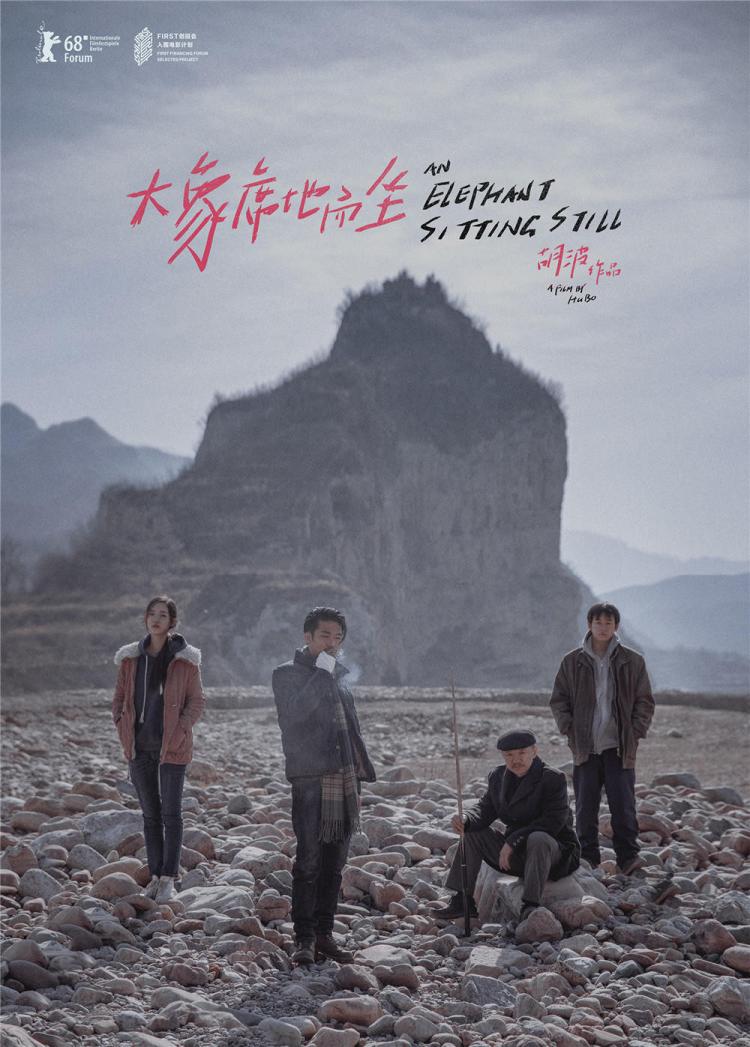
An elephant sitting still poster“It’s all about agony” a discredited adult figure intones midway into Hu Bo’s first (and sadly only) feature, An Elephant Sitting Still (大象席地而坐, Dàxiàng Xídì’érzuò). Latest in a long line of indie features to ask serious questions about the hypocrisies of the modern China, Elephant stops to wonder how one manages to live at all in world which has become so “disgusting” as to make life itself seem like a cosmic joke. In this “wasteland”, all that’s left of human connection appears to be a series of games of oneupmanship in which there must always be a loser and for which no one wants to take personal responsibility. Then again, they say there’s an elephant in a zoo in Manzhouli which has taken passive resistance to unnatural extremes but somehow survived all the world has thrown at it.

Four lives intertwine in the decaying industrial environment of a rundown town somewhere in Northern China. Petty gangster Yu Cheng’s (Zhang Yu) day gets off to a pretty bad start after he sleeps with his best friend’s wife only for him to return unexpectedly, spot Yu Cheng’s shoes in the hall, and then throw himself off the balcony in a fit of total despair. Meanwhile, teenager Wei Bu (Peng Yuchang) gets himself mixed up in his best friend’s altercation with school bully Yu Shuai (Yu Cheng’s little brother) over an (allegedly) stolen phone which ends in a scuffle and Yu Shuai tumbling down a set of stairs. Wei Bu decides to run and asks his female best friend Huang Ling (Wang Yuwen) to go with him, but she has troubles of her own in the form of a toxic relationship with her embittered mother and an ill-advised affair with the school’s married vice-principal. Lacking other options, Wei Bu turns to his genial next-door neighbour, Wang Jin (Liu Congxi), hoping to borrow some money but Wang is preoccupied with his declining family situation as his son and daughter-in-law attempt to force him out of his apartment and into a nursing home so they can move into the catchment area for a better school for Wang’s granddaughter.

Our four see themselves as walking dead, but are in some respects the last four standing. They wonder and they muse, asking why it is life has to be this way but unable to simply ignore the nagging threads of connection and human decency that those around them seem to have successfully eradicated. The older generation, having been betrayed by China’s rapid rise to economic prosperity, are cruel and embittered. They treat their children with contempt, smirking grimly in the knowledge that they will likely share the same fate. Yet they have managed to weather the storm, coming to an accommodation with the fact that life is disappointing and surviving even if in a form that makes survival just about as unpalatable as it’s possible to be.

For this survival, they have helped themselves to entitlement. This is a game of (occasionally literal) dog eat dog in which all that matters is winning no matter at what cost in order to avoid feeling like a nobody. Petty schoolboy thug Yu Shuai, learning a lesson from his disaffected brother, attempts to rule by fear and intimidation but finds his empire threatened by Wei Bu’s principled attempt to stand up for his friend. Wei Bu is a “loser” and his accidental “win” is a shock to the system that threatens to bring the whole thing crashing down but revolution was not in Wei Bu’s game plan and his resistance is short lived. Alone and friendless, he sees no alternative but flight.

Wei Bu’s friend, who turns out to have been unworthy of his loyalty, later achieves a rare moment of existential ecstasy in having frightened off two goons with a gun he pinched from his father. He is overawed to have inspired such fear and sure that most never feel anywhere near as alive as he feels at this moment. Wei Bu is unimpressed by his dark philosophy, but perhaps understands it as a grim encapsulation of the world in which he lives. Yu Cheng too tacitly accepts that his society values the strong, but it becomes apparent that his pretence of coldness is just that. He claims to hate everybody, and his brother most of all, but he walks back into a room on fire to save a man he doesn’t know and for all his attempts to abnegate the responsibility for his friend’s death is clearly affected both by his decision and his own role within it.

Responsibility is something nobody wants to take. Yu Cheng blames his friend’s death first on his own individual will, and then on his greedy wife for the unnecessary economic burden she placed on him, and finally on an unrequited love whose rejection he claims sent him into the arms of his best friend’s girl, but finally he cannot escape his own sense of guilt as embodied by the grieving mother his moral failings have produced. Huang Ling’s teacher expresses a similar life philosophy when she presses him as to why the school did not call the police over Yu Shuai’s accident. He tells her that if he’d called the police he’d be “involved” which not something that he wants to be. Unfortunately for him, his decision to pursue an “affair” with a vulnerable teenager is going to get him in “involved” in several sticky situations, most of which he blames Huang Ling for as the girl who has “ruined” him. Like the elephant of the title, Huang Ling’s lover sits and watches as the world spirals out of control, unwilling to stop it for fear of being dragged into its never-ending cycle of destruction and disappointment.

Intense individualism has fostered not only selfishness, but a refusal of accountability. Everything is always someone else’s fault just as someone else must always lose in each and very encounter in order to avoid the sensation of being a “loser” oneself. Alone among the older generation, Wang retains his youthful sense of human feeling, but eventually even his will is worn away and he considers giving in and entering the retirement home even after visiting it and realising it is little more than death’s waiting room. His advice to the young echoes that of Huang Ling’s lover, that there is no escape from sorrow and an attempt to evade it through starting again somewhere else will lead only to double failure. The best thing, he tells them, is to believe in a better place and then never go there so as not to have your illusions of a kinder world shattered. Yet there are flickers of possibility, Wei Bu wants to see the elephant anyway even if it changes nothing. Hu wants to ask us if it’s possible to go on living if you discover that there is nothing to live for and perhaps he found his own answer for that, but there is hope here, if faint and compromised, in the thought of distant elephants enduring all with stoic grace.


Currently on limited release in UK cinemas courtesy of New Wave Films.

International trailer (English subtitles)

26 Years (26년, Cho Geun-hyun, 2012)

26 Years posterA society says a lot about itself in the way it treats its villains. Chun Doo-hwan was a brutal dictator who came to power as a result of a violent counter coup which encompassed the now notorious murder of ordinary citizens by agents of the state in Gwangju in May 1980. Chun’s reign eventually came to an end with the successful conclusion of the democratisation movement which gave birth to the modern democratic state of South Korea that is, at present, in the aftermath of dealing with another unpopular leader deposed through peaceful, democratic means. Though originally sentenced to death Chun’s punishment was later commuted. He has never paid the massive fine that was imposed upon him as symbolic recompense for his acts of terror and vast web of corruption. .

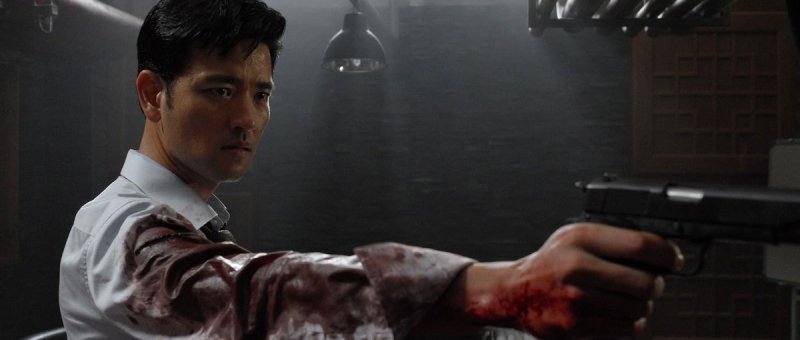
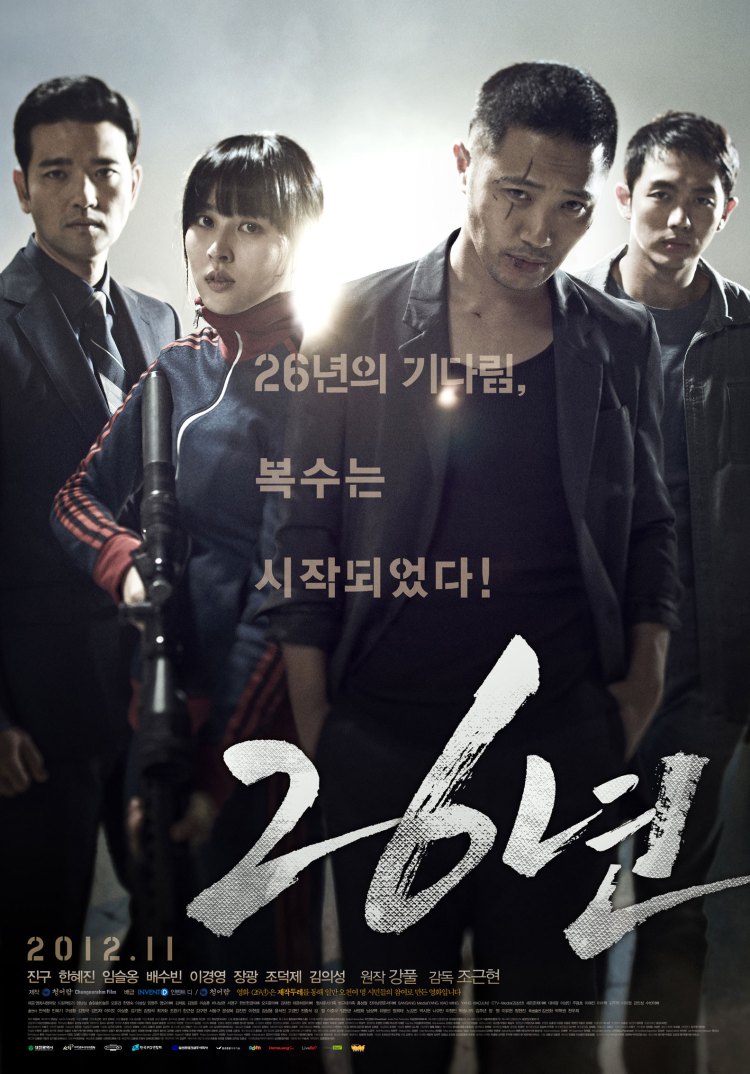
The five men and women at the centre of 26 Years (26년, Nyeon) have not forgotten the face of Chun Doo-hwan (Jang Gwang), identified only as “that man”, and are among the many frustrated by his refusal to take responsibility for his actions. A former soldier remorseful for his role in the events (Lee Geung-young) recruits an olympic sharpshooter (Han Hye-jin) whose mother was killed by a stray bullet, a gangland thug (Jin Goo) whose father was tortured and murdered by security forces driving his mother into madness, and a policeman (Im Seulong) who lost his sister running away from a demonstration, as well as his son (Bae Soo-bin), to assist in a plan to force the former general to apologise for his crimes and, if he refuses, enact their own justice.

Spoilers aside, Chun Doo-hwan is still very much alive and the events of 26 Years are inspired by an entirely fictionalised webmanga though it is true that Chun lives in an L-shaped compound protected by perimeter walls and a small army of police and security forces presumably at great cost to the Korean tax payer. He has never apologised for his actions regarding the Gwangju massacre and continues to blame the “rioters” in insisting that the soldiers had no choice but to fire back in self defence. That such a politically sensitive film could be made about a figure who is still alive, let alone that it would become a major box office success and crowd funding phenomenon is a small miracle in itself but speaks to the deep rift this troubled period of recent history provokes in the minds of the contemporary society.

First time director Cho opens with the events of 1980 but in highly stylised animation rather than live action. There is something in the sketchy quality of the artwork that perfectly evokes the ambivalence of the entire enterprise, of not quite wanting to look at events which are so hard to see. See we do as bystanders are cruelly struck by stray bullets, soldiers panic and shoot, and the left behind search desperately for their missing loved ones but find only tragedy and pain. Reverting to live action for 1983 onwards, Cho then takes us through the next 20 years noting landmarks as he goes – the ever present terror of Chun on TV screens everywhere, his eventual fall and the restoration of democracy, Chun’s pardoning and eventual yet accidental house imprisonment for his own security.

The wounds remain unhealed, festering without resolution. While protestors make their voices heard, a room full of supporters fall to their knees before a resurgent Chun standing proud before them. Chun remains unrepentant, cruelly so in Cho’s dramatisation, shaking off the body of a fallen bodyguard like a slobbering dog, caring nothing for his people and thinking only of his own survival.

Cho keeps the tension high as the small band of traumatised youngsters attempts to confront their nation’s difficult history head on, finding both resistance and camaraderie yet fighting internal conflict all the way. Avoiding easy answers, 26 Years is among the most direct attempts Korean cinema has made to reckon with the traumatic recent past, mixing high octane action with a melancholy consideration of the effects of a national trauma but it also finds itself in a moment of indecision, refusing the ending narrative demands in favour of an intake of breath followed by a weary exhale of weighty resignation.


Currently available to stream via Netflix.

Original trailer (English subtitles)

The Lies She Loved (嘘を愛する女, Kazuhito Nakae, 2018)

lies she loved posterHow well do you really know the people with whom you share your life? Or, perhaps, how honest have you really been with those closest you? Inspired by a notorious newspaper article, The Lies She Loved (嘘を愛する女, Uso wo Aisuru Onna) has a few hard questions to ask about the nature of modern relationships and the secrets which often lie at their hearts. Yet the message is perhaps that there are different kinds of truths and the literal may be among the least important of them. The salient message is that consideration for the feelings of others and a willingness to share the burden of being alive are the only real paths towards a fulfilling existence.

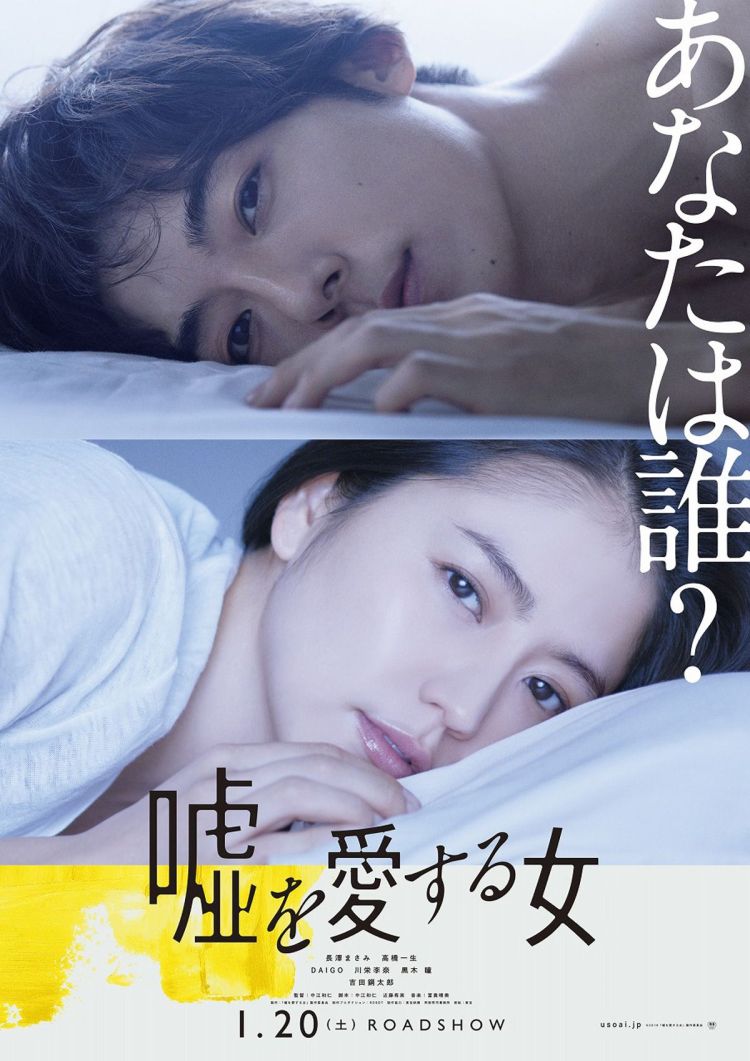
30-something Yukari (Masami Nagasawa) is a workaholic career woman currently at the top of her corporate game. Unmarried, she’s been living with impoverished medical researcher Kippei (Issey Takahashi) for the last five years and is happy enough with him (save the occasional one night stand) but also feels as if there’s something missing. She’s angry when he doesn’t show up to a pre-arranged dinner where he’s supposed to meet her mum, leaving her to deal with her mother’s disapproving scorn all alone, but chastened when it’s revealed he was found collapsed in a local park and is currently in the hospital after suffering a brain haemorrhage. If that weren’t enough chaos for the hyper organised Yukari, the police tell her Kippei’s ID is fake. He doesn’t work where he said he said worked and no one seems to have heard of him. Remembering a conversation about cheating spouses, Yukari turns to the detective uncle (Daigo) of one of her work friends for help but starts to wonder what sort of answers it is that she’s really looking for.

An intriguing mystery, The Lies She Loved begins in worrying fashion as if it wants to punish Yukari for her obsessive workaholic lifestyle and avoidance of the traditionally feminine roles of wife and mother. The couple aren’t married, but Kippei is for all intents and purposes a kept man and house husband. He doesn’t earn enough to contribute to the household economy, but makes up for it by handling the domestic tasks usually the domain of a “wife”, i.e. cooking and cleaning. Meanwhile, Yukari works insane hours and often stays out drinking with colleagues, claiming this valuable out of hours time as part of the job but sometimes spending it with other men. We see her “lie” to Kippei, telling him a large bouquet of snacks won from an amusement stand was a gift from a female friend when it came from a “date”, while he reproves her with coldness for her excessive drinking and the tendency it provokes in her for unsolicited cruelty.

Yet moving on we see that a woman’s career, or man’s lack of one, is not the issue at all. The issue is neglect, a taking for granted of other people’s feelings and their willingness to provide support and affection while getting nothing in return. Rather than going to work, Kippei had been spending time in a coffeeshop writing something that’s somewhere between novel and therapy about a happy family living on an idyllic island. We discover that he too once took something for granted, became wrapped up in his career, and overburdened someone else by allowing them to take on the entirety of their mutual responsibility with tragic consequences. Filled with remorse, he ran away from his crime and tried to forget.

The crime is not a woman working, but people in general working too much and knowing each other too little. Humiliated, Yukari wants answers about her immediate past, wanting to know if she was tricked by a conman in order to avoid facing the fact that she never really bothered to ask many questions about the man she invited into her home. Indeed, her decision to “invite” him in the first place is not altogether altruistic and cannot help giving off the scent of mild desperation as she tries to make the arrangement seem convenient while ensuring she retains the upper-hand in the power dynamics without giving too much away. What she really wants to know, without really wanting to admit it, is if her lover really loved her despite his “lies”, but to know that she’ll have to deal with her own longstanding intimacy issues and accept that a loving home is a balanced one in which both partners are equal and agree to share their burdens with openness and generosity. A progressive, nuanced look at modern romance The Lies She Loved is a surprisingly effective defence of love and a mild rebuke of the society which does its best to undermine it.


Original trailer (no subtitles)