Domains (王国(あるいはその家について), Natsuka Kusano, 2019)

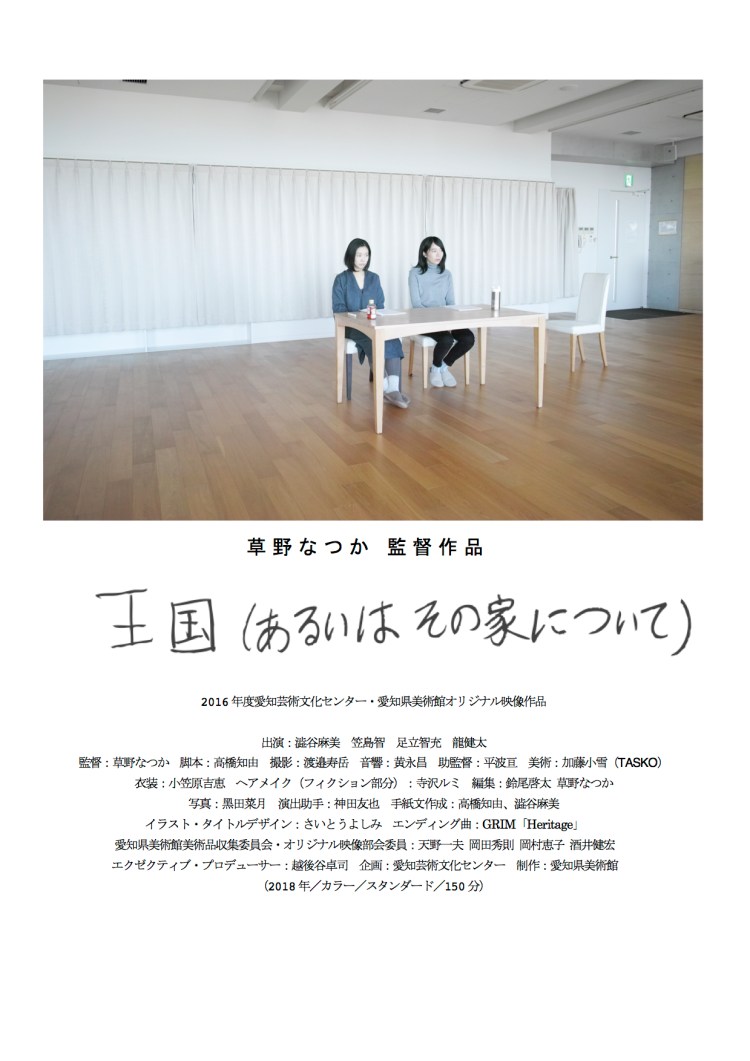
domains posterMost of us like to feel as if we’re connected to something. Not merely floating islands, but anchored to the world by strong connections to others – only when we feel as if the world is not holding on as tightly as we’d like do we begin to feel as if perhaps there are as many worlds as people and many of them barred to those who have no right to enter. Natsuka Kusano’s second feature, Domains (王国(あるいはその家について), Okoku (Arui wa Sono Ie ni Tsuite)), tackles this conflict head on in a tragic tale of rage, madness, and jealousy driven by a series of mutual resentments as a collection of middle-aged men and women struggle to accept the “intrusion” of an unwanted third party into the kingdom of their intimate relationships.

Kusano opens boldly with the film’s most straightforward, though infinitely shocking, scene as a woman in her late 20s, Aki (Asami Shibuya), sits impassively while a police officer (Ryu Kenta) politely tries to explain to her that she is being held on suspicion of murder. Not quite present, Aki accepts all the charges against her and admits her crime though is puzzled by the policeman’s assertion that she has been “brought to justice”, explaining that she already feels herself to have been “brought to justice” by “something like time”. In any case, she has already said everything she wishes to say in a letter to the mother of her victim. In a brief moment of madness, Aki pushed the three year old daughter of her childhood best friend into a swelling river in the midst of a typhoon.

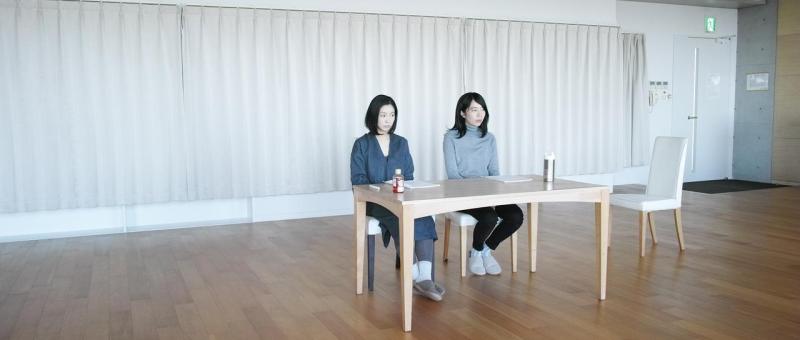
Leaving us with this disturbing moment, Kusano then shifts back to what looks like a rehearsal room where the woman we have just seen is now dressed in more casual clothing and seated at a table next to another woman who will read in the lines of Aki’s childhood best friend and later mother of the murdered little girl, Honoka, Nodoka (Tomo Kasajima). Travelling back a few months before the incident, the two women read over the undramatic events which led up to it as if engaged in an act of emotional excavation.

The strange fact that had fascinated the policeman in Aki’s written testimony was her seemingly random allusion to a castle made out sheets and chairs the mention of which sends her into a refrain of the gloomy Japanese folksong Moon over Ruined Castle. As we later ascertain, the the make-believe castle, constructed in her childhood home with soon-to-be best friend Nodoka, became something like a safe place, the eye of typhoon raging in her mind. Aki saw the castle as her rightful “kingdom”, a sacred space into which only she and Nodoka were permitted to enter and which was permanently available to each wherever they happened to be.

Nodoka, however, has moved on – formed a new kingdom with a husband and a child into which Aki has no right to step. After having something like a breakdown and returning to her hometown, Aki reconnected with Nodoka whom she had not seen since her wedding to her husband Naota (Tomomitsu Adachi) – a mutual friend from university, four years previously. Naota, now a school teacher, like Aki is intensely jealous of his own kingdom which he has given physical form in the solid existence of his house. Aki noticed this fact immediately in the pitch perfect attention to temperature and humidity of Nodoka’s new home, but she couldn’t help seeing that her friend now looked tired, harried, and that the marriage was perhaps only a superficial act of performance rather than a real emotional connection.

Ironically enough, it’s Naota himself who accidentally brings this up when explaining that a family can collapse without warning and revert to being merely a collection of individuals living under the same roof. Nodoka accuses him of using a schoolteacher’s logic to rule his home, and there is certainly some of that in there as his rigid authoritarianism seems primed to hold on so tight that it squeezes the life out of the very thing he’s trying to protect, but there’s an ugly kind of conservatism in it too as he angrily tries to expel the unwelcome intrusion of Aki into their lives, blaming her for the cracks in his marriage which her presence has perhaps exposed.

Naota wants Aki gone because he thinks she’s a bad influence, a shirker or a mad woman who will eventually infect his house with whatever it is she has like some kind of ill will virus. In an odd and terrifying way he may be “right”, but his resentment runs deeper in that he, like Aki, cannot accept that Nodoka once belonged in someone else’s kingdom to which he has no access. He resents that the two women are so close as to have largely abandoned language and share a much longer history than he and his wife, while Aki perhaps resents the presence of Honoka who represents a bond between Naota and Nodoka that she could never match even if her concern over the coldness of her friend’s new life and her seemingly hidden misery is nothing but altruistic.

Aki surveyed the kingdom of her friend and discovered it was flawed and vulnerable, that the kingdom she and her husband were building would eventually destroy them. Yet the overwhelming force which compelled her towards her unforgivable transgression was not so much resentment, or loneliness, or jealousy, or even a desire for freedom, as embarrassment. She felt as if she had betrayed her kingdom’s existence to someone who was not supposed to see it and acted without thinking in order to cover up an emotional crime, little realising the pain and destruction her act would cause.

Words encircle Aki like a typhoon, leaving her permanently in its eye trying to make sense of what has happened. Kusano stages a rehearsal after the fact, reading over the same lines with added nuance, occasionally digging deeper to expose a new clue either so trivial as not to be worth remembering or so delicate as not to be remembered out loud. To Aki, the spoken has no weight – her kingdom is made is feelings, but for Naota the reverse is true. Nodoka remains caught in the middle, perhaps secretly and uncomfortably yearning for freedom and a kingdom of her own while the storm clouds gather all around her and all that remains is the inescapable impossibility of an unselfish yet whole connection.


Domains made its world premiere at the 2019 International Film Festival Rotterdam and is available to stream online via Festival Scope until 24th February.

Rotterdam trailer (English subtitles)

The Wind in Your Heart (心に吹く風, Yoon Seok-ho, 2017)

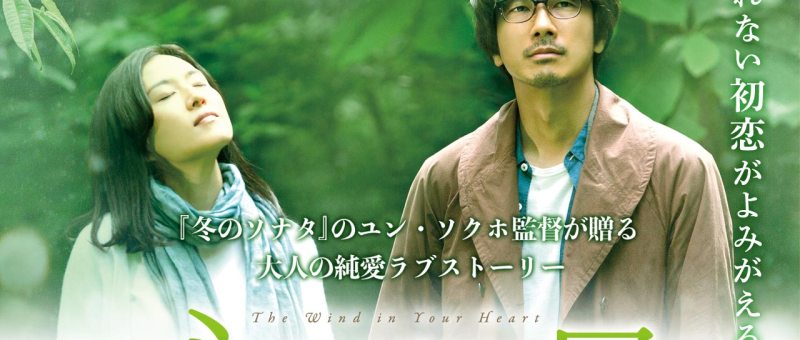
the wind in your heart posterYoon Seok-ho is best known for his work in Korean television drama which included several of the series thought of as kickstarting the “Hallyu” wave. Chief among these is Winter Sonata which proved extremely popular in Japan and is also cited as a major inspiration for the short-lived boom of “junai” or “pure love” movies in the early 2000s. The Wind in Your Heart (心に吹く風, Kokoro ni Fuku Kaze) brings things full circle – making his feature debut, Yoon brings his brand of romantic melodrama to Hokkaido for a re-evaluation of first love, middle-aged regrets, and an escape from real world cynicism to a world of beauty and innocence.

Video artist Ryosuke (Hidekazu Mashima) has been in living in London for many years but is currently staying with a friend in Hokkaido on a working holiday. When his pick up truck breaks down in the middle of nowhere he chances in to a nearby cottage in the hope of using the phone, only to find a ghost from the past standing in the doorway – Haruka (Masumi Sanada), his high school sweetheart whom he has not seen in 23 years. Obviously a lot has happened – Haruka is married with a grown-up daughter, but seems sad and lonely. Ryosuke is only in town for a couple more days, but the pair make the most of their time to reconnect and think about what might have been and why it wasn’t, as well as what might still be if someone finds the courage to boldly pursue their desires.

Well, that might be a little strong – this is a story of innocent, chaste love, rather than a hot and passionate affair. The Wind in Your Heart does indeed share much in common with the classic “junai” in its nostalgic look back to innocent teenage romance and yearning to return to a time when everything seemed so simple and love was all that mattered. It is, however, sadder – we’re not told exactly what made Haruka decide to forget Ryosuke after he left for university in Tokyo, only that she went through some tough times. Likewise we don’t really know why Ryosuke didn’t try harder to find out, save that perhaps he thought that was what she wanted and respected her decision. Nevertheless, Ryosuke has remained unmarried and apparently still carries a torch 23 years later. All the pair have are mutual regrets and a shared sense of nostalgia for a future they feel they lost because of things that happened to them in their youths.

Now, things might be different. Haruka is obviously miserable in her marriage. Her daughter has left for university, her husband is working away in Taiwan, and she’s left at home all alone with her horrible mother-in-law. Ryosuke asks her if she’s happy and she can’t answer. She doesn’t want to talk about her husband whom she doesn’t seem to like very much. When we eventually meet him he is drunk, bossy, and insensitive. It’s no wonder Haruka might dream of running off with her idealised first love but when all is said and done she lacks the conviction to do it. She is simply too conventional, too bound by social obligation, to consider throwing caution to the wind and embracing her own happiness.

It might be patronising to suggest that Haruka is a stand-in for the expected audience – unhappy, under appreciated middle-aged women who perhaps feel trapped by a conservative society and long for escape from their humdrum lives through an innocent romance, but then that does very much seem to be the screenwriter’s intention. Haruka hesitates – her hand always hovering over door handles as if they were triggers, unsure which door to open and which direction to choose, ultimately making her decisions far too late. Unlike the more positive resolutions of a junai romance which allow the left behind to come to terms with their loss and resolve to live on with happy memories rather than sorrow, Haruka is left only with the crushing realisation that it really might be too late and she’s made a lifetime’s worth of poor choices though she does at least begin to find a degree of fulfilment in re-embracing her youthful dreams previously crushed by the unforgiving attitudes of her family.

Filming in Hokkaido, Yoon maintains a notably Korean sensibility in his static camera and straightforward composition which prioritises simple conversation between two people, only occasionally wandering off into poetic reveries in which the sun embraces the wind in a bracing Hokkaido spring. Reaching for something deeper than it manages to grasp, The Wind in Your Heart lands in standard melodrama territory, never quite managing to lend its central romance the weight it seems to want, but nevertheless doing its best to strain the heart with a tale of inescapable middle-aged misery in lives lived through the power of what might have been.


Original trailer (no subtitles)

A Way Out (出路, Zheng Qiong, 2016)

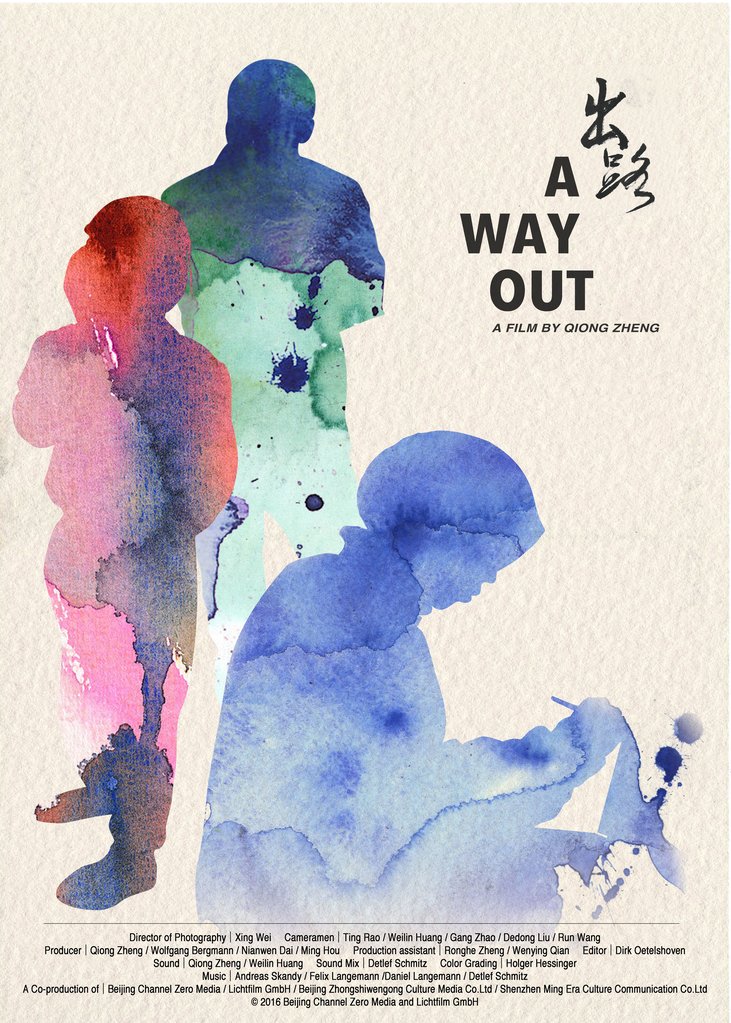
a way out posterThe duplicitous dichotomies of the modern China have become a permanent fixture in the nation’s cinema though mostly as a symbol of conflicted ideologies as some yearn for a return to an imagined past egalitarianism and others merely for a brake on the runaway train of capitalist materialism. Zheng Qiong’s documentary A Way Out (出路, Chūlù) follows the lives of three youngsters chasing the “Chinese Dream” albeit in their own particular ways only to discover that, in the end, despite the best intentions of those who might seek to lessen the advantages of privilege, birth may be the biggest factor in deciding one’s destiny.

Zheng opens with a little girl, Ma Baijuan, in rural Gansu. Her sing-song voice playing over her cheerful stride to school through the narrow mountain paths hints at a natural curiosity, a desire to know the “why” of everything, but Baijuan is only reciting by rote what it is says in her school book. Her education, which is received at a village school segregated by sex where she is one of only two little girls learning simple facts about the world around her while the boys next-door get a crash course in elementary maths, is largely a matter of questions and answers rather than thought or enquiry. Nevertheless, she excitedly tells us that she will soon be going on to the middle school in the nearest town and then hopefully to a college in Beijing after which she will make a lot of money and buy a new house for her family with a proper well so they can get water.

Meanwhile, 19-year-old Xu Jia has already repeated the final year of high school twice in the hope of bettering his exam grades to get into a good university. Like many of his contemporaries, Xu sees a degree from a reputable institution as the only “way out” of small town poverty. He is willing to sacrifice almost anything to make it happen and thinks of little else than achieving his dream of a getting a steady job at a stable company and then getting married in order to reduce the burden on his ageing single mother.

Xu may think that a white-collar job is the only path to success but others do not quite see things the same way. Yuan Hanhan is introduced to us as a 17-year-old “high school drop out” but is in fact a talented artist and bona fide free spirit. After brief stint in a hippy cafe, she eventually achieves her dream of studying abroad at art school in Germany where she struggles to adapt to the relatively laidback quality of European society, affirming that in a developed nation like Germany no one sees the need to go on developing. She complains that Germans only need to do their routine jobs like little stones arranged in a line by the country – perhaps an ironic statement given the restrictive nature of Chinese society but also one with its own sense of logic which places the insistent work ethic clung to by Xu on parallel with an economic model which may already be out of date.

Xu gets his start as a telephonist making cold call insurance sales where the staff are drilled like a military cadre to regard their pencils as machine guns as their mics as grenades, their jobs not means of survival but an enterprise for the common good which drives tax receipts to benefit the entire nation. In a sense he has found his “way out” though his life will be one of soulless corporate drudgery, a fact brought home by his mother’s casual appraisal of his wedding album which features her son in a series of intensely romantic photographs in which he has “absolutely no expression”. Meanwhile, Hanhan remains a free spirit. Even if she never quite felt at home in Germany, she maintains a healthy interest in the wider world and is determined to forge her own path rather than become simply one of many identical “little stones”. For Baijuan, however, the future is much less rosy. Her grandfather, commiserating that perhaps she didn’t have the kind of aptitude for schooling that she might have liked, regards a woman’s education as unimportant, as Baijuan’s only “way out” is a “reliable” man whom they would like to find for her as soon as possible.

As Hanhan puts it in her philosophical closing speech, when it comes down to it birth is the most important factor of all. Simply by being born wealthy in Beijing she had advantages that others do not have. Baijuan’s fate is sealed in being born to a poor farming family in a remote rural region, while Xu constantly refers to his “family situation” as the reason he feels he has to become a success as soon as possible, hitting all the social landmarks at all the expected junctures. Each of our protagonists is looking for a “way out” of their unsatisfactory circumstances, and each of them finds it, but perhaps not quite in a way everyone would view as ”satisfactory”. Zheng’s vision of the new China is one in which the old ideology has failed, leaving behind it only an entrenched social hierarchy from which there may be no “way out” save a willing refusal to comply.


A Way Out was screened as part of the Chinese Visual Festival’s New Year programme at the BFI Southbank and is also available to rent online via Vimeo.

Trailer (English subtitles)

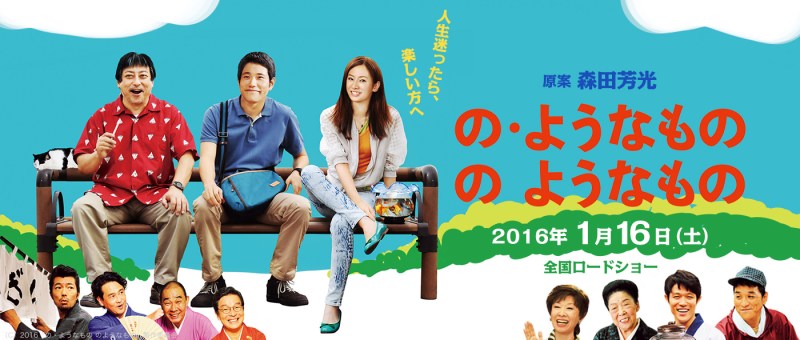
Something Like, Something Like It (の・ようなもの のようなもの, Taiichi Sugiyama, 2016)

something like, something like it posterSadly passing away at the young age of 61 in 2011, Yoshimitsu Morita had been relatively prolific in his 25-year career, leaving behind him a hugely varied back catalogue that ran from zany idol movies to prestigious literary adaptations. His recurrent concerns, however, were relentlessly populist – he wanted to make films that ordinary people could enjoy which intensely reflected the time in which they were made. Five years after his death, one of his early ADs chose to pay tribute to his mentor by drawing inspiration from Morita’s 1981 feature debut, Something Like It. Something Like, Something Like It (の・ようなもの のようなもの, No Yona Mono no Yona Mono) brings the original cast back together with a few new faces from the late director’s more recent works to recreate yesterday’s pleasures for today’s audiences.

Our hero this time round is young Shinden (Kenichi Matsuyama). Well, he’s not really all that young despite being the lowest ranking rakugoka on the roster. Now 30 and beginning to lose hope, Shinden is a former salaryman well known for taking his time. Meanwhile, the 13th memorial service for the late master is fast approaching and the troupe’s patron has decreed she wants to see the return of an old friend – Shintoto (Katsunobu Ito) who abruptly disappeared right after the funeral. Seeing as Shinden is not so hot at rakugo, the other guys task him with tracking down Shintoto in the hope of convincing him to make a return to the stage so the patroness doesn’t decide to remove her patronage.

Rakugo – the traditional art of comic storytelling, is a rarefied affair. It requires extreme rigour from the performer in order to make often extremely familiar tales funny in all the right places. Shinden isn’t very good at it because he’s too stiff all over. Poor at reading social cues, he has an urge to point out tiny and embarrassing mistakes like a slightly frayed curtain or a wonky sign. He might not be best placed for finding and then convincing a sad old man to take back up the career he’d sworn to lay down. Nevertheless, once Shinden manages to find Shintoto and realises he’s made an extremely circular journey, he makes himself his disciple and commits himself to doing all Shintoho’s odd jobs in the hope he’ll finally finish the “Pop-Eyed Goldfish” routine that the patroness so wants to hear.

Taiichi Sugiyama* was an AD on Something Like It but is only making his own feature debut 25 years later. Reassembling the old cast, Sugiyama remains true to an old formula and his genial retro comedy certainly has an old fashioned quality right down to the cutesy jazz score which feels right out of the ‘80s. More modern additions come in the form of Kenichi Matsuyama (who starred in Morita’s final film, Train Brain Express) back on comedy form with a typically left of centre performance as the archetypal “cannot read the air” aspiring rakugoka whose tendency towards literalism as well as that to be distracted by minor imperfections threatens to ruin his career before it’s even really begun. That’s not to mention his nascent crush on his mentor’s daughter Yumi (Played by Keiko Kitagawa who made her feature debut in Morita’s Mamiya Brothers) and mild jealousy over the other various young and good looking men she seems to take an interest in.

Through getting closer to the now somewhat schlubby but basically good hearted Shintoto, Shinden learns to loosen up a bit and his Rakugo perhaps improves even if he also figures out when it’s best to make a sacrifice on someone else’s behalf. Shintoto too rediscovers his talent for comedy, if not the love. Morita never had much of a “signature” style – his films were in a sense tailor made to suit a particular purpose, but Sugiyama remains firmly within the world of early ‘80s comedy, allowing the everyday to brim with silliness as Shinden pursues his roundabout quest before coming quite literally full circle and then finding his feet again. A man pays tribute to his late mentor, mentors someone else, and then absents himself from the frame to let his pupil grow. One generation retreats and another rises – an age old story, but one that like a rakugo tale shines in the telling.


*IMDB and some other sites list his name as Yasukazu but according to the JFDB and Shochiku the official reading of his name is Taiichi.

Chinese release trailer (English & Traditional Chinese subtitles)

The Limit of Sleeping Beauty (リミット・オブ・スリーピング・ビューティー, Ken Ninomiya, 2017)

the limit of sleeping beauty posterCan you escape the past by evading it? The heroine of Ken Ninomiya’s The Limit of Sleeping Beauty (リミット・オブ・スリーピング・ビューティー) does her best to find out as she approaches the point at which she can no longer bear the weight of all her sorrows. A rising star of the Japanese indie scene, Ken Ninomiya had some minor festival exposure with his first film, post-apocalyptic cyberpunk drama Slum-polis, back in 2015 before making a complete about turn in releasing a terse mockumentary about a resilient actor hammering on the door of Japanese show business. Sleeping Beauty was, apparently, originally conceived as a mid-length picture before producers suggested expanding it into a full length feature and in many ways marries the twin concerns of Ninomiya’s earlier films in its high concept examination of a fracturing psyche unable to let the past go and move on from trauma and disappointment.

At 19, Aki (Yuki Sakurai) ran away from a bad family situation and ended up in Tokyo with the hope of becoming an actress. With nowhere else to go she wandered into a random bar which is where she met the love of her life, Kaito (Issey Takahashi) – a melancholy photographer and owner of cabaret club Aurora. Kaito takes her in and she begins working at Aurora as a magician’s assistant but ten years pass and, as a TV presenter later put it, it’s unheard of for a Japanese actress to make it in her 30s.

Her mind fracturing, Aki is often accompanied by “Butch” (Nino Furuhata), a strange clown with a scary white face who appears alternately supportive and enabling. Complaining that she feels unstuck in time, Butch reminds her that the idea of time as linear flow is a misconception and that all moments are indeed one moment which is one reason Aki never quite knows “when” she is. Accepting this fact she asks to be taken to the time at which she was happiest, only to be told that emotional time is not necessarily in sync with one’s perception of temporality. Nevertheless, her mind flies back to her first meeting with Kaito who we later surmise is no longer in her life but continues to define it all the same.

The picture we get of Aki is of a woman attempting to bury herself and her disappointments by revelling in a pleasant memory and then using it as raw material to read herself into an idealised version of her current life only one which is still marred by the tragedy of losing Kaito. Ninomiya opens with an orgy in dingy sex club where everyone is wearing creepy carnival masks and the older Aki is sporting a nasty bruise on her chin. The bruise, we later discover, was earned in a nasty encounter with a lascivious producer engineered by a soulless manager who promised her a career but in effect sold her to a man who assaulted and humiliated her. This final humiliation is only one of many acts of degradation that Aki suffers in her quest to make it as an actress – one of only two things Kaito urged her to do before disappearing from her life forever.

Unable to cope with the weight of lost love, defeated dreams, and a wasted youth Aki’s mind splinters into fragments, creating the strange entity known as Butch whom she seems to want to get rid of but cannot bear to be without. Aki’s quest is one of reintegration in which she must find the strength to put herself back together again and finally set light to the past, waking up from her self imposed slumber.

Kaito wants her to know the world is still wonderful, but his message seems curiously perverse considering his final course of action and Aki’s continuing descent into a spiral of depression, exploitation, and mental instability. Fantasy and reality remain hopelessly blurred, only gradually separating and becoming distinct as Aki begins to put herself back together. Ninomiya improves on Slum-Polis with similarly detailed production design and world building but occasionally allows his taste for music video aesthetics to slide into the indulgent with the success of such sequences depending on the viewer’s taste for the overused main titles song, Hummingbird by Kyla La Grange. Nevertheless there’s no disputing Ninomiya’s ambition and originality even if there is something unsettling in his urgency to inhabit the world he seems to be critiquing.


Original trailer (no subtitles)

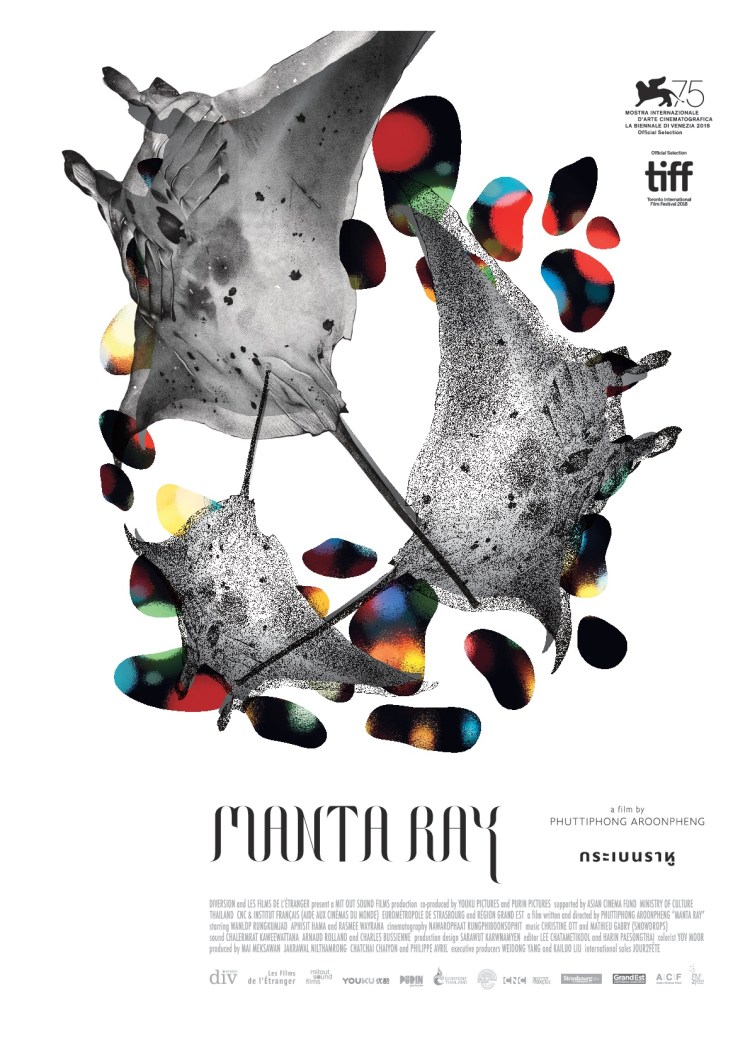
Manta Ray (กระเบนราหู, Phuttiphong Aroonpheng, 2018)

manta ray posterManta Ray (กระเบนราหู, Kraben Rahu), the directorial debut from Thai cinematographer Phuttiphong Aroonpheng, begins with a dedication to the Rohingya – a group some have described as the most persecuted on Earth, rendered technically stateless and brutally oppressed in their homeland of Myanmar. Many have attempted to escape, often to Thailand, but rarely find safe harbour instead becoming victims of governmental persecution or vicious human traffickers. Manta Ray is a poetic mediation on displacement and identity, but also on the various ways in which neglect of the other is also neglect of the self.

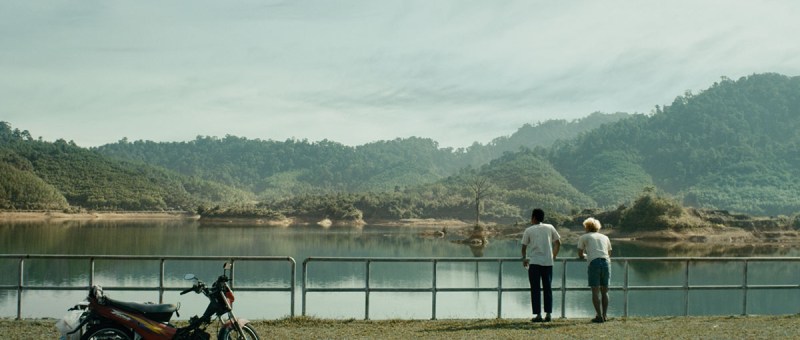
A young fisherman (Wanlop Rungkamjad) with a shock of blond hair gets up to some shady business in a forest but later turns humanitarian when he discovers a badly wounded man lying by the riverside. Discovering the man is still alive, the fisherman takes him to a backstreet doctor and then to his home where he nurses him back to health. As the man cannot speak and possibility does not understand what is being said to him, the fisherman rechristens him Thongchai (Aphisit Hama) after a classic Thai pop star. Despite the absence of verbal communication, the two men begin to bond and the fisherman teaches Thongchai how to live a life like his – how to fish, how to dive, how to find colourful stones in the forest and how to use them to call the manta rays which shelter in a nearby cove after a storm and are soon on their way once the storm has passed. Their peaceful co-existence is soon ruptured when the fisherman fails to return home, leaving Thongchai alone to inherit his life, slipping accidentally into the now vacant space the fisherman left behind.

The film’s earliest stretches serve as a beautiful tale of wordless connection in which the fisherman, perhaps in contrast to what we might expect given the darkness of his activities as glimpsed in the opening scenes, decides to be kind and rescues a man near death, literally giving him a new life and a place in his home for as long as he wants or needs it. Thongchai says nothing, perhaps he cannot speak in any language and probably does not understand the meaning of the fisherman’s words but seems to understand him all the same. Gradually the fisherman brings Thonghcai back to life through passing bits of his own back to him, relating his sad life story of the wife who left him for another man but himself remaining silent about whatever it is he does with the shady crew of a fishing boat out on the water. It is perhaps his sense of compassion which spells his doom – when he tells his “boss” that he doesn’t want to do “that” any more, the fisherman “mysteriously” goes missing at sea.

Thongchai does not steal the fisherman’s identity, but merely inherits a space which had been left vacant by another recently displaced person. He stays in the house and waits for his friend’s return, takes up his friend’s job, and then eventually begins living with the fisherman’s pregnant ex-wife (Rasmee Wayrana) who completes his transformation by dressing him in the fisherman’s clothes and dying his hair a bright gold that shines just like the stones in the forest. The fisherman and Thongchai merge and become one, sharing a single identity until the fisherman himself washes up, injured and bearing the scars of his long journey home.

Yet the forest is always there, waiting, and all roads lead back to it in Phuttiphong Aroonpheng’s elliptical tale. Thongchai digs but finds only death and emptiness, the colourful lights he softly danced to with the fisherman eerily echoed by the forest’s grim ghostliness and the glittery horror that stalks its natural beauty. Like the manta ray, Thongchai – a man without a name or a language, may be destined to a life of lonely floating broken by brief periods shelter and connection, always waiting for the storm to pass. Poetic and filled with images of extreme beauty, Phuttiphong Aroonpheng’s melancholy debut is a poetic meditation on identity and dislocation, arguing strongly for empathy and human warmth over fear and self-interest in an often cruel existence.


International trailer (English subtitles)

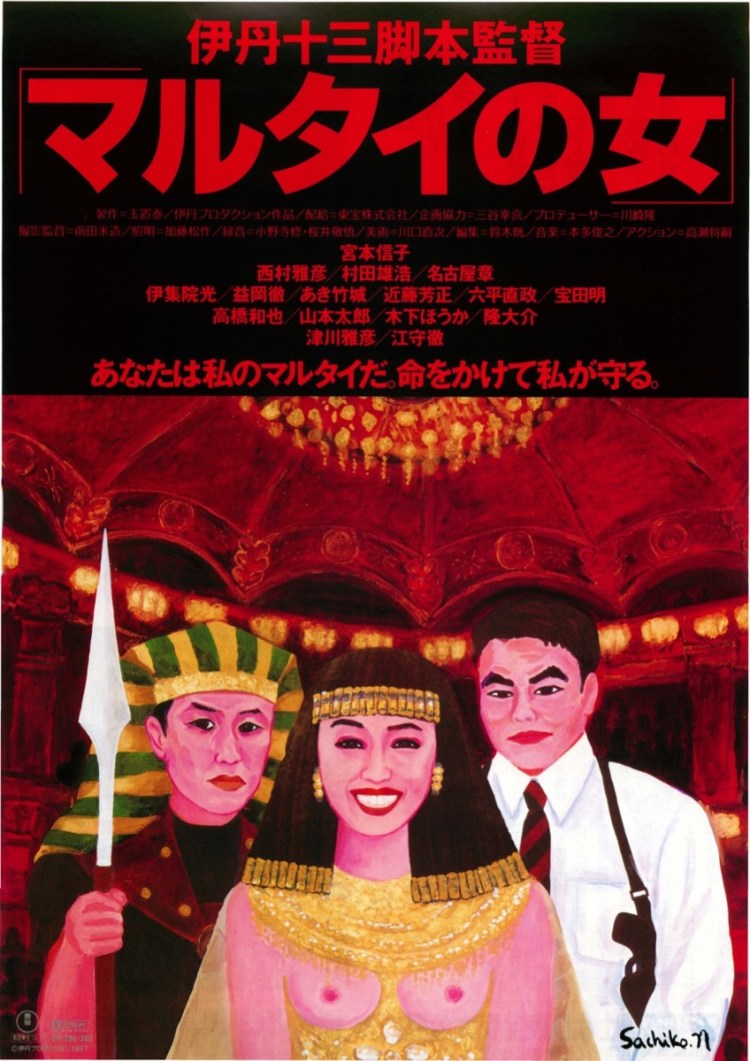
Woman in Witness Protection (マルタイの女, Juzo Itami, 1997)

woman in witness protection posterJuzo Itami’s fearless taste for sending up the contradictions and hypocrisies of his home nation knew no bounds, eventually bringing him into conflict with the very forces he assumed so secure it was safe to mock – his 1992 film Minbo led to brutal attack by a gang of yakuza unhappy with how his film portrayed the world of organised crime. Woman in Witness Protection (マルタイの女, Marutai no Onna), continuing the “Woman” theme from previous hits A Taxing Woman and the more recent Supermarket Woman, would be Itami’s final feature as he died in mysterious circumstances not long after its completion and like Minbo it touched an open nerve. In 1997, crazy cult violence was perhaps no laughing matter nor as ridiculous as it might have seemed a few years earlier, yet Itami makes the actions of brainwashed conspirators the primary motivator of a self-centred actress’ gradual progress towards accepting the very thing his previous films might have satirised – her civic duty as a Japanese woman.

Itami breaks the film into a series of vignettes bookended by title cards beginning with the first which introduces us to our leading lady – Biwako Isono (Nobuko Miyamoto). Biwako is currently in rehearsals for an avant-garde play about giving birth (“a woman’s moment of glory”) during which she reduces her assistant to tears prompting her resignation, decrying Biwako’s self-centred bitchiness as she goes. Chastened, Biwako spends the evening doing vocal exercises outside her apartment which is how she comes to witness the botched murder of a lawyer by a crazed cultist (Kazuya Takahashi) during which she is almost murdered herself and only survives because the killer’s gun jams. As the only witness Biwako suddenly becomes important to the police which works well with her general need for attention but less so with her loathing for hassle. Seeing as Biwako is a famous actress, her involvement also precipitates increased press interest for the murder and accidentally threatens the ongoing police investigation not least because Biwako likes to play up for the camera and isn’t quite sure how best to deal with her divided responsibilities. With the killer still at large, the police decide to give Biwako protection in the form of two detectives – Chikamatsu (Yuji Murata), a cultured man who’s a big fan of Biwako’s stage career, and Tachibana (Masahiko Nishimura), a rather stiff gentleman who never watches films and rarely indulges in entertainment.

Bringing up cult violence in 1997 just two years after Japan’s only real terrorist incident perpetrated by a crazed cult, might be thought taboo but taboo was not something that Itami had ever run away from. Crazed cults had also popped up during A Taxing Woman’s Return though back then they mostly represented the hypocrisy of the new yakuza as a front for organised crime that thought nothing of bleeding vulnerable people dry while feeding them a lot of semi-religious claptrap to make them feel a part of something bigger while the bubble economy continued its puffed up attempts to make them feel inadequate. This time around our cultists are less well drawn but clearly a collection of unlucky people duped into believing the strange philosophies of the “Sheep of Truth” which teach that the world can only be saved by its followers dividing the world into white sheep and black sheep. Like the policeman and later Biwako, the killer believes he is only doing “that which must be done” in the best interests of the world. He is unaware of the cult’s shadiness and shocked when their lawyer threatens his family in an effort to convince him not to talk once the police have managed to break his programming, ironically through exactly the same methods – manipulating his feelings towards his wife and son.

The cult is however merely background to Biwako’s ongoing character drama. Despite experiencing emotional trauma from witnessing a murder and then being threatened herself, Biwako enjoys being the centre of the attention with the police as well as the warm glow she feels in being able to help them with their enquiries, but balks at the additional hassle of having to be involved in the trial (even if she would be given quite a sizeable platform as a witness in a high profile court case). She resents having the two policemen follow her around – especially as she has quite a busy schedule which includes an affair with her married manager. Nevertheless she gradually allows them into her life with Tachibana even making his stage debut as spear carrier in a production of Anthony and Cleopatra. Tachibana’s steadfast defence of her person even at the risk of his own life begins to teach Biwako a few things about civic responsibility and the importance of duty, even if her final moment of realisation is another of her staged set pieces in which she conjures a poignant monologue from the accidentally profound mutterings of Tachibana, a little of Cleopatra, and the earlier line from the maternity play repurposed as she affirms that testifying against the cultists will be her “moment of glory”.

Rather than end on Biwako’s sudden moment of enlightenment, Itami cuts to an ironic epilogue in which a police detective watching the movie we have just seen complains about its authenticity while emphasising that no one in protective custody has ever been attacked. A little tongue in cheek humour from Itami that is followed by the more usual disclaimer before the credits resume, but perhaps anticipating another dose of controversy from both law enforcement and cult devotees. Lighter in tone and noticeably less surreal than some of Itami’s earlier work, Woman in Witness Protection is the story of a vacuous actress learning the purpose of her stage as her particular brand of artifice meets that of the less innocently self-centred cultists head on and eventually becomes the best weapon against it.


Original trailer (no subtitles)

Psychic Kusuo (斉木楠雄のΨ難, Yuichi Fukuda, 2017)

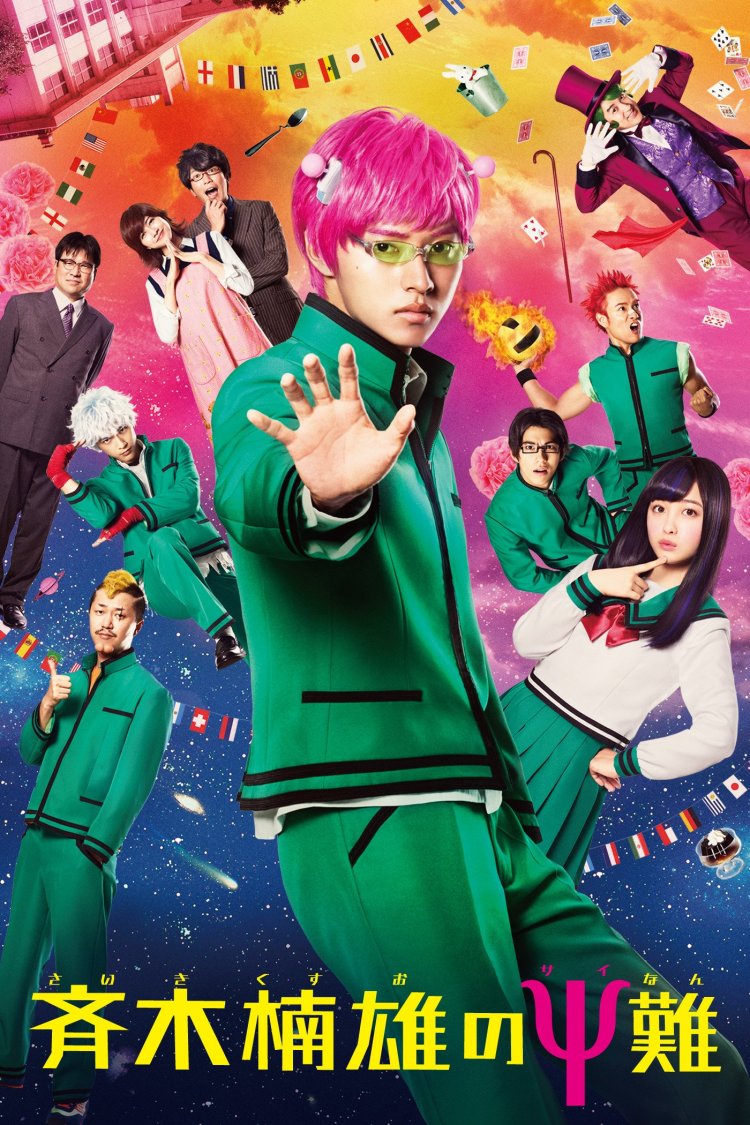
psychic kusuo posterMany may bristle at an attempt to label director Yuichi Fukuda an auteur, but you can’t argue with the fact that he’s developed something of a house style. That house style may have just catapulted him to the top of the box office with two successful movies inspired by the gag filled Gintama, but outside of his big budget studio efforts he’s something of an acquired taste. Take Hentai Kamen, for example. For some a hilariously perverse super hero adventure comedy. For others one childish joke stretched out for 90 minutes. Psychic Kusuo (斉木楠雄のΨ難, Saiki Kusuo no Sainan), coming from the same general area as the phenomenally successful Gintama in adapting an absurdist gag manga only this time one by Shuichi Aso, undoubtedly belongs in the latter category.

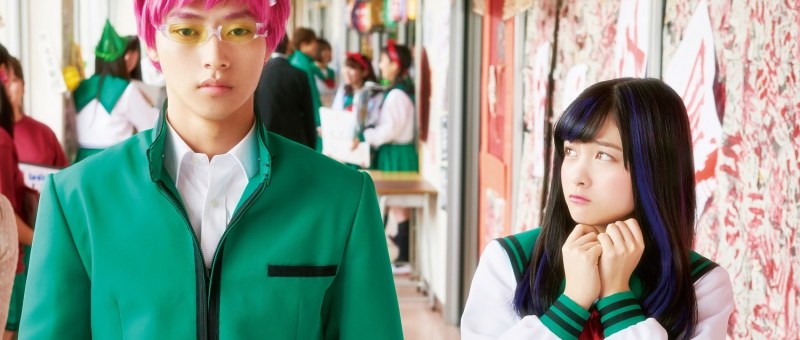
16-year-old Kusuo Saiki (Kento Yamazaki) is the most powerful esper on Earth. Seeing as he was born to a lovely, hippyish couple who didn’t mind that he was a bit strange, Saiki grew up appreciating his superpowers for what they are but also mindful that they could cause him a problem if they got out of hand. He uses his powers to hypnotise those around him so that they don’t notice his neon pink hair or the antennas in his head which keep his emotions in check and prevent him accidentally destroying all of Tokyo. Nevertheless, it is quite a bother to be burdened by unnatural abilities especially in that it makes life extremely dull not to mention a little stressful when you can hear everything everyone is thinking in every tiny detail.

The big problem is that Saiki is coming up on his first high school culture festival. Saiki is not big into celebrations and hanging out with other people so what he likes about festivals is that no one’s going to miss him so he can escape for a little me time. The last few festivals, however, have each descended into chaos and if it happens again this year they’re going to be cancelled for good. In order to save his precious haven of relaxation, Saiki will have to forgo it this time to make sure no one starts any trouble.

Fukuda began his career writing skits for TV variety shows and the humour in his films is indeed very specific and of the kind familiar to fans of Japanese television comedy, which is to say it is extremely broad and somewhat meta with frequent breaking of the fourth wall. The major antagonist of Psychic Kusuo is conceited high school classmate Kokomi (Kanna Hashimoto) who is accounted by all as the school’s number one beauty and knows it. As he’s able to read minds, Saiki knows she’s in no way as pretty on the inside and makes a point of ignoring her. Of course, this only ends up attracting her attention because she’s incapable of accepting that there’s a boy who doesn’t instantly sigh on catching sight of her. In keeping with Fukuda’s over the top approach, Kokomi becomes little more than a collection of preening looks alternating between calculated cuteness and outright bunny boiler villainy.

Meanwhile, Fukuda throws in a series of in jokes and random references to other franchises from Assassination Classroom to Dragon Ball, piling absurdity on top of absurdity through a series of possible crises as yankees from another school threaten to cause a ruckus and the Dark Reunion turn up to prosecute their conspiracy on school grounds. Meanwhile a creepy stage magician and his surprisingly sprightly mother/assistant take credit for all the strange goings on and Saiki accidentally ends up marooned in space.

Yet the problem is that it just isn’t very funny or particularly interesting. It comes to something when the most entertaining part of the movie is Saiki’s extremely nice parents and their unflappable acceptance of the strange goings on which often befall their family. Over reliant on reaction shots and schoolyard humour, Psychic Kusuo may play well to Fukuda’s many fans, those familiar with the anime or manga, and lovers of TV variety skits but anyone else may find themselves scratching their heads at its decidedly lowbrow, scattershot attempt at humour and longing for an end to its considerably dubious charms.


Original trailer (no subtitles)

Missing Johnny (強尼.凱克, Huang Xi, 2017)

missing johnny poster 2“When people are too close they forget how to love each other” – so claims a lonely soul at the centre of Huang Xi’s debut Missing Johnny (強尼.凱克, Qiáng ní. Kǎi kè). A Taipei tale of urban disconnection, Missing Johnny is defined by mysterious absences and dangling connections as its three melancholy protagonists try to break free of their various obstacles to move towards a more fulfilling future. Family becomes both tether and support, a source of friction for all but very much a part of a the vice-like grip the traditional society is wielding over their lives. Yet there is hope for genuine connection and new beginnings even if you have to get out and push.

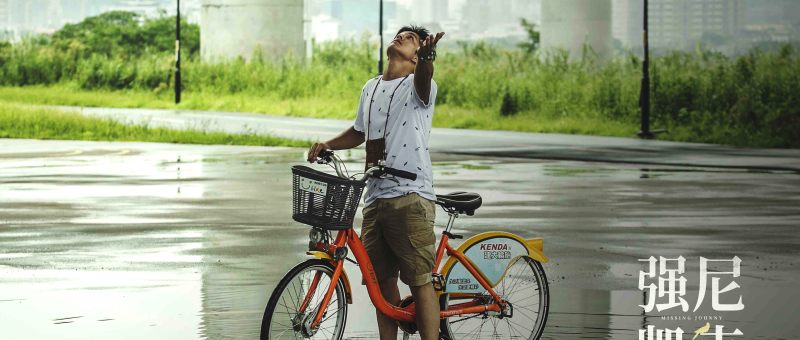
Casual labourer Feng (Lawrence Ko) has returned to Taipei after a failed venture only to see his car repeatedly break down, forcing him to seek help from a childhood friend. Meanwhile, Hsu (Rima Zeidan), a young woman living alone, fills her life with colourful birds which attract the attention of her landlady’s son, Li (Sean Huang) – a mildly autistic young man who finds it difficult to manage his life but resents his mother’s attempts to manage it for him. When Hsu’s newest parrot makes a bid for freedom, she enlists Li and Feng who has taken a job working on a nearby apartment to help her “rescue” it, sparking a series of connected epiphanies among the otherwise disparate group.

Each of them is, in someway, trapped. Feng is trapped by his difficult familial circumstances and resultant lack of social standing. His parents divorced when he was young and he came to the city alone for high school, forming a close bond with his teacher, Chang (Chang Kuo-chu), and his son, Hao (Duan Chun-hao). Feng is now welcomed as a member of their family but the Changs are not a happy bunch. Mr and Mrs Chang argue endlessly, usually ending with one of them asking for a divorce and Mr. Chang certainly seems to be a “difficult” older gentleman who requires all around him to walk on egg shells lest they say the wrong thing and set him off. Most of his scorn is reserved for Hao whom he regards as a disappointment in not having repaid on his investment. Divorced with a son and boomeranged back home, Hao resents his father’s moodiness and longs to move back out again but with things as they are, possibilities seem slim.

Money becomes a bone of contention for all. Hsu is involved in a long distance relationship with a controlling salaryman who tolerates her love of birds but doesn’t really want to be involved with them. It’s obvious the relationship has all but run its course and Hsu probably wants to end things but doesn’t quite have the energy so just doesn’t make as much time for him as perhaps she once did. Eventually we discover the boyfriend is married to someone else – a wealthy woman he married for her money which he now uses to “support” Hsu, her birds, and her business. Hsu’s boyfriend thinks the money he’s “invested” in the relationship means he’s bought something concrete, throwing it back in Hsu’s face just as Mr. Chang did to Hao. All he can offer her is a mistress’ life but he resents her desire to be free and expects her to be available to him whenever he wants as part of a reciprocal relationship. Mistaking the passage of money for genuine connection may be an ancient failing, but it seems one unlikely to go away.

Feng wants to build a family, despite himself, just a happier one than those he’s known while Hsu and Li are trying to assert their independence in a world which doesn’t quite want to give it to them. Li is almost a grown man but he can’t deny his mother’s suggestion that he needs some help here and there just to get by and that his life really does become confusing when he fails to read the notes she leaves for him reminding him what it is he’s supposed to do today. Like any young man, however, he wants to be free of his mother’s control to pursue his own destiny even if it might mean he gets lost along the way. His mother understands this, but she worries. She doesn’t stop him going but is hurt by his selfish refusal to accept that he causes her pain by wandering off for days on end without sign or warning.

And then what of “Johnny”? Hsu keeps getting calls on her mobile from various people looking for “Johnny” – presumably the same Johnny but really there’s no way to tell. Someone is missing him, anyway. Li asks Feng a philosophical question. He wants to know if birds in flight are still or in motion. A bird, flying, seems to be moving but it occupies a fixed point and is therefore “still” from moment to moment. The same could be said of our three protagonists, each living lonely lives of spiritual inertia carried along only by the rhythms of city life. Thanks to a missing parrot, however, they might finally find the courage to take flight even if they seem to stall at the beginning of their journeys.


Missing Johnny was screened as part of the 2018 New York Asian Film Festival.

Promo video (English subtitles)

Colors of Wind (風の色, Kwak Jae-yong, 2017)

colors of windCan there be two people in the world who so exactly resemble each other but have entirely indifferent, interwoven fates? They say that if you meet your doppelgänger one of you will die, that the world cannot permit two such persons to live. Colors of Wind (風の色, Kaze no Iro), the second Japanese language film directed by The Classic’s Kwak Jae-yong is not sure about doppelgänger theory but is certifiably obsessed with dualities and most particularly in the way that they relate to romantic fulfilment and the necessary shifts in identity that it often entails.

In the present, the melancholy Ryo (Yuki Furukawa) has locked himself away for the past 100 days in mourning for his girlfriend who ghosted him and then apparently took her own life in snowy Hokkaido. Yuri (Takemi Fujii) had always had a kind of fragility about her, insisting that she’d soon “disappear” but that there was another girl who looked like her living in Hokkaido who was far happier and far cleverer than she would ever be. After she died and Ryo “cocooned” himself away, he wakes up and walks into his favourite restaurant only to find the old couple that ran it have retired and the place is reopening as a magic club. Not only that, the previous owners were keeping a suitcase for him which they instructed the new barman to pass on with the caveat that Ryo would probably not even remember that he left it there. The case turns out to be full of clues to a life a he never knew – pictures of a girl of who looks like Yuri, a diary, and a handful of other trinkets. Newly taken with the world of magic, Ryo trains himself to become a top magician before setting off for Hokkaido and encountering another Yuri, only calling herself Aya, who thinks that he is returned spirit of her former boyfriend Ryu – a magician who went missing during a complicated magic trick three years previously.

Colors of Wind hinges on the notion of love as the greatest act of magic, by which it presumably means something inexplicable and wondrous rather than an insincere act of ostentation. Love, it seems to say, fundamentally rewrites the identity of the lover but then again, if one is really “in love” perhaps “identity” in any real sense ceases to matter aside from a need for integration that allows the formation of a new self which can accommodate the extreme selflessness which true love requires.

Love as an act of transformation is a motif which recurs throughout. Grief-stricken, Ryo “cocoons” himself away for 100 days as if waiting to emerge as something else, a new man with a clean slate waiting for a new identity. Meanwhile, Aya continues to pine for her missing magician, half convincing herself that Ryo is Ryu while her mind fractures itself in wondering if her new love is a betrayal of her old. Unable to accommodate the romantic impurity of falling in love with two different men, albeit ones who look identical and have much more than that in common, Aya’s loves create two mutually exclusive souls doing battle for headspace while all Ryo can do is watch as he too battles ghosts on all sides, pining for Yuri while falling for Aya as she yearns only for Ryu.

As the magician behind the bar affirms, meeting one’s doppelgänger does not necessarily spell death – there are many ways for two of the same to survive if only you want to find them, but then love often requires a sacrifice and one thing must fall if another is to rise. These “dopplegängers” are of a more spiritual kind, souls which wander and must be brought home, but in order to love the self must be whole. To escape their cycles of melancholy rumination, the pair decide on new identities for their new love, pinching the roles of Leon and Mathilda from the classic hitman movie in an attempt to bid Aya/Yuri and Ryo/Ryu goodbye but a deeper integration of a more authentic self will be necessary for a concrete resolution, requiring a series of choices and selfless, altruistic love.

Shot entirely in Japan and with an entirely Japanese cast, Colors of Wind nevertheless has a recognisably Korean sensibility in its melancholy, philosophy-tinged melodrama which hinges on the ineffabilities of love and identity. Trapped and drowning, Ryo has to literally unchain his heart and open the door to his soul to let the love flood in but does so perhaps at a price, permitting another identity to merge with his own as he prepares to integrate past loves and new into one romantic whole. Beautiful, if occasionally obscure, Colors of Wind fully succeeds in Kwak’s goal of paying tribute to classic melodrama in its tale of love and sacrifice, self and selflessness, and the transformative qualities of romance, but does so with a playful heart as it takes in the picturesque snows of Hokkaido and the contrived charms of man made magic.


Original trailer (no subtitles)