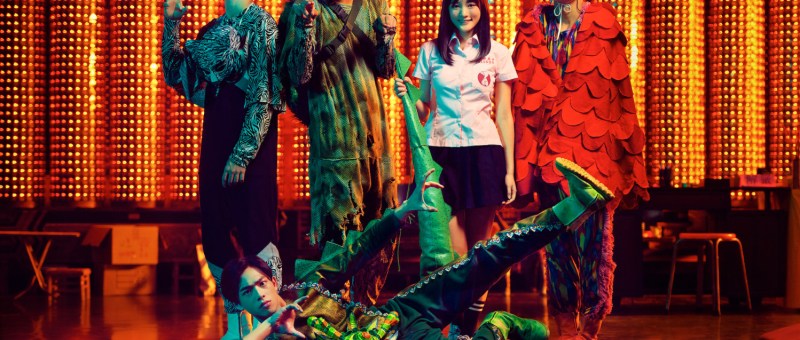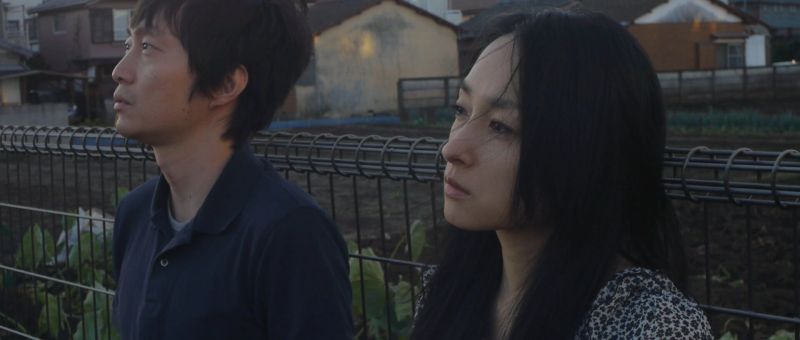
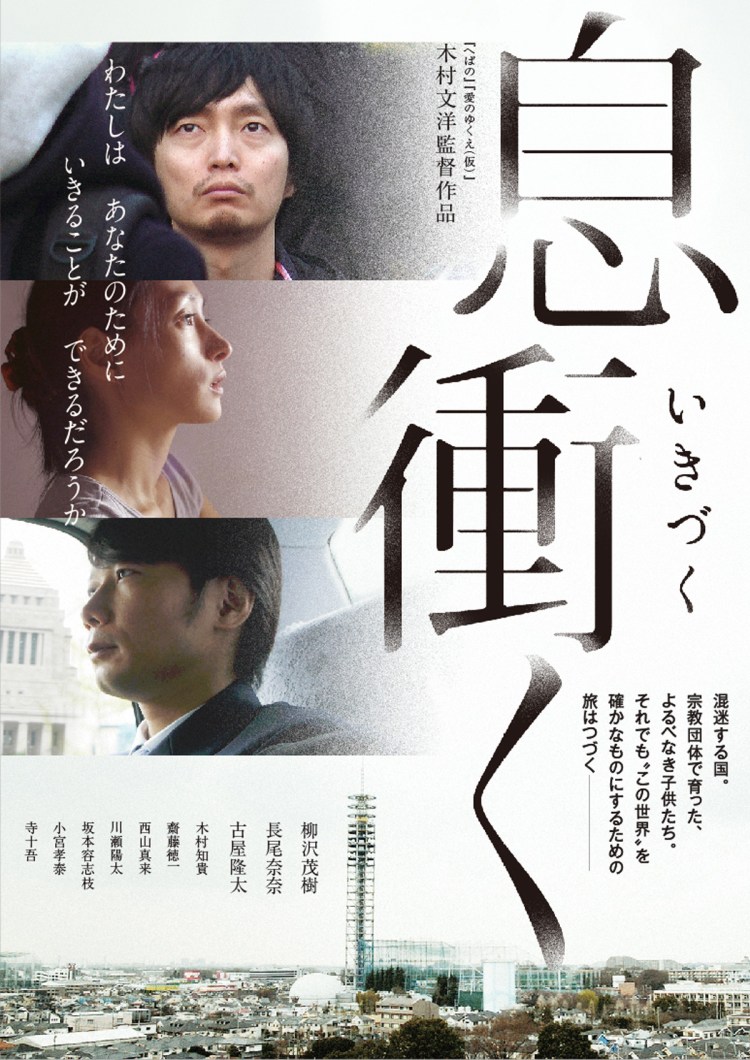
Breath of Rokkasho (息衝く, Bunyo Kimura, 2017)

Breath of Rokkasho posterIndividual desire versus responsibility to the collective is something of a major theme in Japanese cinema. The fallible ideologue at the centre of Breath of Rokkasho (息衝く, Ikizuku) believes individualism is the key to world happiness, implying that a collection of fulfilled individuals would amount to a fulfilled society, but then again his logic is perhaps hard to follow when he cares so little for other people’s freedom. Taking place in the post-Fukushima world, Rokkasho wants to extend this idea through examining the complexity of the anti-nuclear movement and the political forces which advocate for it while ordinary people largely sit back in silent disapproval. The ideal society, if there even is such a thing, will probably not be built by those in power but by those who manage shake off the problematic legacy of the past in order to embrace their “individual” wills but with the collective good in mind.

Norio (Shigeki Yanagisawa), Yasuyuki (Ryuta Furuya), and Yoshi (Nana Nagao) were raised in a politicised Buddhist cult, The Seed Association, which has a strong interest in ecological affairs and therefore the anti-nuclear movement. Each lacking fatherly input, the three youngsters fell under the spell of the cult’s most prominent member, Mr. M (Satoru Jitsunashi). Mr. M however abruptly upped and left them, abandoned without hope or answers. 20 years later, Norio is a civil servant also working for the Seed Association on political campaigns while Yasuyuki has become the new golden boy whom many tout as the natural successor to Mr. M. Yoshi left the sect at a much younger age and is now a single mother in the middle of what seems to be a fairly messy divorce.

Looking up at the Tanashi Tower (also known as Sky Tower West Tokyo) – a “state of the art” radio tower completed in 1989 midway through a period of unprecedented economic prosperity and named after the town which used to stand here the name of which literally means “no rice”, the three kids ask Mr. M if it’s possible to see the Nighthawk Star from down below. He tells them he doesn’t know, but they can look for it together. Mr. M did not help them, he disappeared and left them with only more questions and an even shakier relationship with their familial pasts. Each badly let down by parental figures who either abandoned their families to join the cult out of nuclear fear, committed suicide, or were simply distant and neglectful, neither Norio, Yasuyuki, or Yoshi has been able to step into the adult world with any degree of confidence or faith in its teachings.

Only by confronting their difficult pasts can the trio begin to unblock their individual paths. A visit to the long absent Mr. M who has apparently embraced full individualism as a hermit farmer who dresses in a comical baby chick’s costume complete with squeaky claw-shaped slippers, begins to show them that their faith in his teachings may have been misplaced. Mr. M claims that the human race is not yet strong enough to live only by thinking of its own happiness, something that he feels would bring the greatest happiness to all mankind. Refusing to recognise the “selfishness” of his philosophy, Mr. M has withdrawn from society and made himself the centre of a happy nation of one.

Parental betrayal becomes a major theme, eventually extending to the paternity of the state in its repeated failures to protect and care for its children. The English title of the film references the Rokkasho nuclear reprocessing facility which has become an ongoing scandal in its 20-year series of construction delays with 23 postponements issued since its original 1997 projected date for completion. Norio, the melancholy civil servant, hails from the town himself – in fact his mother took him away from it precisely because she feared a nuclear disaster. Yet The Seed Association, or anyone else for that matter, has not been able to solve the nuclear issue even in the post-Fukushima era. Engaged in the business of “politics” the sect’s intentions have become blurred as they contemplate their survival in an ever shrinking society, subject to the same political games of manipulation and backbiting as any other party. Gradually disillusioned with the cult’s hypocrisy and didacticism, Norio considers forging his own path – something which sets him at odds with Yasuyuki whose faith is also shaken only he’s invested far too much to allow himself to acknowledge it.

The Japanese title, by contrast, simply means to gasp for air. Trapped fast in society filled with corrupt, conflicting values each of the three struggles to find a foothold for themselves as they flounder wildly without guidance or aim. Yet in being forced to confront themselves and their pasts there is a movement towards progress, or at least a strong desire to find it. They, like their nation, have been betrayed and struggled to deal with their betrayal, but have managed to find their own essential truth even so and along with it the ability breathe deeply even when the air is thickening.


Screened at Nippon Connection 2018.

Original trailer (no subtitles)
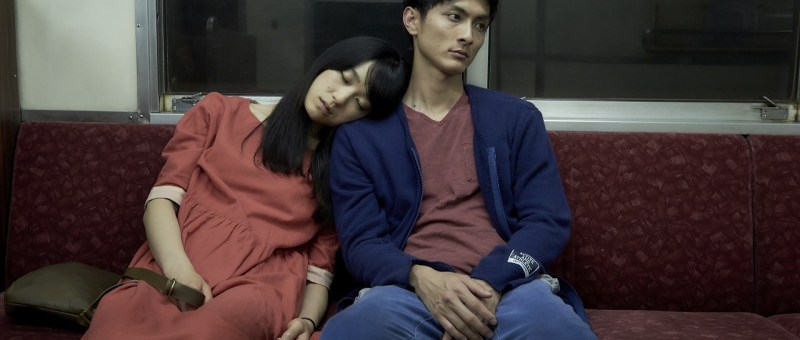
Moon and Thunder (月と雷, Hiroshi Ando, 2017)

Moon and Thunder posterThe family is coming in for another round of fierce criticism in Japanese cinema where the “family drama” has long been revered as a representative genre. Hiroshi Ando who has hitherto been more interested in atypical romantic relationships is the latest to reconsider whether family is really all it’s cracked up to be in adapting Mitsuyo Kakuta’s novel, Moon and Thunder (月と雷, Tsuki to Kaminari). Two children from dysfunctional homes now fully grown struggle to adapt themselves to the nature of adult society, unsure if they should remove themselves from it entirely or force themselves into the socially expected roles they fear they don’t know how to play. Yet perhaps what they find in the end is not so much a talent for conventionality as an acceptance of life’s many imperfections.

20-something Yasuko (Eriko Hatsune) lives alone in her family home following the death of her father (Jun Murakami). She has an unsatisfying job in the local supermarket and is in an unsatisfying relationship with a co-worker who wants to get married but she isn’t convinced. Yasuko’s striving for an “ordinary” life is disrupted when Satoru (Kengo Kora), the son of one her father’s former girlfriends who lived with them for a few months 20 years ago, suddenly tracks her down. The reconnection between them is instant and easy but also confused, somewhere between siblings and lovers as they resume the physical intimacy they shared as children but on an adult level.

Satoru, a drifter like his flighty mother (Tamiyo Kusakari), pushes Yasuko towards a consideration of the idea of family which she’d long been resisting. She becomes determined to track down the biological mother who abandoned her when she was just a toddler, hoping to find some kind of answer to the great riddle of her life. Her birth mother, however, fails her once again. Kazuyo, faking tears for the reality show cameras reuniting her with her daughter, is a selfish woman who claims she left her country home because it was boring and that she left her daughter behind because she said she didn’t want to go. Feeling as if she’s being blamed for her own abandonment Yasuko is left with only more confusion and resentment but does at least discover something by accidentally encountering her younger half-sister, Arisa (Takemi Fujii), who shows her that life with her mother might not have been very much different than without.

Yasuko and Satoru revert to their childhood selves because that brief period 20 years ago is the only time either of them ever experienced what they felt to be a “normal” family life as they played together happily and were well fed and cared for by adults acting responsibly. It was however all over too soon – Naoko, Satoru’s drifting mother, upped and left just as she always does. Someone probably left her years ago, and now she makes sure to leave them first before she can be can rejected. Naoko is the only “mother” Yasuko can remember, and her abandonment the most painful in her long memory of abandonments. First came Satoru, and then Arisa her sister, and finally Naoko too returning, filling Yasuko’s home with an instant family that at times seems too perverse and difficult to bear.

Yet she struggles with the idea of “family” itself as something she’s supposed to want but perhaps doesn’t out of fear it will fail her. She considers marrying her workplace boyfriend even though it appears she doesn’t particularly like him and they aren’t suited, solely because his proposal offers her the “normal”, “conventional” kind of life she both fears and longs for. With Satoru she has found a kind of love that is more complicated than most, two lonely children looking for a home and finding it in each other but each fearing that they will not be able to bear the anxiety of its potential end. Yet rather than continue onward along the same dull path she’d walked before, longing for soulless normality, what Yasuko discovers is that she’ll be OK on her own even if things don’t work out in the way that most would consider “normal”. Abandoning past and future, Yasuko begins to accept her presence in the present as a woman with possibilities rather than a passive object clinging onto the life raft of “normality”, accepting that nothing is forever but that once something starts it never really ends.


Screened at Nippon Connection 2018.

Original trailer (no subtitles)

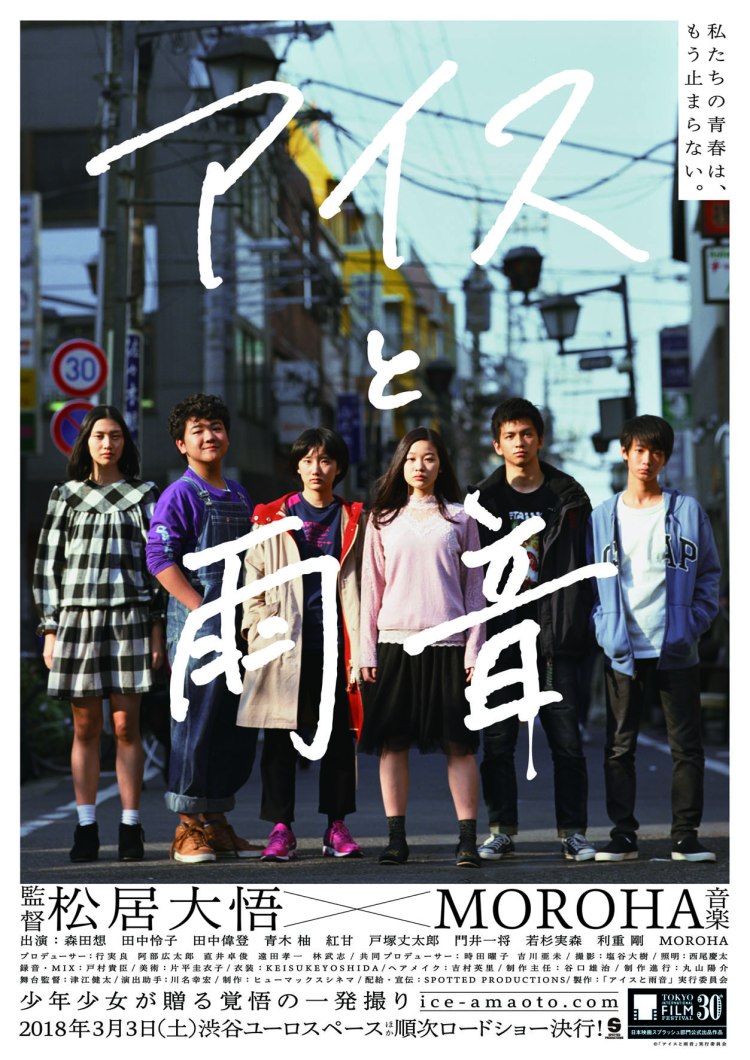
Ice Cream and the Sound of Raindrops (アイスと雨音, Daigo Matsui, 2017)

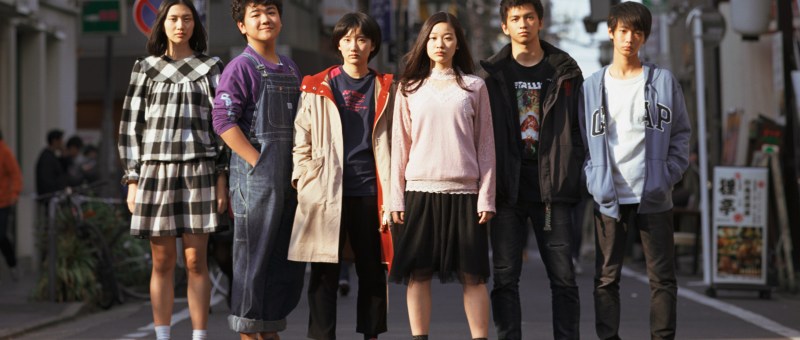
プリントThe youth movie has long held a special place in Japanese cinema but it would be fair to say that the fire has gone out of late, modern youth dramas are generally sad rather than angry. Daigo Matsui was in an enraged mood when he brought us Japanese Girls Never Die – a chronicle of female elision in an intensely misogynistic society. Now he brings his camera down a little to take a look at the incendiary play by boundary pushing British playwright Simon Stephens, Morning, through the eyes of real teenagers as their own hopes and dreams are suddenly pulled away from them by an act of “unfairness” which is perfectly typical of the treacherous adult world obsessed with rationality and not at all interested in their feelings.

Shot entirely in one take, Ice Cream and the Sound of Raindrops (アイスと雨音, Ice to Amaoto) masterfully condenses the one month rehearsal period of the play into a mere 70 minutes through dreamlike time segues, neatly swapping aspect ratios as the “play” takes over from “real life”. Stephens’ play, set at the end of summer – the same time as the play is being rehearsed and was scheduled to be performed, is a coming of age tale in which its small town heroine attempts to deal with the impending departure of her best friend for university by embracing the “freedoms” of youth only to discover that not all transgressions are cost free.

In a bid for “realism” the play’s director, played by Matsui himself, has cast real local teens by means of an open audition, but times are tough for the arts. With no “names” in the cast, ticket sales are slow. The producers have decided to pull the production and cut their losses ahead of time. The youngsters are obviously upset. This was, after all, their big chance and they’ve worked hard only to be told that all their efforts are worthless because they just don’t have “it”. No one cares about their feelings, no one cares about their wasted time, no one cares about them.

The actors and actresses play characters with their real names, slipping into and out of the theatrical world with little warning until the two begin to blend almost seamlessly and it becomes impossible to tell which level of theatricality best represents the teens’ inner lives. The “play” is also scored by a kind of Greek chorus in the form of a slightly older rapper/performance poet who offers a more direct commentary on the general feelings of hopelessness which have begun to plague the young cast who know they will be emerging into a world with few possibilities in which they will be expected to abandon their youthful dreams for an idea of conventional success which is destined to remain far out of their reach.

The cutesy title, Ice Cream and the Sound of Raindrops, hints at another kind of youth story – the melancholy journey into nostalgia as an older protagonist looks back on a beautiful summer many years ago spent with friends who perhaps are no longer around. Matsui’s film has some of that too, though his protagonists are younger. The teens almost eulogise themselves, telling their story as if it’s already over, walking like ghosts through halls of memory. They’re sad, but they’re angry too and they don’t understand why their platform has been so arbitrarily removed just as they were preparing their voices to be heard.

If youth wants the stage it will have to take it by force. Sick of being blamed, of being told that their failures are all lack of talent rather than luck, the kids make themselves heard even if they do so through a veil. Daigo Matsui gives them back their stage, enriching it with his own artifice in the thrillingly complex choreography of his oscillating one take conceit. Anchored by a standout performance from leading lady Kokoro Morita on whom many of the transitions depend, Ice Cream and the Sound of Raindrops returns the youth film to its previous intensity with a rebel yell from the disenfranchised next generation who once again find themselves at odds with the society their parents’ have created and see no place for themselves within it which accords with their own sense of personal integrity. 


Screened at Nippon Connection 2018.

Original trailer (no subtitles)
Destiny: The Tale of Kamakura (DESTINY 鎌倉ものがたり, Takashi Yamazaki, 2017)

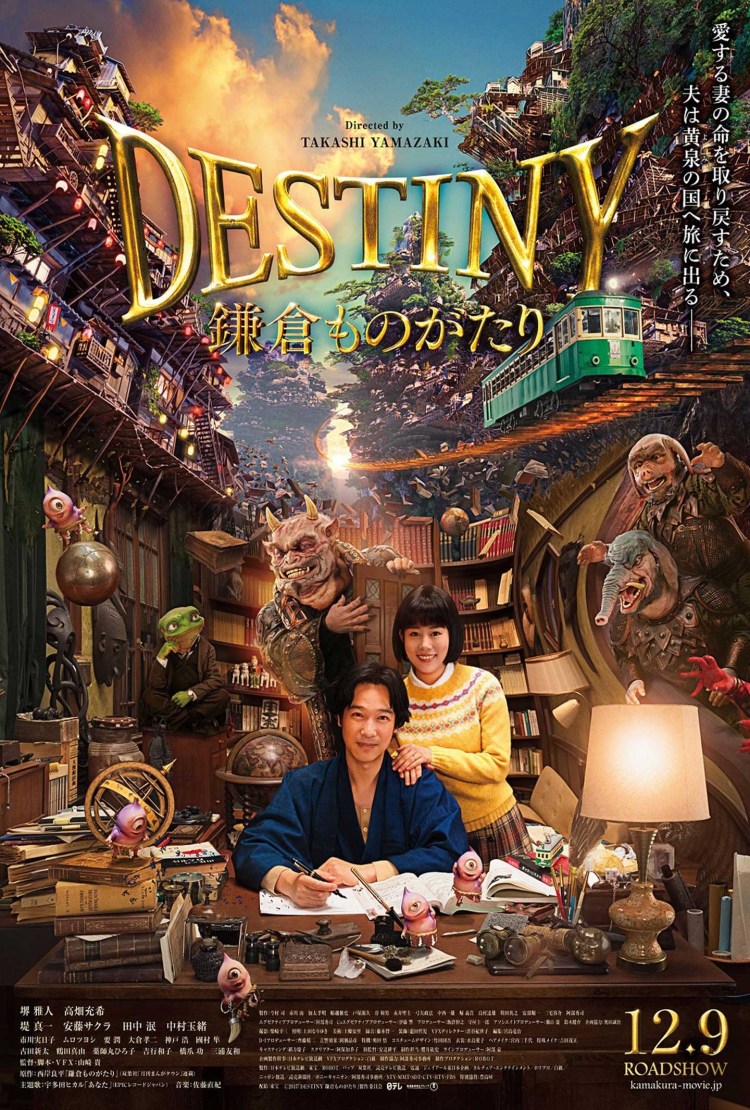
Destiny tale of kamakura posterJapanese literature has its fair share of eccentric detectives and sometimes they even end up as romantic heroes, only to have seemingly forgotten the current love interest by the time the next case rolls around. This is very much not true of Destiny: The Tale of Kamakura (DESTINY 鎌倉ものがたり, Destiny: Kamakura Monogatari) which is an exciting adventure featuring true love, supernatural creatures, and a visit to the afterlife all spinning around a central crime mystery. Blockbuster master Takashi Yamazaki brings his visual expertise to the fore in adapting the popular ‘80s manga by Ryohei Saigan in which the human and supernatural worlds overlap in the quaint little town of Kamakura which itself seems to exist somewhere out of time.

Our hero, Masakazu Isshiki (Masato Sakai), is a best selling author, occasional consulting detective, and befuddled newlywed. He’s just returned from honeymoon with his lovely new wife and former editorial assistant, Akiko (Mitsuki Takahata), but there are a few things he’s neglected to explain to her about her new home. To wit, Kamakura is a place where humans, supernatural creatures, and wandering spirits all mingle freely though those not familiar with the place may assume the tales to be mere legends. To her credit, Akiko is a warm and welcoming person who can’t help being “surprised” by the strange creatures she begins to encounter but does her best to get used to their presence and learn about the ancient culture of the town in which she intends to spend her life. Unfortunately, she still has a lot to learn and an “incident” with a strange mushroom and a naughty monster eventually leads to her soul being accidentally sent off to the afterworld by a very sympathetic death god (Sakura Ando) who is equal parts apologetic about and confused by what seems to be a bizarre clerical error.

Destiny’s Kamakura is a strange place which seems to exist partly in the past. At least, though you can catch a glimpse of people in more modern clothing in the opening credits, the town itself has a distinctly retro feel with ‘60s decor, old fashioned cars, and rotary phones while Masakazu plays with vintage train sets, pens his manuscripts by hand, and delivers them in an envelope to his editor who knows him well enough to understand that deadlines are both Masakazu’s best friend and worst enemy.

The creatures themselves range from the familiar kappa to more outlandish human-sized creatures conjured with a mix of physical and digital effects and lean towards the intersection of cute and creepy. The usual fairytale rules apply – you must be careful of making “deals” with supernatural creatures and be sure to abide by their rules, only Akiko doesn’t know about their rules and Masakazu hasn’t got round to explaining them which leaves her open to various kinds of supernatural manipulation which he is too absent minded to pick up on.

Yet Masakazu will have to wake himself up a bit if he wants to save his wife from an eternity spent as the otherworld wife of a horrible goblin who, as it turns out, has been trying to split the couple up since the Heian era only they always manage to find each other in every single re-incarnation. True love is a universal law, but it might not be strong enough to fend off mishandled bureaucracy all on its own, which is where Akiko’s naivety and essential goodness re-enter the scene when her unexpected kindness to a bad luck god (Min Tanaka), and an officious death god who knew something was fishy with all these irreconcilable numbers, enable the couple to make a speedy escape and pursue their romantic destiny together.

Aimed squarely at family audiences, the film also delves a little into the awkward start of married life as Akiko tries to get used to her eccentric husband’s irregular lifestyle as well as his childlike propensity to try and avoid uncomfortable topics by running off to play trains. Masakazu, orphaned at a young age, is slightly arrested in post-adolescent emotional immaturity and never expected to get married after discovering something that made him question his parents’ relationship. Nevertheless, a visit to the afterlife will do wonders for making you reconsider your earthly goals and Masakazu is finally able to repair both his old family and his new through a bit of communing with the dead. Charming, heartfelt, and boasting some beautifully designed world building, Destiny: The Tale of Kamakura is the kind of family film you didn’t think they made anymore – genuinely romantic and filled with pure-hearted cheer.


Screened at Nippon Connection 2018.

Original trailer (English subtitles)

Party ‘Round the Globe (地球はお祭り騒ぎ, Hirobumi Watanabe, 2017)

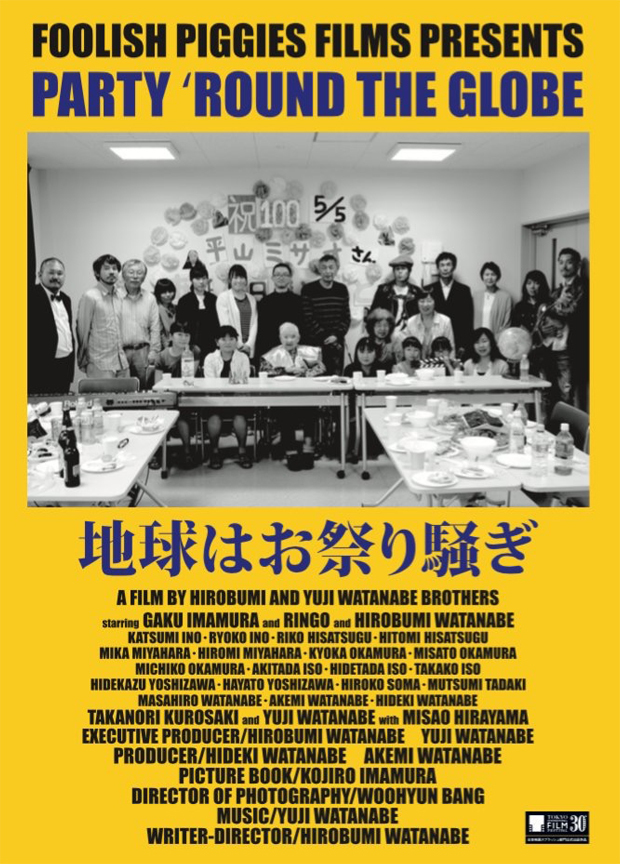
Party 'Round the Globe

Ever since their startlingly surreal debut And the Mud Ship Sails Away, the Watanabe brothers have been quietly making waves, determined to put their native Tochigi on the big screen. Last year’s award winning Poolsideman took them to a darker place than they’d hitherto ventured as its silent protagonist lived out his days with rage fuelled anxiety, ready to explode at any given second. Party ‘Round the Globe (地球はお祭り騒ぎ, Chikyu wa Omatsurisawagi) neatly mirrors Poolsideman’s despair and counters it with everyday joys. Once again starring Gaku Imamura as a silent loner, and the director himself, Hirobumi Watanabe, as the non-stop chatterbox intent on making friends with him, the latest effort from the Watanabe brothers finds that despite the myriad awful things reported in the news, life is still basically good, at least in Tochigi when the sun is shining.

In a mild departure from the now familiar pattern, Watanabe opens with a beautifully animated picture book sequence in which a little robot child dreams of travelling to the moon but is unable to catch it even when speeding full steam ahead with his friend, Mr. Car. The robot children love the moon so much that they build a factory to produce fake moons which soon fill the sky, leaving the adults confused and worried, unable to tell the real moon from the fake. All too soon the boy is alone again as his friends float away looking for the “real” moon.

Seemingly divorced from the main narrative, the images from the picture book recur throughout as part of the decor in the strangely warm family home inhabited by the silent and melancholy Mr. Honda (Gaku Imamura) and his lovely little dog, Ringo. Mr. Honda’s routine is set – he listens to the radio as he prepares breakfast, takes Ringo for a walk, and works at a small family run electronics factory where he keeps his head down and concentrates on the repetitive exactitude of soldering circuitboards all day long. The day is interrupted by the cheerful sound of the musical bells which signal a pause in his work, but unlike his colleagues who cluster around the table in the staff room, Mr. Honda stands alone outside, smoking sadly in silence.

Mr. Honda’s life changes when the radio announces some good news for a change – Paul McCartney is coming back to Japan. Unexpectedly invited to accompany a colleague, Hirayama (Hirobumi Watanabe), Mr. Honda finds himself driving all the way to Tokyo with a man who won’t stop talking. Hirayama monologues on and on, never waiting for the answer to his questions and often filling them in himself so he can carry on ranting about standing room only concert venues, entitled Bob Dylan fans, and once again the mystifying fascination young people seem to hold for One Piece. Yet where Poolsideman’s anti-social loner merely tolerated his colleague’s loquacity, Mr. Honda seems almost relieved his new friend is doing most of the talking and is grateful to have been included on this trip, not least because he is also a big McCartney fan who failed to get tickets for his landmark concert.

Mr. Honda’s radio announces terrible things happening everywhere – mistrust in government as the scandal surrounding polluted land at the site of the controversial relocation of the Tsukiji fish market intensifies while the rightwing ruling party is intent on passing an equally controversial anti-conspiracy law which many fear will infringe on civil liberties. Abroad there are religious hate crimes, buildings burning down with people trapped inside, and North Korea sabre rattling in the background. Mr. Honda reacts to them all with stoical indifference, watering his plants, watching baseball games and enjoying the peace and quiet of a pleasant spring day. Yet there’s a sadness in his serenity, as if he’s trying to block out a personal tragedy through silence and repetition as he takes care of his dog alone in a house filled with picture books and children’s drawings but seemingly no children.

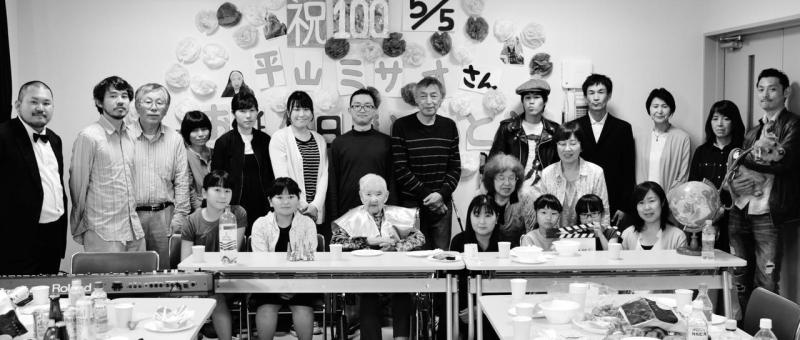
Nevertheless, life goes on and the globe keeps turning. Mr. Hirayama’s grandmother celebrates her 100th birthday surrounded by her large extended family who gladly make room for friends old and new. Mr. Honda and Ringo are no longer quite so silent and alone, coaxed out of their self-imposed isolation by the extroverted Hirayama who is also glad to have unexpectedly made a new friend in bonding over a shared love of retro pop. No matter how bad things seem to be, there is still warmth and friendship to be found everywhere but most especially in Tochigi.


Screened at Nippon Connection 2018.

Original trailer (English subtitles)

Wilderness (あゝ、荒野, Yoshiyuki Kishi, 2017)

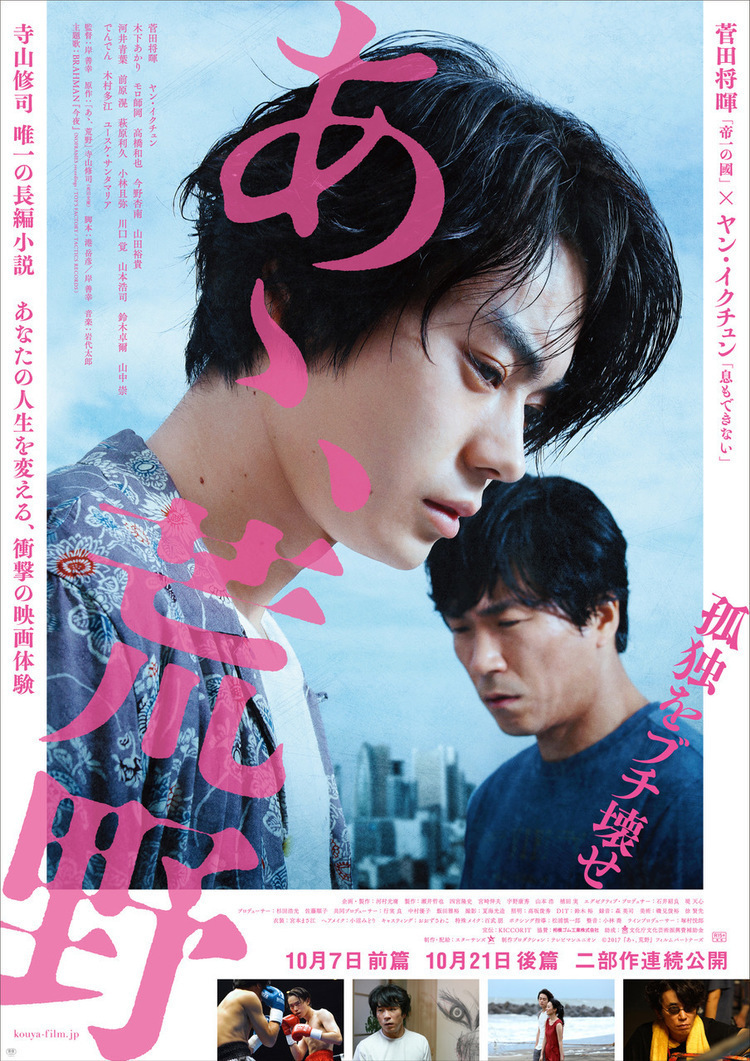
wilderness posterWhen Shuji Terayama published his only novel in 1966, Japan was riding high – the 1964 Olympics had put the nation back on the global map and post-war desperation was beginning shift towards economic prosperity. In adapting Terayama’s jazz-inspired avant-garde prose experiment for the screen, Yoshiyuki Kishi updates the action to 2021 and a slightly futuristic Tokyo once again feeling a mild sense of post-Olympic malaise. Terayama, like the twin heroes of Wilderness (あゝ、荒野, Ah, Koya), got his “education” on the streets of Shinjuku, claiming that more could be learned from boxing and horse races than any course of study. Both damaged young men, these lonely souls begin to find a place for themselves within the ring but discover only emptiness in place of the freedom they so desperately long for.

Shinji (Masaki Suda), abandoned to an orphanage by his mother after his father committed suicide, has just been released from juvie after being involved in a street fight which left one of his best friends paralysed. Discovering that his old gang won’t take him back he’s at a loss for what to do. Meanwhile, shy barber Kenji (Yang Ik-june) who stammers so badly that he barely speaks at all, is battling the possessive stranglehold his drunken, violent ex-military father weilds over him. Raised in Korea until his mother died and his father brought him back to Japan, Kenji has always struggled to feel a part of the world he inhabits. The two meet by chance when Shinji decides to confront the man who attacked his gang, Yuji (Yuki Yamada) – now an up and coming prize fighter. Shinji is badly injured by the professional boxer while Kenji comes to his rescue, bringing them to the attention of rival boxing manager Horiguchi (Yusuke Santamaria) who manages to recruit them both for his fledgling studio.

The Tokyo of 2021 is, perhaps like its 1966 counterpart, one of intense confusion and anxiety. Plagued by mysterious terrorist attacks, the nation is also facing an extension of very real social problems exacerbated by a tail off from the temporary Olympic economic bump. As the economy continues to decline with unemployment on the rise, crime and suicides increase while social attitudes harden. In an ageing society, love hotels are being turned into care homes and wedding halls into funeral parlours. The elder care industry is in crisis, necessitating a controversial law which promises certain benefits to those who commit to dedicating themselves either to the caring professions or to the self defence forces.

Yet nothing much of this matters to a man like Shinji who ignores the crowds fleeing in terror from the latest attack in favour of “free” ramen left behind by the man who recently vacated the seat next to him out of a prudent desire to make a speedy escape. Shinji takes up boxing as way of getting public revenge on Yuji but also finds that suits him, not just as an outlet for his youthful frustrations but in the discipline and rigour of the training hall as well as the camaraderie among the small team at the gym. Kenji, by contrast, is kind hearted and so shy he can barely look his opponent in the eye. He comes to boxing as a way of finally learning to stand up for himself against his bullying father, but eventually discovers that it might be a way for him achieve what he has always dreamed of – connection.

Asked why he thinks it is we’re born at all if all we do if suffer and long for death, Kenji replies that must be “to connect” though he has no answer when asked if he ever has. For Kenji boxing is a spiritual as well as physical “contact sport” through which he hopes to finally build the kind of bridges to others that Shinji perhaps builds in a more usual way. Shinji tells himself that the only way to win is to hate, that in boxing the man who hates the hardest becomes the champion but all Kenji wants from the violence of the ring is love and acceptance. Shinji’s friend, Ryuki (Katsuya Kobayashi), has forgiven the man who crippled him and moved on with his life while Shinji is consumed by rage, warped beyond recognition in his need to prove himself superior to the forces which have already defeated him – his father’s suicide, his mother’s abandonment, and his friend’s betrayal.

While Shinji blusters, shows off, and throws it all away, Kenji patiently hones his craft hoping to meet him again in the boxing ring and “connect” in the way they never could before. There’s something essentially sad in Kenji’s deep sense of loneliness, the sketches in his notebook and strange relationship with an equally sad-eyed gangster/promoter (Satoru Kawaguchi) suggesting a hankering for something more than brotherhood. Nevertheless what each of the men responds to is the positive familial environment they have never previously known, anchored by the paternalism of coach Horiguchi and cemented by unconditional brotherly love.

Caught at cross purposes, the two young men battle each other looking for the same thing – a sense of freedom and of being connected to the world, but emerge with little more than scars and broken hearts, finding release only in a final transcendent moment of poetic tragedy. Kishi’s vision of the immediate future is bleak in the extreme, a nihilistic society in which hope has become a poison and death its only antidote. A tragedy of those who want to live but don’t know how, Wilderness is a minor miracle which proves infinitely affecting even in the depths of its despair.


Screened at Nippon Connection 2018.

Original trailer (no subtitles)
Interview with director Yoshiyuki Kishi conducted at the Busan International Film Festival (Japanese with English subtitles)

Hanagatami (花筐/HANAGATAMI, Nobuhiko Obayashi, 2017)

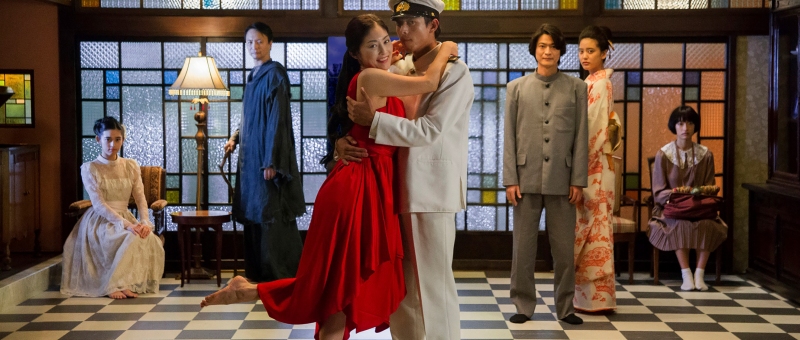
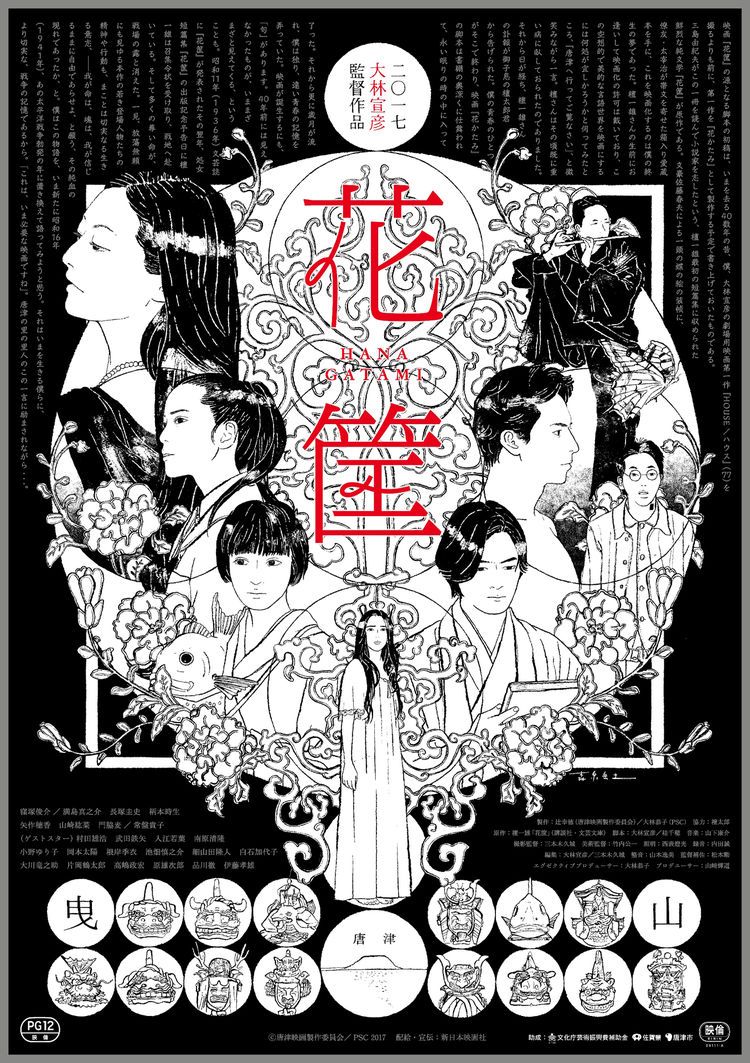
Hanagatami posterIn time the past becomes a dream. A world in and of itself, conjured from feeling and memory and painted in the imprecise strokes of one attempting to recreate a long forgotten scene. The melancholy heroes of Nobuhiko Obayashi’s long career were each trapped in a sense by nostalgia, a yearning for another time and place, or more precisely another, more innocent, version of themselves only with the benefit of hindsight and the confidence of age. Finally realising a long dreamt of project in dramatising Kazuo Dan’s classic wartime youth novel Hanagatami (花筐/HANAGATAMI), Obayashi reunites with another melancholy young man who as he puts it in the opening text wants to tell his story not out of a sense of nostalgia but out of longing for the things which were lost. Those like him who had the misfortune to be young before the war saw their whole world swept away by a kind of madness far beyond their control, losing not only a past but a future too.

When Toshihiko Sakakiyama (Shunsuke Kubozuka) returns home from Amsterdam where he had been living with his parents, Japan is already at war in China. Though the times are changing, Toshihiko’s life remains relatively untouched by conflict, insulated from the concerns of the day by the pleasant natural surroundings of his old-fashioned country town. Returning to the family estate presided over by his war-widow aunt, Keiko (Takako Tokiwa), Toshihiko strikes up a friendship with her sickly sister-in-law, Mina (Honoka Yahagi), whose proximity to death only seems to enhance her beauty. At school he finds himself caught between two polar opposites – the strong and silent Ukai (Shinnosuke Mitsushima) and the cynical nihilist Kira (Keishi Nagatsuka), while his two sets of social circles finally combine with the addition of Mina’s friends Akine (Hirona Yamazaki) and Chitose (Mugi Kadowaki) who also happens to be Kira’s cousin. The world is on the brink of ruin, but there are dances and picnics and festivals and everywhere everyone is desperate to live even in the midst of such foreboding.

Obayashi opens with a quote from one of Dan’s poems in which he mourns the flowers in full bloom shortly to be cut down in their prime. Hanagatami itself means “flower basket” but is also the title of a noh play about a woman driven mad by love for a man from whom she is separated by the arbitrary rules of her society. Japan itself has become a basket of flowers, offering up its youth on a senseless altar to political hubris while a generation attends its own funeral and becomes obsessed with the idea of permanence in a permanently uncertain world. Chitose carries about her camera, bitterly claiming that she will confer immortality on her subjects while privately longing for an end to her loneliness and suffering.

Like the heroine of the noh play, our protagonists too are driven mad by love as the madness of their times spurs them on and holds them back in equal measure. Mina, in all her etherial beauty, becomes the symbol of an age – innocence about die, drowned in its own blood. All in love with Mina, or perhaps with death itself, the men sink further into petty rivalries and conflicted friendships all the while staving off the inevitabilities of their times – that soon they too will be expected to sacrifice themselves for a cause they don’t believe in or risk being left behind alone.

Toshihiko finds himself torn between his two friends – the light and the dark, the robust Ukai and the gloomy Kira. While Toshihiko’s wide-eyed hero worship of Ukai and his idealised male physique takes on an inescapable homoerotic quality, his relationship with Kira leads him towards a darker path on which everything is “worthless” and all pleasures impossible in a world apparently so close to its end. Kira, having committed a truly heinous act, reminds his friends that they routinely kill and eat animals, and that one day they too will be gobbled up, swallowed whole by the cruelty of their times.

One by one the war takes them, if indirectly, leaving only Toshihiko behind. Describing his youth as like a game of hide and seek in which he suddenly realised it had gotten dark and all his friends had gone home, Toshihiko recasts his tale as a ghost story in which he remains haunted by the visions of his younger self and longs for his long absent friends, robbed of the futures promised to them by right of birth. Free floating through dreams and memory, Obayashi conjures an etherial world overshadowed by tragedy but coloured with wistful melancholy as pale-faced soldiers march off for the land of the dead while youth does its best to live all its tomorrows today in rejecting the senseless cruelty of its age.


Screened at Nippon Connection 2018.

Update July 2020: Hanagatami is released on UK blu-ray from Third Window Films on 6th July in a set which also includes a 20-minute making of and 35-minute interview with director Nobuhiko Obayashi.

Original trailer (no subtitles)

Bamy (バーミー, Jun Tanaka, 2017)

Bamy posterCan you be so haunted that you eventually become a ghost? The protagonist of Jun Tanaka’s Bamy (バーミー) sees lonely spirits everywhere but they don’t frighten him, in the expected sense at least, so much as act as supernatural jailers lurking just out of sight ready to remind you that there is no escape from their all seeing eyes. Which is to say, he begins to find them irritating especially as he feels himself pulled along by the unstoppable forces of “the expected” without being entirely sure “the expected” is what he really wants. Perhaps Ryota (Hironobu Yukinaga) is just another commitment-phobe getting cold feet before a wedding and looking for an excuse to find out if the grass is greener with someone else, but then again perhaps there are forces operating beyond our understanding, be they good or ill.

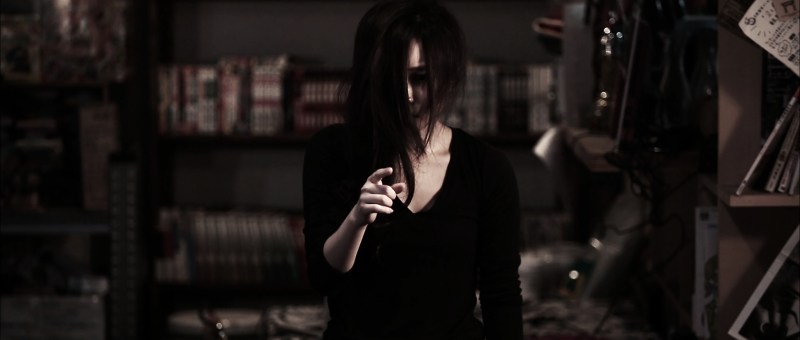
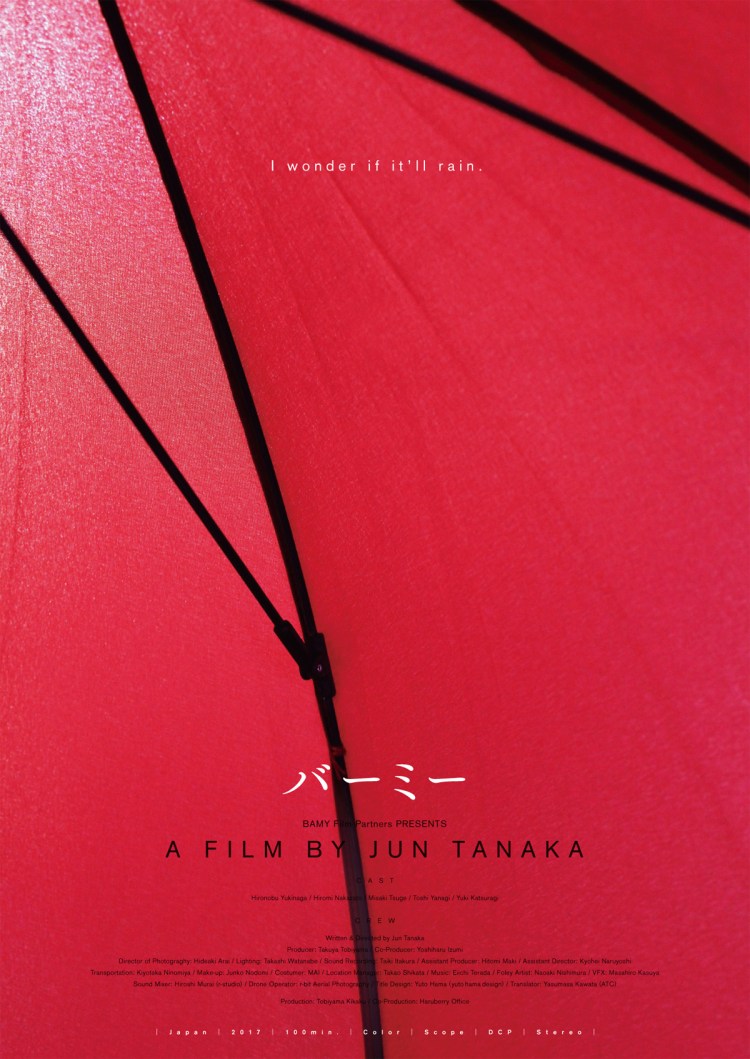
Our pair of lovers are brought together by the sudden and unexpected arrival of a bright red umbrella falling impossibly from on high. As their eyes meet across the incongruous sight, Fumiko (Hiromi Nakazato) recognises the man on the opposite side as Ryota – an old friend from her university days. Fast forward one year from this atypical meet cute and Fumiko and Ryota are moving in together with a wedding date already in place. The red umbrella hangs proudly on their balcony as a romantic tribute to their love but at odd times it seems to glow ominously, as if emanating a sense of inescapable unease. The couple’s happiness is ruptured when Ryota spots the first of his ghosts lurking in the bedroom. Before long he’s seeing them at work, in the streets, everywhere. He’s seen them all his life and though they do not frighten him, he is sick of their constant presence. Gradually the ghosts place a wedge between himself and Fumiko as he begins to neglect the wedding preparations before running into another woman, Sae (Misaki Tsuge), experiencing the same problem who might be better placed to understand what he’s going through.

The ability to see ghosts, it has to be said, is not an especially good excuse for neglecting one’s fiancée. Ryota, who seems to have forgotten there are many other words in the Japanese language besides the one which means “sorry”, does not appear to be a very good communicator and never thinks of confiding in Fumiko about what it is that is bothering him, nor does he ever try to communicate with the ghosts who perhaps are just looking for attention. In fact, Ryota never seems to take much of an active role in anything and almost “haunts” his own life, remaining isolated on the fringes, drifting along aimlessly like a man without a soul.

Existing to one side of the world around him, Ryota eventually makes ghosts of both his women. Sitting alone before a table on which lies a lovingly prepared meal, Ryota cannot see Fumiko as she lurks behind him, her form distorted and indistinct as filtered through the frosted glass which acts as divider to their living area. Later her face appears again through a frosted door as she grows ever more distant towards him, no longer “Fumiko” but a strange, unknowable being. Her hand on his face once grounded him, brought him back to the real but since the umbrella disappeared all that has changed. Meanwhile, Ryota wonders if the ghost seeing Sae is his real soulmate only to see her pale before him, her fingers dark and cold as she too becomes little more than something that will bind him to a fate he isn’t sure he wants.

The umbrellas at least seem to want Ryota to be with Fumiko, whatever he (or she) may think about it. An echo of the “red strings of fate”, the umbrellas bind the lovers on a cosmic level which can never be severed – Ryota’s “rebellion” is perhaps towards fate itself, towards having his life dictated to him (by an umbrella) with his personal agency all but removed. Then again, maybe “the umbrellas” know best and what they’ve given Ryota is a gift, only the pleasure of a gift begins to dissipate when it is made clear that it cannot be declined. The cosmos seems determined on railroading him and perhaps the only way to “escape” its harbingers is to accept its judgement and submit, turning a given fate into a chosen one through a conscious act of will. Echoing Kiyoshi Kurosawa in his conflicted romanticism and David Lynch in his eerie sense of the everyday surreal, Tanaka conjures an atmosphere of inescapable supernatural dread as his hero begins to realise his only source of salvation may lie in willing submission. 


Screened at Nippon Connection 2018.

TFF trailer (English subtitles)

Love and Wolbachia (恋とボルバキア, Sayaka Ono, 2017)

love-and-walbachia-poster-2-e1527641922439.jpgDocumentarian Sayaka Ono turned the camera on herself and her family seven years ago with her graduation project/debut feature The Duckling. Returning with her second feature after spending the intervening years in TV documentary, Ono tackles a subject perhaps more distant from her personal experience in exploring the lives of sexual minorities and particularly of transgender women in generally conformist Japan. Love and Wolbachia (恋とボルバキア, Koi to Wolbachia) takes its name from that of a parasitic bacteria which can cause its host to change sex. Love may very well be a kind of virus, but Ono seems more interested in answering the question of why someone might decide to live as a woman in a society so often hostile to them.

The first two protagonists Ono introduces us two were born intersex. Despite their personal feelings, each was encouraged to take hormones to conform more closely to their external appearance. Forced to make a perhaps false binary choice, or in essence being deprived of the right to make it for themselves, each has attempted to live in the way which bests suits their authentic selves though they often encounter discrimination and/or hostility from those around them.

The question of gender in and of itself appears more important to some than others. Another of our protagonists, Miya, refers to herself as a “makeup man” and runs a bar which acts as a kind of community space and refuge for other transgender and non-binary people who often have nowhere else to turn. Nevertheless, Miya struggles with her partner’s decision to undergo gender confirmation surgery and finds it difficult to understand why someone would be willing to put themselves through so much pain and suffering for something she sees as an external concern. For Miya the question of “gender” seems moot, not quite something requires only an individual identification but which scarcely requires one at all. It is she feels, in essence, something culturally defined which an individual is free to accept or reject in claiming their own personal identity as distinct from from social codes dictated by society.

Yet Miya also finds herself a victim of these social codes in a desire to provide protection to those who need it only to find herself ill equipped to cope with the intense responsibility of accidentally becoming a community leader if one without a particular political agenda save wanting to make other people’s lives easier. The question of gender roles becomes a more obvious problem in the relationship between lesbian Julian and her transgender partner Hazumi. Criticised by some of her friends for dating a transwoman, Julian also struggles with a perceived expectation to adopt a “masculine” role within the relationship, that Hazumi expects her to provide protection while also becoming the dominant partner which she seems to feel does not fit her personality. Conversely, Julian also longs for a conventional home and family as a married couple with children yet Hazumi wants to transition fully and, having left a marriage and a child to live a more authentic life, worries that starting another family with Julian may prevent her from achieving her dream.

A conventional family life also seems to have prevented 50-year-old Ichiko from pursuing her desire to live as a woman, having lived in a time when few knew such things were possible. A father with three children, most of her resources are given over to their care but she still finds time to enjoy a more authentic life and participate in the community. Like Ichiko, Mihiro began wearing women’s clothing after admiring her wife’s outfits only she later decided to leave her marriage and retains a male personality only for work. Having fallen in love with a man who himself feels uncomfortable with the culturally defined notions of “masculinity”, Mihiro is heartbroken to realise he already has a live-in girlfriend and worries his impression of their relationship may not match her own. This rings eerily true given a solo interview in which he jokingly laments Mihiro’s purehearted approach to romance which he believes leaves her open to male manipulation.

Ono does not particularly explore the lives of transmen, perhaps an anomaly seeing as Japan is one of few nations to have elected a transman to office (Japan also elected its first transgender female politician back in 2003), preferring to explore the place of trans and gay women in a society which can be deeply misogynistic and relentlessly conformist. Mihiro’s supportive mother, watching her carefully applying her makeup, remarks on how much time men must save in not needing to bother. Mihiro partially corrects her – wearing makeup is a choice which is open to women but not perhaps to men and choice, it seems, is the main thing or not so much “choice” but freedom to live in the way you choose rather than the way which is chosen for you by your society. 


Screened at Nippon Connection 2018.

Original trailer (no subtitles)

All Because of Love (痴情男子漢, Lien Yi-Chi, 2017)

All Because of Love PosterGrowing up is hard is to do – that is, unless you’re the hero of a teen movie, in which case growing up is merely “difficult” and everything is sure to be alright once the bullies have been vanquished and the last dance danced. Designed to appeal to its target audience, the world of the teen movie is usually black and white, free from the chaos and confusion which most experience during adolescence. All Because of Love (痴情男子漢, Cqíng Nánhàn) is, however, refreshingly honest in its fierce love of a messy situation, forcing its hero into a series of “difficult” circumstances while he plays the noble fool holding fast to an obviously unrequited love in the hope that his niceness will somehow capture his true love’s heart.

When we first meet Erkan (Kent Tsai), he’s a nerd and the member of an oppressed minority at his school, constantly targeted by the tough guys. He is hopelessly in love with popular girl Mandy (Gingle Wang), who is actually dating one of the bullies and doesn’t even really know who Erkan is. Despite his declaration to love her for a thousand years, Erkan’s attempts to woo Mandy end in spectacular and humiliating failure but still he does not give up. Shortly after graduating high school, Mandy abruptly rings him for “a date”. Erkan, still smitten, is excited but Mandy has an ulterior motive – she is pregnant with her jock boyfriend’s child and, abandoned by her own one true love, reckons Erkan might like to try out life as a baby daddy. She is correct in her assumption and Erkan would be buying a ring if he had any money but as it is they’ll have to make do with the gentle guidance of Erkan’s elopement expert grandad (Hsu Hsiao-shun) who takes them back to his seaside home town where they can hide out from Mandy’s overbearing (and very wealthy) family.

As the title implies, the rest of the film becomes a treatise on love – requited or not, familial and romantic, permitted or illicit. Erkan is thrilled, on one level, to have got it together with Mandy but on the other hand Mandy won’t let him near her and it’s clear she is only using him and taking advantage of his noble character to get her out of a fix. Meanwhile, staying at inn, Erkan gets to know another girl, Sing (Dara Hanfman), who is in a permanently gloomy mood thanks to her devastating ability to read minds, and hasn’t left her room in years. Sing, thanks to her ability, has fallen half in love with Erkan’s goofy goodheartedness but also knows he’s still hung up on Mandy, and that Mandy is still hung up on her ex-boyfriend. She is then in a difficult position but manages to strike up enough of a friendship with the lovelorn young man to spur her on to exploring the outside world once again.

Meanwhile, Erkan is also confronted by the eerie similarities between his present predicament and the circumstances of his birth. Having always lived with his granddad, Erkan assumed his parents had passed on but discovers there may be more to the story only he’ll have to go to Japan to find out. Erkan’s granddad kicked off the cycle by eloping with Erkan’s grandmother, leaving their hometown far behind to live a life of love far away, though his son and grandson do not seem to have had so much luck when it comes to romance and Erkan’s romantic answers perhaps lie in exploring his family history rather than re-examining his high school days and refusing to let go of his idealised teenage crush.

A heart to heart with Sing provokes a more grown up meditation of unrequited love even if Erkan is entirely oblivious to Sing’s delicately concealed feelings. Purehearted, Erkan insists that love does not need to be requited, merely loving without being loved is good enough for him (so he says, or perhaps he just doesn’t expect anything more). Sing tells him he’s wrong, that it takes two to love and that a one sided affection is nothing more than intense loneliness. Erkan agrees, missing Sing’s hidden meaning, but maturely admitting that it would be wrong to hold someone’s hand just because you’re lonely when your heart is elsewhere.

Erkan’s idealised love for Mandy is gradually revealed as an adolescent affectation while she is left battling various kinds of familial expectation and manipulation before discovering her former boyfriend is not perhaps the heel that everyone had assumed him to be. Meanwhile, Sing is doing something similar in trying to lay to rest the ghost of a friend who left long ago and Erkan is left trying to reclaim his identity though figuring out who he really is before learning to look at what’s right in front of him rather than indulging in a romantic fantasy. Lien Yi-chi sends Erkan on some very bizarre adventures, swapping genres at a moment’s notice from westerns to classic melodrama and musicals and then settling on something in the middle which feels oddly authentic and lived in despite its strangeness. Often absurd if not quite surreal, Lien’s warmhearted silliness is almost impossible to resist as is the cheerful innocence of the effortlessly romantic conclusion.


Screened at the 20th Udine Far East Film Festival.

Original trailer (English subtitles)