Animal World (动物世界, Han Yan, 2018)

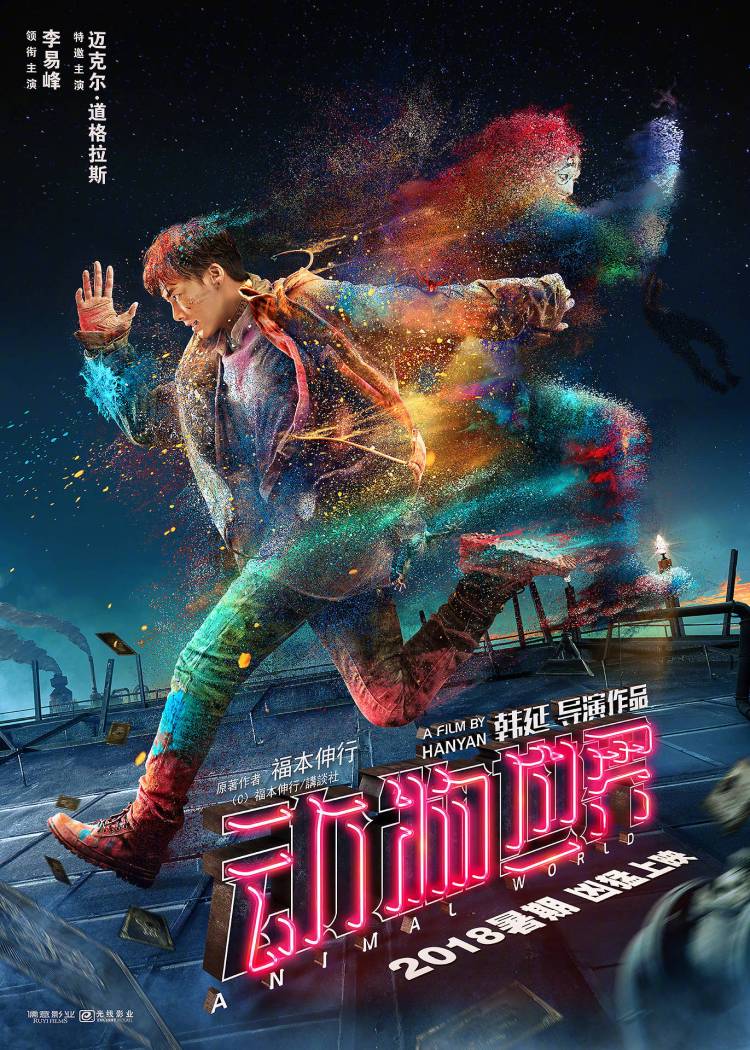
Animal World Poster 1Greed is good. So Michael Douglas once told us many years ago and if Animal World (动物世界, Dòngwù Shìjiè) is anything to go by, the Gordon Gekkos of the world have not changed their tune. Inspired by Nobuyuki Fukumoto’s manga Kaiji: The Ultimate Survivor, Han Yan’s anarchic gambling drama is the latest in a long line of films to ask serious questions about a perceived moral decline accompanying the rapid economic development of the Chinese state occurring largely during the lifetime of the pure hearted hero Zheng Kaisi (Li Yi Feng) who has been dealt a bum deal and is doing very little to resist it. Describing himself as “crazy” (not unfairly, as it turns out), Kaisi is perhaps the last good man but his resolve is severely tested when he finds himself trapped aboard the good ship Destiny and forced to bet his life on a game of rock, paper, scissors.

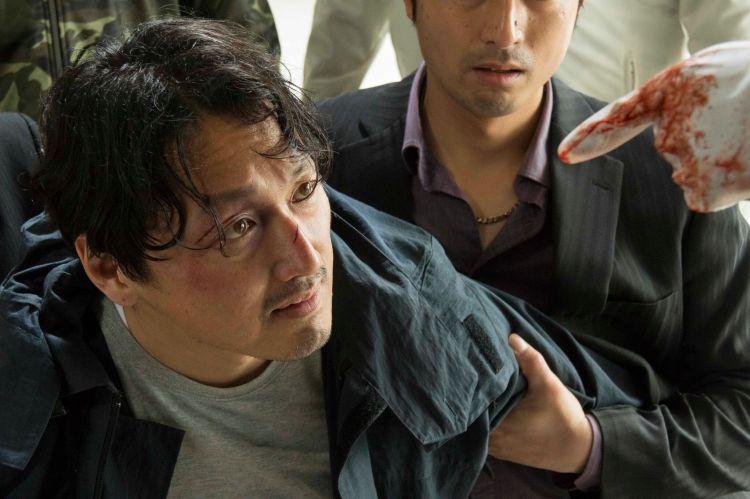
Kaisi was one of the smartest kids in town but his father’s early death when Kaisi was eight and his mother’s long term illness have left him all alone in the world. Defeated and without hope, Kaisi’s only job is playing a sad clown at a local arcade and, in a failing he continues to find humiliating, he has to rely on childhood friend and putative sweetheart Qin (Zhong Dongyu), who is also his mother’s nurse, for the money to pay the medical fees that keep his mum in an actual room and not out in the corridor with all the other paupers. Another childhood friend of Kaisi’s, Li Jun (Cao Bingkun), claims to be in a similarly sticky situation and offers Kaisi a sweet deal if only he’ll consent to mortgaging the family apartment. Reluctant but backed into a corner, Kaisi agrees only to realise that not for the first or last time Li Jun has thrown him under the bus and he’s now on the hock for all his friend’s debts which seem to belong to a shady underworld kingpin by the name of Anderson (Michael Douglas). Anderson offers him a way out – he can win it all back and more if he agrees to submit himself to a high stakes game of chance way out in international waters aboard a disused warship called “Destiny”.

Describing himself as “crazy”, Kaisi has a strange fascination with clowns which extends past his occupation and directly into his psyche. Imprinted with a violent kids’ cartoon in which a vigilante clown metes out justice with a smile during a traumatic childhood incident, Kaisi feels as if there is a clown trapped inside him which wants to come out at moments of intense emotionality. Floating away in flights of fancy, he reimagines his enemies as weird space creatures and sees himself cut them down with twin samurai swords in the cramped environment of an otherwise empty subway car. Reality and imagination become blurred as we watch Kaisi run through a scenario in his head only to cut back to the “real” world where he more often than not decides to let things go. Despite his internal crazy clown, Kaisi is a defeated and passive figure who has been drifting aimlessly without hope or purpose, too afraid even accept the affection of his childhood sweetheart Qin due to his internalised insecurity regarding his lack of financial stability.

Dealt a bum deal by life, Kaisi has been relegated to an oppressed underclass with little chance of escape. He is, however, honest and pure hearted unlike his dodgy real estate broker friend, Li Jun. “Destiny” becomes a microcosm for exploring the evils of capitalism as the players quickly realise that they are only involved in a sub game – while they risk their lives at the gaming tables, the fabulously wealthy are busy betting on them from behind two way mirrors. Shady impresario Anderson gives a rousing introduction to proceedings, but pointedly omits to add anything about cheating. Cheating is not just allowed, it is encouraged, to a point at least, and playing the angles strongly advised. Games of chance are never quite just that and Kaisi’s finely tuned mathematical brain finally gets an excuse to kick back into action after a long period of wilful indolence.

Repeatedly, Kaisi is told that “loyalty” means nothing in this “animal world” where the only thing that counts is “profit”. While he is good hearted and originally taken in by the schemes of others, he is not naive and is able to see the “animal world” for what it is even if he refuses to become a full part of it. Maintaining his faith in the power of friendship proves to be a mistake, but still Kaisi realises that he’d much rather be a “clown” ridiculed for his principles than a soulless mercenary who’d sell out a friend for money. His attitude perhaps stands in stark contrast to those around him who’ve each found themselves at the Destiny for different reasons, some more eager than others to give in to their desperation. A mild critique of the heartlessness of a fiercely competitive society and its inbuilt societal inequalities, Animal World is a beautifully designed, surreal and anarchic tribute to fighting the good fight even if everyone else thinks you’re a “crazy clown”.


Animal World is released in UK cinemas from 29th June courtesy of Cine Asia. Check out the official website to find out where it’s playing near you including screenings across Europe and the rest of the world!

Original trailer (Mandarin, no subtitles)
The Many Faces of Ito (伊藤くん A to E, Ryuichi Hiroki, 2018)

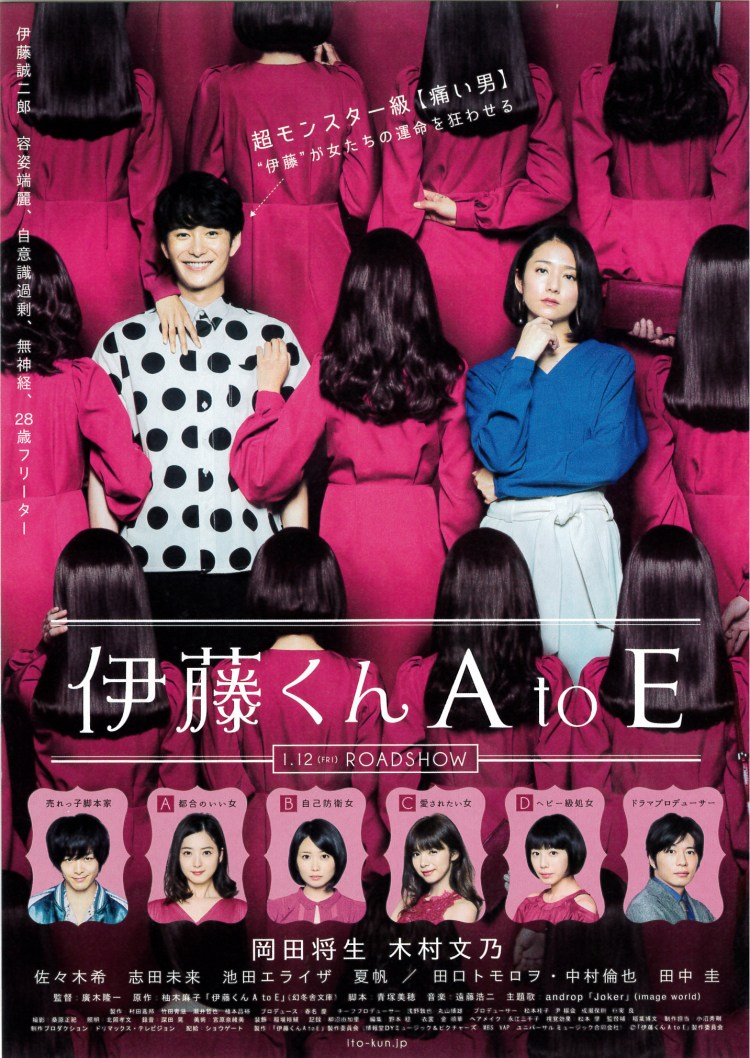
Many Faces of Ito posterRyuichi Hiroki’s career has been oddly varied, but he’s never been one to avoid straying into uncomfortable areas. Adapted from the novel by Asako Yuzuki, The Many Faces of Ito (伊藤くん A to E, Ito-kun A to E) explores the risks and rewards of modern existence through the prismatic viewpoint of five women messed around by the same terrible man as he seems to breeze through life buoyed up by the sense of superiority he gains through their unwavering appreciation. Then again perhaps his air of ultra confidence is yet another mask for his insecurity as he paints every failure as a conscious rejection, sneering superciliously at the desires of others while wilfully negating his own. Our guide, a blocked TV drama scriptwriter, may have imagined this entire scenario as she attempts to break through her own sense of painful inertia but it remains true that the world she inhabits is far from kind to women seeking the key to their own destinies.

32-year-old Rio (Fumino Kimura) won a scriptwriting competition which developed into a top TV hit some years previously but has struggled to replicate her success and now makes her living teaching screenwriting and acting as an expert on love for women captivated by the idealised romance of her debut “Tokyo Doll House”. Her longterm editor/producer (and former lover but that’s a problem we’ll get to later) encourages her to mine her romance sessions for possible material through interviewing women with unusual romantic dilemmas on the pretext of helping them find a way out. Rio, now jaded and cynical, is of a mind to make money from other people’s misery and the advice she gives is less in service of her clients and more in that of the story as she tries to engineer “naturalistic” drama but as in all things, her writing becomes increasingly personal and she is in effect in dialogue with herself.

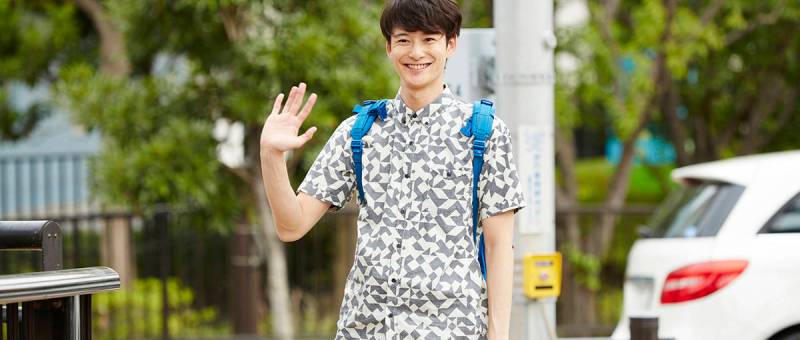
Unbeknownst to Rio, each of the four women she decides to interview is involved with the same man – Ito (Masaki Okada), who is, because coincidence is real, a student in her screenwriting class. With his patterned black and white shirts and handsome yet somehow anonymous appearance, Ito is earnest but superior, shifting from over eager puppy to dangerously possessive stalker. 28-year-old Tomomi (Nozomi Sasaki) has been carrying a torch for him for five years longing for an intimacy that will never develop while Ito insensitively tells her about his crush on a workplace colleague, Shuko (Mirai Shida). Shuko is in no way interested in his advances but Ito refuses to take no for an answer, eventually forcing her to leave the company because of his constant harassment. Wounded, he retreats to university “friend” Miki (Kaho) who he knows has been nursing a long time crush and is shy and naive enough for him to push around without much resistance. Luckily (in one sense) Miki has a devoted roommate, Satoko (Elaiza Ikeda), who is keen to look out for her friend but there is perhaps more to this relationship than meets the eye and Satoko’s jealously eventually pulls her too into Ito’s web of romantic destruction.

The question Rio finds herself asking if each of these women, and she herself in her failure to get over the betrayal of her producer Tamura (Kei Tanaka) who eventually broke up with her to marry someone else, is in a sense complicit in their own inability to move forward. It’s almost as if their collective sense of low self-esteem and fear of rejection has conjured up its own mythical monster in the figure of Ito who displays just about every male failing on offer. He uses and abuses and when rejected proudly states that he never wanted that anyway because he’s simply far too good for whatever it is that you might prize. Yet through battling his cruelty and emotional violence, each of the women is able to cut straight through to the origin of all their problems, correctly identifying what it is that ails them and committing to moving forward in spite of it even if the part of themselves they most feared was the one the saw mirrored in Ito’s insecurities.

The “battle” between Ito and Rio comes out as a draw which sees them both lose but only provokes a final confrontation which is as much with Rio herself as it is with the Itos of the world. Ito rejects his failure, sneers at the TV industry and claims to have loftier goals but Rio has figured him out by now and correctly assesses that his life philosophy is to back away from the fight to avoid the humiliation of losing. Pushed by the unexpectedly profound interventions of fellow writer KazuKen (Tomoya Nakamura) who reminds her that she was once a writer unafraid to bare her soul, Rio realises that a life without risk is mere emptiness and the soulless (non)existence of a man like Ito is no way to live. To be alive to is open yourself up to pain, but if you refuse to engage in fear of getting hurt you might as well be dead and if what you want is to make art you’ll have to lift the lid on all that personal suffering or you’ll never be able to connect. Each of our timid ladies finds themselves ready to stand tall, no longer willing to afford the likes of Ito the esteem which allows him to sail on through papering over his lack of self-confidence by sapping all of theirs. The masks are off, and the game is on.


Currently streaming on Netflix in most territories along with the companion TV drama.

Original trailer (no subtitles)

River’s Edge (リバーズ・エッジ, Isao Yukisada, 2018)

River's Edge poster 2The ‘90s were a strange time to be a teenager, but then what age isn’t? Isao Yukisada, surprisingly making his first manga adaptation, brings Kyoko Okazaki’s cult hit River’s Edge (リバーズ・エッジ) to the big screen, recreating those days of nihilistic despair in which ordinary teens spiralled out of control in the wake the bubble bursting, watching all their possibilities disappear in a cloud of smoke. Set in 1994, River’s Edge is a post-bubble story but it also takes place in the period immediately before everything started to go wrong. In 1995 there was a devastating earthquake followed by terror in Tokyo and somehow it all seemed so dark – something the kids at the centre of River’s Edge already seem to see as they watch time flow, knowing all that awaits them is yet more emptiness.

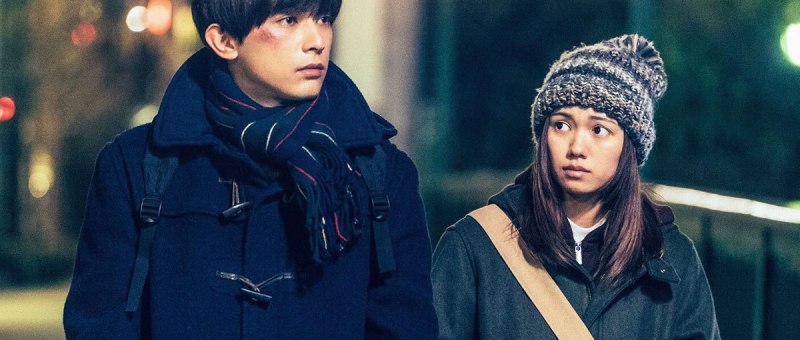
Haruna (Fumi Nikaido), a spirited tomboy and latchkey kid living with her busy single-mother, is in a lazy relationship with violent popular boy Kannonzaki (Shuhei Uesugi) though in truth she doesn’t seem to like him very much. One of her major problems with Kannonzaki is that he keeps picking on one particular guy, Yamada (Ryo Yoshizawa), who is rumoured to be gay. Warned by one of Kannonzaki’s minions, Haruna races off to an abandoned storeroom where she finds Yamada trussed up and naked hidden inside a locker. The pair become friends and he offers to show her his “special treasure” which turns out to be a dead body hidden among the reeds near the edge of the river. Yamada, with another friend, Kozue (Sumire) – a model with an eating disorder, likes to come to the river to gaze at the body in an effort to feel alive.

The ‘90s were full of tales of cruel, emotionless youth torturing itself without mercy and there is something of the era’s insensitivity in the detachment of the central trio. Unable to feel alive, the teens of River’s Edge chase sensation and oblivion through indiscriminate sex, drugs, violence, and self harm but rarely find the kind of fulfilment they so desperately crave. Kannonzaki, the rowdy delinquent, blames his broken home for his lack of connection, making a fierce resentment of a perceived rejection his excuse for his dangerously violent proclivities which run not only to venting his rage on the figure of the gay outsider Yamada but also to drug fuelled rough sex with one of Haruna’s classmates, Rumi (Shiori Doi), who is also chasing agency through sexuality but eventually finds herself cornered in the most terrible of ways.

Yamada is indeed gay, but can hardly say so in the environment in which he lives and so has turned in on himself with a near sociopathic detachment. Having given up on the idea of romantic fulfilment he has resigned himself to loving the object of his affection from afar, happy enough that he exists in the world even if he can never declare himself let alone dare to hope his feelings may be returned. Yamada works as a rent boy in the evenings, going to hotels with middle-aged men for money, but has a fake girlfriend at school, Kanna (Aoi Morikawa), whom he uses as a beard. Kanna, seemingly sweet and oblivious, soon becomes jealous of her boyfriend’s friendship with Haruna and is driven into her own kind of despair by Yamada’s continued coldness.

There’s an especial irony in Yamada’s use of Kanna which is almost certainly not lost on him. These kids, like many before them, abhor the fakery of the adult world but are also unable to embrace their own painful truths. Yamada covers up his sexuality through misleading Kanna, while Kannonzaki is resentful towards his parents who put on a front of marital harmony even after his father ran off with his mistress only to come back a week later with his tail between his legs, and Kozue laments the superficiality of her industry in which everyone falls over themselves to declare something ugly beautiful in order to make themselves feel better. There are no responsible adults here, having ruined the future for their kids they no longer have any kind of moral authority that can offer guidance or support to a jaded generation.

Shooting in the classic 4:3 of a ‘90s TV, Yukisada recreates the narrowness of an era in which the kids struggle to see past themselves, blinkered by their own solipsistic perspective and trapped by the shallowness of their perceptions. Permanently dark, gloomy, and lonely their world is one nihilistic despair in which they feel themselves already dead, living in the half-dug grave of a moribund city giving off its last few puffs of toxic industrial smoke before the whole thing collapses in on itself. In one sense nothing changes, there are no answers or cures for adolescent malaise, but something does eventually seem to shift in the genuine connection formed between two detached outsiders standing on the brink, watching the decay of their era flow past them with melancholy resignation.


Screened at Nippon Connection 2018.

Original trailer (no subtitles)

Cyclops (キュクロプス, Norichika Oba, 2018)

Cyclops still 1Though Japanese cinema is no stranger to noir, the genre has perhaps failed to gain the foothold it occupies in overseas. Nevertheless, noir is where Norichika Oba aims to take us in his second feature as an ex-con emerges from prison with only one thing on his mind – revenge. The poetically titled Cyclops (キュクロプス) is heady noir filled with unreliable narratives, not least that coming from our foggy headed protagonist, in which the sands of truth are constantly shifting beneath our feet. Then again, perhaps the truth is better off buried. Clarity delivers its own burdens.

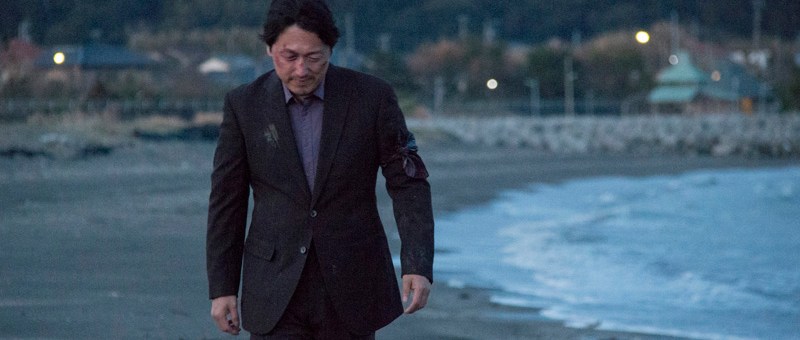
14 years ago Shinohara (Mansaku Ikeuchi) went to prison for the murder of his wife, Akiko (Ako). He was discovered cradling her lifeless body in a hotel room covered in blood next to the body of another man – Tezuka, a politician, thought to be her lover. After his business went under Shinohara started to drink, heavily. At the time of the incident he was an alcoholic and claims to have no memory of anything prior to discovering his wife’s body owing to being in a state of permanent inebriation. He is sure, however, that he would never have hurt her and denies all the charges. Nevertheless, he’s spent the last 14 years in custody keeping his head down and is about to be paroled. Which is where Matsuo (Kouzou Satou) comes in. A sergeant on the original case, Matsuo has long been harbouring feelings of guilt over the way the affair was handled and claims to have discovered the identity of the “real” killer – a petty yakuza called Zaizen (Hikohiko Sugiyama) who was after the politician and offed Akiko to tie up loose ends. The law can no longer help in this case, but Matsuo suggests Shinohara pursue his own justice and put an end to the matter in the old fashioned way.

What ensues is a complicated cat and mouse game as Shinohara, a bruiser with a prison education in street violence, prepares to take on a vicious and vindictive mob boss who he believes took his wife’s life on a whim to further his own career. Matsuo teams him up with one of Zaizen’s guys, Nishi (Yu Saito), who supposedly wants to do “the right thing” in training a rookie to take out his boss. Meanwhile, Shinohara has also gotten himself into trouble by visiting a local bar named Galatea which is run by a mama-san who looks exactly like Akiko and is also under threat from Zaizen and his collection of sleazy henchmen.

Of course, nothing is quite as it seems and Shinohara, perhaps naively trusting almost everyone he comes into contact with, is left with no clear indication of who he should believe and which story is likely to be the most “true”. Lying back on a jetty under the pale white moon, he thinks he sees the image of his wife, ghostly yet dressed in a fiery red which reflects back on him, bathing his face. Shinohara has a series of nightmares or perhaps flashbacks in which he relives the murder, seeing the killer remove his balaclava but imagining a different face every time.

The title of the film comes from a painting in the bar which is inspired by Greek mythology and features a scene of the giant cyclops Polyphemus hovering behind a mountain while his unrequited object of affection, Galatea, hides herself below. Haru (Ako), the bar’s mama-san, aligns herself with Galatea as a woman trapped between conflicting emotions and effectively held prisoner by her own inertia, longing for escape but unwilling to accept it. Shinohara, at this point sporting an eyepatch and likened to the quasi-stalker giant, wonders if the cyclops has in some way forgotten what it was he was looking in the first place and is simply wandering without aim or purpose. Shinohara has indeed forgotten many things, holding the key to his own salvation all along but proving slow to realise the extent to which he is being misused.

Yet for all his talk of vengeance, Shinohara remains a good and kind man who wants to protect the innocent even while punishing the guilty. Adopting a stray dog, perhaps out of identification with its lonely existence, Shinohara’s humanity begins to resurface enabling him to form an oddly genuine friendship with Nishi even whilst suspecting that he is not all he seems. The bad guys get what’s coming them, but it’s forgiveness that eventually saves the day as the two men find a kind of brotherhood born of mutual understanding and respect. Freedom is won and then given away freely as the cyclops regains his sight, learning to look within for the key to all mysteries while walking a dark and dangerous path towards salvation.


Screened at Nippon Connection 2018.

Enokida Trading Post (榎田貿易堂, Ken Iizuka, 2018)

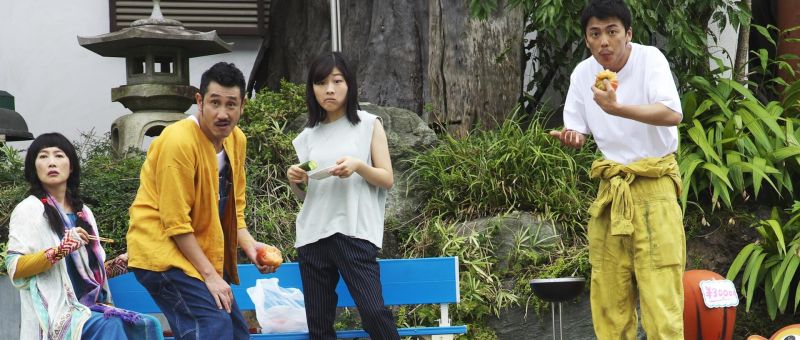
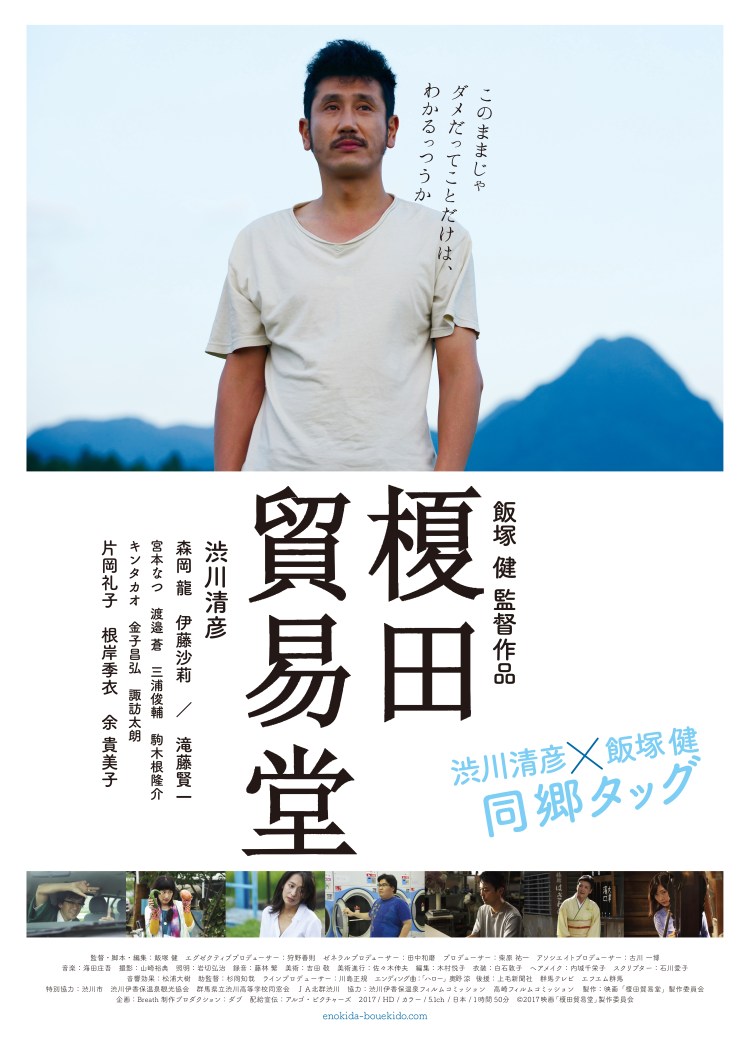
NC18_cinema_Enokida Trading Post_flyer_preview.jpegJapanese cinema is filled with tales of those who become disillusioned with city life and decide to go home to the country to start all over again. Almost always they start with failure and build to success as the hero or heroine gradually figures out what they want out of life and then how to make it happen. Enokida Trading Post (榎田貿易堂, Enokida Boekido), however, does things a little differently. Mr. Enokida (Kiyohiko Shibukawa) has been back in his home town for four years and has already built up a successful, if scrappy, business selling second hand goods. When the right hand side of the first character in Mr. Enokida’s name suddenly falls off the store’s sign one day without warning, Mr. Enokida knows something big, good or bad, is definitely on its way.

Both director Ken Iizuka and star Kiyohiko Shibukawa hail from the small country town, not coincidentally also called Shibukawa, in which the film is set. A tribute to rural life, Enokida Trading Post adopts the calming, laidback feel of many a Japanese tale of life in the village but that’s not to say it’s the sort of place where nothing much happens – quite the reverse in fact. When we first meet Mr. Enokida, he’s wandering into the local hair salon but he’s got more than just a quick trim on his mind. Aside from indulging in a little how’s your father with the middle-aged proprietress (Reiko Kataoka), he’s also picking up a few extra pennies from the curious little boy he’s allowed to watch from outside. The affair with hairdresser will eventually get him into a lot more trouble, but Mr. Enokida is the sort that finds trouble worth the prize so it’s mostly the people around him who will end up paying the price.

Enokida Trading Post has two other employees – Chiaki (Sairi Ito), a married woman experiencing some kind of problems at home, and Kiyohiko (Ryu Morioka) who seems to have an extreme aversion to answering the telephone. The gang are also joined by a hippyish older lady, Yoko (Kimiko Yo), who stops by to chat every now and then, and an old friend, Hagiwara (Kenichi Takito), also recently returned from Tokyo but apparently only for a few weeks while he finishes a screenplay.

Sex and gossip become the two main pastimes for the Enokida gang as Kiyohiko catches sight of Yoko in a compromising position with the old man who runs the local laundrette while Mr. Enokida has begun to worry that Chiaki may have become a victim of domestic violence. As it turns out Chiaki’s worries are of a quite different order which might explain why she keeps renting “racy” mainstream movies like Betty Blue and Eyes Wide Shut from the local DVD store and apparently watching them all alone.

In an attempt to solve some of their problems, the gang find themselves making a visit to “Chinpokan” which effectively means “willy museum” and is indeed filled with pieces of erotic art from classic shunga to a room full of wooden penises in various sizes. A visit to Chinpokan can it seems work wonders, but as soon as you solve one problem another arises and a surprising discovery is made regarding another local love story before a third suddenly spirals into violence, revenge, and murder! Even in peaceful Gunma, such things do indeed still happen – something which prompts Mr. Enokida into a another reassessment of his life choices as he ponders his role in events so far and tries to decide what his next move ought to be.

Mr. Enokida’s motto had always been that anything except for actual rubbish he could handle. Sadly, quite a lot of rubbish has just happened to him and he doesn’t know what to do about it. The revelations do however prompt each of his friends into opening up about their individual worries and finally finding the strength to face them head on to make some decisions of their own. Making the best use of the beautiful scenery and filled with the charms of small town life, Enokida Trading Post is another in the long line of relaxed rural adventures, effortlessly finding the strangeness of the everyday in the country while grounding its sense of absurd fun in the unique philosophy of Mr. Enokida and his variously troubled friends.


Screened at Nippon Connection 2018.

Original trailer (no subtitles)

We Are (青の帰り道, Michihito Fujii, 2018)

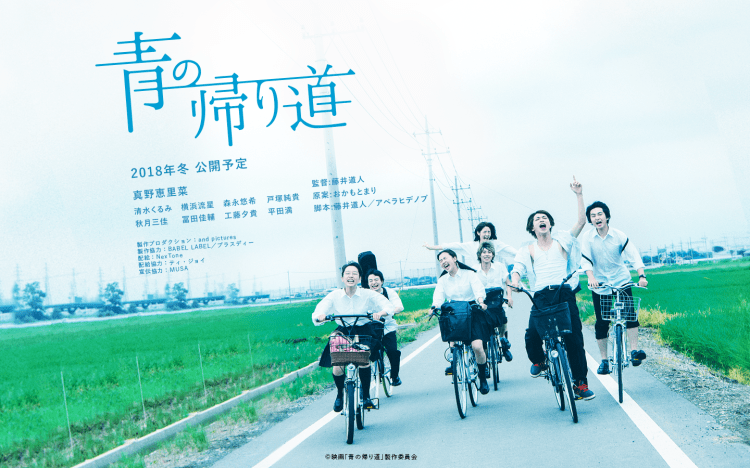
We Are horizontalThe youth movie perhaps hit its peak in the immediate post-war period, but poignant coming of age tales have always held a special place in Japanese cinema. We Are (青の帰り道, Ao no Kaerimichi) has a fairly troubled history of its own – the shoot was disrupted when one of its stars was arrested leading to the role being recast, requiring substantial reshoots which took place over a year later. Yet like its protagonists, We Are was finally able to rediscover itself and create something beautiful from admittedly difficult circumstances. Broken hearts, broken dreams, and broken futures conspire to scatter a once close group of high school friends as they each pursue individual dreams with individual success whilst looking alternately for a path both forward and back.

Spanning from 2008 to 2018, We Are follows seven ordinary small town teens from their high school graduation through to a more settled adulthood ten years later. In 2008, Kana (Erina Mano) and Tatsuo (Yuki Morinaga) have musical dreams which she is going to Tokyo to pursue while he is staying behind to study for medical school entrance exams in an attempt to fulfil his doctor father’s wishes. Kana’s best friend, Kiri (Kurumi Shimizu), is going with her, partly out of a want of anything else to do. She has dreams of becoming a photographer but her family are not supportive of her art and she has always struggled through feeling at odds with them. Loud mouth delinquent Ryo (Ryusei Yokohama) doesn’t really have a plan, save bumming around until something turns up and any plans Ko (Junki Tozuka) might have had would have been derailed seeing as he’s got his girlfriend (Mika Akizuki) pregnant and has decided on a shotgun wedding. Only Yuki (Keisuke Tomita) is following a more conventional path in going to Tokyo for university and then planning on finding a regular salaryman job.

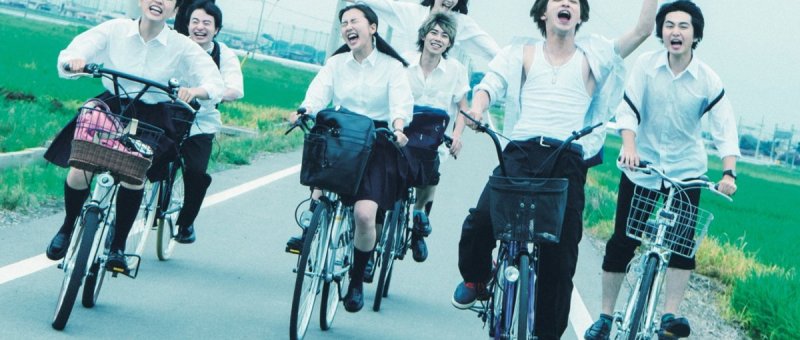
The film opens with a scene of joy and freedom as the kids ride their bikes along an otherwise empty stretch of road between the fields, swearing to make the most of the last summer vacation. The road itself becomes a recurrent motif, stretching out into the distance seemingly full of promise but also strangely empty. The kids do indeed make some memories, but for some of them the hope proves too much to bear, soon turning to despair as their lives begin to spiral out of control, their dreams warped and ruined by the muddiness of the adult world.

Kana’s musical career is quickly derailed by an amoral producer who doesn’t believe in the artistic merit of music, only in its commercial capability. Kiri, dropping out of college, gives up on her dreams of photography to make Kana’s a success through acting as her manager but the two naive country girls are no match for the canny executive and Kiri is soon working for the company learning how to market soulless pap to a public desperate only for empty cuteness. While Kana struggles with accidentally becoming the poster girl for a brand of vegetable juice, Kiri embarks on her first love affair but is ill equipped to recognise the potential warning signs in her new boyfriend owing to a lack of emotional awareness brought about by her dysfunctional upbringing.

While Kana and Kiri struggle in the city, Ko has married, settled down and begun building a home for himself back in the country. An ordinary dream, but an achievable one if you’re willing to make it work and Ko takes to fatherhood with natural ease. Sadly, his friends are not so lucky. As their dreams fade, alcoholism, domestic abuse, crime, and finally suicide conspire to ruin their hopes, leaving each with a profound sense of guilt and defeat in finally finding themselves on the road home with not much to show for their travels besides a few fresh scars. Yet somehow, despite the myriad unforgivable things and a shared sadness in a collective failure to save each other, friendship endures, forgiveness is possible and though the days of youth will never return, there is a “way back” for those who’ve learned that there’s nothing wrong in wanting to start over. You can never go “home” again, but some things don’t change even when you do and if you’re very lucky the most important of them will still be there waiting for you no matter how long you’ve stayed away.


Screened at Nippon Connection 2018.

A Better Tomorrow 2018 (英雄本色2018, Ding Sheng, 2018)

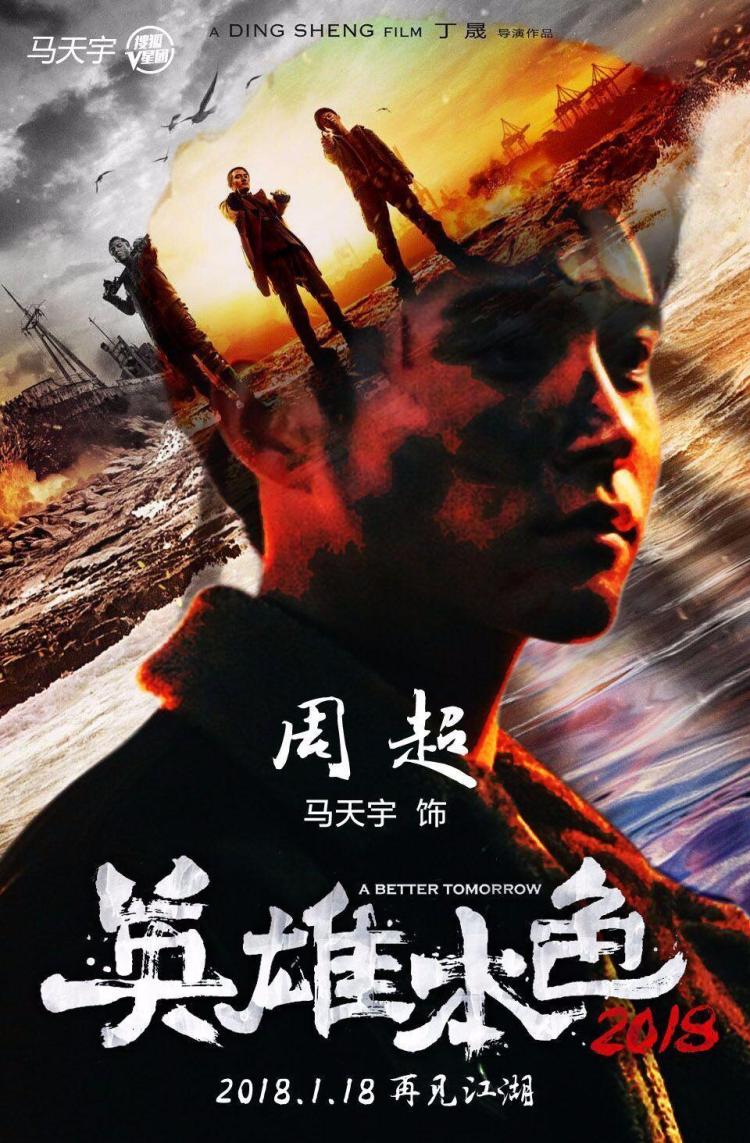
better tomorrow 2018 posterIn the history of Hong Kong cinema, there are few films which could realistically claim the same worldwide influence as John Woo’s 1986 landmark A Better Tomorrow. Commissioned by Tsui Hark, the then jobbing director Woo was tasked with creating a vehicle for a veteran Shaw Brothers star. Casting Cantopop idol Leslie Cheung and TV sensation Chow Yun-fat, Woo mixed traditional melodrama with hyper masculine emotionality to give birth to what would become the “heroic bloodshed” genre which was to dominate the island’s cinematic output well into the ‘90s. A Better Tomorrow, as its title implies, is the perfect evocation of its era and among the first to express an oncoming anxiety for Hong Kong’s “return” to China then only a decade away. Slick and oozing with ‘80s, macho cool, Woo’s film captured the imaginations of young men everywhere who suddenly took to wearing sunglasses and trench coats while chewing on match sticks, dreaming dreams of heroism in a sometimes gloomy world.

Which is all to say, attempting to “remake” Woo’s masterpiece may well be a fool’s errand. It is however one which has been frequently attempted, not least by Wong Jing in 1994 and Song Hae-sung in Korea in 2010. Korean cinema has perhaps become the heir of heroic bloodshed with its inherent love of melodrama which often finds its way into the nation’s bloody gangster epics whose generally high level of homosocial bonding is perfectly primed for male honour drama. Ding Sheng, apparently a huge fan of the original Hong Kong hit, brings the tale north to the Mainland, relocating to Qingdao which serves as a trading post for the drug running route from Japan.

As in the original we have two biological brothers – Kai (Wang Kai), a “sailor” who has fallen into smuggling to support his family who are unaware of his criminal occupation, and Chao (Ma Tianyu) – a rookie policeman. Meanwhile, Kai also has a criminal “brother” in his younger partner Mark (Wang Talu), an orphaned hothead from Taiwan. Kai is a “noble” smuggler who refuses to traffic drugs but a Hong Kong triad boss is hellbent on fishing out his Japanese contacts and after a job goes wrong, Kai ends up getting shot and arrested by his own brother who is heartbroken to discover the truth. Spending three years in prison during which time Kai’s father is killed in a raid on their home by gangsters looking for info on the Japanese, Kai tries to go straight but finds himself pulled back into the underworld after coming into conflict with villainous gangster Cang (Yu Ailei) who has taken over the Japan route (and forced Kai’s old girlfriend into prostitution after getting her hooked on drugs).

Ding’s film, while replicating the plot of Woo’s original, attempts to bring it into the “modern” era in which the stylised, manly melodrama of the ‘80s action movie has long since been replaced by a finer desire for “uncool” realism. Ding does not seem to be making a particular point about modern China, other than in persistent economic inequality which has forced an “honest” man like Kai into a life of crime for the otherwise honourable reason of taking care of his family. Though this itself maybe a subtle reference to the post-90s world, the major anxiety seems to be more with cross cultural interactions and possible pollution of “good” Chinese men like Kai who have been led astray by the false promises of, for example, gangsters from Hong Kong, and the old enemies in Japan. Interestingly enough, the relationships themselves are formalised and superficial. In Japan Kai and Mark are entertained in a “super Japanese” bar of the kind which only tourists frequent, decked to the ceilings with cherry blossoms and staffed with “geisha” girls, while in China they take their guests to a bar which has Peking Opera going on in the background as entertainment.

Kai is fond of telling his sworn brother that everything in the world may change, but brotherhood remains the same. This turns turn out to be an ironic comment in that his natural brother, Chao, disowns him in shame and loathing after his release from prison. Nevertheless, Kai never gives up striving for Chao’s approval even whilst reuniting with Mark who has been crippled and reduced to cleaning boats at the harbour after trying to exact revenge for Kai’s betrayal. The trio’s manly honour code is thrown into stark relief by the amoral Cang who, claiming that “the world has changed” and loyalty no longer means anything, thinks nothing of shooting anyone and everyone who stands between himself and financial gain. If Ding has a comment to make, it’s that the traditional ideas of brotherhood, loyalty, justice and goodness are being eroded by the lure of foreign gold promised by corruption, exploitation, and an absence of morality.

Ding isn’t trying to match Woo’s grand sweep of tragic inevitability so much as aiming for straightforward crime drama but his occasional concessions to melodrama never quite gel with his otherwise gritty approach, nor do his unsubtle his homages to the original film which find Leslie Cheung’s iconic theme song becoming a frequent musical motif as well as prominently featuring at an ultra cool hipster bar located in a disused boat which plays his record on a turntable with a large picture of a grinning Chow Yun-fat behind it. A Better Tomorrow 2018 succeeds as a passible action drama, but one without the heart and soul that made Woo’s original so special. 


Screened at the 20th Udine Far East Film Festival.

Original trailer (English subtitles)

Little Forest (리틀 포레스트, Yim Soon-rye, 2018)

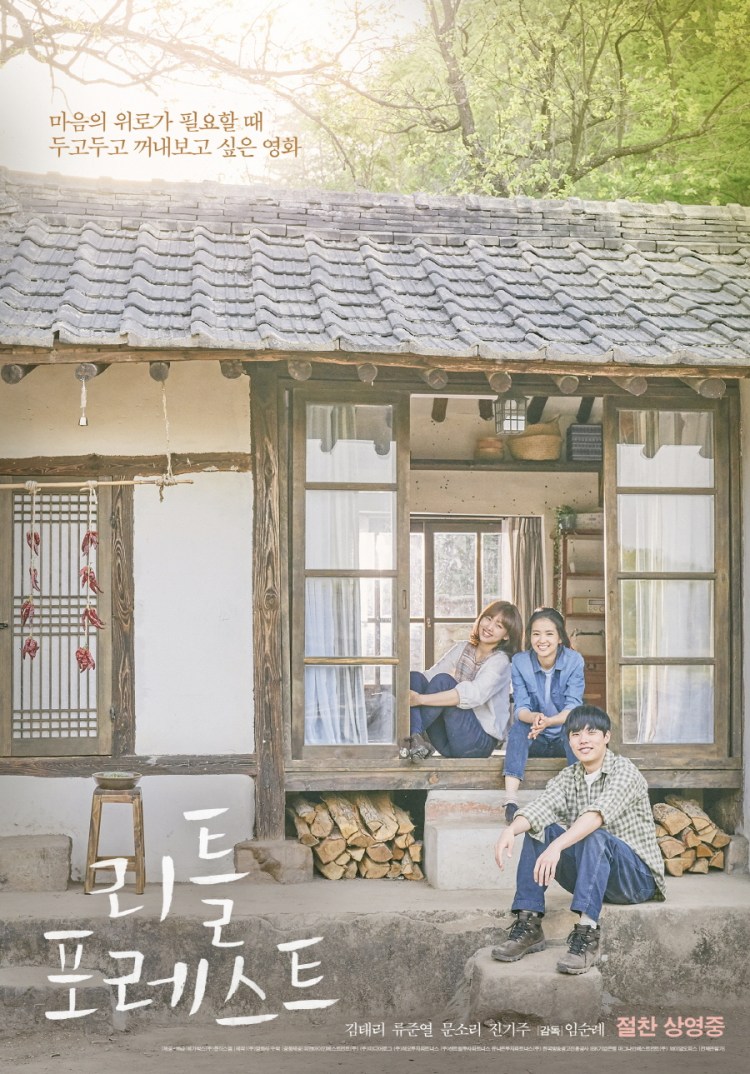
Little forest korean posterWhen you don’t know what to do, you go home. The logic seems sound and indeed the idea is common in many cultures, but the heroine of Little Forest (리틀 포레스트) has gone home to an empty, snow covered house with the intention of burying herself away rather than basking the unconditional support of the people who raised her. Yim Soon-rye, leading light of the Korean New Wave, takes the original manga by Daisuke Igurashi which was previously adapted as a two-part, four hour exploration of Japanese rural life by Junichi Mori, and relocates it to Korea finding that urban malaise and youthful indecision are from isolated phenomena.

Hye-won (Kim Tae-ri) has come home “for a few days”. What she wants is to be alone for a while, to take a time out from her life before trying to figure out what to do next. Accordingly, as she’s in hiding, she didn’t want anyone to know she’s here but perspicacious aunt Bok-soon has spotted smoke on the horizon and come running. Bok-soon thought that Hye-won’s long absent mother who abandoned her in the last year of high school might have been making a rare visit and is surprised to find her daughter instead, though perhaps not quite so much as you’d think. Nothing stays secret for long in a village, and Hye-won’s return is soon discovered first by the slightly unwelcome attention of the older village ladies and then by her treasured childhood friends, Eun-sook (Jin Ki-joo) and Jae-ha (Ryu Jun-yeol) who gives her a pet dog to look after in the hope that she will be eventually decide to stay for good.

Hye-Won faces many of the same problems as the heroine of Mori’s Japanese adaptation, but whereas Ichiko had come back in defeat and heartbreak, Hye-won’s flight is mostly pride mixed with fear and awkwardness. She admires Jae-ha who once lived in the city but eventually came home to be himself, rejecting the conformist salaryman life to be his own his boss, but knows deep down that her decision to retreat to the country is a cowardly attempt to delay dealing with the problems of adult life. After her mother left, Hye-won went to Seoul for university where she, along with her boyfriend, was studying for a teaching exam which only he passed. Wounded, Hye-Won has run away. Refusing her boyfriend’s calls and cocooning herself inside her childhood home she delays the inevitable breakup conversion along with the galling need to congratulate him on his exam success while silently nursing her own humiliating failure to match him.

Rather than the strained relationship Ichiko had with her long absent mother, Hye-won’s feelings run more towards a healthy competition – she wants to exceed her mother in all things but most especially as a cook. Unsatisfied with the tasteless pre-packaged nature of big city food, Hye-won came home because she was hungry, spiritually but also physically. Rejoicing in nature’s bounty, she finds new and exciting ways to cook the various fruits and vegetables grown by her own hand, living closely with the land and running with the rhythms of the seasons. In Seoul she ate cold food all alone, at home she shares her table with her two friends eager to see what she’s come up with to combat the latest glut while filling their souls with the warmth of friendship.

Despite her mild resentment and lingering anger towards her mother for disappearing so abruptly, Hye-won eventually comes to a kind of acceptance, realising that her mother’s “little forest” was raising her but seeing as she declared to her intention to repot herself somewhere else, her mother’s work was done and now it’s time for Hye-won to find her own little forest and set about tending to that. Still unsure if she’s in the country because that’s where she needs to be or is merely afraid to leave and risk failure, Hye-won eventually finds the strength move forward, breaking out of her extended period of hibernation to look for her answers wherever they may lie. Filled with the joy of home cooking and soulful down-home wisdom, Little Forest adapts itself well enough to the Korean climate, finding that life in the country, hard as is it may be, offers its own rewards in the simple pleasures of unconditional friendship and the natural freedom to enjoy all nature has to offer.


Screened at the 20th Udine Far East Film Festival.

International trailer (English subtitles)

Mori, The Artist’s Habitat (モリのいる場所, Shuichi Okita, 2018)

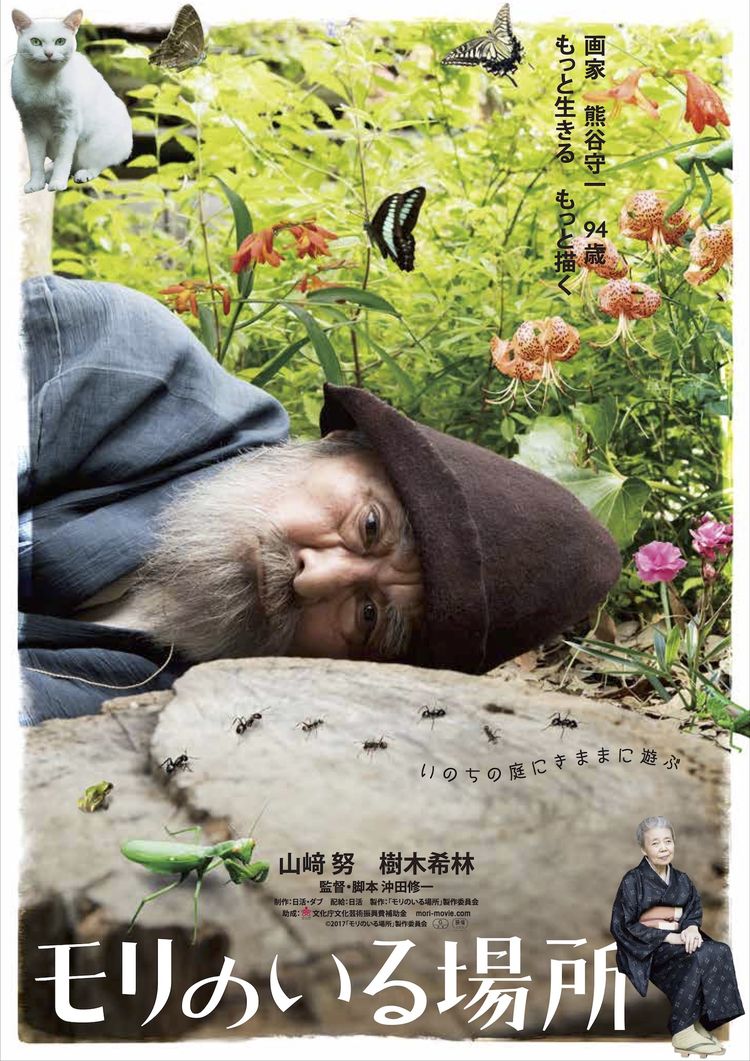
Mori an Artist's Habitat PosterThe world is vast and incomprehensible, but a lifetime’s study may begin to illuminate its hidden depths. At least it’s been that way for the hero of Shuichi Okita’s latest attempt at painting the joys and perils of a bubble existence. Mori, The Artist’s Habitat (モリのいる場所, Mori no Iru Basho) revolves around the real life figure of Morikazu Kumagai (Tsutomu Yamazaki), a well respected Japanese artist best known for his avant-garde depictions of the natural world, as well as for his eccentric personality. When we first meet him the early 1970s, Mori (a neat pun on his given name which uses the character for “protect” but also means “forest”), is 94 years old and has rarely left his beloved garden for the last 30 years. A man out of time, Mori’s world is however threatened by encroaching modernity – a gang of mobbed up property developers is after his land and is already in the process of constructing an apartment block that will rob Mori’s wonderful garden of its rightful sunlight.

Okita introduces us to Mori through an amusing scene which finds the Japanese emperor “admiring” one of his artworks only to turn around in confusion and ask how old the child was that made this painting. Spanning the Meiji and the Showa eras, Mori’s artwork is defined by its bold use of colour and minimalist aesthetic which outlines only the most essential elements of his subjects. As his wife of 52 years, Hideko (Kirin Kiki), explains to the various visitors who turn up at Mori’s studio/home hoping to commission him, Mori only paints what he feels like painting when he feels like painting it. Getting him to do anything else is a losing battle.

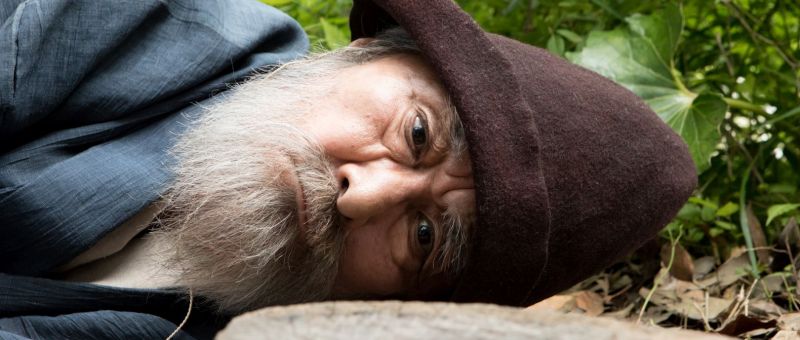
Painting mainly at night, Mori spends his days observing the natural world. Wandering around his garden he stops to sit in various places, gazing at the ants, and playing with the fish he put into a small pond dug way down into the earth over a period of 30 years. Despite his distaste for “visitors”, Mori has consented to be the subject of a documentary, followed around by a photojournalist (Ryo Kase) and his assistant (Kaito Yoshimura) keen to capture him in his “natural habitat”. The photographers, natural “shutterbugs”, gaze at Mori in the same way he gazes at his trees and insects. An irony which is not lost on the reticent artist.

Okita neatly symbolises Mori’s world as a place out of time by hovering over his desk on which lies a disassembled pocket watch. Eventually the watch will be repaired and time set back in motion but until now Mori’s garden has been a refuge of natural pleasures which itself contains the world entire. Receiving a surprise visitation from a supernatural being (Hiroshi Mikami), Mori is given an opportunity to explore the universe but turns it down. Firstly he doesn’t want to leave his wife on her own or see her “tired” by his absence, but secondly his garden has always been big enough for him and given thousands of years he fears he may never be able to explore it fully.

The garden, however, may not survive its owner. The 1970s, marked by early turmoil, later became a calm period of rising economic prosperity in which society began to move away from post-war privation towards economic prosperity. Hence our big bad is a property developer set on building apartment blocks – a symbol and symptom of the move away from large multi-generational homes to cramped nuclear family modernity. Unbeknownst to Mori, his garden has become a focal point for the environmental protest movement who have begun to set up signs and slogans around his home attacking the property developers for ruining a national landmark which has important cultural value in appreciating the work of one of Japan’s best known working artists.

Having lived through so much turmoil, Mori takes this in his stride. He knows his garden won’t last forever, and is resigned to the nature of the times. Mori may prefer to spend his days in quiet contemplation resenting the constant interruptions from all his “visitors” but makes time to talk seriously with those who seek his guidance such one of the developers (Munetaka Aoki) who’s brought along one of his son’s drawings, convinced that he must be a “genius”. Mori takes one look and tells him frankly that it’s awful, but adds that that’s a good thing – those with “talent” rarely do anything of note and even if it’s “bad” art is still art. Nevertheless there are those who try to profit from his work for less than altruistic purposes – the  hand-painted nameplate from outside the house is forever being stolen and he’s constantly petitioned to provide his services in service of someone else’s business.

Okita’s characterisation of the later life of a famous artist is another study of genial eccentricity as its hero commits himself fully to living in a way which pleases him, only bristling at those who describe his gnome-like garden presence as resembling a “Chinese Hermit Sage”. Mori himself is, of course, another living thing enjoying the natural world to its fullest and if it’s true that his time is ending there is something inescapably sad in looking up from the shadows of apartment blocks and finding nothing but lifeless concrete.


Screened at the 20th Udine Far East Film Festival. Mori, The Artist’s Habitat will also be screened as the opening gala of the 2018 Nippon Connection Japanese film festival, and will receive its North American premiere at Japan Cuts in July where Kirin Kiki will also receive the 2018 Cut Above Award.

Original trailer (no subtitles)

Inuyashiki (いぬやしき, Shinsuke Sato, 2018)

inuyashiki_poster_B1_0206D_fin_ol_3Japanese cinema has long been preoccupied by the conflict between age and youth though it usually comes down on the side of the youngsters, even when rebuking them for their selfish immorality. Inuyashiki (いぬやしき), adapted from the manga by Hiroya Oku, is similarly understanding but makes a hero of its sad dad protagonist whose adult life has been a socially acceptable disaster, while finding sympathy for his villainous teenage counterpart who resents his lack of possibilities in an already unfair world.

Unsuccessful salaryman Inuyashiki (Noritake Kinashi) has just moved into a new house of which he is very proud but his wife (Mari Hamada) and children find small and old fashioned. He’s bought sushi to celebrate the occasion, but the other family members ignore him and head out for dinner on their own. Held in contempt at home, Inuyashiki’s working life is also something of a disaster in which he is publicly berated by his boss who threatens to fire him, leaving Inuyashiki kneeling in supplication just to be allowed to work until retirement so he can keep up the mortgage payments on that new house (which he bought for his family who all hate him).

To make matters worse, Inuyashiki has also just received the news that he is suffering from terminal cancer and has only a few months to live. His only ray of sunshine appears when he finds an abandoned dog, Hanako, and decides to adopt her but his wife orders him to throw the dog out in case it messes up the house (that she already hates). Sadly walking Hanako to the park with the intention of sending her on her way, Inuyashiki is struck by a mysterious blast and later wakes up to discover he has become an all powerful cyborg with booster rockets on his back and guns in his arms.

Inuyashiki’s first instinct is that he can use his new found powers to save people. Contemplating his mortality, Inuyashiki was made to feel that his life had been a failure; he’d never done anything of consequence and had never been able to protect anyone. Reviving a wounded bird in the street, he realises he has the power to heal along with super sensitive hearing which allows him to hear the cries of those in peril.

Meanwhile, the teenager caught in the same blast, Shishigami (Takeru Satoh), is heading in the opposite direction. Shishigami is also filled with resentment though mostly as regards his poverty and comparative lack of possibilities. He hates that his single-mother (Yuki Saito) has to work herself to the bone because his father (Kiyohiko Shibukawa) left the family for another woman with whom he has built another home and become extremely wealthy. He hates that his video game otaku friend (Kanata Hongo) is mercilessly bullied and has stopped coming to school altogether rather than fight back. Filled with a young man’s rage and a mild kind of psychopathy, Shishigami doesn’t see why it’s wrong to become a bully rather than fighting them. Frustrated beyond reason he declares war on an uncaring society and sentences everyone in Japan to death for their indifference to their fellow citizens.

The conflict between the angel and the devil concludes in predictably bombastic fashion as our two cyborgs go head to head in a climactic battle for the soul of Japan. Strangely enough both men are motivated by love even if one’s actions are darker than the other’s. Inuyashiki wants to protect, to be someone his family can respect and depend on – he flees the scenes of his miracles because he isn’t interested in being a “hero”, just in being of use. Shishigami, by contrast, is motivated by love for his mother whose continuing suffering proves too much for him to bear though his attempts to take revenge only end in more tragedy. Mustering all the technology of the age from smartphones to live broadcasts, Shishigami makes himself a familiar face on TV sets and LCD screens across the country to preach his message of hate as a declaration of war.

Shishigami proclaims that Inuyashiki’s sense of justice is no match for his hate, but there is a definite irony in the squaring off of two men from different generations trying to figure out their differences by pounding the living hell out of each other and destroying half of Tokyo in the process. Still, that is in many ways the point as these two “gods” actively choose the sides of light and darkness, vying for the right to rule the future as forces of destruction or salvation.


Screened at the 20th Udine Far East Film Festival.

Original trailer (English subtitles)