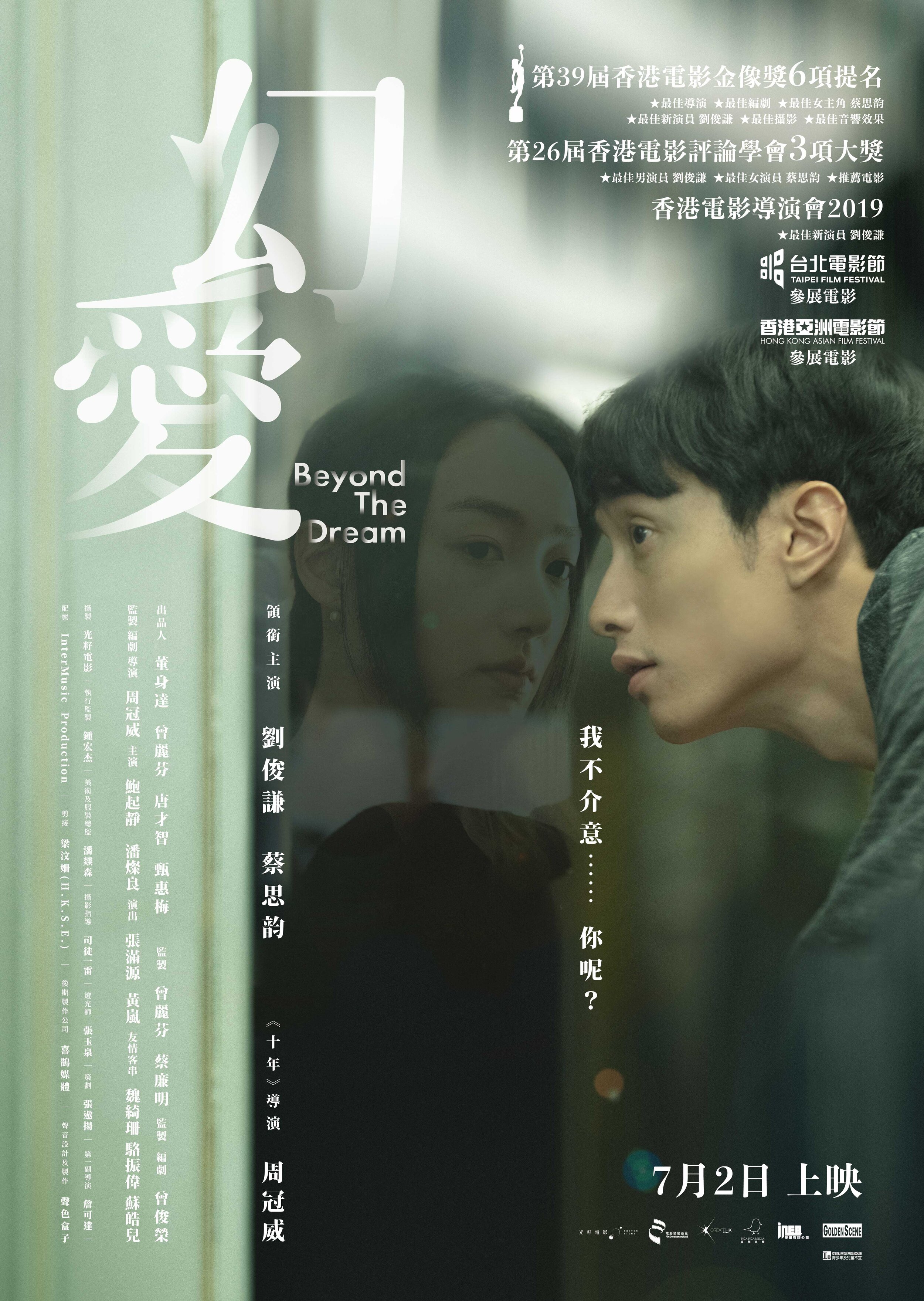
Beyond the Dream (幻愛, Kiwi Chow Kwun-Wai, 2019)

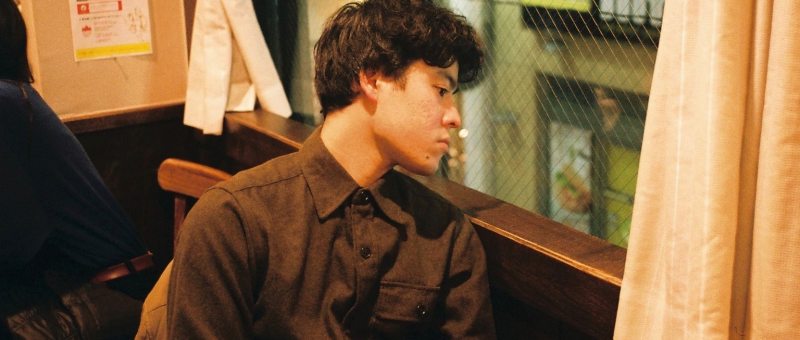
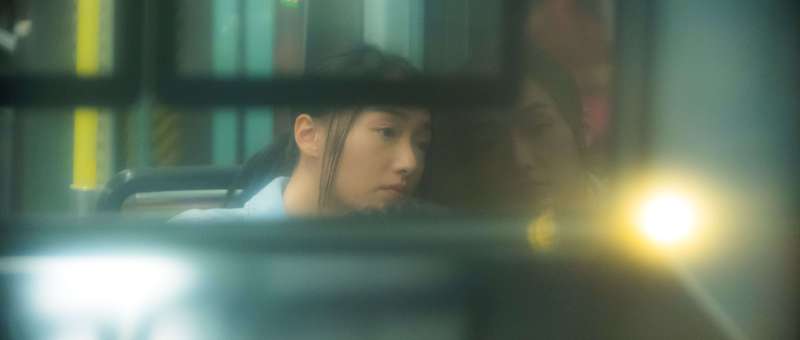
Two troubled souls battle illusionary love in Kiwi Chow Kwun-Wai’s existential romance, Beyond the Dream (幻愛). What is love when divorced from fantasy, and once you know do you have the courage face it? That’s a question asked by each of the mirrored protagonists who’ve convinced themselves they are unworthy of love while struggling to extricate themselves from past trauma and present insecurity as they find the sands of reality constantly shifting beneath their feet. 

Chow opens with a street scene, the evening crowds gently parting to find a woman in distress, Ling (Wong Lam), who eventually begins to take off all her clothes. While passersby stare and film her public breakdown, a man, Lok (Terrance Lau Chun-Him), who recognises her from a support group for sufferers of schizophrenia, comes to her rescue as does a mysterious woman who wraps her cardigan around her giving her both modesty and warmth. Helping Ling into an ambulance, Lok ends up with the mystery woman’s cardigan somehow captivated by her, touched by the way she came to Ling’s rescue when everyone else was intent on ridicule. Sometime later he is surprised to realise that the woman lives on the floor above him on his estate. Returning her cardigan he discovers her name is Yanyan (Cecilia Choi Si-Wan) and she lives with her violent drunk of a father (Ng Kam-Chuen). The pair become a couple and Lok starts to wonder if he should tell her about his struggles with mental health only for his symptoms to begin resurfacing. Much to his horror he realises that his relationship with Yanyan is nothing but a vivid fantasy, a figment of his illness which exists only his mind. 

Yet even fantasy is built on a grain of truth as Lok later discovers when “Yanyan” turns up at one of his support group sessions only she’s a post-grad psychology student by the name of Yip Nam who is looking for volunteers to participate in her research into erotomania in those diagnosed with schizophrenia. Nam hopes to find out if lack of love is a causal factor in the condition through the stories of those who become consumed by romantic delusion. Unfortunately, her project is rejected by her supervisor, Dr. Fung (Nina Paw Hee-Ching), on the grounds that she has no viable subjects. Lok would seem to be the ideal patient, were it not for the awkward fact of which Nam is still unaware that she herself is the subject of his fixation, the “real” woman who came to Ling’s rescue all those months ago. 

“Relationships are always your problem” Nam is warned, herself carrying the burden of a traumatic past which, according to her mentor Fung, has also convinced her that she doesn’t deserve love, mirroring Lok’s fantasy of Yanyan and her imprisonment at the hands of the abusive father who eventually keeps them apart. In her role as his therapist, she counsels him to “find your true love in reality”, interpreting his recurring dream as a metaphor for his desire to lose himself in the comforting fantasy of his illusionary love for Yanyan rather than take the risks concurrent with seeking happiness in the “real” world. But she herself is also seeking wilful oblivion in other kinds of illusionary romantic distraction pursued perhaps as a form of self harm or at least a means of blaming herself for something for which she has no need to apologise. 

For Lok, meanwhile, romance is still more uncertain, his sense of reality permanently impaired as he finds himself pulled between his idealised love for Yanyan and the problematic relationship with Nam while convinced that no one could ever love him because of his mental illness. “No matter who you really are, you’ll all leave me in the end” he sadly affirms, later advising Nam that “it’s time we wake up from our dreams” ironically advocating for a return to “reality” while simultaneously running from it. Continually divided in Chow’s elegant composition, forever gazing through mirrors and seeing only the reflection of unfulfilled desire, the lovers struggle to overcome their psychological barriers to move beyond the dream of love into something more concrete if perhaps no less illusionary, chasing self-acceptance in the eyes of another as they surrender to romantic destiny as its own kind of “reality”. 


Beyond the Dream screens at Chicago’s Davis Drive-in on Oct. 10 as the closing night of the 11th season of Asian Pop-Up Cinema.

Original trailer (English subtitles)
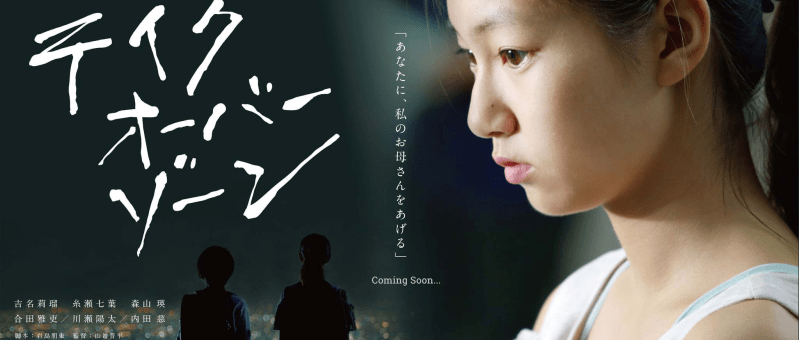
Take Over Zone (テイクオーバーゾーン, Shinpei Yamasaki, 2019)

The Take Over Zone (テイクオーバーゾーン) is where the heroine of Shinpei Yamasaki’s coming-of-age drama finds herself trapped, resentfully mired in adolescent confusion torn between the childish delusion of familial reunion and an adult acceptance of change. Sari (Riru Yoshina) is indeed on the run, a lonely loner convincing herself that freedom lies only in total independence while simultaneously justifying her new found appreciation for a team sport in insisting that they need her, basking in their gratitude when they win only thanks to her. 

Running may be the only bright spot in Sari’s life, though she can hardly be bothered even with that anymore. Two years previously her parents divorced. Sari’s mother Fumi (Chika Uchida) left with her younger brother Toma while she stayed behind with her feckless father Kenichi (Yota Kawase), a construction worker with a gambling problem. Forced to grow up all too soon, Sari is more or less looking after herself. Finding only beer in the fridge and a betting slip in the bin which explains why the cash jar is empty, she’s forced to raid her piggy bank for food while the house is a permanent mess. Understandably resentful, Sari is rude and petulant, talking back not only to her dad but to her teachers too. At school she’s a bullying delinquent, hanging out with the cool kids and picking on the captain of her track team, Yukina (Nanaha Itose). Seeking escape from her disappointing life, she tells her teacher she’s no interest in high school and plans to get a job, arrogantly refusing to train with her teammates preferring to hang out with the boys playing cards in the shed. 

A chance encounter with Toma in a local supermarket, however, begins to change her perspective. Her polar opposite, Toma is quiet and polite, though his awkward formality perhaps upsets her in his wilful distance after two years apart. Before long she runs into her mother too, discovering not only that her father hid from her the fact that she had remarried and returned to the area, but that she is actually married to Yukina’s dad which is somewhat pouring salt on the wound. Not only is her mother apparently happy, leading the kind of life she wanted to lead as a middle-class housewife, but she has a replacement daughter in Yukina who is everything she currently is not, the archetypal good girl. Bonding with Toma who is overburdened by his mother’s well-meaning ambition for him and dejected that the other kids don’t let him play because he’s no good at sports, Sari decides to run away childishly believing that the two of them can simply move in with grandma to be a family in rejection of their “selfish” parents. 

Sari resented her mother because she was always hounding her to study, perhaps a reflection of her dissatisfaction with their working class existence wanting to ensure her children enjoyed a more comfortable standard of life. Economic pressures do indeed seem to have been the motivating factor in the breakdown of the marriage, Fumi irritated by the exact same qualities in Kenichi which are beginning to drive Sari away, convincing her she’s better off alone than with her irresponsible father who has only casual employment with no prospect of advancement. She yearns for independence, not only for practical freedoms but for the emotional to simply not need to be burdened by disappointment or hurt. “Teams just hold you back” she snaps at her teacher threatening to quit the relay in favour of the solo race. 

Yukina meanwhile has problems of her own, missing her mother who passed away from illness while struggling to accept Fumi’s intrusion into her family home. A climactic event sees her moving towards the centre, claiming Toma as her own little brother while positioning herself as Fumi’s rightful daughter leaving Sari feeling further exiled, unable to process her resentment towards her mother for her abandonment while struggling to accept that her childish belief her parents would get back together and the family would be repaired will not come to pass. Yet it’s their shared love of running which eventually brings the two young women together, no longer rivals but teammates, later perhaps friends and then sisters as Sari comes to acceptance of her complicated family circumstances while realising just how unpleasant she has often been to those around her out of a mistaken attempt to push them all away. “I always ran like I was all alone” Sari admits, no longer running away but passing through her own take over zone, ready to face herself and her grief as she steps into the next stage of the relay race that is life.


Take Over Zone screened as part of Camera Japan 2020.

Original trailer (no subtitles)

108: Revenge and Adventure of Goro Kaiba (108 海馬五郎の復讐と冒険, Suzuki Matsuo, 2019)

In Buddhism, there are said to be 108 earthly desires, 108 lies, and 108 human delusions. As he points out however, all that is merely coincidence to Goro Kaiba, his petty revenge is founded entirely on the fact that a Facebook status in which his wife, using a pseudonym, detailed an affair with a lithe young contemporary dancer, garnered 108 Likes. Waxing self-referential, Suzuki Matsuo’s surreal sex comedy 108: Revenge and Adventure of Goro Kaiba (108 海馬五郎の復讐と冒険, 108: Kaiba Goro no Fukushu to Boken) in which he also stars, finds a middle-aged screenwriter somehow still trapped in adolescent insecurity, intensely self-involved as he pursues a “revenge” which is also a strange kind of ironic self harm intended to prove his manhood but accidentally exposing the love’s sordid underbelly in the vacuousness of its inversion. 

As the film opens, successful screenwriter Goro Kaiba (Suzuki Matsuo) is overseeing auditions for the musical adaptation of his greatest hit, Dancing in the Mental Ward. He tells us that he’s bored with his work and somewhat disrespectfully is actually writing a column due in a couple of hours’ time, barely paying attention to the actress as she valiantly perseveres with the less than stellar material before rudely dismissing her performance and suggesting she dump the boyfriend who helped her come up with it. Goro claims that he carries on in a job he hates for three reasons: he loves money, his wife’s a spendthrift, and he loves her. It’s something of a shock therefore when a young actress comes up to him after the auditions to ask for a private chat which turns out to be about something slightly different than he’d assumed. She shows him a Facebook profile she believes belongs to his wife, Ayako (Miho Nakayama), in which she claims to have fallen in love with a “contemporary dancer” named “Dr. Snake”. 

Confronted, Ayako admits “everything”, but explains that the Facebook profile is nothing more than wish fulfilment, a romantic fantasy to distract from the emptiness of her married life. Predictably, Goro fails to pick up on the fact there are obviously problems in their marriage, fixating on the extent of Ayako’s relations with Dr. Snake of whom she now has a large tattoo on her shoulder, something which he hasn’t noticed because they have not been intimate in some time. Ayako assures Goro that she means to stay with him forever, but will be fantasising about Dr. Snake when they make love, further hinting at another problem undermining their relationship. Goro, however, is not convinced and starts talking to his friends about divorce only to be reminded Ayako will be entitled to half his savings if he splits up with her. Consumed by pettiness, he decides to spend all the money so she’ll be left with nothing by sleeping with 108 women as “revenge” for her infidelity. 

Of course, the problem is less Ayako than his wounded male pride and emotional immaturity. Perhaps he’s doing this because he can’t admit to himself how much he really does love his wife and how hurt he is by her “betrayal”, but in any case he makes it all about him, refusing to engage with the problems in his marriage or reflect on the fact Ayako is obviously unhappy and unfulfilled. He tries giving some of the money away to his ex-wife and 20-year-old son Michio (Louis Kurihara) from whom he has apparently been withholding alimony and child support, put out that his ex won’t take it because she has no need of him, a man who abandoned her. Not abandoned, he points out to his son, simply “ran away”. In an awkward conversation, he goes so far as to blame Michio for his family’s collapse, claiming that he left essentially because Michio didn’t love him enough while complaining that no one seems to appreciate him. 

Meanwhile, we also realise Goro has been hypocritically carrying on a casual affair with an old friend, Mitsuko (Natsuko Akiyama), perennially unlucky in love but planning to put an end to their “arrangement” to marry a much younger man she is fully aware is only after her money. As part of his sexploits, Goro hires a high class call girl, Azusa (Shiori Doi), but she is also romantically challenged in that despite being the number one herself, she’s only really doing this to make her host club boyfriend top dog at his establishment. In love, it seems there is always some kind of transaction, a misplaced desire. Edging deeper into his pointless and petty quest to bed 108 women, it’s not until late in the game as he’s overseeing a pool full of glistening, gyrating bodies that he perhaps begins to realise how vacuous and meaningless it all really is, sordid in its emptiness. By then, however, he’s gone too far to turn back. 

Better to him than he deserves, Ayako eventually confesses that she was “fighting the inevitability of ageing”, both facing and refusing to face the fears which informed the choice she made to retire from acting and become his wife, but Goro remains petulant and immature, indulging in a romanticisation of their early romance but unwilling to confront himself, his fears, and the real reason he’s embarked on this pointless and silly quest to vindicate himself through aggressive masculinity. Worryingly indulging in fantasies of sexualised violence against his wife which admittedly have an unexpected pay off, Goro struggles to identify what it is he’s really reeling from while pursuing not so much pleasure but misdirected pain in flight from adult vulnerability. In his usual style, Matsuo has ironic fun with Goro’s flights of fancy, suddenly breaking into song like one of his shows while simultaneously mocking them and undercutting Goro’s thinly veiled misogyny by having the leading actress abruptly walk out in protest against his childishly smutty song about the joys of sex. Nevertheless, we leave Goro exactly where we found him, all at sea torn between the risky rewards of honest romantic connection and the dubious pleasures of hedonistic conquest. 


108: Revenge and Adventure of Goro Kaiba screened as part of Camera Japan 2020.

Original trailer (no subtitles)

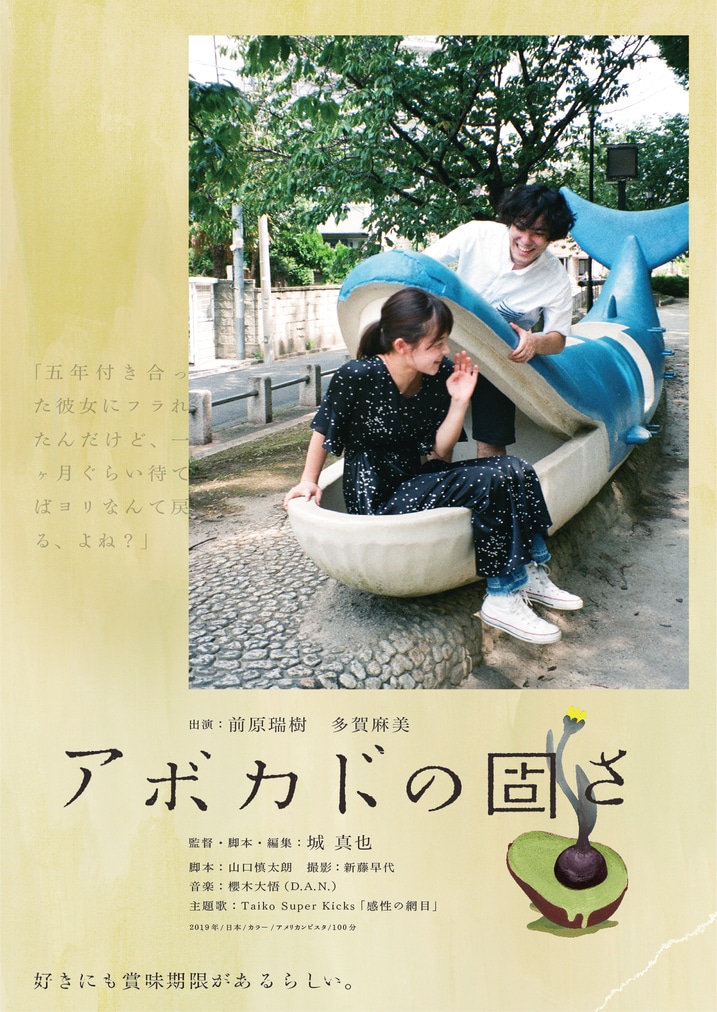
The Hardness of Avocado (アボカドの固さ, Masaya Jo, 2019)

“Reality might be bitter, but at least your coffee is sweet” according to the “gloomy” voiceover performed by aspiring actor Mizuki Maehara in Masaya Jo’s The Hardness of Avocado (アボカドの固さ, Avocado no Katasa). In many ways a tale of quarter-life inertia and youthful denial, Jo’s indie drama finds its struggling hero looking for the sweet spot, trying to grab the avocado at the opportune moment between rock hard and squishy mess but floundering in world which seems both continually confusing and perhaps inherently unfair. 

At 24, Mizuki (Mizuki Maehara) is a jobbing actor living with his sister (Zuru Onodera) in a small apartment. He’s been in a committed relationship with Shimi (Asami Taga) for the last five years and is already thinking about moving in together, asking her to help him pick out a sofa-bed after their date to the movies where she fell asleep and he ended up meeting a fan who recognised him from a previous film. Shimi, however, seems irritated, eventually answering Mizuki’s well meaning question about what she’d most like to do right now with the answer “break up”. In a pattern which will be repeated, Mizuki reacts somewhat petulantly, walking off with a “fine then” only to end up regretting it later. Unable to accept that Shimi is really ready to move on, he decides to give her (and himself) one month before, he assumes, they’ll get back together having each grown as people during their time apart. 

This baseless optimism and mild sense of self-centred entitlement are perhaps the very things that Mizuki is supposed to be outgrowing even as he struggles to get over Shimi. Having dated for five years, Mizuki took his relationship for granted, assuming it was settled and destined to go on forever. Shimi’s declaration comes as a complete surprise, shocking in its abruptness though we can see that she seems irritated by him and that it may be more than a temporary bad mood. She tells him that she needs “freedom” and time to herself, but it seems equally likely that, from her point of view, the relationship has simply run its course. Looking through his mementos, Mizuki finds a 20th birthday card from Shimi that promised she’d always be around to encourage him, but relationships entered in adolescence rarely survive the demands of adulthood and she, it seems, is after something more while all Mizuki seems to want is more of the same. 

Moping about the city, he engages in borderline misogynistic banter with his friends, occasionally irritating even them in his resentment towards a nerdy guy who has finally got a girlfriend. He finds himself applying for a job in a convenience store to make ends meet between auditions seated next to a pair of students who roll their eyes, mocking him for his lack of success as a man in his mid-20s still part-timing just like them. Meanwhile, he develops an unwise fondness for a woman he meets on a shoot, chatting her up at the afterparty but saying the quiet part out loud as he confesses his plan to have a fling while fully believing he’ll be getting back together with Shimi when the month is up. Despite the fact she has also told him she has a boyfriend, he suddenly declares his love to her, once again petulantly put out by her irritation as she points out how inappropriate he’s been seeing as all he’s done is talk about Shimi.

Shimi’s mother (Kumi Hyodo) can’t understand why she’d break up with someone as “nice” as Mizuki, and Mizuki is indeed “nice” if obviously imperfect, an earnest sort of man working hard to achieve his dreams, but she apparently wanted something less superficial, a more ”passionate and loving relationship” now that she’s outgrown adolescent romance. Mizuki is once again surprised when she brushes off his romantic overture, petulantly walking home while beginning to accept that something has indeed changed. Finally fastening the screws on his new chair (in lieu of the bed) he begins to regain some solo stability, a little more self-sufficient at least even if he still has some some growth to achieve on his own. A whimsical tale of millennial malaise and self-centred male entitlement, The Hardness of Avocado is a gentle advocation for learning to let go when something’s past its best while accepting that sometimes all you can do is set yourself right and start again. 


The Hardness of Avocado screened as part of Camera Japan 2020.

Original trailer (no subtitles)

Seven Days War (ぼくらの七日間戦争, Yuta Murano, 2019)

“Youth is the liberated zone of life” according to the voice of experience in Yuta Murano’s impassioned anime adaptation of the cult novel by Osamu Soda, Seven Days War (ぼくらの七日間戦争, Bokura no Nanoka-kan Senso). Featuring a number of meta references to the ‘80s original and live action movie, Murano’s stylistically conventional adaptation shifts the action to Hokkaido and the present day encompassing such themes as economic strife, systemic political corruption and small town nepotism, migration and exploitation, but is most of all a coming-of-age story as the rebellious teens meditate on the costs of adulthood, resolving not to become the vacuous and resentful adults they see all around them who have traded emotional authenticity for a mistaken ideal of civility. 

Obsessed with 19th century European military history, high schooler Mamoru (Takumi Kitamura) complains that no one takes any interest in him and remains too diffident to confess his feelings to the girl next door, Aya (Kyoko Yoshine), with whom he has been in love for the past six years. Hearing that Aya and her family will soon be moving away because her authoritarian politician father has been offered the opportunity to take over a relative’s seat in Tokyo gives him the boost he needs, nervously suggesting that he and Aya run away together so they can at least celebrate her upcoming birthday the following week. Aya surprises him by agreeing, but rather than a romantic getaway for two she decides to invite several not particularly close friends from school, holing up in a disused coal refinery on the edge of town. Once there, however, they realise someone has beaten them to it. Marret (Makoto Koichi), the child of undocumented migrant workers from Thailand, has been hiding in the building after being separated from their parents when the building they were living in was raided by immigration authorities. 

Though the group is not universally in favour, they quickly find themselves deciding to protect Marret while trying to help find the kid’s family using both their ingenuity in fortifying the coal refinery and their youthful know how in weaponising the internet and social media to win sympathy and fight back against the oppressive ideology of the authorities. Yet Marret finds it difficult to trust them because they occupy a liminal space between the idealism of childhood and the cynicism of maturity. Marret’s family came to Japan on the false promise of finding good employment only to be ruthlessly exploited, convincing the idealistic youngster that all adults lie and can never be trusted. Mamoru, whose name literally means “protect”, does his best to save everyone but temporarily gives in to despair, confessing that he is just an “optimistic child” lacking the power to do any real good, only later coming to a revelation that the problem with the duplicitous adults they’re rebelling against is that they continue to run from their emotions and the pain of not being able to be fully themselves for fear of not fitting in has made them cruel and cynical. 

Honda (Takahiro Sakurai), the conflicted assistant to Aya’s authoritarian father, tacitly approves of the teens, affirming that the young always fight for the things they believe in but then rebels against himself in doxxing them, exposing both their identities (sans Aya’s) and dark secrets online in an attempt both to intimidate and to drive them apart. But the kids run in another direction. They elect to share their truths and in the sharing neutralise the threat while gaining the confidence that comes with deciding not hide anything anymore. The sharing is it seems what matters, a collective unburdening which paves the way for emotional authenticity but sidesteps the need to consider the fallout from the concurrent revelations. A heavily telegraphed confession of same sex love, for example, is accepted by all though there is no explicit indication as to whether or not is reciprocated save that is in no way rejected. 

In any case, the kids decide that being their authentic selves is more important than conformity and make a mutual decision to respect the same in others, something which is eventually mirrored in those like Honda among the duplicitous adults touched by the kids’ pure hearted rebellion. Necessarily, that leaves the weightier themes such as the plight of undocumented migrants, the casual cruelty of the authorities, small-town corruption and persistent nepotism relegated to the background, perhaps superficially considered seen trough an adolescent lens, but nevertheless products of the inauthenticity of the cynical adult world the kids are rebelling against. A heartfelt advocation for the idealism and universal compassion of youth carried into a more open adulthood that comes with emotional authenticity, Seven Days War leaves its heroes with the spirit of resistance, defiantly themselves as they step into an adult world uncorrupted by cynicism or prejudice.


Seven Days War screened as part of Camera Japan 2020.

Original trailer (no subtitles)

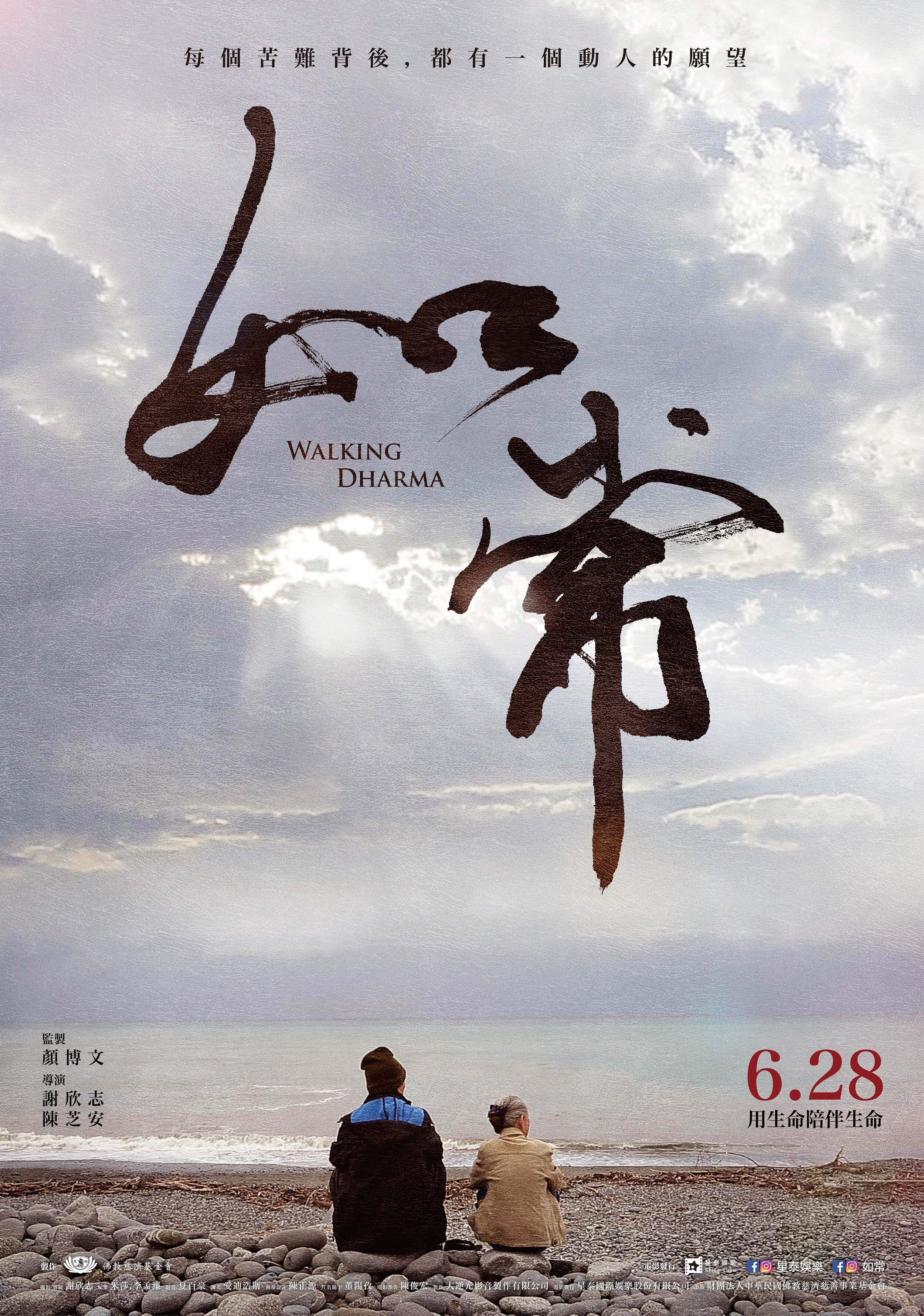
Walking Dharma (如常, Hsieh Hsih-Chih & Chen Chih-An, 2019)

The image we hold of Taiwan is of a prosperous nation among the most liberal in Asia, yet behind the shining cities there are still those experiencing hardship who might perhaps have fallen through the cracks if it were not for the efforts of the volunteers from the Tzu Chi Foundation. In Walking Dharma (如常, Rú Cháng) documentarians Chen Chih-An and Hsieh Hsin-Chih spent 18 months shadowing some of the organisation’s members many of whom are themselves elderly and have experienced their own share of suffering but equally of mutual support which they have committed to passing on through helping others. 

Testament to changing times, the first recipient of the volunteers’ care is an elderly woman who has had a nasty fall. She later thanks them for all their help in Japanese, a reminder that she was born in another world, raised in the colonial era. She is also one of many isolated older people in the nation’s ageing population, living all alone either with no surviving family around to care for them or perhaps with children who for whatever reason are not able to leaving them entirely dependent on the kindness of the volunteers. The foundation organises a crew to come round and clear the large amount of debris in front of the woman’s home to make it safer for her so she won’t fall again while trying to sort out her medication and make sure she’s safe during an upcoming typhoon. 

Meanwhile, they are also there for children and families who find themselves in difficult circumstances particularly those in which a parent has passed away unexpectedly or is suffering with a chronic illness which both renders them economically vulnerable and places an undue burden on the children whose academic prospects are then reduced while they are needed to care for their parent and siblings. The organisation provides educational assistance to cover school fees for children who find themselves in difficulty, emphasising that education is their best path out of poverty. One young woman later makes a heartfelt visit to one of the elderly volunteers to thank him for all his support over the years which has helped her to gain a place at a prestigious university. Not everyone is convinced, however, including one elderly grandmother who is reluctant to allow her granddaughters to pursue education at high school and beyond, partly because she fears they will go off the rails like the mother who abandoned them to her, and partly for more selfish reasons in that she too will be left alone with no one to look after her in her old age. Thanks to the gentle advice of the volunteers, the grandmother eventually relents and allows the young women the freedom to pursue their dreams. 

Though the members are all obviously adherents of Buddhism and committed to the teachings of the Tzu Chi Foundation which is admittedly cast in an extremely uncritical light, they are prohibited from preaching while offering help as the organisation has a strict policy in place to pursue a secular outlook. The assistance they provide is offered without seeking anything in return save the greater happiness of those they help, gaining a sense of joy in human solidarity as they witness the difference their intervention can make in the lives of others. There are some who might not want what they’re offering, or at least all of it, including one young man and his hearing impaired father who insist that they’re fine with heating up water the old fashioned way and don’t see the point in getting it piped in with a modern heating system, but the volunteers take it all in their stride always respecting the wishes of those they’ve come to help while continuing to offer advice and companionship. 

Yet it takes its toll on them too, a doctor confessing that they often see members of the Tzu Chi Foundation coming in after pushing themselves too hard, failing to look after themselves in their commitment to helping others. All of the volunteers we meet are retirees, one elderly gentlemen later heartbroken when the decline of his own health prevents him from continuing to volunteer. Nevertheless, they all emphasise that helping others is what gives their life meaning, enriching their experience as they find joy in alleviating suffering. A gentle and heartwarming reminder that we’re all in this together, Walking Dharma is testament to the existence of goodness in an all too often indifferent world.


Walking Dharma streams in the US until Sept. 26 as part of the 11th Season of Asian Pop-Up Cinema.

Original trailer (English subtitles)

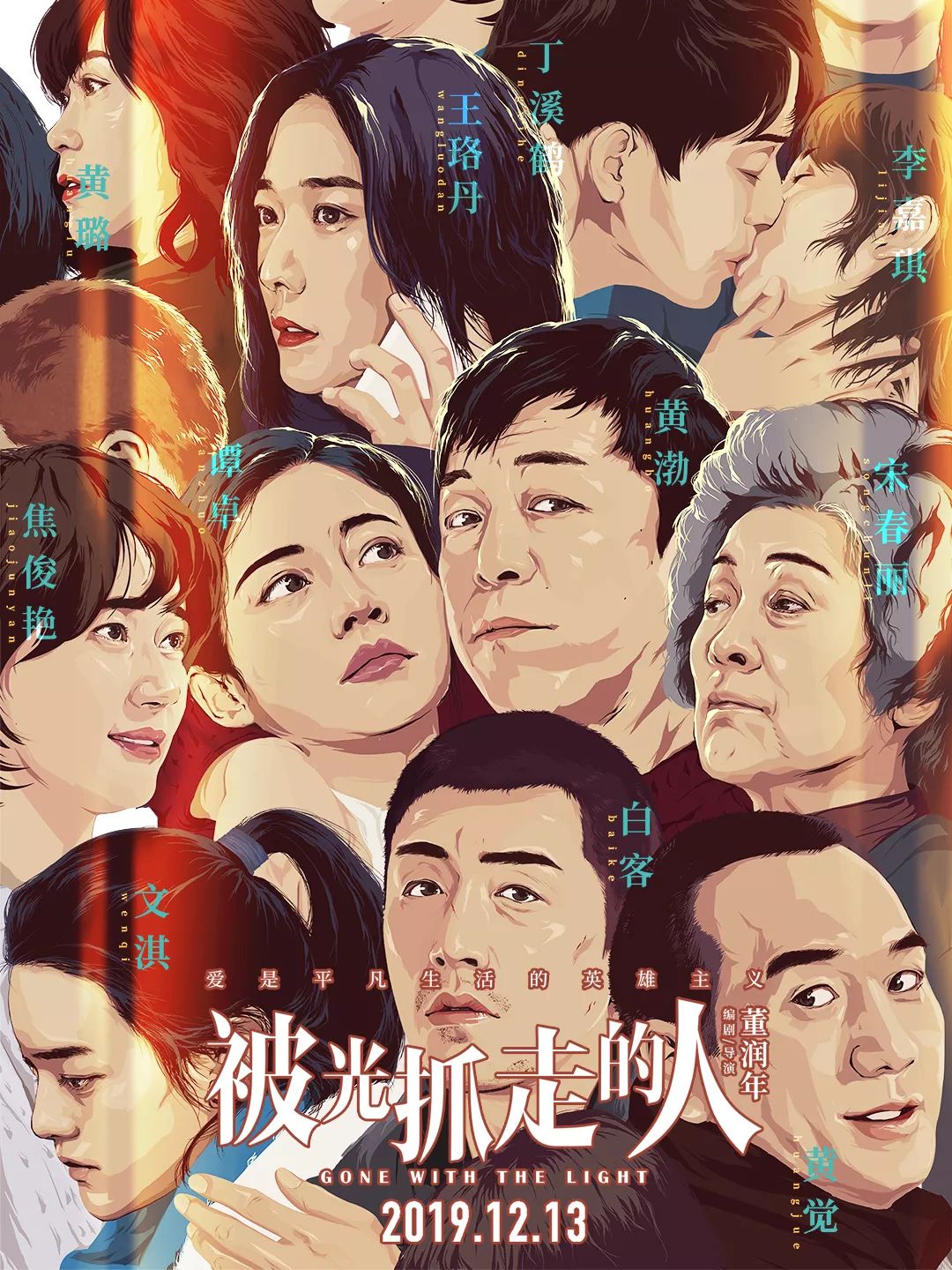
Gone with the Light (被光抓走的人, Dong Runnian, 2019)

What is love, and in the end does it really matter? It’s a question the mostly middle-aged couples of Gone with the Light (被光抓走的人, Bèi Guāng Zhuāzǒu de Rén) who perhaps assumed they were past such existential questioning find themselves contemplating after an unprecedented event causes the disappearance of seemingly random people from all over the world giving rise to the rumour that those taken were those truly in love. But if that’s so, what does it mean for the overwhelming majority left behind, suddenly lonely and uncertain wondering if they’ve been spared or judged and found wanting for their lack of emotional fulfilment. 

At 10am one spring morning, a brief flash of light creates a slight temporal disturbance causing a small percentage of the population to simply vanish. No one knows what happened or where they’ve gone, but the connection is later made that many seem to have been taken in pairs giving rise to the theory that the disappeared are the only true lovers. This is a minor problem for some of the left behind who have lost spouses twice over, not only literally but emotionally in realising that their loved one was in real, deep love with someone else. Meanwhile, those not taken begin to wonder why, questioning the validity of their relationships, doubting that their loved ones really love them but not quite daring to ask the same question in reverse. 

Dong opens the film with a vox pop session questioning several people about the nature of love, some of whom we’ll get to know better and others not. Our hero, school teacher, Wenxue (Huang Bo), unconvincingly claims that he does not put any stock in the admittedly unscientific theory that only true lovers were taken and that the rumours have not affected him or his wife but as we later see they have profoundly unsettled his unexceptional, middle-class family life which was at least superficially happy or perhaps merely unhappy in the most ordinary of ways. Before the light, we see him annoy his wife by waking her up smoking in bed before they have perfunctory, routine sex over which they discuss Wenxue’s hopes for promotion and whether or not it’s appropriate to schmooze with the headmaster to smooth the path. The fact they weren’t chosen eventually becomes a kind of embarrassment, the promotion going to a man whose wife disappeared on him for the slightly strange reason that being betrayed in love somehow grants him the moral high ground. Wenxue, like many, goes to great lengths to excuse himself, getting a fixer to photoshop pictures of his wife along with train tickets to make out she was in another town when the light descended.

Meanwhile, Li Nan (Wang Luodan), a woman who was in the middle of trying to divorce her husband when the light struck finds herself accosted by his mistress (Huang Lu) demanding to know where he is seeing as he did not ascend with her. The obvious conclusion is that he had another woman, but the quest forces each of them to reassess their true feelings towards the missing man, the mistress desperate to prove she wasn’t just an “adulteress” but a woman in love, and the wife that she really is ready to let him go. A young woman (Li Jiaqi) who threatened to commit suicide by jumping off a roof when her parents tried to stop her marrying her boyfriend (Ding Xihe) suddenly doubts her feelings when her parents disappear together while she and the man she thought she loved are left behind. A petty thug (Bai-ke), in the only subtle implication of a same sex love, becomes obsessed with the idea that his friend has been murdered by a TV presenter who had been bothering him and his death has been covered up to look like one of the disappearances, perhaps again hoping to find evidence against a romantic rejection. 

Talking to another man in a similar situation Wenxue is given a dressing-down, reminded that he’s been extremely self-involved and that the problems he’s now able to see in his marriage thanks to the light were there all along, only now he’s refusing to face them in a much more direct way. He couldn’t or chose not to see that his wife was lonely and filled with despair while flirting with an equally lonely woman at work. His confrontation with her provokes his only real moment of emotional reckoning as they each reflect on the fantasy of romance and its capacity to dissipate when realised. Walking in on his teenage daughter getting dumped for the first time he’s perhaps in the best position to offer advice, even if it’s of the fairly prosaic kind to the effect that she’ll get over it in time. “Your lies make me ashamed” she’d fired back at her parents’ middle-aged hypocrisy, a very ordinary marriage in which perhaps the “love” has gone, in one sense, but equally might be succeeded by something else. “It’s alright, you will know it in the future” Wenxue tells his heartbroken daughter but might as well be talking to himself, beginning to feel the love after love in conceding that perhaps this is what “love” is rather than any kind of “rapture” literal or otherwise. A beautifully pitched meditation on the consequences of love, the madness, violence, and loss, Gone with the Light finds its release in stillness and a gentle contemplation of that which remains when everything else is burned away. 


Gone with the Light streamed as part of this year’s New York Asian Film Festival.

Original trailer (Simplified Chinese subtitles only)

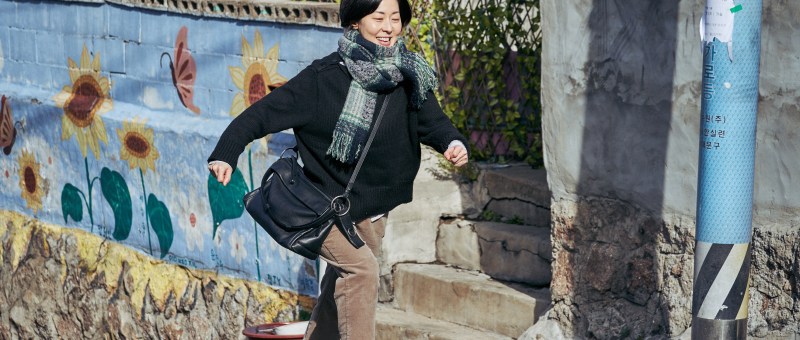
Lucky Chan-sil (찬실이는 복도 많지, Kim Cho-hee, 2019)

Life can be cruel and unpredictable. The titular heroine of Lucky Chan-sil (찬실이는 복도 많지, Chansilineun Bokdo Manji) thought she’d go on making movies with the same group of like minded people until the day she died only to have the rug pulled from under her by an ironic twist of fate that leaves her feeling worthless and exiled as if she’s wasted her youth on a one-sided love affair with cinema. What are you to do when your whole world collapses and you aren’t even sure who you are anymore? The answer, apparently, is to “dig deep”, maybe make a few mistakes, but figure out what it is you really want and then do that. 

The trouble is, all Chan-sil (Kang Mal-geum) had ever thought of doing was making movies. She’d been a long term producer to a notable indie auteur, but when he suddenly dies at the launch party for their latest film it leaves her without a career. Though a top industry figure had previously described her as the hidden gem of Korean cinema, a statement that seemed too effusive to be sincere even in the moment, she later tells her she doesn’t see the point in giving her a staff job because she’d only ever worked with the same director and for auteurs the producer is irrelevant. He would have made the same film without her or with literally anyone else. Even Chan-sil’s new landlady (Youn Yuh-jung) seems intent to put the boot in asking a genuine question as to what it is a producer actually does. Chan-sil tries to explain, but only ends up talking herself into another spiral of despair in wondering what exactly it was she was doing all these years. 

To ends meet she moves into room in a house lodging with an elderly woman who keeps a locked room Chan-sil is instructed not to enter. She also ends up becoming a cleaning woman/assistant to an eccentric actress friend with problems and insecurities of her own of which her timekeeping is only one. Sophie (Yoon Seung-ah) is also taking French lessons from secret indie filmmaker Young (Bae Yoo-ram), on whom Chan-sil gradually develops an awkward crush unsure in herself if she’s actually interested in him, in romance in general, or simply lonely and losing faith in cinema which she realises she had always used to fill the void of the emotional intimacy otherwise missing in her life. 

She is indeed a keen cinephile, going off Young when she tells him of her favourite filmmaker Ozu, only for him to admit he found Tokyo Story boring because “nothing happens” while expressing a preference for “entertaining” films like those of Christopher Nolan and retro hits from Hong Kong. That might be one reason Chan-sil finds herself haunted by a strange ghost (Kim Young-min) claiming to be Leslie Cheung and dressed in the white singlet and boxers he wore in an iconic scene from Days of Being Wild. Nevertheless, Leslie ends up being a sympathetic sounding board, giving her little bits of life advice and encouragement that finally allow her to rediscover her pure love of cinema aside from her industry betrayal. 

Director Kim Cho-hee draws on her own experience as a former producer who worked with the prolific Hong Sang-soo from 2008 to 2015 though her film is perhaps both a winking homage and rejection of Hongism. She opens with a Hongian title sequence featuring stark names against rattan, in itself a reference back to the Ozu Chan-sil claims to favour, before ironically expanding from 4:3 to a more comfortable widescreen as Chan-sil’s world implodes, killing of the indie auteur at a trademark Hong soju session. She also plays with doubling and symmetry, Chan-sil’s attempts to help her landlady learn to read cut against those of Young struggling to teach Sophie French while we learn that the landlady once had a daughter who loved movies and Chan-sil had a grandma who never learned to read or write. But unlike one of Hong’s self-obsessed directors, Chan-sil’s introspection has a more open quality, deciding that she wants to know what it is to really live while accepting that for her cinema is a part of that. Kim ends, literally, with the light at the end of the tunnel while a ghost applauds in a standing ovation, perhaps joining in with the audience as they celebrate Chan-sil’s success in finding her way out of a mid-life crisis and into a more positive future.


Lucky Chan-sil streamed as part of this year’s New York Asian Film Festival.

Original trailer (English subtitles)

Leslie Cheung in Days of Being Wild

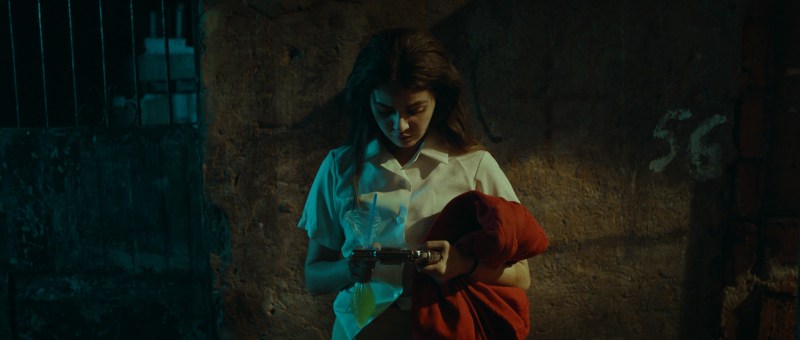
The Girl and the Gun (Babae at Baril, Rae Red, 2019)

“Everything is personal” according to one extremely oppressed young man in Rae Red’s neo noir voyage through the legacies of authoritarian violence, The Girl and the Gun (Babae at Baril). Drawing a direct line from Marcos-era oppression to Duterte’s Philippines and the war on drugs, Red’s debut solo feature is an irony-fuelled inquisition of the modern society equally ruled by fear and desperation in which many feel violence is the only recourse against their sense of despair only to discover that violence breeds only more of the same in a nihilistic spiral of hopeless impotence. 

The never named heroine (Janine Gutierrez) is a meek and mild young woman who works in a department store where women, in particular, are expected to be prim and proper. The girl, however, is forever pulled up about the ladder in her tights, seemingly her only pair and as we’ll see she cannot afford to buy a replacement nor will one be provided for her by her employers who pat down employees as they leave the store each evening to ensure they haven’t stolen anything. Despite this however she believes she works hard and is under-appreciated, her sense of disappointment palpable as she witnesses another young woman be named employee of the month. Her colleagues view her as aloof because she is always the last to leave the building and never joins them for drinks, little knowing that it’s not her shyness that keeps her away but shame in her poverty. She has a long and arduous journey home to the poor part of town where she shares a room with another young woman, unable even to make her rent because she sends most of what she earns to the mother she apparently feels unable to return to. For all these reasons, she finds herself alone with a predatory colleague (Felix Roco) who rapes her, sheepishly apologises, and then returns with more threatening violence to advise her to keep her mouth shut. 

The evening before she’d heard a gun shot, left her apartment to investigate and seen a man run away, noticing an abandoned pistol with a heart on the barrel discarded in a rubbish bin. After the rape, she picks it up, immediately pointing it directly at the abusive boyfriend of her roommate. The gun gives her a sense of empowerment that counters the trauma of her victimisation. She is already beyond caring and can now say all the things she’s ever wanted to say to the men who treat her with such utter contempt, taking a flirty customer to task for his inappropriate behaviour with his young daughter sitting right next to him, and eventually giving her boss a piece of her mind when he finally fires her over something as petty as a barely visible uniform infraction. 

The girl had not usually been the type to complain, both her sleazy landlord and priggish boss keen to tell her that there are plenty of people waiting to take her place as if she should be grateful that her awful life is still not more awful. She and her friend dream of escaping the city, going home, or at least far away to a place where they could live a better life. Jun Jun (Elijah Canlas) the teenage drug dealer from the news reports dreams of something similar, lamenting most of all that he had homework due before he became the subject of a manhunt with which he’d struggled. He wonders how he might have done. His friend gives him all his savings which he’d been collecting for his own escape, hoping to return to his mother with his younger sister in tow in order to save her from a father he at least fears is abusive. 

Tracking through the history of the gun before it found its way into the hands of the girl, Red takes us back to the authoritarian violence of the Marcos regime as a nervous policeman assassinates “activists” in place of the current “drug dealers”, his son eventually picking up his gun a “policeman” like his father but filled with resentment towards inescapability of his fate. The gun passes from hand to hand, a child sticking the little heart sticker on it, creating only more chaos wherever it goes. It gives the girl the courage she thought she lacked to seize her agency, to talk back, to be “unladylike” in insisting on her equality in the face of the countless men who ignore, cat call, and abuse her. But the gun itself is not enough, her quest for violent vengeance hollow and unfulfilling, the only real liberation coming as she decides to abandon it in a final act of catharsis that breaks the cycle of violence and oppression which had trapped each of the gun’s owners. As a boy had said, it’s all personal. You might think it’s nothing to do with you, but you can’t escape the oppressions of the world in which you live be they poverty, misogyny, or authoritarianism. 

Largely taking place at night, Red bathes her city in the tones of neo noir, a land of shadows among neon, a shining cityscape of high rise buildings the like of which neither the girl or the street kids are ever likely to enter. Making fantastic use of music from the noirish jazz to the nostalgic pop of the oppressive ‘80s she fully embraces the pulpy exploitation of the material but always maintains a sense of playful irony, never forgetting the full import of her sometimes grim satire of life on the margins of Duterte’s Philippines as her variously oppressed protagonists seek freedom in violence but find only more constraint in the depths of nihilistic despair.


The Girl and the Gun streamed as part of this year’s New York Asian Film Festival.

Original trailer (English subtitles)

Baseball Girl (야구소녀, Choi Yun-tae, 2019)

According to the title card which opens Choi Yun-tae’s Baseball Girl (야구소녀, Yagoosonyeo), an obscure regulation in the founding principles of the Korean Baseball League placed a bar on players who were “biologically non-male”, a ban which was struck down in 1996 allowing women to play professionally though attitudes it seems are much harder to change than regulations. In contrast to the grand tradition of Korean sports dramas, the contest is not a game but the right to play in one and the opposing team not talented rivals but sneering sexism and a conformist society. 

Joo Soo-in (Lee Joo-young) made the papers as the first girl to play in her high school team in over 20 years. Casting an eye around her room we see her trophies and discover that she is a talented pitcher known for top speed fastballs, but then as others seem to put it her balls are only fast “for a girl”. All she’s ever dreamed of is playing professionally and, after all, there’s nothing in the rulebook to say she can’t but that’s all anyone ever tells her. Why can’t I? she asks them, but the only answer they have for her is that it simply isn’t done. Lined up with her teammates following a meeting with a scout from the big leagues, Soo-in watches as only one of her friends, Jeong-ho (Kwak Dong-yeon), is picked. The others all walk off with resignation, accepting that they’ll need to find alternate careers but Soo-in doesn’t back down. 

Soo-in’s determination places her at odds with her working class family, her harried mother (Yum Hye-ran) continually insisting that she’s being childish and unreasonable and should give up her dreams to do something more practical with her life or risk becoming like her father (Song Young-Kyu) who is perpetually unemployed, unable to provide for the family while repeatedly failing the exam to become a licensed estate agent. There’s no shame in giving up when there’s no chance of success, her mother tells her, aligning her quest with her father’s as an egotistical act of prideful selfishness. As a teenage girl, however, Soo-in cannot help but feel the slight of her parents’ lack of support, resenting her mother’s understandable prioritisation of the ability to earn as she pushes Soo-in towards taking an office job in the factory where she works right out of high school in the belief that she’s helping her towards an economically stable life. 

Meanwhile, the new coach on the team, Jin-tae (Lee Joon-Hyuk), is quick to sideline her, viewing her as ridiculous and deluded. It’s not because you’re a girl, he tells her, it’s that you aren’t good enough, paradoxically insisting that she never could be because of the “limitations” of her female body which make it impossible for her to compete with men who also, as he points out, are extremely unlikely to make it as professional players. She tells him that he’s wrong, vowing to pitch at a speed unheard of, certain that if achieved the leagues would have to take her. Jin-tae has problems of his own, a never was player who wasted his youth trying to turn pro, became an alcoholic, and ruined his marriage. It’s understandable that his experiences have turned him cynical and mean, but something about Jin-soo’s determination, along with her strong skillset, begins to move him. Maybe he thinks it’s hopeless too, but it would be wrong to deny her the right to try. 

The biggest battle Soo-in faces, however, is from other players. Jeong-ho relates how in their little league days she was the only girl on the team and the kids mercilessly bullied her in part because the coach told them having a woman around was bad luck and made them all do intensive training to encourage her to quit. Jin-tae tries to get his scout friend to get her a tryout for a professional team, but he makes no secret of his distaste for the idea, exasperatedly complaining that Soo-in doesn’t look like a ball player (i.e., not a man, small and slight) only to later offer her an insulting token job as a figurehead for a “Woman’s Baseball Project” designed to make his big league team look more progressive than it really is. At her big try out, the guys in the dug out snigger and laugh, making fun of the batter who was struck out by “a girl” while the other coach congratulates her suggesting that she must have “trained with the boys” before giving her some unsolicited advice. 

As she tells the director of the big league team, baseball is for everyone. Her femininity is not a strength or a weakness, it simply is. She might not be as fast or as strong, but she’s smart, and brute force is not the point of the game. Some tell to her give up, that she should just play in the women’s leagues as a “hobby”, and perhaps at times Soo-in doubts herself but as Jin-tae tells her, other girls can dream because she showed them it was possible when she overcame huge prejudice to play on her high school team. Yet for Soo-in with every success it will only get harder. Even so she won’t give in, playing hardball with a relentlessly patriarchal society as she insists on the right to follow her dreams wherever they may take her.


Baseball Girl streams in the US via the Smart Cinema app until Sept.12 as part of this year’s New York Asian Film Festival.

Original trailer (English subtitles)