I Still Remember (二次人生, Lik Ho, 2021)

“I didn’t want to be left alone” admits the hero of Lik Ho’s sporting drama I Still Remember (二次人生) as he watches others his age pull relentlessly ahead of him while he languishes behind drained of all energy and sense of forward motion. Yet reuniting with an equally disillusioned father figure and a young woman battling a different sort of malaise, he eventually comes to realise that he’s never really been “alone” at all but has perhaps suffered a kind of self abandonment, standing on the sidelines cheering for everyone else but failing to cheer for himself or realise that others are in fact attempting to cheer for him only he couldn’t hear them. 

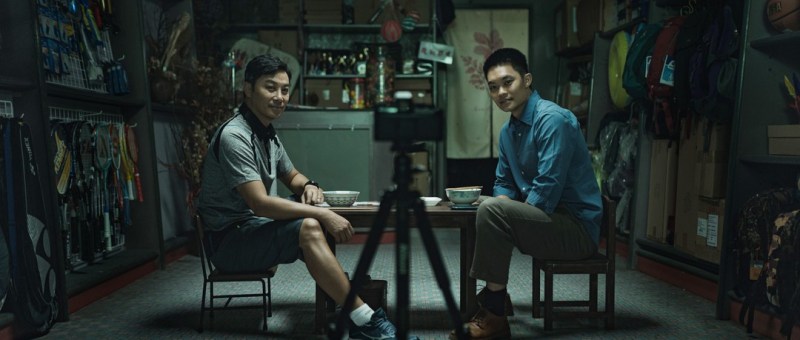
Now around 30, Lee Chi-hang (Tony Wu Tsz-Tung) has an unsatisfying job in real estate working for his childhood best friend (Johnny Hui) which is just as well because he’s regarded by many as the office dead weight and most of his colleagues are running bets on when he’ll eventually be fired. Raised by a single mother (Michelle Lo Mik-Suet), his father having passed away before he was born, Chi-hang was brought up to believe an “ordinary life” was good enough but also feels guilty that he hasn’t made good on his mother’s hopes for him and despite having attended university has no real sense of ambition in life. “How can you be so useless?” his exasperated girlfriend (Sofiee Ng Hoi Yan) eventually asks him, abruptly exiting his life as she leaves to pursue her own personal growth and fulfilment tired of waiting for Chi-hang to step up. 

Attending a reunion for his primary school class brings him back into contact with Mr. Wong (Patrick Tam Yiu-Man), his former PE teacher who had also been something of a surrogate father as he and his wife often looked after him while his mother worked. Mr. Wong it seems has troubles of his own in that his wife Wai-Ying (Isabel Chan Yat-Ning) is suffering with a longterm illness which is why he’s given up teaching and opened a sporting goods store which is itself floundering. Bamboozled into taking part in Mr. Wong’s camping trip, Chi-hang finds himself enlisted to help mentor a young woman, Tin-sum (Toby Choi Yu-Tung), who wants to lose weight and triumph in a 5k race in the hope of winning a trip to Japan to meet her idol, a handsome Japanese pop star (Alston Li Ka-Ho). 

Unlike Chi-hang, Tin-sum is not “alone” in that she appears to have a pair of extremely loving and supportive parents who let her know that whatever happens in the race they’re proud of her all the same. Yet she also finds herself on the receiving end of social prejudice, rejected by the mean girls in her idol fan club who arbitrarily introduce a weight limit for race entrants in order to “preserve the image of Hong Kong” while the competition also provokes a falling out with her best friend (Jocelyn Choi Zung Sze) who ends up siding with the bullies. Chi-hang meanwhile admits that he doesn’t really take his mentoring duties very seriously, too busy “running away” from his own problems to be much use in tackling anyone else’s.  

Yet through picking up the pace, each of the beleaguered runners begins to find direction in the finish line. Rediscovering the sense of joy and possibility he had as a small boy in primary school, Chi-hang realises that he’s never been as alone as he thought he was, all of the people in his life have been running at his side all along rooting for his success. While Tin-sum gains a new sense of self-confidence in finishing out her 5k without being pressured to lose weight or give up her appetite for life, Mr. Wong finds a sense of relief in being able to pass on the baton to a surrogate son in the now more self-assured Chi-hang finally figuring himself out and taking control over his future. Atmospheric shots of the nighttime city filled with a sense of melancholy alienation give way to poignant flashbacks of cherry blossom in bloom outside the primary school where Mr & Mrs Wong first met and bonded with little Chi-hang, while he realises that he does indeed “still remember” the sense of security, positivity, and energy he had as a child as he steps up the pace building the “ordinary life” his mother had envisaged for him. 


I Still Remember streams in the UK 31st March to 6th April as part of Focus Hong Kong. Readers in Chicago will also have the opportunity to catch it at Lincoln Yards Drive-In on April 17 as part of Asian Pop-Up Cinema’s Season 12.

Clip (English subtitles)

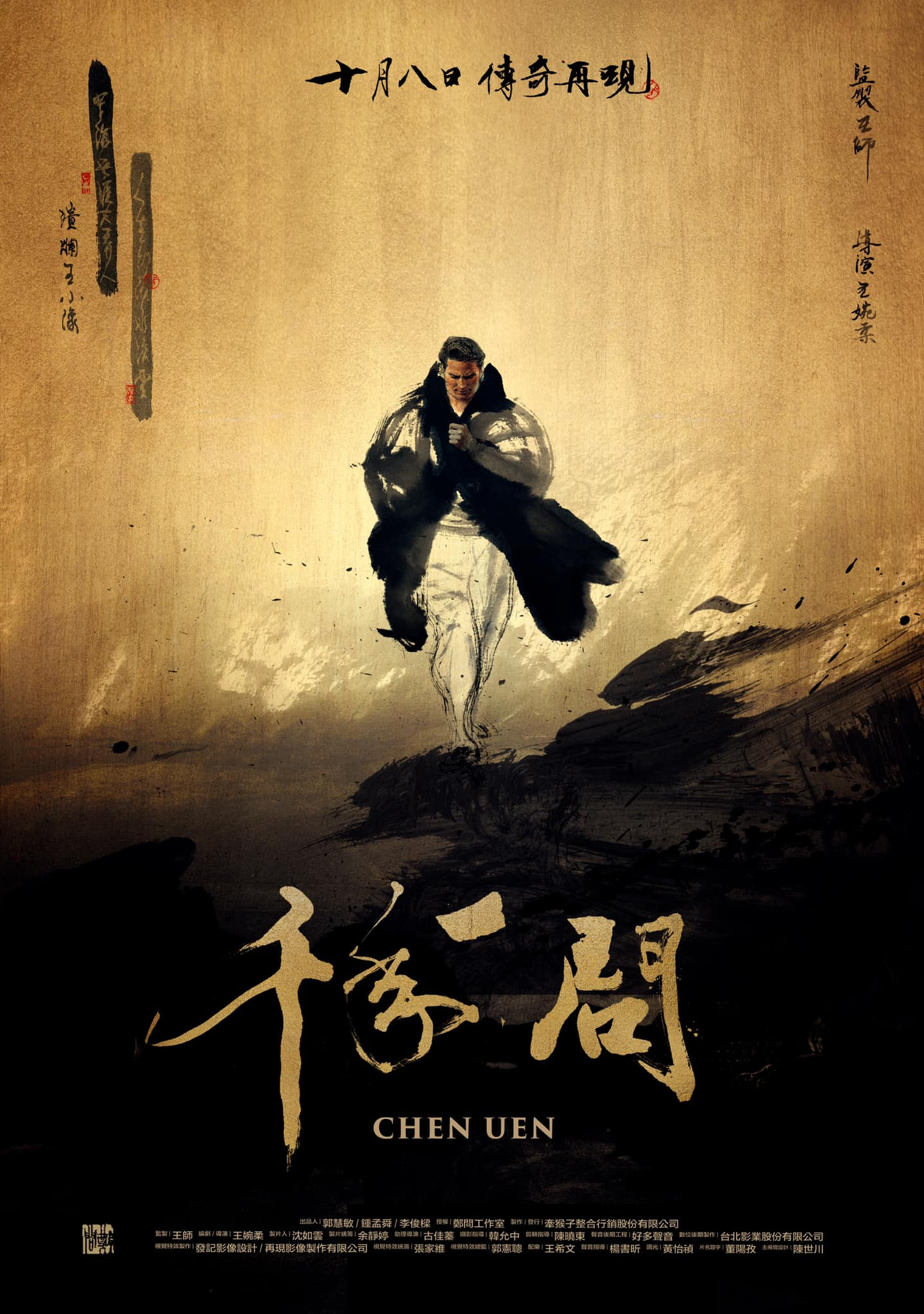
Chen Uen (千年一問, Wang Wan-Jo, 2020)

Born in Daxi in 1958, Chen Uen became one of Taiwan’s premiere comic book artists eventually publishing in Japan and Hong Kong and later travelling to the Mainland to work in the growing online gaming industry. Sadly after a tumultuous career spanning over 30 years, Chen passed away of a heart attack at the young age of 58 in 2017. Though he had perhaps not always been appreciated to the degree he would have liked in his home country, the artist did receive a posthumous exhibition at the National Palace Museum the summer following his death, apparently the first comic artist ever to have received such an honour. 

Exploring both his life and career, Wang Wan-jo’s engrossing documentary (千年一問, Qiānnián Yī Wèn) paints an enigmatic picture of the complicated artist, bringing his work to life with a series of animatics along with poignant shots of an animated Chen walking the city streets and eventually arriving at his own exhibition. Through interviewing his various collaborators, the image of him which eventually arises is of a man who was at once singleminded, driven by artistic conviction and certain in his skills, and that of a sometimes insecure talent privately hurt by his public failures and resentful that his home nation often failed to embrace his work. 

Like many of his generation, Chen was profoundly influenced by wuxia serials and carried that love into his art, becoming one of the first artists to move away from the then dominant Japanese manga aesthetics drawing inspiration from traditional Chinese ink painting including the use of a brush rather than the pen. In his later, increasingly avant-garde work we see him experimenting further with materials using toothbrushes and sand, scorching the paper with fire or marbling ink in water to achieve his desired effect. As mangaka Tetsuya Chiba (Ashita no Joe) points out, manga panels are constructed with narrative progression in mind yet Chen treated each of his panels as a standalone image with a strongly cinematic vision. This tendency towards directness in his stripped back storytelling leads Chiba and others to offer the slight criticism that to some readers Chen’s comics may have lacked dramatic richness as a consequence. Nevertheless, he soon found himself wooed by Bubble-era Japan, invited by publishing powerhouse Kodansha to collaborate on a series of wuxia-themed projects beginning with The Heroes of Eastern Zhou.

The Japan move would be the first of many, allowing Chen to escape the sense disillusionment he felt in Taiwan while honing his skills as a contractor for a major publishing house willing as his editor testifies to work on whatever they suggested including the ubiquitous cute girls then popular in the Japanese manga market. Unfortunately, however, he does not seem to have settled very comfortably in Tokyo while his wife recounts her difficulties trying to navigate raising their two children while unable to speak the language. The family soon returned to Taiwan, and Chen would make his subsequent moves alone leaving his family behind to work in comics in Hong Kong before moving on to Beijing where he began working on concept art for the then nascent world of online gaming beginning with a franchise inspired by Romance of the Three Kingdoms.  

In an excerpt from a TV interview, Chen describes his comic work as a dream that miraculously came true adding that had he been interested in material comfort he probably would have stuck to jacket art for video games which might have proved more lucrative. His decision to do just that later in his career might then seem like a minor defeat even as it feeds into comments from some of his assistants that he liked to stay ahead of technological change and was keen to experiment with new tools even teaching himself photoshop intuitively while the program lacked Chinese-language support. His colleagues describe him as mercurial, an unhappy person probably lonely away so long from his family yet also fiercely caring and protective of his staff. For Chen, heroes were less fearsome warriors than those who were “unwavering, rational, and polite”, qualities which ironically mirror his own personality though others also call him stubborn, a perfectionist who always did what was right rather than settling for the easy option. A poignant memorial to the under appreciated pioneer of Taiwanese comic art, Wang’s documentary does not set out to solve mystery of Chen but revels in his contradictions while celebrating the glorious complexity of his bold and colourful career. 


Chen Uen streams in the US until March 28 as part of the 12th season of Asian Pop-Up Cinema.

Original trailer (English subtitles)

Search Out (서치 아웃, Kwak Jung, 2020)

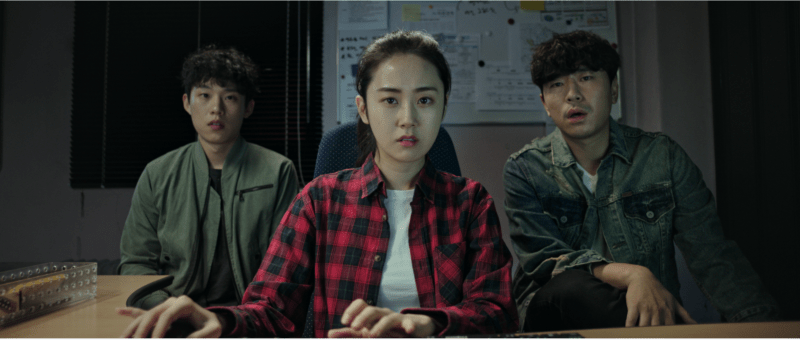
A trio of disillusioned youngsters kick back against Hell Joseon by chasing down an internet serial killer in Kwak Jung’s dark cyber thriller, Search Out (서치 아웃). As the title implies, the three are each looking for something to tell them that they still have time, their dreams are still achievable, and their lives are worth living, yet as they discover there are those keen to convince them otherwise including a mysterious online presence who seemingly takes advantage of those already in despair and pushes them towards a dark and irreversible decision. 

The hero, Jun-hyeok (Kim Sung-cheol), is currently job hunting while working part-time in a convenience store. His best friend, Seong-min (Lee Si-eon) is desperate to join the police force but having trouble passing the civil service exams. To pass the time, Jun-hyeok also does odd jobs for people who need help under the pseudonym “Genie” via his social media accounts, but when he’s unexpectedly approached by a woman in the same boarding house who tells him that she’s in a dark place and needs someone to talk to, he turns her down out of embarrassment afraid that his “real” identity might be exposed and ashamed to admit that “Genie” is just regular guy who can’t get a job. Unfortunately, however, the young woman is later found dead in an apparent suicide. 

Consumed with guilt, Jun-hyeok tries to ease his conscience but accidentally stumbles across a weird account the young woman had been interacting with shortly before she died. “Ereshkigal” asks all the wrong questions of those already in a dark place, probing them about the meaning of life and whether their lives are really worth living before, as Jun-hyeok later realises, blackmailing them into completing various “missions”. Paradoxically, Jun-hyeok’s quest to stop the mysterious online threat is partly a way of absolving himself of guilt while simultaneously fighting back against those same feelings of despair that he too feels as a young man who can’t seem to get his foot on the ladder, rudely insulted by a cocky high school kid for being an “adult” still doing a student’s job. 

Seong-min feels much the same, indulging his love of justice as a man who just wants to protect and serve and feels it’s unfair he’s being prevented from doing so because he struggles with paperwork when his true strengths lie in the field. Turning to a private detective when the police won’t listen to them, the guys team up with frustrated hacker Noo-rie (Heo Ga-yoon) who like them also feels as if she’s stagnating, slumming it with a shady job at the detective agency when she obviously has major IT skills. A psychiatrist Jun-hyeok meets through his Genie job warns them that the killer may be leveraging his victims’ feelings of despair to convince them that the only way to escape suffering is through death. Despite himself, it’s a sentiment that Jun-hyeok can well understand. 

Like other young people his age, he attempts to mask his sense of loneliness through social media, another weakness the killer sees fit to exploit. Yet as a potential suspect later points out, “it’s fun to peek at others’ private lives” exposing himself as a banal voyeur while simultaneously revealing the unexpected vulnerability of those who live online. In any case, the final revelations are perhaps expected, and not, in the way they bare out the inequalities of the contemporary Korean society. Jun-hyeok starts to wonder if it really was all his fault from the very beginning as his own not quite innocent but largely accidental moment of social media notoriety may have had unintended, unforeseen consequences even as he sought a kind of justice in exposing wrongdoing by the rich and powerful. 

Nevertheless, as Seong-min is fond of saying, “you must do what’s right. You must bring justice”. Others might argue that it’s “natural to kill others to survive”, but the trio at least prefer mutual solidarity as they work together to take down the killer while fighting their own demons along with the continued indifference of the authorities which are supposed to protect them. Partly a treatise on why you should be more careful about what you post online and how you interact with others in general, Kwak’s steely thriller is also a story of three young people searching out a reason to live and finding it largely in each other as they come to an acceptance of life’s ambiguities but also of their right to define them for themselves. 


Search Out streams in the US March 24 – 28 as part of the 12th season of Asian Pop-Up Cinema.

International trailer (English subtitles)

The Way We Keep Dancing (狂舞派3, Adam Wong, 2020)

In a Hong Kong already under threat, a small community of artists finds itself torn over how best to preserve their culture and way of life amid the seemingly unstoppable wave of gentrification that threatens to engulf them in Adam Wong’s quasi-sequel to his 2013 hit The Way We Dance, The Way We Keep Dancing (狂舞派3). Cheekily titled The Way We Dance 3 in the original Chinese, The Way We Keep Dancing takes place in an alternate reality in which a part two has already been released and follows the fortunes of alternate versions of the earlier film’s stars as they each fight their own battles while finding themselves conflicted over the future direction of their community. 

As the film opens, rapper Heyo (Heyo) receives a tip-off from a friend that the disused industrial building in which he and others are illegally squatting is about to be raided by the police. Later talking to a journalist, he explains that the “apartment” only has a sofa because sleeping there would technically be against the code of usage for former industrial buildings, though it’s obvious that he does indeed “live” there. A member of the “KIDA” (Kowloon Industrial District Artists) community he like others is acutely aware of the increasing gentrification of the local area which threatens to push bohemian artists like himself further out of the city. Yet no one seems to have come up with a united means of resistance, previous protests apparently having proved largely ineffective. 

It’s perhaps for this reason that he, along with the dance stars “returning” from the first movie, is later convinced to begin working with the Urban Renewal Bureau on a new project entitled “Dance Street” which, they are told by YouTuber mastermind Leung (Babyjohn Choi), will bring public attention to the local dance subculture and give them greater leverage to preserve their place within the community. Not all are convinced, however, with other local artists deriding them as sell outs conspiring with the developers who are, after all, subverting everything they stand for in repackaging hip hop and street culture to make it marketable to a mainstream audience of the kind that will eventually be buying and investing in the upscale apartments they presumably plan to build after tearing down disused industrial structures. This conflict comes to the fore when Leung gets the gang involved in promoting a new “Hip Park” which will apparently have a skate bank and graffiti area crassly commodifying the unique creative spirit of the Industrial District while deliberately confining it to a single location, sanitised and controlled. 

Meanwhile, aspiring dancer Hana (Cherry Ngan Cheuk-ling) has become a minor star since the release of The Way We Dance and its sequel, a popular celebrity with a small internet following. Somewhat naive and swept along alternately by her agent Terese and the persuasive Leung, she finds herself torn between her loyalty to her old dancemates and the demands of her rising fame. Terese makes it clear that the agency is only really interested in her while she keeps trying to find opportunities for her friends but also finds herself an accidental figurehead of the Dance Street movement because of her minor celebrity. Like others she is convinced that collaboration is the answer, not quite understanding its duplicities until directly confronted by the odious “call me Tony” head of the development board who embarks on a crass down with the kids routine in order to sell his new brand as a hip urban space for trendy young professionals while the artists are pushed even further into the margins. 

There is perhaps a further meta commentary to be read into Wong’s gentrification debate in the light of Hong Kong’s changing status and relationship to the Mainland in which many feel the local character and culture is being slowly erased. In any case, though including a series of large-scale set pieces, Wong concentrates less on dance than the plight of the KIDA community shooting shaky handheld footage of Heyo as he wanders the city in search of inspiration but encounters both hostility and disappointment from his fellow artists before eventually making the decision to rebel against the Dance Street project and his own unwilling complicity with its slightly dubious aims. Nevertheless, even if slightly ambiguous Wong eventually returns his dancing heroes to their roots as a small boy whose dreams may have been dashed by Leung’s thoughtless machinations dances defiantly amid the ruins . 


The Way We Keep Dancing screened as part of the 2021 Osaka Asian Film Festival.

Original trailer (English / Traditional Chinese subtitles)

Images: Golden Scene Company Limited © 2020

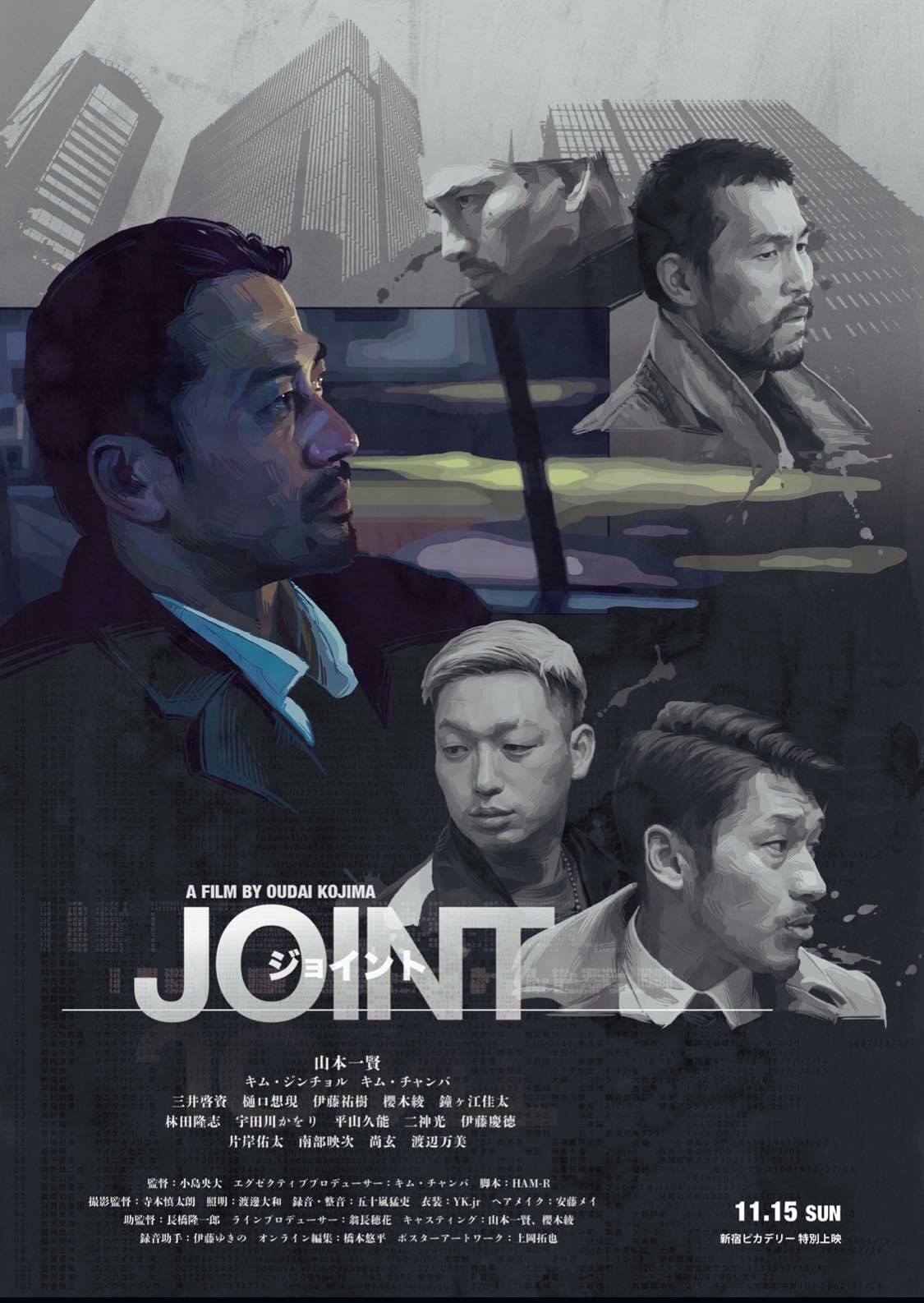
JOINT (Oudai Kojima, 2020)

The yakuza is in some senses at least an outdated institution long thought to be on its way to extinction, some positing that the coronavirus pandemic may be the final nail in the coffin. Organised crime is however nothing if not resourceful and facing post-war decline has long been sliding into corporatised legitimacy. As Oudai Kojima’s JOINT points out, however, the line between legitimate business and illicit enterprise has become increasingly thin especially when it comes to the usage of today’s most valuable commodity, our data. 

Emerging from two years in prison, middle-aged Take (Ikken Yamamoto) took a job ripe with symbolism in “deconstruction” on the invitation of a friend who has apparently managed to escape the criminal underworld for a respectable life as a “financier” with a wife and child. Having saved a small nest egg, however, Take soon makes his way back to the Tokyo underworld, good jobs being hard to find for ex-cons, where he attempts to remain on the fringes of the gangster world working as a kind of freelancer for the Oshima clan while not technically a member of the yakuza. Getting back in touch with an old underling and a Korean friend running a restaurant as a hub for the migrant community, he finds himself getting involved in the yakuza’s latest big business innovation trafficking big data to be used to facilitate large-scale fraud usually against the elderly. The thing about data is that it’s only pieces of a puzzle, the various lists of names with phone numbers, emails, and addresses etc are not worth much individually but coupled with related datasets giving a fuller picture of an individual life they are a veritable goldmine. Pulling together his various resources Take soon becomes a major data broker known for comprehensive documents. 

Ultimately, however, he wants out of the criminal underworld and decides to invest his money in venture capital through a start up working with, yes, big data but this time to be used for the purposes of advertising and marketing. His gangster life and supposed fresh start are in fact based on the exact same source, and who’s to say that illicitly collecting information and using it to sell us more stuff we don’t want or need is really any better than using it to commit fraud. Big data is indeed big business, and its possession it turns out to be as dangerous and contested as any other illicit substance from drugs to black market booze back in the post-war yakuza heyday. 

To signal their commitment to moving on, the Oshima gang has already attempted to clean up its act by exiling old school, violent elements but their efforts have only created a further destabilisation in the criminal underworld as the “traditional” yakuza fight back by founding their own gang rooted in violence and vice. Take has one foot in one foot out of the yakuza life, yet sees fit to pontificate on the code of gangsterdom unable to understand why his old contacts have become so toothless unwilling to take a stand or claim revenge when one of their own is murdered by a rival intent on taking over both their turf and the big data business. Meanwhile, Jinghui, the Korean restaurant owner struggles to support the migrant community who, like Take, find it difficult to secure legitimate work, and ends up working with a third gangster conglomerate which is entirely staffed by foreign nationals themselves intensely marginalised in an often hostile society. They see fit to take things one step further by tapping data at source through tampering with routers to funnel it directly to them. 

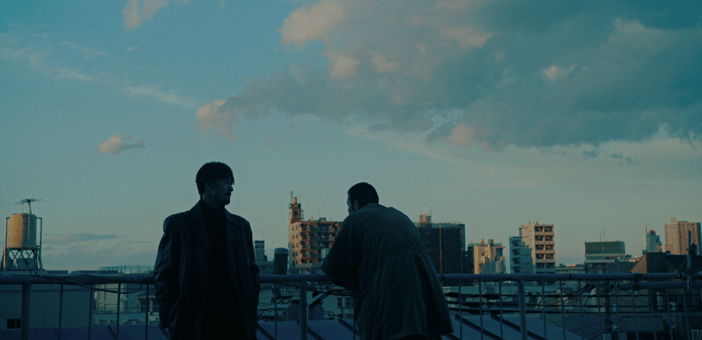
The “information war” sees no sign of slowing down, though ironically enough having just got out of the “joint”, Take finds himself trapped in the liminal space somewhere between gangster and legitimate businessman even as that space seems to be shrinking so much that it may soon disappear entirely from beneath his feet. Shooting mainly with handheld, Kojima deglams the yakuza underworld surveying it with a documentary naturalism that suggests it is in fact perfectly ordinary while playing with the trappings of the classic jitsuroku throwing up onscreen text featuring the names of the main players along with details of their roles and affiliations. Though the moody score and twilight neon might hint at neo-noir there’s not so much fatalism here as a sense of sorry impossibility, yet in contrast to the perhaps expected nihilism there is a degree of hope for Take brokered by his internationalism even if it exists only outside of Japan. 


JOINT screened as part of the 2021 Osaka Asian Film Festival.

Original trailer (no subtitles)

The Silent Forest (無聲, Ko Chen-Nien, 2020)


There can be no justice in silence, but when those in a position to help refuse to listen what can be done? Inspired by true events, Ko Chen-Nien’s The Silent Forest (無聲, Wúshēng) takes aim at cycles of abuse and systems of oppression in society at large through a thorough investigation of the culture of silence at a school for deaf children in which endemic bullying spreads like a virus emanating from a single trauma inflicted by a negligent authority. Yet this kind of violence cannot be fought with violence and there must be empathy too for the bully or the chain will never end as Ko’s ambivalent conclusion makes clear. 

The film opens with a boy on the run, finally chasing down an old man and tackling him to the ground pummelling him until the police turn up and separate them. The policemen are frustrated. This is apparently the first time they’ve ever come into contact with a deaf person and have no idea how to communicate with him. Chang Cheng (Troy Liu Tzu-Chuan) tries to protest their injustice, but they continue to treat him as aggressor rather than victim even as he explains in writing that the old man had stolen his wallet (the old man claims he “found” it and was planning to hand it in). Finally a teacher from his new school, Mr. Wang (Liu Kuan-ting), turns up and interprets but it quickly becomes clear that he too is in a sense complicit, reporting that Cheng is sorry for what he did and grateful to the officers. In his view at least, the boy has his wallet back and there’s no harm done so why make a fuss? Just let it go and everyone goes home.

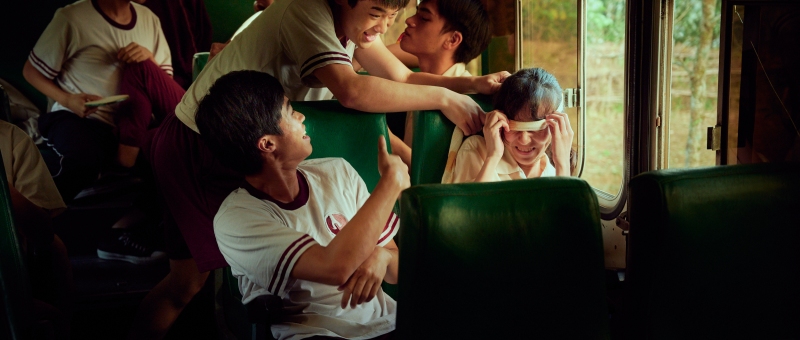
It’s this conflict between “silence” and justice that continues to prey upon Cheng’s mind after he starts at the school and becomes aware of the widespread culture of bullying witnessing a girl he likes being sexually abused by a gang of boys at the back of the school bus while the teacher sitting at the front does nothing. He tries to convince the girl, Beibei (Buffy Chen Yan-Fei), to tell one of the other teachers but she refuses, not wanting to “betray” her “friends”, insisting they were “just playing around”. Her reluctance however mainly stems from an intense fear of being sent away, that she might have to leave the school which is the only place she feels accepted. Both she and Cheng feel intensely othered in the hearing world, wary of being blamed for things that weren’t their fault as if their very existence were bothersome or “abnormal”. Even if it means putting up with extreme degradation, she would prefer it to the loneliness she felt before she found the school.

Yet the sense of social isolation is only one of the various oppressions to be found at the institution which ironically cultivates a culture of silence as regards the ongoing abuse as a means of preserving its reputation and therefore the “greater good” in providing the “safe space” from the social stigma the children face in the hearing world. Beibei points out that she was screaming, yet nobody could hear her. At first she tried to tell a teacher, but the teacher blamed it on her and implicitly on her disability insisting that the boys were “good kids” who were “just playing around” and didn’t understand she didn’t like it because she failed to communicate that she was uncomfortable. If they knew she was suffering they’d have stopped, the teacher insists before coldly walking away. Mr. Wang feels quite differently and wants to help but discovers that the culture of silence extends much deeper than he thought and the problem most likely cannot be solved through a few simple countermeasures but requires whole-scale systemic reform.

In fact, very little is done by the authorities leaving Chang Cheng with a hero complex believing that he has to be strong to beat the bad guys and save Beibei, but his righteous desire still leads him back towards complicity in order to protect her. The arch antagonist, Xiao Guang (Kim Hyun-Bin), bullies as a defence mechanism insisting that no one would dare bully him, manipulating others to do his bidding through the same mentality that one can either be a bully or a victim. Yet Xiao Guang is also a victim himself, a wounded damaged boy let down by a culture ruled by shame and unable to defend himself by any other means though apparently uniquely vulnerable to one particular aggressor. Only by addressing the root of his trauma can the cycle be brought to an end, but the concurrent cycles which he set in motion will in turn require their own resolution. A painful allegory, The Silent Forest boldly makes the case for speaking out but also admits that it doesn’t matter how loud you shout if no one is listening and without the desire for empathy and communication in all its forms the cycles will grow and repeat until the end of time.


The Silent Forest streams in Illinois until March 21 as part of the 12th season of Asian Pop-Up Cinema.

Original trailer (English subtitles)

Coalesce (Les affluents, Jessé Miceli, 2020)

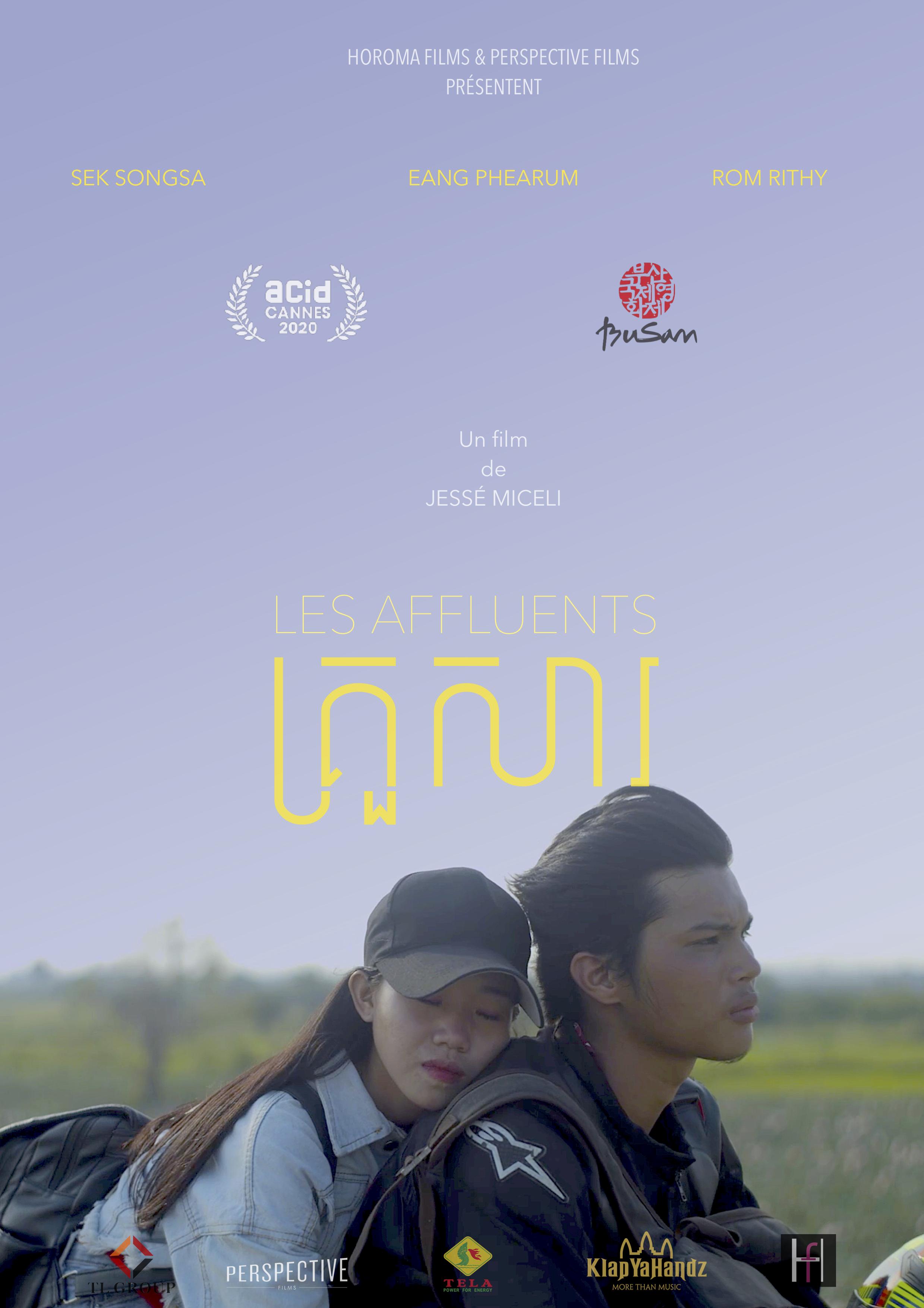
The frustrated dreams of three young men eventually collide in Jessé Miceli’s aptly titled debut Coalesce (Les affluents). Starring mainly non-professional actors, Miceli’s neon-lit journey through the backstreets of Phnom Penh at night exposes a different side of a changing nation caught in the midst of rising urbanisation while contending with the aspirations both of neighbouring economic powers and a thriving ex-pat community. Yet in the end the prognosis is not as bleak as it first seems, some dreams are achieved, if imperfectly, while even those which are not still may be. 

The youngest of the three men, teenager Songsa (Sek Songsa), says almost nothing and if he has a dream it is perhaps only to live his own life as he pleases. 20-year-old Thy (Rom Rithy), meanwhile, yearns for a motorcycle and, apparently disowned by his father who prefers his half-brother, has taken a job as a host/dancer in a gay bar frequented mainly by Western men. 24-year old Phearum (Eang Phearum) borrowed money to buy a taxi to earn money for his family who are in danger of losing their land but is privately preoccupied and perhaps defeated by the news that his schoolteacher wife is expecting a baby. 

Each of the men ultimately find themselves in Phnom Penh in search of different things but discovering something much the same. The contrast with the rural homes of Songsa and Phearum couldn’t be more stark even if quite literally presented in day and night. Songsa, it seems, did not perhaps want to go to the city and especially to sell knock off jeans from a disused taxi bus at the behest of his frustrated tuktuk driver uncle, but in any case the responsibility proves too much for him and he’s clearly not ready for the adult world his uncle and the owner of the bus, Leap, already inhabit. He resents their drinking and rebuffs their attempts to force him to join them, but alone on the bus at night finds himself subject to another element of city darkness as a drunken middle-aged man crawls in through the window and attempts to grope him. His only solace is discovered when he wanders off and stumbles into a death metal rave, head banging his frustrations away. 

Across town, Phearum is at another party in an upscale gallery invited by two, fairly obnoxious, Western women who climbed into his cab not long after he dropped his wife off at a doctor’s clinic for a potentially dangerous medical procedure. Already drunk, the women insult and belittle Phearum in English while one eventually tries to proposition him, offering money when he turns her down. Phearum doesn’t take it but appears to accept the situation with good humour and bemusement. Thy, meanwhile, eventually turns to casual sex work to pay for a bike an injured friend of a friend needs to sell. It’s not clear if Thy is actually attracted to men even if not exclusively, later taking a girl home after a bike ride through the country, or merely in need of well-paying work but it’s difficult to dismiss the implications of exploitation at the American-run club which seems to cater almost exclusively to Westerners exoticising the young, good looking Cambodian staff who earn a dollar’s commission on every drink sold. 

Then again, Phearum’s dream is to give up his taxi and open a garage selling cars to the influx of Chinese businessmen driving the expansion of the local economy largely through casinos and other leisure facilities supported by the tourist trade. He listens intently to an estate agent in the back of his cab who works for Chinese developers, keenly asking about the price of land perhaps weighing up selling rather than buying. The aspirations of the three men are eventually headed for an ironic collision, though the “one year later” conclusion perhaps seems unduly contrived filled as it is with exposition and the conceit that former strangers have become lifelong friends through a single, traumatic episode. Nevertheless, there is more hope than expected in Miceli’s vision even if tempered by compromise as the trio remain determined to push forward having identified their direction of travel, reclaiming the city as their own while also looking out for each other in what appears to be an often hostile environment. 


Coalesce streams in the US until March 21 as part of the 12th season of Asian Pop-Up Cinema.

Original trailer (English subtitles)

The Asian Angel (アジアの天使, Yuya Ishii, 2021)

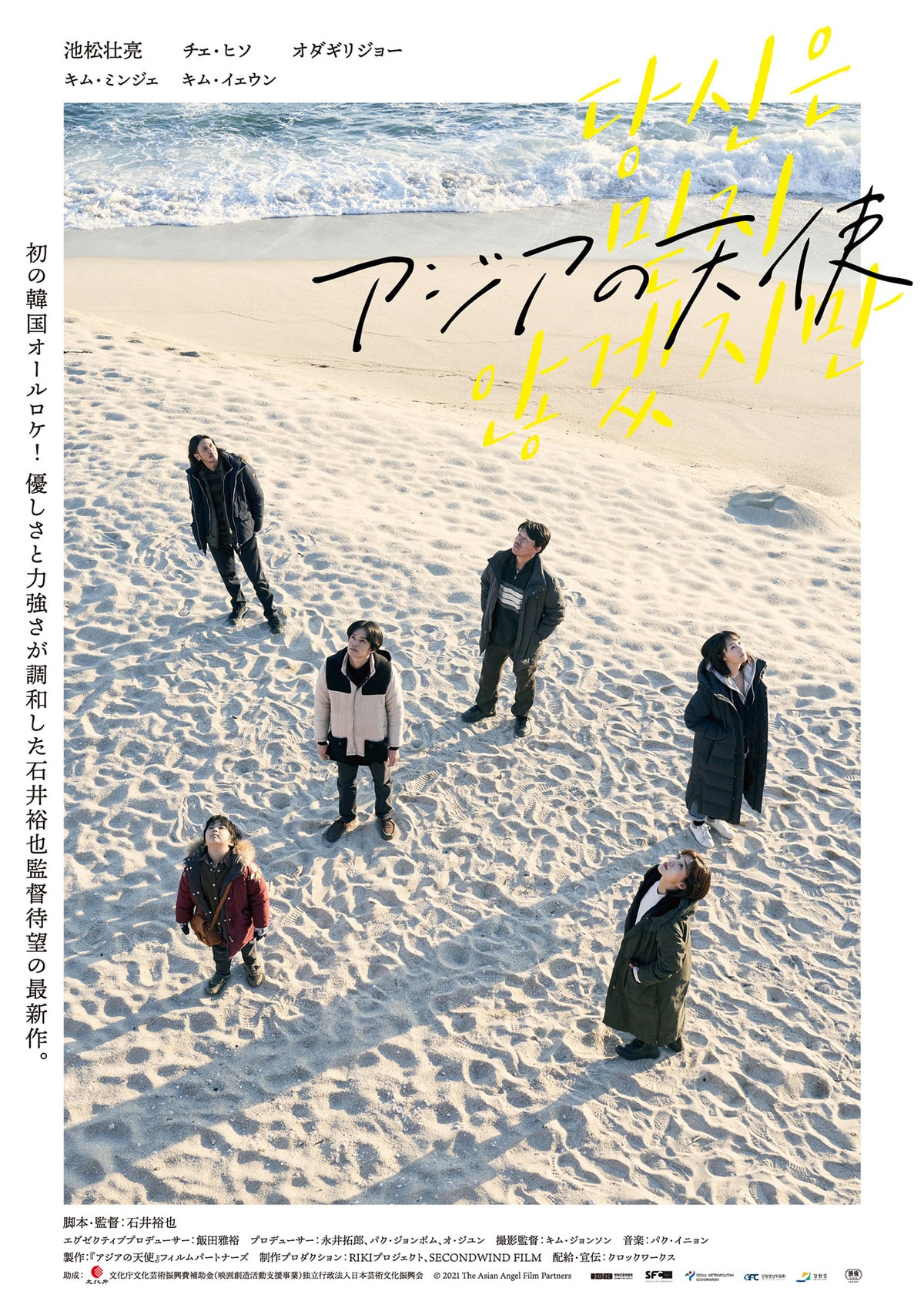
A collection of lonely souls is brought together by angelic intervention in Yuya Ishii’s grief-stricken appeal for “mutual understanding”, The Asian Angel (アジアの天使, Asia no Tenshi). Brokering the sometimes difficult subject of Japan-Korea relations, Ishii makes a plaintive case for a pan-Asian family while his wounded protagonists each search for meaning and possibility in the wake of heartbreak and disappointment. Yet what they discover is less the urge to move forward than the gentle power of solidarity, bonding in shared sense of displacement and forging a new home from an apparently fated connection. 

Displacement is a feeling which immediately hits struggling author Tsuyoshi (Sosuke Ikematsu) as he struggles to make himself understood to a grumpy Seoul taxi driver after taking his brother up on an offer to relocate to Korea with his young son following the death of his wife some time previously. Toru (Joe Odagiri), however, has not quite been honest about his life in the Korean capital, housed above a church where they always seem to be rehearsing the hymn Angels We Have Heard on High. Wandering into the apartment, Tsuyoshi is physically thrown out by Toru’s grumpy business partner (Park Jung-bum) obviously unaware they were coming as even Toru himself seems to have forgotten inviting them. In any case, the trio eventually find themselves on the street after Toru’s Korean friend with whom he’d started an illicit business smuggling cosmetics betrays them. 

Meanwhile, across town melancholy songstress Sol (Choi Moon) has been supporting her brother and sister with her music career which seems to be on the slide with a faintly humiliating gig in a shopping mall which briefly brings her into contact with Tsuyoshi, apparently captivated by her sadness. Abruptly informed her contract has been terminated, she tries to take the matter up with her manager/lover but gradually realises she’s merely one of several ladies on his books. Feeling lost, she agrees to follow up on a suggestion from her brother Jun-woo (Kim Min-jae) to pay a visit to the grave of their parents who passed away while she was only a child. 

Running into each other on the train after Toru talks Tsuyoshi into a possible seaweed venture in Gangwon, the two trios end up travelling together if originally struggling to find the “mutual understanding” that Tsuyoshi had been looking for. The first message Tsuyoshi sees on his phone on after arriving informs him that Korean-Japanese relations are at an all time low, though perhaps one would think national tension might not descend to the interpersonal level even if he appears to feel slightly awkward as a Japanese man in Korea aside from his inability to speak the language, but after a few too many drinks at a Chinese restaurant Jun-woo starts in on how 69.4% percent of Koreans apparently disapprove of Japan while 61% of Japanese apparently disapprove of Korea which is one reason he wouldn’t be keen on his sisters dating a Japanese guy. Describing himself as a “progressive”, he claims it’s the relatives who wouldn’t accept it but ends the conversation by cheerfully looking forward to when they can finally “part from these Japanese forever”. 

Yet, they do not part despite several opportunities and in fact end up travelling together for a significant distance during which they begin to bond, discovering that they have much in common including the loss of loved ones to cancer and the improbable sighting of angels who appear not like those on the Christmas cards but a weird old Asian man with a tendency to bite. Several times they are told they shouldn’t be together, Toru lamenting that love between Japanese and Koreans is as impossible as that between angels and humans while a police officer later bemusedly remarks that they don’t look like a family but family is in a sense what they become as they each sort out their respective traumas and resentments to reach a healthy equilibrium. Perhaps you couldn’t quite call it love, but almost and it might be someday if only you let it. “Seeing the world through your eyes I might come to like it a little more” Tsuyoshi admits, while Sol too begins to awaken to a new sense of freedom and possibility brokered by an angelic intervention. Marrying the melancholy poetry of The Tokyo Night Sky is Always the Densest Shade of Blue with the gently surreal sense of humour of his earlier work, Ishii’s deeply moving drama makes a quiet plea for a little more “mutual understanding” between peoples but also for the simple power of human connection as evidence of the divine. 


The Asian Angel screened as part of the 2021 Osaka Asian Film Festival.

Images: (c) 2021 The Asian Angel Film Partners

A Summer Trip (川流不“熄”, Feng Keyu, 2021)

Societal change and rising economic prosperity threaten the foundations of the family in Feng Keyu’s charmingly nostalgic intergenerational adventure A Summer Trip (川流不“熄”, Chuān Liú Bù “Xī”) elegantly lensed by Mark Lee Ping-Bing and boasting a typically whimsical score from Joe Hisaishi. In the run-up to the Beijing Olympics, the nation is in a celebratory mood but in a society where everybody works all the time something may be in danger of getting lost. Young Xiaosong (Hu Changlin) is going off the rails (in a fairly minor way) with both the school and grandpa, often left with childcare duties he feels might not quite be his responsibility, leaning towards blaming the parents who are simply not present enough in his life to be able to offer much in the way of guidance. 

A Korean War veteran, grandpa Zhang Dachuan (Yang Xinming) is beginning to feel as obsolete as the discontinued parts he needs to repair his ancient jeep. He can’t get his head round mobile phones, forever pressing hang up when he means to press answer and causing accidental offence in the process. Resenting the implication that he’s not got much to do all day, he finds himself enlisted by his overworked son to represent the family when his wayward grandson Xiaosong gets into trouble at school. This particular time, it’s apparently because he’s been bothering a female student by taking photos of her with a professional DSLR camera (the teacher later gives Dachuan an envelope to pass to his son and daughter-in-law which turns out to contain a love letter Xiaosong attempted to pass to the object of his affection). Slightly annoyed to be seeing Dachuan again instead of the boy’s parents, the teacher makes herself clear that the cause of Xiaosong’s poor behaviour and declining grades is most likely a lack of parental attention. Chastened, the parents discuss finding a cram school but nothing is really done about his problematic approach to romance, especially as they each need to return to work soon after dinner leaving grandpa sitting alone at the table. 

Perhaps strangely, Xiaosong seems to have forgotten that his grandpa even has a name, hanging up on a caller thinking they’ve got the wrong number only to realise they wanted grandpa and redial upon which Dachuan discovers that his greatest wartime friend has passed away in Beijing and the funeral is in a few days’ time. Though Xiaosong had technically been “grounded” for the summer, the idea was that grandpa was supposed to supervise him while he stayed home and studied. So begins their awkward road trip, passing first through the home of Dachuan’s daughter Ling (Dai Lele) in a town closer to the capital and a lengthy train ride away before pressing on to the city. 

As his opening voiceover explains, Xiaosong never really understood his grandfather thinking of him as a grumpy, stubborn old man stuck in the past. Yet as grandpa later sadly laments reflecting on his friend’s final days, people talk about the past a lot when they’re unhappy in the present. Everyone is always keen to pay respect to Dachuan and his wartime generation, though not all of them have good intentions such as the overfriendly young man they meet on the train who enthusiastically listens to his stories, or the older woman (He Zaifei) who reminds Dachuan of his late wife but leverages his desire to show off by getting him to pay for an expensive lunch. For his part, Dachuan resents his declining capacity and finds himself at odds with the modern world, unable to access technology or understand the changing nature of society. His quest to get to Beijing under his own steam is a way of rebelling against his age, proving he’s still capable and independent though his slightly narcissistic can-do attitude often backfires, his offer to fix a broken-down bus exposing his lack of acumen while his petulant decision to leave finds him stubbornly insisting on walking the remaining 30km to the capital. 

Highlighting the corporate obsession, meanwhile, another stranded bus passenger makes constant phone calls to his less than understanding boss to explain the delay. While Dachuan and his grandson experience set backs on the road, the boy’s father Jianguo (Tu Songyan) chases a reluctant client who won’t sign a contract and returns late to a dark and empty home while his wife (Yang Tongshu) works the nightshift as a surgeon at the hospital. Unbeknownst to Dachuan, Ling and her husband (Gong Zheng) are about to split up apparently because he spent too much time at work and the relationship has fallen apart as a result. Young Xiaosong says he wants to be a photographer to “document all the beautiful things and moments” lamenting that they never took a family photo with his late grandmother. In the absence of his father and son and forced to humiliate himself repeatedly at work, Jianguo comes to regret having deprioritised his family life and recommits himself to repairing their fractured bonds perhaps with a family holiday lamenting that they never got round to it while his mother was alive. The Olympics Opening Ceremony becomes, its own way, a second New Year with the TV broadcast taking the place of the Spring Gala as the family finally come back together again having gained new understandings of themselves and others through their various summer adventures. Society might have changed, those exciting KFC “family buckets” from the city apparently not going quite as far as you’d think, but the family can apparently still be saved with a little mutual understanding and a dose of self-reflection.


A Summer Trip screened as part of the 2021 Osaka Asian Film Festival.

Original trailer (Japanese subtitles only)

The Town of Headcounts (人数の町, Shinji Araki, 2020)

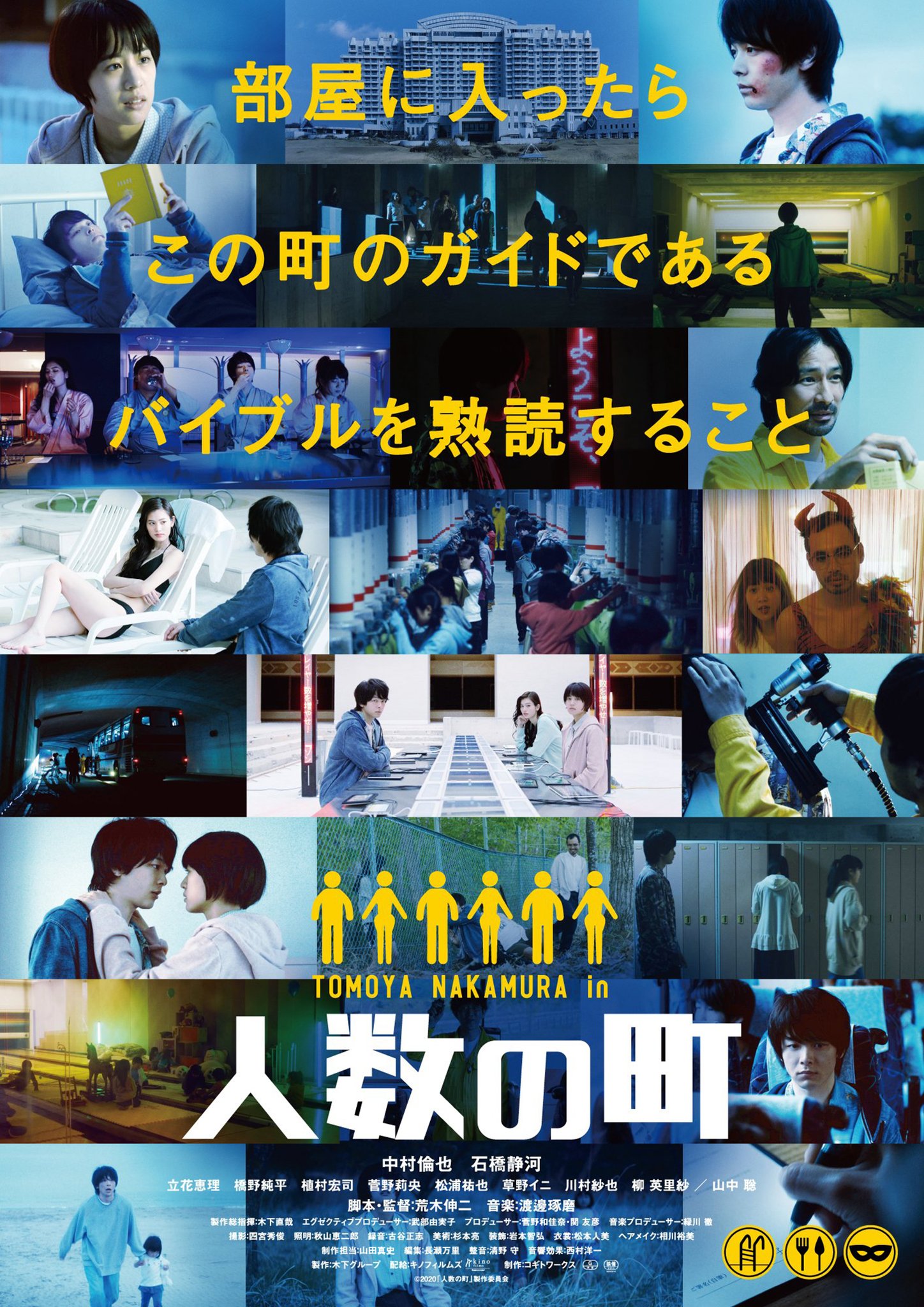
“You’re free now, so the world is more beautiful” the hero of Shinji Araki’s dystopian thriller The Town of Headcounts (人数の町, Ninzu no Machi) is unironically told by a mysterious saviour even as a watchtower lingers on the horizon behind him. Modern Japan, it seems to say, is no paradise but is it worth trading your identity and existence for the guaranteed satisfaction of your basic needs? Freedom, happiness, and love may be nebulous concepts which mean different things to different people, but in the end leading a satisfactory life might just come down to what it is you decide you can live without. 

The nameless protagonist later credited as Aoyama (Tomoya Nakamura) describes himself as an “average joe” who has “a weak will” and doesn’t “belong anywhere in society”. While being beaten up by a loanshark, he’s unexpectedly rescued by the miraculous appearance of the mysterious “Paul” (So Yamanaka), a middle-aged man dressed in an orange jump suit who tells him there’s a place he can go where’d he fit right in. After a lengthy bus ride, he finds himself a new resident of “The Town” where those like him who for one reason or another felt themselves rejected by mainstream society can live in ease and comfort, only as he later discovers he is unable to leave. Should he walk too far beyond the fence, the microchip in his head activates a sonic wave of painful and disabling distortion. 

Somewhere between a utopian cult commune and a penal colony occupying a disused conference centre, The Town is a free love society which insists that equality is possible and that freedom and peace are more than mere dreams. Family creates inequality, so The Town’s Bible says, so residents must live alone. Pregnancy is prohibited, while children brought into the compound are separated from their parents and raised in a communal nursery. All basic needs, food, warmth, shelter and even sex, are otherwise guaranteed though the residents are expected to “work” to earn them, performing often pointless tasks parasitically underpinning modern capitalism such as writing meaningless product reviews in return for treats, or performing as stooges to create hype around new store openings. Aoyama’s sense of morality is however shaken when he’s asked to commit electoral fraud by repeatedly voting for a chosen candidate with stolen ballots, later recruited as a crisis actor in a fake terrorist incident intended to further influence an election in the wake of a corruption scandal. 

In The Town, he’s told his existence is meaningful and given a place to belong. Yet he has to surrender his name, known as “Dudes” residents must greet each other ritualistically only by the word “fellow” followed by some kind of compliment. All his needs may be met, but he’s forbidden to fall in love, can never marry or have a family, and it does seem troubling that there are no elderly people around even if some suggest there are other “Towns” just for them. Some might say, The Town is way is a way for mainstream society to get rid of all the people it doesn’t want or feels have no value. Araki throws up frequent title cards featuring various statistics such as the numbers of homeless people, bankruptcies, unemployment etc along with brief flashbacks to whatever it was that brought residents to The Town from being thrown thrown out of a manga cafe after attempting to live there to being almost choked to death by debt-collecting yakuza suggesting there’s little “freedom” in the rigid contemporary society and most particularly for those unable or unwilling to live by its rules.  

In The Town rules are few, and you’re well looked after, but you can’t leave and though it seems like an individualist paradise where you’re free to satisfy each of your physical desires you have no further control over your existence. As one resident puts it, “life here is kind of weightless”, perhaps a relief for some but a crushing existential crisis for others. Aoyama realises that in The Town he rarely feels angry, but perhaps he feels nothing much of anything else, either. Just as he’s starting to adjust, his feelings of unease are strengthened by the arrival of a young woman who apparently had no previous societal issues but has come to The Town in search of her younger sister whom she failed to help despite knowing she was trapped in an abusive relationship. Unlike Aoyama, Beniko (Shizuka Ishibashi) claims not to have felt much of anything in the regular world, unsure even what love is and unimpressed by the beautiful vistas of freedom that are supposed to define The Town, but doesn’t want to stay and be rendered a mindless drone exploited by mysterious forces for whatever purpose they may choose.

What Aoyama realises he craves is the love and companionship of a conventional family life. “We want to support each other and work hard. Love each other and live together” he explains to a non-plussed Paul who seems to pity him, his simple desire at once at odds with the values of The Town and perhaps equally unobtainable in contemporary Japan. In the end, the only “freedom” he may find lies in complicity with one system or another, becoming an oppressor as one of the oppressed. The question is what sort of life is most satisfying, freedom from the anxiety of hunger and cold, or the freedom to love and live fully in manner of your choosing. The modern society may not grant you either, and both perhaps have their costs. A bleak dystopian thriller, Araki’s steely drama features innovative production design and slick direction mimicking the hero’s sense of disaffection with detachment and a total lack of resistance to the otherwise bewildering world of The Town but saves its real sense of confusion for the state of the modern society and the fate of those who survive on its margins. 


The Town of Headcounts streams in the US March 15 – 19 as part of the 12th season of Asian Pop-Up Cinema.

Original trailer (English subtitles)