Detective Conan: One-Eyed Flashback (名探偵コナン 隻眼の残像(フラッシュバック), Katsuya Shigehara, 2025)

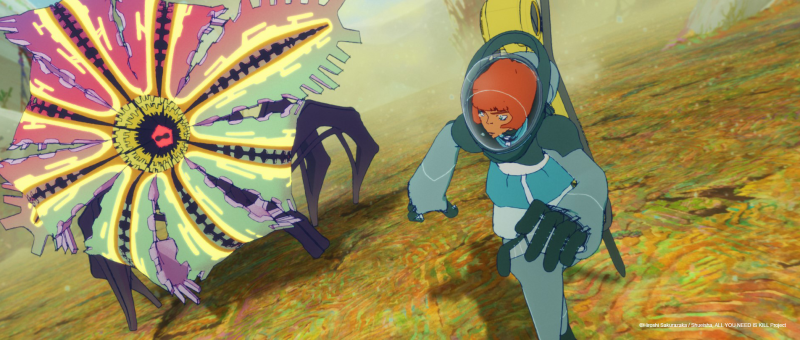
Detective Conan (Minami Takayama) returns for the 28th instalment in the long-running animated film series, Detective Conan: One-Eyed Flashback, (名探偵コナン 隻眼の残像(フラッシュバック), Meitantei Conan: Sekigan no Flashback) as he finds himself embroiled in another mystery revolving around Inspector Yamato’s (Yuji Takada) near fatal collision with an avalanche, a potential terrorist attack on a radio observatory, and the murder of one of Kogoro Mori’s (Rikiya Koyama) old friends. Meanwhile, justice is under fire as the government are working on reforming the plea deal system which leaves some feeling short-changed by justice and that the criminals are getting off too lightly while victims of crime continue to suffer.

Indeed, there’s a kind of symmetry between Conan’s guardian Kogoro, who took him in after he was shrunk to the size of a child by the evil Black Organisation, and bereaved father Funakubo who blames himself for what happened to his daughter Maki because he sent her back to his gun shop where she got caught up in a robbery. Before she left, she said she had something to tell him, but he never got to hear what it was, just as Kogoro never heard what his former colleague from his police days, Croco, wanted to tell him when he set up a clandestine meeting in a local park but was killed by a mysterious assassin before he could say anything. 

Once again, Conan is on the case, though Kogoro more or less sidelines him and insultingly repeatedly reminds Conan that this is not a game. Nevertheless, Inspector Yamato specifically asks for his help, while Conan begins to suspect something bigger is motion when he’s unsubtly bugged by someone he assumes is probably an undercover Public Security officer. All roads lead back to Amuro (Takeshi Kusao), who handles the situation from the cafe in Tokyo where he works to maintain his cover identity. 

Nevertheless, it all links back to the gun shop robbery and its lingering effects on the victims. Not only was one of the thieves not caught, but the other got off on a plea bargain which has left Mr Funakubo on a constant quest for justice in which he is forever hassling the Nagano Police for updates on his case. Meanwhile, there’s interpersonal drama in play in the relationship between police officers Yamato and Yui (Ami Koshimizu) who are also wrestling with unspoken feelings and the fallout from Yamato’s presumed death in the avalanche in which he lost his memory and wasn’t found until a few months later. The wound to his eye is symbolic of his inability to recall the whole of what happened before he was overcome by the snow. He must have seen the face of the man he was chasing at the time, but he can’t remember it. 

Though the mystery itself may not be as complicated as others in the series, involving few clues or difficult puzzles to be solved and relying instead on Conan’s keen intuition and people skills, it leans heavily into a sense of conspiracy and paints Public Security in an unflattering light as they attempt to bug Conan and then in a post-credits scene, are seen to offer another “plea deal” to a suspect in return for keeping Public Security out of their testimony while blackmailing them that, should they choose to speak out, all their secrets will also be revealed to the public and those close to them will suffer. In any case, Conan gets a few more opportunities to use his all-powerful skateboard amid the film’s increasingly elaborate action sequences as he squares off against the crazed villain hellbent on vengeance and an ironic defence of the law.

Where Public Security come in for scrutiny, the police are depicted as universally good, reminding the suspect that it’s the police’s job the enforce the law without fear or favour while protecting ordinary people both physically and emotionally. As messages go, it might be a little authoritarian, but it’s also true that the police take Conan seriously in ways others may not. While they’re all busy with the crime(s), Conan’s friends are also all in Nagano along with Ran (Wakana Yamazaki) enjoying what’s supposed to be a stargazing holiday before being dragged into the case and providing important backup for Conan. As the tagline says, the truth won’t stay buried forever and Conan does his best to play off Public Security and the police in order to solve the case, avenge Kogoro’s friend, and also protect justice in Japan as the courts debate the plea bargain issue and its effect on criminals and victims alike as they try to rebuild their lives in the wake of crime.


Detective Conan: One-Eyed Flashback is in UK cinemas from 26th September courtesy of CineAsia.

Trailer (Japanese / Traditional Chinese subtitles)

4PM (오후 네시, Jay Song, 2024)

What is the proper etiquette for dealing with an unwanted house guest? It is acceptable to ask them to leave directly, to usher them out of the house by making an excuse that you are leaving yourself, or are you duty bound by virtue of your place in society to put up with it and wait politely until said guest leaves of their own accord, assuming that they ever do? At the end of the day, perhaps it’s foolish to allow our time to be wasted on petty worries about propriety when the best thing to do is really to be direct and explain that you do not enjoy this person’s company and would appreciate it if they did not call on you again.

Based on a novel by Amélie Nothomb, Jay Song’s increasingly absurd psychological drama 4PM (오후 네시, Ohu Nesi) is indeed about the suffocating qualities of politeness, but also in the ways that it interacts with class and masculinity along with the very image of ourselves. As a character in an Ibsen play once said, to take away a man’s life lie is to take away his happiness, and professor Jung-in (Oh Dal-su) is keen to caution against looking too deeply into one’s own soul for the only gifts of self-knowledge are unbearable shame and misery. “I am defined by my kindness to others as a educated man,” Jung-in reminds himself, but in saying so he also makes it clear that his politeness is a conscious affectation rather than an innate character trait. He behaves in a certain way because he fears judgement and wants others to approve of him as a nice person who has been raised well to have good manners. Fulfiling this image is key to his idea of self in the persona of a cultured professor and marks him out from those he may secretly see as “lower” than himself, in being “uneducated” and “rude”, ignorant of the “proper” way to behave. 

But whatever way you look at it, Yook-nam’s (Kim Hong-pa) behaviour is “impolite” despite his apparently being a doctor, though we’ve really got his word for it. Having taken a sabbatical, Jung-in and his wife Hyun-sook (Jang Young-nam) have bought a house in the country, but unusually for such a property, it’s overlooked by an adjacent home positioned a little too close for comfort. The couple figure they should introduce themselves, but the lights are always out and the place doesn’t look lived in, so they leave a note inviting the occupant to visit at their convenience. Unfortunately, Yook-nam takes them at their word, shows up at 4pm, barges his way in, and then just sits there for two hours snapping at them with monosyllabic answers to their questions as if he were burning with rage. He does the same thing every day until it begins to drive the couple out of their minds. 

Of course, they have to ask themselves why they allow this. Why can’t they ask him to leave, or refuse to open the door? They find it impossible to break the psychological barrier of politeness by stating pointe-blank that Yook-nam is a bore and they wish him to leave. They are in a sense suffocated by the need to conform to these deeply ingrained social codes of what it means to be a good person even when others are clearly not abiding by the same set of rules. The absurdity eats away at them as they find themselves humiliated by their own cowardice in becoming complicit in Yook-nam’s oppression. Jung-in begins to realise that his civility interferes with the demands of socially defined masculinity in that he is failing to protect his home by being unable even to eject an unwanted guest and in effect ceding power to him even within the safe and personal space of the domestic environment which should also be free of such oppressive rules for being.

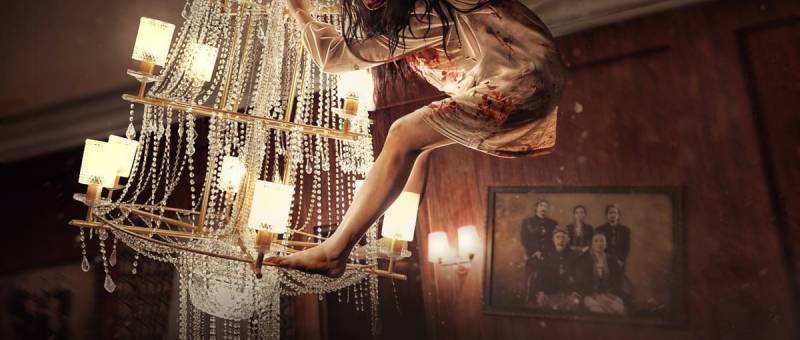
Jung-in anfd Hyun-sook may be getting an idea of why the last person moved, but there’s also a kind of symmetry in the two houses which are in their way each haunted. Both couples say they have no children, but there’s a family photo with a little girl in Jung-in and Hyun-sook’s house that does not appear to be of their surrogate daughter, Jung-in’s former student So-jung (Min Do-hee), just as there’s a family photo with a little boy in Yook-nam’s house that hints at a buried tragedy. While Jung-in and Hyun-sook’s house seems to be full of light, uncluttered, clean and tranquil, Yook-nam sleeps in soiled sheets in a room that apparently smells in home that is filled with unwashed dishes while the walls are coated in grime. The whole place is covered in loudly ticking ticks in contrast to the silence of Jung-in’s home which brings new meaning to his words about living in the present. 

It isn’t really clear what Yam-nook wants out of all this, whether he’s just looking for some kind of escape or actively rebelling by being deliberately unpleasant while exerting his power through wasting Jung-in’s time. “He was still my guest,” Jung-in insists emphasising the roles they are each playing along with his own determination not to deviate from them. Perhaps Yook-nam actually wants them to break protocol by telling him to go away, but instead they live in tyranny of 4pm and sit quietly until Yook-nam abruptly leaves at six rather than say anything or at the very least tell their unwanted guest that he’s free to stay but they’re going to get on with their business. Meanwhile, Jung-in’s civility is slowly eroded, exposing the primitive man inside who fantasies about killing Yook-nam and is suffocated by his his hate for him. But in seeing this true side of himself, Jung-in discovers only shame rather than authenticity or empowerment, and in creating another persona is again ironically suffocated, silenced in his own rebellion. Quietly unsettling, the film suggests that we all, in a sense, live in tyranny of 4pm by allowing ourselves to be oppressed for propriety’s sake rather than risk being “rude” in the knowledge that to do so would be to risk releasing the monster inside us that “politeness” alone keeps at bay.


Trailer (English subtitles)
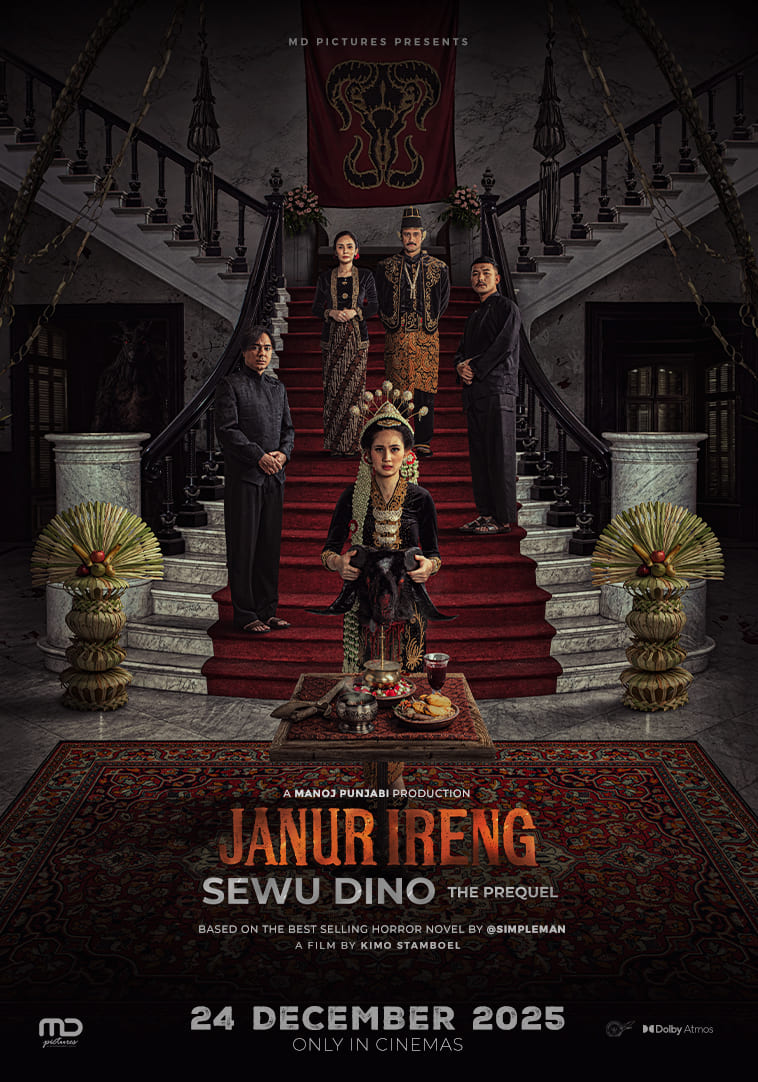
Dear Stranger (ディア・ストレンジャー, Tetsuya Mariko, 2025)

The Japanese film industry is generally regarded as fairly insular and focused solely on the domestic market with half an eye on other Asian territories where its stars are already popular. It has, however, made some attempts to enter Hollywood particularly in the 1970s with films such as Kinji Fukasaku’s Virus which for various reasons was largely unsuccessful in either market and suffered artistically from its attempts to bend itself to an international audience. 

Tetsuya Mariko’s Dear Stranger (ディア・ストレンジャー) is the first in Toei’s contemporary attempt to court an audience outside of Japan as part of its Toei New Wave 2033 initiative, but it seems to be suffering from some of the same problems. The biggest is that 90% of the film is in English but the delivery is often stilted and inauthentic from both the international and native-speaking cast. That may in one way be ironic, as one of the major themes is the impossibility of communication. Emotional clarity is only really revealed during the puppetry sequences when no dialogue is involved. Set in New York, the film shifts between Mandarin, Japanese, Spanish, English and sign language, but simultaneously suggests the problem is less an external language barrier than an internal one that prevents people from saying what they really mean or encourages them to keep the truth of themselves hidden.

It’s living in this liminal third space that disrupts the marriage between Taiwanese-American Jane / Yi-zhen (Gwei Lun-mei) and her Japanese husband Kenji (Hidetoshi Nishijima) as she points out that they speak to each other in a language is not their own. At moments of high tension, they argue in Mandarin and Japanese, though as we largely discover there are more issues in play, beginning with the fact that their marriage may at least partially have begun as one of convenience. Kenji is not the biological father of their young son Kai. Jane finds herself asking who they are as a couple without him and if she ever really loved Kenji at all. Kenji suggests he married her because he loved her and accepted the child as his own for the same reason, but throughout the film is in an incredibly angry and hostile mood. He appears at times sexist, criticising Jane for not keeping the house tidy while he is “under a lot of pressure” at work and resents “the chaos” of their life. Jane’s mother doesn’t approve of her working either and calls her a bad mother for doing so even while expecting her to mind their convenience while she tries to find a carer to look after her father who is living with advanced dementia and can’t be left alone.

Part of that is likely that they need someone who speaks Mandarin, hinting at the sense of isolation and orphanhood that comes with migration in lacking extended familial support that in this case does not seem to be met by community. Jane too feels isolated and trapped by her role as a mother. She expresses herself only through her puppetry, which is also something denied her by Kenji and her mother. Kenji, meanwhile, feels undervalued at the university where his supervisor seems dismissive of him and his work which he regards as unoriginal. He may have decided to marry Jane in part in search of family having lost of his own in Japan with his mother never having been found after the Kobe earthquake when when he was a teenager, but simultaneously struggles to integrate himself within their family. His loss of Kai who disappears while he was supposed to be taking care of him is then symbolic in reflecting his own frustrated paternity and fear that the biological father will return to take all this away from him.

In many ways, it’s Kenji’s own psyche that’s in ruins informing his academic practice which focuses on abandoned and disused buildings and the effect they have on the surrounding environment. He’s asking himself how to create a new world from the ashes of the old, but doesn’t appear to have done so successfully in his own life and is increasingly unsure if he wants to. Perhaps because of its awkwardness, the film takes on an increasingly surreal quality as Kenji is heckled by irrationally angry guests at his book presentation and basically accused of facilitating urban crime in his praise of disused spaces and then descends into some kind of fugue state chasing the larger-than-life puppet version of Kai from Jane’s play which is also an embodiment of her own frustrated yearning for freedom. 

“In the wreckage we find truth,” Kenji answers one of the questioners at his presentation and it may in a sense be true for him but in another perhaps not. It becomes unclear what exactly he experiences as “real” and what not, what a product of his own mythologising and what actually happened, while Jane slips quietly into the background and her sudden acceptance of Kenji whom she previously regarded as “unreliable” and appeared to resent, seems somewhat hollow given that he continues to treat her coldly and is extremely hostile with all around him from the police, who are actually trying to help find his son, to the well-meaning kindergarten teachers, and his employers. In the end, it’s really Kenji who is stranger to himself much more than a stranger in a strange land trying to forge a new identity in a place of psychological ruin.


Dear Stranger was screened as part of this year’s Busan International Film Festival

Trailer (English subtitles)

Bayside Shakedown the Final: The New Hope (踊る大捜査線: THE FINAL 新たなる希望, Katsuyuki Motohiro, 2012)

Is it really the end? Billed as the “final” instalment in the Bayside Shakedown series which began with a TV drama in 1997, Bayside Shakedown the Final: The New Hope (踊る大捜査線: THE FINAL 新たなる希望, Odoru Daisousasen the Final: Aratanaru Kibou) once again finds the gang contending with annoying red tape but also with a police force which is intrinsically corrupt and self-serving while questioning if they should remain in an occupation in which they are treated with such disdain. Continuing the familiar pattern from throughout the series, the gang find themselves coming up against a serial killer who may be a crazed vigilante only to discover that the whole thing may have been an extreme inside job designed with the intention of drawing attention to inadequacies in the justice system. 

The problem is that the body they’ve found appears to have been shot with a gun which was removed from the police evidence locker and is linked to a kidnapping case six years previously which just happens to have been handled by Mashita (Yusuke Santamaria) when he was a hostage negotiator. Mashita had ordered an end to the negotiations because of pressure from above to play by the rules with the consequence that the child later died while the prime suspect in the case was recently acquitted of the crime at trial (a staggeringly rare occurrence in Japan). When Mashita’s young son is kidnapped, all eyes are on a rogue policeman, Kuze (Shingo Katori), but it is obvious he is not acting alone. 

Toragai (Shun Oguri), the authoritarian detective from the previous film, has continued along a dark path which only intensifies when his paper on police reforms is rejected out of hand. He too thinks the police force needs structural reform but leans hard into the idea that too many people are getting away with crime rather than concentrating on removing the barriers which prevent police from doing their jobs as Muroi (Toshiro Yanagiba) and Aoshima (Yuji Oda) would probably suggest. Muroi’s lasting dream is of building a police force which trusts policemen to do the right thing and he frequently tells his subordinates that they should feel free to exercise their own judgment. 

Meanwhile, the local cops continue to suffer under the command of the elitist officers from HQ who not only look down on them but assign menial tasks, as does Mashita in finding himself short staffed while most are busy providing security for a local energy summit. While Aoshima had experienced a health crisis that turned out to be a false alarm in the previous film, so this time Sumire (Eri Fukatsu) finds herself struggling with ongoing effects from her shooting in Bayside Shakedown 2 eventually deciding that it might be better to leave the police force entirely while lamenting her unfinished business with Aoshima which remains unresolved even in this “final” instalment while he somewhat unsympathetically can only ask her not to leave rather than express his true feelings. 

Ironically enough, by the time of the final showdown neither of them are actually in possession of a police badge, Aoshima scapegoated by Toragai who still holds a grudge against him while inconvenienced by interference in his scheme to frame a local petty thief for the killings, presenting him with an invitation to resign following serious misconduct accusing him of beating up suspects and planting evidence. One again, the police chiefs sit around a large circular table issuing orders from afar but are mainly concerned how to bury the “scandal” of having a police officer steal a gun from evidence and then use it to commit a murder. In a bizarre twist of fate, it later turns out that the whole thing may be an elaborate, not to mention entirely amoral, plan to expose police shortcomings with a side dose of revenge against Mashita for contributing to the child’s death by insisting on following protocol while receiving heat from above. 

As such the apparently “final” instalment skews a little darker than the series norm while as the subtitle implies offering a new ray of hope in the reversal of Muroi’s fortunes allowing him to embark on the police reforms which have been his and Aoshima’s goal throughout the series. Meanwhile, the film pays tribute to its previous instalments with frequent words of wisdom from the late Waku read from his notebook by his nephew and the ironic return of the previous chiefs reinstated as volunteer mentors as part of a reinforcement programme while familiar faces such as the Captain Kirk cosplayer also make their customary appearances. What’s clear is that there will never really be a “final” outing for Aoshima who reaffirms himself as the last line of defence protecting the local population as he once again runs toward sunset and the next case waiting just behind. 


Trailer (no subtitles)

Amoeba (Siyou Tan, 2025)

Choo (Ranice Tay) wonders what it’s like to be the Merlion. Being made to stand there while everyone makes up stories about you, like you’re trapped in an aquarium and can only look out on the world. In an odd way, it reflects her own experience as an “ungovernable” young woman contending with an authoritarian culture led by entrenched patriarchy as mediated through her overly strict elite girls high school which is intent on producing “respectful daughters and students of virtue”.

The fact that Choo doesn’t quite it in here is signalled on her very first day in which she’s humiliatingly forced to drag her own desk from one classroom to another as a result of some sort of clerical error. A stern-looking teacher measures the diameter of the face on her wristwatch, decides it’s too large and, therefore, too masculine, and takes it away from her. They measure the length of her skirt above her knee and say it’s too short, while her hair is too long. Or rather, the style is wrong and she should make sure it doesn’t touch her collar by the following Monday. The teacher even pulls at her shirt as if she were about to tear it off to confirm the colour of her bra, though it is in no way visible and therefore presumably makes no real difference anyway.

Above the whiteboard in their classroom, there’s a sign reading “purity, moral uprightness, diligence, and filial piety,” all qualities Choo derides during her speech having been entered as a candidate to become class monitor against her will. She ends up ironically being made “Good Citizen” representative instead by her teacher, Mrs Lim, who takes an instant dislike to her and seems to regard Choo as a potential source of resistance. On the one level, the girls are all being encouraged to become proper young women and as Choo says despite her very feminine name, it doesn’t really suit her. Later, she becomes friends with another group of girls who ironically describe themselves as a “gang”, having realised the great figures they learn about in school and have streets named after them made their money peddling opium, only to be accused of actively participating in organised crime when their teacher finds a video of them dancing around to a street music video featuring a guy with tattoos and having fun in one of the girl’s bedrooms.

Choo and her friend Nessa (Nicole Lee Wen) had been worried about the video for another reason, that even though as Choo says they “technically didn’t actually do anything,” the video she shot of them messing around while trying to catch the ghost in her room could cause each of them a lot of trouble in the extremely conservative country where homosexuality was only decriminalised in 2022. In any case, the teacher doesn’t seem to pay any attention to that part of the video, which comes as a relief to both of them even if it’s made them guarded and awkward in the way they interact with each other. Nessa wants to quit swimming and try football instead, but doesn’t necessarily feel she has the freedom to make that decision and is fearful of its implications. “Can’t sleep, cannot eat, cannot freaking pee, can’t do anything,” another of the girls laments. “We can’t even study what we want.”

But having banded together over their shared sense of alienation, Choo’s friends are also separated by their socio-economic disparities. They mainly hang out at the house of the richest girl, Sofia (Lim Shi-An), whose father is a construction magnate. After deciding they all want to go to the same junior college, they struggle to agree on a destination as Sofia has her sights set on an elite institution the other girls think is out of their league given their current academic performance. Though she agrees to go to a less prestigious school with them, in reality Sofia can’t let go of her privilege or the expectation that goes with it and has secretly applied to the other school while trying to cajole the other girls to apply there too. Later it transpires that she’s already been given the answers to the exam questions by the tutor her wealthy mother hired, so there was never any doubt of her getting in because her money will always open doors. She shares the answers with the other girls to parrot back during in their oral which involves describing a picture of the iconic seafront to which the only “correct” answers are that the Merlion represents prosperity and national identity. Choo gives this answer too, but only to subvert it in asking what the point of this test is if they’re just supposed to give the “correct” answer while making it clear that she won’t go along with this charade even if it might be advantageous for her to do so.

The girls had taken refuge in a cave on the land being developed by Sofia’s father and created their own secret den, but when it’s taken down, erasing their history in the name of progress, it’s like they’re losing their last safe space where they can embrace these subversive thoughts and express their sense of frustration with the authoritarian culture around them as corporate forces seek to bury and obfuscate the past. Choo wonders how they can escape this “aquarium” and see a future for themselves when their history is constantly being revised and repackaged to reflect a certain ideology and they’re given so little freedom to think for themselves or to be who they really are in the culture where conformity is king. Yet though her camera and friendships, Choo does seem to have discovered a way to go on seeing, and speaking, the truth even if everyone else is content to ignore it.


Amoeba had its world premiere as part of this year’s Toronto International Film Festival.

Trailer (English subtitles)

Hidden Face (히든페이스, Kim Dae-woo, 2024)

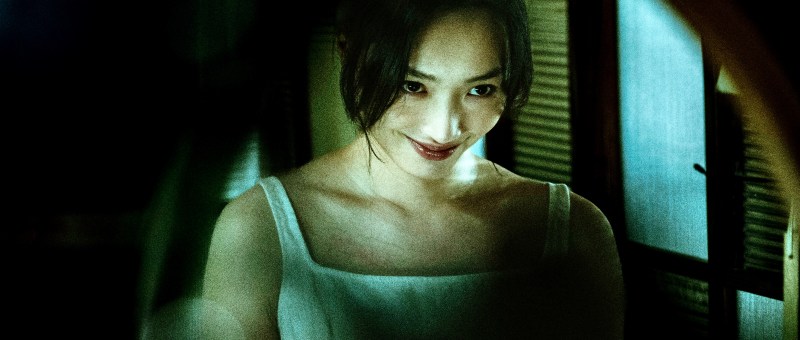
The obvious irony in the title of Kim Dae-woo’s erotic thriller Hidden Face (히든페이스), is that it refers both to the heroine, Su-yeon (Cho Yeo-jeong), who conceals herself within a secret bunker in her home to spy on her indifferent social climber boyfriend Sung-jin (Song Seung-heon), and to the sides of themselves that people choose not to reveal to others. As Su-yeon’s mother (Cha Mi-kyung) says, it’s what people see that matters, but the hidden corridors of Su-yeon’s home symbolise the ways in which she has imprisoned her true self or at least has locked a part of herself away from prying eyes while continuing to pry into the secret lives of others.

It’s in this forbidden space, apparently added to the house by the previous father’s owner who was a member of notorious Japanese Unit 731 during the war and feared exposure, that Su-yeon first kissed fellow student Mi-ju (Park Ji-hyun) with whom she’s been in a long-term, but apparently secret, relationship. While Mi-ju is patiently renovating the house she thinks they’ve bought together, Su-yeon has decided that she wants a “real life that people recognise”, which she evidently doesn’t believe a same-sex relationship can be. The forbidden space of “cold room” is then where she’s locked her queerness, and a manifestation of her fears of the consequences of exposure. The problem is that she doesn’t even like Sung-jin and the points of attraction he seems to hold for her are that he doesn’t like her either and is otherwise easy to manipulate because of the vast class difference between them. 

Part of the reason that Sung-jin keeps Su-yeon at arms’ length is that he resents the power that she holds over him. He resents both her and himself in knowing that he’s really only with her for material reasons, while simultaneously aware that his current success has nothing to do with his own talent and everything to do with Su-yeon’s privilege. Su-yeon’s mother congratulates him on working hard to build an image of himself, while otherwise needling him about his working-class background in which his mother ran a small restaurant and really knows nothing of this elite world of classical music, mansions, and honeymoons to resorts that charge some people’s annual wage for a single night’s stay. But the facade can’t really cover up Sung-jin’s insecurity and the fear that he couldn’t make it on his own though he so desperately wants to be a part of this world and to feel himself worthy of it. He feels emasculated and humiliated in assuming that other people can see that he’s just a puppet while Su-yeon, her mother, and their advisor discuss policy decisions he’s technically responsible for out in the open, he assumes to deliberately embarrass him and keep him under control. 

Yet the truth is that these kinds of hierarchal power structures of class and gender are less relevant when it comes to desire than otherwise might be assumed. Su-yeon refers to Mi-ju as her slave or underling and adopts a dominant role in the relationship yet eventually has the tables turned on her when Mi-ju decides to rebel. The power dynamic of desire is a push and pull between the desire and the desired mediated by the depth of yearning. It may seem to Su-yeon that she is in control, but equally Mi-ju derives power from her willing submission and can overturn the dynamic at any time she chooses upending Su-yeon’s delusion that Mi-ju is a mere plaything, or “tool”, she can take out and put away at will. 

Nevertheless, the question is whether anyone could be content with this shadow life or if Su-yeon, vain, psychopathic, and probably incapable of understanding other people’s feelings, is content to imprison herself within the hidden corridors of her home which come to stand in for the need to conform to the heteronormative, patriarchal, class-based social codes other people see as “real” and “normal”. Sung-jin is apparently all too willing, considering just leaving Su-yeon trapped behind their walls to continue enjoying this life of privilege with a little more freedom without considering that without Su-yeon he has no entitlement to it as her mother later suggests after becoming worried on realising that Su-yeon hasn’t used her credit in days which is extremely uncharacteristic behaviour.

Sung-jin would trade his pride as a man, his sense of self-worth, and even betray his moral code to appear wealthy and successful and deny his working-class origins. Su-yeon would also, it seems, rather be in a conventional marriage to a man for whom she feels only contempt and resents for not liking her, than live an authentic life as a lesbian and face her internalised homophobia along with that of the wider society. Thus she confines Mi-ju to a forbidden space of her mind in an attempt to have her cake and eat it too, while Mi-ju seemingly fulfils herself in wilfully becoming a prisoner of love, even if it may only be in Su-yeon’s fantasy. Perhaps they get what they wanted all along, affirming the primacy of privilege, but only at the cost of their authentic selves and trapped inside the prison of their own self-loathing.


Hidden Face is released Digitally in the US on September 16 courtesy of Well Go USA.

Trailer (English subtitles)
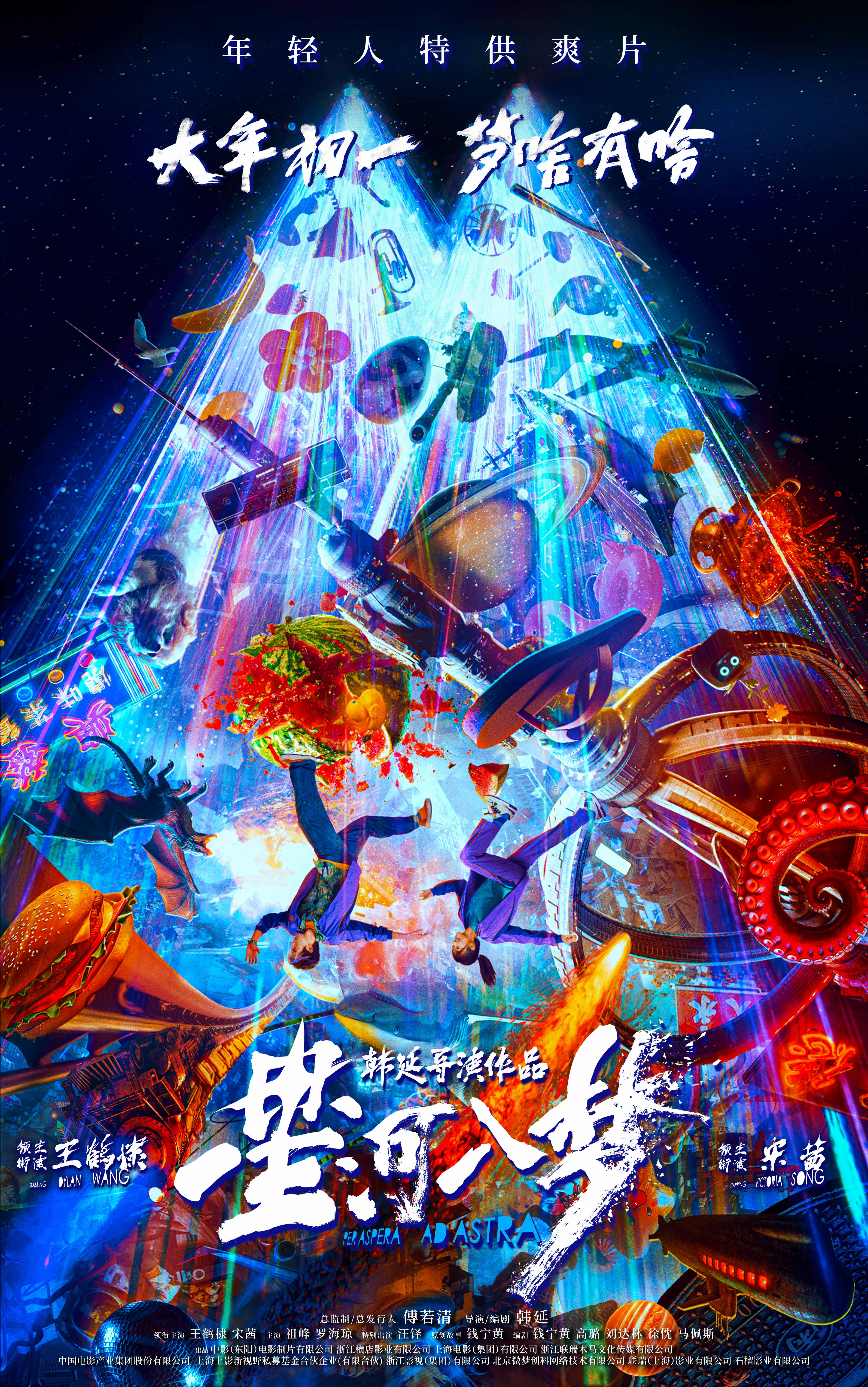
Laugh, Everyone! (みんな笑え, Taichi Suzuki, 2025)

A down of his luck second generation rakugo storyteller begins to discover a new way of life after meeting an aspiring female comedian in Taichi Suzuki’s lighthearted dramedy, Laugh, Everyone! (みんな笑え, Minna Waremashit). The title is taken from a moment of madness in which a resurgent Tamon pleads for everyone to just laugh rather than being at each other’s throats or feeling like they want to die, but that’s something he himself may not be able to do until he’s truly made peace with his demons.

Chief among them would be his father, Kenzo, a rakugo master who’s tormented and bullied him his whole life. In general, rakugo storytellers recite a canon of classical tales that have been passed down since the Edo era, but despite having inherited his father’s stage name, Tamon avoids performing the classical repertoire and sticks to original material. His acts don’t seem to please the audience, and it’s clear that his father’s other disciple, Kannosuke, resents that it was Tamon who became the official heir despite having no talent when he was the rightful successor. Unfortunately, Kanzo failed to plan for his retirement and now has dementia, meaning that he can no longer perform. Unable to make money through rakugo, Tamon has a part-time job in a warehouse to try to make ends meet all while being berated by Kanzo for bing a useless failure.

There are some touching moments later on in which Kanzo bonds with the son of his carer and plays with him as if he were Tamon, hinting that he might have liked to have been a different kind of father and have a different kind of life if it were not for the pressure of passing on his rakugo name. For his part, Tamon has become timid in the extreme and has been running away from anything challenging or unpleasant his whole life. In fear of not living up to his father’s legacy, Tamon avoids the old stories and sticks to telling the same original tale he’s been doing for the last 30 years. 

But if his problem is that he can’t master the classics, Kiko’s is that she can’t innovate and all her original material is pinched from somewhere else. She and her comedy double act partner Chi-chan have been trying to break into television, but can’t catch a break with their largely improvised act. While auditioning, they encounter entrenched sexism as the male panellist tells them that women aren’t funny and don’t take comedy seriously. Kiko’s mother Yoko experiences something similar at her bar where her sleazy backer is all over a younger hostess with whom he eventually hopes to replace her, while Chi-chan has also fallen prey to a predatory man working at a host club. She has been financially supporting Joe to help him achieve his dream while he forces her into sex work to make him more money, pushing her to quit comedy and work for him full-time. This kind of exploitation has regrettably become so common that a specific law was passed in 2025 to prevent young male “hosts”, who work in bars where they charm women into buying drinks and gifts, forcing their patrons into debt and then sexual exploitation. 

Nevertheless, Kiko strikes gold when she hears Tamon’s baseball-themed routine and realises it’s the same one her mother used to listen to on cassette tape. Reworking it as a manzai routine, she sees a way through her creative block even if it’s sort of plagiarism. After getting his permission to use his material, Kiko begins to think of Tamon as a mentor while he almost thinks the same of her as they encourage each other through their comedic failures even while working in opposite directions. A kind of rapport emerges between them as they were actually an accidental manzai double act along with a more positive paternal relationship than that seen between Kanzo and Tamon which is fuelled by a fear of obsolescence, ego, and resentment. Through his friendship with Kiko and rekindling that with her mother, Tamon eventually gains the courage to stop running away and face himself in classic rakugo both making peace with the complicated relationship he had with his father and carving out a new identity for himself in emerging from his father’s shadow. Sparrows fleeing the cage, both he and Kiko rediscover the healing power of laughter and with it the courage to face their troubles head on rather than continuing to run away in fear of failure and miss out on the joy the craft can bring to those around them.


Laugh, Everyone! is available to stream until 14th September 2025 courtesy of Chicago Japan Film Collective.

Trailer (English subtitles)
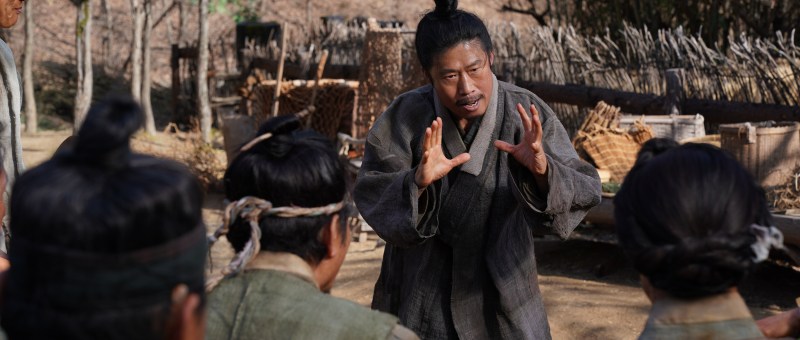
Virus (바이러스, Kang Yi-kwan, 2025)

Falling in love is like catching a virus, according to lonely scientist Gyun (Kim Yoon-seok), but how can you know if your feelings are “real” or just part of a crazy fever dream you won’t even remember as soon as the infection leaves your system? “There are no fake feelings,” lovelorn translator Taek-seon (Bae Doona) counters, which is true, but sometimes people do things they don’t recognise or later understand because they weren’t in their right mind, whether because of the sickness called love or a more literal kind of contagion. 

Anyway, this particular virus makes people incredibly happy for the short period time before they die and was developed as part of a project to create an anti-depressant with no side effects. Taek-Seon gets infected after a disastrous date her sister forces her to go on with socially awkward scientist Su-pil (Son Suk-ku). Su-pil is overly attached to the mice in his lab and is still mourning the death of Masako who appeared to him in a dream and told him to make sure her death wasn’t in vain. In retrospect, perhaps these are symptoms of the infection bubbling away in his body as much as they are of his loneliness, but it’s understandable that Taek-seon wasn’t really considering seeing him again only she’s forced into it when her mother and sister invite Taek-seon over to her apartment as a kind of enforced date. The mother and sister’s insistence on Taek-seon meeting someone and getting married is itself a reflection of a patriarchal society in which being unattached is taboo, while Taek-seon’s sister snaps back that translators won’t be needed soon because of AI implying she should find a husband to support her financially.

But then again, though she might claim to be, it does seem that Taek-Seon isn’t all that happy with her life and later confesses to being “always depressed”. She rarely leaves her apartment and lives a dull and unstimulating existence. Infected with the virus, she suddenly becomes sunnier, more confident, and independent, while chasing romance by approaching a childhood crush she seemingly never had the courage to pursue before. Yeon-u (Chang Kiha) is now a car salesman, and Taek-seon now suddenly has the urge to buy a Mini though she’s never actually driven outside the test centre despite having a license. In one sense, yes, it’s Yeon-u she’s after but the car also represents her latent desires for freedom and a more active life. 

Nevertheless, the corrupting aspects of the virus are all too present as Taek-seon begins to act in ways she may be embarrassed by if she could remember them once she’s better. Her memories seem to have remade themselves more to her liking. She’s forgotten that Yeon-u wasn’t quite the hero she thought he was in her overly idealised vision of the innocent childhood sweetheart that she never had the courage to pursue. On the run from “evil” scientists from the lab where Su-pil worked, she starts to fall for Gyun, the expert that’s helping her, but who’s to say whether her feelings are just a product of the virus, an attachment born of their relationship as doctor and patient, or something deeper. 

For his part, Gyun starts to fall in love with her seemingly before he himself is infected while knowing that she likely won’t remember any of this once she’s been cured. He too is still dealing with the romantic fallout of an improperly ended relationship in which he apparently stepped back because one of his friends liked his girlfriend more. The now-divorced girlfriend seems resentful that he didn’t put up more of a fight for her, and perhaps it’s true that he’s just a romantic coward and it’s a combination of the virus, a sense of responsibility, and the fact that Taek-seon’s natural immunity could hold the key to unlocking his own research that pushes him to try so hard to find a cure for her.

But his research goals are at least altruistic in his desire to find a depression cure without side effects to help people like his brother who took his own life. Dr Seong’s (Moon Sung-keun) lab, however, is entirely focussed on profit and protecting its own reputation. They’re mostly interested in Taek-seon because of her usefulness to them and are prepared to endanger her life if necessary. Even Gyun admits he acted unethically in agreeing to bypass animal testing but otherwise draws the line at anything that puts lives additionally at risk. Taek-seon, meanwhile, later signs over her antibodies so they can be used for free worldwide for the good of all. Even after the fever has cooled, the virus does seem to have made her a happier, more outgoing person who has the courage to pursue her dreams rather than living in lonely defeat. Whether her feelings were ”real” or merely part of her “sickness” and if the distinction really matters either way is up for debate, but that’s not to say she might not catch the love bug again from a less compromised position and actively in the driving seat of her own life.


Trailer (Korean subtitles only)

A Tour Guide (믿을 수 있는 사람, Kwak Eun-mi, 2023)

“We look the same, but they treat us less than foreigners.” Han-young’s (Lee Seol) friend Jung-mi (Oh Kyung-hwa) laments, explaining that she’s decided to move abroad for a better life rather than scrape by in a country that is not always welcoming. Kwak Eun-mi’s A Tour Guide (믿을 수 있는 사람, Mid-eul su issneun salam) explores the position of North Koreans in South Korean society, but also the difficulties of assimilating into a new culture that is not primed to accept you, the isolation of being of this place and not, and the heroine’s complex cultural background that leaves her feeling torn between competing ideas of homeland. 

Having lived in China for a while after escaping North Korea, Han-young worked hard to harness her Mandarin-speaking skills to earn a license to work as a tour guide and interpreter. Even so, she struggles to find employment as many companies are unwilling to hire those from the North whom they view with suspicion. When she eventually is hired, it’s a for a zero hours contract freelance job in which her pay is dependent on the amount of souvenirs her wealthy Chinese holidaymakers purchase. The ironies could not be starker. While Han-young struggles to get by, the residents of the formerly communist turned hyper capitalist society have more money than they know what to do with and often aren’t really interested in the information she has to give them about Korean historical sites but are eager to get to the duty free.

In her interview, Han-young had said she wanted to share Korean culture with visitors to the country but it also seems like this wasn’t really what she worked so hard to get her license for. She also said she wanted to earn a lot of money and have a nice life, which is more honest, but the job doesn’t really allow her to do that. She was told that she shouldn’t force people to buy goods, but it’s clear that this is essentially what the company’s hired her for. Under increasing pressure, she finds herself bending the rules and her own integrity. Copying a less earnest colleague, she begins embellishing her speeches with made-up information to appeal to the Chinese tourists, while later colluding with the saleswoman to put on a snake oil-style act selling Korean cosmetics in the hope of getting her ranking up and being kept on while the company experiences a period of financial difficulty. MERS and declining political relations between China and South Korea see a huge drop off in tourism and a fair amount of economic damage. 

Her brother (Jeon Bong-seok) too has witnessed the implosion of his South Korean dream having failed to get into university. Manual labour at the docks wasn’t what he had in mind, which might be one reason he drops out of contact with Han-young who tries to look for him but continues to hit a brick wall. She eventually discovers that he thought about going back to the North despite knowing what might happen to him if he did. In some ways it may not be all that surprising that some people find themselves unable to adapt and prefer the brutal certainty of their old lives, but it’s equally true that the siblings encounter only futility. Viewed with suspicion, they are constantly monitored by a “protection officer” who is supposed to be helping them adapt to life in the South and prevent them being exploited or harassed, though Jang-mi thinks it’s more like “surveillance” than “protection” and the focus is really on whether they present a danger rather than are presented with it. Nevertheless, her aunt decided to extend her protection period voluntarily because she said it was easier that way.

One by one, each of Han-young’s lifelines disappears, from her friend who decides to try her luck abroad, to her brother, and then protection officer. Asked why she doesn’t go abroad too, Han-young replies that if she stays closely, her family call live together again as if hinting at a desire for reunification even as she desperately tries to get the money together to bring her mother to the South while prejudiced bosses tell her she should just work in a factory, or a cafe, or a convince store, which is to say casual labour jobs they look down on and consider unworthy for South Koreans because someone like Han-young isn’t really entitled to become a tour guide. Eventually she’s joined by a friend from China whom she has to disabuse, reminding her you’re poor here too if you can’t find work and it’s not exactly the kind of utopian paradise she might have thought it to be. Nevertheless, it seems as Han-young is leading herself towards her own liberation and a future less constrained by loneliness and petty prejudice.


Trailer (English subtitles)
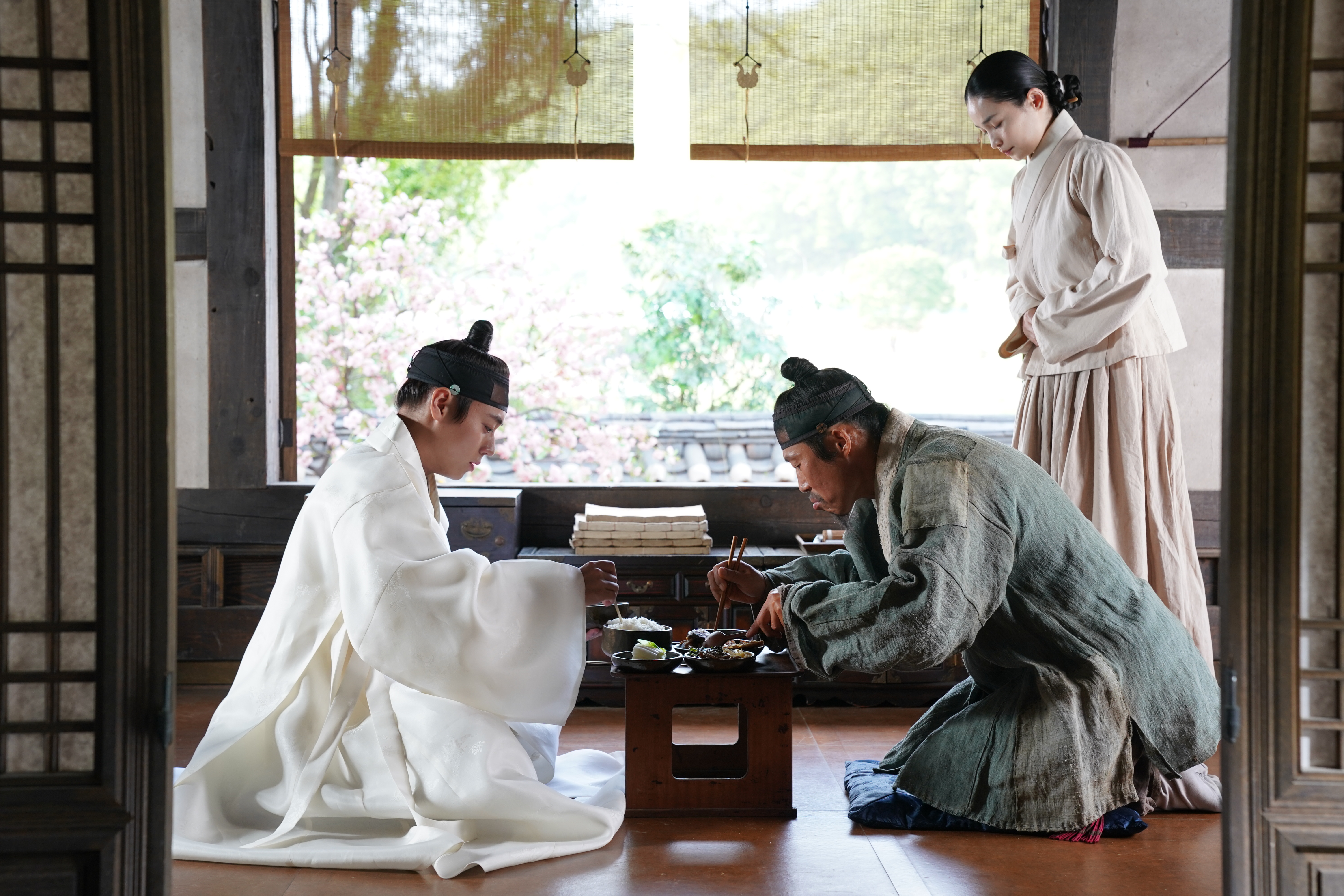
MA – Cry of Silence (မ – Cry of Silence, The Maw Naing, 2024)

After their factory withholds wages for two months, seamstresses decide they have no other option but to strike in The Maw Naing’s hard-hitting drama, Ma – Cry of Silence (မ – Cry of Silence). As the opening title cards explain, Myanmar has seen a series of military coups over the last few decades and is now in a state of civil war. The military’s burning of villages has forced young people into the cities in search of work and shelter, but also left them in a precarious position and vulnerable to exploitative conditions. 

Mi-Thet, at least,ƒ is haunted by memories of her village burning and lives in a kind of hell where smoke is always on the horizon. She has a job as a seamstress and lives in a dorm with other young women in similar positions, but the factory hasn’t paid wages in two weeks and the landlady is beginning to get fed up. She snaps at the girls and ironically asks if they want her to starve to death, laying bare both the domino effects of this world in collapse and the pervasive heartlessness of capitalism. At the factory, the Forman watches over them, ruler in hand and often strikes them if he thinks they aren’t working hard enough while they’re terrified of taking breaks or visiting the bathroom because he also peeps on them or tries to extract sexual favours which some of the girls grant because they need the money.

The foreman’s face is kept offscreen and even when the women confront him, he appears as a ghostly silhouette behind the plastic sheeting. The factory boss, even when he supposedly arrives by car, is never seen at all. It may be that the political situation makes it impossible to run this kind of business, but at the same time it seems more like the factory just don’t want to pay the women because they think they don’t have to. After all, they have money to hire thugs to break up the protests when the women decide to strike rather than just giving them what they’re owed. The foreman alternately threatens them and makes false promises of payment that the women can’t believe because they’re still owed so much money even though as Mi-Thet says, she spends her days between the factory and the dorm. It wouldn’t surprise her if she died at her machine, while one of the others quips they’d still keep them working after they died.

Mi-Thet remains on the fence about even joining the strike, as do many of the other women afraid of the repercussions and of losing the money they’re owed entirely though it doesn’t seem as if it would be paid anyway. Her neighbour U-Tun who is disabled and is covered in scars from the 1988 protests for democracy remains world-weary and not so much encouraging as fatalistic but offers Mi-Thet a series of books that help her commit to the cause though it’s seeing her friend who works as a maid be badly beaten by her employer that convinces her they have to act now. 

As U-Tun says, the country should have changed but it stayed the same, while Mi-Thet can’t figure out if they’re emerging from the darkness or walking deeper into it. News reports speak of torched villages and refugees but also of the food shortages the destruction has caused. Even the cook at the dorm complains prices have gone up so much she can’t get good food and says she’ll cook better when they pay her more. “Better” doesn’t really matter at the factory as long as the girls hit their quotas, but workers can’t work on empty stomachs and no sleep even as the foreman seems intent in working them to their deaths. Mi-Thet and the others attempt to stand up against this cyclical destruction, but discover that they have almost no power and the factory owners don’t care at all if they live or die because they think there’s an endless stream of displaced girls looking for work. Gunshots and the rumble of fire echo in Mi-Thet’s ears, but ultimately she discovers herself trapped within this historical loop but issuing a rallying cry to the youth of Myanmar to rise up against this continuing oppression.


MA – Cry of Silence screened as part of this year’s New York Asian Film Festival.

Trailer (English subtitles)