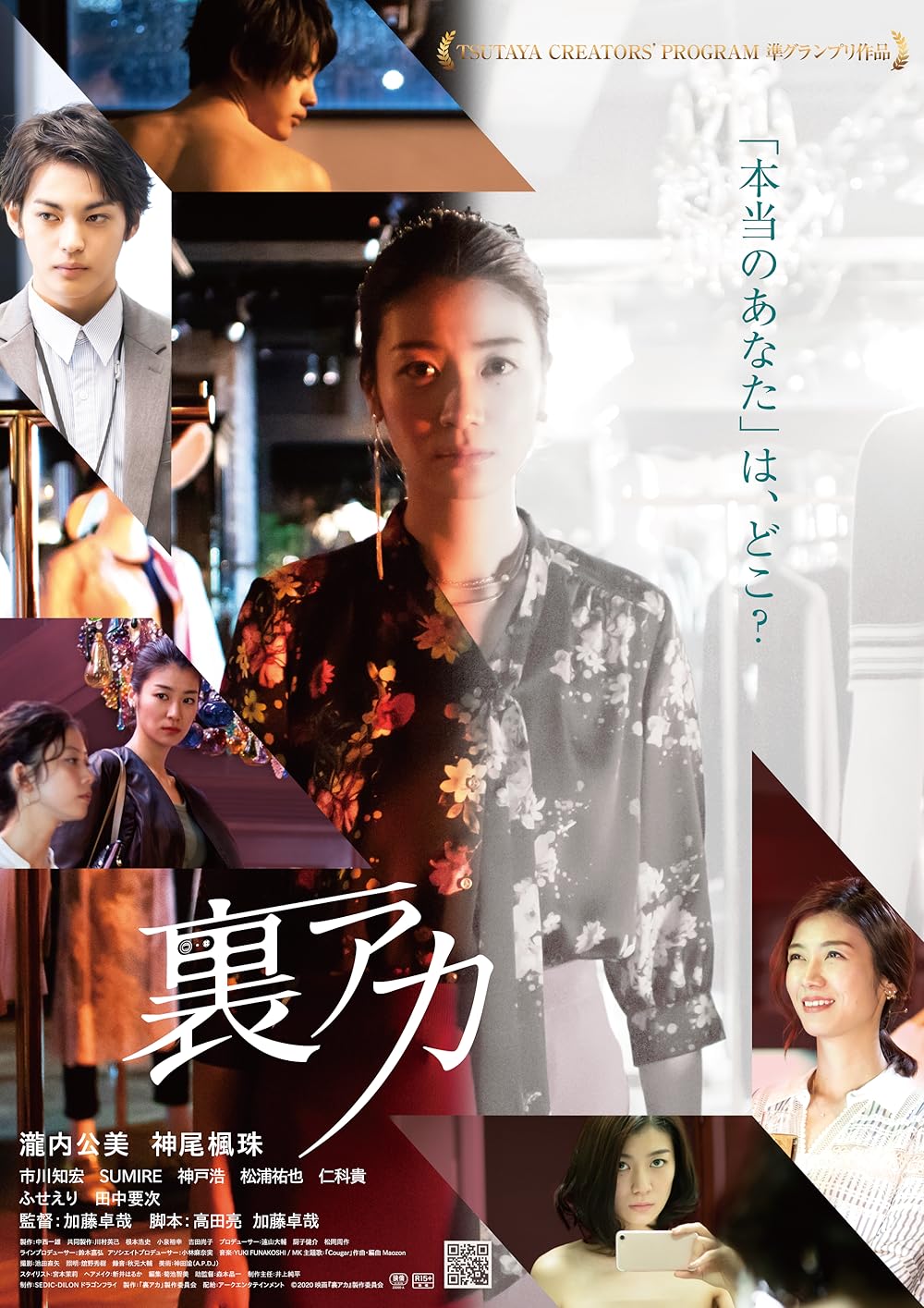
Rewrite (リライト, Daigo Matsui, 2025) [Fantasia 2025]

A mysterious transfer student arrives from the future. You have 20 wonderful days with him, but then he must return to his own time. He tells you that he came back to meet you and experience your time because of a book you will write, and your future self also shows you the book, tells you you did indeed write it, and that everything’s going to be okay. But in 10 years’ time, when you’re your “future self”, you from the past does not show up to get any of this information. Did something go wrong? Is the timeline crumbling? Or did you just imagine all this as a manifestation of “youth”?

When this happened to her, Miyuki (Elaiza Ikeda) believed that she was “the heroine of that summer,” but the truth is of course that she was always the heroine of her own life and had the right and power to make her own choices. Adapted from the novel by Haruka Honjo, Daigo Matsui’s Rewrite (リライト) is, like Obayashi’s The Little Girl Who Conquered Time, about the dangers of nostalgia and the over romanticisation of youth. What Miyuki gradually comes to realise is that one of the formative experiences of her teenage years may not have been unique or special but happened to literally everyone and changed them too in ways that were not always good. Because she met Yasuhiko (Kei Adachi) from 300 years in the future, she became a writer. But it remains true that her first few books weren’t about him at all. She always had the talent and the inclination. The impetus of destiny was only what gave her the confidence to pursue it. She knew she could, because she already had.

Yet, she’s in her hometown to close a loop on this unresolved romance of her youth despite having built a good life for herself as a successful author with a nice husband she met during the course of her work who is caring and supportive of her career. At the high school reunion she’s cajoled into going to, her former classmates sing the song they were practising for choir, “Cherry” by Spitz, which is also about “rediscovering each other, some day, same place,” echoing Yasuhiko’s cryptic claim that they’d meet again “in the future” (whose he doesn’t say) hinting at the way these feelings have been left hanging with only a yearning for the past and a painful nostalgia in their place. What Miyuki really has to ask herself is if she’s the person she wants to be in the present and is who she is because of the choices she made independently rather than solely because she was trying to fulfil the destiny given to her Yasuhiko.

To do so, she must face the fallacy of the “chosen one” mentality. The film rams this home in the parallel story of one of Miyuki’s classmates who tells her that she wasn’t chosen but actively chose to accept a kind of destiny rather than simply going along with it and that Miyuki too could “rewrite” the past if she wanted. In effect, this is what she’s already done as her husband implies when he repeatedly asks her if the book is “fiction”. Of course, it is, though she believed it not to be because it’s rooted in nostalgia and the personal myth making of the idealised romance of her youth. Matsui too plays with this sense of nostalgia in moving the setting of the story to Onomichi to mimic that of Obayashi’s The Little Girl Who Conquered Time and making frequent visual references to the 1983 film along with casting Toshinori Omi, the original boy who leapt through time, as the class teacher at the 10 years later reunion.

But the truth remains that Miyuki must learn to let go of the past, or else take mastery over it by rewriting her own story to accept that, as her husband says, the past and present are all hers. She can write anything and can finally leave her own time loop by writing her way out of youthful nostalgia and accepting something more like an objective reality along with the life she has now which appears to be happy and successful. Scripted by Makoto Ueda who has a long history of time-travel themed movies from Summer Time Machine Blues to River, Matsui’s poignant drama is shot through with irony and in constant dialogue with pop culture touchstones from the Obayashi film to Shunji Iwai’s Love Letter, while at the same time insisting that while you are the main character in your own life, you’re not the only one and a hundred stories are going on at the same time as yours. What really matters is not hanging on to the memories of an idealised past, but to live the life you want in the present for as long as this particular loop lasts.


Rewrite screened as part of this year’s Fantasia International Film Festival.

Original trailer (English subtitles)

Behind the Shadows (私家偵探, Jonathan Li Tsz-Chun & Chou Man-Yu, 2025)

“At our age, we do what we have to do instead of obsessing over the good old days,” according to a put upon wife sick of waiting for her husband to make good on his promises. Jonathan Li Tsz-Chun and Chou Man-Yu’s Malaysia-set drama Behind the Shadows (私家偵探) is in its way as much about the disconnect in modern romance which has now been corrupted by capitalistic desires and frustrated notions of traditional masculinity as its central mystery. 

As someone says, in the old days women hired private detectives to chase their men, but now it’s the other way around. In someways, the parade of men rocking up at Wai-yip’s (Louis Koo Tin-lok) office to hire him to follow their wives, girlfriends, or women with whom they may not actually have much of a connection, all seem to be trying to regain control over their lives by asserting it over a lover they fear has betrayed them. Ironically, this is sort of true of Wai-yip too in that he’s taken to spending his evenings at his friend’s restaurant to escape his moribund marriage. When one customer brings him a photo of his own wife, Kuan (Chrissie Chau Sau-na), little knowing he’s the other man Wai-yip is irate but not as surprised as might be expected. Still, he hands the case off to a junior associate and tries to avoid thinking about it while otherwise passively seething about his wife’s potential betrayal.

But the ironic thing is that Kuan might only have done this to get Wai-yip’s attention and force him to confront their fracturing relationship. While Wai-yip hangs back, tries to act with maturity, and struggles to accept his wife’s decision, she privately wants him to fight back, to shout at her or punch her lover as a sign of manly love. She attacks his masculinity by berating him for being work-shy and refusing to have a child because they can’t afford it, though she can support them all on her salary, while Wai-yip remains hung up on the lost glory of his life in Hong Kong which he gave up to marry Kuan and move to Malaysia. The suggestion is that Wai-yip has been trapped in a kind of limbo, unable to let go of the past and embrace his new life and now Kuan is sick of waiting for him. 

The circumstances of his own marriage and the cynicism of 20 years spent chasing cheating spouses cause Wai-yip to be wary when a man comes and asks him to look for a runaway fiancée. He wonders if they’ve just had a tiff, if she’s left because the man was violent or unfaithful, or if the man is delusional and the woman doesn’t believe herself to be in a relationship with him and so is just happily living her own life. Along with all these anxieties is his sense of responsibility in knowing that this woman may be in danger if he finds her, as will Betty if Wai-yip manages to uncover evidence of her infidelity and relays it back to her gangster boyfriend. Like Kuan, Betty (Renci Yeung Sz-wing) says she just wants a man who will listen to her when she wants to talk and is half-minded to let Wai-yip send the video to find out if the gang boss cares about her enough to actually do anything about it. 

But the consequences of inaction are also brought home to Wai-yip when one of the women he’s following is murdered after he leaves his investigation to chase Kuan and her lover. Trying to makeup for his failure brings him into contact with a zombified cop, Chen (Liu Kuan-ting), whose wife is in a coma after a car accident. While Chen’s solicitous care and repeated pleading that his wife wake up may paint him as a lovelorn man, the marks on her arm that perfectly fit his fingers suggest a violent and controlling past along with a thinly concealed rage that she may have escaped him at last. “There’s nothing much the police can’t do,” he ominously tells Wai-yip while hinting at his desire for authoritarian control as mediated through the patriarchal institution of the police force and his rejection of a woman’s sexual freedom. Wai-yip feels similarly trapped as his own increasing sense of inadequacy deepens the gap between his wife and himself that leaves him unable to have an honest conversation with her about how he really feels and prevents him from healing the rifts within his own marriage even as he chases answers on behalf of other insecure men. What he indeed realises is that it’s time to move on from the past and live in the present, though as it turns out not even he may be strong enough to leave his insecurities behind. 


Behind the Shadows screened as part of this year’s New York Asian Film Festival.

Trailer (Traditional Chinese / English subtitles)

How Dare You? (ふつうの子ども, Mipo O, 2025)

“I told you to shut up about that,” Kokoa’s mother (Kumi Takiuchi) tells her after she gets caught with two other children trying to start an environmental revolution by releasing cows from their paddock. It’s not difficult to see why Kokoa (Ruri) feels so strongly about global warming even if it’s probably her home environment that she most wants to change given adult indifference to climate issues, though Mipo O’s charming family dramedy How Dare You? (ふつうの子ども, Futsu no Kodomo) is less about the issues themselves than the relationships between the children and the adults around them.

The point being that Kokoa hates adults for trashing the world and creating an environment in which she feels it’s impossible to live. Fellow student Yuishi (Tetta Shimada) is drawn to her Greta Thunberg-style speech in class having just embarrassed himself with an essay about his toilet habits and suddenly develops an interest in the environment as a means of getting close to her. Which isn’t to say that he didn’t really care before. In this semi-rural area, he and his friends still go outside every day to catch woodlice to feed his friend Soma’s lizards, and Yuishi is also very keen on animals in general. He’s sympathetic to the cause, but on the other hand, is only really into this because of Kokoa who pretty much ignores him in favour of class bad boy Haruto (Yota Mimoto) who tells her that they need to take “action” to wake the adults up or no one’s going to listen to a bunch of kids whining about methane emissions. 

There is something pleasantly old-fashioned about their tactics which include cutting letters out of magazines to make protest signs they hang up all over town telling people not buy so much stuff, eat meat, or drive cars. But while the other two are increasingly emboldened their actions and their revolutionary activities begin to get out of hand, Yuishi finds himself conflicted. When they spot similar signs springing up made by other kids they don’t know, Kokoa and Haruto are annoyed rather than pleased that more people are joining the cause. Yuishi agrees with a sign saying people should catch the bus because it’s better than driving a car even if buses also pollute while Haruto opposes it. But he also points out that the firework rockets Haruto has bought for another action give off CO2, so perhaps they shouldn’t use them. He tries to deescalate and avoids becoming radicalised, but is eventually bullied into going along with the other two and suggests releasing the local farmer’s cows as their next protest assuming it’s a “nice” thing to do and less aggressive than some of Haruto’s ideas.

But they’re still just children and don’t really understand the consequences of their actions. After all, what’s a wild cow supposed to do? It doesn’t occur to them that the cows could get hurt or end up causing accidents and damage, let alone that they may alienate the local community who are already fed up with their stunts because it’s affecting their livelihoods. Of course, this is also part of the problem. The adults ignore the children because what they’re saying is inconvenient for the way they live their lives under capitalism which isn’t something they think they could change even if they wanted to which they likely don’t. Yuishi’s sympathetic mother is forever reading books about how to raise children well, and so she tries to listen to Yuishi but also “corrects” him in subtle ways like hiding meat in his spring roll after he tells he wants to give up eating it for the environment. Though she may have correctly assumed that he’s not really serious about it and tells him what she’s done after his first bite of the spring roll, there’s no getting around the fact that just as Kokoa said she’s not really listening. Nor does she sort her rubbish and recycling responsibly. When Yuishi looks up global warming on his tablet, his mother remembers being told about this at school too, which just goes to show how long this has been going on and how easily everyone forgot about the ozone layer panic of 1980s and 90s.

Nevertheless, the gradual escalation of the children’s activities towards something akin to ecoterrorism echoing the student protest movement on the 1960s satirises the dangers of radicalisation especially as neither of the boys are really invested in the cause and are only there because they’re each drawn to Kokoa who remains intense and implacable. Their true natures are exposed when they’re caught with only Yuishi stoic and remorseful, admitting it was his idea to release the cows and that he did it because he liked Kokoa and wanted her to like him back, while Haruto spends the entire time crying in his mother’s arms and Kokoa glares at everyone while reciting environmental statistics. Maybe she isn’t overly invested either so much as trying to regain control over her life and using cold hard facts as an escape from her overbearing mother who liked her better when she was “sweet” and ‘cute” and never asked any inconvenient questions. Even so, there is something very charming about the children’s earnestness that’s largely lost on the well-meaning adults around them who may be trying their best in lots of other ways but have already given in to the idea that the world can’t be changed and nothing they do makes a difference so there’s no point doing anything. Yuishi at least has learned some valuable lessons, if only that things go better when you’re straightforward and honest your feelings even if it might be embarrassing in the moment.


How Dare You? screens 20th July as part of this year’s New York Asian Film Festival.

Original trailer (English subtitles)

Somebody (침범, Kim Yeo-jung & Lee Jeong-chan, 2024)

“A mother should do everything to protect her child,” according to one young woman, but are there, or perhaps should there be, limits even to a mother’s love? Adapted from a webtoon, Kim Yeo-jung and Lee Jeong-chan’s Somebody (침범, Chimbeom) is really about what it means to be a family and who it is that gets to be included in one more than it is about its otherwise outlandish premise or how we should deal with young children who have severe mental health issues accompanied by violent tendencies. 

Then again, as So-hyun (Gi So-yoo) herself says she isn’t like the others and in that sense not necessarily good or bad but only what she is. It’s obvious that she has no understanding of conventionally held notions of right and wrong and actively enjoys inflicting pain on others, perhaps because as she later says it’s when she feels people are being most honest. She’s only seven years old, but she’s already been expelled from several schools and nurseries for scaring the other children, and her mother now locks all the sharp implements away at night having previously woken up to So-hyun slashing away at her arms and legs. But in a paradoxical way, it’s abandonment that So-hyun fears the most in knowing that her mother cannot fully accept what she is, while Young-eun (Kwak Sun-young) does her best to “protect” her at the cost of her own mental and physical health. 

So-hyun’s parents’ got a divorce because her father felt she could be better cared for in an institution, while Young-eun was determined to care for her herself despite the fact that So-hyun’s behaviour is not improving even with therapy and she continues to be a threat to those around her. This is particularly true of other girls her age towards whom she becomes jealous when they approach her mother as if they meant to replace her in Young-eun’s affections and So-hyun would lose her home. The film’s Korean title translates more literally as “invasion”, and this fear of being pushed out and excluded that motivates the actions all concerned.

20 years later, we’re introduced to Min (Kwon Yu-ri), who is living with an older woman, Hyun-kyung (Shin Dong-mi), who lost her daughter, it’s implied to suicide, while her own mother lives in a psychiatric institution. Though she is reserved and emotionally distant, Min has taken the place of Hyun-kyung’s daughter only to find it threatened when they take on another young woman, Hae-young (Lee Seol), to help with their business clearing houses after lonely deaths. Min too fears invasion, that Hae-young has come to kick her out and take her place by monopolising Hyun-kyung’s position as their “mother” in this accidental “family” unit. Hyun-kyung too fears abandonment, knowing what it’s like to be left alone and only too happy to become a maternal figure to these two orphaned young women each in search of a place to belong.  

But there’s also a question mark over whether someone like So-hyun whose brain is wired differently can ever be accepted into a conventional family unit. She has no understanding of human empathy, but simultaneously longs to be loved and accepted and is resentful that she doesn’t feel herself to be even by her mother or other maternal figures whom she believes owe her all those things. Min too seems to have a dark past and on discovering that she has become pregnant by an apparently controlling and violent boyfriend struggles with the decision of whether to keep the child. She fears that she may turn out to be like her own mother and does not particularly seem to want to raise it, but at the same time reflects that the baby has done nothing wrong and therefore it’s unfair to prevent it from being born. 

So-hyun also insists that she’s done nothing “wrong,” though her understanding of what “wrong” means is obviously different from most people’s. She expects unconditional love from her mother, and Young-eun gives it to her to the best of her ability despite the fact that she is afraid of her daughter and ultimately at a loss as to how best to protect her and also the outside world. Though at times hamstrung by its webtoon origins, Kim and Lee’s handsomely lensed thriller explores this the irony in this need for maternal acceptance with a genuine sense of poignancy and more than a little sympathy for the “inhuman” So-hyun if also terror of the hell she creates around her in her constant quest to find a place where she can truly be herself.


Somebody screens 20th July as part of this year’s New York Asian Film Festival.

Trailer (English subtitles)

Daughter’s Daughter (女兒的女兒, Huang Xi, 2024)

Never having fully dealt with the trauma of her teenage pregnancy and decision to give her child up to be raised by a family friend, 64-year-old divorcee Jin Ai-xia (Sylvia Chang Ai-chia) finds herself in an eerily similar position on on learning that the daughter she raised in Taiwan has been killed in a car accident in New York where she was receiving fertility treatment. The process resulted in a healthy embryo of which Ai-xia now finds herself the “guardian”. She is given four options, keep the embryo in storage and pay to renew the contract when it runs out, find a surrogate to carry to it term, donate it to another couple, or have it destroyed.

The fact that there are eight months left on the contract that her daughter Zuer (Eugenie Liu Yi-er) signed makes this almost another pregnancy which Ai-xia must decide whether or not to continue. Keeping the embryo in storage only defers the decision and traps it in the same mental space in which Ai-xia thinks of Emma (Karena Lam), the daughter she did not raise and tried to put out of her mind. In its consideration of motherhood, the film does shy away from suggesting that it is a kind of burden and requires sacrifice whether willing or not. Later confronted, if gently, by Emma who has unbeknownst to her become a single mother who chose to keep her child, Ai-xia justifies herself that she was 16 and afraid. Most of all, she was afraid the baby would trap her in New York’s Chinatown and that her life would never change after that. She wanted more, so she went along with her mother’s proposed solution of giving her daughter to a childless couple to raise while she returned to Taiwan and never looked back.

Yet it’s Emma who seems to haunt her while she’s in New York trying to sort out Zuer’s affairs while mired in her grief. It’s clear that she feels that she failed both her daughters as her unresolved trauma over separating from Emma left her unable to fully bond with Zuer whom she raised at arms’ length. When Zuer and her same-sex partner Jia-yi (Tracy Chou Tsai-shih) decide to have a child, Ai-xia is against it. It seems there may be some lingering prejudice in her about their relationship as she tells Zuer that the baby won’t be able to explain their family situation, but it’s also partly that she doesn’t want her to be trapped by motherhood as she felt herself to be. She asks her why she and Jia-yi don’t just enjoy their life together rather than complicate with a child. Ai-xia tells Emma that she wanted to live her own life, while expressing the same desire now that she has become a second mother to her own mother, Yan-hua (Ma Ting-Ni), who is living with dementia. Once her mother passes away, she’s looking forward to enjoying her freedom for once. 

Ai-xia rails that no one ever really considered her feelings and that she’s been given this burden without ever really being given an opportunity to ask herself if she wanted it. There’s a minor irony in Yun-hua’s segueing back into the past to tell the 64-year-old Ai-xia that she can’t raise a child at this age as if she were still a pregnant 16-year-old. As an older woman, she reflects that Yun-hua probably didn’t make that decision solely because she was embarrassed by the stigma of teenage pregnancy but genuinely thought it was best for both her daughter and her granddaughter. But now Ai-xia is facing the same choice at the other end of her life knowing that if she chooses to raise Zuer’s baby she may not live long enough to see it to adulthood, nor may she have the energy to look after a small child even if she has the time. 

But Ai-xia carries Zuer’s ashes around with her holding them in front of her belly as if they were the embryo and she were already carrying it. Placing the square black container on the airport scanner and watching it travel through the tunnel is oddly like an act of rebirth. Attempting to come to terms with her own complicated maternity, she thrashes out the past with Emma but also really with herself in trying to decide whether or not to continue this maternal legacy despite the sacrifices and compromises it entails. For her, motherhood becomes an act of self-forgiveness in which she learns to understand both her own mother and her daughters along with their shared connection in this ever-increasing line.


Daughter’s Daughter screens 18th July as part of this year’s New York Asian Film Festival.

Trailer (English subtitles)

See You Tomorrow (ほなまた明日, Saki Michimoto, 2024)

On witnessing her take photos in the street, a shopkeeper remarks that Nao (Makoto Tanaka) must be happy, but Nao doesn’t seem so sure and suddenly there’s a kind of gloom that descends over her. Something similar happens later when she asks a pair of women in town on holiday to pose for her photos, but looks on sadly while the women begin to feel uncomfortable. Eventually they leave, complaining that Nao was too weird it was it was creeping them out.

Saki Michimoto’ Saki’s See You Tomorrow (ほなまた明日, Hona Mata Ashita) is in part about Nao’s isolation, but it’s an isolation born of being different by virtue of her talent and the bright future that exists ahead her. Her small group of friends have no such certainty and in Nao’s shadow are only increasingly sure that they don’t really have what it takes to become star photographers. On some level, they may resent her, but not seriously and are mostly supportive of her success. Nao, meanwhile, is a displaced soul. She seems to have become estranged from her mother who does not answer the door when she visits leading her to get a friend to ring the bell instead, and has been continually couch surfing among her friends before settling on Yamada (Ryota Matsuda) as a more permanent point of refuge. Nao asks him out, but when he asks if she loves him only replies that she has some affection for him.

In some ways, this speaks to Nao’s headstrong nature. She speaks the truth and forges ahead chasing what she wants without really giving that much thought to those around her.  The others have all lined up positions working with professional photographers for when they graduate, but Nao honestly tells them that she’s not cut out to be someone’s assistant and has no choice but to become a pro photographer right away. One of the other girls says that she finds Nao “scary,” while even Yamada describers her as “merciless” if in a more positive way that it sounds. For her, photographs are a martial art and in setting her sights on art school in Berlin she plans to use her camera to take down the opposition,

Yet there’s a part of her that wants to stay part of the group and remain close to her friends even while knowing that her talent sets her apart from them. Sayo (Risa Shigematsu), whose apartment Nao had described as to tidy to feel comfortable in, seems to be the most conflicted even if as others remark she rarely expresses anger and keeps her feelings to herself. She is painfully aware that her talent isn’t on the same level, while frustrated by the cryptic comments of their teacher, Kitano, and additionally irritated by Nao’s treatment of Yamada whom she may also have a secret crush on herself. Cowed by Nao’s abilities, Yamada ulmitaly decides to give up taking photos altogether and look for work in a more supportive role such as an assistant or an editor. 

When the others reunite in Tokyo four years later, Yamada has dropped out of touch and perhaps out of life while mired in feelings of loneliness and inadequacy. One of the cryptic notes Nao had got on her work had been that she should walk more, which confused her because all she ever does is walk and take photos though mostly alone and often wandering off losing sight of everyone else while carried along by the rhythms of the city. But on reuniting, the gang resolve to keep walking and see where it leads them, much as Nao always has but this time together as they move towards the city. They’ve all changed, grown, drifted apart to an extent and come back together with a little nostalgia and melancholy disappointment, but in other ways settled and more at home with themselves save perhaps for Yamada who seems to be in hiding from the world while Nao still seems to have nebulous feelings for him along with unfinished business. Delicate and gentle, Saki’s etherial camera captures the fragile bonds between them and the steeliness that underlines Nao’s independence but also sets her adrift, a perpetual outsider living life through a lens snatching momentary connections with strangers in the street while continually on her own, solitary, path.


See You Tomorrow screens in New York 15th July as part of this year’s JAPAN CUTS.

Trailer (no subtitles)

The World of You (麻希のいる世界, Akihiko Shiota, 2021)

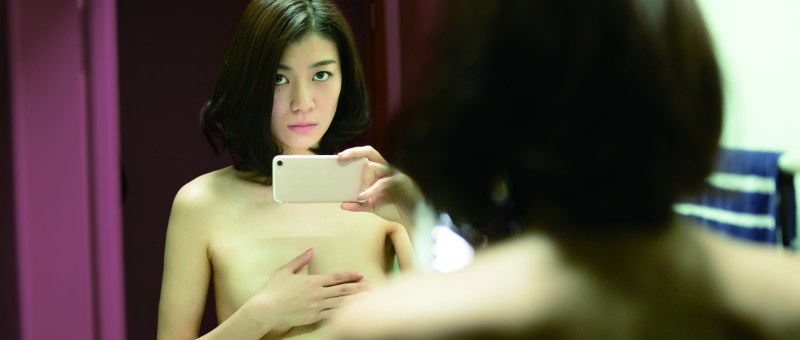
A girl with a chronic illness becomes fixated on a traumatised classmate in Akihiko Shiota’s meditation on the self-destructive effects of obsessive love, The World of You (麻希のいる世界, Maki no iru Sekai) . It is not, however, the heroine that primarily experiences them, as her own romantic obsession is in one sense a purer love, but in another is a way of making her mark on the world before her short life comes to an end. 

Yuki (Yuzumi Shintani) spots Maki (Marin Hidaka) leaving a local shack and locking the door behind her preceded by a shady-looking young man. She later recounts that she once stayed in this same shack for three days after running away from home following her parents’ divorce which she thinks her illness may partly have been responsible for her. The shack represents different things for each of them, but is also a space of their otherness and isolation from which neither of the girls is able to escape. It’s clear that Yuki’s growing obsession with Maki who is ostracised at school and resented by all is romantic, yet Maki appears to reject her attentions and reminds her she’s the type of girl who sleeps with guys.

Yuki sighs and she says knows as if she’s already resigned herself to the impossibility of her romantic desires being fulfilled, but Yuki continues to behave flirtatiously and otherwise uses the desire she knows Yuki feels for her as a means to manipulate her. Even so, on some level, she too has genuine feelings for Yuki and repeatedly tries to push her away in fear that she will only cause her trouble and pain. She tells her that her father is a convicted paedophile, which is why she is shunned by the local community. Though people are sympathetic at first, they often come to reject and resent her which is why she alternately responds to and then refuses Yuki’s insistence on connection. Though she never says so, her behaviour hints her father may have abused her too or at least that was she sexualised at an early age now and has a self-destructive attitude to sex in which she engages in potentially dangerous relationships with older men and uses her desirability to manipulate her male classmates.

Among them is Yusuke (Airu Kubozuka), who has a one-sided crush on Yuki that she continually rejects but he seemingly cannot take no for an answer. The situation between them is further complicated in that Yusuke’s father is also Yuki’s doctor. After her parents’ divorce, Yusuke’s father entered an affair with Yuki’s mother and eventually left his wife for her, breaking up their family. It’s already a messy situation, though Yusuke’s obsessive love is seemingly more possessive, whereas Yuki’s has taken on a passive quality. She does not really expect that Maki will ever return her feelings and seems to be aware that she uses them to manipulate her, but makes it her remaining life’s purpose to ensure that Maki’s musical talent is appreciated by the wider world. 

In some senses it’s a classic tale of an incredibly toxic love triangle in which Maki plays off both Yusuke and Yuki though may not actually care for either them as all romantic desires are effectively processed through her. Each of the teens is unfairly made to pay for the sins of their parents and effectively left without proper guidance or more positive examples of healthy romantic relationships. Though they all lose something, Yuki’s loss of her voice is especially ironic given that she’d barely talked to begin with but had bared her soul to Yuki who is then in fact reborn, possibly as the “even more wonderful Maki” that Yuki hoped she be though she no longer remembers her. Nevertheless is there is something that seems more hopeful in Yuki’s insistence that they will meet again when pitted against Yusuke’s repeated claims that he knows Yuki will come to love him eventually, especially considering the destructive actions they ultimately lead him to. Yuki’s love, meanwhile, is only self-destructive or in its way life giving in allowing her to sacrifice herself for the world that has Maki in it but that she may never see.


Trailer (no subtitles)

Give It All (がんばっていきまっしょい, Yuhei Sakuragi, 2024)

The last year of high school is a little premature to be defeated by life, but this seems to be what has happened to Etsuko. It’s fitting in a way, because her problem is that she simply gives up too early and is incapable of seeing anything through because she’s already convinced herself that there’s no point in trying. Yuhei Sakuragi’s anime adaptation of the book by Yoshiko Shikimura, Give It All (がんばっていきまっしょい, Ganbatte Ikimasshoi) is indeed all about how there’s no point giving up before the end and no matter the result there’s satisfaction to be gained just knowing that you gave it all you could.

But Etsuko can’t see that to begin with because she peaked too early. Back in primary school, she won all the races because she was tall for her age. But the other children eventually started catching up with her, and she started to fall behind. It didn’t really occur to her train or to try to compete with them because she was used to just winning and the realisation that she wasn’t “special” after all made her feel like a failure at life. To save herself similar pain, she started giving up before she even started believing that there wasn’t any point in trying. Even so, she’s sullen and miserable, not to mention resentful of those who do put in the effort and start to see results. 

That’s one reason she’s reluctant to get involved with the rowing club again despite the encouragement of her best friend Hime. Badgered into it by transfer student Riina, she does the bare minimum and lets the others down, at one point just letting her oars drop while asking herself what it is she’s even doing here. But it’s also being part of a team that gives her a new sense of purpose as she realises that she’s the one who’s the weak link because she doesn’t have the stamina to keep up with the other girls. 

Meanwhile, they all have their problems too. Riina is struggling to make new friends after moving to the town following her mother’s marriage and is also nervous around boys because she’s always attended single-sex schools. Taeko and Mayumi only joined the club to get back at each other because their families are supposedly feuding, though there’s a little bit more to their relationship drama than a buinsseness dispute between their parents. Hime is really just trying to keep the peace and get Etsuko back to being the confident and outgoing person she used be rather a sullen figure of defeat who is aloof to the point of rudeness and refuses to try at anything. 

Ironically, it’s an encounter with the awkward team captain of a rival high school’s team that begins to open her eyes. Based on her earlier experiences, Etsuko assumes that the other team must just be innately talented and will win the upcoming race easily, but the other girl tells her that she’s mistaken. They didn’t win easily and they don’t have room for complacency. Though she seems jealous of the fun Etsuko and the others seem to be having and the genuine friendships that have arisen between them in contrast to the frosty determination and rigorous training that defines her relationship with her teammates, she reminds Etsuko that they work hard and that Etsuko’s team has potential if only they gave it their all.

While the 3D animation sometimes appears uncanny and distracts from the overall aesthetic, the beautifully designed backdrops add to the sense of peace and serenity in the town and echo Etsuko’s own unfolding sense of joy as the world around her brightens thanks to her new friends. What she learns is that it’s foolish to give up too soon without even trying, while not doing anything will leave her stuck in the middle of the water like a boat with no one rowing for the rest of her life. The thing about rowing is that it requires unity and the team to think as one, which means that she has to engage and bond with her teammates while finding fulfilment in her individual contribution through resolving to give it her all no matter what and knowing that’s worth it no matter the result.


Give It All screened as part of this year’s Toronto Japanese Film Festival.

Trailer (no subtitles)

Dark Nuns (검은 수녀들, Kwon Hyeok-jae, 2025)

Large organisations have a tendency to gloss over inconvenient truths, but is it really in keeping with the teachings of the Church to ignore a confirmed case of demonic possession and allow a boy to die rather than admit that demons are real and members of the clergy are conducting successful exorcisms? According to Sister Giunia (Song Hye-kyo), a chain-smoking nun with a penchant for vulgar language, it is not, but she is largely hamstrung because of the ingrained misogyny of the patriarchal superstructure of the Catholic religion.

A spin-off from 2015’s film The Priests, Dark Nuns (검은 수녀들, Geomeun Sunyeodeul) goes in hard for the Church’s hypocrisy. As Giuna squares off against a powerful demon when taking over from two priests who’ve botched an exorcism on a teenage boy, it taunts her that the blood of all the demons she has slain will echo in her womb like a drum. There’s a suggestion that the existence of a nun is itself is an affront to God, as if a woman who has rejected her maternity and remained celibate is an aberration suggesting that a woman’s only proper role lies in motherhood. The fact that Giuna is later diagnosed with uterine cancer implies the same, as if she has cursed herself in her decision to serve God and become a bride of Christ. In her final confrontation with the demon, it tells her again that she will die of the tumour in her womb, a fact she already knows, but Giunia counters that she will exorcise the demon from this boy and use her womb to imprison it. Which is to say, she will kill him with her maternity and thereby fulfil her ideal role by becoming a “mother” to this demon, and symbolically to Hee-joon (Moon Woo-jin) the possessed boy, before condemning them both to the flames. 

This fact itself is ironic, as the council at the Church refused her request to conduct an exorcism because she is not ordained and “only” a nun. Of course, a woman cannot be ordained in the Catholic Church and the priesthood is open only to men. Her powerlessness within the organisation makes it easy for them to dismiss what she is saying while writing her off as a crazed devotee of the weird teachings of Father Kim, the priest from the earlier film. When they finally do give permission for an “unofficial exorcism” after Giuna has contacted the Rosicrucians in Rome to borrow some holy artefacts necessary for the ritual, the council inform her that the exorcism will be performed by Father Paolo (Lee Jin-wook). A sceptic who believes demonic possession is a psychological phenomenon not a spiritual one, Father Paolo is an odd choice but there is something quite moving and transgressive when in he fact takes off his priestly robes and places them over Giunia’s shoulders, ordaining her and acknowledging both that what she has said is true and that she is the only person who can carry out this exorcism. 

This is doubly true as Father Paolo had also tried to use the teachings of the Church to press another nun, Sister Michela (Jeon Yeo-been), by leading her to believe that her own spiritual awareness was a psychological illness that she should struggle to overcome through faith and medicine. It seems that Michela and other women like her may have found themselves retreating within Catholicism to reject the destiny of becoming a shaman while she herself was placed in a Catholic orphanage as a “cursed” child born between a human and a demon. Giuna had friend who was once a fellow nun but has now left to assume her true calling as a shamaness. The two remain good friends and often work together while Giuna is open to the presence of other gods and other forms of spiritual divination such as Michele’s talent with the Tarot. As such, all of these practices exist within a wider spiritual universe which is another challenge to the Church’s oppressive rigidity in its denial of folk beliefs and ancient traditions. After all, there is no real gender bias in shamanism, or if there is, it runs the other way for the majority of shamans are women. 

In any case, beating the demon requires everyone to work together for a common goal using, as the Rosicrucian father says, “all available means”. Through participating in the exorcism, Sister Michela begins to accept her own identity later continuing to work with Deacon Choi to track down the remaining 12 Manifestations while accepting Sister Giuna as a mentor figure. They are each in a way freed from the Catholic Church while simultaneously remaining inside of it as they progress with their mission of quieting the demonic forces at large in the world and protecting the innocent from their rippling evil. 


Dark Nuns is released digitally in the US July 15 courtesy of Well Go USA.

Trailer (English subtitles)
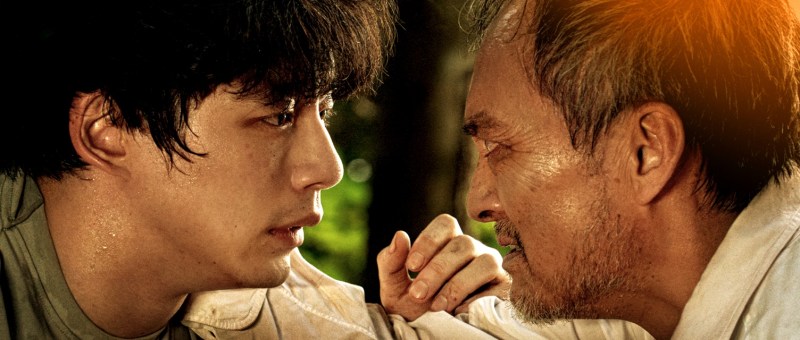
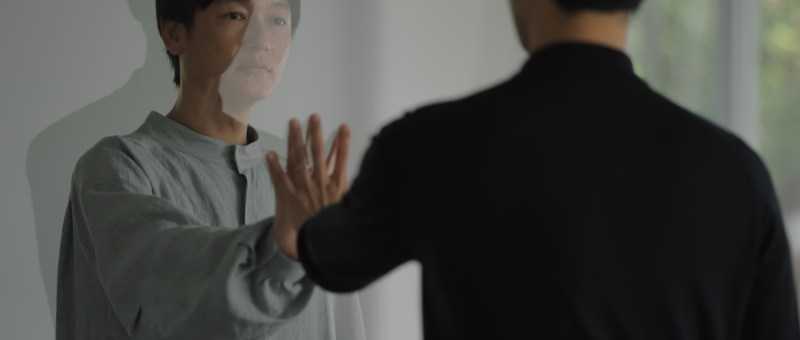
The Real You (本心, Yuya Ishii, 2024)

“Putting it into words makes it sound like a lie,” according to a young woman struggling to “be real” and express a truth without any of the awkwardness that interferes with emotional intimacy, but there are ways in which lies can be true and truth can be lies. Based on a novel by Keiichiro Hirano, author of A Man which also deals with similar themes, Yuya Ishii’s The Real You (本心, Honshin) probes at the nature of the human soul and asks if there really is such a thing as the “real” you or if authenticity is really possible in human interaction. 

Both Ayaka (Ayaka Miyoshi) and the avatar of his mother Akiko (Yuko Tanaka) describe Sakuya (Sosuke Ikematsu) as being too pure for this world and to an extent they’re right even if many of his present problems are directly linked to having committed a “crime” in his youth. As the film opens in the summer of 2025, Sakuya is a factory worker watching helplessly as robots take over his work. After all, they don’t care about the heat, or being able to breathe under a heavy welding mask, nor do they get tired and they can get this job done much faster than he can. In any case, he ignores an ominous phone call from his mother, who appears to be showing signs of dementia, despite her telling him that she has something thing important to say and stays out with a friend after work only to spot her by the river in a storm on his way home. When she abruptly disappears, he assumes she entered the water and jumps in to save her but is injured himself and wakes up in hospital about a year later.

Of course, we don’t really know that he wakes up at all and it’s possible that all of this is really just a dream or an attempt to make contact with his authentic self through his relationships with two women, his mother and a young woman who also disappeared abruptly back in high school. Even though it’s only been a year, the AI revolution has marched on a pace and the entire world is now run by robots and avatars. Sakuya’s factory is no more, and the only job he can get is that of “Real Avatar” in which he rents out his physical body on behalf of clients who for whatever reason are unable to complete an action in person. Many of his early customers are elderly people who have opted for “elective death” and are trying to relive a precious memory vicariously through the VR headset before they go.

“Elective death” is one of the things that most bothers Sakuya in that he’s told it’s what his mother had chosen and that he’s getting a tax break and sizeable condolence payment so he can continue living in the family home. This eerie proposition that elderly people are being encouraged to decide that “this is enough” frightens Sakuya and hints at the eugenicist aims of an AI society in which those who are judged to be “weak” or cannot “contribute” in the way expected of them are forced to end their lives as if they didn’t deserve to live. He can’t understand why his mother would have chosen to die, but moreover, why she would have done it without even telling him. He can’t decide if the important thing she wanted to say was just about the elective death or if there was some greater truth he’ll now never know because he ignored her when she tried to tell him.

That’s one reason that he decides to use all his savings plus the condolence money to have an AI Avatar of his mother made in hope discovering what she wanted to say. Later he says that he wanted to know “Akiko Ishikawa,” rather just his mother, but is put off at first when confronted by the gap between the image of the mother he remembered and the objective reality. The creator, Nozaki, suggests incorporating memories from a young woman who was apparently his mother’s only real friend to get a fuller picture, but Sakuya resists insisting that he and his mother had no secrets from each other so she had no “hidden side”. Nozaki (Satoshi Tsumabuki) merely smirks and tells him that everyone has different sides to themselves that they don’t share with others, which Sakuya ought to know because there are things he’s not exactly hiding but doesn’t really want to talk about either.

His friend, Kishitani (Koshi Mizukami), wonders if there isn’t something a little incestuous about Sakuya’s desire to build a VF of his mother rather than his first love as he’d assumed he would, and he might be right in a way. Ayaka Miyoshi, played by the actress of the same name, shares a striking resemblance with the high school girl who exited the young Sakuya’s life, Yuki, and has a similar life story, though it’s not clear if they are actually the same person or not even if the AI version of his mother tells Sakuya that they are. Yet Ayaka is his only way of verifying that what the VF Akiko says is actually “true” rather than some random hallucination cooked up by the machine based on the incomplete information it’s been fed. Through the VF he finds out things about his mother’s past that shock him, not that he necessarily disapproves, just that they conflict so strongly with the image of his mother he’d always had. Additionally, there’s a degree of hurt that though he believed he and his mother shared everything, she kept this actually quite significant part of herself secret from him in much the same way he admits he didn’t tell Ayaka about his “crime” because he feared she might pull away from him if he did.

Ayaka also avoids talking about her past as a sex worker which has left her with PTSD and fear of being touched for much the same reason even if she suspects that Sakuya already knows and that his mother may have told him before she died. There’s an obvious parallel being drawn between them when Ayako insists that she made a clear choice to do sex work out of economic necessity and refuses to apologise for it, while Sakuya has also been selling his body as a Real Avatar. While some of his clients merely need help accomplishing things physically, others hire him for amusement. They send him on pointless errands running all over the city and then give him a bad review for smelling of sweat, or deliberately make him do degrading tasks. They also ask for things that are clearly illegal, such as another RA’s client requesting to see a man die. But Sakuya continues to wilfully degrade himself carrying out each of the tasks faithfully despite the pitying looks of those around him. When he’s unexpectedly employed by a wealthy avatar designer (Taiga Nakano) who uses a wheelchair, Sakuya again sheds his own identity and finds himself playing reverse Cyrano forced to make Ifi’s declaration of love on his behalf only to the consternation of Ayaka who isn’t sure who it’s coming from and is disappointed in both men for the obvious cruelty of the situation.

Thus this new technology becomes just another means of class-based oppression in which the wealthy use their riches to abuse those without economic means who have no choice but to submit themselves or rebel through criminality while the rich look on with amusement. Sakuya says he isn’t in love with Ayaka, but it’s unclear if he says it because he thinks she’s better off living in material comfort with Ifi, if he really means it, or he’s realised that he was more in love with the image of the girl who disappeared and the missing side of his mother than he really was with her. It seems that Sakuya is really looking for the hidden half of himself through refracted images of the way others see him, while essentially engaging in an internalised dialogue with his own thoughts and memories. He can’t really be sure of the truth behind anything the VF says, a fact brought home by the implication that the great truth he was seeking is a banal platitude and what he undoubtedly wanted to hear yet knew all along. Nevertheless, it’s not until hearing it that he can regain his real self, let go of the past, and be in a position to connect with Ayaka which is also a kind of waking up. Disquieting in its implications for a new AI-based society in which the line between the real and virtual has all but disappeared, there is nevertheless something quite poignant in Sakuya’s gradual path towards saying goodbye but also hello to a new life of greater self-awareness and independence.


The Real You screens in New York July 11 as part of this year’s Japan Cuts.

International trailer (English subtitles)