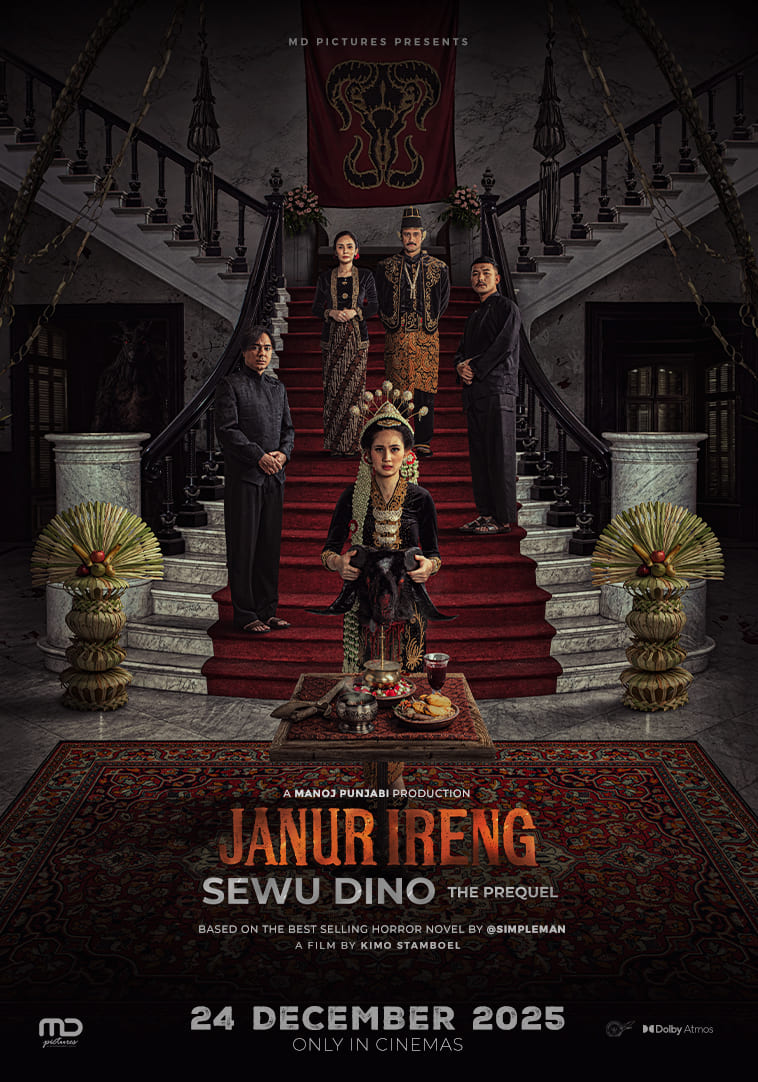
The Unrighteous (원정빌라, Kim Seon-kuk, 2024)

After discovering that all of his neighbours have become members of a religious cult, one young man tries to hold fast to his independence but finds himself confronted by the forces of conformity and mass hysteria in Kim Seon-kuk’s paranoid horror thriller, The Unrighteous (원정빌라, Wonjeong Villa). The film’s English title maybe somewhat misleading, though if anyone is unrighteous, it is the cult themselves rather than non-believer Ju-hyun (Lee Hyun-woo), while it’s also true that he lives in an unrighteous society obsessed with property values and social status.

It begins, however, with apartment complex horror as Ju-hyun gets into a vendetta with his upstairs neighbour Shin-hye (Moon Jeong-Hee) who first tries to bully him out of parking in “her” parking space which she is trying to hold for her husband who “always” parks there. Hearing strange sounds from above, Ju-hyun tries to complain about the noise, but Shin-hye ignores him and ironically insists that “neighbours should be more understanding” as if suggesting that Ju-hyun is being selfish and unreasonable and should rather make allowances for her son who is suffering from a serious illness. Ju-hyun had asked for quiet because his mother is recovering from recent surgery. 

The real problems start shortly after when it becomes apparent that Shin-hye has got religion after joining a Christian-leaning organisation that Ju-hyun has been warned is a cult that targets people with bogus surveys in order to recruit them. Though she had looked tired and took little interest in her appearance, Shin-hye is now nicely turned out with stereotypically middle-class housewife outfits, styled hair, and makeup. Grinning eerily, she seems to be intent on converting her neighbours. Ju-yhyun immediately earns her ire once again when he complains about her inviting the pastor to their residents committee meeting without prior notice. He’s not the only one who objects to being subjected to a religious lecture without his consent, though Shin-hye homes in on the neighbours’ various anxieties from job precarity to loneliness to win them over to her cause.

There seems to be a direct correlation between the literal cult Shin-hye is propagating and that of property ownership in that she often repeats that they are now all “homeowners” as opposed to tenants and “true owners of this land”. Ju-hyun is a property owner too, having paid off his mortgage at a comparatively young age, and himself hopes that the redevelopment project takes place so that he can move to a nicer apartment and have a better quality of life. Everyone is obsessed with how much more profit they might be able to make if the house prices rise in the area which is something the cult is also promising them happen. Ju-hyun isn’t disinterested in that, but also wants to see the town come back to life again and is heartened that so many people are moving to the area to take advantage of the currently lower than average prices.

Studying to become an estate agent, he seems to have an interest in finding people happy homes which might on some level be because of his own disordered familial background. Vague allusions are made to Ju-hyun’s long lost father being in some way abusive to the extent that Ju-hyun can’t forget the look in his eyes and is reluctant to let him back into their lives after he contact his mother to say he wants to apologise and make amends. It’s no surprise that he too has joined the cult, though the way that Ju-hyun reacts makes him something of a complicated hero and unrighteous in his actions. He justifies himself that he’s trying to keep his family safe and ensure the home he’s worked so hard to provide for them won’d be taken away, but his mother also has a point in resenting his bossiness and condescension as he repeatedly instructs her not to  have anything to do with the cult or open the door to strangers. When he has an opportunity to save his neighbours, he wonders whether he should bother given how mean to him they’ve all been through this whole ordeal.

In a sinister manner, the cult begins to encircle him as his employer and the leader of the redevelopment project turn out to be cult members. He’s fired from his job for refusing to join the cult, while the police seem to be in on it too and react to his attempts to explain with exasperation as if he were just a delusional conspiracy theorist. Only the local pharmacist with a side line in investigating cults is willing to help to help him. Nevertheless, the escalating darkness from trance-like religious mania to human sacrifice is quite steep even intended as satire that people would willingly sacrifice the lives of others in the name of house prices, even if they’re tricked into handing over the deeds to their properties to the cult become “the true owners of land”. Ju-hyun, however, resolutely refuses to drink the cool aid, in some ways quite literally, looking on with disdain as his neighbours dance in the street on receiving the news that the long awaited redevelopment project will indeed be happening as if it were a miracle fallen to them from some higher powers.


Trailer (English subtitles)
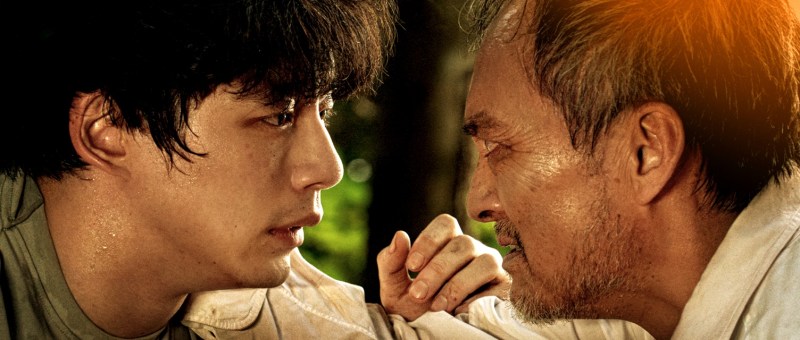
Big Deal (소주전쟁, Choi Yun-jin, 2025)

When Korea’s biggest Soju conglomerate, Gukbo, is on the verge of bankruptcy in the wake of the Asian financial crisis and the CEO’s mismanagement, it provokes a national outcry but also the attention of a hundred foreign firms all swarming over Korea like vultures eager to get a piece of the pie. Loosely based on a real life incident, Choi Yun-jin’s Big Deal (소주전쟁, Soju Jeonjaeng) is more evenhanded than one might expect at once decrying the amoral business practices of American corporate imperialism while pointing out that maybe things aren’t perfect in Korea either with its dynastic approach to company management and workaholic lifestyle that comes at the cost of familial bonds.

In fact it sort of implies that In-beom’s (Lee Je-hoon) desire to send Gukbo into bankruptcy so they can take it over and flip it is a kind of revenge against his own workaholic father who passed away 10 years previously, his death presumably hastened by stress and overwork though what In-beom resents more than anything else is that he was never really much of a father to him. That might be why Gukbo’s earnest financial officer Pyo (Yoo Hae-jin) comes to fill that role. In-beom complains that Pyo is stupid and naive, knowing nothing of how the world works, but also that his stupidity makes him feel like an arsehole because it forces him to realise that he’s doing something wrong. 

Caught between In-beom whose firm, Solquin, are pretending to consult on the administration process but in reality feeding into to their subsidiary to buy up shares, and the CEO, Pyo is the only one thinking about what’s going to happen to all their employees when the place goes bust. Like In-beom’s father, Pyo is also a workaholic whose wife and daughter left him because he was never there. He remains dedicated to Gukbo, but not to the extent of breaking the rules, even if he eventually goes along with it when the CEO suggests a dodgy plan to undercut Solquin and maintain control of the company his father founded. What becomes apparent is that Seok (Son Hyun-joo) is out of his depth and that the only qualification he has is being the boss’ son. It’s his fault the company got into trouble because of his reckless expansion plans while he tries to cover up his failings through cronyism, playing golf with the great and the good while leaving Pyo to clean up the mess he’s made.

Nevertheless, for good or ill, Gukbo comes to represent a Korea preyed upon by venal foreign influence. When the plan is exposed, Pyo is sure that the creditors won’t agree to bankruptcy because they won’t be able to stand such a typically Korean business being placed into foreign hands. In-beom thinks that’s ridiculous and no one has that kind of patriotic attachment to a company, but it turns out he’s right and Solquin have an uphill battle in front of them. Yet even In-beom begins to tire of his colleagues’ underhandedness. Though there are a handful of women working at the American investment firm, the culture is extremely macho and misogynistic with liberal and frankly unprofessional use of the F-word as In-beom’s male colleagues make obnoxious jokes about who is getting their dick sucked by whom. Pyo and his team may drink too much, but at least they’re collegiate rather than adversarial.

The question is really whether as In-beom says making money is just that and can’t be either sleazy or noble, while Pyo definitely thinks there are right ways and wrong ways to earn. Solquin is definitely wrong, while Gukbo isn’t entirely right either. In-beom may have a point when he challenges his old-fashioned salaryman mentality of putting the company first every time, but the conclusion Pyo seems to come to is to let all go and just be yourself. That doesn’t mean you have to stoop to their dishonest ways of doing business, but equally it doesn’t mean you have to let them walk all over you either. Capitalism is an inherently corrupt system, but there’s not a lot either of them can do about that even if eventually meeting somewhere in the middle as Pyo loses his faith in chaebol culture and In-beom realises he’s just as disposable when his American bosses chew up him and spit him out as soon as he’s served his usefulness. A closing title reminds us we’re still dealing with a lot of these problems 20 years later with companies that are too big to fail and inadequate regulation though Pyo at least seems to have found a happy medium doing what he loves on his own terms.


Trailer (English subtitles)
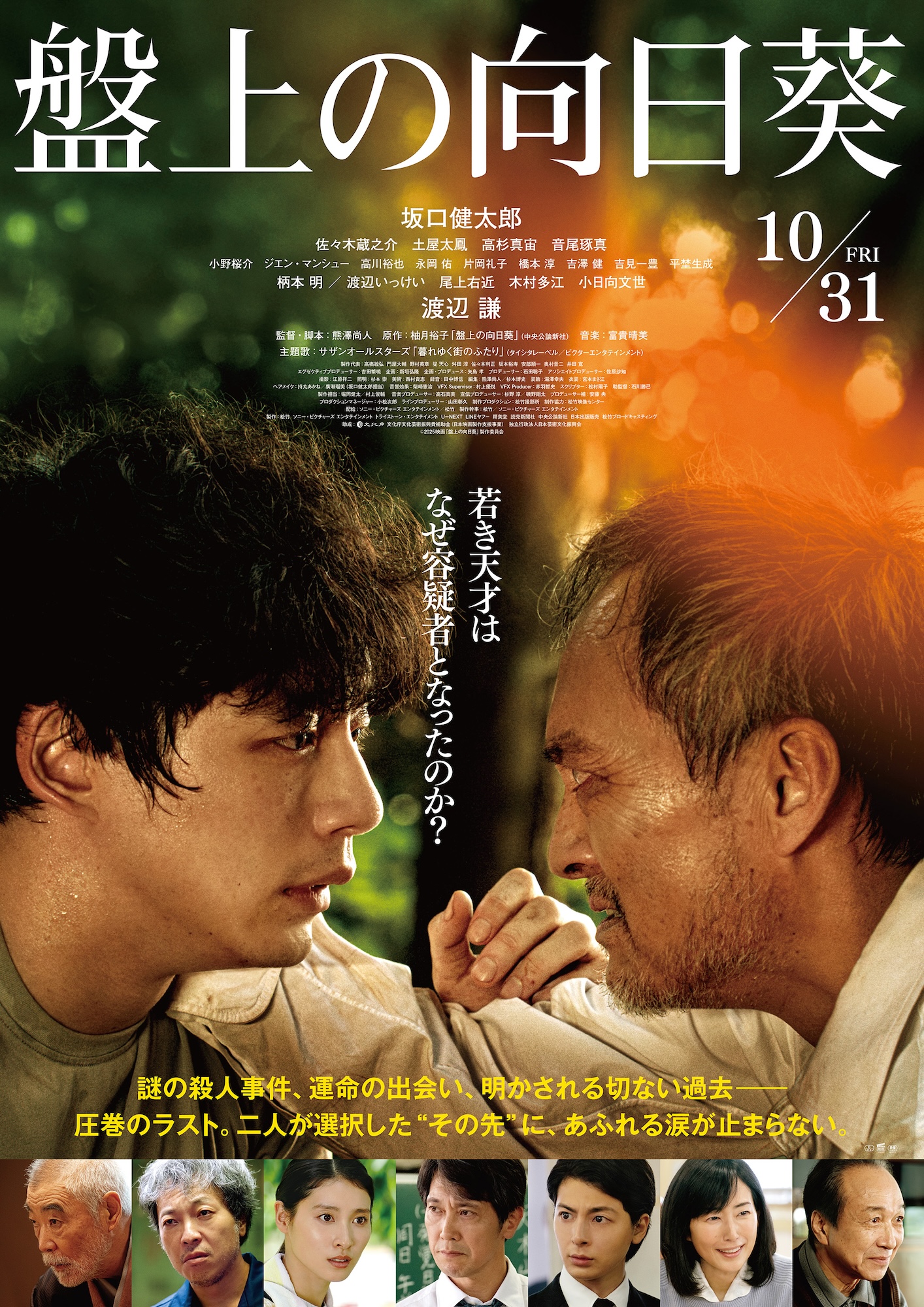
Choi Yun-jin directed this film, but her name was later removed from the credits after being fired by the production company who accused her of misappropriating the script.

The Rose: Come Back to Me (Eugene Yi, 2025)

Korean indie group The Rose have been making waves for close to a decade, starting out in Seoul and now having signed with a US label and playing the Coachella festival. They cite their musical message as healing, in part because music has healed them at various points in their lives, both individually and as a group, though they have faced a series of hardships, from the rigours of the K-pop industry to an exploitative label and a potentially explosive scandal.

Eugene Yi’s documentary is however more of a puff piece interested in how the band heroically overcame their struggles rather than the nature of the struggles themselves, despite a few talking heads outlining the oppressive and exploitative nature of the Korean music industry. According to them, what makes The Rose interesting is they all started out in K-pop training schools, but each found it wasn’t for them. As one of them points out, only 0.01% of applicants get to debut, and only 0.01% of the ones that do are successful. Sammy, a Korean-American musician who took part in a Korean TV talent competition, says that he developed body image problems because of the way the agency tried to control his appearance and eventually dropped out because he lost the joy of music in having to literally dance to their tune. 

Others of the band members had similar experiences before coming together as a street band and eventually forming The Rose as four young guys with a dream. They got an apartment together and eked out a living while spending all their time practising and writing songs. But as so often in these stories, they were picked up by a label who only wanted Sammy. He convinced them to take the others too, but they also tried to control the direction of their music and rejected their choice of an intensely personal, self-written debut song, insisting they needed something poppier and more upbeat. The joke was on them, though, because the song took off on its own on YouTube and became a hit across Europe. The label sent them touring, but otherwise did little else and misled them about the financial situation to the point that they decided to sue.

Suing your label is pretty unheard of in Korea where going against your team is socially difficult, as is challenging flaws in the system rather than just trusting in it and going with the flow. Had they lost, it would have been the end of the band and they’d all be financially ruined for the rest of their lives. This was also the time that Covid hit, with two of the band members going into the military. Along with the psychological pressure of the label playing divide and conquer to set them at each other’s throats, the anxiety of the court case strained Jeff’s mental health to the point of hospitalisation. He wondered if he should give up music if this was what it was doing to him, but then rediscovered its healing qualities. 

Having won their court case, the band reunited and signed with a label in the US only to be hit by another scandal once they started to make a name for themselves and Sammy’s former conviction for drug use after being caught with a small amount of marijuana was exposed in the papers. Any kind of involvement with drugs is a no-go in the Korean entertainment industry and can end careers or worse. Nevertheless, the band seem to have bounced back from it if even Sammy laments the guilt he feels for letting down his bandmates’ parents though he’d always been upfront with the guys that it might come out some day. Jeff too had remarked on the additional guilt he felt towards his parents for becoming ill, demonstrating that they’re all nice guys who care about their families and are serious about their healing message. Jeff is touched when members of the audience tell him their music helped them get through a loss or overcome their suicidal thoughts. 

Nevertheless, the film does rather seem set up to emphasise those messages and make the guys look as good as possible in addition to painting them as an authentic artistic rebellion against the soullessness of K-pop with its manufactured stars who are kept on a tight leash and trained to within an inch of their lives so that almost nothing of their individual expression remains. A little more shade might have helped to offset the hagiographic tone, though it’s true enough the band has talent and they’ve worked incredibly to get to where they are overcoming a series and crises and hardships along the way.


The Rose: Come Back to Me screened as part of this year’s San Diego Asian Film Festival.

Trailer (English subtitles)
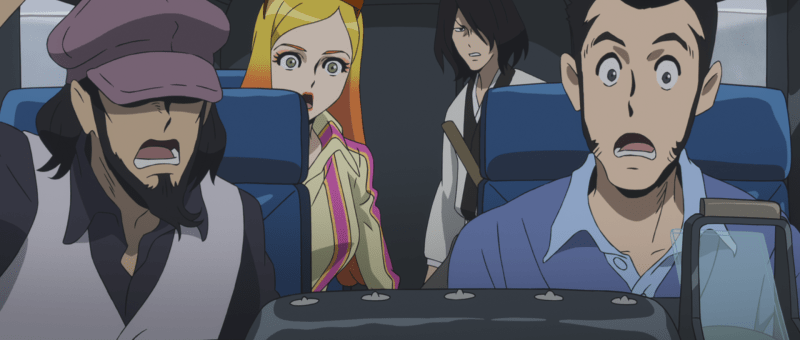
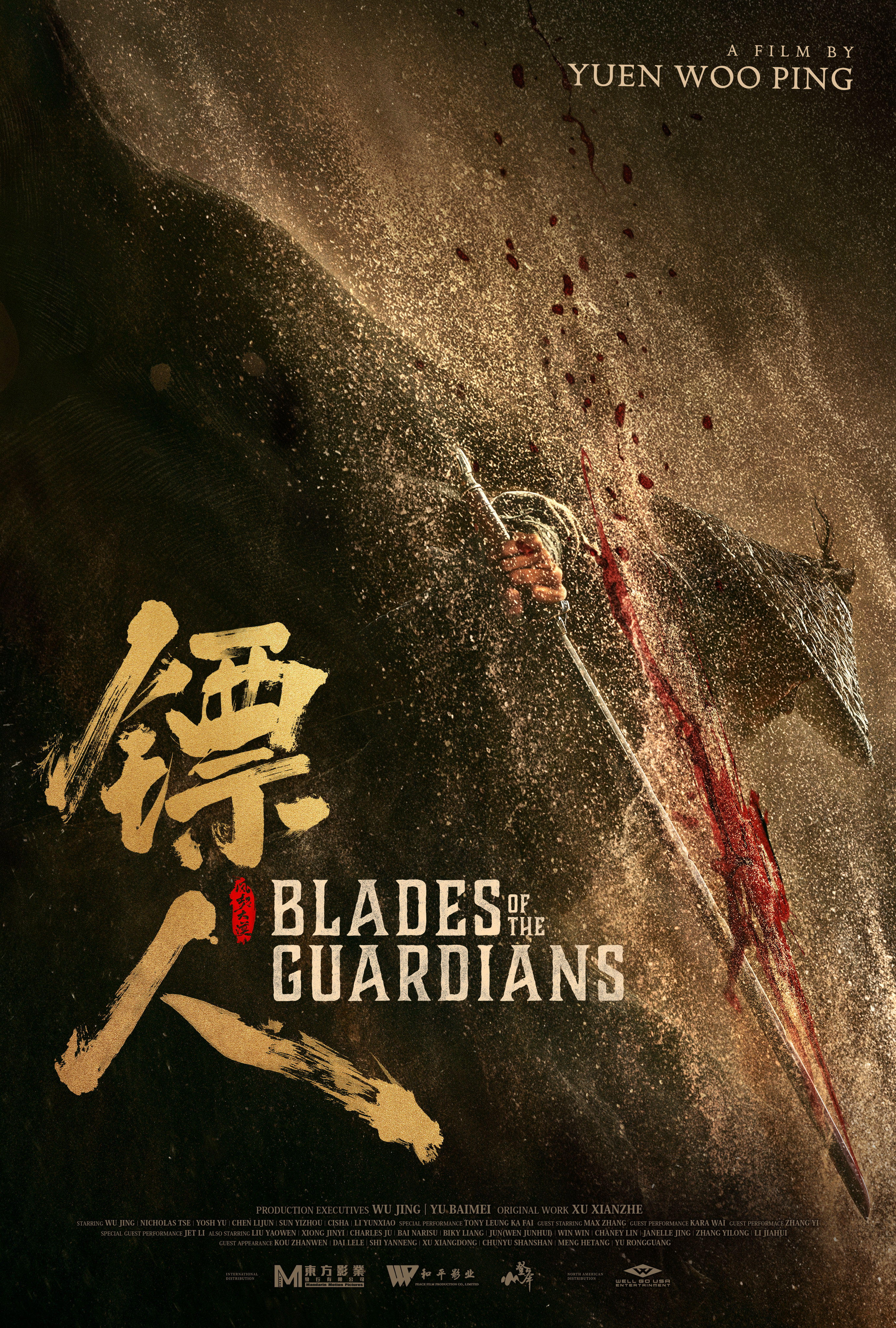
A Writer’s Odyssey 2 (刺杀小说家2, Lu Yang, 2025)

Arriving four whole years after the previous instalment, A Writer’s Odyssey 2 (刺杀小说家2, cìshā xiǎoshuōjiā 2) is in many ways a very different film. While its predecessor was a fairly serious affair tackling some of the issues of the modern China such as child trafficking, machinations of the oligarch class, and generalised capitalistic oppression, the sequel is a typically mainstream fantasy blockbuster complete with some fairly goofy humour and the ultimate message that despotism is bad and people should work for the good of others rather than just themselves.

In that regard at least, it’s another pointed attack on authoritarians and corporate bullies like Aladdin’s Li Mu. The entire Aladdin plot is, however, jettisoned, which seems like a missed opportunity, especially as it means that Yang Mi does not reprise her role and we don’t get any answers about who the boy was with Tangerine at the end of the previous film nor whether the “death” of Redmane led to the death of Li Mu in the real world as he feared it would. In truth, even Guan Ning (Lei Jiayin) is somewhat sidelined. Six years later, he, Tangerine (Wang Shendi), and Kongwen (Dong Zijian) are living as a family running a restaurant. Though Kongwen finished his Godslayer novel, it was stolen by an influencer, Cicada (Deng Chao), who accused him of plagiarism which got Kongwen blacklisted in the publishing industry and unable to earn any money through writing. As he’d said in the previous film, it was writing that gave his life meaning so now he’s started to become hopeless and depressed. 

Meanwhile, he’s begun to dream of Ranliang and the return of Redmane who has survived but as a mortal rather than as a god and is determined to get back everything he’s lost. This means, in meta terms, that he wants to challenge “god”, or really Kongwen, whom he sees as the architect of his fate. On the one level, it seems as if he’s trying to insist on his own free will and is sick of being controlled by unseen forces, but in reality he just wants the powers of a god for himself so he can oppress people properly. Nevertheless, this means he has to come to our world in order to square off against Kongwen, the writer.

It has to be said the vision of the real world on offer this time is much glossier and devoid of the kind of darkness that haunted Guan Ning. Though they’re worried because the restaurant’s not doing so well, the trio seem to have pretty nice lives with relatively few other problems outside of Cicada who is now aligned with Redmane in place of Li Mu standing in for a venal class of confluencers. Kongwen is then fighting a war on two fronts as Redmane taunts him to come over to the dark side and turn his fantasy story of good defeating evil into one of nihilistic despair echoing the way that Kongwen feels in his life.

The meta drama of the writer pursued by his characters is resolved in a fairly unexpected way with Kongwen effectively giving up his godlike powers and allowing his characters to save themselves through “mortal courage” rather divine intervention. Though Renliang had been plunged into chaos as the power vacuum Redmane left behind saw his former allies effectively become warlords reenacting the warring states period, in the end it’s solidarity that saves them as they agree to band together to oppose Redmane while offering the possibility of forgiveness if only Redmane can give up his quest for domination and agree to work for the common good. 

Kongwen learns something similar, remembering his writing isn’t solely an economic activity, and not only about himself but giving something back to the world. Torn between the anarchic ambition of Redmane and the righteousness of Jutian (Chang Chen), modelled after his own absent father, he struggles to find meaning amid the injustices of the modern China having been unfairly cancelled by netizens after being falsely accused of plagiarism by the man who stole his story and asks himself if it’s worth sacrificing his friends in a last ditch attempt to save them through teaming up with the forces of darkness. Nevertheless, Lu frames his tale in a much more lighthearted fashion as symbolised by demonic armour Darkshade’s sudden merging with a lettuce to become unexpectedly adorable. As such, it feels like something of a missed opportunity in choosing not to build on the foundations of the first film but sidestep them completely. Even so in upping its production values and the quality of its visual effects, the sequel embraces a new sense of fun which is definitely different but possessed of its own charm.


Trailer (English subtitles)
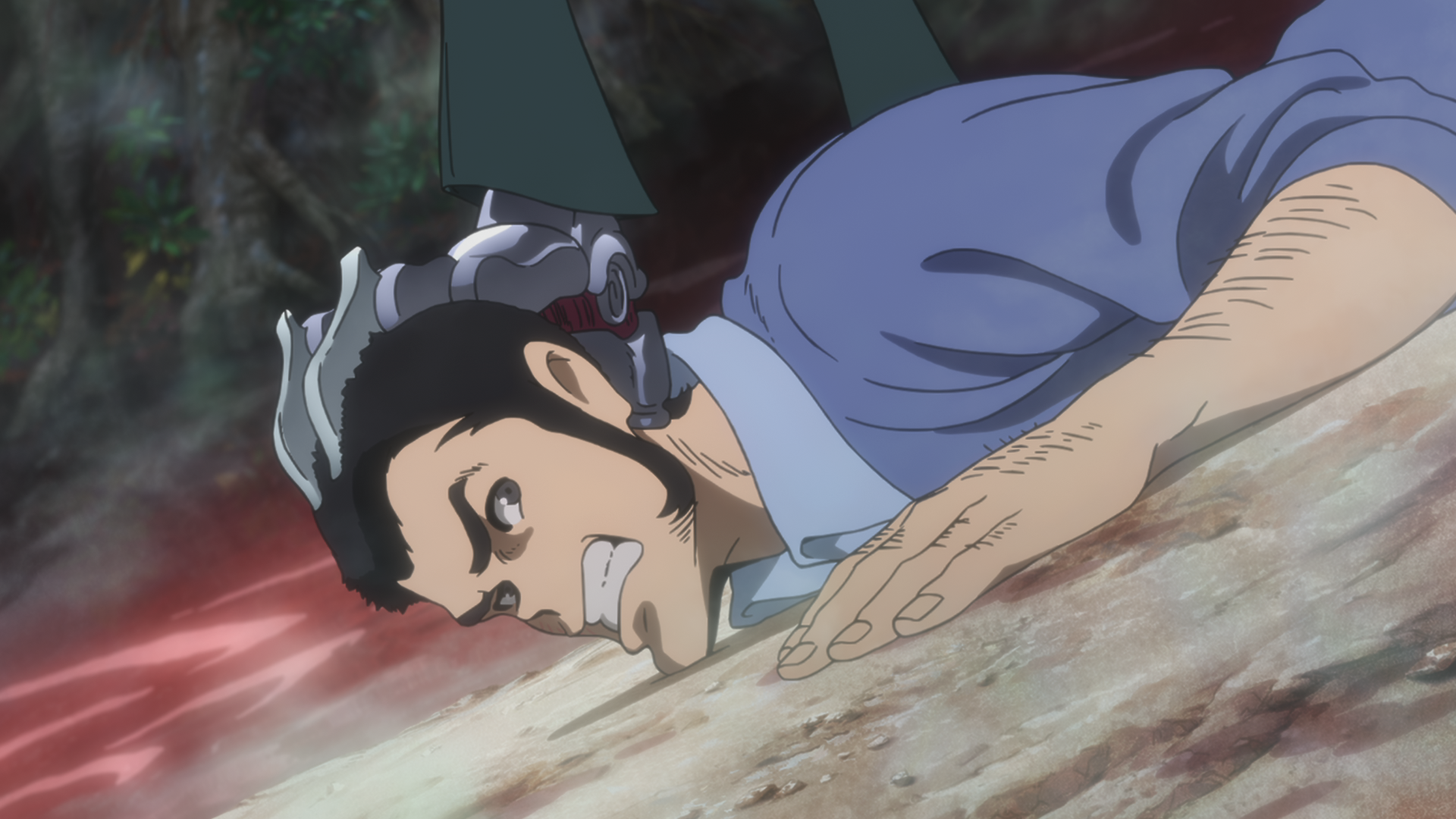
A Writer’s Odyssey (刺杀小说家, Lu Yang, 2021)

“As long as I keep writing, my existence has meaning,” according to the titular writer at the centre of Lu Yang’s action fantasy, A Writer’s Odyssey (刺杀小说家, cìshā xiǎoshuōjiā). His art, though derided as trivial, is it seems the best form of resistance to the feudalistic capitalism that has overtaken the authoritarianism of the communist past. Broken father Guan Ning (Lei Jiayin) desperately searches for his daughter Tangerine who has been missing six years, assumed to have been swallowed by China’s child trafficking network, only to find himself plagued by bizarre dreams of a fantasy city.

The city is, it seems, that of Kongwen’s (Dong Zijian) fantasy novel series which he live streams over the internet. Whenever something bad happens to the evil despot at the story’s centre, Lord Redmane, it’s visited on the CEO of vast corporation Aladdin (read: Alibaba), Li Mu (Yu Hewei), which has just launched the Lamp App which will they claim “resculpt time” so that time and distance are no longer an issue. Li Mu is panicked because Kongwen has said he’s going to end the series in three days and it doesn’t look good for Lord Redmane, so he’s fearful for his life. Noticing that Guan Ning has some sort of super power in which he can hurl rocks with unusual accuracy, he leverages Tangerine’s disappearance to convince him to knock off Kongwen in exchange for his daughter’s location.

Of course, the fantasy world and the “real” are connected in more ways than one with Ranliang conjuring visions of the Cultural Revolution in which the despotic leader is literally protected by hordes of mindless “Red Guards” while pitting one district against another and seemingly destroying all art. Li Mu, meanwhile, is destroying human innovation with his apps and treats the lives of others with callous disregard. His right-hand woman Tu Ling (Yang Mi), originally resentful of Guan Ning in blaming him for losing his child having been abandoned by her own parents, becomes disillusioned with his tactics on realising that he lied to Guan Ning and the candidates he picked for Tangerine are five random girls none which is likely to be her. Figuring out that she’s probably next after Li Mu knocks off Kongwen, who is also the son of his former business rival that he seemingly betrayed to take control of the company, and gets rid of Guan Ning for good measure, her allegiances begin to change creating a kind of parallel with Tangerine and the mysterious boy hanging around with her.

Meanwhile, in the fantasy world, Kongwen teams up with a demonic suit of armour that feeds on his blood but is also a near unbeatable killing machine that may or may not be evil. Guan Ning comes to believe that the fantasy world may be the only place he can find Tangerine and switches side from agreeing to kill Kongwen to deciding to protect him so that he can finish the story and possibly write a better ending for his fantasy character who as yet remains undefined. He’s later revealed to be a member of the brainwashed Red Guard, which may be appropriate as his former job was a banker which is to say a soldier of capitalism. Only art can break his programming in the form of Tangerine’s flute playing which reawakens his humanity and memory. 

The implication seems to be that China cannot escape either its communist past or capitalist future except through the liberation that comes with artistic endeavour. When Guan Ning is tasked with killing Kongwen, he follows him about town and hears his neighbours run him down as a “parasite”, a man of almost 30 with no real job and no income who is still being financially supported by his mother. This information might be offered to make it seem less bad to kill him, as if in this hyper-capitalistic society his life is worth nothing because that’s what he contributes. Kongwen feels this a little himself and has suicidal thoughts, but also insists that his life has meaning precisely because he writes and expresses all of this frustration with the contemporary society along with his buried resentment towards Li Mu for the death of his father and theft of his birthright. Shot like a video game, the film’s sprawling fantasy-esque world hints at still more adventures to come in this David and Goliath competition in which Kongwen and Guan Ning attempt to overthrow this cruel and corrupt order to find a way to free themselves from its authoritarian cruelties if only in their minds.


Trailer (English subtitles)

Red Nails (홍이, Hwang Seul-gi, 2024)

A not quite middle-aged woman watches as her mother takes an aerobics class with other similarly aged people at a nursing home. The attendant turns to her and remarks that it can’t have been an easy decision, leading us to think that she has reluctantly decided her mother may be better off living where she can be properly looked after. But Hong (Jang Sun) has actually arrived to take her mother home. Not because she’s had a change of heart, and not exactly because she’s having a hard time and can’t afford to pay for the home any more, but because she’s realised her estranged mother’s a cash cow and the only one she has left to tap.

Hwang Seul-gi’s complex drama Red Nails (홍이, Hong-i) never shies away from its heroine’s flaws even if it tries its best to empathise with her. Hong is clearly irresponsible with money. The piled up boxes in her living room hint that she may have fallen victim to a multi-level marketing scam, but whatever the root causes are, she’s pretty much bankrupt with the bailiffs about to be sent in to seize her goods due to her phenomenally large debts. Even so, we later see her going on shopping sprees as if she were trying to fill some sort of void through guilty consumerism that is really just punishing herself by making her situation even worse. 

Hong’s borrowed money from an ex-boyfriend who has since married someone else but continues to sleep with her while badgering Hong for his money back, claiming his wife’ll throw a fit if he doesn’t get it. Meanwhile, she’s engaged in a fantasy romance with a man from an app, Jin-woo, whom she misleads about her financial circumstances and later uses when she needs a free ride. Hong has a habit of taking advantage of people, including her mother’s old friend Hae-joo who agrees to watch her in the day. Hong often messes her around, staying out late without calling and just expecting Hae-joo is figure something out. Hae-joo eventually confronts her about her unreasonable behaviour while taking advantage of her free labour, but Hong tries to give her money as if that was the problem. Hae-joo is insulted, and bringing money into the equation only threatens to change the nature of the relationship. It makes Hae-joo feel cheap and used when she had been doing this as a friend because she cared about Seo-hee. 

Seo-hee, meanwhile, seems ambivalent about her new living standards and, at times, berates Hong complaining that she wishes she’d never been born. It’s not clear what happened in Hong’s childhood, but they evidently did not get on and still don’t now. Seo-hee wants to go home, complaining that there’s a thief in the house though whether or not she knows that Hong has been dipping into her savings to pay off her debts, she’s still aware that she brought home because she needed money rather than companionship. 

But then Hong is also lonely, and her romance with Jin-woo is an attempt to escape her disappointing circumstances. Her ex suggests she once dreamed of becoming a teacher, but is currently teaching a literacy class for a group of older woman at a local institute where she also cleans the toilets. She also has a second job directing traffic at a construction site where the foreman hates her, docking her pay for neglecting her duties by using her phone while on the job. She cannot her escape her debts through any legitimate means, though that hardly justifies stealing from her mother. 

Even so, it appears that on some level Hong wanted comfort and companionship along with her mother’s approval. As they live together, they begin to draw closer but at the same time it’s clear that they remember things differently, though whether Hong is right to blame Seo-hee’s dementia or has misremembered herself is destined to be an eternal mystery. Hong tries to fulfil her mother’s dream of lighting sparklers, but the pair are yelled by some kind of environmental officer and forced to put them out. Hong looks on forlornly as the glow fades away as if symbolising the flame going out of the relationship between the two women. Despite their growing closeness, there are some things that it seems can never really be made up and all Hong really has is a frustrated memory of a longed-for closeness that can never really be.

Red Nails screened as part of this year’s London Korean Film Festival.

Trailer (no subtitles)

Commission (커미션, Shin Jae-min, 2025)

What is it about art that conjures such frustration? Dan-kung (Kim Hyeon-soo) is consumed by resentment and deep-seated feelings of inferiority while certain that she will forever be trapped beneath the shadow of her sister, Ju-kyung (Kim Yong-ji), a popular webtoon artist. Dan-kyung dreams of being a webtoon artist too, but she’s convinced herself she isn’t good enough, mainly due to a childhood incident when she won first prize in a competition but only after her sister had made her mark on her painting. 

The tragedy might be in a way that it never seems to have occurred to the sisters that they could simply have worked together and that even if someone else helps you, that doesn’t mean that the work is any less your own. After all, most manhwa artists have assistants who do the bulk of the actual drawing. Ju-kyung has them herself, as does the kindly Mok, a former master taking his first steps into a new digital world. Mok sees potential in Dan-kyun, even if her colleagues haze and bully her and she only got the job thanks to Ju-kung’s connections. He’s working on a space epic titled Ozymandias that’s an attempt to make up for a project that never got to see the light of day having been suppressed during the authoritarian era. 

Dan-kyung uses the title of Mok’s lost manhwa, Taiji, as her username on a Japanese dark web forum that her sleazy colleague introduces her to where people pay vast sums to commission extreme artwork. The most obvious meaning of “Taiji” in Japanese is “foetus” (胎児), though it can also mean “extermination” (退治) as in of pests or demons, or “confrontation’ (対峙). It’s not clear that Dan-kyung would know this, nor that Mok intended the title of his manhwa to be read as Japanese or what he might have meant by it if he did. There is however, something in the idea that Dan-kyun still taking shape, as yet unborn just like Mok’s never released manwha. She defines herself in confrontation with her sister, as if she were the unborn twin forever languishing in darkness. Ju-kyung’s hit manhwa is titled Day and Night, and might itself hint at the contrast between them. While Jun-kyung enjoys the trappings of success, Dan-kyung finds the key to her art in her internal darkness, producing her best work drawing images of vile and sickening things for the benefit of her online fans. Her success mirrors Ju-kyun’s even it’s underground where only those in the know can see.

It gives her a new sense of confidence that would allow her to make progress in the mainstream world too, if her self-destructive actions didn’t have a habit of ruining things. Ju-kyung has a point when she describes Dan-kyung as a kind of jinx who ruins everything and everyone around her. Her biggest fan online is calls Hannya (Kim Jin-woo), which is the name for a demonic noh mask representing a woman who has become consumed by her jealousy. As Dan-kyun gets deeper into the online world, it becomes more difficult to tell if any of this is real or merely a symptom of her delusions. Hannya talks to her in a mix of Japanese and Korean, their androgynous quality inviting some uncomfortable readings but also echoing Dan-kyun’s nature as something as yet incomplete or a part of a separated whole. 

Another teacher at the art academy where Dan-kyun had been working bluntly states that some of the students aren’t worthy of teaching because they’re afraid to push themselves in case they find out that they’re not good enough. Ju-kyung initially seems sympathetic, telling Dan-kyung that understanding your limits is also a “talent” while seemingly encouraging her by getting her the job with Mok, but Dan-kyung later wonders if it isn’t Ju-kyung who is afraid and actively standing in her way because she can’t bear the thought that Dan-kyung might actually be better than her. Mok tells that “perseverance” is a “talent” too, though his frustrated apprentice who lost out to “genius” Ju-kyung, speaks of it more like purgatory. He knows deep down that he doesn’t have what it takes to make it, and doesn’t think Dan-kyung does either, but they keep at because of that vague hope that just maybe it’ll happen one day. But Mok described Ju-kyung’s talent as curse too, correctly predicting the paralysing fear and self-fulfilling prophecy that one day it’ll just abandon her and she won’t have anything to say any more.

The irony is, however, that every time Dan-kyung makes one of her bad decisions, something good would have happened anyway. The harsh teacher whom she wronged after they won an award she wanted, mellows once she gets used to success and apologises to Dan-kyung for “overreacting”. Dan-kyung discovers she’s actually getting a job she thought she lost a little while after plotting revenge and ruining the opportunity. Things would have worked out for her, if only she’d had a little more patience and self-confidence. It’s true enough that she’s motivated by spite and resentment, pettily striking back at those that have what she wants or have caused her to feel humiliated, but not really thinking through the consequences and assuming that everything will go the way she wants it to once she’s removed this one piece of the puzzle or replaced it with one of her own.

In unmasking herself, she reclaims her identity from Ju-kyung and finally becomes whole while echoing Mok’s words that Taiji needs readers, as if her art would remain forever unborn if no one ever got to see it. The pain in her wrist hints at the physical labour of creation, one that a more successful artist may no longer need to endure, while in other ways she is in the process of giving birth to herself. But Dan-kyung’s vision of art may also be flawed in her need for other people to see it, fixating on the fame and acclaim, even the money that comes with it, rather than in the simple art of creation in which it wouldn’t matter if her art sat in a desk drawer for the next 40 years because she had made it and made it for herself. Hannya has their “art” too, as grim as it may be, though aside from their first piece, they seem to hide the results. Another tortured artist, Dan-kyung has turned inward in bitterness and resentment, but wreaks her vengeance externally while otherwise continuing to dream of a mainstream success that may in itself be merely artifice.


Commission screened as part of this year’s London Korean Film Festival.

Trailer (English subtitles)
Hero (영웅, JK Youn, 2022)

An Jung-geun is a key figure in modern Korean history whose story has been dramatised numerous times and given rise to its own legend. JK Youn’s Hero (영웅, Yeong-ung) is, however, the first movie musical devoted to his life and adapted from a stage hit that has been running since 2009. It has to be said that structurally the musical owes a fair amount to Les Misérables with a dramatic first act closer that is more than a little reminiscent of One Day More, while a number about meat buns echoes the kind of comic relief provided by Master of the House, though the rhythm might hint at Sweeney Todd’s meditation on pie making.

It is certainly out of keeping with the intensity surrounding it as the focus is, after all, on an attempt to stop the Japanese colonising Korea and practising even more cruelty. An Jung-geun abandons his family in the early part of the film, but this isn’t seen as a moral failing or irresponsibility so much as evidence of his devotion to the cause that he sacrifices a peaceful life as a husband and father. His revolutionary activity is furthermore filial because his mother encourages it, later writing him a letter while he is imprisoned urging him not to appeal his sentence but accept his death as a martyr. To appeal would mean accepting the Japanese’s authority in begging for his life. Jung-geun had wanted to be tried not as a murderer, but as a soldier fighting a war and therefore sees his trial as illegitimate. He insists he is a political prisoner, a rousing number outlines 15 reasons why the man he assassinated, Ito Hirobumi Japan’s first prime minister and resident-general of Korea, deserved to die which include dethroning the Emperor Gojong, assassinating the Korean Empress Myeongseong (Lee Il-hwa), lying to the world that Korea wanted Japanese protection, plunder, and massacring Koreans (all of which the Japanese had done). 

It’s the assassination of Empress Myeongseong that motivates the film’s secondary heroine, Seol-hee (Kim Go-eun), a former palace made now operating as a resistance spy in Japan under the name Yukiko. Seol-hee’s impassioned songs have curiously homoerotic quality and take the place of a central romance which the piece otherwise lacks except in the tentative relationship between Jin-joo, sister of one of An’s closest men, and the youthful recruit Dong-ha. Even if “Myeongseong” is effectively “Korea”, Seol-hee’s passionate intensity is quite surprising while her motivation is more revenge for her murdered mistress than it is saving the nation and eliminating Japanese influence. In this, her arc might not quite make sense in that her final actions almost derail Jeun-guen’s mission in putting the Japanese on high alert. 

But at the same time the film leans in far harder on Jeun-geun’s religiosity than other tellings on his story in which his faith presents only a minor conflict as evidenced by his offering an apology to God for killing Ito while justifying his actions as those of a righteous man in the courtroom. While placing him at odds with the left-wing ideology of other Independence activists, his religiosity is aligned with his humanitarian decision to release Japanese prisoners rather than execute them, abiding by the commonly held rules of war while his men are eager for blood. The decision backfires, but is depicted more favourably than in the narratively more complex Harbin and Jung-geun is otherwise an uncomplicated hero who makes no wrong decisions and never fails even if he is at the mercy of the Japanese.

As such, the musical sticks to the familiar beats of Jung-geun’s story from the Japanese counterstrike to his talent for calligraphy and the letter from his mother instructing him to go bravely to his death. Anchored by an incredibly strong vocal performance from Chung Sung-hwa who originated the role on stage, the film portrays Jeun-geung as the hero of the title, defiant to the end and thereafter wronged by the Japanese who buried his body in an unknown location and prevented him from ever returning home to a free Korea. It also glosses over the possibility that Ito’s assassination may actually have accelerated the course of Japan’s annexation which it failed to prevent and otherwise had little lasting effect. Nevertheless, despite its overt patriotism, the film does present the rousing spectacle of Jung-geun’s embodiment of the good son of the nation who fought hard for a liberated Korea he never got to see.


Hero screened as part of this year’s London Korean Film Festival.

Trailer (English subtitles)

Living the Land (生息之地, Huo Meng, 2025)

When a way of life has gone on unchanged for centuries, the idea that it might soon disappear seems unthinkable, but change is indeed coming to the village in Huo Meng’s elegiac drama, Living the Land (生息之地, shēngxī zhī dì). Set concretely in 1991, the economic reforms and impact of the One Child Policy are beginning to make themselves felt, while incoming mechanisation begins to destabilise the rural environment. Farmers will always have to work the land, one utters in exasperation as a local man employs a large American tractor he says is capable of doing the work of a hundred villagers, while other young men decide it’s time to go south and seek their fortunes in the factories of a new era.

Even so, the film opens with a literal digging up of the past. 10-year-old Chuang’s (Wang Shang) great aunt has died, and his uncle and grandfather want to exhume his great uncle from the makeshift grave he was placed in after getting on the wrong side of the authorities so they can be buried together. Villagers talk cryptically about those who didn’t make it through the Cultural Revolution and Great Leap Forward, but otherwise continue living their traditional lives in harmony with the landscape. The irony is that Chuang is a left behind child whose parents are working away in the city, but the reason he’s not with them is because he’s a secret. He’s their third child and they can’t afford to pay the fine for violating the One Child Policy while his father works for the government and would probably be fired if they found out.

And so, Chuang is living with his maternal grandparents while his siblings are with their parents. The fact he keeps wetting the bed at a comparatively late age is likely down to this sense of rootless anxiety. He doesn’t know if he should say this is his home village because he has a different surname to the people he’s living with. While his grandfather plots out burial spaces for the rest of the family, he leaves Chuang out, and when the boy asks why, he says he doesn’t belong here because his name isn’t Li. He’s mainly been cared for by his aunt, Xiuying (Zhang Yanrong) but she soon comes under pressure to marry, especially when a wealthy local man takes a liking to her and her tentative romance with the local school teacher falls flat when he too goes south without her. 

Xiuying attends the regular pregnancy screenings on her aunt’s behalf to hide the fact that she is pregnant with an unauthorised third child, which is one way in which the village attempts to get around these restrictions imposed from outside which threaten their way of life and livelihoods. They need more children to help work the land, while they’re finding it increasingly difficult to make ends meet selling wheat and bricks. Half of their wheat crops are destroyed when oil prospectors arrive with some in the village excited about the prospect of any being found, believing they’ll all be rich or that factories will open offering new jobs so the young won’t leave the community. But the prospecting leads to tragic consequences and seems unlikely to prove rewarding for the locals. 

When Chuang’s great-grandmother is interviewed by the authorities, she tells them that she doesn’t actually have a name. Before her marriage, she was just “third sister” and after that someone’s wife, mother, grandmother. The authorities don’t like that, and someone suggests calling her “Mrs Li Wang”, but there are a few of those already so she ends up becoming “Third Mrs Li Wang”, which doesn’t seem like a tremendous improvement. The lives women are continually devalued in the traditional, patriarchal community in which they are still chiefly valued for the ability to give birth, which they now can’t do because of the One Child Policy. Xiuying is bullied into marrying a man she doesn’t like, and then is mistreated by him because she didn’t bleed on their wedding night so he doesn’t believe she was a virgin likely because of the rough treatment she received during the pregnancy exam when they suddenly began to suspect she wasn’t a married mother of two. Chuang gets left behind again as the village slowly depletes and mechanisation forever disrupts this very traditional way of life, though the elegiac music suggests that even those who went south didn’t fare all that much better in amid the economic instability of the 90s reforms which destroyed not only communities and ways of life our very relationship with the land itself.


Living the Land screens as part of this year’s San Diego Asian Film Festival.

SAVE (생명의 은인, Bang Mi-ri, 2025)

There’s an old adage that if you save someone’s life, you become responsible for it, but equally perhaps some have come to expect reciprocity and the act of being saved places you into a debt you can never hope to repay. There are definitely different kinds of salvation on offer in Bang Mi-ri’s empathetic maternal drama Save (생명의 은인, Saengmyeong-ui eunin), but each of them comes with a cost both literal and spiritual in trying to draw lines in the complex interplay of guilt and gratitude.

As the film opens, Se-jeong (Kim Pureum) is being interviewed for a television programme about young people leaving care. The interview is being film at the hair salon where she has been working for the last few months in the run-up to graduating high school to prepare for “self-reliance”, but it’s obvious that one of her colleagues resents the intrusion and does not want to appear on camera with her. The young woman later rolls her eyes, claiming that she understands her circumstances but that’s she’s causing too much inconvenience, while her boss is unsympathetic when she’s distracted by the difficulties she’s facing and burns herself on a pair of curling tongs that she subsequently drops to the floor. 

Se-jeong’s friend from the children’s home gives up on studying at a university in Seoul because of the cost and goes to one locally instead, using the settlement money they’re given on leaving to buy designer clothes and telling her new classmates that she’s from a wealthy family to avoid the stigma of having no parents. Se-jeong has no such recourse, but it’s obvious that she’s bright and conscientious. She often has a notebook with her to jot down advice and instructions and is very thorough when searching for an apartment that’s within her means but ticks all of her boxes. Nevertheless, she is naive and has no one to help her, so it’s no wonder that she gets scammed out of her money by accepting an offer that’s too good to be true and falling for a landlord’s false reassurances that it’s fine to rent privately rather than through an estate agent because scammers only go for high value apartments. All of that does, however, leave Se-jeong even more isolated with no money or place to stay forcing her to rely on a woman who approaches her claiming to be the person who saved her from a fire at a home for single mothers in which her birth mother died.

Se-jeong wants to believe her, even if her friend advises her not to. Eun-sook (Song Sun-mi) too is after her settlement money, she claims for an operation to treat her lung cancer. “Can’t you save me this time?” She manipulatively asks, as if she meant for this debt to be repaid in kind. But Se-jeong has to wonder if she’s really telling the truth or is also trying to con her. Isn’t it a little too convenient how her “saviour” resurfaced in her life at just this moment?  Eun-sook can also be quite scary and knows a suspicious amount about how to manipulate social media and root out someone who values their reputation in the eyes of others and is on some level ashamed of making their money by deceiving people. In any case, Eun-sook offers the source of maternal warmth that Se-jeong has been craving while dropping hints about her birth mother and early life that further add to her credibility.

But on one level at least, Eun-sook doesn’t really want “saving” and isn’t looking for the same kind of salvation as Se-jeong who is looking for a new home while otherwise presented only with “self-reliance” and no other way to anchor herself in a society which is hostile to people like her and offers very little in the way of support. When she graduates high school, Se-jeong and her friend look on as the other girls take photos of their families with no one there to celebrate with them, except for Eun-sook who unexpectedly arrives to fill this vacant space. What she may be trying to do is save herself spiritually in saving Se-jeong, repaying an old debt and giving her the roots she needs to establish herself in adulthood. Her constant coughing is a symbolic reflection of her trauma from the fire that suggests she never really escaped it. Yet what she tells Se-jeong is that there’s no need for her to feel guilty. Her survival, just like their meeting, is just something that happened like fate or destiny, and she has a right to live her life to its fullest. Poignant in its implications of maternal sacrifice and intergenerational healing, Bang’s moving drama is infinitely forgiving of its flawed antagonist and suggests that, in the end, salvation is found only in saving others. 


SAVE screened as part of this year’s London Korean Film Festival.