Godzilla Minus One (ゴジラ-1.0, Takashi Yamazaki, 2023)

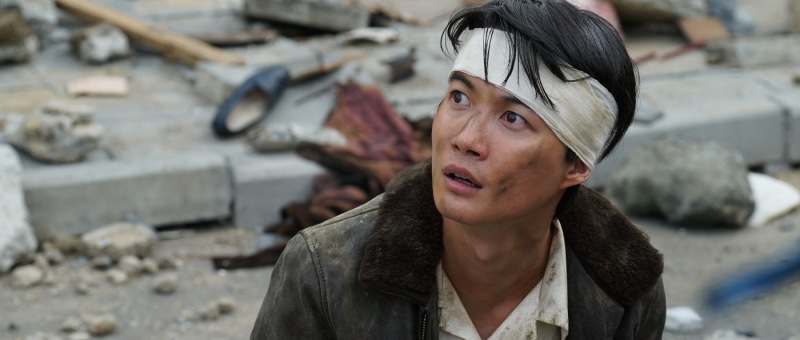
When Godzilla emerges from the waves in Takashi Yamazaki’s entry into the classic tokusatsu series Godzilla Minus One (ゴジラ-1.0), he does so as an embodiment of wartime trauma most particularly that of the hero, Koichi (Ryunosuke Kamiki), a kamikaze pilot who failed die. Some might call his actions cowardice, returning to base siting engine trouble rather than doing what others regard as his duty, though the film implies it’s simply a consequence of his natural desire to live, a desire which the tenets of militarism which in essence a death cult insisted he must suppress. 

But for Koichi as he’s fond of saying the war never ends. He’s trapped in a purgatorial cycle of survivor’s guilt and internalised shame, feeling as if he has no right to a future because of the future that was robbed from other men like him because of his refusal to sacrifice his life. When he first encounters Godzilla on a small island outpost, he is ordered back into his plane to fire its guns at him but freezes while the rest of the men, bar one, are killed. Tachibana (Munetaka Aoki), a mechanic who had already branded Koichi a treacherous coward, gives him a packet of photographs belonging to the dead men each featuring the families they were denied the opportunity to return to. Photographs on an altar become a motif for him, though he has none for his parents who were killed when their house was destroyed by the aerial bombing of Tokyo. A surviving neighbour similarly blames him, directly aligning Koichi’s act of selfish cowardice with the razing of the city.

The return of Godzilla is literal manifestation of his war trauma which he must finally confront in order to move into the new post-war future that’s built on peace and solidarity rather than acrimony and resentment for the wartime past. But then again, the film situates itself in a fantasy post-war Tokyo in which the Occupation is barely felt and the government, which mainly consisted of former militarists, is also absent. Both the US and the Japanese authorities refuse to do anything about Godzilla because of various geopolitical implications making this a problem that the people must face themselves, though they largely do so through attempting to repurpose rather than reject the militarist past. Noda (Hidetaka Yoshioka), a scientist who worked on weapons production during the war, gives a rousing speech in which he explains that this time they will not pointlessly sacrifice their lives but instead fight to live in a better world which is all very well but perhaps mere sophistry when the end result is the same. 

Called back by their old commander, many men say they will not risk their lives or abandon their families once again because they have learned their lessons but others are convinced by the message that they must face Godzilla if they’re ever to be free of their wartime past. Koichi wants vengeance against Godzilla but also to avenge himself by doing what he could not do before. The film seems to suggest that this time it’s different because he has a choice. No one has ordered him to die, and he is free to choose whether to do so or not which is also the choice of being consumed by his war trauma or overcoming it to begin a new life in the post-war Tokyo that Godzilla has just destroyed. 

Despite the desperation and acrimony he returns to, Koichi maintains his humanity bonding with a young woman, Noriko (Minami Hamabe), who agreed to take care of another woman’s child. Even the neighbour, Sumiko (Sakura Ando), who first rejected Koichi and is suspicious of Noriko, willingly gives up her own rice supply for the baby proving that in the end people are good and will help each other even if that seems somewhat naive amid the realities of life in the post-war city ridden with starvation and disease. In any case, it’s this solidarity that eventually saves them, Godzilla challenged less by a pair of large boats than a flotilla of small ones united by the desire to finally end this war. Like Yamazaki’s previous wartime dramas The Eternal Zero and The Great War of Archimedes, the film espouses a lowkey nationalism mired in a nostalgia for a mythologised Japan but as usual excels in terms of production design and visual spectacle as the iconic monster looms large over a city trapped between the wartime past and a post-war future that can only be claimed by a direct confrontation with the lingering trauma of militarist folly.


Godzilla Minus One opens in UK cinemas 15th December courtesy of All the Anime.

International trailer (English subtitles)

Snow Leopard (གསའ།, Pema Tseden, 2023)

When a snow leopard breaks into a herder’s pen and kills nine of his castrated rams, the herder traps it and effectively holds the animal hostage in the hope of gaining compensation in Pema Tseden’s mystical drama Snow Leopard (གསའ།). He is reminded that the snow leopard is a “first class protected animal” but understandably asks who’s going to protect him, why is the snow leopard’s life so much more important than his own?

Prone to angry rants, Jinpa (Jinpa) is more often than not portrayed as a snow leopard himself grunting and struggling to get free when the forestry police attempt to restrain him. He says that the herders and local wildlife used to live in harmony. If a snow leopard eats one or two sheep, then they just accept it but as climate change and other environmental forces have pushed them further down the mountain Jinpa feels the snow leopards in particular have become greedy and must be stopped. He wants to kill the snow leopard in revenge and refuses to let it go until the government agrees to compensate him for his financial loss. His rage is such that it’s economically irresponsible, calling in a local man with a digger to rescue the remaining sheep and telling him that it’s fine if one or two die while agreeing to pay the same price as the sheep is worth to have him try to rescue them. 

Jinpa’s brother, a monk obsessed with photographing snow leopards, and father are each of the opinion that it’s spiritually irresponsible to keep the snow leopard bound up as it is the embodiment of the spirit of the mountains. It’s possible to read Jinpa’s animosity towards it as rage against the natural world and his fierce, almost mad diatribes against it as a kind of irrational hatred. Yet like him the snow leopard contains dualities. The one in the pen has a cub on the mountainside and seems to be capable of true tenderness though also violent carnality in its attack on the sheep. Jinpa more than anyone seems to be aware that the snow leopard is simply being what it is, but cannot forgive it for this very personal act of betrayal. 

The monk, meanwhile, has a unique relationship with the captive snow leopard segueing into a surreal black and white sequence in which he eventually sets it free and is rewarded for his act of kindness. This seems to hint at the ways in which human life and animal could coexist but also at the essential spiritual quality of the snow leopard as a symbol of something elemental along with the roots of traditional Tibetan culture which are now on the brink of eclipse. A TV news crew tipped off by the monk with whom the reporter went to school turn up to capture these bizarre events but appear uncertain as to what they’re actually filming. The cameraman is frequently so awestruck that he forgets to film anything while the reporter is constantly fending off calls from his girlfriend.

A farcical stand off occurs when representatives from the government turn up, seemingly looking down on Jinpa and irritated by his demands for compensation while insisting that the snow leopard must be released. He refuses to give in even as they remind him that if anything happens to it, it’s him that will be held legally responsible. The forces of authority are also intruders, making an incursion from the world of modernity much as the snow leopard descends from the mountain and the ancient past. Men like Jinpa occupy a liminal space, caught between the old and the new while their way of life is increasingly threatened by the forces of modernity. 

In a way, perhaps you could say the monk is trying to capture the snow leopard too even as he shares a special affiliation with it that connects him to the land and his culture along with something deeper and older that the modern world may lack. Yet what they need to do is set it free and restore an order that’s natural rather than manmade. Director Pema Tseden sadly passed away at the young age of 55 shortly after completing the film but offers a sense of the eternal in the snow-covered expanses of mountains and the cruel tenderness of those who live there.


Snow Leopard screened as part of this year’s London East Asia Film Festival.

International trailer (English subtitles)

Ninja vs Shark (妖獣綺譚 ニンジャVSシャーク, Koichi Sakamoto, 2023)

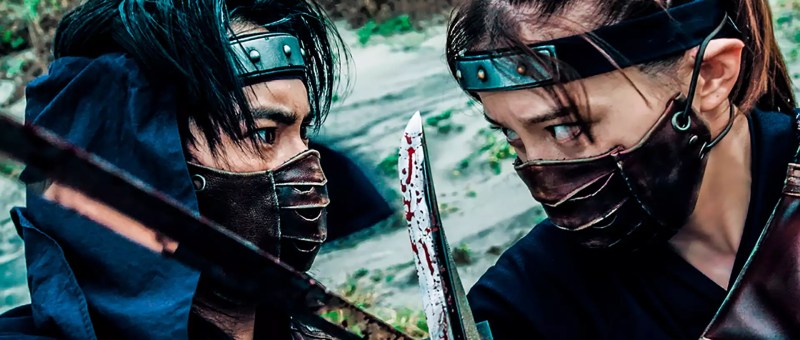
There’s a lot going on in formerly peaceful village Okitsu. Not only are villagers washing up in bits after being attacked by a mysterious Sea God, but they’re also being abducted by a gang of devil-worshipping bandits. Koichi Sakamoto’s Ninja Vs Sharks (妖獣綺譚 ニンジャVSシャーク, Youjuu Kitan Ninja vs Shark) is exactly what it sounds like only with added zombies and black magic along with a more prosaic darkness in the legacy of domestic violence, entrenched patriarchy, and social prejudice. 

The twin threats are the reason that the village chief decides to employ Kotaro (Koshu Hirano), a drifter with a good reputation as a bodyguard but a bad one as a man. In the last village, he raped the wife of the man that hired him, Tae, on learning that they did not in fact have the money to pay. This fact seems to be forgotten as the film progresses and Kotaro is seen in a much more sympathetic light as someone who has a genuine interest in protecting the village rather than a heartless rapist and mercenary. In any case, on his arrival in Okitsu he walks in the attempted rape of Sayo (Juria Nagano), a woman ostracised by the village for having killed her abusive father after he murdered her mother. Her father was also the Mayor’s brother, which would make him her uncle though he thinks nothing of declaring her “cursed” and offering her up as a sacrifice to bandits and supernatural enemies alike. 

As Kotoaro remarks, some people only feel safe through oppressing others. The pair immediately bond over their shared outsider status and a sense of loss having been instructed by those they could not save that above all else they should live. There is however a minor love triangle in the determination of villager Shinsuke (Shun Nishime), otherwise fairly ineffectual, to protect Sayo from bandits, curses, and the stigmatisation of the village. Nevertheless the trio end up becoming fast friends even as Kotaro’s past comes back to haunt him in the form of roving ninja Kikuma (Kanon Miyahara) who is set on tracking him down as a traitor to their clan. 

Meanwhile, the leader of the devil-worshipping clan has figured out that he can gain eternal youth by eating pearls and vampirising handsome young men after sucking on their chests and licking their faces. Becoming a many-toothed shark-man in the process he has a pact with a giant shark demon which has been slowly killing off the villagers which is counterproductive because he needs them to produce more pearls. Kikuma also has some kind of dark ninja magic which allows her to create zombies, killing and bringing back the woman Kotaro raped as an undead retainer still hoping for vengeance though Kotaro’s dark past seems to be otherwise forgotten in his newfound sense of righteousness. 

It’s obviously a lot, but Sakamoto mostly makes it work as simply a part of this strange feudal world though the real villain is obviously the Mayor who is not sufficiently dealt with and yes, he probably should have closed the beach not to mention looking for a better way to deal with the Sea God if not the bandits. The titular shark does not appear all that much though there are plenty of other fights and action sequences not to mention severed heads and giant blood sprays along with gory dismembered body parts. Less a contest between man and nature, the battle is between the supernatural force of the shark and classic ninja training which Kotaro is forced to re-embrace in his quest to save Sayo having sworn off it because of inherent corruption in the ninja world. In any case, though they might have defeated the shark and struck a partial blow against the devil-worshippers, the trio each find themselves exiled from mainstream society, unable to remain in the village and seeking a life of independence elsewhere. A post-credits sequence hints a sequel suggesting that trouble is, however, likely to follow them as they do their best to survive in Edo-era society where vampire shark-men may actually be the least of their worries.


Ninja vs Shark screened as part of this year’s Camera Japan.

Original trailer (no subtitles)

Concrete Utopia (콘크리트 유토피아, Um Tae-hwa, 2023)

“They were just ordinary people” the heroine of Um Tae-hwa’s Concrete Utopia (콘크리트 유토피아) replies when asked about those who once lived in her apartment block. Considering what happened there, her words have a chilling quality hinting at the ways society breaks down and doesn’t in the wake of disaster and fear brings out our worst instincts. Yet on the other hand, perhaps it’s not so far from where we are now as Um’s housing crisis satire makes plain in a patriarchal and status-obsessed society.

“There’s no high and now low now. Everyone is equal,” according to Keum-ai (Kim Sun-young), head of the women’s association at the Hwang Gung apartment block, but of course that’s not true. An opening sequence featuring stock footage hints at the aspirational nature of post-war high rises that as one woman said were designed to give regular people a chance at homeownership though what most people enjoy is the convenience. The irony is that this is quite literally hierarchal living, though there are hierarchies even within hierarchies. When disaster strikes the city, Hwang Gung is inexplicably the only apartment complex left standing in what was previously a forest of concrete. Refugees from other other apartment blocks have made their way into the building, but some want to evict them and not least because they come from “Dream Palace” a more expensive and snooty complex across the way the residents of Hwang Gun believed looked down on them. 

With all these “outsiders” in the building, tensions begin to bubble. One couple wants to evict the non-residents because it took them 23 years to buy an apartment so they’re incredibly resentful that someone might usurp their privilege. Chaired by Keum-ai, a debate develops as what to what residency means with some firmly believing only home ownership is good enough, questioning the rights of civil servant Min-sung (Park Seo-joon) because he is still repaying his mortgage and therefore isn’t technically the owner of this home. In any case, most are unwilling to share despite knowing that many of the non-residents will die if left out in the post-disaster sub-zero temperatures. 

It’s also telling that when pressed to elect a leader, someone says that it has to be a man. Within the new system that emerges, the residents are divided along strict gender lines with the men serving in a kind of militia under the increasingly authoritarian rule of “Delegate” Young-tak (Lee Byung-hun) and women remaining in the building doing stereotypical female tasks. The rules state that the apartments are for residents only, while rations are awarded in proportion the perceived contribution to the community and it is forbidden to go outside. The residents develop a sense of themselves as chosen people, but are also feared by those around them for their cruelty with the rumour that their raiding parties are practicing cannibalism. 

The moral centre of the film, Min-sung’s wife Myeong-hwa (Park Bo-young) was against evicting the non-residents but largely goes along with the status quo until noticing the ways in which Young-tak’s authoritarianism is changing her husband, destroying his humanity and turning him into an obsequious lackey too afraid to resist. Then again, Min-sung was already a little more selfish and conservative than she may have been, secretly wanting to evict the non-residents in the hope of holding on to his property while unwilling to share the spoils with them. It’s this fear, their fear of displacement on losing the social status that comes with homeownership, that drives some towards cruelty even though in a world like this things like property values and job titles are obviously no longer relevant. 

This is may also explain Young-tak’s short term thinking, sending raiding parties out to find more food in the ruins and rubble rather than exploring options for growing new crops or securing water supplies. Flashbacks to conversations with his family reveal that this may have been a longterm problem for him with his wife criticising that he “never solved anything”. Her criticism undermines his sense of manhood in his inability to protect his family, not only unable to provide financial stability but even to keep a roof over their heads having apparently been swindled out of a house purchase. Male failure and insecurity by turns fuel his need for authoritarian power while the men under him, like Min-sung, mistakenly look to him as a leader and seek to emulate his code of masculinity in the desire to claim their own role as patriarchs protecting their families. 

As another member of the apartment block points out, no matter how bad the situation is there are things you should do and things you shouldn’t. Myeong-hwa does her best to maintain her humanity and is perhaps rewarded for it on encountering another group of good people much like herself while others find only more violence and misery. If they had only agreed to share in the beginning, come together and thought seriously about solutions for a better future all this could have been avoided but in the end traditional social values prove hard to abandon with homeownership still afforded special status amid the ruins of society even as Young-tak institutes a mini authoritarian fiefdom complete with secret police and public self-criticism sessions. Darkly comic in its satirical absurdity, Um’s drama is keen to point out what a crisis can do to “ordinary people” but also offers a ray of hope that there will in the end always be those less inclined to selfish cruelty than to an altruistic desire to find solutions that work for everyone.


Concrete Utopia screened as part of this year’s London East Asia Film Festival.

International trailer (English subtitles)
The Rest of Our Lives (ラストターン 福山健二71歳、二度目の青春, Shinji Kuma, 2023)

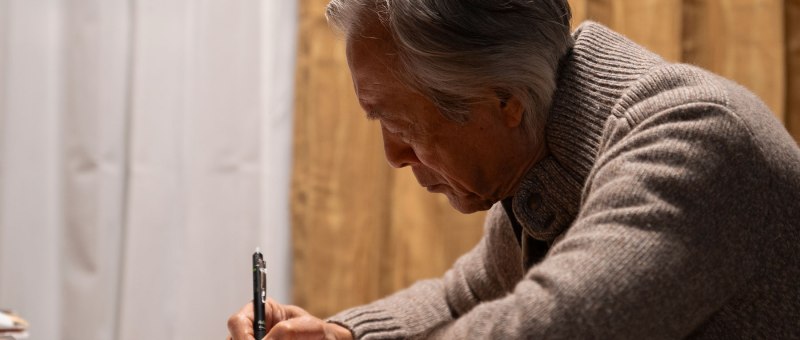
A pair of elderly men struggle to find meaning in their lives in the face of well-meaning infantilism and health anxiety in Shinji Kuma’s warmhearted ageing drama, The Rest of Our Lives (ラストターン 福山健二71歳、二度目の青春,, Last Turn: Fukuyama Kenji 71-sai, Nidome no Seishun). They are not, however, the only ones as even younger people find themselves consumed by existential confusion when reaching a natural turning point and accepting that their lives will have to change. Yet through their various relationships each begins to come to a new accommodation with the present and accept that though their lives may be different than before there are still many things for them to do. 

Kenji lost his wife two years previously having cared for her as she succumbed to Alzheimer’s. These days he likes to take a walk around the neighbourhood and then get on with his usual business though even he begins to realise that he’s become forgetful and is prone to doing strange things like leaving the remote control for the TV in the freezer. His son lives far away but is worried enough about him to install an iPad on the wall so they can call each other any time and he can also check in on him to make sure Kenji hasn’t had a fall or anything like that. But to Kenji it obviously seems like an imposition, his son’s basically spying on him and taking away his privacy along with a little of his independence. Satoru has also been checking out homes and recommends an organisation for elderly people where he can get health advice, stay active, and avoid social isolation. 

Only at the centre he starts to feel insulted, irritated that the staff members talk to them as if there were small children while getting them to do weird exercise regimes that make him feel silly. One elderly gentleman, Hashimoto, eventually storms out exclaiming that they aren’t in kindergarten anymore instantly earning Kenji’s admiration. Even so, as it turns out they are very different men. While Kenji is somewhat reserved and polite, Hashimoto is a chatterbox who makes constant inappropriate comments about women he probably only (just) gets away with because of his age and otherwise loudmouth personality. The friendship between them is slow to develop for this reason, but also because Kenji seems to have forgotten what it’s like to have a friend and accidentally upsets him leading Hashimoto to think that perhaps he is just annoying Kenji and should leave him alone. 

At the swimming pool they’re encouraged to go to, the pair run into Kaori, a former competitive swimmer like them struggling to accept the physical decline of her body along the end of her sporting career. Now working as an instructor she finds teaching an uphill battle partly in her buried resentment but also through a lack of empathy for her students unable to remember what it was like to not be able to swim and impatient with those lagging behind. They are all looking for ways to reorient themselves, not so much because of their age because of the immense changes in their lives along with a sense of loneliness. Kenji lives alone, but even Hashimoto who has moved in with his son confesses that the often feels in the way and once again infantilised seeing as they’ve given him a traditional Japanese room which lacks a locking door. 

Yet the realisation Kenji comes to is that their fear of becoming a burden is misplaced. It’s alright to ask for help when you need it and even better to offer it where you can such as in his thoughtful decision to walk a neighbourhood dog that barks all the time because the elderly lady who owned him passed away and her son’s out all day at work. Shining a light on the lives of the elderly in an increasingly ageing Japan, the film is makes a gentle plea for intergenerational solidarity and a more compassionate society that is responsive to the needs of others and cares for everyone equally. Kenji and Hashimoto marvel that even in their old age they still take pleasure in learning new things while allowing themselves to accept help as a gesture of love while making sure to return the favour wherever they can. 


The Rest of Our Lives screened as part of this year’s Camera Japan.

Band Four (4拍4家族, Mo Lai Yan Chi, 2023)

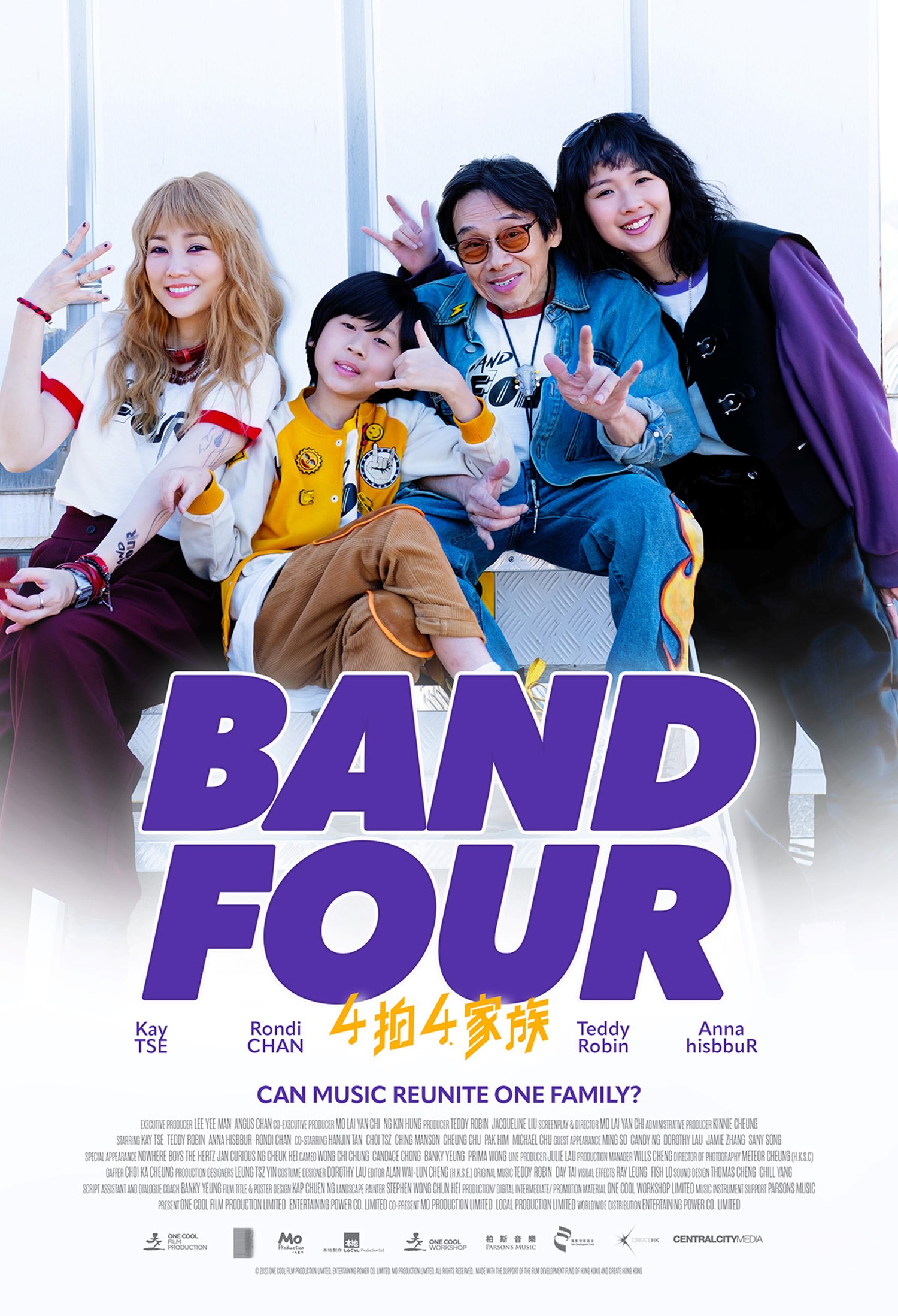
“Music is the best therapy, keep on playing music” is the advice of a doctor in Mo Lai Yan Chi’s poignant drama Band Four (4拍4家族) in which a disparate family is brought back together through their musical passions. Functioning as a kind of political allegory for a culture in danger of forgetting itself, the film rediscovers a sense of intergenerational solidarity in which that which seems lost can be reclaimed and passed down surviving in the minds of those who will remember.

The past intrudes in a more literal sense when the estranged father of Cat (Cantopop singer Kay Tse On-Kei), who has just lost her mother, suddenly returns and moves into her apartment after many years living over the border in Shenzhen. Former rockstar King (Teddy Robin) is clearly befuddled by the changes in contemporary Hong Kong, attempting to pay for a local snack in renminbi and getting Hong Kong Dollars back before being fined for littering by a very officious policewoman while he struggles to find a place for himself in Cat’s life given her understandable resentment of him for abandoning her only to return with another daughter in tow who has an incredibly similar Chinese name. 

Cat too is partly living in the past, fixed on getting to perform at an international festival with her band, Band Four, the name of which is inspired by her father’s old band, Band Seven, in order to honour the memories of two members who passed away suddenly just before they were due to travel abroad. Now in her 30s, Cat struggles to keep the band together only for her best friend to quit after deciding to get married and move to France while she’s otherwise forced to perform in fairly humiliating circumstances which only encourage her other two band members to an accept an offer to move to the Mainland. 

Many are indeed leaving, including King’s former bandmate and the owner of the live music venue where Cat plays who explains his wife wants to move abroad for a better future for their son though he finds it difficult to leave. Cat’s songs ask why it is she’s the only one who’s remained behind and committed to her dream, as if she were a kind of guardian of the old Hong Kong even as her own memory fails and she fears the time when she will forget everyone who was close to her. She worries about how to safeguard her memories in the same way she worries about raising her son, Riley (Rondi Chan), who is not academically inclined and struggles at school but appears to have a talent for the drums along with a kind and generous heart. 

Riley had explained that Cat started the band to find a family, which is what she eventually gets in learning to forgive her father whose interest in becoming a part of her life again is genuine while she also bonds with her half-sister Lok Yin (Anna hisbbuR) who also has musical aspirations and romantic disappointments that might otherwise leave her feelings lost and alone. “If you’re unhappy talk to your family” Lok Yin had advised Riley only to have the same advice given back to her and unexpectedly finding value in it. Occupying a maternal space, Cat strives to safeguard the future looking for others who could care for Riley as her own health fails while discovering that her family will take care of both him and her resolving that it won’t matter if Cat no longer remembers because they will remember for her. 

A musical love letter to Hong Kong, the film is both an advocation for moving forward but also for taking the past with you as you go, treasuring the memories of something that might no longer exist anywhere else. As Cat later says, anywhere you play is your stage and if you stumble over your lines someone else will be there to remind you where you are. Cheerful and heartwarming despite the sometimes heavy themes and a sense of inevitable erasure, Lai captures a sense of community warmth and mutual solidarity among those who choose to stay and remember rather than abandon their memories and start anew somewhere else.


Band Four is in UK cinemas from 15th December courtesy of Central City Media.

UK trailer (English subtitles)

The Shadowless Tower (白塔之光, Zhang Lu, 2023)

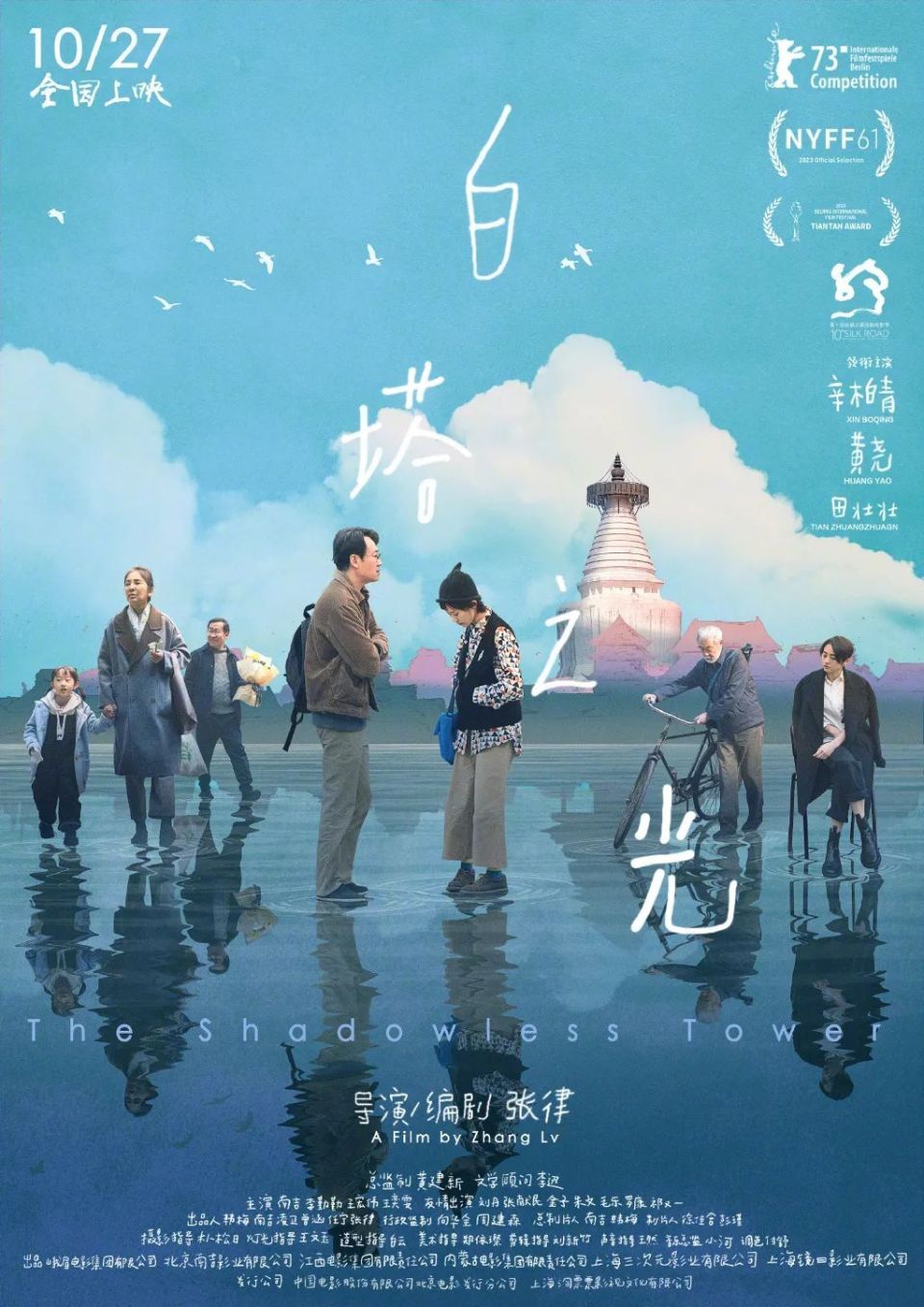
A tale of middle-aged loneliness and regret, Zhang Lu’s Shadowless Tower (白塔之光, Bái Tǎ zhī Guāng) takes its name from a white pagoda in the centre of Beijing that is said to cast no shadow. Or at least, as the hero later suggests, its shadow may be far away in its old home town of Tibet. Most Zhang’s protagonists are somewhat displaced most particularly spiritually and existentially, cut adrift by corrupted paternity while uncertain how to progress towards the future. 

For Gu (Xin Baiqing), a former poet now a melancholy restaurant critic and divorcee with a small daughter, the problem is he’s beginning to feel more and more like the father he hasn’t seen since he was five when his mother kicked him out of the house after he was accused of groping a woman on a bus. In a meta-textual touch, Gu’s kite-flying father Yunlai is played by film director Tian Zhuangzhuang who once made a film called The Blue Kite that is also about failed fatherhood and was banned by the authorities on its release. In any case, Gu is only a part-time father to his little girl, Smiley (Wang Yiwen), who is living with his sister and her husband who has been secretly in touch with Yunlai and aware that he rides hundreds of miles by bicycle twice a year visit Beijing on the kids’ birthdays though he cannot meet them.

In many ways, it might seem to be the father, or at least the image of one, that is the shadowless tower that hangs over Gu’s life. He fantasies about interrogating him over the bus incident, wondering if what his mother did was right or if they unfairly rejected a good man because of a misunderstanding. His mother’s anger was apparently partly because Yunlai would not compromise and confess to the crime to get a lighter sentence, instead being sent to a labour camp which left her financially responsible for the children on her own. Gu’s sister Wenhai (Li Qinqin) reflects that if he had not been such a good father to begin with she could have forgiven him, but because he was his disgrace caused her to lose faith in the world. 

Gu seems not to have much faith in the world either, remarking that he separated from his wife owing to an excess of politeness, the same politeness that keeps him aloof from his surroundings and prevents him from making meaningful connections. Yet for all that, he embodies a kind of fatherhood, sitting down on the bed of his lodger and gently placing a hand on his back on hearing his crying through the wall. The young man later embraces him as a son to a father, while Gu finds himself dancing a melancholy waltz with Yunlai who is also an image of his future self. 

But even as a lifelong Beijinger, Gu remains rootless. Meeting up with old friends, all of whom might have been young in the late ‘80s, they drink and sing the song composed for the 2008 Olympics as if they were looking for a father in the city. Gu also reads from Bei Dao’s My Beijing which similarly rests on a sense of exile even while present. The only woman in the group laments that she never married and meditates on the ghost of lost love, while the only one of them who fled abroad eventually takes his own life in a foreign land.

Jolting him out of his inertia, Gu encounters free spirited photographer Wenhai (Huang Ya) who shares his sister’s name though she is also similarly displaced and struggling with a more literal orphanhood that leaves her caught between the North East and the Cantonese-speaking south where she was adopted. A gentle love story arises between them, Wenhai cutting through the wall of Gu’s politeness with refreshing frankness but also with troubles of her own and a worrying tendency to refer to him as her father which nevertheless has a kind of circularity to it. 

Crouching down by the pagoda, they can’t see their shadows either and wonder where they are. Then again, perhaps it’s not so much that tower casts no shadow, but the shadow it casts is so vast that covers everything below just as Gu’s searching for his father overshadows his life even as he is also searching for himself. Intensely moving, Zhang’s poetic drama waxes on middle-aged rootlessness but also the interconnectedness of all things, from kites to earthworms and the great dance of life in all its inescapable loneliness. 


The Shadowless Tower screened as part of this year’s London East Asia Film Festival.

Original trailer (Simplified Chinese / English subtitles)

Into the Shaolin (在少林, Sun Hongyun, 2023)

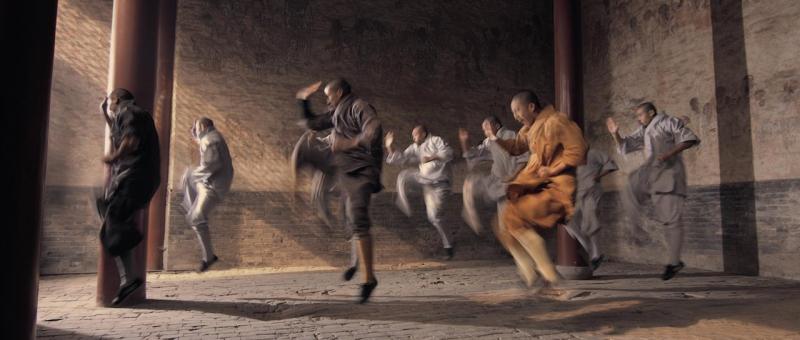
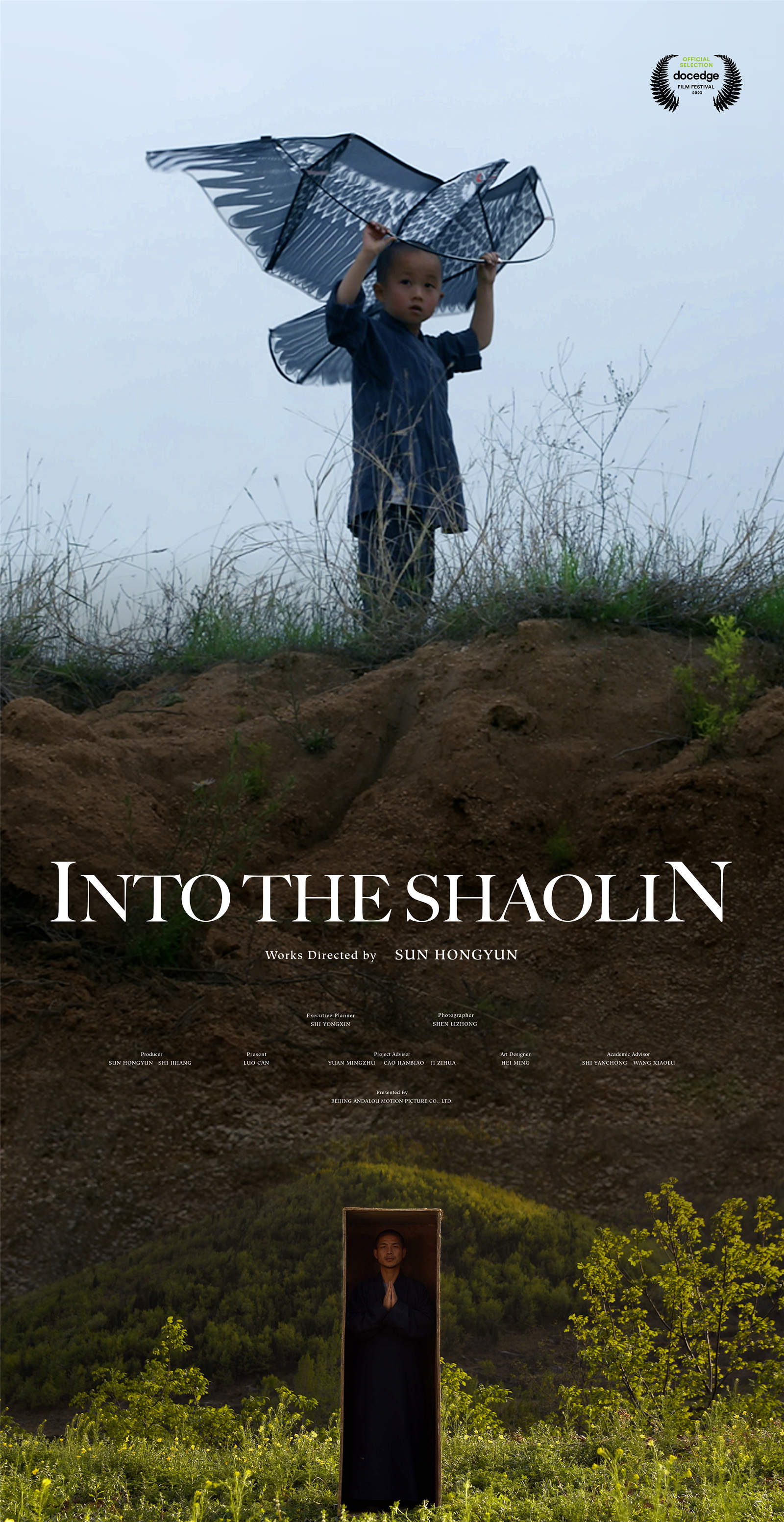
Like many of the monks at the centre of Sun Hongyun’s documentary Into the Shaolin (在少林
zài Shàolín), our associations with the name are almost exclusively tied up with martial arts movies. Yet as they discovered on entering the temple, it’s not all about kung fu which to some at least came as a disappointment when they were still novices tasked with performing ordinary chores. Then again, many of them do not necessarily anticipate being monks all their lives and so long spent in contemplation leaves them with few other ways to support themselves in the secular world other than through leveraging their martial arts training.

As we can see, many monks come to the temple in childhood often to escape poverty or because they were thought to be troublemakers at home. Sun follows the little monks with empathy, capturing both their mastery over the craft at such a young age and the pain and difficulty it often causes them raising series ethical issues over whether it is right and fair to expect so much from small children who often cry in pain or frustration. Others also remark that they miss their parents having essentially been sent away though one boy explains that his mother managed to get a job nearby so that she can still spend time with him and observe his training.

It’s these familial ties that present the strongest contradictions to the monks and bind them more fully to the secular world. One young man who came to the temple for lack of other options contemplates remaining there for the rest of his life and is a little resentful that even at 18 he still has to get the permission of the grandparents who raised him to go on a mountain retreat. The grandparents, who lost their son, his father, in a workplace accident they believe caused by overwork, want nothing more than for him to get married and start a business and so they flatly refuse to allow him to go on being a monk forever instructing him not to bother contacting them again if that’s what he plans to do. 

But then as others have said, being a shaolin monk doesn’t teach you how to live in the secular world and gives you few transferable skills that would allow you to support yourself. An older monk explains that most of the monks who came to the temple at the same time as him have left but almost all still work with martial arts in some capacity as there’s nothing else for them to do. Even so, the little monks talk of doing other things with their lives once they grow up one hoping to become a soldier defending China and another a movie star. Many came to the temple specifically because of their love of kung fu films starring Jet Li, Donnie Yen, or Wang Baoqiang who himself trained in Shaolin martial arts. 

Others meanwhile have found serenity in the rhythms of the temple and may no longer be suited to living outside of it. The show the boys are preparing utilises a series of boxes of the kind they usually sleep in which as one monk admits to the untrained eye closely resemble coffins but as he puts it no one really needs much more space than their body naturally occupies and it doesn’t really matter where they sleep. Of course, to those in the secular world those things mean a great deal and there’s probably a big difference between a box at the temple and one on the street. Another monk reflects on the shaolin name which means “few trees” though at the temple few is a lot and less is more. He thinks that it’s a fallacy to consider a “return” to the secular world because the true “return” is to your true self which you only discover by leaving home. 

That might be a sentiment shared by a Serbian doctoral student staying at the temple while researching her thesis and in particular the concept of “Chan”. Offering her own insights as a foreigner living at the temple she reflects on the differing attitudes to nature found in China while she seems to be the only woman currently in training. She remarks that it might be odd to call a temple home but that’s what it’s been to here even as she prepares to leave it. Sun’s documentary has an ambivalence to it, at once admiring of the monks in their asceticism, but also somewhat sad not only for their inability to escape their suffering, merely exchange one kind for another, but also for the predicament they my find themselves in should the time come to leave the temple whether by their own will or otherwise.


Into the Shaolin screened as part of this year’s DOC NYC and is available to stream in the US until Nov. 26.

Trailer (English subtitles)

Flowers of Mold (너를 줍다, Shim Hye-jung, 2023)

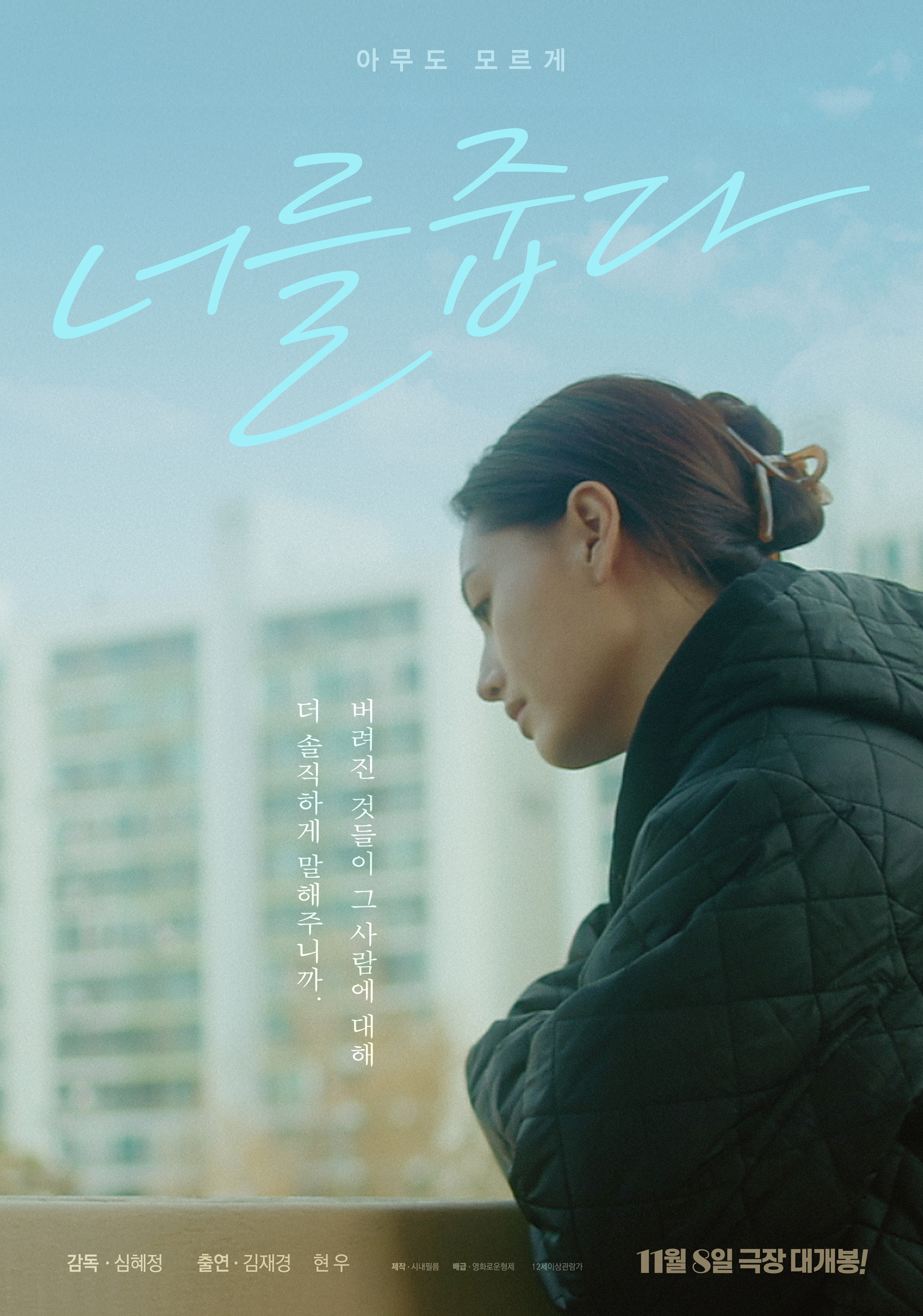
The heroine of Shim Hye-jung’s Flowers of Mold (너를 줍다, Neoleul Jubda) isn’t wrong when she says that you can learn a lot about a person from the things they throw away, though it also helps to explain her nature as an emotional hoarder like the pet fish she only starts keeping as a way of feeling close to a handsome neighbour unwilling to come out of her cave. Based on a story by Ha Seong-nan, the film is in essence an unexpectedly sweet romance but also a mild critique of the disconnected nature of urban living in which everything has already been broken down to its essential components in an overly ordered, judgemental society. 

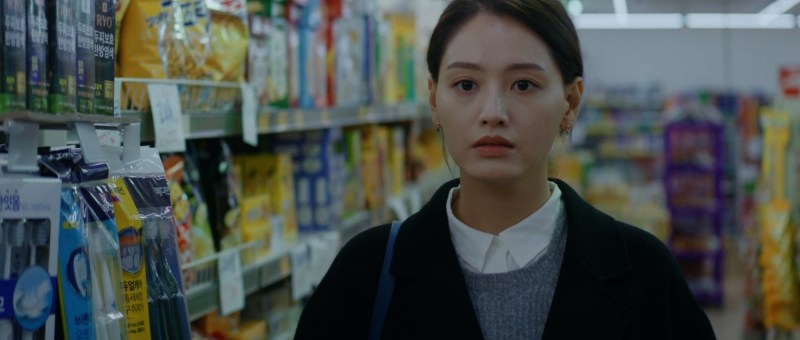
The disposal of rubbish, for example, is ridden with rules the breaking of which invites censure from a self-policing society as Ji-su (Kim Jae-kyung) discovers when she’s hauled in front of a trio of middle-aged women who put her on trial for inadvertently including inappropriate items in her regular rubbish, acting as if what she’s done is worse than murder and an indication of a deep ill will towards the community. In an odd way, this might be what sparks Ji-su’s strange hobby of rooting through her neighbour’s bins and keeping detailed records of them in a frustrated attempt at one-sided connection. She’s similarly conscientious at work, accepting belligerent calls from a customer who always complains that his meal kit deliveries have spoiled under the justification that he seems to work late and they should have just added an evening delivery tag even if he neglected to ask for one. She makes a similar suggestion that another customer with a young baby sometimes forgets to add not to ring the bell, so she goes ahead and adds that to her delivery note just in case.

“This is the age of big data” she jokes, but few us really like to be seen in this way and often we throw things away because we no longer like the self that owned them. Ji-su’s overbearing mother is forever telling her to get to rid of old things and buy new in a consumerist fantasy that novelty equals happiness, which might help to explain Ji-su’s reluctance to give anything away possibly afraid of the judgements others may make of her. An unfortunate encounter with a duplicitous man has left her feeling naive and mistrustful, needing further information in order to navigate the world and fill the void where real connection should be.

That’s one reason that she unwittingly begins to take on the characteristics of an attractive man who’s recently moved in next door and undergone an very loud breakup with a woman who seems otherwise totally unsuited to him and indeed understands him far less than Ji-su who has begun to build a profile after trawling through his trash. Perhaps wanting to know more only a natural consequence of falling in love, but it’s also an undeniable invasion of privacy that threatens to destroy a relationship even before it’s begun.

Even so, Ji-su begins to poke her head outside of her cave even deciding to take a leaf out of Woo-jae’s (Hyun Woo) book and take a leap of faith so out of keeping with her characteristic risk aversion. Cripplingly shy, she admits that she’s still afraid of people and in the end unable to trust them, remaining somewhat closed off and unknown perhaps even to herself. Then again, a teenage girl who’d originally reacted angrily to her well meaning advice later thinks better of it and wants to thank her “for her attention” being one of a few people who seems to have really seen her and taken an interest in her wellbeing in the midst of an indifferent city. 

Shim often cuts back to the anonymous apartment blocks, presenting an ersatz world of uniformity echoed in the meal kits Ji-su sells at work which reduce a complex dish to its component parts removing all sense of creativity or spontaneity. Woo-jae’s improbably possessive ex Sera describes him as “boring”, but perhaps he’s simply a man who knows how he likes to live much as the fish do and as he suggests it doesn’t always work out when you put two different kinds in the same tank. If Ji-su wants to break free of her self-imposed isolation, what she needs to figure out is how to give more of herself away and gain by doing so, accepting but also looking past someone’s trash to whatever it was they decided to keep.


Flowers of Mold screened as part of this year’s London Korean Film Festival.

Original trailer (English subtitles)

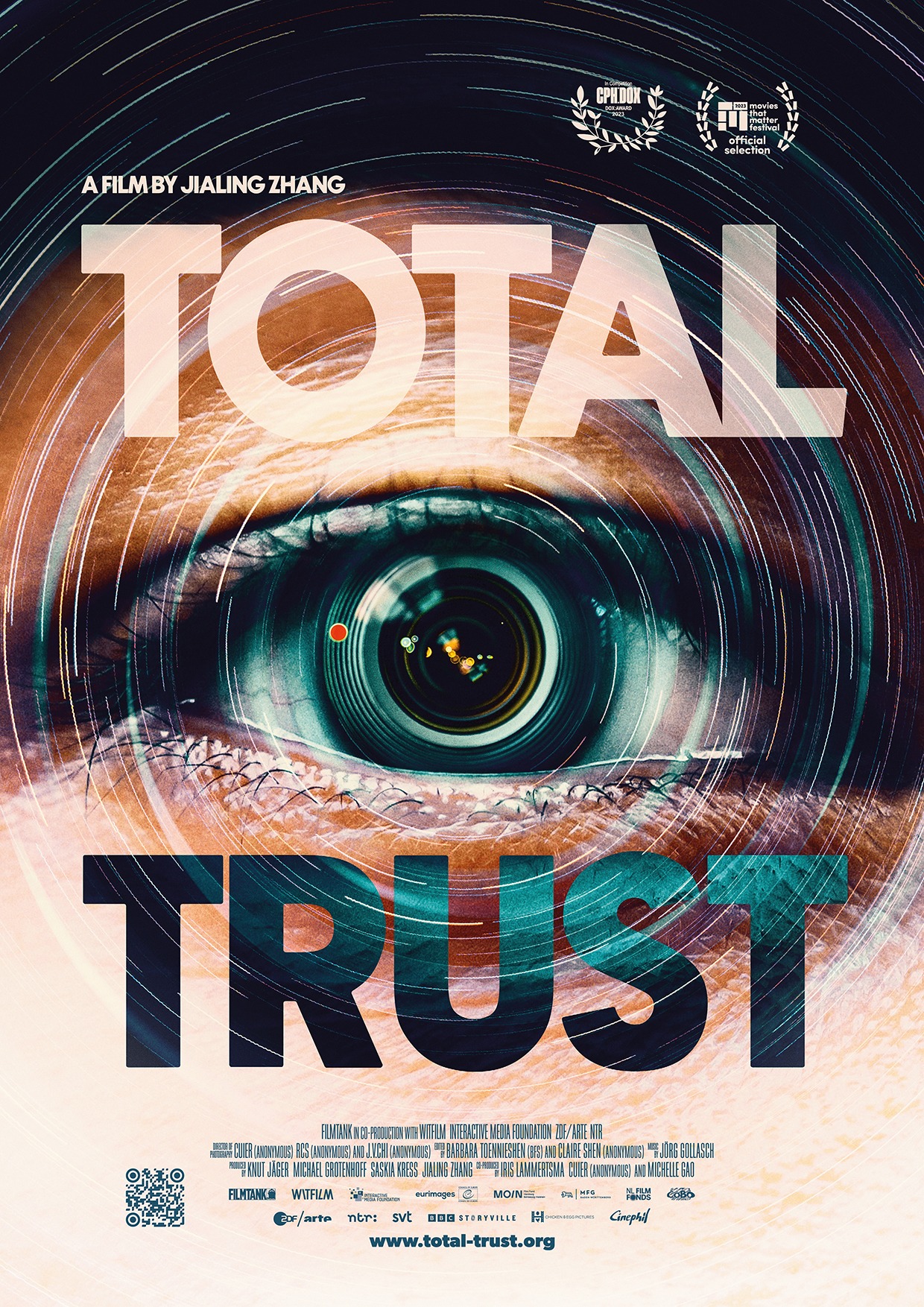
Total Trust (Zhang Jialing, 2023)

“The government strives to provide a stable society, fair legal system, and quality services to ensure the fulfilment, happiness, and security of its people,” according to a news reader at the beginning of Zhang Jialing’s documentary exploring the contemporary surveillance state of the modern China, Total Trust. In recent mainstream narrative cinema, there has a been a clear message that the Chinese citizen is safe nowhere other than at home, but here other voices tell us that threat comes not only from abroad but from within and the co-operation of all citizens is necessary to ensure the nation’s security. 

Early scenes see what others may regard as busybodies enforcing public order by picking up rubbish or monitoring minor parking infractions, but it’s precisely this sense of oppressive community pressure that “social management” systems are designed to create. Utilising cutting edge technology, the authorities harvest big data to assess the “trustworthiness” of the ordinary citizen and accord them a rank which then affects all aspects of their lives from their ability to gain or maintain employment to the right to use public transport. Social responsibility is rewarded with points for the above mentioned activities but also for keeping an eye on your neighbours and ensuring they aren’t planning to do anything “subversive” while your neighbours also watch you. 

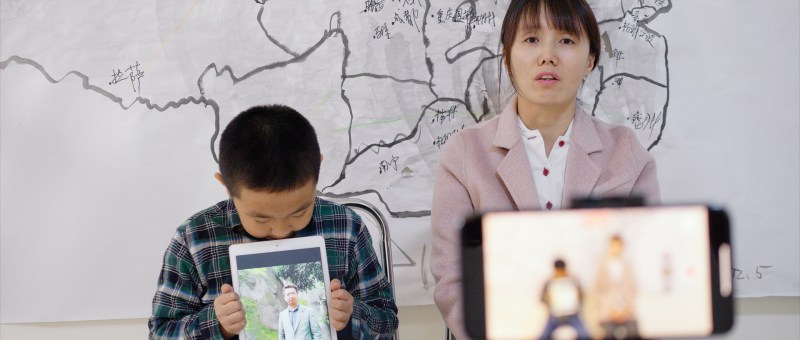
But this trustworthiness is not so much towards the society as it is towards the Party. Many of Zhang’s protagonists are lawyers and their families who were targeted during a recent crackdown and charged with subverting state power because they defended those who claimed they’d been falsely convicted of crimes which is problematic because the Party cannot be wrong and it doesn’t make mistakes. Chang Weiping was arrested in 2020 and sent back to his hometown for house arrest leaving him separated from his wife and son. He recounts frequent torture which caused him permanent physical damage while his wife has also found herself targeted by the surveillance state after protesting his imprisonment. 

Other families report similar harassment. Wenzu Li’s husband Quanzhang Wang was imprisoned because of his championing of human rights and though he’s since been released the couple have effectively been banned from social media with any photos featuring their faces automatically removed by AI technology and the accounts that posted them limited. They are constantly watched while the police have also motivated their neighbours to monitor and shun them. After being invited to speak at an international conference, their door is blocked by mysterious mask-wearing neighbours who physically prevent them from leaving (they later appear at the conference via Zoom). Their son has also had to change schools almost every term because of the persistent harassment and their own low social credit ranking.

As another persecuted journalist, Sophia, points out after generations of censorship, a degree of censure has become internalised and in general people tend to self-censor without necessarily regarding it as an infringement on their freedom. Many people welcome this kind of oppressive “security” because it makes them feel safe while others are too afraid of the potential consequences to resist. Weiping’s wife takes his father to task for giving up on the campaign against his imprisonment as he remains reluctant to challenge the Party of which he has been a lifelong member, while he agrees that he is simply old and frightened and doesn’t want to be subjected to state harassment himself. 

Weiping’s wife eventually decides to emigrate to the US believing there is no future for her son in China while Weiping himself remains imprisoned. The journalist makes plans to study abroad in the UK, which might in itself be ironic given the increasing authoritarianism of the British government. The UK is already one of the most surveilled places in the world and similar kinds of AI-based facial recognition technology are already being employed in law enforcement. In any case, she is arrested at the airport and prevented from the leaving the country before being detained and charged with the same “subverting government power” line as the lawyers. According to the closing titles, she remains in prison. Emergency powers introduced during the pandemic have only enabled a wider authoritarian power grab with authorities now able to manipulate “health ratings” to silent protest or otherwise make lives unliveable by simply switching the reading to red meaning that the target can be arrested simply for leaving their home. Citizens may need to reevaluate the “trustworthiness” of the government but are of course prevented from doing so in a society in which their every movement is already closely controlled.


Total Trust screened as part of this year’s DOC NYC.

Trailer (English subtitles)