Every Trick In The Book (鳩の撃退法, Hideta Takahata, 2021)

A down on his luck writer finds himself at the centre of a mystery only how much is truth and how much “fiction”? Based on the novel by Shogo Sato, Hideta Takahata’s Every Trick in the Book (鳩の撃退法, Hato no gekitai-ho) ponders the possibilities of literature as the hero seems to create a fictional world around him in which it is largely unclear whether he is solving a real world mystery or simply imagining one based on his impressions of the strange characters he encounters through the course of his everyday life.

That everyday life is however eventful just in itself. Tsuda (Tatsuya Fujiwara) once won a prestigious literary prize and was destined to become a popular author but hasn’t written anything of note for some time and in fact now largely works as a driver ferrying sex workers around on behalf of his shady boss. The mystery begins when he approaches a man, a rare solo reader in an overnight cafe, and promises to lend him a copy of Peter and Wendy by JM Barrie only to later discover that the man went missing along with his wife and the daughter he had explained was fathered by another man. 

Like many of his subsequent encounters it isn’t entirely clear if this meeting really took place or at least as Tsuda said it did or is only part of the novel he is beginning to write. The man, Hideyoshi (Shunsuke Kazama), asks him if it’s a novelist’s habit to begin imagining backstories for everyone he sets eyes on and there may well be some of that even as Tsuda is fond of claiming that amazing things happen around us every day to which we are mostly oblivious. Still, Tsuda probably didn’t expect to be pulled into the orbit of local gangster Kurata (Etsushi Toyokawa) after accidentally passing on counterfeit currency he found by chance. It’s true that most of what’s happening to him is the result of a series of bizarre coincidences or cosmic confluence which has accidentally united this collection of people in an unintended mystery which Tsuda intends to solve in either literal or literary terms. 

“It’s all a novelist can do” he later claims in trying to write a better ending for “characters” he has come to like than the one he assumes they “actually” met. But then his editor Nahomi (Tao Tsuchiya) chief worry is that, like his previous novel, Tsuda’s story will contain too much of the “literal” truth which could cause his publishers some legal problems. Part of the reason Tsuda left the industry is apparently because his last book was inspired by a real life affair which was then considered somewhat hurtful and defamatory. For that reason it comes as quite a blow to Nahomi as she begins to investigate and discovers that much of Tsuda’s story lines up with “real” places and events, but then again as he says if you can draw connections between known facts then you begin to see a “hidden” truth which may in its own way be merely his invention. 

The film’s Japanese title translates more literally as something like “how to fend off a dove” which does indeed have its share of irony especially considering the meaning the dove symbolism turns out to have in the film but perhaps also hints at the essential absurdity of trying to fight back against something that is otherwise harmless and in fact represents peace. Tsuda may be onto something and nothing, embracing the bizarre serendipity of a writer’s life while trying to recover his creative mojo but embellishing it with more danger and strangeness than it actually has to offer. Then again as his editor discovers, there really is an incinerator it seems anyone can just walk up and use to burn whatever they want including dead bodies, while people in general are full of duplicities all of which keeps the “fake” money circulating as people use it to try to buy things that can’t really be bought. Hideyoshi calls them “miracles”, embracing the strange serendipity of his life as an orphan longing for a family to call his own and unexpectedly finding one which is “real” in someways and “fiction” and in others. Then again, if you believe in something does it really matter if it’s “real” or not? Hideyoshi and Tsuda might say it doesn’t, the publishing company’s lawyers might feel differently, but it seems there really are amazing things going on around us every day if only you stop to look. 


Original trailer (English subtitles)

Stay Mum (かくしごと, Kosai Sekine, 2024)

Late into Kosai Sekine’s maternal mystery Stay Mum (かくしごと. Kakushigoto), a doctor describes the behaviour of an old man living with dementia as a “convenient delusion” and later remarks forgetting is a kind of salvation that liberates him from what was apparently a very stressful life of repression and properness. Yet to the heroine there’s something very unfair about someone who has hurt her so deeply being allowed to just forget all about it while she has to go on carrying the legacy of his unkindness along with her own grief and pain.

Ironically enough, she finds herself caught in the middle as a mother and a daughter after taking in a little boy her friend accidentally ran over who appears to have extensive scars and bruising that suggest he has been mistreated by his birth family for some time. The boy also claims to have lost his memory, leading Chisako (Anne Watanabe) to fill in the blanks for him. She gives him a name, Takumi, and tells him that he is her son intending to raise the boy covertly while temporarily staying in her rural hometown to care for her estranged father after he was found wandering around in a state of undress.

Even Takumi realises the irony of Chisako’s father Ko (Eiji Okada) falling further into a state of forgetting just as he is learning to “remember” thanks to the memories Chisako imparts to him in their fictional shared history. The film’s English title is a kind pun playing the fact that everyone involved must “stay mum” in order to maintain this delusion of family life while also hinting Chisako’s desire to reclaim her maternity having lost a child of her own. The Japanese title more literally translates as “that which is hidden” while the novel that it’s based on is titled the more direct “lie” though of course it leaves ambiguous to which lie it is referring. But as the doctor had said, it becomes a “convenient delusion” for everyone which grants them a kind of peace and serenity that allows them to reclaim exactly what they wanted out of life but perhaps could not get in any other way.

But of course, it can’t last and at the same time also delays a final confrontation with the reality that would truly allow them to move forward. Someone later accuses Chisako of brainwashing Takumi, essentially kidnapping him while forcing him to play the role of her son as if she were simply mentally disturbed and desperate to overcome her grief rather than genuinely concerned and morally outraged by the idea of allowing a boy who shows clear signs of abuse to return to a home in which he will continue to be mistreated. But at the same time, she struggles to relate to her father and behaves towards him in ways which to Takumi may seem abusive, shouting at and at one point slapping him after a particularly unkind remark. Her inability to control herself further compounds her sense of failure as both mother and daughter, still carrying an internalised sense of inadequacy because of her father’s toxic parenting while in the midst of forgetting he is perhaps still able to perceive the mistakes he made that cost him a functioning relationship with his daughter.

Ko spends his days crafting statues of the goddess of mercy as if begging for atonement all while unable to recall the face he wished to give her. The irony is that as the doctor said, forgetting allows him to drop his guard and to remember the costs of the way he lived his life. As Chisako counters there are also things which shouldn’t be forgotten no matter how painful they may be to remember, along with those which cannot really be forgiven, though the act of wilful forgetfulness does perhaps provide a salve for the wounds of the past. Though at times overly contrived and strikingly predictable, Sekine’s empathetic contemplation of the emotional truths behind the bonds of parents and their children ends in a violent confrontation with corrupted parenthood but equally in a gesture of mutual salvation which ironically depends entirely on the willingness to speak the truth both emotional and literal. 


Stay Mum screened as part of this year’s Toronto Japanese Film Festival

Original trailer (no subtitles)

The End of the Pale Hour (明け方の若者たち, Hana Matsumoto, 2021)

A series of youngsters contend with disillusionment amidst the failure of the salaryman dream in Hana Matsumoto’s adaptation of the “I Novel” by Masahiko Katsuse, The End of the Pale Hour (明け方の若者たち, Akegata no Wakamonotachi). United by a chorus of “it wasn’t supposed to be this way”, the choice left to them is to resign themselves to life’s disappointment or to take a gamble on a happier future which though it might not work out might grant them a greater feeling of control over an existence which often seems pointless and unfulfilling. 

The unnamed protagonist (Takumi Kitamura) is already feeling a degree of trepidation even at a gathering that has been organised by a brash fellow student who crassly brands it the “winners’ party” to celebrate that they’ve all been able to line up jobs for after graduation in a competitive employment market. He ends up leaving with an equally bored woman (Yuina Kuroshima), a graduate student a little older than him, and drifts into a relationship with her that seems doomed to failure not least in her constant reminders that “everything ends sometime” and “our youth will be over soon, we need to enjoy it now”. The man insists that their youth won’t end just because they’ve entered the working world but in a sense it of course does, his sparkler fizzling out portentously as he’s forced to think of the future. 

A recent trend has seen large numbers of graduate recruits quit their company jobs within the first three years for reasons the man and his new workplace friend Naoto (Yuki Inoue) quickly discover. Japanese companies generally hire en masse in the spring and then shuffle employees into various departments after a probationary period sometimes letting the ones who don’t make the grade go entirely. Though he had done well in the preliminary tasks and hoped to be assigned to the prestigious planning department where the real work gets done, the man is assigned to the “General Affairs” section of office dogsbodies marked out from the regular salaryman workers by their uniform jackets which make it clear that their work is considered menial mainly concerned with setting up furniture for meetings, taking care of maintenance tasks such as replacing light bulbs, and dealing with interoffice complaints. He is constantly told off for not stamping his documents properly only for someone to explain to him that he needs to make sure his name appears at the correct angle to symbolise his bowing to the boss on paper in an example of the rigid office culture for which the young have increasingly little patience.  

Part of the man’s problem is his passivity. He’s dissatisfied with the system but is at heart conventional and lacks the courage to break with it. The woman is seemingly less so, a free spirit who’s chosen a path she believes to be more creatively fulfilling excited that she might make something that will one day be in someone’s hands. But then as we discover she is more conventional than she first appears, her openness and enthusiasm perhaps partly fantasy to mask the disappointment that she too feels that her life has not turned out as she thought it would. The man remarks that he likes walking around at twilight because it’s the only moment in which he can feel free, a moment of infinite possibility in the liminal space between one day and the next in which today is already over but tomorrow has not started. Later Naoto will say something similar of their youthful days as fresh hires filled with resentment but also determination, railing against the system until the early hours of the morning, describing it as the “magic hour” of their lives though they never knew the light was dimming. 

Such dejection may be slightly unwarranted given that none of them are even 30 by time of the film’s conclusion despite the minor greying of their hair. In any case, the man seems to have come to an acceptance of youth’s end, taking the spirit of the twilight with him as he charts a new, if still conventional course, choosing not to jump ship like his friend but tentatively make an application to get out of General Affairs into a better salaryman job. “It’s been a magic time, hasn’t it?” the woman had said of their brief holiday, “like a dream” but one from which she knows, and perhaps he does too, they’ll soon have to awake. Expressing the anxieties of contemporary generation dissatisfied with their overly corporatised lives in a rigid and conservative society, The End of the Pale Hour nevertheless ends with a sense of the dawn and the promise of new beginnings if tinged with the glow of youthful nostalgia. 


The End of the Pale Hour streams in Germany until 6th June as part of this year’s Nippon Connection.

Original trailer (English subtitles)

Funuke Show Some Love, You Losers! (腑抜けども、悲しみの愛を見せろ, Daihachi Yoshida, 2007)

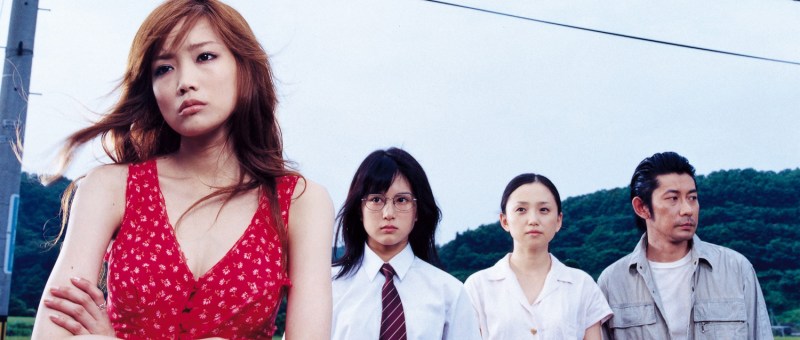
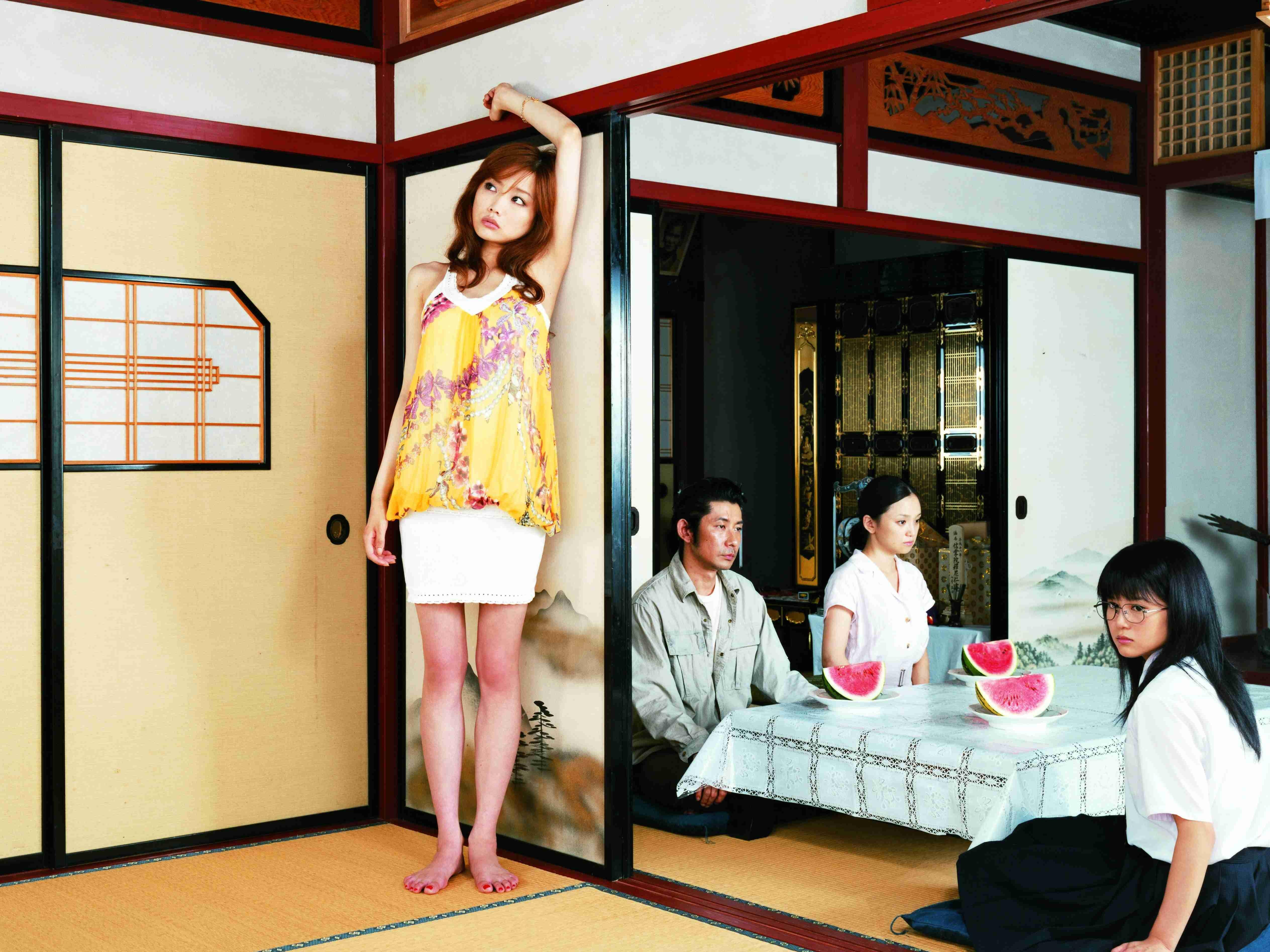
“We’re family, I’m sure we’ll understand each other” a conciliatory big brother tries to console, but family is it seems a much more complicated matter than one might assume it to be in Daihachi Yoshida’s debut feature, Funuke Show Some Love, You Losers! (腑抜けども、悲しみの愛を見せろ Funukedomo, Kanashimi no Ai wo Misero), adapted from the novel by Yukiko Motoya. Released in 2007, Yoshida’s film is one among a series of cynical reevaluations of the meaning of “family” in the contemporary society but eventually skews towards the uncomfortably conservative in its implicit suggestion that a family which is not bound by blood cannot succeed while even blood connection may prove inherently toxic. 

Fittingly the film opens with a freak yet largely offscreen accident as Mrs & Mrs Wago are killed by a runaway bus while attempting to save a stray cat, an event witnessed by their 18-year-old daughter Kiyomi (Aimi Satsukawa). The Wagos were a blended household, Kazuko and Shutaro having married later in life and bringing with them their children from previous marriages in Kazuko’s daughters Sumika (Eriko Sato) and Kiyomi, and Shutaro’s son Shinji (Masatoshi Nagase). Four years previously, Sumika left home after a traumatic family incident with the aim of becoming an actress in Tokyo, while her place has perhaps been taken by Shinji’s new wife Machiko (Hiromi Nagasaku) whom he has only recently married. Yet Kiyomi seems more perturbed by the possibility of her sister’s return than she is grief-stricken by her parents’ death, while Sumika barely glances at the altar on her arrival immediately treating Machiko as a servant sent out to pay the taxi and collect her bags. 

As we quickly gather, Sumika is an intensely narcissistic, self-absorbed sociopath intent on manipulating everyone around her in order to assume a position of dominance yet her resentment is perhaps the only thing glueing the family together. Her grudge against Kiyomi apparently stems back to her having used her for inspiration for a manga about a young woman driven to psychotic violence in her ambition to become an actress which later won a prize and was printed under her real name with the consequence that everyone in town quickly realised it was about her. Sumika repeatedly uses this excuse as to why she hasn’t been successful, that the manga forced her into a moment of introspection that destroyed her self-confidence, later saying something similar to an unresponsive audition panel bearing out her tendency to blame her failures on others. Yet Kiyomi apparently feels intensely guilty. “I never thought of myself as the kind of person who’d turn her family into manga for money” she laments shortly after Sumika attempted to boil her to death in the bath, “I want to transform into the kind of person who can sympathise with family members’ pain”. 

“Family means supporting each other at times like this” the relentlessly cheerful Machiko had tried to comfort Kiyomi at the funeral, yet she is constantly reminded that she is not quite included as a family member. Shinji tells her to keep out of family business and later to avoid getting between the sisters, denying her an equal status within the home despite the reality of their marriage. Ironically enough, Machiko was abandoned at birth and raised in an orphanage apparently so desperate to belong to a family that she willingly puts up with Shinji’s abusive treatment while making creepy dolls as a hobby. Yet at the end of the film it’s she who is left on her own, inheriting the family home, while the two blood sisters are eventually forced out but bound to each other if only in unresolved and continual resentment. 

Nevertheless there is also a degree of pathos in the series of frustrated dreams which prevent each of the siblings from escaping the otherwise perfectly nice if dull rural hometown where they were born. Sumika’s tragedy is her refusal to accept she has no talent and is unlikely to find career success because she is an unpleasant person, a meta plot strand seeing her writing letters to a director whose new movie is apparently about whether you can love someone you’ve only communicated with remotely and never met. Sumika seeks only dominance, manipulating her siblings through guilt and shame in order to encourage a sense of dependence while also dependent on them for financial support. Her need prevents either Kiyomi or Shinji finding happiness, their attempts to escape her control eventually leading in very different directions. 

Unlike similarly themed familial dramas, Funuke situates the fault line in its dysfunctional family not in the changing society but in its lack of blood relation while eventually suggesting that even the blood bond between the two sisters is more grimly toxic than it is supportive. In an odd way, it leaves Machiko as the winner while uncomfortably implying that her orphanhood prevents her from becoming part of a conventional family, literally left home alone. A more literal translation of the title might be “show some miserable love, you cowards”, suggesting that these anxious siblings are too afraid of themselves and each other to embrace familial affection Kiyomi eventually affirming “In the end I couldn’t change either, sorry”. While the limitations of early digital photography may not stand up a decade and change later, Yoshida’s occasionally experimental flair including an entire sequence playing out as manga panels helps to overcome the unfortunate lifelessness of a typically 2000s low budget aesthetic while the universally strong performances do their best to gain our sympathy in an otherwise cruelly cynical, if darkly humorous, take on post-millennial family dynamics. 


Funuke Show Some Love, You Losers! is available on blu-ray in the UK from Third Window Films.

Trailer (English subtitles)

Life: Untitled (タイトル、拒絶, Kana Yamada, 2019)

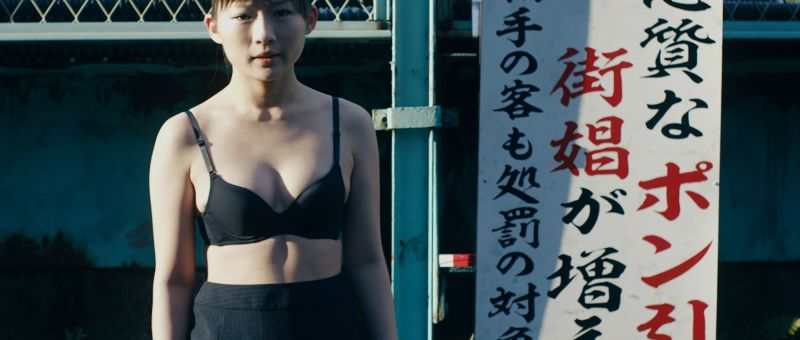
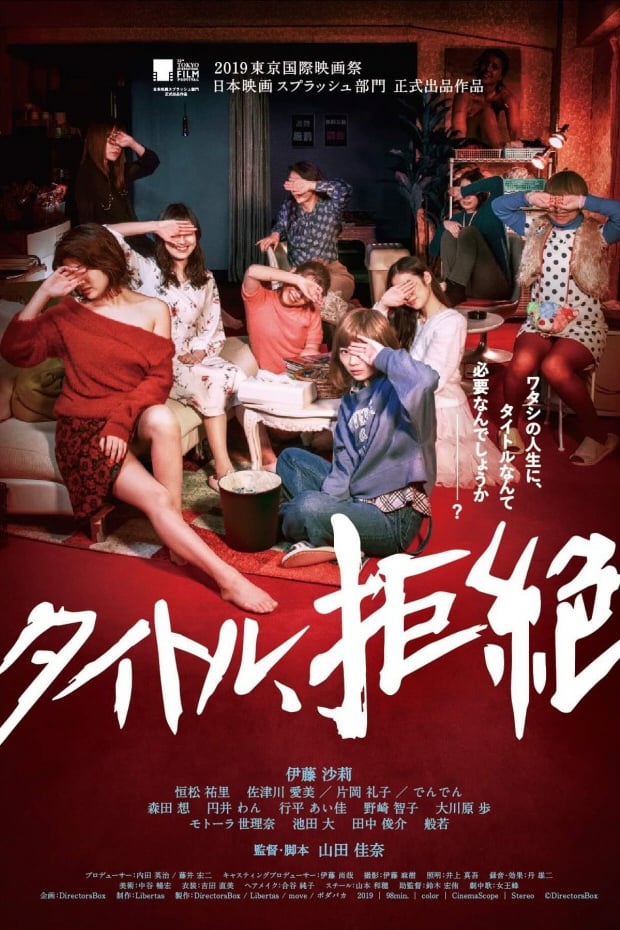
“Killing is easy. Revive me instead!” The heroine of Kana Yamada’s Life Untitled (タイトル、拒絶, Title: Kyozetsu) exclaims during a climactic argument, trying to find meaning in a life of ceaseless transaction. Adapting her own play, Yamada sets her tale of existential disappointment in an apartment used as an HQ for a group of call girls, each with their own problems but trying to live as best they can within the compromising environment of a patriarchal society which offers them little in the way of hope for a less depressing future. 

According to the agency’s top girl Riyu (Tomoko Nozaki) “everyone here is a failure of society”. Asking herself whether her painfully “ordinary” life was worth much of anything, Kano (Sairi Ito) resolved to become the hare rather than the tortoise, put on her recruit suit and submitted her CV to “Crazy Bunny”, a “delivery” company offering services only hinted at on the menu. Discovering that sex work was something she couldn’t handle, she managed to switch sides, becoming part of the management team taking “orders” and dispatching other women to various love hotels in the surrounding area, which means of course that she is privy to most of the interoffice drama even if she has little knowledge of these women’s external lives beyond that which they offer up freely as part of their work. 

The women who work at the agency, if you can call it that, are a varied bunch almost as if Yamashita, the thuggish boss running the operation on behalf of an older man (Denden), has made an effort to cater to all tastes. Three of the ladies gossip about ridiculous clients and their excuses for not wanting to use protection (including a fake medical certificate), while openly taking potshots at an older woman, Shiho (Reiko Kataoka), who has been selected as a substitute for the in demand Mahiru (Yuri Tsunematsu). Older women are cheaper they giggle, though the oldest of them, Atsuko (Aimi Satsukawa), is not so young herself and perhaps aware that she’s reaching a crisis point as she ages of out of the “most desirable” demographic. Kano thinks of Mahiru as the office’s hare in comparison to her patient tortoise, an embodiment of faceless desire wanted by all known by none. 

Mahiru too is well aware of her appeal and an expert in manipulating it. She loves money, she says, because she wants to use it to “buy someone’s life to burn the garbage inside me”, later vowing to “buy a person who can serve me for life”.  Carrying the burden of childhood trauma and sexualised from an early age, Mahiru is distrustful of relationships not based on transaction but perhaps craving something deeper while darkly yearning to burn the city of Tokyo to the ground. As it happens she is not the only one yearning to raze this society for the various ways in which it condemns women like her to a kind of underclass while men continue to live by a double standard that allows them to “buy” female bodies but resents the women who “sell” them. 

Another young woman, Kyoko (Kokoro Morita), finds this out to her cost in her difficult romance with the agency’s driver Ryota (Syunsuke Tanaka) with whom she slept for free while they were both drunk. She claims to understand him, that they are really both alike, soft people trying to look hard in order to survive in a cruel society. But he rejects her, asking who’d want to date a “hooker” like her, echoing Riyu’s words that she is “utterly worthless” by virtue of her life in sex work. Kyoko may be right and he likes her too, but he can’t let go of the idea that there is something “humiliating” about being romantically involved with a woman who has sex with men for money. 

Yamashita, meanwhile, is breaking all the rules of the trade by having sex with the girls he runs sometimes paying but perhaps sometimes not, wielding his position of power for sexual gratification before finally unmasking himself in describing the women as “garbage waiting to be thrown away”, disposable merchandise to be used and discarded once no longer useful to men like him. Kano might have been under no illusions as to Yamashita’s character, but the depths of his callousness surprise her. She’d developed a fondness for his underling, Hagio. (Hagio), who seemed sensitive and kind but turns out to have more than she’d expected in common with the girls while continuing to engage in the double standard, insisting that those who pay for sex are stupid, deluded for falling in love with those who only want money. 

Kano thought her “ordinary” life was “pathetic” and wanted to know if a “tortoise” like her could become the protagonist of her own story only to remain on the sidelines, a patient observer of these women’s lives while not quite as conflicted as you might expect her to be in her complicity with their exploitation. “A woman who ran away wouldn’t understand” Riyu fires back on being pushed for her refusal to entertain an unpleasant client, and perhaps it’s true, she wouldn’t because she works for the other side. She decides that perhaps it’s alright for her life not to have a “title”, meandering aimlessly without clear purpose but continuing all the same while the women take their particular kinds of revenge against a misogynistic and oppressive society ruled by male violence. Fully taking the play off the stage, Yamada depicts the lives of sex workers with a melancholy empathy quietly enraged at the society which forced them into lives they may not have asked for or wanted but discriminates against them simply for doing a job which is in essence like any other. “It’s not my fault” a high school girl instantly answers when questioned by a policeman, and you know, it really isn’t. 


Life: Untitled is available to stream in the US until July 30 as part of this year’s Japan Cuts.

Original trailer (English subtitles)
Day and Night (デイアンドナイト, Michihito Fujii, 2019) [Fantasia 2019]

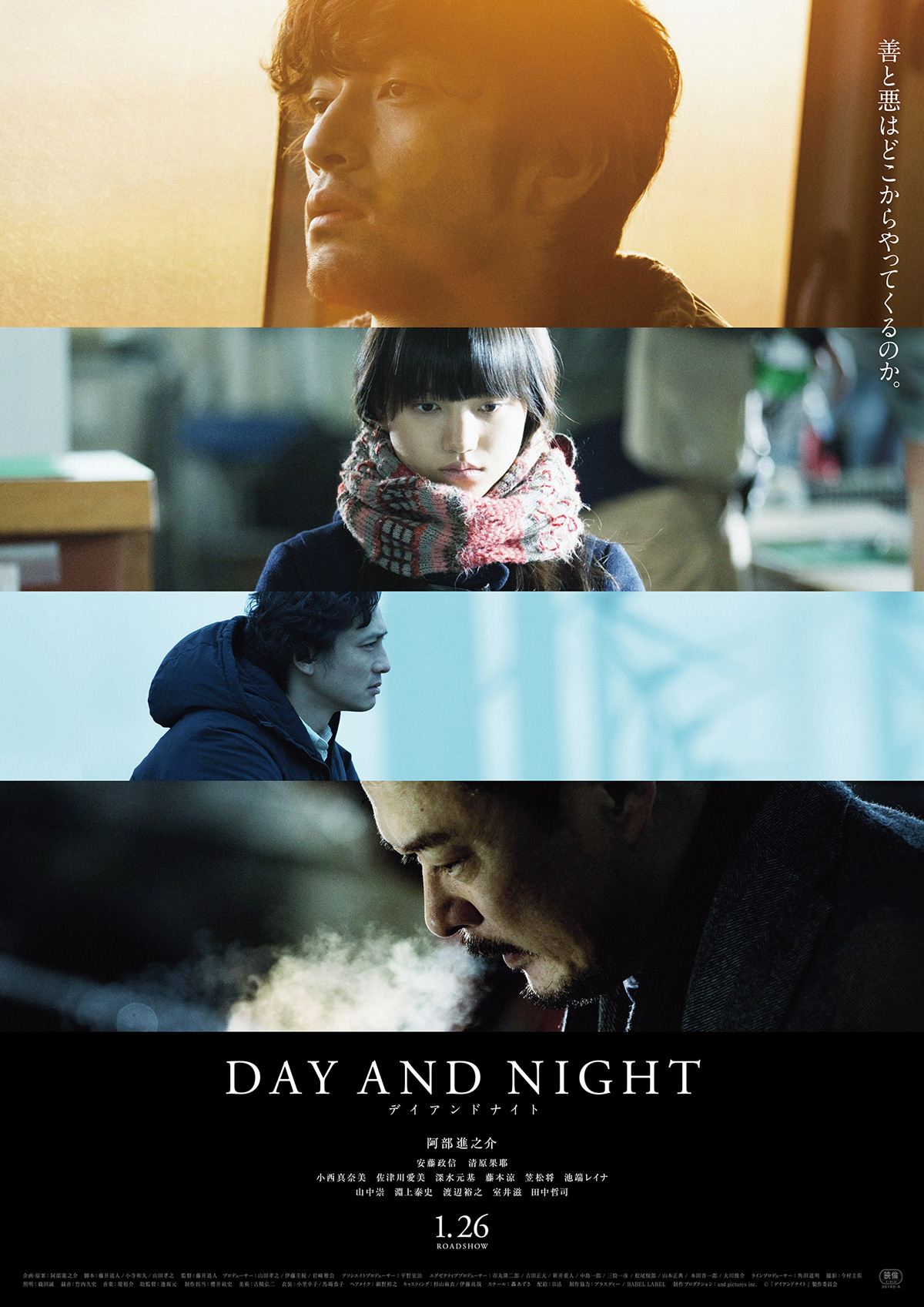
day and night poster 1Can two wrongs ever really make a right? Michihito Fujii’s Day and Night (デイアンドナイト) wants to ask if the difference between good and evil is really as stark as that between dawn and dusk, or if life is really more like twilight in which morality is a relative concept and acts cannot by judged individually but only as a part of the whole. What the hero discovers, however, is that the world is an inherently unfair place and it may not be possible to “win” against the forces of self-interest solely through being pure of heart.

The drama begins with a stunned Koji (Shinnosuke Abe) returning to his small-town home to graffiti scrawled across his fences and his father lying in repose inside after having apparently taken his own life. No one will quite explain to Koji what exactly has happened, but it seems there has been some unpleasantness surrounding his father’s auto business. Though most of the other townspeople including his old friends are civil, they are also frosty and obviously unwilling to address the subject of Mr. Akashi save to press Koji for money they might still be owed as employees.

Meanwhile, poking around the garage in search of answers, he runs into the mysterious figure of Kitamura (Masanobu Ando) who claims to have known his father well though Koji’s mother claims never to have heard of him. Seeing as Kitamura is the only person willing to speak to him, Koji ends up taking a job at the orphanage where he works which turns out to be a little different than he thought seeing as Kitamura is actually the head of a local crime ring which exists with the sole purpose of keeping the orphanage running.

Though Koij, like his father, is an upstanding, law-abiding young man, he is quickly pulled into Kitamura’s world of moral justifications when presented with his personal philosophy in which the greater good remains paramount. Kitamura steals cars by night, stripping the unsellable ones for parts, which is where Mr. Akashi came in having succumbed to a life of “crime” in order to support himself while his business was suffering. He also does some possibly less justifiable work in the red light district while making a point of beating up drug dealers because 80% of the kids in his care have a parent in jail for crimes related to substance abuse. In Kitamura’s view at least, these are all “justifiable”, morally defensible “crimes” given that they are necessary to ensure the protection of the orphans. Though the money is good and Koji does need it, they are not in this for personal gain but to protect something they feel is important.

As Kitamura puts it, Mr. Akashi put his faith in laws that are meant to protect people but in the end it killed him. Having discovered a serious flaw in the auto parts he received from a local company he did the “right thing” and blew the whistle but Nakamichi Autos is the major player in the local economy and many people did not take kindly to having their reputation called into question. Nakamichi rallied its supporters and had Akashi hounded into submission. As one of the former employees tells Koji, the truth “hardly matters anymore”. Nakamichi doesn’t care there is a minor flaw in their products because they feel the chance of a fatal accident is slim enough not to need to worry about and happy to let the risk continue as long as they maximise their profits.

Miyake (Tetsushi Tanaka), Nakamichi’s CEO, also has his justifications, insisting that there’s no such thing as right and wrong only the cold logic of numbers and that the death of one man will not change anything. Increasingly pulled into Kitamura’s world of crime, Koji opts for underhanded methods to expose the truth about Nakamichi and clear his father’s name but finds in the end that no one is interested in facts. Listening in to some of his father’s old employees enjoying their belated severance pay he is dismayed to hear them too justifying their actions as they each insist that they did what they thought was “best” for everyone, for a peaceful life, for their families.

In truth, Koji claims he hated his father. That he resented him for always working all the time. Now however he begins to see that Akashi was only trying to protect his family by providing for it. His father was a “good” man, and he did the “right” thing, but he also became involved with Kitamura’s morally questionable crime syndicate. Kitamura wants to protect the orphans and takes care of them well, but can he really justify his actions solely on the grounds that there is no honest way to care for children who are often victims of an unfair society the pressures of which have pushed their parents from the “moral” path? What Koji’s left with, broadly, is that “good” people do “bad” things for “good” reasons, but bad people do bad things because they’re selfish and so they hardly care about the consequences of their actions. He starts to believe that the only way to resist is to fight fire with fire, but discovers that the little guy is always at a disadvantage when there is too much vested interest in not “making trouble”. It turns out everyone is OK with the status quo, so long as it’s not their car that might suddenly lose its wheels. As Miyake says, “that’s just how society works”.

A bleak meditation on the wider nature of justice and moral greyness of the world, Fujii’s noirish drama suggests good and bad are less like day and night than a shady evening in which the only shining light is the greater good. The world, however, continues on in self interest and the “good” will always lose to the “bad” as long it compromises itself trying to play by the other guy’s rules. Koji finds himself torn between a desire to avenge his father and a new sense of fatherhood fostered by bonding with a teenage girl at the orphanage as he contemplates the existence of a line between good and evil and his own place along it, but his old fashioned “nobility” finds no answer in the infinitely corrupt moral dubiousness of the modern society.


Day and Night was screened as part of the 2019 Fantasia International Film Festival.

Original trailer (no subtitles)

Dawn Wind in My Poncho (ポンチョに夜明けの風はらませて, Satoru Hirohara, 2017)

Dawn Wind in My Poncho posterThe end of high school might signal impending doom for some, but it also provides a valuable opportunity for one last hurrah before surrendering to the demands of the adult world. That’s more or less how the heroes of Satoru Hirohara’s Dawn Wind in My Poncho (ポンチョに夜明けの風はらませて, Poncho ni Yoake no Kaze Haramasete) feel about it as they set off on an impromptu road trip to track down a Peruvian folksinger making his first visit to Japan in 18 years. Youthful irresponsibility and an openness to all things send our boys on a strange odyssey of self discovery in flight of a future that is almost certain to be disappointing.

Right before graduation, Janbo (Yuma Yamoto) and Matahachi (Taiga) are preparing to celebrate their friend Jin (Aoi Nakamura) getting into Uni. Only, Jin didn’t make the grade which has rather put a damper on the occasion. To make matters worse, new driver Matahatchi seems to have scratched the car belonging to Janbo’s dad which they weren’t supposed to be driving in the first place. Trying to fix the problem, they run into dejected idol Ai (Aimi Satsukawa) who dreams of chart success but is being pressured into a gravure career by her agency. Ai manages to upset some delinquents in a convenience store car park, leaving our guys wondering if they should step in but coming to the conclusion it’s not worth it unless the girl is pretty. Nevertheless, they end up driving off with Ai in the back of the car anyway with the delinquents in hot pursuit.

That’s only the beginning of the boys’ adventure, but they can’t go home yet anyway because by the end of the chase they’ve completely destroyed the car and will be extremely dead when Janbo’s dad finds out. Lovingly showing off a picture of his beloved new (secondhand) car, Janbo’s dad tells a young man coming into the bar owned by Matahachi’s single mother that if he works really hard for a very long time, he too could have a car like this. It’s a fairly depressing prospect, but it does seem like there might not be much more out there for these small town guys as they prepare to leave high school behind. Jin was the guys’ bright hope with his university dreams. Janbo is going to work for his dad and Matahachi is looking for a job. All there is to look forward to now is constraint. A boring low pay job with no prospects, followed by marriage, fatherhood, and death.

You can’t blame them for cutting loose, though in essence our guys are mild-mannered sorts well and truly outrun by Ai’s anarchic flight from her own disappointment with her faltering career. Of course, the boys are all interested in her nevertheless only Janbo is facing an embarrassing problem of his own which has him wondering if he’ll ever be able to have a “normal” sex life, marriage, or family. The problem eventually takes him to the “Banana Clinic” which is actually a front very specific sex services but does introduce him to a nice young lady (Junko Abe) who might be able to cure his sense of insecurity if in a roundabout way.

Meanwhile, the guys have blown off the fourth member of their “band” (Shhota Sometani) who is still hanging around waiting for them to turn up for practice ahead of their graduation show. A poignant radio message attached to a song request in which he reveals how lonely he was until some guys invited him to join their band goes unheard by the gang leaving him to gatecrash graduation all alone with an impromptu performance in which he sings about how school was pointless and no one cares about the future, starting a mini riot among the other kids in the process. The trio are still busy with a series of zany adventures as Matahachi tries to convince the guys to come with him on strange quest to hear the elusive folk singer, only latterly explaining to them why exactly this means so much to him. A typically teenage road trip ends up going nowhere in particular, leaving the guys in limbo as they run from their depressing futures towards the last traces freedom far in the distance. Silly, if endearing, Dawn Wind in My Poncho is a strangely sympathetic tale of youthful rebellion towards impending adulthood which ultimately places its faith in the strength of male friendship as the last refuge from a relentlessly conformist society.


Dawn Wind in My Poncho was screened as part of the 2019 Nippon Connection Film Festival.

Original trailer (no subtitles)

Yurigokoro (ユリゴコロ, Naoto Kumazawa, 2017)

Yurigokoro posterThose who cannot remember the past are doomed to repeat it, as they say, but is it better to acknowledge the dark parts of yourself as part of an inherited legacy or ignore a nagging sense of incompleteness in favour of a harmonious existence? The hero at the centre of Naoto Kumazawa’s Yurigokoro (ユリゴコロ), adapted from the mystery novel by Mahokaru Numata, is about to discover a side of himself he might not like just as storm clouds seem to gather over his previously idyllic childhood home.

For Ryosuke (Tori Matsuzaka), everything had been looking up. He’d set up his own business – a charming cafe and summer lodge, with the woman he intended to marry, Chie (Nana Seino). However, no sooner has he introduced his fiancée to his father than she disappears, gone without trace. Meanwhile, his father informs him that he has stage four pancreatic cancer. Suddenly everything is falling apart and the braver the face he tries to put on it, the worse he seems to feel. Perhaps that’s why he can’t resist opening up a mysterious old box hidden in a cupboard in his father’s study that almost calls out to him to be opened. Inside the box is an old exercise book with the title “Yurigokoro” pencilled on the front. Ryosuke only reads the first few pages but they’re enough to disturb and fascinate him. The book, written in the first person, recounts the dark history of a murderess (Yuriko Yoshitaka) from silent, disconnected child to vengeful spirit.

“Yurigokoro” as the diary’s protagonist later explains is a made-up word, one she childishly misheard from the mouth of a well meaning doctor (who probably meant “yoridokoro” which means something like grounding). It could, however, almost translate as a shaking heart – something the doctor seems to imply the child does not quite have which is why she feels disconnected from the world around her and unable, or unwilling, to speak. The girl in the book travels through life looking for something that makes her heart beat and originally finds it only in the strange pleasure of watching something die, at first by accident and later by design. She drifts into an intense relationship with a damaged young woman (Aimi Satsukawa) who, like her in a fashion at least, resorts to self harm in order to feel alive. She thinks she finds her home, but it slips away from her or perhaps changes in form as it succumbs to inevitable disappointment.

Yet, in the grownup crimes at least, there is a kind of love in amongst grudging resentment. Ryosuke reads the diary and declares he does not relate to it at all but something about it gets under his skin and he can’t let it rest. He hears from an older woman (Tae Kimura) that Chie may have a past he knew nothing about, largely because he failed to ask, and that she may be in danger. He begins to feel rage surfacing within him like the dark violence of the diary’s protagonist and it both frightens and enthrals him.

The owner of the diary likens her experience of existing in the world to being prickled by hundreds of tiny thorns. She seeks relief through bloodletting and violence, as if she could shake herself free of the tiny stings that remind her of nothing other than her sense of emptiness. Later she discovers that love too can shake the heart, but the old darkness remains and even the most positive of emotions may require an act of violence in order to sustain it. The diarist remains ambivalent, knowing that there is no salvation for her except death and that any attempt to stave off the darkness with light will eventually fail, but determined to cling on to her brief moment of wholeness however inauthentic for as long as it lasts.

Ryosuke, meanwhile, who’d apparently never sensed in himself the kind of gaping emptiness that the diary’s owner describes, is forced to wonder if the diary is legacy and destiny, if he too is destined to commit random acts of inescapable violence as someone unfit for living as a human being among other human beings. Love might not have “cured” the darkness inside the diarist, but it did change it in quite a fundamental way, a way that eventually provided him with the means of his “salvation” perhaps at the cost of her own if only he is willing to accept it. Ryosuke might wish he’d never opened that particular box, but in doing so he discovers not only the path towards a fully integrated self but that his own darkness can be tempered precisely because of the sacrifice that was made on his behalf.


Yurigokoro was screened as part of the 2019 Japan Foundation Touring Film Programme.

Original trailer (no subtitles)

It’s Me, It’s Me (俺俺, Satoshi Miki, 2013)

It's Me It's Me posterSome say it’s good to be your own best friend, but then again perhaps too much of your own company isn’t so good for you after all. The hero of Satoshi Miki’s adaptation of the Tomoyuki Hoshino novel, It’s Me, It’s Me (俺俺, Ore Ore), is about to put this hypothesis to the test as his identity literally splinters, overwriting the source code of strangers and replacing it with its own. How can you save your identity when you aren’t sure who you are? Perhaps getting to know yourself isn’t as straightforward a process as most would believe.

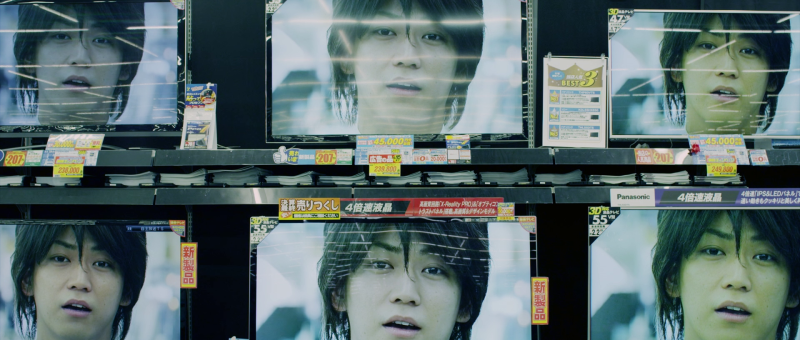
Hitoshi (Kazuya Kamenashi), an aimless 20-something, had dreams of becoming a photographer but they’ve fallen by the wayside while he supports himself with a dead end job on the camera counter in a local electronics superstore. Virtually invisible to all around him and so anonymous the woman in the fast food restaurant almost wouldn’t give him the fries he’d ordered, Hitoshi is irritated when two salaryman-types gossiping about how one of them plans to quit the company to pursue his dreams rudely invade his space. Perhaps for this reason, he finds himself taking off with the irritating stranger’s phone after he carelessly allows it to fall onto Hitoshi’s tray.

Emboldened, Hitoshi decides to use the phone to commit an “Ore Ore” scam – a well known telephone fraud in which a stranger rings an elderly person and shouts “it’s me, it’s me!” in a panic so they won’t twig it’s not really their grandson who is ringing them and claiming to be in some kind of terrible trouble which can only be relieved with cold hard cash. Not the sharpest knife in the drawer, Hitoshi gets the money wired to his account and then tries to dispose of the phone but it’s already too late. When he gets home, a strange woman (Keiko Takahashi) is in his apartment and she keeps calling him “Daiki”. What’s more, when he tries to go and see his mum (Midoriko Kimura), another guy is there who looks just like him and his mum won’t let him in.

Hitoshi eventually becomes friends with “Daiki” who introduces him to another “Me”, Nao – a cheerful student slacker. Each in their own way slightly disconnected, the trio build up an easy friendship – they do after all have quite a lot in common, and begin jokingly referring to their shared apartment as “Me Island”. Hitoshi, remarking that he’s never felt so carefree among others, begins to see the upsides of his strange new situation which obviously include the ability to be in two places at once, but too much of himself eventually begins to grate when Nao begins tracking down and bringing home all the other Mes he can find with the intention of launching a Me Empire.

A member of a lost generation, Hitoshi is a perfect example of modern urban malaise. Though he once had dreams, they’ve been steadily killed off by an oppressive society leaving him alone and adrift, unable to connect with others as the light slowly dies in his eyes. Perhaps, however, there is the odd flicker of resistance in his intense resentment towards those who have defiantly not given up – the chatty salaryman talking about his individualist dreams and later his work colleague who has been secretly taking accountancy classes in an effort to escape casual employment hell for a steady, if dull, regular job.

Hitoshi has always regarded relationships as “troublesome” but begins to feel differently through bonding with himself. As Daiki puts it, accepting others means that you’ll be accepted – something Hitoshi unconsciously longs for but is too insecure to believe is possible. His actualisation receives another stimulus when he meets the beautiful and mysterious Sayaka (Yuki Uchida) who again encourages him to accept the one who accepts you and is the only other person who seems to be able to see the “real” him as distinct from all the other Mes. Yet Hitoshi struggles – he can accept parts of but not all of himself, eventually leading to a disastrous turn of events in which the parts of himself he does not like begin being “deleted” as one Me decides to make war on all the others.

Only by ridding his psyche of imperfections can Hitoshi reformat his personality and once again resume full autonomy as the one and only Me. Yet can we be so sure final Hitoshi is the “true” Hitoshi? Who can say – only Hitoshi himself can know the answer to that (or not), the rest of us will just have to accept him as he is in the hope that he will also be able to accept us so that we can in turn accept ourselves.


Original trailer (no subtitles)

Hime-anole (ヒメアノ~ル, Keisuke Yoshida, 2016)

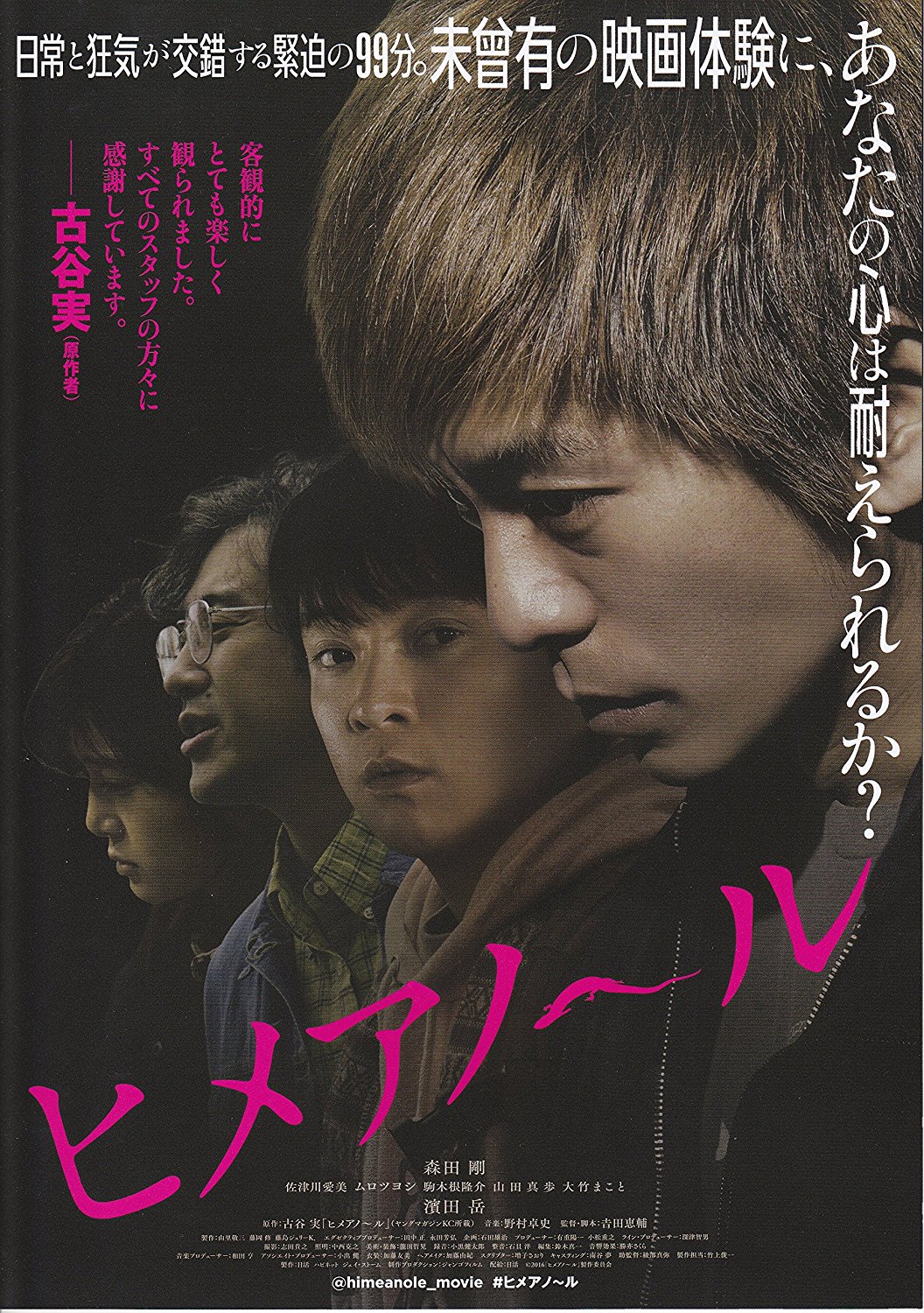
hime-anole posterSome people are odd, and that’s OK. Then there are the people who are odd, but definitely not OK. Hime-anole (ヒメアノ~ル) introduces us to both of these kinds of outsiders, attempting to draw a line between the merely awkward and the actively dangerous but ultimately finding that there is no line and perhaps simple acts of kindness offered at the right time could have prevented a mind snapping or a person descending into spiralling homicidal delusion. To go any further is to say too much, but Hime-anole revels in its reversals, switching rapidly between quirky romantic comedy, gritty Japanese indie, and finally grim social horror. Yet it plants its seeds early with two young men struggling to express their true emotions, trapped and lonely, leading unfulfilling lives. Their dissatisfaction is ordinary, but these same repressed emotions taken to an extreme can produce much more harmful results than two guys eating stale donuts everyday just to ask a pretty girl for the bill.

Okada (Gaku Hamada) is a young man lost. He has a dead end construction job he doesn’t like and isn’t particularly good at, but treading cement all over the finished floors at least helps him bond with his mentor, Ando (Tsuyoshi Muro), who seems to view him as a friend even if constantly referring to him as “Okamura”. Okada takes the opportunity to explain his malaise to Ando – that he feels his life slipping away from him in its emptiness, going through the motions with no real hobbies or girlfriend to give his existence meaning. Ando does not really understand this, he says dissatisfaction is natural and the driving force of all life but, on the other hand, he is not particularly dissatisfied because he lives for love!

Ando has a crush on a girl at the local cafe, Yuka (Aimi Satsukawa), who actually hasn’t noticed him because she’s pre-occupied with the blond guy who got there before Ando and sits outside everyday just staring at her. Luckily or unluckily, the guy in question, Morita (Go Morita), is an old high school acquaintance of Okada’s and so Ando asks him to find out what’s going on with this scary looking guy and his angelic lady love.

So far, so Japanese indie rom-com, but when the title card flashes up about a third of the way in, we’re in very different territory. Suddenly the colour drains from the screen and Yoshida changes his aesthetic and shooting style almost entirely. Gone is the comforting, slightly washed out colour scheme and the static, middle-distance camera of the opening. Now we are the voyeur, held helpless behind Yoshida’s erratic shaky cam, hiding behind the bins as Morita goes about his bloody business. Morita’s world is dark yet realistic, he’s shot and positioned with the arch naturalism familiar to the Japanese indie and the violence he inflicts is not movie violence, it is shocking, sickening, and visceral.

Hime-anole does not shy away from the consequences of its actions. This is, in a way, its point. At one time or another everyone concludes the increasingly surreal events they become engulfed in must be all their fault because they all have at some point acted in a way they do not quite approve of. Guilt is another of the emotions that is hard to express, especially when it’s mixed with humiliation or fear, but left unaddressed it is these corrosive agonies which develop into deep psychoses. Morita, a violent sociopath, was once (or so it would seem) an ordinary young boy who liked video games and had few friends. Perhaps if he hadn’t been the victim of humiliating, sadistic treatment, or if someone had found the courage to stand up for him, none of this might be happening.

Then again, the world is a strange place filled with people who have trouble deciding where the lines are when it comes to appropriate behaviour. Poor Yuka seems to have become something of a nutter magnet, stalked by two guys at the same time and chatted up in the street by persistent suitors who only leave her alone when they realise she’s waiting for another man. Okada is the only man who’s treated her like a regular human being for a very long time so it’s no surprise that she begins to prefer him to his awkward friend. Ando is, it has to be said, odd. Convinced Yuka is the one for him yet completely uninterested in her feelings, he vows to persevere. Yet for all his talk of chainsaws, Ando is basically harmless (to others at least) and just another lonely guy who doesn’t know how to express himself in way in which he will be understood. Morita, by contrast, is instantly creepy and has no interest in connection, he only wants to take and possess in a kind of ongoing vengeance for truly horrific events in his childhood following which something inside him became very broken.

That Hime-anole ends with a Brazil-style fantasy only adds to its strangely melancholy air as it insists on sympathy for the devil even whilst showing each of his sadistic crimes for the ugly, bloody messes they really are. Maybe the reason everybody feels they’re to blame is that in some way they are yet everyone has done things they regret or aren’t proud of, wishing they’d done things differently or managed to find the courage to do what they thought was right rather than choosing to protect themselves or keep their head down when they could have saved someone else pain. Betrayals can be small things, but they fester – like those unspoken emotions which were making our guys so unhappy in the first place. There are no innocents in Hime-anole save perhaps for the ones pushed further than they could endure, but there are those finally facing up to their own flaws and attempting to do things differently now they know better. If that’s not progress, what is?


Original trailer (no subtitles)