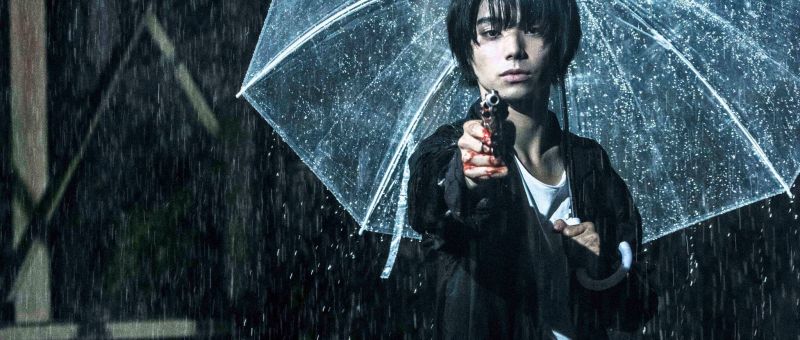
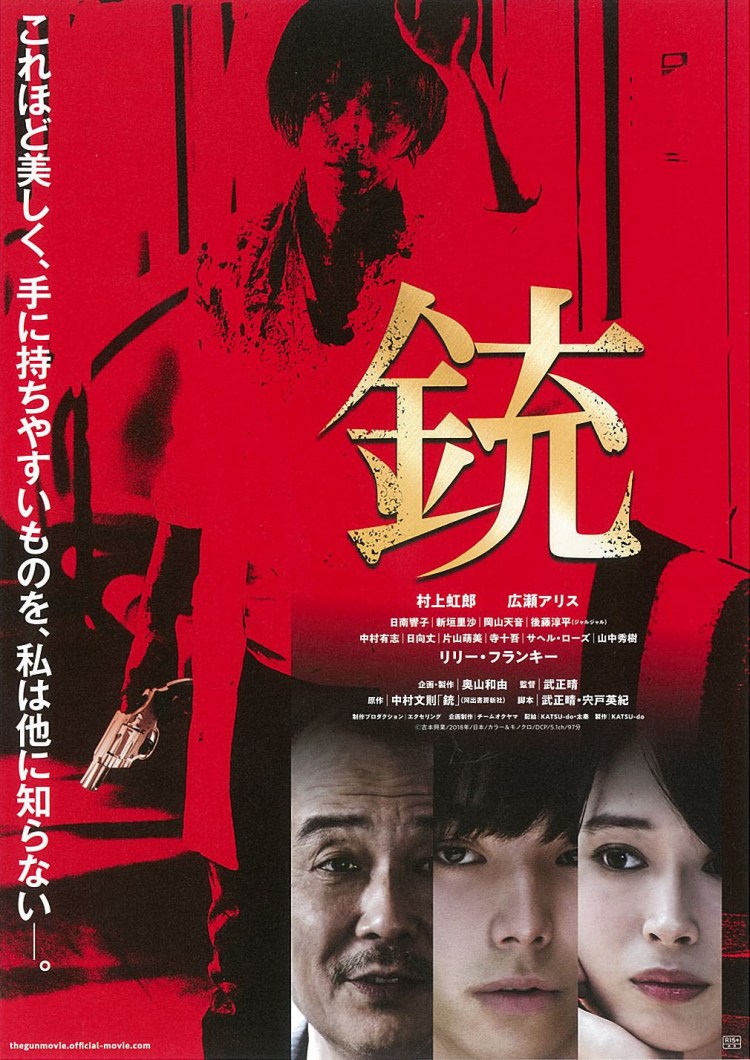
 Much as Haruhiko Oyabu had in the post-war era, Fuminori Nakamura is fast becoming the go to voice for nihilistic noir in Japanese cinema. Several of his famously dark novels have already been adapted for the screen, most recently the grisly mystery Last Winter We Parted, but it’s only now that his lowkey debut The Gun (銃, Ju) is getting a suitably detached adaptation from 100 Yen Love’s Masaharu Take.
Like many of Nakamura’s “heroes”, Toru Nishikawa (Nijiro Murakami) is a disaffected youngster who thinks “it’s completely worthless to live”. His life changes one day when he comes across the body of a middle-aged man with a pistol lying next to it. For reasons he doesn’t quite understand, Toru picks the gun up and takes it home with him. Gradually its presence begins to obsess him as if he were literally being seduced by it. Believing he can communicate with the gun through touch, he lovingly caresses it, buys it trinkets, and lingers over thoughts of all they could do together.
Even when he takes a casual hookup (Kyoko Hinami) to bed, all Toru can think about is the gun. In the morning he tries to make her hate him by coming on strong, but it backfires because it appears to be what she likes, at least she suggests they hook up again, possibly on a regular but casual basis because she already has a boyfriend. Meanwhile, another prospect walks onto the scene – Yuko (Alice Hirose), a young woman Toru may or may not have forgotten meeting in the past. With Yuko Toru decides to do everything “properly” in a quest to win her heart rather than just her bodily submission.
Detached and very possibly a sociopath, Toru does indeed begin to show something of a more sensitive side in dealing with the similarly depressed Yuko. His gentlemanly act may be just that (and as one might expect, it largely works) but does at least display an acute emotional intelligence even if it’s being wilfully misused. Similarly, his first reaction to hearing alarming sounds suggesting the woman next door is mistreating her child is to turn his stereo up and ignore them, but he later finds himself trying to talk to the little boy in the street and eventually even calling the police only to have his mistrust of authority confirmed when they admit they’re aware of the situation and will send someone but probably not until the next day.
The woman next door, a bar hostess who rolls in late and kicks her kid out of bed to sleep on the porch so she can entertain her gentlemen callers, drags up unwelcome memories of the woman who abandoned him to an orphanage. To be fair, Toru does not seem any more misogynistic than his sleazy friends but has a fairly utilitarian idea of “romance”, viewing it as a game of conquest either fast and loose like with the casual hookup or slow and deep as in his careful pursuit of Yuko. Gradually his separate pursuits of the two women become confused, leading Yuko to confront him over whatever it is that’s so obviously “wrong” with him. Upset as she is, Yuko sees the darkness in Toru but must also see the light, affirming that she has her darkness too but is willing to help him with his if only he gives her a little time and waits for her forgiveness.
Toru, meanwhile, is still fixated on his beloved gun which he has begun to carry about with him in a little bag for added frisson. Living largely without feeling, the thrill of carrying such an illicit object becomes a peculiar kind of drug, as does the intoxicating thought of the act of actually firing it and finally of taking a life. A wily police detective (Lily Franky) cuts straight through Toru’s smug facade to the gaping void beneath, trying to prevent him from jumping straight into the abyss but confident he will fail. As the detective predicted, Toru’s sense of reason continues to fragment leaving him unsure of what is real and what isn’t while he obsesses over the gun and what he might do with it but in a purely intellectual sense without considering the real world consequences of his actions. An exercise in style, The Gun is a noirish tale of existential ennui and dark obsession filled with nihilistic dread as its soulless hero commits to living his “worthless” life only to wilfully rob himself of the possibility of salvation.
The Gun screens as part of the 2019 New York Asian Film Festival on June 30.
Original trailer (no subtitles)



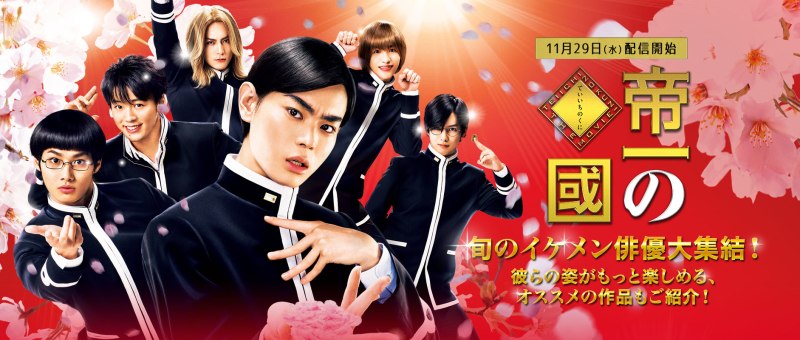
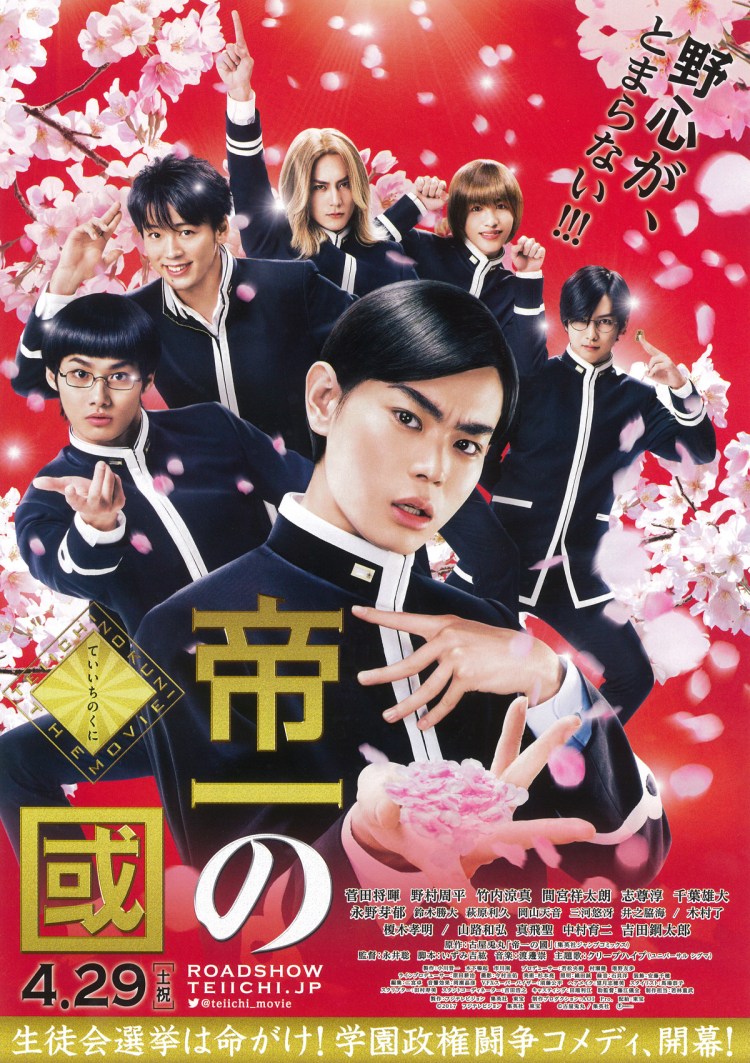 Back in the real world, politics has never felt so unfunny. This latest slice of unlikely political satire from Japan may feel a little close to home, at least to those of us who hail from nations where it seems perfectly normal that the older men who make up the political elite all attended the same school and fully expected to grow up and walk directly into high office, never needing to worry about anything so ordinary as a career. Taking this idea to its extreme, elite teenager Teiichi is not only determined to take over Japan by becoming its Prime Minister, but to start his very own nation. In Teiichi: Battle of Supreme High (帝一の國, Teiichi no Kuni) teenage flirtations with fascism, homoeroticism, factionalism, extremism – in fact just about every “ism” you can think of (aside from altruism) vie for the top spot among the boys at Supreme High but who, or what, will finally win out in Teiichi’s fledging, mental little nation?
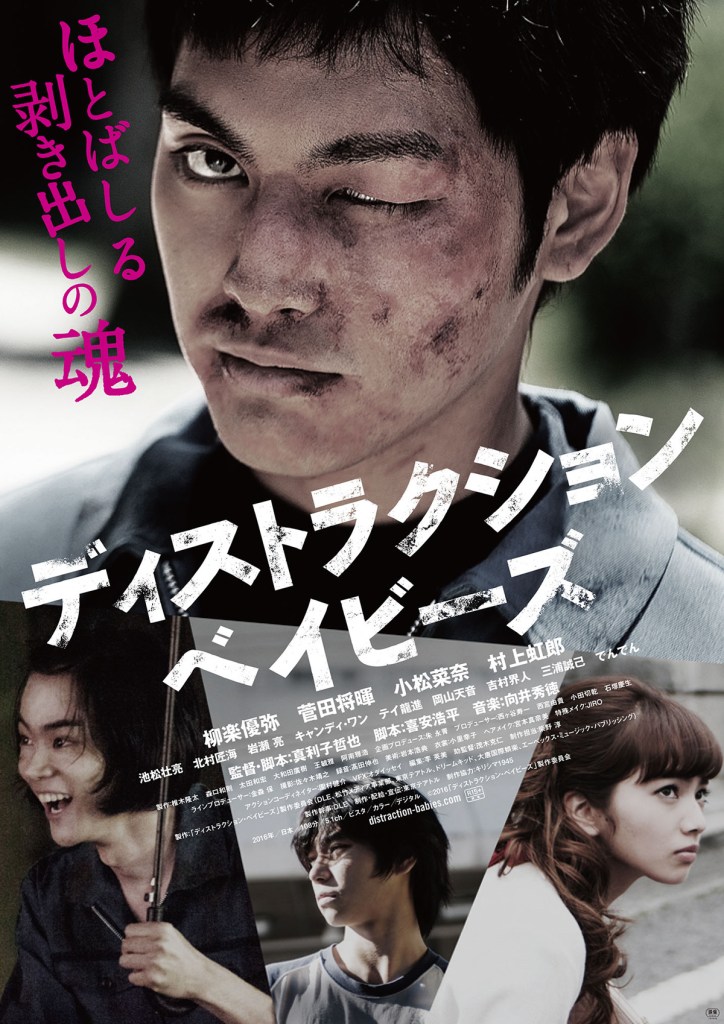 Post-golden age, Japanese cinema has arguably had a preoccupation with the angry young man. From the ever present tension of the seishun eiga to the frustrations of ‘70s art films and the punk nihilism of the 1980s which only seemed to deepen after the bubble burst, the young men of Japanese cinema have most often gone to war with themselves in violent intensity, prepared to burn the world which they feel holds no place for them. Tetsuya Mariko’s Destruction Babies (ディストラクション・ベイビーズ) is a fine addition to this tradition but also an urgent one. Stepping somehow beyond nihilism, Mariko’s vision of his country’s future is a bleak one in which young, fatherless men inherit the traditions of their ancestors all the while desperately trying to destroy them. Devoid of hope, of purpose, and of human connection the youth of the day get their kicks vicariously, so busy sharing their experiences online that reality has become an obsolete concept and the physical sensation of violence the only remaining truth.
 There are two very distinct sides to the career of Tatsushi Omori. Brother of the well known actor, Nao, Omori may be best known to certain audiences for his hard hitting, often gloomy and pessimistic dramas of human misery such as festival favourite Ravine of Goodbye or the little seen
  How many times were you told as a child, someday you will understand this? There are so many things you don’t see until it’s too late, and children being as they are, are almost programmed to see things from a self directed tunnel vision. Such is the case for Mugiko – a young woman with dreams of becoming an anime voice actress who is suddenly reunited with her estranged mother of whom she has almost no memory.
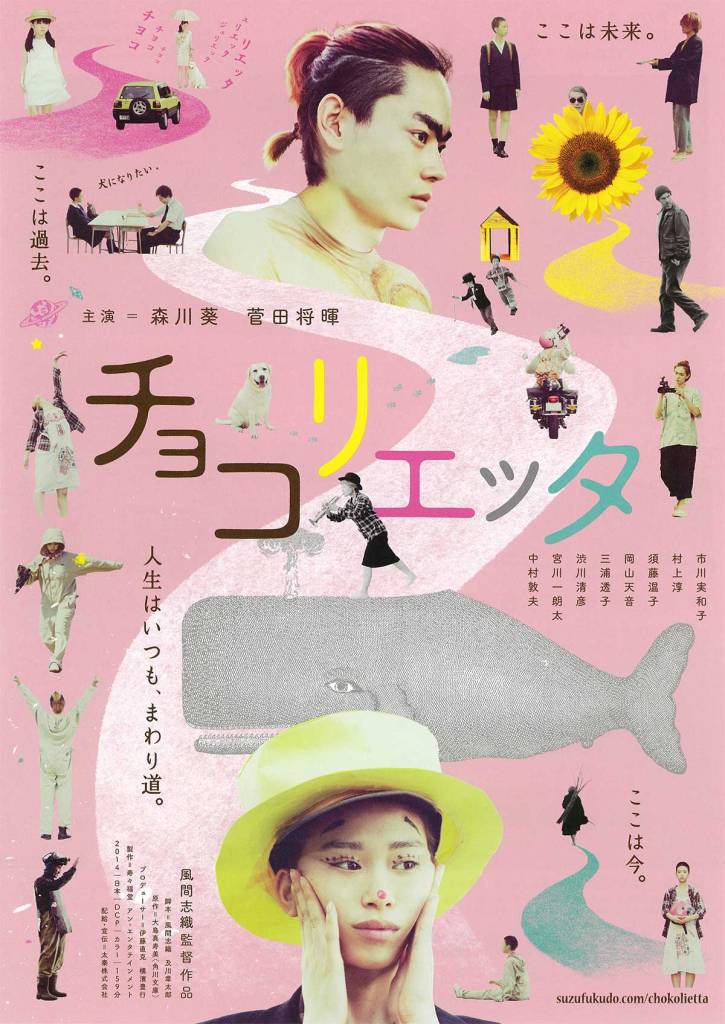 When examining the influences of classic European cinema on Japanese filmmaking, you rarely end up with Fellini. Nevertheless, Fellini looms large over the indie comedy Choklietta (チョコリエッタ) and the director, Shiori Kazama, even leaves a post-credits dedication to Italy’s master of the surreal as a thank you for inspiring the fifteen year old her to make movies. Full of knowing nods to the world of classic cinema, Chokolietta is a charming, if over long, coming of age drama which becomes a meditation on both personal and national notions of loss.
 Windows on Worlds