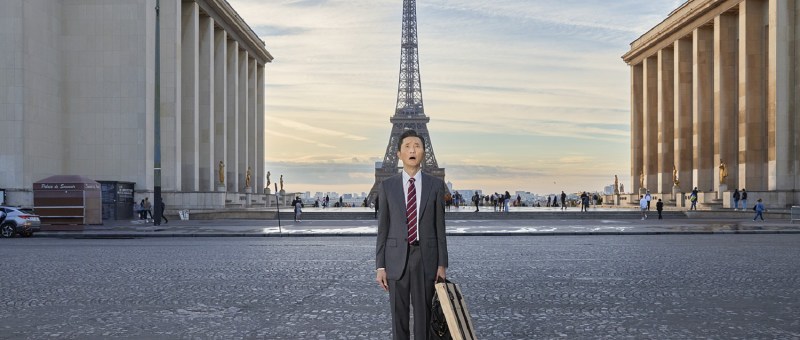
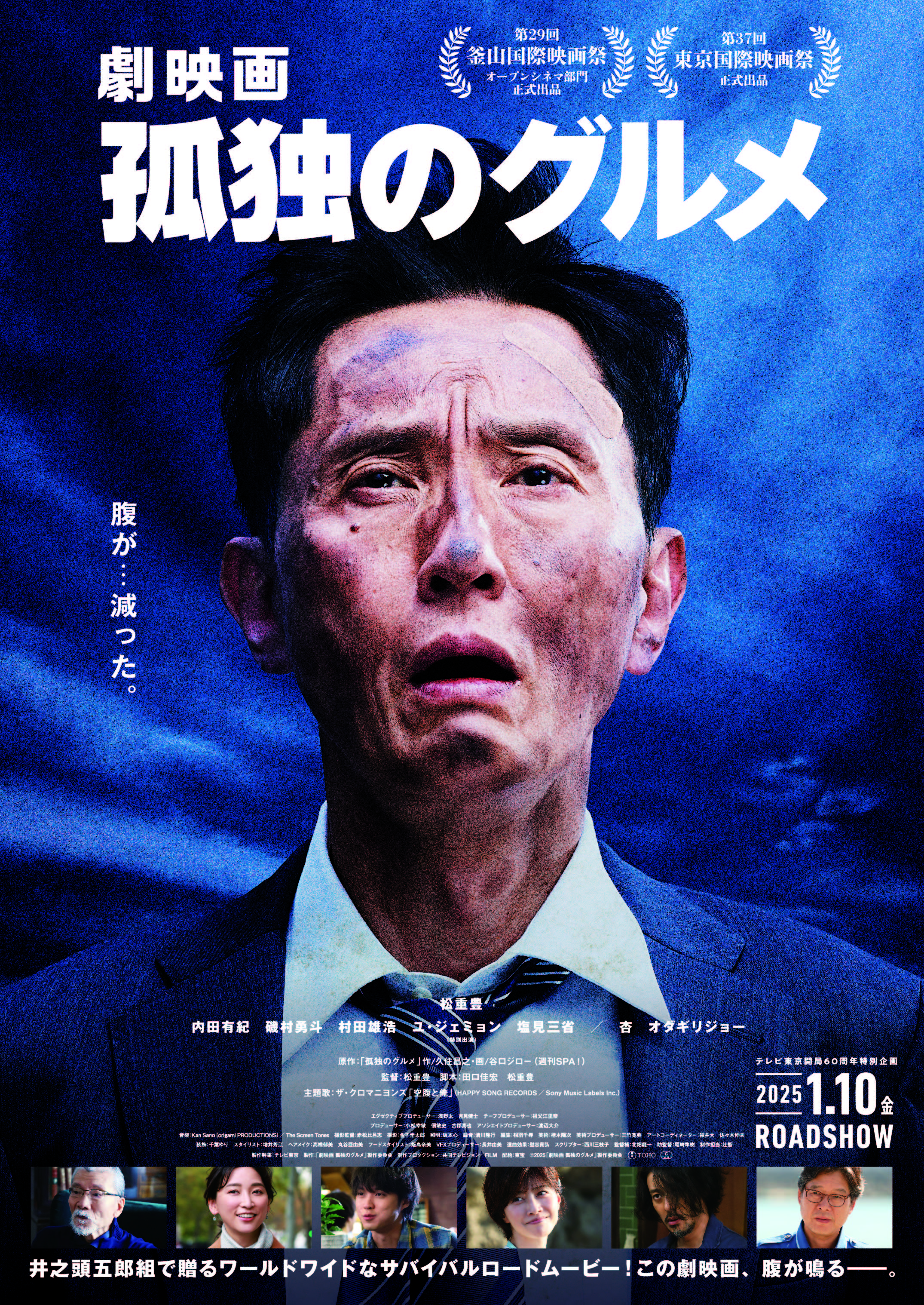
The Solitary Gourmet (劇映画 孤独のグルメ, Yutaka Matsushige, 2024)

Isn’t it funny how a good bowl of soup can make everything better? Based on the manga written by Masayuki Qusumi and illustrated by Jiro Taniguchi, the feature-length edition of the long-running series has a distinctly soupy feel as salaryman Goro (Yutaka Matsushige) finds himself travelling Japan and abroad in search for the ingredients of a soup an old man ate as a child. Airing since 2012, The Solitary Gourmet TV series was a trendsetter for Japanese comfort foodie cinema and has given rise to several other similarly themed shows in which the protagonist visits a real life establishment and enjoys whatever they have to offer from food to sake, sweets, and even traditional bathhouses.

In fact, there’s even a meta joke towards the end of Solitary Gourmet (劇映画 孤独のグルメ, Geki Eiga: Kodoku no Gourmet) in which one of the restaurants Goro goes to is featured in a show about a foodie salaryman while he plays a fellow customer. The newly international setting reflects the increased budget of a theatrical feature and also helps to expand the series’ episodic format in leading Goro on a crazy chase that begins with the daughter of an old friend in Paris (Anne Watanabe) who enlists him to hunt down the ingredients for her grandfather’s cherished soup. Of course, this provides an excuse for Goro to go to the remote Goto Islands and learn about the local cuisine while running around collecting random samples like he’s on a side quest in an RPG. 

Then again, it also offers him the chance for some surreal adventures, including getting cast away on an uninhabited island before being rescued by the Korean-speaking residents of a food research institute. It’s there that he meets Shiho (Yuki Uchida), a Japanese woman living on “an island for women who are fed up with men,” and a former restaurant worker retreating from a marriage fracturing under the pressures of trying to run a restaurant in the post-COVID society. When Goro later catches up with her husband (Joe Odagiri), he too is a depressed, broken figure who now only serves fried rice in his incredibly unwelcoming restaurant. But being talked into helping Goro recreate the old man’s beloved soup seems to reactivate his creative juices and give him the desire to get back on his feet. 

Star Yutaka Matsushige directing for the first time throws in a brief homage to Tampopo but what the film is most interested in is the universality and healing power of a tasty broth from the onion soup Goro eats in Paris to the Haejangguk, or hangover soup, that he orders in Korea while being watched over by an exasperated immigration officer (Yoo Jae-myung). That Goro’s quest takes him so far hints at the shared history of the two nations and the various culinary influences and universalities running between them with soup a means of healing and friendship. Exchanging a few words of Korean, Goro tries to ask what the name of the fish in his soup is, only to come to an understanding when the immigration officer writes it down for him in Chinese characters. 

All this food really does bring people together, as Goro gets pretty much everyone he meets roped into his quest to recreate the old man’s childhood dish as his deathbed request. Matsushige recreates the zany humour of the TV series including his familiar “I’m hungry” catchphrase, followed by the camera taking three steps back and picturing Goro in front of some notable landmark. He also doesn’t seem to be getting much work done while running around trying to figure out this soup even he’s never actually tasted it and is reliant on the old man’s fragile recollections. Goro had been in Paris to deliver a painting of somewhere he once lived and the old man remarked that photographs are records of time but painting turns them into memories. Food, or more specifically soup, might do something similar, at least according to the old man who is desperately trying to reclaim something of the home comforts of his youth. Of course, the old man is the only one who knows what the soup tastes like, so perhaps Goro is on a fool’s errand, but as he later says, soup does seem to be the water of life and thanks to its healing qualities a universal symbol of peace and harmony not to mention friendship and kindness.


The Solitary Gourmet screens 29th May as part of this year’s Nippon Connection.

Trailer (English subtitles)

Images: ©2025 “Solitary Gourmet” Film Partners

Stay Mum (かくしごと, Kosai Sekine, 2024)

Late into Kosai Sekine’s maternal mystery Stay Mum (かくしごと. Kakushigoto), a doctor describes the behaviour of an old man living with dementia as a “convenient delusion” and later remarks forgetting is a kind of salvation that liberates him from what was apparently a very stressful life of repression and properness. Yet to the heroine there’s something very unfair about someone who has hurt her so deeply being allowed to just forget all about it while she has to go on carrying the legacy of his unkindness along with her own grief and pain.

Ironically enough, she finds herself caught in the middle as a mother and a daughter after taking in a little boy her friend accidentally ran over who appears to have extensive scars and bruising that suggest he has been mistreated by his birth family for some time. The boy also claims to have lost his memory, leading Chisako (Anne Watanabe) to fill in the blanks for him. She gives him a name, Takumi, and tells him that he is her son intending to raise the boy covertly while temporarily staying in her rural hometown to care for her estranged father after he was found wandering around in a state of undress.

Even Takumi realises the irony of Chisako’s father Ko (Eiji Okada) falling further into a state of forgetting just as he is learning to “remember” thanks to the memories Chisako imparts to him in their fictional shared history. The film’s English title is a kind pun playing the fact that everyone involved must “stay mum” in order to maintain this delusion of family life while also hinting Chisako’s desire to reclaim her maternity having lost a child of her own. The Japanese title more literally translates as “that which is hidden” while the novel that it’s based on is titled the more direct “lie” though of course it leaves ambiguous to which lie it is referring. But as the doctor had said, it becomes a “convenient delusion” for everyone which grants them a kind of peace and serenity that allows them to reclaim exactly what they wanted out of life but perhaps could not get in any other way.

But of course, it can’t last and at the same time also delays a final confrontation with the reality that would truly allow them to move forward. Someone later accuses Chisako of brainwashing Takumi, essentially kidnapping him while forcing him to play the role of her son as if she were simply mentally disturbed and desperate to overcome her grief rather than genuinely concerned and morally outraged by the idea of allowing a boy who shows clear signs of abuse to return to a home in which he will continue to be mistreated. But at the same time, she struggles to relate to her father and behaves towards him in ways which to Takumi may seem abusive, shouting at and at one point slapping him after a particularly unkind remark. Her inability to control herself further compounds her sense of failure as both mother and daughter, still carrying an internalised sense of inadequacy because of her father’s toxic parenting while in the midst of forgetting he is perhaps still able to perceive the mistakes he made that cost him a functioning relationship with his daughter.

Ko spends his days crafting statues of the goddess of mercy as if begging for atonement all while unable to recall the face he wished to give her. The irony is that as the doctor said, forgetting allows him to drop his guard and to remember the costs of the way he lived his life. As Chisako counters there are also things which shouldn’t be forgotten no matter how painful they may be to remember, along with those which cannot really be forgiven, though the act of wilful forgetfulness does perhaps provide a salve for the wounds of the past. Though at times overly contrived and strikingly predictable, Sekine’s empathetic contemplation of the emotional truths behind the bonds of parents and their children ends in a violent confrontation with corrupted parenthood but equally in a gesture of mutual salvation which ironically depends entirely on the willingness to speak the truth both emotional and literal. 


Stay Mum screened as part of this year’s Toronto Japanese Film Festival

Original trailer (no subtitles)

Fly Me To The Saitama -FROM BIWA LAKE WITH LOVE- (翔んで埼玉 ~琵琶湖より愛をこめて~, Hideki Takeuchi, 2023)

The Saitamafication of Japan continues in the long-awaited sequel to the hit 2019 comedy Fly Me to the Saitama. Though the visa system has been abolished and the citizens of Saitama are new free to enter the capital, that does not mean to say everyone is on the same page and the prefecture still faces internal divisions and increasing factionalism. Revolutionary Rei (Gackt) proposes a solution which involves connecting the series of train lines to make it easier to get around and building a beach resort to lesson their sense of inferiority over having no access to the sea.

Once again it has to be said that humour is very local and largely built around regional stereotypes, though it is perhaps curious that the ordinary citizens are often seen in clothing reminiscent of the 1930s something which is also echoed in scenes of trains arriving at stations greeted by crowds of well-wishers seeing soldiers off to war. This may in a sense echo the film’s central theme in the encroachment of Osaka imperialism in which Japan’s second city has launched a not so secret campaign to Osakify the rest of the nation, if not the world, using white powder manifesting as sand from Koshien Baseball Stadium which is a holy place to many as it is where the high school baseball championship takes place. 

They have a visa system in Osaka too, or more strictly the Kansai area, with Kyoto and Kobe apparently in on the plot and intent on looking down on suburban areas such as Wakayama and Shiga which is where Rei was planning on getting his sand. Shiga is set up as a the Saitama of the south west, a pleasant if dull sort of place with a lake its only claim to fame. Like Saitama it has a liberation front, led by Kikyo (Anne Watanabe) who known as the Oscar of Shiga because she went to France to study revolutions and is is dressed like Oscar from the Rose of Versailles. 

The citizens of Kyoto come in for a bit of a kicking for their stereotypically snobbish attitude, the natural politeness of the local dialect undone by a social gadget that reveals what they’re “really” thinking which is that their definition of Kyoite is very narrow. The stereotypical view of Osaka, as voiced towards the end of the film, is that the people are cheerful and warmhearted. The city is associated with comedy and particularly manzai double acts like the one which appears during the opening credits, which perhaps adds to the sense of despair and confusion that the normally nice Osakans could suddenly be hellbent on world domination aided by the already strong love for takoyaki throughout the nation.

As before, we also have a “real world” subplot in which members of a family listen to the radio broadcast outing the urban legend of Rei and his BL love story with Momomi, the Tokyo-raised governor of Saitama. These regional rivalries are tearing up the real world too with a tug of war match that threats to go incredibly wrong if the two areas with an existing beef are allowed to face each other in the final. In contrast, the fantasy world is a riot of zany 18th-century influenced design that sees Rei set off on a pirate ship to get his sand for the fake beach though the mayor of Kobe turns up dressed like Audrey Hepburn in Breakfast at Tiffany’s, and the Kyoto-ite has Taisho-esque straw hat. When the gang are caught by the fascisitic Osakans they’re relegated to a dungeon under Koshien Stadium and enslaved because of Saitama’s low ranking amid the other prefectures of Japan.

It’s all very silly, and somewhat impenetrable to non-Japanese speakers who can’t pick up on the dialect switching or zany wordplay while a certain degree of familiarity with regional stereotypes is certainly helpful. In any case, while the Osakafication of Japan undoubtedly sounded quite bad, the same cannot be said for its Saitamaification and Rei’s desire to create a land without discrimination free of the oppression and inequality born of pointless regional snobbery where everyone is free to go wherever they please without let or hinderance. 


Fly Me To The Saitama -FROM BIWA LAKE WITH LOVE- screened as part of this year’s Nippon Connection

Original trailer (English subtitles)

The Deer King (鹿の王 ユナと約束の旅, Masashi Ando & Masayuki Miyaji, 2021)

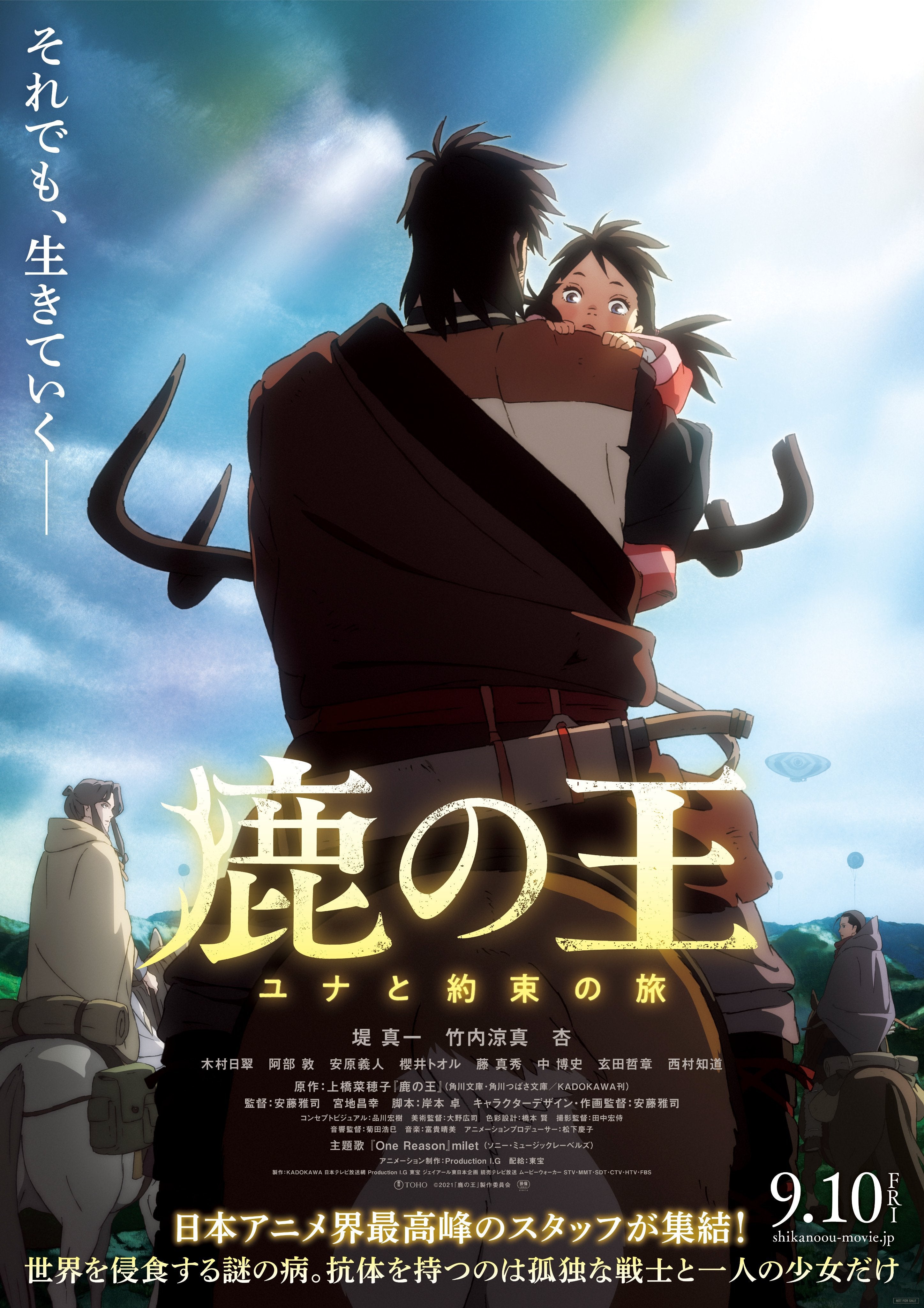
A broken and defeated man rediscovers a sense of purpose in human connection but finds himself hunted by opposing sides each of whom see in him either salvation or destruction in Masashi Ando & Masayuki Miyaji’s fantasy anime adapted from the novel by Nahoko Uehashi, The Deer King (鹿の王 ユナと約束の旅, Shika no Ou: Yuna to Yakusoku no Tabi). Set in a fractured land of fragile peace, Deer King perhaps uncomfortably casts resistance as villainy while largely letting its oppressors off the hook but argues finally for turning towards the light rather than the darkness in a spirit of mutual forgiveness that permits a less fractious co-existence. 

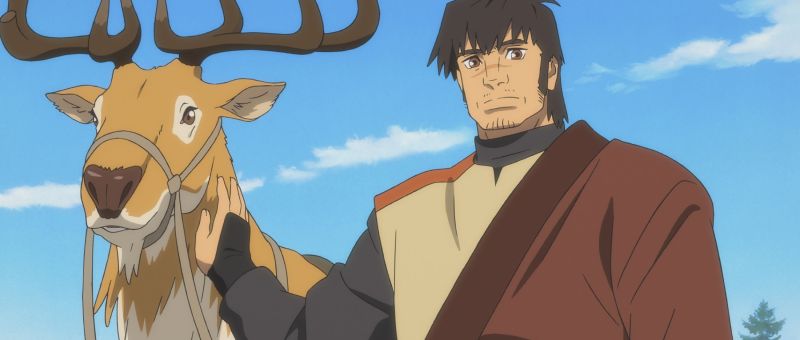
As a lengthy title roll explains, a war took place between the Aquafa and the Empire of Zol which resulted in a truce, partly because of a mysterious ”Mittsual” plague, the Black Wolf Fever, which frightened the Zolians out of sacking the capital. 10 years on, however, it’s clear Aquafa has become a vassal state living (literally) under the eye of the watchful Zolian emperor. The action opens in a salt mine where the enslaved are mercilessly exploited by their Zolian masters. “Work as if death spared you” one shouts out as an old man collapses, a younger, fitter one silently picking up his burden. As we’ll later discover this man is “Broken Antler” Van (Shinichi Tsutsumi), a lone survivor several times over and about to be so again as the mine is attacked by seemingly rabid dogs, one of them wandering into the prison where Van has been chained for helping the old man with a small child in its mouth. Van lunges at the dog which drops the child and bites his arm instead, the creature in a sense freeing him from the source of his oppression in breaking the chain which tied him to the wall before walking away leaving him bleeding only for Van to discover the bite has given him new power. Breaking free he takes the child with him as he ventures back out into the world. 

Van has lost more than most in this war, in a sense orphaned, a living a ghost with nothing and no one to live for. He could so easily lean towards hate or resentful violence but is given new reason for survival in becoming a father to the little girl, Yuna (Hisui Kimura), who is like him a lone survivor. Yet others feel differently, the resurfacing of the plague a metaphor for the grief and anger existing among the Aquafa targeting as it does only the Zol who look upon it as a “curse” or else or rebellious plot, which it in fact is. The former elite of Aquafa are apparently intent on using the Mittsual, to which they believe themselves immune, to free themselves of Zolian control and regain their independence. A neutral scientist, Hohsalle (Ryoma Takeuchi), however, throws their plan into disarray in his conviction that Van’s blood, the blood of a survivor, may act as cure and vaccine. The Zolians need him to survive, but Aquafans would rather he didn’t. 

Meeting his destiny head on, Van finds he has a choice: either embrace the darkness, accept the fear and the grief and the hate by using the Mittsual to target the Zolians, or allow Hohsalle to use his blood to find a cure. In the small, formerly nomadic, village in which Van finds a temporary home, they care nothing for politics and only want peace. They’ve begun intermarrying with the Zolians and live happily together while another man he meets along the way appears to be grateful for all the Zolians have done for them, which seems on one level a peculiar sentiment in welcoming their ongoing oppression. Yet salvation comes in a sense from re-embracing the Aquafan culture which has been taken from them, the cure not Van’s blood but his bond with nature something which all Aquafans once shared but was disdained by Zol. Zol can only survive by recognising Aquafa’s equality. 

Van’s strange new power, dubbed “inside Out” literally connects him to every other living being in the land becoming one with the great confluence of nature and cosmos. “Blood ties matter not” he tells an embittered young woman realising that Yuna is not his biological daughter, she in turn learning to abandon her hate through the force of his love. He reflects on the memory of a deer who put himself at risk to save a foal, asking himself if that’s what it means to be a hero or if he merely had the means to do what anyone should and did what was asked of him. Where the cruel patriotism of the Aquafans and religious zealotry of the Zolians fail, the rationality of humanitarian science and simple human empathy win out. A sacrifice may in a sense be needed, but it’s not the one you thought it was. A tale of the redemptive power of love, The Deer King argues for forgiveness in the face of hate if perhaps uncomfortably suggesting the burden of peace lies with the oppressed.


The Deer King screened as part of this year’s Camera Japan

Original trailer (English subtitles)

The Wonderland (バースデー・ワンダーランド, Keiichi Hara, 2019) [Fantasia 2019]

birthday wonderland poster 1The demands of adulthood are apt to overshadow any young teen’s life, but you can’t shake them off just by lying in bed and refusing to age. So the heroine of Keiichi Hara’s The Wonderland (バースデー・ワンダーランド, Birthday Wonderland) discovers as she determines to hideout from emotional complexity, waiting for the storm to pass and cowardly failing to defend a friend in the process. The last thing she wants is the responsibility of being “the chosen one”, but the thing about that is that you don’t get to choose and if the universe has plans for you it would be very irresponsible to refuse.

After (not) getting involved in a minor spat amongst friends about coloured hair clips, Akane (Mayu Matsuoka) decides the best solution is to feign illness, turn off her phone, and avoid going to school. Her kindly mother (Kumiko Aso), seemingly aware she’s not really ill, decides to let her stay home anyway but all she ends up doing is mistreating the cat in frustration and moping about, so her mum despatches her to her aunt Chii’s (Anne Watanabe) place to pick up her birthday gift which she presumably can’t open until the big day tomorrow. Truth be told, Akane doesn’t much like her aunt Chii, she’s far too free spirited and unpredictable for the neurotic teen, but she could stand to learn something from her irrepressible lust for life.

Akane gets the perfect opportunity to do just that when she sticks her hand onto a palm print in her aunt’s shop and is promptly greeted by a dapper-looking man with a fabulous moustache and his tiny minion (Nao Toyama) who crawl up through the hidden basement to explain that she is the “Goddess of the Green Wind” they’ve been searching for and must come with them right away because their nation is in peril! As expected, Akane doesn’t want to go, but is chivvied along by her overexcited aunt and a strange amulet the man, an alchemist named Hippocrates (Masachika Ichimura), places around her neck.

The amulet, he tells her, helps you move forward even if you want to go back. That is, in a sense, Akane’s entire dilemma as she finds herself on the cusp of adulthood, afraid to step forward and accept the responsibilities of maturity while longing to return to carefree childhood days when there was nothing much to worry about and always someone around to look after her. Like any good fairytale, she finds her mirror in the other world in a melancholy prince who remains so reluctant to take part in an essential ritual that he is almost willing to burn the world to avoid having to acknowledge his royal responsibilities.

Meanwhile, Akane is slow to adjust to the charms of her new Wonderland, refusing to engage and loudly stating her desire to go home while her aunt tries to encourage her to embrace a sense of adventure. Chii, the film’s best asset who proclaims “no alcohol no life” while thoroughly enjoying sparring with the uptight Hippocrates (who perhaps is also enjoying the challenge though might not want to admit it), might in some senses be a barrier to Akane’s self-actualisation but is also an important source of safety for her in an unsafe world and just irresponsible enough to push her niece towards taking the right kind of risks in order to do the right thing and save the kingdom.

The reasons the kingdom is in peril in the first place are hugely symbolic – an ongoing water crisis caused by governmental negligence is draining the world of colour while literally drying it out. Getting used to her new surroundings, Akane begins to see their charm. This world, near identical to her own in many ways, diverged around the industrial revolution. Where “our” world rocketed into a frenetic lust for convenience, the rhythms of this one stayed the same, a perpetual village society in which cheerful people live laidback lives surrounded by the beauty of nature – something Akane later comes to worry her own world is losing. Gradually letting go of her fear and getting a better idea of the kind of life she might want, Akane gains the courage to embrace responsibility through directly supporting someone else as they learn to do the same.

A whimsical coming of age tale, The Wonderland excels in world building but somehow never quite achieves the level of emotional engagement it seems to be looking for even as its sullen, detached heroine perhaps begins to realise she did a great disservice to her friend when she failed to defend her during the silly hair ornament argument largely because she personally didn’t want to rock the boat and put herself in the firing line. Her horizons suitably expanded, Akane finds she no longer needs an amulet to keep moving forward even when longing to look back and resolves to step into adulthood with an easy, laidback confidence learned from her palls on the other side.


The Wonderland was screened as part of the 2019 Fantasia International Film Festival.

Original trailer (English subtitles)

Golden Orchestra! (オケ老人!, Toru Hosokawa, 2016)

ƒIƒP˜Vl_ƒeƒBƒU[ƒ`ƒ‰ƒV•1C³_ƒAƒEƒg‚È‚µIt might never be too late to follow your dreams, but if following your dreams makes you very unhappy perhaps you need to spend some more time figuring out what they are. Golden Orchestra (オケ老人!,  Oke Rojin!) is one in a long line of Japanese fish out of water / underdog comedies, but addresses some very contemporary concerns from the ageing society to a perceived loss of community in the face of soulless commercialism. Our stuck-up school teacher is about to learn a few lessons, chief among them being that it’s much better just having fun with nice people than being caught up in a vicious and unwinnable game of elitism with a bunch of permanently scowling snobs.

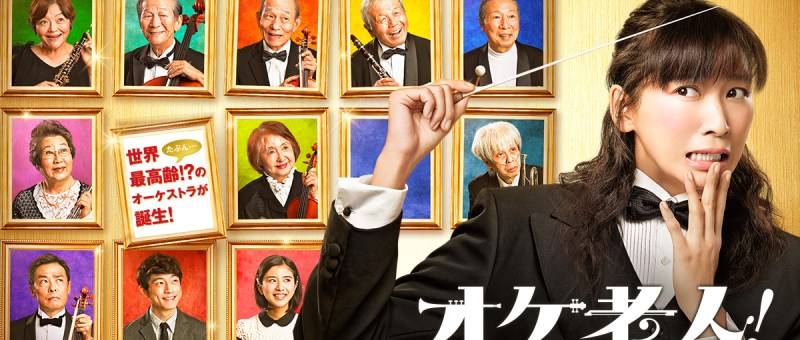
20-something school teacher Chizuru (Anne Watanabe) harbours a longstanding dream of playing in an orchestra but gave up the violin when she got a job. A visit to a classical music concert in provincial Umegaoka reignites her musical passion and she quickly becomes determined to dust off her instrument and ask for an audition. However, as she was so excited she can’t quite remember the orchestra’s name and, assuming there couldn’t be two in this tiny town, signs up for the wrong one. Only realising her mistake when a bunch of old people turn up instead of the well turned out collection of musicians she was expecting, Chizuru tries to back out but the old people are so happy to have her that she can’t quite work up the courage to tell them no.

As it happens there’s a People’s Front of Judea situation going on between Ume-sym and Ume-phil. The conductor of Ume-sym, Nonomura (Takashi Sasano), is also the owner of a family-run electronics shop – a relic of a bygone era made all the more lonely by the flashy electronics superstore that’s been set up right next door. The owner of the electronics superstore, Osawa (Ken Mitsuishi), used to be a member of Ume-sym but stormed out to form his own orchestra – Ume-phil, so he’s betrayed Nonomura twice over and there’s bad blood between them which isn’t helped by Osawa’s constant overtures to Nonomura’s son about buying up the shop in order to close it down.

Chizuru is, it has to be said, a somewhat clueless woman approaching middle age who is also a bit of a snob. She’s harboured musical dreams ever since she can remember, giving them up because, after all, that’s what you’re supposed to do in order to accept a conventional, ordered life. If playing music was all she wanted to do, there was nothing stopping her doing it at home in her free time, but Chizuru wants to be among the best. She looks down on the old people in the orchestra – firstly because they’re “old” and therefore “bothersome” (as she notes turning off a tap left running by an absent-minded older lady), and then because they’re just not any good, and finally because their aim isn’t really becoming a successful orchestra so much as it is participating in a community activity. The old ladies have brought snacks which must be indulged and appreciated, while the old men all enjoy the after practice drinking sessions perhaps more than they do the music.

Turning her back on this anarchic friendliness, Chizuru practices night and day to get into Ume-phil, but Ume-phil isn’t about love of music either, it’s just about being superior and giving yourself an excuse to look down on people. Chizuru finds out for herself how stressful and unpleasant it can be as a “member” of just such a community when they grudgingly grant her a spot. Ume-phil runs on a survival of the fittest policy – not everyone gets to play, only whoever is deemed most worthy. When push comes to shove, Osawa buys himself success by hiring a world-famous French conductor for the biggest concert of the year. Only the professional conductor is true music lover and quickly quits Osawa’s ersatz orchestra, charmed by the down-home wisdom of Mr. Nonomura who manages to fix his treasured cassette player when Osawa advised him to throw it out and buy something more up-to-date. Some people just can’t see what’s really important.

As expected, Chizuru finally realises that it’s just much nicer (not to mention less stressful) having fun making music with the old people rather than putting up with the soulless rigour of the Osawa brigade for whom nothing will ever be good enough. In the end Ume-sym decides to practice Dvorak’s Largo which is, as anyone who’s seen a Japanese film knows, an instantly warm and nostalgic tune familiar as the inspiration for (in some cities at least) Japan’s five ‘o clock chimes (British viewers may well experience the same surge of wistful melancholy thanks to the same tune’s iconic use in a series of Hovis adverts from the ‘70s and ‘80s). It’s an apt choice for a film which harks back to a simpler time when people took care of each other and rejoiced in ordinary pleasures like home-made pickles and fixing things that were broken rather than throwing them out to buy new ones. In true community spirit, it’s not so much that one side wins and another loses, so much as that the joy of sharing a dream with others becomes infectious, producing a rapprochement between the old and the new which allows a peaceful coexistence of the two. Cosy cinema at its finest, Golden Orchestra may not offer anything new to a well-worn formula but in many ways that is the point and its harmonious charms prove hard to resist.


International trailer (English subtitles)

The original Hovis ad from 1973 (which was directed by Ridley Scott)

The Cherry Orchard: Blossoming (櫻の園 -さくらのその-, Shun Nakahara, 2008)

The Cherry Orchard- Blossoming poster In 1990, Shun Nakahara adapted Akimi Yoshida’s manga Sakura no Sono and created a perfectly observed capsule of late ‘80s teenage life at an elite girls school where the encroaching future is both terrifying and oddly exciting. Revisiting the same material 28 years later, one can’t help feeling that the times have rolled back rather than forwards. Starring a collection of appropriately aged teenage starlets The Cherry Orchard: Blossoming (櫻の園 -さくらのその- Sakura no Sono), dispenses with the arty overtones for a far more straightforward tale of melancholy schoolgirls finding release in art but, crucially, only to a point.

Less an attempt to remake the original, Blossoming acts as an odd kind of sequel in which the leading lady, Momo (Saki Fukuda), becomes fed up with her rigid life at a music conservatoire and rebelliously storms out. Already in her last year of high school, Momo is lucky enough to get a transfer to Oka Academy solely because her mother and (much) older sister are old girls. However, transfer students are rare at Oka and the other girls aren’t exactly happy to see her – they worked hard to get here but she’s just waltzed straight in without any kind of effort at all.

Gradually the situation improves. Wandering around the old school building (a European style country house) which was the setting for the first film and has now been replaced with a modern, purpose built high school complex, Momo finds the script for The Cherry Orchard and becomes fixated on the idea of putting the play on with some of the other students. However, though The Cherry Orchard used to be an annual fixture it hasn’t been performed in 11 years after being abruptly cancelled when one of the stars disgraced the school by falling pregnant.

Whereas Nakahara’s 1990 Cherry Orchard was a tightly controlled affair, penning the girls inside the school and staying with them through several crises across the two hours before their big performance, Blossoming has no such conceits and adopts a formula much more like the classic sports movie as the underdog girls fight to put the play on and then undergo physical training (complete with montages) rather than rehearsals.

Momo’s rebellion is (in a sense) a positive one as she abandons something she was beginning to find no longer worked for her to look for something else and also gains a need to see things through rather than give up when times get hard. The drama of the 1990 version is kickstarted when a student is caught smoking in a cafe with delinquents from another school, aside from being told that students are expected to go straight home, Momo feels little danger in hanging out in an underground bar where her music school friend plays in a avant-garde pop band.

Though this reflects a change in eras it also points to a slight sanitisation of the source material. Gone are the illicit boyfriends (though there is one we don’t see) and barely repressed crushes, these teens are still in the land of shojo – dreaming of romance but innocently. Teenage pregnancy becomes a recurrent theme but lost opportunities hover in the background as the girls are seen from their own perspective rather than the wistful melancholy of those looking back on their youth.

Such commentary is left to the “old girls” represented by Momo’s soon to be married sister and the girls’ teacher, each of whom is still left hanging thanks to the cancellation of the play during their high school years. Despite her impending marriage, Momo’s sister does not seem to be able to put the past behind her and may be nursing a long term unrequited crush on a high school classmate. Blossoming echoes some of the concerns of Cherry Orchard, notably in its central pairing as lanky high jumper Aoi (Anne Watanabe) worries over a perceived lack of femininity while the more refined Mayuko (Saki Terashima) silently pines for her, unable to make her feelings plain. The 1990 version presented a painful triangle of possibly unrequited loves and general romantic confusion but it did at least allow a space for overt discussion rather than the half hearted subtly of a mainstream idol film in a supposedly more progressive era.

Nevertheless, Nakahara’s second pass at teenage drama does fulfil on the plucky high school girls promise as the gang get together to put the show on right here. Much less nuanced than the earlier version, Blossoming’s teens are just as real even if somehow more naive than their ‘80s counterparts. Team building, friendship, and perseverance are the name of the day as the passing of time takes a back seat, relegated to Momo’s sad smile as she alone witnesses the painful love drama of her melancholy friend.


Original trailer (no subtitles)

Bandage バンデイジ (Takeshi Kobayashi, 2010)

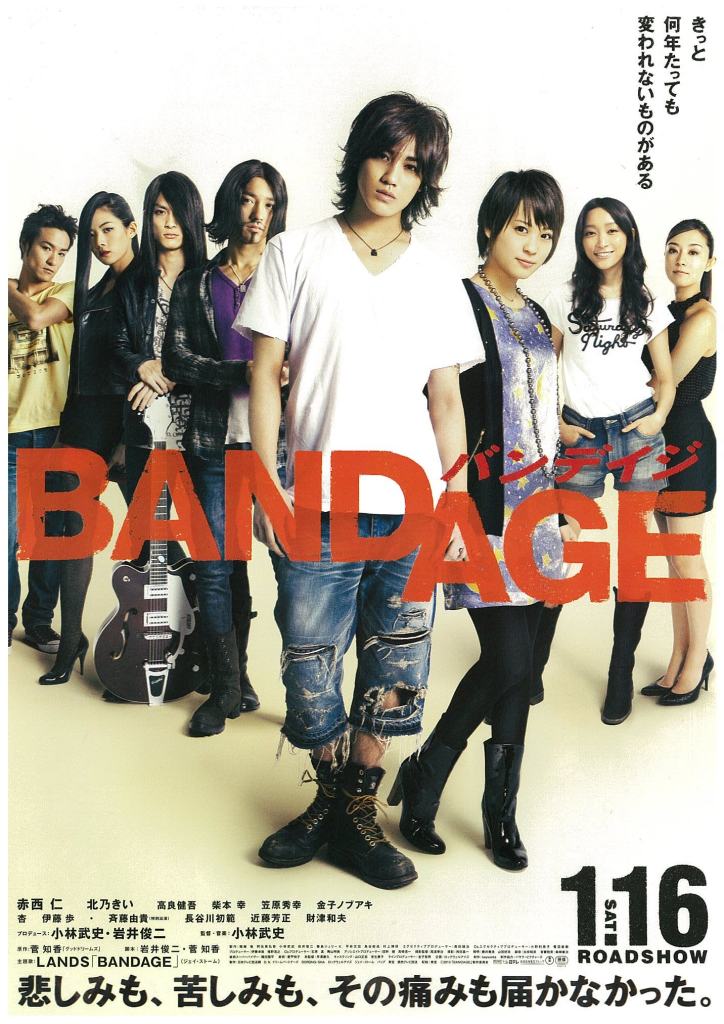
Japan was a strange place in the early ‘90s. The bubble burst and everything changed leaving nothing but confusion and uncertainty in its place. Tokyo, like many cities, however, also had a fairly active indie music scene in part driven by the stringency of the times and representing the last vestiges of an underground art world about to be eclipsed by the resurgence of studio driven idol pop. Bandage (Bandage バンデイジ) is the story of one ordinary girl and her journey of self discovery among the struggling artists and the corporate suits desperate to exploit them. One of the many projects scripted and produced by Shunji Iwai during his lengthy break from the director’s chair, Bandage is also the only film to date directed by well known musician and Iwai collaborator Takeshi Kobayashi who evidently draws inspiration from his mentor but adds his own particular touches to the material.
High school girl Asako (Kie Kitano) is best friends with Miharu (Anne Watanabe) who likes all the same cool indie bands she does and is therefore upset to learn that she is dropping out of school because her parents have money problems. Luckily the girls run in to each other at a record store where Miharu works and bond again over the new CD of a band Miharu had recommended and Asako had fallen in love with – LANDS. Miharu also manages to get tickets to a LANDS concert and even swipes a couple of backstage badges from some retreating suits.

The girls sneak backstage and are immediately clocked by the band’s wily manager, Yukari (Ayumi Ito), but their adventure is derailed after they literally run into a band member and Asako loses a contact lens. The band’s lead singer, Natsu (Jin Akanishi), places a bandana across Asako’s temporarily blinded eye and rechristens her “Black Jack” before inviting both the girls to the post-show drinking session. Leaving early, Asako ends up arranging to meet Natsu at another bar later, beginning her long journey with the difficult, damaged musician as they navigate the turbulent “indie” record scene with all of its various traps and temptations.

Though Natsu and Asako may not actually be so far apart in age, you have to admit there’s a something not quite right in his sudden desire to befriend a starstruck high school girl. He does indeed seem to be after the obvious but after she resolutely turns him down, he keeps chasing her right until the end of the film. Despite remaining a little distant and afraid of this somehow very intense yet completely chilled out diva of a frontman, Asako becomes something like his only friend yet her presence continues to provoke tension within the group, particularly after she leaves high school and gets a job as a manager working alongside Yukari.

What first drew Asako to the music of LANDS was an identification with their melancholy lyrics echoing the alienation and loneliness she herself felt as a diffident adolescent. Her feelings towards Natsu are also driven by this same identification with his angst ridden lyrics but the qualities which attract him to her are those which she loathes in herself. Natsu, a narcissistic would be rock god, treats the band like his personal little empire, but deep down he knows he’s not its MVP. That would be the striking long haired guitar player, Yukiya (Kengo Kora), who the suits have pegged as the most likely to succeed. Natsu can write and his songs are good, if sometimes “uncommercial”, but he doesn’t quite have “it” in the same was as Yukiya does. Yukiya, by contrast, is (mostly) content to follow Natsu’s lead yet comes to resent his close relationship with Asako, regarding her as a kind of “Yoko” disrupting the band’s carefully crafted unity.

Yukiya’s attempt to destroy Asako is a calculated and cold one, motivated by his belief that she has “destroyed LANDS”. Laying bear his own pain and loneliness, Yukiya uses his internal darkness as an odd kind of seduction technique only to leave Asako on a barren shore sure of nothing other than the fear and confusion inside her heart. A dangerously violent confrontation with a drunken Natsu is the final trigger for Asako’s own moment of self realisation as she sees herself reflected in Natsu’s self destructive meltdown. United in mutual self loathing, the pair cement a melancholy though ultimately unrealisable bond which puts an end to Asako’s musical adventures.

Asasko is given a second opportunity to pursue a musical dream but one which is more on her own terms and reminds her of the potential and possibilities of music as art rather than the market driven mindset her agency job had done its best to instil. Natsu, it seems, has also rediscovered his artistry and may be in a better place to create away from the pressures that come with fronting an up and coming indie band. Defiantly exclaiming that the pain can’t reach him, Natsu might have found the “bandage” he’d been looking for which is, in a sense, his music – the dressing which staunches the weeping wounds of his pain and suffering. Music, like a bandage, is both salve and barrier – its message indirect but none the less deeply felt even if its effects are for internal use only. Asako and Natsu seem destined to walk on parallel paths but each has, at least, begun to discover their true selves as they continue to pursue their artistic dreams if perhaps at the expense of the personal.


Short scene from the film (no subtitles)

https://www.youtube.com/watch?v=_evndqBv284

Midsummer’s Equation (真夏の方程式, Hiroshi Nishitani, 2013)

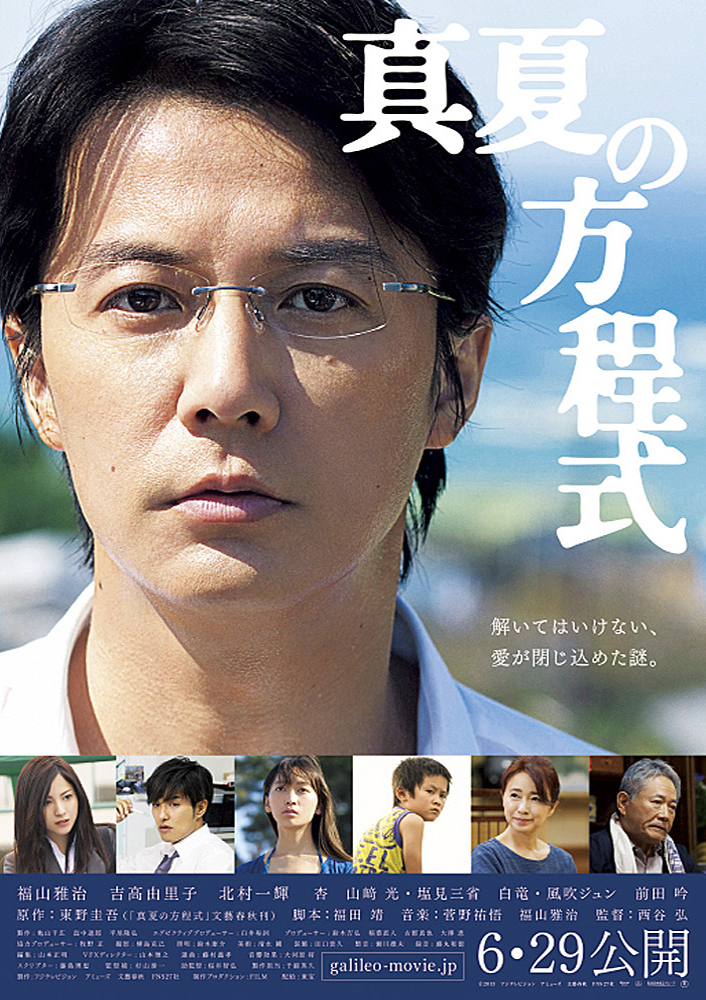
midsummer's equationSometimes it’s handy to know an omniscient genius detective, but then again sometimes it’s not. You have to wonder why people keep inviting famous detectives to their parties given what’s obviously going to unfold – they do rather seem to be a magnet for murders. Anyhow, the famous physicist and sometime consultant to Japan’s police force, “Galileo”, is about to have another busman’s holiday as he travels to a small coastal town which is currently holding a mediation between an offshore mining company and the local residents who are worried about the development’s effects on the area’s sea life.
As fans of the series will know, Manabu Yukawa is a fastidious and difficult man who likes things just so. On the train he ends up encountering a small boy who annoys the other passengers by answering his phone. Apparently he can’t turn it off because all sorts of notifications will be sent to his parents and they’ll go into panic overdrive. The old man across from him doesn’t believe this and grabs the phone away from the small boy after an undignified tussle. In an uncharacteristic move, Yukawa comes to the boy’s rescue by taking back the phone and wrapping it in foil so it won’t go off again – problem solved.

The boy, Kyohei, turns out to be the nephew of the inn owners at the place where Yukawa is staying. After another guest is found dead in mysterious and suspicious circumstances, little Kyohei immediately raises several doubts of his own which endears him to Yukawa who is sad to hear that the boy hates science classes at school. Still, Yukawa concedes there are some odd details in this case especially as the dead man is an ex-Tokyo policeman. Before long Detective Kishitani has been dispatched to assist in  the investigation of another strange mystery.

Again based on a novel by Keigo Higashino, the fourth in his Galileo series, Midsummer’s Equation (真夏の方程式, Manatsu no Houteishiki) is something of a departure as it takes place in an idyllic summer seaside town and is more like some of Higashino’s other mysteries as it places secrets of the heart at its core. Yukawa is generally a difficult man who can’t stand children, in fact they bring him out in a rash. However, for some reason Kyohei doesn’t seem to have this effect on him and he becomes determined to teach the boy the joy of science through a series of experiments while also investigating the central mystery. The incurably curious little tike becomes almost like a mini deputy to Yukawa as he begins to piece together what exactly has happened but it turns out Kyohei may have a different part to play than had originally been suspected.

In the usual mode, it’s not so much a whodunnit as a whydunnit and a how will they catch them. The mystery’s solution is heavily signposted from the beginning and there aren’t a lot in the way of twists. In contrast with some of the other Yukawa mysteries, particularly those from the TV drama, there aren’t a lot of clever scientific shenanigans either and though the central murder is plotted in quite an elaborate way, it’s also a panicked adaptation to circumstances which could be enacted by anyone, anywhere.

Long term series director Hiroshi Nishitani pulls out all the stops here and leaves the small screen far behind as he creates a surprisingly artistic take on a fairly run of the mill murder mystery. Beginning with the repeated motif of the falling red umbrella, he takes care to create a nuanced visual poetry which is quite different in approach both to the construction of the TV series and the other big screen outing which adapted Higashino’s most famous novel, The Devotion of Suspect X. Suspect X never quite managed to marry its roots as the theatrical adaptation of a TV drama and as an adaptation of a hugely popular and award winning book into something which was convincing on both levels. Midsummer’s Equation has an easier time with this as it’s slightly separated from the TV drama series and largely succeeds in becoming a standalone adventure for its famous detective.

Masaharu Fukuyama returns to the role with which he’s become most closely associated and once again captures Yukawa’s detached, though not necessarily uncaring, exterior with ease. He’s ably assisted by a fairly starry supporting cast which includes veteran actress Jun Fubuki, Tora-san’s Gin Maeda and the relatively young actress Anne (Watanabe) as well as the returning Yuriko Yoshitaka as the reluctant Detective Kishitani and cameo appearances from Kazuki Kitamura and Tetsushi Tanaka as Kyohei’s father.

Midsummer’s Equation is Higashino in a more forgiving mood as his hardline moralism never really kicks in and he’s content to merely be sorry for this rather complicated mess of affairs. Here, there’s hope for the future and the possibility of a path forward now that long buried secrets have been uncovered and the truth set out to bloom in the sunlight. He makes it plain that secrets are the root of all evil and that only by embracing the truth, and all of the truth, can you ever be able to make informed choices about your future. This is a lesson that Yukawa wants to pass on to little Kyohei who might be too young to understand the exact implications of his role in the affair (though he seems to have figured some of it out), but will undoubtedly have a few questions as he grows up. A well crafted addition to the series, Midsummer’s Equation proves another enjoyable excursion for Yukawa which succeeds not only in terms of its intricately plotted mystery but also as an intriguing and emotionally satisfying character drama.


The Hong Kong release of Midsummer’s Equation includes English subtitles.

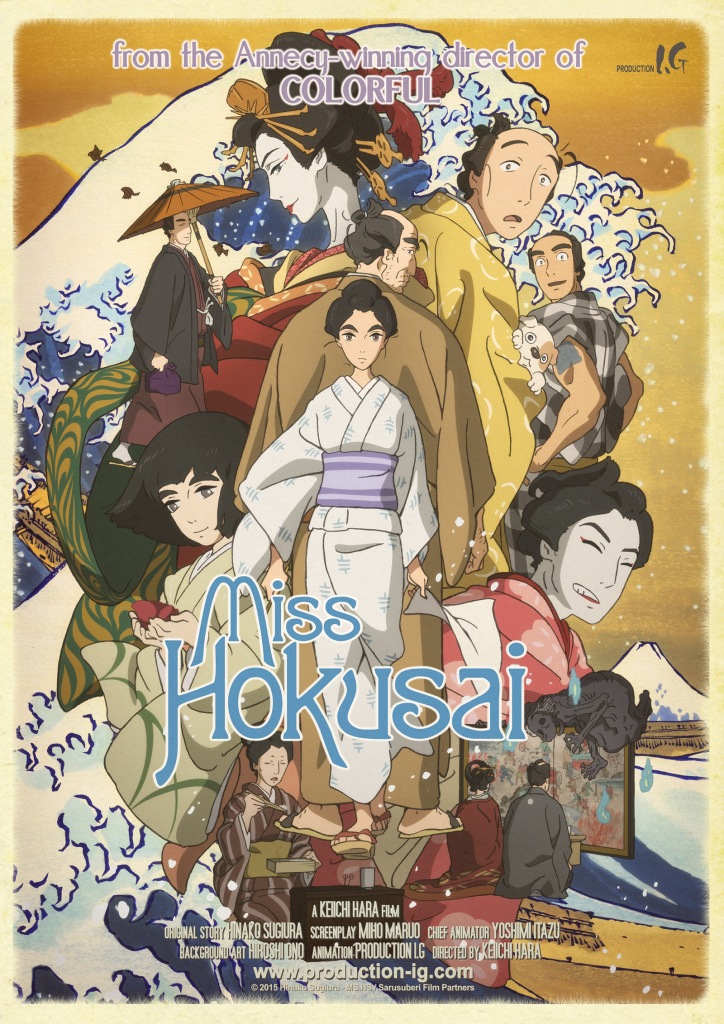
Miss Hokusai (百日紅, Keiichi Hara, 2015)

MISS_HOKUSAI_teaser_A4_oldpaper_1600When it comes to the great Japanese artworks that everybody knows, the figure of Hokusai looms large. From the ubiquitous The Great Wave off Kanagawa to the infamous Dream of the Fisherman’s Wife, the work of Hokusai has come to represent the art of Edo woodblocks almost single handedly in the popular imagination yet there has long been scholarly debate about the true artist behind some of the pieces which are attributed to his name. Hokusai had a daughter – uniquely gifted, perhaps even surpassing the skills of her father, O-Ei was a talented artist in her own right as well as her father’s assistant and caregiver in his old age.

Miss Hokusai, based on the popular 1980s manga Sarusuberi by Hinako Sugiura, takes up O-Ei’s story towards the beginning of her career before her marriage and subsequent divorce, after which she returned to her father’s side to nurse him as his health declined. Like the manga, the film is a collection of scenes from Edo life loosely tied together by its overarching theme, but broadly follows O-Ei as she lives her life as a young woman with a level of forthrightness and determination which sets her apart from the women of the time. Determined to become an artist, she lives with her father in their studio where neither of them cooks or cleans but each devotes themselves solely to art. Also living with them at the time is an ex-samurai and aspiring artist, Zenjiro, who specialises in erotica which has its own particular qualities even if his skills aren’t on a par with Hokusai or O-Ei.

When not in her father’s studio, O-Ei likes to visit her younger sister who, ironically, was born blind and is being cared for by the local nuns. O-Nao’s blindness is a sore spot for her father who hardly ever visits her, feeling as if her lack of sight is some sort of cosmic slight against him – the master painter with the daughter unable to appreciate his art and therefore his entire life philosophy. O-Ei is not so rigid and delights taking the girl out on trips where she can experience the world through her richly developed other senses. O-Nao particularly likes visiting the bridge with its complicated soundscape from the river below to the vendors above and all the passersby. There’s also a lovely set piece in which a young boy who quickly figures out that O-Nao can’t see tries to entertain her by knocking snow off a tree. Miss Hokusai, though a story of visual art, has an especially intricate sound design which proves that you can paint with materials other than ink and makes a point of calling out the stubbornness inherent in the world view of someone like Hokusai whose singleminded vision has become his entire universe.

O-Ei has her fair share of troubles as a young woman, though living with her father as his assistant she is a relatively free and unsheltered one. Her father doesn’t hide any aspect of his work from her – she even assists him with his erotic pieces and is said to be a particularly fine painter of women though her male figures lack conviction. “Sensation” itself becomes a theme, art is something which must be felt and therefore must have feeling imbued within it. As an unmarried woman O-Ei is ill equipt to complete these kinds of assignments and some say perhaps she should not be given them though her determination would never permit her to turn them down leading to rather a strange interlude in which she tries to gain some “experience” in a presumably “safe” way which won’t have much effect on her later life.

Less successfully, the film also attempts to enter the realm of the supernatural as we learn a painting can have other effects on the viewer particularly if it isn’t completed in the proper fashion. From a possessed geisha to a woman driven mad by O-Ei’s suitably creepy painting which features terrifying scenes from hell, Miss Hokusai most definitely occupies a world where ghosts, spirits and demons are real things which co-exist with real people. Luckily, Hokusai is able to fix the problem with the disturbing painting by closing its symbolic imagery with a suitable addition whilst berating O-Ei for having cut corners and not properly complete her vision so as to leave the onlooker “haunted” in an unintended way. Again, the painter is parent to the painting which attains the kind of immortality impossible for its creator in this transient world.

Clearly bound-up with the notion of transience, Miss Hokusai makes a valiant attempt to bring ordinary Edo living with its geisha houses, dusty rooms and drinking songs to life in vivid detail. However, its message becomes slightly confused with the superimposition of the modern Tokyo in the final frame of the film. At this point, the rather bizarre choice of a modern, electric guitar based soundtrack, begins to make a degree of sense at least on a thematic level but nowhere near enough to mitigate its jarring presence throughout the film.

Animated by animation powerhouse Production I.G who have been responsible for some of the most beautifully made animated movies of recent times, Miss Hokusai is a giant step up from Hara’s previous film, Colorful, in terms of its execution and boasts a number of scenes which are remarkable in their technical proficiency. The sky in particular as well as the background in general takes on a dreamy, woodblock style which is perfectly fitting for the film’s themes. An interesting look at the young O-Ei, an inexperienced female artist still looking for her voice in a world where the only thing that counts is the signature, Miss Hokusai doesn’t quite succeed in breathing life into its disparate collection of tales but makes a valiant attempt all the same.


Miss Hokusai is currently touring the UK with the Japan Foundation Touring Film Programme 2016 and will be released by All the Anime later in the year.