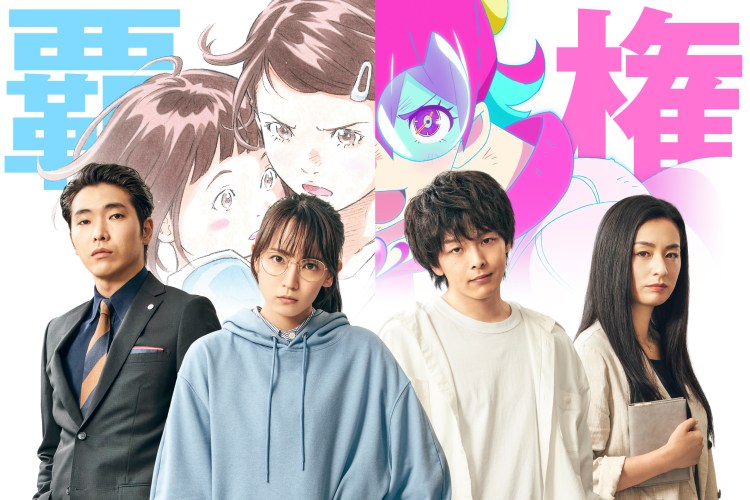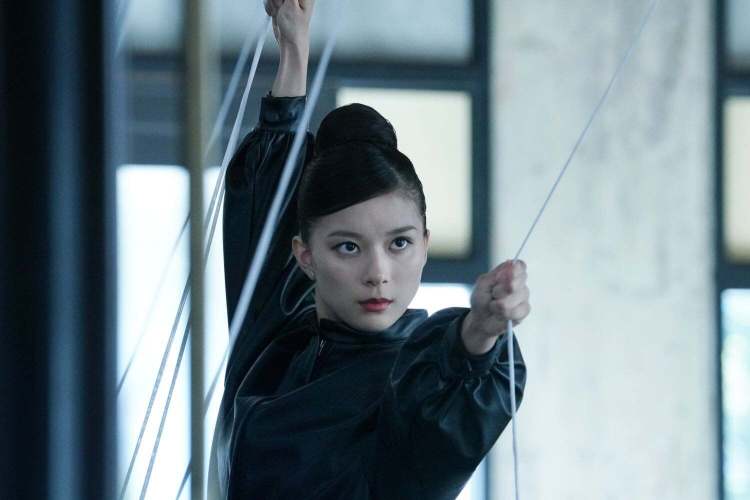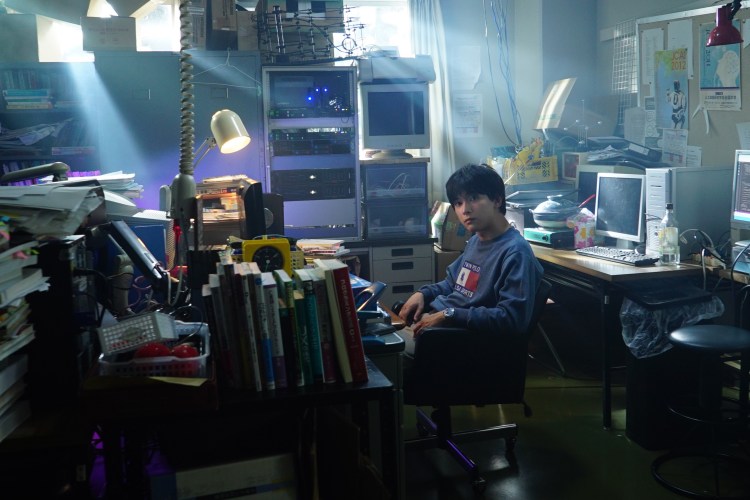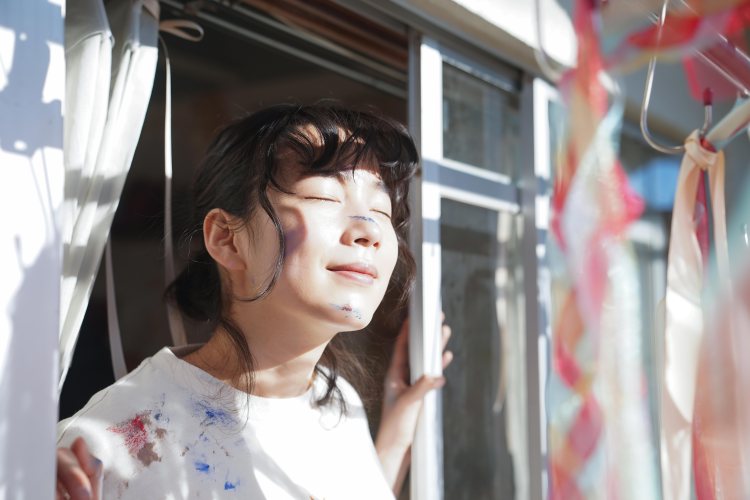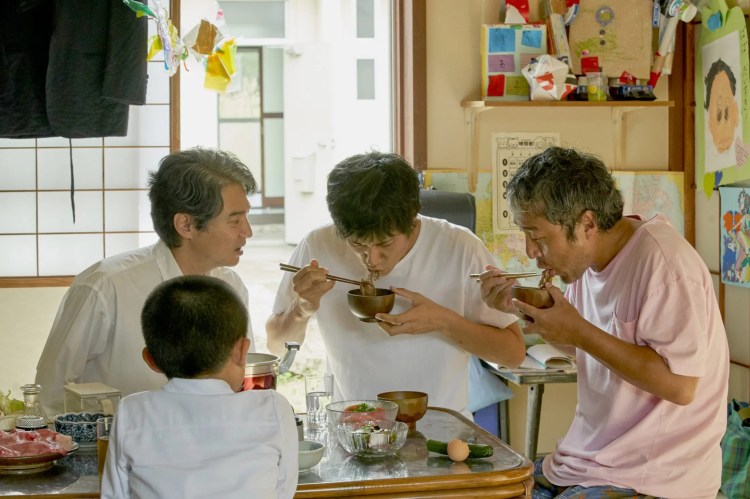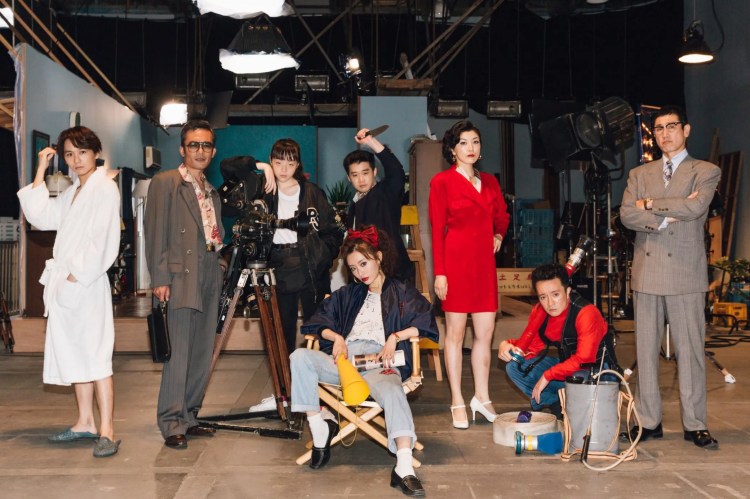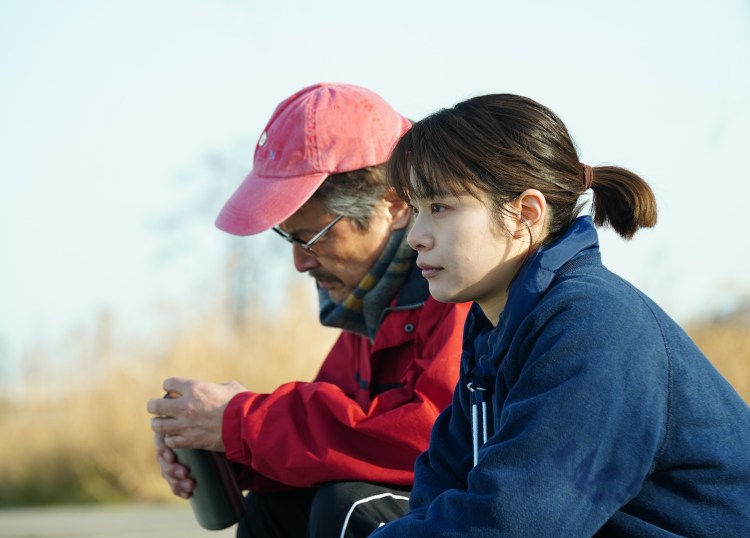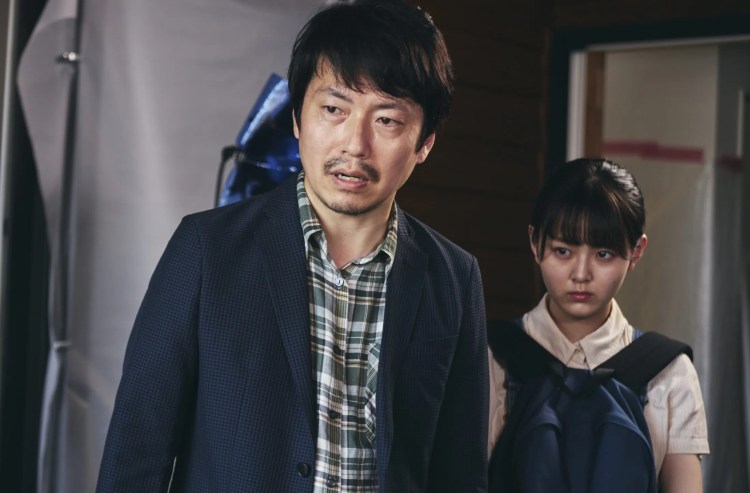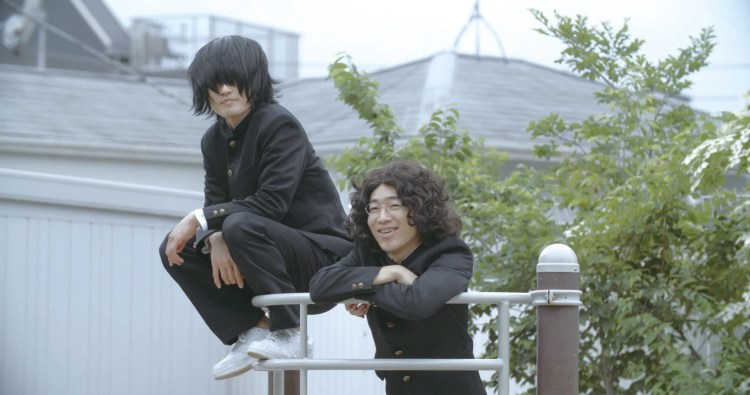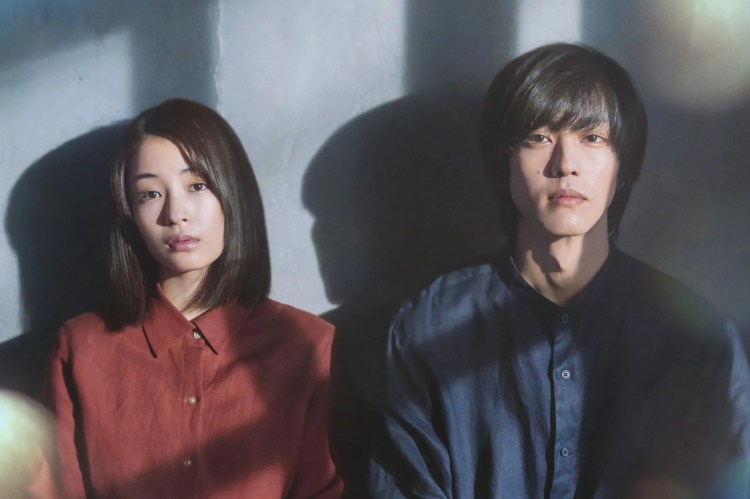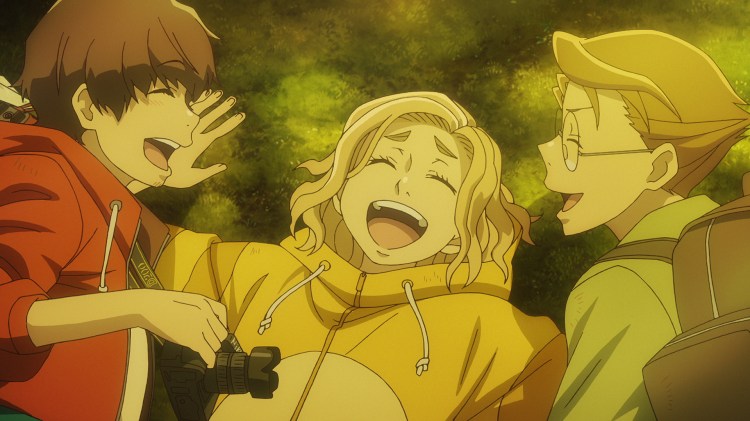
The Midnight Maiden War (真夜中乙女戦争, Ken Ninomiya, 2022)

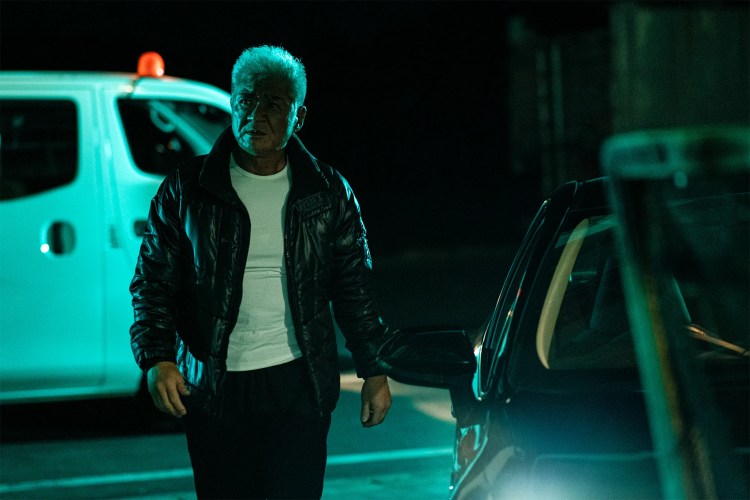
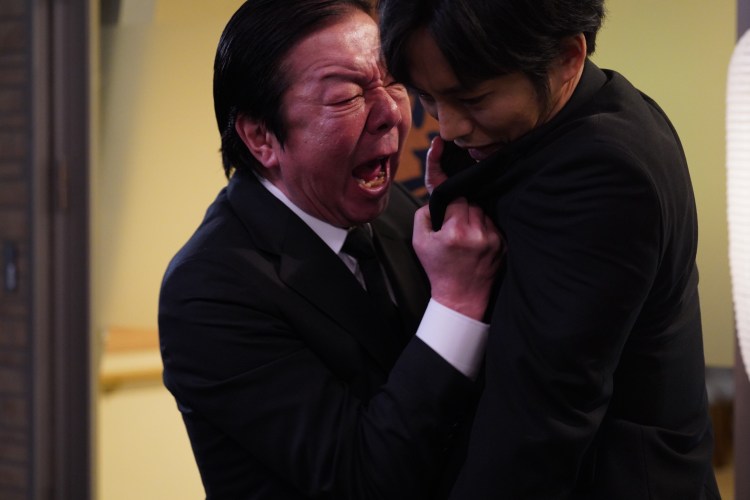
An apathetic college student is pulled between nihilistic destruction and the desire for life in Ken Ninomiya’s adaptation of the novel by F, Midnight Maiden War (真夜中乙女戦争, Mayonaka Otome Senso). “Do those who struggle for life deserve to be defeated as evil?” is a question that is put to him while he asks himself if there’s something wrong in his yearning for a “boring”, conventional existence with a good job, house in the suburbs and people to share it. Then again as the forces of darkness point out, those who long for normality usually cannot attain it which only fuels their sense of resentment towards a “rotten” society. 

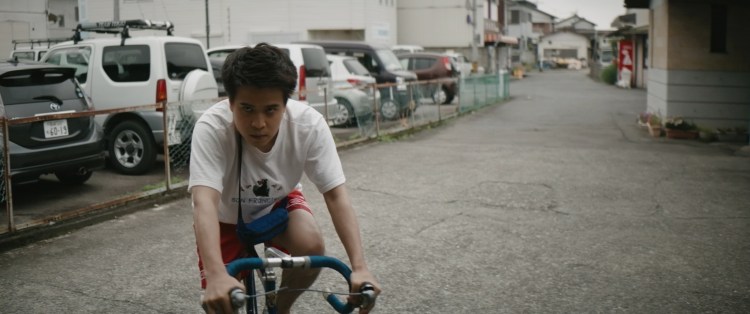
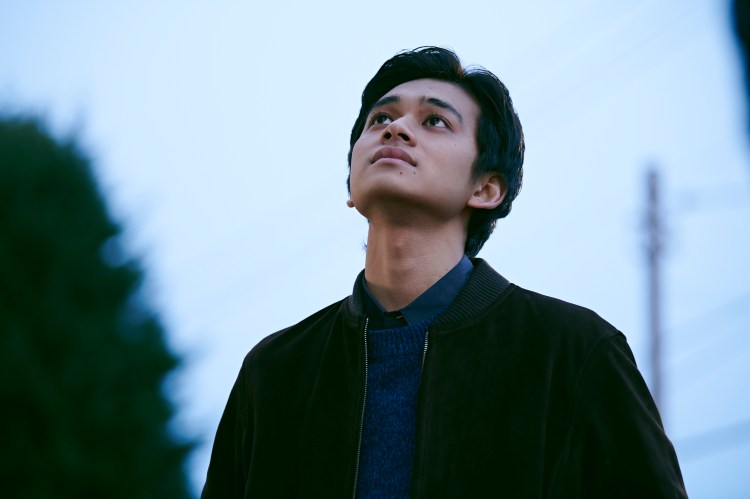
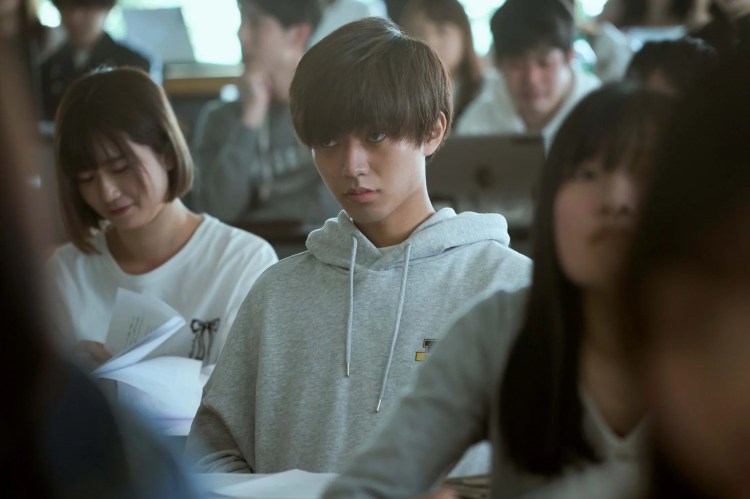
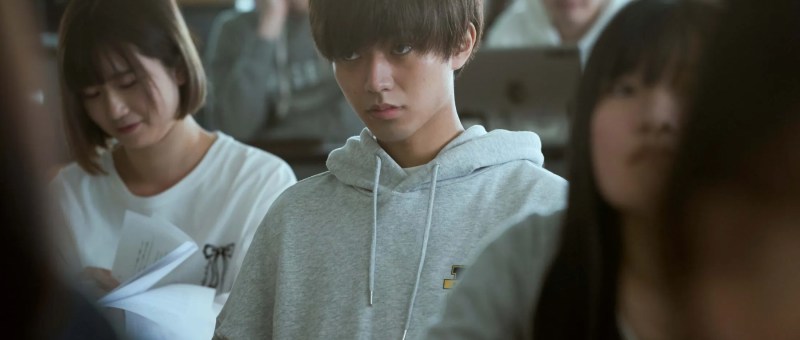
The unnamed protagonist (Ren Nagase) has come to Tokyo from Kobe to attend university and as his family are not wealthy is supposed to be studying for a scholarship exam while supporting himself with part-time jobs. Only as he’s abruptly let go from his side gig, he finds himself unfulfilled by his studies and wondering what the point is in wasting his youth just to lead a dull life of drudgery. In an intense act of self-sabotage which later goes viral, he tells his English professor (Makiko Watanabe) to her face that her classes are pointless while calculating exactly how much they cost per hour which turns out to be the equivalent to three hours of labour for his mother, the price of a new text book, or three months’ Netflix subscription which oddly becomes a kind of currency benchmark. He can’t see that anything he’s learning will be of much use to him in the further course of his life when the only prize is conventionality even if that conventionality might also provide basic comfort. 

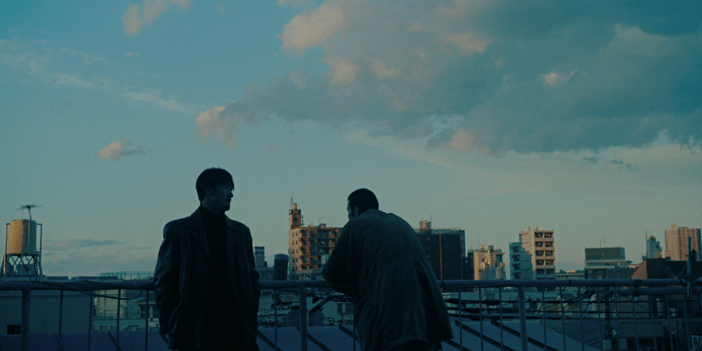
After joining a mysterious “hide and seek” club and becoming distracted by a series of minor bombings of public bins on campus, the hero is pulled between a woman only known as “Sempai” (Elaiza Ikeda), and a man only known as “The Man in the Black Suit” (Tasuku Emoto) who sell him conflicting visions of hope and darkness. While Sempai thinks it’s wrong to belittle those who want to live their lives and are genuinely content with the conventional, The Man in the Black Suit quite literally wants to burn it all to the ground. What begins as an awkward friendship between two awkward men, soon develops into a cult-like organisation of, as the hero puts it, “social outcasts”, drawn to the Man in the Black Suit’s desire to destroy the rotten society which has rejected them through blowing up Tokyo on Christmas Day. 

Positing Tokyo Tower as the “root of unhappiness”, the hero claims he wants only to destroy, and most particularly himself along with everything else. Experiencing extreme ennui, he struggles to find meaning in his life yet is also conflicted in the breadth of the The Man in Black’s goals being fairly indifferent to the existence of others and unconvinced that those merely complicit in the system should also be targets of his social revenge. If not quite dragged towards the light, he realises that he must kill the nihilist within himself and in a sense be reborn, as the Man in Black puts it, as the god of a new world. “You’re alive, that’s good enough for me” Sempai echoes as the hero does at least in a sense embrace life even amid so much destruction. 

Ken Ninomiya has become closely identified with a singular style heavily inspired by music video and often taking place in Tokyo clubland. Midnight Maiden War is in many ways a much more conventional film mimicking the aesthetic of other similarly themed manga and light novel adaptations featuring only one real party scene and no extended musical sequences while routing itself in a more recognisably ordinary reality albeit one secretly ruled by a lonely tech genius. It does however feature his characteristic neon-leaning colour palate, focus pulls, and striking composition such as the revolving upside down shot which opens the film and hints at the unnamed protagonist’s sense of dislocation. Quite literally a tale of darkness and light, the film finds its dejected hero struggling to find meaning in a stultifying existence but perhaps finally discovering what it is to live if only at the end of the world. 


The Midnight Maiden War screened as part of this year’s Camera Japan.

Original trailer (English subtitles)
It’s All My Fault (ぜんぶ、ボクのせい, Yusaku Matsumoto, 2022)

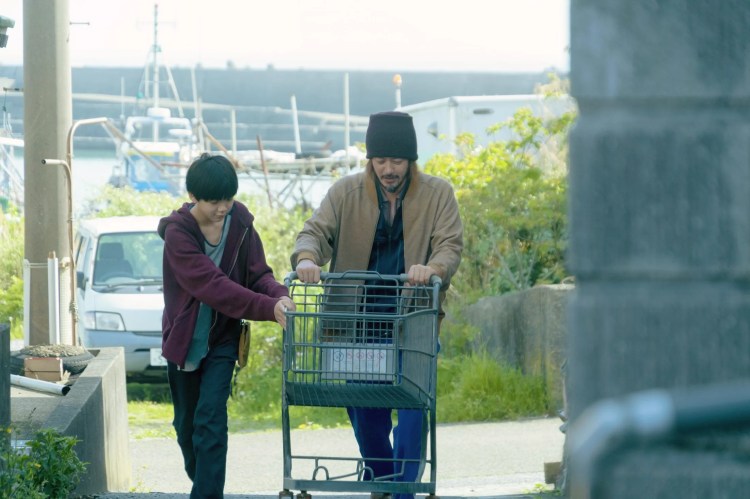
A young boy and a homeless drifter attempt to overcome the legacy of parental rejection in Yusaku Matsumoto’s sensitive coming-of-age drama, It’s all My Fault (ぜんぶ、ボクのせい, Zenbu, Boku no Sei). “It’s all my fault” is something many children think about circumstances which are well beyond their control, but it’s also something they’re encouraged to believe by an abusive or neglectful parent who tells them that they are to blame for the treatment they receive. Nevertheless, Yuta (Haruto Shiratori) comes to think that all the bad things happening in the world are in some way his fault, which might on one level be easier to believe than trying to accept that the world is sometimes a relentlessly unkind place. 

A sad and sullen boy, Yuta is viewed with some suspicion by the staff at the care home where lives due to his brooding nature and refusal to speak. The cause of his anger is that he was told by a previous caretaker that he’d be able to see his estranged mother, Rika (Marika Matsumoto), when he entered middle school and is resentful that he has still had no contact with her. The sad fact is, however, that Rika stopped taking their calls a long time ago and seemingly has no further intention of maintaining contact with her son. 

After the orphanage is rocked by a literal earthquake, Yuta sets off to find his mother but though she is moved to see him it quickly becomes clear that she is not really prepared to play a maternal role. When her drunken boyfriend returns home, she tells him that Yuta is a relative’s child she agreed to watch for a short time and appears otherwise conflicted, solicitously making sure he has enough to eat but more or less forgetting he’s even there whenever the boyfriend is around. Eventually she rings the care home to come and take him back, forever ruining Yuta’s faith in genuine human connection. 

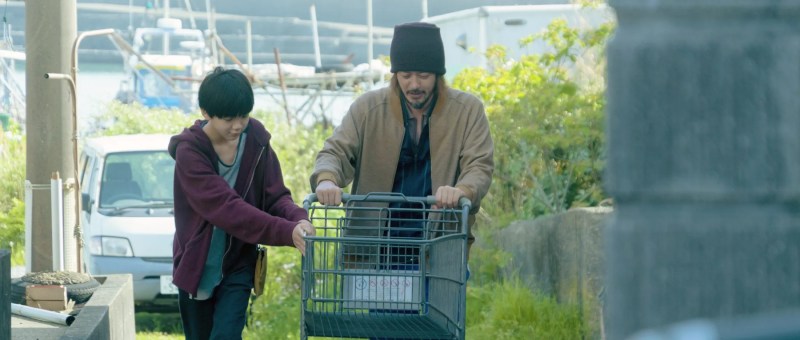
Managing to run away, Yuta is later taken in by eccentric drifter Sakamoto (Joe Odagiri) who strongly identifies with the boy in having grown up with an abusive mother whose legacy he has been unable to escape. Shiori (Ririka Kawashima), a teenage girl with issues of her own who also befriends Sakamoto, is envious of his untethered lifestyle viewing him as free and bound by no one. But in truth he too is trapped as symbolised by the broken van which prevents him from leaving to travel to Nagoya and confront his mother as he often says he intends to do. Sakamoto describes his trauma as a like a rock in the heart that tortures him as he continues to resent his mother for the abuse she dealt him while simultaneously suggesting that she has dementia and may not even remember that she has a son. Yuta by contrast insists that his mother is not a bad woman and continues to yearn for her, treasuring the friendship bracelet she made for him only for it to be broken by thuggish teens who get their kicks bullying those they perceive to be weaker than themselves.

Sakamoto becomes an awkward paternal figure, teaching Yuta how to survive in his way of life by hatching scams on wealthy passers by and fetching junk to sell to a local scrap merchant but is equally arrested, unable to come to terms with the traumatic past and therefore unable to move on. Shiori envies what she sees as his freedom in part because she has little of her own. Secretly blaming her authoritarian father for her mother’s death which she has come to doubt was really from an illness as she was told, Shiori has an internalised sense of shame and inadequacy knowing that she cannot be the person her father wants her to be and longs to escape him. Yuta continues to dream of a family, inviting Shiori to come with them to Nagoya when the truck is fixed, but is met only with despair as the world conspires against his happiness and encourages him to blame himself for his all his misfortune. Shot with an unsentimental if empathetic eye, Matsumoto’s hard-hitting drama examines the legacies of parental abuse, neglect, or absence persisting long into adulthood while his young hero struggles with himself in his conflicting emotions towards the woman who abandoned him with only an impossible future. 


It’s All My Fault screened as part of this year’s Camera Japan.

Original trailer (no subtitles)

Prior Convictions (前科者, Yoshiyuki Kishi, 2022)

An earnest young woman finds herself questioning her way of life after one of her charges is implicated in a spate of murders in Yoshiyuki Kishi’s social drama Prior Convictions (前科者, Zenkamono). As the double meaning of the English title implies, the issue is as much about preconceived notions and unfair judgements as it is about “crime”, its causes and legacies, while ultimately arguing for a more compassionate approach to law enforcement which prizes healing and rehabilitation over meaningless punishment. 

Kayo (Kasumi Arimura) is what’s known as a volunteer probation officer which is to say that she assists those who’ve recently been released from prison to reintegrate into mainstream society so that they can live comfortable lives within the law. She is not however a civil servant and though making regular reports to an official probation officer has very little power and no pay for her work which can at times be difficult and emotionally draining especially considering that she also needs to work a regular job in a convenience store to support herself. In what seems like a very poor safeguarding decision, she meets most of her clients in her own home where she lives alone one of them even breaking in while she’s not there for an impromptu hotpot party. 

While she is exasperated by some of her charges such as a woman who can’t seem to stick to a regular job no matter how many she finds her, Kayo is incredibly proud of her work with Kudo (Go Morita), a quiet and soulful middle-aged man who was convicted of murder after stabbing a co-worker who had been bullying him so badly that he lost the hearing in one ear. Kudo had been struggling to reconcile himself to his crime, intensely worried that while unable to understand why he did it he might end up doing it again. When Kudo suddenly disappears after being linked to a series of suspicious deaths most assume the worst, but Kayo alone refuses to believe that Kudo could be the killer and is determined to find out what’s really going on if only to vindicate her conviction that her work is good and useful rather than naive and misguided as some including intense police officer Takimoto (Hayato Isomura) seem to see it. 

As Kayo later reveals she’s carrying some baggage herself which contributed to her decision to begin working with those who’ve been convicted of crimes, but is doing it with the aim of reducing suffering and ending the cycle so that there are no more victims or victimisers. Also wounded, Takimoto tells her that murderers aren’t human and can never be rehabilitated, while she’s forced to consider the problem from all angles meeting with a lawyer (Tae Kimura) who defended an abusive husband who murdered his wife and learning that she did so for similar reasons to herself certain that he too deserved a second chance and could perhaps be reformed if given the proper treatment. Kayo sees that many of the people she meets ended up committing crimes because of traumatic personal circumstances and if someone had helped them earlier they may not have offended in the first place. She can’t change the past but at least in helping them now she might prevent further crimes in the future while giving them a source of stability as they attempt to root themselves more firmly in mainstream society. 

Inspired by Masahito Kagawa’s manga, Prior Convictions was previously adapted into six-part WOWWOW TV drama to which the film is technically a sequel though fairly stand alone in its gentle unpacking of Kayo’s own unresolved trauma and subsequent epiphanies as regards her relationships with those she’s trying to help. As one young woman puts it, they find her vulnerability reassuring in contrast to the often authoritarian, didactic approaches taken by law enforcement and social services who only talk down to them from a condescending place of superiority rather than trying to meet them on a more human level. In the end it’s about healing, trying to find an accommodation with the traumatic past and limiting its legacy to break the cycle of pain and violence. The prior convictions which most need addressing are those of a judgemental society that all too often contributes to the mechanisms of violence in seeking to punish rather than to help.


Prior Convictions screened as part of this year’s Camera Japan.

International trailer (English subtitles)

Riverside Mukolitta (川っぺりムコリッタ, Naoko Ogigami, 2021)

The spectre of death hangs over the protagonists of Naoko Ogigami’s adaptation of her own novel Riverside Mukolitta (川っぺりムコリッタ, Kawapperi Mukolitta) despite the sunniness and serenity of the riverside community where they live. They are each, in their own way, grieving and sometimes even for themselves in fear of a far off lonely death or else wondering what it’s all for and if this persistent suffering is really worth it, but eventually find a kind of solidarity in togetherness that can at least make the unbearable bearable. 

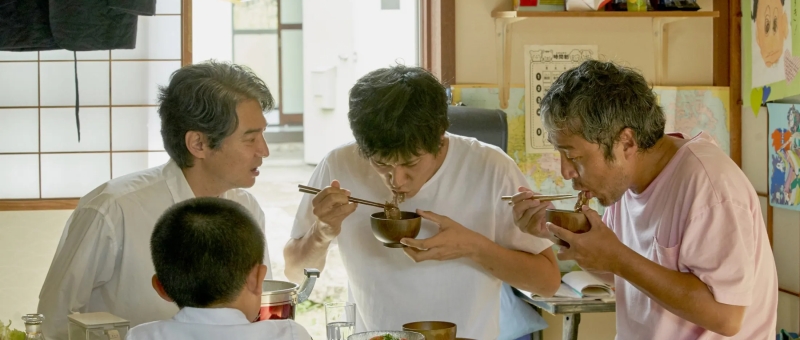
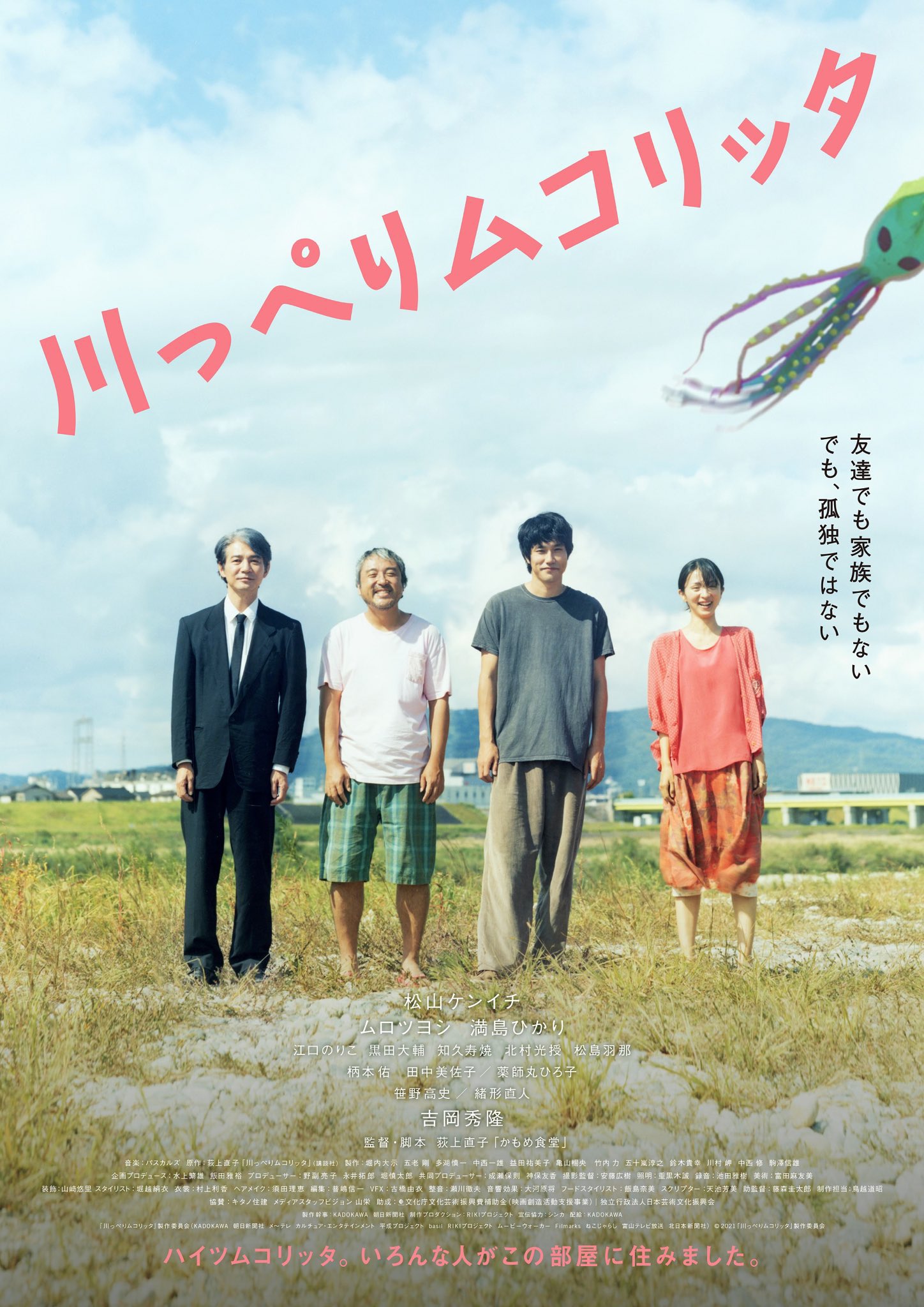
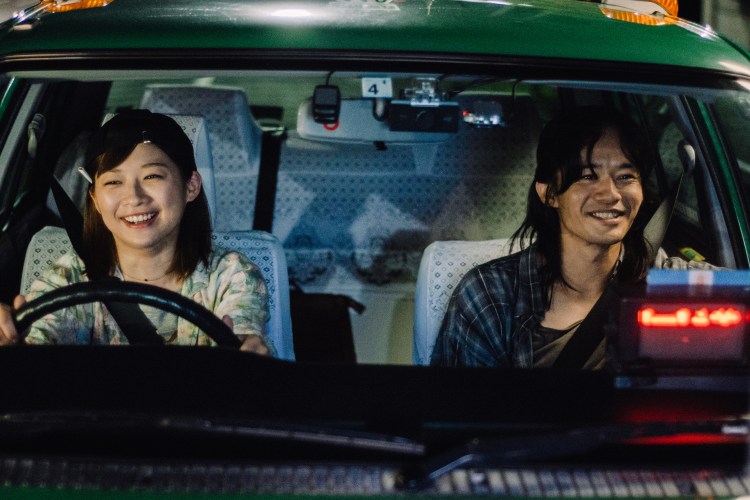
Recently released from prison, Yamada (Kenichi Matsuyama) has been sent to a remote rural village to start again with a job in a fermented squid factory and an apartment in a small row of houses by the river. His landlady Shiori (Hikari Mitsushima), an eccentric young woman with a little girl, assures him that though the building is 50 years old and many have passed through during that time no one has yet died in his unit. His neighbours Mizoguchi (Hidetaka Yoshioka) and his small besuited son Yoichi traipse the local area selling discounted tombstones reminding potential customers that no one lives forever and it might remove some of the burden of living to have your affairs in order for when you die. If all that weren’t enough, the last house in the row is thought to be haunted by an old lady whose ghost sometimes appears to water the flowers so they don’t turn to weed. Arriving home one day, Yamada discovers a letter from the local council letting him know that his estranged father has passed away in a lonely death and his remains are ready to collect at the town hall at his earliest convenience. 

Yamada is a man who keeps himself to himself, clearly ambivalent in trying to adjust to his new life wondering if he really deserves the opportunity to start again and if there’s any point in doing so. Seeing as his parents divorced when he was four and he had no further contact with his father, he is unsure if he wants the responsibility of his ashes which will of course contain additional expense for some kind of funeral. He meditates on the fates of “those who are not thought to exist”, such as the many homeless people who live by the river and are swept away by typhoons, and the elderly who die nameless and alone. When he ventures to the town hall, he discovers an entire room filled unclaimed remains some of which remain anonymous while the sympathetic civil servant (Tasuku Emoto) explains that in general they keep them for a year and then bury them together if no one comes forward to claim them. Aside from the staff members at the crematorium, the civil servant was the only person present at his father’s cremation which at any rate must be quite an emotional burden for him though he is familiar with the case and willing to talk Yamada through his father’s final days. 

Meanwhile, he’s bamboozled into an awkward friendship with the strange man from next-door (Tsuyoshi Muro) who brands himself a “minimalist” and claims to be self-sufficient in the summer at least with the veg he grows in the garden behind their apartments but insists on using Yamada’s bath because his is broken and he doesn’t have the means to fix it. Giving in to Shimada’s rather aggressive attempts at connection, Yamada comes to feel the power of community in finding acceptance from the other residents in the small row of apartments along with the paternal influence of his boss at the factory and the kindness of an older woman who works there. Yoichi, the tombstone seller’s son, is fond of playing on a junk heap which is in its way a graveyard of forgotten and discarded things from rotary telephones to CRT TVs and broken air conditioners, while he and Shiori’s daughter Kayo try to contact aliens from a purgatorial space where the living and the dead almost co-exist. Taking place at the height of summer during the Bon festival when the mortal world and the other are at their closet, Ogigami’s laidback style gives way to a gentle profundity in the transient nature of existence but also in the small joys and accidental connections that give it meaning. 


Riverside Mukolitta screened as part of this year’s Camera Japan.

Original trailer (no subtitles)

Camera Japan Announces Complete Programme for 2022

Camera Japan returns for its 17th edition in Rotterdam 22nd to 25th September and in Amsterdam 29th September to 2nd October bringing with it another fantastic selection of the best in recent and not so recent Japanese cinema.

Feature Films

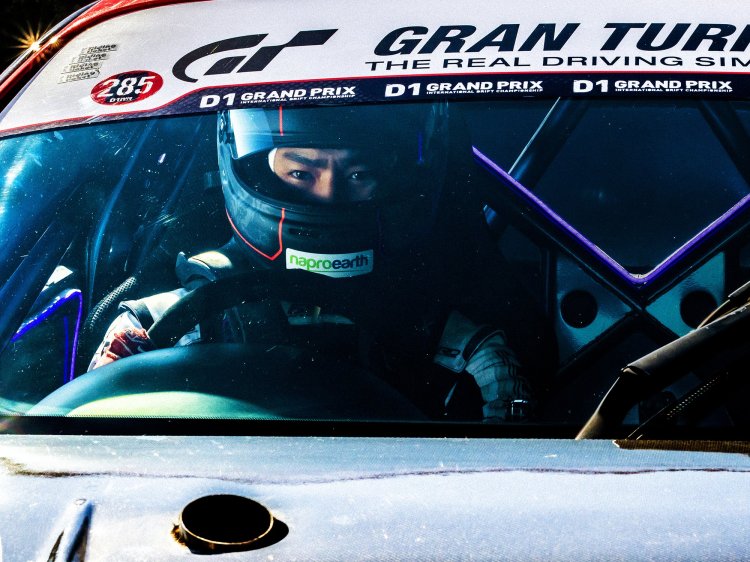
  • Alivehoon – an e-sports champ finally gets the chance to test his skills on the track in Ten Shimoyama’s retro drift racing drama. Review.
  • Angry Son – a resentful young man comes to a better understanding of his place in the world while searching for his estranged father in Kasho Iizuka’s sensitive coming-of-age drama. Review.
  • Anime Supremacy – adaptation of the novel by Mizuki Tsujimura following three women in the anime industry.
  • Arc – a young woman ponders the concept of immortality when presented with two opposing versions of its manifestation in Kei Ishikawa’s sci-fi drama. Review.
  • Awake – childhood rivals eventually find a sense of equilibrium after an AI challenge in Atsuhiro Yamada’s shogi drama. Review.
  • Baby Assassins – a pair of mismatched high school girls raised as elite assassins get swept into gangland conflict while forced to live together to learn how to integrate into society in Yugo Sakamoto’s deadpan slacker comedy. Reivew.
  • Bad City – a ruthless veteran cop in prison on suspicion of murder is brought out to tackle rampant violence and corruption in a V-cinema homage starring Hitoshi Ozawa.
  • Broken Commandment – a young man wrestles with himself torn between breaking a promise to his father and speaking out against prejudice in Kazuo Maeda’s adaptation of the Toson Shimazaki novel. Review.
  • End of the Pale Hour – dejected youngsters flounder amid the ruins of the salaryman dream in Hana Matsumoto’s youthful drama. Review.
  • Eternally Younger than Those Idiots – An aimless 22-year-old college student’s life changes after bonding with a mischievous philosophy major but she discovers through her various encounters that life isn’t always as it first seems in Ryohei Yoshino’s adaptation of the novel by Kikuko Tsumura.
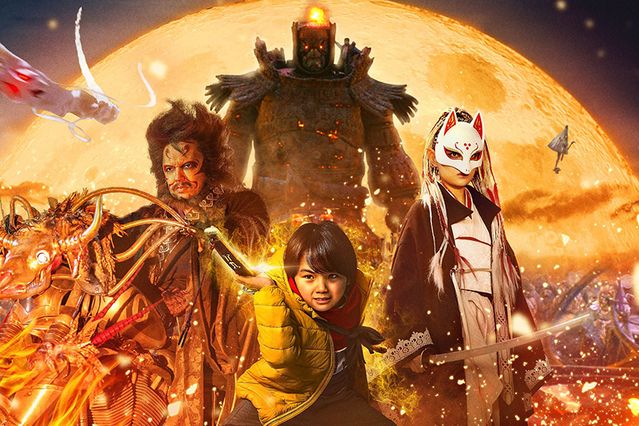
  • The Great Yokai War: Guardians – an anxious little boy discovers his inner hero and saves the world through kindness in Takashi Miike’s warmhearted return to the world of folklore. Review.
  • Intolerance – latest from Keisuke Yoshida in which the father of a teenage girl killed by a car while running away after being accused of shoplifting takes revenge.
  • It’s all My Fault – a lonely young man befriends a drifter after his mother rejects him in Yusaku Matsumoto’s indie drama.
  • Joint – A gangster in search of reform finds himself caught between old school organised crime and the shady new economy in Oudai Kojima’s noirish take on yakuza decline. Review.
  • Just Remembering – former lovers are confronted by reminders of their failed romance amid the loneliness of the coronavirus pandemic in Daigo Matsui’s melancholy drama. Review.
  • Let Me Here it Barefoot – two alienated young men struggle to identify their feelings while searching for escape from moribund small-town Japan in Riho Kudo’s indie drama. Review.
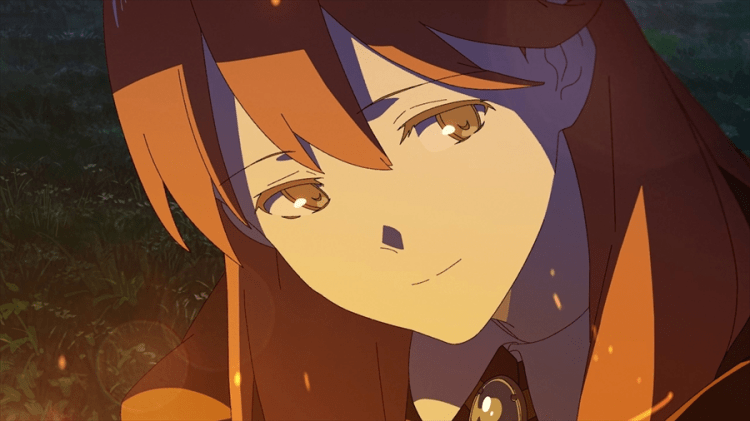
  • The Midnight Maiden War – a nihilistic young man is torn between a mysterious tech genius and his more cheerful sempai in the latest from Ken Ninomiya.
  • My Brother, the Android, and Me – a lonely researcher attempts to ease his existential anxiety by building a simulacrum of himself in Junji Sakamoto’s gothic sci-fi chiller. Review.
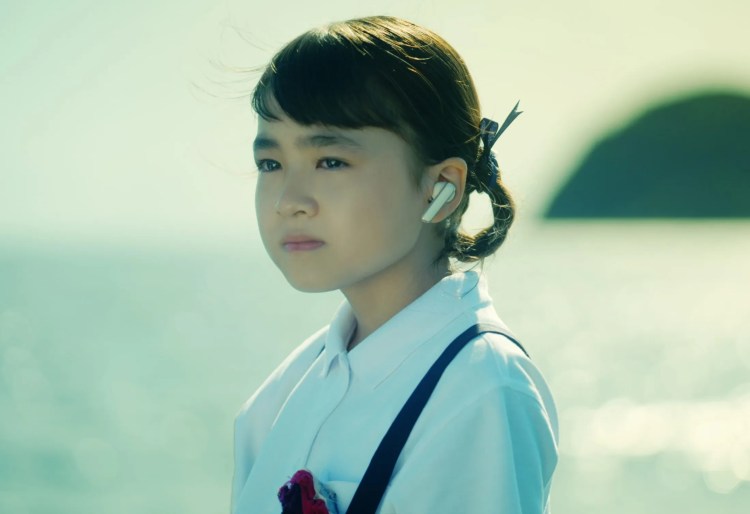
  • Nagi’s Island – cheerful indie drama in which a young girl tries to overcome family trauma after moving to an idyllic island.
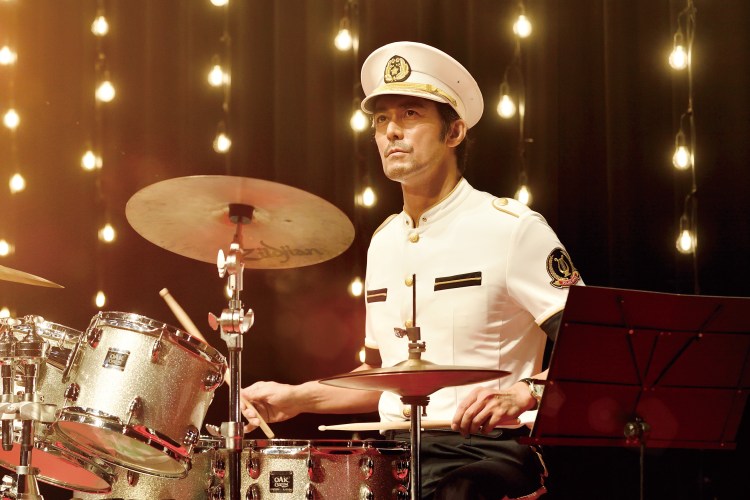
  • Offbeat Cops – a maverick cop develops a new appreciation of group harmony after being demoted to the police band in Eiji Uchida’s warmhearted comedy. Review.
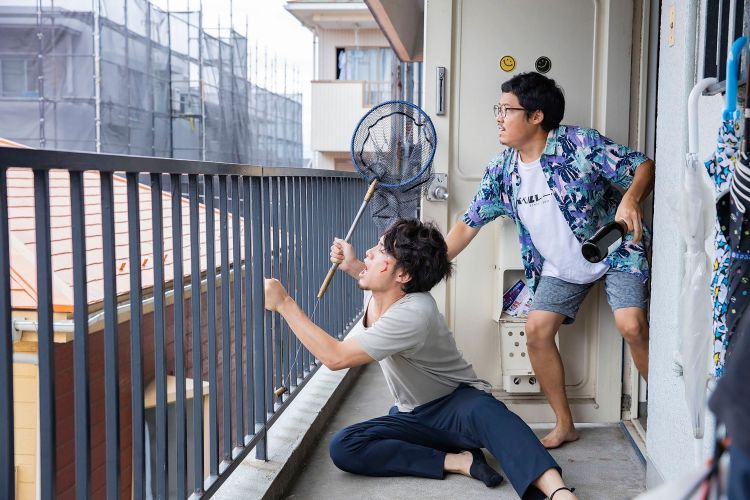
  • Popran – a self-involved CEO gets a course correction when his genitals suddenly decide to leave him in Shinichiro Ueda’s surreal morality tale. Review
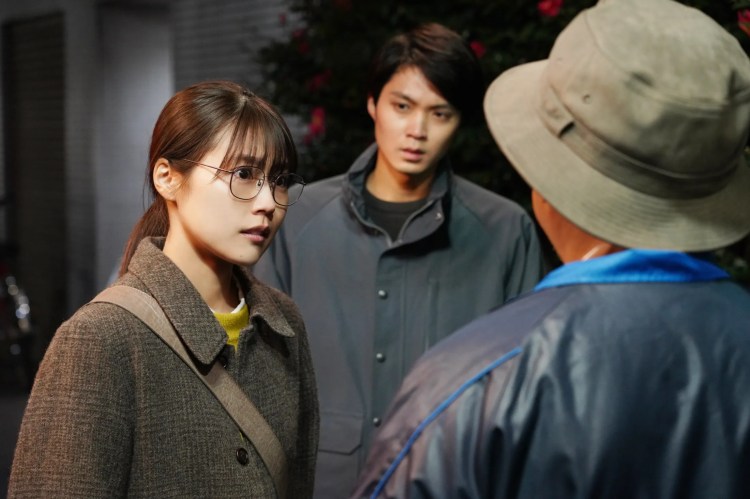
  • Prior Convictions – a volunteer probation officer questions her life philosophy when one of her charges is implicated in a spate of killings in the latest from Yoshiyuki Kishi.
  • Ribbon – a young student wrestles with her sense of purpose when her graduation exhibition is cancelled in Non’s charming directorial debut. Review.
  • Riverside Mukolitta – a young man recently released from prison finds a new sense of community after moving to a remote village in the latest from Naoko Ogigami.
  • Shrieking in the Rain – a rookie female film director faces industry sexism and corporate interference while trying to fend off a visit from the censors before shooting an erotically charged love scene in this 80s drama from Eiji Uchida.
  • Small, Slow, But Steady – latest from Sho Miyake (And Your Bird Can Sing) following a young woman’s determination to become a champion boxer.
  • Spotlight – a struggling director is approached by a young woman who offers him a large amount of money to make a film in this indie drama from KOUMEI.
  • Thanc You – comedy duo Jaru Jaru take on 11 roles each in this anarchic sketch comedy.
  • They Say Nothing Stays the Same – an ageing boatman finds himself adrift on the great river of time in Joe Odagiri’s exquisitely shot, ethereal meditation on transience and goodness. Review.
  • Unlock Your Heart – teen romantic drama in which a high school girl befriends her crush’s girlfriend.
  • Wandering – intense drama from Lee Sang-il in which a student takes in a neglected little girl but is later accused of kidnapping.

Animation

  • Dozens of Norths – feature animation by Koji Yamamura.
  • Goodbye, Don Glees! – three teenage boys come to terms with past and future while on a climactic summer adventure in Atsuko Ishizuka’s heartfelt coming-of-age anime.
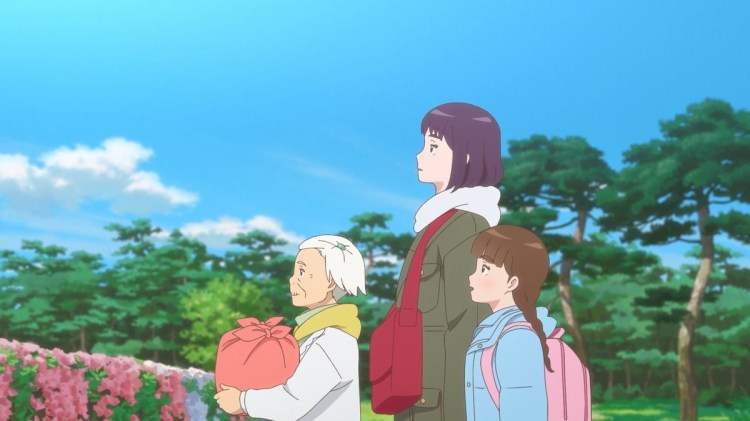
  • House of the Lost Cape – two young girls are taken in by a kindly old lady who lives in a remote mansion by the sea which is also home to a series of mysterious creatures in this family animation adapted from the novel by Sachiko Kashiwaba.
  • Summer Ghost – three teens team up to search for the elusive spirit of a woman said to have taken her own life.

Documentary

  • Salaryman – Allegra Pacheco’s wide ranging documentary examines Japan’s contemporary corporate culture through the prism of the salaryman. Review.
  • Target – Shinji Nishijima’s documentary follows former Asahi Shimbun journalist Takashi Uemura as he continues to fight for press freedom in an increasingly authoritarian Japan. Review.
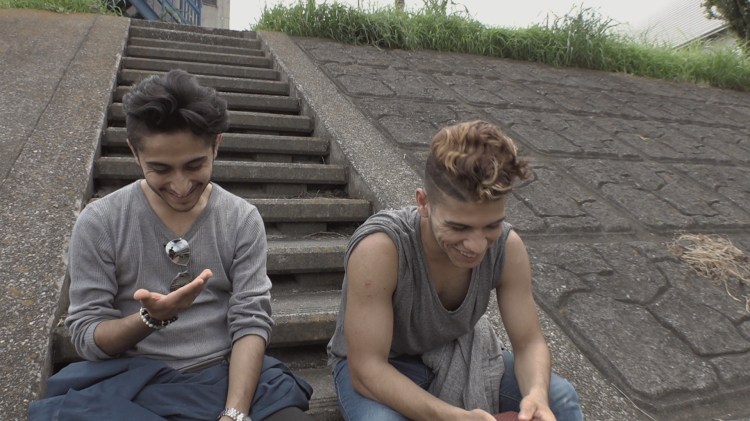
  • Tokyo Kurds – documentary exploring the lives of young Kurdish refugees in Japan.
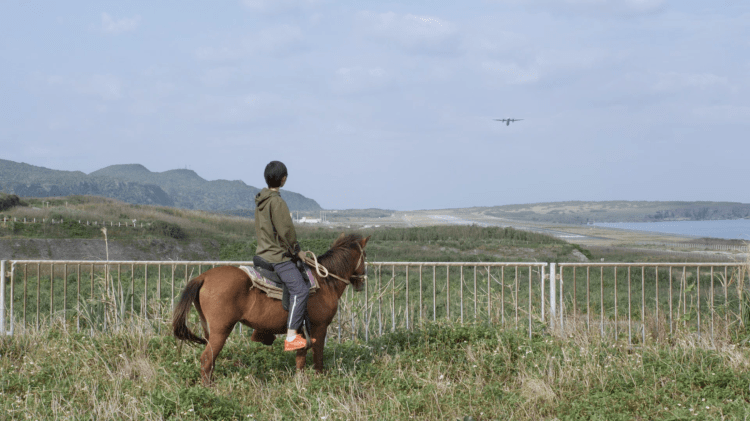
  • Yonaguni – documentary following a group of teens living on a remote island.

Special Screenings

  • (c) Nikkatsu 1955
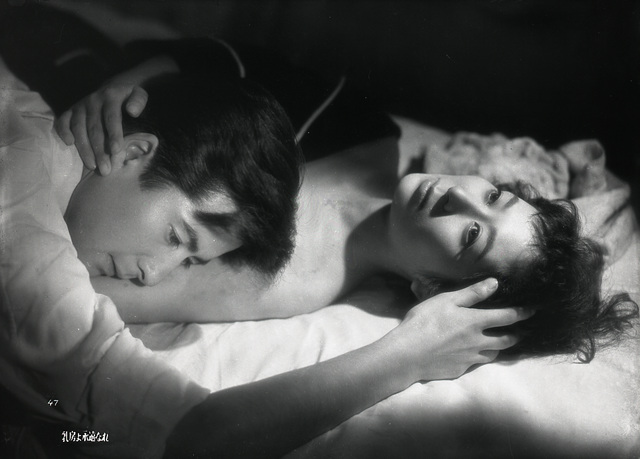
  • Forever a Woman – Kinuyo Tanaka’s directorial debut draws inspiration from current events to interrogate contemporary notions of womanhood through the story of a female poet suffering from terminal breast cancer who eventually rediscovers her femininity through the embrace of her sexual desire. Review.
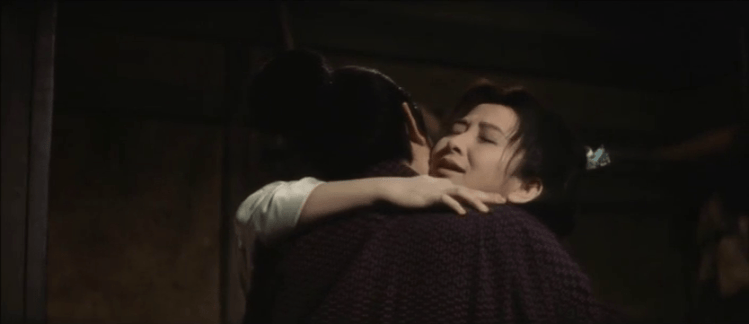
  • Love Under the Crucifix – Juxtaposing the use of the crucifix as a method of execution for sexual transgression with the growing influence of Christianity in late 16th century Japan, Takana’s final film as a director stars Ineko Arima as a young woman in love with a reticent lord (Tatsuya Nakadai) who is already married and among the growing class of merchant samurai who have converted to Christianity through trading links with European nations. Review.
  • The Moon Has Risen – Tanaka’s second film was co-scripted by Yasujiro Ozu and features several homages to his visual style including the use of pillow shots but otherwise has a sensuality and sensitivity not common in his filmmaking. The comic melodrama follows the attempts of a young woman (Mie Kitamura) to set her lovelorn sister up with a sensitive visitor while falling for her childhood friend. Look out for Tanaka’s brief cameo as a ditsy maid. Review.
  • Wandering Princess – again based on very recent events, The Wandering Princess is a sumptuous romantic melodrama in which a Japanese noblewoman (Machiko Kyo) agrees to marry the brother of the former emperor of China now a puppet king of the Japanese colony of Manchuria but is eventually separated from him by the fall of the Japanese empire. Review.
  • Where Now Are the Dreams of Youth – Ozu silent melodrama in which a young man learns a painful lesson about class and friendship when he becomes CEO of his father’s company and sets his uni friends up with jobs.

Camera Japan 2022 takes place in Rotterdam 22nd to 25th September and Amsterdam 29th September to 2nd October. Full information on all the films as well as ticketing links can be found on the official website and you can also keep up to date with all the latest news via Camera Japan’s official Facebook pageTwitter account, and Instagram channel.

Between Us (藍に響け, Yasuo Okuaki, 2021)

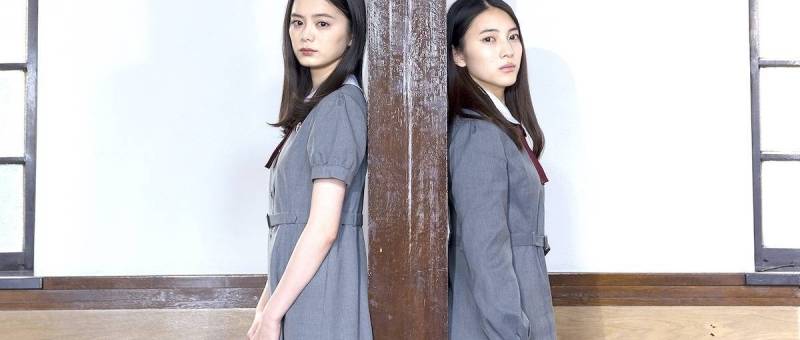
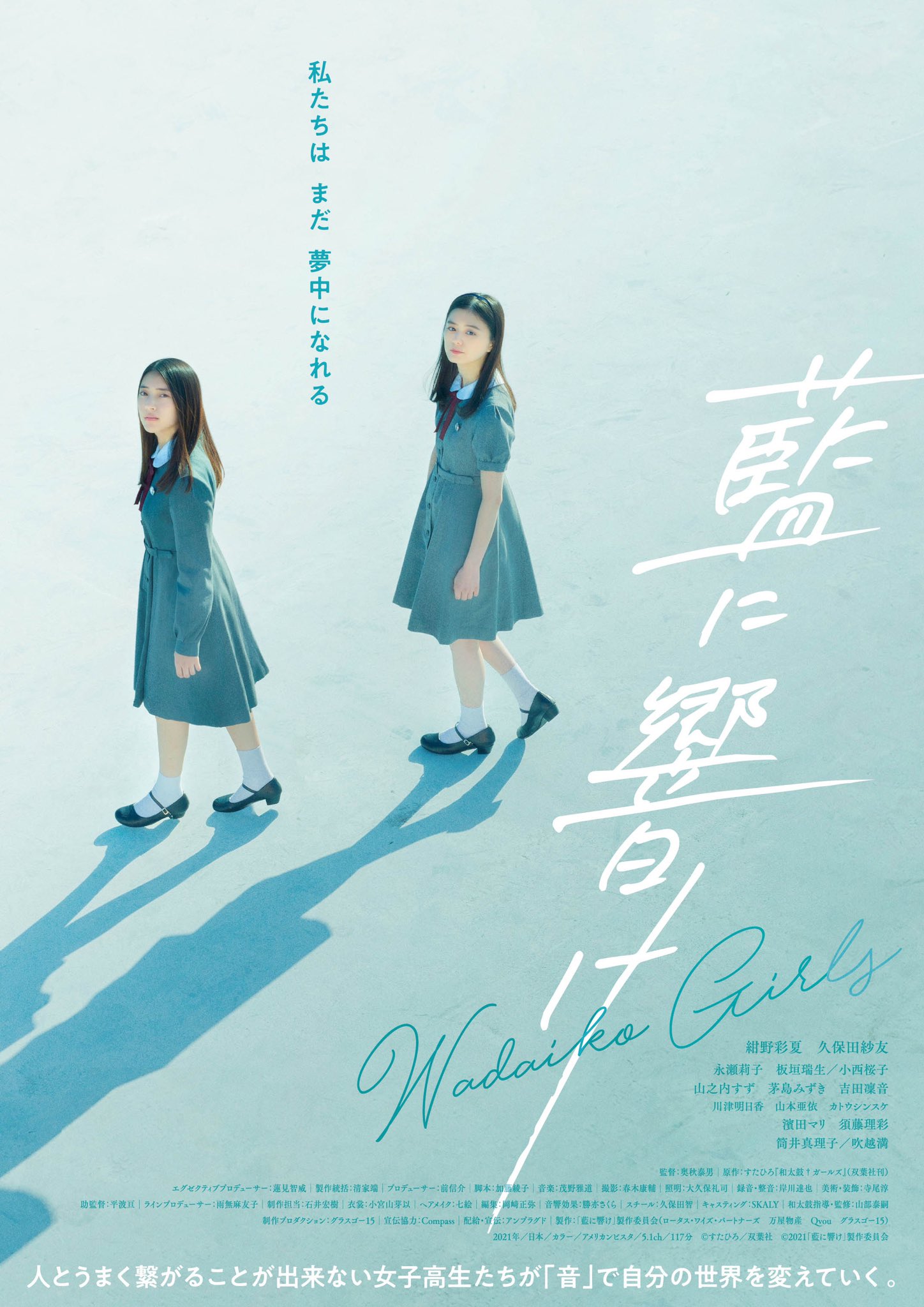
Hyper-individualism goes to war with collective harmony in Yasuo Okuaki’s taiko-themed coming-of-age manga adaptation, Between Us (藍に響け, Ai ni Hibike, AKA Wadaiko Girls). Reminded that “your sound is everyone’s sound” the closed-off heroine begins to realise you can’t always just do your own thing and expect everyone else to deal with it, but in the end shows remarkably little growth as even her otherwise positive contribution of helping a similarly troubled young woman quite literally find her voice is in itself achieved mainly through abrasive bullying not to mention a persistent ableism which otherwise entirely ignores her feelings. 

Okuaki opens with an intense scene as the heroine, Tamaki (Ayaka Konno), burns her ballet shoes alone on the beach at night before staring pensively out at the ocean. As we discover, Tamaki has a lot going on that she is reluctant to share with others. Something has evidently gone wrong at home, she seems worried about money and the modest house she shares with her mother who appears to work late often is filled with packing boxes suggesting they may only recently have moved. She hasn’t told her mum she’s given up ballet, partly it seems because she’s working part-time at the local supermarket which she has to keep a secret because the elite Catholic school she attends has a rule against part-time jobs. Wandering around alone however while her friends, who each seem to come from extremely wealthy families, assume she’s heading to ballet Tamaki becomes captivated by the sound of taiko drumming, eventually spotted by a young woman practicing, Maria (Sayu Kubota), who happens to be mute. 

Despite the impossibility of direct communication, Maria manages to covey her enthusiasm for the drums presumably picking up on something in Tamaki which, for unexplained reasons, she is extremely reluctant to explore. Fellow drummer Kahoko, however, is dead set against her joining the club even setting her a cruel and impossible challenge as a kind of entrance exam. The irony is that even as the sullen Tamaki stands up against low-level bullying from Kahoko who makes a basic training exercise seem like humiliating punishment, Tamaki becomes far too into perfecting the art of taiko, obsessively honing her craft and displaying natural ability but quickly losing patience with her fellow drummers who are mostly playing for fun and friendship. 

Tamaki is and remains distinctly unpleasant to be around while Kahoko seems to soften, becoming a source of support to the other girls, and poor Maria is rounded on by just about everyone including maternal figure Sister Nitche (Mariko Tsutsui) who was once herself a top taiko coach but for reasons unknown gave up the art, got religion, and became a nun. Sister Nitche was known as a demon coach, and the decision to reassume her role does indeed resurface an element of cruelty in her unseen in her role as high school teacher and carer at the attached children’s centre. Maria first bonds with Tamaki in revealing to her that she was rendered mute in a car accident and has been undergoing rehabilitative therapy in an attempt to regain her speech but that it hasn’t been going as well as she’d hoped. Yet both Sister Nitche and Tamaki eventually set on her, insisting that the reason she’s not making progress is because she’s not trying hard enough instead of, perhaps, reassuring her that even if she not able to improve her speaking it would still be fine and there’s no need to rush. 

The conflict seems to be between the ultra-competitive, deeply wounded Tamaki and the ethos of taiko which demands group harmony. There’s no point being a show off because the group must move as one, yet Tamaki struggles to accommodate herself to the idea of adapting to the collective rhythm insisting everyone attempt to match her speed while suggesting that those who can’t aren’t up to the task and should voluntarily resign rather than bring the group down, echoing the rather harsh survival of the fittest philosophy espoused by a transformed Sister Nitche. Just as she had, Tamaki later turns on Maria in the face of her own failure repeatedly insisting that she is a “loser” who wouldn’t fight for taiko or for her voice in a confrontation that leads first to a physical fight and then to an intense taiko battle that bears out the repeated notion of baring one’s soul through the beating of the drum. 

There is an unmistakable though unresolved homoerotisicm in the conflict between the two young women filled as it is with repressed emotion, frustration, and unspoken desires all of which appear to dissipate through the climax of the physically and emotionally intense taiko session. Nevertheless, there is also something in uncomfortable in the fact of Maria’s path towards finding her literal voice arising because of what is essentially abusive bullying rather than encouragement or positive support especially as it also denies her the right to speak her feelings honestly while no one is making much of an effort to listen to her. Tamaki meanwhile remains somewhat unsympathetic even in her silent concern for Maria betrayed by the unexpected warmth of her smile in seeing her deciding to return to taiko, her own buried troubles otherwise unresolved while her unforgiving hyper-individualism is tacitly condoned even as she learns to submit herself to the collective rhythm and finds through it the sense of connection she was perhaps missing. 


Between Us screened as part of this year’s Camera Japan

Original trailer (no subtitles)

The Deer King (鹿の王 ユナと約束の旅, Masashi Ando & Masayuki Miyaji, 2021)

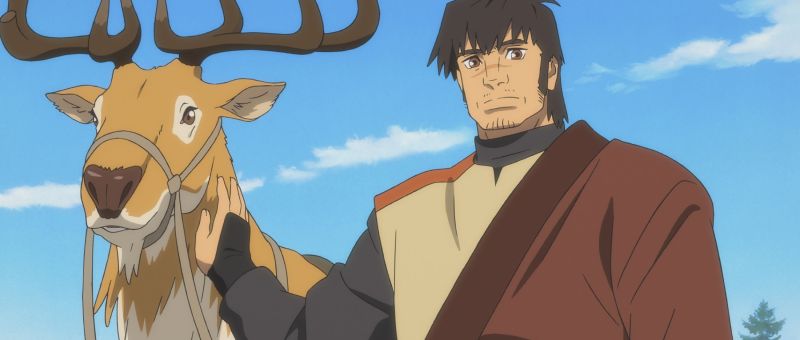
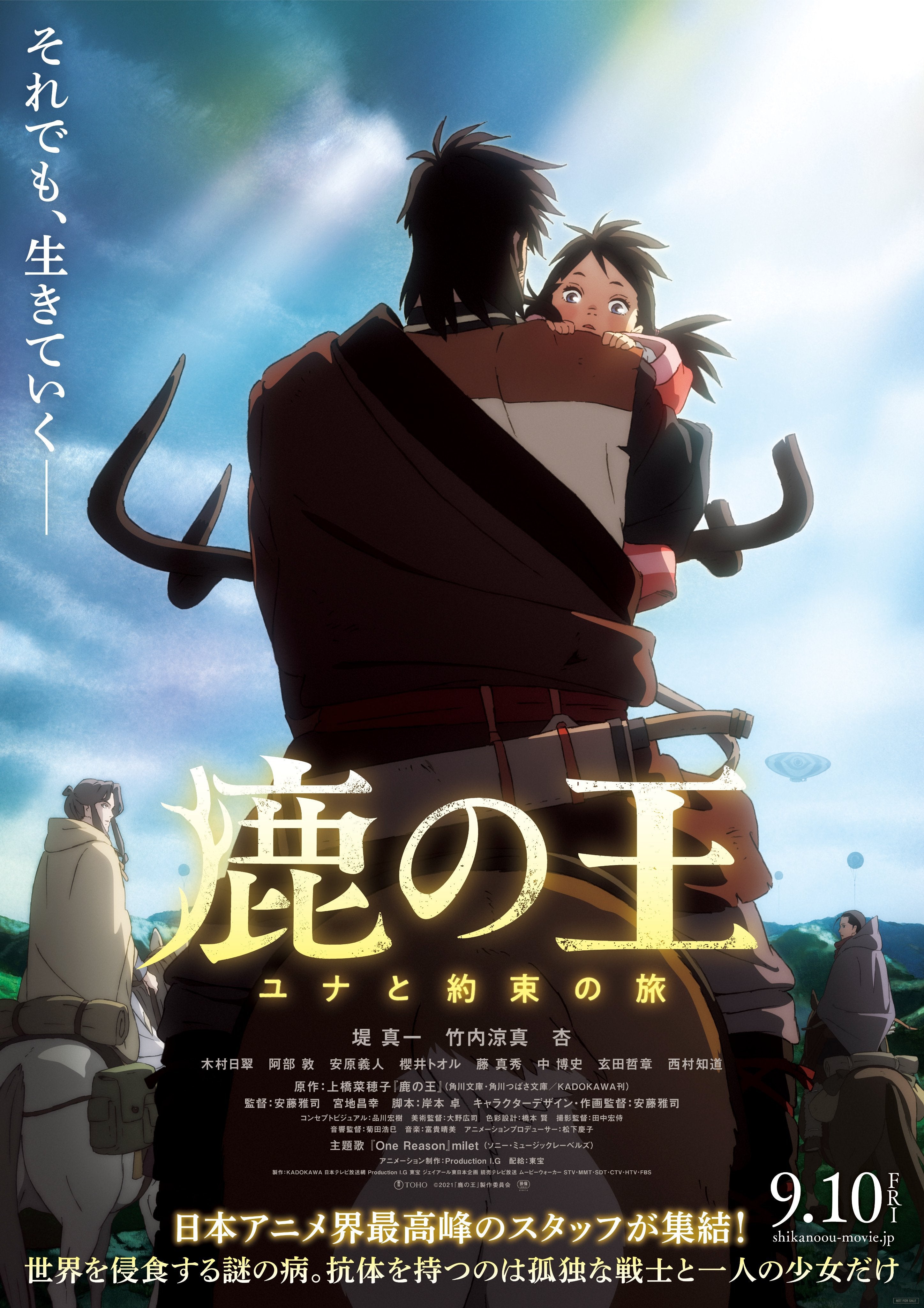
A broken and defeated man rediscovers a sense of purpose in human connection but finds himself hunted by opposing sides each of whom see in him either salvation or destruction in Masashi Ando & Masayuki Miyaji’s fantasy anime adapted from the novel by Nahoko Uehashi, The Deer King (鹿の王 ユナと約束の旅, Shika no Ou: Yuna to Yakusoku no Tabi). Set in a fractured land of fragile peace, Deer King perhaps uncomfortably casts resistance as villainy while largely letting its oppressors off the hook but argues finally for turning towards the light rather than the darkness in a spirit of mutual forgiveness that permits a less fractious co-existence. 

As a lengthy title roll explains, a war took place between the Aquafa and the Empire of Zol which resulted in a truce, partly because of a mysterious ”Mittsual” plague, the Black Wolf Fever, which frightened the Zolians out of sacking the capital. 10 years on, however, it’s clear Aquafa has become a vassal state living (literally) under the eye of the watchful Zolian emperor. The action opens in a salt mine where the enslaved are mercilessly exploited by their Zolian masters. “Work as if death spared you” one shouts out as an old man collapses, a younger, fitter one silently picking up his burden. As we’ll later discover this man is “Broken Antler” Van (Shinichi Tsutsumi), a lone survivor several times over and about to be so again as the mine is attacked by seemingly rabid dogs, one of them wandering into the prison where Van has been chained for helping the old man with a small child in its mouth. Van lunges at the dog which drops the child and bites his arm instead, the creature in a sense freeing him from the source of his oppression in breaking the chain which tied him to the wall before walking away leaving him bleeding only for Van to discover the bite has given him new power. Breaking free he takes the child with him as he ventures back out into the world. 

Van has lost more than most in this war, in a sense orphaned, a living a ghost with nothing and no one to live for. He could so easily lean towards hate or resentful violence but is given new reason for survival in becoming a father to the little girl, Yuna (Hisui Kimura), who is like him a lone survivor. Yet others feel differently, the resurfacing of the plague a metaphor for the grief and anger existing among the Aquafa targeting as it does only the Zol who look upon it as a “curse” or else or rebellious plot, which it in fact is. The former elite of Aquafa are apparently intent on using the Mittsual, to which they believe themselves immune, to free themselves of Zolian control and regain their independence. A neutral scientist, Hohsalle (Ryoma Takeuchi), however, throws their plan into disarray in his conviction that Van’s blood, the blood of a survivor, may act as cure and vaccine. The Zolians need him to survive, but Aquafans would rather he didn’t. 

Meeting his destiny head on, Van finds he has a choice: either embrace the darkness, accept the fear and the grief and the hate by using the Mittsual to target the Zolians, or allow Hohsalle to use his blood to find a cure. In the small, formerly nomadic, village in which Van finds a temporary home, they care nothing for politics and only want peace. They’ve begun intermarrying with the Zolians and live happily together while another man he meets along the way appears to be grateful for all the Zolians have done for them, which seems on one level a peculiar sentiment in welcoming their ongoing oppression. Yet salvation comes in a sense from re-embracing the Aquafan culture which has been taken from them, the cure not Van’s blood but his bond with nature something which all Aquafans once shared but was disdained by Zol. Zol can only survive by recognising Aquafa’s equality. 

Van’s strange new power, dubbed “inside Out” literally connects him to every other living being in the land becoming one with the great confluence of nature and cosmos. “Blood ties matter not” he tells an embittered young woman realising that Yuna is not his biological daughter, she in turn learning to abandon her hate through the force of his love. He reflects on the memory of a deer who put himself at risk to save a foal, asking himself if that’s what it means to be a hero or if he merely had the means to do what anyone should and did what was asked of him. Where the cruel patriotism of the Aquafans and religious zealotry of the Zolians fail, the rationality of humanitarian science and simple human empathy win out. A sacrifice may in a sense be needed, but it’s not the one you thought it was. A tale of the redemptive power of love, The Deer King argues for forgiveness in the face of hate if perhaps uncomfortably suggesting the burden of peace lies with the oppressed.


The Deer King screened as part of this year’s Camera Japan

Original trailer (English subtitles)
I Never Shot Anyone (一度も撃ってません, Junji Sakamoto, 2020)

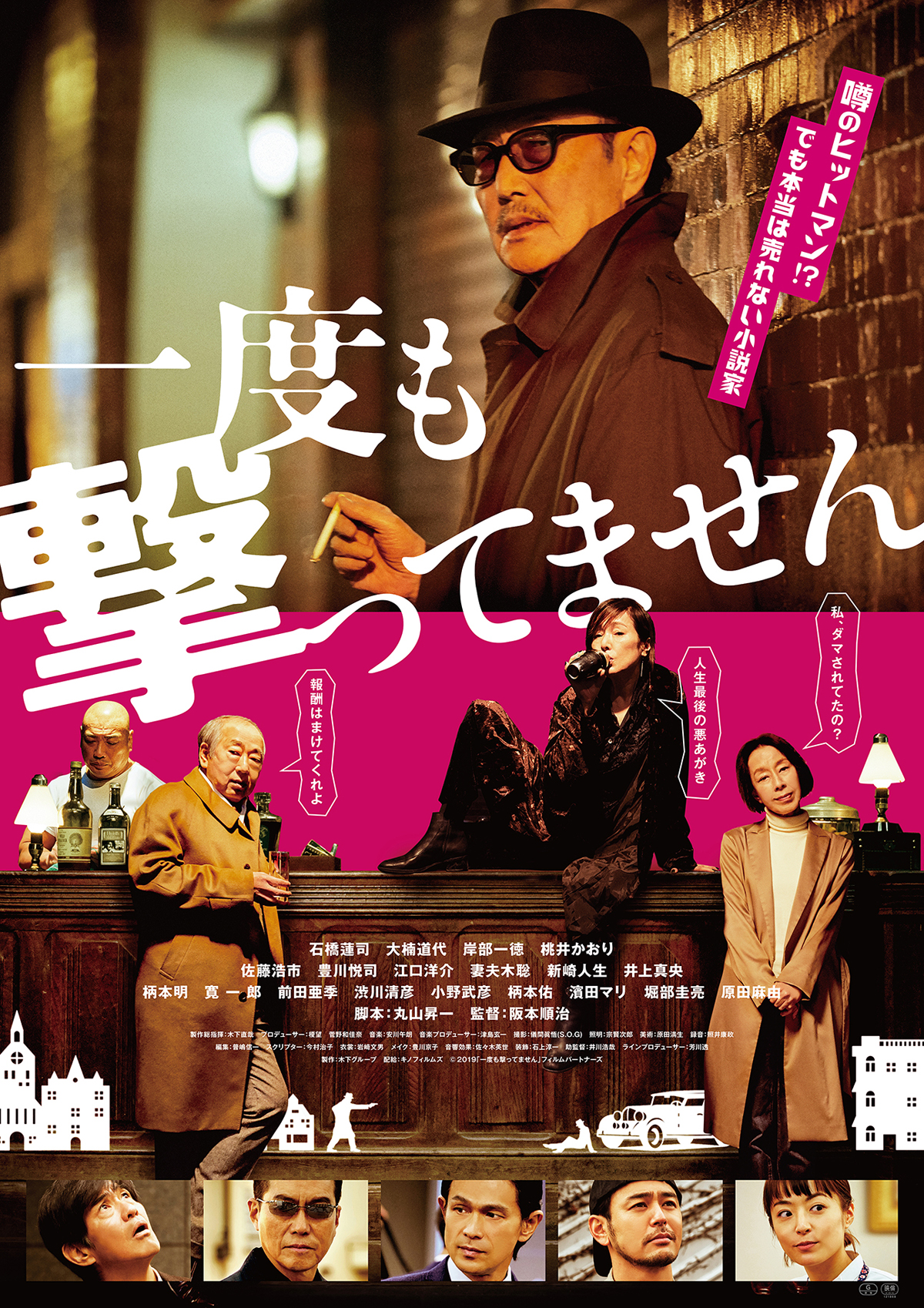
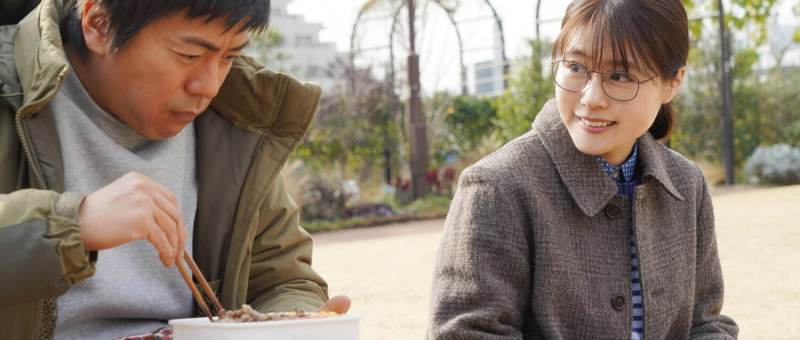
“You don’t know the pain of being forgotten” laments an ageing actress attempting to move the heart of a heartless conman in Junji Sakamoto’s comedy noir I Never Shot Anyone (一度も撃ってません, Ichido mo Uttemasen), more as it turns out a melancholy meditation on age and disappointment than hardboiled farce. Sakamoto’s elderly heroes live in a world of night in which their dreams of youth never died, but are confronted with the realities of their lonely existences when the sun rises and exposes the shallowness of their escapist fantasy.

74-year-old Susumu Ichikawa (Renji Ishibashi) was once a promising novelist but veered away from the realms of literary fiction towards the allure of hardboiled noir, no longer permitting his wife Yayoi (Michiyo Okusu) to read his drafts claiming that she would find them too distressing. His publisher (Koichi Sato) meanwhile is more distressed by the quality of the prose than the content, partly because his novels are simply dull but also because they are far too detailed to be mere imagination and as each one seems to be based on a recent ripped from the headlines case he’s staring to worry that Susumu is the real life legendary hitman said to be responsible for a series of unsolved suspicious deaths. 

On the surface, it might be hard to believe. At home, Susumu is a regular old gent who reads the paper after breakfast and locks himself away in his study to write for the rest of the day but his wife complains that he stays out too late at night little knowing that he leads something like a double life, dressing like a shady character from a post-war noir and even at one point likening himself to Yves Montand in Police Python 357. He speaks with an affected huskiness and is fond of offering pithy epithets such as “women come alive at night” while reuniting with two similarly aged friends in a bar run by a former hitman nicknamed “Popeye” (pro wrestler Jinsei Shinzaki) who seems to have some kind of nerve damage in his hands he’s trying to stave off through obsessive knitting. 

What Susumu seems to be afraid of, however, is the sense of eclipse in his impending obsolescence. The guy who ran the local gun shop whom he’d known for 30 years recently passed away, while the guy from the Chinese herbalist apparently went home to die. His publisher’s retiring, and Popeye’s going to close the bar because his mother’s ill so he’s going back to his hometown. Susumu and his wife didn’t have any children and he perhaps feels a little untethered in his soon-to-be legally “elderly” existence while the now retired Yayoi is also lonely with her husband always off in another world he won’t let her share. His friend Ishida (Ittoku Kishibe) once a prosecutor and now a disgraced former mob lawyer working as a security consultant/fixer is estranged from his only daughter, while former cabaret star Hikaru (Kaori Momoi) never married and spends her days working in a noodle bar. They are all scared of being forgotten and fear their world is shrinking, living by night in order to forget the day. 

Perhaps you can’t get much more noir than that, but there’s a definite hollowness in Susumu’s constructed hardboiled persona that leaves him looking less like Alain Delon than a sad man in an ally with only a cigarette for a friend. Even his new editor is quick to tell him that no reads noir anymore, Susumu is quite literally living in the past battling a “hopeless struggle” as someone puts it against the futility of life by living in a hardboiled fantasy. We see him looking at target profiles for an investigative reporter proving a thorn in the side of yakuza and big business, and threaten a heartless conman (Yosuke Eguchi) whose investment frauds have caused untold misery, yet he’s not really a part of the story and his life is smaller than it seems or than he would like it to be. Perhaps in the end everyone’s is even if Susumu is as his new editor describes him “one step away from being insane”. Never quite igniting, Sakamoto’s lowkey tale of elderly ennui is less rage against the dying of the light than a tiny elegy for lives unlived as its dejected hero steps back into the shadows unwilling to welcome an unforgiving dawn.


I Never Shot Anyone screened as part of this year’s Camera Japan

Original trailer (no subtitles)

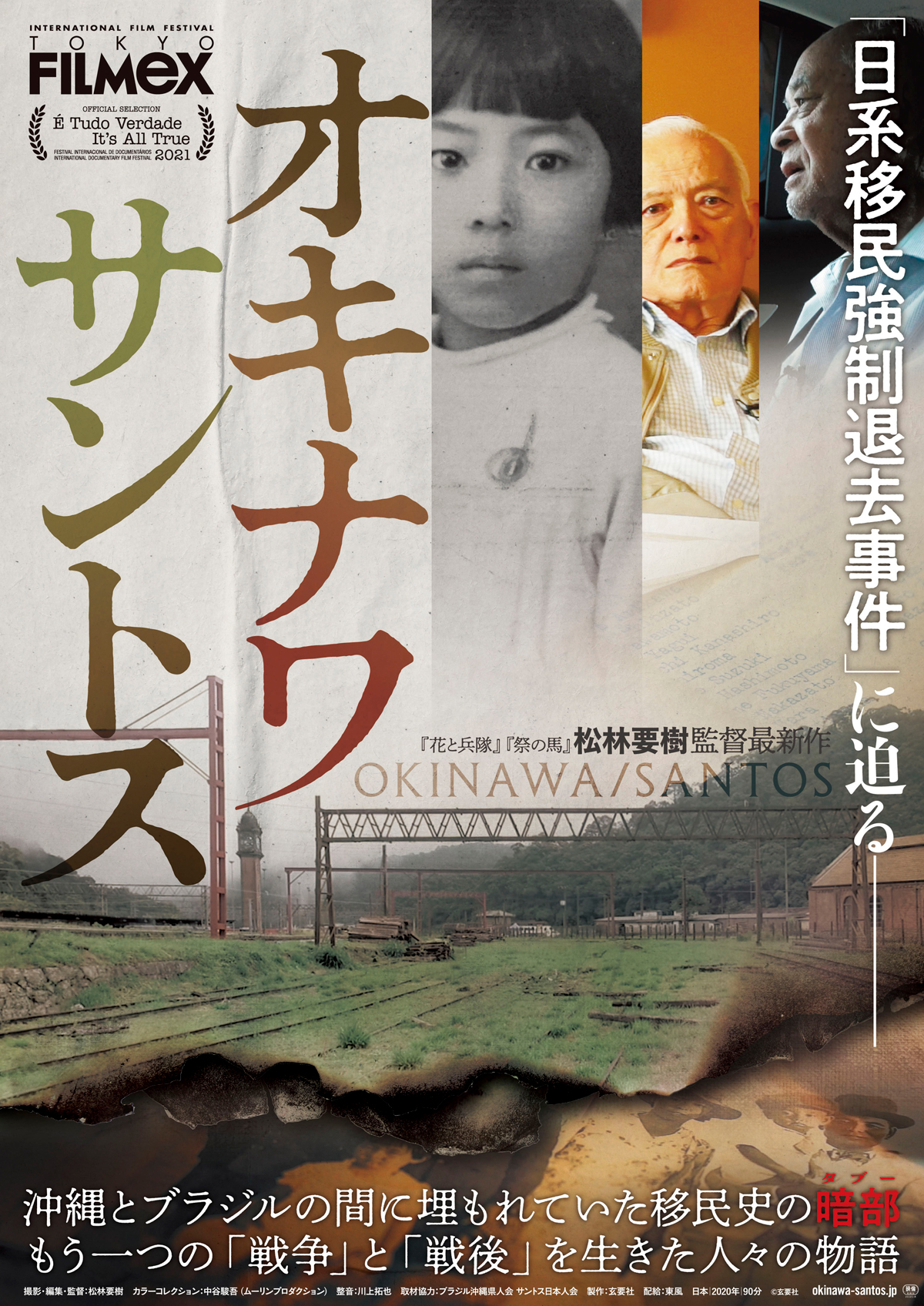
Okinawa Santos (オキナワ サントス, Yoju Matsubayashi, 2020)

Brazil is home to the largest Japanese population outside of Japan, yet the fortunes and status of the Japanese migrants have been extremely variable since the first boat arrived in 1908. At the end of the Meiji era as the society attempted to transition from feudalism towards a modern economy, Japan was a poor country and with exclusionary acts often blocking migration to countries such as the United States many travelled to South America and in particular to Brazil, which was desperate to recruit cheap labour following the end of slavery, to seek their fortunes intending to return in a few years’ time having made enough to set themselves up at home. 

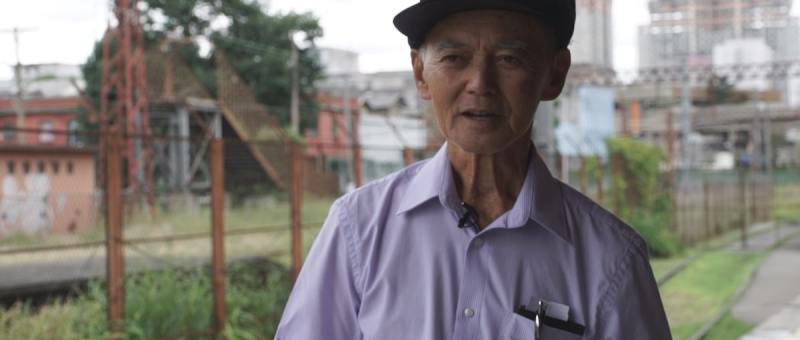
This is one reason given for why many settled in the harbour town of Santos, thinking it not worth their while to move further inland when they’d be going home soon enough. Yoju Matsubayashi’s documentary Okinawa Santos (オキナワ サントス), however, centres itself on a little known and traumatic episode of Brazilian-Japanese history, the forced relocation of the city’s Japanese community on July 8, 1943. Interviewing several of those who experienced the relocation first-hand many of whom were children at the time, Matsubayashi explores the position and legacy of the diaspora community the majority of whom hailed from the Okinawan islands rather the mainland. 

One of those interviewed explains that the rationale for the relocation was that Allied boats were sinking off the coast of Santos with alarming frequency and the authorities began to view the Japanese community, against whom there had already been a degree of prejudice, as potential spies. One now elderly gentleman recalls with sadness that his Brazilian friends abruptly stopped playing with him, calling him a “fifth columnist” in the streets. Japanese-language newspapers had already been shut down which is one reason few primary documents relating to the relocation exist, while speaking Japanese in public had also been banned. This might have seemed ironic to those who’d travelled from Okinawa where they also found themselves oppressed by the majority Japanese culture whose attempts at forced assimilation ran to banning the native Okinawan language, something they were comparatively free to preserve after relocating to Brazil

Midway through his documentary, Matsubayashi encounters this same divide even within the Japanese community receiving a phone call from a Brazilian-Japanese woman he’d interviewed who asks to be removed from the project apparently because of his interviewing so many from the Okinawan diaspora. An older man who later went into politics recalls the community having been largely segregated with the mainland Japanese often looking down on the Okinawans while each operated separate communal halls and intermarriage was frowned upon. Some hid their Okinawan heritage out of shame as Okinawans were regarded as not really “Japanese” but somehow other. This rift was apparently unhealed until the contemporary era though as the phone call implies may still to some extent survive. 

All were however subject to the relocation order as the now elderly children explain their fear and confusion in being cast out of their homes with little warning, having their farms looted while forced to leave most of their property and possessions behind. Crowded onto a train they were taken to an immigration centre in São Paulo before being moved on further into the interior but with little assistance or support dependent entirely on friends and relatives, other members of the diaspora, already living and farming inland. Many of the now elderly members of the community tearfully recount crushing poverty and discrimination, never having talked about their experiences even with their own children and describing them as unreal, like a sad dream from which they have never quite woken up. Meanwhile they continued to face prejudice after the war due to the presence of a minority group who couldn’t accept the Japanese defeat and apparently committed acts of terrorism against those who could, further harming the reputation of the Japanese community in mainstream Brazilian society to the extent that legislation was proposed to halt immigration from Japan which was finally defeated only on the grounds of democratic principle. Nevertheless, though many of those interviewed have been able to build happy, successful lives they are each affected by the traumatic legacy of forced displacement unable even to speak of their childhood suffering. 


Okinawa Santos screened as part of this year’s Camera Japan

Original trailer (no subtitles)

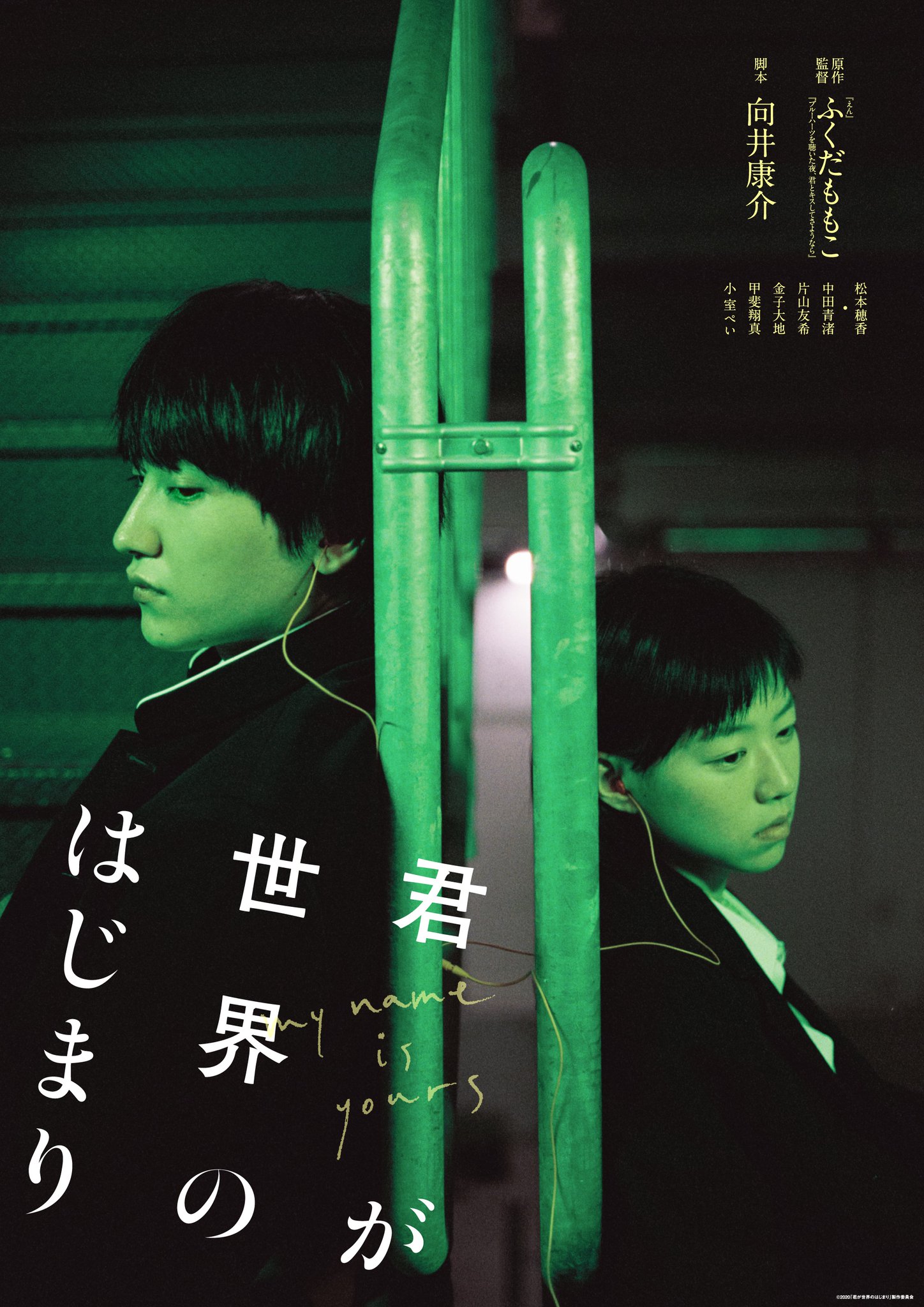
My Name is Yours (君が世界のはじまり, Momoko Fukuda, 2020)

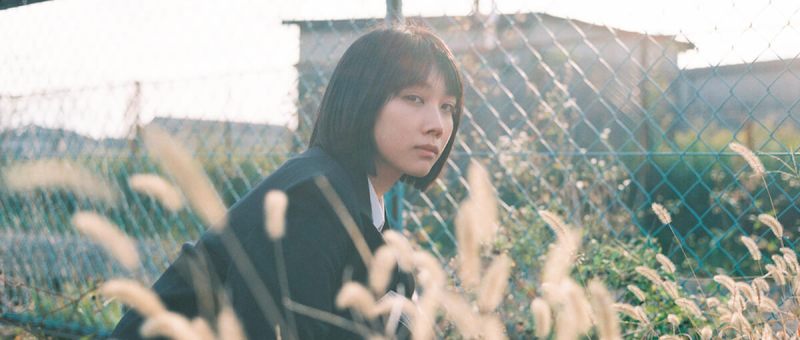
A collection of Osaka teens process adolescent angst and generational anxiety but in the end find a gentle solidarity in their shared suffering while resolving to be kind in Momoko Fukuda’s adaptation of her own novel, My Name is Yours (君が世界のはじまり, Kimi ga Sekai no Hajimari). “People are unknowable” they solemnly resolve, admitting that you never really know anyone but later making an effort to share their secrets, if only gently, bonding in a new sense of openness as they begin to move forward into a brighter future. 

Fukuda opens however with a scene of crime as a high school student is arrested for the murder of their father. As we discover, several of the teens could be potential suspects, each in someway resentful of their dads though for very different reasons. Recently transferred Tokyo boy Io (Daichi Kaneko), mocked for his accent, is involved in some kind of hugely inappropriate sexual relationship with his middle-aged step mother as accidentally witnessed by moody classmate Jun (Yuki Katayama) hanging round the shopping mall in order to avoid going home to her overly domesticated dad (Kanji Furutachi ) whom she blames for her mother’s decision to leave the family. Narihira (Pei Omuro), meanwhile, was abandoned by his mother soon after birth and is sole carer to his father who seems to be suffering with early onset dementia. 

Childhood best friends En/Yukari (Honoka Matsumoto) and Kotoko (Seina Nakata) first encounter Narihira in their secret hideout, a disused school library, having a private cry leading Kotoko to fall madly in love publicly dumping her current boyfriend with extreme prejudice seconds later. Meanwhile, En becomes an accidental confidant to nice guy Okada (Shouma Kai) who has received a mysterious love letter he doesn’t quite understand because it’s come in the form of a classical poem only for Okada too to fall for Kotoko while Narihira seems to prefer En. 

Love triangles aside, each of the teens has their private sorrows some more secret than others but nevertheless producing chain reactions of their own in their inability to express themselves fully. But as angry and frustrated as they are, they still want to be kind if more to others than themselves. “If I only think about my own freedom how can I be kind to others?” Narihira sadly reflects confessing his occasional resentment in trying to care for his father. Even Io, seemingly realising how inappropriate his relationship with his step mother is, resolves that he wants to be kind to her despite the harm she may be doing him. “Wanting to hurt other people is absurd” he claims, unable to understand the impulse to exorcise his frustration through violence. 

Narihira attributes his salvation to having met En, explaining that in a sense she opened up a new world in giving him the courage to talk about his father sharing the secret with Okada who told the coach on their sports team who told him about a facility that might be able to help. Yet Narihira also begins to disrupt the previously close relationship between En and Kotoko, leaving Kotoko feeling jealous and En confused it seems on more than on level as the unexpectedly perspicacious Okada seems to have figured out forcing her in turn to reckon with and accept her own unspoken feelings. 

Taking refuge in a darkened shopping mall overnight, the teens unexpectedly bond through a musical performance of the classic Blue Hearts track Hito ni Yasashiku with its melancholy yet cheerful chorus encouraging each other to hang in there, remaining kind in a world which often isn’t. “Well, I can’t say for sure. Nobody can.” an amused secretary guard honestly answers asked by one of the teens if the mall will be torn down, his refreshingly direct answer perhaps adding to their new sense of confidence even in the face of the world’s uncertainty. A gentle, quietly nostalgic coming-of-age tale, Fukuda’s Osaka-set lowkey yet stylishly moody drama begins with violent darkness but ends in bright sunlight, the teens each finding a sense of equilibrium having come to new understandings about themselves and those around them bolstered by a youthful solidarity. Some secrets it seems still cannot quite be shared, but friendships resolve themselves all the same if in unexpected ways allowing a melancholy intensity to dissipate into a sad if fervent hope for the future. 


My Name is Yours screened as part of this year’s Camera Japan

Original trailer (English subtitles)

Hito ni Yasashiku music video

The Blue Hearts – Hito ni Yasashiku