The Eighth Happiness (八星報喜, Johnnie To, 1988)

A literal series of crossed wires provoke romantic intrigue for three eccentric brothers in Johnnie To’s smash hit Cinema City Lunar New Year comedy, The Eighth Happiness (八星報喜). As so often in To’s subsequent films, a random instance of fatalistic chance changes each of brothers’ lives though not perhaps permanently as the surprisingly ironic coda makes plain. Even so, their parallel quests for love of one kind or another perhaps tell us something about the changing Hong Kong society in the midst of rising economic prosperity and looming Handover anxiety. 

Seemingly without parents, the three Fong brothers live together in a well-appointed multi-level home owned by oldest sibling Fai (Raymond Wong Pak-ming) who hosts a daytime television program titled Mainly Housewives which includes a cookery/agony aunt segment in which he attempts to solve someone’s relationship problems through food. As in many of Raymond Wong’s other roles in Cinema City comedies, Fai is feminised throughout not only in acting as the “mother” of the family preparing all the meals at home but also in his single status and the focus of his television show which nevertheless intros him with the James Bond theme. 

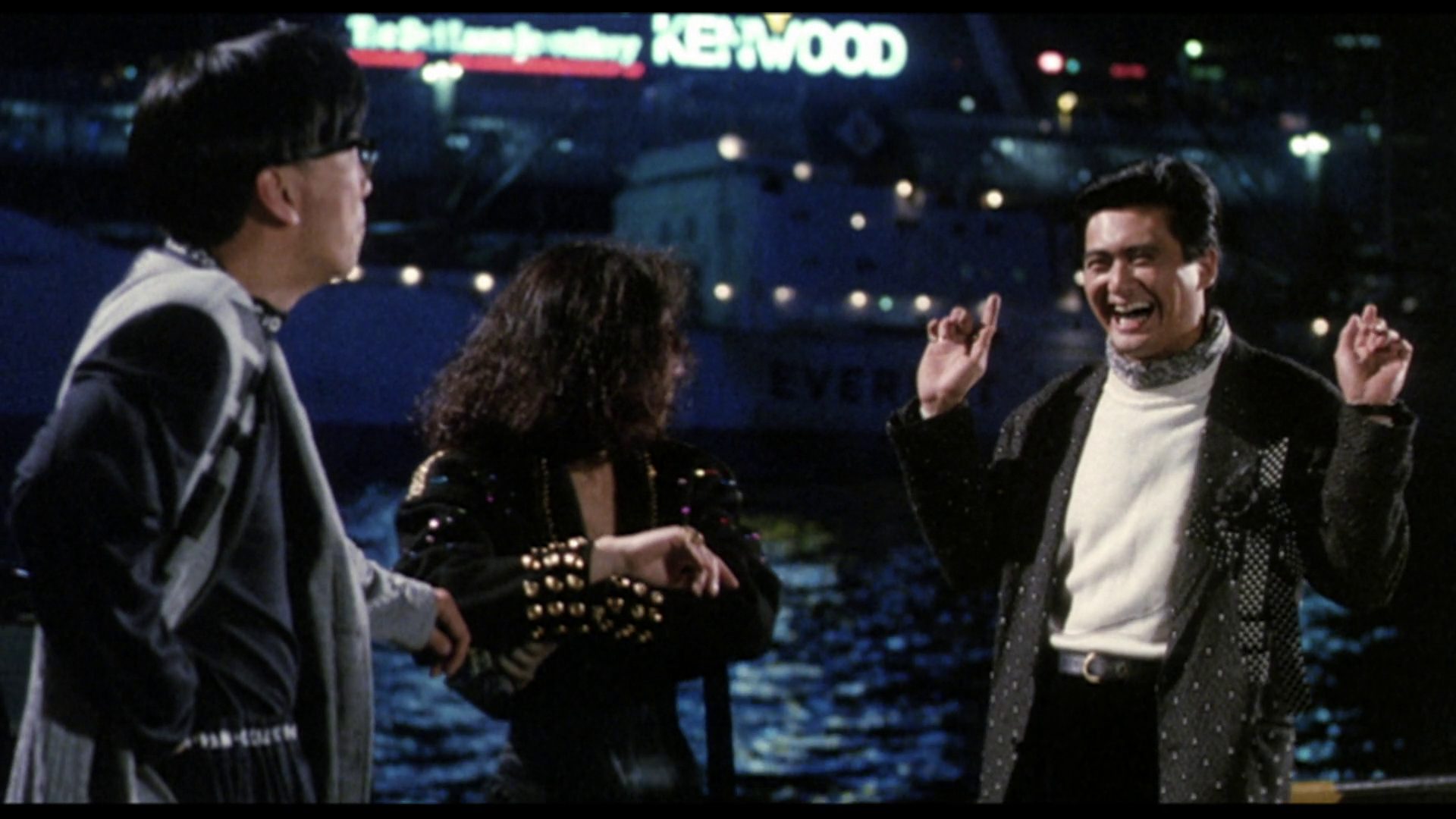
Second brother Long (Chow Yun-fat), meanwhile, actively camps it up claiming that he pretends to be gay in order to get girls after lulling them into a false sense of security. Despite being engaged to air hostess Piu Hung (Carol Cheng Yu Ling), he has a side mission going to sleep with a woman from each of Hong Kong’s 19 districts and is a relentless Casanova striking up an affair with unexpectedly chaotic department store assistant “Beautiful” (Cherie Chung Chor-hung). Youngest brother Sang (Jacky Cheung Hok-yau), meanwhile, is a painfully shy aspiring cartoonist who becomes an accidental white knight to a young woman caught up in a bizarre flashing incident in the local park only to be mistaken for the culprit himself. 

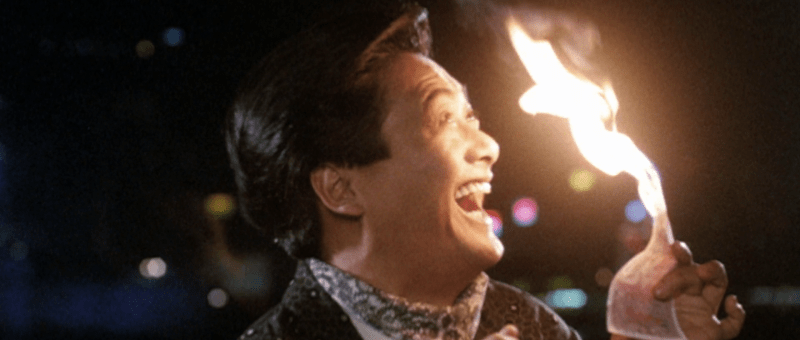
Each of the brothers is offered a new romantic possibility because of a telephone malfunction caused by an elderly lady driver forgetting her glasses and ploughing through local works mangling the lines. Sang is reunited with Ying Ying (and her martial arts champion swordsman mother) after overhearing a suicide attempt but ending up at her apartment by mistake, thereafter finding himself facing a challenge of masculinity on discovering that she already has a very buff and macho boyfriend who in his own way also seems jealous and insecure. Meanwhile, Long overhears a conversation between Beautiful and a colleague at the store about their ideal men, entering into passive aggressive courtship while discovering that her boyfriend is fabulously wealthy (or, at least, his father is) leading to a standoff in which he ends up proving his masculinity by burning money he doesn’t really have, smashing his own cheapo watch to intimidate the other guy into destroying his diamond Rolex, and then trashing the car he borrowed from Fai to expose the fact the other guy isn’t really wealthy or man enough to do the same because at the end of the day it’s his father’s money and he’s not so rich that these very expensive status symbols mean little to him. 

Fai meanwhile has a much more normal romance which is disrupted, mostly, by his brothers’ chaos and then near destroyed rather than forged through a misdirected phone call. After Long trashes his car, he asks Sang for the number for a repair guy but instead gets through to Fong (Fung Bo Bo) whose musician husband has just walked out on her seconds before which is why she’s quite rude to him on the phone, slamming the receiver down the second time he rings. Annoyed on a personal level Fai asks Long to troll her by ringing up at 3am every night causing her to injure her ankle and later fall on stage during a Cantonese opera performance. Then he ends up meeting her by chance in real life when she ends up buying the last of his favourite biscuits at a local cafe, only to discover she’s his interview for that day’s show where she’s supposed to talk about her art but finds his face so funny she can’t stop laughing. Had it not been for business with the telephone harassment they might have had a conventional romance, but the further machinations of the chaotic brothers soon convince her that Fai is not a reliable life partner. 

To convince her he’s really a good guy, Fai undertakes a grand gesture making himself the focus of his culinary/agony item by cooking up the spiciest soup imaginable and drinking it on live TV to atone but such a meaningless feat does nothing for Fong who doubtless is over romantic stunts and looking for something more concrete. Long’s grand gesture, by contrast, fares much better as he chases Piu Hung to a fancy hotel and makes a scene from the other side of the glass before falling in the pool while trying desperately to save an engagement ring while suddenly on the back foot after she learns about his philandering. Fai is only able to redeem himself through artifice, he and Fong signing through their romantic drama while performing Cantonese opera surrounded by the brothers and their girls trying at least to support him in his own romantic endeavour which their chaos has largely undermined. 

It’s another cosmic irony therefore that whereas the chaos of the misdirected telephone calls earns both Sang and Long everything they wanted in both career and romantic success, Fai who generally does the right thing ultimately loses out through another chaotic development while even Beautiful apparently achieves her dreams. Despite his earlier protestations during get phone call that Hong Kong was beautiful and there was no need to leave, Song and Ying Ying decide to travel the world perhaps expressing a degree of anxiety in pre-Handover Hong Kong, while Long is left with internalised anxiety over his new role as husband and father, and Fai is back pretty much where he started. A typical Lunar New Year nonsense comedy, there’s no disputing that much of the humour in The Eighth Happiness is of its time, but there is something of To’s later obsessions with comic fate and romantic farce that transcends Raymond Wong & Philip Cheng’s Cinema City silliness. 


Trailer (no subtitles)
An Autumn’s Tale (秋天的童話, Mabel Cheung, 1987)

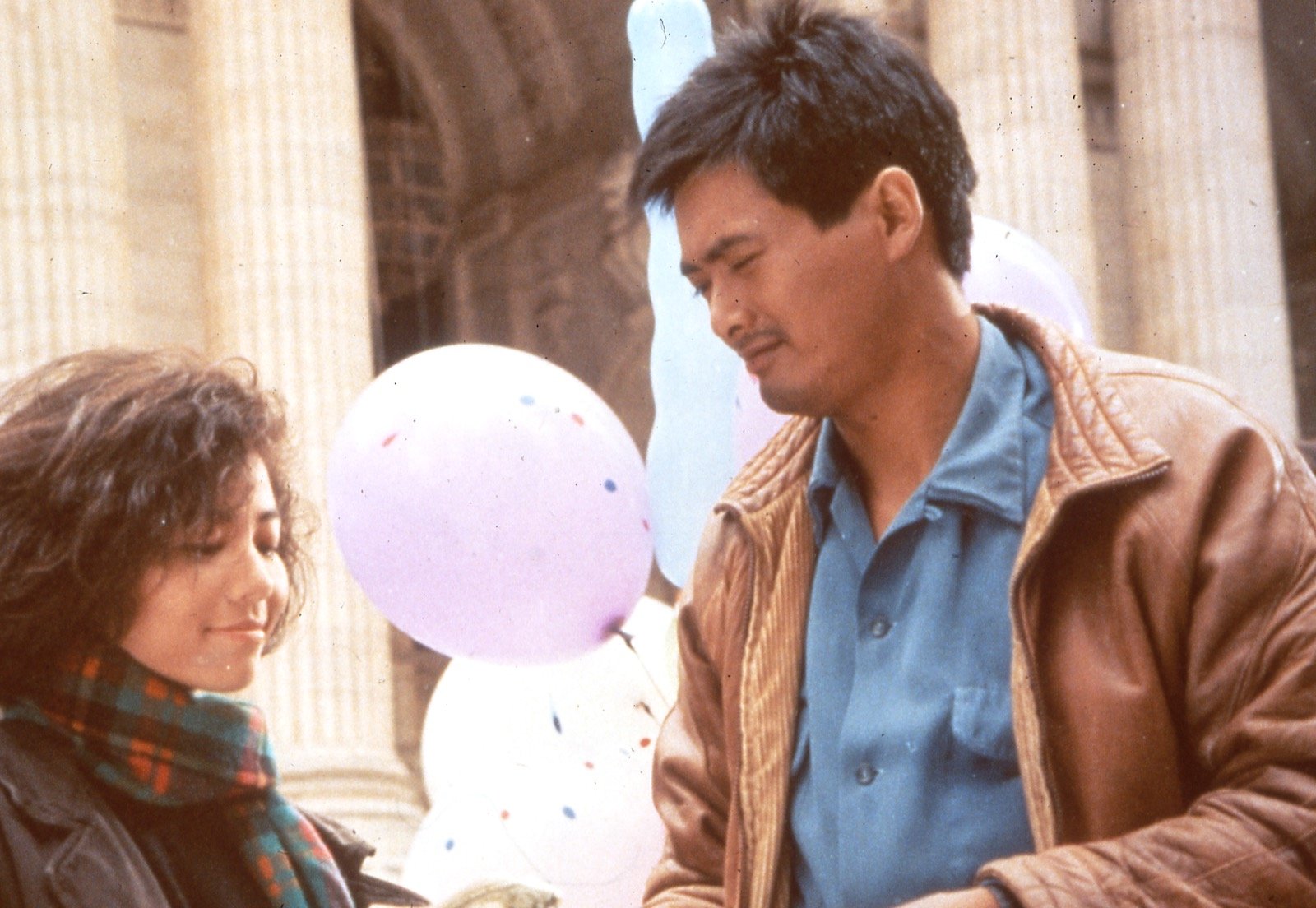
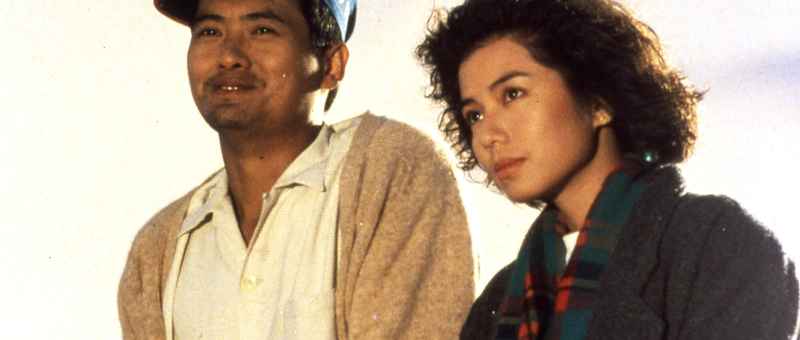
Cherie Chung and Chow Yun-fat find love in exile in Mabel Cheung’s charming New York rom-com, An Autumn’s Tale (秋天的童話). Penned by Alex Law, Cheung’s breezy chronicle of love and handover anxiety is subtle and sophisticated romance for grownups finding its youthful heroine stepping into herself in stepping away from home springboarding from emotional heartbreak into personal growth while beginning to fall for her equally lost and hoplelessly diffident yet larger than life new city neighbour. 

After two years of patient saving, Jennifer (Cherie Chung Chor-hung) is finally heading to New York to reunite with hometown boyfriend Vincent (Danny Chan Pak-keung) and study acting in the city. Her mother has put her in touch with a distant relative who is apparently a former sailor turned big man in Chinatown nicknamed “Figurehead” (Chow Yun-fat) who’s agreed to pick her up from the airport and sort her out with a flat. What Jennifer hasn’t disclosed is that she hasn’t told Vincent she’s coming and plans to surprise him when he returns from a baseball game in Boston. When she arrives, however, she discovers not only that Figurehead has somewhat misrepresented his level of success but that Vincent is seeing someone else and places little value on their past relationship, viewing his hometown girlfriend as childish and unsophisticated now he’s a big city guy changed by his new environment but not for the better. 

Jennifer’s culture shock on arriving in late 80s New York is instantly apparent as “Figgy” takes her back to the rundown Chinatown slum where he is living to a flat which looks like no-one’s been up there in 20 years, still has a gas-operated refrigerator, and is filled with the last tenant’s abandoned belongings. Perhaps bearing out the realities of the international dream, Figgy has obviously been telling everyone back home how great his life is in New York and how well he’s been doing for himself while living aimlessly in the city spending his days drinking, gambling, and fighting paralysed by anxiety and too frightened to move forward. Even so he does his best to help Jennifer adjust to life in New York, helping her fix up the apartment and trying to be sympathetic after witnessing her brutal breakup with the no-good Vincent.

Then again, “We belong to two different worlds” she eventually reflects in trying to decide not only if she’s fallen in love with Figgy or he her but if he’s really got longterm potential. She says he makes her feel free, but as she becomes more used to life in New York and less afraid of its differences she grows eager to see the rest of the world while Figgy, 10 years older, claims he’s seen it all already and has no real desire to go anywhere anymore. To him, everything in New York is just an inferior version of something they already had in Hong Kong, broadway musicals are “yankee opera”, pizza is “yankee pancakes”, the music of Americana street musicians is “yankee tunes” that remind him of a Chinese funeral march. While he works in a Chinese restaurant for Chinese people, Jennifer gets a job at an upscale place going by the name “Big Panda” run by a sleazy friend of woman she babysits for that is intent on selling a Westernised idea of China to the locals. Trying to play the big shot in his ill-fitting suit, Figgy doesn’t even understand the menu or the extortionately priced itemised bill presented to him in English but recklessly throws $20 bills at the tip-happy waiter. His only dream is to open a small restaurant on a pier overlooking the ocean that Jennifer convinces him to name “Sampan” like the boat but also in honour of his English name, Samuel Pang. While Jennifer continues to move forward, Figgy remains diffident, too afraid to voice his feelings and consumed by a sense of under-confidence that leaves him unable to pursue either his dream or innocent love. 

To put it bluntly it’s the 33-year-old Figgy who is not really ready for serious romance while through her failed relationship with Vincent and growing experience of independent city living Jennifer is beginning to figure out what it is she wants out of life and out of love. Their romance can’t blossom until they meet each other as equals, Figgy finally pulling himself together and gaining the confidence to chase both love and his dreams. A beautifully understated, naturalistic romance with an ending to rival Comrades Almost a Love Story, An Autumn’s Tale is also love letter to the city of New York with all of its danger and possibility as two lost youngsters learn to find a home in each other while discovering the courage to become themselves.


An Autumn’s Tale screens at the BFI 25th January as part of Focus Hong Kong

Original trailer (no subtitles)

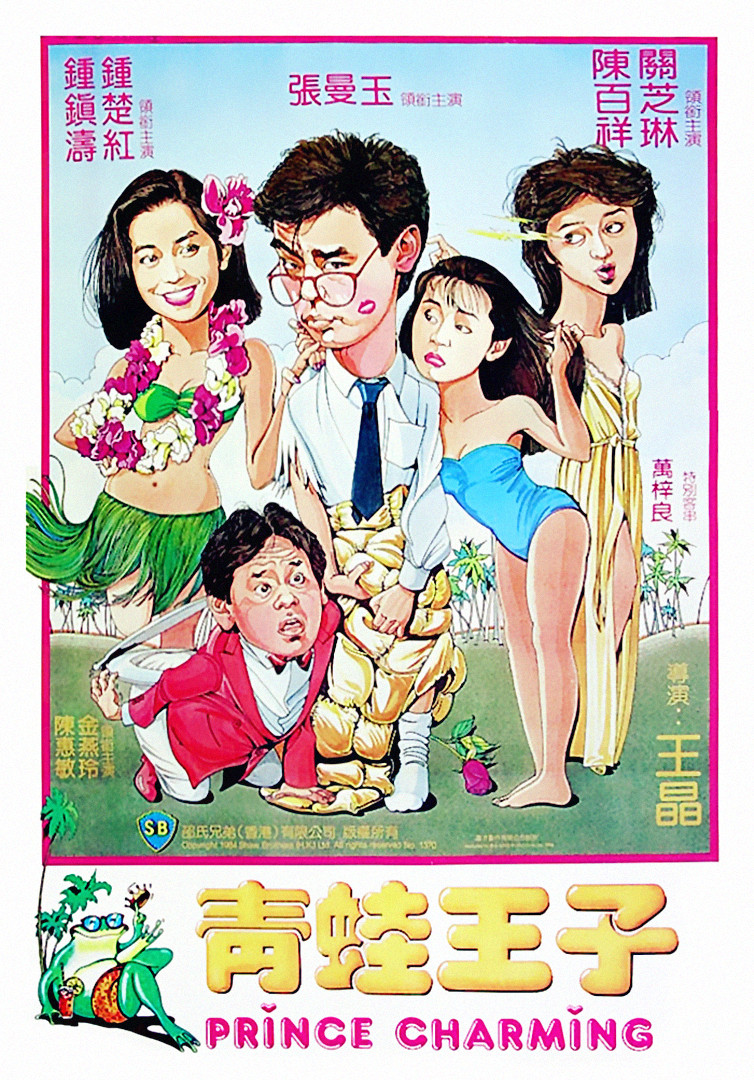
Prince Charming (青蛙王子, Wong Jing, 1984)

Prince charming 84 poster“This isn’t a film from the 1930s!” a confused sidekick exclaims part way through Wong Jing’s zany ‘80s comedy Prince Charming (青蛙王子). He’s right, it isn’t, but it might as well be for all the farcical goings on in Wong’s hugely populist, unabashedly zeitgeisty romp through a rapidly modernising society. Starring popstar Kenny Bee, Prince Charming also marks the feature film debut of the later legendary Maggie Cheung who would find herself making a fair few disposable comedies in the early part of her career. All the Wong trademarks are very much in evidence from the sometimes crude humour to the random narrative developments and deliberate theatricality but it has its charms, even if perhaps despite itself.

Signalling the “aspirational” atmosphere right away, Wong opens in “Hawaii” with Kenny Bee performing one of the many musical numbers which will be heard throughout the film (which is also a kind of idol movie as well as a populist Shaw Brothers Comedy). Chen Li Pen (Kenny Bee) is the son of an oil magnate and hotel chain manager but unlike his father, is a sensitive, nerdy young man who gets the hiccups around attractive women and has never had any luck with the opposite sex. Nevertheless, his mother wants to set him up with an arranged marriage – something which he vehemently opposes but understands will become harder for him fend off if he can’t find himself a love match in good time. Enter his old friend Lolanto (Nat Chan Pak-Cheung) who is a self-styled ladies man if a bit “common”. Lolanto has come to Hawaii on holiday and to hang out with Li Pen, but like any young guy he also wants to meet some girls.

The guys end up in a kind of sparring match with the two ladies staying in an adjacent room at the hotel, May (Cherie Chung Cho-Hung) and Kitty, (Maggie Cheung Man-Yuk) following a series of misunderstandings. When the girls drug them and then somehow leave them on a rock in the middle of the ocean, the boys are humiliated but don’t have too long to nurse their wounds because Li Pen’s dad sends them back to Hong Kong to investigate suspected embezzlement at head office. As luck would have it, both May and Kitty work for Li Pen’s family firm (which was perhaps why they were staying in the hotel). Another misunderstanding sees May assume Li Pen is a former triad looking for a new start, so she “bribes” the hiring department to get him a job as a chauffeur, while Lolanto ends up in the boss’ office posing as Li Pen. Hilarity ensues.

Aiming a squarely for the populist, Wong’s defiantly aspirational vision revolves around the fabulously wealthy and internationalised Li Pen who went to college in the US and lives most of his life in Hawaii, perhaps not quite understanding Hong Kong in the same way Lolanto does, both because of his outsider status and because of the freedom his wealth gives him. When the two swap roles they each get a kind of education, but their real quest (while halfheartedly investigating the embezzlement scandal) is winning over Kitty and May who think they’re dating a CEO and a chauffeur respectively. Despite their irritation when they realise their mistake, both May and Kitty perhaps come to realise that the deception is a part of what eventually drew them to the guys and they’re a better match than they might otherwise have imagined.

Meanwhile, Wong finally remembers the embezzlement plot and introduces a third woman, Puipui (Rosamund Kwan Chi-Lam), who is secretly a plant set up to seduce the pure hearted Li Pen and marry him because this will in some way prevent the embezzlement scam from coming to light. Puipui’s scheme eventually kicks off the ridiculous finale in which the gang find themselves chased by goons and having to play pool for their lives with hostages hooked up to electric chairs which will be triggered when a certain number of points are scored. Wong adds a host of cutesy touches from cartoon hearts around our lovelorn heroes and adorable doodles popping up as on screen graphics while Kenny Bee and Cherie Chung also get a completely bizarre musical number at the midway point where they pretend to be happy frogs marooned on a private lily pad. It doesn’t make any sense, but it really doesn’t matter. Completely throw away, but strangely fun.


Currently streaming on Netflix UK (and perhaps other territories)

Celestial Pictures trailer (English subtitles)