Dear Stranger (ディア・ストレンジャー, Tetsuya Mariko, 2025)

The Japanese film industry is generally regarded as fairly insular and focused solely on the domestic market with half an eye on other Asian territories where its stars are already popular. It has, however, made some attempts to enter Hollywood particularly in the 1970s with films such as Kinji Fukasaku’s Virus which for various reasons was largely unsuccessful in either market and suffered artistically from its attempts to bend itself to an international audience. 

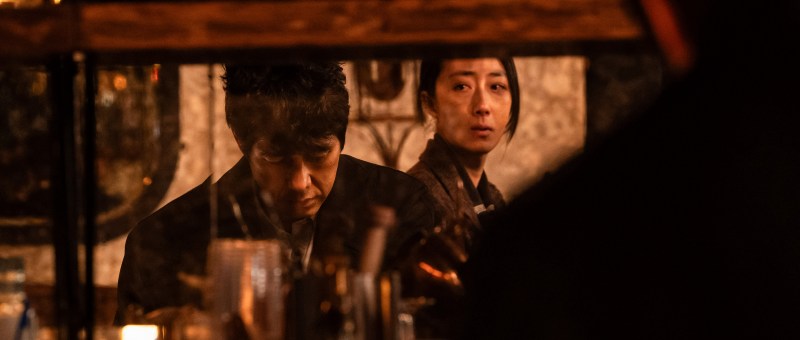
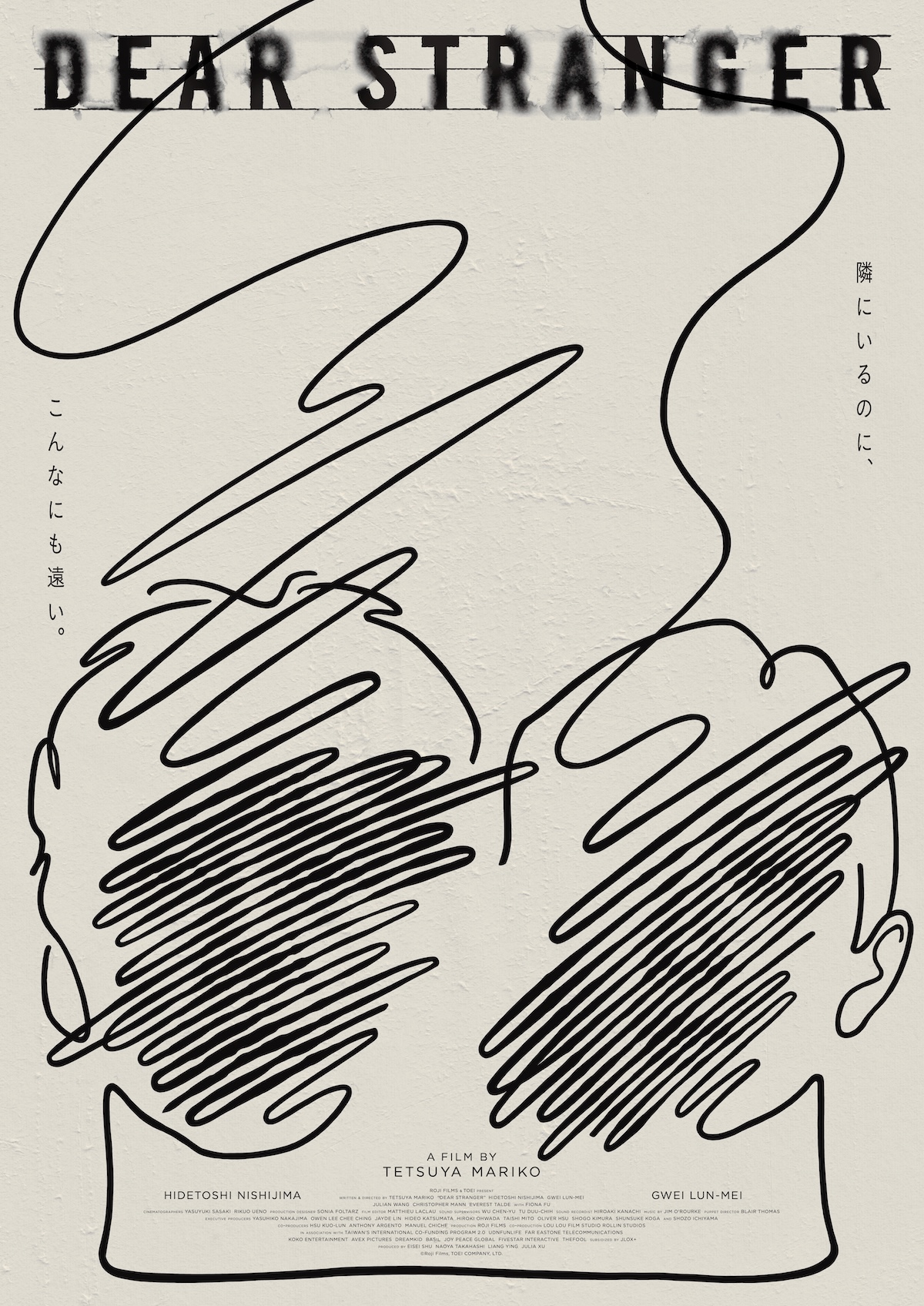
Tetsuya Mariko’s Dear Stranger (ディア・ストレンジャー) is the first in Toei’s contemporary attempt to court an audience outside of Japan as part of its Toei New Wave 2033 initiative, but it seems to be suffering from some of the same problems. The biggest is that 90% of the film is in English but the delivery is often stilted and inauthentic from both the international and native-speaking cast. That may in one way be ironic, as one of the major themes is the impossibility of communication. Emotional clarity is only really revealed during the puppetry sequences when no dialogue is involved. Set in New York, the film shifts between Mandarin, Japanese, Spanish, English and sign language, but simultaneously suggests the problem is less an external language barrier than an internal one that prevents people from saying what they really mean or encourages them to keep the truth of themselves hidden.

It’s living in this liminal third space that disrupts the marriage between Taiwanese-American Jane / Yi-zhen (Gwei Lun-mei) and her Japanese husband Kenji (Hidetoshi Nishijima) as she points out that they speak to each other in a language is not their own. At moments of high tension, they argue in Mandarin and Japanese, though as we largely discover there are more issues in play, beginning with the fact that their marriage may at least partially have begun as one of convenience. Kenji is not the biological father of their young son Kai. Jane finds herself asking who they are as a couple without him and if she ever really loved Kenji at all. Kenji suggests he married her because he loved her and accepted the child as his own for the same reason, but throughout the film is in an incredibly angry and hostile mood. He appears at times sexist, criticising Jane for not keeping the house tidy while he is “under a lot of pressure” at work and resents “the chaos” of their life. Jane’s mother doesn’t approve of her working either and calls her a bad mother for doing so even while expecting her to mind their convenience while she tries to find a carer to look after her father who is living with advanced dementia and can’t be left alone.

Part of that is likely that they need someone who speaks Mandarin, hinting at the sense of isolation and orphanhood that comes with migration in lacking extended familial support that in this case does not seem to be met by community. Jane too feels isolated and trapped by her role as a mother. She expresses herself only through her puppetry, which is also something denied her by Kenji and her mother. Kenji, meanwhile, feels undervalued at the university where his supervisor seems dismissive of him and his work which he regards as unoriginal. He may have decided to marry Jane in part in search of family having lost of his own in Japan with his mother never having been found after the Kobe earthquake when when he was a teenager, but simultaneously struggles to integrate himself within their family. His loss of Kai who disappears while he was supposed to be taking care of him is then symbolic in reflecting his own frustrated paternity and fear that the biological father will return to take all this away from him.

In many ways, it’s Kenji’s own psyche that’s in ruins informing his academic practice which focuses on abandoned and disused buildings and the effect they have on the surrounding environment. He’s asking himself how to create a new world from the ashes of the old, but doesn’t appear to have done so successfully in his own life and is increasingly unsure if he wants to. Perhaps because of its awkwardness, the film takes on an increasingly surreal quality as Kenji is heckled by irrationally angry guests at his book presentation and basically accused of facilitating urban crime in his praise of disused spaces and then descends into some kind of fugue state chasing the larger-than-life puppet version of Kai from Jane’s play which is also an embodiment of her own frustrated yearning for freedom. 

“In the wreckage we find truth,” Kenji answers one of the questioners at his presentation and it may in a sense be true for him but in another perhaps not. It becomes unclear what exactly he experiences as “real” and what not, what a product of his own mythologising and what actually happened, while Jane slips quietly into the background and her sudden acceptance of Kenji whom she previously regarded as “unreliable” and appeared to resent, seems somewhat hollow given that he continues to treat her coldly and is extremely hostile with all around him from the police, who are actually trying to help find his son, to the well-meaning kindergarten teachers, and his employers. In the end, it’s really Kenji who is stranger to himself much more than a stranger in a strange land trying to forge a new identity in a place of psychological ruin.


Dear Stranger was screened as part of this year’s Busan International Film Festival

Trailer (English subtitles)
Kubi (首, Takeshi Kitano, 2023)

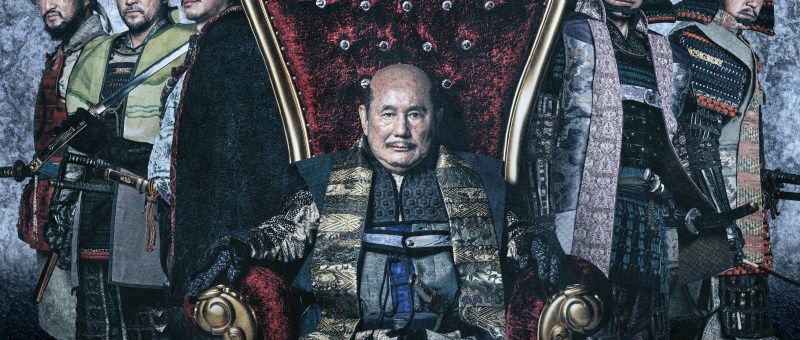
Apparently in gestation for a couple of decades, it’s unsurprising that Takeshi Kitano gave himself the role of Hideyoshi in a long-awaited historical drama adapted from his own novel, Kubi (首). Played as an irascible but wily old man, Hideyoshi is the second of Japan’s great unifiers and, unlike his predecessor, died as a result of an illness rather than intrigue. He was also a peasant who rose through the ranks and is perhaps witness to the tumultuous class conflict and social divisions of a hierarchal society.

Even so, in this version of events, Oda Nobunaga (Ryo Kase) too speaks in a thick rural dialect that sets him apart from his retainers and seems to hint at his uncouthness. This Nobugana is an unhinged despot who threatens and humiliates his subordinates, not to mention sexually assaulting them. In short, there’s no real mystery why his men have begun to turn against him and there is intrigue in the court. The film opens with Murashige’s (Kenichi Endo) quickly quelled rebellion which floundered when his reinforcements failed to arrive. Murashige is on the run and Nobunaga has heavily suggested whoever brings in his head will be first in line for the succession, but Murashige is also in a relationship with Mitsuhide (Hidetoshi Nishijima) another courtier vying for favour in more ways than one from the capricious Nobunaga. 

The striking thing about the staging is how like a yakuza drama this intrigue really is with each of the main factions manoeuvring for control, forming temporary or duplicitous alliances forged in the mutual desire of ousting a ruler whose increasing instability presents only the likelihood of a return to chaos. Nobunaga’s flamboyant speech and threatening manner are reminiscent of a yakuza boss on his way out, as is his obvious tactic of setting his rivals against each other while secretly planning to hand the reins to his son anyway. The film takes place in a largely homosocial world, the only women on screen are sex workers and peasants about to be murdered, only this time defined by romantic intrigue in which the various relationships between the men are inescapably linked with power and duplicity.

Mitsuhide’s relationship with Murashige is originally framed as a giri/ninjo conflict, Mitsuhide torn between the exercise of his duty as a samurai and his love for Murashige, only to later be set wondering if Murashige isn’t also playing him in urging him too towards rebellion, while Murashige accuses him of harbouring desires for Nobunaga which would also necessarily be desire for advancement. Advancement is something sought by all and in particular Mosuke (Shido Nakamura), a peasant who is taken on as a foot soldier after looting a battlefield for amour and killing his friend to get his hands on the prize only to realise just at the critical moment how pointless the constant desire for heads really is. The absurdity is rammed home in the closing scene in which Hideyoshi declares himself uninterested in the severed head he asked for, rendering the quest entirely pointless.

This absurdity extends to introducing the character of a comedian who is later killed for talking too much, while Kitano wise cracks his way along as the affable Hideyoshi. Kitano is in his way in dialogue with other samurai epics, using Akira Kurosawa’s horizontal wipes and introducing a pair of bumbling comic relief peasants only to suddenly kill one of them off because at the end of the day this world isn’t very funny. It’s cruel, and mean, and meaningless, so you might as well laugh like Hideyoshi. Residents of a ninja village conduct a festival in which they pray for death and to be released from this earthly torment as soon as possible, while farmers still dream of becoming samurai little knowing the reality of samurai life.

It’s this cycle of futility that is echoed in the opening image of a severed neck into which crabs in a river are crawling. Kitano stages lavish battle scenes, but ones that are often horrifying and absurd, a visceral struggle in mud and blood fought for no real reason. These samurai live their lives on the point of a sword, but they move and behave like yakuza fighting pointless turf wars and games of petty intrigue until someone finally comes for their heads. In the end, the victor is the one who doesn’t play the game at all, but sits and laughs at the absurd cruelty all around them in which the only stable force is ambition accompanied by a nihilistic lust for blood in an already bloody world.


Kubi  screens in New York July 16 as part of this year’s JAPAN CUTS.

Trailer (English subtitles)
The Cold-Blooded Trap (冷血の罠, Takahisa Zeze, 1998)

“This place is full of people like me” a violent criminal jeers, admitting that he’s killed “plenty” of women but not necessarily the one he’s being questioned about. There is indeed something eerie that seems to have taken over this small corner of Shibuya in Takahisa Zeze’s dark millennial thriller The Cold-Blooded Trap (冷血の罠, Reiketsu no Wana). “Strange things are happening here” another investigator notes, “someone’s malice has infected this whole place.” Yet the sense of haunting may be closer to home than it first seems as two men attempt to come to terms with a traumatic past by solving present mystery. 

Even the police seem to concede that the strange goings on are a “continuation” of something else. As we first meet him private detective Fujiwara (Sho Aikawa) appears to be following a young woman home from the station only as we later discover she hired him herself to watch over her because she had the feeling she was being watched. Fujiwara watches her enter her apartment building and then calls her to say everything looks clear on the ground, but a short time later a body wrapped in sheets is dropped from the roof onto the street below. The weird thing is that it’s the same building Fujiwara’s sister Noriko used to live in, only she took her own life and that of her child by jumping off the roof five years previously. 

Not only does Fujiwara feel as if he failed in his duty to protect his client, but he’s forced into a similar contemplation in his latent guilt surrounding his sister’s death. The most obvious reason for Noriko to have considered suicide was that her salaryman husband Hanazono (Hidetoshi Nishijima) had been having an affair with a work colleague, Yoko (Asuka Kurosawa), yet Hanazono refuses to accept responsibility and is convinced that Noriko was murdered by a mysterious serial killer stalking the streets of Shibuya. 

The irony is that we first think Hanazono is the faceless killer after watching him enter the woman’s apartment building, only to learn that he may have been investigating Noriko’s death. Later these assumptions are overturned again, but even he concedes that he seems suspicious. Wandering around the city at night, he runs into women alone who immediately see him as a threat and assume he may be a dangerous criminal who means them harm. The realisation first shocks him, but then gives way to a physical high in the adrenaline rush of fleeing the scene. He comes to the conclusion that he must get into the killer’s mindset in order to catch him and begins actively stalking people around the city, following them home and checking mailboxes to find out names. 

Fujiwara doesn’t trust Hanazono for obvious and understandable reasons, but even so he begins following him as Hanazono continues to follow the killer. Zeze opens the film with fuzzy 90s camcorder footage trained on the forecourt of a station from a balcony opposite. The camera follows a woman as she leaves, and Fujiwara behind her with eerie intent evoking the mild paranoia of millennial surveillance. Later Hanazono films his own POV walking through the midnight city, once again lending the streets a sense of lurking malevolence and dread-fuelled fatalism even before he arrives at his shocking destination. 

Yet we wonder if Hanazono is just a paranoid obsessive with his giant map of crime insisting that seemingly isolated incidents of violence are somehow linked. Before Fujiwara hears about the woman’s death on the news they were reporting on insolvent banks hinting at a financial anxiety in the contemporary society, and as the suspect Fujiwara later tracks down suggests there are lot of distressed or perhaps disturbed people around. The crimes may really be random, but they are also connected by virtue of being provoked by an anxious society even if as Hanazono admits there are several criminals behind them. Whether or not he gets the answer he seeks, Fujiwara will have to accept that he too bears some responsibility as Hanazono has perhaps already done even if desperate to deny it. “I’ve always been responsible” he admits while taking control over his life, only the elliptical structure of the film may imply otherwise. Dark and eerie, Zeze captures a sense of millennial dread in the streets of the capital filled as they are with “random” crimes and lurking killers in the haunting anxiety of constant threat.


Clip (English subtitles)

Goodbye Cruel World (グッバイ・クルエル・ワールド, Tatsushi Omori, 2022)

Tatsushi Omori has had a rather strange career beginning with the incredibly grim Whispering of the Gods which was so controversial that the only way he could screen it was to set up a marquee in a park and put it on himself. Since then he has in recent years softened a bit with the incredibly charming Seto and Utsumi and heartwarming tea ceremony drama Every Day a Good Day. Goodbye Cruel World (グッバイ・クルエル・ワールド) returns to the nihilism of Omori’s earliest work, but with a layer of heavy irony in its self-consciously cool aesthetics. 

This is world is cruel indeed, pulling each of the worldweary protagonists into an inescapable hell of crime and violence. As the film opens, a car of full of criminals drives towards a love hotel where they plan to rob a bunch of yakuza in the middle of a money laundering exchange. If you have to rob someone, perhaps it’s fair enough to rob the yakuza but for obvious reasons it’s not a very good idea. Still, the fact is they accomplish the heist pretty easily not least because the yakuza are lazy and complacent. Not only could they not be bothered to change their meeting place like the boss told them, the lookouts didn’t even put up much of a fight. “Japan’s gone to hell,” “old-leftist gone bad” Hamada (Tomokazu Miura) sighs lamenting that no one does their job properly anymore.

Now in his 70s, Hamada waxes on his days as a student protestor while now a disillusioned old man who was previously dismissed from his position as a political secretary for cooking the books. In a last ditch bid to change the status quo, he later hatches on a plan to rob the secret campaign stashes of the incumbent conservative candidate whom he has also exposed for tax evasion and an affair with a bar hostess not to mention a general air of sleaze and corruption. The robbers’ main competition is a corrupt policeman who’s been working with the yakuza ever since he was foolish enough to accept a tip off from boss Ogata (Shingo Tsurumi) to arrest some of his rivals. 

Like everyone else, what Detective Hachiya (Nao Omori) wants is out but there is no out from this hellish world of crime. Anzai (Hidetoshi Nishijima) tried to go straight in the wake of anti-organised crime legislation but there are no second chances for ex-yakuza. He just wanted a normal life, but it’s hard to leave the yakuza world behind when you can’t even open a bank account and no wants to employ a former thug. Hachiya steals the money to buy himself a new life trying to resurrect his father-in-law’s failed hotel in a moribund seaside town where the other businessmen lament the decline of the local shopping area amid the economic complexities of the contemporary society. But he’s frustrated by the arrival of former associates, Iijima (Eita Okuno), who blackmails him over his yakuza past and poignantly says he’s done for the same reasons Anzai does the robbery, he just wants to be able to live together with his wife and child. 

Miru (Tina Tamashiro) says she came up with the idea of robbing the yakuza to escape sex work and is helped by hotel employee Yano (Hio Miyazawa) who dreams of running away with her. She says all she wants is sleep, while he wants to live comfortably in a quiet seaside town. Like the kids that hang round Hamada, they represent a kind of rebellious youth rejecting the corrupt authority of men like Anzai and Hachiya but are quickly slapped down. As Hachiya points out, the “grown-ups” took all the money and the only reason they’re not dead is that Ogata wants them to clean up their mess before they go by taking out the other gang members. During the robbery, Miru appears an unwilling participant so frightened that she cannot pry her fingers from the pistol when the sociopathic Hagiwara demands it back. But on her eventual murder spree/mission of revenge she’s an ice cold killer with vacant eyes trying to shoot her way out of existential malaise. 

Omori signals the degree to which they are all trapped by the ubiquity of retro nostalgia in the unlikely ‘70s getaway car and the soul music which plays on its sound system. Seeming to directly reference ‘90s Tarantino in musical choices, the film’s self-consciously cool aesthetic sometimes works against it even while hinting at the general sense of emptiness which envelops those caught in this hellish underworld. As Anzai later suggests, they are all the same, covered in blood with nowhere to go for there is no place for any of them in contemporary Japan. A bloody tale of nihilistic futility and self-destructive violence, Goodbye Cruel World suggests that there’s no way back from the purgatorial exile of an underworld existence.


Goodbye Cruel World screened as part of this year’s Japan Foundation Touring Film Programme.

Original trailer (no subtitles)

Shin Ultraman (シン・ウルトラマン, Shinji Higuchi, 2022)

The classic tokusatsu hero rises again to rescue kaiju-plagued Japan from geopolitical tensions and internal bureaucracy in Shinji Higuchi’s Shin Ultraman (シン・ウルトラマン). Scripted by Hideaki Anno, Shin Ultraman shares much in common with Shin Godzilla which the pair co-directed but is also a much more obvious homage to the world of classic tokusatsu or “special effects” franchises which became cult TV hits from the 1960s onwards and have remained popular with children and adults alike throughout Asia. 

This new iteration takes place in a world in which kaiju attacks have become commonplace, so much so that there is a specialised government department, the SSSP, dedicated to dealing with them. Led by determined veteran Tamura (Hidetoshi Nishijima), the team do not engage with the giant monsters directly but are responsible for research and strategy quickly trying to work out what kind of kaiju they’re dealing with, what the dangers associated with it may be, and where it’s weaknesses lie so they can figure out a way to stop it. Just when it looks like an electricity-guzzling lizard monster is about to do some serious damage, a robot-like giant humanoid arrives and saves the day. The team are very grateful to the heroic defender they name Ultraman, but are puzzled that he seems to be aware of all their research while otherwise missing the connection that their near silent colleague Kaminaga (Takumi Saitoh) always seems to be mysteriously absent every time Ultraman arrives.  

At heart, Shin Godzilla had been a satire on government bureaucracy and a mediation on the response to the 2011 earthquake and tsunami. Shin Ultraman might not be so pointed but still has a few bones to pick with the political machine as the team’s boss at HQ moans about the need to keep buying fancy weapons from the Americans (and making sure it’s the Defence Ministry that foots the bill) while cynically suggesting that the government is keen to use the kaiju crisis as leverage to further its policy goal of nuclear re-armament. Meanwhile, it’s also clear that for some reason kaiju attacks only happen in Japan and the International community largely sees them as a Japanese issue which they have to deal with alone, but as soon as Ultraman turns up and is thought to be extraterrestrial everyone is suddenly interested. 

As it transpires these geopolitical divisions are incredibly useful to another extraterrestrial visitor, Zarab (Kenjiro Tsuda), who plans to sow discord among nations so that humanity will destroy itself thereby, ironically, preventing an intergalactic war between planets who may be tempted to fight amongst themselves over the potential enslavement of humanity as valuable bioweapons. Aware of Zarab’s power, the government is manipulated into signing an uneven treaty with him in order to be first out of the gate and gain an advantage over other nations who, for reasons of self preservation, are also keen to ensure no one has sole access to new alien technologies and emissaries. Asked why he picked Japan, all Zarab can come up with it that he happened to land there which is quite a coincidence though he also has a vested interest in taking out Ultraman, the only force capable of resisting him. 

Even so, according to Zarab, the kaiju plague is humanity’s doing in having awakened sleeping monsters through environmental destruction. Hailing from the Planet of Light which has strict rules about what he’s supposed to be doing, Ultraman longs to understand humanity having merged with a human he accidentally killed who had dedicated his life to saving others. What he gains is a sense of communal responsibility along with a desire to care for what he sees as, essentially, babies someway behind his own planet in terms of evolution and in need of guidance. What he doesn’t want to do is endanger their “autonomous progression” by solving all their problems for them, so in grand tokusatsu fashion its up to the team to engineer their own solution in addition to deciding what they will do with this new technology using it for good or ill. Being buddies is all about trust, after all. Higuchi’s composition borders on the avant-garde recalling both that of the legendary Akio Jissoji and those more often associated with anime and manga rather than live action while the effects, even those utilising CGI, are pleasantly nostalgic with retro mono explosions and the iconic ringing of laser beams. Heading in a melancholy philosophical direction in its final moments, Shin Ultraman does at least suggest that the best weapons against a kaiju attack are teamwork and mutual trust especially if one of your friends is an all powerful being from another galaxy. 


Shin Ultraman screened as part of this year’s New York Asian Film Festival.

Original trailer (English subtitles)
Images: © 2022 TSUBURAYA PRODUCTIONS CO., LTD. / TOHO CO., LTD. / khara, Inc. © TSUBURAYA PRODUCTIONS

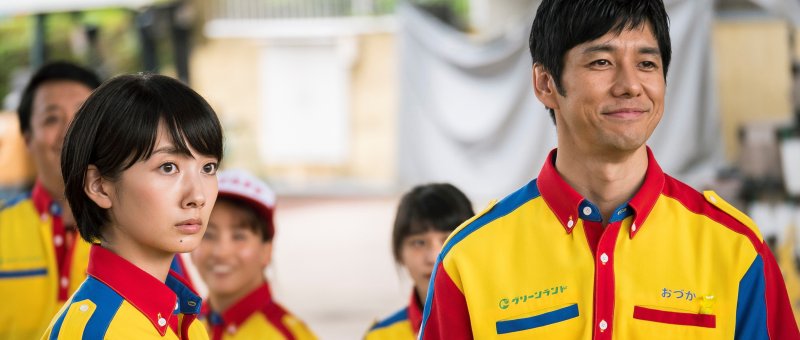
OZLAND (オズランド 笑顔の魔法おしえます。, Takafumi Hatano, 2018)

A snooty elitist gains a new perspective after being unexpectedly transferred to an old school rural theme park in Takafumi Hatano’s heartwarming workplace dramedy Ozland (オズランド 笑顔の魔法おしえます。, Ozland: Egao no Mahou Oshiemasu). Echoing The Wizard of Oz’ Dorothy, Kurumi (Haru) suddenly discovers that she’s not in her familiar Tokyo anymore and is originally resentful, sullen, and aloof refusing to engage with her new coworkers while dismissive of their work but gradually comes to see that there was method in the madness realising the ways she herself has been petty and small-minded while all anyone wanted to do was make people happy. 

Kurumi’s problem is that she’s a hometown girl. She loved her city, her family, her friends, and most particularly her boyfriend Toshi (Tomoya Nakamura) even going so far as to get a job at the company where he works so they can be together all the time. Tragedy strikes when she’s abruptly transferred to a theme park in provincial Kumamoto, Toshio suggesting she go and make the most of the experience of living alone for the first time while they do long distance. Coming from straight-laced Tokyo she experiences a kind of culture shock especially as her eccentric supervisor, Mr. Ozuka (Hidetoshi Nishijima), chooses to haze her with a pretend bomb scare immediately on her arrival. Aside from that, it seems the boss (Akira Emoto) misread her name on her résumé (as it turns out, the main reason he hired her) so no matter how often she corrects them everyone keeps calling her “Namihei” rather “Namihira”, suggesting that it might be easier if she changed her name because they’ve already had it printed on all her things. 

In a way, the name dilemma hints at Kurumi’s sense of superiority over her new coworkers in that she refuses to simply let it go out of politeness, as well she might in refusing to allow them to get away with calling her by a name that’s easier for them without bothering to learn her own, but equally using it as more evidence of their lack of sophistication rather than deciding to see the funny side. Though she’s been hired as part of the planning department, Ozuka assigns her mostly menial tasks further fuelling her sense of resentment. She might have a point when she says she didn’t go to uni to pick up trash for a living, but obviously looks down on her coworkers while the young man who joined at the same time as her, Yoshimura (Amane Okayama), simply gets on with the job without complaint. Kurumi went to a good university which adds to her snooty sense of elitism but later discovers that Yoshimura went to an even better one yet obviously doesn’t feel the same sense of belittlement in being asked to perform manual labour. 

What she later realises is that all of the “pointless” menial tasks had a point but she missed it because she tried to cheat, hoping to get in Ozuka’s good books in the hopes of being transferred back to Tokyo or allowed to do actual planning work. Not until she’s begun to settle in and accepted that she’s been unfair to her coworkers does Kurumi begin to look at herself realising that her snobbishness has only made her unhappy while the relaxed atmosphere and gentle camaraderie at the park is what has kept her new colleagues so cheerful. The extent of her personal growth is thrown into sharp relief when Toshio visits from Tokyo and immediately begins running the park down, describing her colleagues as “nosey”, and finally exclaiming that he preferred the old snooty Kurumi and wants her to come back to elitist Tokyo with him before she turns into a happy provincial. So changed is she that she can’t quite believe he’d be so snobbish and no longer knows what she saw in him realising that she’s much happier now she’s less judgemental and more engaged with those around her. 

In essence, she’s a Dorothy who decided to stay in Oz discovering a new home and a new family in a rundown theme park in Kumamoto that might quite literally be a dreamland making families happy all year round. Filmed at the real life Mitsui Greenland amusement park, Ozland might come from the sponsored by the tourist board school of Japanese cinema (local mascot Kumamon makes several guest appearances) but undoubtedly has a lot of heart not to mention surreal whimsy in its frequent Oz references and insistence on the importance of magic in everyday life. 


OZLAND streams until 27th February in several territories as part of Japanese Film Festival Online 2022.

Original trailer (English subtitles)
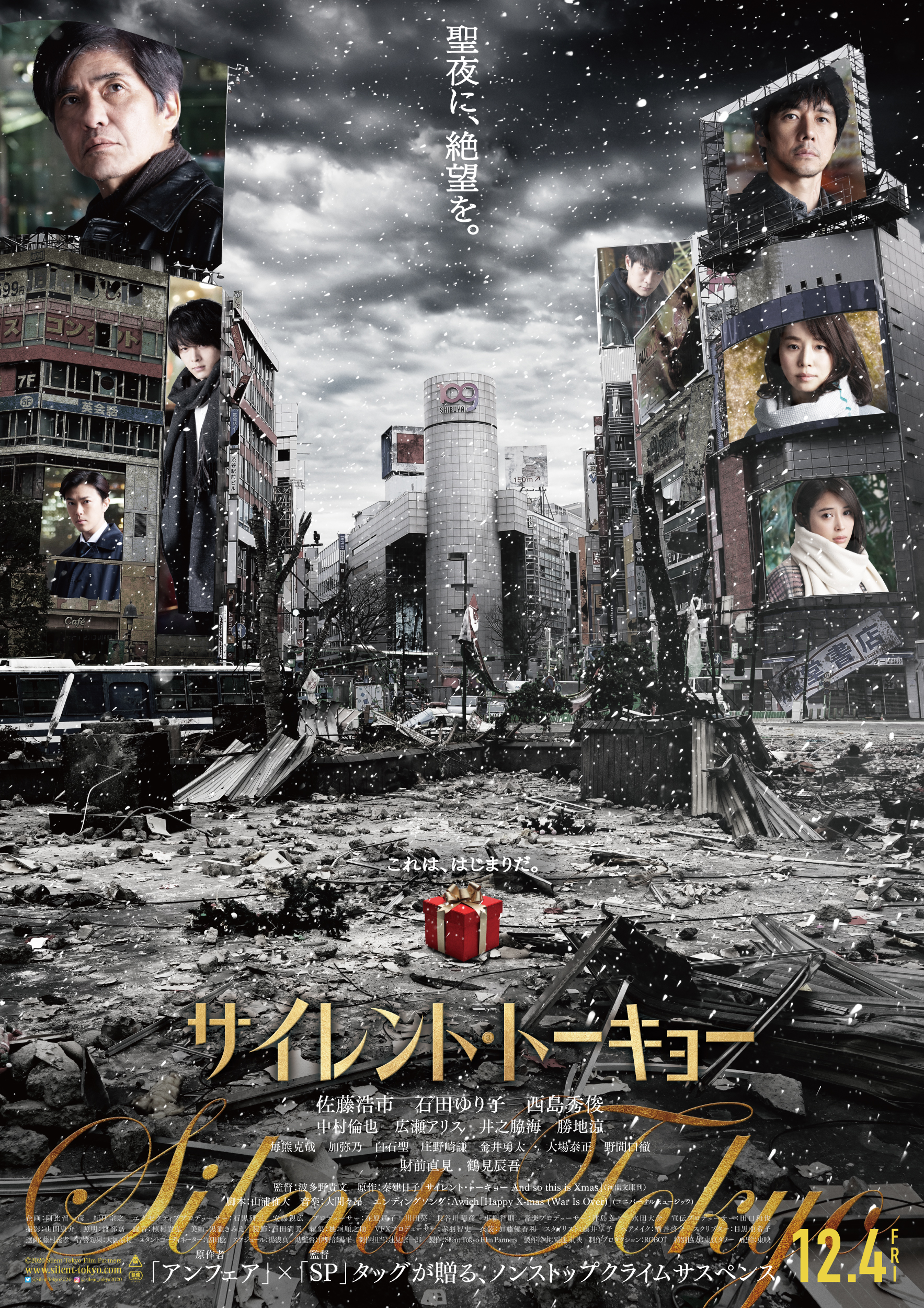
Silent Tokyo (サイレント・トーキョー, Takafumi Hatano, 2020)

Traditionally speaking, Christmas is a time of joy and hope, peace to all men. It is then a particular cruelty to plan a terrorist event at the very time people have been conditioned to feel safe, even if in Japan Christmas is less about familial love than the romantic. Christmas Eve will be far from a silent night in Takafumi Hatano’s holiday thriller Silent Tokyo (サイレント・トーキョー) adapted from the novel by Takehiko Hata, the sound of explosions disrupting the peaceful atmosphere as a mysterious bomber threatens to blow up Tokyo Tower if they are not granted a personal audience with the prime minister on live TV. 

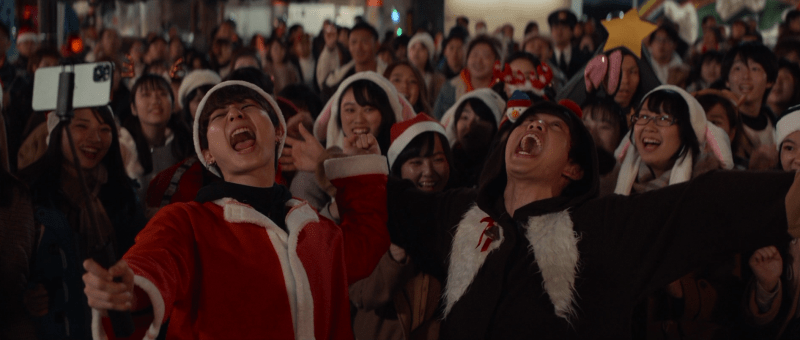
Thankfully Japan does not have an extensive history of terrorist action at least of this nature, that’s one reason why a when a pair of TV journalists report a tip off they’ve received about a bomb in a shopping centre the police take little notice. The shopping centre bomb is real but of low power leaving only a single person with light injuries after most shoppers are evacuated following a smaller warning explosion in a bin near the Christmas display. It’s enough for the police to take notice, especially as grizzled veteran Seta (Hidetoshi Nishijima) becomes convinced it’s likely a dry run for something more serious, but still no one really believes a bomb could go off in the middle of Tokyo even when a message from the bomber threatening to blow up the Christmas tree in Shibuya if they are not granted an audience with the prime minister is played on large screens around the city. For whatever reason, the police choose not to evacuate the area which is quickly filled by the morbidly curious along with holiday revellers in Santa suits live-streaming the event via social media as if it were the countdown on New Year’s Eve. When the bomb doesn’t go off, they content themselves with a rousing chorus of “congratulations” as if it were all some kind of Christmas prank only to be hit by the delayed explosion a few minutes later in an elaborately staged scene of urban carnage. 

Hatano shifts suspicion between a number of suspects before finally bringing it all together while continually hinting at the bomber’s, and the film’s, true message. Early on we see a mass protest against the prime minister who appears on a large screen insisting that Japan abandon its pacifist constitution and become militarised nation capable of going to war should the necessity arise. The irony is, of course, that the PM evidently chooses not to mount much of a defence against this immediate internal threat, never mind the external, while the bomber’s message turns out to be that war is morally wrong and not something a civilised nation should be pursuing. The bombs are intended as a wakeup call to the prime minister and the “apathetic” citizens of Japan who elected him, urging them that if they truly understood the nature of war they would want no part of it. That the message is delivered through violence which includes loss of life and serious injury is another irony and one likely to prove counterproductive especially considering the bullishness of the PM who repeatedly appears on TV screens insisting that the government does not negotiate with terrorists while simultaneously playing the strongman and not appearing to do very much else. 

In any case, the film briefly touches on other kinds of secondary violence such as the affects of post-traumatic stress in soldiers returning from peacekeeping missions overseas, police dealing with major incidents, victims of crime, and that of a young man having witnessed his father violently abusing his mother. But in keeping with the Christmas theme, the motive turns out to be romantic in addition to political delivered with a kind of misplaced love and desire for vengeance which goes someway to explaining the various target locations which are all obvious stop offs on a stereotypical Tokyo day trip culminating with the iconic Tokyo Tower. The irony of this anti-violence bombing campaign is fully brought home by the assertions of the police that they are technically at war with the bomber, who perhaps hopes that being directly subjected to the reality of military violence will help bolster support for the pacifist constitution while their hope of being able to change the prime minister’s nationalistic mindset through chatting with him on TV seems rather naive. In any case, the messages of peace to all men are perfectly suited to the festive season even if they come in slightly counterintuitive packaging. 


Original trailer (English subtitles available from CC button)

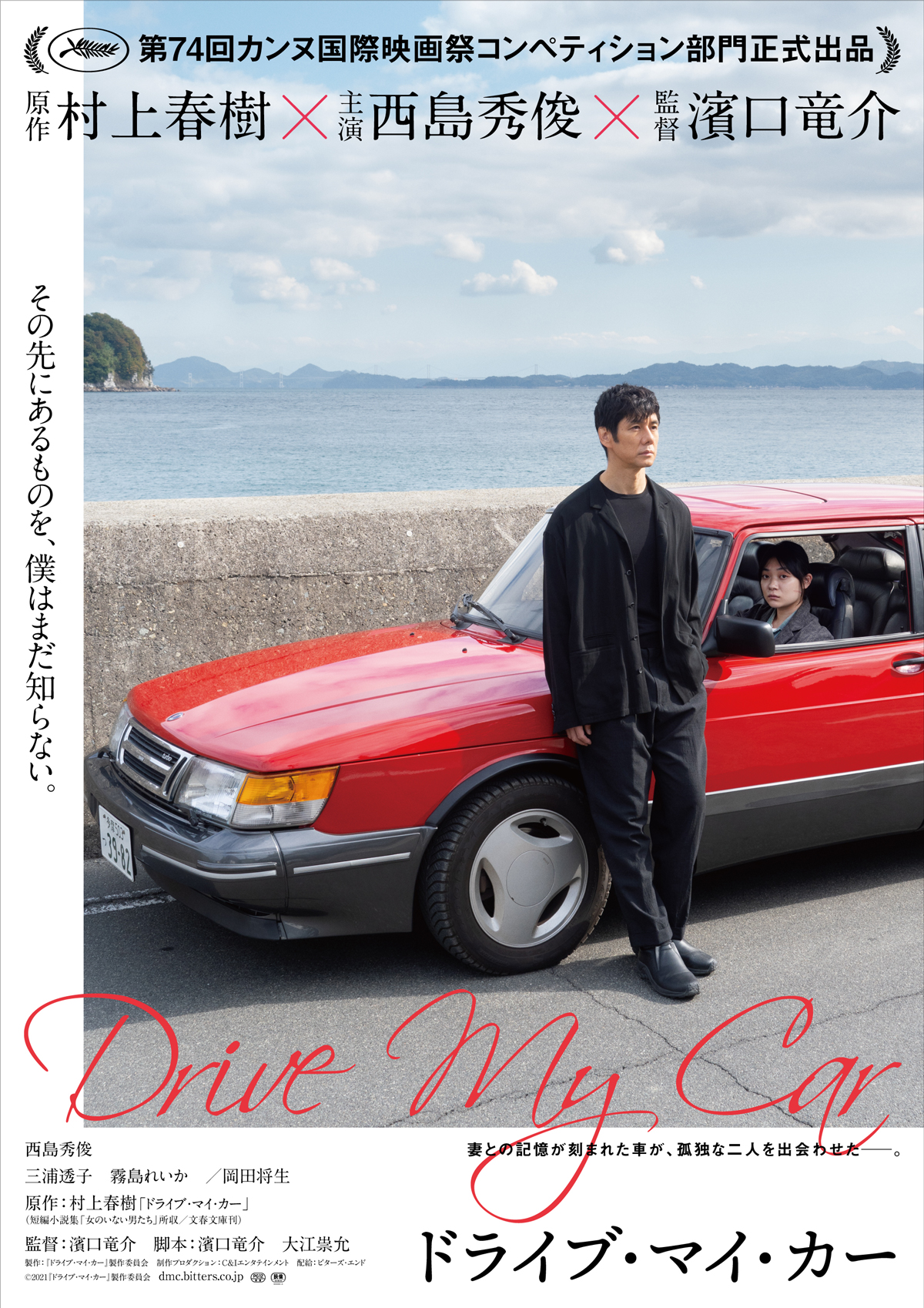
Drive My Car (ドライブ・マイ・カー, Ryusuke Hamaguchi, 2021)

“What can we do? we must live our lives” comes a constant refrain echoing the closing words of Chekhov’s Uncle Vanya offered by the self-sacrificing Sonya resolving to find joy in suffering if only in the promise of a better world to come. Freely adapted from a short story by Haruki Murakami, Ryusuke Hamaguchi’s profoundly moving Drive My Car (ドライブ・マイ・カー) is study in grief, loss, and how you learn to live after the world has ended but also of how we pull each through, finding new ways to communicate when words alone can’t help us. 

Words are, however, where we begin with a woman half in shadow an accidental Scheherazade spinning a bizarre tale of a high school girl’s first love. Oto (Reika Kirishima) claims the story is not about her, but as we’ll later discover in some ways it is if perhaps not literally. A long-married couple, this is part of their marital routine, screenwriter Oto telling stories to her theatre director husband Yusuke (Hidetoshi Nishijima) she asks him to remember and repeat back to her in the morning. Only one day, having accidentally stumbled in on his wife and her lover only to leave quietly saying nothing, Yusuke claims not to remember. She tells him she wants to talk, but he is afraid of what she’ll say and delays coming home, finding her collapsed in the hallway on his return having passed away from a cerebral haemorrhage. The story remains incomplete, a perpetual cliffhanger never to be resolved. 

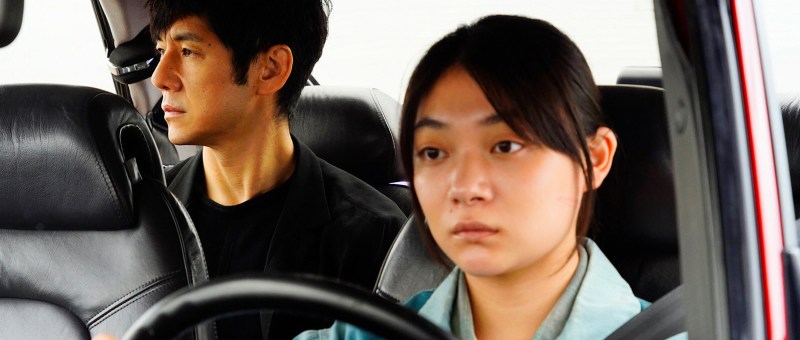
Two years later Yusuke is a haunted man still listening to the cassette tape Oto left for him of her reading all of the other lines of Chekhov’s Uncle Vanya save for those of the title character which he was to play himself. This time he’s been selected as an artist in residence at at a theatre in Hiroshima where he’ll once again stage Vanya in his signature multilingual performance style. He’s specifically asked for accommodation an hour’s drive away with the intention of maintaining his usual routine of listening to the tape on his way to rehearsal but, following previous incidents, the theatre has a policy of hiring their own drivers in this case a young woman, Misaki (Toko Miura), who eventually wins him over through her capability and care while, ironically, mimicking the very qualities he demands of his actors in her wounded stoicism. 

The car in a sense represents an inviolable space of intimacy, a space that Yusuke had been reluctant to allow anyone to enter, even Oto remarking on his discomfort with her in the driver’s seat as she took him to a doctor’s appointment where he learned he was losing the sight in his left eye, clarifying with the doctor that for the time being at least he’d be OK to drive himself. Misaki assumes he doesn’t want her to drive his car because she’s a young woman, but thereafter is careful to maintain distance respecting his space for her sake as much as his own mindful of her role as a “driver” until he begins to invite her in if originally more out of politeness or consideration than a desire for company. 

Misaki has her own story, a story she too is originally reluctant to share but in its way echoes his as someone trapped in grief and guilt ironically unable to move forward but driven by the quality of Oto’s voice and the ritualistic call and response implied by its lacunas. Too afraid of its implications to take the role himself, Yusuke casts Oto’s lover, Takatsuki (Masaki Okada) a young TV actor with impulse control issues whose career has apparently been ruined by scandal, as Vanya a man approaching 50 whose illusions are painfully shattered, forcing him to realise that he’s wasted his life on a futile ideal. The three of them, each eventually entering the confessional space of the car, share more than they might assume but it’s Takatsuki who holds the key revealing another piece of the puzzle with unexpected profundity that in its own way lays bare a truth Yusuke had been unwilling to see about his relationship with his wife, the shared grief that both bound and divided them, and the poetic import of her death. 

Rather than Vanya, the film’s prologue saw Yusuke perform in a multilingual production of Beckett’s Waiting for Godot, the author’s well-known phrase “I must go on, I can’t go on, I’ll go on” perhaps equally apt even as Yusuke moves slowly away from the role of Vanya before finally assuming that of Sonya in echoing her words while comforting the filial figure of Misaki even as she explains to him that as in Vanya the fault was not in his convictions but in himself that he couldn’t accept the contradictions of his wife and in that sense had not understood her or himself well enough to know he should have braved the hurt of confrontation. Yet as Takatsuki had said, you can’t ever really know another person, there’s always a part of them forever out of reach all you can do is try to make peace with your own darkness. 

For Yusuke communication occurs indirectly, through allegory or half-truth, and through the unspoken or unintelligible. His multilingual approach in which lines are read coldly at half-speed is intended to draw out the feeling that lies beneath them, the final most profound moment delivered in silence as a former dancer breaking free of her bodily inertia delivers Sonia’s closing monologue with all of its melancholy serenity in Korean sign language her arms draped angelically over Vanya’s shoulders in a gesture of the utmost comfort. Touching in its ambiguities, Hamaguchi’s quietly devastating emotional drama for all of its eerie uncanniness finally places its faith in simple human empathy as its haunted souls learn to live with loss finding in each other the strength to go on living.


Drive My Car screened as part of this year’s BFI London Film Festival.

International trailer (English subtitles)

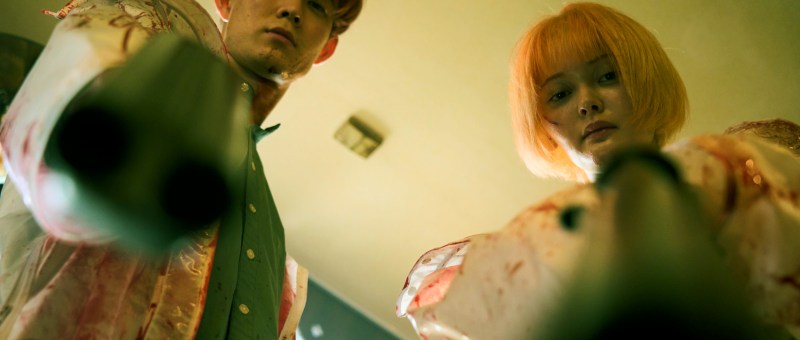
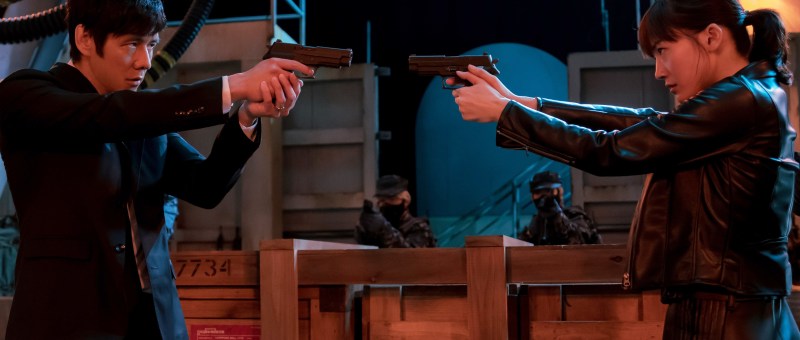
Caution, Hazardous Wife: The Movie (奥様は、取り扱い注意, Toya Sato, 2021) [Fantasia 2021]

Perhaps in some ways out of step with the times, the 2017 Nippon TV drama Caution, Hazardous Wife (奥様は、取り扱い注意, Okusama wa, Toriatsukai Chui), like the earlier Secret Agent Erika, saw top assassin Nami (Haruka Ayase) fake her own death in order to live a “normal” life as an “ordinary housewife” married to “boring salaryman” Yuki (Hidetoshi Nishijima). Nami could not however resist using her skills for good and bravely took on a local yakuza gang who’d been running a suburban prostitution ring through employing handsome gigolos to seduce emotionally neglected housewives and thereafter blackmailing them into sex work. The series ended on a cliffhanger in which, spoiler alert, Nami was confronted by her husband who turned out to be a Public Security Bureau officer originally tasked with monitoring her before genuinely falling in love.

This brief background recap is useful but not strictly necessary in approaching the series’ big screen incarnation, Caution, Hazardous Wife: The Movie, which ironically assumes the audience knows Nami’s secret backstory but also obfuscates it in picking up 18 months after the cliffhanger to find her now living as “Kumi” in a tranquil seaside town having apparently lost her memory. The town will not remain tranquil for long, however, as a mayoral race is about to bring tensions to the fore in the polarising issue of a prospective methane hydrate plant the authorities insist is necessary to revive the area’s moribund economy while others worry about industrial pollution and its effects on the local sea life. Unsurprisingly, the events will turn out to have a connection to Nami’s past while she struggles to regain her lost memories and preserve the peaceful, ordinary life with her husband which is all she’s ever really wanted. 

Though some might find it somewhat conservative that what Nami wants is to become a conventional housewife, what she’s looking for is the stability of the “normal” life she’s never known. As such, she may not actually want to regain her memories, preferring to go on living as Kumi who has perfected the housewife skills which so eluded Nami including becoming a top cook, for as long as possible. Yuki, meanwhile, now living as high school teacher Yuji, feels something similar having been ordered to “deal with” his wife if she remembers who she is but refuses to become a PSB asset. 

Upping production values from the TV drama, Sato keeps Nami in the dark for as long as possible though her sense of social responsibility remains just as strong as she bravely intervenes when coming across a gang of teens taunting a boy with homophobic slurs for having a pink coin curse, later becoming concerned on witnessing the leader of the opposition to the plant being attacked by thugs in an attempt to intimidate him out of his decision to stand as a rival candidate to the incumbent mayor. Nevertheless, he allows space for plenty of dramatic action scenes including flashbacks to Nami’s career as an international assassin while the final set piece also throws in some bickering marital comedy before turning unexpectedly dark.  

Regaining her memories, Nami’s inner conflict is in her complicated relationship with Yuki wondering if he ever really loved the “real” her or if he perhaps preferred Kumi the docile Stepford wife, which is ironically the cover identity she’d longed to construct. Conflicted and suspecting his wife may have remembered who she really is, Yuki tells her to forget about the past but also that his feelings won’t change and she should be free to be herself but as Nami later realises the past won’t let her go and the peaceful life she’d dreamed of might be harder to preserve than she’d previously thought even as she commits herself to embracing the life she has now because her relationship with Yuki is the most important thing to her despite her lingering doubt. 

Touching on a few hot button issues from industrial pollution and environmental concerns to economic decline and rural depopulation, Sato nevertheless returns to the outlandish absurdity of the TV drama as Nami finds herself facing off against Russian gangsters while exposing a plot by shady conglomerates to exploit a small-town desire for better access to jobs and infrastructure, along with judicial corruption and electoral interference. Nevertheless, the hometown spirit eventually wins out even if Nami finds herself on the run once again though having gained a little more emotional clarity. 


Caution, Hazardous Wife: The Movie streamed as part of this year’s Fantasia International Film Festival. The original TV series is also available to stream with English subtitles (along with those in several other languages) in many territories via Viki.

International trailer (English subtitles)
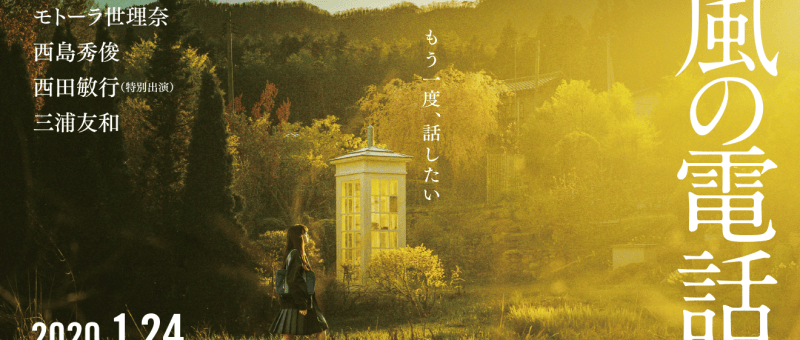
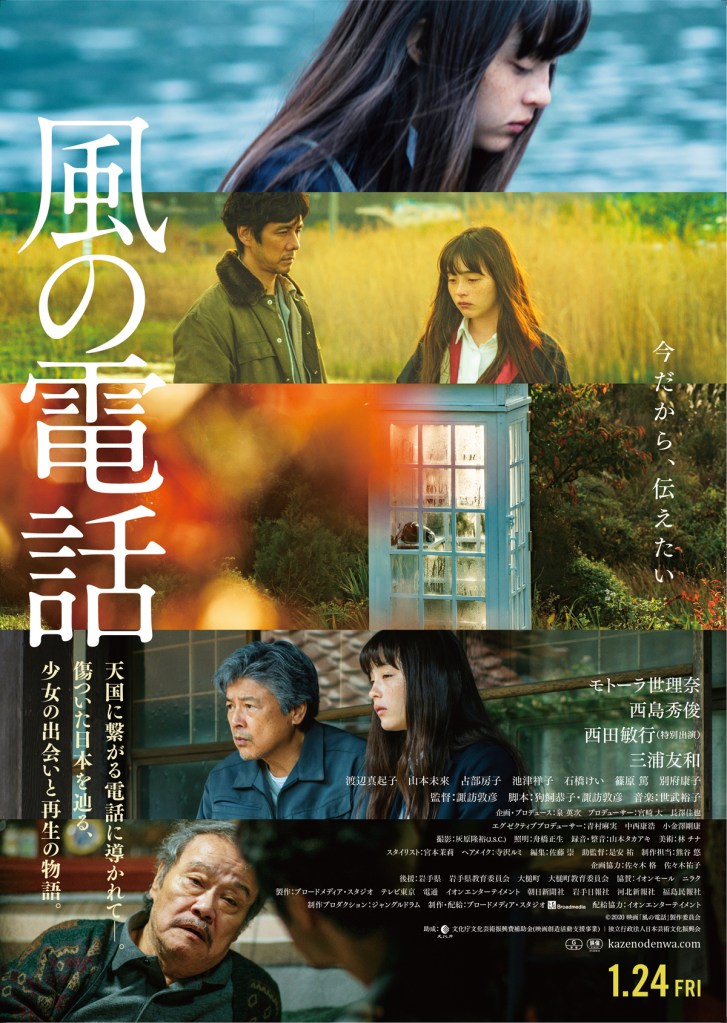
Voices in the Wind (風の電話, Nobuhiro Suwa, 2020)

Shortly before the devastating earthquake and tsunami struck the coast of Japan in March 2011, a resident of Otsuchi constructed the “wind telephone” as a way of “communicating” with a relative who had recently passed away. As his words would obviously not reach him in the usual way, he hoped they might be carried on the wind though like a letter never intended to be sent, the sentiment is perhaps more important than the delivery. In the years since the disaster, over 30,000 people have picked up the receiver, hoping to reconnect in some way with those they’ve lost. Widely reported in the international media, the story of the Wind Telephone brought director Nobuhiro Suwa back to Japan for the first time in 18 years after a career mostly spent in Europe as a young woman attempts to come to terms with the past in order to find the strength to continue living in the wake of such devastating grief. 

Nine years old when the tsunami struck, 17-year-old Haru (Serena Motola) lost everything in a single moment. Her family home was destroyed, her parents and younger brother swept out to sea their bodies never found. Since then she’s been living in Kure, Hiroshima, with her aunt Hiroko (Makiko Watanabe) who suggests making a visit to Otsuchi to attend an event celebrating the town’s rejuvenation but Haru is understandably reluctant. When Hiroko is taken ill suddenly, however, she finds herself making the trip alone, reeling in her sense of abandonment and in search of some kind of answer to her sorrow. 

Throughout the course of her journey she encounters many other griefstricken souls, not all of them in a direct sense at least affected by the earthquake but carrying a heavy burden all the same. A concerned old man who spots Haru lying vacantly in a quarry and takes her home reveals that he did so in part because she had an absent look that reminded him of his sister who took her own life over a decade previously. “Stay alive” he pleads with her as he drops her off at the local station after a good meal and an oddly cathartic conversation with his elderly mother who spoke of her memories of the atom bomb and a relative who went to the city in search of his wife’s family but returned only with a funeral urn which, to her consternation, contained no bones only a button from a student’s jacket. 70 years later she still feels ashamed for her six-year-old curiosity to know what human bones looked like. 

This sense of what remains and what is swept away becomes central to Haru’s ongoing journey. It isn’t just the people who are gone, but the spaces they inhabited and memories contained within them. An elderly gentleman (Toshiyuki Nishida) finds himself reduced to tears while watching an old comedy he must have seen countless times before, overcome with grief on seeing the paddies and fields as they once were while a local folk tune plays in the background. The man who travels with Haru for much of the trip, Morio (Hidetoshi Nishijima), declares himself homeless but does in fact have a home only one he can’t bear to visit, while Haru’s no longer exists at all, reduced to foundations still partially submerged yet overgrown as nature begins to reclaim its territory. 

Meanwhile, she discovers other kinds of grief and displacement in meeting the family of a Kurdish refugee who went to Fukushima to help after the earthquake but is now indefinitely detained by immigration officials while they decide on his case. The man’s daughter, perhaps slightly younger than Haru, explains to her that she’s acted as an interpreter in hospitals for other Kurdish women who are often isolated and speak little Japanese. She’s decided that she’d like to become a nurse to go on helping people, but Haru can find little of her positive forward motion, stuck as she is in the past with no real concept of the future.

But then, there are also signs of life. The first people who pick Haru up hitchhiking are a cheerful heavily pregnant woman and her more serious brother. The woman confesses that she’s having the baby on her own, and that many did not approve of her decision thinking her too old at 43 to become a mother. “Isn’t it amazing how we can just make another person?” she exclaims, “It’s like there’s a whole little universe inside you”. In the midst of all this grief, there is life too, not to mention warmth and kindness such as that found in each of those who help Haru on her way until she finally reaches the telephone. 

Using mostly improvised dialogue, Suwa’s European arthouse aesthetic has an elegiac quality as Haru edges her way towards an accommodation with her grief, resolving to live on even in the wake of tragedy. “Because I’m alive I remember all of you” she adds, acknowledging her place with the grand sweep of history. “It’s OK”, Morio tells her, “you’ll be OK” speaking for himself as much as anyone else, looking towards a possible future if in memory of the irretrievable past.


Voices in the Wind (風の電話, Kaze no Denwa) is available to stream in the US until July 30 as part of this year’s Japan Cuts.

Original trailer (English subtitles)