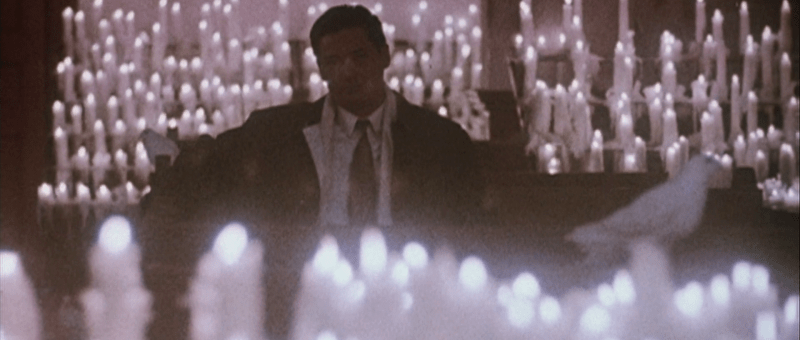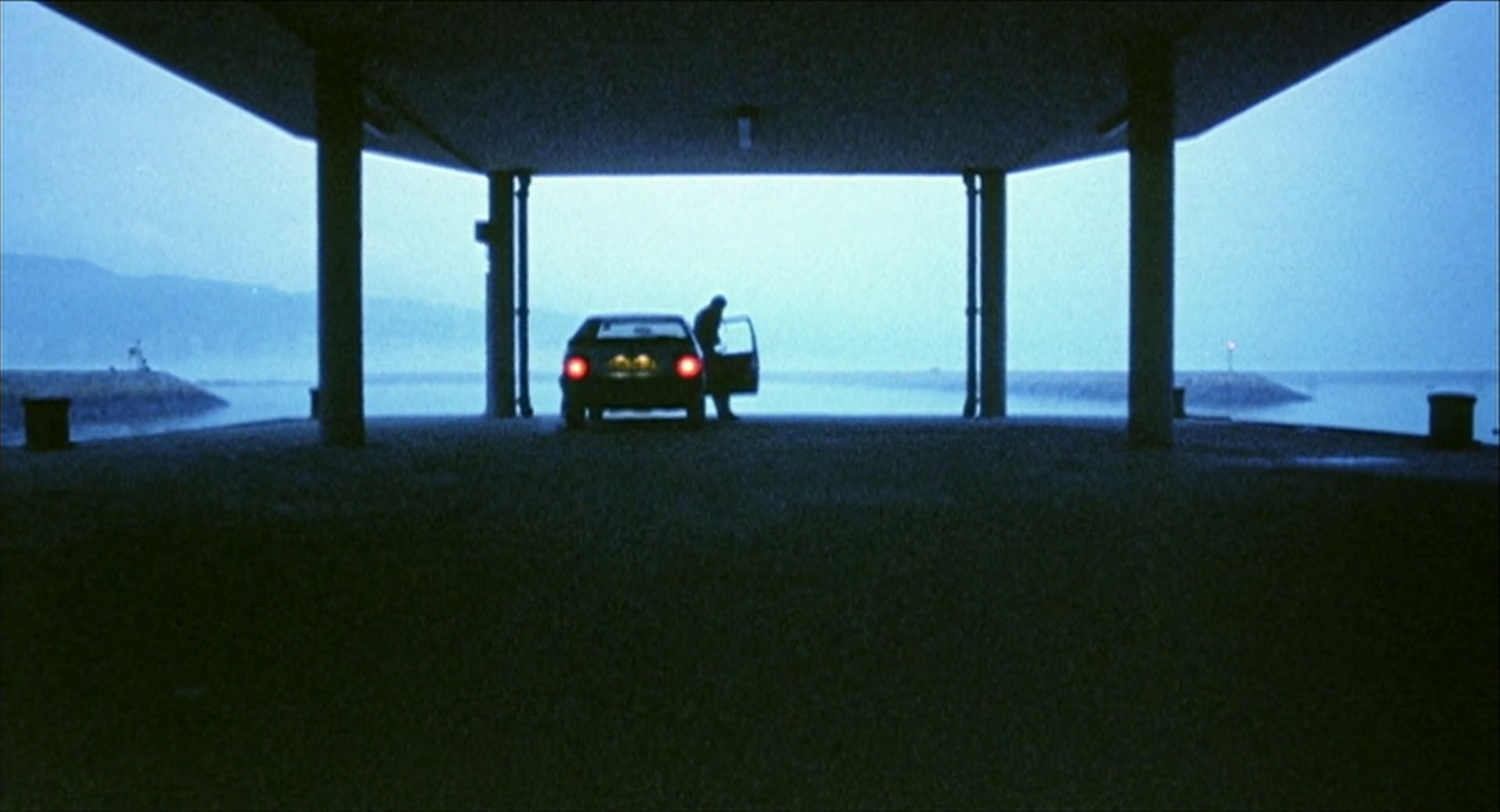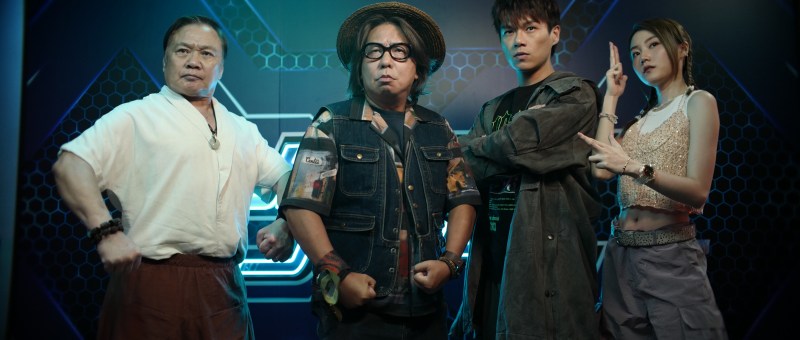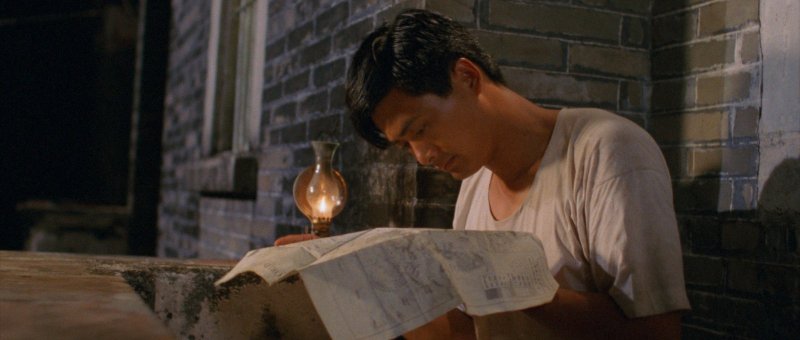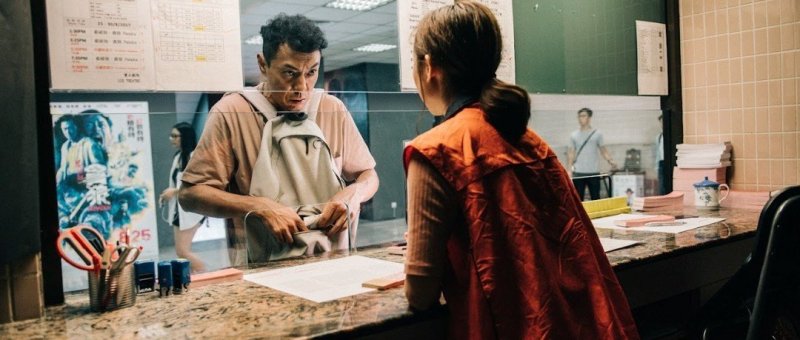
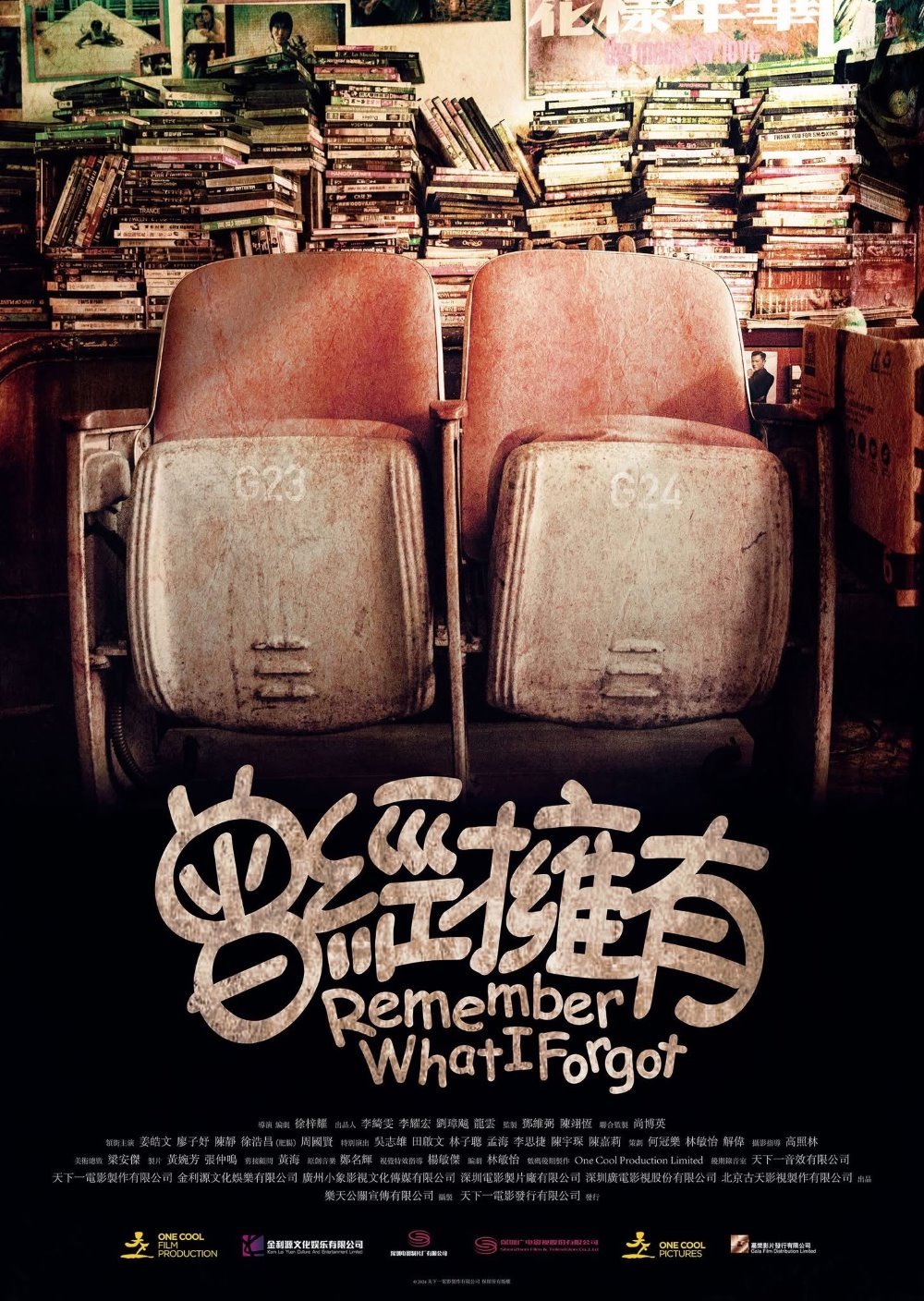
Behind the Shadows (私家偵探, Jonathan Li Tsz-Chun & Chou Man-Yu, 2025)

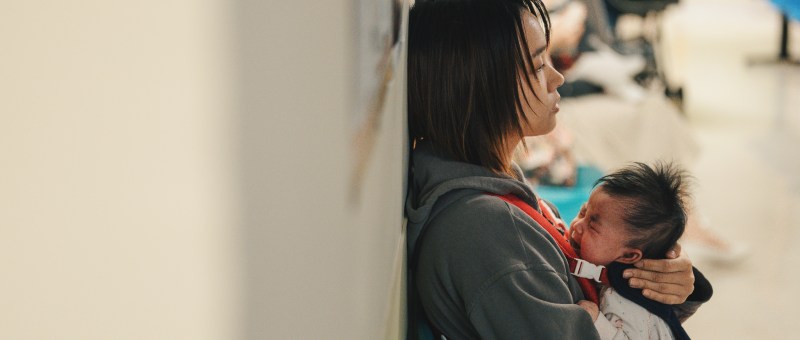
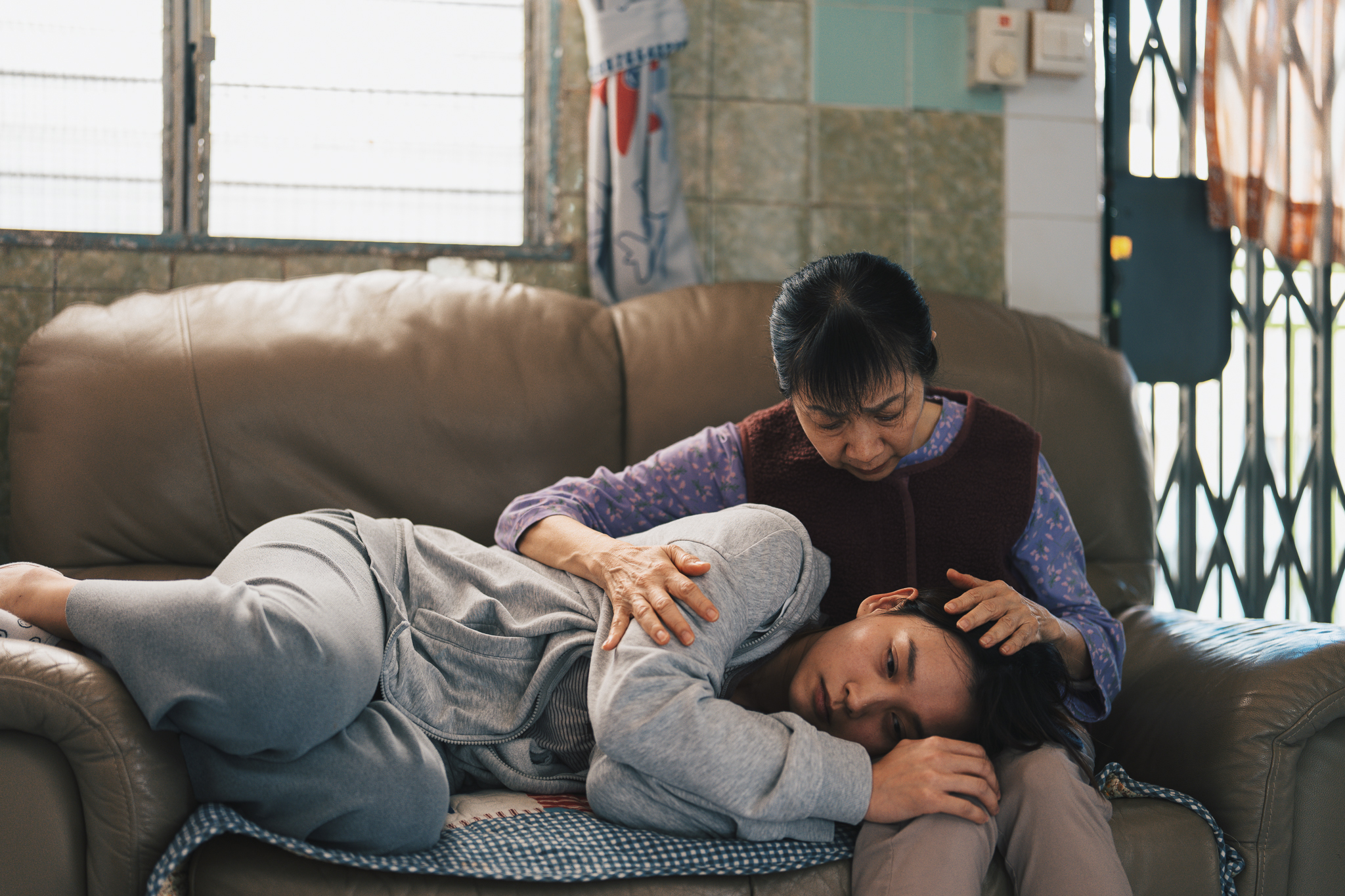
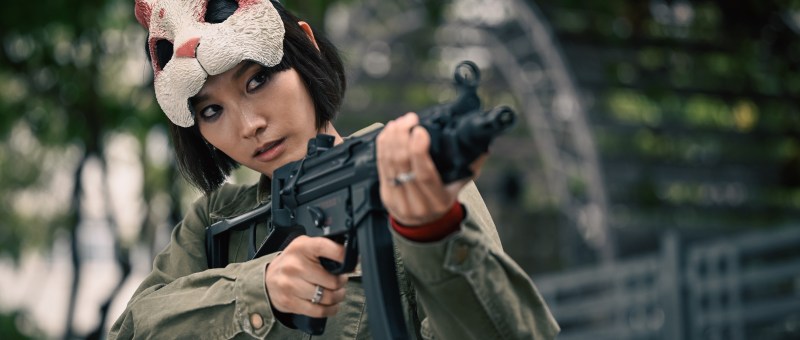
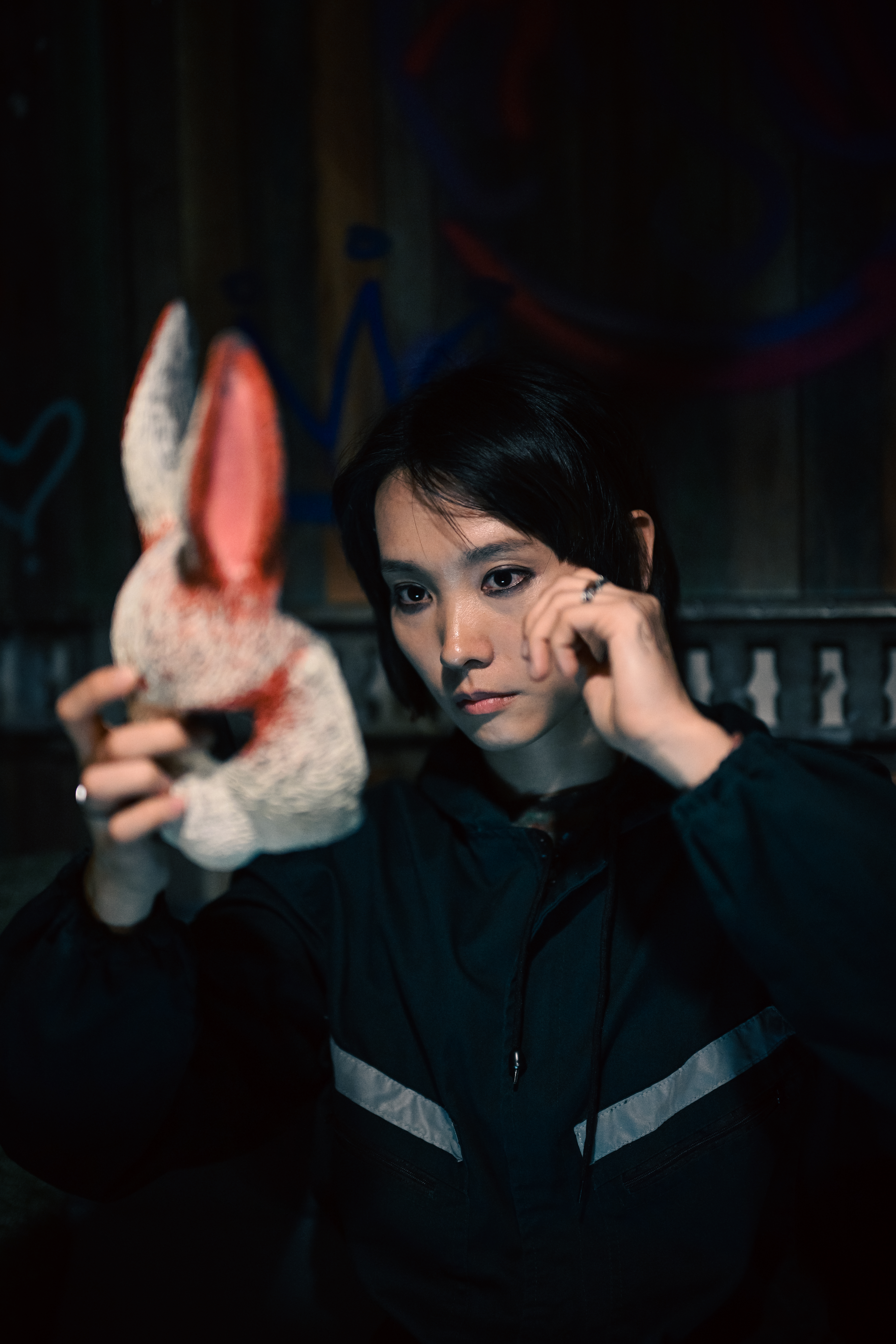
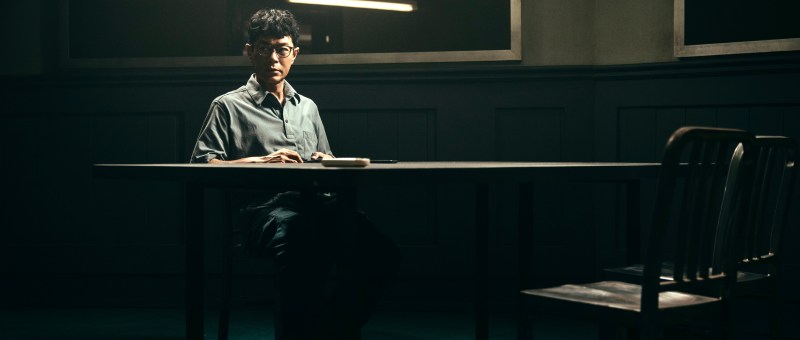
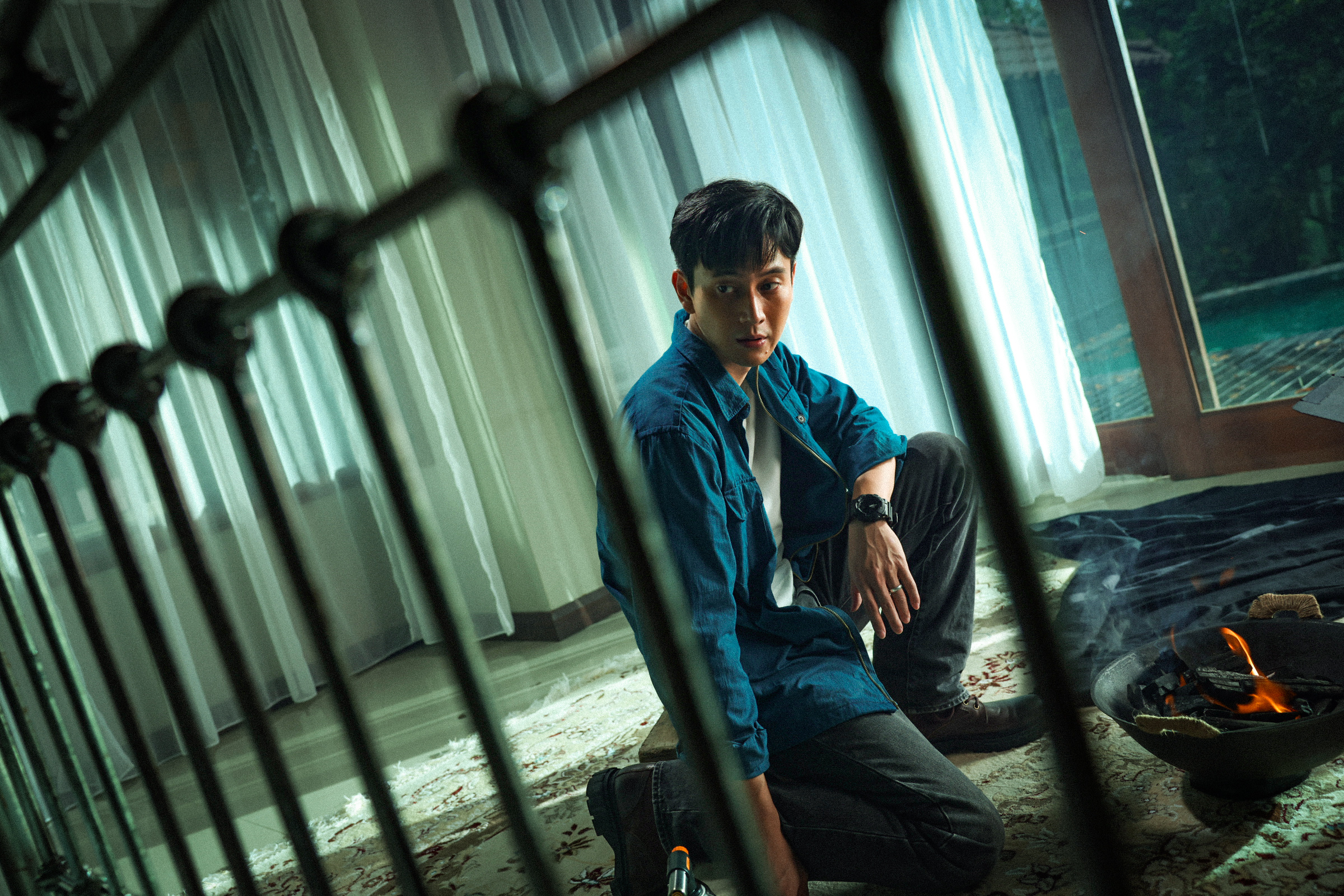
“At our age, we do what we have to do instead of obsessing over the good old days,” according to a put upon wife sick of waiting for her husband to make good on his promises. Jonathan Li Tsz-Chun and Chou Man-Yu’s Malaysia-set drama Behind the Shadows (私家偵探) is in its way as much about the disconnect in modern romance which has now been corrupted by capitalistic desires and frustrated notions of traditional masculinity as its central mystery. 

As someone says, in the old days women hired private detectives to chase their men, but now it’s the other way around. In someways, the parade of men rocking up at Wai-yip’s (Louis Koo Tin-lok) office to hire him to follow their wives, girlfriends, or women with whom they may not actually have much of a connection, all seem to be trying to regain control over their lives by asserting it over a lover they fear has betrayed them. Ironically, this is sort of true of Wai-yip too in that he’s taken to spending his evenings at his friend’s restaurant to escape his moribund marriage. When one customer brings him a photo of his own wife, Kuan (Chrissie Chau Sau-na), little knowing he’s the other man Wai-yip is irate but not as surprised as might be expected. Still, he hands the case off to a junior associate and tries to avoid thinking about it while otherwise passively seething about his wife’s potential betrayal.

But the ironic thing is that Kuan might only have done this to get Wai-yip’s attention and force him to confront their fracturing relationship. While Wai-yip hangs back, tries to act with maturity, and struggles to accept his wife’s decision, she privately wants him to fight back, to shout at her or punch her lover as a sign of manly love. She attacks his masculinity by berating him for being work-shy and refusing to have a child because they can’t afford it, though she can support them all on her salary, while Wai-yip remains hung up on the lost glory of his life in Hong Kong which he gave up to marry Kuan and move to Malaysia. The suggestion is that Wai-yip has been trapped in a kind of limbo, unable to let go of the past and embrace his new life and now Kuan is sick of waiting for him. 

The circumstances of his own marriage and the cynicism of 20 years spent chasing cheating spouses cause Wai-yip to be wary when a man comes and asks him to look for a runaway fiancée. He wonders if they’ve just had a tiff, if she’s left because the man was violent or unfaithful, or if the man is delusional and the woman doesn’t believe herself to be in a relationship with him and so is just happily living her own life. Along with all these anxieties is his sense of responsibility in knowing that this woman may be in danger if he finds her, as will Betty if Wai-yip manages to uncover evidence of her infidelity and relays it back to her gangster boyfriend. Like Kuan, Betty (Renci Yeung Sz-wing) says she just wants a man who will listen to her when she wants to talk and is half-minded to let Wai-yip send the video to find out if the gang boss cares about her enough to actually do anything about it. 

But the consequences of inaction are also brought home to Wai-yip when one of the women he’s following is murdered after he leaves his investigation to chase Kuan and her lover. Trying to makeup for his failure brings him into contact with a zombified cop, Chen (Liu Kuan-ting), whose wife is in a coma after a car accident. While Chen’s solicitous care and repeated pleading that his wife wake up may paint him as a lovelorn man, the marks on her arm that perfectly fit his fingers suggest a violent and controlling past along with a thinly concealed rage that she may have escaped him at last. “There’s nothing much the police can’t do,” he ominously tells Wai-yip while hinting at his desire for authoritarian control as mediated through the patriarchal institution of the police force and his rejection of a woman’s sexual freedom. Wai-yip feels similarly trapped as his own increasing sense of inadequacy deepens the gap between his wife and himself that leaves him unable to have an honest conversation with her about how he really feels and prevents him from healing the rifts within his own marriage even as he chases answers on behalf of other insecure men. What he indeed realises is that it’s time to move on from the past and live in the present, though as it turns out not even he may be strong enough to leave his insecurities behind. 


Behind the Shadows screened as part of this year’s New York Asian Film Festival.

Trailer (Traditional Chinese / English subtitles)

Dirty Ho (爛頭何, Lau Kar-leung, 1979)

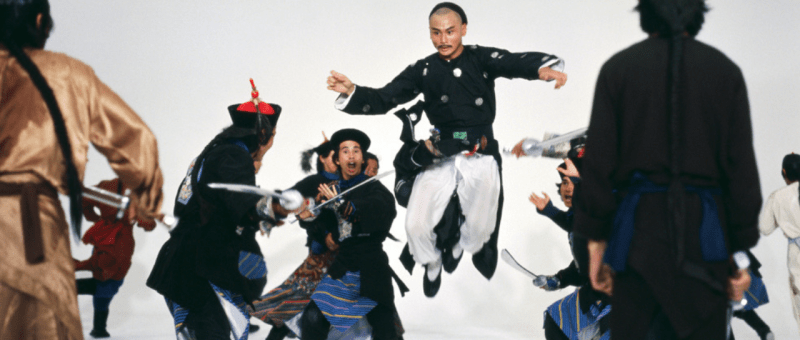
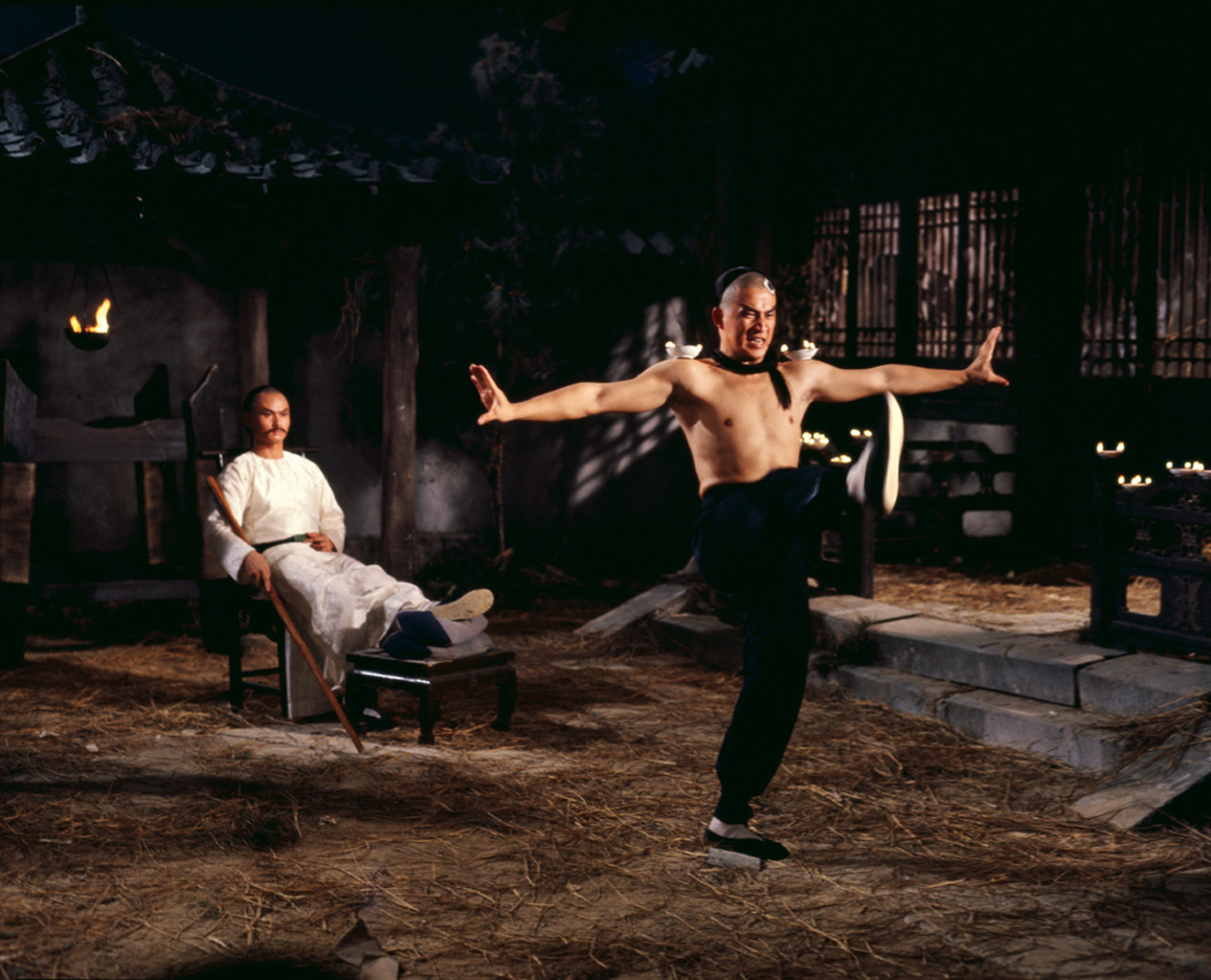
A prince in hiding develops a fondness for a bumbling jewel thief in Lau Kar-leung’s anarchic kung fu comedy, Dirty Ho (爛頭何). The English title is apparently intended as a Dirty Harry reference, though the film obviously has nothing at all to do with the Don Siegel procedural, the Chinese meaning something like “rotten head Ho”, and is in effect a homoerotic buddy movie as the various power balances begin to shift between the two men until they come to function in perfect synchronicity almost in fact as one.

The film opens, however, with a dispute over courtesans and a game of one-upmanship between prince in disguise Wang (Gordon Liu) and cocky jewel thief Ho (Wong Yue). The pair promise ever greater sums of riches in return for female company, eventually ending up in a fight interrupted when the police are called about some stolen treasure. However, at the last second, Wang says both the treasure chests are his and that he is a legitimate jewel seller from Beijing. He saves Ho from arrest, but also takes the stolen treasure chest with him, ensuring Ho will later return to take it back.

Why Wang takes a liking to him isn’t really clear, but even in his clumsy martial arts skills he seems to see something that could be polished if only he could turn him into an upright citizen. He does this partly by means of trickery, injuring Ho on the head with a poisoned sword and then promising him the antidote but only if he agrees to become his disciple and do exactly as he says. For the rest of the film, Ho wears a large black plaster on his head that slowly decreases in size as he begins to reform under Wang’s tutelage. But the power dynamic between them later shifts when Wang is injured and has to use a wheelchair with Ho now dependent on him for care and protection. 

What emerges between them is strangely like a marriage while the two of them are later accosted by the “Seven Agonies” led by a very effeminate man who also causes Ho to take on a camp persona until actively rejecting it. No one is really quite as they seem, Wang actually a prince in disguise hiding out from his 13 brothers, and in particular the fourth one, who really want him dead so they can inherit the kingdom. In true martial arts fashion, Wang isn’t interested in the throne, fame, or fortune, but rather than a commitment to resisting oppression simply wants to be free to enjoy the finer things in life like art, antiques, and strong liquor. 

Meanwhile, the two are also attacked by a gang of bandits faking disabilities and Wang at one point tries to pass off one of the concubines as his bodyguard to conceal the extent of his martial arts skills. Reuniting with Gordon Liu after 36th Chamber of Shaolin, Lau’s choreography has a playful, slapstick sensibility such as in the ongoing duel of swapped tankards with one of the assassins. The hand movements are fast and precise, a maze and flurry of moment culminating in the final showdown with Lo Lieh’s enemy general in which the two men are so perfectly in tune that they move almost as one. 

Lau stages an increasingly surreal sequence of events, including the pair sheltering under umbrellas in the middle of a dilapidated town while targeted by assassins hired by Wang’s brother, but ends in curiously ambiguous fashion with the matter of the court unresolved despite Wang’s desire to live freely as he chooses. Of course, a prince he is but Wang is also constrained by his social status in much the same way Ho is prevented from living his authentic life because of the obligations entailed with being a potential heir to the throne. Meanwhile, it seems the king is doddery and has unwittingly created a vacuum which has pit his 14 sons against each other, destabilising the society in the process. Not wanting the job actually makes Wang an ideal candidate though, he’d have to survive all the assassination attempts first. A riot of colour and witty humour, the film boats some of Lau’s most intricate choreography performed by two actors at the top of their game who are perfectly primed to bounce of each other in a humorous back and for between the shifting sands of master and pupil.


So Close (夕陽天使, Corey Yuen Kwai, 2002)

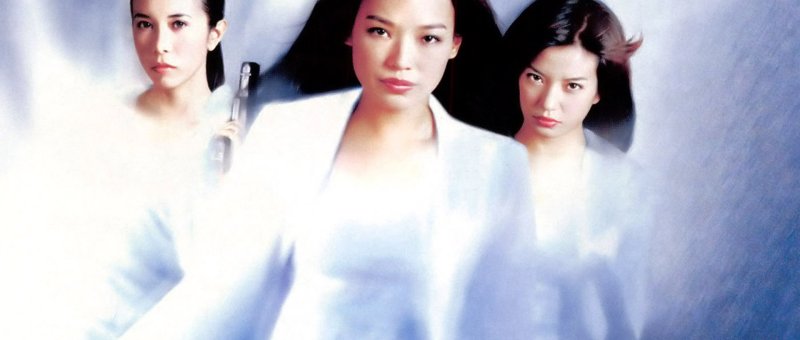
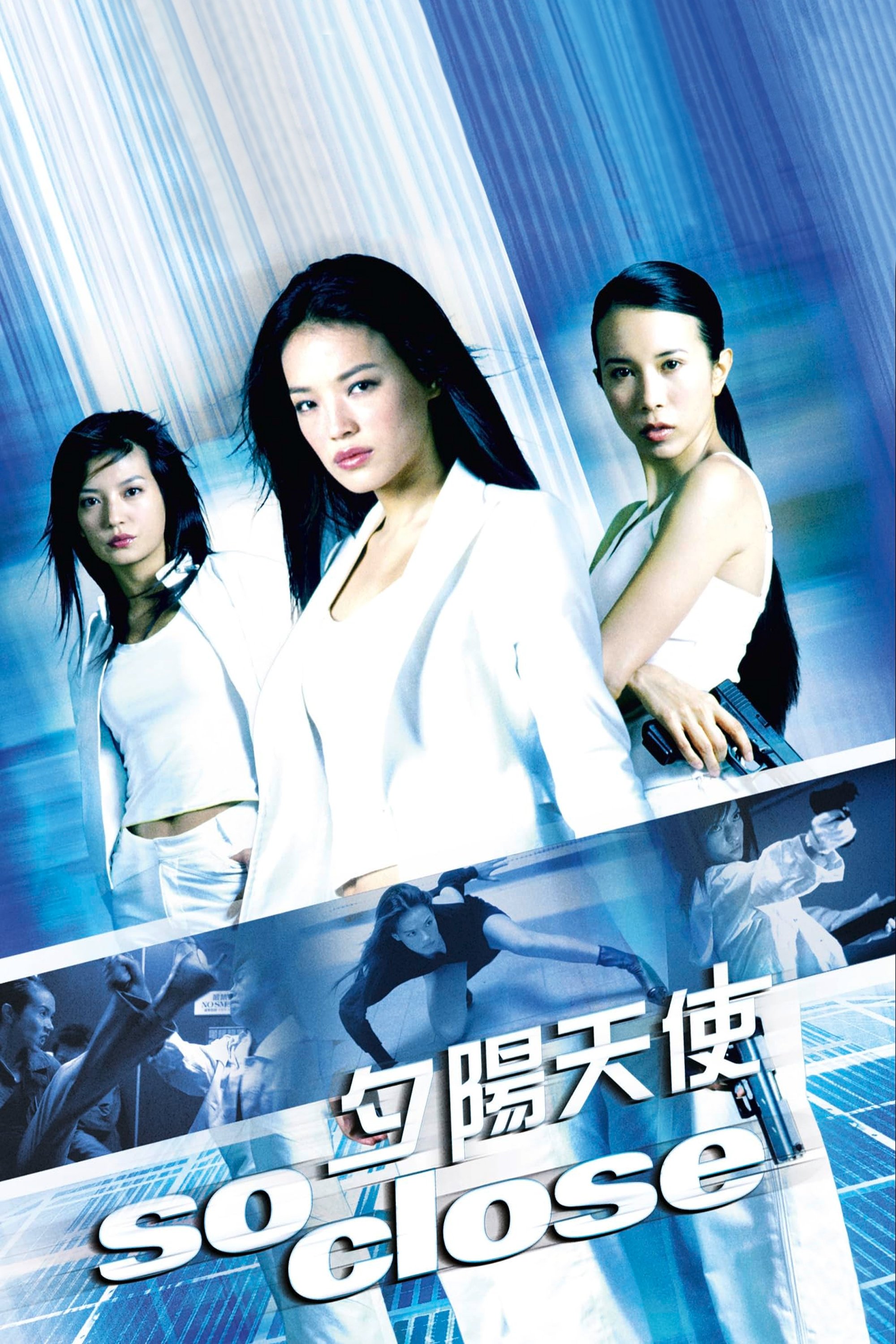
A latish entry in post-millennial cyber thrillers, Corey Yuen’s So Close (夕陽天使) finds two hit women sisters safeguarding next generation technology in keeping it out of the hands of corrupt businessmen who in fact murdered their father to get it. They claim he always intended to gift his all-powerful mass surveillance tool to the police, which either seems politically uncomfortable or incredibly naive, but have been using it themselves to earn their keep as killers for hire albeit justifying themselves in insisting on the moral bankruptcy of their targets.

In this case, that would be Chow Lui (Shek Sau) who according to “Computer Angel” made his “evil fortune” through drug smuggling. Infinitely smug, Chow thinks he has better technology but is soon proved wrong as Computer Angel admits she also sent the virus, or more accurately manifested it, to teach Chow a lesson. Yuen fills the film with 90s cyberpunk motifs, even having Computer Angel, later identified as Lynn (Shu Qi), jump off a building in a shot that is a clear homage to Ghost in the Shell while otherwise employing electronic imagery of cables and wires though the “World Panorama” system largely works through satellite.

In the opening sequence, Chow’s company is also revealed to be a global enterprise connected around a large table via the internet while futuristic systems allow him to have video calls with associates speaking Japanese and English. He suggests they simply pay the hackers to save their reputation which is apparently built on their world-class security systems though he himself perhaps remains sceptical abruptly shutting down his younger brother’s attempt to broker a deal investing in a company called Dragon. His office meanwhile has a bonsai tree in the background and his brother Nunn seems to have very close ties with a Japanese gangster hinting at a possible economic anxiety.

This fraternal conflict is eventually reflected in the fracturing relationship between the two sisters as field agent Lynn informs her sister Sue (Zhao Wei) that she wants to give up the killing trade after reuniting with an old boyfriend and deciding to get married. Techno wiz Sue has no other means of supporting herself and is resentful that Lynn always takes charge and won’t let her participate in missions, though Lynn is later vindicated when Sue’s hasty decision to take on a solo job goes just about as wrong as it can go. Meanwhile, their relationship is also strained by the presence of Hung (Karen Mok), a policewoman investigating Chow’s death who, as she later says, is strangely drawn to Sue who rollerblades around her at a record store with thinly concealed desire. 

There might be something in the fact that the actresses playing Sue and Lynn are from the Mainland and Taiwan respectively each performing their scenes in Mandarin but dubbed into Cantonese for the local release. They are indeed outsiders, firstly because of their unusual profession and secondly because of their all-powerful surveillance tool that allows them to carry out their missions yet also acting as a moral authority even if as Lynn later says they kill for money not conviction. World Panorama allows them to edit surveillance footage, placing fake avatars of themselves in the digital space and allowing them to otherwise recreate reality in a way that seems in keeping with the film’s otherwise low-key special effects which have an almost tongue-in-cheek quality parodying other more serious cyber thrillers from the mid-90s. 

The film’s English title comes from Yuen’s use of the Carpenters’ track (They Long to Be) Close to You, yet the Chinese is the more melancholy Sunset Angel which is most obviously refers to the film’s final scene if also perhaps calling time on the sisters’ roles of guardians of next-gen tech and avenging ghosts of the machine working out the bugs of corrupt gangster businessmen. In any case, they move through the “real” world like digital avatars performing incredible feats of human agility and not least in the high impact action scenes culminating in a lengthy katana fight in a tatami mat room which both echoes the cyberpunk aesthetics and reinforces an idea of corporatising colonialism finally blown away by the forces of female solidarity and an unlikely loves story between a soldier and a bandit. 


Trailer (English subtitles)

Sasori (さそり, Joe Ma Wai-Ho, 2008)

Sasori had been dormant for a decade before being resurrected in this Hong Kong co-production directed by Joe Ma. She is, however, a very different Nami Matsushima (Mizuno Miki) who becomes less a feminist avenger than a sociopathic killer, albeit one fixated on revenge and with ambivalent feelings towards her former lover, Hei Tai (Dylan Kuo Pin-Chao), who evidently did not have enough faith in her to realise that she didn’t murder his entire family just because she felt like it.

Nevertheless, in contrast to other Namis, she did make the decision to do it and went through with stabbing Hei Tai’s sister in the heart right in front of him even if she did it to protect him from the crooks who’d invaded their home. Motives are never explicitly explained, but it’s later suggested that Hei Tai’s professor father may have been knocked off by a rival scholar/gangster researching “inhuman organ treatment”. In any case, the goons that break into her home sexually assault Nami and tell her the only way to save Hei Tai is to help them kill his father and sister. Unfortunately, Hei Tai does not seem to recognise the position she was in nor her transgressive love for him, so is filled with boiling rage and resentment. Curiously, Nami never actually explains either, but is by that point mired in a women’s prison where she contends with the sleazy warden (Lam Suet) and the cellblock’s toughest lady, Dieyou (Natsume Nana), through the medium of cage-based mud wrestling.

This Nami’s transformation is obvious when she rips the loose skull fragment from a woman with learning difficulties she’s befriended and uses it to kill Dieyou. The moment at which she kills Dieyou’s sister, a woman she has no quarrel with, solely to unbalance her rival is presented as a kind of climax in which Nami herself appears to get off on the act of killing. During this earlier stretch of the film, Nami’s victims are largely female and killed for petty reasons. Seemingly cowed and beaten down, she does what the warden says rather than opposing him or like other Nami’s stabbing him in an eye. 

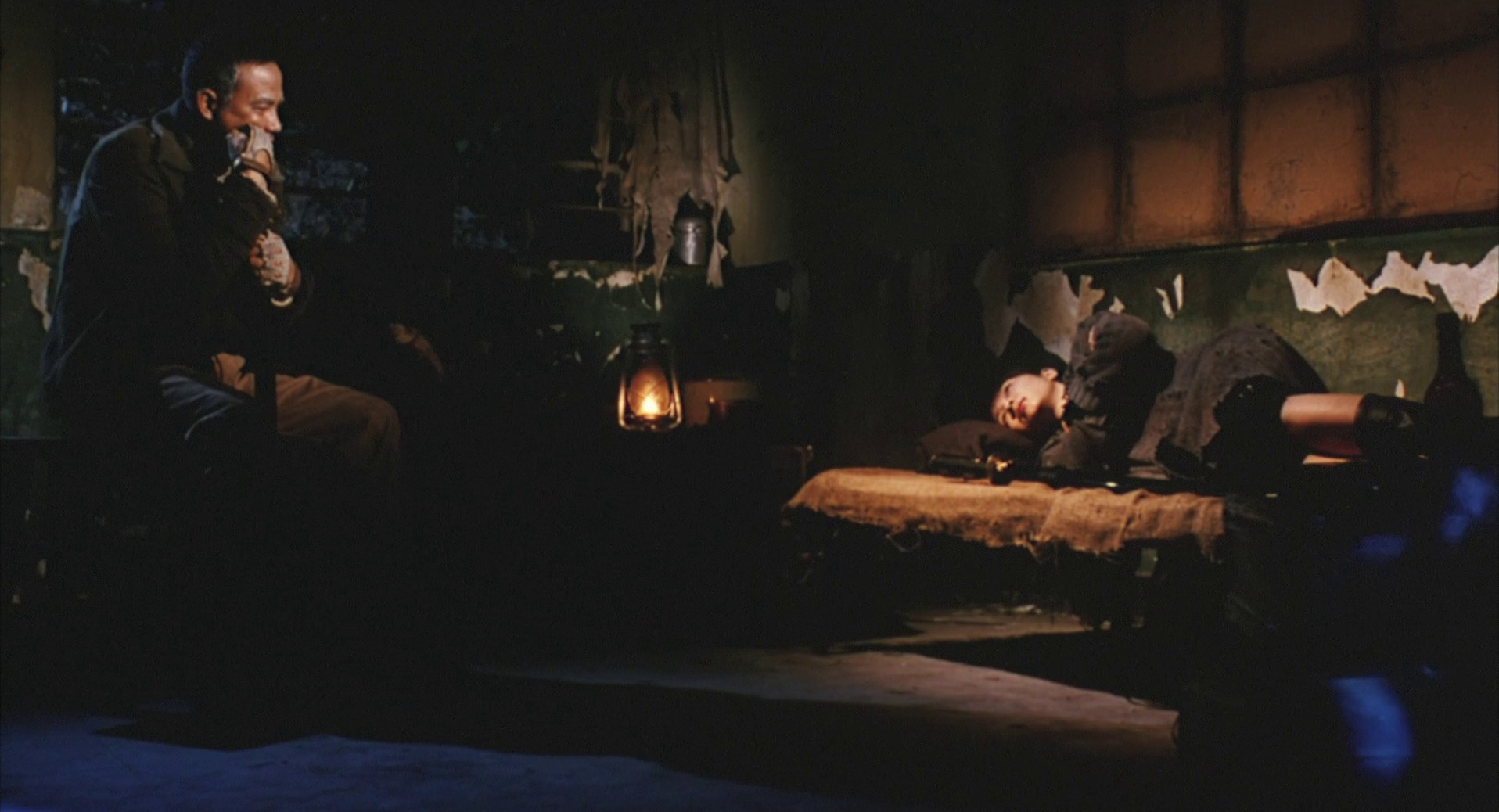
This does, however, eventually allow her to escape if as a corpse rescued by a mysterious “corpse collector” (Simon Yam Tat-Wah) who gifts her a Japanese sword and teaches her kung fu so she can achieve her revenge. It’s at this moment that she becomes a kind of supernaturally powered embodiment of vengeance, but it’s immediately made clear that the only revenge she seeks is personal. Spotting a pimp kicking a sex worker in the street, she strikes him down but only tells the sex worker that she doesn’t plan to kill her too otherwise making no further attempt to help her. Ma then takes the action back to its manga roots, relying on obvious wirework to lend a kind of unreality to the fight scenes even if the hand-to-hand combat is generally more realistic. 

But at the same time, Nami steps into a more arthouse space in a meditation on time and memory that seems to be borrowing a little from Old Boy or perhaps 2046 as she walks into a bar where the barman tells her that he can hypnotise people to erase their memories though he doesn’t they should. Re-encountering Hei Tai who no longer remembers her or his past life as a policeman, she finds herself ambivalent about her revenge, on one level resenting him and on another wondering if she has the right to start over without the problematic fact of her having been responsible for the deaths of Hei Tai’s whole family. 

There are many things that don’t really make all that much sense, from the inhuman organ research to Hei Tai’s possibly selective amnesia. Nevertheless, Ma piles on the style with a particularly 2000s Hong Kong aesthetic with its neon lighting and woozy camera work but also adopts a retro sensibility brought out by the use of mainly post-sync sound in which the Japanese actors are dubbed into Cantonese. By the film’s conclusion, Nami has once again become a legend but this time a much less palatable one not so much avenger for an oppressed minority as a cold-blooded and sadistic vigilante interested in little more than personal revenge.


International trailer

Hong Kong 1941 (等待黎明, Leong Po-Chih, 1984)

“Britain has reassured the people that it will not give up Hong Kong,” according to a radio broadcast at the beginning of Leong Po-Chih’s Hong Kong 1941 (等待黎明). The words have a kind of irony to them and not only because Britain did abandon the people following the Japanese invasion, but because the film was released on the eve of the Sino-British Joint Declaration in which it said something quite similar. 

But then again, the opening scenes are themselves quite critical of British rule as they, on the one hand, insist they aren’t going anywhere and, on the other, start evacuating women and children to “safer” areas of the commonwealth such as Australia. Out of work actor Fei (Chow Yun-fat) fled the Japanese incursion on the Mainland and came to Hong Kong, but now tries to stowaway abroad a boat going to Australia. He’s caught by a little British girl who speaks fluent Cantonese yet refers to him as her “slave” and insists that he “kowtow to me, now.” But then the girl suddenly adopts the persona of the Empress Dowager Cixi and demands the same. Fei makes the first of his many jumps into the water around Hong Kong, as if only in this liminal space can he be free. Anticipating the wave of migration occurring before and after the Handover, and also that of the present day, he and his friends Keung (Alexander Man Chi-leung) and Nam (Cecilia Yip Tung) set their sights on leaving to find Gold Mountain in Australia or America.

But they’re one day too late because the date of their departure is that the Japanese arrive in Hong Kong. Their haste to leave was in part caused by the fact that Nam’s father, Ha Chung-sun (Shih Kien), was trying to force her to go through with an arranged marriage her prospective groom didn’t want either. Nam is never really free as, as she points out, even after her father relents and allows Keung to marry her after she is raped by a police officer emboldened by the chaos and therefore worthless to him as currency, Keung never actually asked her and she’s in effect forced into a marriage with him instead. In fact, she returns to the shrine Keung lives in two find the two men constructing her marital bed for her with the double helix symbol of happiness already placed above it in an ironic expression of patriarchal oppression.

Indeed, her position is more precarious than either of the men and we see other families roughly cutting their daughters’ long hair to make them look like boys in fear of a rapacious Japanese army. But it largely turns out that it wasn’t so much the Japanese they needed to be worried about as the local population, experiencing a temporary limbo in which the social order has been suspended. Police officer Fa Wing (Paul Chun) who had acted as a lackey for Ha Chung-sun while constantly eying up Nam leads a gang of looters to Ha’s house to take their own revenge against his capitalistic oppression of them. Ha had largely made his money through rice profiteering and exploiting the local workforce. Recent layoffs at the warehouse had led to a labour riot, while Keung and his friends had been running a sideline skimming sacks of rice to sell on the black market. 

Ha and his henchmen anxiously await the arrival of the Japanese hoping that they will protect them from retribution, but the Japanese do not arrive fast enough. When they do, Ha collaborates and attempts to ingratiate himself with the Japanese officer in charge of the colony who once again takes a liking to Nam. General Kanezawa (Stuart Ong) also uses their poverty to starve them into submission, promising rice to anyone who will come and sing with him. The song he chooses is “Shina no Yoru” by Li Hsiang-lan, whom he describes as “their very own”, yet was actually a Japanese woman, Yoshiko Yamaguchi, groomed for stardom in Manchuria and marketed a Chinese star in propaganda films. Another song of hers, Ieraishan, can be heard earlier on the soundtrack as if heralding Japanese arrival. 

Though Nam tries to resist, Fei raises the trio’s arms in a cry of “banzai” in a moment of ostensible collaboration designed to buy them temporary safety. His philosophy and that of many others is to take the rice and deal with the rest later, which Fei does by becoming an enforcement officer with the Japanese to get papers that will allow all of them leave. He uses his position to help a gang of Mainlanders who are resisting the Japanese, and are, in fact, the last ones to stay behind and defend the colony, as well as well as save Keung when his attempt to rescue two friends who have been sold out for forced labour on another Japanese-controlled island by a local gangster backfires and he’s captured himself. 

Ironically enough, Fei had been the first one to try to leave and described himself as “selfish” after jumping back into the water to return to Nam and Keung who didn’t make the boat on time because they were trying to save a local eccentric everyone calls “emperor” played by the director himself. Fei is quite obviously in love with Nam, and she gradually falls for him in return though symbolically wedded to Keung, if not in the legal sense. Again, she has no say over her romantic future which is sorted out between the two men with Fei abiding to a code of honour in continuing to protect the relationship between Keung and Nam. Perhaps this echoes the way in which the Hong Kong people of 1941 or 1984 have little say in their future either as their fate is decided by two distant powers. Nevertheless, it leaves Keung feeling awkward and inadequate, realising that Nam likely prefers the smart and dynamic Fei over his constant failures and inability to protect her, though he is never jealous or resentful towards him only knowing that he is continually indebted. Yet it’s Nam who eventually strikes back for Hong Kong and for her own freedom while Fei looks on as children in the street play at beheadings as if they were Japanese soldiers. She embodies the spirit of Hong and carries it with her, and as the Chinese title of the film suggests, waits for a new dawn while accepting that just like old memories it will be replaced by what is to come. She speaks from a perspective that is both historical and uncertain, mourning the past while fearful of the future, but all the while continuing to live as one new dawn replaces another.


Hong Kong 1941 screened as part of this year’s Focus Hong Kong.

Trailer

The Black Tavern (黑店, Teddy Yip Wing-Cho, 1972)

One of the reasons that martial arts films are so popular is that it’s often easy to tell who is good and who is bad. In general, the just hero vanquishes the source of evil and corruption, thereby restoring a sense of moral order to a world that may in other ways be chaotic. But chaotic is probably the best way to describe the world of The Black Tavern (黑店) in which the titular inn becomes a nexus of greed and villainy where it is impossible to tell who, if anyone, is good, while almost everyone is actually bad and the heroine only really intervenes in the closing scenes.

One way you can tell that something is very rotten at the Gao Family Inn is that the cook suddenly emerges from a pit underground carrying someone’s leg, which he then chops up and uses to make buns. No one ever mentions this again. It’s a just symbol of how corrupt and hellish this world has become. The inn is apparently the only staging post on this route, which is presumably how they continue to get custom despite bumping off their guests, taking all their stuff, and then chopping them up to put in buns to serve to the next unfortunate person who arrives in search of a bed for the night. 

But the reason so many venal bandits are drawn here is that a beggar monk (Dean Shek) tells them he saw vast riches fall out of a chest belonging to Hai Gangfeng, a former official returning to his home province with all his ill-gotten gains from accepting bribes. Assuming Gangfeng will be stopping at the inn, everyone who heard the monk is on their way there. Only, as it turns out, the man we thought was Hai Gangfeng is actually a bandit, “Whipmaster” Zheng Shoushan (Ku Feng), who cunningly pretended to be him to take over the inn and wait for the real Gangfeng’s arrival. He does not, however, seem to have anticipated so many other bandit gangs each more outlandish than the last having the same idea.

One turns up with a band of hopping vampires who turn out to be crooks in disguise, while another is wearing a horned helmet that gets stuck in things when he’s trying to fight. Of course, they’re all trying to kill each other so they can be the ones in control when Gangfeng finally arrives. What they don’t realise is that the whole thing’s a honeytrap designed to lure them all to the inn for just this purpose, so that they’ll all kill each other and spare the forces of justice some trouble. Those would be Zhang Caibing (Shih Szu), a disciple of the Lady Hermit making this a kind of extended universe film of the Cheng Pei-Pei classic. Continuing her mentor’s mission, she’s out to skim off the “scum of the martial arts world,” explaining to Shoushan that if he doesn’t like it, he should have thought of that before committing so many “evil deeds”. 

On the other hand, Caibing does seem to be enjoying this quite a lot so perhaps she’s not quite so entitled to the moral high ground as she’d like to think. While taking a leaf out of King Hu’s book, Yip adds an edge of slapstick absurdity in setting up elaborate action sequences with well-deserved pay offs and indulging in goreless yet extreme kills such as a series of surprise decapitations. Shoushan’s bladed whip becomes a versatile weapon but also an extension of his character in his cowardliness and lack of morality. It’s only really any good at long range, which means that he keeps his opponents at arms’ length rather than confront them directly as in the typical tests of skill that define a martial arts battle. He coils it around their necks, snake-like, then either pops their heads off or strangles them to death. Just like the innkeeper he killed off at the start, he seems to have genuine affection for his female companions but eventually meets a similar fate as his trademark whip is ironically turned against him. 

There’s also a genuine, if underplayed, sense of ambiguity in the attraction between the mysterious swordsman (Tung Li ) and Shoushan’s daughter that prevents him from killing her while suggesting that he too was on some level attracted to banditry. Even if he rides off in the end with Caibing, it does not appear that their relationship is romantic. Nor is he allowed to claim victory by swooping in when all seemed lost for Caibing during the final fight, immediately encountering difficulty with Shoushan who puts up a good fight that again seems contrary to his moral character in the amount of skill and effort needed to beat him. Indeed, it often seems as if he will win after all. This world will fall to men like him and turn into one giant Black Tavern. In the end, it’s a team effort that takes him down, including the strange intrusion of the beggar monk who was after all the person who started all this by repeating the rumour in the last rest stop and may or may not actually be working with Caibing. In any case, the incredibly fast-paced action sequences and the dark humour that accompanies them lend the film an epic quality despite its tight duration along with an ironic kind of cynicism that insists this world is simply too silly to be evil but that the scum of the martial arts world will pay all the same.


The Black Tavern screened as part of this year’s Focus Hong Kong.

Tape (錄影歹, Bizhan M. Tong, 2024)

Up-and-coming filmmaker Jon (Kenny Kwan) says he wants to make real films that address social issues within Hong Kong, but his old high school buddy, Wing (Adam Pak), calls him pretentious, while the two continue to lay into each other about their respective life choices, But as it turns out, that isn’t why they’re here. Wing has laid a trap for Jon and is hoping he can force him into telling him once and for all what really happened on the night of their high school graduation 15 years previously so he can capture it on the various cameras he has hidden around the apartment.

Of course, what we have here is an ironic comment on the notion of consent as Jon has no idea he is being filmed and would not have said what he said if he did. Still, the question remains what the impact of the tape, Jon’s own words condemning him, has on his later actions. Would he ever really have reckoned with himself if his confession remained private, or would he have gone on forgetting it, justifying himself, claiming that it wasn’t “rape” just “a bit rough” and everyone does things they’re not proud when they’re young and drunk?

On the other hand, what are Wing’s intentions? Does he really have the right to force the issue or is he merely poking his finger into someone else’s wound and potentially hurting them in the process. Admittedly an unreliable narrator, Wing tells us that his girlfriend Winky broke up with him because of his “violent tendencies,” yet it’s Jon, the respectable filmmaker in expensive shoes, who starts throwing punches and tries to strangle Wing while demanding that he give him the video in which he admits that what he did to Wing’s girlfriend Amy (Selena Lee) amounts to rape. Wing suggests that he’s sick of the hypocrisy and outraged on Amy’s behalf, but his actions are motivated more by jealousy and resentment that Jon slept with his former girlfriend than concern for her. He convinces himself that it must have been rape because otherwise he can’t understand why Amy would have slept with Jon when she refused to sleep with him the entire time they were dating. 

To that extent, Amy becomes a kind of wager between the men. Wing invites her over to engineer a confrontation that is intended more as a provocation of Jon than it is a defence of his former girlfriend. Amy, however, immediately tries to turn the tables by rejecting the characterisation of events put forward by each of the men. Now a prosecutor who unlike Jon and Wing has remained in Hong Kong, Amy forensically questions Jon’s testimony and forces him to admit that he believes what happened between them was rape only for her to refuse his apology because she doesn’t agree. She refuses to be his victim, while he continues to dominate her by disregarding what she says and insisting that she’s in denial and “not in the right place” to hear his apology. 

Later Amy says that back then Jon had his hand over her mouth, and it’s true enough that the men each attempt to prevent her speaking and are unwilling to accept what she has to say. As she tells them, an apology is about the person who issues it’s desire for permission to let themselves off the hook. To her it’s meaningless, while it’s almost certain that Jon would never have even given it if it weren’t for the tape which could ruin his career and his marriage. “You want the last word, but it’s not yours to have,” she pointedly tells him while he struggles to accept the lack of control he has over this situation and indeed over Amy. She tells him that she was in love with him at the time which gave him power over her which he misused when he had no real feelings for her and may have just been trying to get back at Wing, just as Wing’s weaponising of whatever happened that day is about his relationship with Jon rather than her pain or trauma. Though he tries to weasel his way out of it and is confused by the realisation, Wing is also bent on asserting patriarchal control over Amy in feeling entitled to her virginity and annoyed that Jon “took” it, even as Amy points out that in any case they were no longer dating at the time and it’s really none of his business who she sleeps with because it’s entirely her own decision. 

But then again, she asks him if he’d marry a “rape victim”, and he doesn’t have an answer for her hinting at the societal stigmas in play along with her own desire not to see herself as one. Jon doesn’t want to see himself as a rapist either, continuing to insist that he’s a good person and, in any case, not the same as he was 15 years ago but now much more aware of women’s rights and position in society. Wing may just not want to see himself as a loser, aware that he’s living a life that looks unsuccessful as a lifeguard in Thailand making ends meet by peddling drugs to teenagers and trying to reclaim his masculinity by proving that Jon cheated him by assaulting Amy. Yet in updating Richard Linklater’s 2001 original, Tong really makes this about two tapes, the one from 15 years previously and the one Wing shoots in the present day which is immediately synced to the cloud. In revisiting the past, we gain a new perspective as the young Amy is given the opportunity to speak and unwittingly remarks on how she thinks of the past as something that can never really be destroyed but must dragged along in a box behind you that you occasionally peek into. Nevertheless, she may have succeeded in blowing it wide open in reclaiming her agency from the continually self-involved Jon and Wing.


Tape screened as part of this year’s Raindance Film Festival.

Trailer

Possession Street (邪Mall, Jack Lai, 2024)

Possession Street is a real street in Hong Kong, but its name doesn’t hint at the supernatural. Rather, it’s located on the former site of Possession Point where the British took possession of Hong Kong in 1841. Nevertheless, there is definitely some body snatching going on in Jack Lai’s claustrophobic zombie-esque horror set in the decidedly purgatorial space of a shopping centre on the brink of demolition. 

Indeed, it’s the vendors themselves that are in someways zombies. Representatives of a generation that is tired of fighting and barely clinging on to what they’ve got, they run their moribund stores stubbornly refusing to move with the times almost as if they were haunting the place. A former stuntman, Sam (Philip Keung Hiu-Man) runs an unprofitable video shop that plays classic Hong Kong wuxia movies of the kind he used to be in. Sam’s wife left him taking their daughter Yan with her when the shop first ran into financial difficulty and Sam refused to do much about it other than swear it would figure itself out in the end.

Which is one way to say young Yan (Candy Wong Ka-Ching) escaped the mall, though she continues to idolise her father and has developed a love of film precisely because of what he taught her. She tells him that she’s dropping out of uni to become a filmmaker because she wants to keep Hong Kong cinema alive in what seems to be a meta comment on the state of the industry in which Hong Kong cinema itself has become a kind of zombie, like the vendors simply treading water while trapped in a constant state of decline in its conflicted necessity to please the Mainland censors. 

In this way, the claustrophobic space of the post-war shopping centre stands in for Hong Kong itself. A place that’s lost its lustre and fallen behind the times, the mall has fallen into a state of disrepair. Many of the stores have already closed and there’s not much footfall. The mall has a serious rat problem, though really that’s about to be the least of its worries. Even so, it’s the rodents who are partially responsible for chewing on the power cables and requiring a trip to the super secret meter room where one of the vendors accidentally damages the seal keeping a not all that ancient evil from bubbling to the surface. 

As the ghost later explains, like the vendors they are those who have been left behind by the new Hong Kong and cannot progress into its future. The mall was built on top of an air raid shelter which was sealed shut by an American bomb leaving all those inside to turn to depraved acts of survival such as cannibalism along with violent outrages like rape before dying horribly inside. Their resentment has awakened another ancient evil that wants to kill everyone in the world, beginning with everyone in the mall which is locked shut until the following morning. Clearly influenced by the the Last of Us with its fungal zombies who spread the curse by coughing up a visible miasma and are covered in pustular growths, the infected echo a particular face of evil such as the fat cat capitalist constant running down his daughter who is the only one who tries to help him. He remarks that he’s glad her brother never showed up, because now the family name will continue. 

Meanwhile, Yan has been a part of this community since she was a child and fond attachments to many of the vendors including the Taoist priest whom she once-called Uncle Con-Man. Master Mak (Alan Yeung Wai-Leun) was entrusted with a mission by his former master who knew about the air raid shelter and was the guardian standing it over it, making the sure the evil didn’t leak out, but Mak has lost the faith and with the imminent demise of the shopping centre come to the conclusion that it’s time to call it quits. There is then something in the fact that this Taoist philosophy actually works and proves the only real way of overcoming the supernatural threat as if calling forth the spirit of Hong Kong. On the other hand, it’s really Yan who is trapped in this place and seeking escape in permission to move on but also to continue fighting for the Hong Kong that’s disappearing in keeping its cinema alive. When Sam tells her “ga you,” he echoes the words of the protestors while ironically telling her not to give up even though life rarely turns out the way you hoped. In effect, she liberates them all including herself from a self-imposed limbo of resigned stagnation while walking into the light of a new day determined to fight for the kind of future she wants for herself rather than what anyone else might have wanted for her.


Possession Street screened as part of this year’s Focus Hong Kong.

Trailer

Ah Ying (半邊人, Allen Fong, 1983)

“I want to make a film that reflects our time. If not, no one will ever know we existed,” frustrated filmmaker Cheung explains but finds himself hamstrung by the fact that he is not quite of this place by virtue of the fact that he is a Mandarin-speaking Mainlander who’s been living in the United States for several years. The old university friend who’s offered him this opportunity says as much, suggesting that in the end he doesn’t really understand Hong Kong while simultaneously failing to get a grip on his protagonist, a Hong Kong student in California.

It may be this sense of dislocation that Allen Fong’s Ah Ying is hinting at. Fong himself studied at UN Berkley before returning to Hong Kong and based the character of Cheung on a friend of his who died suddenly in the middle of working on a project. But the film is really about its title character, a young woman who longs to transcend the world she was born into and find a more independent destiny while held back by her needy mother and drunken father who run a fishmongers at the market where Ah Ying is expected to help out. We her clumsily gutting fish, ripping off half the meat while stripping the skin and inelegantly tearing out its viscera, only to leave abruptly in response to a slightly rude customer and the fact she can’t get through to her increasingly distant boyfriend, Hung, on the telephone.

Later we see Ying try to scrub the fish smell off her hands after running off to her part-time job at the Hong Kong Film Centre in which she does menial work in return for free acting classes taught by Cheung. She tells him that she doesn’t really know why she’s there, but she wants to try it out and maybe it will lead to a career. Cheung is a little insensitive in mentioning a girl he knew who wanted to be an actress in California, but she spends 11th months of the year working in a cocktail bar. Nevertheless, acting quite literally gives Ying the opportunity to be someone else and helps her to imagine a different future outside of her family’s lack of aspiration for her. 

Ying’s family are comparatively lucky in that they have two adjacent apartments, but Ying and her four siblings all live in one with her parents too, while her taxi-driver brother and his wife live next-door though Ying likes to hang out there and listen to records. Western music is another means of escape as she demonstrates by singing an a cappella version of Time in Bottle as part of Cheung’s acting class, though he hasn’t heard of any of the musicians she mentions like Brian Eno or David Bowie further marking him as out of touch with “our times”. They do, however, bond over Simon & Garfunkel’s version of Scarborough Fair with Cheung noting that it sounds just like Chinese opera. 

In order to further research his screenplay, Cheung talks Ying into arranging an interview with her by then ex-boyfriend Hung who breaks up with her for being too nice to him which he finds clingy and unpleasant even when she tells him she’s fine with him continuing to sleep with other girls. Though she continues to look back on her relationship with Hung, Ying has already signalled her desire to move on by getting rid of her perm as if marking a new transition into adulthood. Her mother is not, however, particularly happy about it as Ying is currently the only one of her several children prepared to help out at the fish stand. Ying’s mother clings to her like life raft as a means of sustaining herself in what is in many ways a dissatisfying of existence filled with constant toil to provide for her ungrateful family who look down on her occupation while her husband sleeps in a chair all day after drinking too much and barely helps at all.

Ying’s mother tells Cheung that she’ll be lost without her when she marries, but otherwise suggests she’d prefer her not to because she’d be left to cope with everything on her own. Cheung asks Ying why she doesn’t move out and she replies that it’s it the rent, her father only pays her pocket money for helping on the stand and she doesn’t earn anything at the film centre, though it’s unlikely a young woman on her own would be able to afford to rent in Hong Kong anyway. Cheung becomes a kind of lifeline to her, a mentor figure guiding her towards another kind of life but equally lost himself and a stranger in the contemporary city. Though she may develop feelings for him, his interest in her remains paternal and like the characters they play on stage any union between them will have to wait until the next life. Nevertheless, through her connection with him, she may have begun to discover her true self and become at last a whole person even if seemingly tethered to the fish stand. In the busy streets and cramped apartments, Fong may have succeeded in recording his times after all but also an unexpected sense of optimism and possibility in discovering new paths even if they ultimately lead to a parting.


The Grand Grandmaster (乜代宗師, Dayo Wong, 2020)

Are you actually “the grandmaster” or just a bit “grand”, the hero of The Grand Grandmaster (乜代宗師) is eventually forced to ask himself after being confronted with the various levels of his self-delusion. Legend has it that comedian Dayo Wong sold an apartment to finance his second directorial feature in order to produce a purely local film without having to submit himself to the strictures of the Mainland censors’ board or accept funding from the greater PRC, a move which endeared him to the young protestors then still out in the streets campaigning for democracy. The Grand Grandmaster was one of the few New Year films to make into cinemas before they shut down because of the pandemic but aside from Wong’s grand gesture is perhaps light on political content, save for a mild satire on the commercialisation of kung fu. 

The Grand Grandmaster, Ma Fe-lung (Dayo Wong Chi-Wah), is the latest guardian of the Ma Ka Thunder Style martial art apparently carried by one of his ancestors to Hong Kong from the Mainland during the Song dynasty. Ma Ka Thunder has since become something of a brand with its own dedicated merchandising line and video ads playing on giant billboards featuring Fei-lung himself as the face of the organisation. His hopes for US expansion along with his general business plan are disrupted when he gets into a public altercation with an old man who tries to steal his taxi and then makes a scene claiming that Fei-lung hit him leading Chan Tsang (Annie Liu Xin-You), the “boxing goddess”, to emerge from the shadows and give Fei-lung a public beating. Filmed by everyone in the surrounding area, the event becomes a viral phenomenon that leaves Fei-lung humiliated but while his minions urge him towards a public rematch to regain his reputation, Fei-lung is consumed with despair on realising there is no way he could ever hope to defeat the feisty young woman. 

Wong has fun satirising the lore of kung fu as Fei-lung outlines the strange tenets of the Ma Ka Thunder Style which turns out to make more sense that it first seems only generations of practitioners have it seems forgotten something quite fundamental. Fei-lung and his associates have to ask themselves if the art of Ma Ka is really just “fake fighting”, something suggested to Fei-lung by his loyal assistant who makes a point of overdoing his defeat and admits he only stays with the school because living outside is hard and here he gets room and board. Urged to show his full strength, he effortlessly defeats his master but only by abandoning Thunder Style for a selection of moves from other martial arts. 

The remainder of the film sees Fei-lung trying to “dodge” Tsang, firstly by trying to bribe her to throw the fight for him and then by convincing her to get more “comfortable” with the idea of losing. Events take a rather strange turn when Tsang’s dad gets involved and starts training Fei-lung for real in an effort to get back at his daughter for quitting boxing after a single defeat apparently humiliating him in another nod to the film’s strangely sexist worldview. Tsang bizarrely falls for Fei-lung after witnessing the depths of his self-delusion in his complex relationship with his ex-wife, building to a crisis which accidentally makes a case for domestic violence in insisting that Tsang will only believe that Fei-lung really loves her if he defeats her in the ring. 

Nevertheless, the conclusion is an oddly egalitarian one in which there is no win, no lose, no draw. Fei-lung realises the various ways in which he’s been deluding himself and presumably emerges with a little more clarity, awakened to the true meaning of the “virtue like water” motto of Ma Ka Thunder Style which apparently lies in generosity of spirit, giving without expecting in return and like water trickling down. Which is to say, Fei-lung learns to stop dodging life’s blows, to give up on tricks and fakery, and to be a little more authentic, which is perhaps how he wins Tsang’s heart and respect. A committed performance from Liu helps to mitigate some otherwise flat comedy though the saga of the kung fu con man rediscovering his sense of social responsibility through a true appreciation of martial arts never quite hits home, while a strange mid-credits diversion perhaps proves one move too far.


Trailer (Traditional Chinese / English subtitles)