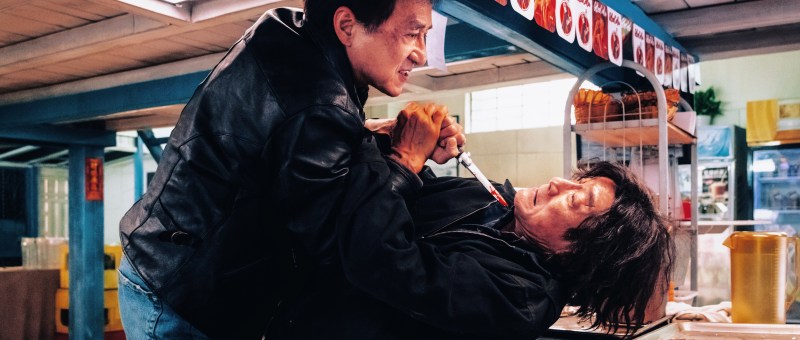
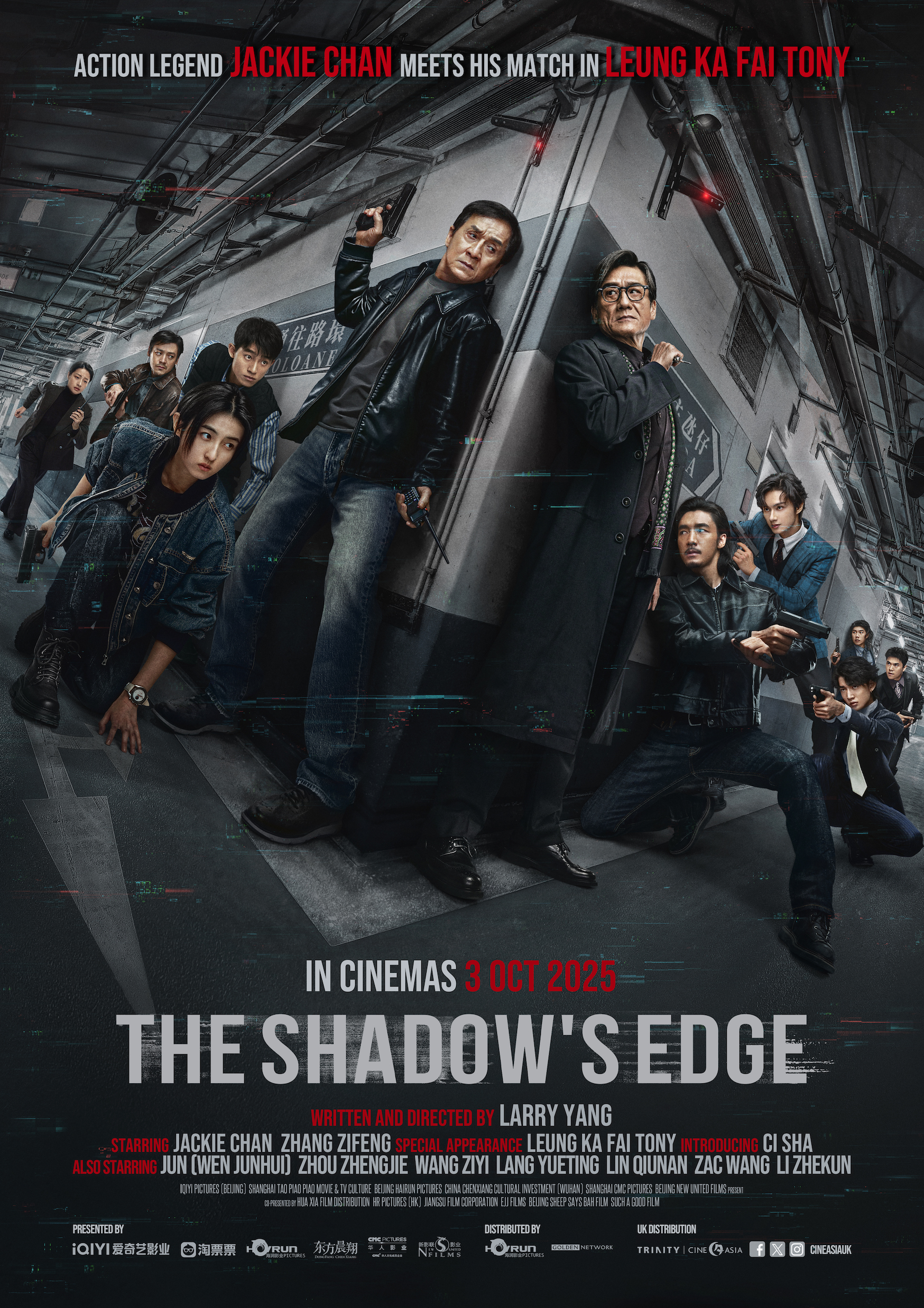
The Shadow’s Edge (捕风追影, Larry Yang, 2025)

China’s mass surveillance system has come to the rescue in many a recent action film, as if it were saying that China will always find you if you’re in trouble but perhaps also if you’re the one making it. A loose Mandarin-language remake of 2007’s Eye in the Sky, The Shadow’s Edge (捕风追影, Bǔfēng zhuīyǐng) takes a slightly different tack in being somewhat wary of AI-based technology and the way it’s already embedded itself so deeply in our lives as to have engendered a rapid deskilling of the younger generation. 

The Macau police force rarely conducts on the ground surveillance anymore and is heavily reliant on its network of video cameras along with facial recognition software. Madame Wang (Lang Yueting), however, the officer in charge ends up disabling the AI system because it’s proving unhelpful and undermining her authority. In any case, it leaves them vulnerable to interference and unbeknownst to them they’ve been hacked. A talented group of thieves have managed to throw them off the scent by manipulating the footage so it looks like their vehicle is in a completely different place while they’re busy committing the crime. The hackers have managed to combine new technologies and old in a much more successful way than the police as they use a mixture of traditional disguise techniques and well-honed spycraft along with video manipulation to evade detection. 

It’s at this point that the police decide they need to bring back someone who still remembers how to do analogue police work to teach them how to combat this new digital threat. The irony is that the hackers are also being led by a veteran espionage expert now in his 70s and known only as “The Shadow” (Tony Leung Ka-fai). Though it’s true enough that he knows the evil that lurks in the hearts of men, The Shadow has surrounded himself with a group of former orphans whom he has trained in the arts of surveillance and infiltration while they take care of all the new technological stuff. But it’s also a slight degree of hubris and a mishandling of the digital side that leads to a slip-up in which the Shadow’s face may have been captured on camera for the first time in decades. As he ages out, there is conflict between father and sons as the boys begin to resent the Shadow’s paranoia and over cautiousness, wondering why they don’t simply take the bigger prize without considering that it may be more difficult to claim and leave them vulnerable to retribution.

Wong (Jackie Chan), the former special forces veteran officer they bring in to train the youngsters experiences something similar in the awkwardness of his relationship with Guoguo (Zhang Zifeng), the daughter of his former partner who was killed on the job because of an error in judgement made by Wong. Guoguo has been consistently sidelined by the police team where she’s surrounded by incredibly sexist men who doubt her ability to do the job because of her gender and short stature, and now has conflicting feelings about Wong that are bound up with her father’s death and a fear of being patronised convinced that Wong too is reluctant to let her do her job out of a problematic sense of overprotection.

Nevertheless, she proves a natural at the old-fashioned art of surveillance and develops a more positive kind of paternal relationship with Wong than that the Shadow has with his band of orphans. In essence, Guoguo learns both how to be part of a team and how to lead it, while Shadow’s boys don’t really learn much of anything beyond ruthlessness and generational conflict. In any case, the answer seems to be that’s what’s needed is both old and new, and that an over-reliance on technology isn’t helpful while AI isn’t necessarily faster than a finely tuned mind like the Shadow’s or merely someone who knows the backstreets well enough to anticipate an exit route. Drawing impressive performances from both his veteran leads, Yang succeeds in blending expertly crafted action sequences with interpersonal drama and giving the film a slick retro feel through the use of split screens and impressive editing. A post-credits sequence also hints at a wider conspiracy in play and the potential of a sequel, which would certainly be a welcome development given the strength and ambition of this opening instalment.


The Shadow’s Edge is in UK cinemas from 3rd October courtesy of CineAsia.

UK trailer (English subtitles)
The Black Tavern (黑店, Teddy Yip Wing-Cho, 1972)

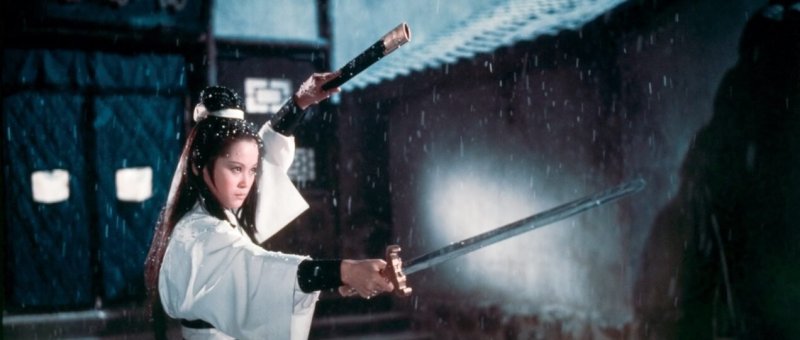
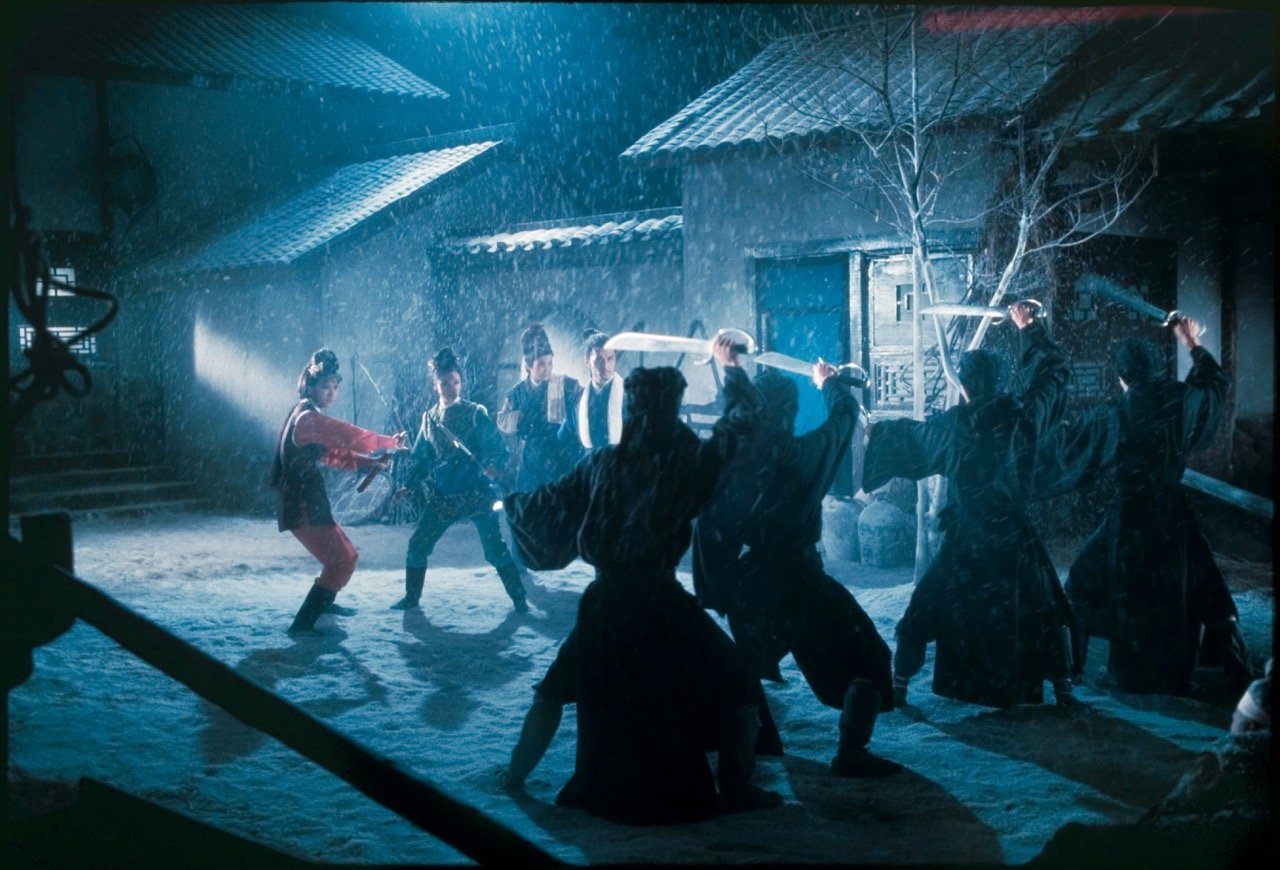
One of the reasons that martial arts films are so popular is that it’s often easy to tell who is good and who is bad. In general, the just hero vanquishes the source of evil and corruption, thereby restoring a sense of moral order to a world that may in other ways be chaotic. But chaotic is probably the best way to describe the world of The Black Tavern (黑店) in which the titular inn becomes a nexus of greed and villainy where it is impossible to tell who, if anyone, is good, while almost everyone is actually bad and the heroine only really intervenes in the closing scenes.

One way you can tell that something is very rotten at the Gao Family Inn is that the cook suddenly emerges from a pit underground carrying someone’s leg, which he then chops up and uses to make buns. No one ever mentions this again. It’s a just symbol of how corrupt and hellish this world has become. The inn is apparently the only staging post on this route, which is presumably how they continue to get custom despite bumping off their guests, taking all their stuff, and then chopping them up to put in buns to serve to the next unfortunate person who arrives in search of a bed for the night. 

But the reason so many venal bandits are drawn here is that a beggar monk (Dean Shek) tells them he saw vast riches fall out of a chest belonging to Hai Gangfeng, a former official returning to his home province with all his ill-gotten gains from accepting bribes. Assuming Gangfeng will be stopping at the inn, everyone who heard the monk is on their way there. Only, as it turns out, the man we thought was Hai Gangfeng is actually a bandit, “Whipmaster” Zheng Shoushan (Ku Feng), who cunningly pretended to be him to take over the inn and wait for the real Gangfeng’s arrival. He does not, however, seem to have anticipated so many other bandit gangs each more outlandish than the last having the same idea.

One turns up with a band of hopping vampires who turn out to be crooks in disguise, while another is wearing a horned helmet that gets stuck in things when he’s trying to fight. Of course, they’re all trying to kill each other so they can be the ones in control when Gangfeng finally arrives. What they don’t realise is that the whole thing’s a honeytrap designed to lure them all to the inn for just this purpose, so that they’ll all kill each other and spare the forces of justice some trouble. Those would be Zhang Caibing (Shih Szu), a disciple of the Lady Hermit making this a kind of extended universe film of the Cheng Pei-Pei classic. Continuing her mentor’s mission, she’s out to skim off the “scum of the martial arts world,” explaining to Shoushan that if he doesn’t like it, he should have thought of that before committing so many “evil deeds”. 

On the other hand, Caibing does seem to be enjoying this quite a lot so perhaps she’s not quite so entitled to the moral high ground as she’d like to think. While taking a leaf out of King Hu’s book, Yip adds an edge of slapstick absurdity in setting up elaborate action sequences with well-deserved pay offs and indulging in goreless yet extreme kills such as a series of surprise decapitations. Shoushan’s bladed whip becomes a versatile weapon but also an extension of his character in his cowardliness and lack of morality. It’s only really any good at long range, which means that he keeps his opponents at arms’ length rather than confront them directly as in the typical tests of skill that define a martial arts battle. He coils it around their necks, snake-like, then either pops their heads off or strangles them to death. Just like the innkeeper he killed off at the start, he seems to have genuine affection for his female companions but eventually meets a similar fate as his trademark whip is ironically turned against him. 

There’s also a genuine, if underplayed, sense of ambiguity in the attraction between the mysterious swordsman (Tung Li ) and Shoushan’s daughter that prevents him from killing her while suggesting that he too was on some level attracted to banditry. Even if he rides off in the end with Caibing, it does not appear that their relationship is romantic. Nor is he allowed to claim victory by swooping in when all seemed lost for Caibing during the final fight, immediately encountering difficulty with Shoushan who puts up a good fight that again seems contrary to his moral character in the amount of skill and effort needed to beat him. Indeed, it often seems as if he will win after all. This world will fall to men like him and turn into one giant Black Tavern. In the end, it’s a team effort that takes him down, including the strange intrusion of the beggar monk who was after all the person who started all this by repeating the rumour in the last rest stop and may or may not actually be working with Caibing. In any case, the incredibly fast-paced action sequences and the dark humour that accompanies them lend the film an epic quality despite its tight duration along with an ironic kind of cynicism that insists this world is simply too silly to be evil but that the scum of the martial arts world will pay all the same.


The Black Tavern screened as part of this year’s Focus Hong Kong.

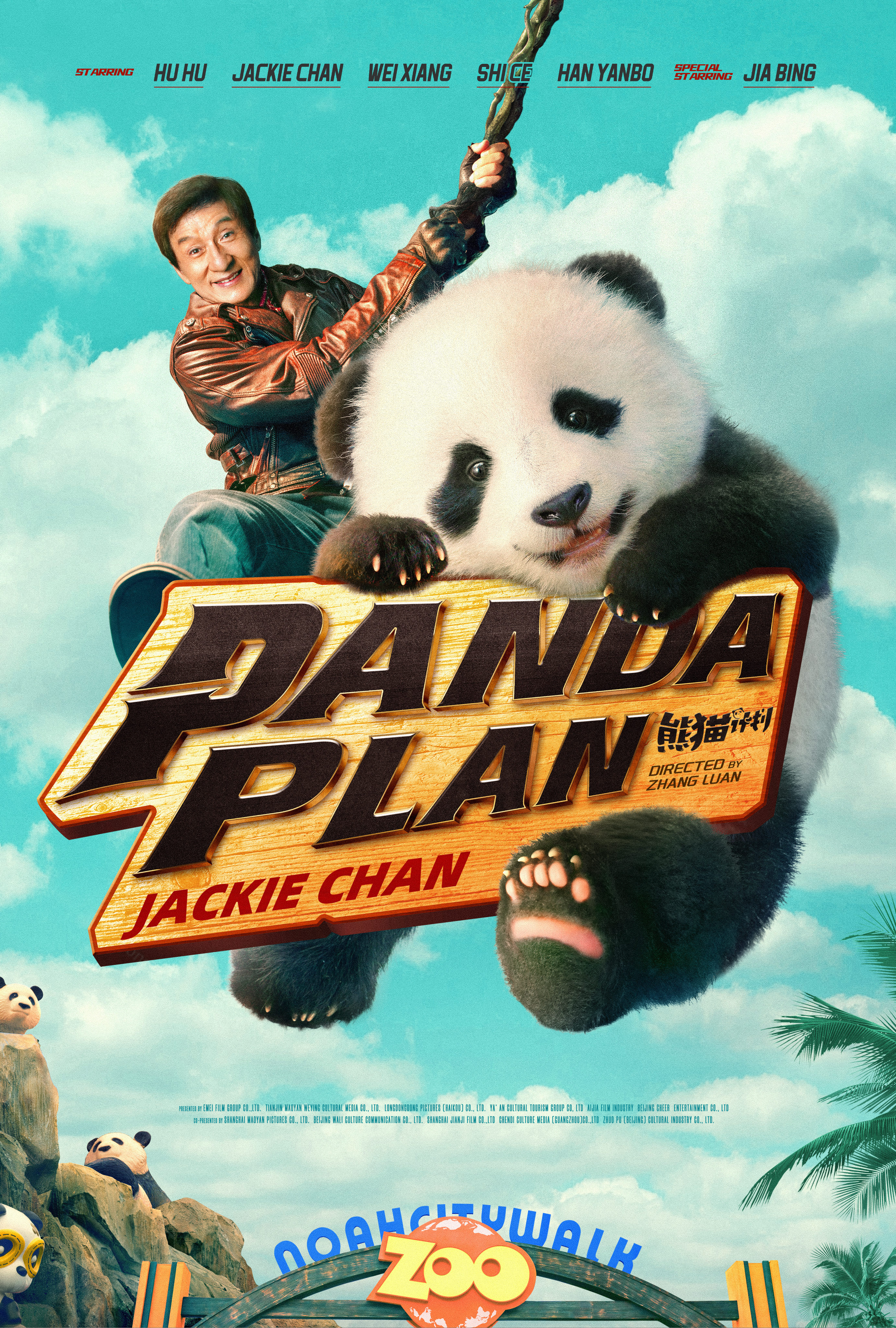
Panda Plan (熊猫计划, Zhang Luan, 2024)

Now 70 years old, Jackie Chan’s later career has mostly seen him trying to find ways to mitigate his age. Often he’s played the role of a mentor figure taking part in a limited number of action scenes while a younger actor does the heavy lifting and takes care of any romantic subplots. Rest assured, there’s no romance in Panda Plan (熊猫计划, xióngmāo jìhuà) but it does otherwise see Chan trying to recapture past glory in seemingly appearing in lengthier action scenes while playing a version of himself.

As the film’s Jackie, he tells young panda nanny Zhuzhu (Shi Ce) that the reason he can’t bring himself to retire is that as soon as someone shouts “action” he can be an all powerful hero rather than a flawed human being that gets sad or tired or beaten down. He even pokes fun at himself with an early scene of Jackie shooting a movie and challenging the director that it’s unrealistic for him to take out all these bad guys all on his own. Though he is apparently sick of doing action, all of the directors future ideas for him sound like they will once again involve quite a lot of fighting. 

It is then a bit ironic that Panda Plan’s action scenes are often choppily edited because it’s obvious that they’re cutting back and fore between Chan and a stunt double with quite a lot of CGI filling in the blanks. You can even clearly see the heavy duty knee pads Chan is wearing under his suit, not that he shouldn’t have them, only that more care wasn’t taken to make them less visible considering there’s no situational explanation for why he’d be wearing knee pads to attend this ceremony marking his decision to “adopt” a baby panda at a random zoo in a fictional country where almost everyone speaks Mandarin. 

The baby panda has become a viral star because of its “unique” look with one eye patch smaller than the other. A sheik apparently decides he must have this panda and hires a bunch of mercenaries to kidnap it when his attempts to buy it fail. Of course, Jackie can’t let this happen and is determined to protect the baby panda from the international kidnappers. A panda is after all a symbol of China itself which can’t simply be bought by outside powers or the super rich while many of the mercenaries, who it’s implied are probably Eastern European, speak with American accents though in a stroke of luck, the main two turn out to be huge Jackie Chan fans and decide to help him so they aren’t that bad really while the leader actually seems to be Chinese anyway. That said, the guards at the zoo are both American and are shown to be slacking off at their job, eating donuts while remarking that they have an easy day ahead of them. It turns out the sheik had a heartrending reason for wanting the panda which wasn’t about the excesses of the super rich and Jackie’s decision to help him out paints China as generous and compassionate rather than coldhearted and possessive over its pandas.

In any case, despite the mild violence of the action scenes the film appears to be aimed at a family audience and has plenty of farcical humour as Jackie and Zhuzhu try to outsmart the kidnappers and save the panda who is eventually deposited at a panda park in China proper which is to say brought home again, where it belongs. The panda is rendered in unconvincing CGI but as using an actual panda would not be appropriate perhaps that really is the best solution and at least it’s a pretty cute CGI panda even if it’s obvious that it was added afterwards. The panda rescue being so successful, Jackie also gets asked to rescue the late Queen’s kidnapped corgis though it’s quite clear that he already has a very busy social calendar and is really getting fed up with doing action. Even so it has to be said that there’s already a Panda Plan 2 scheduled for release later this year, so he’ll presumably have to do some rescuing again.


Panda Plan is released in the US on Digital, Blu-ray & DVD February 18 courtesy of Well Go USA.

Trailer (English subtitles)

A Legend (传说, Stanley Tong, 2024)

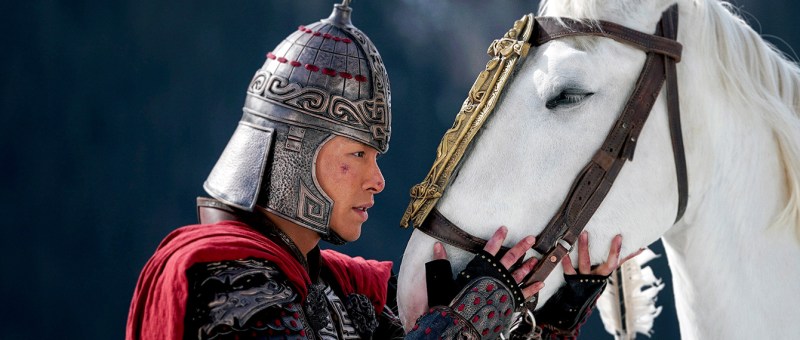
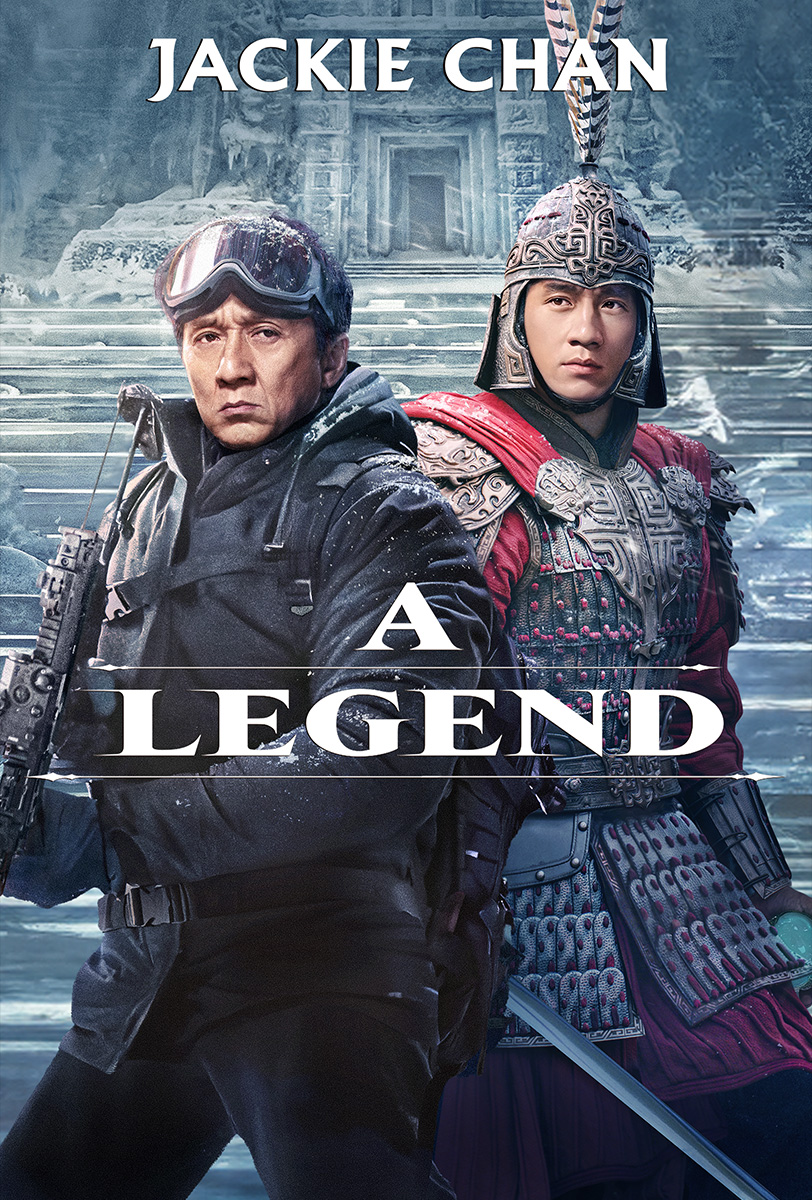
The funny thing about the strangely generic title of Stanley Tong’s latest Jackie Chan vehicle A Legend (传说, chuánshuō) is that it’s at least partly in reference to its now ageing star rather than the tragic love story at the film’s centre which at least tries to echo the epic romances of historical fiction. That might in part explain the rather dubious decision to use AI de-aging technology to cast Chan as the tragic lover in addition to his role as a veteran archeologist researching the gravesite of a Han general’s horse. 

While de-aging Chan robs an age-appropriate actor of the opportunity, it’s equally true that it adds another note of uncanniness to the historical scenes contributing to their rather lifeless quality and otherwise becoming a frustrating distraction given that more often than not the actor’s face simply appears odd and doesn’t particularly look like a young Chan anyway any more than casting a younger actor with a physical resemblance might have done. In any case, despite the frequent discussions of history among Chan’s team, the historical scenes have a fantastical quality that’s much more like contemporary video games than classic wuxia. This may be deliberate given that a new addition to Professor Fang’s team is a video game developer who wants to create a game set in this era and is keen to get Fang on board as a consultant, though the aesthetic mostly detracts from the setting in the jarring use of CGI. Heroine Mengyun (Gülnezer Bextiyar) performs what is intended to be an impressive Hun sword dance, but as the sword is CGI it has no sense of skill or danger. It aligns clumsily with her physical movements like that in a video game cutscene and has a disturbingly weightless quality. The same phenomenon also mars the film’s action scenes which sometimes have an odd quality as if CGI has also been used to impose an actor’s face on that of a stunt double or somehow alter their movements. 

Aside from that, there is some nice cinematography that captures the majesty of the Chinese landscape though even this is sometimes drowned out by the syrupy score which is again quite reminiscent of a video game. Supposedly a spiritual sequel to The Myth and Kung Fu Yoga, the central conceit of the film is that through a jade pendant found in the grave, Fang and his assistants become part of a collective dream which is a flashback to the distant past while it later transpires that they’re being manipulated by a malevolent force in the present who wants to rob China of its historical treasures by finding a secret sanctuary built by the Huns to store the gold statues they stole from the Hans to use as objects of worship. Accordingly, there’s some pointed commentary about how it’s illegal to steal or traffic historical artefacts which should be protected as symbols of China’s essential culture. It’s no coincidence that the villains have Western accents and begin speaking to each other in English as they wilfully blow up a newly discovered historical site.

The modern scenes do, however, have an awkward kind of comedy going on in the form of in jokes between Fang’s team such as the non-love story between assistants Xinran (Xiao Ran Peng) and the clueless Wang Jing (Lay Zhang Yixing) who completely misses all of her hints and seems to be unaware of the subtext of phrases such as “come in for coffee” or that “incredibly expensive bracelet would really suit me.” Chan also gets rescued from drowning by a family inexplicably ice fishing in this really remote place who take quite a long time to realise he’s not some kind of weird talking fish. Though Chan does get his own action sequence at the film’s conclusion, it’s fairly incongruous for a professor of archeology to possess these kinds of skills which are otherwise out of keeping with the fatherly, professorial character Chan plays up to that point even if there is a distinct hint of Indiana Jones in the instance that all of this should be a museum. The little boy who found the pendant even gets a pat on the head for reporting it to the authorities rather than trying to sell it or keep it for himself. Nevertheless, it speaks of something that the digressions into historical legend are often more interesting than the retelling of the legend itself which never really takes flight despite the flying arrows and charging horses of world in which the heroes can only dream of the supposedly peaceful and harmonious society that exists far in the future.


A Legend is released in the US on Digital, blu-ray, and DVD 21st January courtesy of Well Go USA.

Trailer (English subtitles)

Ride On (龙马精神, Larry Yang, 2023)

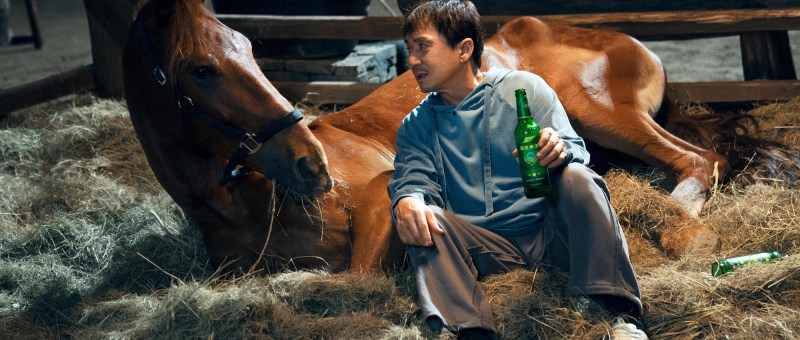
“Jumping down is easy, stepping down is hard” an ageing stuntman reflects in Larry Yang’s meta Jackie Chan vehicle Ride On (龙马精神, lóngmǎjīngshén). The Chinese title, like the English, may hint at late career resurgence but the film at times feels more like a swan song for Chan himself as it lovingly looks back at some of his greatest action hits while gently suggesting that his era may have passed in this new age of CGI and greater awareness of health and safety regulations. 

That does certainly seem to be the case for his stand-in, Luo, who has fallen on hard times following serious injury and financial ruin. These days he mainly works as an extra and supplements his income posing for photographs with his beloved horse Red Hare whom he saved from being euthanised at birth and has raised since he was a foal. When the twin forces of vicious loansharks and a weird, wealthy businessman who collects horses come calling for Red Hare it’s like they want to take the last dregs of Luo’s legacy away from him all of which forces Luo to reconnect with his estranged daughter Bao (Liu Haocun), a law student engaged to a rookie lawyer. 

The familial themes play into those of celebrating the brotherhood of stuntmen (and one woman) as one large family who must necessarily take care of each other given that their line of work is incredibly high risk. Yet it’s also true that Luo’s reconciliation with Bao seems to come too easily given her original animosity towards him for being unable to play the role of father to her seeing as her parents separated when she was an infant and she’s met him only a handful of times in her life. Nevertheless, she’s quickly won over by Red Hare even if perhaps identifying a little with him as Luo refers to the horse as his “son” only to belatedly realise that he may have been mistreating him by forcing him to perform dangerous stunts pretty much against his will despite his obvious affection for him. 

Likewise, Bao comes to a new appreciation of her father after watching videos of his old stunts many of which show him incurring serious injuries. The clips are all famous scenes from Chan’s movies such as the shopping mall jump from Police Story or the bus and umbrella stunt which are posited as the glory days of action cinema, yet from a modern perspective we might ask ourselves if all this risk is worth it for simple entertainment even if as Luo later suggests it’s the risk that makes the action entertaining. After getting back on the horse, literally, Luo is offered a series of new stunt jobs one of which requires him to perform a dangerous jump on a badly designed set, while on another he’s told he doesn’t need to perform the dangerous part because they’ll fill in the rest with CGI. Luo is outraged and insists on performing the stunt in camera only to think better of it when considering that he’s making a decision on Red Hare’s behalf that he might not have the right to make. 

The film laments the passing of the age of daredevil stuntmen, but there is a minor irony in the fact that Ride On makes fair use of CGI itself as it fully admits in the closing outtakes which feature several stagehands dressed in green to be erased later. It’s also less a celebration of stunt people than it is of Chan himself and his legendary career as an action star which may be nearing its end which would be fair enough seeing as Chan is now 69 years and clearly making (occasional) use of stunt doubles. Nevertheless, there’s an undeniable sweetness in the relationship between Bao and her fiancé Mickey (Guo Qilin) as they commit themselves to saving Red Hare and forge new familial bonds with the rough and ready Luo that echo the themes of familial reconciliation even if letting Luo off the hook a little too easily for his absence from his daughter’s life. “Stepping down” might be hard, but it doesn’t necessarily mean walking away completely only entering a new phase of compassion and solidarity and not least for a wily horse in search of a loving home.


Ride On is in UK cinemas now courtesy of CineAsia.

UK trailer (English subtitles)
All U Need Is Love (總是有愛在隔離, Vincent Kok Tak-chiu, 2021)

All things considered, there are worse places to quarantine than a five star hotel especially if it’s free but then again forced proximity with those you love, or those you don’t, can prove emotionally difficult. An old school ensemble comedy, Vincent Kok’s All U Need Is Love (總是有愛在隔離) features a host of A-list stars each providing their talent for free in order to support the struggling Hong Kong film industry in the wake of the COVID-19 pandemic but as its name suggests eventually offers a small ray of hope that the enforced period of reflection may have fostered a spirit of mutual solidarity and personal growth. 

Kok opens, however, with a tense chase sequence as a shifty looking man runs from the authorities at the airport only to be picked up by the PPE-clad Epidemic Task Force who whisk him away to a secret location where he’s placed inside a weird bubble and interrogated by Louis Koo. Several more top HK stars including Gordon Lam fetch up in the bubble each implicating the Grande Hotel as the centre of of a coronavirus cluster at which point an order is given to place it under total lockdown requiring everyone inside to remain for a 14-day quarantine. 

Essentially a series of intersecting skits, Kok’s ramshackle drama nevertheless has its moments of satire as the hotel chief takes to the stairs for an inspirational speech in which he frequently slips into English and bizarrely likens himself to the captain of the Titanic because we all know how well that went. He spends the rest of the picture trying to escape without anyone noticing while his dejected security guard/brother tries to bump him off. Meanwhile, two gangsters develop a homoerotic bromance while plotting how best to profiteer off the pandemic through smuggling anti-COVID paraphernalia just as panic buying takes hold on the outside. 

Nevertheless, it can’t be denied that All U Need Is Love is also guilty of some rather old fashioned, sexist humour particularly in the antics of a pair of old men (Tony Leung Ka-Fai and Eric Tsang reprising their roles from Men Suddenly in Black) and their minions who misled their wives in order to embark on a sexual odyssey only to have their plans both improved and then ruined by the quarantine order. Meanwhile, a young couple who were in the hotel preparing for their wedding banquet ironically scheduled for the last day of the quarantine find themselves at loggerheads as the man gets cold feet over his fiancée’s bridezilla micromanaging, and her father undergoes a total makeover while continuously watching Japanese pornography in his room. 

Watching it all, a little girl, Cici, becomes the moral voice of the pandemic innocently hoping that nature will continue to heal itself even after the sickness ends. It’s she who shows the gangsters the error of their ways in pointing out that if they steal all the anti-COVID equipment then they will end up being more at risk because no one else is protected, while she also softens the heart of the hotel’s cynical manager to the point that he too makes a lengthy speech about becoming a better person thanks to his experiences during in the pandemic. 

During their enforced proximity friends and strangers have indeed needed to rediscover their love for their fellow man as they band together in mutual solidarity waiting for their freedom. Culminating in an oddly uplifting wedding decked out with balloons and messages from friends and family played via iPad, Kok’s anarchic ensemble farce does its best to discover a silver lining among the fear and anxiety of the pandemic as it ironically brings people together through driving them apart. Along with his A-list cast, Kok throws in a series of movie parodies and pop culture references from an impromptu rendition of Baby Shark to a surprise appearance from the Landlady from Kung Fu Hustle as well as a suitably random cameo from Jackie Chan. Repurposing the traditional Lunar New Year movie, All U Need is Love is a classic nonsense comedy designed to lighten the mood in these trying times while celebrating the essence of Hong Kong cinema through, arguably, its most idiosyncratic of genres. 


All U Need Is Love streamed as part of this year’s New York Asian Film Festival.

Original trailer (Traditional Chinese/English subtitles)

The Climbers (攀登者, Daniel Lee, 2019)

The Climbers poster 1“Because it’s there” George Mallory famously said when questioned why exactly he wanted to climb Mount Everest. The hero of Daniel Lee’s The Climbers (攀登者, Pāndēngzhĕ) who regards Mallory as his idol has a slightly more reasoned response when similarly questioned by a student, pausing before explaining that humans are always eager to climb towards the future. That will prove to be a rather ironic statement in that Fang Wuzhou (Wu Jing) is a man in many ways trapped by past injustice, unable to move on from simultaneously achieving his dream and being denied its glory.

Narrated by meteorologist and Wuzhou’s innocent love interest Xu Ying (Zhang Ziyi), the action begins in 1960 when the Chinese National Mountaineering Team makes an attempt to conquer Everest from the North Face in response to a territorial challenge from the other side. During the ascent, the team’s captain is killed leaving the three remaining members to press on to the summit alone. Having conquered the mountain, they are unable to record their achievement because they lost the camera during an avalanche and so their success goes unrecognised by the international community. This is particularly bad news for Wuzhou whose intensely romantic attempt to woo shy meteorology student Xu Ying is interrupted at the critical moment by the news they’ve been denied and all their dreams are dashed. Wuzhou becomes sullen and withdrawn, resentful at being thought a fraud. The failure costs him the courage he had mustered to pursue his romantic destiny, allowing Xu Ying to leave for many years of research in the Soviet Union without telling her how he really feels.

Xu Ying’s commentary opts for understatement when it briefly remarks that the nation entered a period of “darkness” following the “failure” of the Everest attempt after which the Chinese National Mountaineering Team was disbanded. Wuzhou is relegated to the boiler room in a factory while his surviving friends, Jiebu (Lawang Lop) and Songlin (Zhang Yi), pursue their separate destinies, Jiebu returning to his sheep farm and Songlin, whose foot was ruined by frostbite, joining a sports training facility. By 1975, times have changed and the powers that be see fit to mount another attempt on Everest in order to measure it “properly” and restore China’s international mountain climbing reputation.

For all that The Climbers is a propaganda epic filled with calls to “show the world what Chinese men can do”, it has its share of flawed heroes failing to measure up to a vision of themselves as fearless champions of their nation. Wuzhou is understandably an embittered man obsessed with the rejection of his first summit, but he’s also an emotional coward who ties the need to have his success validated with the right to speak his heart to the improbably patient Xu Ying who apparently continues holding a torch for him throughout her long years in Russia, only implying she can’t wait for him any longer by putting their relationship on a professional footing when she arrives to lead the meteorological department on the 1975 summit attempt. Nevertheless, the pair share an array of meaningful looks filled with poignant longing while Xu Ying laments the presence of the mountain which stands between them before seemingly deciding to sacrifice herself for Wuzhou’s dream in the forlorn hope of finally conquering it.

Songlin, meanwhile, is resentful not so much towards the mountain or the fact that he will never be able to climb it again but towards Wuzhou who saved his life and let the camera fall, thereby bringing shame on the Chinese nation. Later, a brave young man opts to sacrifice his life to ensure the camera’s survival, and as Songlin later comes to understand the climb is a heavy responsibility which puts young lives at risk for a fairly meaningless prize which may not bring the glory to their nation that the young men and women trying to reach the summit might expect. Nevertheless, they plough on regardless. 1960 leads to 1975, and then to 2019 in which intrepid Chinese climbers once again attempt to conquer Everest in the company of a (in some ways not terribly) surprising star cameo in order to reemphasise the nation’s manly prowess and overwhelming desire to protect what it sees as its territory. Lee makes the most of the snowy vistas for a series of death defying stunts as the team (repeatedly) encounter avalanches, rock falls, and dangerous storms, risking all to bring glory to China but remaining resolute in their determination to make it all the way to the top.


The Climbers is currently on limited release in UK cinemas courtesy of Cine Asia, and in the US from Well Go USA.

Original trailer (English subtitles)

Namiya (解憂雜貨店, Han Jie, 2017)

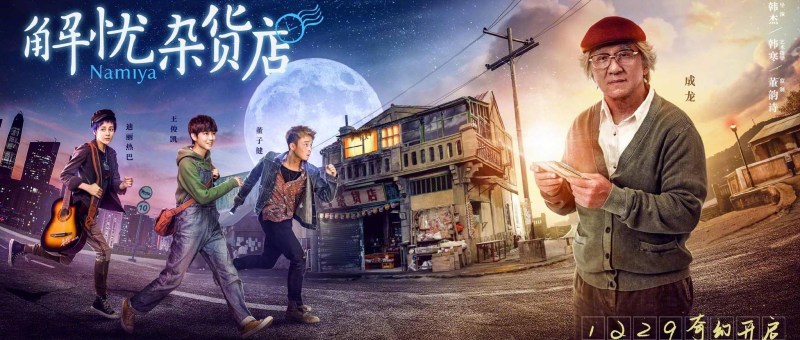
Namiya posterKeigo Higashino is almost certainly best known for his crime novels and in particular his most famous detective, Galileo, whose exploits have spawned a successful TV drama series and a fair few cinematic adaptations including the international bestseller, The Devotion of Suspect X. One might expect a writer of mystery novels to be a fierce rationalist, but Higashino occasionally dabbles in the fantastic – The Miracles of the Namiya General Store is more or less a nostalgia fest praising the pre-bubble Japan, implying that the modern world is colder and less kind than the aspiring society of 1979. Adapted for the Chinese market by Han Jie, Namiya (解憂雜貨店, Jiě Yōu Zá Huò Diàn) retains the corner shop where time stands still but locates it in 1993, which is not so much a significant date save being 25 years in the past.

On New Year’s Eve 2017, three teens break into a woman’s home with the idea of causing some damage, but the event goes south when she comes home early and one of the three decides to tie her up and steal a bunch of her stuff. Having gone further than they meant to, the trio wind up in an unfamiliar part of town when the car they’ve stolen runs out of petrol. An improbably quaint, apparently disused corner shop attracts their attention but when they break in to shelter for the night they discover that this is no ordinary store. A ghostly miasma gradually creeps its way in and the three youngsters find themselves answering a collection of letters meant for the store’s owner written in 1993 but only dropping through the letter box now. They funny thing is, they get almost immediate replies.

As one of the teens points out, they weren’t even born in 1993 – this store might as well be from 1793 as far as they’re concerned. Though it drips with nostalgia for a simpler time, Namiya treads (understandably) more carefully in painting early ‘90s Beijing and its rural backwater setting, strenuously avoiding any mention of politics and characterising China’s economic development as an entirely good thing despite the troubles the three teens at the centre have been subject to throughout their apparently difficult lives.

The letter writers have various problems but each in someway relates to being a little lost, a little bit confused about how to move forward in life. A frustrated musician (Lee Hong-chi) whose career is not taking off wants to know whether he should give up and come home, a little boy has a bad relationship with his go-getter parents who have lost all their money and got into trouble with loan sharks, and a melancholy bar hostess (Hao Lei) wants to know if she should become the mistress of a gangster who promises to set her up in a shop that would get her out of her dead end life and still enable her to support her family. The kids are not really qualified to offer any kind of real life advice, with sensitive Xiaobo (Karry Wang) and plucky Tong Tong (Dilraba Dilmurat) reacting in broadly sympathetic terms while the sullen Jie takes a hardline moralist stance in which he just wants to write angry letters to everyone telling them they’re doing everything wrong.

Jie has his own reasons for being so angry, especially as one of the letters touches a nerve in his own personal history but his ambivalence was at one point shared by Papa Namiya (Jackie Chan) himself after he feared his treasured advice might have ended up having a negative effect on people’s lives. Papa Namiya tells the troubled little boy to stick with his parents no matter what because family is the most important thing in a person’s life which might be true much of the time, but not when the parents actively endanger their child. What he finally reassures himself with is that his advice was largely meaningless because most people have already made up their minds what they’re going to do, they just want someone to help them feel like they’re doing the right thing. In fact, no one really follows Papa Namiya’s advice anyway, but the kids are able to make a concrete change when they reveal the economic realities of modern China to a young hopeful who then uses the knowledge to build an international business empire (but makes sure to pay it forward whilst paying tribute to their roots by committing to sponsor an orphanage in need of renovation/expansion).

The slightly awkward message Namiya leaves behind is that dreams come true when people work hard to achieve them but that the young are also free to forge their own destinies, that the world is, for them, infinite and filled with boundless possibility. Optimistic and inspiring as it is, it isn’t terribly realistic and does rather imply that those who haven’t made it are either lazy or dishonest as echoed in the mildly moralistic tone taken with the bar hostess’ dilemma or the odiousness of the corrupt businessman and his failure to protect his family from his own mistakes. Moral judgements and naivety aside, Namiya is an otherwise heartwarming, deliberately uncynical New Year tale which does its best to engender hope for the future in an otherwise cold and unforgiving month.


Currently on limited release in UK cinemas.

Original trailer (Mandarin with English subtitles)

Railroad Tigers (铁道飞虎, Ding Sheng, 2016)

railroad-tigersTrains! They seem to be the latest big thing in Chinese cinema, but at least Railroad Tigers (铁道飞虎, Tiědào Fēi Hǔ) has more rolling stock on offer than the disappointingly CGI enhanced effort which formed the finale of The Vanished Murderer. The latest collaboration between the iconic but ageing Jackie Chan and director Ding Sheng, Railroad Tigers is a kind of western/war movie in which a gang of robin hood style railway bandits decide to get involved with the resistance movement during the ongoing Japanese invasion in 1941. Keeping the action to a minimum and stepping into the background for this comedy ensemble caper, Jackie channels Keaton but makes sure to backup this humorous yarn with a degree of pathos for these fatalistic patriots.

Ma Yuan (Jackie Chan) is a railway worker at a large interstation currently operated by the Japanese. He and his men hatch elaborate plots to raid the incoming supply trains for foodstuffs and Japanese military equipment, but what they’re mostly doing is laughing at their captors rather than actively opposing them. When they return home one day to find a wounded resistance soldier collapsed in their courtyard, the game changes as they decide to help him complete his “secret” mission to blow up a local bridge. Eventually teaming up with a local noodle shop owner who used to be a dashing, sharp shooting hero bodyguard for a defeated warlord, the gang take on the entirety of the Japanese military in Manchuria armed with little more than good humour and hope.

If you were hoping for a nuanced take on the Japanese forces operating in China in the quite climactic year of 1941, you’d best look elsewhere because Railroad Tigers is another bumper outing for the “comedy Kempeitai” who, on the basis of the evidence here provided, could not successfully occupy their own uniforms for any great length of time. Hiroyuki Ikeuchi plays the local commander, Yamaguchi, with the necessary degree of moustache twirling, scenery munching hamminess which the ridiculous set up requires before being joined by the evil and improbable presence of a top female Kempeitai officer, Yuko (Zhang Lanxin), who mostly exists to provide the icy steel so obviously absent from her completely ridiculous countrymen. By and large the gang’s opposition pose very little real threat from the stationmaster who’s always in trouble for smiling too much, to the buffoonish soldier who fails to complete his harakiri because it looks too painful.

Somewhere between the classic western train robbery set piece and the derailment dramas familiar to the resistance movie, Railroad Tigers positions itself as a broad comedy in which it’s slapstick humour rather than high octane thrills which take centre stage. Thus Jackie takes down opponents by jokingly unloading their guns or accidentally knocking them over the side of the train. Enemies are downed as much by trickery as by skill, with several meeting an ignominious end such as being shot in the bum or simply running away. What it lacks in innovative action, Railroad Tigers makes up for with silly comedy set pieces making the most of the real-life father son comradery between Jackie and the recently disgraced Jaycee such as in a slapstick interrogation sequence where they argue about their distinctive noses and which of them is the most handsome.

Wildly uneven in terms of pace, Railroad Tigers takes its time to get moving as we’re introduced to the members of Ma Yuan’s team and their various oppositing counterparts, many of them under drawn in the already crowded rosta. Ding signposts each of the major players with a comic book style illustrated splash featuring names and occupations which is echoed in the stylishly illustrated title sequence and handful of animated segments which follow as well as in the video game style mission heading title cards. Inexplicably, the film begins with a modern day framing sequence of a young boy on a school trip to a train museum in which he wanders off and climbs inside a train, finding the flying tiger marker chalked on the coal hatch. Otherwise redundant and offering little concrete value, the sequence seems only to exist as an excuse for a ten second cameo from one of Hong Kong’s biggest stars. Still, even if far too long, old fashioned in execution and occasionally plagued by substandard CGI, Railroad Tigers does offer enough silly humour and low stakes action to make it fun for all the family, even if guilty of overdoing the patriotic fervour in its lightweight approach to a traumatic era.


International trailer (English subtitles)