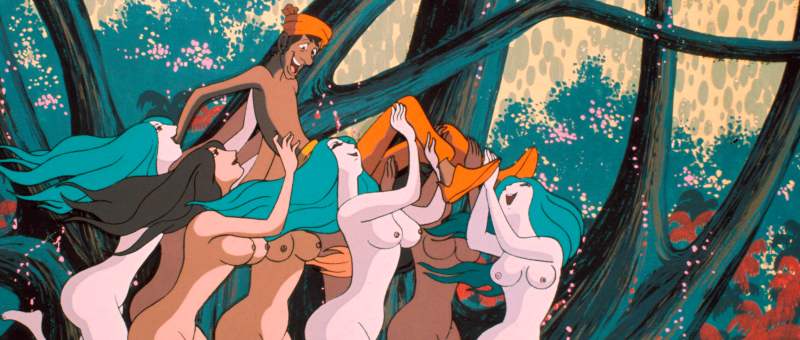

A Thousand & One Nights (千夜一夜物語, Eiichi Yamamoto, 1969)

one thousand and one nights poster 2The “Godfather of Manga” Osamu Tezuka had been a pioneer of what later became the mainstream of a burgeoning industry, kickstarting TV anime in the process with the long running Astro Boy. His ambitions, however, increasingly ran towards the avant-garde and he feared that the heavy association between his production company, Mushi Pro, and genial kids’ cartoons would only lead to diminishing artistic returns even if the increasing merchandising opportunities would perhaps allow the studio to engage in other less profitable areas such the adult-orientated anime he longed to produce. By the late ‘60s, Tezuka’s polite, inoffensive brand of child-friendly adventure stories were becoming distinctly old hat while the “gekiga” movement, acting more or less in direct opposition, continued to gain ground with older readers keen to move on to more adult fare. The Animerama series was intended to prove that Tezuka still had something new and dynamic to bring to the table and that there was a market for “racy” animation which embraced mature themes and experimental artwork.

The first of the Animerama films, A Thousand & One Nights (千夜一夜物語, Senya Ichiya Monogatari), is, as the title implies, loosely inspired by classic Arabian folktales as its hero “Aldin” (Yukio Aoshima) finds and then loses true love, overcomes the urge for vengeance, is himself corrupted by wealth and power, and then is returned to the very same state in which we first encountered him walking off into the sunset in preparation for the next adventure.

The tale begins with a slave auction at which the lowly water seller Aldin first catches sight of the beautiful Milliam (Kyoko Kishida). He tries to buy her but is too poor while the son of the local police chief (Asao Koike) outbids all to win the prize. However, in the first of many strokes of luck that will befall Aldin, a sandstorm allows him steal away with Milliam who falls in love with him too and gives herself willingly to a man she sees as an equal rather than a master. Sadly, their true love story is short lived and they are soon separated sending Aldin off on a quest to return to his beloved that will only end in tragedy.

Despite the later protestations that the love of Aldin and Milliam is one of equals in which there are no masters or slaves, only a man and a woman, it remains true that Aldin watched the slave auction with a degree of titillation and would have bought Milliam had he only been able to afford her. Surviving on his wits, Aldin is a cheeky chancer waiting for that big lucky break he is sure is waiting somewhere round the corner but he is not, perhaps, above becoming that which oppresses him. Later, having become a wealthy and powerful man, he uses his wealth and his power in the same way that others use theirs against him in pressuring a vulnerable young girl to become his mistress against her will, ripping her away from her own true love in the same way he was once ripped away from Milliam by another man wearing a crown. As a “king” he wonders what “power” is, pushing his as far as it will go in order to find out and risking “losing himself” in a way he’d once thought he’d overcome in rejecting a pointless act of vengeance that would forever have changed him.

Milliam, and later Jallis – the daughter of Aldin and Milliam raised by their worst enemy, Badli (Hiroshi Akutagawa), fight for the right to decide their own romantic destiny. Like Madlia (Sachiko Ito), the feisty bandit’s daughter, they resist the social codes of their era in which women are merely prizes divided among men and actively attempt to free themselves through love only to find defeat and despair. Yet love, or more precisely lust, can also be a force of constraint and or ruin as Aldin discovers on a paradise island when he unwisely decides to abandon Madlia, who has also fallen in love with him, for the empty pleasures of orgiastic sex with the voracious islanders whose unrestrained desire soon threatens to consume him whole.

A picaresque adventure, A Thousand & One Nights is a bawdy, flippant retelling of the Aladdin myth in which the hero begins as a poor yet free and cheerful young man before experiencing what it is to be wealthy and all powerful and discovering that it only makes him mean and miserable. Shifting from model shots to live photography and abstract to cartoonish animation, Yamamoto’s direction may appear restrained in comparison to the more outlandish and surreal Belladonna of Sadness but is a masterclass in finding artistry through budgetary limitations. A psychedelic odyssey through freedom and constraint, desire and obsession, A Thousand & One Nights is a forgotten landmark of experimental animation as relentlessly strange as it is endearing.


Available on blu-ray from Third Window Films as a part of double release with Eiichi Yamamoto & Osamu Tezuka’s Cleopatra.

Original trailer (English subtitles, NSFW)

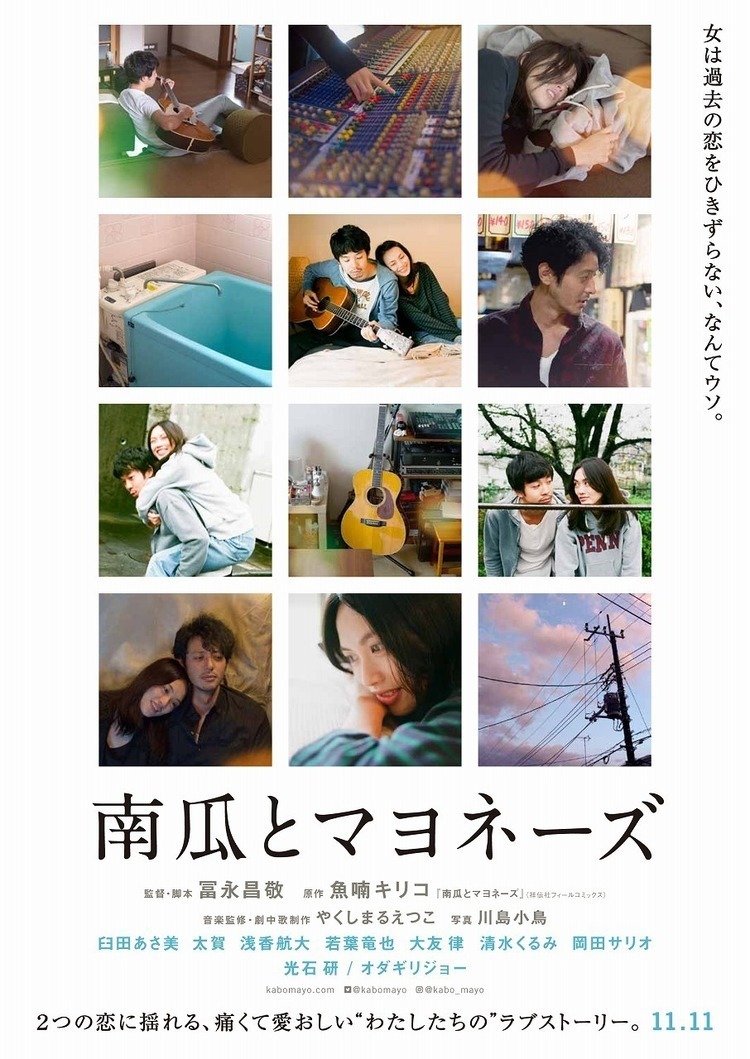
Pumpkin and Mayonnaise (南瓜とマヨネーズ, Masanori Tominaga, 2017)

Pumpkin and Mayonnaise posterIt’s important to be supportive towards your partner’s dreams, but what if your support is actually getting in the way of their development? The question itself never seems to occur to the heroine of Pumpkin and Mayonnaise (南瓜とマヨネーズ, Kabocha to Mayonnaise) as she descends deeper and deeper into a dark web of wilful self sacrifice hoping that her singer songwriter boyfriend will finally get his act together and come up with some new material. Adapted from the manga by Kiriko Nananan, Masanori Tominaga’s charting of a modern relationship is perhaps slightly more hopeful than those which have previously featured in his movies but nevertheless takes his heroine to some pretty dark places all in the name of love.

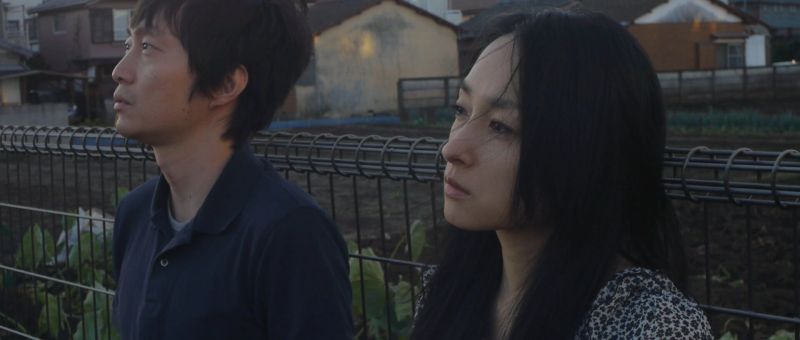
Tsuchida (Asami Usuda) is a 20-something woman living with her aspiring rock star boyfriend, Seiichi (Taiga). In order to facilitate his art, she has convinced him to give up work while she supports the couple financially through her job at live music venue. Seiichi, however, remains conflicted about the arrangement and hasn’t written anything of note in months. In fact, as Tsuchida tells a colleague, he barely leaves the house which means he’s not likely to be suddenly inspired either. What Seiichi doesn’t know is that the money from Tsuchida’s regular job isn’t quite enough and she’s started supplementing her income through working in a hostess bar. Though not naturally suited to the work, she soon picks up a “particular” client (Ken Mitsuishi) who offers her some “overtime” at a hotel. Tsuchida isn’t quite sure but having come so far she can hardly turn back now, even if the guy is a pervert with a school girl fetish. Hiding the money in a cigarette box in shame, Tsuchida is eventually caught out and forced to confess to Seiichi who is horrified, placing a serious strain on their relationship.

Just as her relationship with Seiichi starts to go south, Tsuchida runs into an old flame, Hagio, who is everything Seiichi isn’t – brash, arrogant, confident, and very much not the sort of man to make a life with. Nevertheless, Tsuchida can’t help looking back and remembering how madly in love she was with Hagio (Joe Odagiri), forgetting that she was just as madly in love with Seiichi or she wouldn’t have gone to all this trouble for his benefit. Hagio himself cites Tsuchida’s all or nothing intensity as one reason he ended the relationship the first time round, she was just too into him and he found it annoying.

Seiichi, a quieter, introspective sort, never found Tsuchida’s devotion irritating but the pressure of her expectation was perhaps a barrier to his artistic success. Staying home all day, bored and depressed, Seiichi rarely found the inspiration to write between brooding about his lack of progress and feeling guilty that he couldn’t pull his economic weight. To his credit, Seiichi harbours no particularly sexist notions towards Tsuchida’s being the family earner, but he does mildly resent a barbed comment from a friend who criticises him for his “purist” stance in accusing his former band members of selling out when he is being kept by his girlfriend. Likewise, he doesn’t reject Tsuchida for engaging in prostitution or for “cheating” on him, but turns his anger inward in resenting that she felt forced to go such great lengths for the music that he isn’t quite so confident about anyway.

The problem is that Tsuchida gets far too into her idealised notions of romance rather than directly engaging with the person in front of her. She pushed Seiichi towards music and encouraged him to fulfil his dreams but in the end stifled them with her unforgiving intensity. Likewise, she ends up over engaging in Hagio’s hedonistic, devil may care lifestyle and never really stops to think where it’s going to take her. Only near the end does she begin to approach a level of self realisation which allows her to see that her relationship with Hagio will never work out because she remains afraid to enter a true level of intimacy with him in fear that he won’t like what he sees and will leave her.

Told from Tsuchida’s perspective with frequent voice overs to let us in on her interior monologue, Pumpkin and Mayonnaise is a messy “grownup” love story between three people who are still in the process of growing up. Artistic integrity rubs up against relationship dynamics as Tsuchida is forced to examine her own behaviour and realise she often, intentionally or otherwise, sabotages her dreams by attempting to impose her own singular vision upon them rather than simply let them be. As in real life, there may not be a “happy” ending, in one sense at least, but there is still the possibility of one further down the line for a woman who’s finally accepted herself and is willing to let others do the same.


Screened at Nippon Connection 2018.

Original trailer (no subtitles)

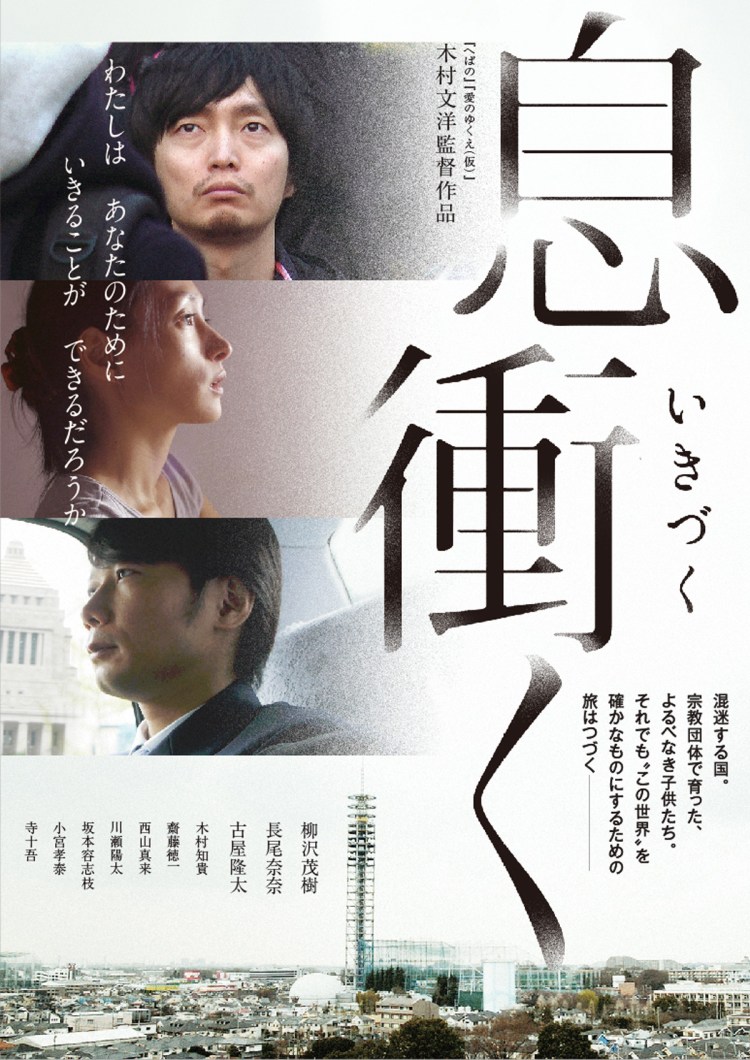
Breath of Rokkasho (息衝く, Bunyo Kimura, 2017)

Breath of Rokkasho posterIndividual desire versus responsibility to the collective is something of a major theme in Japanese cinema. The fallible ideologue at the centre of Breath of Rokkasho (息衝く, Ikizuku) believes individualism is the key to world happiness, implying that a collection of fulfilled individuals would amount to a fulfilled society, but then again his logic is perhaps hard to follow when he cares so little for other people’s freedom. Taking place in the post-Fukushima world, Rokkasho wants to extend this idea through examining the complexity of the anti-nuclear movement and the political forces which advocate for it while ordinary people largely sit back in silent disapproval. The ideal society, if there even is such a thing, will probably not be built by those in power but by those who manage shake off the problematic legacy of the past in order to embrace their “individual” wills but with the collective good in mind.

Norio (Shigeki Yanagisawa), Yasuyuki (Ryuta Furuya), and Yoshi (Nana Nagao) were raised in a politicised Buddhist cult, The Seed Association, which has a strong interest in ecological affairs and therefore the anti-nuclear movement. Each lacking fatherly input, the three youngsters fell under the spell of the cult’s most prominent member, Mr. M (Satoru Jitsunashi). Mr. M however abruptly upped and left them, abandoned without hope or answers. 20 years later, Norio is a civil servant also working for the Seed Association on political campaigns while Yasuyuki has become the new golden boy whom many tout as the natural successor to Mr. M. Yoshi left the sect at a much younger age and is now a single mother in the middle of what seems to be a fairly messy divorce.

Looking up at the Tanashi Tower (also known as Sky Tower West Tokyo) – a “state of the art” radio tower completed in 1989 midway through a period of unprecedented economic prosperity and named after the town which used to stand here the name of which literally means “no rice”, the three kids ask Mr. M if it’s possible to see the Nighthawk Star from down below. He tells them he doesn’t know, but they can look for it together. Mr. M did not help them, he disappeared and left them with only more questions and an even shakier relationship with their familial pasts. Each badly let down by parental figures who either abandoned their families to join the cult out of nuclear fear, committed suicide, or were simply distant and neglectful, neither Norio, Yasuyuki, or Yoshi has been able to step into the adult world with any degree of confidence or faith in its teachings.

Only by confronting their difficult pasts can the trio begin to unblock their individual paths. A visit to the long absent Mr. M who has apparently embraced full individualism as a hermit farmer who dresses in a comical baby chick’s costume complete with squeaky claw-shaped slippers, begins to show them that their faith in his teachings may have been misplaced. Mr. M claims that the human race is not yet strong enough to live only by thinking of its own happiness, something that he feels would bring the greatest happiness to all mankind. Refusing to recognise the “selfishness” of his philosophy, Mr. M has withdrawn from society and made himself the centre of a happy nation of one.

Parental betrayal becomes a major theme, eventually extending to the paternity of the state in its repeated failures to protect and care for its children. The English title of the film references the Rokkasho nuclear reprocessing facility which has become an ongoing scandal in its 20-year series of construction delays with 23 postponements issued since its original 1997 projected date for completion. Norio, the melancholy civil servant, hails from the town himself – in fact his mother took him away from it precisely because she feared a nuclear disaster. Yet The Seed Association, or anyone else for that matter, has not been able to solve the nuclear issue even in the post-Fukushima era. Engaged in the business of “politics” the sect’s intentions have become blurred as they contemplate their survival in an ever shrinking society, subject to the same political games of manipulation and backbiting as any other party. Gradually disillusioned with the cult’s hypocrisy and didacticism, Norio considers forging his own path – something which sets him at odds with Yasuyuki whose faith is also shaken only he’s invested far too much to allow himself to acknowledge it.

The Japanese title, by contrast, simply means to gasp for air. Trapped fast in society filled with corrupt, conflicting values each of the three struggles to find a foothold for themselves as they flounder wildly without guidance or aim. Yet in being forced to confront themselves and their pasts there is a movement towards progress, or at least a strong desire to find it. They, like their nation, have been betrayed and struggled to deal with their betrayal, but have managed to find their own essential truth even so and along with it the ability breathe deeply even when the air is thickening.


Screened at Nippon Connection 2018.

Original trailer (no subtitles)

Moon and Thunder (月と雷, Hiroshi Ando, 2017)

Moon and Thunder posterThe family is coming in for another round of fierce criticism in Japanese cinema where the “family drama” has long been revered as a representative genre. Hiroshi Ando who has hitherto been more interested in atypical romantic relationships is the latest to reconsider whether family is really all it’s cracked up to be in adapting Mitsuyo Kakuta’s novel, Moon and Thunder (月と雷, Tsuki to Kaminari). Two children from dysfunctional homes now fully grown struggle to adapt themselves to the nature of adult society, unsure if they should remove themselves from it entirely or force themselves into the socially expected roles they fear they don’t know how to play. Yet perhaps what they find in the end is not so much a talent for conventionality as an acceptance of life’s many imperfections.

20-something Yasuko (Eriko Hatsune) lives alone in her family home following the death of her father (Jun Murakami). She has an unsatisfying job in the local supermarket and is in an unsatisfying relationship with a co-worker who wants to get married but she isn’t convinced. Yasuko’s striving for an “ordinary” life is disrupted when Satoru (Kengo Kora), the son of one her father’s former girlfriends who lived with them for a few months 20 years ago, suddenly tracks her down. The reconnection between them is instant and easy but also confused, somewhere between siblings and lovers as they resume the physical intimacy they shared as children but on an adult level.

Satoru, a drifter like his flighty mother (Tamiyo Kusakari), pushes Yasuko towards a consideration of the idea of family which she’d long been resisting. She becomes determined to track down the biological mother who abandoned her when she was just a toddler, hoping to find some kind of answer to the great riddle of her life. Her birth mother, however, fails her once again. Kazuyo, faking tears for the reality show cameras reuniting her with her daughter, is a selfish woman who claims she left her country home because it was boring and that she left her daughter behind because she said she didn’t want to go. Feeling as if she’s being blamed for her own abandonment Yasuko is left with only more confusion and resentment but does at least discover something by accidentally encountering her younger half-sister, Arisa (Takemi Fujii), who shows her that life with her mother might not have been very much different than without.

Yasuko and Satoru revert to their childhood selves because that brief period 20 years ago is the only time either of them ever experienced what they felt to be a “normal” family life as they played together happily and were well fed and cared for by adults acting responsibly. It was however all over too soon – Naoko, Satoru’s drifting mother, upped and left just as she always does. Someone probably left her years ago, and now she makes sure to leave them first before she can be can rejected. Naoko is the only “mother” Yasuko can remember, and her abandonment the most painful in her long memory of abandonments. First came Satoru, and then Arisa her sister, and finally Naoko too returning, filling Yasuko’s home with an instant family that at times seems too perverse and difficult to bear.

Yet she struggles with the idea of “family” itself as something she’s supposed to want but perhaps doesn’t out of fear it will fail her. She considers marrying her workplace boyfriend even though it appears she doesn’t particularly like him and they aren’t suited, solely because his proposal offers her the “normal”, “conventional” kind of life she both fears and longs for. With Satoru she has found a kind of love that is more complicated than most, two lonely children looking for a home and finding it in each other but each fearing that they will not be able to bear the anxiety of its potential end. Yet rather than continue onward along the same dull path she’d walked before, longing for soulless normality, what Yasuko discovers is that she’ll be OK on her own even if things don’t work out in the way that most would consider “normal”. Abandoning past and future, Yasuko begins to accept her presence in the present as a woman with possibilities rather than a passive object clinging onto the life raft of “normality”, accepting that nothing is forever but that once something starts it never really ends.


Screened at Nippon Connection 2018.

Original trailer (no subtitles)

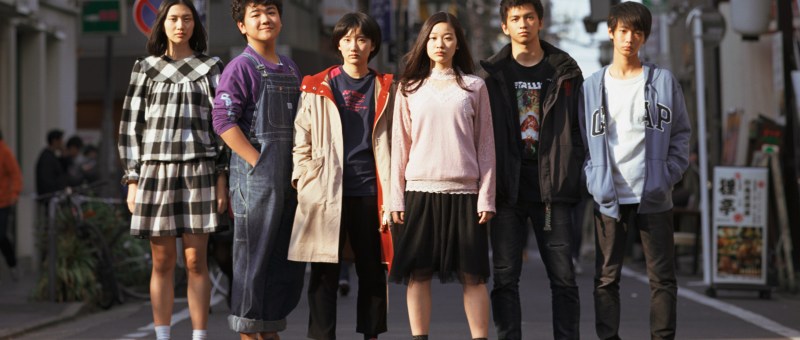
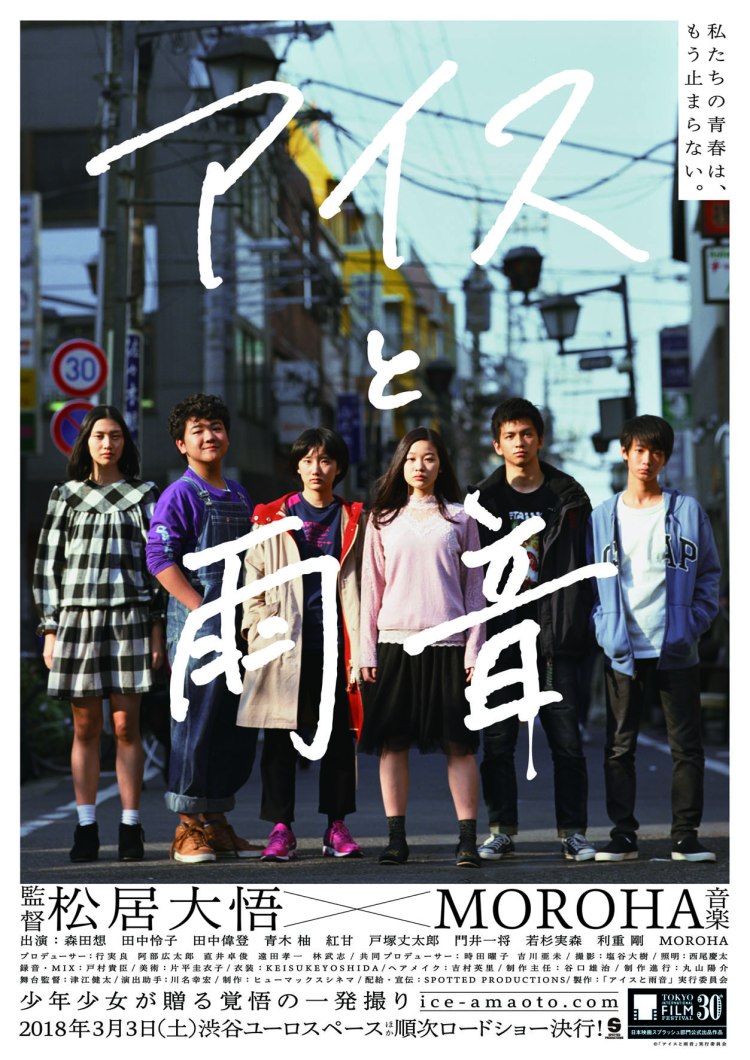
Ice Cream and the Sound of Raindrops (アイスと雨音, Daigo Matsui, 2017)

プリントThe youth movie has long held a special place in Japanese cinema but it would be fair to say that the fire has gone out of late, modern youth dramas are generally sad rather than angry. Daigo Matsui was in an enraged mood when he brought us Japanese Girls Never Die – a chronicle of female elision in an intensely misogynistic society. Now he brings his camera down a little to take a look at the incendiary play by boundary pushing British playwright Simon Stephens, Morning, through the eyes of real teenagers as their own hopes and dreams are suddenly pulled away from them by an act of “unfairness” which is perfectly typical of the treacherous adult world obsessed with rationality and not at all interested in their feelings.

Shot entirely in one take, Ice Cream and the Sound of Raindrops (アイスと雨音, Ice to Amaoto) masterfully condenses the one month rehearsal period of the play into a mere 70 minutes through dreamlike time segues, neatly swapping aspect ratios as the “play” takes over from “real life”. Stephens’ play, set at the end of summer – the same time as the play is being rehearsed and was scheduled to be performed, is a coming of age tale in which its small town heroine attempts to deal with the impending departure of her best friend for university by embracing the “freedoms” of youth only to discover that not all transgressions are cost free.

In a bid for “realism” the play’s director, played by Matsui himself, has cast real local teens by means of an open audition, but times are tough for the arts. With no “names” in the cast, ticket sales are slow. The producers have decided to pull the production and cut their losses ahead of time. The youngsters are obviously upset. This was, after all, their big chance and they’ve worked hard only to be told that all their efforts are worthless because they just don’t have “it”. No one cares about their feelings, no one cares about their wasted time, no one cares about them.

The actors and actresses play characters with their real names, slipping into and out of the theatrical world with little warning until the two begin to blend almost seamlessly and it becomes impossible to tell which level of theatricality best represents the teens’ inner lives. The “play” is also scored by a kind of Greek chorus in the form of a slightly older rapper/performance poet who offers a more direct commentary on the general feelings of hopelessness which have begun to plague the young cast who know they will be emerging into a world with few possibilities in which they will be expected to abandon their youthful dreams for an idea of conventional success which is destined to remain far out of their reach.

The cutesy title, Ice Cream and the Sound of Raindrops, hints at another kind of youth story – the melancholy journey into nostalgia as an older protagonist looks back on a beautiful summer many years ago spent with friends who perhaps are no longer around. Matsui’s film has some of that too, though his protagonists are younger. The teens almost eulogise themselves, telling their story as if it’s already over, walking like ghosts through halls of memory. They’re sad, but they’re angry too and they don’t understand why their platform has been so arbitrarily removed just as they were preparing their voices to be heard.

If youth wants the stage it will have to take it by force. Sick of being blamed, of being told that their failures are all lack of talent rather than luck, the kids make themselves heard even if they do so through a veil. Daigo Matsui gives them back their stage, enriching it with his own artifice in the thrillingly complex choreography of his oscillating one take conceit. Anchored by a standout performance from leading lady Kokoro Morita on whom many of the transitions depend, Ice Cream and the Sound of Raindrops returns the youth film to its previous intensity with a rebel yell from the disenfranchised next generation who once again find themselves at odds with the society their parents’ have created and see no place for themselves within it which accords with their own sense of personal integrity. 


Screened at Nippon Connection 2018.

Original trailer (no subtitles)

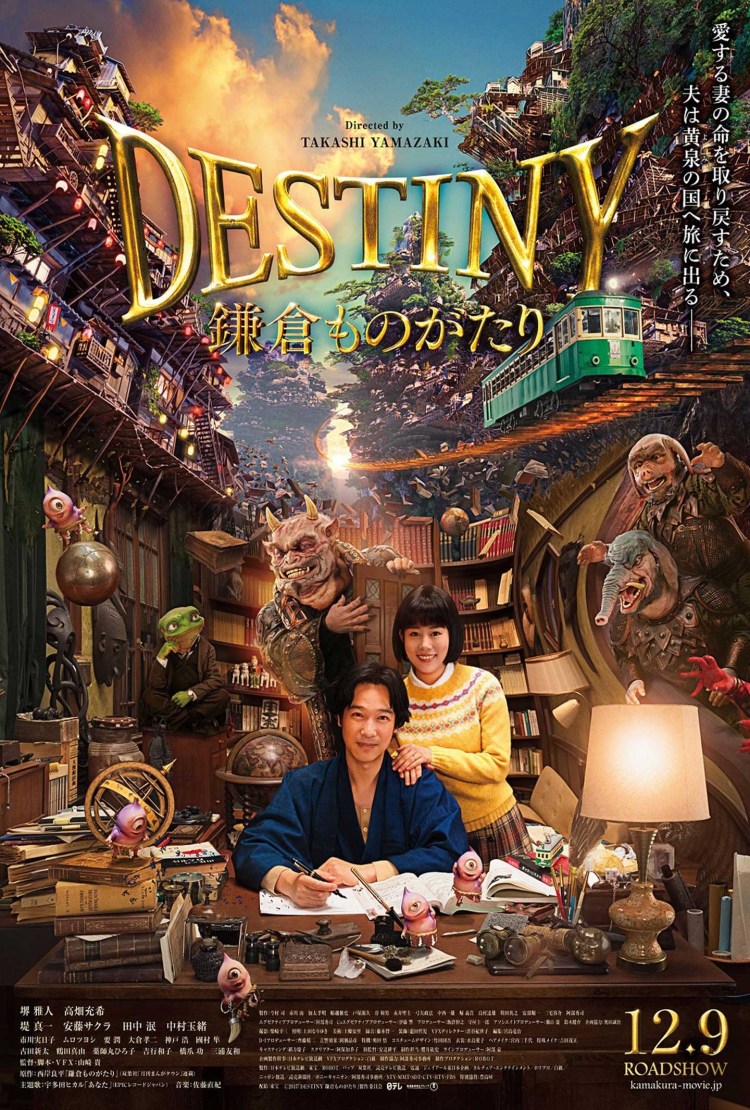
Destiny: The Tale of Kamakura (DESTINY 鎌倉ものがたり, Takashi Yamazaki, 2017)

Destiny tale of kamakura posterJapanese literature has its fair share of eccentric detectives and sometimes they even end up as romantic heroes, only to have seemingly forgotten the current love interest by the time the next case rolls around. This is very much not true of Destiny: The Tale of Kamakura (DESTINY 鎌倉ものがたり, Destiny: Kamakura Monogatari) which is an exciting adventure featuring true love, supernatural creatures, and a visit to the afterlife all spinning around a central crime mystery. Blockbuster master Takashi Yamazaki brings his visual expertise to the fore in adapting the popular ‘80s manga by Ryohei Saigan in which the human and supernatural worlds overlap in the quaint little town of Kamakura which itself seems to exist somewhere out of time.

Our hero, Masakazu Isshiki (Masato Sakai), is a best selling author, occasional consulting detective, and befuddled newlywed. He’s just returned from honeymoon with his lovely new wife and former editorial assistant, Akiko (Mitsuki Takahata), but there are a few things he’s neglected to explain to her about her new home. To wit, Kamakura is a place where humans, supernatural creatures, and wandering spirits all mingle freely though those not familiar with the place may assume the tales to be mere legends. To her credit, Akiko is a warm and welcoming person who can’t help being “surprised” by the strange creatures she begins to encounter but does her best to get used to their presence and learn about the ancient culture of the town in which she intends to spend her life. Unfortunately, she still has a lot to learn and an “incident” with a strange mushroom and a naughty monster eventually leads to her soul being accidentally sent off to the afterworld by a very sympathetic death god (Sakura Ando) who is equal parts apologetic about and confused by what seems to be a bizarre clerical error.

Destiny’s Kamakura is a strange place which seems to exist partly in the past. At least, though you can catch a glimpse of people in more modern clothing in the opening credits, the town itself has a distinctly retro feel with ‘60s decor, old fashioned cars, and rotary phones while Masakazu plays with vintage train sets, pens his manuscripts by hand, and delivers them in an envelope to his editor who knows him well enough to understand that deadlines are both Masakazu’s best friend and worst enemy.

The creatures themselves range from the familiar kappa to more outlandish human-sized creatures conjured with a mix of physical and digital effects and lean towards the intersection of cute and creepy. The usual fairytale rules apply – you must be careful of making “deals” with supernatural creatures and be sure to abide by their rules, only Akiko doesn’t know about their rules and Masakazu hasn’t got round to explaining them which leaves her open to various kinds of supernatural manipulation which he is too absent minded to pick up on.

Yet Masakazu will have to wake himself up a bit if he wants to save his wife from an eternity spent as the otherworld wife of a horrible goblin who, as it turns out, has been trying to split the couple up since the Heian era only they always manage to find each other in every single re-incarnation. True love is a universal law, but it might not be strong enough to fend off mishandled bureaucracy all on its own, which is where Akiko’s naivety and essential goodness re-enter the scene when her unexpected kindness to a bad luck god (Min Tanaka), and an officious death god who knew something was fishy with all these irreconcilable numbers, enable the couple to make a speedy escape and pursue their romantic destiny together.

Aimed squarely at family audiences, the film also delves a little into the awkward start of married life as Akiko tries to get used to her eccentric husband’s irregular lifestyle as well as his childlike propensity to try and avoid uncomfortable topics by running off to play trains. Masakazu, orphaned at a young age, is slightly arrested in post-adolescent emotional immaturity and never expected to get married after discovering something that made him question his parents’ relationship. Nevertheless, a visit to the afterlife will do wonders for making you reconsider your earthly goals and Masakazu is finally able to repair both his old family and his new through a bit of communing with the dead. Charming, heartfelt, and boasting some beautifully designed world building, Destiny: The Tale of Kamakura is the kind of family film you didn’t think they made anymore – genuinely romantic and filled with pure-hearted cheer.


Screened at Nippon Connection 2018.

Original trailer (English subtitles)

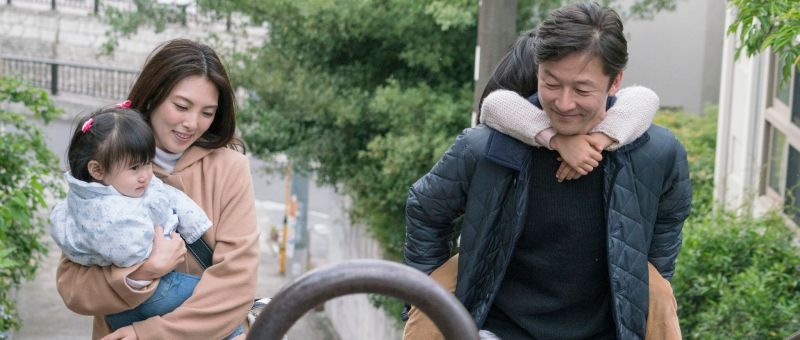
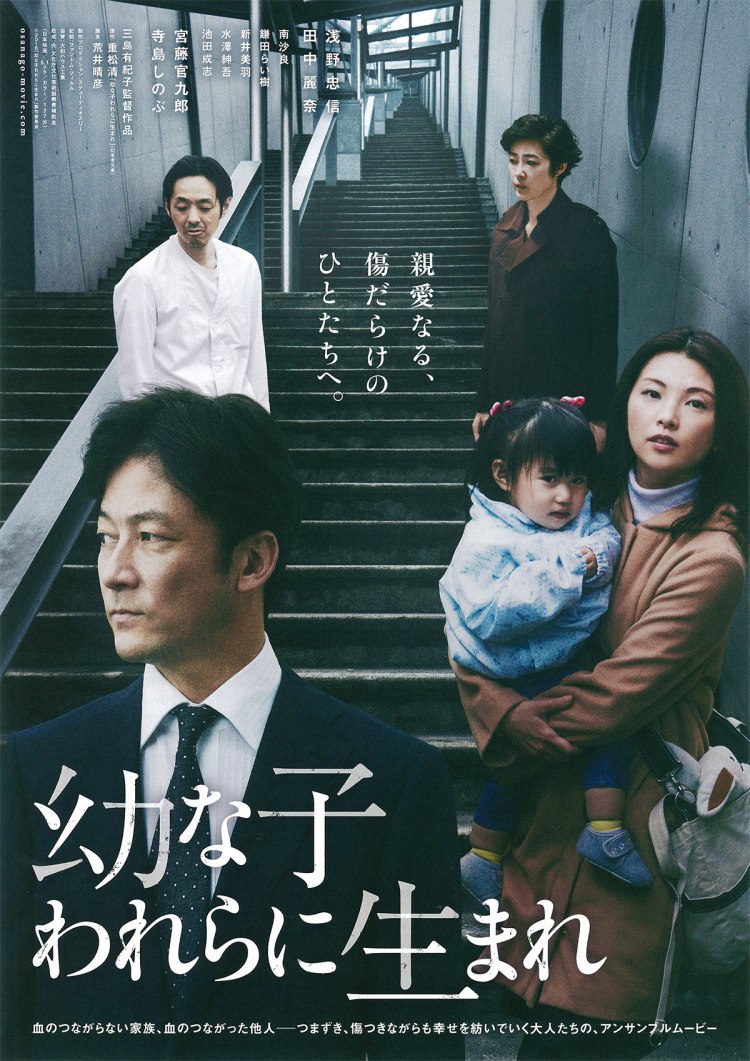
Dear Etranger (幼な子われらに生まれ, Yukiko Mishima, 2017)

Dear Etranger posterThe family drama has long been considered the representative genre of Japanese cinema, but with the days of Ozu long gone the family itself has become a subject for reappraisal. Yukiko Mishima’s Dear Etranger (幼な子われらに生まれ, Osanago Warera ni Umare) is the latest to take a scalpel to the nation’s basic social unit and ask what the word “family” means in an ever changing social landscape. In an Ozu picture, one family must be broken for another to be formed – this is the way of things and in the end must be accepted if with sadness, but does it really need to be this way or is there room for more as connections become less easy to define?

Makoto Tanaka (Tadanobu Asano) separated from his first wife some time ago and still spends time with his daughter, Saori (Raiju Kamata), though only a few times a year. Four years ago he married another woman, Nanae (Rena Tanaka), who had also been married before and has two children – Kaoru (Sara Minami) and Eri (Miu Arai). Nanae has recently discovered she is pregnant and is thrilled to bits to add to their family, but Makoto is conflicted. He liked the family as it was and worries that the new baby will place a wedge between himself and his step-daughters, that they may suddenly feel themselves pushed out and not really part of the new family that is being forged by a child who has a blood relation to both their parents rather than just one.

In truth, family dynamics aren’t all Makoto currently has to worry about. A 40-year-old man, he’s also hitting the scrap heap at work – rather than laying people off, they’re transferring them to unpleasant jobs in the hope they’ll resign. A lifelong salaryman, Makoto has been sent to the packing warehouse where his every move is logged on computer and he’s rated for speed. This is partly his own “fault”. Rather than play the salaryman game, Makoto wanted to be a family man. He doesn’t work weekends or overtime, he takes public holidays off, and never stays out late drinking with colleagues – all things which mark your card as an antisocial shirker in workaholic Japan.

Makoto’s superior, warning him about the imminent transfers, criticises his attitude. He tells him that he doesn’t think spending time with his children is his “job” as a father. He sees his responsibility as one of providing a role model and he thinks the best way to do that is to be seen working hard as a “respectable” member of society. Makoto couldn’t disagree more. He works to rule, but wants to be the sort of father that’s there for his kids, not just an authoritarian figure who comes home late smelling of booze and throws his weight around. He knows that as the children grow up they’ll grow away from him and won’t want to hang out with dad anymore, so he wants to spend time with them now while he still can.

Makoto’s intense desire to be a family man is perhaps unusual in Japan where men channel their ambition into work and women are (still) expected to channel theirs into the home. It is therefore doubly painful for Makoto when his elder step-daughter, Kaoru, heading into a difficult age, suddenly rejects him on hearing about the new baby. Despite the fact that Kaoru’s biological father (Kankuro Kudo) was violent towards both her and her mother, Kaoru begins to insist on seeing him, complaining that it’s unfair to be forced to live with “a stranger”. On one level, Kaoru is at the age at which most young women begin to find their father annoying and embarrassing, but her resentment is also informed by a fear of abandonment and cultural doubt about her place in a still atypical family, unconvinced that it’s possible for a man to become a father to a child that’s not his own by blood.

Blood ties still seem to trump all in most people’s minds, but bureaucracy plays its part too. Makoto still insists on making time to see Saori – something which is sadly unusual in Japan where divorce usually results not only in the children losing contact with the absent parent but also the entirety of an extended family. Kaoru doesn’t quite like it that Makoto does this, she feels almost betrayed as if he’s choosing his biological child over her and that continuing to associate with Saori means he hasn’t fully committed to her family. There seems to be an idea that the family unit is a distinct bubble and one can’t be inside more than one at a time, just as one can’t be listed on more than one “family register”. When an emergency occurs and Saori needs to get a lift from Nanae who has Eri in the back of the car, she isn’t sure if it’s OK for her to get in even with her father with her. She suddenly feels awkward, as if her presence in his car with his new family is inappropriate. None of these people know each other – the existence of a parallel family is so embarrassing as to be “unseen”, buried like a scandalous secret and kept entirely separate to avoid any cross-contamination. When Eri asks who Saori is, awkward silence prevails until she is forced to introduce herself as a “friend” of her father’s – something he doesn’t bother to correct until the drive home when another encounter has pushed him into reconsidering what it means to be a “father”. 

Makoto’s strong desire for acceptance and for forging a “family” that is “his” may perhaps seem selfish and possessive, yet he also tries to react with patience and empathy towards others in his position. He tries to be patient with Kaoru, advising her that he doesn’t think meeting her “real” dad is a good idea but if it’s what she wants he’ll try to make it happen. Likewise, he is grateful to Saori’s stepfather for raising his daughter when he wasn’t able to. Finally the walls begin to dissolve and it stops being about who belongs on which bit of paper and starts being about connections forged through love and understanding. The new baby, rather than forcing everyone apart, begins to bring them together, each joined by a feeling of joy and responsibility towards the new life to which they are all connected. 


Screened at Nippon Connection 2018.

Original trailer (no subtitles)

Party ‘Round the Globe (地球はお祭り騒ぎ, Hirobumi Watanabe, 2017)

Party 'Round the Globe

Ever since their startlingly surreal debut And the Mud Ship Sails Away, the Watanabe brothers have been quietly making waves, determined to put their native Tochigi on the big screen. Last year’s award winning Poolsideman took them to a darker place than they’d hitherto ventured as its silent protagonist lived out his days with rage fuelled anxiety, ready to explode at any given second. Party ‘Round the Globe (地球はお祭り騒ぎ, Chikyu wa Omatsurisawagi) neatly mirrors Poolsideman’s despair and counters it with everyday joys. Once again starring Gaku Imamura as a silent loner, and the director himself, Hirobumi Watanabe, as the non-stop chatterbox intent on making friends with him, the latest effort from the Watanabe brothers finds that despite the myriad awful things reported in the news, life is still basically good, at least in Tochigi when the sun is shining.

In a mild departure from the now familiar pattern, Watanabe opens with a beautifully animated picture book sequence in which a little robot child dreams of travelling to the moon but is unable to catch it even when speeding full steam ahead with his friend, Mr. Car. The robot children love the moon so much that they build a factory to produce fake moons which soon fill the sky, leaving the adults confused and worried, unable to tell the real moon from the fake. All too soon the boy is alone again as his friends float away looking for the “real” moon.

Seemingly divorced from the main narrative, the images from the picture book recur throughout as part of the decor in the strangely warm family home inhabited by the silent and melancholy Mr. Honda (Gaku Imamura) and his lovely little dog, Ringo. Mr. Honda’s routine is set – he listens to the radio as he prepares breakfast, takes Ringo for a walk, and works at a small family run electronics factory where he keeps his head down and concentrates on the repetitive exactitude of soldering circuitboards all day long. The day is interrupted by the cheerful sound of the musical bells which signal a pause in his work, but unlike his colleagues who cluster around the table in the staff room, Mr. Honda stands alone outside, smoking sadly in silence.

Mr. Honda’s life changes when the radio announces some good news for a change – Paul McCartney is coming back to Japan. Unexpectedly invited to accompany a colleague, Hirayama (Hirobumi Watanabe), Mr. Honda finds himself driving all the way to Tokyo with a man who won’t stop talking. Hirayama monologues on and on, never waiting for the answer to his questions and often filling them in himself so he can carry on ranting about standing room only concert venues, entitled Bob Dylan fans, and once again the mystifying fascination young people seem to hold for One Piece. Yet where Poolsideman’s anti-social loner merely tolerated his colleague’s loquacity, Mr. Honda seems almost relieved his new friend is doing most of the talking and is grateful to have been included on this trip, not least because he is also a big McCartney fan who failed to get tickets for his landmark concert.

Mr. Honda’s radio announces terrible things happening everywhere – mistrust in government as the scandal surrounding polluted land at the site of the controversial relocation of the Tsukiji fish market intensifies while the rightwing ruling party is intent on passing an equally controversial anti-conspiracy law which many fear will infringe on civil liberties. Abroad there are religious hate crimes, buildings burning down with people trapped inside, and North Korea sabre rattling in the background. Mr. Honda reacts to them all with stoical indifference, watering his plants, watching baseball games and enjoying the peace and quiet of a pleasant spring day. Yet there’s a sadness in his serenity, as if he’s trying to block out a personal tragedy through silence and repetition as he takes care of his dog alone in a house filled with picture books and children’s drawings but seemingly no children.

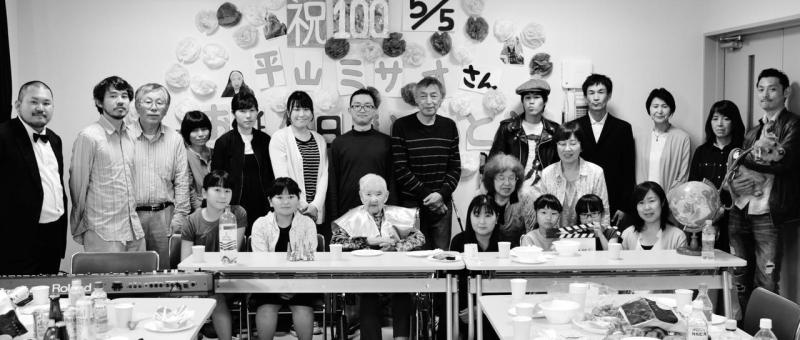
Nevertheless, life goes on and the globe keeps turning. Mr. Hirayama’s grandmother celebrates her 100th birthday surrounded by her large extended family who gladly make room for friends old and new. Mr. Honda and Ringo are no longer quite so silent and alone, coaxed out of their self-imposed isolation by the extroverted Hirayama who is also glad to have unexpectedly made a new friend in bonding over a shared love of retro pop. No matter how bad things seem to be, there is still warmth and friendship to be found everywhere but most especially in Tochigi.


Screened at Nippon Connection 2018.

Original trailer (English subtitles)

River’s Edge (リバーズ・エッジ, Isao Yukisada, 2018)

River's Edge poster 2The ‘90s were a strange time to be a teenager, but then what age isn’t? Isao Yukisada, surprisingly making his first manga adaptation, brings Kyoko Okazaki’s cult hit River’s Edge (リバーズ・エッジ) to the big screen, recreating those days of nihilistic despair in which ordinary teens spiralled out of control in the wake the bubble bursting, watching all their possibilities disappear in a cloud of smoke. Set in 1994, River’s Edge is a post-bubble story but it also takes place in the period immediately before everything started to go wrong. In 1995 there was a devastating earthquake followed by terror in Tokyo and somehow it all seemed so dark – something the kids at the centre of River’s Edge already seem to see as they watch time flow, knowing all that awaits them is yet more emptiness.

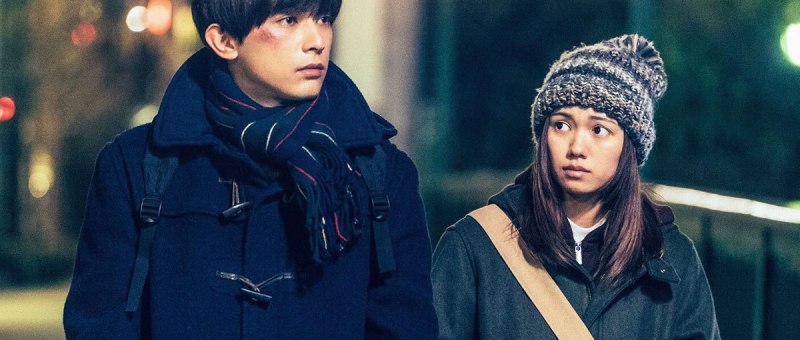
Haruna (Fumi Nikaido), a spirited tomboy and latchkey kid living with her busy single-mother, is in a lazy relationship with violent popular boy Kannonzaki (Shuhei Uesugi) though in truth she doesn’t seem to like him very much. One of her major problems with Kannonzaki is that he keeps picking on one particular guy, Yamada (Ryo Yoshizawa), who is rumoured to be gay. Warned by one of Kannonzaki’s minions, Haruna races off to an abandoned storeroom where she finds Yamada trussed up and naked hidden inside a locker. The pair become friends and he offers to show her his “special treasure” which turns out to be a dead body hidden among the reeds near the edge of the river. Yamada, with another friend, Kozue (Sumire) – a model with an eating disorder, likes to come to the river to gaze at the body in an effort to feel alive.

The ‘90s were full of tales of cruel, emotionless youth torturing itself without mercy and there is something of the era’s insensitivity in the detachment of the central trio. Unable to feel alive, the teens of River’s Edge chase sensation and oblivion through indiscriminate sex, drugs, violence, and self harm but rarely find the kind of fulfilment they so desperately crave. Kannonzaki, the rowdy delinquent, blames his broken home for his lack of connection, making a fierce resentment of a perceived rejection his excuse for his dangerously violent proclivities which run not only to venting his rage on the figure of the gay outsider Yamada but also to drug fuelled rough sex with one of Haruna’s classmates, Rumi (Shiori Doi), who is also chasing agency through sexuality but eventually finds herself cornered in the most terrible of ways.

Yamada is indeed gay, but can hardly say so in the environment in which he lives and so has turned in on himself with a near sociopathic detachment. Having given up on the idea of romantic fulfilment he has resigned himself to loving the object of his affection from afar, happy enough that he exists in the world even if he can never declare himself let alone dare to hope his feelings may be returned. Yamada works as a rent boy in the evenings, going to hotels with middle-aged men for money, but has a fake girlfriend at school, Kanna (Aoi Morikawa), whom he uses as a beard. Kanna, seemingly sweet and oblivious, soon becomes jealous of her boyfriend’s friendship with Haruna and is driven into her own kind of despair by Yamada’s continued coldness.

There’s an especial irony in Yamada’s use of Kanna which is almost certainly not lost on him. These kids, like many before them, abhor the fakery of the adult world but are also unable to embrace their own painful truths. Yamada covers up his sexuality through misleading Kanna, while Kannonzaki is resentful towards his parents who put on a front of marital harmony even after his father ran off with his mistress only to come back a week later with his tail between his legs, and Kozue laments the superficiality of her industry in which everyone falls over themselves to declare something ugly beautiful in order to make themselves feel better. There are no responsible adults here, having ruined the future for their kids they no longer have any kind of moral authority that can offer guidance or support to a jaded generation.

Shooting in the classic 4:3 of a ‘90s TV, Yukisada recreates the narrowness of an era in which the kids struggle to see past themselves, blinkered by their own solipsistic perspective and trapped by the shallowness of their perceptions. Permanently dark, gloomy, and lonely their world is one nihilistic despair in which they feel themselves already dead, living in the half-dug grave of a moribund city giving off its last few puffs of toxic industrial smoke before the whole thing collapses in on itself. In one sense nothing changes, there are no answers or cures for adolescent malaise, but something does eventually seem to shift in the genuine connection formed between two detached outsiders standing on the brink, watching the decay of their era flow past them with melancholy resignation.


Screened at Nippon Connection 2018.

Original trailer (no subtitles)

Cyclops (キュクロプス, Norichika Oba, 2018)

Cyclops still 1Though Japanese cinema is no stranger to noir, the genre has perhaps failed to gain the foothold it occupies in overseas. Nevertheless, noir is where Norichika Oba aims to take us in his second feature as an ex-con emerges from prison with only one thing on his mind – revenge. The poetically titled Cyclops (キュクロプス) is heady noir filled with unreliable narratives, not least that coming from our foggy headed protagonist, in which the sands of truth are constantly shifting beneath our feet. Then again, perhaps the truth is better off buried. Clarity delivers its own burdens.

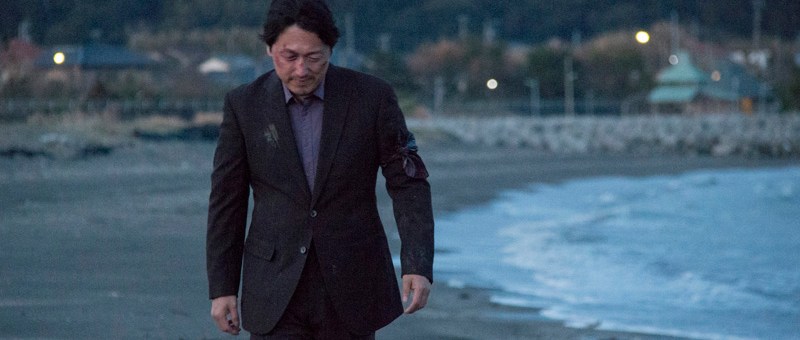
14 years ago Shinohara (Mansaku Ikeuchi) went to prison for the murder of his wife, Akiko (Ako). He was discovered cradling her lifeless body in a hotel room covered in blood next to the body of another man – Tezuka, a politician, thought to be her lover. After his business went under Shinohara started to drink, heavily. At the time of the incident he was an alcoholic and claims to have no memory of anything prior to discovering his wife’s body owing to being in a state of permanent inebriation. He is sure, however, that he would never have hurt her and denies all the charges. Nevertheless, he’s spent the last 14 years in custody keeping his head down and is about to be paroled. Which is where Matsuo (Kouzou Satou) comes in. A sergeant on the original case, Matsuo has long been harbouring feelings of guilt over the way the affair was handled and claims to have discovered the identity of the “real” killer – a petty yakuza called Zaizen (Hikohiko Sugiyama) who was after the politician and offed Akiko to tie up loose ends. The law can no longer help in this case, but Matsuo suggests Shinohara pursue his own justice and put an end to the matter in the old fashioned way.

What ensues is a complicated cat and mouse game as Shinohara, a bruiser with a prison education in street violence, prepares to take on a vicious and vindictive mob boss who he believes took his wife’s life on a whim to further his own career. Matsuo teams him up with one of Zaizen’s guys, Nishi (Yu Saito), who supposedly wants to do “the right thing” in training a rookie to take out his boss. Meanwhile, Shinohara has also gotten himself into trouble by visiting a local bar named Galatea which is run by a mama-san who looks exactly like Akiko and is also under threat from Zaizen and his collection of sleazy henchmen.

Of course, nothing is quite as it seems and Shinohara, perhaps naively trusting almost everyone he comes into contact with, is left with no clear indication of who he should believe and which story is likely to be the most “true”. Lying back on a jetty under the pale white moon, he thinks he sees the image of his wife, ghostly yet dressed in a fiery red which reflects back on him, bathing his face. Shinohara has a series of nightmares or perhaps flashbacks in which he relives the murder, seeing the killer remove his balaclava but imagining a different face every time.

The title of the film comes from a painting in the bar which is inspired by Greek mythology and features a scene of the giant cyclops Polyphemus hovering behind a mountain while his unrequited object of affection, Galatea, hides herself below. Haru (Ako), the bar’s mama-san, aligns herself with Galatea as a woman trapped between conflicting emotions and effectively held prisoner by her own inertia, longing for escape but unwilling to accept it. Shinohara, at this point sporting an eyepatch and likened to the quasi-stalker giant, wonders if the cyclops has in some way forgotten what it was he was looking in the first place and is simply wandering without aim or purpose. Shinohara has indeed forgotten many things, holding the key to his own salvation all along but proving slow to realise the extent to which he is being misused.

Yet for all his talk of vengeance, Shinohara remains a good and kind man who wants to protect the innocent even while punishing the guilty. Adopting a stray dog, perhaps out of identification with its lonely existence, Shinohara’s humanity begins to resurface enabling him to form an oddly genuine friendship with Nishi even whilst suspecting that he is not all he seems. The bad guys get what’s coming them, but it’s forgiveness that eventually saves the day as the two men find a kind of brotherhood born of mutual understanding and respect. Freedom is won and then given away freely as the cyclops regains his sight, learning to look within for the key to all mysteries while walking a dark and dangerous path towards salvation.


Screened at Nippon Connection 2018.