The End of the Pale Hour (明け方の若者たち, Hana Matsumoto, 2021)

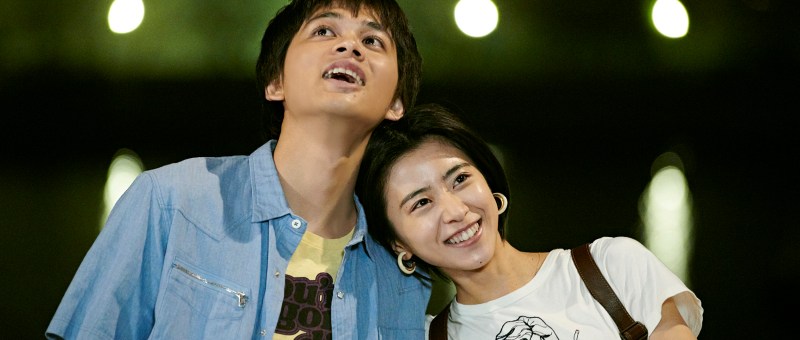
A series of youngsters contend with disillusionment amidst the failure of the salaryman dream in Hana Matsumoto’s adaptation of the “I Novel” by Masahiko Katsuse, The End of the Pale Hour (明け方の若者たち, Akegata no Wakamonotachi). United by a chorus of “it wasn’t supposed to be this way”, the choice left to them is to resign themselves to life’s disappointment or to take a gamble on a happier future which though it might not work out might grant them a greater feeling of control over an existence which often seems pointless and unfulfilling. 

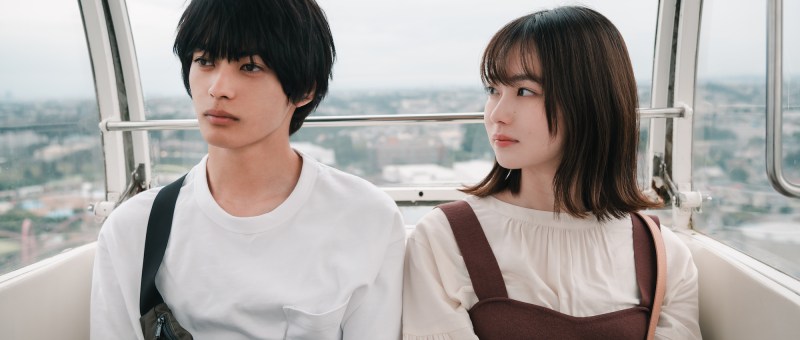
The unnamed protagonist (Takumi Kitamura) is already feeling a degree of trepidation even at a gathering that has been organised by a brash fellow student who crassly brands it the “winners’ party” to celebrate that they’ve all been able to line up jobs for after graduation in a competitive employment market. He ends up leaving with an equally bored woman (Yuina Kuroshima), a graduate student a little older than him, and drifts into a relationship with her that seems doomed to failure not least in her constant reminders that “everything ends sometime” and “our youth will be over soon, we need to enjoy it now”. The man insists that their youth won’t end just because they’ve entered the working world but in a sense it of course does, his sparkler fizzling out portentously as he’s forced to think of the future. 

A recent trend has seen large numbers of graduate recruits quit their company jobs within the first three years for reasons the man and his new workplace friend Naoto (Yuki Inoue) quickly discover. Japanese companies generally hire en masse in the spring and then shuffle employees into various departments after a probationary period sometimes letting the ones who don’t make the grade go entirely. Though he had done well in the preliminary tasks and hoped to be assigned to the prestigious planning department where the real work gets done, the man is assigned to the “General Affairs” section of office dogsbodies marked out from the regular salaryman workers by their uniform jackets which make it clear that their work is considered menial mainly concerned with setting up furniture for meetings, taking care of maintenance tasks such as replacing light bulbs, and dealing with interoffice complaints. He is constantly told off for not stamping his documents properly only for someone to explain to him that he needs to make sure his name appears at the correct angle to symbolise his bowing to the boss on paper in an example of the rigid office culture for which the young have increasingly little patience.  

Part of the man’s problem is his passivity. He’s dissatisfied with the system but is at heart conventional and lacks the courage to break with it. The woman is seemingly less so, a free spirit who’s chosen a path she believes to be more creatively fulfilling excited that she might make something that will one day be in someone’s hands. But then as we discover she is more conventional than she first appears, her openness and enthusiasm perhaps partly fantasy to mask the disappointment that she too feels that her life has not turned out as she thought it would. The man remarks that he likes walking around at twilight because it’s the only moment in which he can feel free, a moment of infinite possibility in the liminal space between one day and the next in which today is already over but tomorrow has not started. Later Naoto will say something similar of their youthful days as fresh hires filled with resentment but also determination, railing against the system until the early hours of the morning, describing it as the “magic hour” of their lives though they never knew the light was dimming. 

Such dejection may be slightly unwarranted given that none of them are even 30 by time of the film’s conclusion despite the minor greying of their hair. In any case, the man seems to have come to an acceptance of youth’s end, taking the spirit of the twilight with him as he charts a new, if still conventional course, choosing not to jump ship like his friend but tentatively make an application to get out of General Affairs into a better salaryman job. “It’s been a magic time, hasn’t it?” the woman had said of their brief holiday, “like a dream” but one from which she knows, and perhaps he does too, they’ll soon have to awake. Expressing the anxieties of contemporary generation dissatisfied with their overly corporatised lives in a rigid and conservative society, The End of the Pale Hour nevertheless ends with a sense of the dawn and the promise of new beginnings if tinged with the glow of youthful nostalgia. 


The End of the Pale Hour streams in Germany until 6th June as part of this year’s Nippon Connection.

Original trailer (English subtitles)
The Sunday Runoff (決戦は日曜日, Yuichiro Sakashita, 2021)

“I keep choosing a perilous path” the heroine of Yuichiro Sakashita’s political satire The Sunday Runoff (決戦は日曜日, Kessen wa Nichiyobi) explains, “But that’s where change happens”. Change, famously, is not a common occurrence in Japanese politics where the same party has remained in power for all but a handful of years since its foundation in 1955. Part of the reason for that at least according to the reluctant candidate is the nation’s rigid social attitudes in the unwillingness to question the status quo, just going along with however things have always been done, while the main cause is perhaps corruption at the local level in the interplay between supporters groups staffed by influential local businessmen and their representatives along with the collusion of civil staff who have become too blasé about the murky nature of politics. 

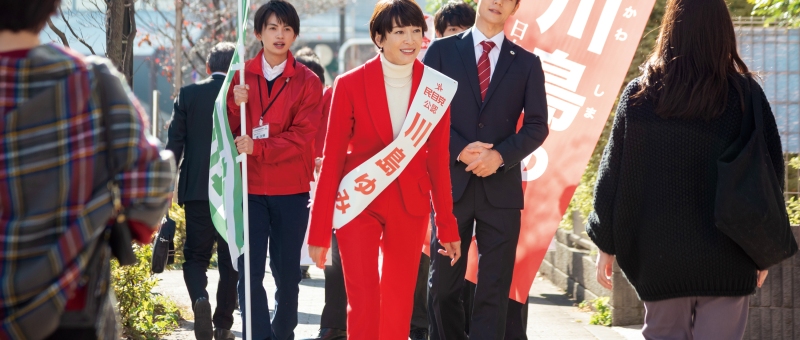
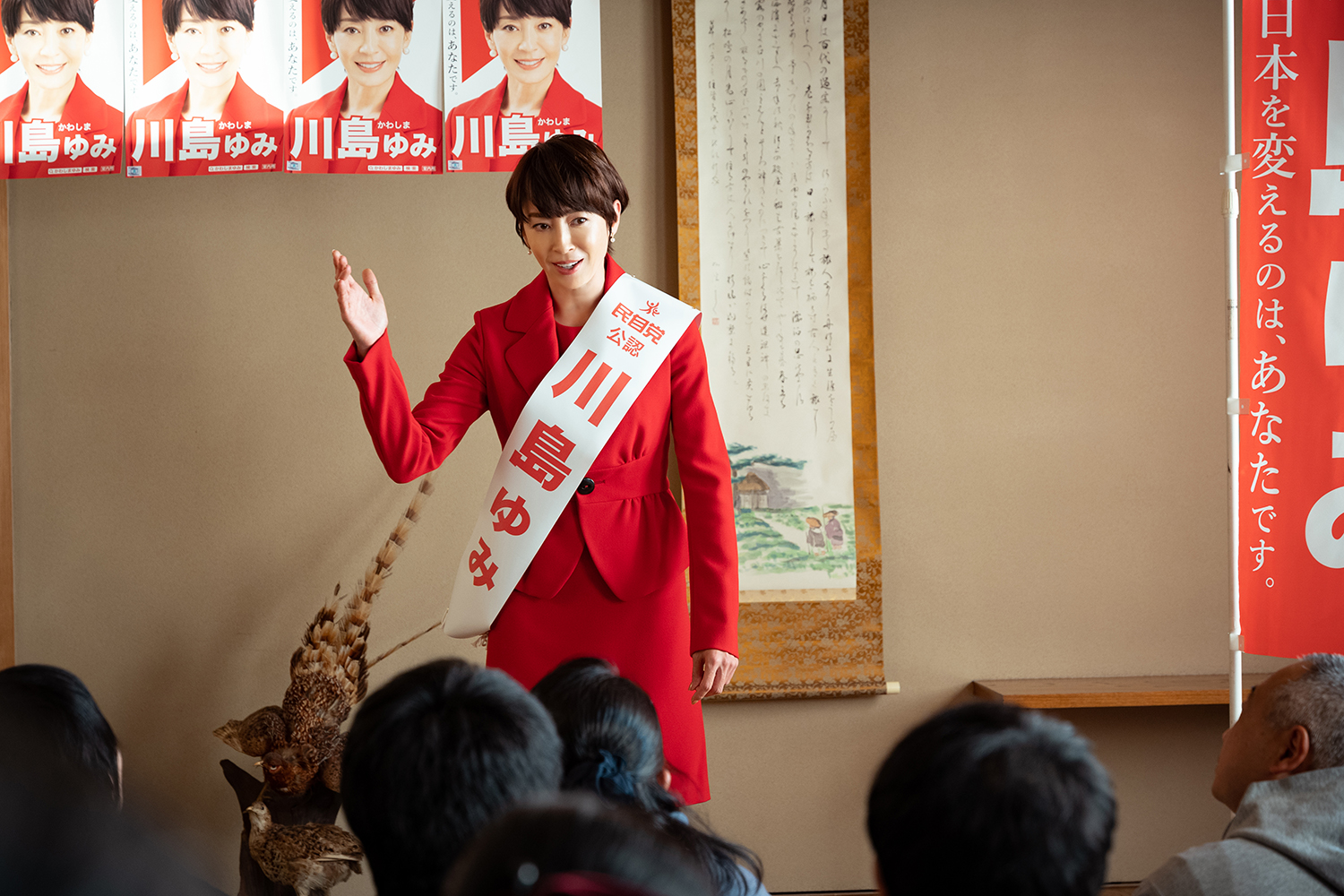
That’s especially true for political secretary Tanimura (Masataka Kubota) who had developed a paternal relationship with former defence minster Kawashima who unfortunately is forced to retire from office due to ill health after suffering a stroke. Unable to agree on a suitable candidate to replace him, the supporters groups throw their weight behind Yumi (Rie Miyazawa), Kawashima’s middle-aged, unmarried daughter. The above lines are spoken during her introduction to her staff who find her strange and unconvincing, mocking her Western-style business speak along with her decision to refer to them as her “crew”. 

If “change” was what Yumi wanted, she’s almost certainly standing for the wrong party. Though not explicitly stated, she’s obviously intended to be standing for an LDP stand in and in the opinion of her staff at least her seat is so safe you could paint a face on a rock and get it elected. Their problem is that they assumed Yumi would be easy to manage, though it quickly becomes clear that despite having grown up in politics she is incredibly naive and something of a loose cannon. As she admits, she tells it like it is and doesn’t consider the consequences. She is not media trained and the secretaries, Tanimura included, do not really bother to brief her in part because they assume the election’s a sure thing so they don’t need to. As we can see from her introductory speech, she is essentially playing the part of a politician as she imagines it to be, saying things she perhaps does mean because she thinks it’s what a politician would say such as her offensive reply to a question about the declining birthrate to the effect that childless couples were “slacking off” and “not functioning as humans” leading to a protest outside her office in large part by those who had found her comments hurtful because they had wanted to have children but for various reasons had not been able to. 

It’s Yumi’s political naivety that makes her the ultimate foil for the secretaries and supporters groups as she gradually comes to realise she was never meant to be anything other than a puppet. After a particularly disastrous conference, one of her older male sponsors exasperatedly asks why they couldn’t have picked a better candidate. “At least choose a man”, he adds while one of the secretaries later snaps at Yumi that she’s way out of her league, should “know her position”, and that the only reason an “amateur woman” like her was approved as a candidate was because of the supporters committee so she’s there to do exactly what they say. Forced to apologise to them, Yumi’s face is framed in the lattice work at a restaurant as if she were in prison, a sentiment echoed by Tanimura when he tells her that she has “no choice” but to continue threatening to plant smear stories in the press if she tries to walk away or blow the whistle on all the corruption she has unwittingly uncovered in the local political office. 

That would include the giving and receiving of bribes in an all too cosy relationship with local business and particularly the construction industry. Part of the problem is that the civil staff will all lose their jobs if Yumi is not elected which makes it in their interest not to act with total transparency. Tanimura hadn’t really cared about that before, each time when questioned replying only “that’s just how it is” but slowing beginning to realise that it doesn’t need to be and really it isn’t OK. Despite her eccentricity and impulsiveness Yumi would as Tanimura can see make a good politician if not one ideally suited to a conservative party. Threatening suicide from the roof of a three storey building she decries political apathy in Japan, explaining that they need to remind the people that this is really about them and that politics is not pointless because change can happen while the jaded secretaries roll their eyes and giggle setting up a crash mat in the event that she is not actually bluffing. 

What she decides to do is try to loose deliberately, but everything she tries just backfires. A series of offensive racist rants far from ruining her reputation pick her up new votes from members of the far right who previously felt unrepresented while even planting false stories in the press that she is a drug user with a criminal record doesn’t seem to dent her approval rating. Just as Yumi’s comments about the birthrate echoed those of other gaffe-prone LDP politicians such as Mio Sugita, Yumi and a reformed Tanimura even film a fake video of her pretending to abuse one of her staff directly echoing that of Mayuko Toyota who was forced to stand down after an embarrassing video of her calling her aide “baldly” while beating him went viral, but her popularity only increases. As a last resort they release video footage of her father accepting bribes and have her deny it so it becomes obvious that she lied, but her dishonesty makes no difference to the average voter. 

The cynical secretaries had indicated that ordinarily speaking they’d ride a scandal out because another one will be along before too long to knock it off the front page. Yumi’s whistle blowing plan fails again because of collusion with the local media who despite sniffing around for a story won’t run anything too negative lest they lose their access to the halls of government. The secretaries then get lucky when a possible North Korean missile strike bumps the bribery affair onto the back pages, a video of the staff laughing and cheering their near escape even becoming a meme on social media. Yumi’s resentment is in rooted in her powerless, refusing to be a puppet for local bigwigs, but it may also be true that once she’s elected they have no real power over her and changing the system from the inside may ironically become a real possibility if only she herself can overcome her conviction that nothing is ever going to change. “This is not the world you expected.” Tanimura admits, “accept it and fight”. A throwback to the films of Juzo Itami, Yumi is very much the kind of character Nobuko Miyamoto might have played in one of her “woman” films if perhaps a little more cynical. The Sunday Runoff is decidedly more barbed if at least as pointed in its criticism of incestous local politics, but in the end does believe that real change may indeed be possible if only you’re willing to fight for it. 


The Sunday Runoff streams in Germany until 6th June as part of this year’s Nippon Connection.

Original trailer (no subtitles)

Popran (ポプラン, Shinichiro Ueda, 2022)

“Wieners are stuck to the body, they can’t go flying!” a confused father attempts to convince his toddler son, but as the young boy had said that isn’t quite the case. The hero of Shinichiro Ueda’s Popran (ポプラン) has been, well, to put it bluntly, a bit of a dick to just about everyone in his life but when even his bits seem to have become tired of his schtick it can’t help but provide something of a wakeup call. More surrealist morality drama than scatological comedy, Popran’s heart at least is in the right place as its hero attempts to, literally, piece himself back together to repair his fractured integrity. 

As we first meet 30-ish entrepreneur Tagami (Yoji Minagawa ), he’s being interviewed for a documentary that wants to explore the real lives of well-known people. As might be expected, the opening questions are fawning, pointing out his vast success at such a young age as the developer of app and manga publishing platform but the atmosphere soon changes when they stray into less positive territory. It seems Tagami’s success might have come as a result of betraying his old friend and business partner, while he also abandoned his wife and child to chase success in Tokyo and apparently has become estranged from his parents. His well-meaning PR shuts down the interviewer’s attempts to ask anything remotely challenging, yet it’s obvious that something inside Tagami is dying even as he reads out a cheesy speech he’d written about the importance of following the compass of your heart from a cue card held up by his assistant. 

We can see what kind of man he is or has been when an excited employee approaches him in the corridor about an exciting project but, feigning politeness, he has to ask his assistant who the guy was once he’s gone. At a birthday party for one of their writers, he leers over a woman sitting behind him and offers to introduce her to their editing department when she tells him she’s interested in writing something herself despite his clearly stated policy of not running original material only buying rights to distribute perennially popular series. It’s after taking her to bed with false promises that he discovers his penis is missing. 

More than a symbol of his masculinity, the errant penis is an indictor of his misplaced desires and lack of both moral fibre and impulse control. To achieve success he’s screwed over countless people besides the young woman who seems to have been the last straw for his literally alienated genitalia leaving a trail emotional chaos in his wake. After discovering that he is not the only one to fall victim to the “Popran” phenomenon he is forced to face himself, his moral cowardice, anxieties, and fears, and reckon with his sense of inadequacy and disappointment. Just as in the message he’d delivered to the youngsters watching the documentary, he too needs to take a look at the compass of his heart and realise he’s been reading it wrong chasing down his penis with a butterfly net before realising he knew where it was all along he just needed to go back to where it all started and remember who he really is. 

Then again, there is perhaps something of frustrated masculinity in Tagami’s quest. As his friend point out, he makes all his money exploiting other people’s labour while offering nothing new of his own. In the interview, he’d said he wanted to be a mangaka but felt he wasn’t good enough so decided to become a distributor instead setting up the company with a colleague from the manga cafe where he was working. But they parted ways because his friend wanted to publish original material and with his eye on the bottom line Tagami forced him out. Where his friend is now running a small studio from his apartment and even while not wealthy creatively fulfilled, Tagami has become rich but empty. Obviously that’s not to say there’s no value in the kind of work he does, but he’s begun to appropriate others’ success as his own with no real thought for their well-being. Chasing his dick around is also in its way a desire to regain his creative mojo as symbolised in his re-energised commitment to publishing original material rather than simply raking in royalties from safe and stable classics.  

As is often pointed out to him, his fantastical tale sounds like something out of a manga though Popran is certainly less reflexive than Ueda’s previous efforts telling a story which is much smaller in scale though also in its way heartwarming as the hero is pulled around by the penises of past and present if not future before reaching a moment of emotional maturity that allows him to exercise a more healthy control over his desires knocking his dickish behaviour on the head to wise up and realise being a man’s about treating others with respect and dignity. Some things you can’t just stick back on if they fall off, but you can at least acknowledge that you should have treated them better and resolve to be happy that they have at least found better futures as you might yourself if only you can figure out which compass to follow. 


Popran streams in Germany until 6th June as part of this year’s Nippon Connection.

Original trailer (English subtitles)
Images: Ⓒ ”Popran” Film Partners

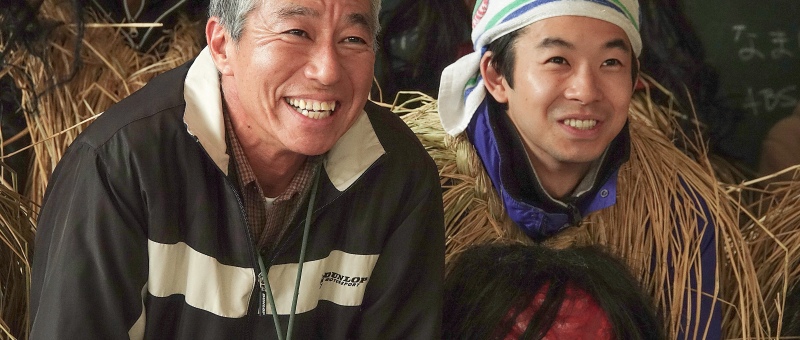
Any Crybabies Around? (泣く子はいねぇが, Takuma Sato, 2020)

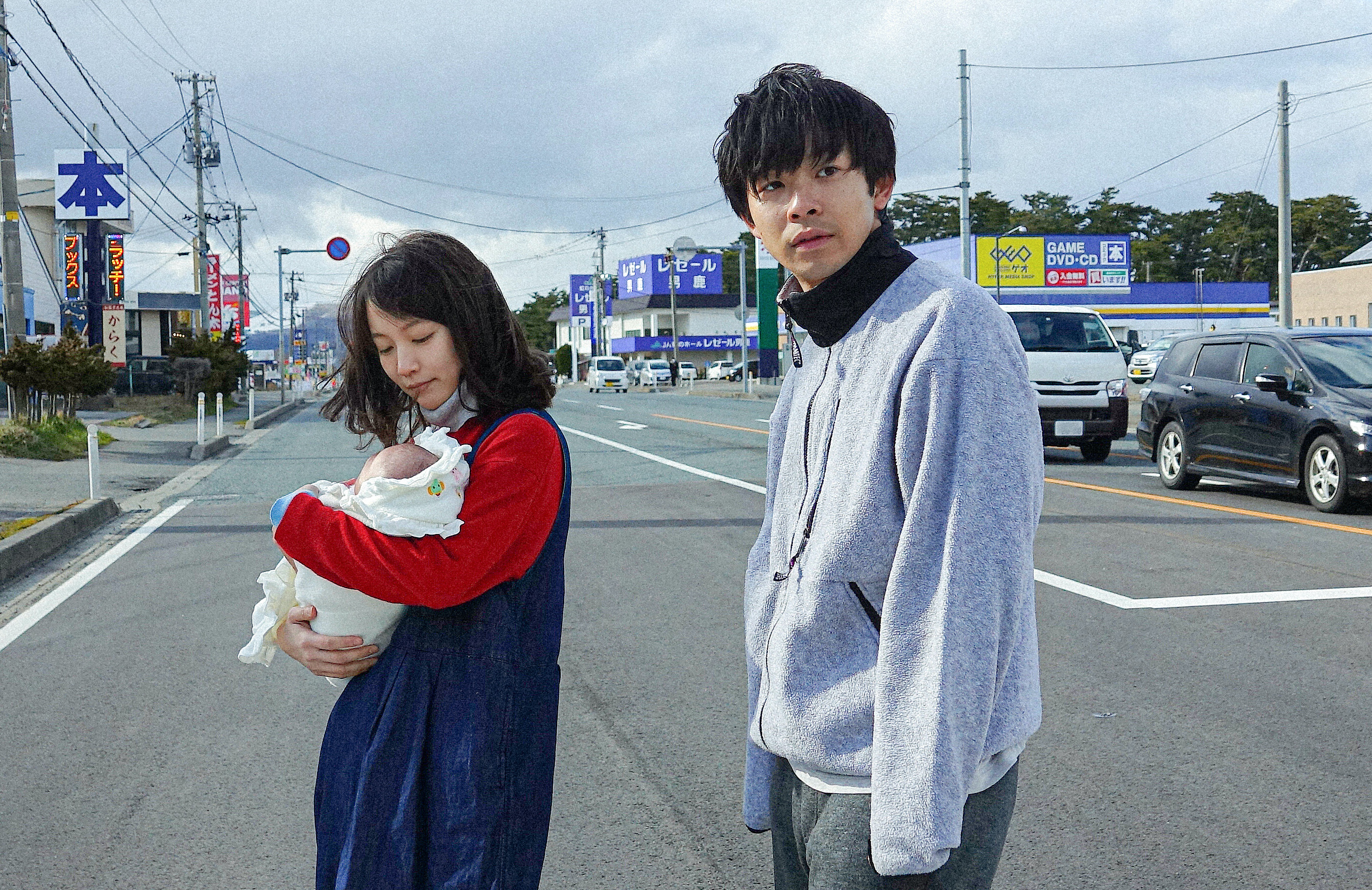
“Get your act together” an exasperated new mother exclaims, but it seems even new fatherhood isn’t quite enough to jolt the aimless hero of Takuma Sato’s paternity drama Any Crybabies Around? (泣く子はいねぇが, Nakuko wa Inega) into accepting his responsibility. Fatherhood is indeed a daunting prospect, however Sato isn’t interested solely in Tasuku’s (Taiga Nakano) attempts to “grow up” and embody the ideals of masculinity in a patriarchal society but also in the nature of fatherhood itself along with its legacies and the effects of male failure on those caught in its wake. 

Everyone in the small town of Oga seems to be aware that Tasuku has undergone a shotgun marriage though it’s more the subject of gentle ribbing than scorn or disdain. Many remark on his relative youth, though he’s perhaps not so much younger than his parents might have been when he was born it’s just that times have changed. In any case, his wife, Kotone (Riho Yoshioka), is beginning to get fed up with him worried that he isn’t ready to be a father and isn’t taking the responsibility seriously enough. As young men do he still drinks like a single man and is vulnerable to peer pressure. Kotone begs him not to participate in the local Namahage festival but he insists they have to keep the tradition alive while apparently feeling an obligation to Mr. Natsui (Toshiro Yanagiba) who ensures it continues. She makes him promise not to drink, and he does his best in the beginning but, paradoxically, the Namahage is a drinking festival. Soon enough, Tasuku has had a little too much and beginning to feel hot takes off all his clothes, running around in the nude save for the large oni mask on his face while local reporters there to cover the traditional festival decide to make him a viral sensation. Unable to bear the shame, Tasuku abandons his wife and child and runs away to anonymity in Tokyo. 

The irony is that introducing the festival to the reporters, Mr. Natsui had flagged it up as a bastion of family values, that it’s not about “scaring” children but teaching them “good ethics” while reassuring them that their fathers will always protect them. According to Mr. Natsui, those children then grow up to become fathers who protect their offspring, Tasuku’s unfortunate streaking somewhat undermining his argument. It’s interesting in a sense that Tasuku is himself fatherless, his father having passed away some years earlier leaving not much of himself behind other than the oni masks he carved for the Namahage. Tasuku’s brother (Takashi Yamanaka), who was supposed to be getting married but apparently did not perhaps because of Tasuku’s scandal, later becomes upset on deciding to sell the family business lamenting that he was able to save “nothing” of his father, rejecting the Namahage mask that Tasuku offers him as “trash” while acknowledging perhaps that the Namahage is all is he left them along with the transitory lessons it imparts. 

Tasuku was clearly not quite ready to be a dad, but having spent some time growing up and hearing that his father-in-law has passed away leaving his ex with little choice than to work as a bar hostess on the fringes of the sex trade, he decides to go home and try to make amends. He swears repeatedly that he won’t run away again and will do whatever it takes until he’s forgiven, but still he flounders failing to find secure employment while periodically visiting his grandmother in a nursing home and helping his mother (Kimiko Yo) out selling traditional ice creams at local tourist attractions. “You’re not the only one who can be Nagi’s father” she reminds him as he perhaps begins to realise that there are some bonds you can’t repair even if you’re eventually forgiven for having broken them. 

Performing the Namahage forces Tasuku uncomfortably into the role of the authoritarian father safe scaring the child in order to instil in them a sense of confidence that encourages them not to be afraid of life, in the way that he may ironically be, because there will always be someone there waiting to catch them. The ability to protect a family is a defining feature of the masculine ideal, and the Namahage in its way perpetuates outdated ideas of gendered social roles while Tasuku’s mother and even grandmother are always there for him with unconditional acceptance, supporting him even in the depths of his “disgrace” and encouraging him to move forward even if that means accepting defeat. Keeping the Namahage alive is also in a sense to preserve the paternal legacy, just as Tasuku’s father may have passed nothing else down to his sons so Tasuku may find he has nothing more to offer, perhaps no longer a “crybaby” but still struggling to shift into the role of the father even while belatedly coming of age in the knowledge that he may have left it too late. 


Any Crybabies Around? streams in Germany until 6th June as part of this year’s Nippon Connection. For viewers outside of Germany it is also available to stream in many territories via Netflix.

International trailer (English subtitles)

Asia is One (アジアはひとつ, NDU, 1973)

“They came to beat us into a splendid Japanese future, to conquer us” according to an interview in a small Taiwanese mountain village towards the end of the Nihon Documentarist Union’s Asia is One (アジアはひとつ, Asia wa Hitotsu). Having documented Okinawa on the brink of its reversion to Japanese sovereignty, the collective return to examine more widely its legacies of oppression and exploitation under Japanese imperialism venturing first to its smaller islands and then all the way out to Taiwan from which many migrant workers had come to work in harsh conditions in Okinawan mines during the colonial era. 

One man describes himself as having been tricked in coming to the Marusan mine in 1933 in the mistaken belief he could work there for six months and then return home. “I thought it would be better to die than live there” he goes on, originally too afraid to attempt escape having seen others rounded up and punished but later managing to get away by blowing up a boat. A Japanese man who worked at the Noda mine in Iriomote, meanwhile, reveals that they were refused days off and sick workers were often cast out. Many simply died because they could not afford to pay for medical attention. Workers were paid in company script which could be spent only on the compound, the mine owners fearing workers would abscond if they were paid in cash. By his reckoning, however, the Taiwanese workers had it better because they were working on a contract basis and could get a better rate of pay. A third man, Masuda, meanwhile describes long days and early mornings, being unable to eat if they didn’t have money for the canteen, and the watchmen locking their bedroom doors at night to prevent them escaping. The conditions were so bad that one man took his own life by blowing himself up with dynamite tied around his waist. 

Even so, the second man then living in a nursing home, does not blame the mine owner, Mr. Noda, describing him simply as a “capitalist” and remarking that he was often kind and generous giving workers money for medical treatment etc, blaming instead the foreman. “It’s the people working under the capitalists who are bad” he explains, bearing out the extent to which oppressed people will often oppress others like them in order to feel less oppressed but also letting the system off the hook in failing to acknowledge that if Mr Noda had really been good and kind he could have improved conditions in the mine while still remaining “a capitalist”. Hsieh King-Fu, known as Dr. Seh, whose father worked as a doctor at the mines recalls a mass outbreak of malaria among the Taiwanese migrant workers leading to a shortage of morphine. Having bought supplies from a local pharmacy himself a rumour later circulated he was injecting them deliberately to get them addicted so he could drag them away so endemic had the sense of betrayal and exploitation become. 

Meanwhile since the reversion the islands have been fostering deeper connections with Taiwan which is after all geographically closer than the Japanese mainland. An older man explains that he’s instilling Taiwanese agricultural techniques in the local population and has successfully been cultivating pineapples on the island for the last 40 years. Fishermen too remark on how much easier it is to trade with Taiwan rather than the mainland because it’s simply closer meaning they can also trade live fish with a longer shelf life. Meanwhile an official details a potential agreement between the Ryukyu government and Taiwan to recruit workers developing new ties independently from those of mainland Japan. 

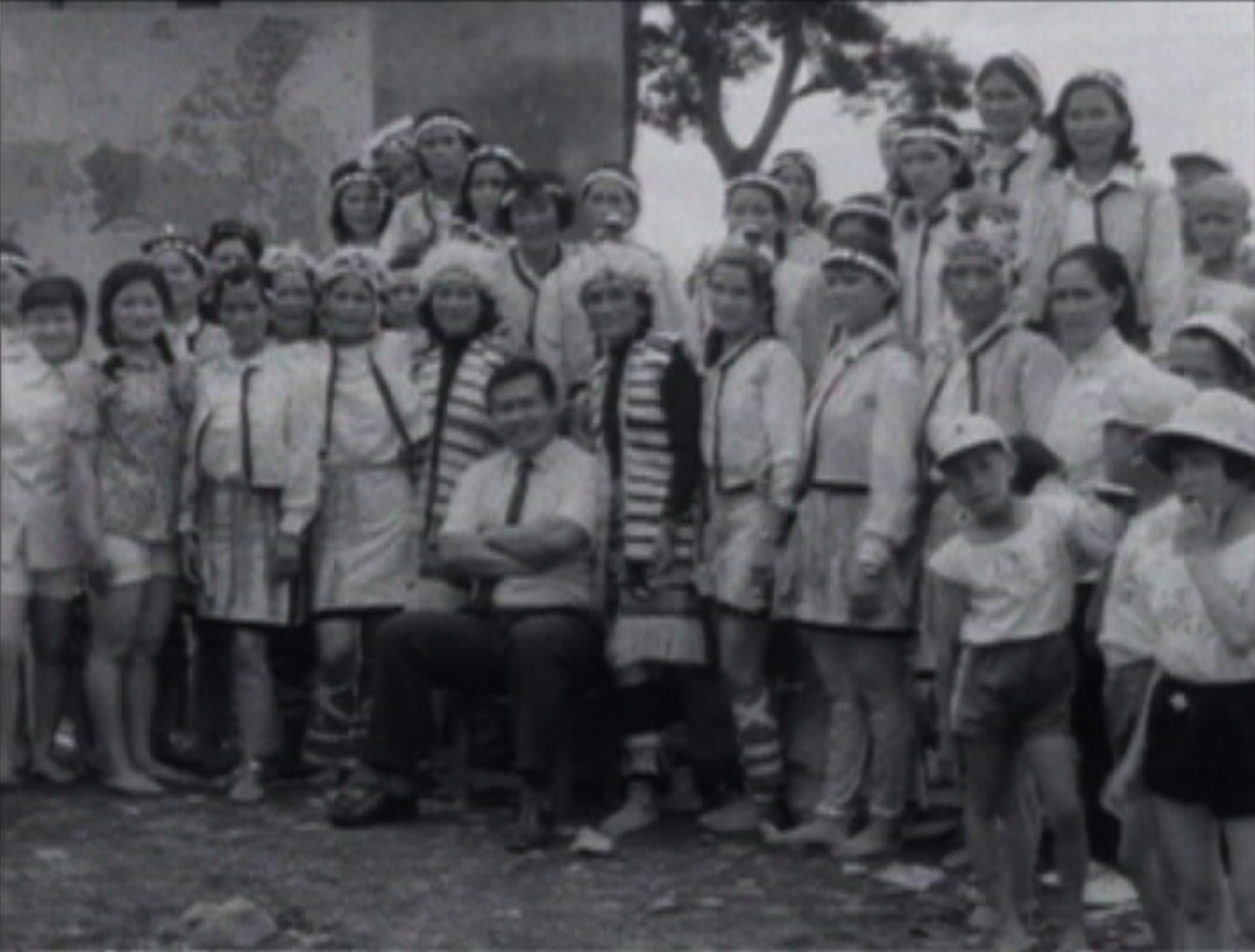
Yet in travelling to Taiwan itself, the documentary collective encounter surprising reactions to the legacy of Japanese colonialism in a small village inhabited by the indigenous Atayal community who still play the Japanese national anthem every day at noon. Many of them can still speak fluent Japanese having been forced to learn it during the colonial era and have almost a fondness for Japanese rule. “We owe everything to Japan” one woman states, uncomfortably grateful for her “civilisation” and thankful that the Japanese educated them out of some of their more “barbaric” customs such as the admittedly oppressive practice of beheading. Like the Korean man who obtained three names during his travels through the Japanese empire, many of the villagers have names in their indigenous language, names in Mandarin, and names in Japanese. “I’m still terrified of imperialism and oppression” one man admits though adding “I guess imperialism is different now” in lamenting that the emperor has never visited him but observing that he looked “free” on his last tour to Taiwan before going on to talk about a seal he received from the emperor after executing prisoners, by beheading, as a conscript soldier during the war. Asia may indeed be one if ironically, united in the destructive legacy of Japanese imperialism, but perhaps also finding new ways to repair itself which take less account of concepts such as sovereignty, diplomatic recognition, or man-made borders. 


Asia is One streams worldwide (excl. Taiwan and Japan) until June 3 as part of Japan Society New York’s Visions of Okinawa: Cinematic Reflections.

What She Likes (彼女が好きなものは, Shogo Kusano, 2021)

“Distance keeps us safe” according to the hero of Shogo Kusano’s LGBTQ+ teen drama What She Likes (彼女が好きなものは, Kanojo no Sukina Mono wa) ironically commenting on the nature of “social distancing” in the age of corona along with his own sense of alienation. Though in comparison to other recent similarly themed features Kusano’s film may in some senses seem behind the times in its BL filter, it has its heart firmly in the right place as the hero and several of his friends attempt to find a place for themselves within the contemporary society which for various reasons they fear will not accept them. 

In high schooler Jun’s (Fuju Kamio) case, his sense of alienation is born of his internalised homophobia in which all he wants is to have a conventional heteronormative life within the confines of the traditional family with a wife, children, and grandchildren. Part of this may stem from a secondary source of marginalisation in that he comes from a single parent family which is itself still frowned upon by some as evidenced by the mild discomfort experienced by his new friend Sae (Anna Yamada) when he explains to her why he always eats cafeteria food rather than bringing a homemade bento. Sae’s source of internalised shame, meanwhile, is that she is a fujoshi or obsessive fan of boys love manga which revolve around romances between men but are aimed at an audience of young straight women rather than the LGBTQ+ community. 

Based on the novel by Naoto Asahara, what the film attempts to do is examine the gap between the BL fantasy and the reality of being gay in contemporary Japan. Sae is ashamed of her love of BL and ironically paranoid that Jun will expose her secret after running into him at a bookshop, explaining that she was shunned in middle school when her friends found out she enjoyed reading gay love stories which they viewed as “creepy”. Meanwhile, she has a complicated view of homosexuality off the page which is not always completely supportive. Both she and Jun continue to use a world that many would consider to be a homophobic slur to describe men who love men, Jun at times using the word against himself while simultaneously denying the identity. The first conclusion that he comes to is that Sae does not really like him but only the romanticised gay ideals from the fantasy world of BL which as is later pointed out are often set among a largely gay milieu or even in a world where everyone is gay. 

Sae refers to this space as the BL Planet, but Jun’s desire to go there is also a reflection of his internalised homophobia in that on the BL Planet he’d obviously be just like everyone else. He’s fond of repeating a sentence they learned in science class about a simplified world with zero friction which he later claims to reject unwilling to erase complication for superficial harmony but this is exactly what he’s doing in attempting to erase a part of himself in order to better conform to a heteronormative society. He beats himself up for not being able to have “normal” sex after half-heartedly agreeing to date Sae while engaging in physical intimacy with a much older man who is married with a child. Jun’s lover Makoto (Tsubasa Imai) later explains that his marriage is one of convenience born of the same kind of internalised homophobia experienced by Jun though he obviously loves his wife and child if in a different way while the inappropriateness of his relationship with a teenage boy is never raised by anyone.

Jun is taken to task by a brash classmate, Ono (Ryota Miura), for his irresponsibility in dating Sae knowing that he has no romantic interest in her hinting that perhaps not that much has changed in the last 10 or 15 years both men convincing themselves that heteronormative relationships are the only valid markers of success. Then again when Jun is accidentally outed his classmates are given a crash course in LGBTQ+ relations most of them expressing support and the conviction that society needs to become more accepting of diversity though it has to be said they were less than understanding before, particularly the boys who found Jun’s presence a challenge to their masculinity. 

Teenage boys they all are, but even infinitely sympathetic straight best friend Ryohei (Oshiro Maeda) engages in crude, misogynistic banter with their classmates forcing Jun to play along pretending to be a connoisseur of heterosexual pornography. Probably some or even most of the other boys are also lying in an act of performative masculinity but the pretence only adds to Jun’s internalised sense of otherness and belief that he is in some way broken continually asking not only why he was born like this but why anyone is. After receiving an alarming message from an online mentor, he is pushed towards a dark place in becoming convinced that the world has no place for him only to belatedly come to an acceptance of his identity as mediated through Sae’s concurrent epiphanies realising that without friction there is no progress and discovering liberation in authenticity. Despite a few mixed messages and a bizarre subplot about a hairdresser who is not himself gay but nevertheless obsessed with gay people to the extent that he thinks he can spot them in public places through codified signs and the look in their eyes, Kusano’s teen coming-of-age drama has its heart in the right place in its gentle plea for a more inclusive, joyfully diverse society. 


What She Likes screens at Genesis Cinema on 28th May as part of this year’s Queer East.

Original trailer (English subtitles)

Motoshinkakarannu (沖縄エロス外伝 モトシンカカランヌー, NDU, 1971)

Active between 1968 and 1973, the Nihon Documentarist Union or NDU was a collective of documentary filmmakers emerging from the then declining student movement and “Zenkyoto” struggle committees whose members were often university drop outs disillusioned with the system. The group’s 1971 documentary Motoshinkakarannu (沖縄エロス外伝 モトシンカカランヌー, Okinawa Eros Gaiden: Motoshinkakarannu), shot in black and white and using asynchronous sound, takes its name from a word in the Okinawan language used to describe a business which can be started without seed money, effectively an ironic euphemism for sex work. Visiting the islands immediately prior to their return to Japan, the collective examines among other things a legacy of exploitation along with the effects of economic dependency on one or another colonising force. 

“How come Okinawa changes so much?” a street singer asks playing a sanshin while reflecting on the islands’ complicated history. An old lady born in 1889, the tail end of the Meiji era, reflects on cultural change when speaking of the tattoos on her hands which she’d so wanted as a child believing not to have them was not to be accepted as a woman and therefore unable to marry. But tattoos are taboo in Japan and the practice was eventually banned by the police leaving her stigmatised in her own community and forced to wear gloves in order to hide the markings of her culture. “Now in the contemporary society you can’t get married if you have a tattoo. Things can change 180 like that” she adds reflecting on the rapid changes which have taken place within her lifetime in which even ancient traditions can be abruptly ended by outside forces. 

Meanwhile, another woman prepares to adjust her currency exchange business once Okinawa reverts to Japan and the American presence decreases. While some are in favour of the reversion more because they want the Americans to leave than actively desire to return to Japanese sovreignity, others wonder what the effect will be on the local economy given that workers are already being laid off from jobs on American bases. The documentary captures several labour protests held outside military facilities by anxious workers. “Okinawa is sacrificed again under military control” one leader insists while another later adds “for 20 years Okinawa was denied normal employment opportunities due to its militaristic colonisation” each emphasising the unanswered questions in the reversion agreement of what is supposed to happen to these now redundant workers, where will new jobs be coming from and what are they supposed to do until they arrive? Many of the protestors are extensively masked appearing somewhat like the invisible man with their heads wrapped in fabric and sunglasses covering their eyes presumably because they fear negative consequences from their employers if they’re caught at the demonstration.

The documentary team muddy the waters a little by challenging one man that as he’s a cook he could easily find new work, but as he points out it’s not just about him and he believes the labour movement will be beneficial to the islands’ future. Many feel betrayed that the local Okinawan police force continues to protect the interests of the Americans in attempting to suppress their protests, but conversely there is also anxiety regarding new industrial investment from Japan with the CEO of Toyo Oil, directly labeled a war criminal in the embedded subtitles, trying to argue that he is an environmentalist and would not go ahead with the plant if it were to produce pollution. Such worries are perhaps at the forefront of the minds of ordinary Okinawans given the numerous mainland scandals of the postwar era such as the Minamata disease and Yokkaichi asthma among many others, while an old man’s hand-painted sign also protests that the oil refinery is to exist on land stolen from local farmers. The anxiety seems to be as the camera pans ominously across a new industrial zone that Okinawa will become a dumping ground for problematic industries the mainland isn’t willing to place on its own soil, the people of Okinawa once again sacrificed for Japan’s gain. 

Then again others are worrying about a collapse in the local sex industry which they suggest caters almost entirely to American personnel. The documentary collective spend some time with a collection of American servicemen who discuss with them the US civil rights movement, but also appear to have a more regressive view of the sex industry than many in Okinawa making what seems to be a moral judgement as one flat out refuses to believe the women have no choice but to pursue sex work claiming they’ve chosen an “easy” solution to their problems rather than taking a more nuanced view of the economic realities of the islands and the complex networks of exploitation which support them. Then again as Akemi, the sex worker with whom the documentary opened, hints perhaps the filmmakers are no different. “They’re filming me because they want to show “Motoshinkakarannu”. They don’t know what it is, but they want to use the title.”


Motoshinkakarannu streams worldwide (excl. Taiwan and Japan) until June 3 as part of Japan Society New York’s Visions of Okinawa: Cinematic Reflections.

Two Wives (妻二人, Yasuzo Masumura, 1967)

Everything is facade in Yasuzo Masumura’s ironic exploration of the corruptions of the post-war society, Two Wives (妻二人, Tsuma Futari). Based on the novel by Patrick Quentin and scripted by Kaneto Shindo, Masumura’s dark mystery drama is a characteristically circular affair revolving around the hero’s moral confusion but positioning its two women as mirrors of each other, one a conservative upperclass daughter of a magazine editor whose intense properness has alienated all around her, and the other a perpetual mistress hung up on no-good starving artists.

Kenzo (Koji Takahashi), the hero, is married to the upperclass Michiko (Ayako Wakao) but is accidentally reunited with former uni girlfriend Junko (Mariko Okada) through an act of extreme coincidence. Junko is sporting a bandage around her neck to hide bruises caused by her violent drunk of a boyfriend Kobayashi (Takao Ito), a failed writer. This is in a sense ironic, as Kenzo had himself been an aspiring author during their uni days and it was Junko’s introduction to an old family friend, Nagai (Masao Mishima), which resulted in him getting a regular salaryman job before dumping her to marry the boss’ daughter. Despite himself, Kenzo ends up doing the same thing for Kobayashi but the young man’s motives are less than pure and he’s not so much tempted by consumerist comforts as coldly avaricious quickly setting his sights on Michiko’s wayward younger sister Rie (Kyoko Enami) who is just young and reckless enough to rebel against her sister’s puritanism through an affair with an unsuitable man. 

The magazine, Housewife’s World, seems to have been Michiko’s brainchild and runs under the slogan “clean, bright, beautiful”. Its target demographic is conservative wives and mothers with a particular interest in wholesome family values. These are all things Michiko practices in her personal life though as it becomes clear her excessive properness often annoys those around her who claim her moral authoritarianism pushes them towards transgressive rebellion. As the film opens, Nagai holds a meeting in which he announces that he’s fired two employees for being cautioned by the police when caught in an after-hours nightclub fearing that if such an event were to make to the papers it would tarnish their brand. However, pretty much no one other than Michiko is very dedicated to wholesomeness, her father having married off his mistress to a penniless aristocrat for the prestige of his name while employing the couple to manage a fund Michiko had set up for disabled children only for them to siphon all the money off for themselves. 

Having chosen consumerist fulfilment over the romantic, Kenzo has dedicated himself to his new role but is perhaps still conflicted in his decision especially after reuniting with Junko. His mirror Kobayashi, however, has no conflict at all and is willing to do anything and everything to achieve consumerist success. “You’ve no idea what a man without standing or money will do” he snarls, laying bare the effects of post-war inequality, pledging to use the Nagais like a springboard to jump as high as he can while threatening blackmail over having discovered all the sordid goings on at Housewife’s World. 

The soul of properness, Michiko is presented as the ultimate image of respectability while Junko is perceived as its inverse, a sexually active unmarried woman living in squalid backrooms and hanging out in bars. Yet Michiko’s austere exterior hides an inner ruthlessness in addition to an internal conflict over her own role in society. She publishes a magazine aimed at housewives though she is not a housewife herself but technically her husband’s boss. Eventually Nagai attempts to promote Kenzo above his wife claiming that the present situation does not fit with the traditional patriarchal outlook of magazine but he refuses, uncomfortable with this little piece of political manoeuvring in thinking that Michiko is better suited to the job and mildly insulted by the attempt at manipulation knowing that the reason for his promotion has nothing to do with his own ability. “I’m not interested in being a dog” he eventually barks back having come to the conclusion that this life of consumerist comfort is not worth the sacrifice of his autonomy or dignity. 

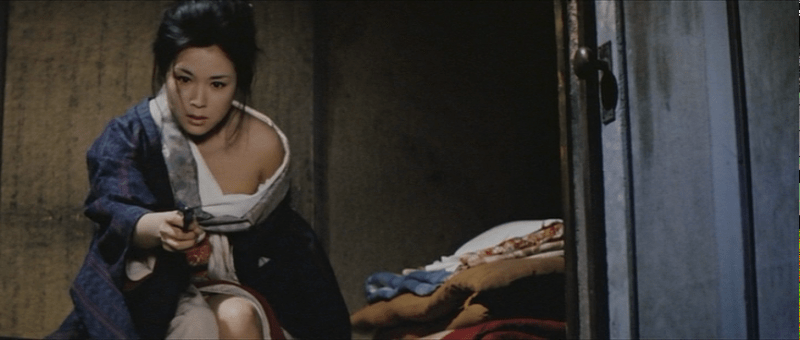
As for Junko, her love is indeed selfless continuing to support each of her starving artists even after they abandon her in favour of conventional success. Faced with Kobayashi’s rage, she cannot fire he effortlessly taking the gun from her which will eventually be retrieved by Michiko who does indeed use it to defend herself after Kobayashi attempts to rape her. “I want to be a woman who is loved like you” she exclaims on meeting Junko who has been accused of the murder she herself committed, jealous of her warmth and openness while Junko envies her for her refinement. Michiko claims that she hates lies, but discovers that everyone in her life has been lying to her while eventually forced to lie herself in covering up her crime. Yet it’s the weight of all the lies which eventually jolts Kenzo out of his complicity, resenting being made to lie to the police to cover up Rie’s potentially scandalous behaviour while unwilling to allow Junko to be convicted of a crime she did not commit. Nagai even convinces the family maid to lie for them in order to guarantee medical treatment for her sickly daughter. 

At his cruelest moment, Nagai goes so far as to undercut Michiko’s conflicted sense of self in telling her coldly that he only considered her a “token figure” he used for business who should have known her place and sat quietly in a corner ironically relegating her to the patriarchal space to which she on some level feels she ought to have confined herself while simultaneously wanting to take control as she had when she informed her father she would be marrying Kenzo rather than allowing him to find her a match. She too had worried about the direction of the current society and their magazine, wanting to move away from pure consumerism towards socially conscious content while her father clearly just wanted to make as much money as possible with no particular concern for morality only for optics. When she asks Kenzo if he loves her, he does not lie but replies only that he respects her which might in a way be an expression of love, later claiming that the properness which has alienated everyone else has in fact made him a better person who is determined to stand by her after she eventually commits to doing the right thing. 

In a final touch of irony, we see the “clean, bright” slogan echoed on a billboard outside the police station which is probably not an entirely transparent agency either though it appears as if in this case justice legal, moral, and emotional will be served striking back against amoral post-war consumerism and societal hypocrisy as the circle is brought to a close, both women landing on an equal footing and making their respective choices while Kenzo recommits himself to decency by pledging to start over together with Michiko. All in all, a more optimistic ending that might be assumed in a Masumura picture but then again no one can ever really escape the insidious hypocrisies of the contemporary society. 


Original trailer (no subtitles)

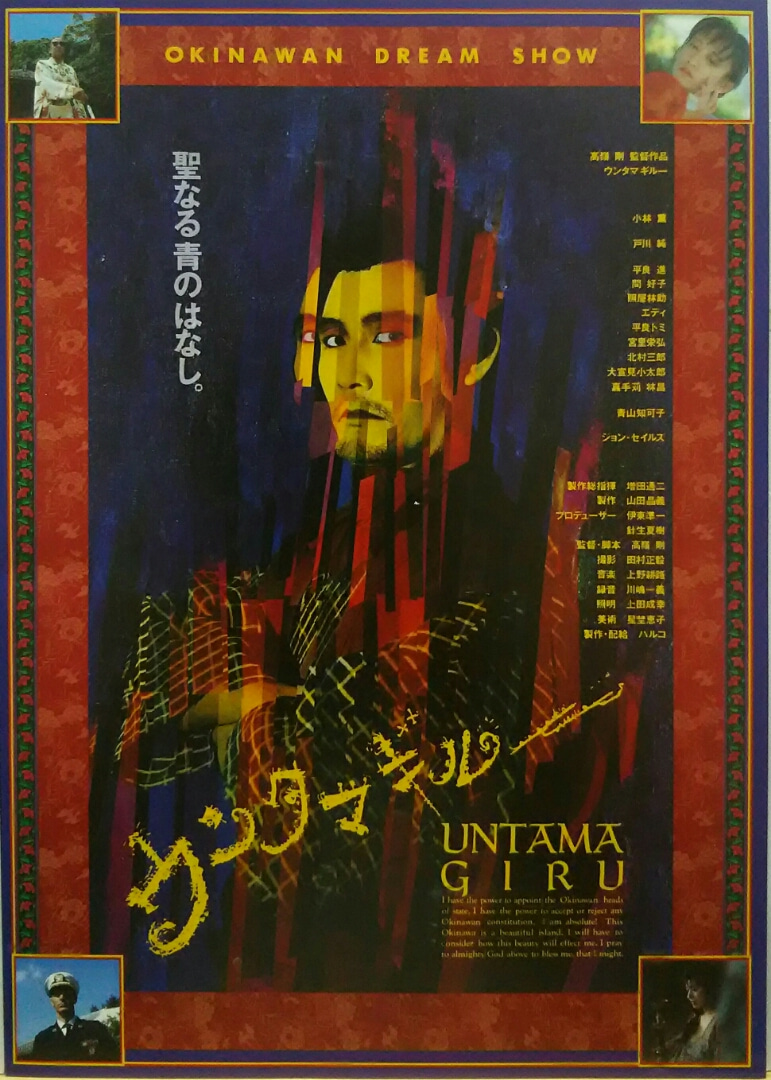
Untamagiru (ウンタマギルー, Go Takamine, 1989)

“My country is not part of America or Japan! I am a child of Ryukyu!” the hero of Go Takamine’s musical fable Untamagiru ( ウンタマギルー) finds himself shouting after having unexpectedly acquired godlike powers and used them to aid the Independence Movement. Apparently inspired by a legendary local figure, Takamine’s quasi-musical like his earlier Paradise View finds the Okinawan islands at a turning point considering three possible futures: to maintain the status quo under American rule, to return to Japanese sovereignty, or finally to acquire their independence though the last of these seems to be nothing more than an idealistic pipe dream. 

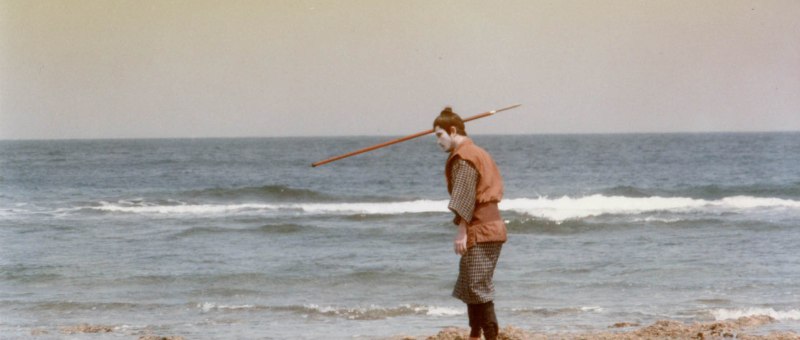
Takamine begins and ends with the same scene changing only the location and the identity of a key player while the hero, Giru (Kaoru Kobayashi), drives a tiny truck in a small circle to turn the grinder that presses the sugarcane. Giru is however mainly casting looks at Mare (Chikako Aoyama), the voluptuous daughter of his taskmaster boss Nishibaru, as she languishes under a small shelter smoking pigweed from a shisha pipe. Giru later finds the courage to ask her to accompany him to a beach party, which she does, the pair sneaking off to a secluded cove near the forest where they make love. The problem is that, as Giru discovers, Mare is actually an anthropomorphised pig that Nishibaru was raising as a wife for the Forest God so now Nishibaru has it in for him. Framed for starting a fire at the plantation he’s encouraged to flee to the forest by his sister, Chiru (Jun Togawa), who has a knack for animal dream divination, and is aided by a tree spirit whose child he once saved who grants him special demi-god powers that enable him to survive the curse which otherwise falls on all who sleep with Mare. 

It’s these new powers which give Giru a new sense of possibility allowing him to become a kind of Robin Hood playing both sides off against each other from the middle of the forest, pinching meat from Japanese companies and redistributing it to the local community, and pilfering weaponry from the American bases to give to the independence movement. The two sides are represented in the two respective bosses, the blind and castrated Nishibaru, and the American commissioner Kamajisar who as Chiru puts it cares for animals more than people but is also seen injecting himself with the blood of dogs and pigs. “I am absolute” Kamajisar insists, claiming that Okinawa is a possession of the American military pointing out that 90% of the population feels themselves to be different from the Japanese while simultaneously describing the possibility of independence as nothing more than a fairytale. 

Yet Untamagiru comes to represent the face of rebellion, resisting not just political oppression but social and economic in targeting Japanese businesses and redistributing their goods to the local poor becoming a folk hero in the process. Not everyone is as immediately happy about this, the owner of the brothel where his sister works asking him to stop giving money to the poor because their business can’t cope with the sudden demand while she personally looks down on their new clientele and fears they’re damaging her upscale brand. Even so even Untamagiru eventually falls victim to his own hubris, struck down while ironically enough agreeing to play himself in a traditional stage performance inspired by his life and deeds leaving only the idea of himself behind as a kind of talisman for those who had in him found a sense of hope and possibility. 

Then again could all of this have been a dream? “Poor people are terrible, aren’t they? They’ll even try to steal the end of people’s dreams” turncoat Utou chides Giru on catching him napping assuming that he dreams of Mare though her words have a degree of sense to them in the elliptical passage of time in which we move from one “dream” to another just as Okinawa itself shifts between two states, two different rulers, and finds itself in the middle once again driving round in circles looking at something it wants but can’t have and in the end it seems may be destroyed out of spite. A magical realist fable filled with its own strangeness in its dream divinations, ethereal forest deities, shapeshifting pigs, and the constant refrains of the barbershop band who narrate the whole show with caustic wit through traditional Okinawan musical performance Takamine’s oneiric tale ends in symbolic apocalypse, “From now on Okinawa is Japan”. 


Untamagiru screens at Japan Society New York May 21 at 7pm as part of Visions of Okinawa: Cinematic Reflections

Terror of Yakuza (沖縄やくざ戦争, AKA Okinawa Yakuza War, Sadao Nakajima, 1976)

An old-school yakuza finds himself cornered on every side while caught in the confusion of Okinawa’s reversion to Japan in Sadao Nakajima’s jitsuroku gangster movie Terror of the Yakuza (沖縄やくざ戦争, Okinawa Yakuza Senso, AKA Okinawa Yakuza War). Where similarly themed Okinawa-set gangster pictures such as Sympathy for the Underdog had largely presented the islands as an appealing place for mainland gangsters because the conditions of the occupation which had allowed them to prosper were still in place, Sadao reframes the debate in terms colonisation and conquest as the hero finds himself increasingly marginalised as an island boy contending with amoral city elitists. 

Nakazato (Hiroki Matsukata) has just been released from prison after serving seven years for the murders of two rival gang bosses that allowed his boss, Kunigami (Shinichi Chiba), to rule the roost in Koza. But now that Okinawa has reverted to Japan, everything has changed. Kunigami has formed a loose alliance with another regional gang to oppose the incursion of mainland yakuza but behind the scenes the higher-ups are intent on a mutually beneficial alliance with the Japanese perhaps seeing the writing on the wall and assuming that it’s better to work with the new regime that against it. For his part, Nakazato is more loyal to the clan than he is opposed to Japan but he’s also resentful towards to Kunigami for failing to live up to his side of the bargain now that he’s been released while fearing the influence of his new sidekick Ishikawa (Takeo Chii) whom he suspects of murdering one of his former associates while he was inside. 

As such, much of the drama unfolds as in any other yakuza picture with Nakazato, regarded by some of the other bosses as a loose cannon and potential liability, reluctant to move against Kunigami for reasons of loyalty even while Kunigami becomes increasing unhinged and dangerous, deliberately running over an Osakan foot soldier who was apparently just on holiday with no particular business in town. Kunigami’s recklessness in his hatred of the Japanese threatens to start a turf war the Okinawan gangs fear they couldn’t win, sending snivelling yakuza middleman Onaga (Mikio Narita) along with Nakazato to negotiate in Osaka only to be told the price of peace is Kunigami’s head. Inspired by the Fourth Okinawa War which was still going on at the time of the film’s completion (in fact, the release was blocked in Okinawa in fear that it would prove simply too incendiary), the conflict takes on political overtones as the mainland gangsters assume their conquest of Okinawa is a fait accompli while those like Onaga are only too quick to capitulate leaving Kunigami and Nakazato as two very different examples of resistance. 

Yet Nakazato finds himself doubly marginalised because he is from one of the smaller islands with most of his men also hailing from smaller rural communities (one uncomfortably wearing extensive makeup to ram the point home that he is from the southern reaches) with the result that they are often pushed around by the city gangsters who view them as idiot country bumpkins. On his trip to Osaka, Nakazato even describes himself as such in an attempt to curry favour apologising in advance should he make a mistake with proper gangster etiquette. Like a good platoon leader, Nakazato’s primary responsibilities are to his men which is one reason why he takes so strongly against Ishikawa, one of the new breed of entirely amoral yakuza who care nothing at all for the code and think nothing of knocking off his guys for no reason. Consequently he finds himself caught between the invading mainlanders, the unhinged chaos of Kunigami, the coldhearted greed of Ishikawa, and the spineless venality of turncoats like Onaga. 

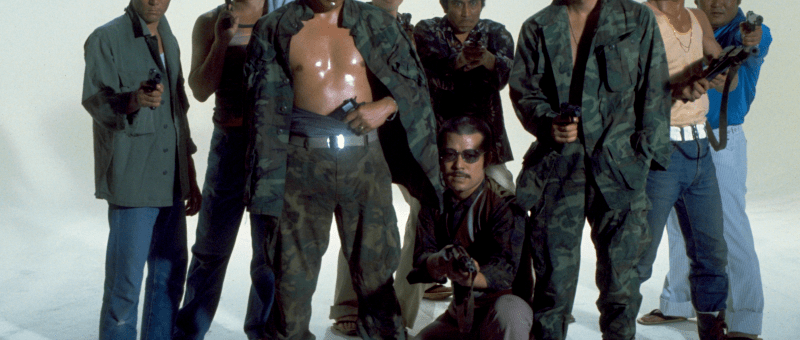
It’s no wonder that he eventually loses his cool, going all out war and like Kunigami dressing in vests and combats in an internecine quest for vengeance precipitated in part by Kunigami’s attempt to discipline one of his men for encroaching on his territory by removing his manhood with a pair of pliers. “Someone will get to you someday too” Nakazato is reminded though having lost everything including his loyal wife who insisted on selling herself to a brothel to get the money to fund his war of revenge he may no longer care so long as he cleans house in Okinawa to the extent that he is really able to do so. “Okinawa is such a scary place” one of the Japanese guys admits, though showing no signs of backing off in this maddeningly chaotic world which turns stoic veterans and hotheaded farm boys alike into enraged killers fighting on a point of principle in a world which no longer has any. 


Terror of Yakuza screens at Japan Society New York May 20 at 7pm as part of Visions of Okinawa: Cinematic Reflections

Original trailer (no subtitles)

Images: Terror of Yakuza © 1976 Toei