To Trap a Kidnapper (誘拐報道, Shunya Ito, 1982)

One of a number of films released in the early ’80s critical of the police force, To Trap a Kidnapper (誘拐報道, Yukai Hodo) draws inspiration from a real life case of child abduction but suggests that the police largely just get in the way and are only interested in apprehending the culprit rather than ensuring the boy’s safety. In any case, unlike the similarly themed High and Low, the film devotes most of its focus to the kidnapper’s desperation as a man apparently left behind by the rapidly rising tides of prosperity. 

Yet somewhat perversely the film opens with a scene of children playing and seven-year-old Hideyuki (Motoyoshi Wada) getting into trouble for flicking toy discs at his friend and deskmate Kaori (Kaori Takahashi). Hideyuki is then made to stand on his own in the playground as a punishment, though quickly makes things up to Kaori by gifting her the plastic discs he was playing with. Neither of them know it, but the children share a grim connection for it’s Kaori’s father Kazuo (Kenichi Hagiwara) who is responsible for kidnapping Hideyuki on his way home from school in the next town over.

Both Hideyuki and Kaori attend a prestigious private institution but are being raised in very different circumstances. Kazuo was once a successful cafe owner but was swindled out of his business and is now in massive debt to a shady loanshark named Moriyasu who’s sold his promissory note on to a third party debt collector. Hideyuki’s father, Noboru Mitamura (Fujita Okamoto), is a doctor though there’s nothing that suggests the family is anything more than financially comfortable and they aren’t immediately able to get the money together for the ransom. Noboru has to ring round all his friends, family, and random acquaintances begging for emergency loans but without really being able to explain why he needs the money. Just having seen it noted on a school register that Hideyuki’s dad was medical professional Kazuo assumed they’d be a good target for a kidnapping and is in any case resentful of their nice middle class life. 

His wife, Yoshie (Rumiko Koyanagi), is in turn resentful of Kazuo for their reduced circumstances later lamenting that they moved house, swapped their big car for a smaller one and are even going to rehome their dog but if Kazuo is really so deeply in debt, something he had kept from her, then nothing they do really matters because their lives will never improve. What she can’t understand is why Kazuo was so keen on keeping Kaori in a private school that he’d get himself into financial hell rather than make a more pragmatic decision to let her go somewhere else. The obsession perhaps hints at his class anxiety, wanting his daughter to stay in a more resolutely middle class environment otherwise in strong contrast to the hometown he later visits where his elderly mother operates a loom in a moribund fishing village which the youngsters are slowly leaving for jobs in factories in neighbouring towns. 

Perhaps in over his head, it at one point looks like Kazuo is about to dump Hideyuki’s body in the sea only to realise police divers are already searching the area. Despite himself, he begins to care for the boy though doesn’t really know what to do with him. He feeds him bread from convenience stores and keeps him tied up in the boot of his car wrapped in several blankets without really considering the possibility that he may die of cold or hypothermia left outside in the freezing winter. Realising the distraught parents have called in the police despite his warnings not to, he is too afraid to accept the ransom and is therefore at something of an impasse given he can’t very well give up the boy without getting the money.

Meanwhile, as the Japanese title implies the tale is alternately told from the perspective of the reporters at Yomiuri Shinbun who are originally quite annoyed by the police’s request for a news blackout to avoid panicking the kidnapper, suggesting it’s an infringement on their free speech if coming around in the acceptance that a child’s life is at stake. A rookie reporter, Kotaro (Shin Takuma) is involved in a dispute with his fiancée Tomo (Miwako Fujitani) who is having second thoughts because he’s always working while her parents are pressuring her to consider an arranged marriage. Kotaro refuses to write one of the dummy articles they’re putting together in the event that Hideyuki is killed describing it as morbid and irresponsible, but is very involved with the ongoing press investigation which simultaneously seems more rigorous than that of the police and accidentally gets in its way. A “suspicious car” that’s noticed outside a drop sport turns out to belong not to the kidnapper but a reporter on a stakeout wasting the police’s time.

Even they are eventually conflicted, the officer in charge on the ground later letting the Mitamuras leave on their own for the final drop empathising with them as a fellow parent and acknowledging the reason everything keeps going wrong is because the police got involved. Yet his boss orders him to follow them anyway, reminding him that the only job of the police is to catch the culprit seemingly indifferent to whether or not they rescue the hostage unharmed. Their tactics are quite naive, not considering that Kazuo will obviously realise that the Mitamuras are surrounded by undercover officers because they keep using the same ones and it’s odd to keep seeing that couple from the coffee shop everywhere they go. The big break in the case happens by accident just because a couple of traffic cops decide to ask a random car a few questions.

In any case, it’s Kaori who ends up suffering. She and her mother are also victims, unfairly hounded by the press and left with nowhere to go and no-one to turn to having had their lives turned upside down by her father’s desperate decision. He didn’t even know the kids were friends or the effect his actions would have on his daughter. Kazuo hadn’t really thought any of this through but acted only in jealousy and resentment, wanting payback against the Mitamuras for their nice middle class life and his own slice of the pie that he felt had been denied to him. In the end, the only winners are the press who can rejoice in selling their newspapers even if a remorseful Kotaro resents himself for taking a paparazzo photo of Yoshie and Kaori trying to leave town quietly. On seeing his article pasted on pillars at the station, even Tomo starts to change her mind reflecting that if he’s working on a story like this then perhaps working too much isn’t such a dealbreaker after all even if everyone seems to have forgotten about little Hideyuki in the headlong rush to dominate the newsstands by trying to lure a kidnapper into their trap.


Original trailer (no subtitles)
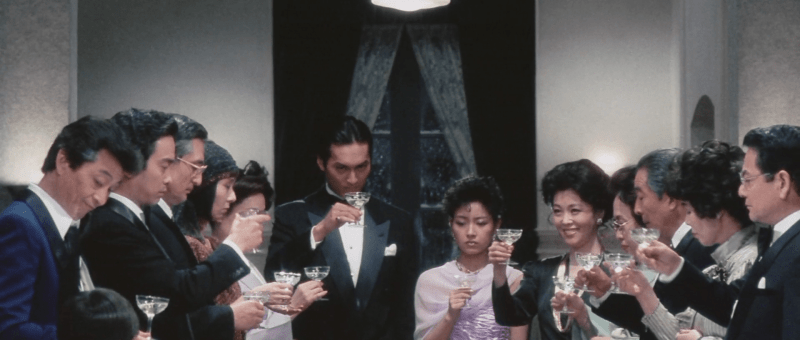
Kekkon Annai Mystery (結婚案内ミステリー, Yoshikuni Matsunaga, 1985)

Selected via a talent competition held in conjunction with the search for a new actress to play the leading role in Kosei Saito’s Ninja Wars, Noriko Watanabe became the second of the new “Sannin Musume” alongside the future star of The Little Girl Who Conquered Time, Tomoyo Harada, and Kadokawa’s top idol Hiroko Yakushimaru. Her career with the studio was however comparatively short-lived affording her only three leading roles before she eventually left the agency and went independent after turning down a lead in Koibitotachi no Jikoku because of its explicit nude scenes. Again adapted from a novel by Jiro Akagawa, Kekkon Annai Mystery (結婚案内ミステリー) was her final leading performance as a Kadokawa idol (though she would also play a supporting role in Obayashi’s His Motorbike, Her Island) and saw her playing a slightly more mature role as a young woman working for a matchmaking agency who finds herself mixed up in a country house mystery after accepting an unusual proposal from a client. 

At 19, Hiroko (Noriko Watanabe) is the sole employee at the Fukada Marriage Consultation Agency owned and operated by her boss Mr. Fukada (Bengal). As we first meet her she’s deep undercover at a rival firm which has already shifted into a new era of computer-assisted matchmaking whereas Mr Fukada prefers to do things the old-fashioned way which is presumably why he has no business. It comes as something of a shock therefore when he receives a call from Mrs. Sekine (Aiko Nagayama), the temporary CEO of a major company who apparently wants to find a match for her son Masakazu (Ken Watanabe) who is shortly to return after graduating from Harvard in order to take over the family business following the death of his father six months previously. At the initial consultation, however, Mrs Sekine scandalises Mr Fukada by immediately selecting Hiroko as a potential bride. Seeing as it’s only an initial meeting, which would earn them a bonus payment, Hiroko agrees but when they drive out to the Sekines’ creepy gothic mansion in the middle of nowhere they discover all is not quite as it seems. Masakazu has a fiancée already, but unfortunately she was involved in a traffic accident and is currently in hospital which is a problem because for undisclosed reasons they need to hold the wedding right away. Hiroko is to act as a proxy seeing as no-one who’ll be coming to the ceremony has met Masakazu’s girlfriend and so will be none the wiser. 

Perhaps somewhat naively, Hiroko agrees and ends up staying in the house posing as Masakazu’s intended which includes sharing a room. Briefly shifting genres, a training montage sees Hiroko undertaking a crash course in how to be posh, adopting the correct deportment, using cutlery elegantly, and learning to walk downstairs in massive heals or up while wearing an inconveniently long dress. Which is all to say, the fabulously wealthy inhabit a different world of which Hiroko was hitherto ignorant. This is further brought home by the apparent cracks in the foundations of the Sekine family which is also a corporate entity with the other board members largely favouring other candidates more closely connected to the themselves to take over as chairman while apparent liability uncle Masao (Tamio Kawaji), whose creepy crossbow-carrying young son Mamoru is for some reason being raised by Mrs Sekine, is in some kind of trouble with yakuza loansharks. The other main issue is that Mrs Sekine is a second wife and longtime mistress of the late CEO. Masakazu was born out of wedlock and Mrs Sekine will do anything and everything she can to ensure he assumes his birthright. 

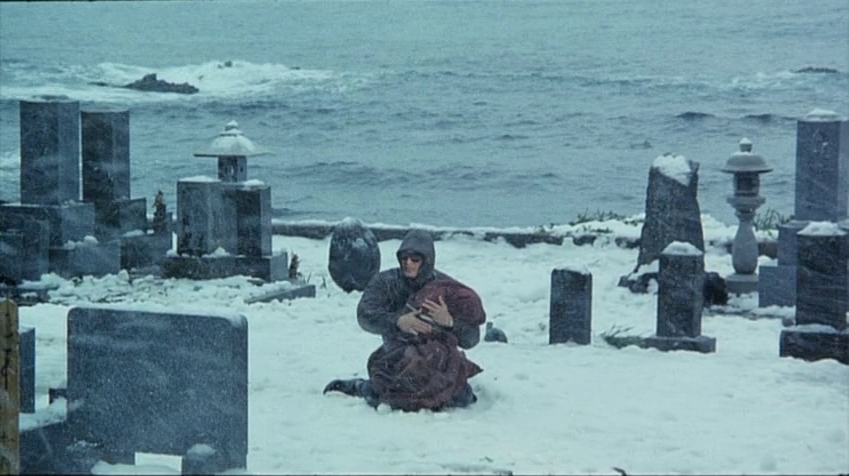
Counter-intuitively succession intrigue has little to do with the central mystery which begins to unravel when Hiroko is attacked on the eve of her wedding by a strange woman who had previously tried to warn her off Masakazu and kills her in self-defence. The body, which we can identify as that seen buried in the snow in the solarised green-tinted opening sequence, is taken care of by Mrs Sekine’s right hand man Kinoshita (Hayato Tani), but Hiroko begins to have her doubts after catching sight of a woman who looks exactly like the one she killed at the local ski resort. 

“Rich people are like that. They’d lie about anything in order to keep their wealth” Hiroko is told, realising she may be at the centre of an infinitely complex plot and becoming aware of Mrs Sekine’s tendency to throw money at people to get them to play along with her plans. Like any good gothic mystery, however, the house holds a dark secret in a hidden room which perhaps hints at the corruptions of the Bubble era along with those of the super rich elite and the undue pressure it puts on its young while uncomfortably suggesting that Mrs Sekine herself is the source of the corruption in her attempt to integrate into a higher social class into which she was not born. Atmospheric in its chilling vistas of the freezing snow, Kekkon Annai Mystery’s twisting tale of greed and manipulation may end in tragedy but ironically lives up to its name as its heroine finds a potential match in her accidental co-conspirator. 


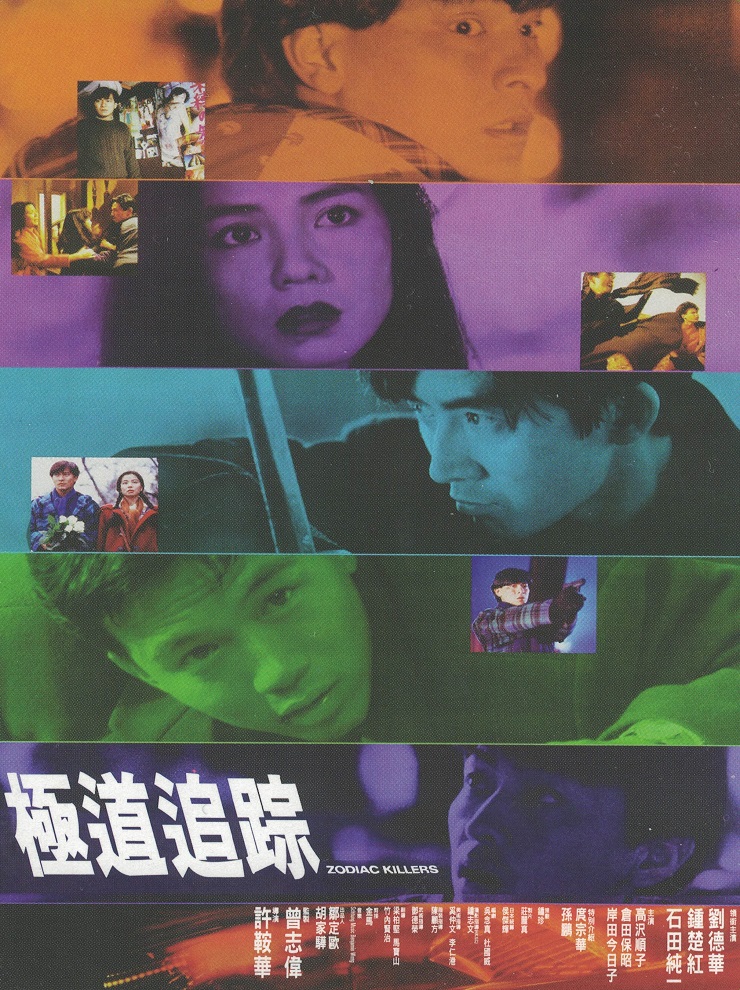
Zodiac Killers (極道追踪, Ann Hui, 1991)

Melancholy exiles seeking a better future find only futility in the dying days of the bubble economy in Ann Hui’s 1991 gangster drama, Zodiac Killers (極道追踪). The English title is admittedly misleading, there’s seemingly no connection to any kind of “zodiac” and no hint of conspiracy murder except those forced by the world’s enduring cruelty, though the Chinese is perhaps equally so meaning something like “yakuza pursuit” which is accurate but only to a point.

The hero, Ben (Andy Lau Tak-wah), has come to Tokyo from Hong Kong to study film but rarely goes to classes, preferring to learn how to make money instead. Making the most of the then affluent city, he works as a tour guide for Chinese tourists, dutifully delivering the men to the strip clubs of Shinjuku in the evenings for kickbacks and giving his boss a kicking when he tries to stiff him out of the agreed amount, heading to his second job in a kitchen immediately afterwards. “Man does not live to make money only, you must learn to spend it too”, he explains to his friend, Chang (Tou Chung-hua), persuading him to come hang out in a swanky bar they’ve been invited to by Ben’s shady relative Ming (Suen Pang) who is currently trying to make it as a yakuza by marrying the boss’ mama-san sister Yuriko (Junko Takazawa). It’s at the bar that Ben first sets eyes on Tieh-lan (Cherie Chung Chor-hung), a young woman from the Mainland in Tokyo studying at a Japanese language school and working as a hostess to make ends meet though as she points out “not every Chinese girl likes to work here”, instantly offending Ming but interestingly not Yuriko who seems sympathetic if embarrassed. 

All of them are in Tokyo because at that moment in time Japan looked like the future, though the window was rapidly closing. Tieh-lan is beginning to wonder why she came. Her friend Mei-mei (Tsang Wai-fai) has ended up in an unwanted sexual relationship with the man who sponsored their visas, Harada (Law Fei-yu), who nevertheless continually sexually harasses Tieh-lan. “Why did we come here?”, Tieh-lan asks Mei-mei, “for our future or for men? You can debase yourself at home, why have you come to Japan to do it?”. Ben later asks something similar of Ming who freely admits that he is prepared to sell his body for influence, “satisfying” Yuriko in order to buy influence with her brother and be admitted into his yakuza clan. The Tokyo they inhabit is one steeped in exile. They surround themselves with other Chinese migrants, be they from the Mainland, Hong Kong, or Taiwan, and congregate in the seedier parts of Shinjuku living on the fringes of society, working as bar hostesses, or gangsters, or in kitchens. For Ben whose bachelor pad student dorm is adorned with posters of Bruce Lee and Rocky, his purpose is more adventure and youthful longing for freedom than escape which is why he makes a point of ignoring his loving mother’s phone calls, but even he struggles to find what he needs on the unforgiving streets of a hostile city. 

That hostility is first brought home to him by a gang of ultranationalist bikers flying the imperial flag one of whom threatens him with a samurai sword (a moment which is tragically echoed in the film’s nihilistic conclusion). They are not, however, the only ones feeling displaced, as a heartbreaking cameo from golden age star Kyoko Kishida as an ageing geisha makes plain. Asano (Junichi Ishida), the melancholy yakuza with whom Tieh-lan has fallen in love much to Ben’s disappointment, declares himself “always a loner”, returning to Tokyo after years of exile in South America. An orphan, Asano laments that the beach he visited as child no longer exists and the city he’s come home to is changed beyond all recognition. Perhaps for that reason he falls for melancholy exile Tieh-lan as they bond in a shared sense of hopeless rootlessness. 

With the surprise introduction of Asano, Hui transitions into the moody noir with which the film opened, shots of Andy Lau plaintively looking back at the shore from a boat on the open sea intercut with Cherie Chung walking sadly through an empty, neon-lit city. Asano hoped for reconciliation but found only betrayal, there can be no home for exiles even if they return. The trio’s broken dreams find their final expression in the nihilistic violence of a non-existent yakuza war. Asano’s final gesture was one only of futility, no one wants to hear his inconvenient truth because the clans in question have already made “peace” and are intent on working together for future prosperity. “Your heart is too soft for this wicked world” Ming says of Ben but it’s a statement that rings true for them all, living life by movie logic in which good will eventually triumph. Ming sees no point in returning to Hong Kong because he’d be a nobody, tragically believing that being a gang boss’ brother-in-law is close enough to somebody in Shinjuku. Only Chang, who came to Japan to look for his missing sweetheart, manages to keep himself safe but largely, as we later find out during a rather bizarre sequence featuring a surprise outdoor porno shoot, because he does not yet know that his dream is futile too. A chronicle of a world in collapse, Zodiac Killers leaves its marginalised heroes with no place left to run, permanent exiles denied safe harbour sailing towards a promised horizon with no land in sight.


Original trailer (no subtitles)
Death at an Old Mansion (本陣殺人事件, Yoichi Takabayashi, 1975)

death at an old mansion posterKousuke Kindaichi is one of the best known detectives of Japanese literature. There are 77 books in the Kindaichi series which has spawned numerous cinematic adaptations as well as a popular manga and anime spin-off starring the grandson of the original sleuth. Sadly only one of Seishi Yokomizo’s novels has been translated into English (The Inugami Clan which has the distinction of having been filmed not once but twice by Kon Ichikawa), but many Japanese mystery lovers have ranked his debut, The Murder in the Honjin, as one of the best locked room mysteries ever written. Starring Akira Nakao as the eccentric detective, Yoichi Takabayashi’s Death at an Old Mansion (本陣殺人事件, Honjin Satsujin Jiken) was the first of three films he’d make for The Art Theatre Guild of Japan and updates the 1937 setting of Yokomizu’s novel to the contemporary 1970s.

Beginning at the end, Kindaichi (Akira Nakao) arrives at a country mansion with a sense of foreboding which borne out when he realises that the young lady he’s come to see, Suzu (Junko Takazawa), has died and he’s arrived just in time to witness her funeral. It’s been a year since he first met her, though he did so under less than ideal circumstances. As it happened, Suzu’s older brother, Kenzo (Takahiro Tamura), was married to a young woman of his own choosing, Katsuko (Yuki Mizuhara), despite strong familial opposition. On the night of their wedding, the couple were brutally murdered inside a private annex to the main building. The doors were firmly locked from the inside and there was no murder weapon on site. The only clue was bloody three fingered handprint made by someone wearing the “tsume” or picks used for playing the koto. Kindaichi, already a well known private detective, was summoned to investigate because of a personal connection to Katsuko’s uncle, Ginzo (Kunio Kaga).

The original novel was published in 1946 and it has to be said, some of its themes make more sense in the pre-war 1937 setting than they do for the comparatively more liberal one of 1975 though such small minded attitudes are hardly uncommon even in the world today. The Ichiyanagi family live on a large family estate (apparently not the “Honjin” – a resting place for imperial retinues in the Edo era, of the title but the ancestral association remains) and enjoy a degree of social standing as well as the privilege of wealth in the small rural town. Katsuko, by contrast, is from a “lowly” family of well-to-do farmers – mere peasantry to the Ichiyanagis, many of whom believe Kenzo is making a huge and embarrassing mistake in his choice of wife. Kenzo, a middle-aged scholar, has shocked them all with his sudden determination to marry, not to mention his determination to break with family protocol and marry beneath him.

Japanese mysteries are much less concerned with motive than their Western counterparts, but class conflict is definitely offered as a possible reason for murder. Other clues have more menacing dimensions such as the repeated mentions of a scary looking three fingered man who apparently delivered a threatening letter to the mansion on the night of the murder, and Suzu’s constant questions about her recently deceased cat who liked to listen to her play the koto. Suzu is 17 but has some kind of learning difficulties and is arrested in a childlike state of innocence which leads her to utter simple yet profound words of wisdom whilst also believing that her recently deceased cat, Tama, is some kind of god. Suzu’s “innocence” is contrasted with her brother’s coldhearted rigidity in which he’s described as a sanctimonious snob who believes himself above regular folk and treats his servants with contempt. This same rigidity in fact aligns him with his sister as both share an “atypical” way of thought and behaviour. Kenzo’s unexpected romance turns out not to be middle-aged lust for domination but an innocent first love arriving at 40 with all the pain and complication of adolescence.

Kindaichi arrives to solve the crime and makes an instant partner of the police inspector in charge who’s glad to have such esteemed help on such a difficult case. Putting two and two together, Kindaichi soon comes up with a few ideas after rubbing up against a mystery novel obsessed suspect and numerous red herrings. Once again coincidence plays a huge role, but the business of the murder is certainly elaborate given the pettiness of the reasoning behind it. Takabayashi never plays down the typically generic elements of this classic mystery, but adds to them with eerie, occasionally psychedelic camera work, shifting to sepia for imagined reconstructions and making use of repeated motifs from the fire-like imagery of the water wheel to a shattered photo of Kenzo shot through the eye. Strangely framed in red and gold the murder takes on a theatrical association that’s perfectly in keeping with its well choreographed genesis, and all the more chilling because of it. A satisfying locked room mystery,  Death at an Old Mansion is also a tragedy of out dated ideals equated with a kind of innocence and purity, of those who couldn’t allow their dreams to be sullied or their name besmirched. Perhaps not so different from the world of 1937 after all.


Original trailer (no subtitles)

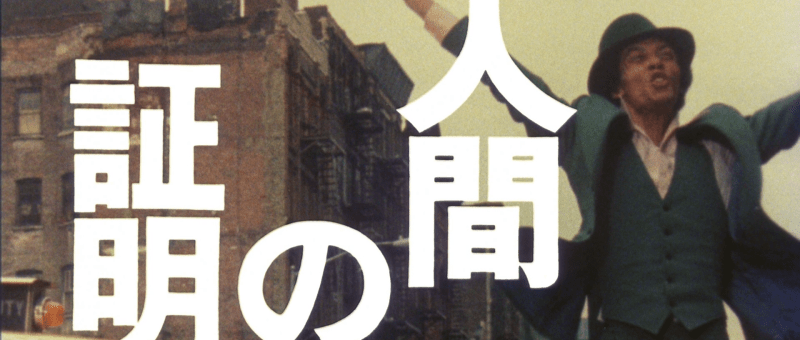
Proof of the Man (人間の証明, Junya Sato, 1977)

proof of the man posterOne could argue that Japanese cinema had been an intensely Japanese affair throughout the golden age even as the old school student system experienced its slow decline. During the ‘70s, something appears to shift – the canvases widen and mainstream blockbusters looking for a little something extra quite frequently ventured abroad to find it. Pioneering producer Haruki Kadokawa was particularly forward looking in this regard and made several attempts to crack the American market in the late ‘70s and early ‘80s before settling on creating his own mini industry to place a stranglehold around Japanese pop culture. Sadly, his efforts mostly failed and faced the same sorry fate of being entirely recut and dubbed into English with new Amero-centric scenes inserted into the narrative. Proof of the Man (人間の証明, Ningen no Shomei) is one of Kadokawa’s earliest attempts at a Japanese/American co-production and, under the steady hands of Junya Sato, is a mostly successful one even if it did not succeed in terms of overseas impact.

Based on the hugely popular novel by Seiichi Morimura, Proof of the Man stars the then up and coming Yusaku Matsuda as an ace detective, Munesue, investigating the death by stabbing of a young American man in Japan. The body was discovered in a hotel lift on the same night as a high profile fashion event took place with top designer Kyoko Yasugi (Mariko Okada) in attendance. After the show, an adulterous couple give evidence to the police about finding the body, but the woman, Naomi (Bunjaku Han), insists on getting out of the taxi that’s taking them home a little early in case they’re seen together. On a night pouring with rain, she’s knocked down and killed by a young boy racer and his girlfriend who decide to dispose of the body to cover up the crime rather than face the consequences. Kyohei (Koichi Iwaki), the driver of the car, is none other than the son of the fashion designer at whose show the central murder has taken place.

Like many Japanese mysteries of the time, Proof of the Man touches on hot-button issues of the immediate post-war period from the mixed race children fathered by American GIs and their precarious position in Japanese society, to the brutality of occupation forces, and the desperation and cruelty which dominated lives in an era of chaos and confusion. The only clues the police have are that the victim, Johnny Hayward (Joe Yamanaka), said something which sounded like “straw hat” just before he died, and that he was carrying a book of poetry by Yaso Saiji published in 1947. Discovering that Hayward was a working-class man of African-American heritage from Harlem whose father took a significant risk in getting the money together for his son to go to Japan (hardly a headline holiday destination in 1977), the police are even more baffled and enlist the assistance of some regular New York cops to help them figure out just why he might have made such an unlikely journey.

The New York cops have their own wartime histories to battle and are not completely sympathetic towards the idea of helping the Japanese police. Munesue, of a younger generation, is also harbouring a degree of prejudice and resentment against Americans which stems back to a traumatic incident in a market square in which he witnessed the attempted gang rape of a young woman by a rabid group of GIs. Munesue’s father tried to intervene (the only person to do so) but was brutally beaten himself, passing away a short time later leaving Munesue an orphaned street kid. In an effort to appeal to US audiences, Proof of the Man was eventually recut with additional action scenes and greater emphasis placed on the stateside story. Doubtless, the ongoing scenes of brutality instigated by the American troops would not be particularly palatable to American audiences but they are central to the essential revelations which ultimately call for a kind of healing between the two nations as they each consider the ugliness of the immediate post-war era the burying of which is the true reason behind the original murder and a secondary cause of the events which led to the death of Naomi.

Naomi’s death speaks more towards a kind of growing ugliness in Japan’s ongoing economic recovery and rising international profile. Kyohei is the son not only of high profile fashion designer Kyoko, but can also count a high profile politician (Toshiro Mifune) as his father. Spoiled and useless, Kyohei is the very worst in entitled, privileged youth driving around in flashy cars and going to parties, living frivolously on inherited wealth whilst condemning the source of his funds as morally corrupt citing his mother’s acquiescence to his father’s frequent affairs. Yet aside from anything else, Kyohei is completely ill-equipped for independent living and is essentially still a child who cannot get by without the physical and moral support of his adoring mother. 

Johnny Hayward, by contrast, retains a kind of innocent purity and is apparently in Japan in the hope of restoring a long severed connection as echoed in Saiji’s poem about a straw hat lost by a small boy on a beautiful summer’s day. The words of the poem are later repeated in the title song by musician Joe Yamanaka who plays Johnny in the film and is of mixed race himself. As in most Japanese mystery stories, the root of all evil is a secret – in this case those of the immediate post-war period and things people did to survive it which they now regret and fear the “shame” of should they ever be revealed. Some of these secrets are not surmountable and cannot be forgiven or overcome, some atonements (poetic or otherwise) are necessary but the tone which Sato seems to strike encourages a kind of peacemaking, a laying to rest of the past which is only born of acceptance and openness. Despite the bleakness of its premiss on both sides of the ocean, Proof of the Man does manage to find a degree of hopefulness for the future in assuming this task of mutual forgiveness and understanding can be accomplished without further bloodshed.


Original trailer (no subtitles) – includes major plot spoilers!