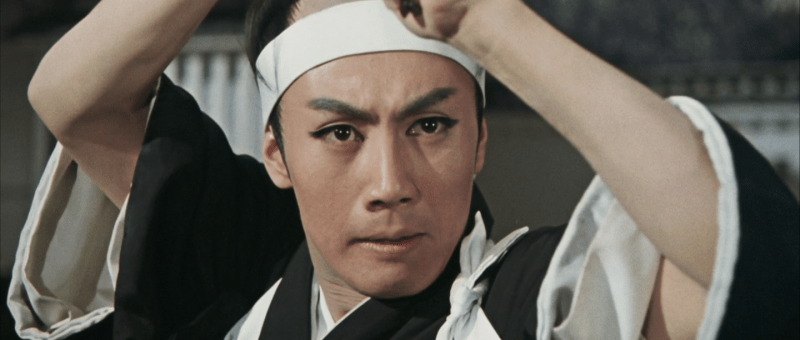

An abandoned son resolves to wander Japan killing the “demons” of Edo-era society in Kenji Misumi’s adaptation of the popular novel by Kiichiro Yamate, Freelance Samurai (桃太郎侍, Momotaro-Zamurai, AKA The Demon Crusader). Starring a young Raizo Ichikawa in dual roles as twins separated at birth, a familiar jidaigeki plot device, Misumi’s drama is among his most conventional but still finds the demon-hunting hero of the title resolutely rejecting the “silly rules of the samurai” in refusing to serve or be served while resisting the persistent corruptions of the feudal society.
First spotted returning a paper balloon to some children playing in the street, the hero (Raizo Ichikawa) later gives his name as “Momotaro”, the legendary folklore champion who was born from a peach and then went on to befriend various forest creatures travelling with them to fight the cruel demons who had been oppressing the peasants of the farmland where his adoptive parents lived. The name is a sense ironic in that it reflects his own fatherless existence having discovered that he is actually Shinjiro, the younger brother of the heir to a nearby clan, Shinnosuke (also Raizo Ichikawa). At this particular cultural moment, twins were thought inauspicious with one usually cast out, Momotaro in someways more fortunate than most in that he was sent away and raised by his mother to whom he was apparently devoted. In fact, as he says, he only delayed his demon-killing mission out of consideration for her but that now that she has sadly passed away he is free to pursue justice as a wandering ronin determined to serve no master but himself.
This insistence on justice and opposition to samurai oppression is made plain in the opening scene in which he rescues pickpocket Kosuzu (Michiyo Kogure) from two samurai she’d robbed who were hassling her. She of course falls in love with him, but is also party to the central conspiracy engineered by high ranking retainer Shuzen (Shosaku Sugiyama) who is plotting to unseat Shinnosuke in favour of the lord’s illegitimate young son Mantaro (Junta Yamamoto) with the help of ambitious underling Iga (Seizaburo Kawazu). Momotaro is swept into the intrigue when he rescues the beautiful daughter of loyal retainer Iori (Gen Shimizu), Yuri (Yoko Uraji), from an attempted kidnapping. Both sides want to recruit him for his bravery and sword skill, but Momotaro is reluctant to help either of them especially on discovering the ironic coincidence that he finds himself caught up in a succession struggle in the very clan which previously cast him out.
Deciding to help when hearing that Shinnosuke has been poisoned, Momotaro demonstrates his strategic abilities in coming up with a ruse to trick the conspirators but remains somewhat conflicted remembering his mother’s dying words that he should hold no grudges even as a part of him continues to resent his abandonment. That may in part explain his defiant rejection of the hierarchal society, ignoring the “silly” rules of the samurai while insisting on equality in refusing to serve or be served by anyone else. In a nod to the folktale, his greatest friend is a humble peddler, Inosuke “the monkey man” (Shunji Sakai) who gives him a place to stay in the rundown tenement where he lives affectionately known as “ghost apartments”. Even so, Inosuke as much servant as sidekick, and while he is in a sense torn between the earthy pickpocket Kosuzu who is later redeemed through her loyalty to him and the beautiful samurai daughter Yuri it seems fairly clear that he will eventually opt for his class-appropriate match the only surprising thing being that it is she who transgressively breaks with convention in abandoning her samurai home in order to follow Momotaro out on the road as he hunts other “demons” corrupting the social order all over Japan.
Shot in colour academy ratio, Freelance Samurai features little of Misumi’s trademark natural vistas save for the poignant pillow shots of flowers growing in the compound though it does reflect his preoccupation with absent fathers and perpetual wandering. In the many dualities in play, it is also interesting that Momotaro is depicted as the more capable of the brothers, Ichikawa’s characterisation of the cosseted Shinnosuke as a kind and compassionate, effete young man rather than the strapping warrior the heir to a clan is expected to be hinting perhaps at the perceived weakness that allowed the conspirators to assume they could usurp him. Similarly, it’s Michiyo Kogure’s tragic pickpocket undone by her love for the noble samurai that makes the deeper impression rather than the rather insipid Yuri who makes her mark only in her final decision to follow Momotaro unbidden. Momotaro’s quest may in a sense be ironic in that he outwardly rejects the superiority of the samurai but effectively preserves it even as he determines to clean out the oppressive “demons” intent on corrupting the land just as his folkloric namesake had done, but in its own way has its defiant nobility in his fierce love of justice and equality.

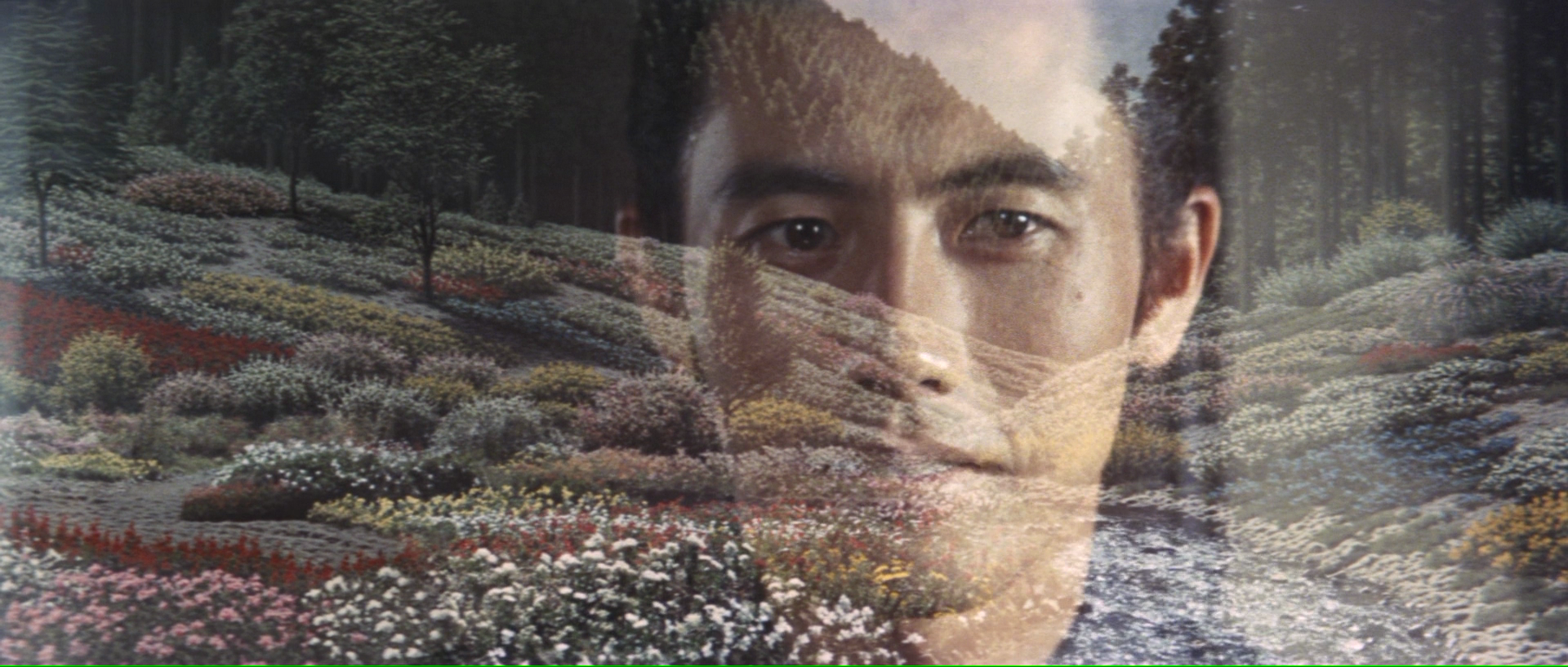
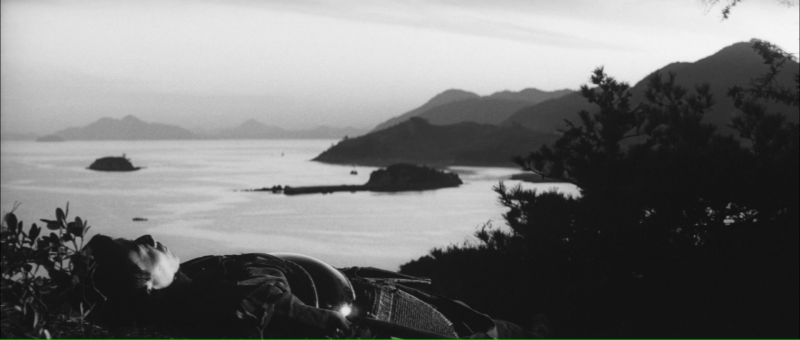


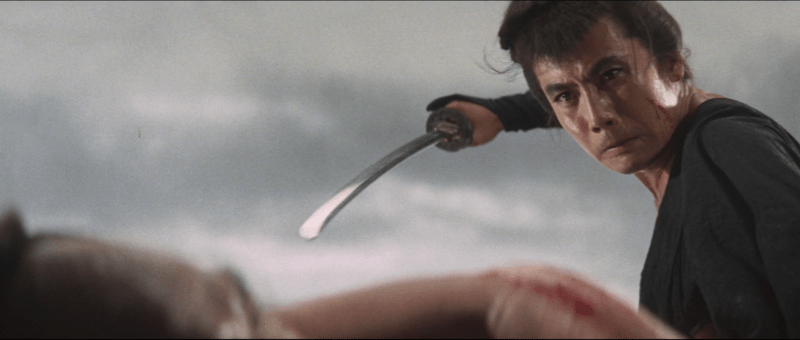
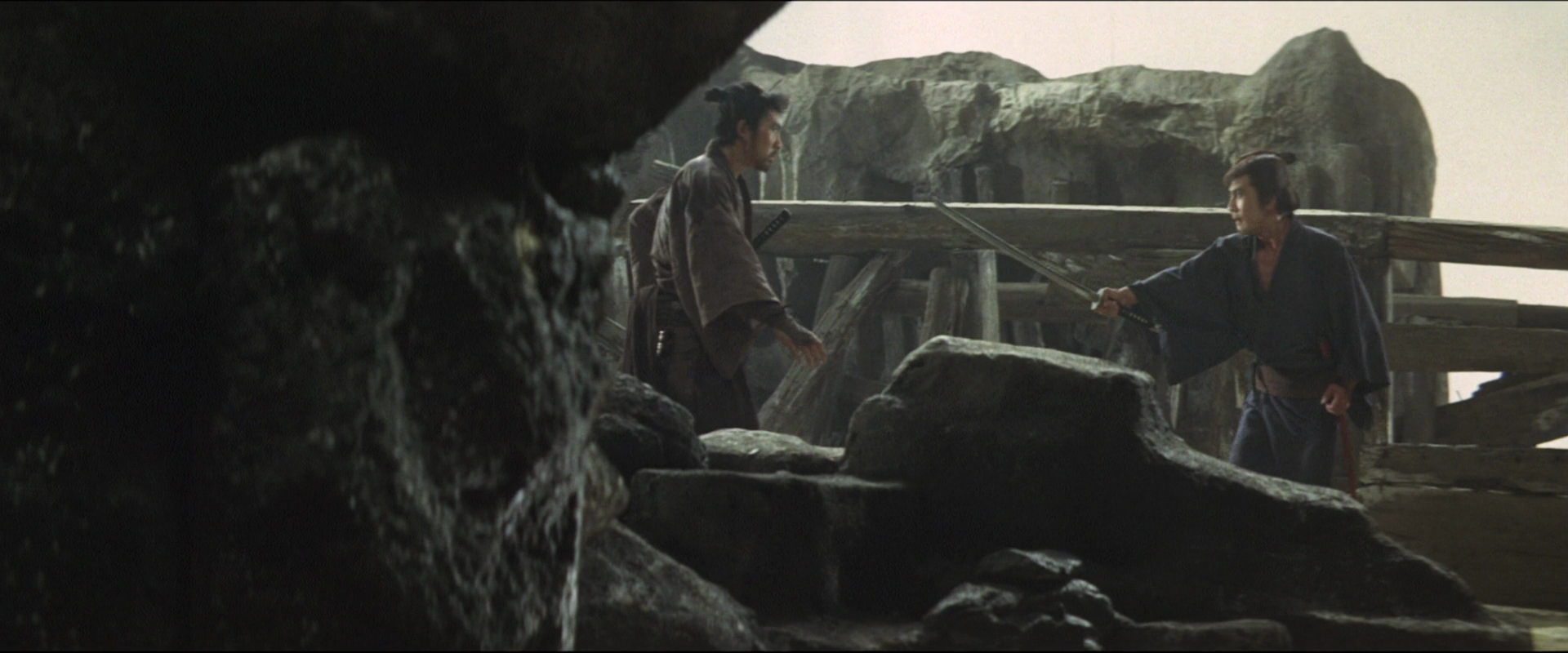


 Ogami (Tomisaburo Wakayama), former Shogun executioner now a fugitive in search of justice after being framed for treason by the villainous Yagyu clan who are also responsible for the death of his wife, is still on the Demon’s Way with his young son Daigoro (Akihiro Tomikawa). Five films into this six film cycle, the pair are edging closer to their goal as the evil Lord Retsudo continues to make shadowy appearances at the corners of their world. However, the Demon’s Way carries a heavy toll, littered with corpses of unlucky challengers, the road has, of late, begun to claim the lives of the virtuous along with the venal. Conflicted as he was in his execution of a contract to assassinate the tragic Oyuki in the previous instalment,
  Ogami Itto (Tomisaburo Wakayama) and his (slightly less) young son Daigoro (Akihiro Tomikawa) are going to hell in a baby cart in this third instalment of the six film series, Lone Wolf and Cub: Baby Cart to Hades (子連れ狼 死に風に向う乳母車, Kozure Okami: Shinikazeni Mukau Ubaguruma). The former shogun executioner, framed for treason by the villainous Yagyu clan intent on assuming his position, is still on the “Demon’s Way”, seeking vengeance and the restoration of his clan’s honour with his toddler son safely ensconced within a bamboo cart which also holds its fair share of secrets. In the previous chapter,
 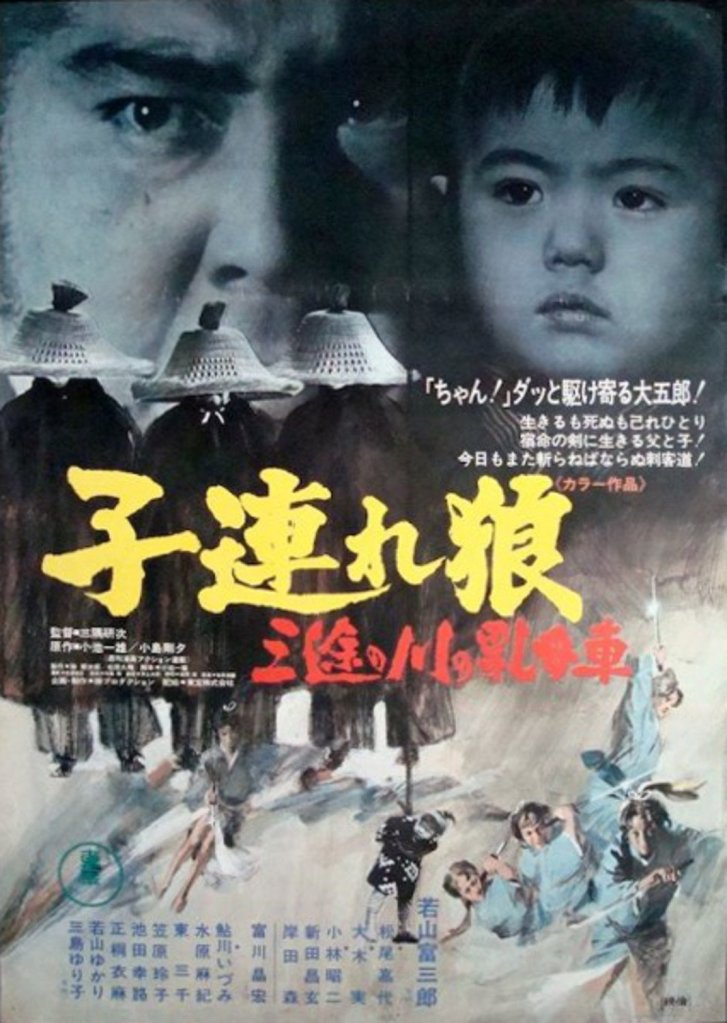 The first instalment of the
  When it comes to period exploitation films of the 1970s, one name looms large – Kazuo Koike. A prolific mangaka, Koike also moved into writing screenplays for the various adaptations of his manga including the much loved Lady Snowblood and an original series in the form of Hanzo the Razor. Lone Wolf and Cub was one of his earliest successes, published between 1970 and 1976 the series spanned 28 volumes and was quickly turned into a movie franchise following the usual pattern of the time which saw six instalments released from 1972 to 1974. Martial arts specialist Tomisaburo Wakayama starred as the ill fated “Lone Wolf”, Ogami, in each of the theatrical movies as the former shogun executioner fights to clear his name and get revenge on the people who framed him for treason and murdered his wife, all with his adorable little son ensconced in a bamboo cart.
 Windows on Worlds