The Killer (喋血雙雄, John Woo, 1989)

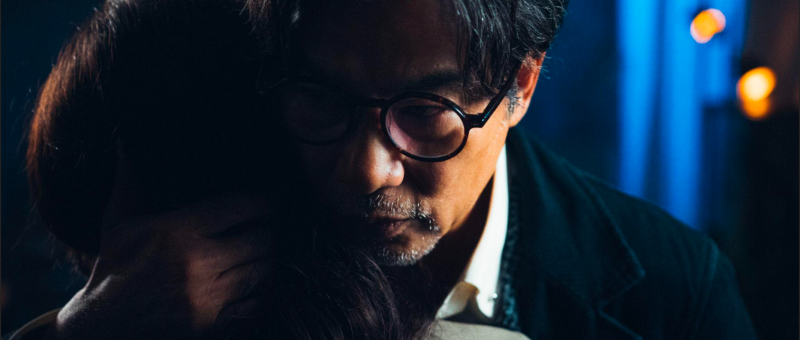
“We’re outmoded characters,” a dying man laments, having previously advanced that “nostalgia is one of our saving graces.” The heroes of The Killer (喋血雙雄) are indeed remnants of an earlier time, out of place amid the modern city and adhering to a code that has long since fallen by the wayside. “Our world is changing so fast,” hitman Jeff (Chow Yun-fat) exclaims of a Hong Kong hurtling not only towards the Handover but an increasingly amoral capitalism in which friendship and brotherhood no longer have any currency.

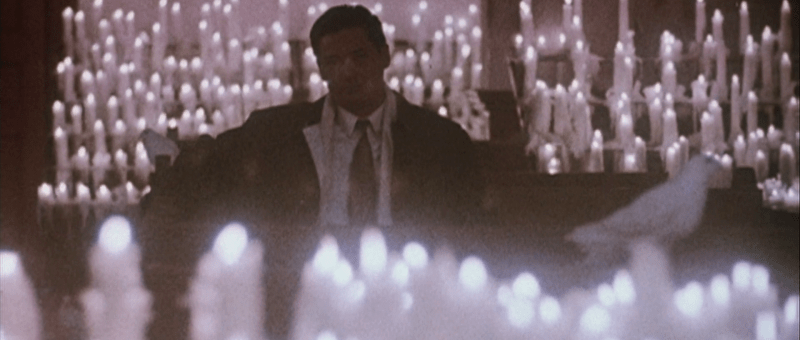
We can tell this straightaway from the fact that the man who ordered the hit on the drug lord Jeff took out at the dragon boat races was his own nephew, Weng (Shing Fui-on). To tie up loose ends, Weng also sends his own hitmen to take out Jeff, who can’t be sure if his handler and best friend Sidney (Chu Kong) is involved in the plot to knock him off. Later in the film, Inspector Li (Danny Lee) asks what Jeff will do if Sidney betrays him, but he merely says that he will still treat him as a friend because he has been good to him in the past. Jeff says this in an abandoned church, echoing not only the codes of jianghu brotherhood now largely absent in the contemporary society but Christianising notions of forgiveness and acceptance. 

Jeff claims that he isn’t a religious man but appreciates the tranquillity of the disused chapel. Inspector Li meanwhile is often pictured next a statue of the Buddhist god of war and dressed in black in opposition to Jeff’s white, but what emerges is that the two men are effectively the same and somewhat interchangeable. Jennie (Sally Yeh), the nightclub singer Jeff accidentally blinded during a a chaotic hit and subsequently falls in love with, first mistakes Li for Jeff while Woo also pictures him sitting in Jeff’s chair and pulling a gun on his partner in much the same way Jeff cooly dispatched an assassin sent by Weng. Chang had told Li that he looked exactly like what he was, an undercover policeman, which is obviously a problem, but Jeff remarks that he is a “very unusual cop,”while Li agrees he’s a very unusual killer. 

In some senses, Li will also become the killer of the film’s title in the closing moments, a man who believes in justice but is not himself believed and knows that there will be no real justice for a man like Weng. Both men share a code which is essentially the same, a more primal kind of morality largely incompatible with the modern society and in many ways rightly so. Li even says that Jeff does not look like a killer, that there’s something “heroic” about him, and that his eyes are full of passion as if he had a dream. His words have a kind of irony to them, but Jeff does indeed have a dream in the desire to gain redemption for himself by restoring Jennie’s eyesight, which is the reason for his last big job having now been reformed by her no longer believing that the people he killed deserved to die but that everyone has a right to live.

Despite the triangular relationship with Jennie, there is an undeniably homoerotic tension in the connection between Li and Jeff even if they are also two sides of the same coin. They train their guns on each other and lock eyes, but unexpectedly find a kindred spirit in a man who should be an enemy. “The only person who really knows me turns out to be a cop,” Jeff chuckles but has an equally deep relationship with handler Sidney just as Li has with parter Chang (Kenneth Tsang) while the homosociality that defines their world is subverted by Weng who simply shoots his own underling when he becomes inconvenient to him. 

Both Li and Jeff are effectively men left with “no way out” and “nowhere to go” because their code of brotherhood is no longer understood by the contemporary society. Jennie’s progressive loss of sight also echoes their dwindling futures as if the light were going out of their world long before Woo shatters the statue of the Virgin Mary and unleashes the doves of futility inside the no longer quite so tranquil church that becomes the final resting place of manly honour and brotherly love. “Perhaps we are too nostalgic,” Jeff sighs but nostalgia is indeed his saving grace in a world in which honour and friendship exist only in a mythologised past or may never have really existed at all.


Trailer (no subtitles)

Code of the Assassins (青面修罗, Daniel Lee Yan-Kong, 2022)

“Assassinate for peace” runs a series of characters along a wall in the secret den of a shady society known as Ghost Valley in Daniel Lee’s fantasy wuxia, Code of the Assassins (青面修罗, qīng miàn xiūluó). It may seem somewhat paradoxical, but the Ghost Valley philosophy is that they can one day help the world turn away from vengeance and hatred towards a more settled humanity by carrying out assassinations in “an age in which assassins are used to solve problems”. 

Yet everyone in Ghost Valley is out for revenge, not least the hero Junyuan (Feng Shaofeng) whose entire clan was wiped out after a mysterious man asked his dad to carve a copper treasure map. The map and its hidden riches continue to destabilise the political equilibrium in a series of neighbouring clans with ambitious retainer Prince Rui approaching Ghost Valley to get him the map and bump off his rival, head of the Imperial Guard Zhao (Hu Jun), in the process. Golden Mask, the mysterious leader of Ghost Valley tells Junyuan’s mentor Grim Ghost to keep him out of it, but Junyuan obviously doesn’t listen because learning the truth behind the map and his parents’ death is his life’s mission. 

That’s how he gets himself mixed up in intrigue, framed as a traitor to Ghost Valley and hunted by a series of enforcers while falling for enigmatic female assassin Shengsheng (Gina Jin Chen). Dualities seem to abound in the ironic juxtaposition of peace and assassination along with that of vengeance and righteousness in the ongoing battle against hate and darkness. Junyuan vows he will walk out of Ghost Valley once his vengeance has been achieved, but has to ask himself if his time there has changed him and if he can ever leave this shady world of mercenary violence. Golden Mask explains to him that you can’t change anything with a weapon but a plot can change an era, while Lady Hua, who has become a Buddhist, adds that assassinations don’t change anything either. 

Yet the plotters’ revolution fails in part because they have changed since they set their plot in motion and are no longer the right people for the right time. Junyuan grows suspicious of his masked society, certain that mask on or off he is the same Junyuan but now mistrustful of the effects the mask can have on others along with the power they confer. Power can make one hunger for more, contravening the laws of Ghost Valley to embrace greed in taking vengeance against a world that denies them what they want. Then again, hegemony may also in its way bring about “peace” at least for a time.

The eerie austerity of the snowbound Ghost Valley hideout echoes its emotional coldness in the sacrifices that have been made in the pursuit of plotting, romantic not least among them in the melancholy of Lady Hua filled with past regrets and a longing for lost love knowing that the long years of waiting have corrupted the innocent romance of her youth. Junyuan continues to grow closer to Shengsheng though suspicious of her dualistic qualities as top assassin and damsel in distress while himself unwilling to pursue romance in this continually uncertain world. 

Despite his claims to use no weapons, Golden Mask, like Junyuan who has a steampunk prosthetic arm, hides angel wings beneath his armour, while sometime enemy Black Judge has an umbrella that fires nails from its spokes. Lee conjures an anachronistic world of industrialised fantasy echoed in the factory-like design of Ghost Valley and the secret underground mailroom beneath the palace where the authoritarian lord has been secretly reading the private correspondence of his men including Zhao’s frequent letters to his wife which he then uses against him as a veiled threat. Lee introduces the Ghost Valley assassins with their own intro video showcasing their weaponry and techniques along with their mask and lends a touch of wizardry to impressive large scale action sequences with the quasi-magical quality of the equipment and its intricate metalworking. The video game aesthetic and heavy metal end credits also lend a cool if perhaps now retro sensibility injecting a punk spirit in direct contrast to the genre’s usual classicism as Junyuan commits the ultimate act of rebellion in maintaining his integrity in a world of masked intrigue.


Code of the Assassins is available to stream in the US via Hi-YAH! and released on Digital, blu-ray, and DVD courtesy of Well Go USA on March 28.

US release trailer (Mandarin with English subtitles)

Deliverance (源生罪, Kelvin Shum, 2022)

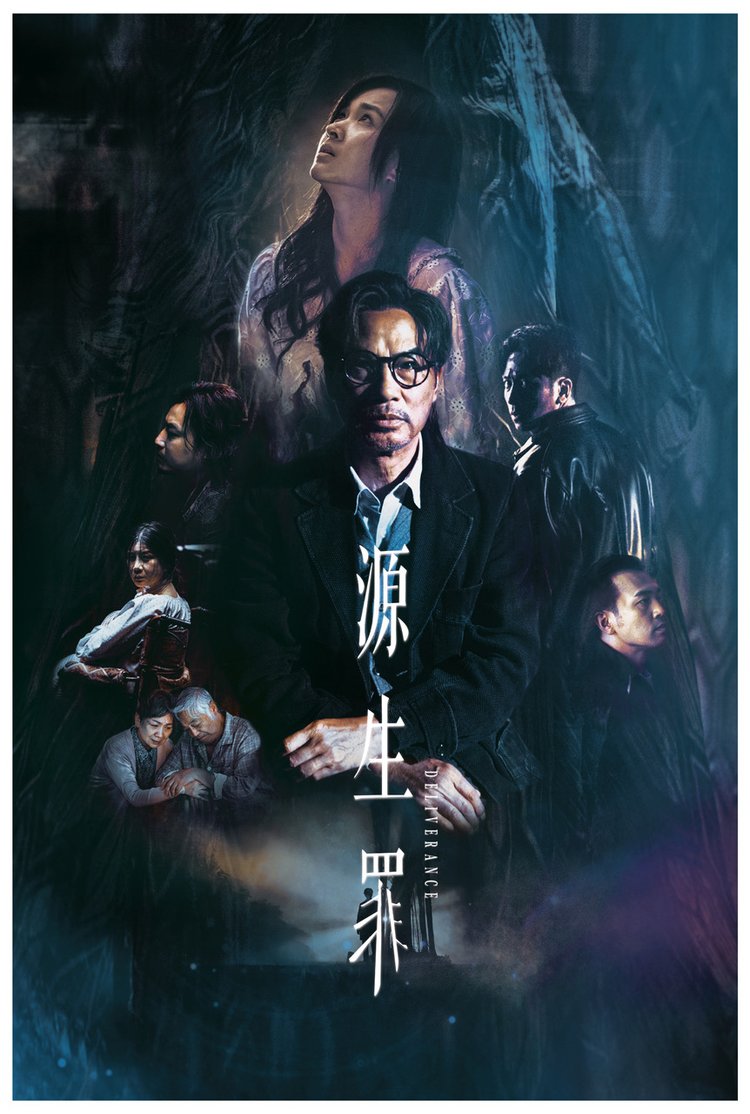
A young woman haunted by the buried memories of repressed trauma discovers that sometimes it really is better not to know but also comes to a new appreciation of familial love in Kelvin Shum’s visually striking psychological chiller, Deliverance (源生罪). Meaning something more like original sin the Chinese title hints at the reconsideration of the traditional family which lies under the central mystery and prompts the heroine, long separated from her siblings, to question the nature of her familial bonds and whether she can really say that those closest to her have her best interests at heart. 

After living abroad for 15 years, Nicole (Summer Chan) has married and returned home to Hong Kong with her husband but is haunted by a shadowy figure that reminds her of her childhood trauma in being unable to remember anything about the night her mother passed away after a long illness. Back in a familiar environment and reconnecting with her siblings, old memories begin to surface particularly after a few sessions with her famous hypnotist brother, Joseph (Simon Yam). Gradually she begins to suspect that her mother may not have died of her illness as she was led to believe but may have been murdered and possibly by a member of her immediate family which was then under intense pressure from loansharks due to debts run up by her absent father who ran away and abandoned the family to their fate. 

The theme of abandonment continues to resonate, Nicole insecure in her familial relationships as her brothers sent her abroad to study shortly after their mother’s death. She can’t escape the idea that they are keeping something from her, and is quite literally haunted by her inability to remember what happened on the night her mother died. But as Joseph had said during one of his lectures, memory is a treacherous thing and if you don’t remember something perhaps that’s because it’s better not to. Then again as her brother Will adds, it’s impossible to escape your past and someday you will be expected to answer for it whether you remember it or not. 

Nicole’s insistence on knowing the truth may partly be motivated by the fact that she is shortly to become a mother herself, though Joseph tries to convince her that her eerie visions and increasing paranoia are side effects of her pregnancy. Trust is the foundation of relationships, and Nicole is beginning to feel as if she can’t trust anyone anymore, but nor can she trust her memories many of which are influenced by her brother’s hypnotism. Working as a doctor she is touched by the relationship between an elderly couple who remain devoted to each other as the husband (Kenneth Tsang) contends with terminal cancer, but is also struck by the discord between their children who argue loudly in the corridor about the responsibilities of care and the financial burden of their father’s medical treatment. 

The understanding she begins to come to is that all of these reactions can in fact come from a place of love even if it doesn’t really seem like it on the surface. Whatever happened to her mother it may be no different, and if her family are indeed keeping something from her it may be out of a desire to protect her from the truth however misguided a desire that may be. As Joseph had said in his speech, emotions can take lives but they can also save them, though it appears the pain of not knowing is eating away at Nicole’s soul and only the truth can set her free. Mr Lam, the terminal cancer patient, cheerfully explains that all of life is a journey towards death but only to emphasise that it’s how you use the time that’s important so obsessing over the past might not serve you so well in the end. In any case, the journey into her own psyche may be uncomfortable and reveal truths that are painful but allows Nicole to begin overcoming her trauma while repairing her existing familial bonds before beginning new ones. Shot with noirish visual flair featuring high contrast colour and a dreamlike eeriness in Nicole’s ever present haunting, Shum’s psychological mystery suggests orphaned files must be brought back into the fold and that there can be no healing without truth but also that the expression of love can take many forms not all of which are easily understood. 


Deliverance had its World Premiere as part of the 15th season of Asian Pop-Up Cinema.

Trailer (dialogue free)

Super Me (超级的我, Zhang Chong, 2019)

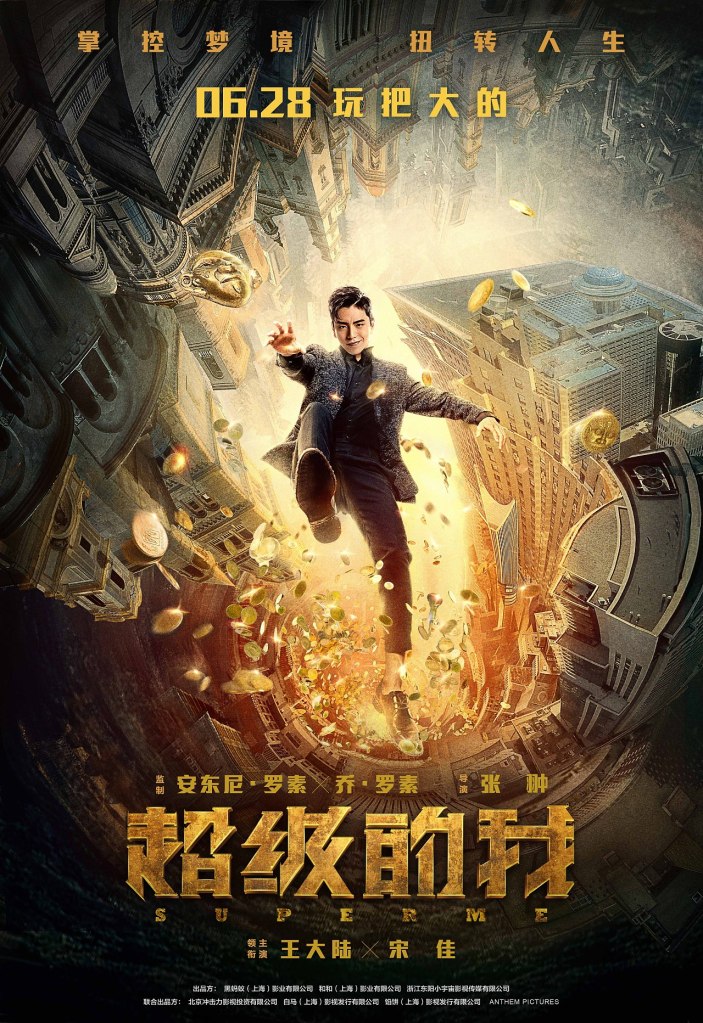
Can you dream yourself into a better reality, or should you concentrate on being your best self in this one? That’s a dilemma that the hero of Zhang Chong’s Super Me (超级的我, Chāojí de Wǒ) barely has time to think about as he battles despair-fuelled hopelessness and possibly unrequited love for the beautiful woman who runs his local cafe. If only I were rich, he might well think, but though poverty is undoubtedly a factor in his malaise it’s his sense of inferiority which has him beaten down and all the money in the world won’t change that. 

We first meet Sang Yu (Darren Wang Talu) on a subway train where he recites a mantra to himself about how he’s “not an ordinary man”, he has the ability to work under pressure, and though his parents died and he has no friends those are merely tests from God which he has overcome. He is “brilliant and talented, diligent and motivated”, he expects success will soon arrive only he hasn’t slept a wink in the last six months because of the constant night terrors which plague him such as the one we’re about to witness. Sang Yu is asleep, and a nightmare is stalking him. 

Killed by having his head plunged through the train’s floor, Sang Yu wakes up and we realise his waking life is also quite depressing. A 20-something screenwriter, he’s behind on his rent and in debt to his friend/agent while unable to work because of his insomnia. Wandering around in a daze after being evicted from his apartment and getting his laptop stolen, he writes a note to his friend telling him he’ll have to pay him back in the next life and prepares to jump off the roof opposite the cafe where his true love, Hua (Song Jia), works, only to be saved by the intervention of the jian bing seller (Chin Shih-chieh) from down below who advises him to try waking up from his dreams before he gets killed by reminding himself that he is dreaming. Sang Yu takes him at his word and manages to emerge from the dreamworld unscathed clutching the weapon that once belonged to his attacker. After selling the antique sword to weapons brokers, he realises he’s sitting on a cash cow, routinely looting the dreamworld of many of its treasures and quickly harnessing its power to become a wealthy and successful man. All of which gives him the courage to finally approach Hua, wielding his newfound economic power to invest in the apparently failing cafe. 

A modern day take on Jack and the Beanstalk, Super Me finds its nice guy hero corrupted by his wealth, abandoning his artistic dreams and becoming a debauched playboy living in a five star hotel even if he continues to pine for Hua while his friend, Sangge (Cao Bingkun), reverts to being something like a minion riding on his coattails to enjoy the life of the rich and famous without really having to do anything. The irony is that the money and the fancy clothes give Sang Yu the confidence to talk to Hua, but those aren’t things she particularly cares about and may in a sense actually turn her off. Enjoying romantic evening walks, she guesses he’s a screenwriter from his veiled hints about robbing the dreamworld and is interested more in his artistic self than the wealthy man of mystery, all of which gives Sang Yu the inspiration to finish that screenplay which of course becomes a hit beyond his wildest dreams. 

After a while, Sang Yu starts to suspect there must be a cost involved in all this good fortune, realising that he’s traded some of his life away in return for riches and will perhaps never be free of his nightmares. Yet, as a cruel gangster tells him, everyone’s wealth comes at the sacrifice of life, echoing his earlier thoughts that those who are successful are either those who’ve chosen to sacrifice things that others won’t or are unscrupulous thieves and exploiters. “A person who betrays himself can never control his own destiny”, according to the gangster. Asleep or awake, Sang Yu realises he’s battling himself, that there are no quick fixes, and illusionary success is as hollow and as fleeting as the dreamworld from which he has perhaps failed to learn the appropriate lessons. As the old man told him, perhaps what he needs is to wake up, not only to life’s possibilities but to his own. Echoing his earlier The Fourth Wall, Zhang allows Sang Yu to walk through a door into a “better” reality which is perhaps the one he inhabited before but was too intimidated to actually live in. He hasn’t definitively beaten his demons, but perhaps subdued them while his new life seems determined to reward him for his choice in unexpected ways. Nevertheless, can you trust this reality more than any other? There may be no way to know, but you’ll have to learn to trust it all the same. 


Super Me is represented by Fortissimo Films.

Original trailer (no subtitles)

Au Revoir, Mon Amour (何日君再來, Tony Au Ting-Ping, 1991)

Love and Resistance go to war in Tony Au’s noirish romance, Au Revoir, Mon Amour (何日君再來, AKA Till We Meet Again). The evocative title sets the scene for a tale of love betrayed by changing times, but ultimately asks if love is a question of priorities and if you have the right to put your romantic destiny on hold to serve a greater good, even if that greater good is a shared ideal. Predictably, the answer may be no, because in the world of the movies at least love is an absolutist choice and you won’t be forgiven for resisting it. 

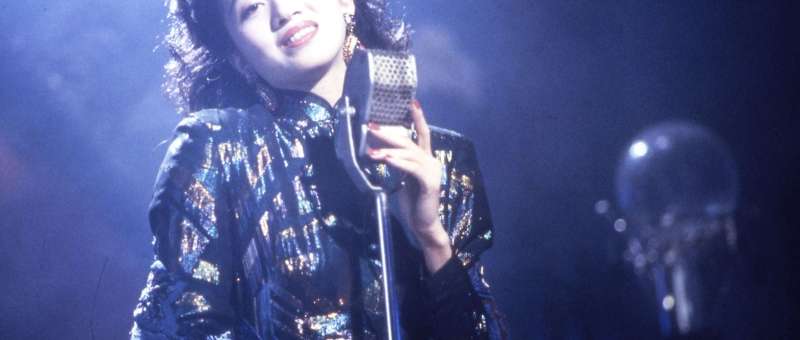
One fateful evening in the Shanghai of 1941, Resistance operative Sum (Tony Leung Ka-Fai) is an accidental witness to the murder of “notorious Japanese monks” which he later learns may have been set up by the Japanese authorities themselves. Chasing the perpetrator, Shirakawa (Jun Kunimura), through a series of back allies where he slices and dices his now redundant Chinese mercenaries, Sum is brought to a smoky nightclub where the singer, Mui-Yi (Anita Mui Yim-Fong), is none other than his one true love whom he met thanks to the Resistance movement some years earlier but was forced to leave behind with only a heartfelt letter explaining that he would return when the battle was done. Returning the favour Sum had done her in saving her life when she was about to be hit by a car, Mui-Yi tosses him a gun that allows him to defend himself against a crazed Shirakawa and thereafter shelters him in an abandoned garage until he is well enough to return to his mission. 

Heartbroken and embittered, Mui-Yi is still lowkey anti-Japanese and seemingly unafraid of telling the local goons where to get off despite her father’s attempts at collaboration. Her aunt Jing (Carrie Ng Ka-Lai), however, finds herself succumbing to the dubious charms of violent and thuggish turncoat Tit Chak-Man (Norman Chu Siu-Keung) who is working with the Japanese apparently because he thinks China is weak and unsophisticated. Tit Chak-Man thinks nothing of blowing up little children and blackmailing suspects which is how he begins to manipulate Mui-Yi after seizing her father’s bar and having him put in prison on a trumped up charge. Meanwhile, she flip flops in her relationship with Sum, at once resenting him for his tendency to disappear and then longing for his return, while he berates her in a mistaken assumption that she has decided to collaborate but promises that he will be hers and hers alone once the war is over. 

Unlike many similarly themed movies from both the Mainland and Hong Kong, the big bad is not the Japanese themselves but the Chinese who betrayed their country and sided with the enemy. Somewhat two dimensional, Tit Chak-Man is a thuggish brute who is prepared to do anything and everything to stamp out the Resistance but is at once humanised by his intense romance with Jing which continues even after she attempts to assassinate him and eventually proves his weakness when he refuses to abandon her to escape from a baying mob. Though Shirakawa is indeed crazed and bloodthirsty, we’re shown his opposite in the gentle, sensitive Noguchi (Hidekazu Akai) who has also fallen in deep and selfless love with Mui-Yi and is willing to facilitate her romance with Sum while doing everything he can to keep her safe. 

Years later, Sum irritably points out that Noguchi had a choice in serving his country and was therefore free to choose love instead which seems extremely disingenuous seeing as he was most likely (in some way) a conscript too but was in his own way resisting in order to serve the best interests of his country. Sum chose China over Mui-Yi. It’s unreasonable to expect someone to wait in line until you’ve finished being a revolutionary hero and have the proper time to devote to love, no one likes being second choice even if you’re right behind “freedom” when it comes to priorities. To save his love, Sum sent it into the arms of the enemy but failed to realise that she might also find a home there or at least a sense of relief in no longer needing to wait for someone who might never return. Can there be love in time of war? Yes, but love like revolution is a choice and it won’t wait for you forever, if you betray it you may not be forgiven. 


Fortune Star trailer (no subtitles)

The Attorney (一级指控, Wong Kwok-fai, 2019)

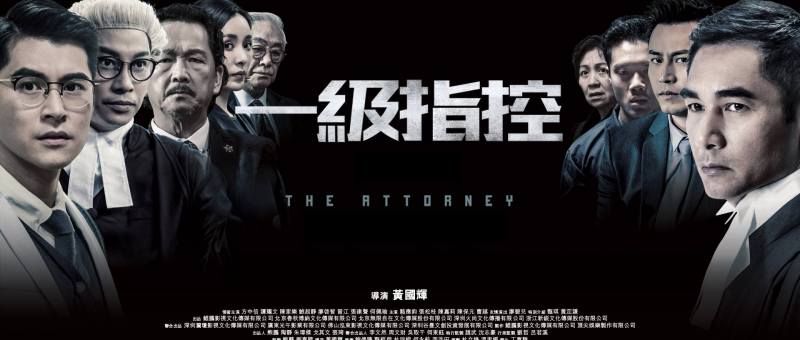
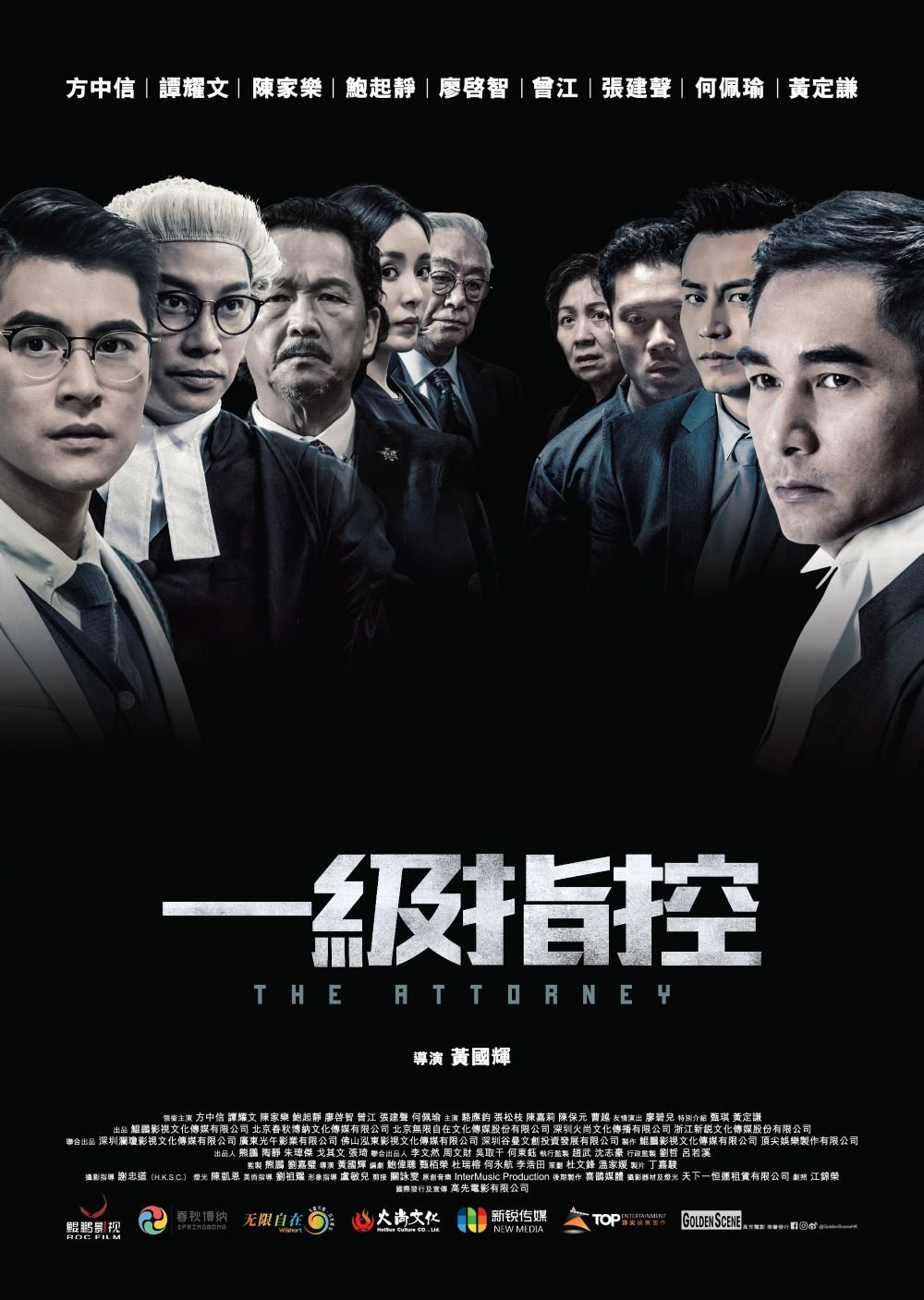
The Attorney poster 1What price justice? Wong Kwok-fai’s legal thriller The Attorney (一级指控) puts an unequal society on trial but discovers that to beat shadiness you might need to get a little shady and a healthy bit of deviousness may serve you well if it’s offered in service of a noble ideal. Then again, it’s a slippery slope towards the abyss if even the proponents of law aren’t above a little judicial finagling to ensure that “justice” gets done in a society which continues to defer to those with the biggest pockets rather than protecting those of meagre means.

We meet our two attorney heroes in the middle of their respective cases. Jaded hot shot Lei You Hui (Alex Fong Chung-sun) is defending a journalist who broke an important story about corruption in the competition for places at prestigious schools from a defamation charge, while the idealist rookie Kelvin (Carlos Chan) is defending a frail old woman held up on a charge of operating without a proper business licence. Lei wins his case, and Kelvin loses. Lei mocks Kelvin’s lack of success, and Kelvin has only contempt for Lei’s cavalier attitude towards the upholding of justice.

The action begins when a 25-year-old man, Lee, is found lying in a pool of blood next to the dead body of a young woman, Ka-yee, who is later discovered to be the daughter of a billionaire businessman, Kwok (Liu Kai-chi). The case seems open and shut. Lee claims he passed out and found the body when he woke up but the circumstantial evidence against him is overwhelming. His grandmother, Chu (Nina Paw Hee-ching), of course believes that he is innocent and enlists the best lawyers she can get access to, leading her to a solicitor who introduces her to Kelvin who is determined to see that the young man gets a fair trial. Lei, meanwhile, has a personal interest in the case in that his late wife was killed in a shopping mall collapse 10 years previously which also took the lives of Lee’s parents. Lei prosecuted a class action law suit, but lost. The shopping mall was constructed by Kwok’s company, which gives him an additional reason to want to help aside from trying to make things up to Lee and Chu whom he feels he failed all those years ago. 

Wong wastes no time in demonstrating that “justice” is a nebulous concept when society is necessarily set up to benefit the rich. Ka-yee’s body was discovered in a building belonging to a property magnate, Tsai Chi-wai (Patrick Tam), who is currently running for political office on a platform of equality for all. Chi-wai is, however, a member of the super rich elite who believes he can do as he pleases because he is protected by his wealth and privilege. Lee, by contrast, is a poor boy delinquent who ordinarily wouldn’t have access to a fancy lawyer to clear his name and most likely would have been torn apart by the elite prosecutor those with vested interests have ensured is attached to the case even though it’s a simple enough affair. 

Yet, as Lei discovers, the roots of corruption lie in the understandable desire to protect one’s children even when they’ve made terrible mistakes. Meeting with Chi-wai’s smarmy father, he discovers a man who talks up his youthful high ideals of union activities and working for the workers but later emphasises his hard won cynicism in insisting that no one with a brain seriously believes in things like truth and justice, only self interest. Tsai wants to protect his son at all costs, if only to protect himself by getting his boy into high office. Meanwhile, Kwok is left with questions about his own responsibility for his daughter’s death. If having literally billions in the bank can’t keep your little girl alive, then what use are they?

Then again, having billions in the bank is pretty useful leverage for getting your own way even if you eventually have a change of heart about enabling societal corruption. Chi-wai snarls that you need to be smart to survive, but according to Kelvin saving lives is more important than winning. Lei, who had given up his lofty ideals after being unable to get “justice” for his wife’s death begins to regain his faith in the law thanks to Kelvin’s influence and the accidental coincidence of getting a kind of revenge on Kwok by showing him the error of his ways in illuminating the truth behind his daughter’s death. To do that, however, he’ll have to bend the law a little which leaves him a compromised figure if for the best of reasons as he wilfully demonstrates the flaws in a legal system which is in itself inherently corrupt in its avowal that everyone is equal before the law while ignoring the fact that not everyone has access to the same level of “justice”. Wong’s conclusion may be a little rosy as even the most jaded of legal minds finds himself minded to rebel against the system, but there’s no denying his purpose as Lei decides to protect his daughter by protecting his society from the forces which threaten to blacken her future.


The Attorney screens in Chicago on Oct. 10 as the closing night gala of the ninth season of Asian Pop-Up Cinema. Actor Kenneth Tsang Kong, scriptwriter Frances To, and xxecutive producer Cherrie Lau will be in attendance for an introduction and Q&A.

Original trailer (English subtitles)

Detective Chinatown 2 (唐人街探案2, Chen Sicheng, 2018)

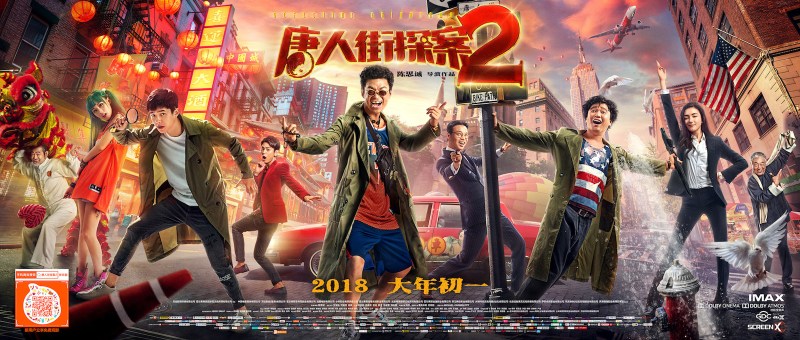
Detective Chinatown 2 posterBox office smash Detective Chinatown successfully pulled off the difficult feat of merging amusing buddy cop comedy with a holiday setting and intriguing cerebral mystery. Given the success of the first film it’s no surprise that the boys are back in town, or, as teased in the finale, in New York where another strange crime awaits their particular talents. Firmly a Chinese production taking place in an American city (though one using American crews), Detective Chinatown 2 (唐人街探案2, Tángrénj Tàn Àn 2) tries its best to maintain its unique character while shifting into American crime thriller territory, even if hampered by a stereotypical view of its target culture and some decidedly ropey English language dialogue.

Qin (Liu Haoran), now apparently a student at the police academy, has been tricked into coming to New York for Uncle Tang Ren’s (Wang Baoqiang) wedding to his love interest from the first film, Ah Xiang (Tong Liya). When he arrives, however, Qin quickly figures out that he’s in a room with some of the world’s best detectives – Ah Xiang left Tang Ren for someone with more money and so Tang Ren wants Qin to help him solve a mysterious New York murder for the reward promised by one of the victims’ grandfathers, a Chinatown gangster named Uncle Seven (Kenneth Tsang). Qin likes a good mystery so sticks around though the situation becomes decidedly more complicated after he finds and discounts the main suspect, Song Yi (Xiao Yang), leaving the trio on the run from the authorities, other detectives vying for the reward, and Uncle Seven’s guys some of whom have their own ulterior motives.

The most satisfying element of Detective Chinatown lay in the genuinely intricate nature of its locked room mystery and elegance of its resolution. Detective Chinatown 2 shifts away from the classical style of a European drawing room mystery for something altogether flashier and more American in keeping with its setting. It is, however, guilty of more than the faults of its genre in heavily signposting its solution from the midway point leaving any serious thriller fan twiddling their thumbs waiting for the penny to drop with ace detective Qin. Though a secondary twist offered after the killer has been unmasked helps to undercut the disappointment of such an anticlimax, it is not quite enough to compensate for the crushing obviousness of the central mystery.

Likewise, where Detective Chinatown existed firmly within a small Chinese enclave of Bangkok where everyone knew everyone, the move into the metropolis of Manhattan robs the film of its small-town charm. Despite the “Chinatown” tag, Chinatown itself is not a big player and as both of our guys are now full outsiders in another culture, we’re treated to a much less nuanced take on local stereotypes with several running gags likely to raise audience hackles with their tone-deaf approach to visualising the multicultural city. All of that aside, shooting in Central Manhattan with American crews also means much less creative freedom leaving the set pieces perhaps less impressive in terms of scale and ingenuity while the cinematography occasionally feels much more like standard American television than a big budget Chinese comedy.

Nevertheless the odd pairing of loudmouth Tang Ren and the comparatively subdued Qin, whose powers find even more impressive means of visualisation as he literally lifts buildings off a map and moves them round, remains the key selling point even though each half of the pair is also subjected to a bizarre round of sexual harassment from a biker boss with a tiny Chinaman fetish to a kung fu master with possible Alzheimer’s respectively. Though Chen generally relies on slapstick, the gags have a decidedly topical flavour – a police chief with terrible hair who makes off colour jokes and wants to build a wall to keep out all the annoying Chinese guys he can’t be bothered to deal with, for example, or the repeated references to immigration and the various dangers faced by those who’ve come from somewhere else and are trying to make a life for themselves. Yet the guys also keep running into people who unexpectedly speak Mandarin – perhaps a sign of the equally unexpected elevated status of Chinese visitors and their all important economic power. Detective Chinatown 2 is a mild disappointment after the duo’s impressive debut, but nevertheless does enough to spark interest in the teased Tokyo-set third instalment.


Currently on limited UK cinema release courtesy of Cine Asia. Screening details for UK, Germany, Australia, and New Zealand available via official website.

Original trailer (English subtitles)

Cold War 2 (寒戰II, Longman Leung & Sunny Luk, 2016)

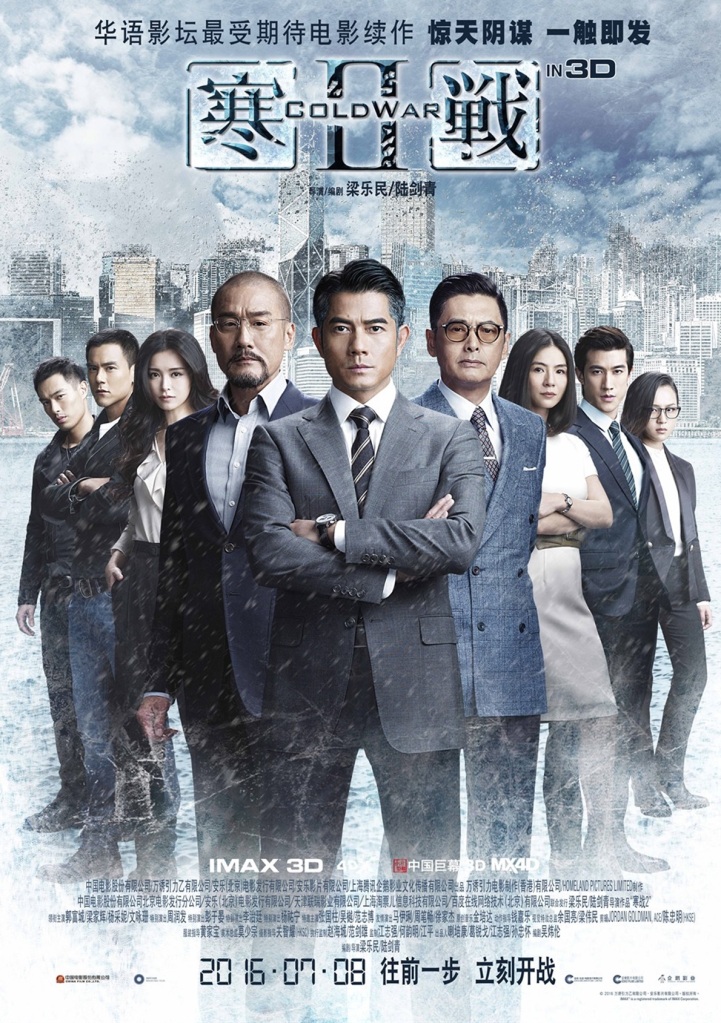
coldwar 2Cold War 2 (寒戰II) arrives a whole four years after the original Cold War rocked Hong Kong with police corruption scandals and fantastically convoluted internal plotting. Heroic policeman Sean Lau (Aaron Kwok) may have won the day, even if he ultimately had to compromise himself to do it, but the police van is still missing and MB Lee (Tony Leung Ka-fei) is still lurking in the background. As is his son, Joe (Eddie Peng) – languishing in prison but apparently still with the resources to cause trouble whilst behind bars.

Joe Lee has Lau’s wife kidnapped, forcing Lau to compromise himself by giving in to his demands all of which culminates in an intense subway set piece in which Lau inadvertently ends up handcuffed to an exploding smoke bomb while Joe Lee escapes. Embarrassing is not the word. Lau now looks bad, and old rivals have their eyes on the police chief’s chair. An enquiry is currently underway into goings on at police HQ lead by top lawyer Oswald Kan (Chow Yun-fat) but his impartiality is severely damaged when one of his own is caught in the crossfire whilst investigating Joe Lee’s nefarious activities.

Like the first film, Cold War 2 is an intense interpersonal thriller though this time the enemies are even closer as the old boys network becomes the means by which commissioners are unseated and installed. Service records are everything – Lau is unpopular with his colleagues because he started out at ICAC and has never served as a rank and file policemen. From one point of view, this makes him an ideal candidate because he has no personal ties to the body of serving officers but his rivals despise him for this very reason. He isn’t one of them, does not have first hand understanding of front line policing, and most importantly is not a part of their interconnected layers of military style brother-in-arms loyalties.

Lau’s predictable miscalculation regarding Joe Lee creates an opportunity to get rid of him and take back the force. “Save the police” is a message which is repeated over and over as the plotters attempt to win others over to their cause, insisting that Lau has lost the media battle for the hearts and minds of a public now trained to be afraid of their police force. Lau is the continuity candidate – mistakes have been made, but his stately manner and apparently steady hands may yet win the day. Those same hands are getting dirtier by the second, but they’ve been brushing the morally grey, not (yet, at least) immersed in the red of innocent blood like those of the corrupt top brass at police HQ.

If the plotting is intricate and filled with double crosses and betrayals, directors Luk and Leung have ensured a steady stream of explosive action sequences to accompany the ongoing cerebral games. Cold War also had its share of action packed spectacular set pieces but Cold War 2 may surpass them with the surprise factor alone including one shocking multi-car pileup inside a tunnel in which cars, buses and bikes go flying before an all out fire fight ensues. Lau’s constant gazing at the “Asia’s Safest City” signs which adorn police headquarters (right next to the metal detectors you need to pass through to get in) has never looked so melancholic and drenched in irony.

It’s a battle for the soul of the police service, but it’s being fought as a dirty war. Lau is the decent and honest man forced to behave in a slightly less honest and decent way, even if for the best of reasons. His rivals are running on pure ambition and pettiness. Despite their claims they do not have the interests of the people of Hong Kong as their foremost concern. The corruption stems far further back than anyone might have previously guessed and is more or less coded into the system. The police van and equipment are still missing and the central plotters are still in place. This is a partial victory at best but then what kind of action fest wouldn’t leave a door open for a sequel. The cold war maybe about to turn hot, but you can rely on the steely eyed Police Commissioner Sean Lau to be there, ready and waiting, when the first shots are fired.


Original trailer (English Subtitles)