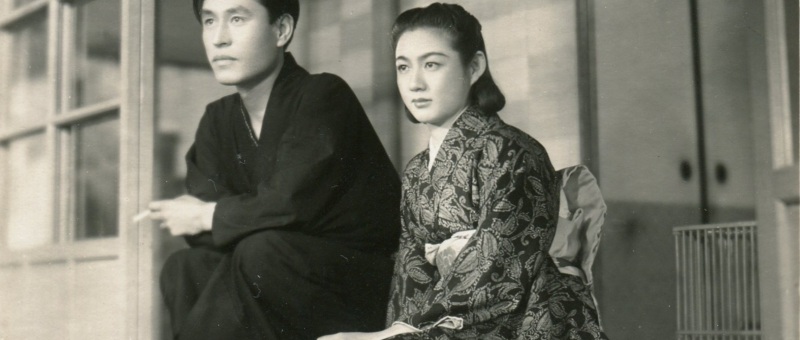
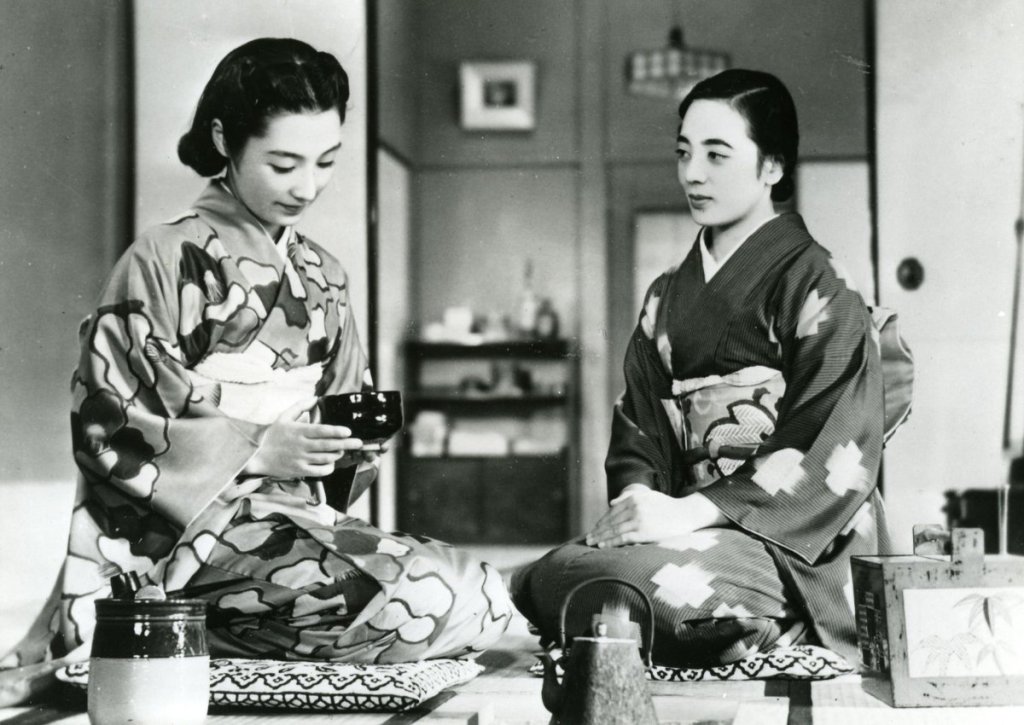
A Brother and His Younger Sister (兄とその妹, Yasujiro Shimazu, 1939)

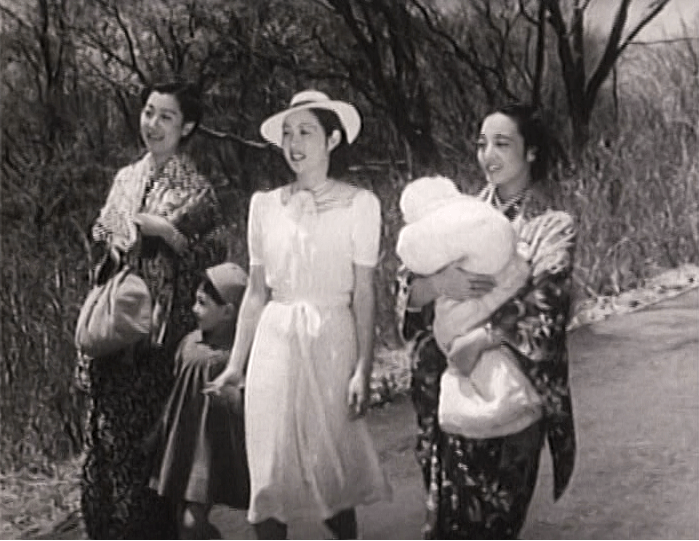
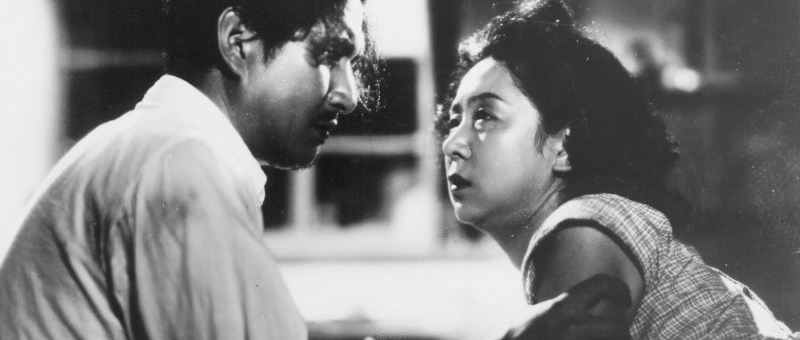
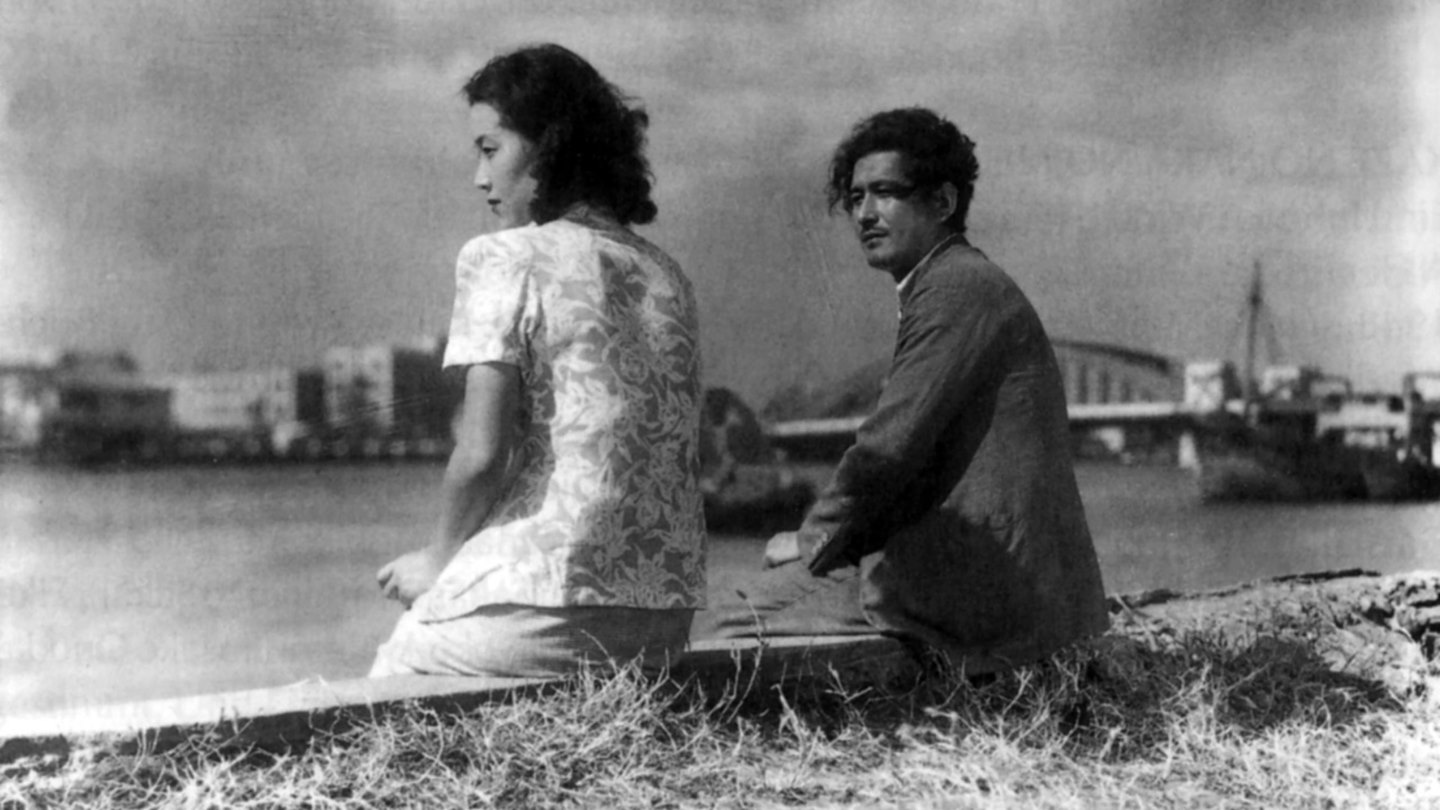
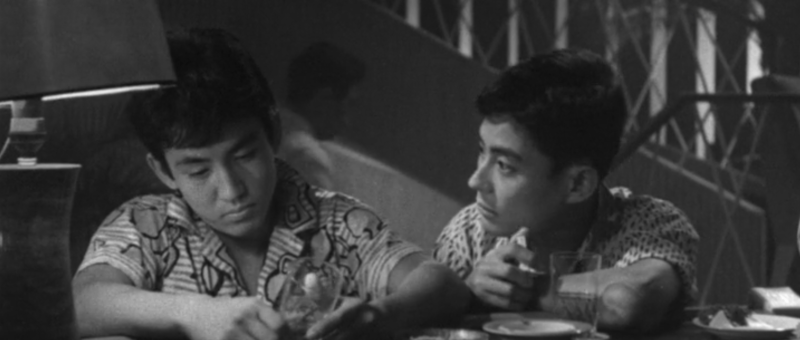
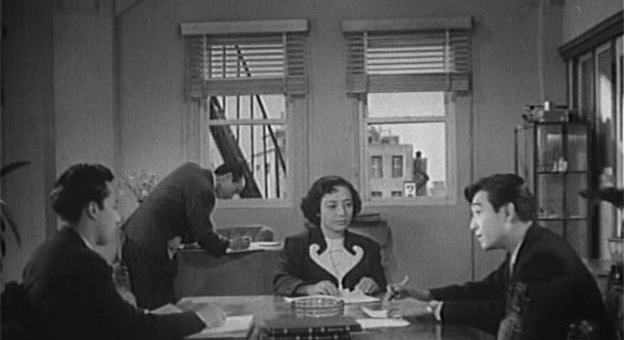
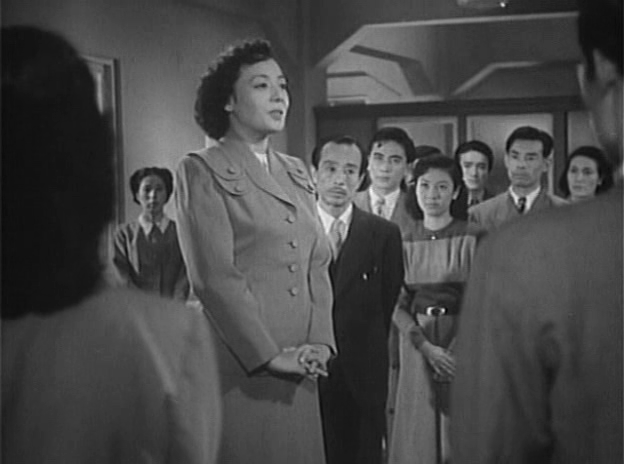
A young man’s love of go ends up getting him into hot water at work in Yasujiro Shimazu’s surprisingly progressive shomingeki, A Brother and his Younger Sister (兄とその妹, Ani to Sono Imoto). It seems office politics might not have changed all that much in the last 80 years even if many other things have, but conversely the film seems to have more to say about the changing nature of gender roles and attitudes towards women in a time in which it was becoming possible for a woman to live a fully independent life. 

This window wouldn’t last very long and the situation largely reversed itself even amid the supposed equality enshrined in the post-war constitution, but Fumiko (Michiko Kuwano) at least has a well paying job as a secretary at a large company and consequently little desire to marry even at the comparatively late age of 24. Her earning capacity is later put forward as a reason that there “aren’t many opportunities” for marriage as men apparently feel threatened and embarrassed especially if their salary is lower than hers. It’s not exactly that she’s against marriage, but as she can support herself and is otherwise happy living with her brother Keisuke (Shin Saburi) and his wife Akiko (Kuniko Miyake). She doesn’t see the need to rush into such an important decision. Though she might change her mind if the right person came along, for the moment she just isn’t interested. Then again, Akiko’s sucking of her finger when she’s ironically cut by a thorn on a bouquet of roses from an unwanted admirer might suggest another reason marriage is not on her radar.

Her suitor, Michio (Ken Uehara), despite his handsomeness is a little creepy in his courtship and cannot seem to take a hint that Fumiko isn’t interested in him. A friend of her boss, he has a habit of dropping into the office for no real reason and attempts to ask her out when the boss isn’t there. She lies and tells him she’s married already (to a penniless painter!) but after the boss reveals the truth it doesn’t seem to occur to Michio that if she made up a story like that it’s because she doesn’t want to go out with him. We’re told that Michio studied at Oxford and is attracted to Fumiko because he’s impressed by her language skills, but he’s also some kind of stockbroker which quickly paints him as no good seeing as the film seems to have a minor message about how dabbling in stocks and shares is little better than gambling and definitely dangerous.

One of Keisuke’s colleagues has been given a warning because there’s a rumour that he’s into shares while another has apparently been demoted because it came to light that he had a fondness for horse racing. More than a moral judgement, it seems the reason is that these sorts of hobbies may eventually lead someone towards embezzling from the company to cover their debts. Keisuke’s supervisor is also worried that his 18-year-old son is refusing to go to university and apparently wants to join some kind of “investment society” which admittedly does not sound like a good idea so he wants Keisuke to talk him out of it. The big boss, meanwhile, who is also Michio’s uncle, turns out to be into shares himself which makes him a very compromised authority figure. 

Keisuke is not into shares, but he is very into the game of go which causes him to stay out until late at night playing with his bosses. He does this because he genuinely likes playing, but Fumiko worries that his colleagues will come to resent him assuming that he does so to curry favour. Apparently, something similar happened at his previous job which is why he ended up quitting abruptly. As he was quite lucky to get this one despite how impressed everyone seems by his capabilities, it would be better if that didn’t happen again. Nevertheless, the perspicacious Fumiko turns out to be right as as his co-worker Yukito (Reikichi Kawamura) becomes increasingly jealous of his success fearing that he will leapfrog him to take the shortly to open up supervisor position which he believes to be his simply because he’s been there longer (which is generally how things work at Japanese companies). Consequently, starts a series of rumours that Keisuke is a snitch who got the horse racing guy demoted and is only in his position thanks to schmoozing with the bosses.

This obviously leaves him with a huge dilemma when his boss asks him to put in a good word for Michio with Fumiko whom he is pretty sure won’t be interested. To his credit, Keisuke maintains that it’s up to her and his career is nowhere near as important as her happiness though he is also aware it’s going to be embarrassing for him when she says no. Fumiko knows this too, and it’s clear that she also feels incredibly awkward when he puts it to her but only asks for a few minutes to think before offering her primary justification for refusing which would be that she fears Keisuke’s colleagues will resent him even more if they come to the conclusion that he sold his own sister in the hope of career advancement. This does in fact turn out to be the case as Yukito has already started a rumour about a dynastic marriage that turns the rest of Keisuke’s colleagues against him especially as he’s given the promotion immediately before he was going to tell the boss Fumiko isn’t interested. 

Confronted by the horse racing guy, Keisuke ends up quitting again after getting into a physical confrontation with a seemingly remorseful Yukito who probably didn’t mean for it to go that far. Keisuke quits because he won’t have people think he was gossiping behind their backs and is offended by this attack on his integrity, but his decision is also a rebuke against this infinitely corrupt employment regime in which hypocritical bosses hand out jobs to their favourites and maybe do expect that Keisuke will persuade his sister to sacrifice herself for his career. She meanwhile is portrayed as an independent woman, but ironically rejects the marriage to save her brother’s reputation though perhaps equally she feared her “no” would not be enough on its own. Then again, she had apparently turned down several suitors already and no one really expected her to say yes this time unless she’d suddenly begun to feel anxious about her age and declining prospects. 

Nevertheless, it’s refreshing that the film does not force Fumiko into accepting marriage as so many others would and in fact legitimises her opposition to it and right to live as an independent woman for as long as she chooses. Keisuke is also in some ways rewarded for quitting his job at the corrupt company in immediately getting another one from a former co-worker who’s since started his own business and wants to expand to Manchuria. But this final scene almost seems tacked on for the censor’s benefit. It is perhaps a little unusual for 1939 that the film has so far made no mention of Japan’s imperial ambitions nor made any kind of patriotic appeal. It’s even been quite pro-internationalist in the talk of people speaking English and engaging in European trade (even if the currency trading Michio’s doing is definitely framed as bad). Fumiko spots a little patch of grass clinging onto the plane as they take off for Manchuria with Keisuke remarking that he hopes this little piece of Japan will take root on the continent. On one level, it suggests that contemporary Japan was too corrupt for an “honest” man like Keisuke to prosper while Manchuria will offer greater freedom for himself and the independent modern girl Fumiko (who declares she won’t marry until Keisuke’s successful), but it’s also of course an unpalatable advocation for the ongoing imperialist expansion which seems so out of keeping with everything that’s gone before. Even so, the message is clear that it’s Keisuke and Fumiko who are in the right and should be allowed to live just as they are in a society free of judgement and hypocrisy.
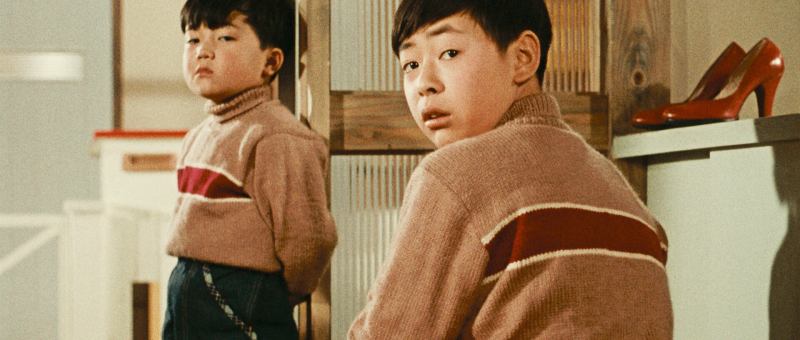
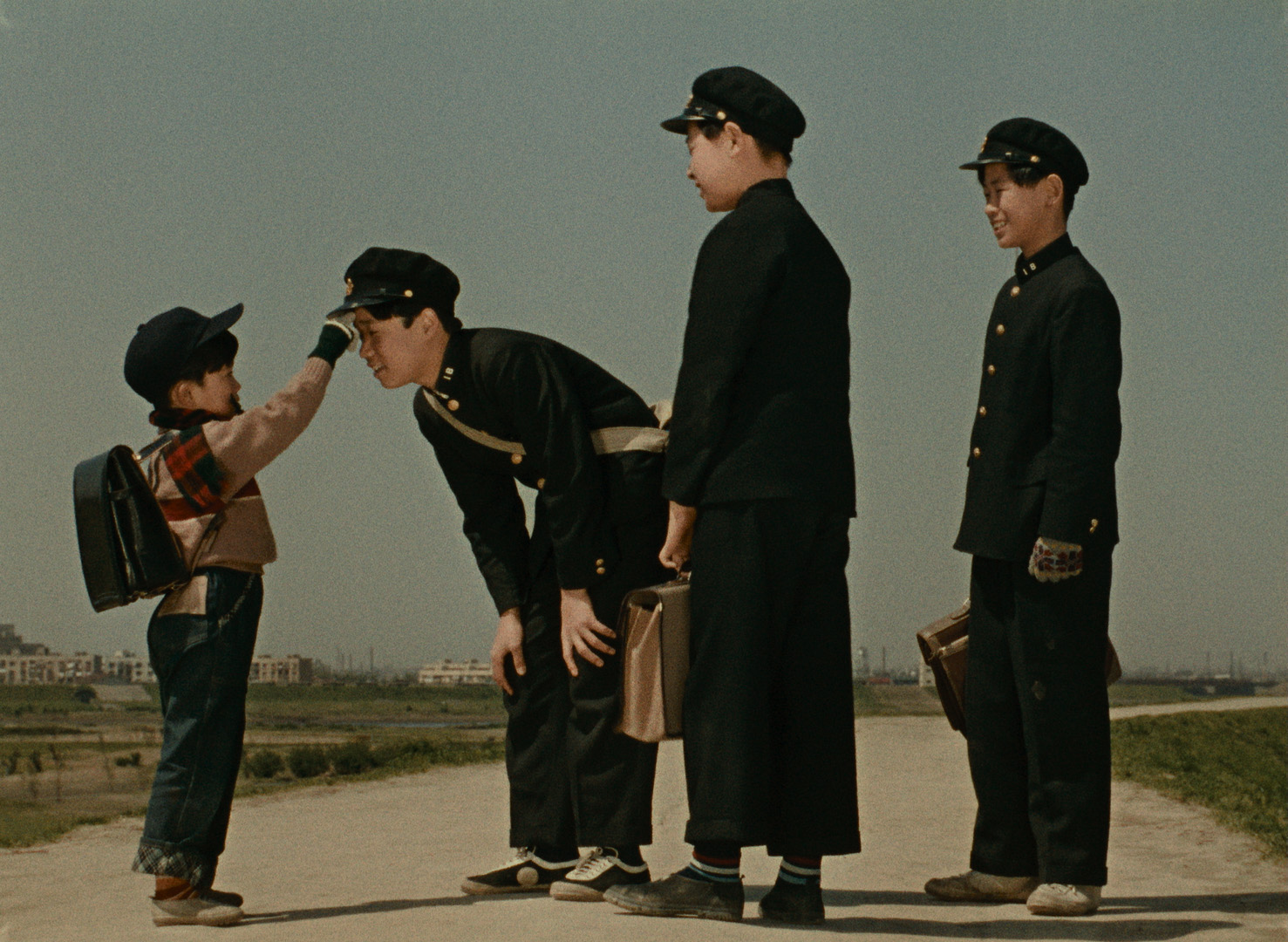
Good Morning (お早よう, Yasujiro Ozu, 1959)

Even the most casual viewer of Japanese cinema will be aware that something as simple as “lovely weather today” can mean quite a lot more than it at first seems. Small talk isn’t really so small after all and without it, as one quite perceptive yet perennially tongue-tied translator points out midway through Yasujiro Ozu’s charming late career comedy Good Morning (お早よう, Ohayo), our lives would be quite boring. Boring it is not, however, when two young boys decide to rebel against the pointless politeness of the adult world by taking a vow of silence after being told off for going on in their constant tantrums over the unfairness of being denied a TV set. 

As he often did, Ozu repurposes the plot of an earlier film, in this case I Was Born But… and subverts it. The two boys at the centre of the 1932 silent film ended up going on a hunger strike out of humiliation and despair on realising that their dad, who they’d idolised, was also a soulless corporate lackey forced to debase himself in deference to his boss. The father is ashamed, he doesn’t want his boys to end up living a meaningless worker drone existence, but the boys’ decision not to eat also carries much more weight considering they are in living in a time of economic depression during which many do not have the luxury of choice. 

The Hayashi boys, Minoru (Koji Shitara) and Isamu (Masahiko Shimazu), by contrast are also rebelling against the meaningless adult world but for the opposite reasons. They don’t seem to have a lot of respect for their father and probably don’t really care if he humiliates himself on a daily basis so long as they can watch sumo on TV without needing to go next door. These are consumerist kids, they want what they want and they want it now. Minoru is really too old for screaming tantrums, but still rolls around on the floor kicking his legs in frustration because it’s all just so unfair that mum and dad won’t get him a TV even though it’s not a matter of money. The parents, for their part, are trying their best to resist the onset of consumerism. Mr Hayashi (Chishu Ryu) is against the TV because he fears the boys will stop studying and hours of vacant staring will ruin their young minds. He might have a point, but you can’t hold back the tides forever. 

It’s his scolding of the boys which eventually leads to all the subsequent problems as his insistence that they are being far too noisy and talk much more than children have a right to leads them to declare an ironic vow of silence in protest against the “meaningless” chatter of adults filled with random pleasantries such as “good morning”, “where are you off to today?”, “what lovely weather we’re having!”, etc. Their decision, however, comes at a bad moment. There has recently been some unpleasantness over misplaced money for a local community group and gossip about Mrs Haraguchi’s (Haruko Sugimura) new washing machine. The other housewives on the block also seem to be resistant to consumerist desires and do not approve of the purchase, channeling their resentment into assuming that Mrs Haraguchi may have embezzled the money. Grown up chatter isn’t always meaningless and the frivolous local gossip has a profound bearing on the social politics of the block. So when the boys don’t reply to Mrs Haraguchi’s good morning, she assumes they are deliberately snubbing her on their mother’s instruction because of a petty grudge over harsh words exchanged on account of the misunderstanding surrounding the missing club dues.

Meanwhile, we can see the shadows of a lingering economic instability. These are all modest homes where families make an effort to appear frugal, hence the outrage over the washing machine, but the family friend who teaches the boys English and has a crush on their aunt, Heiichiro (Keiji Sada), has been laid off after his company went bust. He’s supported by his older sister who remains unmarried and works at a car dealership (more consumerism) while doing translation on the side for extra money. The neighbour across the way is technically “retired” but looking for work partly because his pension’s not enough to live on and partly because what’s a man supposed to do all day in a society which expects everyone to be productive? The new neighbours next-door to the Hayashis who’ve caused all this trouble because of their TV set are viewed as scandalous because they live in their pyjamas and she used to be a cabaret bar girl. The middle-aged gossips don’t think they’re respectable while she eventually decides to move because the neighbours are too “annoying”. 

Ironically enough, it’s sumo the boys most want to watch, about as traditionally Japanese a pastime as is possible even as they yearn for colourful consumerist modernity. They communicate by refusing to communicate. As Heiichiro points out, small talk is a social lubricant but meaningless things are easy to say while important things are not. Which is not to say you can’t communicate something important by saying something seemingly as meaningless as “that cloud has an interesting shape”, but that you won’t get anywhere unless you listen to what people are actually saying even when they’re saying nothing at all. They boys can’t win against the inherent meaninglessness of adult life with its superficial conformities, petty resentments, and wilful misunderstandings but perhaps we can all learn something from their straightforward earnestness in their refusal to submit themselves to empty pleasantries. 


New Woman Question and Answer (新女性問答, Yasushi Sasaki, 1939)

Director Yasushi Sasaki is most likely best remembered for his post-war work at Toei where he specialised in jidaigeki and musicals, frequently working with tentpole star Hibari Misora on her period drama vehicles. He began his career, however, at Shochiku in 1929 as an assistant to Hiroshi Shimizu, later working with Yasujiro Ozu before being promoted as a director in his own right and gaining a reputation as a skilled producer of musical dramas with the release of Lovers’ Duet in 1939 which starred a young Mieko Takamine as an aspiring singer. 

Released in the same year, New Woman Question and Answer (新女性問答, Shin Josei Mondo) is by contrast a high-minded melodrama and rather surprising for the world of 1939, playing much more like the new constitution films appearing after the after such as Victory of Women which would unfortunately prove the last appearance from star Michiko Kuwano who sadly passed away on set during filming. At heart a female friendship drama, the film takes aim at the snobbery and lack of compassion among a group of upper-middleclass women while offering a slightly contradictory yet progressive view of the place of women in a changing society. 

As the film opens, seven former high school friends are having a small party with one member, Michiko (Kuniko Miyake), set to resign from their club intending to give up her university studies in order care for her ailing father and prepare to get married. Michiko’s marriage scandalises her friends in part because it’s a love match, but Toki (Michiko Kuwano) is horrified to realise on seeing her fiancé’s photo that the man Michiko intends to marry is her sister’s boyfriend, Murakawa. Murakawa indeed breaks up with Oyo (Hiroko Kawasaki), a geisha, brushing off their relationship as casual and meaningless while insisting that he has to think of his future which is why he’s marrying the wealthy Michiko. Toki first talks to her sister who is stoical and self sacrificing before having it out with an unrepentant Murakawa and then directly with Michiko who refuses to break the engagement viewing it only as a trivial matter of his having broken up with another woman to be with her. 

What she says, however, is less forgivable bluntly stating that she doesn’t think a geisha’s life should be equal to her own. It apparently rings no alarm bells for her that Murakawa frequents the red light district, or that if he can treat another woman so callously he might not be good husband material, she simply sees a geisha as not worth worrying about. Michiko had kept her sister’s occupation a secret from her friends fearing just such judgement, telling them that Oyo works in a beauty parlour, and is therefore unable to explain why she and Michiko have fallen out or why she chooses not to attend the wedding. While they think Oyo is a working woman they universally admire her, yet on accidentally discovering the truth they soon change their tune, one young woman having an intense prejudice against geishas for having “deceived” her father for some reason never thinking perhaps that’s something she should have taken up with him. While some are only disappointed that Michiko kept the truth from them, the group eventually disowns her after making a series of offensively judgemental remarks only to be taken to task by Oyo’s less patient friend who returns that “no geisha could be so heartless” as to break a friendship over such trivial prudery. 

Even so the film sees the need to offer additional justifications for Oyo’s decision to become a geisha in order to put her sister through college, insisting that her goal of becoming a lawyer is also necessary in order to satisfy the dying wish of her father who died in prison after being deceived in business. Nevertheless the women are eventually forced to face their unfair prejudices, if only through the education they receive on entering the work force and finally understanding how the “real world” works, restoring their sense of female solidarity and extending it also to the ranks of geisha as they join in with the girls’ club song while celebrating Toki’s promotion to the bar. 

This does seem to be an age in which it becomes possible for a woman to become independent, earning a university degree and entering a profession which will allow her to support herself though this more progressive message is somewhat walked back during the closing moments in which Toki herself ponders getting married, her companions reminding her that “the duty of a housewife matters most of all” even while affirming that there is no problem with her continuing to work as a married woman. Meanwhile, as Michiko’s friendly neighbour later laments a woman is sunk with an unreliable husband as Murakawa turns out to be having married her for her money only to discover there was none and leave her only with note explaining he intends to go travelling for a couple of years. She first states that she intends to work and support herself waiting for her husband’s return only to discover she is pregnant and thereafter reliant on the goodwill of her former servants. She discovers that the only viable line of work open to her is as a bar hostess, ironically adjacent to the geisha whose lives she had previously believed to have been so unequal to her own. 

Nevertheless, the rather neat conclusion sees her reunited with Murakawa who had not only abandoned her but returned and asked for money, attempting to kidnap their baby when she objected to his attempt to install himself in her new life and thereafter landing her with a murder charge against which she is defended by the newly qualified Toki despite what appears to be a fairly massive conflict of interest. The triumph is both a victory of female friendship overcoming even the most unbridgeable of rifts and an awkward concession to the conservative status quo which demands a restoration of the traditional marriage insisting that Murakawa has now reformed in accepting his responsibilities while also reinforcing the class barriers against which the film had otherwise argued in the eventual union of the two servants one of whom had long been in love with Michiko. In any case despite its contradictions, New Woman Question and Answer provides a surprisingly progressive view of women’s rights and opportunities in the contemporary society affording them not only agency but the possibility at least of independence and personal romantic fulfilment of their own choosing. 


A Hen in the Wind (風の中の牝鶏, Yasujiro Ozu, 1948)

Sometimes melancholy as he might have been, the cinema of Yasujiro Ozu leans toward the wholesome. His families may experience crises, but they are good people who have generally learned how to be cheerful in the face of adversity. 1948’s A Hen in the Wind (風の中の牝鶏, Kaze no naka no Mendori), however, is unusually dark though perhaps not inappropriately so as it tries to make sense of a painful moment in time by re-envisaging it in terms of a marriage. 

Set very much in the immediacy of the contemporary era, the film opens ominously with an intimidating policeman taking a local census which introduces us to Tokiko (Kinuyo Tanaka) who lodges in the upstairs of a small, run-down building along with her young son Hiroshi while her husband Shuichi (Shuji Sano) has not yet returned from the war. Times are tough for everyone, and Tokiko is finding it increasingly difficult to make ends meet with her seamstressing job as prices rise everywhere. She’s down to her last kimonos which she asks an old friend, Akiko (Chieko Murata), to help her sell. Akiko turns to broker/madam Orie (Reiko Mizukami) who feigns exasperation to advise that a pretty woman like Tokiko, still comparatively young at 28, could make more money in her line of work. Akiko is offended on her friend’s behalf and the two laugh it off together, but when Hiroshi suddenly develops colitis and needs to be admitted to hospital Tokiko is left with no choice but throw herself on the mercy of Orie. 

Akiko scolds her friend, hurt that she didn’t come to her first and disappointed that she has chosen to degrade herself. Tokiko is sorry too, worried that if she had asked Akiko for the money she’d have found a way to get it even if she had none to spare and Tokiko would rather carry the burden herself. She wonders if she made the right choice. There was still furniture she might have been able to sell, but she wanted to keep it so that her husband would have a home to come home to. What else could a mother with a sick child do? This way at least she got the money quickly and Hiroshi recovered. It was a one time thing already in the past and no one needs to know. The friends agree to put it behind them as just another minor humiliation of life in the immediate post-war period. 

And then less than a month later Shuichi returns. The joyful reunion is disrupted when he idly asks about Hiroshi’s health and then becomes fixated on how Tokiko managed to pay the hospital bills. She doesn’t want to lie and would rather there be no secrets between them so she tells him the truth. Shuichi does not take it well. He tries to readjust to their married life but finds himself consumed with rage and unable to sleep. Intellectually, he knows his wife had no choice given the situation she was in and in one sense does not blame her but in the other he cannot accept it. 

Tokiko’s transgression undermines his fragile sense of masculinity in every possible way. He feels partly responisble. He wasn’t there to protect her because he was away at the war. If he’d returned a month earlier, she wouldn’t have needed to make such a sacrifice. Unlike many late returning soldiers, Shuichi walks straight back into his old job, easing the family’s financial hardship even as its harmony is strained by his ongoing resentment. Shuichi cannot help making this all about him. His wounded pride, his broken future, his romantic disappointment. He becomes obsessed with the idea of his wife defiled, insisting on tracking down the brothel where Orie brought her to ask if it really was just the one time while exploring the business for himself.

While schoolchildren sing cheerful folksongs in the playground behind, Shuichi talks to a 21-year-old who has only contempt for customers like him who ask too many hypocritical questions. She explains the she didn’t choose this sort of work, it’s the only way she can support her family, once again, ironically, because of a male failure in this case her father being unable to provide for them while her mother has passed away. Shuichi didn’t come for the full service, and so he eventually leaves, discarding money as he goes partly out of pity and partly in atonement. He runs into the girl again later and even shares her lunch during which he talks to her in a more fatherly fashion, encouraging her that she is not ruined and still has the right to strive for a brighter future. To further prove his point, he commits to finding her an “honest” job, asking with his friend at the company who is sympathetic and also wants to help. Only, his friend can’t understand. If Shuichi can sympathise so much with this young girl why can’t he forgive his wife who, to his mind, has done nothing wrong? 

Tokiko is perhaps a symbol of the pure Japan debased by the male violence that is militarism. Shuichi has come home from the war but carrying trauma of his own which he projects onto the loyal self-sacrificing wife who waited patiently for his return. Yet Tokiko blames herself, she begs him to beat her, hate her, only not to leave and not to be unhappy. Shuichi only comes round after accidentally pushing her down the stairs in a rare moment of shocking domestic violence totally unexpected in an Ozu movie (even if not quite unique). Suddenly overcome with post-war humanism, Shuichi forgives his wife essentially giving her the same speech he’d given to the girl only with greater emphasis. Life is long and their path is hard. They need to “be more accepting and love one another”, “conquer hardship through laughter and trust”, so that they might have a “true marriage”. Tokiko’s redemption, and perhaps that of her nation, is dependent on the former soldier Shuichi’s forgiveness, and of her acceptance of it, rather than a recognition of her blamelessness. In any case, a line has been drawn. The future starts now and it’s going to be a better one built on compassion and mutual forgiveness rather than selfishness and resentment.


A Hen in the Wind screens at BFI Southbank on 10th/14th September as part of Kinuyo Tanaka: A Life in Film

The Rose on His Arm (太陽とバラ, Keisuke Kinoshita, 1956)

In the mid-1950s, a minor moral panic took hold over the so-called “Sun Tribe” movies which, inspired by the novels of Shintaro Ishihara, depicted a world of crazed abandon in which a collection of bored rich kids lost themselves in the hedonistic pursuits of sex and drugs rejecting the stability the wartime generation had striven so hard to create for their children. Shochiku, at that time the home of polite melodrama, nevertheless attempted to get in on the youth movie boom mostly through commissioning a series of young directors such as Kiju Yoshida and Nagisa Oshima in the hope that they could speak directly to their generation. Meanwhile, the by that point well-established Keisuke Kinoshita also made his own, perhaps surprising, take on the genre with The Rose on His Arm (太陽とバラ, Taiyo to Bara), a youth movie melodrama which nevertheless anticipated the questions others were beginning to ask about the Sun Tribe movies in their very particular view of contemporary class dynamics. 

Our hero, Kiyoshi (Katsuo Nakamura), is like the (anti-)heroes of the post-Sun Tribe youth movies, a poor boy turned delinquent out of a sense of frustrated hopelessness. Quitting one job after another solely because the work is boring, he spends most of his days hanging out at the beach with other no good kids robbing unsuspecting bathers. Kiyoshi’s sense of inferiority is compounded by the fact that his mother (Sadako Sawamura) works as a maid for a wealthy family while making ends meet by crafting paper flowers by night. The young master of the house where his mother works, Masahiro (Akira Ishihama), never misses a chance to lord his wealth over him but later co-opts Kiyoshi into his group of wealthy friends as a source of entertainment (and because his delinquent friend, Yamanaka (Tamotsu Tamura), begins supplying them with drugs).

“I screwed up my life because I was poor, what’s your excuse?” Kiyoshi eventually asks an indifferent Masahiro after beginning to see him for what he is. Like the hero of Punishment Room, Kiyoshi’s internalised resentment is partly down to a paternal failure in that he is deeply ashamed of his late father who died, his mother claimed, saving him but also in the course of his activities as a black marketeer in which he’d forced his son to be complicit. The family had apparently tried to make a life for themselves in the new colonies, in this case Palau, but of course had to return to Japan and were then penniless. People did what they had to do, but no one trusts a black marketeer and it seems to be a stain Kiyoshi (whose name means “pure”) cannot wash off. As a poor boy with no education or prospects, he knows all that awaits him is drudgery, so why not make a fast buck stealing purses at the beach rather than slave away at the factory for a week making less than Masahiro gets in pocket money from his factory owner father? 

Convincing himself he’s no good, Kiyoshi consistently sabotages opportunities but resents himself for doing so. He begins to buckle down at the factory but quickly becomes “bored” and starts taking advantage of his supportive floor manager while sucked into Masahiro’s hedonistic lifestyle even after it becomes obvious that he’s keeping him around to be some kind of hired goon, good for punching other pasty rich boys and hooking him up with underworld thrills. Masahiro is a delinquent because his life is too easy, he has no economic imperative to be responsible and will most likely go to college and then either take over the factory or walk into a lucrative salaryman job. Kiyoshi is a delinquent because he’s desperate and has no other means of living. 

Meanwhile he resents his mother’s love, shamed, in more than one sense, by her continuing industry. She often tells him the story of how he fell ill on Palau only to make a miraculous recovery after which she collapsed into a rose a garden. To spite her, Kiyoshi gets the titular rose tattooed on his arm, something which forever marks him out as a ne’er do well in conservative Japanese society, all but guaranteeing he’ll never get an honest job (he even has to cover the tattoo with bandages in public places to avoid causing offence). Eventually he takes drastic action to end his sense of hopelessness, pursuing what is strangely a darker yet more romantic destiny than that of his post-Sun Tribe compatriots in taking a poetic stand, paper rose in hand, defying his despair only through embracing it. 


The Rose on His Arm is currently available to stream in the US via Criterion Channel.

Early Spring (早春, Yasujiro Ozu, 1956)

By the mid-1950s, Japan’s economy was beginning to improve but now that the desperation that went with hunger had dissipated it freed those who’d managed to climb out of post-war privation to wonder just what the point of their ceaseless toil was. Yasujiro Ozu’s primary subject matter remained the modern family, but 1956’s Early Spring (早春, Soshun) sees him heading in a darker direction as he weighs up the delusions of the salaryman dream and discovers that whichever way you swing it, life is disappointing. 

So it seems to be for salaryman Shoji (Ryo Ikebe). He and Masako (Chikage Awashima) married for love a long time ago, but it’s clear that there is distance in their relationship. They sleep in the same room but their futons are slightly too far apart, and the few words they exchange with each other in the morning are terse in the extreme. The truth is that for many a salaryman for whom long hours and interoffice bonding sessions are compulsory, work is the new family. Wives are welcome to join the Sunday hiking outings but it seems few do. Masako too declines, telling her mother she felt it to be too expensive, already irritated with her husband’s irresponsible spending on mahjong games and drinking with friends. 

Money is certainly a constant worry for her and as we learn from her mother they’re behind on the rent despite it being “very cheap”. Masako had made a visit home in part to ask for another loan, which her mother seems reluctant to give, offering her daughter a takeout of the oden her restaurant sells which is first declined but then accepted. Her mother also flags up the other problem in their marriage which is that they sadly lost a child in infancy and have had no more. Sorrow may have killed their love, but the fact her husband stays out all hours and wastes the little money he earns while failing to win promotions only makes the situation worse. 

As for Shoji, he is becoming very aware of the delusions of the “salaryman dream”. He is one of thousands of men identically dressed in white shirts and grey trousers that board the packed rush hour trains every day heading into the city. His life is one of pointless drudgery and its only victory is that keeps hunger from the door, not even quite stretching to a roof over his head. “All that’s waiting for us is disillusion and loneliness” according to a veteran salaryman growing close to his retirement and realising that he has little left to live on, his dream of buying a small stationary shop all but unobtainable. He was dead set against his own son joining the ranks of the salaryman, but in the end failed to prevent it.

It is perhaps this sense of frustration and impotence that draws Shoji into an affair with a younger woman, Chiyo (Keiko Kishi), who is admittedly very pretty but seems to hold little interest for him aside from her youth and beauty. Chiyo openly pursues her older colleague, declaring that she doesn’t care he has a wife but has come to hate her after the first time they slept together. Shoji meanwhile remains guilty and conflicted. He evidently continues seeing Chiyo, lying to Masako that he’s visiting a sick friend, but otherwise regards her as an irritation. When his co-workers figure out what’s going on they try to stage an intervention, but Shoji doesn’t show up and Chiyo angrily denies everything before arriving at Masako’s looking for Shoji only this time he really is out visiting a sick friend. 

Miura (Junji Masuda), the sick friend, is a true believer in the salaryman dream. Now that he’s ill, he misses the packed trains and elevators, not to mention his old workplace friends. All he wants is to be well enough to return to the office and his predicament perhaps has Shoji thinking that at least he has his health and things aren’t so bad for him after all. Masako, meanwhile, turns to other women for advice. The woman across the way recounts how she caught her husband out with his mistress and made a scene that’s rendered him docile and obedient ever since (a rare man in an Ozu film putting his socks neatly in the laundry basket and hanging up his own coat rather than throwing it on the floor for his wife to deal with). Her widowed friend is more sanguine, admitting that caution is necessary but it’s a little dark to envy the life of a widow for its “freedom”, while her mother thinks she’s overreacting because that’s just how men are in this generation or any other. 

Shoji’s old mentor agrees that “everyone’s disappointed” and all that remains is to try and make the most of it, but still he sees that Shoji has been reckless and inconsiderate in his treatment of both women. He avoids his wife because of the emotional distance between them born of grief, and only really has an affair with Chiyo because it was easier than refusing her. He didn’t even enjoy it, and doubtless it did not quite quell the sense of despair he feels with the utter pointlessness of the “salaryman dream”. Masako, in turn, is disappointed with married life, with her husband’s emotional cowardice, and with her own lack of options. Ultimately, Ozu sides with the mother, not quite condoning Shoji’s behaviour while perhaps excusing it as a direct consequence of dullness of his life while forcing Masako to accept complicity in her husband’s weakness. They may reunite, the stressors of their Tokyo life from the high cost of living to the lure of mahjong now absent, but there is a sense of futility in their eventual insistence that they will “make it work” through starting over in a new place while gazing at the train that, they assume, will eventually carry them back to the city and all of its false promises of a brighter future. 


Early Spring screens 19th/20th/21st October & 20th/23rd November at London’s BFI Southbank as part of BFI Japan. It is also available to stream in the UK via BFI Player and in the US via Criterion Channel.

Battle of Roses (薔薇合戦, Mikio Naruse, 1950)

Mikio Naruse was famously unhappy with most of his ’40s work, believing that his career did not begin to revive until the release of Ginza Cosmetics in 1951. The late ‘40s were indeed a difficult time in terms of the industry as Naruse’s home studio, Toho, became entrenched in a series of labour disputes which eventually led to the creation of new studio “Shin Toho” (lit. “new Toho”). Naruse meanwhile though sympathetic to the cause kept a low profile working in theatre and thereafter with other studios such as Shochiku which is where he made 1950’s Battle of Roses (薔薇合戦, Bara Kassen) .

Perhaps because of its turbulent production genesis, Battle of Roses is a distinctly unpolished and surprisingly reactionary take on female liberation adapted from a newspaper serial following the lives of three sisters pursuing different paths in the complicated post-war society. The action opens with the death of the husband of the eldest sister, Masago (Kuniko Miyake), who had been the head of cosmetics studio White Lily but is currently under-investigation for large-scale embezzlement of which it appears he is almost certainly guilty. After he dies, Masago inherits the company but is pursued by massive debts to the film’s villain, Mogi (Toru Abe), who is also after the most pure hearted of the sisters, Hinako (Setsuko Wakayama). Masago makes some kind of shady arrangement with her husband’s former associate Kasahara (Eitaro Shindo), pays off the debt, and starts her own rival company Nigera where she is the CEO. Youngest sister Chisuzu (Yoko Katsuragi), meanwhile, also works at Nigera but is a fully modern woman who wants “to be free and know everything about life”, resentful of her sister’s authority and planning to move out into her own apartment where she later begins a “trial” marriage with Ejima (Shiro Osaka), a journalist from Fashion and Films magazine who turns out to be no good at all.

The sisters are each, in a sense, punished for a perceived naivety in the way they pursue their goals, the implication being that they are mere women thrown unprepared into a male world they lack the skills to navigate. This is most obviously true of Masago who is shown to be a surprisingly astute business woman but a bad judge of character while also criticised for wielding her femininity by leveraging her business affairs through Kasahara who nevertheless declares that he wants to keep their business and personal relationships separate which is why the original loan comes with interest. Masago then gives an accountancy job to her inexperienced boyfriend who proves up to it, but also creates tension in the office seeing as she is unwilling to go public about their relationship even after they agree to marry while he remains resentful of Kasahara.

After spotting her with Mogi who continues to pursue her despite her obvious dislike of him, Masago contrives to have Hinako marry a trusted assistant, Hinatsu (Mitsuo Nagata), pushing her into a marriage against her will to prove her sisterly loyalty while Hinako herself has taken a liking to divorced advertising executive Sonoike (Koji Tsuruta) who is the film’s only real “good” man. Hinatsu, however, turns out to be less reliable than Masago thought, resentful that his marriage to Hinako while guaranteeing continued employment has actually adversely affected his career prospects with Masago unwilling to promote him for fear of claims of nepotism. To avoid “ending up like Hinako”, Chisuzu agrees to a weird quasi-marriage with Ejima in which she insists that they live separately so that he won’t “meddle” in her life because “men only want to stay in a superior position”.

Chisuzu is later taken to task for attempting a take a “male” role in terms of her sexual agency, Ejima’s wife (Noriko Sengoku) suddenly turning up with a child on her back to refer to her husband as a “male mistress” and demand money from Chisuzu who has already been guilted into handing over vast sums to Ejima to prove her love. Ejima later threatens to blackmail the whole family with a tell all book detailing what he’s learned about the “immoral” lives of the three sisters behind Nigera cosmetics. Meanwhile, Hinako’s marriage has also gone south the extent that Hinatsu eventually tries to steam her to death by locking her in the bathroom and stoking up the fire only to think better of it in the nick of time, causing her a miscarriage and landing her in the hospital for three months during which Sonoike continues to send her flowers while Hinatsu struggles to understand why she might not want to accompany him on the job transfer he is forced to accept after he’s discovered to have committed fraud while having an affair with a woman from sales.

Hinako is punished, essentially, for excessive womanliness in trying to make everyone happy by suppressing her own feelings, rejecting her agency in deference to her sister who is punished for being too “manly” in business while Chisuzu is punished for being sexually liberated and behaving “like a man” in terms of her desire to maintain romantic independence. Sonoike’s ex-wife is seemingly punished for the same thing, desperately trying to win her husband back after cheating on him but is rejected for her transgression in her foolishness at being taken in by a faithless man. The sisters are forced to acknowledge the mistakes they’ve made, making a fresh start with more humble ambitions pushed back towards the feminine norms, e.g. a “small shop” for Masago rather than a big company while Chisuzu returns “home”. Only Hinako is given the possibility of a more positive future in seizing her own agency to follow her heart’s desire, ending her marriage to the adulterous Hinatsu and perhaps finally entering a romance with the patient Sonoike. Somewhat different in style from typical Naruse with its shorter scenes echoing fast paced city life, inelegant cuts and abrupt scene transitions, Battle of Roses lands less as a condemnation of male manipulation and duplicity than a subtle implication that women aren’t equipped for independence and are best defended by “good” men, Sonoike on hand to sort out each of the women’s problems with rational calm, even while offering the sisters the possibility of starting over once the storm has passed.


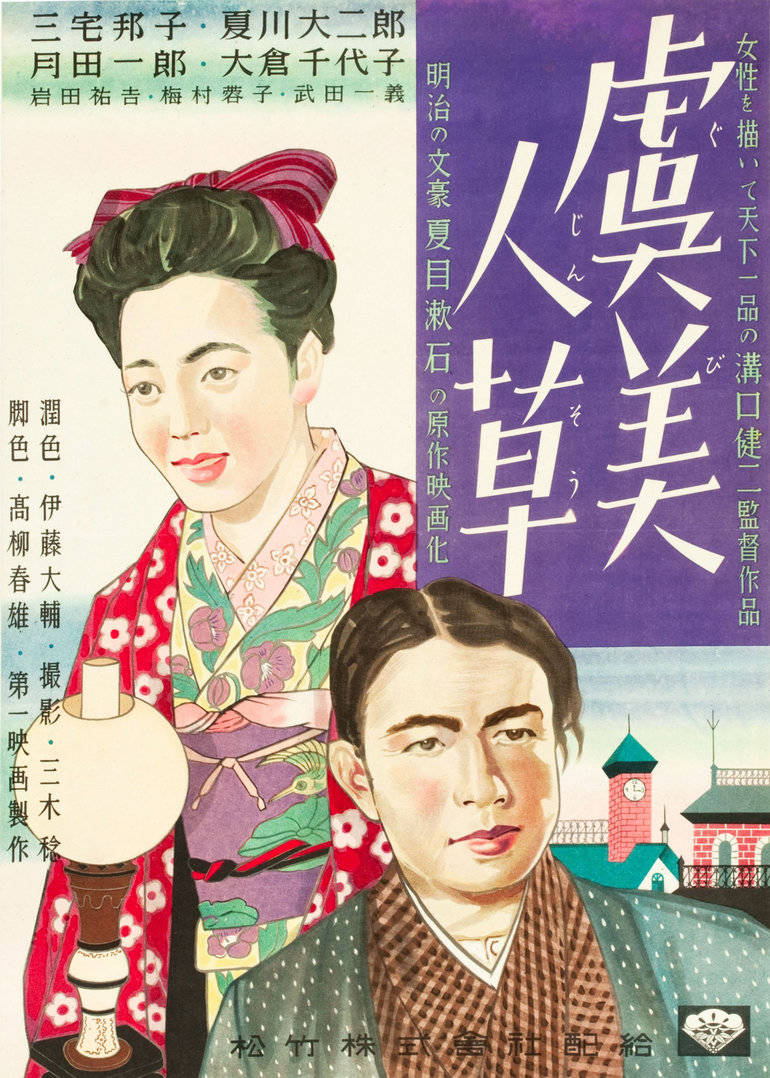
Poppy (虞美人草, Kenji Mizoguchi, 1935)

Most closely associated with tales of female suffering in a patriarchal society, Kenji Mizoguchi’s signature themes are already apparent in the films which survive from the pre-war era. Even so, 1935’s Poppy (虞美人草, Gubijinso), adapted from a novel by Natsume Soseki, largely sidesteps the parallel powerlessness of its twin heroines in placing the central dilemma firmly on the shoulders of its conflicted hero, a young man who owes everything to a benevolent patron whose daughter he is expected to marry but is captivated by a young and capricious heiress and consequently torn between duty and passion.

In late Meiji, an old man, Inoue (Yukichi Iwata), washes graffiti off his front wall apparently scrawled by a man desperate to marry his daughter Sayoko (Chiyoko Okura) whose beauty he claims puts other to shame (Inoue looks on approvingly at the last part, and decides to leave it). Inoue intends his daughter to marry Ono (Ichiro Tsukida), a young man he took in as a starving orphan and raised to adulthood. Ono is currently in Tokyo preparing to complete his doctoral thesis and the pair are very much looking forward to moving there to live with him. While Ono has not forgotten them, he has embarked on a life of his own as a Tokyo student, falling in love with the flighty Fujio (Kuniko Miyake) while working as a part-time English tutor. She too is keen to marry him, despite the fact she is technically still engaged to someone else, Hajime (Daijiro Natsukawa), in a match which was orchestrated by her father many years ago. Fujio’s mother is acutely concerned with her marriage for a number of reasons, the first being that Kingo (Kazuyoshi Takeda), her step-son and the family’s heir, refuses to marry and rejects his inheritance but if Fujio remains single then the fortune reverts to him. Secondly, she dislikes the idea of Hajime as a son-in-law because he has repeatedly failed to secure a position in the diplomatic corps and is currently unemployed.

The problem rests with Ono, whose conflicting desires are characterised not so much in terms of love versus obligation but as ambition versus constancy. Instead of explaining in person to Mr. Inoue that he is grateful to him and has no intention of rejecting their family but thinks of Sayoko as a sister and therefore would like to politely decline the idea of marriage, he sends a friend, Asai (Toichiro Negishi), to explain that he’s too busy to think about weddings and wants to defer the conversation until after his thesis is completed. Of course, Mr. Inoue sees through this thin excuse right away and is offended on his daughter’s behalf. The friend warns him that Ono is “worthless”. “He’s interested in what’s fashionable. He’s stupid” Asai goes on, implying that he is not exactly choosing to marry the woman he loves rather than honour a vague suggestion from the past, but is opportunistically seizing the chance to marry up into the high society of late Meiji Japan (a feat near impossible for a man who was once a starving orphan).

Love is not so much a part of the equation as one would expect and neither are the feelings of either woman held in very high regard. Nevertheless, Kingo eventually tries to warn Hajime away from his sister, explaining that “women who seek pleasure are dangerous”. “When I fall in love, I won’t just sit quietly waiting for my lover. I’ll make passionate love to him” Fujio flirtatiously tells Ono, dangling a precious watch from her father which serves as an indication of betrothal and membership of the family. Fujio and her mother are actively using the only means at their disposal to control their own futures by making a match they believe more beneficial which will ensure they keep themselves within the family succession, suggesting that Fujio, like Ono, is acting less out of “love” than self-interest, something which is later reinforced by her offering of the watch to Hajime who casts it to the waves in insistence that he was never interested in what it represents. 

While Asai recounts his meeting with Inoue, he tells Ono that he’s making the right decision and that his best option from all angles is to marry Fujio, but Hajime overhears him and chimes in with contrary advice that he should think carefully and be true to himself. In essence, all Hajime is telling him is to own his decision and make sure he is willing to live with it or else be consumed by self loathing and misery. By this point, we perhaps expect that modernity will win, that all will accept that it is unreasonable to expect anyone to sublimate their own desires to honour an old obligation and most particularly that the women be expected to submit themselves to dynastic marriages arranged by their fathers, but the resolution is quite the reverse. The modernist Fujio is twice rejected, while Sayoko and her father leave the modern capital for the ancient Kyoto. Ono is forced into a reconsideration of his spiritual debt to the Inoues who he would be betraying in marrying Fujio for social gain which is to say that feudalistic, patriarchal values are subtly reinforced while Western individualism is disparaged with only Hajime standing up for emotional integrity which neither philosophy particularly respects. In the end, nobody is happy but everyone is resigned to their particular misery as their burden to carry in knowledge that they have acted properly which is perhaps as close to a condemnation of a still oppressive society as you could get in 1935. 


Brothers and Sisters of the Toda Family (戸田家の兄妹, Yasujiro Ozu, 1941)

Yasujiro Ozu made only two films during the height of the war. After being drafted for the second time in 1943, he famously sat out the main action from the relative safety of Singapore where he was able to indulge his love of Hollywood cinema to an extent impossible in Japan. Somewhat surprisingly, 1941’s Brothers and Sisters of the Toda Family (戸田家の兄妹, Toda-ke no Kyodai) does not seem to fit the censor’s ideal in that it contains little to no patriotic content and never mentions the war save for presenting the idea of “Manchuria” as a place to start again free of burdensome codes of social oppression but, crucially, embraces classic ideas of filial piety which is presumably how it came to be approved by the powers that be. 

Shortly after the Toda family gathers for the first time in quite a while to celebrate Mrs. Toda’s (Ayako Katsuragi) 61st birthday, Mr. Toda (Hideo Fujino) drops dead of a heart attack and it is discovered that the family firm is near bankruptcy. The large, Western-style mansion where the family photo so recently took place will have to be sold and Mrs. Toda and her unmarried daughter Setsuko (Mieko Takamine) will have to move in with one of the married children. 

Like the later Tokyo Story, Brothers and Sisters of the Toda Family concerns itself with the failure of filial piety in an increasingly corrupt society. Multigenerational homes might once have been a cultural norm, but perhaps it’s understandable that few people might be excited about the prospect of their mother suddenly moving in with them especially as the traditional Japanese house is not designed with personal space in mind. Power dynamics seem to be the problem at the first home where daughter-in-law Kazuko (Kuniko Miyake) makes no secret of the fact that the two women are in the way. She resents having to shift everything around and reorder her home to give them space upstairs, complains about their noisy pet bird, and is then put out when Setsuko and her mother fail to greet her guests even though she specifically asked them to absent themselves in order to avoid meeting them. 

At the next home, however, it’s more a question of maternal heirarchy. Daughter Chizuru (Mitsuko Yoshikawa) has two children and the oldest, her son Ryokichi (Masao Hayama), is very attached to his grandma, so much so that he confides in her about skipping school because he got into a fight and is worried about reprisals. Chizuru’s main objection to them moving in had been that it might distract Ryokichi from his studies, and it’s clear that she finds it difficult to assert her own maternity with her mother hovering in the background. She accuses Mrs. Toda of interfering by keeping her promise to Ryokichi and not telling her about skipping school, making it impossible for them to keep living in the same house. 

Rather than descend on the home of the last daughter, Ayako (Yoshiko Tsubouchi), who is hurt but perhaps relieved to hear they won’t be living with her, Mrs. Toda and Setsuko decide to move into a dilapidated summer house the family thought too worthless to sell. They are now thoroughly marginalised, living in a literal half-way home having lost their position in society. Setsuko, naive but earnest, is the keenest to adapt to her circumstances. Her best friend Tokiko (Michiko Kuwano) is from an “ordinary” family and tries to point out, as nicely as possible, that Setsuko is going to find it much more difficult than she thinks to move beyond her privilege. Aware of her precarious circumstances, she expresses the intention to work but is quickly shut down by Chizuru who finds the idea highly offensive and in fact embarrassing. She urges her to think about a socially advantageous marriage instead.  

Shojiro (Shin Saburi), the youngest and as yet unmarried son, urges her to do something much the same at the film’s conclusion but also offers his sister the freedom to fulfil herself outside the home by accompanying him to the land of the possible, Manchuria. Previously regarded as a feckless failure, Shojiro decided to take up the opportunity to make something of himself in Japan’s new colonial endevour. On his brief return to mark the first anniversary of his father’s passing, he appears in a China-style suit and fiercely takes his siblings to task for their disrespect of his mother. It has to be said, however, that he does not particularly take Mrs. Toda’s feelings into account and foregrounds his own duty of filial piety in insisting that she live with family rather than alone excluding the possibility that she too may prefer her freedom. In any case, it’s freedom he dangles before Setsuko in suggesting that in Manchuria you can do as you please without needing to worry about what others think. He offers her the possibility of marriage, but also of working and a kind of independence which is bound within the family. For herself, Setsuko wants to bring Tokiko too, positing a possible arranged match between her friend and her brother which other members of the family may find inappropriate in its transgressive breach of the class divide. 

The family is both dissolved and restored as the three Todas prepare to remove themselves from a corrupted Japan for, ironically, a new start in the home of old ideas, China, where there is both the promise of modernity and all the “good” aspects of the traditional, to whit filiality. Fulfilling the censors demands in subtly criticising the decadent, selfish, and hypocritical lifestyles of an impoverished nobility while presenting Manchuria as an opportunity remake a better, purer (and subversively progressive) Japan through imperialist pursuits, Brothers and Sisters of the Toda Family offers an ambivalent portrait of contemporary Japanese society in which the young save themselves but only by saving their parents first. 


Brothers and Sisters of the Toda Family is available on blu-ray in the UK as part of the BFI’s re-release of Tokyo Story in its recent 4K restoration which also includes an introduction to Tokyo Story from Tony Rayns, and Talking with Ozu: a tribute to the legendary director featuring filmmakers Lindsay Anderson, Claire Denis, Hou Hsiao-hsien, Aki Kaurismäki, Stanley Kwan, Paul Schrader and Wim Wenders. The first pressing also comes with a booklet featuring an essay by Professor Joan Mellen, archival writing by John Gillett and Lindsay Anderson, and a biography of Yasujiro Ozu by Tony Rayns.

It is also available to stream online via BFI Player as part of the BFI Japan Yasujiro Ozu collection.

Titles and opening (no subtitles)

Late Autumn (秋日和, Yasujiro Ozu, 1960)

“It’s people who complicate life. Life itself is surprisingly simple” according to a puffed up old man having just hugely overcomplicated an admittedly delicate situation in Yasujiro Ozu’s Late Autumn (秋日和, Akibiyori). A reinterpretation of his classic Late Spring, Late Autumn once again stars Setsuko Hara but this time as a widowed mother far more enthusiastic about marrying off her only daughter while enduring the sometimes unwelcome assistance of a group of middle-aged men stepping into the decidedly female realm of matchmaking and of course concluding that they are doing a fantastic job. 

The action opens at the seventh memorial service for Akiko’s (Setsuko Hara) late husband, Miwa, attended by his three old high school friends, Taguchi (Nobuo Nakamura), Hirayama (Ryuji Kita), and Mamiya (Shin Saburi) who’s turned up fashionably late in the hope of skipping most of the sutras. At the refreshments afterwards, talk turns to the marriage of Miwa’s daughter Ayako (Yoko Tsukasa) who is now 24 which is actually edging towards the late side by the standards of the time. The three old men offer to help find prospective matches with Taguchi instantly proposing an acquaintance to which Ayako smiles demurely but is later relieved to discover is already taken. Mamiya too has a lead, a nice young man from his office, Goto (Keiji Sada) who graduated from a good university and is not bad looking either. Though Akiko is excited, she’s surprised to discover that her daughter wants to shut the offer down immediately before even exchanging photos. She feels she’s not ready for marriage and is happy the way things are. Of course, if she fell in love it might be a different matter, but to her mind there’s no rush to get married just for the sake of it. 

Generally speaking, it’s other women who mostly enforce these restrictive patriarchal social norms, after all a daughter’s marriage is ironically the one area of a woman’s life over which she usually has total control. In this case, however, Ayako’s marriage becomes a kind of hobby for three eccentric old men who each have problems of their own they don’t seem to be in a big hurry to deal with. They each have a latent crush on Akiko from their youth though it was obviously Miwa who later married her. Hirayama is widowed with a teenage son, but Mamiya and Taguchi have wives and daughters of their own, Taguchi’s already married but apparently experiencing frequent bouts of “frustration” with her husband, and Mamiya’s still in school, while their wives are fully aware of their lingering affections for Akiko but mostly content to laugh at their ridiculousness. They are all certain that Ayako “needs” to get married as soon as possible and that they are “helping” her towards “happiness” though what they’re mostly doing is a father knows best routine in which they resolutely ignore her repeated desire for things to go on as they are until she decides that they shouldn’t. 

Ayako isn’t interested in arranged marriage, but does become interested in Goto after accidentally meeting him at Mamiya’s company and then discovering they have a mutual friend, all of which makes their relationship both “arranged” and “not”, giving Mamiya cause to think he’s responsible when he’s really just incidental. Thinking things aren’t moving fast enough, the guys decide the problem is Akiko and if they can persuade her to remarry then Ayako will be less reluctant to leave home. Their behaviour is in fact quite manipulative, something they are later called out on by Ayako’s feisty friend Yuriko (Mariko Okada) who is also trying to help but determined to do it in a less problematic way. The gang’s suggestion to Ayako that her mother is considering remarriage when in fact she had no such intentions at all places a rift between the two women with Ayako left feeling hurt and betrayed, as if her mother has offended her father’s memory and done something improper behind her back. 

Ayako is not alone in her lingering prejudice against second marriage even if Yuriko tries to explain to her that she’s being unreasonable. Hirayama too originally objects to the gang’s plan to get him to marry Akiko on the grounds that it would be “immoral” to marry his old friend’s wife, but is brought round when he puts the idea to his son and finds him wildly enthusiastic if only in part because he’s already thought ahead to his own marriage and is worried his dad will want to live with them and that would inconvenient for everyone. When it comes to Akiko’s marriage, there seems to be more wiggle room. Everyone wants her to be “happy” and so there’s a greater freedom to explore various options while completely ignoring her preference to remain a widow. As we see from Akiko’s life, she is already financially independent and really has no “need” to remarry unless she happened to fall in love though she remains attached to her husband’s memory. As she later confesses to Ayako, she has no desire to “climb that mountain” again, and in fact will be happier living in freedom as an independent woman. 

As so often, however, while remarriage is optional marriage is not. Ayako has to marry, she never really has the option to remain single even that was what she wanted. She falls in love with Goto and indeed wants to marry him if perhaps worried about leaving her mother behind, making the three old men partially correct in their conviction that her reluctance was more anxiety than it was opposition. Unfortunately, their “success” emboldens them towards the next match and possibly more unhelpful meddling, complicating what should be simple with their increasingly outdated ideas fuelled by a desire to rebel against their sense of impending obsolescence. “In marriage you just give up” an exasperated wife admits, but wouldn’t it be something if you didn’t have to?


Late Autumn is currently streaming on BFI Player as part of the BFI’s Japan season.

Original trailer (no subtitles)