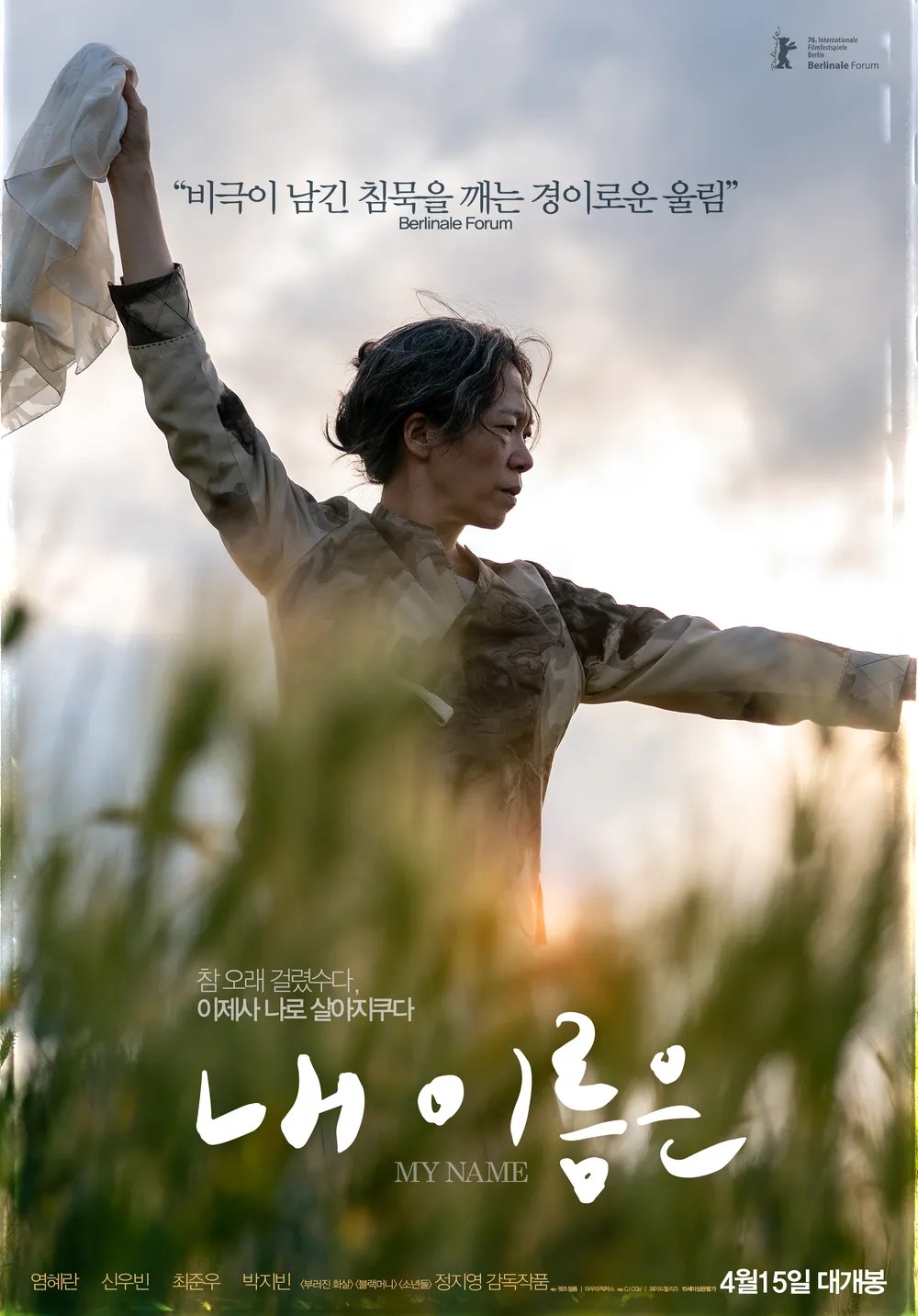
An ageing woman’s internalised anxiety and inability to remember her childhood stand in for a nation’s wilful amnesia in Chung Ji-young’s gentle contemplation of the legacy of the massacre that began on 3rd April 1948 on Jeju Island. Set mainly in the late 90s a decade or so after Korea’s transition to democracy, the film emphasises the importance of reckoning with the buried past in order to prevent its mistakes occurring again.
Those mistakes are largely reflected in the life of cheerful teenager Young-ok (Shin Woo-bin) who is embarrassed by the fact his single mother is much older than all the other parents while she also gave him a name that is customarily given to girls. On the first day of the new term, Young-ok’s teacher Mr Hwang (Heo Dong-won) mockingly refers to him as “Miss Young-ok” with exaggeratedly feminine gestures. Hwang is, in many ways, a relic of the authoritarian past and his mocking of Young-ok’s name bears out the toxic masculinity of a militarised society. Min-soo (Choi Jun-woo), Young-ok’s more astute best friend, takes the teacher to task for skipping over the massacre in their contemporary history classes. Hwang tells him that it is “unimportant” as it does not even appear on the university exams, brushing off Min-soo’s protests that the city wouldn’t be gearing up to commemorate the 50th anniversary of an “unimportant” event. If it were important, it would be in the text book, Hwang insists demonstrating his lack of curiosity and authoritarian mindset. Of course, it later turns out that he is also corrupt. Young-ok’s mother Jeong-sun (Yeom Hye-ran) brings a “gift” to parents’ day, but ends up not giving it to him after noticing that his desk draw is full of other envelopes while he makes veiled comments about all the kids being “equal”, but some being more equal than others depending on how thick those envelopes are.
The film seems to equate this masculine jockeying for power with the origins of the massacre as the boys engage in slapping games similar to the way in which the army forced the villagers to slap their friends who had been accused of being communist sympathisers to prove their own loyalty. Rich kid Kyung-tae (Park Ji-bin) has just transferred in from Seoul having apparently caused some trouble there due to his violent outbursts. He too makes the kids engage in slapping games to define hierarchy, while using picking up on Young-ok as a useful stooge too naive to see that Kyung-tae has manipulated him into becoming class president because unlike Min-soo he will be easy to control. Young-ok is too concerned with being liked and is happy to have been co-opted into Kyung-tae’s gang, going along with his violent rule and even betraying Min-soo by siding with Kyung-tae even when he makes him lie on his behalf. This is where it starts, as the film would have it, by failing to stand up to a thuggish teen leveraging his wealth and status to dominate those around him.
Jeong-sun, meanwhile, is encouraged to address the cause of her anxiety rather than suppress it with medication by a doctor newly arrived from Seoul. Delving into the source of her trauma awakens memories of the massacre that it had long been taboo to talk about. The subsequent connections to both Korea’s involvement with the Vietnam War and the Gwangju Uprising in 1980 in which ordinary people were once again murdered by the state echoing what had happened in Jeju hint at a destructive legacy of militarised authoritarianism infecting all areas of society. In order to fully progress into the new democratic future, the nation will need to reckon with its autocratic past which begins with the act of remembrance.
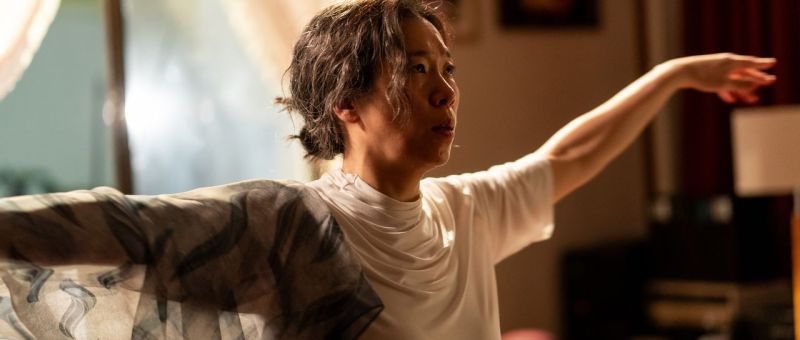
This is really what Jeong-sun begins to do in unlocking the traumatic memories of her childhood and with them reclaiming her authentic identity that also informs that of Young-ok. As she told him, she dances when she’s happy and also when she’s sad, but there is something quite poignant in her dancing her in the memory of those who lost their lives during the massacre as if she were liberating both their souls and her own by resolving to go on building a better, kinder world that remembers its past and is mindful not to repeat it.
My Name screened as part of this year’s New York Asian Film Festival.
Trailer (English subtitles)

