 Written by
Known as the godfather of Taiwanese cinema, Li Hsing started out as an aspiring actor before making a string of incredibly popular Taiwanese-language films despite the fact that he himself was from the Mainland and could not speak a single word of Taiwanese. Language barriers are very much at the centre of his 1962 comedy Good Neighbors (兩相好, liǎngxiāng hǎo), which, in its way, marks the beginning of Li’s transition into Mandarin-language cinema, later becoming a proponent of “Healthy Realism”, in its subtly propagandistic insistence that everyone is really just one big Chinese family.
The Chens are Mandarin-speakers who migrated from Mainland China in the wake of the Chinese Civil War and have just moved in next to the Ngs, who are Taiwanese and do not understand Mandarin very well. Mr Chen is a traditional medicine practitioner, while Mr Ng is a Western-style doctor. Mr Chen insists they’re not in conflict with each other because their patients are looking for different things from each of them and might even use both kinds of medicine at the same time or turn to one kind of doctor over another depending on their symptoms. That will prove to be not quite true as the Chens struggle to attract clientele after opening their business while Ng’s clinic is always busy, leading them to consider poaching their patients by temporarily offering free consultations.
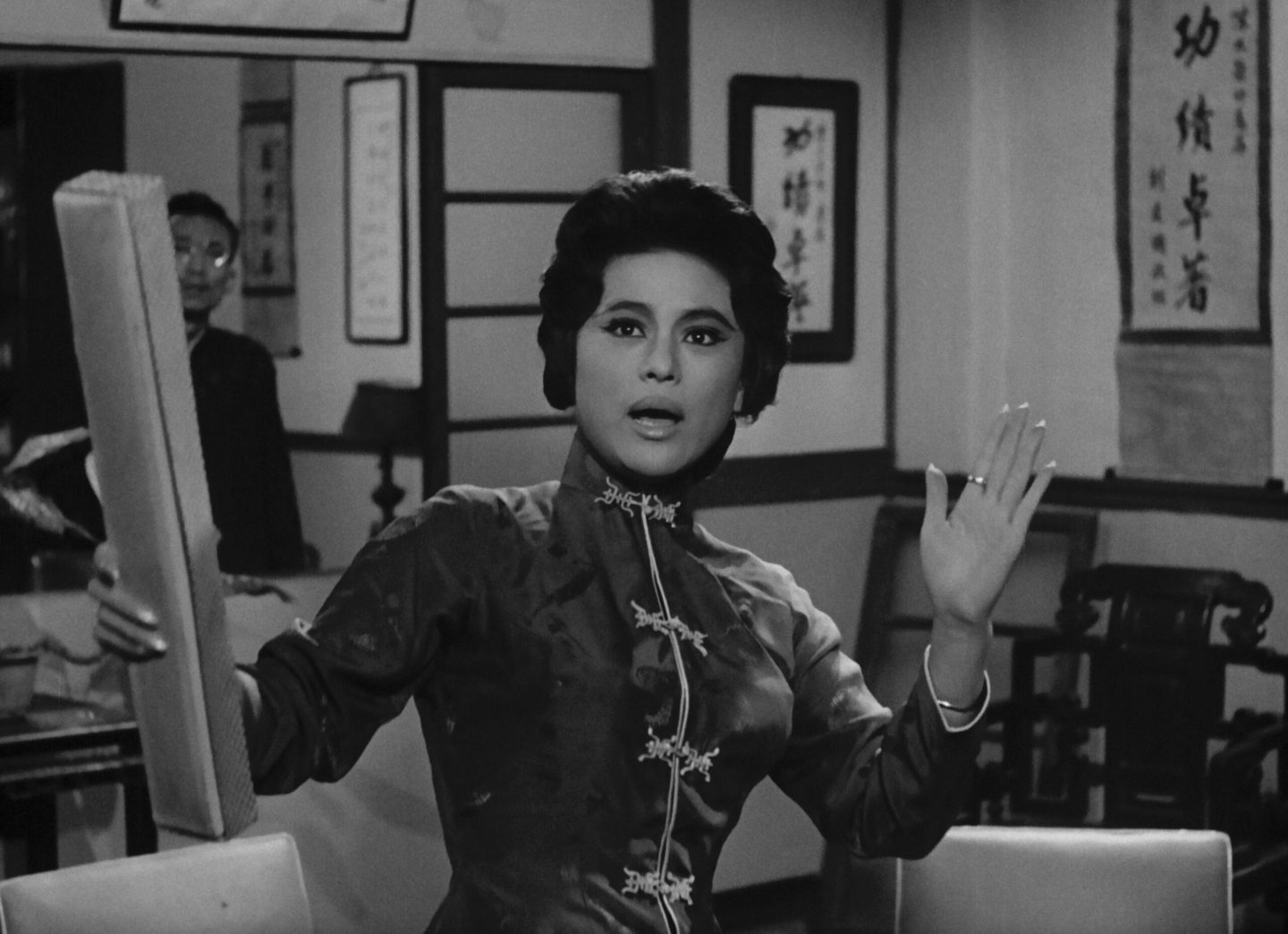
This sense of division is seen in the fact that Ng speaks some Japanese and claims to have studied medicine in Japan which links him with the colonial past rather than what might amount to a different colonial present represented by the KMT government who favoured Mandarin and in fact suppressed Taiwanese Hokkien and the indigenous languages of the island. In a roundabout way, the film uses Ng’s status as a Western doctor as a means of criticising Westernisation while never suggesting that one kind of medicine is better than another. Chen is always seen in traditional Chinese dress and seems to represent the essence of Chinese culture that the Ngs may have lost but can recover through their eventual intermarriages with the Chen family.
The funny thing is that neither Mrs Ng nor Mrs Chen subscribe to their family’s respective medical philosophies with each declaring that they don’t trust their husbands and would rather turn to the other kind of medicine without letting them know. Chen and Ng, meanwhile, are actually much the same with each reminding their wives that medicine’s about saving lives and shouldn’t be thought of as “a business” while the wives are much more practical and actively participate in the trade war that briefly develops between them. The main problem is that, as they cannot understand each other’s languages very well, they encounter many minor misunderstandings that lead to unnecessary conflict and suspicion on both sides.
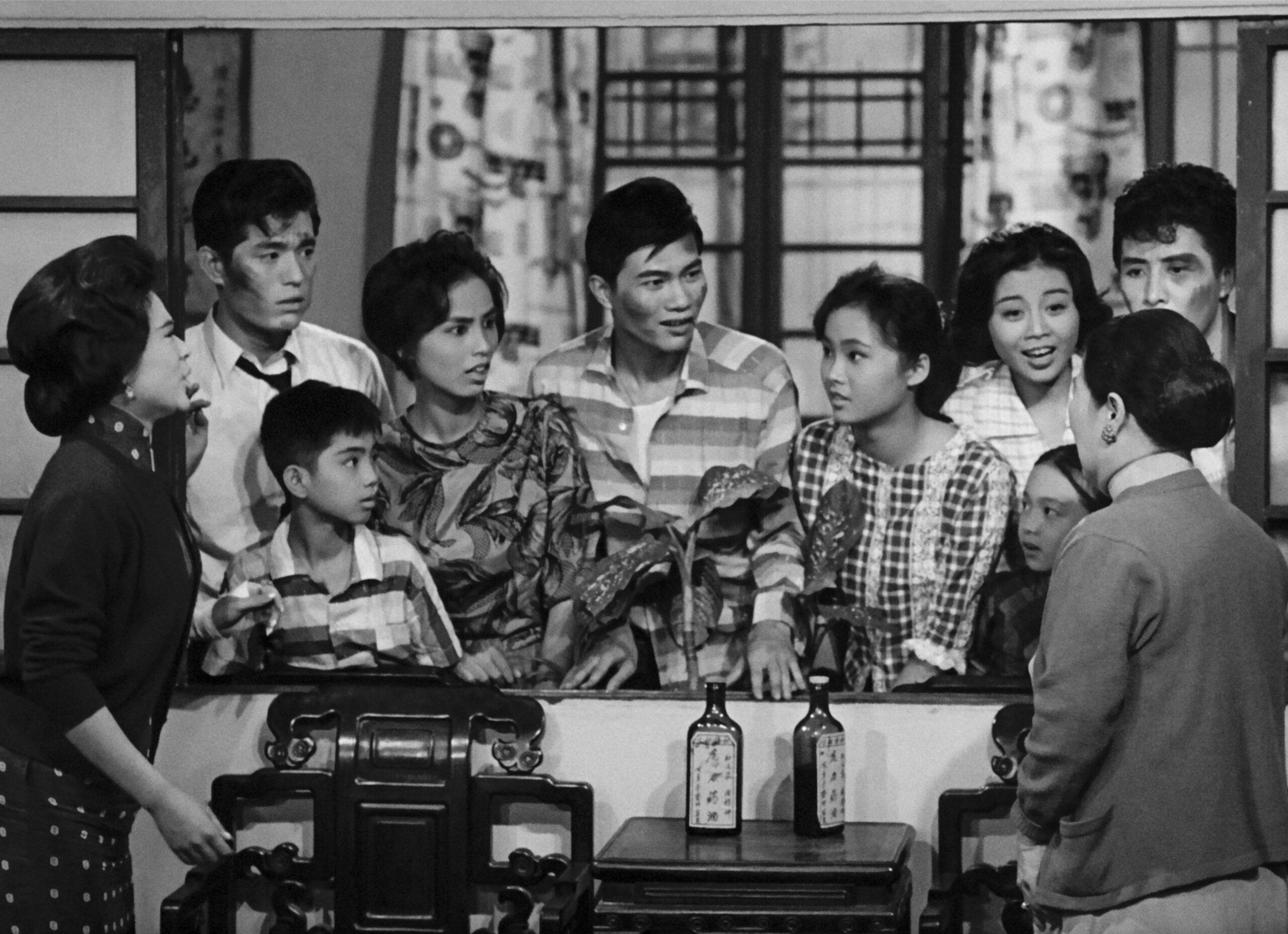
Tellingly, the younger they are the more of each language the children seem to understand with the youngest two largely bilingual and at times acting as interpreters for their older siblings. Predictably, each of Chen’s sons falls for one of Ng’s daughters, while Ng’s son, recently returned from military service, falls for a cousin of the Chen family. This is a problem in part because Mrs Ng had adopted A-kiok with the intention that she would marry their son Bu-hiong. She has been training her up to take over the administrative side of the clinic and for that reason is put out by the idea that she may marry out of the family, while also worried that If she marries a Mainlander he may take her back to the Mainland with him. Bu-hiong is not interested in marrying A-kiok, mainly because they have been raised as siblings, and in fact declares that he prefers “spicy” Mainland girls to “soft” Taiwanese ones. Their decision to marry people of their own choosing is then is a kind of rebuke of local filial customs which are shown to be old-fashioned in contrast with the otherwise “modern” environment of the Western medical clinic where the cure for everything seems to be an injection.
On the other hand, Chen objects when Mrs Ng brands him “a charlatan”, but the film does at times portray them as akin to snake oil salesmen with their various cure all pills they sell at a permanent discount. Nevertheless, despite their falling-out, the Ngs and Chens eventually come to understand each other and are united by their shared Chineseness. The film’s title then takes on a greater meaning in portraying the two nations as “good neighbours” while otherwise insisting that they are bound by a single culture. Though the film hints at the tensions between the newly arrived waishengren and the already present benshengren, it neatly resolves them simply through the eventual intermarriages of the children that literally make everyone one big family. Perhaps surprisingly, the film never suggests that the Ngs should just learn Mandarin, but leaves space for the continued co-existence of both languages with each sometimes mixed in a single sentence as if symbolising the new cultural integration that the film envisages as an idealised future for a new Taiwan.
Good Neighbors screens as part of this year’s San Diego Asian Film Festival.
Trailer (English subtitles)

