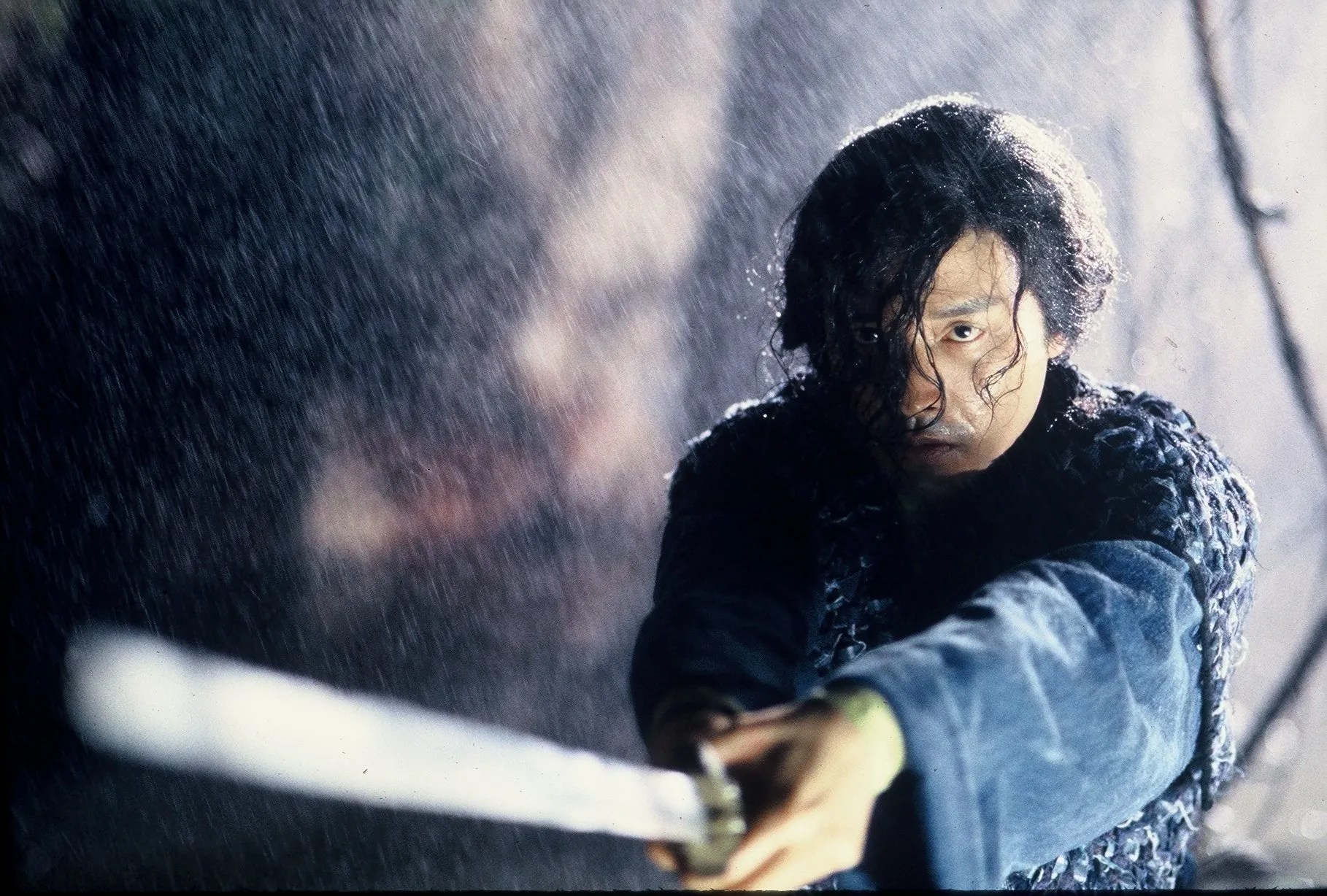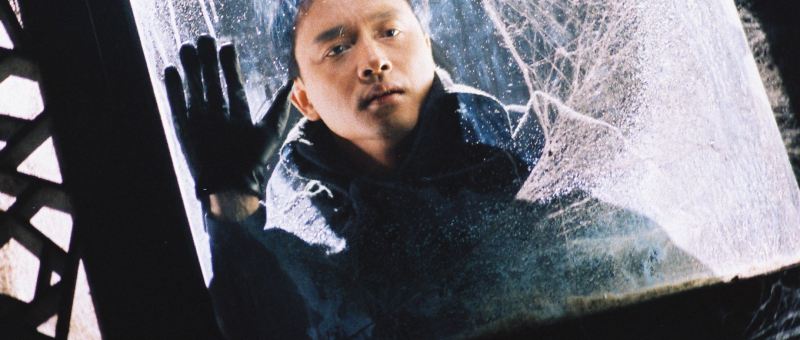
The Phantom Lover (夜半歌聲, Ronny Yu, 1995)

For his last film in Hong Kong before decamping to Hollywood, Ronny Yu looked back to a lost classic in loosely remaking 1937’s Song at Midnight, itself loosely based on Gaston Leroux’s The Phantom of the Opera. A Hong Kong/Singapore co-production, the film was, perhaps surprisingly, shot entirely in Beijing where Yu constructed an opulent set including a full-scale replica of the theatre which he then burnt down for real during the legendary climax of the classic story. 

Set in 1936 (one year before the release of A Song at Midnight and the intensification of the Sino-Japanese war), the film opens with a gothic scene of carriages racing through the fog. A troupe of left-wing actors has come to make use of a ruined theatre to put on their revolutionary play. On arrival, the troupe’s leading man Wei Qing (Lei Huang), who is in a relationship with leading lady Landie (Liu Lin) but claims he is too poor to marry so they will have to wait until he’s famous, is captivated by the auditorium, convinced he can hear strange sounds of a woman singing. The strangeness of the surroundings continues to bother him until he finally decides to ask creepy caretaker Uncle Ma (Cheung Ching-Yuen)to disclose what he knows of the fire which destroyed the theatre 10 years previously. 

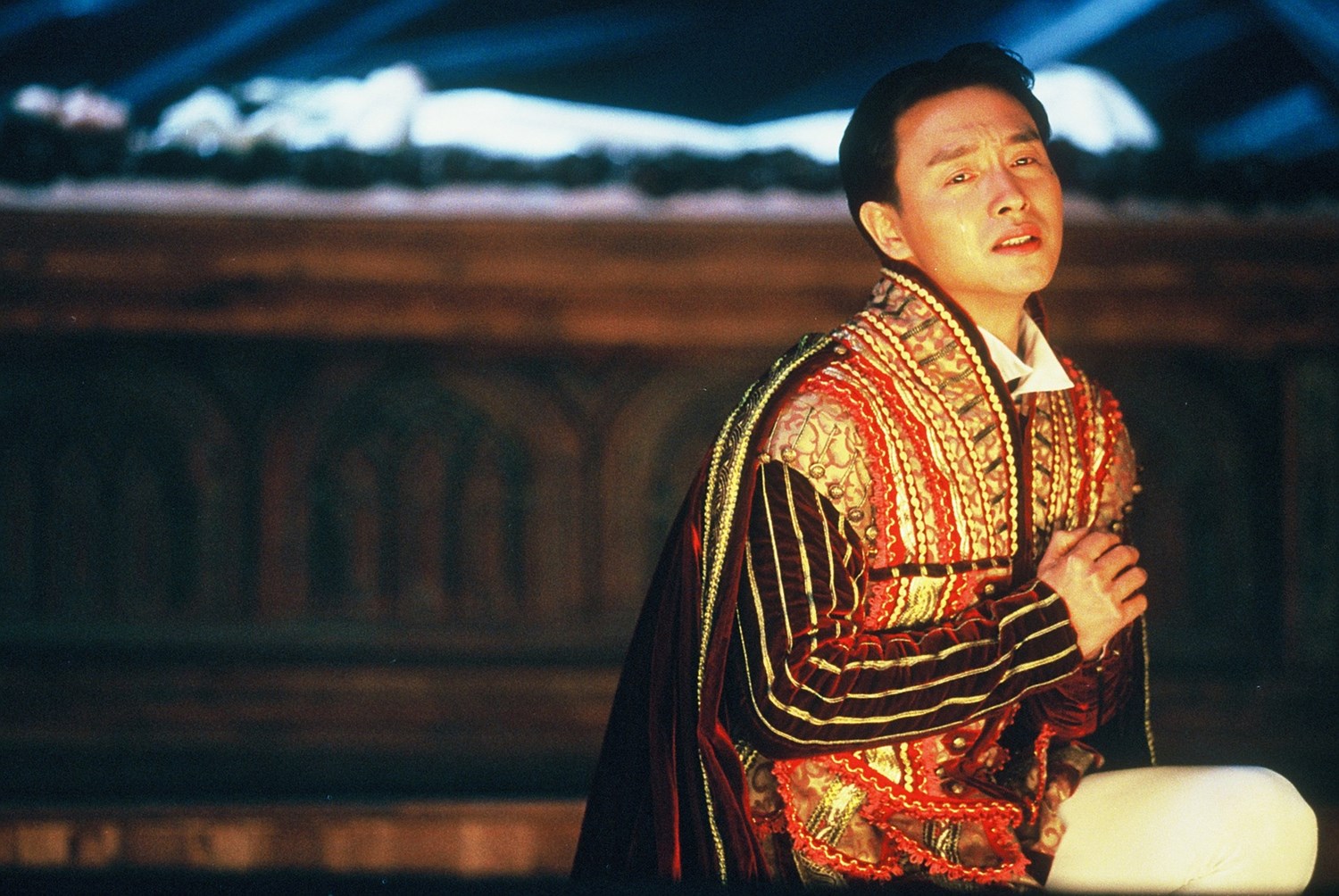
Counter-intuitively, Yu shoots the ‘30s sequence in a washed-out sepia with occasional flashes of colour almost like hand-tinted photographs. As Ma spins his story, we transition into a sumptuous world of reds and golds in the old opera house designed, as we’re told, by the famous actor Song Danping (Leslie Cheung Kwok-Wing) who is said to have perished along with it in the fire. Danping, to whom Wei Qing is constantly likened, was the greatest actor of the age famous for his performances in Western theatre, such as the Mandarin musical adaptation of Romeo and Juliet in which he was performing immediately before his death. In a case of life imitating art, Danping had fallen in love with the daughter of a wealthy family, Yuyan (Geng Xiao-Lin), and wished to marry her, but actors belong to an undesirable underclass and in any case, Yuyan’s father had already arranged her marriage to the idiot son of a powerful politician, Zhao (Bao Fang), in exchange for smoothing the path for his new factory enterprise. 

In a direct reversal of the 1937 film, it is Wei Qing who is the left-wing revolutionary proudly singing communist songs about the “national humiliation” which, it seems, partly accounts for their low audience numbers, while Danping is the reactionary libertine performing in “decadent” Western theatre which seemingly has no political import other than its capacity to cause annoyance to the conservative older generation extremely concerned about Danping’s effect on the local young women. With that in mind, it seems strange that Wei Qing is so quick to accept Danping’s offer once he finally reveals himself and drops the playbook for Romeo and Juliet into his hands. Nevertheless he is content to accept the older man’s tutelage, hoping that the increased revenue will save the troupe and, as implied earlier, he doesn’t actually seem to be very invested in the idea of revolution so much becoming famous. 

Nevertheless, it turns out that he does indeed have integrity. To gain additional funding, the troupe’s leaders end up schmoozing with none other than Zhao, the man who eventually married Yuyan after the fire but quickly discarded her on learning she was not a virgin. Now apparently having risen in politics in Shanghai, Zhao is a misogynistic bully carrying a grudge towards women because of his humiliation by Yuyan. In the scene in which we re-meet him, no longer quite so moronic but definitely nastier, he forces his dining companion to eat 60 meat buns because she had the temerity to declare herself full and try to leave the table. When Wei Qing snaps at him he takes a liking to Landie who is more or less pimped out by the impresario in the same way that Yuyan was sold by her father to the Zhaos in order to further his business interests. On discovering Yuyan, who has since descended into madness, wandering the streets, he stops his carriage to give her a public whipping, ranting about how he had her 10 years preciously but she turned out to be a “slut” who’d already slept with the famous actor Song Danping which seems like a curious thing to announce in the public square. 

Then again, these fascist stooges have an odd approach to public humiliation, stopping Danping’s play mid-performance to call out Yuyan which seems like a counter-intuitive and extremely embarrassing move when they could simply have dragged her out of her box. Danping strikes a minor victory for art when he get the goons ejected from the theatre by the irate audience who, he points out, have had their evening spoiled by officials misusing their authority for a spot of personal pettiness. The intervention is mirrored in the film’s conclusion with the “villains” effectively put on trial in the theatre, as theatre, with an appeal made to law enforcement which is eventually successful as the police commander affirms his intention to act for the public good (though in this case is also serving his own while ironically giving justification to mob rule). 

Despite all of that, however, the major stumbling block to the tragic romance turns out to narcissistic vanity on the part of former matinee idol Danping who has been hiding himself away even though he knows Yuyan has gone mad in love for him simply because his face was ruined when Zhao’s goons threw acid at it and then locked him in the burning theatre. He contents himself with singing on nights when the moon is full knowing that hearing his voice on such occasions is the only thing keeping her going. On learning of his mentor’s true purpose to make Yuyan think he, the handsome young actor, is the Danping of old, Wei Qing is extremely conflicted, unable to understand why the now ghoulish Danping would put Yuyan through so much grief when he could simply have revealed himself a decade ago. Nevertheless, realising the intensity of the romantic suffering all around him perhaps pushes him towards ”forgiving” Landie for having schmoozed with Zhao. 

Full on gothic melodrama, Yu’s adaptation of the classic story is all fog and cobwebs, situating itself in a world which is already falling apart. In photographing the 30s in washed-out greys, he perhaps suggests that something has already faded, or at least become numb, in comparison with the life and colour of mid-20s Shanghai in all its art deco glory. Yet even in giving us a superficially happy ending in which justice, moral and romantic, appears to have been served Yu denies us the resolution we may be seeking with a melancholy title card reminding us that happiness in the China of 1936 may be a short-lived prospect.
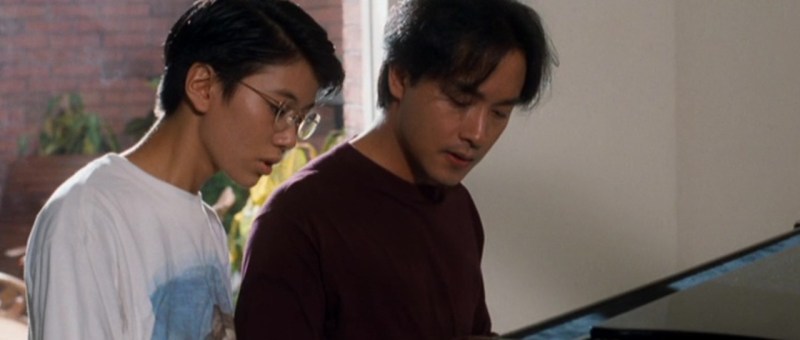
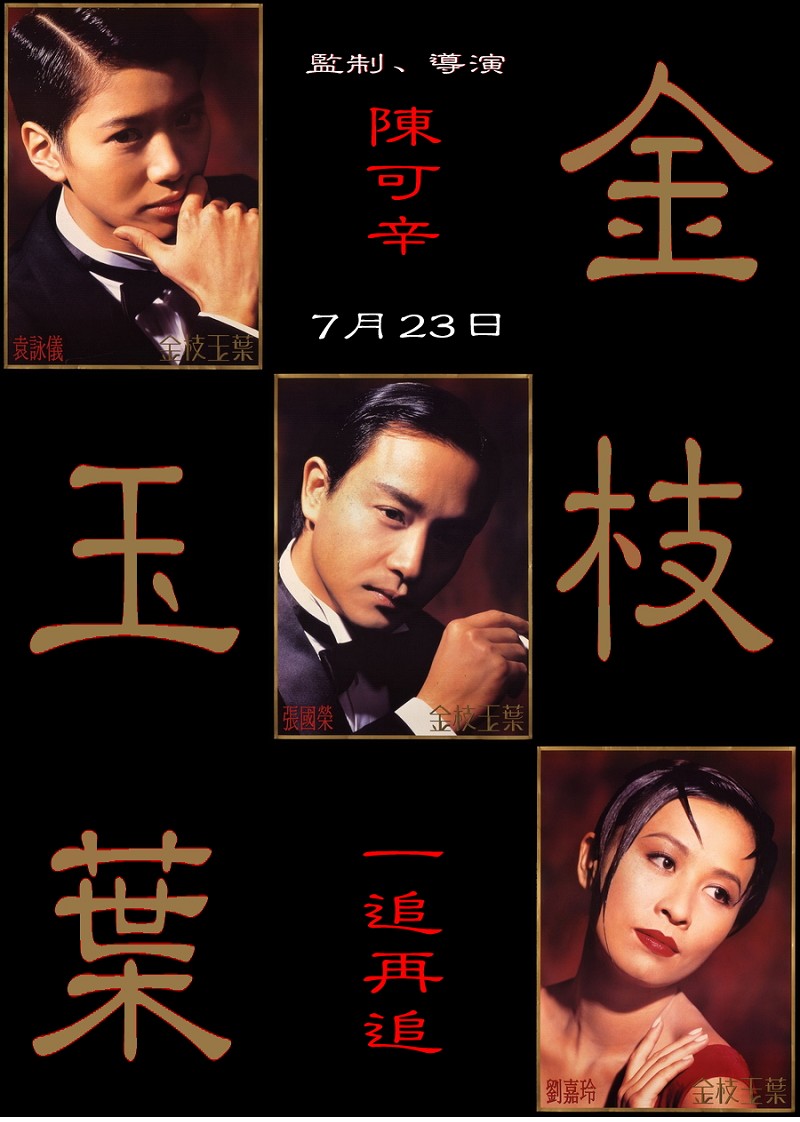
He’s a Woman, She’s a Man (金枝玉葉, Peter Chan, 1994)

A frustrated composer in a moribund relationship with his former muse experiences a moment of existential confusion on feeling an unexpected attraction to his latest prospect whom he assumes to be male in Peter Chan’s hilarious meta comedy, He’s a Woman She’s a Man (金枝玉葉). Broadly progressive in its views of gender and sexuality, the film also takes aim at a growing obsession with celebrity in an increasingly consumerist culture. 

The heroine, Wing (Anita Yuen), is a case in point. She’s completely obsessed with the singer May Rose (Carina Lau) to the point that she almost lives her life vicariously through her. Rose’s successes are her successes, while she earns a few extra pennies peddling celebrity tat like Aaron Kwok’s used tissues. Rose meanwhile is riding high professionally by winning yet another reward, but her relationship with songwriter/manager Sam (Leslie Cheung) has clearly run its course. He’s become bored with the “celebrity” lifestyle and hasn’t written anything new in some time while unwilling to admit that he’s fallen out of love with Rose, refusing to take on new proteges because of his habit of falling in love with them.

That’s one reason he finally agrees to take on a male star, assuming there will be no danger of romantic conflict and intending to kick back against celebrity culture if ironically by creating an “everyman” sensation. But unbeknownst to him, Wing has had a male makeover and decided to enter the auditions in the hope of meeting her idols. Unexpectedly picked up for a recording contract during a spat between Rose and Sam, Wing finds herself having to keep up the act but is conflicted on fearing her presence is only deepening the rift between the “perfect couple” whose wedding it is her life goal to witness. 

Even before her makeover, Wing makes repeated references to her atypical gender presentation in lamenting her flat chest, especially in contrast with a rival celebrity hunter she nicknames “big boobs”. She takes lessons in performative masculinity from her roommate and best friend since primary school Yuri (Jordan Chan), who appears to have no romantic interest in her, and stuffs glow sticks down her trousers to make herself feel more “complete”. Yet despite all that, she is always forced to deny her seeming femininity with several people directly asking her if she is “gay” which is a more complicated question than it seems given that she’s a straight woman but currently living as a man. To find out for sure, Rose tries to seduce her in an attempt which is admittedly predatory and ends in a chase around the bed with Wing desperately trying to avoid being accidentally “outed” in an amorous moment. 

Nevertheless, there is a degree of romantic attraction in Wing’s obsession with Rose which is also a reflection of her internalised sense of shame in her atypical femininity as seen in her wide-eyed observation of Rose’s shadow dance as she slips into something more comfortable along with her admission that she always wanted to know what it felt like to touch a breast (because she feels she has none of her own). Even so, she begins to fall for Sam who is slowly being driven out of his mind with romantic confusion in being unable to reconcile his attraction to Wing with his heterosexuality. One of Wing’s closest associates whom he refers to as “Auntie” (Eric Tsang) is an openly gay man who asks him the all important question of whether of what’s really bothering him isn’t Wing’s ambiguous sexuality but his own. The question takes on a meta dimension in the knowledge that Cheung was himself bisexual but at that point not openly. Much as Sam explains, he might personally not have a problem with it but some people in the industry are very “sensitive about this kind of thing”.

Sam doesn’t know that Wing is “really” a woman, which might neatly explain his inexplicable attraction to her, but cannot begin to reconcile himself until he accepts that it “doesn’t matter what you are” because the fact remains that he loves her. Wing might make her final dash in more stereotypically female attire, but she does so in a voluminous white dress which, aside from its matrimonial connotations, further emphasises her lack of conventional femininity in her literal inability to manage it as she attempts to run while trying not to trip over herself. “Too much reality can really get up your nose,” Rose had complained in trying to keep her fantasy of a fairytale romance alive while internally accepting she can no longer be the “ordinary” girl Sam is looking for in a world of celebrity miasma and consumerist aspiration, finally reaching her own moment of self-acceptance just as Wing decides to shoot her shot right into Sam’s tender heart.

Trailer

Nomad (烈火青春, Patrick Tam, 1982)

In his 1982 New Wave classic Nomad (烈火青春), director Patrick Tam had intended to reflect on Nietzsche’s Joyful Wisdom along with the concept of the wanderer, a heroic ideal of the emancipated mind which necessitates permanent exile in which it is no longer possible to call any place “home”. It was also he claims a critique of the “mindless embrace of foreign culture” by Hong Kong youth then obsessed with David Bowie and Japan. 

The film’s English title refers to the boat owned by the hero’s father which becomes a symbol of the yearning for escape and for the foreign among the young, but is also imbued with an essential irony thanks to its design which recalls the “black ships” that sailed into the bay of Edo and forced Japan to reopen its doors to the world after 200 years of isolation. The original Chinese title, meanwhile, translates as something like “Burning Youth” and strongly recalls Japan’s Sun Tribe movies of the late 1950s which similarly critiqued aimless post-war youth and the corruptions of pervasive American pop culture as embodied by Coca-Cola and jazz music. Tam makes frequent visual reference to Japanese New Wave youth movies such as Nagisa Oshima’s Cruel Story of Youth while the shocking ending (which was not shot by Tam who had envisioned a bloodier showdown aboard the Nomad) also has shades of Ko Nakahira’s seminal chronicle of post-war ennui, Crazed Fruit. 

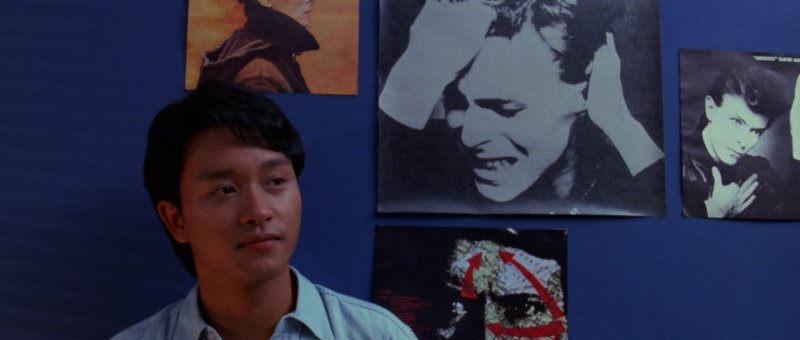
Nomad similarly focusses on a collection of aimless youngsters struggling to find direction in pre-Handover Hong Kong. Louis (Leslie Cheung Kwok-Wing) continues to long for his absent mother and often listens to recordings she once made introducing classical music on the radio while a model of the Nomad sits prominently on a shelf in his room. He has posters of David Bowie on the wall, while his cousin Kathy (Pat Ha Man-Jik) puts on the robes of a Japanese Miko and performs a traditional fan dance. Louis is one of the few young people who does not speak the language, but is later fascinated by the work of a Japanese fashion designer featuring swords and samurai armour that he says, in a moment of foreshadowing, only make him think of ritual suicide. 

His life is directly contrasted with that of Pong (Kent Tong Chun-Yip), a young man from a poor family who works as a lifeguard at the local pool which is how he ends up meeting Kathy who in turn fascinates him with her rich girl sense of confidence and invincibility. The desire to find a place of their own is emphasised by the constant frustration their repeated attempts to make love in Pong’s family apartment which everyone has generously agreed to vacate so he can bring a girl home only for his younger brother to prank him and his dad to come home early inviting half the neighbourhood over for mahjong. The couple eventually have sex on the empty top deck of a tram, another symbol of transience, and then repeatedly in several other public locations until the relationship is disrupted by the return of Kathy’s former boyfriend, Shinsuke (Yung Sai-Kit), who has deserted the Japanese Red Army and is now a fugitive ironically looking for safe harbour while on the run.

The Japanese Red Army was a far-left terrorist organisation most active in the Middle East though Shinsuke’s decision to leave it seems to be less to do with a disillusionment with communism than a reawakening of his humanity in which he has decided he can no longer be a part of its bloodiness and violence. Nevertheless, while holed up aboard the Nomad, he explains that he cannot join the other youngsters in their romantic dream of sailing to Arabia because he has rejected exile and is determined to return home and meet his certain death in Japan. The destructive forces have however followed him in the form of an assassin posing as an assistant to a fashion designer, which seems to be allusion a little too on the nose even if it quickly descends into a strange pastiche of samurai ideology otherwise at odds with that of the JRA in which they track Shinsuke down and then instruct him to commit seppuku with the sword he has been carrying all along. 

In an earlier fight that led Pong and Louis becoming friends, some young women had needled him that he should try to protect Kathy though she needed no protection in this situation and he was unable to provide it anyway. Something similar happens on the beach though he turns out to be surprisingly adept with a samurai sword when he’s unexpectedly rescued by Tomato (Cecilia Yip Tung), a young woman he met in a cafe after he overheard her desperately trying to dump one boyfriend and not be be dumped by another over two different telephones, who suddenly reemerges with a harpoon gun. It’s Tomato, who had kept a copy of Nietzsche’s The Antichrist given to her by a boyfriend but apparently not read it, that finally remarks on their aimlessness, “we do nothing for society”, only to be countered by Louis who answers, “what society? We are society.”

Briefly at the beach they may find the kind of utopia they’re looking for, lighting the cottage with lanterns and sleeping piled one on top of another under a communal mosquito net in the open air, but just as quickly find that dream shattered by the intrusion of a political reality. This nomadic youth finds itself exiled from its home, dreaming of an impossible escape, caught between the colonial present and a colonial future with half an eye on an old coloniser and fast losing sight of its own identity. Abandoned on a blood-soaked shore, all youth can do is look out in shock and confusion bereft even of hope in a liminal space at once transient and permanent. 


Nomad screens at the BFI Southbank on 15th July in its new 4K Director’s Cut as part of Focus Hong Kong.

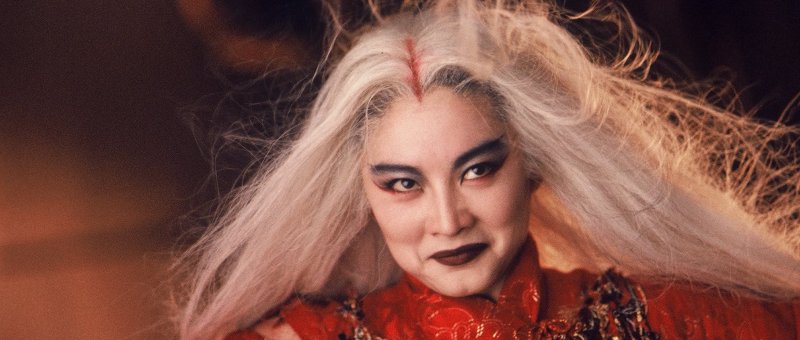
The Bride with White Hair (白髮魔女傳, Ronny Yu, 1993)

“This is the so-called underworld rule. You have no choice.” the hero of Ronny Yu’s gothic fairytale The Bride White Hair (白髮魔女傳) is told, only to reflect “Yes, I do.” though the world will eventually prove him wrong. Tinged with handover anxiety, the film finds its star-crossed lovers longing to exercise their choice of exile, to be allowed to live quietly outside of the political turbulence that surrounds them. But in the end their love is not strong enough to overcome their difference and doubt becomes the ultimate act of emotional betrayal. 

This is a tale that signals its tragedy from its inception. The Ching emperor is deathly ill and only a flower growing on a distant mountain that blossoms only once every 20 years can save him. “This flower is not for you” the emissaries are told by man who appears to be frozen in more ways than one, relating that he has waited 10 years for a woman who may have forgotten him. As a young man, Yi-hang (Leslie Cheung) was the roguish heir to the Wu Tang clan whose recklessness sometimes caused him to behave in unorthodox ways in the name of justice. The eight clans of Chung Yuan are beset on both sides, caught between the conflict of Ching and Ming while fearful of an “Evil Cult” that otherwise destabilises their icy grip over the local area. 

It’s becoming clear to Yi-hang that he may not be on the right side. The people are oppressed and starving but their attempt to procure a little sustenance for themselves leads to a bloody raid with clan soldiers cutting down peasants until a mysterious woman in white (Brigitte Lin) arrives wielding a whip that can cut people in half. Interrupted by a tragic scene while napping in the forest, Yi-hang is immediately smitten with the female assassin whom he later realises is the same girl he saw as a child who saved him from wolves with the song of her flute. 

The woman is an orphan taken in by the cult and trained up as an assassin. She has only a surname, Lien, and is then symbolically “reborn” when Yi-hang gives her her name, Ni-chang. Having fallen in love, the pair vow to leave the underworld together and live in the pastoral paradise of the watering hole where they first made love. “This underworld doesn’t belong to us, let them fight for it” Yi-hang insists, attempting to exercise his choice to escape a system he sees as corrupt before it strains his integrity but as he’ll discover he’s not as much choice as he thought. 

In the shadow of the Handover, it might be tempting to read Lien and Yi-hang as ordinary people who just want to live quietly and resent the intrusion of politics into their lives, though they remain caught between two opposing powers with no neutral space for them to occupy. The same could be said of the cult’s leaders, a pair of crazed conjoined twins, one male one female, who are fused at the back in a potent symbol of duality. The twins were once members of the Wu Tang clan but were betrayed and exiled, driven mad by their banishment. At the film’s conclusion, Yi-hang symbolically frees the twins by splitting them apart but their separation leads only to their deaths. In the end, Yi-hang betrays his love because the underworld does not permit it to exist. He doubts Lien’s word and his rejection of her sparks her metamorphosis into the title’s Bride with White Hair, a vengeful spirit of hurt and rage now condemned to eternal wandering just as Yi-hang is condemned to life a waiting only to watch a flower wither and die knowing that he has damned himself. 

Yu’s world of melancholy romanticism is typical of that of early ‘90s wuxia though carries a touch of the gothic not least in the Bride’s cobweb-like hair which eventually becomes her finest weapon. The pervading sense of longing seems to hint at a future act of imperfect union, tinged with volatile ambivalence but perhaps finally suggesting that this romance is doomed to failure because the corruption of the world into which Yi-hang, the authority, was born is simply too great to be conquered by the innocence of his love. 


The Bride with White Hair screens screens at UltraStar Cinemas Mission Valley April 23 as part of this year’s San Diego Asian Film Festival Spring Showcase.

Trailer (English subtitles)

Happy Together (春光乍洩, Wong Kar Wai, 1997)

4K

“Turns out, lonely people are all the same” according to the hero of Wong Kar Wai’s melancholy handover romance, Happy Together (春光乍洩). A statement cutting straight to the heart of Wong’s sensibility, it at once casts the individual as the universal as a man is forced to see himself from another direction, mirrored in the eyes of his former lover a man he can neither keep or forget. The title’s all too apparent irony becomes plain as the couple find peace only in incapacity, lovers on the run perpetually in search of but unable to attain the image of idealised romance. 

As if to signal his intent, Wong begins with a zoom in on the symbol of the love the two men can never fully realise in the colourful lamp bearing the image of a majestic waterfall they continue to search for but only one of them finds. Switching to a melancholy black and white he shows us for the time at least a semi-explicit sex scene between two men played by two of the biggest stars of the day while the hero, Yiu-Fai (Tony Leung Chiu-Wai), laments in voiceover his tendency to give in when his lover, Po-Wing (Leslie Cheung), utters the phrase “Let’s start over” encapsulating the tempestuous quality of their romance. To do just that, they’ve fled pre-Handover Hong Kong for Argentina in the hope of fixing their relationship but have discovered only more of the same, their contradictory qualities highlighted by their isolation in an unfamiliar environment. 

Tellingly Po-Wing first breaks up with Yiu-Fai on the road after they fail to find the waterfall as if in acknowledgment of the impossibility of mutual acceptance. Both ending up in Buenos Aires the pair awkwardly reunite, Yiu-Fai working earnestly as a bouncer at a tango bar while Po-Wing becomes a sex worker, his sharp outfits and sunshades an immediate contrast with Yiu-Fai’s somber workwear. Nevertheless, when his new life implodes leaving him badly beaten it’s to Yiu-Fai that he returns. By turns resentful, Yiu-Fai will later describe these days as their happiest, those in which Po-Wing was in a sense tethered, incapacitated, and dependent, his worst qualities neutered by his present need. Demonstrative and affectionate, he attempts to rekindle his relationship with the reluctant Yiu-Fai but is soon up to his old tricks again as his wounds begin to heal while strangely jealous as Yiu-Fai develops a friendship with an itinerant young man from Taiwan, Chang (Chang Chen), who works at the restaurant he transfers to after getting into a fight avenging Po-Wing at the tango bar. 

Like Yiu-Fai and Po-Wing, Chang claims he left Taipei because he was “unhappy” and is currently on a journey to the “end of the world”, looking for a lighthouse where it is said the brokenhearted can leave their sadness behind. It isn’t exactly clear if Chang realises Yiu-Fai is gay, seemingly shocked on picking up the phone to hear a man’s voice where he expected a woman’s but saying nothing of it and continuing to frame his conversation in heteronormative terms, though Yiu-Fai certainly seems worried what the fallout might be of Chang’s accidental discovery. Perhaps in flight from an uncertain future in a Hong Kong on the brink of a “reunion” with an authoritarian regime, the two men live freely bathing in the isolation of being two alone together in an unfamiliar culture, but their paths are always set to diverge. Sobbing into Chang’s Walkman, Yiu-Fai bounces to the end of the world and back again, observing the roaring waters for himself before travelling on echoing the footsteps of Chang, representative of another Sinophone nation, coming to realise that his wandering is possible only because he has a place to which he can return. 

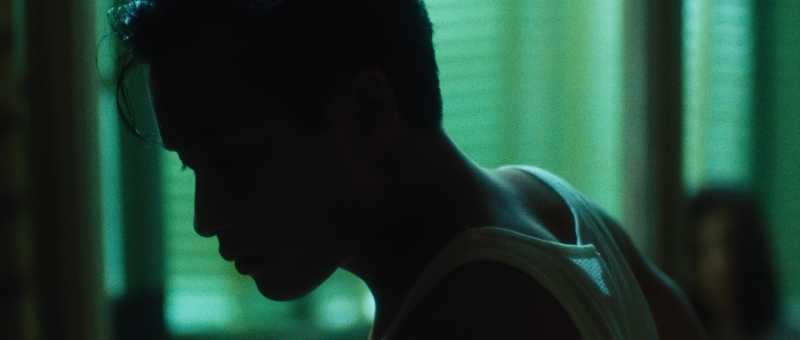
Po-Wing, meanwhile, unexpectedly clings to the past, attempting to mend the lamp while living in the apartment he once shared with Yiu-Fai now regretful that they can perhaps never again “start over”. Leaving his sadness at the end of the world, Yiu-Fai extricates himself from a previously toxic relationship in exercising his right to “start over” having accepted the impossibility of his idealised dream of romance. Impassively observing the news of Deng Xiaoping’s death, he travels a nighttime Taipei, apparently resolved to reclaim his home choosing perhaps a kind of rooted independence following Chang’s example as he rides the elevated train into a neon-lit night filled with energy and positivity for the future. Shot with the melancholy greens and woozy ethereality of Wong’s emotional landscape, Happy Together deceptively mines the joys of moving on in a gradual unburdening that spells the end of loneliness.  


Transfer: As the original negative was damaged by fire and could not be fully restored, some of Tony Leung’s monologues have unfortunately been trimmed though the presentation is otherwise more faithful to the original than others in the series if also deepening the greenish tint.


Happy Together is currently available to stream in the UK via BFI Player in its newly restored edition as part of the World Of Wong Kar Wai season.

Restoration trailer (English subtitles)

Days of Being Wild (阿飛正傳, Wong Kar Wai, 1990)

“I used to think a minute could pass so quickly, but actually it can take forever” laments a lovelorn heroine in Wong Kar Wai’s melancholy ‘60s romance Days of Being Wild (阿飛正傳), somehow neatly encapsulating the director’s entire philosophy. The heroes of Days are obsessed with minutes, seconds, hours, years, the barely perceptible passing of time. Clocks pervade the frame, their violent ticking the most prominent element of Wong’s strangely barren soundscape, a constant reminder of a life slowly etched away ceaselessly beaten towards an inevitable conclusion. 

The hero, Yuddy (Leslie Cheung Kwok-wing), describes himself rather poetically as a bird without legs cursed to fly and fly meeting the ground only once at the moment of his death, an overly sentimental metaphor for which he is later taken to task by the equally rootless Tide (Andy Lau Tak-wah), a former policeman turned sailor who wonders if it’s just a line he uses to seduce lonely women with boyish sadness. We might wonder the same thing as he picks up the lonely Li-zhen (Maggie Cheung Man-yuk), a Macao émigré apparently unable to sleep, by telling her she’ll see him in her dreams before forcing her to look at his watch for a whole minute as if that after 3pm on April 16, 1960 were now a sacred date forever etched in time. She thought that sounded “so sweet”, but as he later tells her Yuddy is not the marrying kind and she too is trapped inside that moment, often framed behind bars or the tiny window of her box office booth before the door is cruelly slammed on her romantic delusion seemingly by automatic operation of the clock. 

In a twist of fate, Li-zhen meets Tide during his previous life as a policeman when she makes a fairly embarrassing attempt to get back together with Yuddy after he reacts coolly to her suggestion of marriage only to discover him with his new love, cabaret dancer Mimi (Carina Lau Kar-ling). “I’m not gonna be as stupid as her” Mimi insists flouncing out of his apartment only to find herself just that, making a desperate visit to Li-zhen at the stadium after the affair has ended to tell her to her back off only for the rather unsympathetic Li-zhen to point out they’ve both been deceived, “he treats all women the same”. 

A perpetual lothario Yuddy moves from woman to woman without touching the ground, but his rootlessness is seemingly born of maternal disconnection in his ambivalent relationship with the Hong Kong sex worker who raised him but refuses to disclose the identity of his Filipina birth mother supposedly a noble woman who for unknown reasons paid a foreigner US$50 a month to raise her son. Like the other women in Yuddy’s life, Rebecca (Rebecca Pan Di-hua) does her best to tie him down, apparently unwilling to reveal his origins in fear he’d leave her, but also mirrors him in her constant quest for affection bought from a series of younger men and apparently one older who threatens their relationship in inviting her to a new life overseas. Ironically enough, she soon tells her son to “fly, fly as far as you can” all the way to the Philippines, though Yuddy already suspects he’s been a flightless bird all along, dead from the very beginning.

Yuddy’s search for closure and identity ends disappointment and a painful lack of resolution, as does the nascent romance between the policeman and the box office girl, her mistimed phone calls amounting to a literal missed connection while Tide ponders lost love from foreign seas, and Mimi tragically chases the ghost of Yuddy all the way to Manila pined for by Yuddy’s self-conscious friend Zeb (Jacky Cheung Hok-yau) left behind alone. Trapped in the timeless present, they are each denied either past or future, lost in a lovelorn dream of perpetual longing. As if to ram his point home, Wong shows us another clock and then another man we’ve never seen before (Tony Leung Chiu-wai) as he gets ready for an evening out, crouching slightly in what appears to be a shallow, sub-divided garret making it clear that these stories have no endings, flying and flying until they hit ground and seemingly born in the air. A woozy, zeitgeisty journey through mid-century loneliness, Wong’s second feature leaves its melancholy heroes consumed by nostalgia for an ill-imagined future unable to escape the cruel tyranny of an interminable present. 


Transfer: Among the more faithful of the recent 4K restorations, Days of Being Wild nevertheless shifts to a slightly greener hue in keeping with the house style adopted for the series, adding to Wong’s sense of melancholy nostalgia and perhaps in keeping with Doyle’s original artistic vision.


Days of Being Wild is currently available to stream in the UK via BFI Player in its newly restored edition as part of the World Of Wong Kar Wai season.

Original trailer (unrestored, English subtitles)

All’s Well, Ends Well (家有囍事, Clifton Ko, 1992)

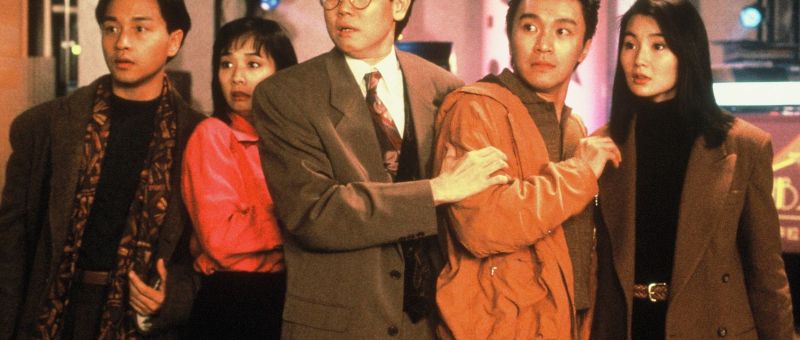
Now an annual institution, the “New Year Movie” was only just beginning to find its feet at, arguably, the end of a golden age in Hong Kong cinema. Clifton Ko’s All’s Well, Ends Well (家有囍事) is often regarded as one of the key movies that made the genre what it is today, taking the box office by storm and spawning a small franchise with a series of sequels, the latest of which All’s Well, Ends Well 2020, is released this year. The original, however, is a classic “mo lei tau” nonsense comedy starring master of the form Stephen Chow as an improbable lothario chased into domesticity by the beautiful Maggie Cheung. 

The plot, such as it is, revolves around three brothers – Moon (Raymond Wong Pak-ming), Foon (Stephen Chow Sing Chi), and So (Leslie Cheung Kwok-wing). Oldest son Moon is a regular salaryman married to devoted housewife Leng (Sandra Ng Kwan-yue). Though it’s his seventh wedding anniversary, he’s late for the family dinner at home with his parents and brothers because he’s entertaining his mistress, Sheila (Sheila Chan), instead. Foon, meanwhile, is a disk jockey on local radio filling in for a friend taking a day off to get married. Eccentric movie enthusiast Holliyok (Maggie Cheung Man-yuk) rings into the show to complain that she feels lost and lonely, so Foon takes her address and phone number under the pretext of gifting her a laserdisc. So, meanwhile, is an effeminate young man who teaches flower arranging and clashes with his tomboyish, motorcycle riding “auntie” Mo-shang (Teresa Mo Shun-kwan) who practices extremely aggressive massage techniques. 

As this is a New Year movie, the conclusion we’re moving towards is the repairing of the family unit with the two unmarried brothers eventually pairing off, culminating in a mass wedding in which mum (Lee Heung-kam) and dad (Kwan Hoi-san) can participate too. Before that, however, we’re dropped into the increasingly affluent world of Hong Kong in the early ‘90s in which men like Moon think they’re king. Leng, meanwhile, laments that she married her husband after high school and unlike him does not have the option to quit her “job”, forced to serve the two “company directors” day and night with no overtime or double pay. Quit is exactly what she does do, however, when confronted with Moon’s infidelity. After promising to take her out for a swanky dinner, he gets distracted by his mistress and ends up getting rid of Leng to have dinner with Sheila after which he is so drunk she has to carry him to his own door. Sheila may have thought she was pushing herself into a middle class way of life, but being a housewife is hard work too, especially with Moon’s rather demanding if eccentric parents who suffer separation anxiety from their TV set and prefer to be vacuumed down to keep themselves clean while they watch. 

Leng, not quite having intended to really leave, is forced to reassert herself as an independent woman. She re-embraces her love of singing, getting one of the few jobs that’s open to women in her situation – working in a karaoke box. Eventually, she glams up and becomes a “credible” rival to Sheila, who has now become the housebound “hag” resented by the regretful (but perhaps not remorseful) Moon who has learned absolutely nothing at all about being a good husband.  

Meanwhile, Foon romances Holliyok through movie roleplay, cycling through Pretty Woman, to hit of the day Ghost, before heading into the darkness of Misery, and the unexpected salvation of Terminator 2. After himself getting caught with another girl, Foon gets hit on the head with an egg and “develops” a “brain disease” that causes him to lose his mind. Holliyok swears revenge, but, inexplicably, can’t seem to give up on the idea of Foon’s love while he remains just as pompously macho as Moon, believing women are things you win and then discard. 

Counter to all that, So and Mo-shang occupy a rather ambiguous space – quite clearly coded as gay complete with offscreen lovers they communicate with only by letter until they make a surprise appearance to make a surprise announcement. First feeling a spark of unexpected attraction while making some electrical repairs in the kitchen, they are eventually shocked straight – So transforming into a pillar of conventional masculinity, and Mo-shang suddenly wearing her hair long (did it grow overnight?), putting on makeup and dressing in ladies’ fashions. Thus, their gender non-conforming natures have been in some sense “corrected” by “love’ or “electroshock” depending on how you choose to look at it, assuming of course that their newfound romance is not just a clever ruse to neatly undercut the use of their homosexuality as a punchline. In any case, as the title says, all’s well that end’s well, and the Shang household seems to have regained its harmony, rejecting Sheila and all she stands for to embrace true family values just in time for the festive season.  


Screened in association with Chinese Visual Festival.

Rerelease trailer (traditional Chinese/English subtitles)

Merry Christmas (聖誕快樂, Clifton Ko Chi-Sum, 1984)

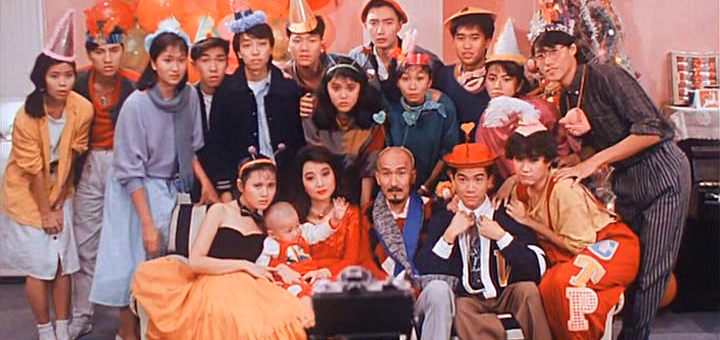
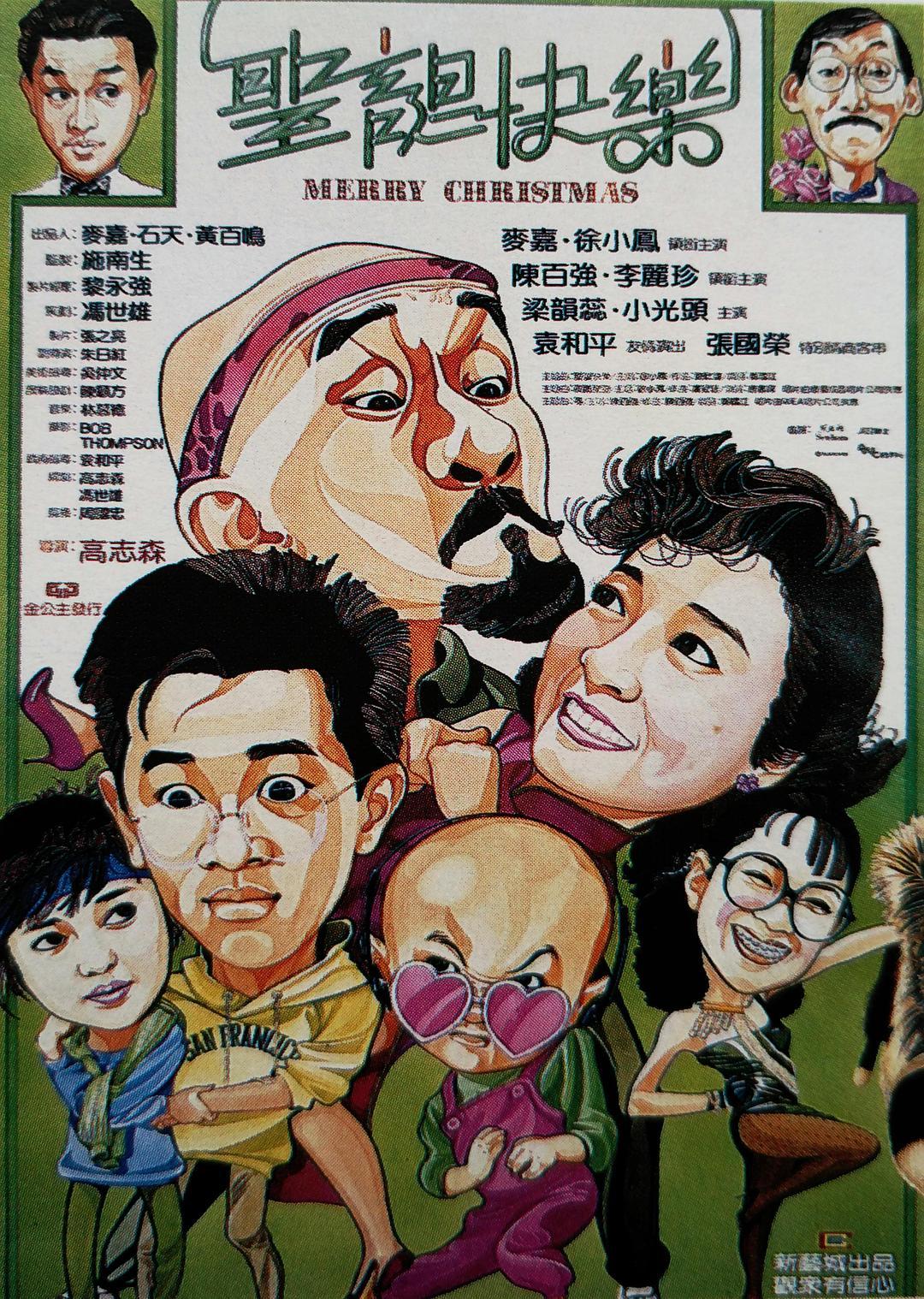
Merry Christmas poster 2The Lunar New Year movie solidified itself as a concept in the early ‘80s and is often an occasion for heartwarming silliness celebrating food and family. Arriving in 1984, Merry Christmas (聖誕快樂) shifts the zany action up to the Western festive season as a widowed Hong Kong dad struggles to express his feelings for the woman next-door who’s been looking after his young son while his two grown up kids contend with romantic troubles of their own in the rapidly developing city.

“Baldy” Mak (Karl Maka) is a newspaper editor who lost his wife some time ago. Though everyone else is getting into the holiday spirit, Baldy is celebrating his birthday which gives his goodnatured colleagues an excellent excuse to prank him and though it ends in him getting joke fired, it does eventually bring him a bonus and a new car. Meanwhile, he and the kids – earnest teenage son Danny (Danny Chan Bak-Keung) and aspiring model Jane (Rachel Lee Lai-Chun), are largely dependent on their neighbour, Aunty Paula (Paula Tsui Siu-Fung), for domestic assistance including looking after Baldy’s toddler son, Baldy Junior, while he’s out at work. Danny and Jane are hoping their dad will eventually ask Paula to marry him, but he remains diffident. Until, that is, she drops the bombshell that she might not be able to look after Junior anymore because she’s had a letter from her cousin in America (Yuen Wo-Ping) who wants to marry her and she’s thinking of emigrating to be with him.

Baldy, not a bad man but unafraid to resort to underhanded tactics, spends the rest of the picture avoiding telling Paula how he really feels in favour to trying to break up her possible romance with her cousin. An early joke sees him fighting for parking spaces in his beaten up car, something which eventually gets him into an argument with the good-looking yet similarly underhanded John (Leslie Cheung Kwok-Wing) who fakes a limp to get nearby bystanders to push Baldy’s car out of the way, causing Baldly to try and get his own back only for it to hilariously backfire. John, meanwhile, takes an instant liking to Baldy’s daughter Jane, which instantly gets Baldy on edge. A typically strict dad, he takes Danny aside to instruct him about how to get the best bang for his buck taking girls to the pictures, but is quick to warn Jane that no man can be trusted and she’s to be home by 10pm at the latest. Needless to say, it’s a moment of minor embarrassment for him when the guys at work are looking at tasteful glamour shots to include in the paper only to discover that Jane’s been earning a few extra pennies as a model.

The double standards only increase as Baldy and Danny hatch a plan to put Paula’s cousin off by convincing him she’s actually a sex worker and in debt to a sleazy pimp. Meanwhile, Baldy takes him out on the town to show him a few sights while setting up amusing tableaux that make him out to be a violent pervert, groping women, kissing men, and kicking little kids in the face. Paula, meanwhile, remains thoroughly fed up with Baldy’s antics, keeping her composure when he tries to make her jealous by dressing like a teenager and cosying up to Danny’s love interest “Jaws” (beautified by getting her braces taken off and wearing contacts), but asking her cousin to secretly record everything Baldy says to him on their weird “date” around Hong Kong.

Charming period details abound, like the “3D” adult movies Baldy rents (and inappropriately watches with Baldy Junior) which have to be watched with “sunglasses”, and Baldy’s constant inability to hail a cab coupled with his atrocious parking techniques and delightful pre-photoshop efforts to frame the cousin and then expose him with a slideshow lecture delivered solely for Paula’s benefit. Meanwhile, the festive spirit is ever present with the ubiquitous Christmas trees, Poinsettia forest outside Baldy’s door, and seasonal set piece at Paula’s nightclub. Delightfully silly, Merry Christmas is a zany holiday treat, a middle-aged rom-com in which a slightly ridiculous widower and a lonely nightclub singer discover the courage to fight for love thanks to a little Christmas magic and the fierce support of meddling family members.


Original trailer (no subtitles)

Rouge (胭脂扣, Stanley Kwan, 1988)

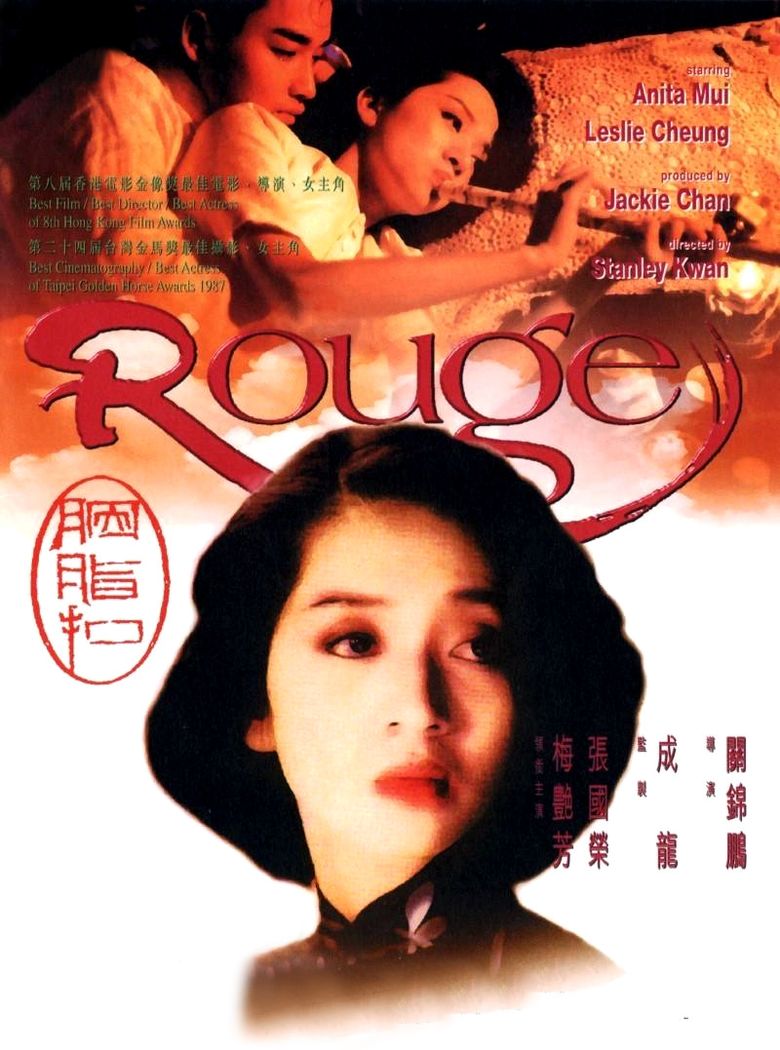
Rouge poster 2How long should you wait for love? They say every love story is a ghost story, and Stanley Kwan’s Rouge (胭脂扣) is a love story in more ways than one. A love letter to old Hong Kong, Rouge laments the passing of time and defeat of beauty by efficiency but then stops to wonder if perhaps that isn’t better and if we’re all secretly happier in world in which dying for love has gone out of fashion.

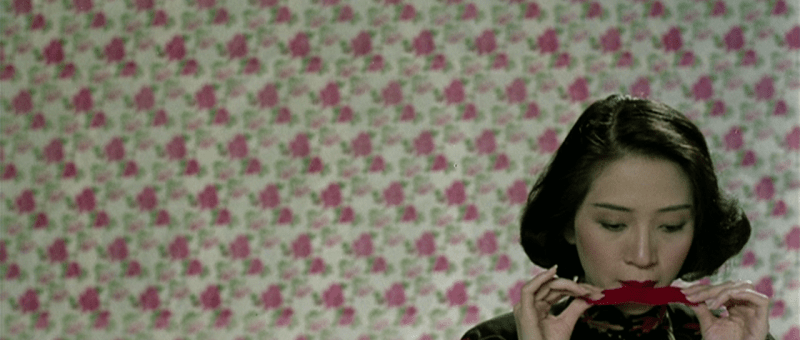
We begin in the early 1930s as courtesan Fleur (Anita Mui Yim-fong), dressed as a man and singing of doomed love, catches the eye of nobleman Master 12 Chan Chen-Pang (Leslie Cheung Kwok-wing). He lavishes gifts on her and the pair fall madly in love, but his family do not approve of the match and are set on Chen-pang marrying their chosen bride. Out of options, the pair decide on double suicide, but Fleur finds herself all alone in the afterlife and, after 50 years have passed, makes her way to the Hong Kong of the late 1980s in search of lost love.

Many things have changed in the Hong Kong of 1988, but luckily they still have classified ads which is how Fleur decides to find Chen-pang. Of course, ghosts don’t generally have need of money which means she’s still out of luck, but for some reason she finds herself attached to the kindly clerk, Yuen (Alex Man Chi-leung), who eventually agrees to “admit” her while he and his reporter girlfriend Chu (Irene Wan Bik-ha) help track down Chen-pang in the hope that Fleur can find him before the next memorial of her passing in two days’ time.

Kwan contrasts the opulence of the 1930s with the stark efficiency of the modern city in which pleasure palaces have been replaced with convenience stores. Fleur wanders through a world much changed, and sees its ghosts everywhere she goes. The Yi Hung teahouse is place of decadent delight filled with music, colour, and elegance but it’s also one built on misery in which young women are trapped and exploited as a direct result of generalised poverty. Hong Kong has moved on and is now one of the wealthiest cities in Asia, bustling with industry and ambition. The modern cityscape may be less aesthetically pleasing, but perhaps that’s not altogether a bad thing if that beauty had existed only to mask an unpalatable reality.

It is true enough that Fleur struggles to make herself understood to Yuen and Chu – her language is no longer current and her way of thinking arcane considering they are only two generations apart. Fleur wonders why the pair of them aren’t married, to which Yuen bemusedly replies that perhaps it’s that there’s no particular pressure urging them towards a more formal union. In any case their relationship seems solid enough in a pleasant, ordinary sort of way. Where Chen-pang gives Fleur the gift of an empty rouge case, Yuen notices Chu’s shoes are worn and thinks to buy her new ones seeing she’s always running about. They wonder if they’d commit suicide for love and come to the conclusion that they wouldn’t, but that doesn’t mean they don’t love each other only that life is precious and that kind of grand romanticism seems so absurd in the much more down to earth 1980s.

Still, Chu and Yuen can’t help but be captivated by the grandeur of Fleur’s romantic longing. They too want to see a happy ending to her tragic story that makes 50 years in limbo worth the wait, but what if Chen-pang was just a selfish coward who woke up from a romantic daydream and went back to his ordinary life of familial obligation and frustrated desire? Fleur died for love, but 50 years later it all seems so senseless and her return is, in a sense, an attempt to come to terms with disappointment – in love and in the world. The Hong Kong of 1988 may have been anxious too, if in a different way, as another uncertain dawn hovered on the horizon but Fleur’s parting gift is to accept that there’s no point waiting for someone who has no intention of coming. She says goodbye to the past, and walks into a new future with a lightness in her step while the past, suddenly burdened, can only look on with regret.


Rouge screens at the BFI on 4th May with director Stanley Kwan in attendance for a Q&A as part of the 2019 Chinese Visual Festival.

International trailer (dialogue free, English captions)

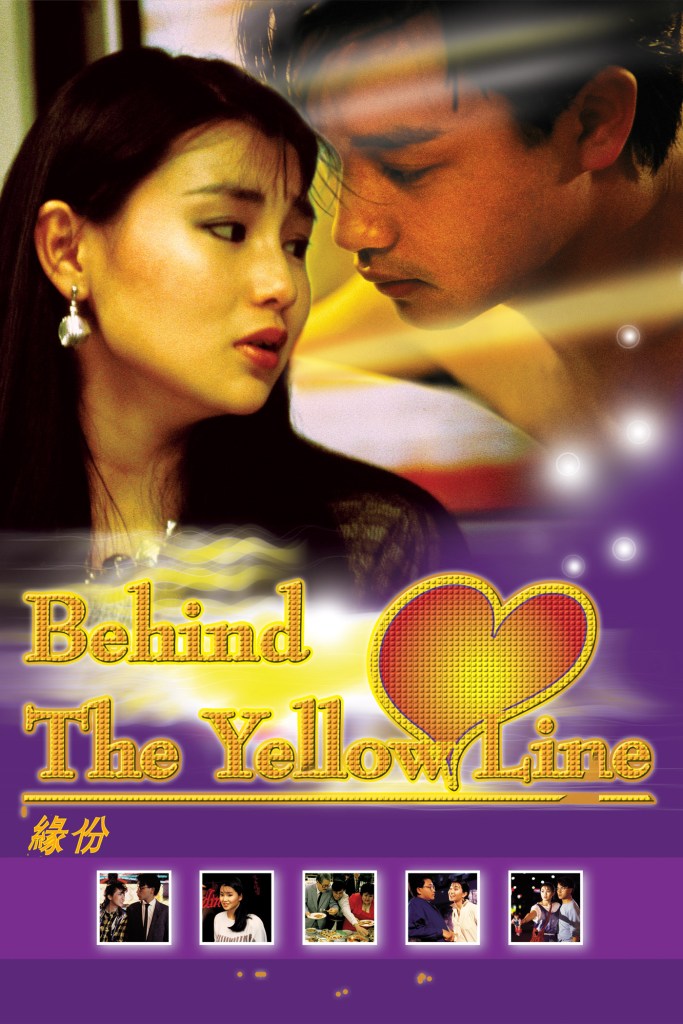
Behind the Yellow Line (緣份, Taylor Wong, 1984)

behind-yellow-lineBack in the 1980s, you could make a film that’s actually no good at all but because of its fluffy, non-sensical cheesiness still manages to salvage something and capture the viewer’s good will in the process. In the intervening thirty years, this is a skill that seems to have been lost but at least we have films like Taylor Wong’s Behind the Yellow Line (緣份, Yuan Fen) to remind us this kind of disposable mainstream youth comedy was once possible. Starring three youngsters who would go on to become some of Hong Kong’s biggest stars over the next two decades, Behind the Yellow Line is no lost classic but is an enjoyable time capsule of its mid-80s setting.

Paul (Leslie Cheung) is a mild mannered guy trying to get to work on time and make a good impression on his first day on the job but after having a taxi stolen out from under him and having to run some of the way, he rushes onto the underground where he has a meet cute with Monica (Maggie Cheung) – a sad looking lady who barely notices his presence. Paul is smitten and follows her onto the train where she continues to ignore him. Despite his best efforts he makes more of an impression on Anita (Anita Mui) – a wealthy and extremely fashionably dressed woman with giant 80s hair! Anita makes a play for Paul but he only has eyes for Monica. Monica is just getting over a failed affair with a married man and isn’t really sure of anything anymore. It’s all in the hands of fate and the mass transit authority but will true love really run its course?

Behind the Yellow Line (presumably so named for its train station setting, the chinese title is simply “fate”) is meandering mess of a picture though very much typical of its time. Paul and Monica get together but she’s still torn over her married lover who resurfaces at the most inconvenient moment whilst also fighting off the attentions of her flirtatious boss causing Paul to overreact in fit of jealously and almost ruin everything in the process. Eventually they decide to sort things out with a game of fate as Monica hides on the MTR expecting Paul to successfully pin point her location before the last train rolls so that she knows they are truly destined to be together.

This central spine of the film works well enough as Paul and Monica tempt fate with their true love romance but where does Anita fit into all this? Popping up now and then almost at random, Anita seems like a strange after thought or a refugee from another film. A stock ‘80s style kooky character, she’s all big hair and bold makeup but she’s also a wealthy woman trying to buy Paul (or more particularly his parents) with the promise of material security. ‘80s setting aside, consumerism is only a mild bi-product and neither Paul nor Monica is particularly pressed over material concerns – all that matters here is true love destiny and the successful resolution of their romantic difficulties. Anita becomes a kind of cupid, forsaking her own feelings in order to satisfy Paul’s in gesture of true love that also recognises having lost out in the great game of fate as her feelings are not returned. Or, there are things money cannot fix (at least, not in the way you want it to).

In this way Behind the Yellow line becomes more interesting as it’s Anita and Monica who begin to move the plot. Monica is quick to remind us that she’s a single woman and she has the right to choose – in this case, she feels sorry for both of her potential partners (whilst completely disinterested in her boss) and so is inclined to decide to remain alone. The film obviously doesn’t go this way, but it does present her choice as a perfectly valid one whilst also affording her the agency to choose her own destiny right the way through. Anita largely wields her power through her money (which appears to be inherited, the gang of other young people she hangs round with seem to be wealthy too making her choice of Paul a relatively strange one), but she exercises her individuality through her unconventional behaviour and bold fashion choices, refusing to give in to social norms but submitting to “destiny” in acknowledging that her feelings are unrequited.

Very much of its time, Behind the Yellow Line is an obvious piece of disposable entertainment designed to appeal to a very specific audience. Filled with cheerful ‘80s cantopop and bright neon lighting there’s relatively little angst in this tale of youthful romance. Everything bounces along much as one would expect with no melodramatic intrusions save Monica’s sometimes melancholy indecisiveness and Paul’s diffidence. Structurally the film is riddled with problems not least with its use of Anita who seems to appear and disappear as needed with no clear indication of her precise function yet it provides enough silly humour and good natured drama to coast though without too many problems. No great lost classic but enjoyable enough, Behind the Yellow is worth seeking out if only to witness the genesis of these three soon to be giants of the entertainment world whose careers became curiously intertwined before ending much too soon in the early years of the following century.


2003 Celestial Pictures trailer (English subtitles)

Original 1984 Cantonese trailer (English subtitles for onscreen text only, no subtitles for dialogue)

https://www.youtube.com/watch?v=jYrjpTHtXCE