
3670 (Park Joon-ho, 2025)

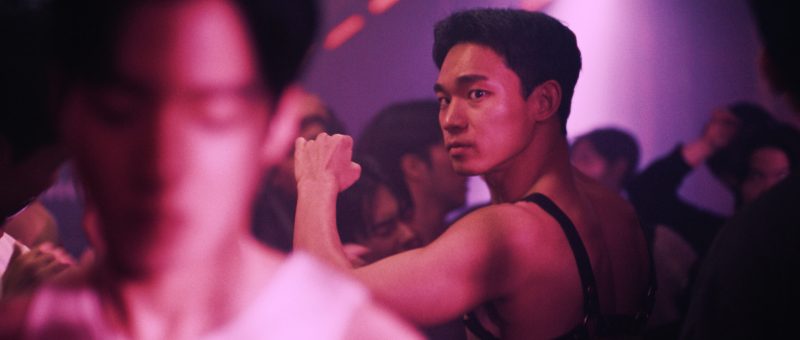
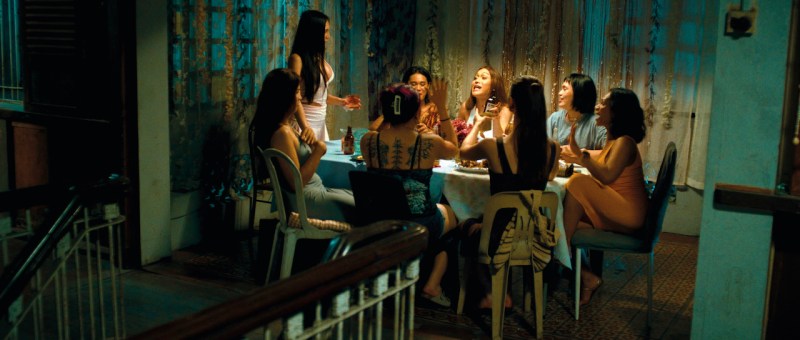
In recent years, indie films about North Koreans in the South have focused on the discrimination they face and how difficult it can be for them to integrate into South Korean society, not because of how different it is from everything they’ve known, but because the South doesn’t quite accept them. The problems of the hero of 3670 are, however, two-fold in that he is also gay and finding it difficult to straddle both communities while looking for companionship.

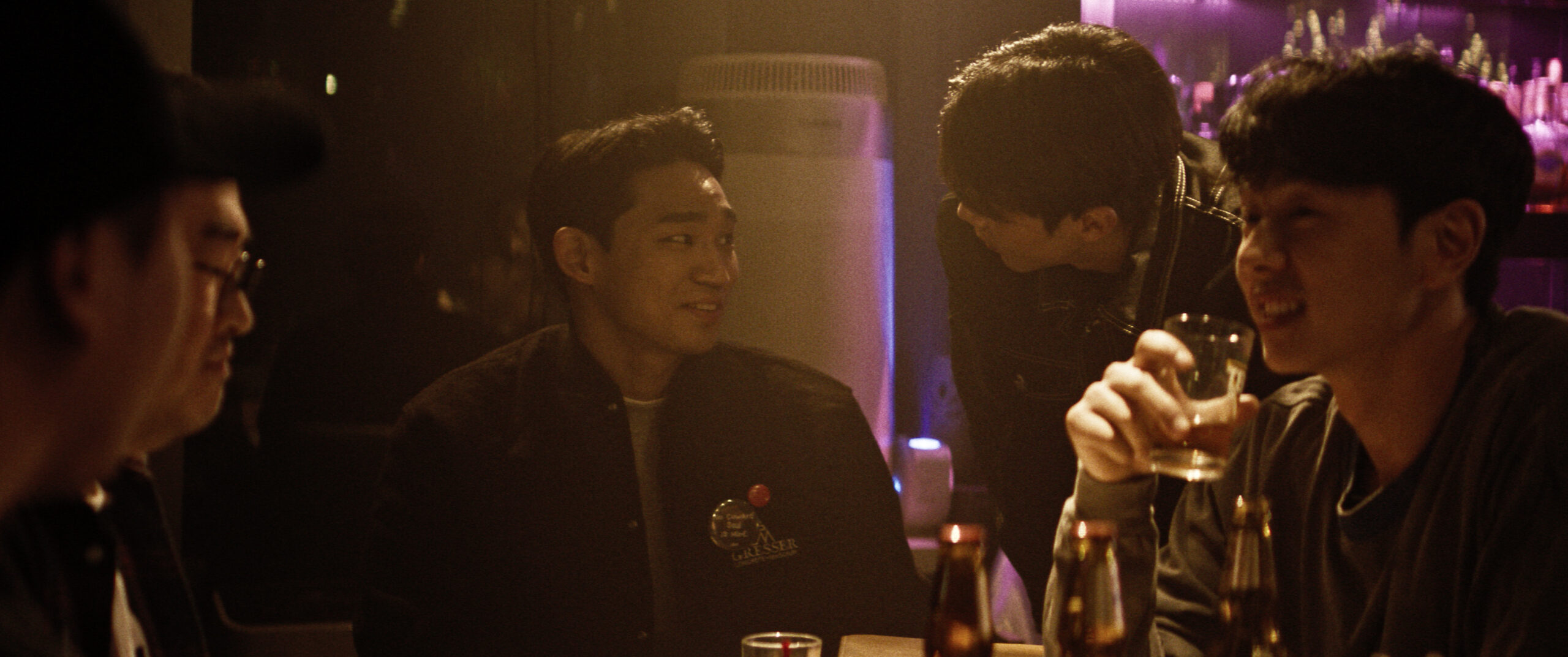
The opening scene finds him having sex with a guy from a dating app in a darkened room, but as soon as they’re finished, his partner gets up to shower and insists on leaving, refusing Cheol-jun’s (Cho You-hyun) invitations to get dinner and clearly uninterested either in friendship or romance. He asks him where he’s from, and on figuring out he’s from the North, rolls his eyes a little asking if he doesn’t have any gay friends yet. Cheol-jun doesn’t have any South Korean friends at all, let alone gay ones, and has never met any other gay people who left North Korea. He’s never disclosed the fact that he is gay to his North Korean friends or aunt living in the South who is his only familial link, which leads to moments of accidental insensitivity when his friends push him to date a North Korean girl they mistakenly think is interested in him, and his aunt tells him to settle down and get married in the South as his parents would have wanted him to.

The film seems a little ambivalent about Cheol-jun’s third community which is the Church. While it might be as Cheol-jun says helpful in a lot of ways in giving him something to belong to and helping with things like scholarship applications, it’s somewhat exploitative in that their help is obviously conditional on Cheol-jun accepting their religious beliefs which are otherwise in conflict with desire to find freedom as a gay man. Cheol-jun sometimes picks up extra money speaking at Church events in which he outlines how grateful he is to have been “saved” by the grace of God which brought him to the South away from the Godless North. Unlike other similarly themed films, 3670 doesn’t tread any further into how those from the North can be almost fetishised and exploited for their stories, but it is clear that that the Church is also using him to further their own aims. On the advice of his hookup date, Cheol-jun ends up attending a mixer for gay men which he keeps secret from his North Korean friends where he meets Yeong-jun (Kim Hyeon-mok), a gay man of the same age who lives in his area and shops at the convenience store where he has a part-time job, and later gets him a paying gig speaking about his salvation at his church.

Yeong-jun’s mother is a deaconess, and it seems that, in some ways, Yeong-jun is even less free that Cheol-jun who is beginning to discover a new kind of freedom as he introduces him to the gay scenes in Jogno and Itaewon. He views himself as inferior because he doesn’t believe himself to be conventionally attractive and has been having trouble passing the interview process to get a job (possibly those two things are somewhat connected in his mind). Yeong-jun also hasn’t said anything to his mother about being gay and sometimes goes to church to placate her even though he thinks there’s no place for him there as a gay man with the rather repressive religion that his mother practices. When he gets a job and is fully independent, he plans to stop attending church, making clear that for him, as a gay man in a capitalistic society, his freedom rests in financial security and achieving socially defined success by joining the workforce.

The fact that’s capitalism to which Cheol-jun must adjust himself is echoed in his advisor’s advice that he needs to market himself and give the university he’s trying to apply to a reason to choose him over another candidate. When he becomes a member of Yeong-jun’s friendship group, they also tell him that he needs a “selling point”, which they think should be his North Koreanness. But in an odd way, these ironic words of advice do lead to him becoming more at home with himself even if he’s also still caught between these two communities. With his North Korean friends, he dresses in a dowdier style, but puts on fashionable clothes and a university baseball cap to hang out in queer spaces with Yeong-jun. He tells his North Korean friends that he’s going to visit his aunt while occasionally blowing them off to see his gay friends, making it clear that he cannot exist simultaneously in both spaces as a North Korean and as a gay man.

But as much as Cheol-jun begins to find himself, Yeong-jun founders. Cheol-jun overhears some of his gay friends making fun of him for his North Koreanness and suggesting they only hung out with him out of pity, robbing him of this new community through spite and bitchiness rooted in a series of misunderstandings along with the social dynamics within the gay community and the friendship group itself. Nevertheless, when he does actually meet another North Korean man through the hook-up app, he helps him accept himself too by introducing him to these queer spaces in much the same way Yeong-jun did and showing him that it’s alright and it’s not as difficult or frightening to inhabit these spaces as he might have assumed it to be. 

Cheol-jun finds freedom here, at least much more freedom than he would have in the North. He’s not in the same kind of danger. But even many of the men in Yeong-jun’s friendship group are closeted and live as “straight” men, keeping quite about their private lives and restricting their authentic selves to Itaewon and Jogno, much as Cheol-jun keeps his North Korean and gay selves separate until he eventually decides to confide in some of his friends and finds them unexpectedly supportive because like him they too are here in search of happiness. The title of the film comes from a code Yeong-jun’s friends use to organise meetups hinting at their clandestine nature and desire to avoid inviting outsiders into their secure community. Cheol-jun, by contrast, is now free to wear his trendy clothes with his North Korean friends and to be open and unguarded in either community, effectively eliding the division between the two. Though his relationship with Yeong-jun who evidently meant a lot to him and changed his life in many ways may have been disrupted by the societal realities of the South from lookism not just in the gay community but the wider society to conventional definitions of success and entrenched homophobia along with the way they impact on a man like Yeong-jun, Cheol-jun has perhaps discovered a home for himself and a kind of freedom in his life as a gay North Korean man in the South.


3670 screens as part of this year’s San Diego Asian Film Festival.

Trailer (no subtitles)

Blind Love (失明, Julian Chou, 2025)

There’s none so blind as those who refuse to see, as the old saying would have it. Though in Julian Chou’s Blind Love (失明, shīmíng) the problem is often more an obsession with the gaze of others that prevents its lonely protagonists from looking within and coming to an acceptance of themselves along with what it is they really want out of life. Set before Taiwan’s legalisation of same sex marriage, the film positions patriarchal heteronormativity as the cage in which the heroine willingly imprisons herself in fear and shame.

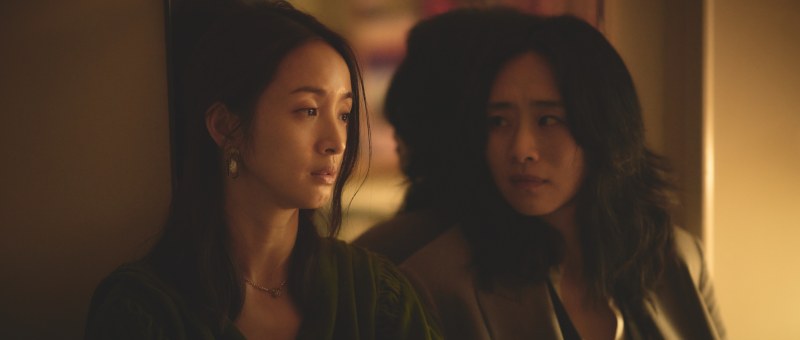
It’s telling that on being discovered with her girlfriend Xue-jin (Wu Ke-xi) when they were university students, Shu-yi (Ariel Lin) immediately jumps to the shame she feels in having done this to her mother. When the two women are together, it’s a bubble of perfect happiness, but on gazing at herself from the outside, Shu-yi feels only disgust in her feelings for Xue-jin and at some point evidently chose “properness” and conformity. Years later, when her mother has lost her sight and is living in a nursing home, she snaps at the nurse not to call her daughter because she’s married to a doctor and therefore very busy. Though it’s an odd moment, she says this with pride as if her own life were fulfilled by her daughter’s “successful” transition to wife to a professional man and mother to his sons. But it also seems as if this continual unseeing as manifested in her mother’s literal blindness is what later leads her to take her own life when forced to look inside herself while otherwise rendered dependent on Shu-yi and her unsympathetic husband Feng (Frederick Lee).

Feng is a selfish and unkind man who rules his home with an authoritarian iron fist. When Shu-yi tentatively hints that it might be better for her mother to live with them, he doesn’t answer but then immediately needles her, asking if she’s put on weight and whether the dress she’s supposed to wear to an important dinner will still fit. The domestic environment is rendered as a prison in which there is no natural light. The furnishings are cold and grey, as if there were no love or warmth here, and Shu-yi is under constant observation to ensure she plays her roles effectively. Feng sees his family only as tools or extensions of himself. He paints the picture of a perfect family to smooth his path to career success by ingratiating himself with the influential Doctor Gu and though Mrs Gu later sees through Shu-yi and is aware of the cracks within her marriage, chooses to unsee them and encourages Shu-yi to do the same by reaccepting her duty to dissolve herself within her husband’s ambitions even if her heart lies elsewhere. 

Feng exerts the same pressures on his teenage son, Han (Jimmy Liu Jing), by insisting that he study medicine though Han is now too old to submit himself to his father’s authority. You can’t let others decide for you, he tells a friend, and is told the same by Xue-jin whom he meets by chance and unwittingly falls for not knowing that she is his mother’s long-lost love. Xue-jin might seem like a more liberated soul having divorced her husband and accepted her sexuality while pursing her art as a photographer, which is of course the art of seeing, but her drink problem also hints at her loneliness and unresolved longing for Shu-yi. “You think what we do is wrong,” she tells Shu-yix with frustration, but Shu-yi can only answer, “How could be right?” before returning to her conformist life with all of its misery.

When she tells her younger son Rui that all that matters is how other people view you and asks him why he can’t just be “normal”, it’s as if she’s talking to herself. As the three of them pass through the pride parade and Rui asks what’s going on, Feng tells him that there are two kinds of people, the “normal” and the “abnormal” and that the people parading want to be seen as “normal” though they are not. Shu-yi pushes hard on the accelerator in anger and frustration, but it’s a divide she’s internalised within herself and remains unable to see that her love for Xue-jin is normal and natural. A woman in the bathroom at Feng’s dinner suggestively offers her her lipstick, explaining that it’s “the best form of camouflage for people like us,” before kissing her and leaving having rewakened Shu-yi’s latent desire. Hiding within this world of traditional femininity is the way Shu-yi has chosen to sublimate her desires and the concurrent self-loathing, but is also, in its way, an act of self-harm and means of punishing herself that amounts to a kind of suicide.

Only while making love with Xue-jin does she become fully herself before the self-recrimination finally kicks back in. Their connection is raw and honest, filled with tenderness and yearning, yet Shu-yi struggles to embrace happiness or accept her authentic self by escaping from the patriarchal superstructure represented by her mother and her husband’s authoritarianism. Chou ends on an ambiguous note in which Shu-yi is perhaps learning to see the truth of herself, but her world still appears cold and grey as if suggesting that, in the end, this kind of happiness and fulfilment is still not permitted to her even if she has finally accepted what kind of life it is that she wants.


Blind Love screens as part of this year’s San Diego Asian Film Festival.

Trailer (no subtitles)

A Useful Ghost (ผีใช้ได้ค่ะ, Ratchapoom Boonbunchachoke, 2025)

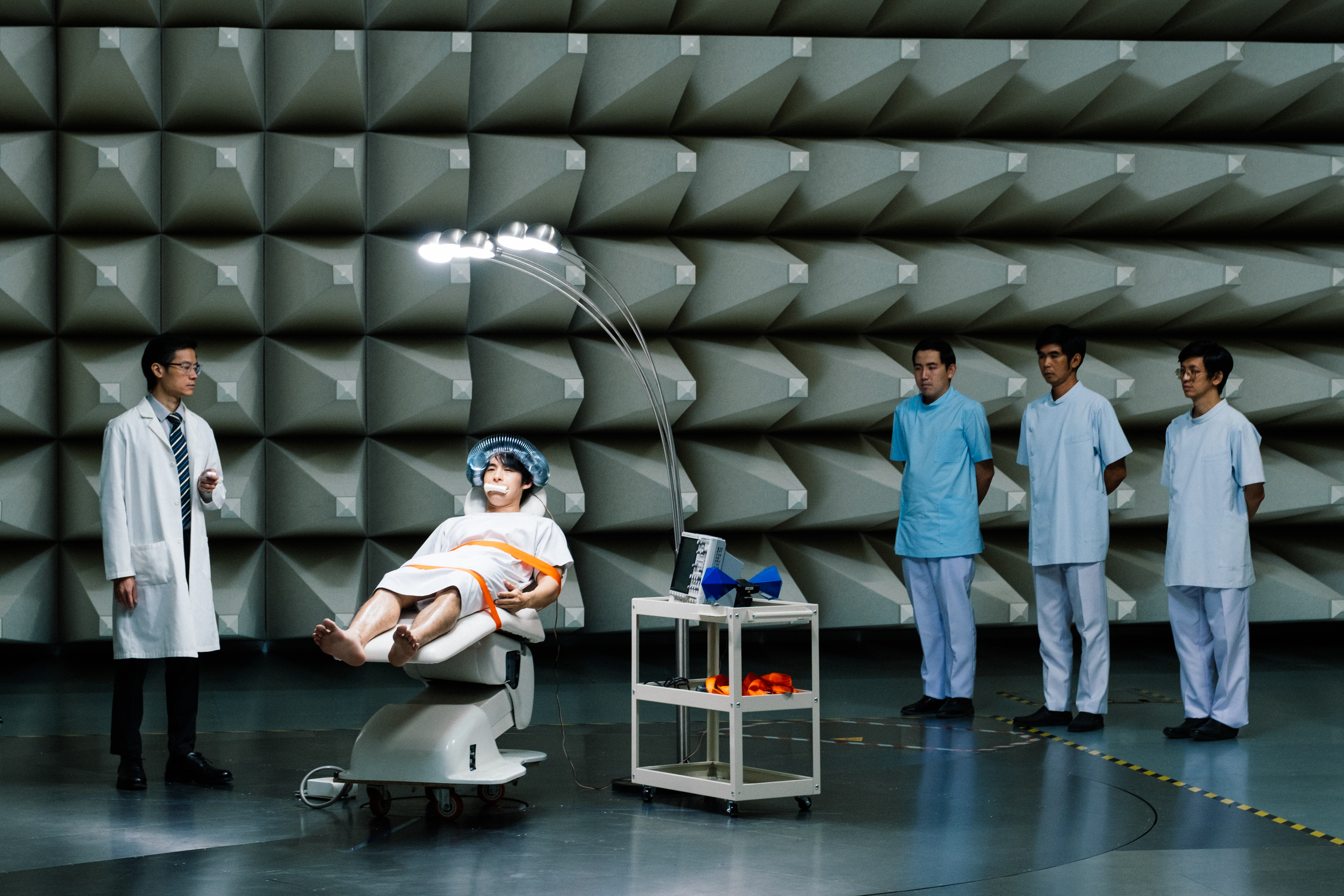
Right at the beginning of Ratchapoom Boonbunchachoke’s A Useful Ghost (ผีใช้ได้ค่ะ, Phi Chaidai Kha), we see a man creating a classical-style relief that’s positioned in a tranquil spot surrounded by nature. It features people from all walks of life, a mother and her child, a monk, a scholar, a soldier, a labourer and so on, as well as a goat, and is later revealed to have the title “democracy monument”. But as soon as it’s put up, it’s brought violently down as developers move in to replace this oasis of peace with a modern shopping mall. 

The construction gives rise to more “dust” which is what’s polluting the country, directly linking rampant capitalism with the erosion of democracy. Even the home lived by the self-proclaimed “Academic Ladyboy” (Wisarut Homhuan) may one day be consumed as the traditional streets are replaced by yet more upscale shopping opportunities. In an effort to get rid of the dust that’s plaguing him, he buys a vacuum cleaner, but it turns out to be haunted and coughs in the middle of the night, spitting out all the dust he made it swallow. 

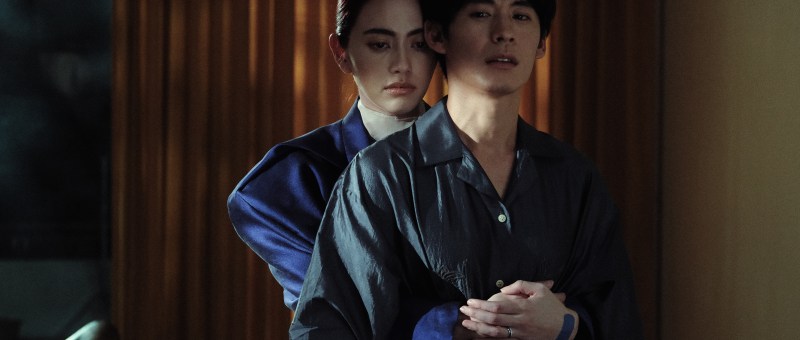
“Dust” is also a term that’s come to stand in for those exploited by this increasingly capitalistic society whose lives are afforded little value, such as factory worker Tok who died after being exposed to too much dust while working at a factory producing vacuum cleaners. Meanwhile, the factory owner’s son has just lost his pregnant wife, Nat (Davika Hoorne), to a respiratory illness caused by dust. Nat has also possessed a vacuum cleaner and reunites with her broken-hearted husband, March (Witsarut Himmarat), but finds herself increasingly compromised after sucking some of the dust out of a government minister’s eyes.

Nat’s desire to stay in the mortal realm longer than is proper is reminiscent of the classic ghost Nang Nak, but what she also becomes is a kind of class traitor increasingly involved with the oppressive regime and betraying her own people to ensure her personal survival. Government minister Dr Paul gets her in on his programme chasing ghosts through dreams and banishing them from people’s memories in order to erase their existence and history. When people refuse to give up their ghosts, he has them given electroshock therapy so that they forget them, as he once tried to do to March before Nat made herself useful to him. And so “dust” and “ghosts” have now become metaphors for those who resist as the souls killed not only during the 2010 massacre but Thammasat University massacre in 1976 rise again to make their presence felt. 

According to the Academic Ladyboy, that these ghosts came back at all is itself an act of resistance, as if these memories themselves could become reminders that resistance is possible and things weren’t always this way. He loathes Nat for the choices that she made in turning on her own, but she was also facing other kinds of oppression in never being accepted by her husband’s upperclass family who in themselves become a symbol of autocratic elitism. Her mother-in-law, Suman (Apasiri Nitibhon), who owns the factory and is unsympathetic towards Tok insisting his death was nothing to do with the working environment, submits herself to them too because like Nat she didn’t belong either and felt she had no other choice. Her eldest child Moss was taken away from her because she spoke a Northern dialect and they feared the child wouldn’t learn standard Thai. Now she tries to talk to her son’s Australian husband in Teochew, only for Moss to roll his eyes and say no one knows how to speak that outside Thailand. Just as they rejected Nat for being an outsider, they rejected Moss for being gay until he became useful to them.

The longer Nat stays beyond her allotted time, the more it corrupts her so on restoring her corporality she would betray even March, who has come to sympathise with the ghosts, in order to be allowed to stay and maintain her position. She’s the “useful ghost”, from a certain point a view, but from another, all the others are “useful” too in keeping the spirit of resistance alive. Quirky and surreal with its tales of haunted hoovers, obsessive bureaucracy, and factories where singing is randomly banned, not to mention truly awesome shoulder pads, Ratchapoom Boonbunchachoke’s deadpan absurdist drama is deadly serious where it counts right until its intensely cathartic conclusion.


A Useful Ghost screens as part of this year’s BFI London Film Festival.

Trailer (English subtitles)
The Man Without a Map (燃えつきた地図, Hiroshi Teshigahara, 1968)

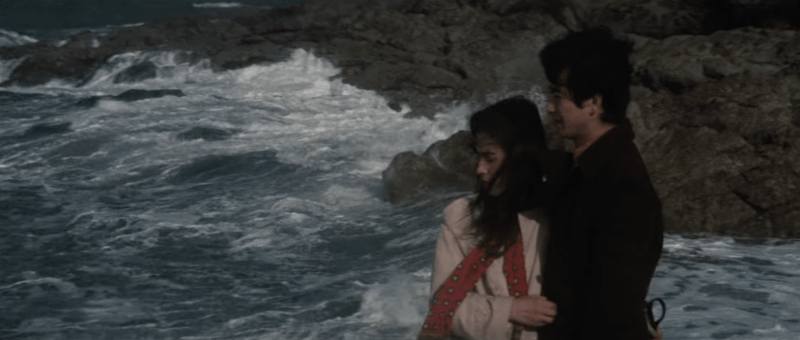
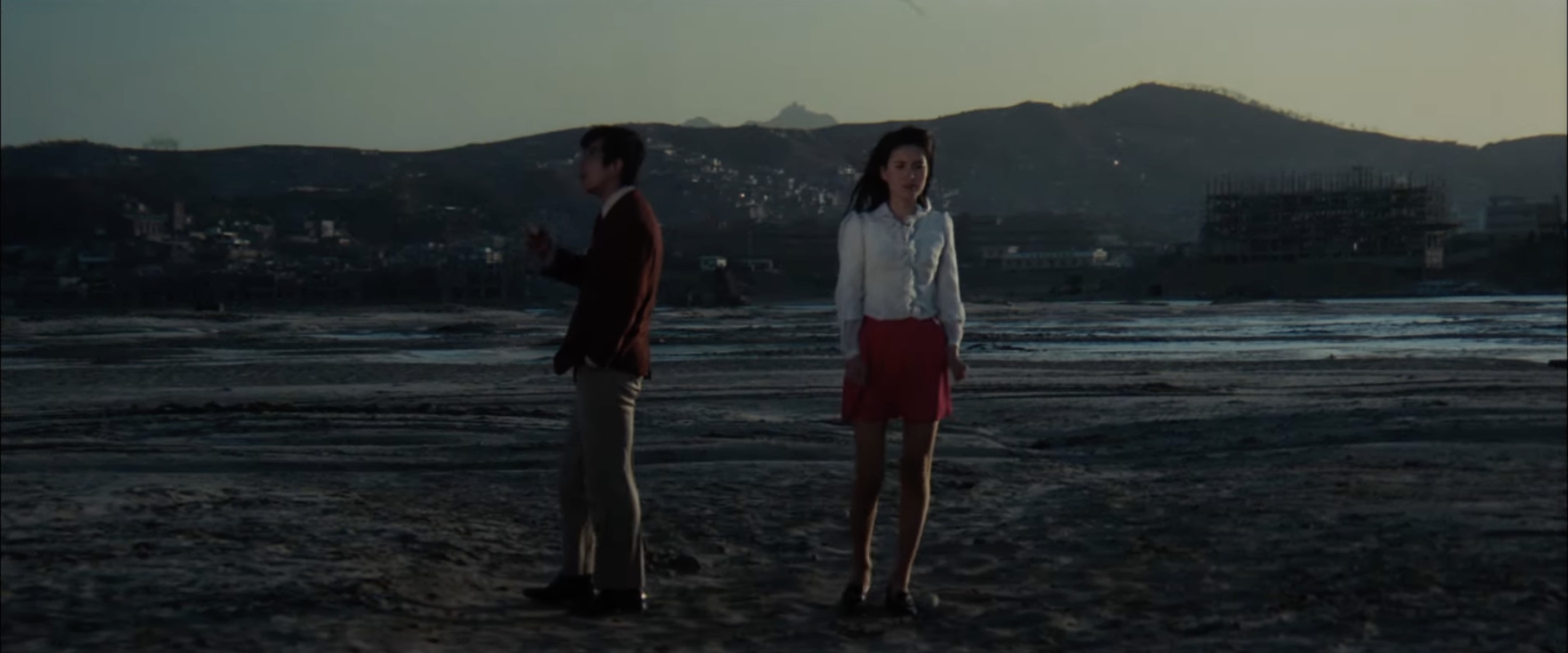
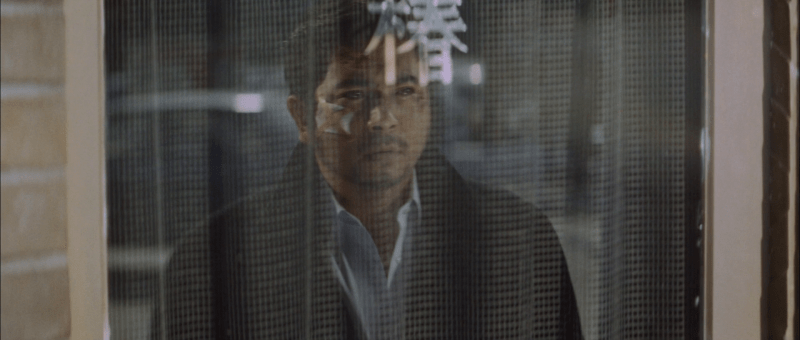
Hired to find a missing person no one really wants found, a detective begins to chase his own tail amid the impersonal vistas of the contemporary city in Hiroshi Teshigahara’s The Man Without a Map (燃えつきた地図, Moetsukita chizu). The fourth and final in his series of Kobo Abe adaptations and the only one in colour, the film’s Japanese title “burned-up map” may also, in its way, refer to the city of Tokyo which appears blurred out and indistinct in the sepia-tinted opening and is thereafter frequently shot from above as a depersonalised space where anonymous cars shuttle along highways like so many ants moving in rhythm with the momentum of the metropolis.

We follow a nameless detective (Shintaro Katsu) as he’s charged with investigating the disappearance of a 43-year-old salaryman, Hiroshi Nemuro, who turns out to have myriad other personalities and hasn’t been seen for six months. The man’s wife, Mrs Nemuro (Etsuko Ichihara), is not terribly helpful and the detective comes to wonder if the investigation itself is intended to further disguise the man’s whereabouts and prove that he really is a “missing person”. Yet this Tokyo is full of “missing people” including the detective who, we later learn, is a kind of fugitive himself. He apparently walked out on his wife (Tamao Nakamura), the owner of a successful boutique, because he couldn’t find his place there any more. He was once a salaryman too, and became a detective because it was the furthest thing he could think of from a regular job. 

It confuses him that no one really seems to be interested in where Nemuro is or if he’s alright, only in the reason behind his disappearance. The more he chases him, the more he begins to take on Nemuro’s characteristics as if he were intended to slide into the space Nemuro has vacated. Toru Takemitsu’s eerie harpsichord score only seems to add to the hauntingly gothic quality of this quest. The question is whether such a thing as identity even exists any more. The detective puts on Nemuro’’s jacket, though it’s too small, and is mistaken for him, while a colleague of Nemuro’s insists that he’s seen him in the street and is sure it was Nemuro simply because of the unusual colour of his suit without ever seeing his face. Tashiro (Kiyoshi Atsumi) tells the detective that Nemuro had a secret hobby taking nude photos at a specialist club that caters to such things. The two of them are confident they’ve identified the woman in the picture based on her haircut, but the girl they speaks laughs and takes off her wig explaining that she was merely asked to wear it, so the woman in the photo could be anyone, including Nemuro’s own wife.

Nemuro apparently had a series of hobbies for which he’d obtained certificates because he said that having them helped him to feel anchored in his life, though he’s apparently unmoored now. Like the detective, he may have been trying on different personalities from car mechanic to school teacher looking for the right fit and a place he felt he belonged in rebellion against the depersonalisation of the salaryman society in which one man in a suit is as good as another. The detective finds an opposite number in the missing man’s brother-in-law (Osamu Okawa), a very modern, apparently gay gangster connected with a network of male sex workers sold on to influential elites, and a commune of similarly displaced people working as casual labourers that is overcome with corporate thugs and eventually trashed.

The trashing of the commune may have something to do with a man named Maeda who is a councillor in a town no one’s heard of, but was possibly involved in some shady business over which Nemuro may have been intending to blackmail him or blow a whistle with the assistance of his brother-in-law who helped him land a big contract at work. The more the detective investigates, the more confused he becomes. It’s impossible to follow the case as we might expect in a conventional noir thriller, but we’re not supposed to be looking at Nemuro’s disappearance so much as the detective’s gradually fracturing sense of self as he becomes lost in the anonymous city. He sees himself bury Mrs Nemuro in leaves only for her body somehow reduce itself to its component parts and sink into the street. Later her face is superimposed on the buildings as if she were looking down on him while he is lost and alone. Nemuro’s face also appears on buildings, though more as a metaphor as if the salaryman and the office building were one and the same and the reason the detective can’t find him is because he doesn’t really exist as a concrete identity. The detective spots a dead cat in the road and laments that he never thought to ask its name, but will try to think up a good one later. He might as well be talking about himself, now displaced, unmoored, and pursued among the city streets, a man without a map lost amid the simulacrum of an imaginary city.


Hidden Face (히든페이스, Kim Dae-woo, 2024)

The obvious irony in the title of Kim Dae-woo’s erotic thriller Hidden Face (히든페이스), is that it refers both to the heroine, Su-yeon (Cho Yeo-jeong), who conceals herself within a secret bunker in her home to spy on her indifferent social climber boyfriend Sung-jin (Song Seung-heon), and to the sides of themselves that people choose not to reveal to others. As Su-yeon’s mother (Cha Mi-kyung) says, it’s what people see that matters, but the hidden corridors of Su-yeon’s home symbolise the ways in which she has imprisoned her true self or at least has locked a part of herself away from prying eyes while continuing to pry into the secret lives of others.

It’s in this forbidden space, apparently added to the house by the previous father’s owner who was a member of notorious Japanese Unit 731 during the war and feared exposure, that Su-yeon first kissed fellow student Mi-ju (Park Ji-hyun) with whom she’s been in a long-term, but apparently secret, relationship. While Mi-ju is patiently renovating the house she thinks they’ve bought together, Su-yeon has decided that she wants a “real life that people recognise”, which she evidently doesn’t believe a same-sex relationship can be. The forbidden space of “cold room” is then where she’s locked her queerness, and a manifestation of her fears of the consequences of exposure. The problem is that she doesn’t even like Sung-jin and the points of attraction he seems to hold for her are that he doesn’t like her either and is otherwise easy to manipulate because of the vast class difference between them. 

Part of the reason that Sung-jin keeps Su-yeon at arms’ length is that he resents the power that she holds over him. He resents both her and himself in knowing that he’s really only with her for material reasons, while simultaneously aware that his current success has nothing to do with his own talent and everything to do with Su-yeon’s privilege. Su-yeon’s mother congratulates him on working hard to build an image of himself, while otherwise needling him about his working-class background in which his mother ran a small restaurant and really knows nothing of this elite world of classical music, mansions, and honeymoons to resorts that charge some people’s annual wage for a single night’s stay. But the facade can’t really cover up Sung-jin’s insecurity and the fear that he couldn’t make it on his own though he so desperately wants to be a part of this world and to feel himself worthy of it. He feels emasculated and humiliated in assuming that other people can see that he’s just a puppet while Su-yeon, her mother, and their advisor discuss policy decisions he’s technically responsible for out in the open, he assumes to deliberately embarrass him and keep him under control. 

Yet the truth is that these kinds of hierarchal power structures of class and gender are less relevant when it comes to desire than otherwise might be assumed. Su-yeon refers to Mi-ju as her slave or underling and adopts a dominant role in the relationship yet eventually has the tables turned on her when Mi-ju decides to rebel. The power dynamic of desire is a push and pull between the desire and the desired mediated by the depth of yearning. It may seem to Su-yeon that she is in control, but equally Mi-ju derives power from her willing submission and can overturn the dynamic at any time she chooses upending Su-yeon’s delusion that Mi-ju is a mere plaything, or “tool”, she can take out and put away at will. 

Nevertheless, the question is whether anyone could be content with this shadow life or if Su-yeon, vain, psychopathic, and probably incapable of understanding other people’s feelings, is content to imprison herself within the hidden corridors of her home which come to stand in for the need to conform to the heteronormative, patriarchal, class-based social codes other people see as “real” and “normal”. Sung-jin is apparently all too willing, considering just leaving Su-yeon trapped behind their walls to continue enjoying this life of privilege with a little more freedom without considering that without Su-yeon he has no entitlement to it as her mother later suggests after becoming worried on realising that Su-yeon hasn’t used her credit in days which is extremely uncharacteristic behaviour.

Sung-jin would trade his pride as a man, his sense of self-worth, and even betray his moral code to appear wealthy and successful and deny his working-class origins. Su-yeon would also, it seems, rather be in a conventional marriage to a man for whom she feels only contempt and resents for not liking her, than live an authentic life as a lesbian and face her internalised homophobia along with that of the wider society. Thus she confines Mi-ju to a forbidden space of her mind in an attempt to have her cake and eat it too, while Mi-ju seemingly fulfils herself in wilfully becoming a prisoner of love, even if it may only be in Su-yeon’s fantasy. Perhaps they get what they wanted all along, affirming the primacy of privilege, but only at the cost of their authentic selves and trapped inside the prison of their own self-loathing.


Hidden Face is released Digitally in the US on September 16 courtesy of Well Go USA.

Trailer (English subtitles)
Angel Guts: Red Flash (天使のはらわた 赤い閃光, Takashi Ishii, 1994)

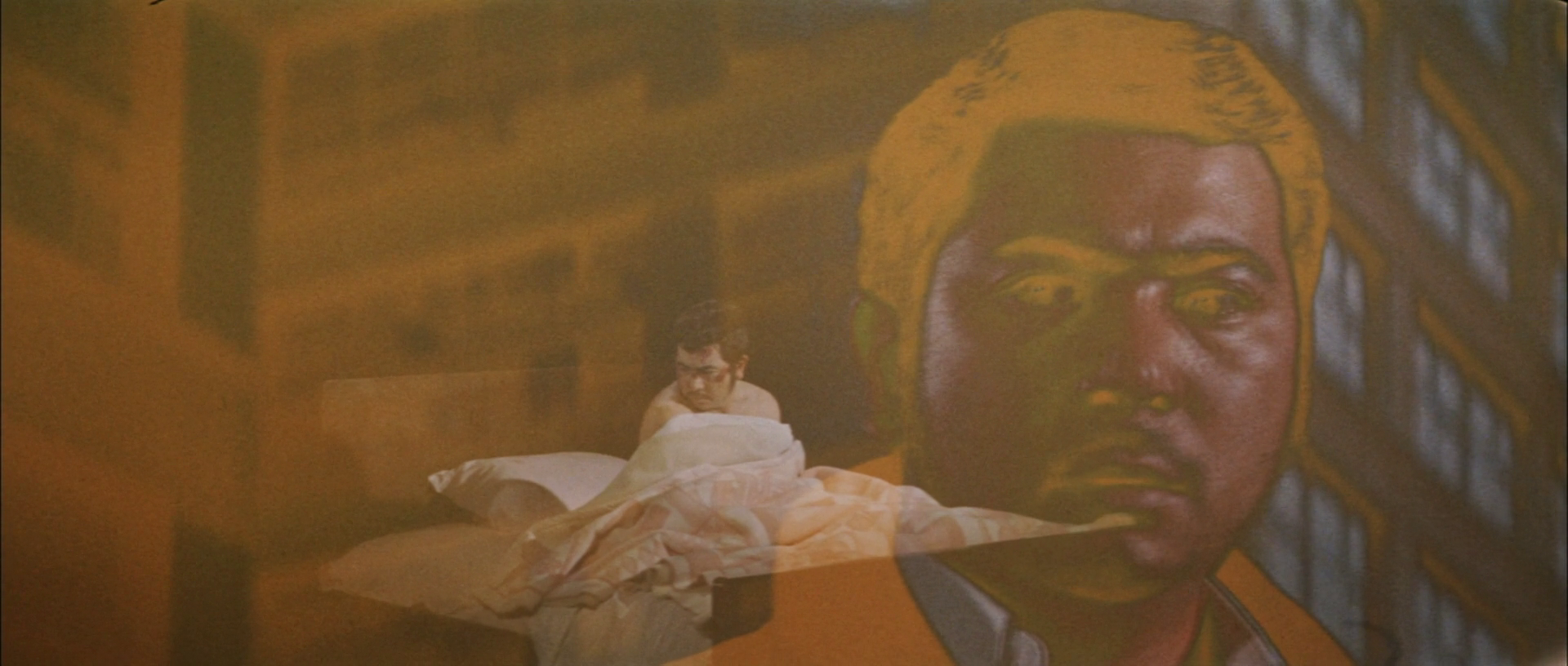
Sent to cover a pornographic movie shoot, a young woman finds herself confronted by the teenage trauma that continues to haunt her in the final instalment in the Angel Guts series, Red Flash (天使のはらわた 赤い閃光, Tenshi no harawata: Akai senko). Adapting his own manga, Ishii draws on giallo and classic noir as the heroine attempts to reclaim herself from the spectres that are haunting her even as Japan itself seems to be a land of predatory and dangerous men.

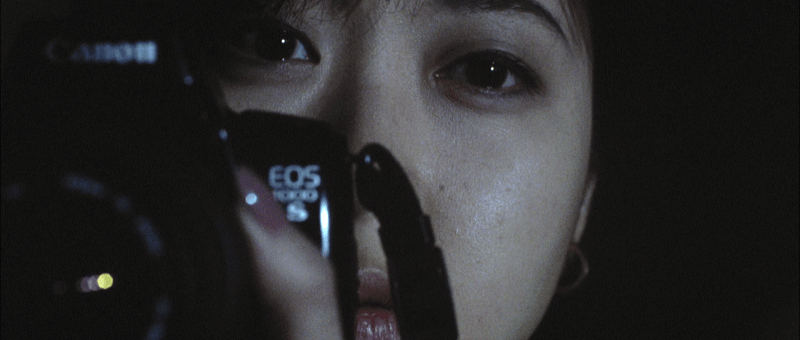
Nevertheless, as the film begins, Nami (Maiko Kawakami) seems to be holding her own aside from an apparent problem with alcohol that sees her drink far to much and end up in vulnerable, potentially dangerous situations. She has a job as an editor and ad hoc photographer where she’s regularly subjected to extreme imagery, while her sleazy boss is also sexually harassing her and in fact attempts to force himself on her in the lift. It’s being sent to take photos at a porno shoot featuring intense rape scenes that awakens her buried teenage trauma of having been abducted and raped on her way home from school.

Nami is haunted by the spectre of her attacker, though as her new ally Muraki (Jinpachi Nezu) tells her it’s only by killing this ghost that she might be able to “erase” the harmful memories of her rape and overcome the repulsion she feels towards sex with men. Perhaps problematically, the film then phrases Nami’s journey as one of repair in which the ultimate goal is being able to enjoy heterosexual sex which seems to be something Nami herself desires to the extent her inability to do so leaves her feeling as if there’s something wrong with her. Even so, it seems she is able to have successful and enthusiastic sex with bar owner Chihiro (Noriko Hayami) who seduces, or perhaps takes advantage of, Nami after bringing her home because she’d had too much to drink at the bar.

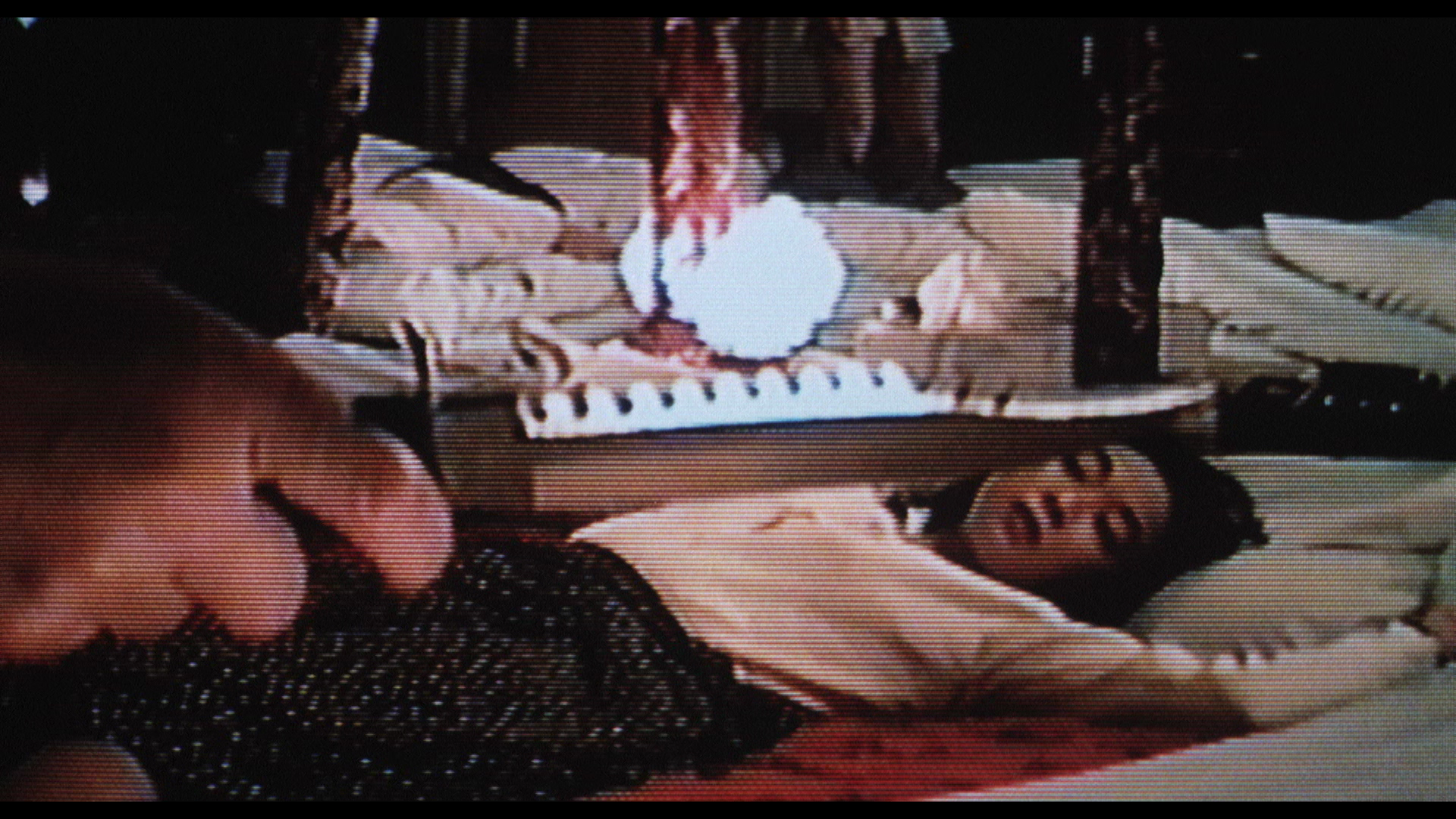
On another drunken occasion, Nami is ushered into a love hotel where she wakes up naked several hours later with no recollection of how she got there. Looking around, she spots not only a bloody knife in the sink, but the body of a middle-aged man hidden under the duvet, and camera which has apparently been filming the whole thing. The act of watching her assault, of which she has no memory, echoes the out of body experience of her rape in which she sees another version of herself save her by killing the attacker. What Nami is essentially trying to do is kill the attacker in her mind through discovering what really happened in the hotel room. As Nami has developed a fear of sex of men, she has a tendency to kick and punch violently in self-defence which, coupled with her drunkeness, lead her to fear that she killed this man after waking up during the assault. In another kind of haunting, Nami begins receiving unpleasant phone calls from someone using a voice disguiser who knows she was at the hotel and attempts to blackmail her in exchange for sexual favours. 

Her first suspect is Muraki, which makes sense because he was at the bar and saw her leave with the other customer so could easily have followed her and either observed her entering the hotel and put two and two together after seeing the crime on the news, or actually committed the murder himself while she was unconscious. She’s also been given a negative impression of Muraki by her jealous boss who tells her that his wife killed herself because his constant infidelities. But Muraki is also carrying traumas of his own in his guilt over his wife’s death which he acknowledges was influenced by his behaviour even if because of a misunderstanding or irrational jealousy rather than sexual or emotional betrayal. Thus, Nami becomes to him a means of atonement in the form of a woman he could save in place of the wife he could not.

Which is to say, Nami is pulled towards trusting the improbable presence of a “good” man even as Chihiro insists that they don’t exist. After they made love, Chihiro deepened the intimacy between them by revealing that she had been abused by her stepfather, though it does not prompt Nami to reveal her own traumatic memories of her rape and abduction. She is reluctant to go to the police not because she fears she is guilty of the crime and wants to avoid punishment, but feels ashamed and can’t bear the idea of the police watching the tape which would amount to a kind of second rape. She does eventually allow Muraki to watch it, but on realising that it may exonerate her is still reluctant to let the police see it while torn by her civic duty in knowing that she has evidence that may help catch the “real” killer. She and Chihiro wonder why it is men like to watch the rape videos she was sent photograph, but can’t come up with much of an answer though it hints and an ingrained misogyny, a desire for control and dominance of a woman and her sexuality. The fact that she was sent to photograph it all by this otherwise mainstream company again hints at a kind of desensitisation amid an overly sexualised atmosphere even as her boss tells her the UN has been critical of Japanese attitudes to sex. Nevertheless it seems that Nami is able to overcome her trauma, to an extent, through reclaiming her identity even if she still has the occasional red flashes of violent fantasy.


Angel Guts: Red Flash is available as part of Third Window Films’ Takashi Ishii: 4 Tales of Nami boxset.

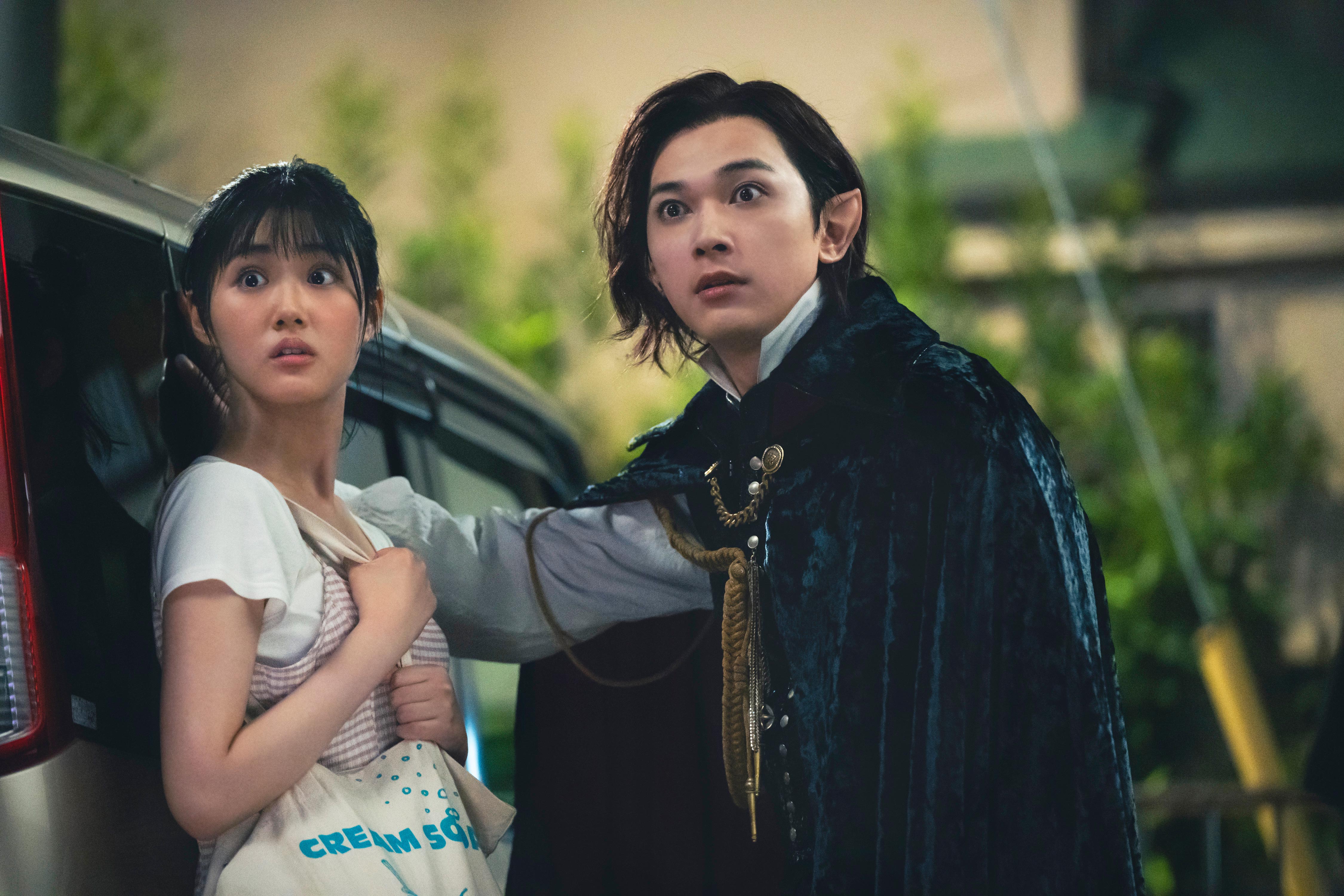
Babanbabanban Vampire (ババンババンバンバンパイア, Shinji Hamasaki, 2025)

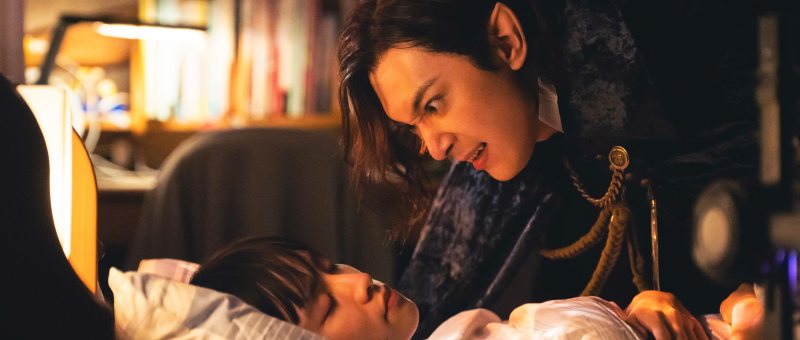
It turns out immortality’s not all it’s cracked up to be in Shinji Hamasaki’s adaptation of the manga by Hiromasa Okujima, Baban Baban Ban Vampire (ババンババンバンバンパイア). At 450 years old, Mori Ranmaru (Ryo Yoshizawa), one-time lover of Oda Nobunaga (Shinichi Tsutsumi), is working as an attendant in a bathhouse in an attempt to, as he says, “live an ordinary life earnestly,” while staving off the darkness of an existence free of the spectre of death. 

Yet, there is an uncomfortable darkness at the centre of this otherwise humorous and ironic tale in that what Mori Ran is actually doing is grooming a child so that he can enjoy him when he judges that he is “ready.” There’s an obviously unpalatable reading of the film that renders it as an allegory for paedophilia, while there’s also an undeniable poignancy in likening the figure of the vampire of that of a gay man in an oppressive society. Mori Ran accosts his victims in dark alleyways and his assignations with other men are necessarily short and secretive. They also result in death, while Mori Ran describes most of his victims as tainted and disgusting as if echoing an internalised sense of self-loathing. He continues to hold up Rihito (Rihito Itagaki) as a figure of innocence and purity because he once saved his life when he was baking in the heat of an usually hot spring when the boy was only five years old. 

Mori Ran’s internalised homophobia is somewhat mirrored in that of the teacher Sakamoto (Shinnosuke Mitsushima) who is also a vampire hunter but bewitched by Mori Ran and longing to be initiated by him, though Mori Ran declines to give him what he sees as a curse. Imbued with a gothic sensibility, Mori Ran believes that humans are beautiful because they die, while vampirism is debased and ugly. He refuses to condemn someone he admires to his own fate which he describes as a kind of inescapable hell in which he is unable to die. He no longer believes in love, though is haunted by his loss of Nobunaga, and sees humans merely as food. 

Nevertheless, it seems he has found purpose in his present life of living with Rihito’s family and working in their bathhouse despite convincing himself that he’s only biding his time until Rihito is ripe for the picking. According to Mori Ran, the sweetest blood belongs to that of 18-year-old male virgins which is why his goal of ensuring that Rihito remains virginal and pure is becoming more difficult now that he has entered adolescence. Much of the comedy derives from Mori Ran’s emotional cluelessness and paranoia on discovering that Rihito has fallen for a girl, Aoi (Nanoka Hara), with whom he had a stereotypical meet cute on his way to his high school entrance ceremony. Knowing that he has to nip this in the bud as soon as possible, he pays a visit to Aoi to warn her off but fails to realise that not only did she barely notice Rihito let alone fall in love with him, but that she is actually obsessed with vampires and is keener on him. 

But then again, there’s something additionally troubling about Rihito’s immediate classification of Mori Ran as a “love rival” in the mistaken belief he’s after Aoi too rather than as someone who should probably be reported to some kind of authority. After all, even if he were not 450 years old but the 25 he claims to be, hanging around exclusively with high schoolers is odd and bordering on inappropriate in itself. Having misunderstood his intentions, Aoi also believes that Mori Ran is waiting for her to be “ready,” in a partial recognition that this is wrong because she’s a child but also prepared to wait for the mysterious vampire without considering the implications of his being interested in a 15-year-old girl if that actually were the case. 

Nevertheless, what Mori Ran discovers is really a different kind of love in his gradual integration into the human world and the the friendships he forms not only with Rihito, but Aoi, her muscular brother Franken (Mandy Sekiguchi) who also has a crush on Mori Ran, and the lovelorn teacher Sakamoto, even if he’s still focused on his mission of keeping Rihito pure so he can drink his blood on his 18th birthday. His attempts to prevent a relationship forming between Rihito and Aoi are all countrerprodcuteive and would like end up bringing them together if it were not for the fact of Aoi’s crush on him of which he remains oblivious. The inherently zany humour of the situation with its series of concentric love triangles along with the warmheartedness of Rihito’s homelife when contrasted with the “mysterious” serial killings on the news cannot completely overcome the unpalatable undercurrent of Mori Ran’s pederastic quest, if glossing over it with admittedly delicious irony and absurdism.


Babanbabanban Vampire screens 27th July as part of this year’s New York Asian Film Festival.

Daughter’s Daughter (女兒的女兒, Huang Xi, 2024)

Never having fully dealt with the trauma of her teenage pregnancy and decision to give her child up to be raised by a family friend, 64-year-old divorcee Jin Ai-xia (Sylvia Chang Ai-chia) finds herself in an eerily similar position on on learning that the daughter she raised in Taiwan has been killed in a car accident in New York where she was receiving fertility treatment. The process resulted in a healthy embryo of which Ai-xia now finds herself the “guardian”. She is given four options, keep the embryo in storage and pay to renew the contract when it runs out, find a surrogate to carry to it term, donate it to another couple, or have it destroyed.

The fact that there are eight months left on the contract that her daughter Zuer (Eugenie Liu Yi-er) signed makes this almost another pregnancy which Ai-xia must decide whether or not to continue. Keeping the embryo in storage only defers the decision and traps it in the same mental space in which Ai-xia thinks of Emma (Karena Lam), the daughter she did not raise and tried to put out of her mind. In its consideration of motherhood, the film does shy away from suggesting that it is a kind of burden and requires sacrifice whether willing or not. Later confronted, if gently, by Emma who has unbeknownst to her become a single mother who chose to keep her child, Ai-xia justifies herself that she was 16 and afraid. Most of all, she was afraid the baby would trap her in New York’s Chinatown and that her life would never change after that. She wanted more, so she went along with her mother’s proposed solution of giving her daughter to a childless couple to raise while she returned to Taiwan and never looked back.

Yet it’s Emma who seems to haunt her while she’s in New York trying to sort out Zuer’s affairs while mired in her grief. It’s clear that she feels that she failed both her daughters as her unresolved trauma over separating from Emma left her unable to fully bond with Zuer whom she raised at arms’ length. When Zuer and her same-sex partner Jia-yi (Tracy Chou Tsai-shih) decide to have a child, Ai-xia is against it. It seems there may be some lingering prejudice in her about their relationship as she tells Zuer that the baby won’t be able to explain their family situation, but it’s also partly that she doesn’t want her to be trapped by motherhood as she felt herself to be. She asks her why she and Jia-yi don’t just enjoy their life together rather than complicate with a child. Ai-xia tells Emma that she wanted to live her own life, while expressing the same desire now that she has become a second mother to her own mother, Yan-hua (Ma Ting-Ni), who is living with dementia. Once her mother passes away, she’s looking forward to enjoying her freedom for once. 

Ai-xia rails that no one ever really considered her feelings and that she’s been given this burden without ever really being given an opportunity to ask herself if she wanted it. There’s a minor irony in Yun-hua’s segueing back into the past to tell the 64-year-old Ai-xia that she can’t raise a child at this age as if she were still a pregnant 16-year-old. As an older woman, she reflects that Yun-hua probably didn’t make that decision solely because she was embarrassed by the stigma of teenage pregnancy but genuinely thought it was best for both her daughter and her granddaughter. But now Ai-xia is facing the same choice at the other end of her life knowing that if she chooses to raise Zuer’s baby she may not live long enough to see it to adulthood, nor may she have the energy to look after a small child even if she has the time. 

But Ai-xia carries Zuer’s ashes around with her holding them in front of her belly as if they were the embryo and she were already carrying it. Placing the square black container on the airport scanner and watching it travel through the tunnel is oddly like an act of rebirth. Attempting to come to terms with her own complicated maternity, she thrashes out the past with Emma but also really with herself in trying to decide whether or not to continue this maternal legacy despite the sacrifices and compromises it entails. For her, motherhood becomes an act of self-forgiveness in which she learns to understand both her own mother and her daughters along with their shared connection in this ever-increasing line.


Daughter’s Daughter screens 18th July as part of this year’s New York Asian Film Festival.

Trailer (English subtitles)
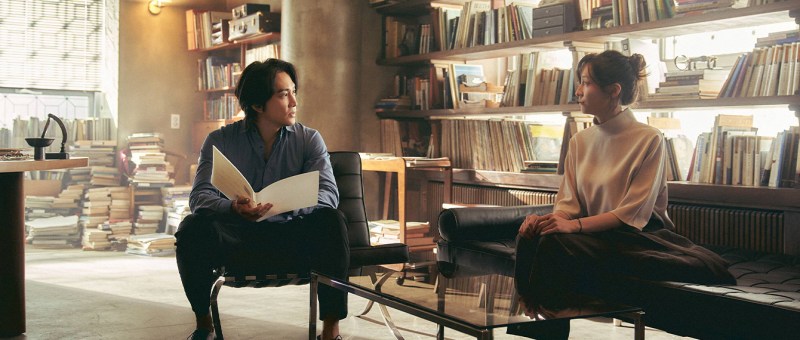
The Extremists’ Opera (過激派オペラ, Junko Emoto, 2016)

Junko Emoto ironically explores Tokyo’s fringe theatre scene in adapting her semi-biographical novel. Shot with a roving, handheld camera, The Extremists’ Opera (過激派オペラ, Kagekiha Opera) situates itself within an all female, avant-garde experimental theatre company but quickly makes plain that even those with high-minded artistic intentions are not free of the usual human flaws as the borderline abusive, womanising female director finds herself sabotaging everything she’s built through a mix of hubris and wandering desire. 

Blanket Cult are a popular company on the fringe theatre scene with a small following devoted to their art. Former banker Ayako bursts into their office determined on an audition and subsequent career change precisely because she can’t get enough of director/playwright Nao’s experimental plays which, she explains, she believes can stop wars. Nevertheless, it’s not Ayako the team are struck by, but the intense young woman who came in behind her, Haru, who more or less demands to be taken on. Nao is captivated, hiring both women on the spot and vowing to write a new piece with Haru in the lead. Of course, she does this partly for not altogether altruistic reasons. Immediately after the first script meeting she asks Haru to stay behind and then propositions her, directly declaring her love with the justification that she’d rather be upfront rather than waste time during the rehearsal process. Haru tells her that she’s not into women, but Nao doesn’t take no for an answer seemingly oblivious to the fact that what she’s doing is harassment and really she’s no better than any other sleazy male director handing out parts to women she wants to sleep with. 

Nevertheless, her persistence even with its undignified pleading eventually pays off. Haru relents, either because she’s fed up of fending off Nao’s advances or discovering that she is on some level receptive, finding that she does in fact enjoy sex with another woman. She agrees to start dating Nao who declares Haru her muse and the pair move in together but their relationship is threatened by their working environment with its petty jealousies and temptations. Emoto opens the film with a graphic sex scene of two naked women 69-ing, rolling around in the empty environment of the garage the troupe uses to rehearse. The two women are Nao and her previous squeeze, a former leading lady she throws over because of her attraction to Haru whose own desire is perhaps signposted after she walks in on them going for a second round and makes a passive aggressive scene that leads the other woman to warn her that Nao is a heartless womaniser with a habit of bedding her leading ladies, sometimes in the wings. 

Yet it’s not only Nao’s misplaced desire that endangers the troupe but her arrogance and abusive directing style. After their play proves a success, she unwisely gives in to ambition and sells out by allowing a mainstream professional actress, Yurie, to join the troupe, a move which disrupts their dynamic while also inflaming Haru’s jealousy as she begins to wonder if she’s already being replaced. Nao snaps at her team and stops giving them proper direction in favour thinly veiled insults. She repeatedly instructs an actress to lose weight while increasingly allowing Yurie to dominate the rehearsals, accepting all of her ideas even while the other members sceptical. She even goes so far as to abandon her usual thriftiness, purchasing elaborate props such as a large vertical tank which leads her into another possibly inappropriate relationship with an older woman who had been pursuing her. Needless to say, the whole thing blows up in her face, ruining not just her relationship with Haru but that with her theatre company who are now all thoroughly fed up with her mistreatment and have entirely lost respect for her as a person and an artist. 

“If you want to pick a fight with society live in it first,” her benefactor irritatedly tells Nao after she’s thoughtlessly caused offence, reminding her that she lives in a kind of bubble that is the fringe theatre scene. Her only real interaction with someone outside of it is with the estate agent who finds her and Haru a flat and is extremely confused as to why they only need one room if they’ll be living together, concerned that female roommates are a liability because sooner or later one gets a boyfriend and leaves the other in the lurch unable to make the rent alone. Unable to learn her lesson, Nao has furiously energetic sex with an apparently wealthy starstruck fan and then immediately asks for money, perhaps getting a taste of her own medicine when she assures her there’s plenty more where that came from as long as she sees her again and also gives her a part in a play. Playfully ironic with its whimsical score and slightly detached gaze, Emoto’s refreshingly explicit drama is both a mild satire of the avant-garde fringe theatre scene and a takedown of its self-involved director whose inability to separate the creative from the carnal proves her downfall both artistic and emotional. 


Trailer (English subtitles)

Edhi Alice (에디 앨리스: 리버스, Kim Il-ran, 2024)

“I’m Alice, who is living in the present,” one of the two protagonists of Kim Il-ran’s documentary Edhi Alice tells the camera when asked to introduce herself. A transwoman in her 40s, Alice got her name from film director Lee Joon-ik while working on Dong-ju: The Portrait of a Poet, a film inspired by the life of a poet who died as a political prisoner yearning for freedom and authenticity in a Japanese jail during the colonial era. 

Freedom and authenticity are both things that Alice has found in her transition and is continuing to seek. As a child, she had a consciousness of herself as female until her sister remarked in a phone call that she was becoming a man after noticing that her voice was breaking. Surrounded by an intensely patriarchal society, Alice convinced herself to conform to common notions of masculinity, even getting married in an attempt to live as a man and prove herself as one by having a child. Only after the marriage ended did she begin to embrace her authentic self by undergoing surgery which, she points out, is somewhat unusual in that she chose to remove her genitals right away because she couldn’t bear to live with the reminder of her masculinity. However, she has avoided other kinds of medical interventions such as plastic surgery stating that she doesn’t see the point now that she is already in her 40s and has no plans to date. 

She does, however, live in a more liminal space in which her transness is not immediately apparent while working in a stereotypically masculine industry as a lighting director for film and TV in which, as she points out, her height and strength are definite advantages. Though she says she has not experienced much prejudice and discrimination while working on films, she reveals that she was dismissed from a TV project because the producers were “ultra-conservative” and did not want to work with her. Meanwhile, there’s a genuine poignancy in the crew’s visit to a public bath as Alice reflects that she probably won’t ever have the opportunity to visit one again, suggesting that she most likely won’t be admitted to the women’s bath given her gender presentation and fears may make people uncomfortable if she were. 

Edhi doesn’t have the same trouble, but has not yet completed her transition having visited a fortune teller and been advised to wait until a more auspicious time. Working as a councillor for LGBTQ+ youth, she assumed she must have been gay because she liked men but only later came to realise after joining an LGBTQ+ choir that the gay men around her did not experience the same kind of discomfort in their bodies and that she must be trans. But like Alice, she originally tried to conform to what it means to be a man in Korean society. When she tried to explain her identity to her mother, she had dismissed it by saying that it was only because she didn’t want to serve in the military. Trans people are not welcomed in the armed forces and Edhi reflects on the death of Byun Hui-su who fought for her right to serve by beginning her transition while on leave from military service. Her desire to continue being a member of the armed forces was denied and she was dismissed. She later took her own life.

While affected by the deaths of so many people around her who could not find a way to survive amid the intensely conformist pressures of Korean society, Edhi does her best to live her life while taking care of her parents and nephews. Though her father might use male pronouns and continue to refer to her as his son and her mother, though supportive, worries that she might regret her choices later, Edhi was surprised by the ease with which her nephews simply accepted her explanation of her transness and agreed that “Edhi is just Edhi,” agreeing to call her by her name rather than uncle or aunt. She fears being forgotten and regrets having thrown away photos of her other life but continues to pursue her dream of living in a house with her mother and opening a cafe. While never shying away from the physical pain involved in transitioning, the film reinforces the sense of liberation it can bring if tempered by the realities of life in contemporary Korea.


Edhi Alice screens at the ICA 18th May as part of this year’s Queer East.