
 “This isn’t a film from the 1930s!” a confused sidekick exclaims part way through Wong Jing’s zany ‘80s comedy Prince Charming (青蛙王子). He’s right, it isn’t, but it might as well be for all the farcical goings on in Wong’s hugely populist, unabashedly zeitgeisty romp through a rapidly modernising society. Starring popstar Kenny Bee, Prince Charming also marks the feature film debut of the later legendary Maggie Cheung who would find herself making a fair few disposable comedies in the early part of her career. All the Wong trademarks are very much in evidence from the sometimes crude humour to the random narrative developments and deliberate theatricality but it has its charms, even if perhaps despite itself.
Signalling the “aspirational” atmosphere right away, Wong opens in “Hawaii” with Kenny Bee performing one of the many musical numbers which will be heard throughout the film (which is also a kind of idol movie as well as a populist Shaw Brothers Comedy). Chen Li Pen (Kenny Bee) is the son of an oil magnate and hotel chain manager but unlike his father, is a sensitive, nerdy young man who gets the hiccups around attractive women and has never had any luck with the opposite sex. Nevertheless, his mother wants to set him up with an arranged marriage – something which he vehemently opposes but understands will become harder for him fend off if he can’t find himself a love match in good time. Enter his old friend Lolanto (Nat Chan Pak-Cheung) who is a self-styled ladies man if a bit “common”. Lolanto has come to Hawaii on holiday and to hang out with Li Pen, but like any young guy he also wants to meet some girls.
The guys end up in a kind of sparring match with the two ladies staying in an adjacent room at the hotel, May (Cherie Chung Cho-Hung) and Kitty, (Maggie Cheung Man-Yuk) following a series of misunderstandings. When the girls drug them and then somehow leave them on a rock in the middle of the ocean, the boys are humiliated but don’t have too long to nurse their wounds because Li Pen’s dad sends them back to Hong Kong to investigate suspected embezzlement at head office. As luck would have it, both May and Kitty work for Li Pen’s family firm (which was perhaps why they were staying in the hotel). Another misunderstanding sees May assume Li Pen is a former triad looking for a new start, so she “bribes” the hiring department to get him a job as a chauffeur, while Lolanto ends up in the boss’ office posing as Li Pen. Hilarity ensues.
Aiming a squarely for the populist, Wong’s defiantly aspirational vision revolves around the fabulously wealthy and internationalised Li Pen who went to college in the US and lives most of his life in Hawaii, perhaps not quite understanding Hong Kong in the same way Lolanto does, both because of his outsider status and because of the freedom his wealth gives him. When the two swap roles they each get a kind of education, but their real quest (while halfheartedly investigating the embezzlement scandal) is winning over Kitty and May who think they’re dating a CEO and a chauffeur respectively. Despite their irritation when they realise their mistake, both May and Kitty perhaps come to realise that the deception is a part of what eventually drew them to the guys and they’re a better match than they might otherwise have imagined.
Meanwhile, Wong finally remembers the embezzlement plot and introduces a third woman, Puipui (Rosamund Kwan Chi-Lam), who is secretly a plant set up to seduce the pure hearted Li Pen and marry him because this will in some way prevent the embezzlement scam from coming to light. Puipui’s scheme eventually kicks off the ridiculous finale in which the gang find themselves chased by goons and having to play pool for their lives with hostages hooked up to electric chairs which will be triggered when a certain number of points are scored. Wong adds a host of cutesy touches from cartoon hearts around our lovelorn heroes and adorable doodles popping up as on screen graphics while Kenny Bee and Cherie Chung also get a completely bizarre musical number at the midway point where they pretend to be happy frogs marooned on a private lily pad. It doesn’t make any sense, but it really doesn’t matter. Completely throw away, but strangely fun.
Currently streaming on Netflix UK (and perhaps other territories)
Celestial Pictures trailer (English subtitles)
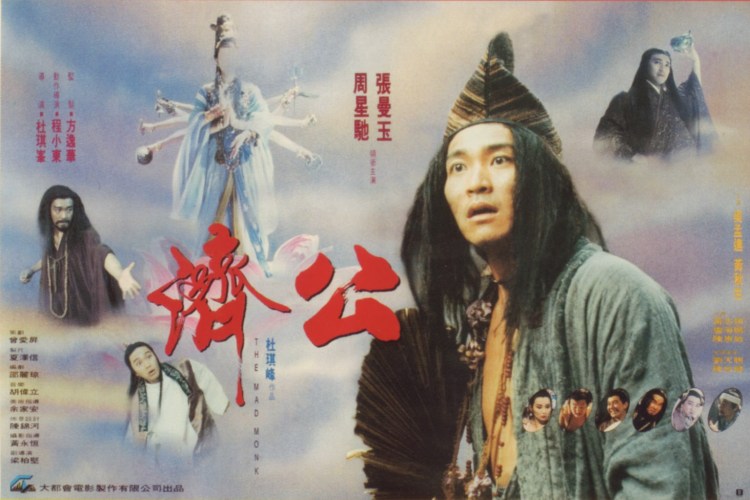 “The Mad Monk” sounds like a great name for a creepy ghost, emerging robed and chanting from the shadows to make you fear for your mortal soul. Sadly, The Mad Monk (濟公, Jì Gōng) features only one “ghost”, but it might just be the cutest in cinema history. The second of Johnnie To’s Shaw Brothers collaborations with comedy star Stephen Chow is another wisecracking romp in which Chow revels in his smart alec superiority, settling bets made in heaven and eventually vowing to spread peace and love across the whole world.
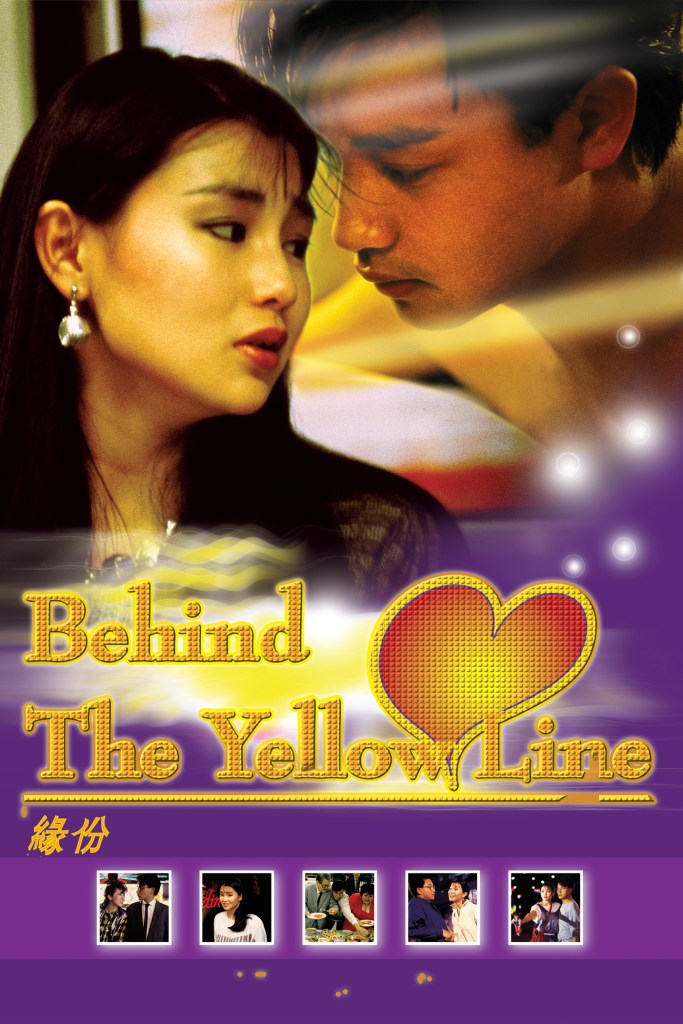 Back in the 1980s, you could make a film that’s actually no good at all but because of its fluffy, non-sensical cheesiness still manages to salvage something and capture the viewer’s good will in the process. In the intervening thirty years, this is a skill that seems to have been lost but at least we have films like Taylor Wong’s Behind the Yellow Line (緣份, Yuan Fen) to remind us this kind of disposable mainstream youth comedy was once possible. Starring three youngsters who would go on to become some of Hong Kong’s biggest stars over the next two decades, Behind the Yellow Line is no lost classic but is an enjoyable time capsule of its mid-80s setting.
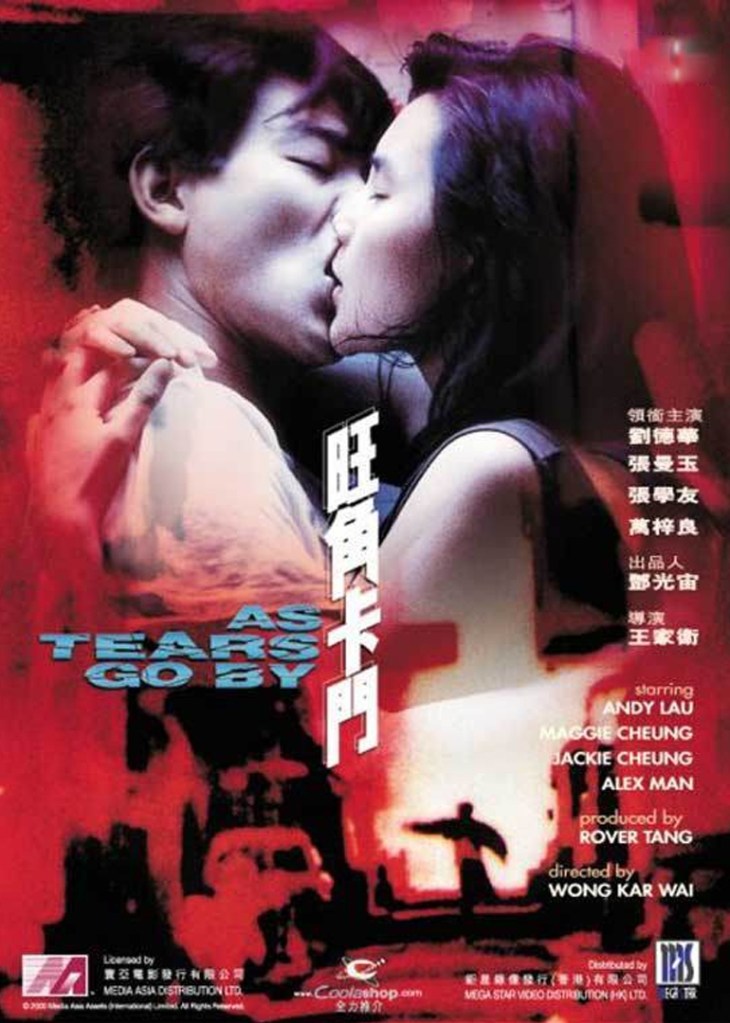 These days, Wong Kar-wai is an international auteur famous for his stories of lovelorn heroes trapped inside their memories, endlessly yearning in vain for the unattainable. In many ways his debut feature, As Tears Go By (旺角卡門, Mongkok Carmen) is little different save that it owes more to its vague heroic bloodshed, gangster inspiration and is less about memory than inevitability and a man abandoning his dreams of a better life with a woman he loves out of mistaken loyalty to his loose cannon friend.
 Windows on Worlds