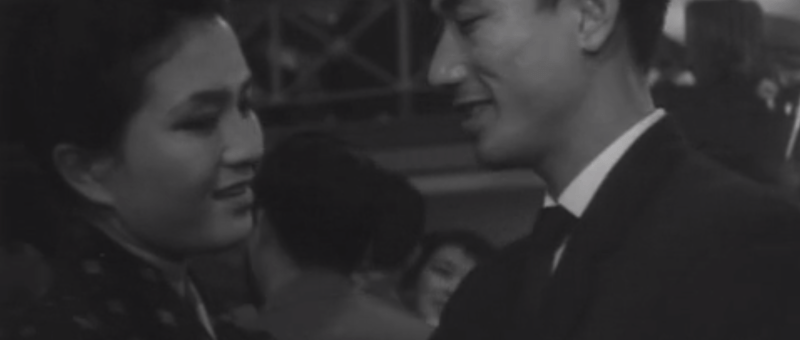

“Life is unpredictable” according to the protagonists of Masaki Kobayashi’s Beautiful Days (美わしき歳月, Uruwashiki Saigetsu, AKA The Beautiful Years), becoming something of refrain in the face of constant change. Among the most quietly angry of post-war humanists, Masaki Kobayashi’s later work is defined by a central question of how the conscientious individual can survive in an oppressive society. Like many directors, however, he had to do his time making regular studio programmers, in his case at Shochiku which was then, and to some extent still is, the home of polite melodrama. Like Kobayashi’s other films from this period, Beautiful Days conforms to the studio’s classic shomin-geki formula, but does perhaps display something of his resistance to the system in its tale of three former school friends scattered by the complicated post-war society but each in his own way attempting to make a break with the past in order to move into a more positive future.
The action opens, however, with the old. Grandma Mrs. Tokioka (Akiko Tamura) is hit by a fancy car while out shopping, but the owner, retired CEO Shigaki (Eitaro Ozawa), turns out to be a kind and considerate man who insists on taking her to a hospital despite her protestations that she’s absolutely fine. Finally she gives in and asks Shigaki to take her to her regular doctor, Imanishi (Isao Kimura), only when she gets to the clinic Imanishi is getting a dressing down from his boss who accuses him of vanity in insisting on treating an emergency patient without checking his finances first. Imanishi storms out, recklessly quitting yet another job on a matter of principle.
Mrs. Tokioka wanted to see Imanishi because he was a close friend of her grandson who was killed in the war, along with her son and his wife who were explosives experts, leaving her to care for her only remaining relative, 22-year-old Sakurako (Yoshiko Kuga) who works alongside her at their florist’s shop. Imanishi is from a relatively wealthy family of doctors which is perhaps why he feels so free to prioritise his integrity because the economic consequences are relatively marginal. For his friends, Hakamada (Junkichi Orimoto) and Nakao (Keiji Sada) the situation is different. Hakamada’s family are poor, living in a makeshift shack in the slums while he supports them all with a job in a factory run by an unscrupulous and exploitive boss standing in for heartless post-war capitalism. Nakao, meanwhile, graduated with a law degree but hasn’t been able to find any steady work since coming home from the war and is earning a living playing drums in a cabaret bar for 600 yen a night.
Formerly close friends since their middle school days, the men maintain a deep yet increasingly distant connection not least because Tokioka’s death has left them with a sense of sad incompleteness. As the others say, Nakao has indeed changed. His experiences in the war along with the death of a close friend who was killed while trying to seek a better life in Brazil, have made him embittered and cynical. He buries himself in the inconsequential pleasures of pool halls and nightclubs to avoid having to think about a future he feels he doesn’t deserve. As Imanishi puts it, he struggles with his kindness towards others, pushing people away, overly cautious in choosing a policy of self-isolation rather than risk potential hurt. It seems he was in love before the war, but she (Toshiko Kobayashi) married someone else and is now a widowed single-mother. He wants to help her, getting Imanishi to visit her mother who was diagnosed with asthma that is most likely TB, and helping her with a job as a tea dancer at the club but feeling conflicted in inviting her into such a low environment while also resisting his continuing love for her, partly in resentment over her past, and partly in a lingering sense of hopelessness about the future.
Imanishi’s problems meanwhile are mostly born of stubborn male pride. He refuses to work for the increasingly capitalist hospitals of the contemporary era and wants to be a socially responsible doctor but realises that he can’t go on quitting one job after another. He and Sakurako, Mrs. Tokioka’s granddaughter and the sister of his late friend, are in love and want to marry, but he’s too shy to ask for her hand as a man without a steady salary or future prospects. “Men always like to think things over on their own” Sakurako complains, immediately before Imanishi announces he’s about to do just that and wants to take a “break” in their relationship to sort himself out. He’s been offered a place in a research facility in Akita far in the North, but isn’t sure if he should ask Sakurako to go with him because Mrs. Tokioka won’t leave Tokyo, possibly won’t approve of their marriage, and will be disappointed if Sakurako chooses a life of hardship in the remoteness of snow country when all she’s ever wanted is for her to live happily.
Mrs. Tokioka is in fact entirely ignorant of their relationship, which is why she’s receptive when Shigaki proposes a potential marriage between Sakurako and his younger son Yuji (Akio Satake). She thinks that’s a nice idea, but also acknowledges that times have changed and Sakurako’s marriage isn’t something she should have much say over. Shigaki agrees, and so they decide to introduce the young people casually and see if they hit it off, which they do but Sakurako remains conflicted in her relationship with the distant, to his mind noble, Imanishi who leaves her to think he’s got someone else rather than clear up a simple misunderstanding.
In a strange way, it’s Mrs. Tokioka and Mr. Shigaki who are perhaps slipping into a romance, Sakurako even jokingly refers to him as her grandmother’s “boyfriend” using the trendy English word which adds an additional layer of incongruity. They each profess a deep confusion with the way the youngsters think, Mr. Shigaki disappointed with his older son who prioritises the bottom line and is cutting corners buying cheaper materials and reducing the quality of the product he worked so hard to perfect. Rampant and irresponsible capitalism is also the force which is currently destabilising Hakamada’s life as he finds himself exploited by his heartless boss but unable to simply quit as Imanishi has repeatedly done because jobs are hard to come by and he’s also supporting his parents. His boss even tries to frame him for stealing materials from the factory, later berating him for “talking like a freeloader” when he tries to bring up workplace conditions, and calling the police to have him charged with assault when he fights back after he hits him.
Inverting the melancholy flower metaphor, Imanishi describes himself and his friends as horsetail in a field crushed when a dog comes by and defecates on it, but later remembers that horsetail eventually springs back up, while Mrs. Tokioka had wanted to see if her damaged bulbs would grow when planted in the right soil. The three friends are forced into a realisation that they’re heading out on different paths and will inevitably be scattered but they are at least finding their way, learning to come to an acceptance of the traumatic past to move into a happier future. “Life is unpredictable” but sometimes people surprise you and it’s best to give them the opportunity or risk losing your chance to seize happiness wherever you find it.

 Masaki Kobayashi had a relatively short career of only 22 films. Politically uncompromising and displaying an unflinching eye towards Japan’s recent history, his work was not always welcomed by studio bosses (or, at times, audiences). Beginning his post-war career as an assistant to Keisuke Kinoshita, Kobayashi’s first few films are perhaps closer to the veteran director’s trademark melodrama but in 1953 Kobayashi struck out with a more personal project in the form of
 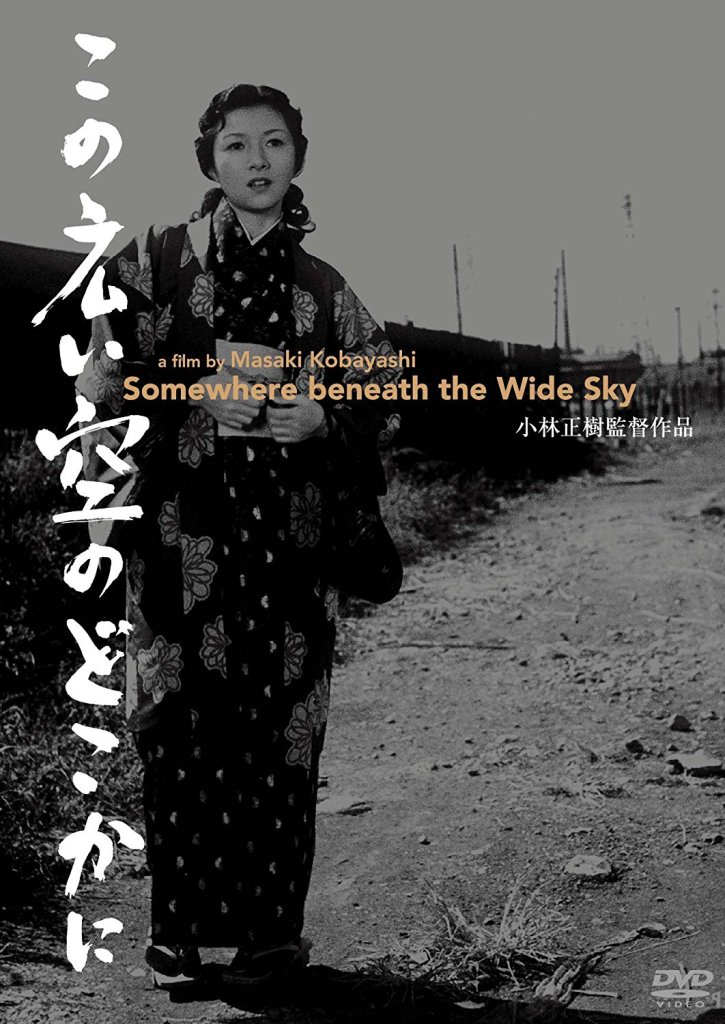 Of the chroniclers of the history of post-war Japan, none was perhaps as unflinching as Masaki Kobayashi. However, everyone has to start somewhere and as a junior director at Shochiku where he began as an assistant to Keisuke Kinoshita, Kobayashi was obliged to make his share of regular studio pictures. This was even truer following his attempt at a more personal project –
 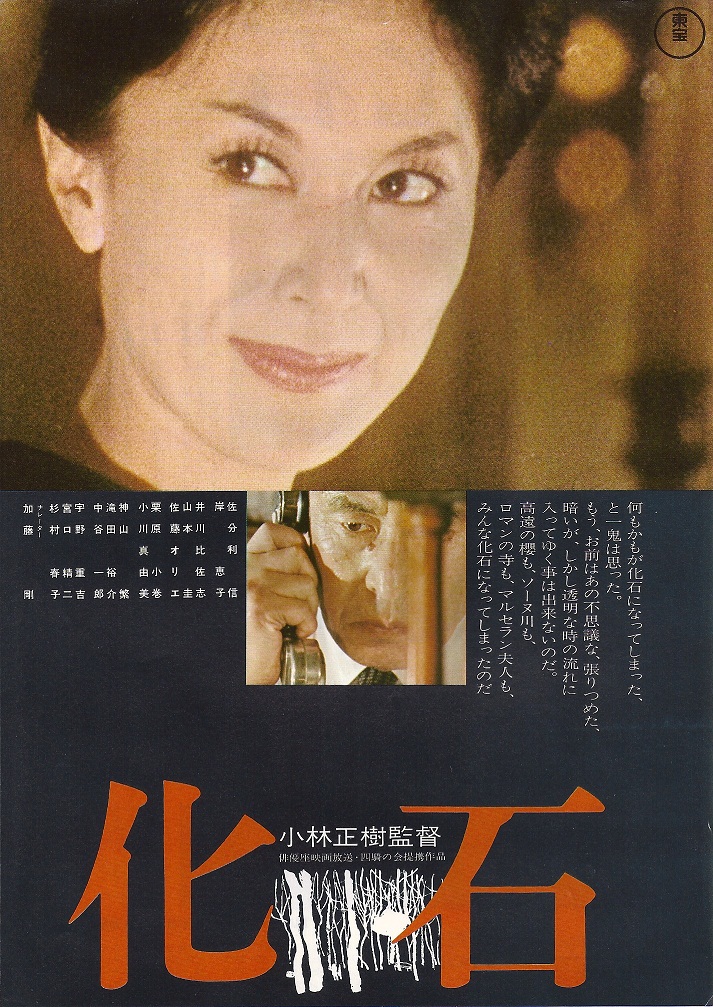 Throughout Masaki Kobayashi’s relatively short career, his overriding concern was the place of the conscientious individual within a corrupt society. Perhaps most clearly seen in his magnum opus,
  “Sometimes it feels good to risk your life for something other people think is stupid”, says one of the leading players of Masaki Kobayashi’s strangely retitled Inn of Evil (いのちぼうにふろう, Inochi Bonifuro), neatly summing up the director’s key philosophy in a few simple words. The original Japanese title “Inochi Bonifuro” means something more like “To Throw One’s Life Away”, which more directly signals the tragic character drama that’s about to unfold. Though it most obviously relates to the decision that this gang of hardened criminals is about to make, the criticism is a wider one as the film stops to ask why it is this group of unusual characters have found themselves living under the roof of the Easy Tavern engaged in benign acts of smuggling during Japan’s isolationist period.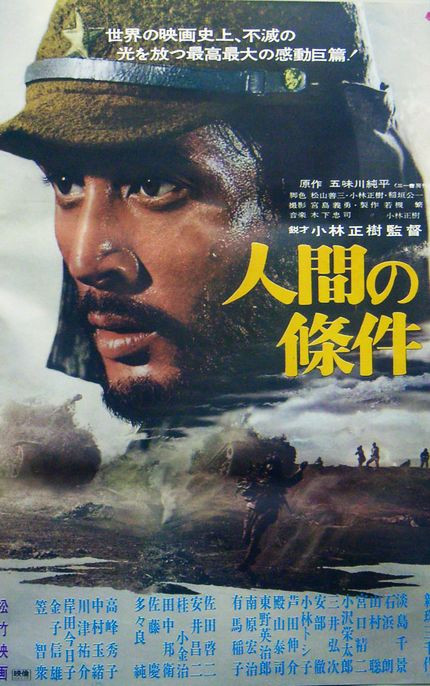
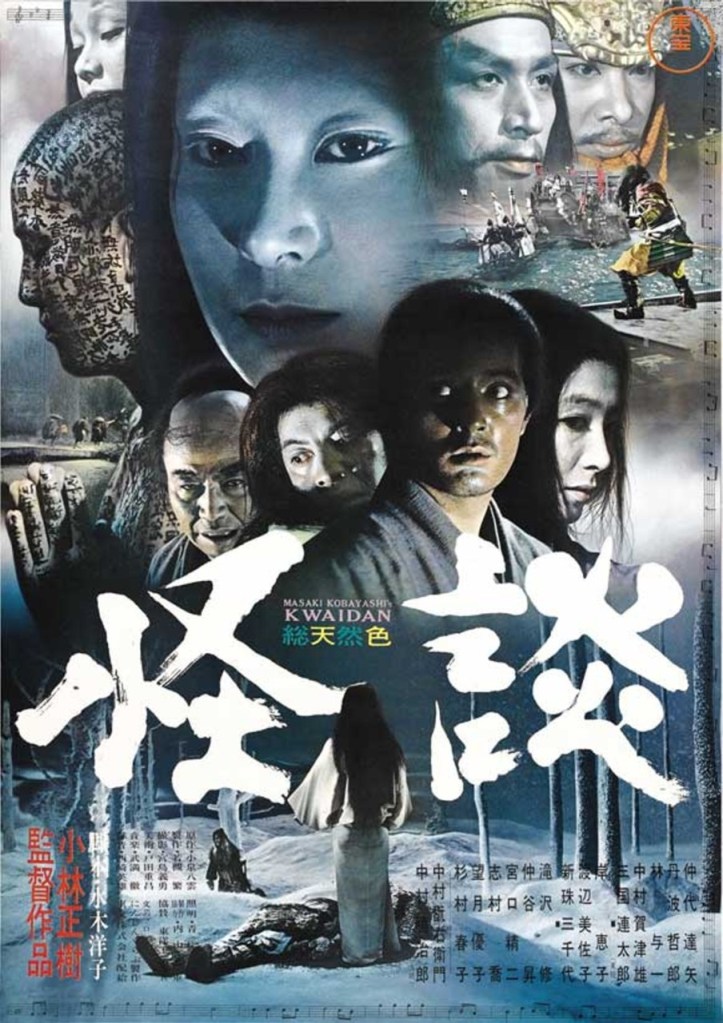 Kwaidan (怪談) is something of an anomaly in the career of the humanist director Masaki Kobayashi, best known for his wartime trilogy The Human Condition. Moving away from the naturalistic concerns that had formed the basis of his earlier career, Kwaidan takes a series of ghost stories collected by the foreigner Lafcadio Hearn and gives them a surreal, painterly approach that’s somewhere between theatre and folktale.
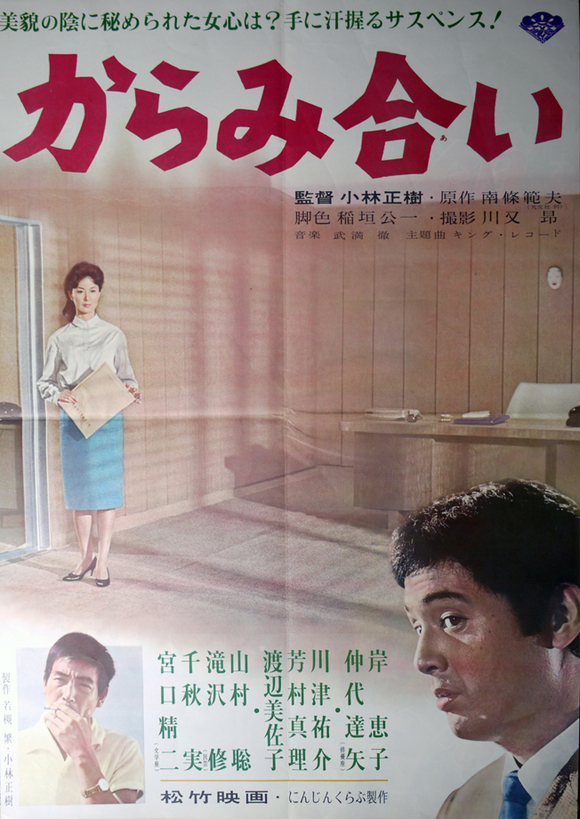 Kobayashi’s first film after completing his magnum opus, The Human Condition trilogy, The Inheritance (からみ合い, Karami-ai) returns him to contemporary Japan where, once again, he finds only greed and betrayal. With all the trappings of a noir thriller mixed with a middle class melodrama of unhappy marriages and wasted lives, The Inheritance is yet another exposé of the futility of lusting after material wealth.
 Windows on Worlds