Last Mile (ラストマイル, Ayuko Tsukahara, 2024)

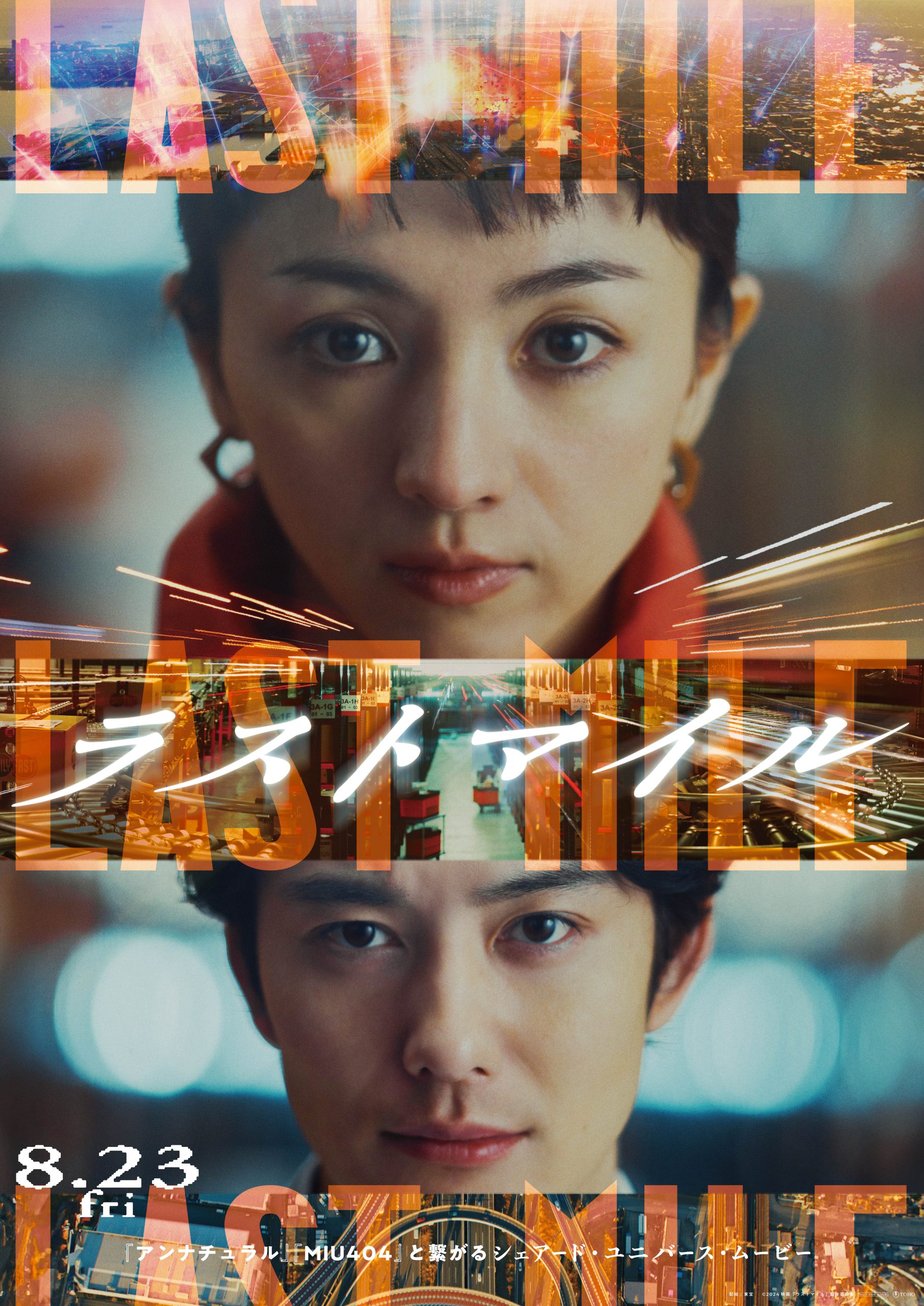
“Customer-centric”, what does that actually mean? The Amazon-like US-based conglomerate at the centre of Ayako Tsukahara’s Last Mile (ラストマイル) prides itself on its customer-centric philosophy, but at the end of the day, what that really means is that they give us what we tell them we want through our purchasing patterns and browsing history. That would be that we want everything as cheap and fast as it’s possible to be and don’t really think about the wider implications or what a world of infinite convenience might be doing to the society around us.

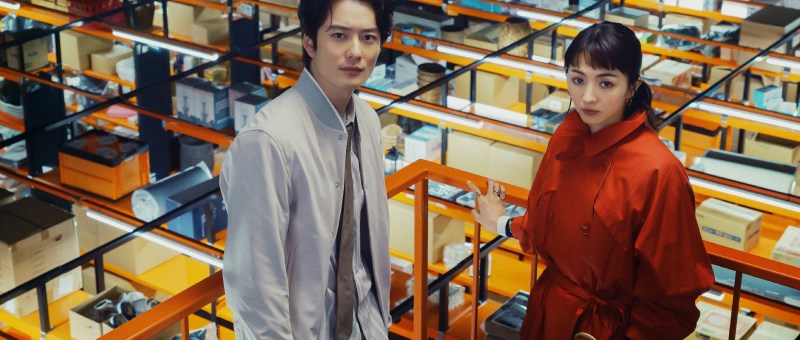
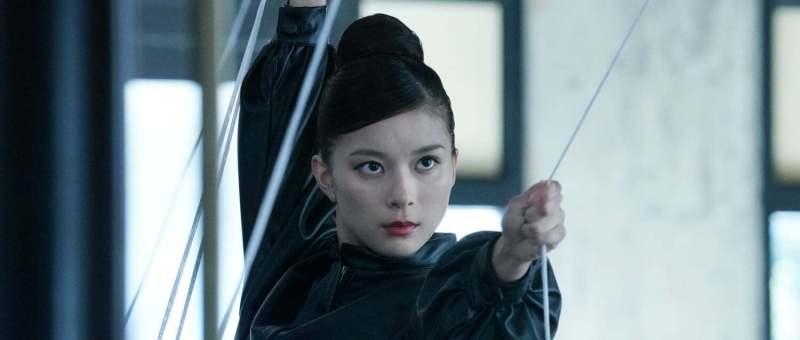
At least from the perspective of corporate lackey Elena (Hikari Mitsushima), recently returned from the US, the reason Daily Fast pressures its delivery staff to lower costs isn’t to maximise their profits, it’s so they can go on providing lower prices to customers which to her is all part of their customer-centric approach. This doesn’t really gel with her off-the-cuff remark about the warehouse not having a safety net to protect the workers from accidental falls or, she ominously adds, prevent people from jumping. That she brought it up at all might signal that she knows something’s not quite with the way this company treats its employees, though as it turns out she may have something else on her mind. In any case, when she arrives on her very first day the entrance to the complex is little better than a cattle market with a man on loud speaker barking instructions about were to go to the 800 members of staff some of whom have only been brought in to bulk up for the upcoming Black Friday sale. 

Which is all to say, it wouldn’t be all that surprising if the fact that some of their parcels have been exploding on delivery were a concerted attack against their ultra-capitalist philosophy, though actively delivering bombs to people who didn’t order them is not very “customer-centric” in any case. Obviously, Elena isn’t keen on this either but is also convinced that it can’t really be their fault because they have strict and dehumanising security measures in place preventing the workers from bringing in anything inessential. Even after she works out that the bomber has actually warned them that there are 12 bombs out there, she wilfully withholds the evidence from law enforcement to avoid damaging their share prices while trying to minimise business interruption rather than do anything sensible like stop delivering people parcels until they’ve figured out what’s going on with the bombs, though the real mystery is why the police don’t really seem to have the power to do that and, in fact, end up working with the warehouse to check each parcel individually to keep the conveyor belts going.

From the aerial view, the city itself resembles the warehouse with the roads taking the place of the belts as delivery vans shuttle along them. Seventy-something delivery driver subcontractor Sano (Shohei Hino) once had a friend who used to say that they were the ones who kept the country running. Yacchan became the number one driver largely because he took 10 minutes to eat his lunch and worked every hour god sent for dwindling pay with the implication that his gruelling schedule contributed to his early death. Sano’s son Wataru (Shôhei Uno) has just started working with him on the van after being laid off from an electronics job. They made quality washing machines that were designed to be efficient and to last, but of course they couldn’t compete with cheaper brands so they went bust.

Elena berates herself for being “too Japanese” for the American company which is to say that she takes pride in her work. That’s not to say that everything about the American business culture is bad as she encourages her assistant, Ko (Hikari Mitsushima), to call her Elena and to feel free to speak his mind rather than equivocate to avoid causing offence. But despite their “customer-centric” approach, it’s clear that the company puts profits above all else and treats its workers, who are not actually employees, poorly, without concern for their wellbeing. Yagi (Sadao Abe), the boss of logistics first Sheep Express which is the prime courier for Daily Fast, laments that he’d love to hire more drivers to help them through this crisis but he can’t because they’re always squeezing his budget and no one will work for their terrible rates except for those who, like Sheep Express itself, have no other options and will have put up with it because they’re dependent on Daily Fast. And because they’re dependent on Daily Fast, it means we all have to keep buying stuff we don’t really want or need just keep the belts going because we’re terrified about what will happen if they stop.

There is a direct comparison between Wataru’s well-made washing machines and the cheap and fast consumerist model that’s gradually taken over that suggests things like craftsmanship and integrity have gone out the window in a world where no one really bothers to go the last mile anymore, though it’s his steadfast engineering that eventually saves the day while even Elena comes to rethink her career trajectory and advises the drivers to strike and end this culture of exploitation because it turns out Daily Fast needs them more than they need Daily Fast. But maybe we don’t really need Daily Fast either, and we’re as much to blame for letting them give us what we think we want without really considering what that actually means. Perhaps a “customer-centric” society’s not all it’s cracked up to be, especially when workers and consumers are often the same people stuck on conveyor belts knowing there’s only one way to stop them.


Last Mile screens 19th June as part of this year’s Toronto Japanese Film Festival.

Trailer (no subtitles)

Young Black Jack (ヤング ブラック・ジャック, Kentaro Otani, 2011)

The Black Jack of Osamu Tezuka’s classic manga is a morally ambiguous figure who cultivates an image of callousness through asking for exorbitant sums to cure often desperate people, but in reality will usually treat seriously ill patients if touched by their plight or is content to collect the money from another source ensuring a kind of social justice is done. A spin-off manga written by Yoshiaki Tabata and illustrated by Yugo Okuma, Young Black Jack (ヤング ブラック・ジャック), was published from 2011 to 2019 and was set in the 1960s when Black Jack was gifted young medical student living through a politically turbulent era. 

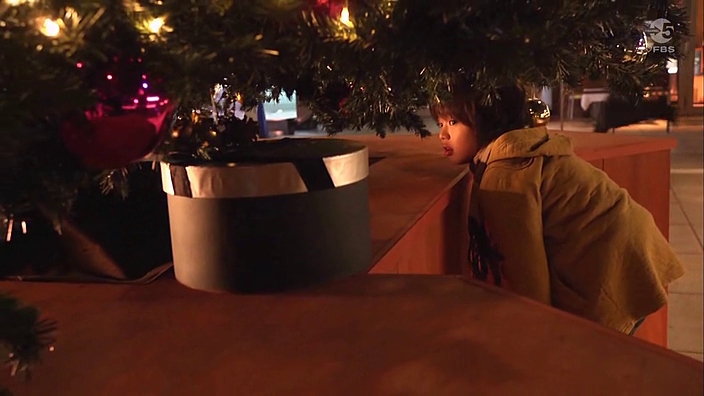
Broadcast in 2011, this television special meanwhile updates the action to the present day while acting as a kind of double origin story if one set in a more realistic world. As a nine-year-old boy, Black Jack asks his mother to meet him by the Christmas display in a local shopping mall. Not having had enough money to buy his mother a red rose, he patiently sits and draws one under the tree while otherwise oblivious to the news being broadcast on a large screen explaining that there has been a series of bombings in the city and the next target is this very mall. Black Jack’s mother has become mute after a traumatic incident but tries to call out to him only for the pair to be caught in the blast. Touched by their story, the genius doctor Honma (Masachika Ichimura) manages to save Black Jack by transplanting his organs and giving him a skin graft while his mother remains in a coma.

The story then jumps to the present day with Black Jack (Masaki Okada) a medical student with an underground lair where he keeps his comatose mother (who hasn’t aged at all in 15 years) and operates as a backstreet doctor treating undocumented migrants and yakuza. Aside from emphasising his contradictory nature as someone who both treats anyone who requires treatment no matter of their social status yet simultaneously demands incredible sums of money for doing so, associating with these kinds of people also places Black Jack among the lower ranks of society which is something that niggles at snooty doctor Naoki (Yukiyoshi Ozawa). Naoki is sort of betrothed to Yuna (Riisa Naka), the daughter of the chief doctor at a prestigious university hospital who is herself in the middle of taking her final exams to become a doctor. 

Familiar to fans of the manga, Naoki is Black Jack’s opposite number. As he tells Yuna, there are two kinds of doctors. Those who save lives and those who kill. In the manga, Naoki was a doctor traumatised by his wartime experiences who often wants to euthanise the patients that Black Jack is trying to save believing that there is no way to save them. Having encountered Black Jack cooly saving a patient who collapsed in the street, Yuna asks Naoki what he thinks makes a good doctor and he tells her it’s the belief that medical science has no limits and the doctor is omnipotent. Yet he later says just the opposite, telling Yuna that she is being childish and of course there are limits to what medical science can achieve so in effect he’s giving up. Black Jack meanwhile does believe in his own omnipotence, even if that’s not always such a good thing, and is confident he can save any patient even if in the end he cannot save the one most close to him (perhaps because she wanted him to stop trying). 

The film does not however go into very much detail and only gives brief snippets of backstory such as Black Jack’s mother going mute after a shadowy man enters and leaves their home while hinting at potential future stories in his opposition to Naoki who objects to him partly out of snobbishness, and a potential romance with Yuna who has now shifted away from the elitism that coloured her family towards a more altruistic kind of medicine represented by Black Jack even in his aloofness. Nevertheless, the film makes no real attempt to transcend its origins as a television movie, not that it has to, and is hampered by an uninspired script and low production values which contribute to its relatively more naturalistic setting yet sit awkwardly with the more outlandish parts of the narrative such as Black Jack’s keeping his mother in cryogenic status for 15 years or being able to transplant all of someone’s organs at once and in under 10 minutes. Still, as a minor outing for the iconic character it’s entertaining enough for fans of the franchise. 


We’re Millennials. Got a Problem? International (ゆとりですがなにか インターナショナル, Nobuo Mizuta, 2023)

Seven years on from the hit TV series, the guys find themselves dealing with the problems of early middle age along with increasing internationalisation as members of the so-called Yutori generation in Nobuo Mizuta’s We’re Millennials Got a Problem? (ゆとりですがなにか インターナショナル, Yutori desu ga, naninka Internationa). Now they’re in a different place and increasingly confused by the youth of the day while reconsidering their own life choices and facing a series of impromptu crises.

Among them would be that both the yakiniku restaurant where the guys worked in the TV series and the company that used to distribute the sake produced by Masakazu’s (Masaki Okada) family brewery have been taken over by Korean conglomerates. To make matters worse, the company tells Masakazu at an online meeting he’s embarrassingly turned up to in person because no one thought to tell him it was remote that they’re shifting production entirely to makgeolli because no one drinks sake anymore and his takings are about to fall off a cliff. The only way he can keep the contract is by agreeing to introduce a new product, either makgeolli or alcohol free sake. 

Meanwhile, his friend Maribu (Yuya Yagira) has returned after seven years in China with a Chinese wife and three children but apparently no job prospects. Masakazu offers him a job at the brewery, forgetting that it’s a bit awkward because he used to date his sister, Yutori (Haruka Shimazaki), who has quit her corporate job to start a business selling nordic knickknacks. It’s Maribu’s live streaming of the moribund brewery that unwittingly exposes the cracks in Masakazu’s marriage when Chinese netizens starts sending aphrodisiacs through the post to help him overcome the problems of his sexless life with wife Akane (Sakura Ando) who is herself struggling with the demands of looking after two small children and taking care of all the domestic chores with no help.

Later Akane tells mutual friend Yamaji (Tori Matsuzaka) that she’s worried she has post-natal depression and is fed up with her home life. We see can how stressful it is in the opening sequence in which Masakazu (ironically) tries to become a YouTube sake star but is repeatedly heckled by offscreen calls from Akane asking him to bathe the children and otherwise help out before she finally has no choice but to bring the kids to him. When they go to city hall to apply for a place in childcare they’re immediately dismissed, Akane somehow told that she doesn’t have as many “points” as her husband even though they’re both self-employed and there are many more needy candidates before the (probably well-meaning) civil servant not so subtly checks their daughter’s arm for signs of abuse or neglect. It’s not that surprising therefore that when the aphrodisiacs start piling up at home she wonders if Masakzau’s having an affair placing further strain on the relationship. 

Shin-hye (Haruka Kinami), the Korean-Japanese-American CEO of the company that bought out their old distributor (for whom Akane was once a regional manager) also a expresses a similar anxiety about the place of women in the workplace on the one hand coming from Korean corporate culture and finding that Japan might not as be “as bad” at least in its every increasing list of harassment which at least admit there’s problem with workplace bullying, sexist culture, and unwanted sexual advances from men in positions of power. Yamaji, meanwhile, finds his well-meaning attempts to foster diversity in the classroom floundering when the kids declare themselves unable to understand the intricacies of LGTBQ issues explaining that at their age “dating” just means hanging out though they’re unexpectedly accepting of the Thai transfer student with an inexplicable crush on the incredibly obnoxious American boy who transferred in the same time as him. 

In other ways, however, Yamaji is the same as ever. On his first appearance he’s on an awkward date with a woman from a dating app which he largely spends talking to his mentor on an iPad and making sexist remarks. They are all struggling with the demands of a more concrete adulthood in which much is already decided while their settled lives are undermined by unexpected crisis from the fallout from the conravirus pandemic and ongoing economic malaise to marital discord, the demands of caring for small children, and a friend a they had no idea was a top star live-streaming star in China. A recurring gag sees people undertake zoom meetings dressed in a suit jacked with sweatpants underneath. Yutori eventually exclaims that there’s no point even having dream while her family have a lot of sensible questions about her new business like where all the stock is whether it was worth the risk leaving her stable job that was presumably subject to all the harassment and otherwise oppressive corporate culture of contemporary Japan. Nevertheless, the millennials eventually come to a kind to acceptance and understanding of where they are in their lives along with a re-appreciation of everything they already have.


We’re Millennials. Got a Problem? International screened as part of this year’s Nippon Connection

Original trailer (English subtitles)

One Second Ahead, One Second Behind (1秒先の彼, Nobuhiro Yamashita, 2023)

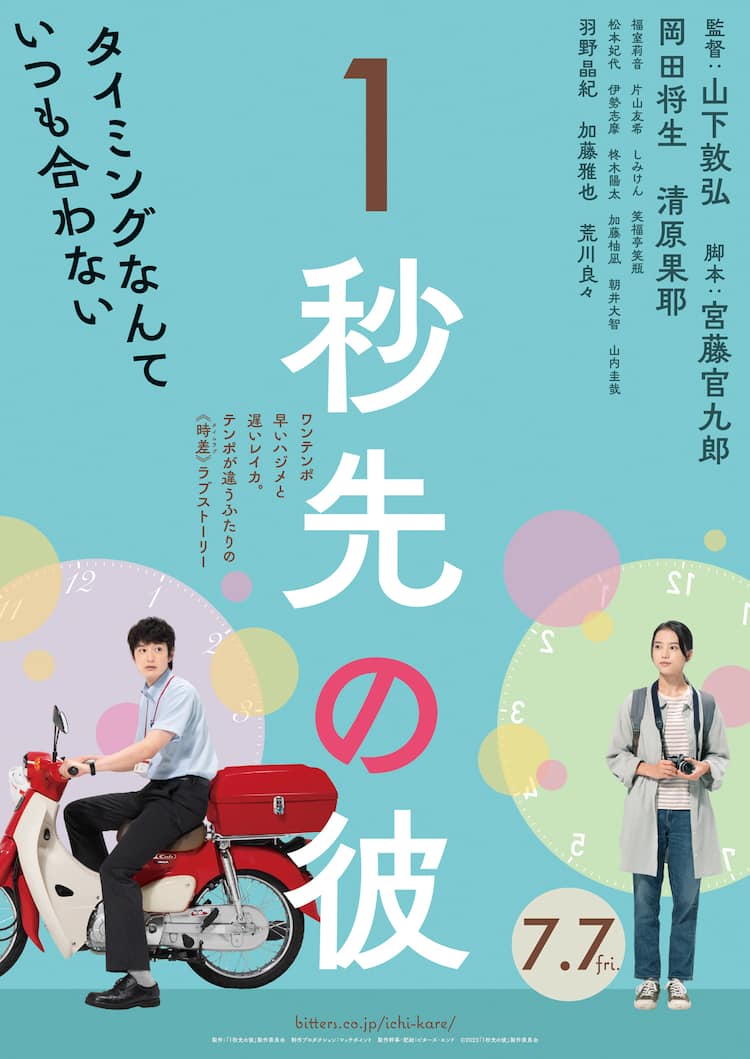
If you’re a step ahead and someone else is a step behind, then the gap between you ought to be twice as big but in an odd kind of way it can bring you closer. At least, that’s how it is for the protagonists of Nobuhiro Yamashita’s One Second Behind, One Second Ahead (1秒先の彼, Ichibyo Saki no Kare), a remake of the Taiwanese rom-com My Missing Valentine scripted by Kankuro Kudo. 

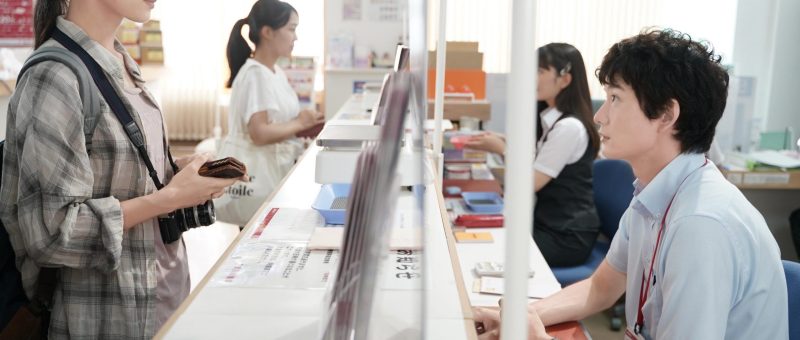
Kudo wisely avoids some of the awkwardness of the original by reversing the genders of the misaligned romantics so that it’s now male post office worker Hajime (Masaki Okada) who wakes up to realise that he’s lost an entire day while having no recollection of how he got sunburnt or why there’s sand in his trousers. The host of a radio show he’s fond of listening to asks him about something he’s lost, causing him to remember his father who went out one evening for ginger and then never came back. Hajime’s problem is that he’s always a little ahead of himself, in too much of a hurry to fully grasp the situation around him. That might be one reason that he falls so hard for singer-songwriter Sakura (Rion Fukumuro) and becomes far more invested in the relationship than might be wise for someone you’ve only just met. 

Reika (Kaya Kiyohara), meanwhile, is always a little bit behind. Shy and somewhat reserved she struggles to get her words out and while Hajime has often left before the end of a conversation she is usually left hanging by an inattentive or impatient partner. Out of sync with the world around them, they have each lost something precious besides the obvious and are looking for a way to get it back. Kudo’s script largely drops the magical realism of the Taiwanese original with its strange world of talking lizards and opts for something a little less surreal if just as sweet while maintaining the borrowed time motif that suggests the universe is fair and willingly adjusts itself so that those who find themselves missing out will get that time back though there’s not a lot they can do with it other than reflect. 

Even so within this miraculous dream space regrets can in a sense be cured and anxieties worked out. Those awake to stopped time have the opportunity to set things right, or at least to say their piece even if no one else can hear. There’s something more than time that they can recover, though it may be only small comfort and offer little more than one-sided closure. Rather than the Valentine’s Day setting of the Taiwanese original Kudo and Yamashita shift the action to the summer which with its many fireworks displays has a rather poignant quality focussed more on the loss than the rediscovery while emphasising the short-lived quality of human relationships which can nevertheless leave a warm afterglow even if the memory itself has been lost. 

Setting the film in the historical city of Kyoto also adds to the magical feel, the emerging sunlight at one point appearing almost like a halo around the head of a frozen Hajime while he perhaps comes to accept his mother’s rationale that his father did not leave him but ran away from reality and ironically a world he felt he could not keep up with. In a repeated gag, Hajime calls up a requests show and pours his heart out to the host only for his mother to dial in and dispute everything he’s says especially reminding him that he’s not a loser but should slow down a bit and at least listen to the end of the conversation. Reika meanwhile might have to work herself up to speedier means of communication than the good old fashioned letter but can at least see that she gets there in the end even if it might take a little longer than for others. 

Despite the differences between them, they are in fact perfectly in sync and just waiting for the times to align to bring them back together. Kudo and Yamashita lend their quirky romance a melancholy and heartwarming quality, steering clear of the awkwardness of the otherwise sweet and wholesome Taiwanese original in suggesting that the “date” at the film’s centre is the fulfilment of long forgotten promise rather than the momentary whim of a lovelorn romantic. Suggesting that the things you lose cycle back to you and that the universe itself is fair and kind, the film’s pure-hearted romanticism offers a hopeful reassurance that in the end it all really will work out for the best if only you give it time.


One Second Ahead, One Second Behind screens Nov. 4/5 as part of this year’s San Diego Asian Film Festival.

Original trailer (no subtitles)

Under the Stars (星の子, Tatsushi Omori, 2020)

“The time of realisation comes and then that person changes” according to the words of a new religion guru. The sentiment is true enough, even if the meaning is slightly different from that which she’d intended. Young Chihiro, however, the heroine of Tatsushi Omori’s adaptation of the novel by Natsuko Imamura Under the Stars (星の子, Hoshi no Ko), is indeed approaching a moment of realisation as she begins to question everything about the world around her as it had been presented throughout the course of her life. 

As a baby, Chichiro (Mana Ashida) had suffered from severe eczema which had left her in terrible pain and her parents suffering with her in witnessing her distress. On the advice of a colleague, Chichiro’s father (Masatoshi Nagase) decides to try using “Venus Blessed Water” which is apparently full of cosmic energy that can cure all ills. Chihiro begins to recover and her parents become devotees of the cult which produces it eventually alienating her older sister, Ma (Aju Makita), who is unable to reconcile herself with the outlandish beliefs they advance and rituals they conduct. 

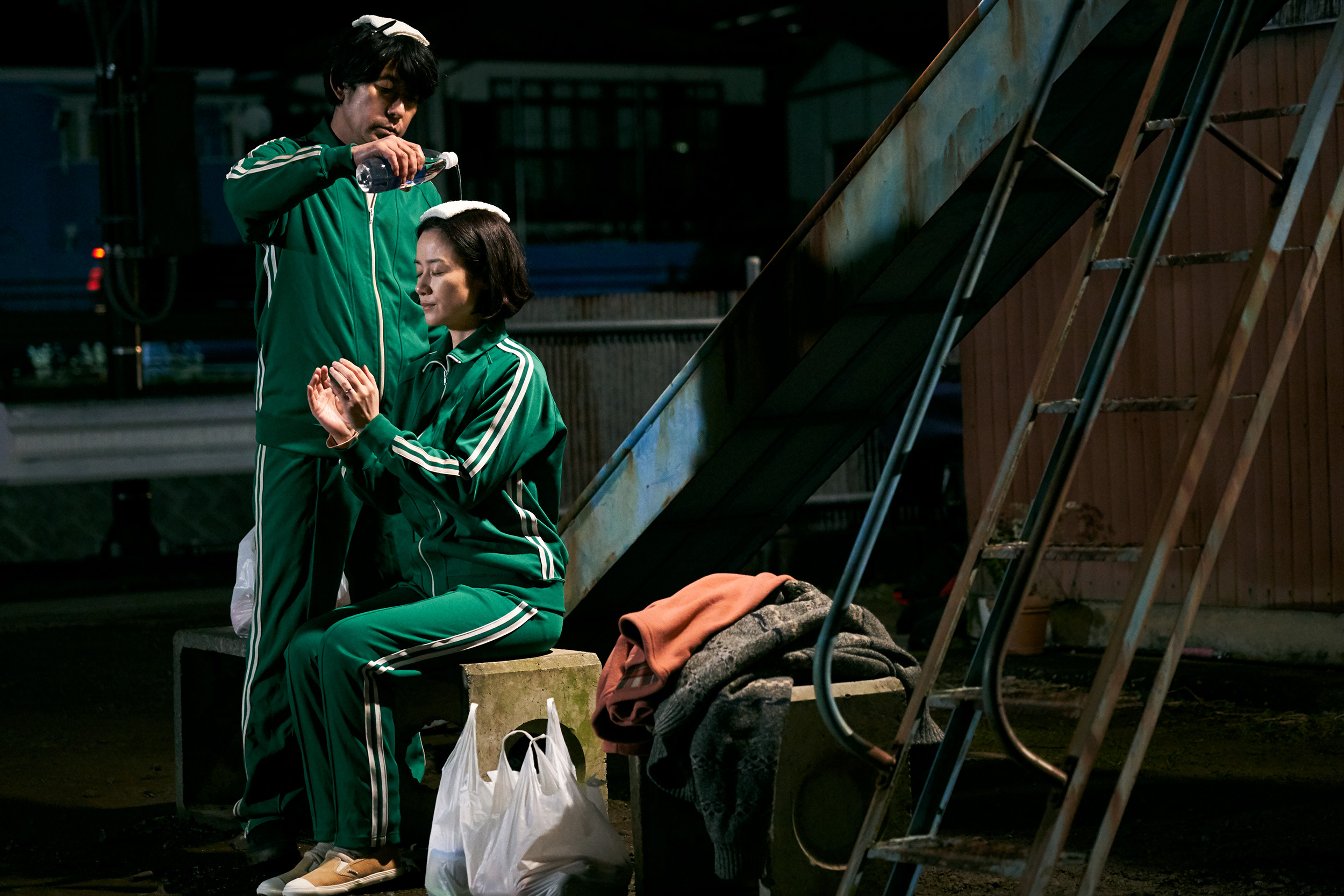
For Chihiro, however, the cult is all she’s ever known so it is in that way “normal” and it’s never really occurred to her to question it even after her sister’s mysterious “disappearance”. But as she approaches the end of middle-school, a few well placed questions from her classmates give her pause for thought wondering if her parents’ claims about the miracle water could possibly be true or if, as her best friend Watanabe (Ninon) wonders, they are simply being scammed. After all, if water could solve all the world’s problems it would either be ridiculously expensive or completely free and if you could stay healthy by placing a damp towel on your head then everyone would be doing it. Her parents claim they don’t get colds because the water boosts their immune system, but perhaps they’re just lucky enough to be the kind of people who don’t often get that kind of sick or the fact that they obviously spend almost all their time in the bubble of the cult reduces their exposure. 

Her crunch point comes when her handsome maths teacher (Masaki Okada) on whom she has a crush spots her parents doing the ritual in a park and exasperatedly points them out as complete nutcases. When she eventually tells him who they are, he inappropriately calls her out in front of the entire class by telling her to get rid of her “weird” water while subtly undermining her religious beliefs with advice about how to avoid getting colds or other potentially dangerous seasonal viruses. Omori presents the cult neutrally, hinting that the discrimination Chihiro is facing as a member of a “new religion” may be unfair while the beliefs of traditional religions may seem no stranger to the unfamiliar and to criticise them so directly would be deemed unacceptable in any liberal society. In a sense perhaps we all grow up in a kind of cult only latterly questioning the things our parents taught us to be true. Chihiro’s uncle Yuzo meanwhile had once tried to use science and experience to undermine her parents’ beliefs, he and Ma swapping out their holy water for the tap variety to prove to them that they are being duped only for them to double down and refuse to accept the “truth”. 

Uncle Yuzo and his family eventually offer Chihiro a place to stay in the hope of getting her out of the cult but are also of course asking her to betray her parents by leaving them. She remains preoccupied by the fate of her sister, particularly hearing rumours about the cult supposedly disappearing those who turn against them, but is torn between her growing doubts and love for her parents while privately suspicious about the fate of a child much like herself kept locked up by his mum and dad who say he’s terribly ill and unable to speak (which doesn’t exactly support the cult’s claims of universal healing), but who knows what might actually be true.

Shoko (Haru Kuroki), the wife of the guru Kairo (Kengo Kora), is fond of reminding the younger members that they are not there of their own free will which is of course true whatever the implications for fate and determinism because they are children whose parents have forced them to attend which might explain their sense of resentment or what she implies is “resistance” to their spiritual messaging in urging them to make an active choice to accept the cult’s teachings. Chihiro is coming to a realisation that she may be on a different path than her parents but delaying her exit while they too are possibly preparing her for more independent life. Lighter than much of Omori’s previous work despite its weighty themes, Under the Stars is also in its way about the end of childhood and the bittersweet compromises that accompany it. 


Under The Stars streamed as part of this year’s Nippon Connection.

Original trailer (no subtitles)

Images: (c) 2020 “Under the Stars” Production Committee

Arc (Arc アーク, Kei Ishikawa, 2021)

Does something have to have an ending to be meaningful or could eternity be the point? Inspired by Ken Liu’s short story, Kei Ishikawa’s near future tale Arc (Arc アーク) envisages a world without death if perhaps not for all in which bodily immortality has been achieved, but what would that mean for humanity no longer faced with mortal anxiety, how should it reorient itself in the absence of sickness or old age while the possibility of endlessness for the self has removed the urge for immortality through childbirth? These are all of course questions which have no one answer, though what the heroine finally discovers is that in the end it may be the choice itself of when to live or when to die that may lend her life at least its meaning. 

Even so, hers is a particular anxiety bound up with frustrated maternity having abandoned a baby she gave birth to at 17, too afraid of the responsibility to accept it. At 19, Rina (Kyoko Yoshine) is spotted at a club by a mysterious middle-aged woman, Ema (Shinobu Terajima), who runs a revolutionary cosmetics company which has pioneered a new way of preserving the bodies of the dead turning them into uncannily lifelike mannequins with a new process known as plasticisation. To Ema’s mind, true liberation comes from accepting transience, that once life has left it the body is just an object which might be repurposed for her art but then at the same time perhaps she is attempting to hold on to something that should be released, interfering in a natural process and while intending to offer comfort to those bereaved preventing them from letting go or moving on with their lives. Her much younger brother Amane, meanwhile, actively wants to stop time while alive utilising a similar technology to halt the ageing process and overcome the tyranny of death. 

In a strange way, Ema’s desire to restore a body which is no longer alive to ideal condition is also an acknowledgement of death which she believes is not the opposite of life but a necessary part of it. In overcoming the fear of death, she claims, a transcendental beauty will reveal itself. Amane meanwhile seeks to overcome death physically, but as Rina is warned his health revolution may not bring happiness to mankind not least because it exposes a persistent inequality in which eternal youth is available only to those with the means to acquire it, creating a new underclass not only of the poor but those whose bodies are not able to accept the treatment. Amane sees his creation as a dividing line in human history which will necessarily divide humanity into two groups, those who choose to join his revolution and those who do not (though interestingly he does not consider a third group who actively opposite it). Even so he sees it as a choice and accepts the right to reject immortality even going so far as to build a dedicated centre where those who choose to live a “natural” lifespan can do so in dignity and comfort. 

The concept of personal choice appears to be key, Ema too replying that her decision to stick with plasticisation rather than Amane’s treatment is her right though she too eventually hits a wall in the imperfection of her craft and the depths of her grief. She tells Rina to live her life freely encouraging her to live fully in the moment, while she too is quick to remind others that the decisions are theirs to make as regards their life and death. It’s not death nor the fear of it that are the problem, but the inability to choose as Rina finally acknowledges in remarking that the ability to decide its end point gives her the means to carve the arc of her life overcoming death through full existential control having in a sense closed a circle in facing her own sense of maternal failure. Shifting from the warmth and natural beauty of a beach in summer to the dark and brutalist environments of the BodyWerks lab, and from the muted colour of Rina’s youth to the black and white of her youthful old age, Ishikawa’s near future sci-fi-inflected tale suggests it’s not so much death that frightens you but helplessness and as in all things the answer lies in autonomous choice. 


Arc screens in Chicago on April 3 as part of the 14th season of Asian Pop-Up Cinema.

Original trailer (no subtitles)

Drive My Car (ドライブ・マイ・カー, Ryusuke Hamaguchi, 2021)

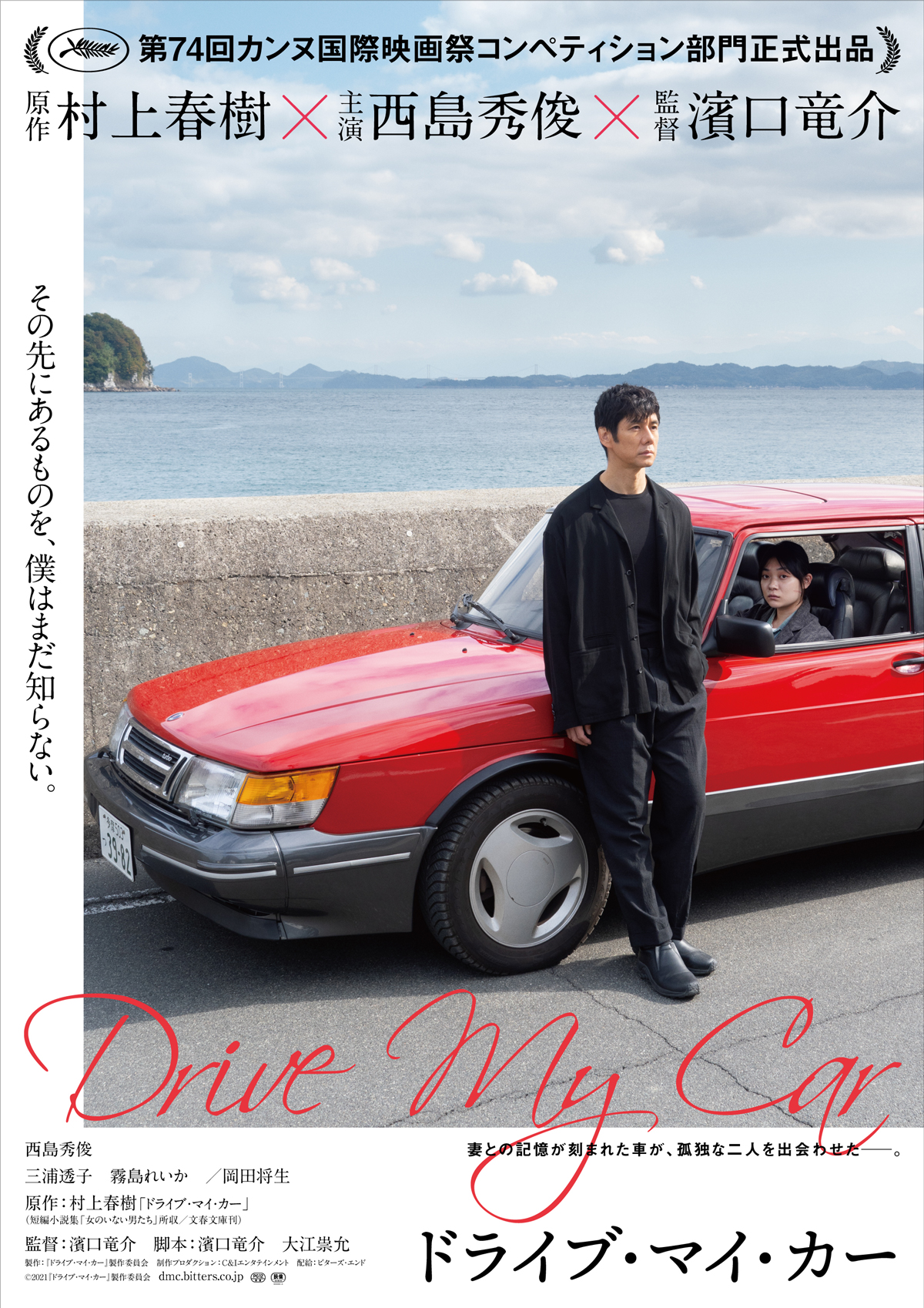
“What can we do? we must live our lives” comes a constant refrain echoing the closing words of Chekhov’s Uncle Vanya offered by the self-sacrificing Sonya resolving to find joy in suffering if only in the promise of a better world to come. Freely adapted from a short story by Haruki Murakami, Ryusuke Hamaguchi’s profoundly moving Drive My Car (ドライブ・マイ・カー) is study in grief, loss, and how you learn to live after the world has ended but also of how we pull each through, finding new ways to communicate when words alone can’t help us. 

Words are, however, where we begin with a woman half in shadow an accidental Scheherazade spinning a bizarre tale of a high school girl’s first love. Oto (Reika Kirishima) claims the story is not about her, but as we’ll later discover in some ways it is if perhaps not literally. A long-married couple, this is part of their marital routine, screenwriter Oto telling stories to her theatre director husband Yusuke (Hidetoshi Nishijima) she asks him to remember and repeat back to her in the morning. Only one day, having accidentally stumbled in on his wife and her lover only to leave quietly saying nothing, Yusuke claims not to remember. She tells him she wants to talk, but he is afraid of what she’ll say and delays coming home, finding her collapsed in the hallway on his return having passed away from a cerebral haemorrhage. The story remains incomplete, a perpetual cliffhanger never to be resolved. 

Two years later Yusuke is a haunted man still listening to the cassette tape Oto left for him of her reading all of the other lines of Chekhov’s Uncle Vanya save for those of the title character which he was to play himself. This time he’s been selected as an artist in residence at at a theatre in Hiroshima where he’ll once again stage Vanya in his signature multilingual performance style. He’s specifically asked for accommodation an hour’s drive away with the intention of maintaining his usual routine of listening to the tape on his way to rehearsal but, following previous incidents, the theatre has a policy of hiring their own drivers in this case a young woman, Misaki (Toko Miura), who eventually wins him over through her capability and care while, ironically, mimicking the very qualities he demands of his actors in her wounded stoicism. 

The car in a sense represents an inviolable space of intimacy, a space that Yusuke had been reluctant to allow anyone to enter, even Oto remarking on his discomfort with her in the driver’s seat as she took him to a doctor’s appointment where he learned he was losing the sight in his left eye, clarifying with the doctor that for the time being at least he’d be OK to drive himself. Misaki assumes he doesn’t want her to drive his car because she’s a young woman, but thereafter is careful to maintain distance respecting his space for her sake as much as his own mindful of her role as a “driver” until he begins to invite her in if originally more out of politeness or consideration than a desire for company. 

Misaki has her own story, a story she too is originally reluctant to share but in its way echoes his as someone trapped in grief and guilt ironically unable to move forward but driven by the quality of Oto’s voice and the ritualistic call and response implied by its lacunas. Too afraid of its implications to take the role himself, Yusuke casts Oto’s lover, Takatsuki (Masaki Okada) a young TV actor with impulse control issues whose career has apparently been ruined by scandal, as Vanya a man approaching 50 whose illusions are painfully shattered, forcing him to realise that he’s wasted his life on a futile ideal. The three of them, each eventually entering the confessional space of the car, share more than they might assume but it’s Takatsuki who holds the key revealing another piece of the puzzle with unexpected profundity that in its own way lays bare a truth Yusuke had been unwilling to see about his relationship with his wife, the shared grief that both bound and divided them, and the poetic import of her death. 

Rather than Vanya, the film’s prologue saw Yusuke perform in a multilingual production of Beckett’s Waiting for Godot, the author’s well-known phrase “I must go on, I can’t go on, I’ll go on” perhaps equally apt even as Yusuke moves slowly away from the role of Vanya before finally assuming that of Sonya in echoing her words while comforting the filial figure of Misaki even as she explains to him that as in Vanya the fault was not in his convictions but in himself that he couldn’t accept the contradictions of his wife and in that sense had not understood her or himself well enough to know he should have braved the hurt of confrontation. Yet as Takatsuki had said, you can’t ever really know another person, there’s always a part of them forever out of reach all you can do is try to make peace with your own darkness. 

For Yusuke communication occurs indirectly, through allegory or half-truth, and through the unspoken or unintelligible. His multilingual approach in which lines are read coldly at half-speed is intended to draw out the feeling that lies beneath them, the final most profound moment delivered in silence as a former dancer breaking free of her bodily inertia delivers Sonia’s closing monologue with all of its melancholy serenity in Korean sign language her arms draped angelically over Vanya’s shoulders in a gesture of the utmost comfort. Touching in its ambiguities, Hamaguchi’s quietly devastating emotional drama for all of its eerie uncanniness finally places its faith in simple human empathy as its haunted souls learn to live with loss finding in each other the strength to go on living.


Drive My Car screened as part of this year’s BFI London Film Festival.

International trailer (English subtitles)
The Many Faces of Ito (伊藤くん A to E, Ryuichi Hiroki, 2018)

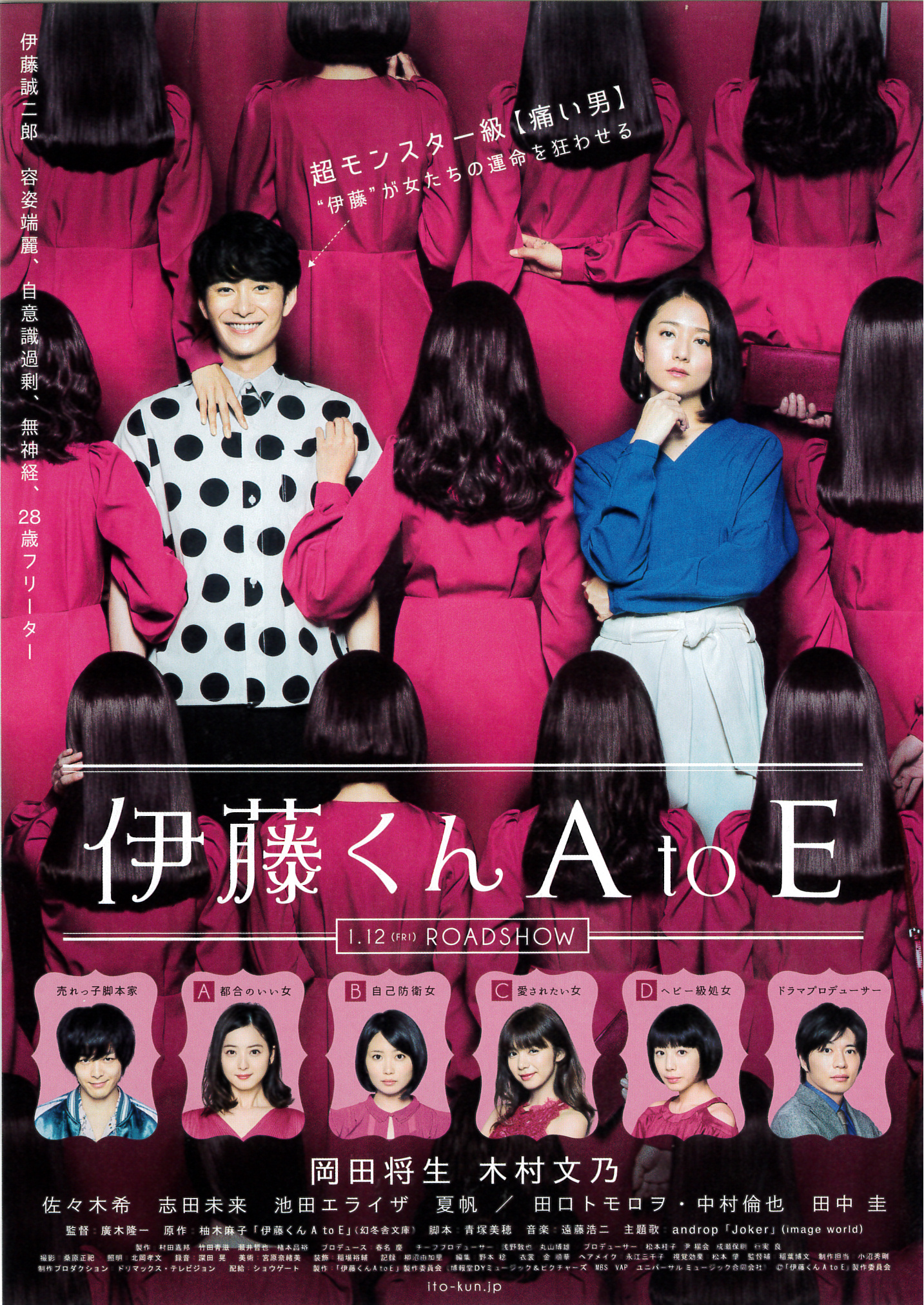
Many Faces of Ito posterRyuichi Hiroki’s career has been oddly varied, but he’s never been one to avoid straying into uncomfortable areas. Adapted from the novel by Asako Yuzuki, The Many Faces of Ito (伊藤くん A to E, Ito-kun A to E) explores the risks and rewards of modern existence through the prismatic viewpoint of five women messed around by the same terrible man as he seems to breeze through life buoyed up by the sense of superiority he gains through their unwavering appreciation. Then again perhaps his air of ultra confidence is yet another mask for his insecurity as he paints every failure as a conscious rejection, sneering superciliously at the desires of others while wilfully negating his own. Our guide, a blocked TV drama scriptwriter, may have imagined this entire scenario as she attempts to break through her own sense of painful inertia but it remains true that the world she inhabits is far from kind to women seeking the key to their own destinies.

32-year-old Rio (Fumino Kimura) won a scriptwriting competition which developed into a top TV hit some years previously but has struggled to replicate her success and now makes her living teaching screenwriting and acting as an expert on love for women captivated by the idealised romance of her debut “Tokyo Doll House”. Her longterm editor/producer (and former lover but that’s a problem we’ll get to later) encourages her to mine her romance sessions for possible material through interviewing women with unusual romantic dilemmas on the pretext of helping them find a way out. Rio, now jaded and cynical, is of a mind to make money from other people’s misery and the advice she gives is less in service of her clients and more in that of the story as she tries to engineer “naturalistic” drama but as in all things, her writing becomes increasingly personal and she is in effect in dialogue with herself.

Unbeknownst to Rio, each of the four women she decides to interview is involved with the same man – Ito (Masaki Okada), who is, because coincidence is real, a student in her screenwriting class. With his patterned black and white shirts and handsome yet somehow anonymous appearance, Ito is earnest but superior, shifting from over eager puppy to dangerously possessive stalker. 28-year-old Tomomi (Nozomi Sasaki) has been carrying a torch for him for five years longing for an intimacy that will never develop while Ito insensitively tells her about his crush on a workplace colleague, Shuko (Mirai Shida). Shuko is in no way interested in his advances but Ito refuses to take no for an answer, eventually forcing her to leave the company because of his constant harassment. Wounded, he retreats to university “friend” Miki (Kaho) who he knows has been nursing a long time crush and is shy and naive enough for him to push around without much resistance. Luckily (in one sense) Miki has a devoted roommate, Satoko (Elaiza Ikeda), who is keen to look out for her friend but there is perhaps more to this relationship than meets the eye and Satoko’s jealously eventually pulls her too into Ito’s web of romantic destruction.

The question Rio finds herself asking if each of these women, and she herself in her failure to get over the betrayal of her producer Tamura (Kei Tanaka) who eventually broke up with her to marry someone else, is in a sense complicit in their own inability to move forward. It’s almost as if their collective sense of low self-esteem and fear of rejection has conjured up its own mythical monster in the figure of Ito who displays just about every male failing on offer. He uses and abuses and when rejected proudly states that he never wanted that anyway because he’s simply far too good for whatever it is that you might prize. Yet through battling his cruelty and emotional violence, each of the women is able to cut straight through to the origin of all their problems, correctly identifying what it is that ails them and committing to moving forward in spite of it even if the part of themselves they most feared was the one the saw mirrored in Ito’s insecurities.

The “battle” between Ito and Rio comes out as a draw which sees them both lose but only provokes a final confrontation which is as much with Rio herself as it is with the Itos of the world. Ito rejects his failure, sneers at the TV industry and claims to have loftier goals but Rio has figured him out by now and correctly assesses that his life philosophy is to back away from the fight to avoid the humiliation of losing. Pushed by the unexpectedly profound interventions of fellow writer KazuKen (Tomoya Nakamura) who reminds her that she was once a writer unafraid to bare her soul, Rio realises that a life without risk is mere emptiness and the soulless (non)existence of a man like Ito is no way to live. To be alive to is open yourself up to pain, but if you refuse to engage in fear of getting hurt you might as well be dead and if what you want is to make art you’ll have to lift the lid on all that personal suffering or you’ll never be able to connect. Each of our timid ladies finds themselves ready to stand tall, no longer willing to afford the likes of Ito the esteem which allows him to sail on through papering over his lack of self-confidence by sapping all of theirs. The masks are off, and the game is on.


Currently streaming on Netflix in most territories along with the companion TV drama.

Original trailer (no subtitles)

N@NIMONO (何者, Daisuke Miura, 2016)

Nanimono posterGrowing up is a series of battles in Japan. Exam hell soon gives way to the freedom and liberation of university but students know that their carefree days of youth and discovery will be short lived. Job hunting is done en masse and takes place in the final year of study (or even before). The process of securing a work placement is much the same as deciding on which school to apply to – attending job fairs to meet with representatives, getting hold of brochures, talking to anyone and everyone you know about the various reputations of the big firms, and then figuring out what your best bets are. Many companies run written exams which are then followed by group interviews in which the applicants are made to answer humiliating questions in front of their fellow candidates. What this all amounts to is a gradual erasure of the self in order to become the perfect hire, making the same tired phrases sound interesting in an effort to say all the right things whilst trying not too seem calculating or too bland.

The group at the centre of Daisuke Miura’s adaptation of the Naoki Prize winning novel by Ryo Asai, N@NIMONO (何者, Nanimono, AKA Somebody / Someone), know this better than most. Protagonist Takuto (Takeru Satoh) used to be interested in theatre but has abandoned his dreams of the stage for the mainstream route into company life while his friend Kotaro (Masaki Suda) has played his last gig as the lead singer of a rock band, died his hair black again, and got a smart haircut in preparation for interviews. The boys are still good friends and roommates despite the fact that Takuto has long been carrying a torch for Kotaro’s former girlfriend, Mizuki (Kasumi Arimura), who has just returned from studying abroad. Mizuki is good friends with another girl, Rica (Fumi Nikaido), who happens to live upstairs from the boys and suggests that the four of them all get together to compare notes on the job hunting process. Rica lives with her boyfriend (still somewhat unusual in Japan), Takayoshi (Masaki Okada), who is working as a freelance journalist and is disdainful of the others’ passage into the regular workaday world but later tries to get into it himself.

There is a kind of sadness involved in this process, even if no one seriously thinks about fighting back. Everyone wants to get their foot onto that corporate ladder to become “someone”, at least in the eyes of society. There are a lot of rungs on the ladder to success, and if you miss your footing it’s near impossible to get it back – you’ll wind up one of the many crowded round the bottom staring up at the top even if you don’t want to admit it. University is the last time time there is real scope for indulging one’s personality before the corporate life takes hold – thus Takuto and Kotaro both accept that their artistic pursuits have to go in their quest for a regular middle-class life even if they inwardly struggle with their decisions to “sell-out”.

Takayoshi thinks of himself as above all this. He asks himself what all of this is for, why people put themselves through this humiliating ritual just to be locked into a nine to five that makes them miserable and turns them into soulless drones. There’s an obvious answer to that, and Takayoshi’s refusal to take it into account borders on the offensive, as does his often patronising attitude to those actively engaged in the job hunting process, but his hypocrisy is eventually brought home to him when he turns down a project to work with another artist because he thinks their work isn’t good enough. Maybe there’s courage in just putting something of yourself out there, even if it isn’t very good, rather than sitting at home looking down on everything and critiquing everyone else’s life choices whilst getting nothing done yourself.

It’s this conflict between interior and exterior life in which N@NIMONO is most interested. Main character Takuto begins as the everyman, depressed and stressed by his job hunting odyssey but aloof isolationism soon reveals itself as a kind of cowardice and self-involvement born of insecurity as he takes to a “secret” Twitter account for acerbic comments on his friends’ lives, sarcastically taking cruel potshots safe in the knowledge of his anonymity. Takuto’s entire concept of himself is a construction as his eventual descent into abstraction shows us in recasting his interaction with his friends as an avant-garde theatre show in which he finally begins to see the various ways his resentment of others is really just a way of expressing dissatisfaction with himself. This inability to fully integrate his own personality is offered as the final reason he hasn’t managed to find employment – his insincerity marks him out as a poor prospect. Takuto’s final realisation that he is unable to successfully answer the standard interview question “define your own personality in under one minute” for the perfectly sensible reason that the task is impossible kickstarts his own journey to a more complete life, even if it doesn’t do much to help the countless other “someones” out there hammered into a standard sized holes as mere cogs in the great social machine.


N@NIMONO seems to have been screened under the English titles of both “Somebody” and “Someone” but “N@NIMONO” is the one that features on the title card of the English subtitled Hong Kong blu-ray.

Original trailer (no subtitles)

https://www.youtube.com/watch?v=Ti0TMOtvUYI

Mourning Recipe (四十九日のレシピ, Yuki Tanada, 2013)

mourning-recipeWhen everything goes wrong you go home, but Yuriko, the protagonist of Yuki Tanada’s adaptation of Yuki Ibuki’s novel might feel justified in wondering if she’s made a series of huge mistakes considering the strange situation she now finds herself in. Far from the schmaltzy cooking movie the title might suggest, Mourning Recipe (四十九日のレシピ, Shijuukunichi no Recipe) is a trail of breadcrumbs left by the recently deceased family matriarch, still thinking of others before herself as she tries to help everyone move on after she is no longer there to guide them. Approaching the often difficult circumstances with her characteristic warmth and compassion, Tanada takes what could have become a trite treatise on the healing power of grief into a nuanced character study as each of the left behind now has to seek their own path in deciding how to live the rest of their lives.

Beginning in pitch darkness, housewife Yuriko (Hiromi Nagasaku) answers the phone to the voice of another woman requesting that she separate from her husband who is apparently the father of her unborn child. This double sting hits Yuriko hardest as the couple had been trying for a baby for quite sometime with little success. Thinking a divorce is for the best, Yuriko packs her bags, leaves the papers and her ring on the table, and heads for her father’s house. When she gets there she finds an oddly bubbly young girl, Imoto (Fumi Nikaido), washing her father’s back. Apparently, Imoto has been charged with looking after the house during the 49 day mourning period for Yuriko’s step-mother, Otomi – the upcoming memorial service something Yuriko had forgotten all about in the midst of her personal crisis. When Imoto presents the pair with a book that Otomi illustrated before she died listing everything they should do to prepare for the big party she wants everyone to enjoy rather than solemnly chanting sutras for her 49th day memorial, it prompts Yuriko and her father into a reconsideration of themselves, their pasts and futures, and who exactly should be making those decisions for them.

Yuriko’s position may seem like a straightforward one, betrayed by her husband her decision to leave seems inevitable but it’s complicated by the intricate web of duties and obligations Yuriko feels herself to be a part of. Reconsidering various turning points of her life, Yuriko makes plain that her marriage to the mild mannered salaryman Hiroyuki (Taizo Harada) had been under considerable strain due to the couple’s difficulty conceiving a child. Owing to the intense pressure placed on women to bear children, Yuriko internalises a sense of shame at having failed in this most basic of wifely tasks, leading her husband (she believes) to replace her with a model more fit for purpose. This point of view is rammed home by Yuriko’s insensitive aunt who continues to interrogate her about her lack of children and encourage her to return home to her husband and fix the problem rather than “giving up” and settling for the “shameful” option of divorce as young people are want to do. Aunt Tamako (Keiko Awaji) also points out that neither of her daughters bothered with university or work or any of that nonsense and now have fulfilled their duties by bearing bright and bonny grandchildren with no trouble at all. Heartbroken and blaming herself, Yuriko has to listen to the ongoing lecture whilst keeping her composure right until its gloomy conclusion.

Motherhood becomes the film’s biggest theme as mothers, non-mothers, and bad mothers swirl around the childless Yuriko, still trying to find her place in the world if the path society seems determined to set her on has been well and truly blocked off. Yuriko’s biological mother died when she was only little but happily her father fell in love with and married Otomi – a truly good woman who, like Yuriko, had no children of her own, but lived her life trying to make a difference and help other people to be happy. Little Yuriko didn’t always see it that way and found it difficult to bond with her new mother, settling for the nickname “Okka” – a combination of Otomi’s name and the word for mother, rather than straightforward “mum”.

Reinvestigating Otomi’s life in order to plan for her 49th day memorial, Yuriko truly gets to know her step-mother for the first time, discovering just how big of a difference she made in the lives of those around her. Imoto is just one of the young people Otomi went out on a limb for volunteering at a local rehabilitation centre for young people experiencing problems with addition. She then introduces them to a young Brazilian/Japanese migrant (Masaki Okada) who found himself feeling all alone in a foreign land until Otomi handed him the keys to her car and insisted he get out and about and meet new people. Otomi might not have had children of her own, but she became a mother to the world, reaching out and helping those who most needed it, becoming the springboard so that they could fly far away from her happier and healthier than before.

In learning from Otomi’s book, Yuriko regains her sense of self and a desire to find her purpose, knowing that the ability to bear children is not the be all and end all of a woman’s existence. Indeed even if a woman can give birth to a child, that’s not to say she’ll be a good mother as Imoto points out in reference to the toxic relationship she has with hers which feeds back into the insensitive way Hiroyuki’s mistress talks about her plans in front of her young son.

Given all of these epiphanies and mini realisations, Yuriko’s final decision may seem like an odd one, sending her back into a conservative world bound by all of the same duties and obligations the film spent so long undermining. Nevertheless, Yuriko emerges from her 49 days of mourning with a better understanding of herself and the way she should be living her life. Filled with wit and warm humour, Mourning Recipe neatly skirts its melodramatic nature to present a genuinely moving examination of the true nature of family, motherhood, and the necessity of individual freedom. Otomi’s final springboard action was for the ones she left behind, even if, once again, she won’t be able to see them fly.


Original trailer (English subtitles)