August in the Water (水の中の八月, Sogo Ishii, 1995)

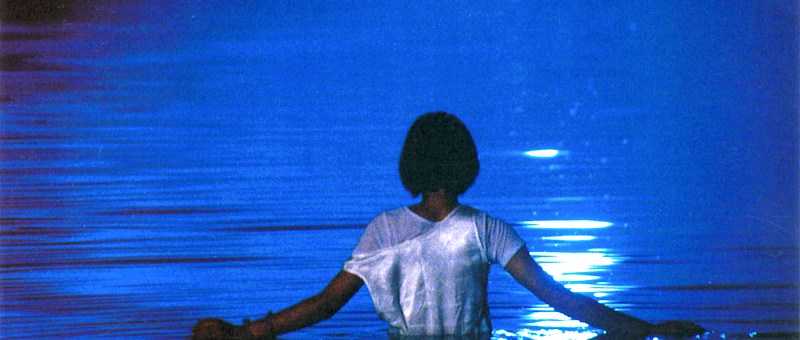
How does the world, or perhaps the cosmos, attempt to communicate with us? As Douglas Adams once did, August in the Water (水の中の八月, Mizu no naka no Hachigatsu) suggests it maybe through the dolphins who here at least seem to be quasi-mystical beings existing in what is really the lifeblood of humanity. In the film’s opening scenes, we’re told that the hero, Mao (Shinsuke Aoki) whose name means “true fish” and his friend Ukiya (Masaaki Takarai) have taken part-time jobs at a marine part to learn how to communicate with dolphins, but it’s the heroine Izumi, whose name means “spring” who eventually claims to have learned to do so. 

At least, her final words are that the dolphins have taught her “the perfect balance” which has allowed her to open the floodgates both literal and metaphorical to return water to an arid land. We’re repeatedly told that there’s been a lengthy drought and a water shortage leading to rationing and locked pipes though the marine park remains open and the local festival goes ahead  hinting at the ways in which we do and don’t value our natural resources. Izumi’s science teacher tells the kids that humans don’t contribute to the Earth and waste the resources that it gives us which might help to explain the gradual ossification of the planet including a mysterious condition known as the Stone Disease which causes people to collapse in the street as their organs harden. 

Izumi’s sister Yo later remarks that she thinks humanity came from a distant planet long ago and yearns to go home but to do so we must become stone because water is a substance that exists only here on Earth. Turning to stone is however seen as quite a bad thing and also echoes a millennial distrust in increasing technology with TV pundits positing that if human brains were replaced with computer chips we wouldn’t need to worry about water shortages anymore. In Yo’s dream, after people’s brains have become computer chips they become connected to the universe and can transport their minds to the moon enabling them to communicate with anyone anywhere at any time. 

But then despite the potential for communication that computers were only just beginning to offer in the mid-90s, Izumi warns her sister to stay away from them as they leave you vulnerable to the Stone Disease. The boys’ ultramodern friend, Miki (Reiko Matsuo), is a computer addict and it’s she who eventually manages to unlock parts of the mystery but paradoxically as if she were some kind of seer correctly predicting that an accident will befall Izumi on 23rd August and discovering a prophecy that in the year humanity neglects the water god two meteorites will fall in close proximity and drought will follow. Only a ritual conducted by the chosen one under a full moon will be able to cure it. Two child-like old men also warn that nothing’s been the same since they moved the old shinto shrine over which there have also been sightings of UFOs.

After the diving accident in which Izumi plunges meteor-like into the pool, she herself feels as if she’s been split in two almost like the world itself which is divided between these ancient beliefs and modern advancements that have perhaps blocked the flow that once allowed us to communicate with each other and with the universe. A psychiatrist suggests that Izumi may be suffering with sudden onset schizophrenia as a result of her accident and that all of her talk about secret messages from dolphins and mysterious aliens who want to turn the world to stone is nothing but confused delusion though in the film’s closing scenes she herself takes on a supernatural quality as a kind of etherial saviour figure who realises that she may have been dead ever since the accident and is now something different, different and distant as her sister puts it, charged with the mission of rejuvenating a human spirit long since dulled by mechanisation.

In contrast to Ishii’s earlier films which brimmed with punkish energy, August in the Water unfolds at a leisurely pace with eerie yet nostalgic mood music and a new age sensibility speaking to millennial youth with a sense of turn of the century anxiety and human remorse that perhaps we’ve already poisoned our futures. Nevertheless, despite his youthful heartbreak, what Izumi bequeaths to Mao and humanity itself is seemingly the ability to live in the abundant fullness of existence until that existence is done and we return once again to water and the comforting embrace of the Earth.


August in the Water screened as part of this year’s JAPAN CUTS.

The Phoenix (火の鳥, Kon Ichikawa, 1978)

The people of early Japan contemplate different visions of immortality in Kon Ichikawa’s sprawling adaptation of the first chapter in Osamu Tezuka’s manga series, The Phoenix (火の鳥, Hi no Tori). Featuring a mix of animation and live action, the film takes place in an ancient, pre-modern Japan in which just about everyone chases the mysterious fire bird in belief that drinking its blood will confer eternal life. They each want it for different reasons, some more to stop someone else getting it than for themselves but all discover that there are other ways of living on than the strictly literal. 

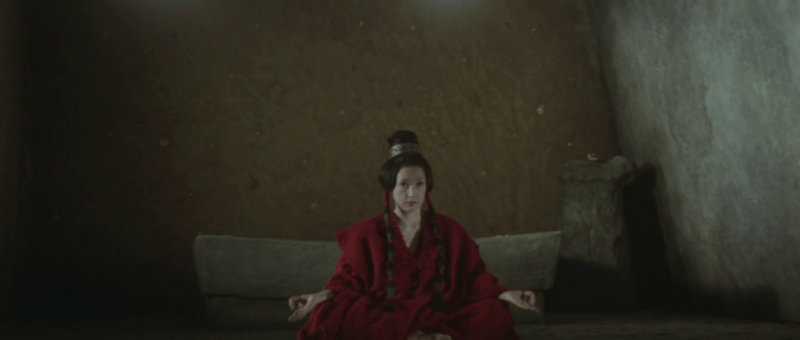
Broadly speaking the film takes place during the era of possibly mythical sorceress queen Himiko (Mieko Takamine) who rules over the nation known as Yamatai which is the name given to a kingdom in Japan in ancient Chinese sources. Himiko wants the phoenix because she fears that her power is founded on a youth and beauty which has begun to fade while the people are beginning to lose faith in her magic, not least because her rule is oppressive and authoritarian. She also fears that should the Chinese emperor drink the phoenix blood first, they will forever be under his yoke yet the seal that confers her rule was in fact given by him so perhaps they are already. Her brother, Susano (Toru Emori) whom she also fears may usurp her, enlists famed hunter Yumihiko (Masao Kusakari) from the state of Matsuro to help them capture the phoenix seeing as the two nations have some kind of treaty. Yumihiko says he doesn’t really care about that, but ends up helping anyway.

In any case, Matsuro is soon overrun in a surprise attack by warlord Jingi (Tatsuya Nakadai) from Takamagahara who is set on colonisation, which is in its way another bid for “immortality” if culturally rather than literally. After all, he claims “I will implant our civilisation in these lands” before explaining that “not even the greatest kings live forever” but history will. Meanwhile, Yamatai doctor Guzuri (Ryuzo Hayashi) is washed up on the shores of remote kingdom Kumaso where Uraji (Masaya Oki) is hunting the phoenix in the hope of saving his seriously ill wife Hinaku (Reiko Ohara). Uraji is soon burnt to a crisp by the Phoenix’s light, but Guzuri is able to save Hinaku using “modern” medicine, that is by applying “blue mould” which as the onscreen text explains contains penicillin. Perhaps feeding someone mould doesn’t sound much more scientific than the bizarre folk medicine proposed by the witchdoctor which involves rubbing the severed heads of cats and ravens together and putting fish bones on the patient’s head while burning their buttocks, but it works which is not exactly a means of “immortality” but does promise the ability of temporarily overcoming death without the Pheonix’s help. 

But medicine can’t help you with an invasion, and when the Yamatai suddenly turn up and raze the village to get better access to the phoenix after realising it lives in a nearby volcano only Hinaku and her brother Nagi (Toshinori Omi) survive. Hinaku reluctantly remains with Guzuri and vows to rebuild her kingdom through childbirth vowing that she will enable the survival of Kumaso by passing her culture on through successive generations. Uzume (Kaoru Yumi), a dancer from Matsuro, later says something similar to Jingi in reminding him that “women have their own weapons” and he will “never be able to destroy life” as an abstract concept. There might be something a little uncomfortable in the implication that the phoenix is an allegory for childbirth in suggesting that one body is born in the ashes of another, but it is in the end the continuity of a lifecycle which wins out as the natural order of things. In the film’s concluding moments, the son of Hinaku and Guzuri in a sense experiences a kind of rebirth as, guided by the phoenix, he climbs out of the cave in which he has lived all his life and gazes at the vast expanses of a new world all around him. 

Ichikawa originally trained as an animator and includes several animated sequences throughout the film from cartoonish special effects when an elderly courtier bangs his head to a trio of foxes dancing to pink lady. His visual design is also heavily influenced by Tezuka’s manga with the young boy Nagi in particular striking Tezuka-esque poses and otherwise resembling Astroboy who does in fact make a surprise appearance in a brief animated sequence in which Nagi is kicked by a horse. Similarly, the conflicted general Saruta (Tomisaburo Wakayama) later gains a ridiculous Tezuka-style nose after being locked in a room filled with wasps, and Ichikawa’s vistas sometime echo the centrefold of a manga with the heroes reduced to tiny figures dwarfed by the majesty of the landscape. Even so, a rain-soaked battle pays ironic homage to Seven Samurai, while Ichikawa otherwise keeps violence to a minimum. The heads are chopped off horses and fall like cushions, entirely bloodlessly, but there is also a scene of implied attempted rape which may be out of keeping with the otherwise family-friendly approach. Despite the sense of defeat which may colour some of the closing scenes, the film ends on a note of optimistic wonder in a new journey for humanity emerging from scenes of desolation towards a bright new world. 


Dreaming of the Meridian Arc (大河への道, Kenji Nakanishi, 2022)

As it turns out, the modern world is not so different from the feudal after all. After realising that their friend and mentor has passed away, a team working together to create an accurate map of Japan in the early 19th century are immediately worried that their project will be axed as a part of a cost cutting exercise at the hands of the penny-pinching Shogun. Inspired by Shinosuke Tatekawa’s rakugo story, Kenji Nakanishi’s heartwarming dramedy Dreaming of the Meridian Arc (大河への道, Taiga e no Michi) tells parallel tales of hardworking civil servants trying to put their town on the map and Edo-era officials trying to avoid incurring the Shogun’s displeasure so they can ensure their late friend’s life’s work will eventually be finished. 

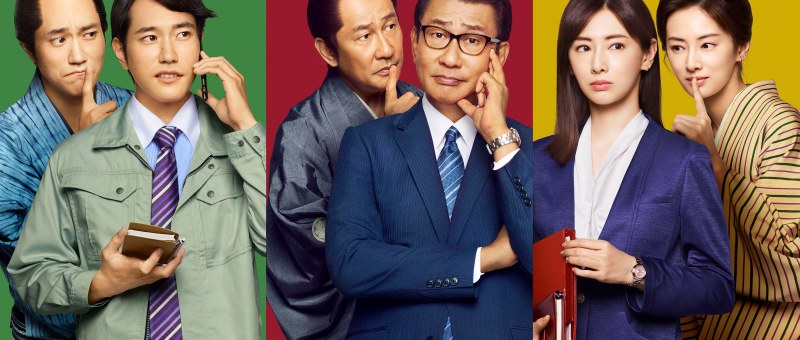
In the present day, the small town of Katori is trying to think of ways to raise its profile but according to junior civil servant Kinoshita (Kenichi Matsuyama) the programme proposed by the tourist board has little to offer in simply imitating the initiatives of other better known cities. As he points out, if tourists want to experience life in olden times there are lots of places they can do that already. Chief of General Affairs Ikemoto (Kiichi Nakai) idly suggests that they try and get local historical personannage Chukei-san, better known as Ino Tadataka the man who completed the first accurate map of the Japanese islands, featured as the subject of a year-long historical TV drama. Of course, Kobayashi from the tourist board (Keiko Kitagawa) thinks it’s a silly idea, but the governor likes it so Ikemoto now has a very difficult job not least because the governor wants him to convince a grumpy writer who hasn’t written anything in 20 years to handle the script. 

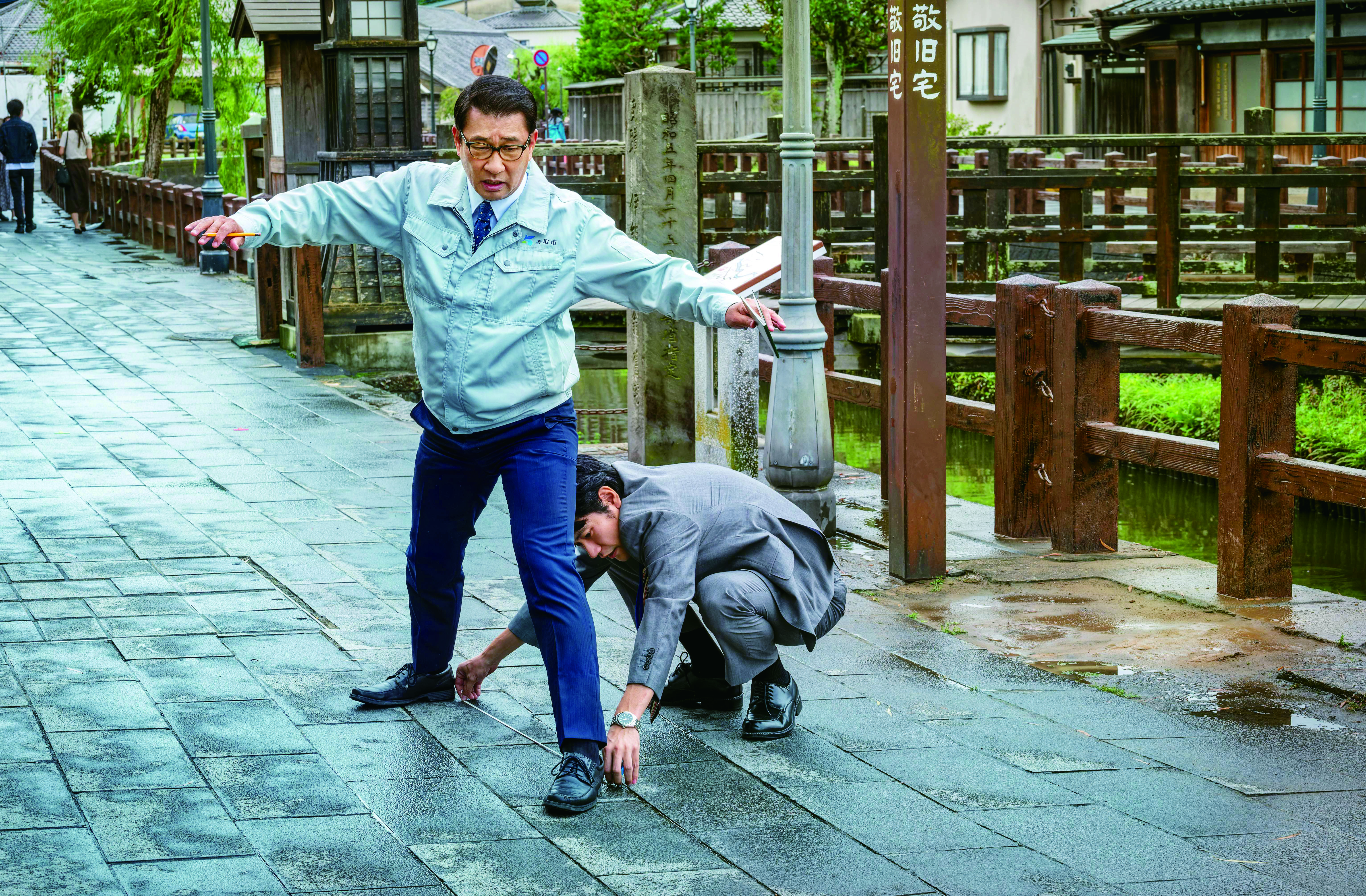
The reason Kato (Isao Hashizume) retired from screenwriting is that he too was fed up with placating commercially-minded executives and isn’t prepared to work on anything in which he doesn’t have full creative control which might be a problem a civil servant like Ikemoto could sympathise with if he wasn’t so desperate to bring him on board. It can’t be denied that the story of the map’s creation is itself fascinating if only in its technical detail of how these men were able to complete a map which almost perfectly aligns with modern aerial photography using only the technology of the early 19th century. As Kato points out, Tadataka was already in his 70s and the bulk of the work is simply walking all around Japan measuring it step by step. He’d only begun the project because he wanted to figure out the size of the earth by charting the Meridian Arc, but figured that out right away and still went on to work on the map for reasons largely unknown though later hinting a sense of anxiety in the late Edo society in believing that understanding the shape of the nation’s coastlines was the key to national defence in the wake of a Russian attack that had cost two of Tadataka’s local helpers their lives. 

Yet the drama idea is pretty much dead in the water after realising that Tadataka “died” three years before the map was completed. Fearing they’d lose their funding, Tadataka’s team buried him in secret and told people he was simply out on location while trying to finish the map before anyone found out knowing that their lives were at risk if the Shogun discovered they’d been lying to him and assumed they’d been doing it to continue claiming Tadataka’s stipend. To ram his point home, Nakanishi has the civil servants taking on the role of the mapmakers in Kato’s putative version of the story as they come together as a team to finish their mentor’s project but are eventually forgotten by history in much the same way as Ikemoto and his team will eventually be even as they too work for their betterment of their nation by taking care of the community. Ikemoto becomes something of a Tadataka figure, deciding to pickup a new skill in middle-age and aiming high in perfecting it (while slightly misleading the boss as he does so). A heartwarming tale of the value of teamwork and the perils of bureaucratic cost cutting, Nakanishi’s historical dramedy implies that not so much as changed in 200 years but that’s not entirely a bad thing as the dedicated team of civil servants do their best to put their city on the map.


Dreaming of the Meridian Arc screens at Japan Society New York on Nov. 12 as part of The Female Gaze: Women Filmmakers from JAPAN CUTS and Beyond.

Original trailer (no subtitles)

Images: ©2022 “Dreaming of the Meridian Arc” Film Partners

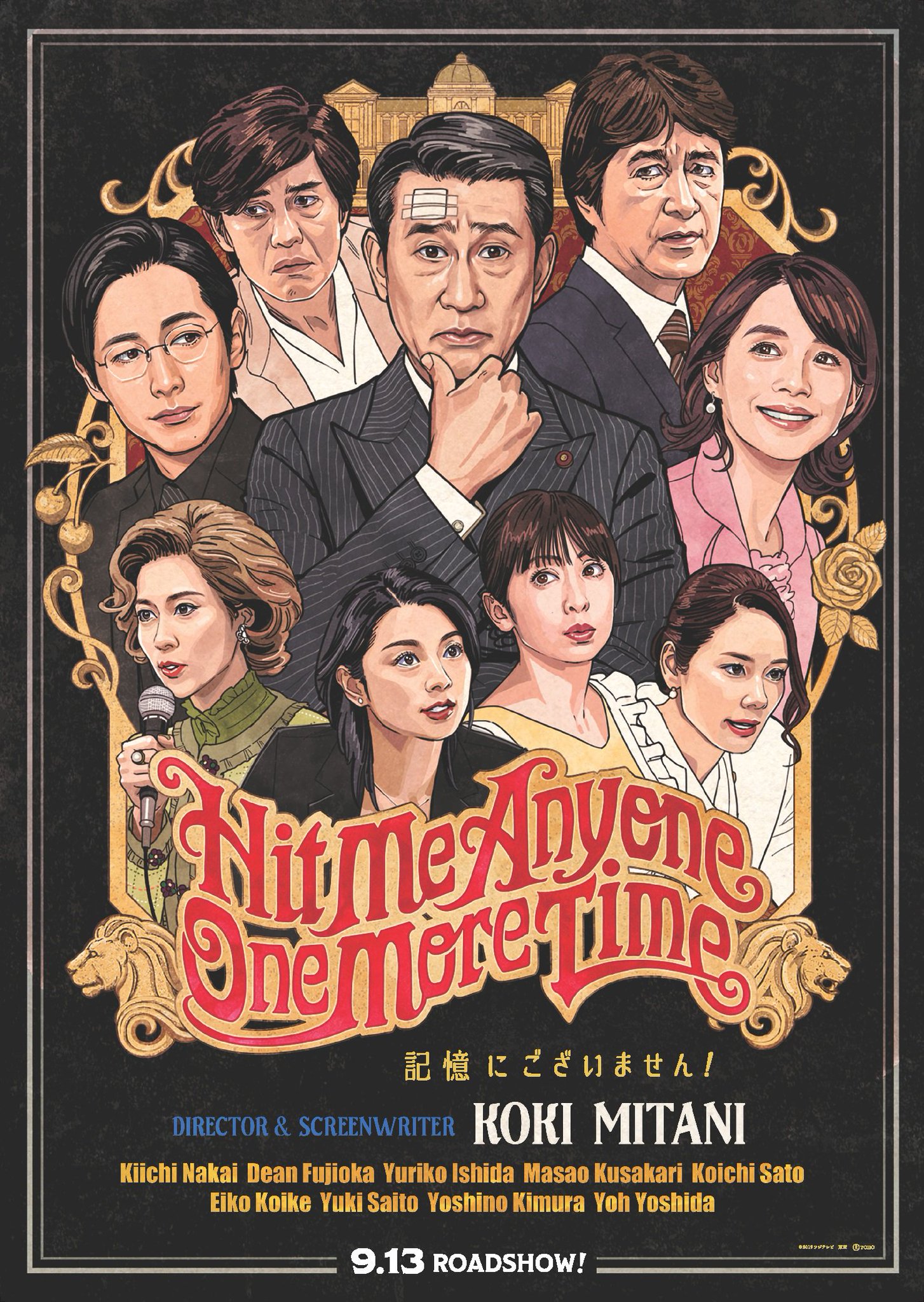
Hit Me Anyone One More Time (記憶にございません!, Koki Mitani, 2019)

Imagine if you woke up one day and found out you’re actually the national leader of your country and not only that absolutely everyone, including your wife and son, hates you with furious intensity. The hapless protagonist of Koki Mitani’s lowkey political satire Hit Me Anyone One More Time (記憶にございません!, Kioku ni Gozaimasen!) finds himself in just this stressful situation having lost all of his memories since he made the fateful decision to enter politics, rendered infinitely naive as he tries to keep up appearances while internally conflicted by the direction both his life and his country under his stewardship seem to have taken. 

Regarded as the “all-time worst prime minister” in Japanese history, Keisuke Kuroda (Kiichi Nakai) is known as a venal bore, a ghastly misogynist and all-round arsehole. To put it bluntly the very fact that a man like Kuroda could ever have become prime minster in the first place hints at a deep-seated rot in the political order. Aside from his gaffe-prone personality, the chief complaints against his administration are a sales tax hike and welfare cuts both of which target those with the least means, not that Kuroda cares very much about them. His big legacy idea is to build a second Diet building right next to the first Diet building only with spa facilities, illicitly teaming up with a childhood friend turned construction magnate who has been supplying him with hefty “donations”. 

After insulting the electorate during an outdoor balcony speech, Kuroda is hit on the head by a rock thrown by a disgruntled voter. Having lost his memory he regresses to a state of innocence from before he was corrupted by the cutthroat world of Japanese politics, now a nice, polite, slightly mild-mannered man who stuns his staff with his newfound consideration for others including a widely televised moment in which he stops to help up a female reporter who trips while chasing him in the lobby. Few believe he’s really changed, assuming this is some sort of bit intended to help rehabilitate his reputation. His new attitude, however, eventually fosters a new sense of hope for political change among his previously jaded, cynical staff who had long since given up hope of building a better Japan. 

Unsurprisingly, Mitani mostly avoids direct allusions to real world politics but adopts a mildly progressive stance as he sends a virtual innocent into the lion’s den of contemporary politics. It’s not long before Kuroda’s asking sensible questions about policy that wouldn’t go down so well with his (presumably) centre-right party including lowering the sales tax and raising the corporate, taking the time to greet constituents including a contingent of cherry farmers which contributes to his later decision to turn down a tariff-free trade deal for American cherries endangering diplomatic relations with the Japanese-American US President. No longer a ruthless political animal but a rueful middle-aged man who actually cares about ordinary people, Kuroda attempts to change the course Japanese politics largely by taking on the king maker, Tsurumaru (Masao Kusakari), his Chief Cabinet Secretary and the true holder of power in this infinitely corrupt political system. 

All sorts of sordid politics is on display from Kuroda’s womanising and a potential blackmail plot involving his wife’s affair to Tsurumaru’s yakuza ties and an even worse secret he would find personally ruinous should it get out. The ironic Japanese title of the film takes its name from that most universal of political get out of jail free cards, “I do not recall”, Kuroda’s standard response when questioned in the Diet about any of his extremely dodgy dealings. Instructing Kuroda that he should drop this “shallow humanism”, Tsurumaru can offer only the motivation that he wants to “remain in politics for as long as possible” while discovering that his old-school methods of political manipulation may no longer work when those around him find the courage to shed their cynicism and embrace a cleaner, kinder politics. 

Throwing in random gags such as a foreign minister who can’t speak English and has large ears with a pot belly that give him the appearance of Buddha while taking minor potshots as the usually toothless TV media through his series of acerbic anchors only too keen to criticise the PM live on air, Mitani’s comedy is characteristically inoffensive with its mix of slapstick and goodnatured farce but nevertheless makes a subtle plea for decent, compassionate politics which puts the interests of the people first rather than those of the governing elite. 


Hit Me Anyone One More Time streamed as part of this year’s Nippon Connection.

Original trailer (English subtitles)

The House of Hanging (病院坂の首縊りの家, Kon Ichikawa, 1979)

Unlike many directors of his generation who either shifted into television or saw their careers stall, Kon Ichikawa was able to continue working throughout the difficult 70s and 80s precisely because he was less averse to taking on commercial projects such as 1976’s The Inugami Family, an ensemble mystery adapted from the bestselling book by Seishi Yokomizo and starring his famed detective Kosuke Kindaichi. The film proved an unexpected hit, an early success for Haruki Kadokawa’s new multimedia marketing model which would allow him to dominate cinema screens throughout the bubble era, and spawned a series of Kindaichi adaptations produced for Toho boasting a host of A-list stars. By 1979, however, the age of the prestige country house mystery was perhaps coming to a close and The House of Hanging (病院坂の首縊りの家, Byoinzaka no Kubikukuri no Ie) would be the last in the cycle of movies starring Koji Ishizaka who would eventually return to the role in Ichikawa’s 2006 remake of the original Inugami Family. 

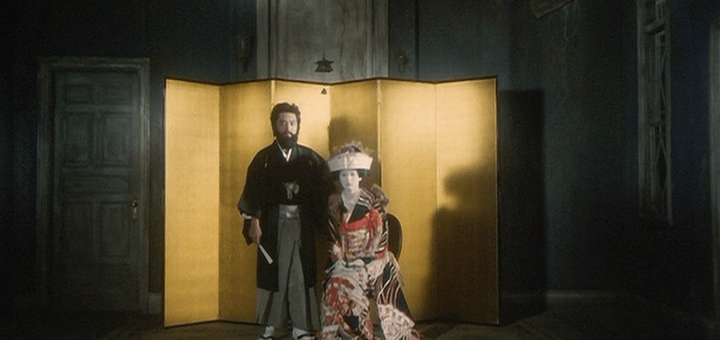
Set quite specifically in 1951 (Showa 26), House of Hanging is among the more complex of Kindaichi’s cases and rests not on war trauma, which is only a background presence in the present venality of the post-war society, but on the decline of a once noble house ruined, as we find out, through the legacy of sexual immorality and abuse. For the moment, however, Kindaichi gets roped into the mystery after visiting an author friend (played by Seishi Yokomizo himself in a cameo) who recommends a photo studio he could visit in order to get a picture taken for his passport as he plans to travel to America. The photographer, Naokichi (Koji Shimizu), takes on an odd job from a strange young woman who asks them to take wedding photos of her sister but abruptly leaves explaining she’ll send a car later to bring them to an undisclosed location. That turns out to be the bombed-out former home of the Hogen family who own the local hospital. Escorted by a creepy young man, Naokichi finds himself in front of a traditional gold screen backdrop but feels uncomfortable because the bride does not seem to be very present and he worries that perhaps she’s been drugged and something untoward may have been going on. He shows the photo to Kindaichi for advice and is later called back to the same location to discover the severed head of the groom hanging from a ceiling light.  

In slightly comedic fashion, the circumstances of the case are so confusing that they have even Kindaichi admitting that he doesn’t quite follow while his temporary sidekick, photographer’s apprentice Mokutaro (Masao Kusakari), proudly holds up a chart he’s made to help keep track. Though the why is in this case more important than it might usually be, it boils down to the same old problem of buried secrets and past shame. We learn that the Hogen family is descended from a line of prominent doctors, though the family tree is complicated because it appears many of the sons of previous generations had illegitimate children, some of whom were later adopted or married to other adopted children in a quasi-incestuous union. With no one quite sure whose children are whose, incest appears to be the original sin which condemns the family, though as we later realise it’s another kind of abuse which sets the present events in motion.

The murdered man, Toshio (Teruhiko Aoi), was apparently part of travelling jazz band earning their living playing on American bases (the photographer also has a sideline in blackmarket army surplus). Aside from the original sin that connects the murders with melancholy fatalism, the additional victims damn themselves through their amoral greed, foolishly engaging in blackmail in the hope of improving their circumstances. Nevertheless, the sin remains the same, the theory being that Toshio was murdered by missing sister Koyuki who killed him in order to escape his inappropriate romantic obsession with her. The additional complication is that Koyuki looks near identical to Yukari (Junko Sakurada), daughter of the Hogen family, connecting the crime with the traumatic events of some years’ previously which led to the cottage becoming known as the “house of hanging” when the body of a young woman was found there having taken her own life. 

As in many of the other Kindaichi mysteries, the detective has only sympathy for those caught up in this complicated murder plot, many of whom are also victims acting simply to protect themselves ironically enough from the past trauma that has in a sense led to this sorry turn of events. Justice, in the end, takes care of itself though Kindaichi will also do his bit to protect those in need acting from a place of moral compassion rather than judicial censure. This final instalment in the Kindaichi cycle has slightly lower production values and a much less starry ensemble but sees Ichikawa adding a few idiosyncratic touches such as his fast, multi-angle cuts to a single person’s speech and a brief theatrical reconstruction sequence, while making time for the return of bumbling inspector Todoroki (Takeshi Kato) and the ironic comedy the series is known for. “Old things pass, that’s when new things are born” Yokomizo sagely advises in his cameo, Kindaichi apparently taking his leave from a corrupted post-war Japan for the bright lights of San Francisco, perhaps never to return. 


Original trailers (no subtitles)

The Enchantment (誘惑者, Shunichi Nagasaki, 1989)

“A broken romance affects everybody” a sympathetic psychiatrist tries to reassure a patient suffering a dangerous romantic obsession with a possibly imaginary woman. Like so much of his work, they’re soft words offered casually as a path towards something deeper but in this case it’s not the patient we need to worry about but the doctor. The aptly named The Enchantment (誘惑者, Yuwakusha), somewhat less subtly titled “Temptress” in Japanese, takes its “hero” on a dark journey into fascination, the male need for domination, and the self delusions of irresolvable disappointment.   

The film opens with genial psychiatrist talking to a patient, Hirayama (Tsutomu Isobe), who proclaims himself more or less cured from a nervous breakdown born of a broken heart. Hirayama’s love affair may be largely imaginary, and he seems far from “cured”, but Doctor Sotomura’s (Masao Kusakari) failure to challenge him on his new affirmation that he’s over her because he’s realised she was “just a bitch” who treated him “like trash” might be a worrying oversight. Hirayama was supposed to be his last patient of the day, but a last minute walk-in, Miyako (Kumiko Akiyoshi), piques his interest enough to keep him in the office rather than on a planned date with his receptionist fiancée and surgeon best friend.

Miyako, nervous and reticent, tells him the appointment is “about a friend” and takes some coaxing before beginning to explain that she has been physically assaulted by her female roommate apparently jealous over the unwanted attentions of a man who developed an attraction for her at her job as a tour guide. Miyako does not spell it out, but somewhat implies that her relationship with her roommate Kimie is romantic while Sotomura has the good sense not to push the issue, only to urge her that perhaps she should think about staying with a friend a while if she doesn’t feel safe at home. Miyako, however, doesn’t want to do that and is only worried about what might have provoked this sudden and unexpected change, fearing most of all that she herself will fall out of love with Kimie if her moodiness continues to intensify.

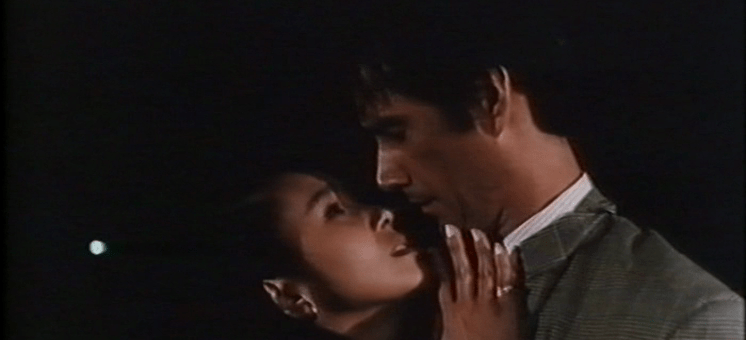
Overstepping the mark, Sotomura is fascinated with his mysterious new patient, particularly after he becomes a kind of white night rescuing Miyako from a dangerous encounter with Hirayama who is under the delusion that she is the embodiment of his romantic obsession “Junko”. The fascination only intensifies after he makes a surprising discovery – Kimie is not “real” but a secondary personality inside Miyako. Infuriated by Sotomura’s romantic overtures, Kimie takes control and stabs him in the leg while Miyako continues to visit him in the hospital, unable to remember what exactly happened between them.

Sotomura’s obsession is both sexual and professional, after all how many sufferers of MPD is he going to meet in the course of his career? He is indeed ambitious, casually dating his receptionist Harumi (Kiwako Harada) mostly because she’s the daughter of his former professor. Though the couple live together, Harumi is constantly frustrated by his indifference to their relationship and foot dragging over making it official. Sotomura’s best friend, Shinbori (Takashi Naito), is facing much the same dilemma but has resigned himself to an arranged marriage to further his career and keep his family happy. Sotomura instinctively thinks he ought to do the same and tells Harumi that he’ll sort things out with her father, but remains fixated on the mysterious Miyako and her unconventional love life. 

A more cynical friend warns him that sex is the only thing that matters and it’s essential to avoid emotional entanglements. Nevertheless, Sotomura finds himself desperate to unlock the mystery of Miyako, but it remains open to debate which part of her he wants to “fix” – her MPD, or her sexual orientation. As we find out, Sotomura might assume that Miyako’s love for another woman has driven her “mad”, but in reality it’s more that a sense of impossibility led her to believe that there was no solution to her suffering other than death. Faced with unreconcilable loss, she internalised the figure of her fixation, literally becoming one with her lost lover in order to avoid facing that she was alone once again. Uninterested in Sotomura, Miyako/Kimie becomes fascinated with Harumi who eventually becomes so intensely obsessed with Miyako that she is willing to erase her own identity and become “Kimie” for her in order to support her sense of reality and protect the integrity of the Miyako personality.

Again, Sotomura has a few issues. The first is multi-layered sexual jealousy. Now that Harumi has moved on, found someone who “needs” her, and seems to be happier he is instantly irritated that she left him (for a woman) and desperate to win her back (along with the career boost he romanced her for in the first place). He resents Harumi’s differing vision of medical care, that she is willing to embrace Miyako’s delusion in order to keep her stable while wilfully abnegating her sense of self in a profound act of love. Sotomura the clinician wants to “cure” Miyako of her delusion, but his intervention is brutal, intruding on the mental space of her traumatic memory with physical violence designed to rip her from her safety of her artificial reality. He tries to insert himself between the two women, asserting his masculine “right” to dominate, but is eventually ejected by another knife blow to the thigh as the women assert their right to their own reality in the absence of men.

A strange psychosexual odyssey, The Enchantment spins a dark tale of obsession, delusion, and jealousy but ends on a broadly positive, if perhaps uncomfortable, note, in which the dominant psychiatrist is forced to recognise his irrelevance and the legitimacy of realities outside of his own. Broken romance affects everyone, as Sotomura said, but perhaps he doesn’t have the right to intrude on the broken hearts of others or judge the various ways in which they attempt to patch them back together again. A chronicle of bubble era Tokyo bathed in garish neon and a sense of infinite possibility, Shunichi Nagasaki’s heady feature is a surprisingly subversive affair in which trauma cannot be overcome but can perhaps become integrated in a mutually beneficial whole.


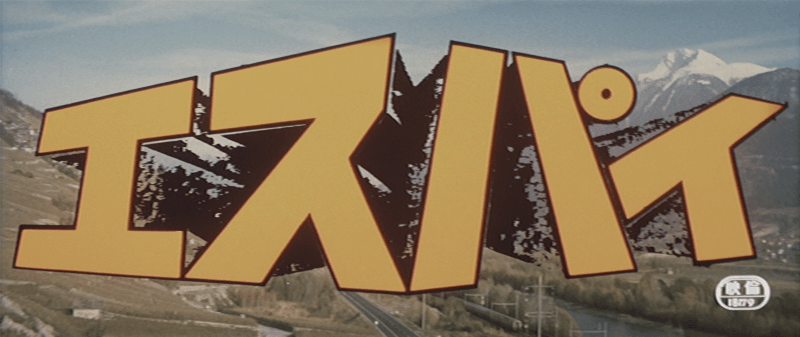
Espy (エスパイ, Jun Fukuda, 1974)

espy posterBy 1974 the Toho SFX movie was perhaps long past its heyday though Jun Fukuda’s Espy (エスパイ) was far from the last. Clearly influenced by popular spy franchises such as James Bond as well as more serious cold war spy dramas, Espy is a jet setting tale of superpowered assassins, international conspiracy, and love as an unexpected source of salvation, but as much as it embraces its hippyish message of total communication it also moves further into the realms of exploitation, skewing closer to Nikkatsu’s ’70s output than the more child friendly supernatural adventures of ages past.

The world is at breaking point. A small conflict in a tiny East European nation known as Baltonia threatens to spark a third world war. A UN delegation is currently en route to a conference in which they hope to settle the conflict in a peaceful way but all hope is lost when a sniper equipped with X-ray vision takes them all out with maximum precision.

Meanwhile, back in Japan, test driver Miki (Masao Kusakari) gets into trouble on the course when he swerves to avoid some pigeons. The car spins out of control but just at the last minute, Miki turns it around through his dormant psychic powers which brings him to the attention of the IPPG – the International Psychic Power Group. Following the assassination of the UN delegation, all eyes are on Japan where the prime minister of Baltonia is due to meet the US president in what is hoped will be a bold new development in international relations but the IPPG have reason to believe an attempt will be made on the prime minister’s life and only their ESP equipped team can stop it.

Espy takes the essential components of both the spy thriller in its international conspiracy set up, and the B-movie science fiction adventure in its presentation of the good and evil possibilities of advanced technologies or in this case innate superpowers. The Espy team are pitted against the Anti-Espy who have similar powers but are committed to using them to harm mankind. The leader of the Anti-Espy, Ulrov (Tomisaburo Wakayama), sees himself as a superior being to regular Earthlings and, believing that humans have overpopulated the planet which they continue to damage, is convinced the best solution is a mass cull. He plans to do this by helping the “lesser” humans destroy themselves by provoking a third world war or a hundred mini conflicts in which thousands will die.

Ulrov’s arguments tie in nicely with Toho’s trademark environmentalism and ambivalent attitude towards scientific development, but they go against the prevailing sense of humanism which is to be found in the studio’s genre output. In Ulrov’s fascistic view of the world, he and the other ESPers are a superior race whose existence is threatened by weaker humans and their reckless disregard for the planet as a whole. Due to a traumatic childhood incident, he believes that humans are cruel beasts who lust for blood and talk of peace with hearts filled with hate. He may have a point, but his message conflicts with the positive movement for peace which is advanced by the Baltonian PM who doesn’t want a world in which peace is brokered and balanced but one of true unity.

Espy is, however, of its time and fails to fully live out its peace and love ideals. Team member Maria (Kaoru Yumi) is kidnapped by Anti-Espy and taken to Ulrov’s lair where she is forced to dance lasciviously in front of fellow team member Tamura (Hiroshi Fujioka) with whom she shares an especially strong connection. Tamura’s arms and legs are cuffed as he communicates telepathically with Ulrov, semi-hypnotised by Maria’s strange dance. Maria is then approached by a large dark-skinned man wearing only a loincloth who proceeds to tear open her shirt at which point she snaps out of her trance, frees Tamura, and rips out the attacker’s tongue.

Meanwhile, new recruit Miki has failed in his mission and killed a man for the first time sending him into a kind of depression. Though Miki was introduced as the protagonist, he is in fact absent for most of the film though his journey is among the strangest as he reminisces about a foreign girl he was friends with as a child and enjoys an unusually strong bond with his intrepid dog, Caesar, who teaches the gang a few lessons about unconditional love. Maria is severely traumatised by her attack while Tamura reconsiders his sense of self worth having temporarily lost his powers, but eventually the team realise that their psychic abilities are nothing more than a manifestation of a great love. Ulrov later has the same epiphany but the team’s decision to consider him possessed by something “inhuman” is a worrying one. They don’t want to accept that it was humans who made him that way because it would be too sad, but not to do so is a failure to recognise humanity’s darkness as well as its light.

Espy bites off a little more than it can chew in failing to deal with some of the more interesting ideas it raises though it makes the most of its meagre budget to present an exciting spy thriller voyaging from Japan to Turkey and Switzerland. Skewing more towards Nikkatsu’s brand of exploitation action, Espy is definitely among the more adult orientated of Toho’s SFX adventures but its messages are broadly the same in its insistence on human interconnectedness as the ultimate superpower. 


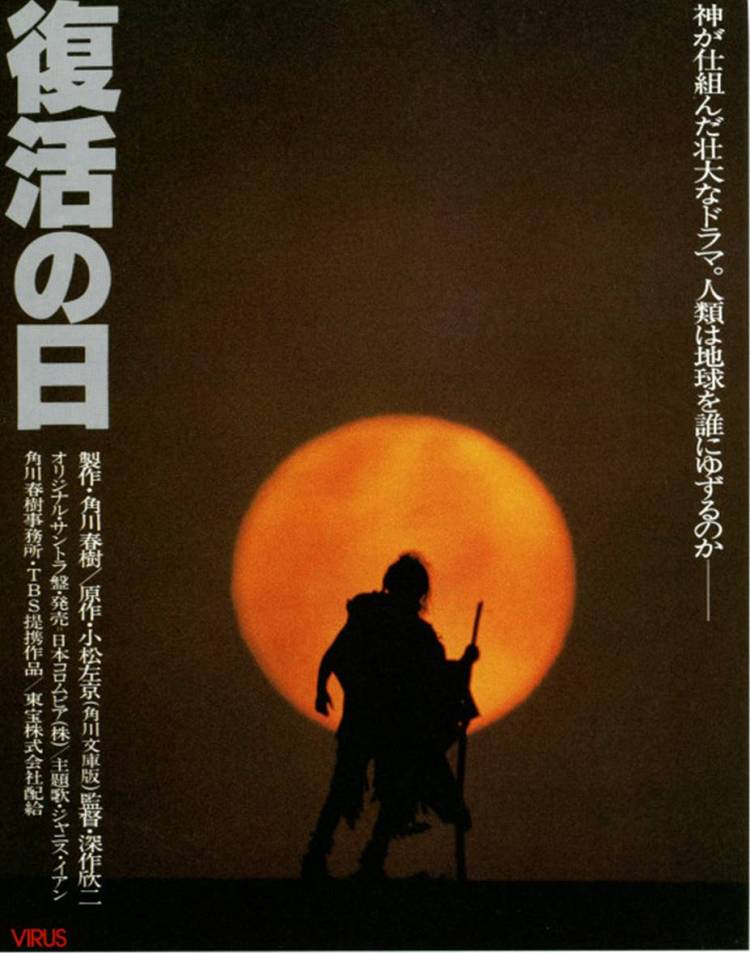
Virus (復活の日, Kinji Fukasaku, 1980)

virusThe ‘70s. It was a bleak time when everyone was frightened of everything and desperately needed to be reminded why everything was so terrifying by sitting in a dark room and watching a disaster unfold on-screen. Thank goodness everything is so different now! Being the extraordinarily savvy guy he was, Hiroki Kadokawa decided he could harness this wave of cold war paranoia to make his move into international cinema with the still fledgling film arm he’d added to the publishing company inherited from his father.

Adapted from a pessimistic, post-plague novel in the vein of Andromeda Strain penned by Japan Sinks’ Sakyo Komatsu, Virus (復活の日, Fukkatsu no Hi) was, at that time, the most expensive Japanese movie ever made. Using an international cast with the bulk of the dialogue in English, Kadokawa’s hopes were high but his dream was ultimately dashed when the film bombed at the box office and ended up being unceremoniously sold off to cable TV in a re-edited international version which removed almost all of the Japanese scenes. Since its original release, the film has accrued something of a negative reputation and left a stain on the resume of its otherwise popular director Kinji Fukasaku  (whose other international effort, Tora! Tora! Tora! didn’t do him any favours either) but Virus is far from the disaster it’s often regarded to be, even if extremely flawed.

Seismologist Yoshizumi (Masao Kusakari) witnesses the ruined state of his homeland in December 1983 from the comfort of a British submarine. Reminiscing about the woman who left him because of his scientific obsessions, Yoshizumi becomes our catalyst for a flashback to learn exactly how the world was destroyed in just a couple of years. Genetic experiments to create new viruses were banned in 1981 but in the following February a dodgy deal goes down in East Germany and the most dangerous biological weapon ever created is accidentally unleashed when the plane it was travelling on crashes into the Alps. It’s not long before “Italian flu” is laying waste to half of Europe before reaching Asia and the Americas. The virus is all powerful and no serious attempts to combat it are possible given the lack of time, but, the virus is dormant at below zero temperatures so the antarctic polar research station becomes humanity’s last hope for survival.

Though the film is funded and produced by Japan, it clearly positions America as its global leader. This is, however, countered by the fact that the weapon itself was being developed in America as a “credible deterrent” against Russian aggression now that Russia and the US are about even on Nukes. The bad guys are the American intelligence officials who have been continuing the research illegally without the President’s knowledge. In a touch of ironic Soviet-style manoeuvring, a research scientist trying to blow the whistle on this frighteningly destructive project is thrown into a mental hospital.

Rather than the struggle to find a cure, Virus prefers to focus on the immediate effects of the epidemic as the civilised world crumbles with alarming speed. Zipping around the major world capitals with death tolls placed against picturesque landmarks, Fukasaku mixes in stock footage of real rioting and civil unrest (of which he had a lot to choose from by 1980) as people take to the streets in desperation. Hospitals overflow with the infected, and the bodies pile up unceasingly.

The situation in Antartica is calmer if concerned. Some researchers opt for suicide whilst others club together to discuss possible plans for the survival of the human race. Unfortunately, this being a scientific community in the 1980s, there are 800 men and just 8 women, which leads to a number of obvious social problems. The remaining women are quickly convinced to become a kind of comfort team “accommodating” the needs of the attendant men. If the need really was to repopulate as quickly as possible, such an extreme re-imagining of current social mores would hardly be necessary, but strangely the women seem to accept their sudden conversion to forced prostitution with stoic pragmatism. Civility is maintained, and the outpost colony survives without too many problems but another threat arrives when Yoshizumi predicts a major earthquake event set to hit Washington that may activate its secret nuclear weapons which are trained on Moscow. That hardly matters now except that Moscow’s nukes are pointed at their research base owing to a slight political misunderstanding.

The research base is a testament to international cooperation with representatives from all continents, all working together peacefully (well, mostly – Lopez (Edward James Olmos) is…a passionate man) for the betterment of science. When it comes down to it, Yoshizumi and the American soldier Carter (Bo Svenson) are the lone duo heading back into plague infested Washington in an attempt to shut down the nuclear weapons systems before it’s too late.

Where Virus differs from many of the similarly themed films of the time is in its generally benevolent view of humanity. Despite the fact that the virus was man made, constructed to perpetuate an ongoing arms race, and was released due to bad luck and avarice, the majority of people are good, progressive sorts who want to work together to figure all of this out. Where the re-edited US version opts for a bleaker than bleak ending, the Japanese version does at least demonstrate the strength of human endurance as Yoshizumi trudges south in search of the survivors. The world is not restored, but there is still a kind of life possible if only those left behind can choose to live it.

Fukasaku opts for a more straightforward approach than some of his more frenetic work, but introduces an interesting device when the exhausted, hungry, and lonely Yoshizumi passes through a church. A mental dialogue with Christ on the cross is offered entirely in subtitles, as is the later “conversation” with a skeleton lying next to it who asks Yoshizumi some tough questions about his relationships and intentions.

These more spiritual enquiries play into the secondary theme of Yoshizumi’s ongoing guilt over abandoning his pregnant girlfriend to head off to Antarctica. Though adding to Yoshizumi’s backstory, his lost love in Japan occupies slightly more of the running time than is comfortable only to end on an ambiguous, if bleak, note which has little to do with anything else going on at the time. It does, however, feed into the mirroring developments at the research station when Yoshizumi is charged with looking after a pregnant woman and then becomes attached both to her and to the baby. It’s Yoshizumi’s love for another man’s wife and child coupled with the failure to save his own which drive him onward, but the romantic subplot often feels like an after thought and never achieves the kind of impact it hopes for.

Though a meandering, unwieldy beast, Virus is undoubtedly ambitious and often successful even if its production values don’t always live up to its famously high budget. Despite odd casting decisions which find Americans commanding British submarines and Brits playing Norwegians with English accents the largely international cast acquits itself well. Virus’ world is an oddly rational one where those left behind are willing to put aside their differences to work together rather than selfishly try to save themselves (though the film offers no ideas on how anyone is going to survive on Antartica when the supplies run out). As such, its vision is as bleak as many ‘70s dystopias but it also offers a brief glimmer of hope in allowing Yoshizumi to trudge to a kind of home, even if it’s one of ongoing uncertainty and primitive survival.


This review refers to the full 156 minute cut rather than the 108 minute US version.

Original trailer (no subtitles)

Black Kiss (ブラックキス, Macoto Tezuka, 2006)

Black KissThe somewhat salaciously titled Black Kiss (ブラックキス) comes appropriately steeped in giallo-esque nastiness but its ambitions lean towards the classic Hollywood crime thriller as much as they do to gothic European horror. Directed by the son of the legendary father of manga Osamu Tezuka (not immune to a little strange violence of his own) Macoto Tezuka, Black Kiss is a noir inspired tale of Tokyo after dark where a series of bizarre staged murders are continuing to puzzle the police.

We witness the first of them as a sleazy producer type takes a prospective new sign out for a night on the town. He promises to make her a star but predictably the evening ends in a fairly grim love hotel. This early episode is brought to an abrupt halt as the man is conked on the head in the bathroom only to wake up tied to the bed for a spot of vivisection.

However, it turns out there is an unexpected witness to the crime in the form of aspiring model, Asuka, who we now meet by hopping back week as she moves into the flat opposite with the rather sullen and reluctant street punk Kasumi. The pair then get involved with the police as well as with a local paparazzo but what does Kasumi’s missing former roommate have to do with all of this and why does all the evidence keep pointing back to her? The reason may surprise you.

Black Kiss is playing with several genres during its running time but it certainly packs in its fair share of red herrings. Far too many, in fact, leaving its ultimate explanation feeling oddly hollow. Given this amount of build up and a careful arrangement of clues, Tezuka’s decision to end as a standard slasher leaves the viewer feeling cheated as our intrepid heroines make an admittedly exciting final run for it across the rooftops of Kabuki-cho. After throwing so many possible solutions on the screen, the one that is finally offered seems extremely dull in comparison and makes little to no internal sense.

That said, Black Kiss is actually quite good at painting its shady world with an appropriate layer of detail. Tezuka returns to the ideas of duality which play into his Vertigo homage, casting his two leading ladies as alike in some senses – both having been involved in the fashion industry, both half Japanese, both adrift in terms of their lives and ambitions, but is also careful place them on opposing sides as Asuka dresses in light colours to bring out her sweetness and innocence whereas Kasumi is all punk/goth darkness and aggression borne of self loathing. Though originally reluctant roommates, Asuka and Kasumi eventually bond though it’s another weakness of the film that aspects of their relationship appear curiously unresolved adding yet another layer of ambiguity to the already hard to pin down central narrative.

What Tezuka really seems to want to do is use the central mystery to explore notions of genre rather than actually follow or even blend them. He quotes Hitchcock both overtly onscreen with the oddly named “Bats Motel” and Vertigo night club as well as in his Rear Window and Dial M for Murder plot elements but then he veers widely off course into the world of giallo with his semi-explicit sex scene and leather clad avenging murderess. As an exercise in style, Black Kiss is frequently impressive with its innovative cinematography and unusual composition but dramatically it can’t unify its underlying concerns in a way which makes both visual and narrative sense.

A noble failure, there is much to admire in Black Kiss which is only let down by its non-sensical finale. Deliberately or otherwise, Tezuka constantly undercuts himself and pulls his punches just when it seems as if he may be about to move into a more interesting area. The final mystery makes no sense at all and, in what may be Tezuka’s biggest failed ambition, leaves the murders themselves as an odd kind of McGuffin. Quite a big ask in what is, essentially a serial killer movie with a significant lean towards giallo inflected horror. Nevertheless, though Black Kiss fails on many levels it does prove intriguing enough to maintain interest even if it ultimately loses all of the good will it accrues with its dramatically unsatisfying slide into slasher territory in the final quarter.


Unsubbed trailer: