The Eighth Happiness (八星報喜, Johnnie To, 1988)

A literal series of crossed wires provoke romantic intrigue for three eccentric brothers in Johnnie To’s smash hit Cinema City Lunar New Year comedy, The Eighth Happiness (八星報喜). As so often in To’s subsequent films, a random instance of fatalistic chance changes each of brothers’ lives though not perhaps permanently as the surprisingly ironic coda makes plain. Even so, their parallel quests for love of one kind or another perhaps tell us something about the changing Hong Kong society in the midst of rising economic prosperity and looming Handover anxiety. 

Seemingly without parents, the three Fong brothers live together in a well-appointed multi-level home owned by oldest sibling Fai (Raymond Wong Pak-ming) who hosts a daytime television program titled Mainly Housewives which includes a cookery/agony aunt segment in which he attempts to solve someone’s relationship problems through food. As in many of Raymond Wong’s other roles in Cinema City comedies, Fai is feminised throughout not only in acting as the “mother” of the family preparing all the meals at home but also in his single status and the focus of his television show which nevertheless intros him with the James Bond theme. 

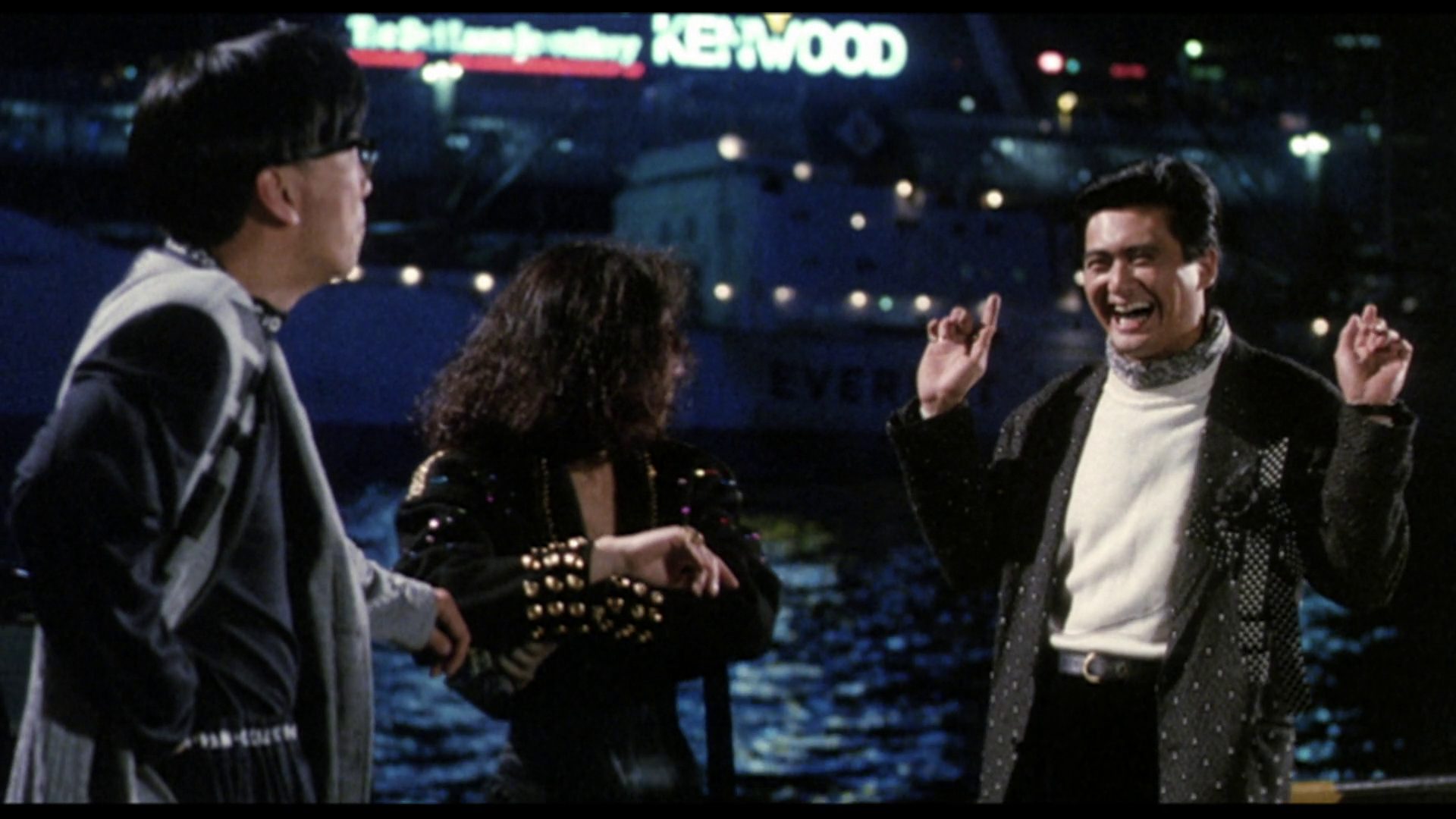
Second brother Long (Chow Yun-fat), meanwhile, actively camps it up claiming that he pretends to be gay in order to get girls after lulling them into a false sense of security. Despite being engaged to air hostess Piu Hung (Carol Cheng Yu Ling), he has a side mission going to sleep with a woman from each of Hong Kong’s 19 districts and is a relentless Casanova striking up an affair with unexpectedly chaotic department store assistant “Beautiful” (Cherie Chung Chor-hung). Youngest brother Sang (Jacky Cheung Hok-yau), meanwhile, is a painfully shy aspiring cartoonist who becomes an accidental white knight to a young woman caught up in a bizarre flashing incident in the local park only to be mistaken for the culprit himself. 

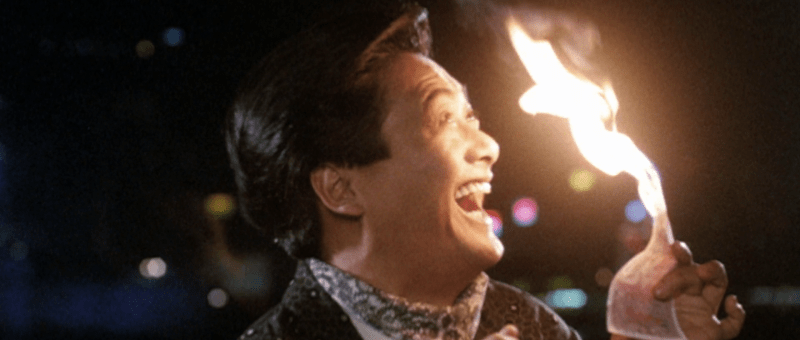
Each of the brothers is offered a new romantic possibility because of a telephone malfunction caused by an elderly lady driver forgetting her glasses and ploughing through local works mangling the lines. Sang is reunited with Ying Ying (and her martial arts champion swordsman mother) after overhearing a suicide attempt but ending up at her apartment by mistake, thereafter finding himself facing a challenge of masculinity on discovering that she already has a very buff and macho boyfriend who in his own way also seems jealous and insecure. Meanwhile, Long overhears a conversation between Beautiful and a colleague at the store about their ideal men, entering into passive aggressive courtship while discovering that her boyfriend is fabulously wealthy (or, at least, his father is) leading to a standoff in which he ends up proving his masculinity by burning money he doesn’t really have, smashing his own cheapo watch to intimidate the other guy into destroying his diamond Rolex, and then trashing the car he borrowed from Fai to expose the fact the other guy isn’t really wealthy or man enough to do the same because at the end of the day it’s his father’s money and he’s not so rich that these very expensive status symbols mean little to him. 

Fai meanwhile has a much more normal romance which is disrupted, mostly, by his brothers’ chaos and then near destroyed rather than forged through a misdirected phone call. After Long trashes his car, he asks Sang for the number for a repair guy but instead gets through to Fong (Fung Bo Bo) whose musician husband has just walked out on her seconds before which is why she’s quite rude to him on the phone, slamming the receiver down the second time he rings. Annoyed on a personal level Fai asks Long to troll her by ringing up at 3am every night causing her to injure her ankle and later fall on stage during a Cantonese opera performance. Then he ends up meeting her by chance in real life when she ends up buying the last of his favourite biscuits at a local cafe, only to discover she’s his interview for that day’s show where she’s supposed to talk about her art but finds his face so funny she can’t stop laughing. Had it not been for business with the telephone harassment they might have had a conventional romance, but the further machinations of the chaotic brothers soon convince her that Fai is not a reliable life partner. 

To convince her he’s really a good guy, Fai undertakes a grand gesture making himself the focus of his culinary/agony item by cooking up the spiciest soup imaginable and drinking it on live TV to atone but such a meaningless feat does nothing for Fong who doubtless is over romantic stunts and looking for something more concrete. Long’s grand gesture, by contrast, fares much better as he chases Piu Hung to a fancy hotel and makes a scene from the other side of the glass before falling in the pool while trying desperately to save an engagement ring while suddenly on the back foot after she learns about his philandering. Fai is only able to redeem himself through artifice, he and Fong signing through their romantic drama while performing Cantonese opera surrounded by the brothers and their girls trying at least to support him in his own romantic endeavour which their chaos has largely undermined. 

It’s another cosmic irony therefore that whereas the chaos of the misdirected telephone calls earns both Sang and Long everything they wanted in both career and romantic success, Fai who generally does the right thing ultimately loses out through another chaotic development while even Beautiful apparently achieves her dreams. Despite his earlier protestations during get phone call that Hong Kong was beautiful and there was no need to leave, Song and Ying Ying decide to travel the world perhaps expressing a degree of anxiety in pre-Handover Hong Kong, while Long is left with internalised anxiety over his new role as husband and father, and Fai is back pretty much where he started. A typical Lunar New Year nonsense comedy, there’s no disputing that much of the humour in The Eighth Happiness is of its time, but there is something of To’s later obsessions with comic fate and romantic farce that transcends Raymond Wong & Philip Cheng’s Cinema City silliness. 


Trailer (no subtitles)

The Big Heat (城巿特警, Andrew Kam & Johnnie To, 1988)

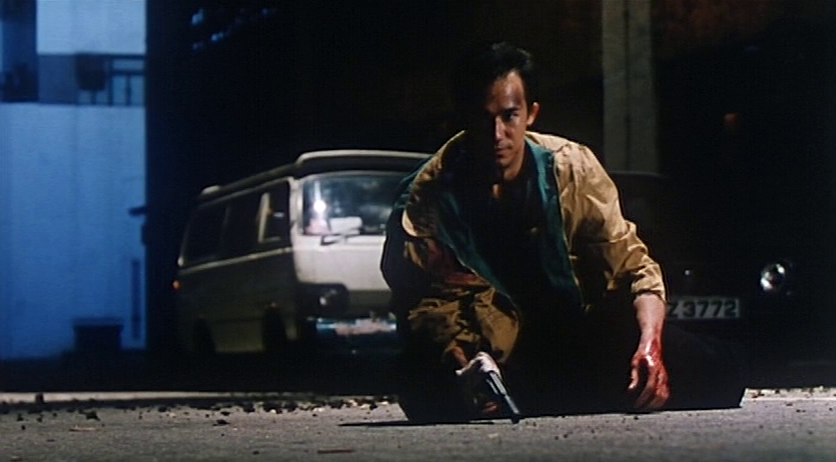
A Hong Kong cop struggles with his sense of responsibility when faced with the fatalistic existential threat of the imminent Handover in Johnnie To’s first foray into the genre with which he would later become most closely associated outside of Hong Kong, the action crime drama. After a handful of Cinema City comedies, To is credited as a co-director along with Andrew Kam Yeung Wah though the production of The Big Heat (城巿特警), loosely inspired by the Fritz Lang film of the same name, was notoriously complicated passing through several hands over its unusually long gestation of almost two years, according to an interview with screenwriter Gordon Chan Kar-Seung, with producer Tsui Hark also heavily involved in the shooting. 

Tsui’s involvement is apparently responsible for the unusual level of explicit violence more usually found in horror exploitation rather than gangster noir, though there is perhaps something in the constant bodily destruction that aligns with the pre-Handover setting in which the “big heat” hanging over the city is an increasing existential panic which has created the maddening environment in which this surreal violence can occur as revealed in the opening dream sequence which features a drill piercing a man’s hand with small pieces of flesh speeding off it. The dream will turn out to be a prophecy foreshadowing the final shootout in which Inspector Wong (Waise Lee Chi-Hung) is shot thought the hand though at this point it signals both a psychological and physical fracturing. Owing to a neurological condition, Wong has lost full control over his right hand which leads him to question his ability to protect his city if he is unable to pull the trigger when needed which might also explain why he is frequently seen practicing his marksmanship at the firing range. 

Because of this anxiety, Wong had planned to resign but changes his mind on learning that his former partner who sustained an injury that Wong felt himself responsible for has been brutally murdered by Hong Kong gangsters in Malaysia after coming across a secret folder “by chance” containing photos used to blackmail a shipping magnate over his his homosexuality and an incriminating invoice. To do the right thing, Wong also temporarily breaks up with his forensic scientist girlfriend Maggie (Betty Mak Chui-Han) whom he was due to marry in a fortnight’s time suggesting that they not see each other until he’s solved his friend’s murder and then presumably plans to retire from law enforcement. 

Essentially, he deprioritises his personal, romantic relationships in favour of the homosocial brotherhood of the police both avenging his friend and dedicating himself to protecting Hong Kong from an oncoming threat represented by gangster Han (Paul Chu Kong) who is later revealed to be in cahoots with Russian mafia who ironically have a large portrait of Lenin on their boat and hammer and sickle flags everywhere while vowing to continue “selling drugs and capitalism” in the seemingly lawless environment of pre-Handover Hong Kong where everyone apparently wants to make enough money to be able to leave if the situation declines, “communist” Russians perhaps standing in for looming Mainland authoritarianism. Han even offers to sell “everything including Hong Kong” passing a list of names of “important people in the government” he apparently has access to in vast network of corruption. “Cheers to 1997” they ironically toast for their burgeoning business opportunity. 

It’s this corruption that is the source of Wong’s anxiety, fearing he doesn’t have the strength to stop it while his compromised hand is a symbol of both fate and an impotence that is later exorcised when he receives the corresponding physical injury yet is saved by a crucifix necklace that previously belonged to his girlfriend while in another instance of foreshadowing the corrupt policeman is eventually taken out by his own malfunctioning gun backfiring just like that which ruined an assailant’s hand in the drug bust in which Wong’s partner was injured. Having regained mastery over his hand, Wong is therefore more assured in his ability to protect Hong Kong from whatever it is that’s coming remaining within the police force while those who pay the heaviest price are an idealistic young rookie unable to adapt to the morally compromised world of pre-Handover Hong Kong, and Wong’s fiancée who becomes a symbol of that which he could not protect having prioritised his role as a police officer. Though somewhat disjointed having passed through so many hands, there are some typically To flourishes in the fluidity of the camerawork in the early stretches along with a gloomy romanticism in the fatalistic noir of the pre-Handover society even as he continues to find his feet as a purveyor of moody policier. 


Trailer (no subtitles)

Where the Wind Blows (風再起時, Philip Yung, 2022)

Philip Yung’s first film since the acclaimed Port of Call was scheduled for release all the way back in 2018 only to be repeatedly held up by troubles with the censors later compounded by the coronavirus pandemic. For many reasons, it isn’t surprising that Where the Wind Blows (風再起時) would run into trouble with the current censorship regime dealing as it does with the touchy subject of police corruption albeit it in the colonial era, but the most surprising thing may be that it was passed at all given the subversive undertones of a late speech delivered by the voice of reason, ICAC chief George Lee (Michael Hui Koon-man), whose attack on the corrupt practices of the British authorities has obvious parallels with the modern day. 

The film is however set firmly in the past ranging from the 1920s to the 1980s and inspired by the “Four Great Sergeants” of post-war Hong Kong who amassed great personal wealth while working as police officers. Once again, the police is just the biggest gang, or perhaps the second biggest given that the great racket in town is the colonial rule. It is indeed the British authorities who have enabled this society founded largely on systemised corruption, something which as Lee points out they are unwilling to deal with because it suits them just fine and they have no real interest in the good of Hong Kong. 

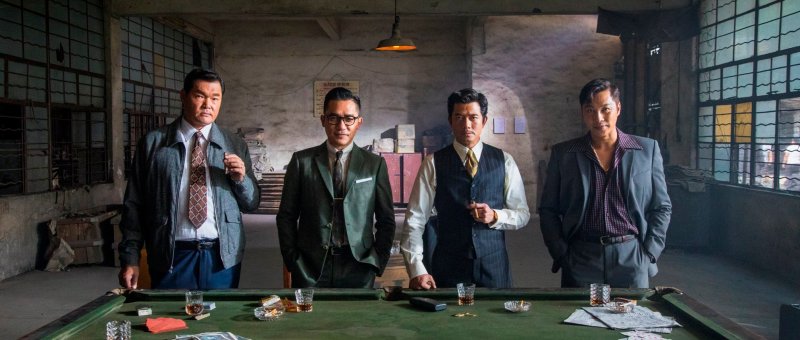
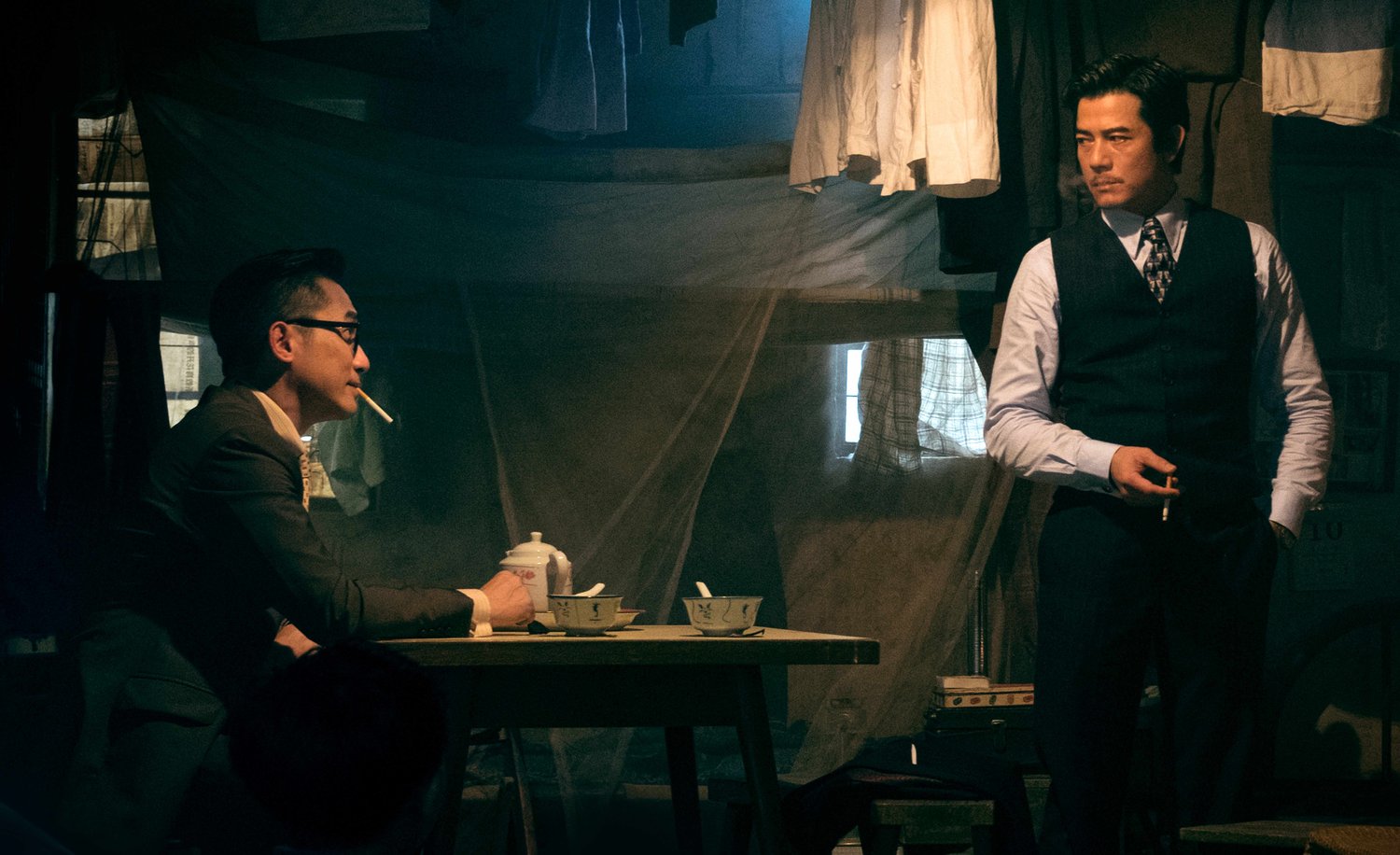
In any case, flashy cop Lok (Aaron Kwok Fu-shing) started out as an earnest bobby before the war who was shocked by the institutionalised corruption all around him and refused to participate in it. But his law abiding nature only made him a threat to other officers who needed him to be complicit in their crimes to keep them safe. After several beatings, he ended up accepting the culture of bribery just to fit in. In the present day, he and likeminded detective Nam (Tony Leung Chiu-wai) justify their dubious methods under the rationale that they’re helping to “manage” triad society by effectively licensing the gangs in taking protection money to leave the chosen few alone while enriching themselves in the process. 

Then again, the balance of triad society is disrupted by the arrival of a bigger Mainland outfit which later ends up backing Lok, with the assistance of his Shanghainese wife (Du Juan), to place him in a position which is the most beneficial to themselves. To quell riots by supporters of the KMT in 1956, Nam lies to the protestors that he secretly supports their cause and that if they do not disperse there is a chance the British Army will forcibly disperse them which he also describes as an inappropriate outcome because this is a matter that should be settled among the Chinese people not by foreigners. In the final confrontation with ICAC chief Lee, the British authorities rule out military or police action, though the rioters in that case are in fact policeman angry about increasing anti-corruption legislation. Ironically enough, Lee’s speech advocates for something similar to that which Nam had suggested, essentially saying that the Hong Kong people should decide their own future and that society in general should be more mindful as to the kind of Hong Kong their children and grandchildren will eventually inherit. 

In any case, the four sergeants are soon eclipsed by changing times while Lok and Nam are mired in romantic heartbreak in having fallen for the same woman who brands Nam an over thinker and implies she may have married Lok less out of love than in the knowledge he’d be easy to manipulate. For his part, Lok is damaged by wartime trauma which has left him cynical and nihilistic while filled with regret and longing for a woman he lost during the war in part because he did not have the money to pay for medical treatment which might have saved her. In this sense, it’s money that is the true corrupting force in a capitalist society in which, as Lee suggests, it might eventually become necessary that you’d have to bribe a fireman to save your house or an ambulance driver to get your ailing mother to a hospital. Then again, as Nam says power lies in knowing there are those weaker than yourself. Yung’s sprawling epic apparently rant to over five hours in its original cut before being reduced to three hours forty-five and then finally to the present 144 minutes leaving it a little hard to follow but nevertheless filled with a woozy sense of place and an aching longing for another Hong Kong along with a melancholy romanticism as a lonely Nam dances alone to a ringing telephone bearing unwelcome news. 


Where the Wind Blows screens in Chicago on March 14 as part of the 16th season of Asian Pop-Up Cinema.

Original trailer (Traditional Chinese / English subtitles)

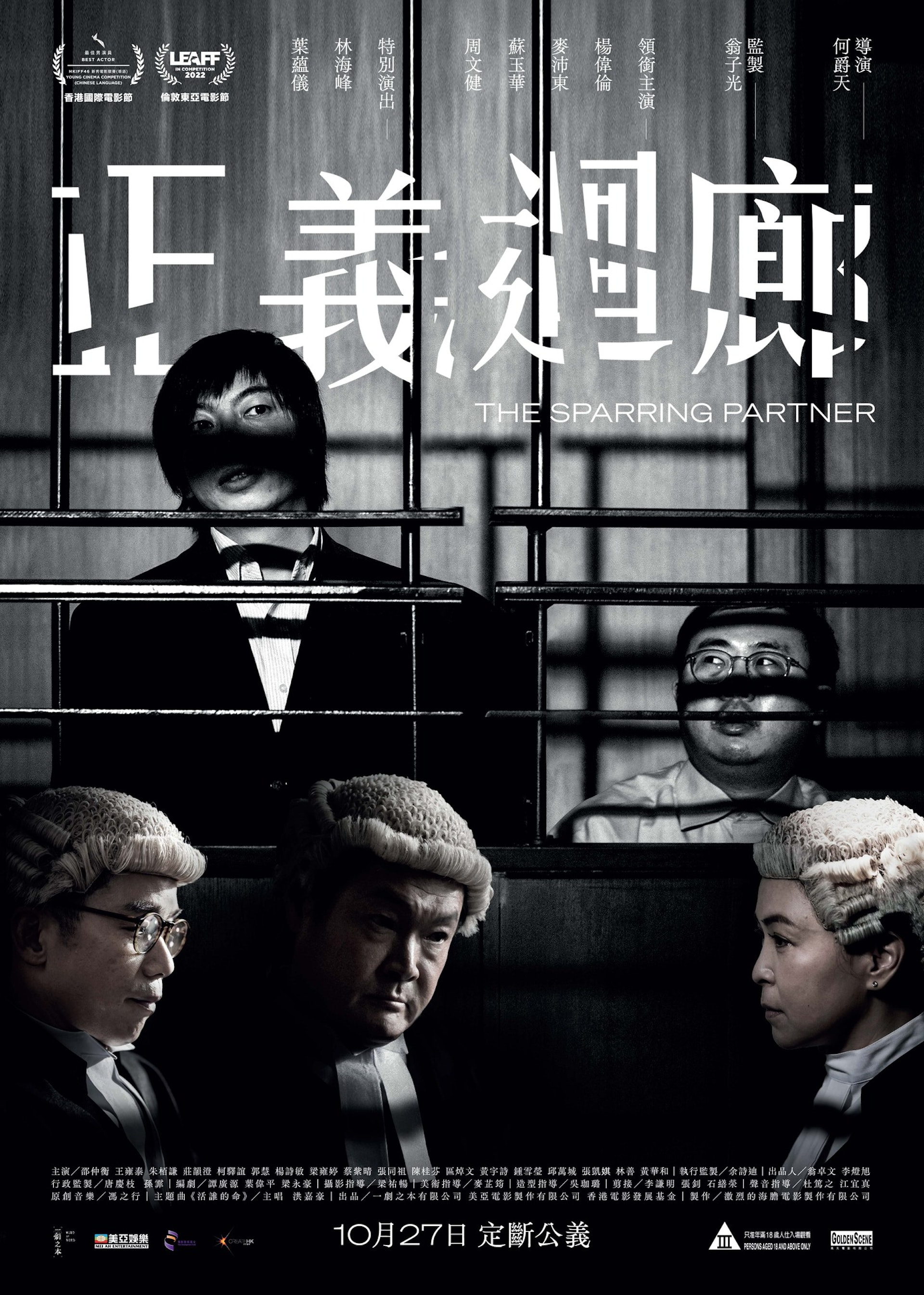
The Sparring Partner (正義迴廊, Ho Cheuk-tin, 2022)

Loosely based on a real life case in which a man murdered his parents then reported them missing and even went to the media for help looking for them, Ho Cheuk-tin’s The Sparring Partner (正義迴廊) distances itself from the sensationalism of the crime to ask a series of questions about human nature and the operation of the criminal justice system. The first of those questions is obviously why, but not just why did he murder the people who raised him but why did he go to the media and why did he eventually decide to confess. 

One reason Henry (Yeung Wai-lun) gives for killing his parents is that his upbringing was abusive, a fact later confirmed by his sympathetic cousin herself a devout Christian. It seems fairly clear that Henry has an inferiority complex for which he blames his mother and father, resentful that they made him play piano and wouldn’t let him play basketball to which he attributes the small stature that led to merciless bullying in school and fractured masculinity in adulthood. Ho often places the camera slightly behind Henry’s shoulder, emphasising his smallness and neatly reflecting the way in which he literally feels as if everyone is looking down on him. He has so far had a life full of failure, studying abroad but failing to make the grade and resentful towards his more successful older brother Ho Jin to whom his parents force him to sign over his share of a flat they bought as an investment after Henry’s gambling debts and inability to find a job left him unable to pay the mortgage. Losing a flat in Hong Kong is worse than losing a life Henry’s lawyer points out at trial, attempting to justify the resentment that led to Henry’s decision to not only murder but brutally dismember his parents. 

Another question mark, however, hangs over Henry’s accomplice and why exactly he chose to take him down with him. Angus (Mak Pui-tung), a man he met at a job interview, seems to have learning difficulties and may not quite understand what is going on. His sister describes him as naive and explains that he has a tendency to make friends with those who only hope to exploit him and may have been manipulated by Henry in fear for the safety of himself and his family or else simply not to lose the friendship. The extent of his involvement with the crimes remains unclear, Henry claiming that he was present and participated in the killing of his mother, while Angus insists that he only took part in the disposal of the bodies. Perhaps uncomfortably the film asks how much we can really trust Angus, suggesting that he may simply be manipulating the sympathy of others and is not really quite as naive as he makes out. 

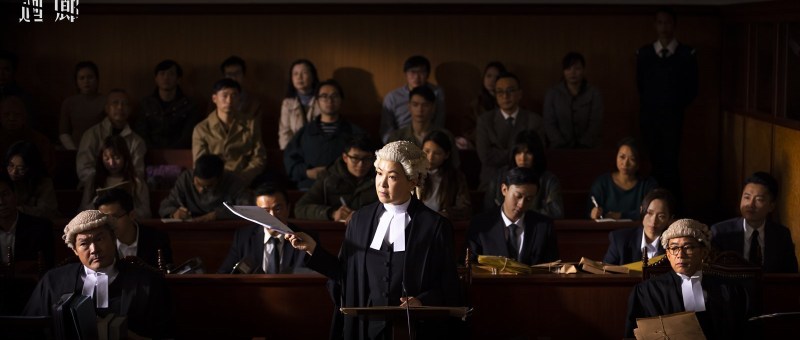
In any case, his treatment at the hands of the police is as unjust as it comes, intimidated into offering a confession simply to make the interrogation stop so that he sleep and get something to eat. In court the truth hardly matters, a trial is about constructing a credible narrative. The lawyers for joint defendants Angus and Henry attempt to undercut each other, Henry’s arguing he is not responsible on the grounds of mental illness while implicating Angus as the instigator, and Angus’ intent on emphasising his disability suggesting was merely manipulated by Henry. The jurors in the jury room struggle to make sense of the case but also of their own role, tasked not with assessing guilt or innocence but the strength of the argument based on the evidence they’ve been given only for some of them to base their convictions on gut instinct anyway. 

They are perhaps aware that Henry is a master manipulator, he lied to his own brother and fooled all of Hong Kong with his video appealing for support before dramatically confessing online. He has obvious delusions of grandeur and idolises Hitler, claiming that had he been born at the right time he could have done what Hitler did. Ho often dramatises his moments of introspection as fantasy in which Henry poses as Hitler and speaks German to those around him before snapping back to reality and finding him experiencing a moment of clarity that makes him step back. Yet there are moments of heartbreaking authenticity in the “friendship” between the two men such as in their meeting at the job interview as they bond in a shared sense of rejection, the subtext of their crimes inviting the reading that they are intended as acts of vengeance against the society into which neither of them was able integrate. 

In the closing scenes, a policeman remembers evidence left behind during the initial sweep of the crime scene by his incompetent boss and returns to Angus’ apartment to find a migrant family living there who tell him they know there was a murder but they don’t care about things like that and are just grateful to have a home. Henry too continues his dark jokes about permanently devaluing his family’s apartments, but seems genuinely distressed on realising that his brother really may abandon him for his total lack of remorse while Angus finds himself exploited by the tabloid press only too eager for all the gory details. Ho’s closing images which find Angus enveloped in the webs of the spiders which plague his dreams perhaps hints at his place in a complex network of forces which contribute to his exclusion from prejudice towards the disabled to fatphobia along with the manipulation of men like Henry who promise friendship but only take advantage of his inability to resist. Then again, the fact of the matter is that you’ll never really know the truth, whether Henry did it all for the attention and ended up alone anyway or if it really was Angus who planned everything and fooled all of Hong Kong, like the jury all you can do is weigh up the evidence and draw your own conclusions.  


The Sparring Partner screened as part of this year’s London East Asia Film Festival and will open in UK cinemas on Nov. 18 courtesy of CineAsia.