Undercurrent (夜の河, Kozaburo Yoshimura, 1956)

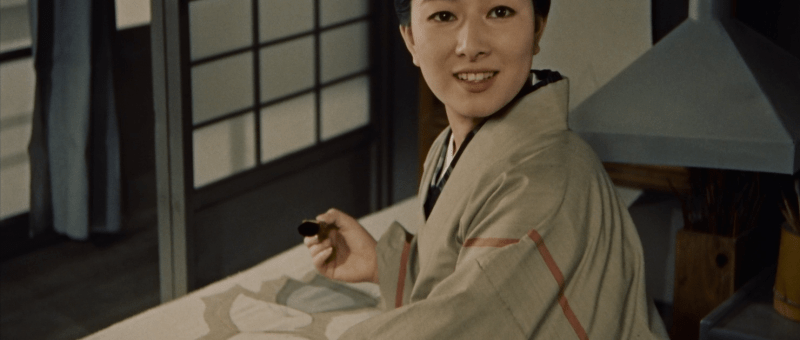
Is it possible to be both married and personally and artistically fulfilled? Marriage hangs over Kiwa (Fujiko Yamamoto) like a looming cage in Kozaburo Yoshimura’s sensuous melodrama Undercurrent (夜の河, Yoru no Kawa, AKA Night River). Scripted not by his regular writer Kaneto Shindo but frequent Mikio Naruse collaborator Sumie Tanaka adapting a novel by Hisao Sawano, the film finds its heroine caught between tradition and modernity while struggling to maintain her position as an independent woman and rightful heir to her father’s kimono dyeing business.

Everyone also keeps telling her that kimono itself is dying out, a relic of a bygone past now that everyone wears Western dress. Even Kiwa’s younger sister Miyoko (Michiko Ono) dresses exclusively in Western fashions and moves to Tokyo on her marriage. An ancient capital, Kyoto is the centre of historical elegance and the last bastion of these “outdated ideals”, yet several shops in their area have closed recently and people do things differently now. A wealthy woman comes to the shop with some fabric directly, cutting out the middlemen and haggling for a discount while cheerfully asking for her cab fare to be covered when Kiwa refuses the job. The young man they’ve taken in as an apprentice, Toshio, leaves to work in an electric factory complaining that “master” and “apprentice” are outdated concepts and that it’s against the Labour Law to force him to work overtime. Kiwa’s father Yujiro (Eijiro Tono), meanwhile, thinks this is just an expression of Toshio’s lack of commitment and that it’s only right that an apprentice should be applying himself to learning his craft every waking moment of the day. 

He was after all once an apprentice himself, but is both proud that his daughter has surpassed him in skill and guilty, fearful that Kiwa has sacrificed her own life and happiness to devote herself to kimono dyeing which is why she has never married. On one level, he’s happy if she’s happy and willing to leave marriage up to her, but also wary of the social censure of the neighbours including his kimono dyeing mentor who gives him a telling-off for his failure as a father to find a match for his daughter. When rumours arise that Kiwa has entered an affair with a married professor, the lady who helped Yujiro get started in business more or less tells him he should get her married to keep her in line. If hadn’t been for the war, she says, Kiwa would have been safely married off long ago and would probably have a gaggle of children to look after which would obviously prevent her from pursuing her art as a kimono dyer though the lady herself has obviously gone on working. 

Kiwa is drawn Takemura (Ken Uehara ) firstly because he’s wearing a tie that features one of her signature dyes which implies some kind of affinity between them. That the fact that he was touring a Nara temple alone with his daughter may have suggested he was a widower, though in truth Kiwa always knew he was married and that may have been a key part of what attracted her to him. She is after all, as Yujiro’s mentor said, a woman and experiences romantic desire even if the mentor is wrong to say that Kiwa sublimates her loneliness through art when in reality the reverse is true. After meeting Takemura even Yujiro remarks that she seems more like a woman, implying that her industry and forthrightness lend her a masculine quality as does her determination to get on in business. She first strikes up a business relationship with the sleazy Omiya (Eitaro Ozawa) whose wife is always watching him like a hawk though she manages to rebuff his attentions while establishing herself as business woman and in demand kimono designer. In pursuit of Takemura she is the one bringing him gifts and inviting him out for walks while Takemura remains somewhat conflicted and pulled along her wake.

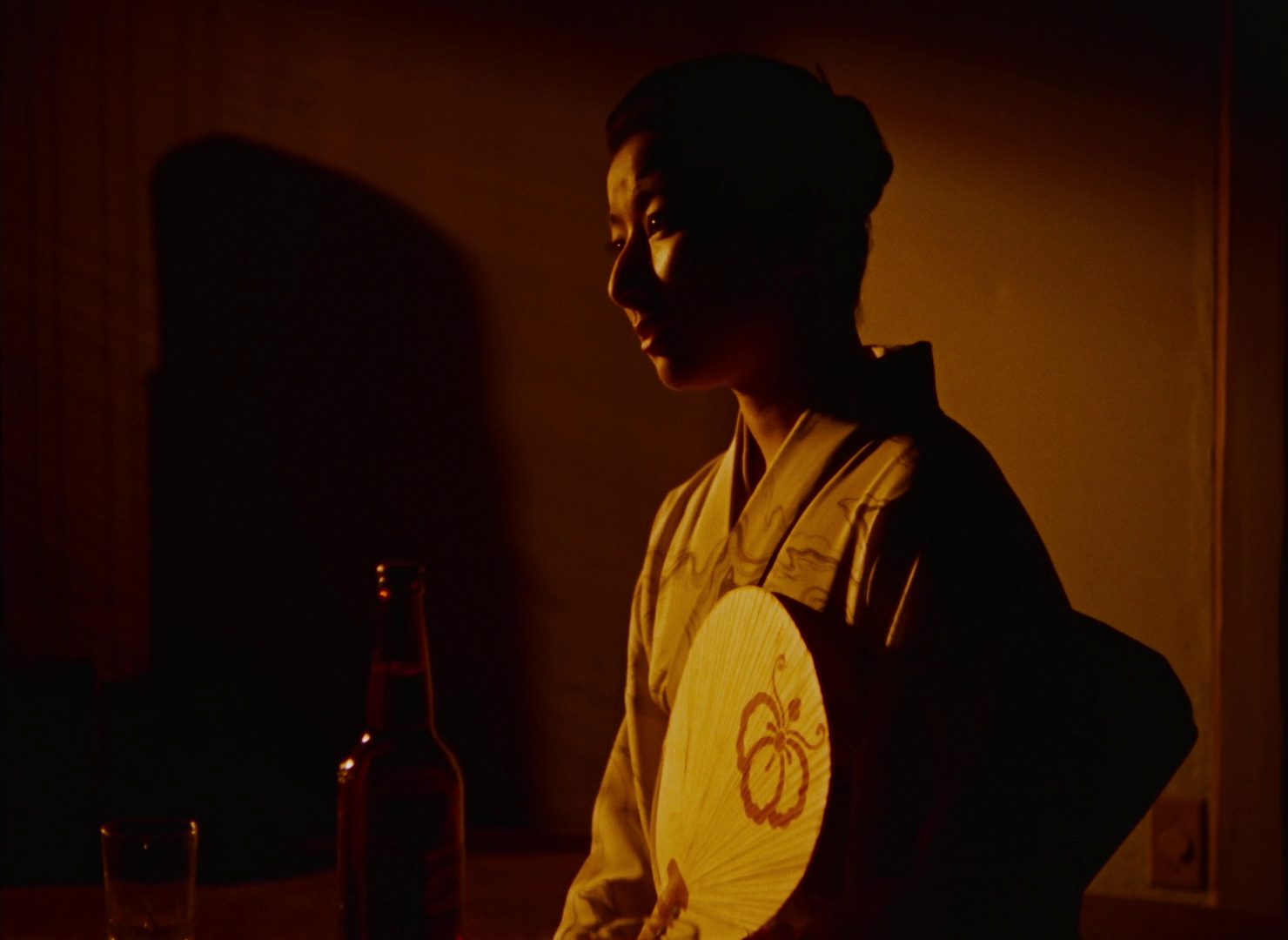
Yet for all that, none of her family members really question the fact that she’s been carrying on with a married man and rather seem slightly relieved that she’s discovered an interest in romance or perhaps just anything outside of kimono dyeing. Even Takemura’s daughter suspects they’re romantically involved and doesn’t seem to mind. Yujiro remarks on Kiwa suddenly using the colour red which she never previously liked and it does seem to echo her reawakening passion. Takemura is also researching red fruit flies, which is less romantic, but also hints his barely suppressed longing. The film seems to align him with yellow flowers and Kiwa with pink. When they’re caught in a rainstorm and refuge in an inn owned by Kiwa’s childhood friend, the entire room in bathed in the glow of the Daimonji fire festival as their passions finally, and perhaps unwisely, overtake them as Takemura announces he’s thinking of moving far away perhaps to avoid this forbidden romance or otherwise for the health of his ailing wife who has been a Kyoto hospital for the last two years.

It’s finding out about Mrs Takemura’s likely terminal illness that seems to implode Kiwa’s romantic fantasy. After they’d made love for the first time, she had told Takemura that if she became pregnant she’d raise the child alone without intruding on his family life, which is to say she wasn’t really envisaging one with him. Her horror is on one level framed as guilt, that she now sees she’s committed an act of betrayal and resents Takemura when he tells her “it won’t be much longer” as if he were counting down the days until his wife passed away. Or worse, that he or others suspected that Kiwa willed her dead. But in reality the reverse is true. Mrs Takemura’s death is an existential threat to Kiwa’s independence. She doesn’t want to get married, even if loves Takemura, because if she did she wouldn’t be able to maintain her independence or career as a kimono dyer. She really does mean it when she says that likes it best when it’s just she and her father in their “cramped” old-fashioned dyeing shop without even an apprentice. 

A tortured art student who seems to pine for her tells her as much, disappointed in her for her relationship with Takemura not out of moral censure but because he fears she’s betraying her art. Okamoto is much younger than her and she’s not interested in him romantically even if he’s painting slightly lewd interpretations of his mental image of her. At one point he appears with a bandage around his neck that implies he may have tried to take his own life and eventually announces he’s leaving Kyoto because he can’t secure his identity there. Ironically he’s happy that Kiwa and Takemura are now free to love each other when the opposite is now true. Now that he’s no longer a married man, Kiwa can no longer love him and is denied the possibility of having both romantic and artistic fulfilment. She is perhaps free in another way, backed by a deep red cloth hanging up to dry as she watches the May Day parade pass by with all of its waving red flags having embarked on a life that is defiantly of her choosing and fulfilled by the passion of art.


Trailer (no subtitles)

The Woman in the Rumour (噂の女, Kenji Mizoguchi, 1954)

A mother and daughter find themselves deceived by the same man, each hemmed in by realities which cannot be altered but eventually coming to a place of mutual understanding that allows them to restore their relationship not only as parent and child but as women in Kenji Mizoguchi’s 1954 melodrama, The Woman in the Rumour (噂の女, Uwasa no Onna). The first question we might ask ourselves is to which of the women the title refers, or indeed to which rumour, though in a sense rumours matter little for either of them when the problem is the constraints which each of them feel as women in the contemporary society. 

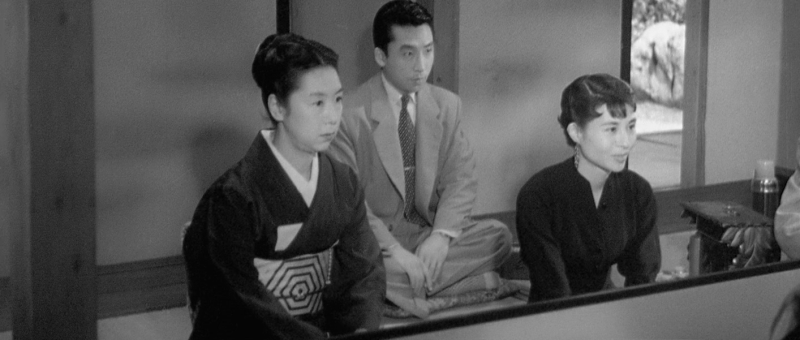
Even so, the sense of shame is evident when Yukiko (Yoshiko Kuga) is brought back to the geisha house run by her mother Hatsuko (Kinuyo Tanaka) after having attempted to take her own life in Tokyo. As we learn, the reason for her despair is in part heartbreak. She had been engaged but her fiancé’s family convinced him to end their relationship when they discovered that her mother ran a geisha house. Thus the suicide attempt is also a reflection of her sense of futility. She will always be the daughter of a woman who earned her living in the sex trade. This is a fact that cannot be changed and may lead her to think that her situation is hopeless because the same thing is likely to happen again leaving her unable to marry in a society in which there are few options for a single woman to make a life for herself not to mention the loneliness of living without romantic love. 

Hatsuko, meanwhile, is uncertain how seriously she should take the situation in part believing that it’s a product of youthful naivety in her daughter’s first romantic heartbreak. When a young doctor with whom she is close, Matoba (Tomoemon Otani), explains to her that Yukiko is depressed because she feels deep shame, self-loathing, and hopelessness due to her mother’s occupation, Hatsuko struggles to understand it and does not fully believe him. Nevertheless, she took care to bring her daughter up largely outside of the geisha world, sending Yukiko to Tokyo to study music implying that she herself to some degree sees her work as improper. The other girls view Yukiko with a degree of disdain, realising that her refinement was bought with their exploitation and noticing her animosity towards them. 

Hatsuko is mother both to Yukiko and the young women under her care who are always quick to point out that this is one of the better geisha houses because they are well looked after. When one of the women, Usugumo (Kimiko Tachibana), is taken ill, Hatusko calls in the doctor and allows her time off to rest which likely would not be granted at another house. She is reluctant to send her to hospital, but would if the situation called for it. In a sense it’s this solicitation that eventually allows Yukiko to find accommodation with her mother’s profession as she grows closer to the other women while nursing Usugumo herself and comes to understand their particular circumstances that have left them no choice but to live as geisha. Usugumo is reluctant to go to hospital because she is worried about the money she’d usually send to her sister Chiyoko (Sachiko Mine) who works the family farm and cares for their sickly father, but when she dies Chiyoko herself is left with little option other than to petition the geisha house to take her sister’s place. 

On seeing Chiyoko sitting on the step and pleading to be taken on, another of the women laments as she’s leaving that she wonders when there will be no more need for women like them. The geisha world is perhaps an unchangeable reality, just like Yukiko’s birth and her mother’s age. The rumours that surround Hatsuko are to do with her closeness with Matoba with whom she has clearly been in an intimate relationship, dreaming of becoming his wife and even considering selling the geisha house to buy a large property where they could live together as a couple while he runs a private clinic. Matoba predictably decides he prefers the younger Yukiko, Hatsuko increasingly desperate after overhearing their conversation about leaving her behind to move to Tokyo together where Matoba ponders finishing his education. The play they’ve gone to see almost feels like a personal attack as an actor intones that feelings of love at 20 are fine but at 60 it’s merely shameful. “Even carp know better than to fall in love at this age”, he adds, the old woman a figure of ridicule in her romantic delusion leaving Hatsuko feeling both humiliated and resentful.

When Hatsuko finally confronts Matoba, she does it as a scorned woman rather than as a mother, while Yukiko in turn first turns on her rather than Matoba even as she begins to realise the reality of the situation that the man who seduced her had been using her mother for his own gain in total disregard of her feelings. In short, even if Hatsuko were not her mother which certainly makes this a very complicated situation, he is not the sort of man she’d want to make a life with. Acutely aware of her own experiences of heartbreak, she fears for her mother’s wellbeing and comes to an understanding of her as a woman while accepting that “men are all alike” and in that at least perhaps her mother’s profession is the most honest of all. Mutually betrayed, mother and daughter are able to repair their familial bonds while Yukiko finds herself taking refuge in the geisha house as a space of female solidarity and bulwark against a cruel and patriarchal society. 


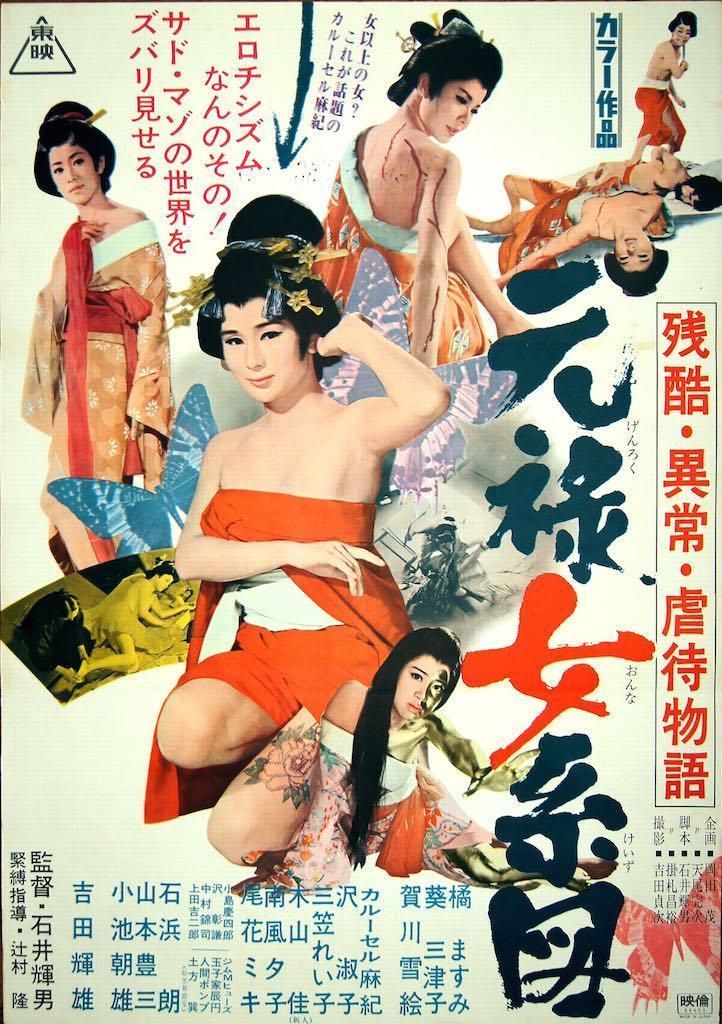
Orgies of Edo (残酷異常虐待物語 元禄女系図, Teruo Ishii, 1969)

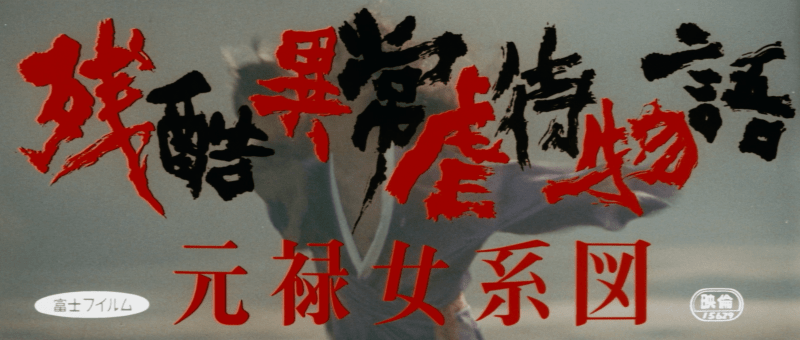
Orgies of Edo poster“Pinky Violence” is a strangely contrary genre, often held up both as intensely misogynistic but also proto-feminist in its vast selection of vengeful heroines who seemed to embody the rage of several centuries of inescapable oppression. Teruo Ishii, at the very forefront of Toei’s attempts to graft pink film sensibilities onto its house style of manly yakuza drama, had a definite love for the perverse but, perhaps unusually, a consciousness of the implications of his world of surrealist violence. The Japanese title of Orgies of Edo (残酷異常虐待物語 元禄女系図, Zankoku Ijo Gyakutai Monogatari: Genroku Onna Keizu) translates as something like “a genealogy of the women of the Genroku Era” and concerns itself with three tales of misused women each of whom meets a grim end at the hands of faithless men who seem to embody the decadence of their prosperous times.

Ishii’s three tales of increasing madness and brutality travel from the streets to the palace in locating each scene of mounting debauchery within the shifting circles of prosperous Genroku era Edo. Our guide, positioned to the side of each of the tales, is a conservative doctor (Teruo Yoshida) who diagnoses his society as morally sick and hovering on the edge of a decadent abyss. Tellingly, each of episodes with which he becomes involved is presaged by his inability to access foreign knowledge in the wilfully isolated nation, slowly stagnating even in the midst of unprecedented prosperity.

His first patient is a young woman in the middle of a painful miscarriage caused by a beating intended to end her pregnancy. Abroad they know of an operation to avoid this sort of misery, the doctor muses, but he has no way of helping her. The young woman, Oito (Masumi Tachibana), like many in the tales of old Edo, got into debt and then was seduced by a handsome young man who posed as a saviour but only ever meant to misuse her. Hanji (Toyozo Yamamoto), a gangster, presses her into prostitution and eventually betrays her by taking up with another woman but neither of them are free of their respective captors be they the Yoshiwara or the gangster underworld.

The doctor’s second case is more extreme and calls upon him to make use of his knowledge of the Western notion of psychiatry in trying to cure a young noblewoman of her perverse fetish for the physically deformed. Ochise’s (Mitsuko Aoi) tastes stem back to a traumatic teenage incident during which she was abducted, held prisoner, and repeatedly raped by a man with a ruined face. Her loyal servant, Chokichi (Akira Ishihama), has long been in love with her but the pair remain locked in a one sided sadomasochistic relationship in which he knows that she can never return his love not because of their class difference, but because of his “perfection”. Pinching an ending from Tanizaki’s Shunkinsho, Ishii sends the frustrated lovers in a less positive direction in which a woman’s defiant insistence on pursuing her own desires is met only by the violence of a male need for possession which eventually leads to mutual destruction.

Mutual destruction is a final destination of sorts. The doctor’s third unrealisable request is for an untimely caesarian section – another piece of Western medical knowledge he has only vague awareness of. This unusual situation unfolds at the court of a lascivious lord whose perverse proclivities are quickly becoming the talk of the town. Drawn to a young woman, Omitsu (Miki Obana), who greets his attempt to fire his arrows at her while angry bulls with flaming horns charge at his other concubines with excitement, the lord is dismayed to hear of another of his ladies, Okon (Yukie Kagawa), enjoying the attentions of her pet dog and therefore somehow sullying his own bedroom reputation. The lord has Okon painted gold and thrown in a hall of mirrors for a slow and painful death of multiplied suffocations but she wins a temporary reprieve by promising to introduce him to untold pleasure if only he lets her live. This will all end in flames and ashes, but the lord hardly cares because it is only the natural end for his hedonistic endeavours.

The doctor performs his miracle and emerges with a child in whom lies the legacy of this immoral time. Yet the doctor wants to “save” it. Even if it’s a “beast” the child is innocent, he intones, insisting that he must live despite this burden in order to resist the madness. Like the strange butoh inspired performance art which opens the film, these are times of madness and confusion in which women, most of all, suffer at the hands of men who care only for their own pleasure. The doctor tries to cure the “sickness of the soul” that he sees before him, but knows that cannot be excised so much as tempered. Still he walks forward, away from the wreckage, with the future in his arms and resolves to live whatever the cost may be.


Orgies of Edo is available on blu-ray courtesy of Arrow Films.

Original trailer (no subtitles)

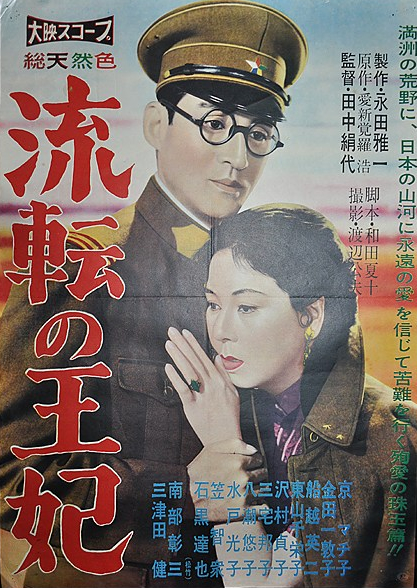
The Wandering Princess (流転の王妃, Kinuyo Tanaka, 1960)

Wandering Princess posterAs in her third film, The Eternal Breasts, Kinuyo Tanaka’s fourth directorial feature, The Wandering Princess (流転の王妃, Ruten no Ouhi), finds her working with extremely recent material – in this case the memoirs of Japanese noblewoman Hiro Saga which had become a bestseller immediately after publication in 1959. Tanaka’s filmic adaptation arrived mere months later in January 1960 which was, in an ironic twist, a year before the real life tale would meet something like the conventional romantic ending familiar from classic melodrama. Nevertheless, working with Daiei’s top talent including Kon Ichikawa’s regular screenwriter (and wife) Natto Wada, Tanaka attempts to reframe the darkness of the preceding 20 years as the defeat of compassionate idealism at the hands of rigid austerity and unstoppable oppression.

Tanaka opens with a scene taking place in 1957 which in fact depicts a somewhat notorious incident already known to the contemporary audience and otherwise unexplained on-screen in which the older Ryuko (Machiko Kyo) tenderly bends over the body of lifeless schoolgirl. The camera then pulls back to find another girl in school uniform, Ryuko, twenty years earlier. A young woman with innocent dreams, Ryuko’s life encounters the usual kind of unwelcome disruption in the unexpected arrival of a marriage proposal but this is no ordinary wedding. Ryuko, as the oldest daughter of a prominent noble family, has been selected as a possible bride for the younger brother of the former Qing emperor now installed as the symbolic leader of the Japanese puppet state of Manchuria. Against the odds, Ryuko and her new husband Futetsu (Eiji Funakoshi) are well matched and endeavour to build a happy home together just as they intend to commit themselves to the creation of a new nation born from the twin legacies of the fallen Chinese empire and the resurgent Japan.

Foregrounding Ryuko’s experience, the film does its best to set “politics” aside but the inescapable truth is that each of our protagonists is a prisoner of the times in which they live. The second scene finds Ryuko in 1937 as an innocent schoolgirl gazing at the young men in uniform as they march past her. She remains out of step with them, walking idly and at her own uneven rhythm while they keep rigorous and seemingly unstoppable time. The family are understandably wary of the implications of the marriage proposal, especially as it comes with a military escort, with Ryuko’s beloved grandmother the only one brave enough to ask to see whoever’s in charge of this outrage only to be told that their fates are in the hands of the nebulous concept known as “army” which knows no individual will.

Assured by her family that the decision rests with her, Ryuko consents – not only to becoming a stranger’s wife (which would have been her fate in any case) but to being a kind of ambassador, the presentable face of imperial ambition. On her marriage she’s presented with a deep red cheongsam and continues to dress in Chinese fashion for remainder of her life in Manchuria where she learns to speak Mandarin and devotes herself to becoming as Chinese as it’s possible to be. Meanwhile, her husband Futetsu busies himself with a complementary desire to become Japanese, intensely worried that the sometimes degrading treatment he and his family receive is exclusively caused by his problematic nationality. When their daughter, Eisei, is born, the couple determine to raise her as the child of a new world, the embodiment of idealised cultural integration.

The world, however, is not so kind and the blunt force of militarism continues to present a barrier to familial harmony. Futetsu is prevented from seeing his brother by the officious forces of the military police while the lonely, paranoid “emperor” suspects that Ryuko is nothing more than a Japanese spy sent to undermine his rule. Ryuko was sent to Manchuria to be the bridge between two cultures. Her, in a sense, feminine energy which attempts to build connection through compassion and understanding is consistently contrasted with the prevailing male energy of the age which prizes only destruction and dominance. Filled with the naivety of idealism, she truly believes in the goodness of the Manchurian project and is entirely blind to the less altruistic actions of her countrymen engaged in the same endeavour.

Confronted by some children in a park while pushing the infant Eisei in a pram, Ryuko is identified as a Japanese woman by her accent while conversing in Mandarin. She assures the children that Eisei is Manchurian like them, and that seeing as she married a Manchurian she is now too despite her Japanese birth. The kids are satisfied, so much so that they warn her that some Manchurians were killed recently in this park by Japanese soldiers, adding a mild complaint that it upsets their parents when Japanese people come to their restaurant and leave without paying. Mortified, Ryuko decides to use some of her (meagre) resources to buy all of the kids and everyone else in the park some sweets from a nearby stand, fulfilling her role as a Japanese ambassador even while insisting that she is a proud citizen of the newly born state of Manchuria.

Nevertheless the Manchurian project is doomed to fail, the kind of idealism fought for by Ryuko and Futetsu crushed under the boot of militarism. Despite everything, Ryuko still wants to be the bridge if only to prevent a catastrophe of this kind happening again (while perhaps refusing to engage with some of the reasons it happened in the first place) but in Eisei’s eventual death, foreshadowed in the melancholy opening, a deeply uncomfortable implication is made that the kind of cross-cultural harmony that Ryuko dreams of may not be viable. In contrast to the salaciously reported real life events (somewhat alluded to by presence of a schoolboy’s cap next to the body) which hinted at a suicide pact or murder, Ryuko attributes Eisei’s decision to end her life to an inability to reconcile her twin heritage coupled with the heavy burden of being the last descendent of the Qing Dynasty. Despite this minor misstep of tying the fate of Eisei to the failure of the Manchurian dream and the loss of its misplaced idealism, Ryuko ends her account on a hopeful note in admiring the flowers she planted finally in bloom and looking forward to a more hopeful age governed by warmth and compassion rather than violence and austerity.


The Wandering Princess was presented by Japan Foundation London as part of a series of events marking the publication of Tanaka Kinuyo: Nation, Stardom and Female Subjectivity.